

Interaction between microbiota and immunity in health and disease
Open accessThe DOI matches its Crossref record; 271 of the 271 references it cites were found in a registry or an index; 72 of the 258 sources its claims cite were checked for support.
Abstract
The interplay between the commensal microbiota and the mammalian immune system development and function includes multifold interactions in homeostasis and disease. The microbiome plays critical roles in the training and development of major components of the host’s innate and adaptive immune system, while the immune system orchestrates the maintenance of key features of host-microbe symbiosis. In a genetically susceptible host, imbalances in microbiota-immunity interactions under defined environmental contexts are believed to contribute to the pathogenesis of a multitude of immune-mediated disorders. Here, we review features of microbiome-immunity crosstalk and their roles in health and disease, while providing examples of molecular mechanisms orchestrating these interactions in the intestine and extra-intestinal organs. We highlight aspects of the current knowledge, challenges and limitations in achieving causal understanding of host immune-microbiome interactions, as well as their impact on immune-mediated diseases, and discuss how these insights may translate towards future development of microbiome-targeted therapeutic interventions.
Overview
CoChat Summary
TL;DR
This review synthesizes bidirectional interactions between the commensal microbiota and host innate/adaptive immunity in homeostasis and immune-mediated disease. It highlights mechanistic examples across the intestine and extra-intestinal organs while emphasizing that causal relationships and translation to microbiome-targeted therapies remain unresolved.
Key findings
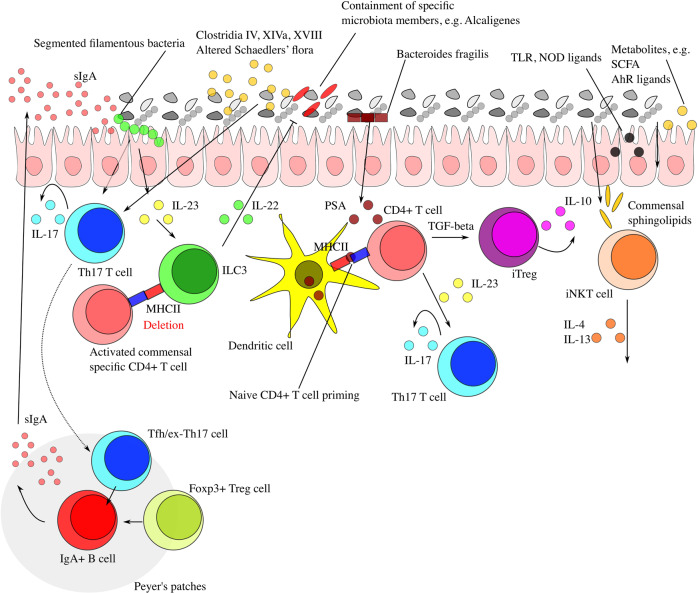
- The microbiome trains major immune components, including intraepithelial lymphocytes, IgA, Th17 cells, regulatory T cells, ILC3s, and Tfh cells; germ-free animals show profound immune defects that can be restored by colonization.
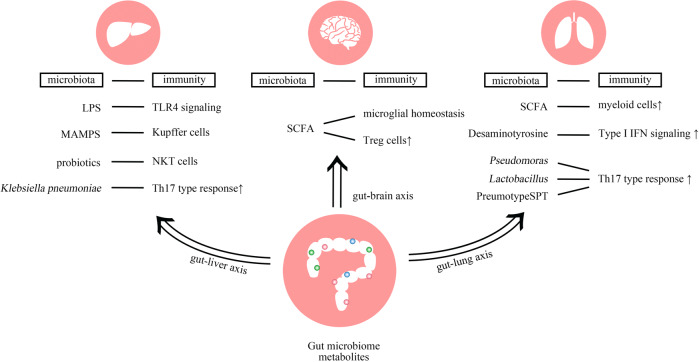
- Host immunity maintains microbiota compartmentalization through mucus, tight junctions, secretory IgA, antimicrobial peptides, PRRs, and inflammasomes; dysregulation is implicated in IBD, rheumatoid arthritis, cardiometabolic disease, cancer, and extra-intestinal organ immunity.
- Early-life colonization is critical, with microbiota composition reaching a more stable adult-like configuration at ~3 years of age; IBD genome-wide association studies have revealed more than 200 susceptibility loci, many involved in microbial sensing.
- Several grams of IgA are secreted daily in human intestines, and microbiome-immune interactions can modulate anticancer immunotherapy responses, including associations with *Bifidobacterium longum*, *Collinsella aerofaciens*, *Enterococcus faecium*, and *Akkermansia muciniphila*.
Methods
- Narrative review of published literature on microbiome-immunity crosstalk in health and disease, including animal models and human studies.
- No primary data, cohort, or systematic search/meta-analysis is reported; the paper synthesizes mechanistic examples and conceptual frameworks.
- Main analysis is conceptual and integrative, covering intestinal homeostasis, environmental perturbations, disease associations, extra-intestinal organs, and therapeutic perspectives.
Limitations
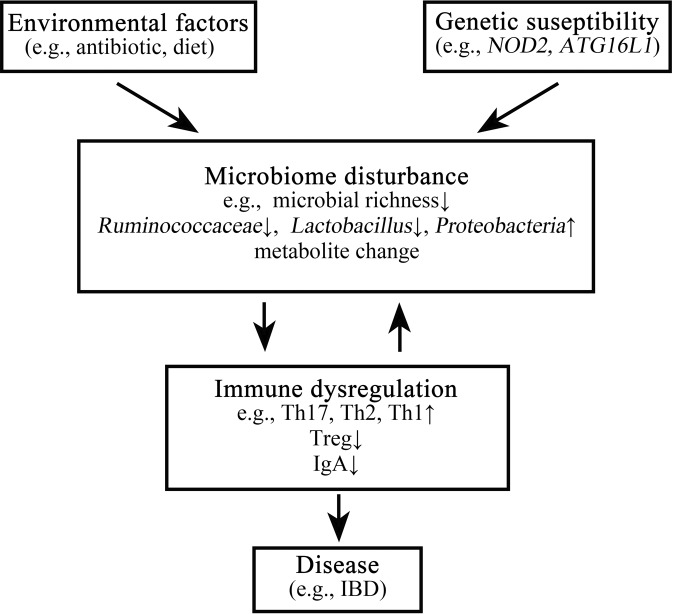
- The paper states that direct causal relationships between the microbiome and immunity before or during early disease have not been established in most medical conditions, and that whether microbiome alterations are cause or consequence remains unclear in diseases such as IBD.
- It states that laboratory mice harbor microbiota divergent from wild animals and humans, limiting translational potential and reproducibility, and that 16S rRNA sequencing is limited by genus-level, compositional resolution.
- It also states that low-biomass microbiome studies are challenged by contamination and artefacts, and that inter-individual variability is a major experimental challenge; evident from the text, this is a narrative review without systematic methods or quantitative synthesis.
Model-written summary. Check it against the paper before relying on it.
Integrity signals
Registry
Cites
Statistics
Figures
Verification
Claims the paper makes
58 Valid · 3 Not valid · 152 Not checked · 13 Own results and interpretations
At least one cited source doesn’t support this claim or points to a different paper, and none confirmed it — see the verdicts below.
In the paper
“Spontaneous development of T cell-mediated autoimmune arthritis in IL1rn–/– mice requires the activation of TLR2 and TLR4 by microbial ligands.174”
§ Interaction between microbiota and immunity in health and disease > Dysregulation of microbiome-immunity interaction in disease > Rheumatoid arthritis
What the sources say
- Disputedcites [174] Abdollahi-Roodsaz S Stimulation of TLR2 and TLR4 differentially skews the balance of T cells in a mouse model of arthritis J. Clin. Invest. 2008 118 205 216 18060042 PMC2104479 sourceExperimental — accuracy not yet measured
The paper supports a role for microbial flora: germ-free IL1rn−/− mice did not develop arthritis (Introduction; Figure 1). But it does not find that activation of both TLR2 and TLR4 is required. Tlr2-deficient mice developed more severe arthritis, and Tlr4-deficient mice had comparable disease incidence, which the paper says indicates that initiation is independent of TLR4 activation (Results, TLR-deficiency comparisons). (LLM, conf=0.90)
Checked by a reasoning model — may be wrong.
plainstates a cause- Asserted: passes — The authors put it forward as true.
- Checkable: passes — It can be checked against evidence.
- Load-bearing: passes — The paper’s conclusions depend on it.
- Based: passes — The paper gives a reason why it holds.
- Disputed
The cited sources support only part of this claim — read each source’s verdict below.
In the paper
“Most critical events in education of host immunity may take place during the first years of life, in which microbiota composition displays the highest intra- and inter-individual variability before reaching a more stable adult-like configuration at the age of ~3 years.18–20”
§ Interaction between microbiota and immunity in health and disease > The role of the microbiome in immune system development
What the sources say
- Partly supportedcites [18] Backhed F Dynamics and stabilization of the human gut microbiome during the first year of life Cell Host Microbe 2015 17 690 703 25974306 sourceExperimental — accuracy not yet measured
Split into 2 atoms — 0 confirmed, 1 partially supported, 0 disputed, 0 misattributed, 1 unverifiable. Expand the claim to see per-atom verdicts.
- Not checked yetcites [19] Koenig JE Succession of microbial consortia in the developing infant gut microbiome Proc. Natl. Acad. Sci. USA 2011 108 Suppl 1 4578 4585 20668239 PMC3063592 source
- Partly supportedcites [20] Yatsunenko T Human gut microbiome viewed across age and geography Nature 2012 486 222 227 22699611 PMC3376388 sourceExperimental — accuracy not yet measured
Split into 2 atoms — 1 confirmed, 1 partially supported, 0 disputed, 0 misattributed, 0 unverifiable. Expand the claim to see per-atom verdicts.
hedgedstates a possible cause- Asserted: passes — The authors put it forward as true.
- Checkable: passes — It can be checked against evidence.
- Load-bearing: passes — The paper’s conclusions depend on it.
- Based: passes — The paper gives a reason why it holds.
- Partly supported
The cited sources support only part of this claim — read each source’s verdict below.
In the paper
“IgA antibodies are a mainstay of protective humoral mucosal immunity and show substantial reduction in newborns and GF animals, which is rapidly restored by microbial colonization.32”
§ Interaction between microbiota and immunity in health and disease > The role of the microbiome in immune system development
What the sources say
- Partly supportedcites [32] Hapfelmeier S Reversible microbial colonization of germ-free mice reveals the dynamics of IgA immune responses Science 2010 328 1705 1709 20576892 PMC3923373 sourceExperimental — accuracy not yet measured
Our copy supports only the germ-free half of the claim: the Introduction states 'It has long been known that the IgA responses in the intestine are strongly induced by colonization of germ-free animals with commensal bacteria,' and the results describe equivalent IgA plasma-cell increases in germ-free mice 4 weeks after HA107 or ASF colonization. The 'newborns' element is nowhere addressed — searches for neonatal/newborn/weaning returned no passage on age-related IgA levels. Moreover, the 'rapidly restored' qualifier runs against the paper's own finding: the Abstract reports a SLOW (>14 days) onset of the anti-commensal IgA response in germ-free mice, with rapidity attributed instead to ongoing commensal exposure ABROGATING the response. So the speed characterization and the newborn extension are not supported by this source. (LLM, conf=0.72)
plainstates a cause- Asserted: passes — The authors put it forward as true.
- Checkable: passes — It can be checked against evidence.
- Load-bearing: unclear — It is unclear whether the paper’s conclusions depend on it.
- Based: passes — The paper gives a reason why it holds.
- Partly supported
Every source the paper cites for this claim was checked and supports it.
In the paper
“In a healthy state, the host’s immune response to the intestinal microbiota is strictly compartmentalized to the mucosal surface.42”
§ Interaction between microbiota and immunity in health and disease > Interaction between microbiota and immune system in homeostasis > Host-induced compartmentalization of intestinal microbiota
What the sources say
- Supportedcites [42] Konrad A Cong Y Duck W Borlaza R Elson CO Tight mucosal compartmentation of the murine immune response to antigens of the enteric microbiota Gastroenterology 2006 130 2050 2059 16762628 source
The Background & Aims (p. 1) and Conclusions state that 'the host immune response to enteric bacteria is tightly compartmentalized to the mucosa in normal mice, with systemic B cells and CD4+ T cells remaining naive rather than tolerant,' and the Discussion (p. 6) concludes the response 'is confined to the mucosa.' The citing sentence reproduces this faithfully, with the caveat that the paper's demonstration is in specific-pathogen-free C3H/HeJ mice in the healthy (non-colitic) state; it also notes that in colitic mice this compartmentation fails. (LLM, conf=0.90)
plain- Asserted: passes — The authors put it forward as true.
- Checkable: passes — It can be checked against evidence.
- Load-bearing: unclear — It is unclear whether the paper’s conclusions depend on it.
- Based: passes — The paper gives a reason why it holds.
- Supported
Every source the paper cites for this claim was checked and supports it.
In the paper
“Induction of Th17 cells by SFB is enabled by their adhesion to epithelial cells.36”
§ Interaction between microbiota and immunity in health and disease > The role of the microbiome in immune system development
What the sources say
- Supportedcites [36] Atarashi K Th17 cell induction by adhesion of microbes to intestinal epithelial cells Cell 2015 163 367 380 26411289 PMC4765954 source
The Results section 'Host-Specific Adhesion to SI ECs and Th17 Induction by SFB' (p. ~1) reports that EC-adhesive M-SFB caused robust Th17 accumulation in the SI LP while non-adherent R-SFB had no significant effect, and that colonic Th17 induction 'correlat[ed] with the EC adhesion efficacy of the SFB.' The 'Induction of Antigen-Specific Th17 Cells by EC-Adhesive SFB' section adds that Th17 TCRs in co-colonized mice were specific to EC-adhering M-SFB, indicating adhesion is required for antigen uptake and priming, and 'SI EC Activation by Adhering SFB' shows adhesion-driven SAA/ROS production conditions CD11c+ cells for Th17 differentiation. This matches the paper's title and the cited claim. (LLM, conf=0.95)
plainstates a cause- Asserted: passes — The authors put it forward as true.
- Checkable: passes — It can be checked against evidence.
- Load-bearing: unclear — It is unclear whether the paper’s conclusions depend on it.
- Based: passes — The paper gives a reason why it holds.
- Supported
158 more claims · 42 with their cited sources checked
Create a free account to see all 226 claims and to verify the 186 references still open.
- It may state two separate claims as one. 55
- Probably not a substantial claim. 7
- The quote only partly states this claim. 1
Claims other papers make about this one
Each is checked against this paper’s own text: does it say what the citing paper says it does?
The source backs part of the claim, not all of it — or backs it for a different population, condition or comparison.
In the citing paper
“Notably, certain gut microbiota and their metabolites may stimulate or inhibit the differentiation of naive CD4+ T cells into TH17 cells.”
From Microbiota–gut–brain axis and its therapeutic applications in neurodegenerative diseases (2024) · cites this paper as [696]
Experimental — accuracy not yet measuredThe source backs part of the claim, not all of it — or backs it for a different population, condition or comparison.
In the citing paper
“Deciphering the underlying mechanisms reveals that the gut microbiota reprogram the immunity of the tumor microenvironment (TME) by engaging innate and/or adaptive immune cells.”
From Gut microbiota influence immunotherapy responses: mechanisms and therapeutic strategies (2022) · doi:10.1186/s13045-022-01273-9 · cites this paper as [2]
Experimental — accuracy not yet measuredThe source backs part of the claim, not all of it — or backs it for a different population, condition or comparison.
In the citing paper
“Crosstalk between the GM and CNS is also essential for normal development and homeostatic functioning of the immune system, both innate and adaptive (256).”
From Signalling cognition: The gut microbiota and hypothalamic-pituitary-adrenal axis (2023) · cites this paper as [256]
Experimental — accuracy not yet measuredThe cited source says what the claim attributes to it.
In the citing paper
“The GM is therefore closely linked to the immune system, and they interact in several ways [reviewed recently (256, 257)].”
From Signalling cognition: The gut microbiota and hypothalamic-pituitary-adrenal axis (2023) · cites this paper as [256]
In the citing paper
“The gut microbiome participates in extensive bidirectional communication with the immune system.622,696”
From Microbiota–gut–brain axis and its therapeutic applications in neurodegenerative diseases (2024) · cites this paper as [696]
1 more claim about this paper
Create a free account to see every claim other papers make about this one.
Citations
Cites
Exploring the full spectrum of macrophage activation
Mosser, D. M., & Edwards, J. P. (2008) · Nature Reviews Immunology · doi:10.1038/nri2448 · Cited by 9,144 · cited 1×
“Monocytes and macrophages are crucial innate immune effector cells and have vital homeostatic roles.(86) Recent research started to shed light on the relationships between these monocytes/macrophages and the commensal microbiota.”
BackgroundJaneway, C. A., & Medzhitov, R. (2002) · Annual Review of Immunology · doi:10.1146/annurev.immunol.20.083001.084359 · Cited by 8,394 · cited 1×
“MyD88 is an adapter for multiple innate immune receptors that recognize microbial signals, and of the signaling pathways induced by the effector molecules interleukin-1 (IL-1) and IL-18 through their respective receptors.(66) Mice deficient in MyD88 display an altered microbiota composition.”
BackgroundHuman gut microbiome viewed across age and geography
Yatsunenko, T., Rey, F. E., Manary, M. J., Trehan, I., Dominguez-Bello, M. G., Contreras, M., Magris, M., Hidalgo, G., Baldassano, R. N., Anokhin, A. P., et al. (2012) · Nature · doi:10.1038/nature11053 · Cited by 7,815
Gut microbiome influences efficacy of PD-1-based immunotherapy against epithelial tumors
Routy, B., Le Chatelier, E., Derosa, L., Duong, C. P. M., Alou, M. T., Daillère, R., Fluckiger, A., Messaoudene, M., Rauber, C., Roberti, M. P., et al. (2018) · Science · doi:10.1126/science.aan3706 · Cited by 5,671
Gut flora metabolism of phosphatidylcholine promotes cardiovascular disease
Wang, Z., Klipfell, E., Bennett, B. J., Koeth, R., Levison, B. S., DuGar, B., Feldstein, A. E., Britt, E. B., Fu, X., Chung, Y.-M., et al. (2011) · Nature · doi:10.1038/nature09922 · Cited by 5,597 · cited 1×
“Interestingly, TMAO augments arthrosclerosis by upregulating the macrophage scavenger receptors CD36 and SR-A1, and by reinforcing cholesterol accumulation in macrophages and foam cell formation.(186)”
BackgroundAssociation of NOD2 leucine-rich repeat variants with susceptibility to Crohn's disease
Hugot, J.-P., Chamaillard, M., Zouali, H., Lesage, S., Cézard, J.-P., Belaiche, J., Almer, S., Tysk, C., O'Morain, C. A., Gassull, M., et al. (2001) · Nature · doi:10.1038/35079107 · Cited by 5,591 · cited 2×
“Among these, mutation in the NOD2 gene was the first to be confirmed to be strongly associated with susceptibility to CD.(157,158) NOD2 is an intracellular PRR capable of recognizing bacterial peptidoglycan-conserved motifs.”
BackgroundThe Microbial Metabolites, Short-Chain Fatty Acids, Regulate Colonic T reg Cell Homeostasis
Smith, P. M., Howitt, M. R., Panikov, N., Michaud, M., Gallini, C. A., Bohlooly-Y, M., Glickman, J. N., & Garrett, W. S. (2013) · Science · doi:10.1126/science.1241165 · Cited by 5,413
Role of the microbiota in immunity and inflammation.
Belkaid, Y., & Hand, T. W. (2014) · Cell · doi:10.1016/j.cell.2014.03.011 · Cited by 5,385
A frameshift mutation in NOD2 associated with susceptibility to Crohn's disease
Ogura, Y., Bonen, D. K., Inohara, N., Nicolae, D. L., Chen, F. F., Ramos, R., Britton, H., Moran, T., Karaliuskas, R., Duerr, R. H., et al. (2001) · Nature · doi:10.1038/35079114 · Cited by 5,030
Metabolites produced by commensal bacteria promote peripheral regulatory T-cell generation
Arpaia, N., Campbell, C., Fan, X., Dikiy, S., van der Veeken, J., deRoos, P., Liu, H., Cross, J. R., Pfeffer, K., Coffer, P. J., et al. (2013) · Nature · doi:10.1038/nature12726 · Cited by 4,838
Cited by
Items 901–1,000 of 1,006
Kumar, A., Patel, V., Harding, J. N., You, D., & Cormier, S. A. (2021) · Particle and Fibre Toxicology · doi:10.1186/s12989-021-00438-7 · Cited by 29
Using Omics to Study Leprosy, Tuberculosis, and Other Mycobacterial Diseases
Ahamad, N., Gupta, S. K., & Parashar, D. (2022) · Frontiers in Cellular and Infection Microbiology · doi:10.3389/fcimb.2022.792617 · Cited by 29
Tool and techniques study to plant microbiome current understanding and future needs: an overview
Enespa, & Chandra, P. (2022) · Communicative & Integrative Biology · doi:10.1080/19420889.2022.2082736 · Cited by 29
Celorrio, M., Shumilov, K., Rodgers, R., Schriefer, L. A., Li, Y., Baldridge, M. T., & Friess, S. H. (2023) · Journal of Neurotrauma · doi:10.1089/neu.2022.0356 · Cited by 29
Omega-3 fatty acids and the gut microbiome: a new frontier in cardiovascular disease prevention
Kumar, V. S., Rohilla, A., & Ahire, J. J. (2025) · Discover Medicine · doi:10.1007/s44337-025-00212-0 · Cited by 29
Kaushal, A., & Noor, R. (2022) · Current Microbiology · doi:10.1007/s00284-022-02877-7 · Cited by 29
Antioxidant and Antibacterial Effects of Potential Probiotics Isolated from Korean Fermented Foods
Sathiyaseelan, A., Saravanakumar, K., Han, K., Naveen, K. V., & Wang, M. (2022) · International Journal of Molecular Sciences · doi:10.3390/ijms231710062 · Cited by 29
Chen, Z., Jin, X., Gao, F.-X., Gui, J., Zhao, Z., & Shi, Y. (2022) · Aquaculture · doi:10.1016/j.aquaculture.2022.738366 · Cited by 29
Association between Gut Microbiota and Breast Cancer: Diet as a Potential Modulating Factor
Dindar, D. A., Chun, B., Palma, A., Cheney, J., Krieger, M., Kasschau, K. D., Stagaman, K., Mitri, Z. I., Goodyear, S. M., Shannon, J., et al. (2023) · Nutrients · doi:10.3390/nu15214628 · Cited by 29
Bongiovanni, T., Santiago, M., Zielińska, K., Scheiman, J., Barsa, C., Jäger, R., Pinto, D., Rinaldi, F., Giuliani, G., Senatore, T., et al. (2025) · Microbiome · doi:10.1186/s40168-024-01936-4 · Cited by 29
Emerging Concepts in Immune Thrombotic Thrombocytopenic Purpura
Laghmouchi, A., Graça, N. A. G., & Voorberg, J. (2021) · Frontiers in Immunology · doi:10.3389/fimmu.2021.757192 · Cited by 29
Lin, J., Li, S., & Li, C. (2024) · Carbohydrate Polymers · doi:10.1016/j.carbpol.2024.122707 · Cited by 29
Liu, Y., Tian, X., Daniel, R. C., Okeugo, B., Armbrister, S. A., Luo, M., Taylor, C. M., Wu, G., & Rhoads, J. M. (2022) · Amino Acids · doi:10.1007/s00726-022-03165-1 · Cited by 29
Russo, E., Giudici, F., Ricci, F., Scaringi, S., Nannini, G., Ficari, F., Luceri, C., Niccolai, E., Baldi, S., D’Ambrosio, M., et al. (2021) · Journal of Crohn s and Colitis · doi:10.1093/ecco-jcc/jjab034 · Cited by 29
Cuadrado, A., Cazalla, E., Bach, A., Bathish, B., Naidu, S. D., DeNicola, G. M., Dinkova-Kostova, A. T., Fernández-Ginés, R., Grochot-Przeczek, A., Hayes, J. D., et al. (2025) · Redox Biology · doi:10.1016/j.redox.2025.103569 · Cited by 28
Advanced Bioinspired Multifunctional Platforms Focusing on Gut Microbiota Regulation
Li, M., Wang, L., Lin, D., Liu, Z., Wang, H., Yang, Y., Sun, C., Ye, J., & Liu, Y. (2024) · ACS Nano · doi:10.1021/acsnano.4c05013 · Cited by 28
Vitamin D supplementation to treat SARS-CoV-2 positive patients. Evidence from meta-analysis
Szarpak, L., Filipiak, K. J., Gąsecka, A., Gawel, W., Kozieł, D., Jaguszewski, M. J., Chmielewski, J. P., Gozhenko, A., Bielski, K., Wroblewski, P., et al. (2022) · Cardiology Journal · doi:10.5603/cj.a2021.0122 · Cited by 28
Host Immunity and Immunization Strategies for Clostridioides difficile Infection
Naz, F., & Petri, W. A. (2023) · Clinical Microbiology Reviews · doi:10.1128/cmr.00157-22 · Cited by 28
Pharmacomicrobiomics in Anticancer Therapies: Why the Gut Microbiota Should Be Pointed Out
Conti, G., D’Amico, F., Fabbrini, M., Brigidi, P., Barone, M., & Turroni, S. (2022) · Genes · doi:10.3390/genes14010055 · Cited by 28
The Interplay of Nutrition, the Gut Microbiota and Immunity and Its Contribution to Human Disease
Dawson, S. L., Todd, E., & Ward, A. C. (2025) · Biomedicines · doi:10.3390/biomedicines13020329 · Cited by 28
Mechanistic insight of neurodegeneration due to micro/nano-plastic-induced gut dysbiosis
Ghosh, A., & Gorain, B. (2024) · Archives of Toxicology · doi:10.1007/s00204-024-03875-3 · Cited by 28
The identification of metabolites from gut microbiota in NAFLD via network pharmacology
Oh, K., Gupta, H., Min, B. H., Ganesan, R., Sharma, S. P., Won, S. M., Jeong, J., Lee, S. B., Cha, M. G., Kwon, G.-H., et al. (2023) · Scientific Reports · doi:10.1038/s41598-023-27885-w · Cited by 28
Genomics of host–microbiome interactions in humans
Ferretti, P., Johnson, K. E., Priya, S., & Blekhman, R. (2025) · Nature Reviews Genetics · doi:10.1038/s41576-025-00849-8 · Cited by 28
The Mediating Role of the Gut Microbiota in the Physical Growth of Children
Durda, M., Ciomborowska-Basheer, J., Makałowska, I., & Szwed, A. (2022) · Life · doi:10.3390/life12020152 · Cited by 28
Zhong, Y., Fu, D., Deng, Z., Tang, W., Mao, J., Zhu, T., Zhang, Y., Liu, J., & Wang, H. (2022) · Frontiers in Immunology · doi:10.3389/fimmu.2022.822754 · Cited by 28
Nemati, M. H., Yazdanpanah, E., Kazemi, R., Orooji, N., Dadfar, S., Oksenych, V., & Haghmorad, D. (2025) · Biology · doi:10.3390/biology14040435 · Cited by 28
English, J., Patrick, S., & Stewart, L. D. (2023) · Anaerobe · doi:10.1016/j.anaerobe.2023.102721 · Cited by 28
Motei, D. E., Beteri, B., Hepsomali, P., Tzortzis, G., Vulevic, J., & Costabile, A. (2023) · Frontiers in Microbiology · doi:10.3389/fmicb.2023.1273861 · Cited by 28
Neurodegenerative Disorders and the Gut-Microbiome-Brain Axis: A Literature Review
Dandamudi, B. J., Dimaano, K. A. M., Shah, N., AlQassab, O., Al-Sulaitti, Z., Nelakuditi, B., & Mohammed, L. (2024) · Cureus · doi:10.7759/cureus.72427 · Cited by 28
Effects of Crohn’s disease exclusion diet on remission: a systematic review
Zhu, Z., Lei, Y., & Lin, Z. (2023) · Therapeutic Advances in Gastroenterology · doi:10.1177/17562848231184056 · Cited by 28
Pomegranate (Punica granatum L.) phytochemicals target the components of metabolic syndrome
Laurindo, L. F., Rodrigues, V. D., Minniti, G., de Carvalho, A. C. A., Zutin, T. L. M., DeLiberto, L. K., Bishayee, A., & Barbalho, S. M. (2024) · The Journal of Nutritional Biochemistry · doi:10.1016/j.jnutbio.2024.109670 · Cited by 28
Innate-Immunity Genes in Obesity
Михайлова, С. В., & Иванощук, Д. Е. (2021) · Journal of Personalized Medicine · doi:10.3390/jpm11111201 · Cited by 29
Jan, N., Hays, R. A., Oakland, D. N., Kumar, P., Ramakrishnan, G., Behm, B. W., Petri, W. A., & Marie, C. S. (2021) · mSphere · doi:10.1128/msphere.00669-21 · Cited by 28
Wang, Z., Yu, J., Liu, Y., Gong, J., Hu, Z., & Liu, Z. (2025) · Frontiers in Immunology · doi:10.3389/fimmu.2025.1636876 · Cited by 28
Hong, S. (2023) · The Journal of Microbiology · doi:10.1007/s12275-023-00044-6 · Cited by 29
Gut microbiota-derived metabolites and chronic inflammatory diseases
Vargas, A., Robinson, B. L., Houston, K., Sangay, A. R. V., Saadeh, M., D’Souza, S. M., & Johnson, D. A. (2025) · Exploration of Medicine · doi:10.37349/emed.2025.1001275 · Cited by 28
The gastrointestinal-brain-microbiota axis: a promising therapeutic target for ischemic stroke
Wei, Y., Bi, R., Qiu, Y., Zhang, C., Li, J., Li, Y., & Hu, B. (2023) · Frontiers in Immunology · doi:10.3389/fimmu.2023.1141387 · Cited by 28
Impacts of Menstruation, Community Type, and an Oral Yeast Probiotic on the Vaginal Microbiome
Oerlemans, E. F. M., Ahannach, S., Wittouck, S., Dehay, E., Boeck, I. D., Ballet, N., Rodriguez, B., Tuyaerts, I., & Lebeer, S. (2022) · mSphere · doi:10.1128/msphere.00239-22 · Cited by 30
Wang, X., Cui, X., Wu, J., Bao, L., & Chen, C. (2023) · Journal of Materials Chemistry B · doi:10.1039/d2tb02756a · Cited by 28
Microbiota and inflammatory bowel disease: the dual effect mechanism of polysaccharide therapy
Yang, J., Huang, Q., Long, J., & Jia, L. (2025) · Frontiers in Immunology · doi:10.3389/fimmu.2025.1666866 · Cited by 29
MAGNETO: An Automated Workflow for Genome-Resolved Metagenomics
Churcheward, B., Millet, M., Bihouée, A., Fertin, G., & Chaffron, S. (2022) · mSystems · doi:10.1128/msystems.00432-22 · Cited by 28
Intrinsic STING Switches off Pathogenetic Programs of Th1 Cells to Inhibit Colitis
Yang, W., Yu, T., Zhou, G., Yao, S., Wakamiya, M., Hu, H., Paessler, S., Sun, J., & Cong, Y. (2023) · Cellular and Molecular Gastroenterology and Hepatology · doi:10.1016/j.jcmgh.2023.01.010 · Cited by 28
Case Report: IBD-like colitis following CAR T cell therapy for diffuse large B cell lymphoma
Zundler, S., Vitali, F., Kharboutli, S., Völkl, S., Polifka, I., Mackensen, A., Atreya, R. N., Neurath, M. F., & Mougiakakos, D. (2023) · Frontiers in Oncology · doi:10.3389/fonc.2023.1149450 · Cited by 28
Li, K., Wang, C., Li, J., Cao, H., Li, Q., Ge, L., Zhu, Y., Miao, Y., Chen, X., & Lin, C. (2025) · Food Chemistry · doi:10.1016/j.foodchem.2025.144976 · Cited by 28
Microbial modulation as a game changer: Boosting immunotherapy efficacy in breast cancer
Xia, F., Yi, Q., Xu, Z., Zhou, Z., Tang, H., Zhang, K., & Yan, Y. (2025) · Seminars in Cancer Biology · doi:10.1016/j.semcancer.2025.10.006 · Cited by 28
Cancer and the Microbiome of the Human Body
Herrera‐Quintana, L., Vázquez‐Lorente, H., López-Garzón, M., Cortés‐Martín, A., & Plaza‐Díaz, J. (2024) · Nutrients · doi:10.3390/nu16162790 · Cited by 27
Gut modulation to regulate NF-κB in colorectal and gastric cancer therapy and inflammation
Kearns, R. (2025) · Cancer Immunology Immunotherapy · doi:10.1007/s00262-025-04118-9 · Cited by 27
Ishiyama, Y., Kondo, T., Nemoto, Y., Kobari, Y., Ishihara, H., Tachibana, H., Yoshida, K., Hashimoto, Y., Takagi, T., Iizuka, J., et al. (2021) · Urologic Oncology Seminars and Original Investigations · doi:10.1016/j.urolonc.2021.05.033 · Cited by 27
Adaptive and metabolic convergence in rhizosphere and gut microbiomes
Ilyaskina, D., Altveş, S., Dong, L., Bouwmeester, H. J., & Aidy, S. E. (2025) · Microbiome · doi:10.1186/s40168-025-02179-7 · Cited by 27
The Exposome and Immune Health in Times of the COVID-19 Pandemic
Morales, J. S., Valenzuela, P. L., Castillo‐García, A., Butragueño, J., Jiménez‐Pavón, D., Carrera‐Bastos, P., & Lucía, A. (2021) · Nutrients · doi:10.3390/nu14010024 · Cited by 28
Luo, Y., Gao, J., Su, X., Li, H., Li, Y., Qi, W., Han, X., Han, J., Zhao, Y., Zhang, A., et al. (2025) · EBioMedicine · doi:10.1016/j.ebiom.2025.105586 · Cited by 27
Charalambous, E. G., Mériaux, S. B., Guébels, P., Muller, C. P., Leenen, F. A. D., Elwenspoek, M. M. C., Thiele, I., Hertel, J., & Turner, J. D. (2021) · International Journal of Molecular Sciences · doi:10.3390/ijms222312682 · Cited by 28
Malnutrition and Its Influence on Gut sIgA–Microbiota Dynamics
Profir, M., Enache, R. M., Roşu, O. A., Pavelescu, L. A., Creţoiu, S. M., & Gașpar, B. S. (2025) · Biomedicines · doi:10.3390/biomedicines13010179 · Cited by 27
Metabolic tug-of-war: Microbial metabolism shapes colonization resistance against enteric pathogens
Jones, K., de Brito, C. B., & Byndloss, M. X. (2025) · Cell chemical biology · doi:10.1016/j.chembiol.2024.12.005 · Cited by 27
The immunomicrotope of Leishmania control and persistence
Bogdan, C., Islam, N.-A.-K., Barinberg, D., Soulat, D., Schleicher, U., & Rai, B. (2024) · Trends in Parasitology · doi:10.1016/j.pt.2024.07.013 · Cited by 27
Topi, S., Bottalico, L., Charitos, I. A., Colella, M., Domenico, M. D., Palmirotta, R., & Santacroce, L. (2022) · Pathophysiology · doi:10.3390/pathophysiology29030041 · Cited by 27
Vaccines Induce Homeostatic Immunity, Generating Several Secondary Benefits
Arunachalam, B. (2024) · Vaccines · doi:10.3390/vaccines12040396 · Cited by 27
Gao, Y., Wang, K., Lin, Z., Cai, S., Peng, A., He, L., Qi, H., Jin, Z., & Qian, X. (2024) · Frontiers in Cellular and Infection Microbiology · doi:10.3389/fcimb.2024.1434687 · Cited by 27
Gut Dysbiosis and Blood-Brain Barrier Alteration in Hepatic Encephalopathy: From Gut to Brain
Shahbazi, A., Sepehrinezhad, A., Vahdani, E., Jamali, R., Ghasempour, M., Massoudian, S., Negah, S. S., & Larsen, F. S. (2023) · Biomedicines · doi:10.3390/biomedicines11051272 · Cited by 28
Therapeutic Modulation of Gut Microbiome in Cardiovascular Disease: A Literature Review
Suresh, M. G., Mohamed, S., Yukselen, Z., Hatwal, J., Venkatakrishnan, A., Metri, A. A., Bhardwaj, A., Singh, A., Bush, N., & Batta, A. (2024) · Heart and Mind · doi:10.4103/hm.hm-d-24-00044 · Cited by 27
Alterations of the fecal microbiota in relation to acute COVID-19 infection and recovery
Yin, Y. S., Minacapelli, C. D., Parmar, V., Catalano, C., Bhurwal, A., Gupta, K., Rustgi, V. K., & Blaser, M. J. (2022) · Molecular Biomedicine · doi:10.1186/s43556-022-00103-1 · Cited by 27
Gut microbiome interactions with graphene based nanomaterials: Challenges and opportunities
Bantun, F., Singh, R. K., Alkhanani, M., Almalki, A. H., Alshammary, F. L., Khan, S. A., Haque, S., & Srivastava, M. (2022) · The Science of The Total Environment · doi:10.1016/j.scitotenv.2022.154789 · Cited by 27
Kim, D., Jeong, Y. J., Lee, Y., Choi, J., Park, Y. M., Kwon, O. C., Ji, Y. W., Ahn, S. J., Lee, H. K., Park, M., et al. (2022) · Frontiers in Immunology · doi:10.3389/fimmu.2022.874285 · Cited by 27
Heterogeneity of ILC2s in the Intestine; Homeostasis and Pathology
Sunaga, S., Tsunoda, J., Teratani, T., Mikami, Y., & Kanai∥, T. (2022) · Frontiers in Immunology · doi:10.3389/fimmu.2022.867351 · Cited by 27
Chronic obstructive pulmonary disease and the airway microbiome: A review for clinicians
Luo, L., Tang, J., Du, X., & Li, N. (2024) · Respiratory Medicine · doi:10.1016/j.rmed.2024.107586 · Cited by 27
D-galactose Intake Alleviates Atopic Dermatitis in Mice by Modulating Intestinal Microbiota
Kim, D., Jung, D., Song, E.-J., Jang, A., Park, J., Ahn, J.-H., Lee, T., Kim, Y., Lee, Y., Seo, I.-S., et al. (2022) · Frontiers in Nutrition · doi:10.3389/fnut.2022.895837 · Cited by 27
Relationship of Medication Intake and Systemic Conditions with Periodontitis: A Retrospective Study
Chatzopoulos, G. S., Jiang, Z., Marka, N. A., & Wolff, L. F. (2023) · Journal of Personalized Medicine · doi:10.3390/jpm13101480 · Cited by 27
The Role of the Gut Microbiome in Cow’s Milk Allergy: A Clinical Approach
Moriki, D., Francino, M. P., Koumpagioti, D., Boutopoulou, B., Rufián‐Henares, J. Á., Priftis, K. Ν., & Douros, K. (2022) · Nutrients · doi:10.3390/nu14214537 · Cited by 27
Fathima, A., & Trinath, J. (2024) · Scientific Reports · doi:10.1038/s41598-024-75516-9 · Cited by 27
Huang, H., Luo, Y.-C., Lu, P., Huang, C., Lin, K., Lee, M., Cheng, M., Yeh, Y., Kao, C., Wang, J., et al. (2023) · Respiratory Research · doi:10.1186/s12931-023-02312-w · Cited by 27
Recent understanding of resistant starch type 5 (RS5) and its role in modulating gut microbiota
Zhu, J., Zhuang, J., Liu, H., Chen, Z., & Li, C. (2025) · Food Chemistry · doi:10.1016/j.foodchem.2025.144685 · Cited by 27
Morelli, M., & Queiroz, K. C. S. (2025) · Toxins · doi:10.3390/toxins17020089 · Cited by 27
The Epithelial Barrier Hypothesis in Food Allergies: The State of the Art
Ferraro, V. A., Zanconato, S., & Carraro, S. (2025) · Nutrients · doi:10.3390/nu17061014 · Cited by 27
Lin, Y.-R., Guan, Q.-Y., Li, W., Tang, Z.-M., Zhang, Q., & Zhao, X. (2021) · Foods · doi:10.3390/foods11010014 · Cited by 27
The Microbiome-Immune Axis Therapeutic Effects in Cancer Treatments
Son, Y. M., & Kim, J. (2022) · Journal of Microbiology and Biotechnology · doi:10.4014/jmb.2208.08002 · Cited by 26
Host Immunity Influences the Composition of Murine Gut Microbiota
averbeke, V. V., Berkell, M., Mysara, M., Ruiz, J. P. R., Xavier, B. B., Winter, F. D., Jongers, B. ‘., Jairam, R. K., Hotterbeekx, A., Goossens, H., et al. (2022) · Frontiers in Immunology · doi:10.3389/fimmu.2022.828016 · Cited by 28
Guo, X., Wang, Z., Qu, M., Guo, Y., Yu, M., Hong, W., Zhang, C., Fan, X., Song, J., Xu, R., et al. (2023) · mSystems · doi:10.1128/msystems.00467-23 · Cited by 26
Aggregation-induced emission: recent applications in infectious diseases
Gu, M., Chen, L., Hu, R., Chen, Q., Liu, J., Wang, L., & Chen, S. (2023) · Science China Chemistry · doi:10.1007/s11426-023-1825-7 · Cited by 26
Barisic, S., & Childs, R. W. (2022) · Stem Cells · doi:10.1093/stmcls/sxac021 · Cited by 26
Metabolic modeling of synthetic microbial communities for bioremediation
Wang, L., Wang, X., Wu, H., Wang, H., Wang, Y., & Lü, Z. (2023) · Critical Reviews in Environmental Science and Technology · doi:10.1080/10643389.2023.2212569 · Cited by 26
Wang, Y., Xiao, S., Yu, W., Han, B. R., & Guo, G. F. (2025) · Journal of Hematology & Oncology · doi:10.1186/s13045-025-01766-3 · Cited by 26
Alemu, B. K., Wu, L., Gedefaw, G. A., Lau, S. L., Wang, Y., & Wang, C. C. (2024) · Journal of Global Health · doi:10.7189/jogh.14.04177 · Cited by 26
Microbial influences on gut development and gut-brain communication
Ye, L., & Rawls, J. F. (2021) · Development · doi:10.1242/dev.194936 · Cited by 26
The Role of Intestinal Microbiota and Immune System Interactions in Autoimmune Diseases
Yurtseven, B., Aydemir, E., & Ayaz, F. (2025) · ImmunoTargets and Therapy · doi:10.2147/itt.s569016 · Cited by 26
Gupta, B., Rai, R. P., Oertel, M., & Raeman, R. (2022) · Seminars in Liver Disease · doi:10.1055/s-0042-1748037 · Cited by 26
The Impact of Immunomodulatory Components Used in Clinical Nutrition—A Narrative Review
Raczyńska, A., Koronowicz, A., Skotnicki, P., & Leszczyńska, T. (2025) · Nutrients · doi:10.3390/nu17050752 · Cited by 26
Zhao, H., Wang, Q., Zhao, J., Wang, D., Liu, H., Gao, P., Shen, Y., Wu, T., Wu, X., Zhao, Y., et al. (2023) · Biomedicine & Pharmacotherapy · doi:10.1016/j.biopha.2023.115985 · Cited by 26
Metabolic model predictions enable targeted microbiome manipulation through precision prebiotics
Μαρίνος, Γ., Hamerich, I. K., Debray, R., Obeng, N., Petersen, C., Taubenheim, J., Zimmermann, J., Blackburn, D., Samuel, B. S., Dierking, K., et al. (2024) · Microbiology Spectrum · doi:10.1128/spectrum.01144-23 · Cited by 26
Bacterial Sphingolipids Exacerbate Colitis by Inhibiting ILC3-derived IL-22 Production
Bao, B., Wang, Y., Boudreau, P., Song, X., Wu, M., Chen, X., Patik, I., Tang, Y., Ouahed, J., Ringel, A., et al. (2024) · Cellular and Molecular Gastroenterology and Hepatology · doi:10.1016/j.jcmgh.2024.04.007 · Cited by 26
Goblet cell‐associated antigen passage: A gatekeeper of the intestinal immune system
Zhang, X., Chen, X., Wang, Z., Meng, X., Hoffmann‐Sommergruber, K., Cavallari, N., Wu, Y., Gao, J., Li, X., & Chen, H. (2023) · Immunology · doi:10.1111/imm.13648 · Cited by 26
Deciphering the personalized functional redundancy hierarchy in the gut microbiome
Jiang, Y., Che, L., & Li, S. C. (2025) · Microbiome · doi:10.1186/s40168-025-02273-w · Cited by 26
Fecal Microbiota Transplantation: Indications, Methods, and Challenges
Lee, J. Y., Kim, Y., Kim, J., & Kim, J. K. (2024) · The Journal of Microbiology · doi:10.1007/s12275-024-00184-3 · Cited by 27
Do Engineered Nanomaterials Affect Immune Responses by Interacting With Gut Microbiota?
Tang, M., Li, S., Wei, L., Hou, Z., Qu, J. T., & Li, L. (2021) · Frontiers in Immunology · doi:10.3389/fimmu.2021.684605 · Cited by 26
Zhang, J., Zheng, X., Luo, W., & Sun, B. (2024) · Frontiers in Nutrition · doi:10.3389/fnut.2024.1346923 · Cited by 26
Zhong, C., Li, H., Lee, S.-Y., Chang, H., Zhang, Y., Threadgill, D. W., Yuan, Y., Zhou, F., Celniker, S., Xia, Y., et al. (2021) · Archives of Toxicology · doi:10.1007/s00204-021-02972-x · Cited by 26
Effect of Probiotics on Host-Microbiota in Bacterial Infections
Rueda‐Robles, A., Rodríguez‐Lara, A., Meyers, M. S., Sáez‐Lara, M. J., & Álvarez‐Mercado, A. I. (2022) · Pathogens · doi:10.3390/pathogens11090986 · Cited by 27
Baumgärtner, S., James, J., & Ellison, A. (2022) · Aquaculture Reports · doi:10.1016/j.aqrep.2022.101204 · Cited by 26
Mure, A., Sugiura, Y., Maeda, R., Honda, K., Sakurai, N., Takahashi, Y., Watada, M., Katoh, T., Gotoh, A., Gotoh, Y., et al. (2023) · eLife · doi:10.7554/elife.90148 · Cited by 26
Siomko, S. A., Greenspan, S. E., Barnett, K. M., Neely, W. J., Chtarbanova, S., Woodhams, D. C., McMahon, T. A., & Becker, C. G. (2023) · Philosophical Transactions of the Royal Society B Biological Sciences · doi:10.1098/rstb.2022.0126 · Cited by 26
Ntakirutimana, R., Syanya, F. J., & Mwangi, P. (2023) · Asian Journal of Fisheries and Aquatic Research · doi:10.9734/ajfar/2023/v25i3670 · Cited by 26
Metadata
- Authors
- Zheng, D., Liwinski, T., & Elinav, E.
- Affiliations
- Sun Yat-sen University (CN)
- University Medical Center Hamburg-Eppendorf (DE)
- German Cancer Research Center (DE)
- Corresponding author
- Elinav, Eran
- Venue
- Cell Research
- Published
- 2020-05-20
- Volume
- 30
- Issue
- 6
- Pages
- 492-506
- ISSN
- 1001-0602 (ISSN-L)
- 1748-7838
- PMC
- PMC7264227
- OpenAlex
- W3027658010
- Cited by
- 3,947
- References
- 271
- Citations by year
- 2026: 594 · 2025: 817 · 2024: 858 · 2023: 630 · 2022: 585 · 2021: 397 · 2020: 61
- FWCI
- 39.90
- Type
- journal article
- Language
- en
- Open access
- hybrid
- doi.org
- Licence
- cc-by
- creativecommons.org/licenses/by/4.0 (tdm)
- creativecommons.org/licenses/by/4.0 (vor)
- Locations
- Cell Research (publishedVersion, cc-by)
- PubMed Central (publishedVersion, cc-by)
- PubMed (publishedVersion)
- Funders
- Howard Hughes Medical Institute
- Bill and Melinda Gates Foundation
- Canadian Institute for Advanced Research
- Deutsche Forschungsgemeinschaft (420943353)
- Sun Yat-sen University
- Topics
- Life Sciences › Biochemistry, Genetics and Molecular Biology › Molecular Biology › Gut microbiota and health
- Life Sciences › Immunology and Microbiology › Immunology › Immune Response and Inflammation
- Life Sciences › Immunology and Microbiology › Immunology › T-cell and B-cell Immunology
- Keywords
- microbiota-immune interactions, gut microbiota, innate immunity, adaptive immunity, immune system development, host-microbe symbiosis, immune-mediated diseases, intestinal immunity, microbiome-targeted therapy, immune homeostasis
- MeSH terms
- Gastrointestinal Microbiome, Animals, Homeostasis, Humans, Immunity, Innate, Intestinal Mucosa, Symbiosis
About these checks
Registry, retraction, Cites and statistics results are computed, not judged, with one exception: a printed reference that no index lists is read once by a model before it counts as a citation error. Claims are extracted by a model and kept only when their quote appears verbatim in the text; each cited source is then checked, with a model’s help, for whether it says what the claim relies on. Those verdicts can be wrong — read the claim’s quote and the cited source before relying on one.
The claim verdicts this report counts are experimental: their accuracy is not yet measured.
A language model drew the claims from the paper on 2026-10-07, under version 3 of the claim definition (model deepseek-v4.1-flash, prompt extract-v3).
A second model labelled each claim on 2026-10-07 (model jev-1.13-20260917, definition revision gold-guideline-v0.2).
Cited sources are checked with a language model’s help (gpt-6-sol and qwen3.8-omni-flash).
Statistics and arithmetic are recomputed, not judged.
Confidence bands are shown only for fields calibrated on our annotated test set. None is calibrated yet, so no band is shown.
What counts as a claim ›How we measure confidence ›How we check this ›
Are you an author, or do you see a problem with this page? Request a review
Data sources
Bibliographic data: Semantic Scholar, OpenAlex, Crossref.
Contains information from the Semantic Scholar Academic Graph Datasets, made available under the ODC Attribution License (ODC-BY 1.0).
Semantic Scholar’s data is described in: Kinney, R., et al. (2023). The Semantic Scholar Open Data Platform. arXiv:2301.10140.
