

Interaction between microbiota and immunity in health and disease
Open accessThe DOI matches its Crossref record; 271 of the 271 references it cites were found in a registry or an index; 72 of the 258 sources its claims cite were checked for support.
Abstract
The interplay between the commensal microbiota and the mammalian immune system development and function includes multifold interactions in homeostasis and disease. The microbiome plays critical roles in the training and development of major components of the host’s innate and adaptive immune system, while the immune system orchestrates the maintenance of key features of host-microbe symbiosis. In a genetically susceptible host, imbalances in microbiota-immunity interactions under defined environmental contexts are believed to contribute to the pathogenesis of a multitude of immune-mediated disorders. Here, we review features of microbiome-immunity crosstalk and their roles in health and disease, while providing examples of molecular mechanisms orchestrating these interactions in the intestine and extra-intestinal organs. We highlight aspects of the current knowledge, challenges and limitations in achieving causal understanding of host immune-microbiome interactions, as well as their impact on immune-mediated diseases, and discuss how these insights may translate towards future development of microbiome-targeted therapeutic interventions.
Overview
CoChat Summary
TL;DR
This review synthesizes bidirectional interactions between the commensal microbiota and host innate/adaptive immunity in homeostasis and immune-mediated disease. It highlights mechanistic examples across the intestine and extra-intestinal organs while emphasizing that causal relationships and translation to microbiome-targeted therapies remain unresolved.
Key findings
- The microbiome trains major immune components, including intraepithelial lymphocytes, IgA, Th17 cells, regulatory T cells, ILC3s, and Tfh cells; germ-free animals show profound immune defects that can be restored by colonization.
- Host immunity maintains microbiota compartmentalization through mucus, tight junctions, secretory IgA, antimicrobial peptides, PRRs, and inflammasomes; dysregulation is implicated in IBD, rheumatoid arthritis, cardiometabolic disease, cancer, and extra-intestinal organ immunity.
- Early-life colonization is critical, with microbiota composition reaching a more stable adult-like configuration at ~3 years of age; IBD genome-wide association studies have revealed more than 200 susceptibility loci, many involved in microbial sensing.
- Several grams of IgA are secreted daily in human intestines, and microbiome-immune interactions can modulate anticancer immunotherapy responses, including associations with *Bifidobacterium longum*, *Collinsella aerofaciens*, *Enterococcus faecium*, and *Akkermansia muciniphila*.
Methods
- Narrative review of published literature on microbiome-immunity crosstalk in health and disease, including animal models and human studies.
- No primary data, cohort, or systematic search/meta-analysis is reported; the paper synthesizes mechanistic examples and conceptual frameworks.
- Main analysis is conceptual and integrative, covering intestinal homeostasis, environmental perturbations, disease associations, extra-intestinal organs, and therapeutic perspectives.
Limitations
- The paper states that direct causal relationships between the microbiome and immunity before or during early disease have not been established in most medical conditions, and that whether microbiome alterations are cause or consequence remains unclear in diseases such as IBD.
- It states that laboratory mice harbor microbiota divergent from wild animals and humans, limiting translational potential and reproducibility, and that 16S rRNA sequencing is limited by genus-level, compositional resolution.
- It also states that low-biomass microbiome studies are challenged by contamination and artefacts, and that inter-individual variability is a major experimental challenge; evident from the text, this is a narrative review without systematic methods or quantitative synthesis.
Model-written summary. Check it against the paper before relying on it.
Integrity signals
Registry
Cites
Statistics
Figures
Verification
Claims the paper makes
58 Valid · 3 Not valid · 152 Not checked · 13 Own results and interpretations
At least one cited source doesn’t support this claim or points to a different paper, and none confirmed it — see the verdicts below.
In the paper
“Spontaneous development of T cell-mediated autoimmune arthritis in IL1rn–/– mice requires the activation of TLR2 and TLR4 by microbial ligands.174”
§ Interaction between microbiota and immunity in health and disease > Dysregulation of microbiome-immunity interaction in disease > Rheumatoid arthritis
What the sources say
- Disputedcites [174] Abdollahi-Roodsaz S Stimulation of TLR2 and TLR4 differentially skews the balance of T cells in a mouse model of arthritis J. Clin. Invest. 2008 118 205 216 18060042 PMC2104479 sourceExperimental — accuracy not yet measured
The paper supports a role for microbial flora: germ-free IL1rn−/− mice did not develop arthritis (Introduction; Figure 1). But it does not find that activation of both TLR2 and TLR4 is required. Tlr2-deficient mice developed more severe arthritis, and Tlr4-deficient mice had comparable disease incidence, which the paper says indicates that initiation is independent of TLR4 activation (Results, TLR-deficiency comparisons). (LLM, conf=0.90)
Checked by a reasoning model — may be wrong.
plainstates a cause- Asserted: passes — The authors put it forward as true.
- Checkable: passes — It can be checked against evidence.
- Load-bearing: passes — The paper’s conclusions depend on it.
- Based: passes — The paper gives a reason why it holds.
- Disputed
The cited sources support only part of this claim — read each source’s verdict below.
In the paper
“Most critical events in education of host immunity may take place during the first years of life, in which microbiota composition displays the highest intra- and inter-individual variability before reaching a more stable adult-like configuration at the age of ~3 years.18–20”
§ Interaction between microbiota and immunity in health and disease > The role of the microbiome in immune system development
What the sources say
- Partly supportedcites [18] Backhed F Dynamics and stabilization of the human gut microbiome during the first year of life Cell Host Microbe 2015 17 690 703 25974306 sourceExperimental — accuracy not yet measured
Split into 2 atoms — 0 confirmed, 1 partially supported, 0 disputed, 0 misattributed, 1 unverifiable. Expand the claim to see per-atom verdicts.
- Not checked yetcites [19] Koenig JE Succession of microbial consortia in the developing infant gut microbiome Proc. Natl. Acad. Sci. USA 2011 108 Suppl 1 4578 4585 20668239 PMC3063592 source
- Partly supportedcites [20] Yatsunenko T Human gut microbiome viewed across age and geography Nature 2012 486 222 227 22699611 PMC3376388 sourceExperimental — accuracy not yet measured
Split into 2 atoms — 1 confirmed, 1 partially supported, 0 disputed, 0 misattributed, 0 unverifiable. Expand the claim to see per-atom verdicts.
hedgedstates a possible cause- Asserted: passes — The authors put it forward as true.
- Checkable: passes — It can be checked against evidence.
- Load-bearing: passes — The paper’s conclusions depend on it.
- Based: passes — The paper gives a reason why it holds.
- Partly supported
The cited sources support only part of this claim — read each source’s verdict below.
In the paper
“IgA antibodies are a mainstay of protective humoral mucosal immunity and show substantial reduction in newborns and GF animals, which is rapidly restored by microbial colonization.32”
§ Interaction between microbiota and immunity in health and disease > The role of the microbiome in immune system development
What the sources say
- Partly supportedcites [32] Hapfelmeier S Reversible microbial colonization of germ-free mice reveals the dynamics of IgA immune responses Science 2010 328 1705 1709 20576892 PMC3923373 sourceExperimental — accuracy not yet measured
Our copy supports only the germ-free half of the claim: the Introduction states 'It has long been known that the IgA responses in the intestine are strongly induced by colonization of germ-free animals with commensal bacteria,' and the results describe equivalent IgA plasma-cell increases in germ-free mice 4 weeks after HA107 or ASF colonization. The 'newborns' element is nowhere addressed — searches for neonatal/newborn/weaning returned no passage on age-related IgA levels. Moreover, the 'rapidly restored' qualifier runs against the paper's own finding: the Abstract reports a SLOW (>14 days) onset of the anti-commensal IgA response in germ-free mice, with rapidity attributed instead to ongoing commensal exposure ABROGATING the response. So the speed characterization and the newborn extension are not supported by this source. (LLM, conf=0.72)
plainstates a cause- Asserted: passes — The authors put it forward as true.
- Checkable: passes — It can be checked against evidence.
- Load-bearing: unclear — It is unclear whether the paper’s conclusions depend on it.
- Based: passes — The paper gives a reason why it holds.
- Partly supported
Every source the paper cites for this claim was checked and supports it.
In the paper
“In a healthy state, the host’s immune response to the intestinal microbiota is strictly compartmentalized to the mucosal surface.42”
§ Interaction between microbiota and immunity in health and disease > Interaction between microbiota and immune system in homeostasis > Host-induced compartmentalization of intestinal microbiota
What the sources say
- Supportedcites [42] Konrad A Cong Y Duck W Borlaza R Elson CO Tight mucosal compartmentation of the murine immune response to antigens of the enteric microbiota Gastroenterology 2006 130 2050 2059 16762628 source
The Background & Aims (p. 1) and Conclusions state that 'the host immune response to enteric bacteria is tightly compartmentalized to the mucosa in normal mice, with systemic B cells and CD4+ T cells remaining naive rather than tolerant,' and the Discussion (p. 6) concludes the response 'is confined to the mucosa.' The citing sentence reproduces this faithfully, with the caveat that the paper's demonstration is in specific-pathogen-free C3H/HeJ mice in the healthy (non-colitic) state; it also notes that in colitic mice this compartmentation fails. (LLM, conf=0.90)
plain- Asserted: passes — The authors put it forward as true.
- Checkable: passes — It can be checked against evidence.
- Load-bearing: unclear — It is unclear whether the paper’s conclusions depend on it.
- Based: passes — The paper gives a reason why it holds.
- Supported
Every source the paper cites for this claim was checked and supports it.
In the paper
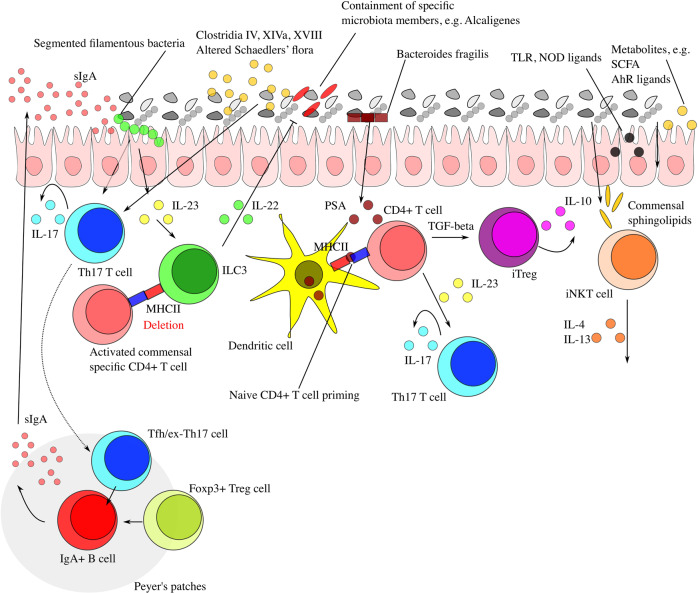
“Induction of Th17 cells by SFB is enabled by their adhesion to epithelial cells.36”
§ Interaction between microbiota and immunity in health and disease > The role of the microbiome in immune system development
What the sources say
- Supportedcites [36] Atarashi K Th17 cell induction by adhesion of microbes to intestinal epithelial cells Cell 2015 163 367 380 26411289 PMC4765954 source
The Results section 'Host-Specific Adhesion to SI ECs and Th17 Induction by SFB' (p. ~1) reports that EC-adhesive M-SFB caused robust Th17 accumulation in the SI LP while non-adherent R-SFB had no significant effect, and that colonic Th17 induction 'correlat[ed] with the EC adhesion efficacy of the SFB.' The 'Induction of Antigen-Specific Th17 Cells by EC-Adhesive SFB' section adds that Th17 TCRs in co-colonized mice were specific to EC-adhering M-SFB, indicating adhesion is required for antigen uptake and priming, and 'SI EC Activation by Adhering SFB' shows adhesion-driven SAA/ROS production conditions CD11c+ cells for Th17 differentiation. This matches the paper's title and the cited claim. (LLM, conf=0.95)
plainstates a cause- Asserted: passes — The authors put it forward as true.
- Checkable: passes — It can be checked against evidence.
- Load-bearing: unclear — It is unclear whether the paper’s conclusions depend on it.
- Based: passes — The paper gives a reason why it holds.
- Supported
158 more claims · 42 with their cited sources checked
Create a free account to see all 226 claims and to verify the 186 references still open.
- It may state two separate claims as one. 55
- Probably not a substantial claim. 7
- The quote only partly states this claim. 1
Claims other papers make about this one
Each is checked against this paper’s own text: does it say what the citing paper says it does?
The source backs part of the claim, not all of it — or backs it for a different population, condition or comparison.
In the citing paper
“Notably, certain gut microbiota and their metabolites may stimulate or inhibit the differentiation of naive CD4+ T cells into TH17 cells.”
From Microbiota–gut–brain axis and its therapeutic applications in neurodegenerative diseases (2024) · cites this paper as [696]
Experimental — accuracy not yet measuredThe source backs part of the claim, not all of it — or backs it for a different population, condition or comparison.
In the citing paper
“Deciphering the underlying mechanisms reveals that the gut microbiota reprogram the immunity of the tumor microenvironment (TME) by engaging innate and/or adaptive immune cells.”
From Gut microbiota influence immunotherapy responses: mechanisms and therapeutic strategies (2022) · doi:10.1186/s13045-022-01273-9 · cites this paper as [2]
Experimental — accuracy not yet measuredThe source backs part of the claim, not all of it — or backs it for a different population, condition or comparison.
In the citing paper
“Crosstalk between the GM and CNS is also essential for normal development and homeostatic functioning of the immune system, both innate and adaptive (256).”
From Signalling cognition: The gut microbiota and hypothalamic-pituitary-adrenal axis (2023) · cites this paper as [256]
Experimental — accuracy not yet measuredThe cited source says what the claim attributes to it.
In the citing paper
“The GM is therefore closely linked to the immune system, and they interact in several ways [reviewed recently (256, 257)].”
From Signalling cognition: The gut microbiota and hypothalamic-pituitary-adrenal axis (2023) · cites this paper as [256]
In the citing paper
“The gut microbiome participates in extensive bidirectional communication with the immune system.622,696”
From Microbiota–gut–brain axis and its therapeutic applications in neurodegenerative diseases (2024) · cites this paper as [696]
1 more claim about this paper
Create a free account to see every claim other papers make about this one.
Citations
Cites
Exploring the full spectrum of macrophage activation
Mosser, D. M., & Edwards, J. P. (2008) · Nature Reviews Immunology · doi:10.1038/nri2448 · Cited by 9,144 · cited 1×
“Monocytes and macrophages are crucial innate immune effector cells and have vital homeostatic roles.(86) Recent research started to shed light on the relationships between these monocytes/macrophages and the commensal microbiota.”
BackgroundJaneway, C. A., & Medzhitov, R. (2002) · Annual Review of Immunology · doi:10.1146/annurev.immunol.20.083001.084359 · Cited by 8,394 · cited 1×
“MyD88 is an adapter for multiple innate immune receptors that recognize microbial signals, and of the signaling pathways induced by the effector molecules interleukin-1 (IL-1) and IL-18 through their respective receptors.(66) Mice deficient in MyD88 display an altered microbiota composition.”
BackgroundHuman gut microbiome viewed across age and geography
Yatsunenko, T., Rey, F. E., Manary, M. J., Trehan, I., Dominguez-Bello, M. G., Contreras, M., Magris, M., Hidalgo, G., Baldassano, R. N., Anokhin, A. P., et al. (2012) · Nature · doi:10.1038/nature11053 · Cited by 7,815
Gut microbiome influences efficacy of PD-1-based immunotherapy against epithelial tumors
Routy, B., Le Chatelier, E., Derosa, L., Duong, C. P. M., Alou, M. T., Daillère, R., Fluckiger, A., Messaoudene, M., Rauber, C., Roberti, M. P., et al. (2018) · Science · doi:10.1126/science.aan3706 · Cited by 5,671
Gut flora metabolism of phosphatidylcholine promotes cardiovascular disease
Wang, Z., Klipfell, E., Bennett, B. J., Koeth, R., Levison, B. S., DuGar, B., Feldstein, A. E., Britt, E. B., Fu, X., Chung, Y.-M., et al. (2011) · Nature · doi:10.1038/nature09922 · Cited by 5,597 · cited 1×
“Interestingly, TMAO augments arthrosclerosis by upregulating the macrophage scavenger receptors CD36 and SR-A1, and by reinforcing cholesterol accumulation in macrophages and foam cell formation.(186)”
BackgroundAssociation of NOD2 leucine-rich repeat variants with susceptibility to Crohn's disease
Hugot, J.-P., Chamaillard, M., Zouali, H., Lesage, S., Cézard, J.-P., Belaiche, J., Almer, S., Tysk, C., O'Morain, C. A., Gassull, M., et al. (2001) · Nature · doi:10.1038/35079107 · Cited by 5,591 · cited 2×
“Among these, mutation in the NOD2 gene was the first to be confirmed to be strongly associated with susceptibility to CD.(157,158) NOD2 is an intracellular PRR capable of recognizing bacterial peptidoglycan-conserved motifs.”
BackgroundThe Microbial Metabolites, Short-Chain Fatty Acids, Regulate Colonic T reg Cell Homeostasis
Smith, P. M., Howitt, M. R., Panikov, N., Michaud, M., Gallini, C. A., Bohlooly-Y, M., Glickman, J. N., & Garrett, W. S. (2013) · Science · doi:10.1126/science.1241165 · Cited by 5,413
Role of the microbiota in immunity and inflammation.
Belkaid, Y., & Hand, T. W. (2014) · Cell · doi:10.1016/j.cell.2014.03.011 · Cited by 5,385
A frameshift mutation in NOD2 associated with susceptibility to Crohn's disease
Ogura, Y., Bonen, D. K., Inohara, N., Nicolae, D. L., Chen, F. F., Ramos, R., Britton, H., Moran, T., Karaliuskas, R., Duerr, R. H., et al. (2001) · Nature · doi:10.1038/35079114 · Cited by 5,030
Metabolites produced by commensal bacteria promote peripheral regulatory T-cell generation
Arpaia, N., Campbell, C., Fan, X., Dikiy, S., van der Veeken, J., deRoos, P., Liu, H., Cross, J. R., Pfeffer, K., Coffer, P. J., et al. (2013) · Nature · doi:10.1038/nature12726 · Cited by 4,838
Cited by
Items 201–300 of 1,007
Mousavi, S. E., Delgado-Saborit, J. M., Adivi, A., Pauwels, S., & Godderis, L. (2021) · The Science of The Total Environment · doi:10.1016/j.scitotenv.2021.151654 · Cited by 98
Modulating Nitric Oxide: Implications for Cytotoxicity and Cytoprotection
Belenichev, I. F., Popazova, O., Bukhtiyarova, N. V., Savchenko, D., Oksenych, V., & Kamyshnyi, O. (2024) · Antioxidants · doi:10.3390/antiox13050504 · Cited by 102
Moon, J., Lee, A. R., Kim, H., Jhun, J., Lee, S.-Y., Choi, J. W., Jeong, Y., Park, M. S., Ji, G. E., Cho, M., et al. (2023) · Arthritis Research & Therapy · doi:10.1186/s13075-023-03118-3 · Cited by 98
Nutritional and lifestyle management of the aging journey: A narrative review
Kassis, A. N., Fichot, M., Horcajada, M.-N., Horstman, A. M. H., Duncan, P. I., Bergonzelli, G. E., Preitner, N., Zimmermann, D., Bosco, N., Vidal, K., et al. (2023) · Frontiers in Nutrition · doi:10.3389/fnut.2022.1087505 · Cited by 98
Mahbub, N. U., Islam, M. M., Hong, S., & Chung, H. (2024) · Frontiers in Cellular and Infection Microbiology · doi:10.3389/fcimb.2024.1348279 · Cited by 97
Production, Formulation, and Application of Postbiotics in the Treatment of Skin Conditions
Vale, A. D. S., Pereira, G. V. D. M., de Oliveira, A. C., Neto, D. P. D. C., Herrmann, L. W., Karp, S. G., Thomaz‐Soccol, V., & Soccol, C. R. (2023) · Fermentation · doi:10.3390/fermentation9030264 · Cited by 97
Blastocystis: A Mysterious Member of the Gut Microbiome
Aykur, M., Malatyalı, E., Demirel, F., Koçak, B. C., Gentekaki, E., Tsaousis, A. D., & Al, F. D. (2024) · Microorganisms · doi:10.3390/microorganisms12030461 · Cited by 99
The Core Human Microbiome: Does It Exist and How Can We Find It? A Critical Review of the Concept
Sharon, I., Quijada, N. M., Pasolli, E., Fabbrini, M., Vitali, F., Agamennone, V., Dötsch, A., Selberherr, E., Grau, J. H., Meixner, M., et al. (2022) · Nutrients · doi:10.3390/nu14142872 · Cited by 98
Prebiotic and Probiotic Modulation of the Microbiota–Gut–Brain Axis in Depression
Radford-Smith, D. E., & Anthony, D. C. (2023) · Nutrients · doi:10.3390/nu15081880 · Cited by 96
Immunomodulatory Properties of Probiotics and Their Derived Bioactive Compounds
Thoda, C., & Touraki, M. (2023) · Applied Sciences · doi:10.3390/app13084726 · Cited by 96
The Microbiome and Cancer: A Translational Science Review
Fernandez, E., Wargo, J. A., & Helmink, B. A. (2025) · JAMA · doi:10.1001/jama.2025.2191 · Cited by 95
Recent advances in the epithelial barrier theory
Pat, Y., Yazıcı, D., D’Avino, P., Li, M., Ardıçlı, S., Ardıçlı, Ö., Mitamura, Y., Akdiş, M., Dhir, R., Nadeau, K. C., et al. (2024) · International Immunology · doi:10.1093/intimm/dxae002 · Cited by 96
Interplay between Solid Tumors and Tumor Microenvironment
Kim, S., Khadka, D., & Seo, J. H. (2022) · Frontiers in Immunology · doi:10.3389/fimmu.2022.882718 · Cited by 96
The Link between Obesity, Microbiota Dysbiosis, and Neurodegenerative Pathogenesis
Vamanu, E., & Nand, S. (2021) · Diseases · doi:10.3390/diseases9030045 · Cited by 96
Gut Microbial-Derived Short Chain Fatty Acids: Impact on Adipose Tissue Physiology
May, K. S., & den Hartigh, L. J. (2023) · Nutrients · doi:10.3390/nu15020272 · Cited by 95
Microbiome epidemiology and association studies in human health
VanEvery, H., Franzosa, E. A., Nguyen, L. H., & Huttenhower, C. (2022) · Nature Reviews Genetics · doi:10.1038/s41576-022-00529-x · Cited by 94
Bitanihirwe, B. K. Y., Lizano, P. L., & Woo, T.-U. W. (2022) · Molecular Psychiatry · doi:10.1038/s41380-022-01623-6 · Cited by 95
Gut-disc axis: A cause of intervertebral disc degeneration and low back pain?
Li, W., Lai, K., Chopra, N., Zheng, Z., Das, A., & Diwan, A. D. (2022) · European Spine Journal · doi:10.1007/s00586-022-07152-8 · Cited by 93
Dakal, T. C., Xu, C., & Kumar, A. (2025) · Frontiers in Medical Technology · doi:10.3389/fmedt.2024.1434799 · Cited by 93
The Metabolic Role and Therapeutic Potential of the Microbiome
Olofsson, L. E., & Bäckhed, F. (2022) · Endocrine Reviews · doi:10.1210/endrev/bnac004 · Cited by 92
Walker, R. L., Vlamakis, H. C., Lee, J. W. J., Besse, L. A., Xanthakis, V., Vasan, R. S., Shaw, S. Y., & Xavier, R. J. (2021) · Genome Medicine · doi:10.1186/s13073-021-01007-5 · Cited by 92
Crosstalk between γδ T cells and the microbiota
Papotto, P. H., Yılmaz, B., & Silva‐Santos, B. (2021) · Nature Microbiology · doi:10.1038/s41564-021-00948-2 · Cited by 92
Reinold, J., Farahpour, F., Fehring, C., Dolff, S., Konik, M., Korth, J., van Baal, L., Hoffmann, D. E., Buer, J., Witzke, O., et al. (2021) · Frontiers in Cellular and Infection Microbiology · doi:10.3389/fcimb.2021.747816 · Cited by 92
Bi, K., Zhang, X., Chen, W., & Diao, H. (2020) · Genes · doi:10.3390/genes11091075 · Cited by 93
Díez-Sainz, E., Lorente-Cebrián, S., Aranaz, P., Riezu-Boj, J. I., Martínez, J. A., & Milagro, F. I. (2021) · Frontiers in Nutrition · doi:10.3389/fnut.2021.586564 · Cited by 91
Glycan processing in gut microbiomes
Rosa, S. L. L., Ostrowski, M. P., de León, A. V., McKee, L. S., Larsbrink, J., Eijsink, V. G. H., Lowe, E. C., Martens, E. C., & Pope, P. B. (2022) · Current Opinion in Microbiology · doi:10.1016/j.mib.2022.102143 · Cited by 91
coda4microbiome: compositional data analysis for microbiome cross-sectional and longitudinal studies
Calle, M. L., Pujolassos, M., & Susín, A. (2023) · BMC Bioinformatics · doi:10.1186/s12859-023-05205-3 · Cited by 91
Warren, A., Nyavor, Y., Beguelin, A., & Frame, L. A. (2024) · Frontiers in Immunology · doi:10.3389/fimmu.2024.1365871 · Cited by 92
Deng, L., Wojciech, Ł., Png, C. W., Koh, E. Y., Aung, T. T., Kioh, D. Y. Q., Chan, E. C. Y., Malleret, B., Zhang, Y., Peng, G., et al. (2022) · Cellular and Molecular Life Sciences · doi:10.1007/s00018-022-04271-9 · Cited by 91
Glyphosate induces immune dysregulation in honey bees
Motta, E. V. S., Powell, J. E., & Moran, N. A. (2022) · Animal Microbiome · doi:10.1186/s42523-022-00165-0 · Cited by 92
Molecular and Pathophysiological Links between Metabolic Disorders and Inflammatory Bowel Diseases
Hyun, C. (2021) · International Journal of Molecular Sciences · doi:10.3390/ijms22179139 · Cited by 91
Sun, Y., Zhang, Z., Cheng, L., Zhang, X., Liu, Y., Zhang, R., Weng, P., & Wu, Z. (2021) · Food Research International · doi:10.1016/j.foodres.2021.110675 · Cited by 90
Association between intestinal microbiota and inflammatory bowel disease
Zhang, Y., Si, X., Yang, L., Wang, H., Sun, Y. Q., & Liu, N. (2022) · Animal Models and Experimental Medicine · doi:10.1002/ame2.12255 · Cited by 90
Gut microbiota as a new target for anticancer therapy: from mechanism to means of regulation
Sun, J., Song, S., Liu, J., Chen, F., Li, X., & Wu, G. (2025) · npj Biofilms and Microbiomes · doi:10.1038/s41522-025-00678-x · Cited by 89
Liu, Y., Pei, Z., Pan, T., Wang, H., Chen, W., & Lu, W. (2023) · Microbiological Research · doi:10.1016/j.micres.2023.127392 · Cited by 89
The Hepatoprotective and Hepatotoxic Roles of Sex and Sex-Related Hormones
Xu, L., Yuan, Y., Che, Z., Tan, X., Wu, B., Wang, C., Xu, C., & Xiao, J. (2022) · Frontiers in Immunology · doi:10.3389/fimmu.2022.939631 · Cited by 89
Early life gut microbiome and its impact on childhood health and chronic conditions
Núñez, H., Nieto, P. A., Mars, R. A. T., Ghavami, M., Hoy, C. S., & Sukhum, K. V. (2025) · Gut Microbes · doi:10.1080/19490976.2025.2463567 · Cited by 89
Crespin, A., Bescop, C. L., de Gunzburg, J., Vitry, F., Zalcman, G., Cervesi, J., & Bandinelli, P.-A. (2023) · Frontiers in Oncology · doi:10.3389/fonc.2023.1075593 · Cited by 88
Microbiota and Obesity: Where Are We Now?
Ballini, A., Scacco, S., Boccellino, M., Santacroce, L., & Arrigoni, R. (2020) · Biology · doi:10.3390/biology9120415 · Cited by 88
The contribution of the peripheral immune system to neurodegeneration
Berriat, F., Lobsiger, C. S., & Boillée, S. (2023) · Nature Neuroscience · doi:10.1038/s41593-023-01323-6 · Cited by 87
Tesei, D., Jewczynko, A., Lynch, A., & Urbaniak, C. (2022) · Life · doi:10.3390/life12040495 · Cited by 88
The Gut-Lung Axis in Cystic Fibrosis
Price, C. E., & O’Toole, G. A. (2021) · Journal of Bacteriology · doi:10.1128/jb.00311-21 · Cited by 87
Pezzino, S., Sofia, M., Faletra, G., Mazzone, C., Litrico, G., Greca, G. L., & Latteri, S. (2022) · Biology · doi:10.3390/biology11111622 · Cited by 88
Paul, J. K., Azmal, M., Haque, A. S. N. B., Meem, M., Talukder, O. F., & Ghosh, A. (2025) · World Journal of Gastroenterology · doi:10.3748/wjg.v31.i5.99913 · Cited by 87
Padhi, P., Worth, C., Zenitsky, G. D., Jin, H., Sambamurti, K., Anantharam, V., Kanthasamy, A., & Kanthasamy, A. G. (2022) · Frontiers in Neuroscience · doi:10.3389/fnins.2022.836605 · Cited by 87
Bacterial Peptidoglycan Fragments Differentially Regulate Innate Immune Signaling
Bersch, K. L., DeMeester, K. E., Zagani, R., Chen, S., Wodzanowski, K. A., Liu, S., Mashayekh, S., Reinecker, H., & Grimes, C. L. (2021) · ACS Central Science · doi:10.1021/acscentsci.1c00200 · Cited by 90
Mizutani, T., Ishizaka, A., Koga, M., Ikeuchi, K., Saito, M., Adachi, E., Yamayoshi, S., Iwatsuki‐Horimoto, K., Yasuhara, A., Kiyono, H., et al. (2022) · Microbiology Spectrum · doi:10.1128/spectrum.01689-21 · Cited by 87
Fakharian, F., Asgari, B., Nabavi-Rad, A., Sadeghi, A., Soleimani, N., Yadegar, A., & Zali, M. R. (2022) · Frontiers in Cellular and Infection Microbiology · doi:10.3389/fcimb.2022.953718 · Cited by 87
Trachalaki, A., Tsitoura, E., Mastrodimou, S., Invernizzi, R., Vasarmidi, E., Bibaki, E., Tzanakis, Ν., Molyneaux, P. L., Maher, T. M., & Antoniou, K. M. (2021) · Frontiers in Immunology · doi:10.3389/fimmu.2021.661811 · Cited by 85
Gut Microbiota and its Metabolites: Bridge of Dietary Nutrients and Alzheimer’s Disease
Zhu, G., Zhao, J., Zhang, H., Wang, G., & Chen, W. (2023) · Advances in Nutrition · doi:10.1016/j.advnut.2023.04.005 · Cited by 85
Clostridium sporogenes -derived metabolites protect mice against colonic inflammation
Krause, F. F., Mangold, K., Ruppert, A.-L., Leister, H., Hellhund, A., Krol, A. L., Pesek, J., Watzer, B., Winterberg, S., Raifer, H., et al. (2024) · Gut Microbes · doi:10.1080/19490976.2024.2412669 · Cited by 85
Sartorio, M. G., Pardue, E. J., Scott, N. E., & Feldman, M. F. (2023) · Proceedings of the National Academy of Sciences · doi:10.1073/pnas.2306314120 · Cited by 85
Advancing translational exposomics: bridging genome, exposome and personalized medicine
Sarigiannis, D. A., Karakitsios, S., Anesti, O., Stem, A. D., Valvi, D., Sumner, S., Chatzi, L., Snyder, M. P., Thompson, D. C., & Vasiliou, V. (2025) · Human Genomics · doi:10.1186/s40246-025-00761-6 · Cited by 85
The gut microbiome and efficacy of cancer immunotherapy
Roviello, G., Iannone, L. F., Bersanelli, M., Mini, E., & Catalano, M. (2021) · Pharmacology & Therapeutics · doi:10.1016/j.pharmthera.2021.107973 · Cited by 84
The Evolution, Immunopathogenesis and Biomarkers of Type 2 Inflammation in Common Allergic Disorders
Gao, Y., Wang, Z., Öğülür, İ., Li, S., Yazıcı, D., Li, X., Pat, Y., Zheng, Y., Babayev, H., Zeyneloglu, C., et al. (2025) · Allergy · doi:10.1111/all.16620 · Cited by 84
Aziz, T. A., Khan, A. A., Tzora, A., Voidarou, C. C., & Skoufos, I. (2023) · Nutrients · doi:10.3390/nu15132956 · Cited by 85
The role of polysaccharides in immune regulation through gut microbiota: mechanisms and implications
Zhao, T., Wang, C., Liu, Y., Li, B., Shao, M., Zhao, W., & Zhou, C. (2025) · Frontiers in Immunology · doi:10.3389/fimmu.2025.1555414 · Cited by 84
Low-dose glyphosate exposure alters gut microbiota composition and modulates gut homeostasis
Lehman, P., Cady, N. M., Ghimire, S., Shahi, S. K., Shrode, R. L., Lehmler, H., & Mangalam, A. K. (2023) · Environmental Toxicology and Pharmacology · doi:10.1016/j.etap.2023.104149 · Cited by 82
Li, C., Duan, S., Li, Y., Pan, X., & Han, L. (2021) · Carbohydrate Polymers · doi:10.1016/j.carbpol.2021.117876 · Cited by 82
IMPERATIVES OF AVAILABILITY OF MINERAL RESOURCES IN A RESOURCE-TYPE REGION
Leontiev, R. G., & Arkhipova, Y. A. (2024) · Scientific Research of the SCO Countries: Synergy and Integration · doi:10.34660/inf.2020.83.56.001 · Cited by 82
Mechanisms Involved in Gut Microbiota Regulation of Skeletal Muscle
Li, G., Jin, B., & Fan, Z. (2022) · Oxidative Medicine and Cellular Longevity · doi:10.1155/2022/2151191 · Cited by 81
Microbiome Metabolites and Thyroid Dysfunction
Bargiel, P., Szczuko, M., Stachowska, L., Prowans, P., Czapla, N., Markowska, M., Petriczko, J., Kledzik, J., Jędrzejczyk-Kledzik, A., Palma, J., et al. (2021) · Journal of Clinical Medicine · doi:10.3390/jcm10163609 · Cited by 81
Neuroinflammation in neurodegeneration via microbial infections
Tran, V. T. A., Lee, L. P., & Cho, H. (2022) · Frontiers in Immunology · doi:10.3389/fimmu.2022.907804 · Cited by 81
The Immune System through the Lens of Alcohol Intake and Gut Microbiota
Calleja‐Conde, J., Echeverry‐Alzate, V., Bühler, K., Durán‐González, P., Morales-Garcia, J. A., Segovia‐Rodríguez, L., de Fonseca, F. R., Giné, E., & López‐Moreno, J. J. (2021) · International Journal of Molecular Sciences · doi:10.3390/ijms22147485 · Cited by 82
Probiotic-Based Intervention in the Treatment of Ulcerative Colitis: Conventional and New Approaches
Štofilová, J., Kvaková, M., Kamlárová, A., Hijová, E., Bertková, I., & Guľašová, Z. (2022) · Biomedicines · doi:10.3390/biomedicines10092236 · Cited by 81
Zou, B., Li, J., Ma, R., Cheng, X.-Y., Ma, R.-Y., Zhou, T.-Y., Wu, Z., Yao, Y., & Li, J. (2023) · Aging and Disease · doi:10.14336/ad.2022.1127 · Cited by 80
The gut microbiome, immune modulation, and cognitive decline: insights on the gut-brain axis
Zhang, R., Ding, N., Feng, X., & Liao, W. (2025) · Frontiers in Immunology · doi:10.3389/fimmu.2025.1529958 · Cited by 81
Microbiome as an immune regulator in health, disease, and therapeutics
Juarez, V. M., Montalbine, A. N., & Singh, A. K. (2022) · Advanced Drug Delivery Reviews · doi:10.1016/j.addr.2022.114400 · Cited by 79
Microbiota and Immunity during Respiratory Infections: Lung and Gut Affair
Marrella, V., Nicchiotti, F., & Cassani, B. (2024) · International Journal of Molecular Sciences · doi:10.3390/ijms25074051 · Cited by 79
The emerging role of the gut microbiome in posttraumatic stress disorder
Ke, S., Hartmann, J., Ressler, K. J., Liu, Y., & Koenen, K. C. (2023) · Brain Behavior and Immunity · doi:10.1016/j.bbi.2023.09.005 · Cited by 79
Immunometabolism in systemic lupus erythematosus
Patiño‐Martínez, E., & Kaplan, M. J. (2025) · Nature Reviews Rheumatology · doi:10.1038/s41584-025-01267-0 · Cited by 80
The Functional Role of Lactoferrin in Intestine Mucosal Immune System and Inflammatory Bowel Disease
Liu, N., Feng, G., Zhang, X., Hu, Q., Sun, S., Sun, J., Sun, Y., Wang, R., Zhang, Y., Wang, P., et al. (2021) · Frontiers in Nutrition · doi:10.3389/fnut.2021.759507 · Cited by 79
Genesis of clinical and subclinical endometritis in dairy cows
Pascottini, O. B., LeBlanc, S. J., Gnemmi, G. M., Leroy, J., & OPSOMER, G. (2023) · Reproduction · doi:10.1530/rep-22-0452 · Cited by 79
The potential role of mitochondria in the microbiota-gut-brain axis: Implications for brain health
Qiao, L., Yang, G., Wang, P., & Xu, C. (2024) · Pharmacological Research · doi:10.1016/j.phrs.2024.107434 · Cited by 78
Effects of chemical contaminants on the ecology and evolution of organisms a review
Samuel, P. O., Edo, G. I., Oloni, G. O., Ugbune, U., Ezekiel, G. O., Essaghah, A. E. A., & Agbo, J. J. (2023) · Chemistry and Ecology · doi:10.1080/02757540.2023.2284158 · Cited by 79
Clinical translation of personalized bioengineered implant scaffolds
Xu, C., & Ivanovski, S. (2025) · Nature Reviews Bioengineering · doi:10.1038/s44222-024-00269-z · Cited by 81
Wang, T., Ishikawa, T., Sasaki, M., & Chiba, T. (2022) · Frontiers in Medicine · doi:10.3389/fmed.2022.822190 · Cited by 78
IL-17: Balancing Protective Immunity and Pathogenesis
Sun, L., Wang, L., Moore, B. B., Zhang, S., Xiao, P., Decker, A. M., & Wang, H. (2023) · Journal of Immunology Research · doi:10.1155/2023/3360310 · Cited by 78
A high-quality genome compendium of the human gut microbiome of Inner Mongolians
Jin, H., Quan, K., He, Q., Kwok, L. Y., Ma, T., Li, Y., Zhao, F., You, L., Zhang, H., & Sun, Z. (2023) · Nature Microbiology · doi:10.1038/s41564-022-01270-1 · Cited by 78
The Kynurenine Pathway in Acute Kidney Injury and Chronic Kidney Disease
Wee, H. N., Liu, J., Ching, J., Kovalik, J., & Lim, S. C. (2021) · American Journal of Nephrology · doi:10.1159/000519811 · Cited by 79
Casado-Bedmar, M., & Viennois, E. (2022) · Journal of Crohn's and Colitis · doi:10.1093/ecco-jcc/jjab223 · Cited by 77
Ma, Z., Wang, Z., Cao, J., Dong, Y., & Chen, Y. (2025) · Gut Microbes · doi:10.1080/19490976.2025.2560019 · Cited by 78
Vivarelli, S., Costa, C., Teodoro, M., Giambò, F., Tsatsakis, A. M., & Fenga, C. (2022) · Archives of Toxicology · doi:10.1007/s00204-022-03391-2 · Cited by 77
Mechanisms of microbiota modulation: Implications for health, disease, and therapeutic interventions
Ugwu, O. P.-C., Alum, E. U., Okon, M. B., & Obeagu, E. I. (2024) · Medicine · doi:10.1097/md.0000000000038088 · Cited by 77
The Role of the Gut Microbiome in Cancer Immunotherapy: Current Knowledge and Future Directions
Kiousi, D. E., Kouroutzidou, A. Z., Neanidis, K., Karavanis, E., Matthaios, D., Pappa, A., & Galanis, Α. (2023) · Cancers · doi:10.3390/cancers15072101 · Cited by 76
The Role of Bacteriophages in the Gut Microbiota: Implications for Human Health
Emencheta, S. C., Olovo, C. V., Eze, O. C., Kalu, C. F., BEREBON, D. P., Onuigbo, E. B., Vila, M. M. D. C., Balcão, V. M., & Attama, A. A. (2023) · Pharmaceutics · doi:10.3390/pharmaceutics15102416 · Cited by 79
Ali, R., Quinn, G. M., Umarova, R., Haddad, J. A., Zhang, G. Y., Townsend, E. C., Scheuing, L., Hill, K., Gewirtz, M. A., Rampertaap, S., et al. (2022) · Nature Microbiology · doi:10.1038/s41564-022-01273-y · Cited by 77
de Almeida, V. M., Engel, D. F., Ricci, M. F., Cruz, C. S., Lopes, Í. S., Alves, D. A., Auriol, M. D., Magalhães, J., Machado, E. C., Rocha, V. M., et al. (2023) · Gut Microbes · doi:10.1080/19490976.2023.2249146 · Cited by 76
Recent insights of obesity-induced gut and adipose tissue dysbiosis in type 2 diabetes
Patra, D., Banerjee, D., Ramprasad, P., Roy, S., Pal, D., & Dasgupta, S. (2023) · Frontiers in Molecular Biosciences · doi:10.3389/fmolb.2023.1224982 · Cited by 77
The subfornical organ is a nucleus for gut-derived T cells that regulate behaviour
Yoshida, T. M., Nguyen, M. T., Zhang, L., Lu, B. Y., Zhu, B., Murray, K. N., Mineur, Y. S., Zhang, C., Xu, D., Lin, E., et al. (2025) · Nature · doi:10.1038/s41586-025-09050-7 · Cited by 76
Qi, Y., Ren, S., Ye, J., Tian, Y., Wang, G., Zhang, S., Du, L., Li, Y., Che, Y., & Ning, G. (2022) · Acta Biomaterialia · doi:10.1016/j.actbio.2022.02.034 · Cited by 76
Djuricic, I. D., & Calder, P. C. (2025) · Current Atherosclerosis Reports · doi:10.1007/s11883-025-01363-2 · Cited by 77
Microbial Metabolite Regulation of Epithelial Cell-Cell Interactions and Barrier Function
Ornelas, A., Dowdell, A. S., Lee, J. S., & Colgan, S. P. (2022) · Cells · doi:10.3390/cells11060944 · Cited by 76
Probiotics, Photobiomodulation, and Disease Management: Controversies and Challenges
Ailioaie, L. M., & Litscher, G. (2021) · International Journal of Molecular Sciences · doi:10.3390/ijms22094942 · Cited by 75
Human Gut Microbiota in Coronary Artery Disease: A Systematic Review and Meta-Analysis
Choroszy, M., Litwinowicz, K., Bednarz, R., Roleder, T., Lerman, A., Toya, T., Kamiński, K. A., Sawicka, E., Niemira, M., & Sobieszczańska, B. (2022) · Metabolites · doi:10.3390/metabo12121165 · Cited by 76
A dynamic atlas of immunocyte migration from the gut
Galván-Peña, S., Zhu, Y., Hanna, B. S., Mathis, D., & Benoist, C. (2024) · Science Immunology · doi:10.1126/sciimmunol.adi0672 · Cited by 74
Faecalibacterium prausnitzii strain EXL01 boosts efficacy of immune checkpoint inhibitors
Bredon, M., Danne, C., Pham, H. P., Ruffié, P., Bessede, A., Rolhion, N., Creusot, L., Brot, L., Alonso, I., Langella, P., et al. (2024) · OncoImmunology · doi:10.1080/2162402x.2024.2374954 · Cited by 74
Advancing Cancer Treatment: A Review of Immune Checkpoint Inhibitors and Combination Strategies
Neil, V. M., & Lee, S. W. (2025) · Cancers · doi:10.3390/cancers17091408 · Cited by 76
Microbiota-immune-brain interactions: A lifespan perspective
Ratsika, A., Cruz Pereira, J. S., Lynch, C. M. K., Clarke, G., & Cryan, J. F. (2023) · Current Opinion in Neurobiology · doi:10.1016/j.conb.2022.102652 · Cited by 74
Microbiota-gut-brain axis in autism spectrum disorder
Yu, Y., & Zhao, F. (2021) · Journal of genetics and genomics/Journal of Genetics and Genomics · doi:10.1016/j.jgg.2021.07.001 · Cited by 75
Metadata
- Authors
- Zheng, D., Liwinski, T., & Elinav, E.
- Affiliations
- Sun Yat-sen University (CN)
- University Medical Center Hamburg-Eppendorf (DE)
- German Cancer Research Center (DE)
- Corresponding author
- Elinav, Eran
- Venue
- Cell Research
- Published
- 2020-05-20
- Volume
- 30
- Issue
- 6
- Pages
- 492-506
- ISSN
- 1001-0602 (ISSN-L)
- 1748-7838
- PMC
- PMC7264227
- OpenAlex
- W3027658010
- Cited by
- 3,947
- References
- 271
- Citations by year
- 2026: 594 · 2025: 817 · 2024: 858 · 2023: 630 · 2022: 585 · 2021: 397 · 2020: 61
- FWCI
- 39.90
- Type
- journal article
- Language
- en
- Open access
- hybrid
- doi.org
- Licence
- cc-by
- creativecommons.org/licenses/by/4.0 (tdm)
- creativecommons.org/licenses/by/4.0 (vor)
- Locations
- Cell Research (publishedVersion, cc-by)
- PubMed Central (publishedVersion, cc-by)
- PubMed (publishedVersion)
- Funders
- Howard Hughes Medical Institute
- Bill and Melinda Gates Foundation
- Canadian Institute for Advanced Research
- Deutsche Forschungsgemeinschaft (420943353)
- Sun Yat-sen University
- Topics
- Life Sciences › Biochemistry, Genetics and Molecular Biology › Molecular Biology › Gut microbiota and health
- Life Sciences › Immunology and Microbiology › Immunology › Immune Response and Inflammation
- Life Sciences › Immunology and Microbiology › Immunology › T-cell and B-cell Immunology
- Keywords
- microbiota-immune interactions, gut microbiota, innate immunity, adaptive immunity, immune system development, host-microbe symbiosis, immune-mediated diseases, intestinal immunity, microbiome-targeted therapy, immune homeostasis
- MeSH terms
- Gastrointestinal Microbiome, Animals, Homeostasis, Humans, Immunity, Innate, Intestinal Mucosa, Symbiosis
About these checks
Registry, retraction, Cites and statistics results are computed, not judged, with one exception: a printed reference that no index lists is read once by a model before it counts as a citation error. Claims are extracted by a model and kept only when their quote appears verbatim in the text; each cited source is then checked, with a model’s help, for whether it says what the claim relies on. Those verdicts can be wrong — read the claim’s quote and the cited source before relying on one.
The claim verdicts this report counts are experimental: their accuracy is not yet measured.
A language model drew the claims from the paper on 2026-10-07, under version 3 of the claim definition (model deepseek-v4.1-flash, prompt extract-v3).
A second model labelled each claim on 2026-10-07 (model jev-1.13-20260917, definition revision gold-guideline-v0.2).
Cited sources are checked with a language model’s help (gpt-6-sol and qwen3.8-omni-flash).
Statistics and arithmetic are recomputed, not judged.
Confidence bands are shown only for fields calibrated on our annotated test set. None is calibrated yet, so no band is shown.
What counts as a claim ›How we measure confidence ›How we check this ›
Are you an author, or do you see a problem with this page? Request a review
Data sources
Bibliographic data: Semantic Scholar, OpenAlex, Crossref.
Contains information from the Semantic Scholar Academic Graph Datasets, made available under the ODC Attribution License (ODC-BY 1.0).
Semantic Scholar’s data is described in: Kinney, R., et al. (2023). The Semantic Scholar Open Data Platform. arXiv:2301.10140.
