

The DOI matches its Crossref record; 164 of the 165 references it cites were found in a registry or an index.
Brain macrophage development, diversity and dysregulation in health and disease
Open accessAbstract
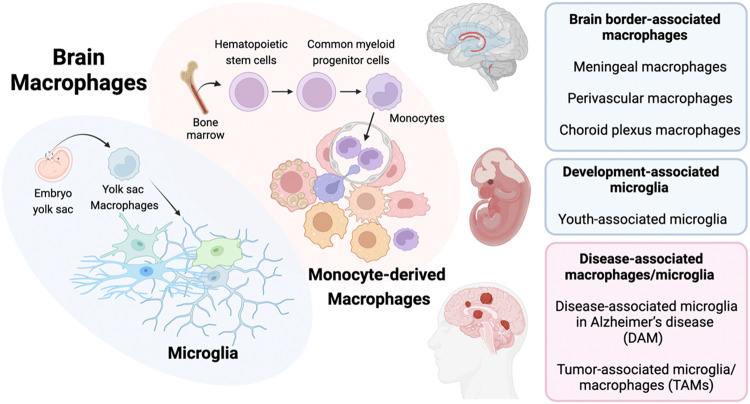
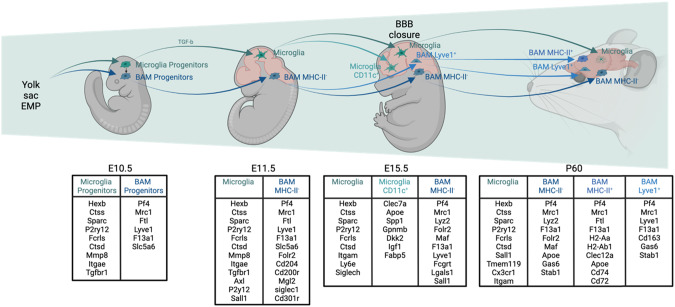
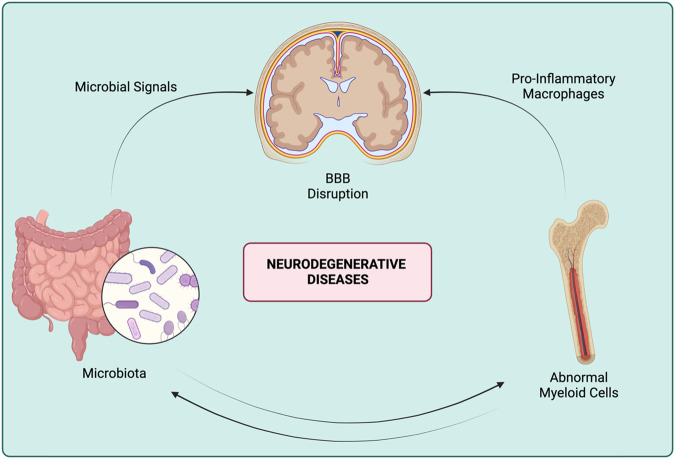
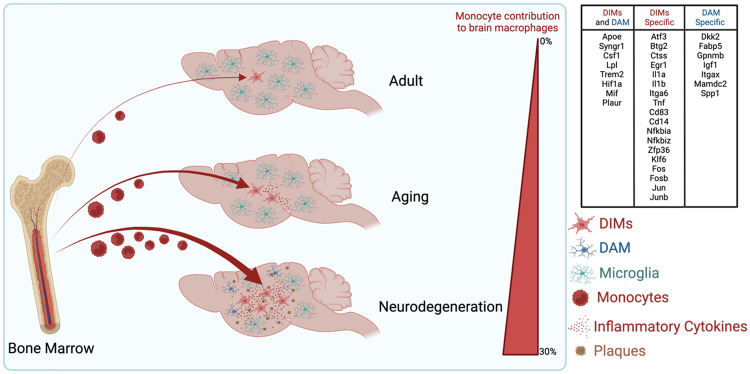
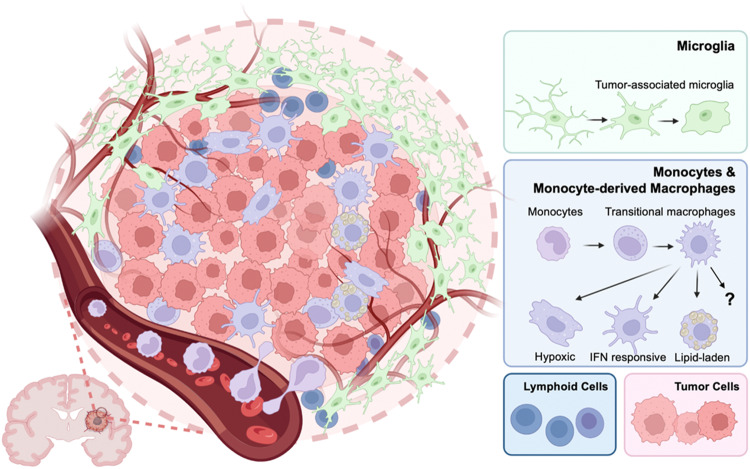
Brain macrophages include microglia in the parenchyma, border-associated macrophages in the meningeal-choroid plexus-perivascular space, and monocyte-derived macrophages that infiltrate the brain under various disease conditions. The vast heterogeneity of these cells has been elucidated over the last decade using revolutionary multiomics technologies. As such, we can now start to define these various macrophage populations according to their ontogeny and their diverse functional programs during brain development, homeostasis and disease pathogenesis. In this review, we first outline the critical roles played by brain macrophages during development and healthy aging. We then discuss how brain macrophages might undergo reprogramming and contribute to neurodegenerative disorders, autoimmune diseases, and glioma. Finally, we speculate about the most recent and ongoing discoveries that are prompting translational attempts to leverage brain macrophages as prognostic markers or therapeutic targets for diseases that affect the brain.
Overview
The claims and statistics of this paper haven’t been checked yet.
Run the check — free, no account needed. It reads the open-access text and checks the sources it cites.
Integrity signals
Registry
Cites
Statistics
Figures
Verification
Claims the paper makes
The claims and statistics of this paper haven’t been checked yet.
Run the check — free, no account needed. It reads the open-access text and checks the sources it cites.
Claims other papers make about this one
Each is checked against this paper’s own text: does it say what the citing paper says it does?
The source backs part of the claim, not all of it — or backs it for a different population, condition or comparison.
In the citing paper
“With aging, or premature death, perivascular macrophages are replaced by monocyte-derived macrophages that appear to be more prone to induce inflammation [382,383,384].”
From Revisiting the Pathogenesis of X-Linked Adrenoleukodystrophy (2025) · cites this paper as [384]
Experimental — accuracy not yet measured
Self-check
Percentages, sums and reported differences re-computed from the paper’s own numbers.
The self-check needs the paper’s full text.
Citations
Cites
Molecular Mechanisms of Depression: Perspectives on New Treatment Strategies
Lang, U. E., & Borgwardt, S. (2013) · Cellular Physiology and Biochemistry · doi:10.1159/000350094 · Cited by 8,526
Alzheimer's disease: the amyloid cascade hypothesis
Hardy, J. A., & Higgins, G. A. (1992) · Science · doi:10.1126/science.1566067 · Cited by 7,484
A Unique Microglia Type Associated with Restricting Development of Alzheimer’s Disease
Keren-Shaul, H., Spinrad, A., Weiner, A., Matcovitch-Natan, O., Dvir-Szternfeld, R., Ulland, T. K., David, E., Baruch, K., Lara-Astaiso, D., Toth, B., et al. (2017) · Cell · doi:10.1016/j.cell.2017.05.018 · Cited by 5,493
Fate Mapping Analysis Reveals That Adult Microglia Derive from Primitive Macrophages
Ginhoux, F., Greter, M., Leboeuf, M., Nandi, S., See, P., Gokhan, S., Mehler, M. F., Conway, S. J., Ng, L. G., Stanley, E. R., et al. (2010) · Science · doi:10.1126/science.1194637 · Cited by 5,175
Self-citationMicroglia Sculpt Postnatal Neural Circuits in an Activity and Complement-Dependent Manner
Schafer, D. P., Lehrman, E. K., Kautzman, A. G., Koyama, R., Mardinly, A. R., Yamasaki, R., Ransohoff, R. M., Greenberg, M. E., Barres, B. A., & Stevens, B. (2012) · Neuron · doi:10.1016/j.neuron.2012.03.026 · Cited by 4,089
Chronic Inflammation (Inflammaging) and Its Potential Contribution to Age-Associated Diseases
Franceschi, C., & Campisi, J. (2014) · The Journals of Gerontology Series A: Biological Sciences and Medical Sciences · doi:10.1093/gerona/glu057 · Cited by 3,891
Gut microbiota regulate motor deficits and neuroinflammation in a model of Parkinson's disease
Sampson, T. R., Debelius, J. W., Thron, T., Janssen, S., Shastri, G. G., Ilhan, Z. E., Challis, C., Schretter, C. E., Rocha, S., Gradinaru, V., et al. (2016) · Cell · doi:10.1016/j.cell.2016.11.018 · Cited by 3,622
Host microbiota constantly control maturation and function of microglia in the CNS
Erny, D., Hrabě de Angelis, A. L., Jaitin, D., Wieghofer, P., Staszewski, O., David, E., Keren-Shaul, H., Mahlakoiv, T., Jakobshagen, K., Buch, T., et al. (2015) · Nature Neuroscience · doi:10.1038/nn.4030 · Cited by 3,569
The Classical Complement Cascade Mediates CNS Synapse Elimination
Stevens, B., Allen, N. J., Vazquez, L. E., Howell, G. R., Christopherson, K. S., Nouri, N., Micheva, K. D., Mehalow, A. K., Huberman, A. D., Stafford, B., et al. (2007) · Cell · doi:10.1016/j.cell.2007.10.036 · Cited by 3,313
Fate Mapping Reveals Origins and Dynamics of Monocytes and Tissue Macrophages under Homeostasis
Yona, S., Kim, K.-W., Wolf, Y., Mildner, A., Varol, D., Breker, M., Strauss-Ayali, D., Viukov, S., Guilliams, M., Misharin, A., et al. (2013) · Immunity · doi:10.1016/j.immuni.2012.12.001 · Cited by 3,245
Research works printed but not linked: 1
- Schonhoff A, Figge D, Williams G, Jurkuvenaite A, Gallups N, Childers G, et al. Bord-associated macrophages Mediat neuroinflammatory response alpha-synuclein model Parkinson Dis. 2022. https://doi.org/10.1101/2022.10.12.511960. · DOI
Cited by
Sorted by citations
Tissue macrophages: origin, heterogenity, biological functions, diseases and therapeutic targets
Guan, F., Wang, R., Yi, Z., Luo, P., Liu, W., Xie, Y., Liu, Z., Xia, Z., Zhang, H., & Cheng, Q. (2025) · Signal Transduction and Targeted Therapy · doi:10.1038/s41392-025-02124-y · Cited by 371
Lan, Y., Zhang, X., Liu, S., Guo, C., Jin, Y., Li, H., Wang, L., Zhao, J., Hao, Y., Li, Z., et al. (2024) · Immunity · doi:10.1016/j.immuni.2024.01.008 · Cited by 108
Self-citationBorder-associated macrophages in the central nervous system
Sun, R., & Jiang, H. (2024) · Journal of Neuroinflammation · doi:10.1186/s12974-024-03059-x · Cited by 120
Resident tissue macrophages: Key coordinators of tissue homeostasis beyond immunity
Zhao, J., Andreev, I., & Silva, H. M. (2024) · Science Immunology · doi:10.1126/sciimmunol.add1967 · Cited by 109
Microglia heterogeneity, modeling and cell-state annotation in development and neurodegeneration
Fumagalli, L., Nazlie Mohebiany, A., Premereur, J., Polanco Miquel, P., Bijnens, B., Van de Walle, P., Fattorelli, N., & Mancuso, R. (2025) · Nature Neuroscience · doi:10.1038/s41593-025-01931-4 · Cited by 90
Metadata
- Authors
- Silvin, A., Qian, J., & Ginhoux, F.
- Affiliations
- Inserm (FR)
- Shanghai Jiao Tong University (CN)
- Agency for Science, Technology and Research (SG)
- Corresponding author
- Ginhoux, Florent
- Venue
- Cellular & Molecular Immunology
- Published
- 2023-06-26
- Volume
- 20
- Issue
- 11
- Pages
- 1277-1289
- ISSN
- 1672-7681 (ISSN-L)
- 2042-0226
- PMC
- PMC10616292
- OpenAlex
- W4382181798
- Cited by
- 137
- References
- 165
- Citations by year
- 2026: 41 · 2025: 53 · 2024: 37 · 2023: 6
- FWCI
- 3.58
- Type
- journal article
- Language
- en
- Open access
- hybrid
- doi.org
- Locations
- Cellular and Molecular Immunology (publishedVersion, cc-by)
- PubMed Central (publishedVersion, cc-by)
- PubMed (publishedVersion)
- Topics
- Life Sciences › Neuroscience › Neurology › Neuroinflammation and Neurodegeneration Mechanisms
- Health Sciences › Medicine › Clinical Neurology › Multiple Sclerosis Research Studies
- Life Sciences › Neuroscience › Developmental Neuroscience › Neurogenesis and neuroplasticity mechanisms
- Keywords
- brain macrophages, microglia, border-associated macrophages, meningeal macrophages, choroid plexus macrophages, perivascular macrophages, monocyte-derived macrophages, macrophage heterogeneity, macrophage ontogeny, brain development, healthy aging, neurodegenerative diseases, glioma, macrophage reprogramming, prognostic factors, therapeutic target
- MeSH terms
- Autoimmune Diseases, Brain, Humans, Macrophages, Meninges, Microglia
About these checks
Registry, retraction, Cites and statistics results are computed, not judged, with one exception: a printed reference that no index lists is read once by a model before it counts as a citation error. Claims are extracted by a model and kept only when their quote appears verbatim in the text; each cited source is then checked, with a model’s help, for whether it says what the claim relies on. Those verdicts can be wrong — read the claim’s quote and the cited source before relying on one.
Statistics and arithmetic are recomputed, not judged.
Confidence bands are shown only for fields calibrated on our annotated test set. None is calibrated yet, so no band is shown.
What counts as a claim ›How we measure confidence ›How we check this ›
Are you an author, or do you see a problem with this page? Request a review
