

Enoyl-CoA hydratase-1 regulates mTOR signaling and apoptosis by sensing nutrients
Open accessThe DOI matches its Crossref record; 69 of the 69 references it cites were found in a registry or an index.
Abstract
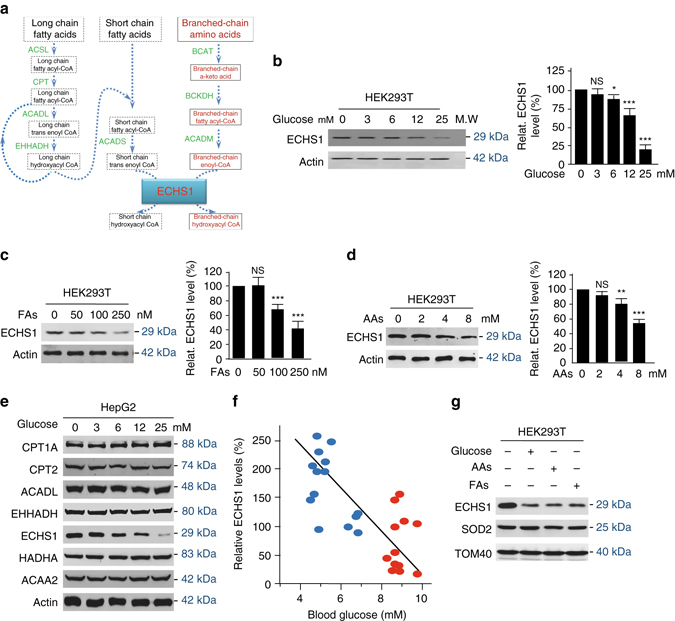
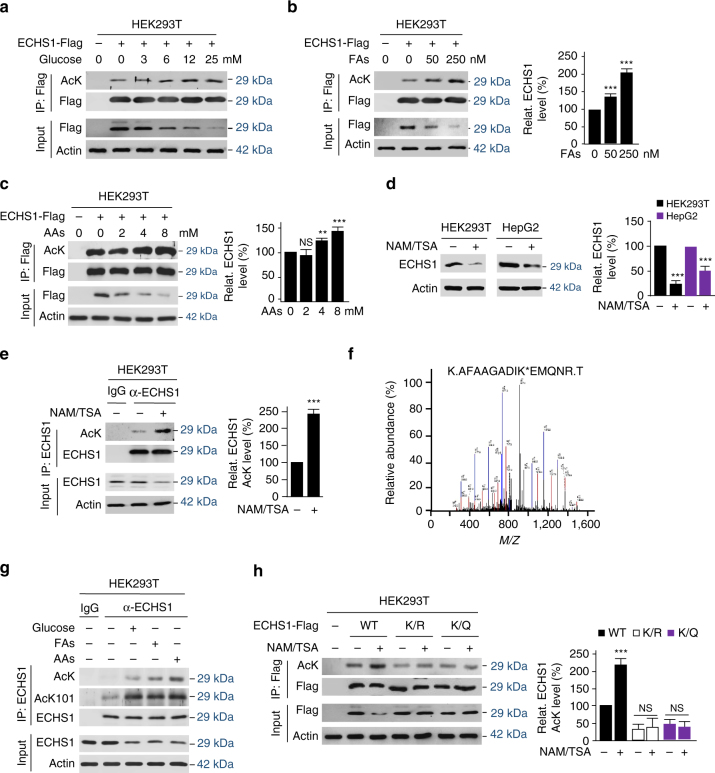
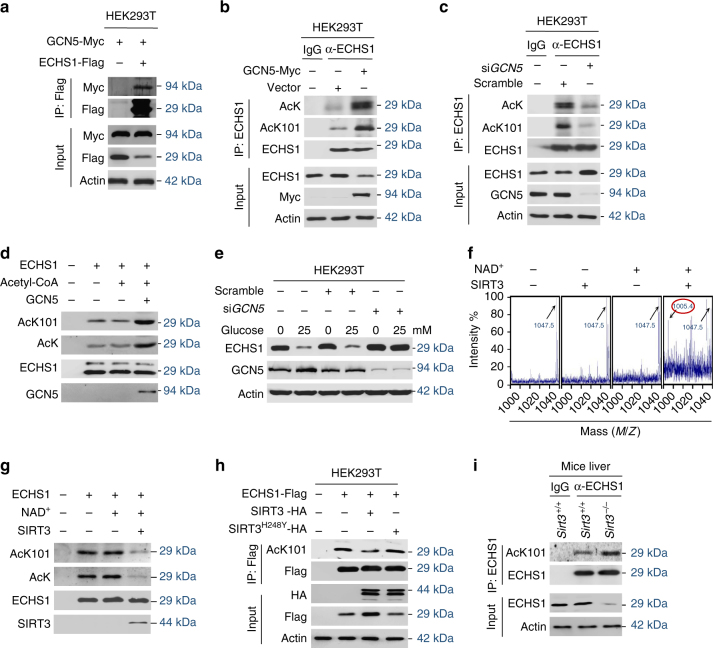
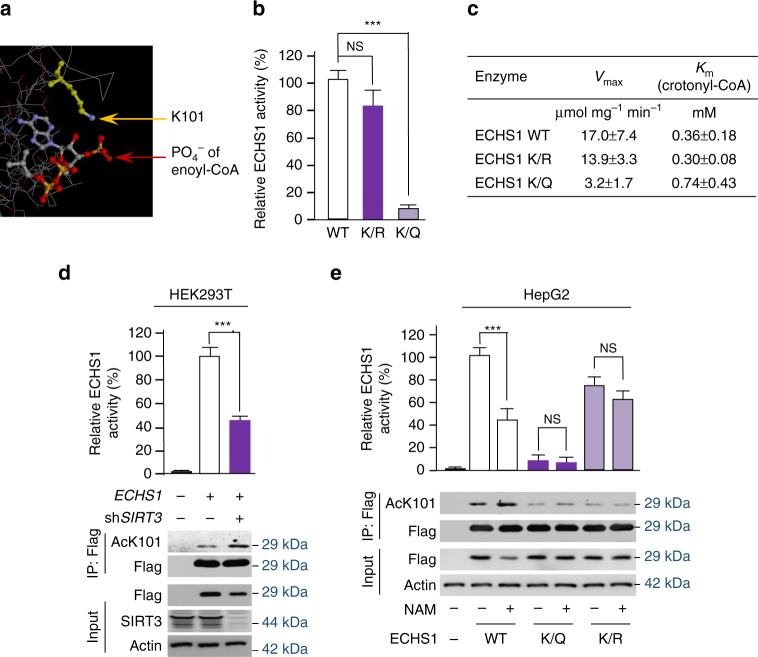
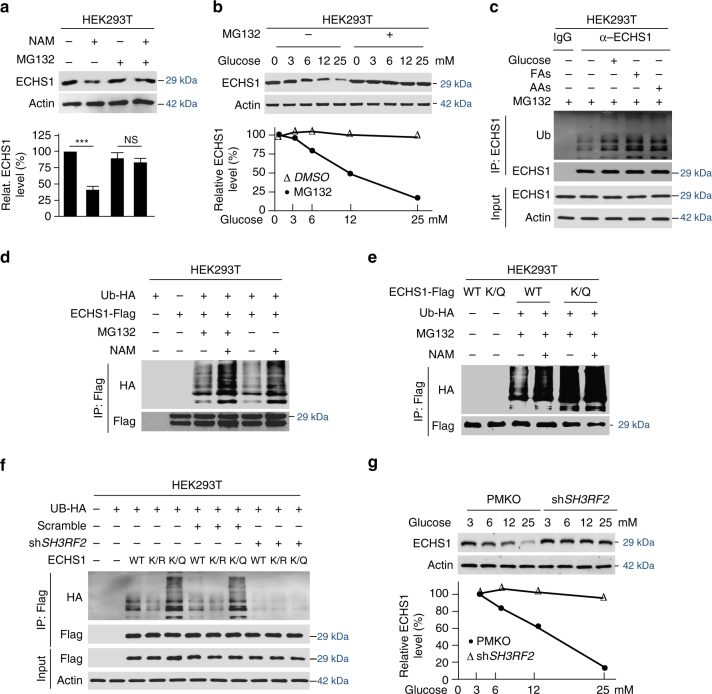
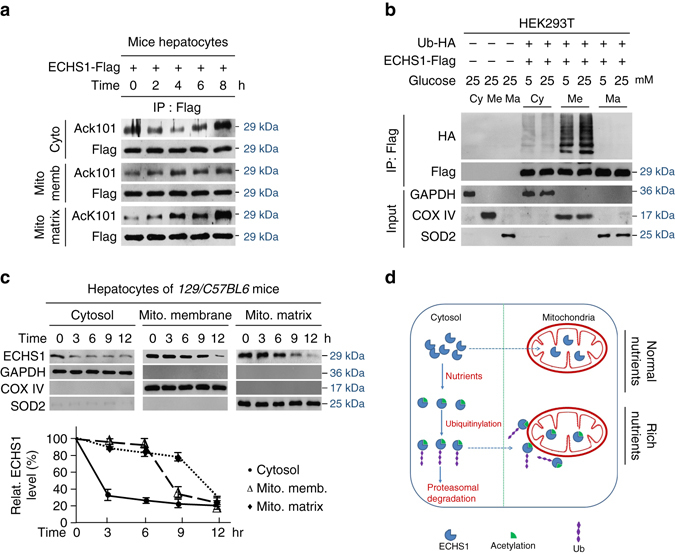
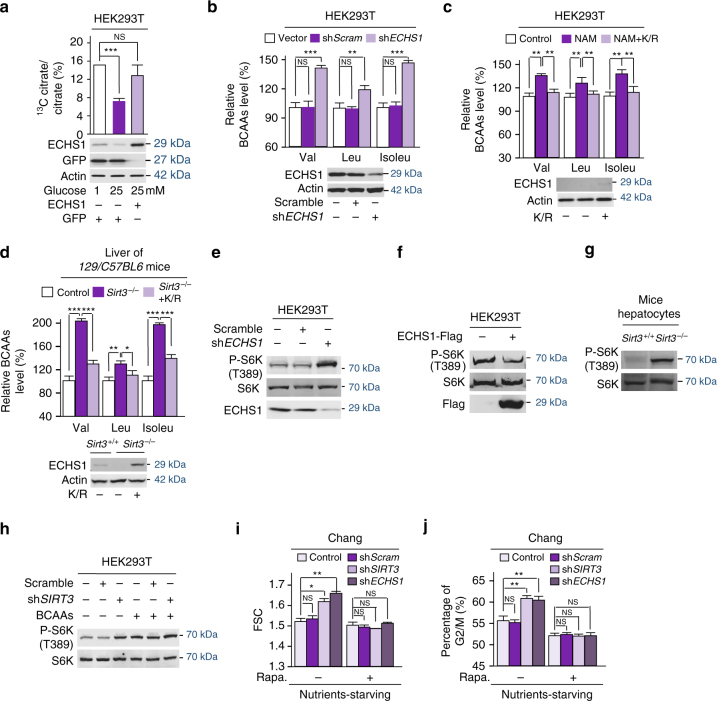
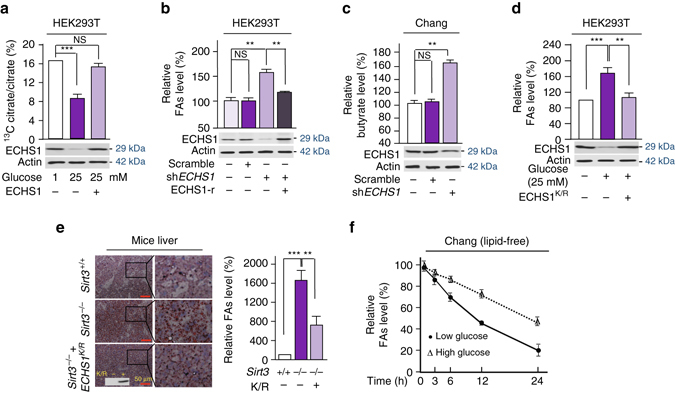
The oncogenic mechanisms of overnutrition, a confirmed independent cancer risk factor, remain poorly understood. Herein, we report that enoyl-CoA hydratase-1 (ECHS1), the enzyme involved in the oxidation of fatty acids (FAs) and branched-chain amino acids (BCAAs), senses nutrients and promotes mTOR activation and apoptotic resistance. Nutrients-promoted acetylation of lys 101 of ECHS1 impedes ECHS1 activity by impairing enoyl-CoA binding, promoting ECHS1 degradation and blocking its mitochondrial translocation through inducing ubiquitination. As a result, nutrients induce the accumulation of BCAAs and FAs that activate mTOR signaling and stimulate apoptosis, respectively. The latter was overcome by selection of BCL-2 overexpressing cells under overnutrition conditions. The oncogenic effects of nutrients were reversed by SIRT3, which deacetylates lys 101 acetylation. Severely decreased ECHS1, accumulation of BCAAs and FAs, activation of mTOR and overexpression of BCL-2 were observed in cancer tissues from metabolic organs. Our results identified ECHS1, a nutrients-sensing protein that transforms nutrient signals into oncogenic signals.
Overview
The claims and statistics of this paper haven’t been checked yet.
Free: it reads the open-access text and checks the first 5 claims that cite a source we can check. Create a free account to check every claim.
Integrity signals
Registry
Cites
Statistics
Figures
Verification
Claims the paper makes
The claims and statistics of this paper haven’t been checked yet.
Free: it reads the open-access text and checks the first 5 claims that cite a source we can check. Create a free account to check every claim.
Claims other papers make about this one
Each is checked against this paper’s own text: does it say what the citing paper says it does?
The cited source says what the claim attributes to it.
In the citing paper
“The connection between nutrient supplementation and acetylation of metabolic proteins exemplified by BCAT2, PHGDH, and GS is a concept that has been shown before with ACLY [42], methionine adenosyltransferase IIα (MATIIα) [67], enoyl-CoA hydratase-1 (ECHS1) [68], and splicing factors that function to regulate glucose metabolism [69]”
From Acetylation: a new target for protein degradation in cancer (2025) · cites this paper as [68]
Self-check
Percentages, sums and reported differences re-computed from the paper’s own numbers.
The self-check needs the paper’s full text.
Citations
Cites
Hallmarks of Cancer: The Next Generation
Hanahan, D., & Weinberg, R. A. (2011) · Cell · doi:10.1016/j.cell.2011.02.013 · Cited by 66,590
Repertoires of Autophagy in the Pathogenesis of Ocular Diseases
Li, Y.-J., Jiang, Q., Cao, G.-F., Yao, J., & Yan, B. (2015) · Cellular Physiology and Biochemistry · doi:10.1159/000373980 · Cited by 16,304
mTOR: from growth signal integration to cancer, diabetes and ageing
Zoncu, R., Efeyan, A., & Sabatini, D. M. (2011) · Nature Reviews Molecular Cell Biology · doi:10.1038/nrm3025 · Cited by 3,941
Metabolite profiles and the risk of developing diabetes
Wang, T. J., Larson, M. G., Vasan, R. S., Cheng, S., Rhee, E. P., McCabe, E., Lewis, G. D., Fox, C. S., Jacques, P. F., Fernandez, C., et al. (2011) · Nature Medicine · doi:10.1038/nm.2307 · Cited by 3,143 · cited 1×
“Protein-G-Agarose (16-266) was from Millipore, α-FLAG M2 Affinity Gel (A2200) was from Sigma-Aldrich.”
ABT-199, a potent and selective BCL-2 inhibitor, achieves antitumor activity while sparing platelets
Souers, A. J., Leverson, J. D., Boghaert, E. R., Ackler, S. L., Catron, N. D., Chen, J., Dayton, B. D., Ding, H., Enschede, S. H., Fairbrother, W. J., et al. (2013) · Nature Medicine · doi:10.1038/nm.3048 · Cited by 3,058 · cited 1×
“Protein-G-Agarose (16-266) was from Millipore, α-FLAG M2 Affinity Gel (A2200) was from Sigma-Aldrich.”
The Transcriptional Coactivators p300 and CBP Are Histone Acetyltransferases
Ogryzko, V. V., Schiltz, R. L., Russanova, V., Howard, B. H., & Nakatani, Y. (1996) · Cell · doi:10.1016/s0092-8674(00)82001-2 · Cited by 2,952 · cited 1×
“Protein-G-Agarose (16-266) was from Millipore, α-FLAG M2 Affinity Gel (A2200) was from Sigma-Aldrich.”
Caloric Restriction Delays Disease Onset and Mortality in Rhesus Monkeys
Colman, R. J., Anderson, R. M., Johnson, S. C., Kastman, E. K., Kosmatka, K. J., Beasley, T. M., Allison, D. B., Cruzen, C., Simmons, H. A., Kemnitz, J. W., et al. (2009) · Science · doi:10.1126/science.1173635 · Cited by 2,277 · cited 1×
“Protein-G-Agarose (16-266) was from Millipore, α-FLAG M2 Affinity Gel (A2200) was from Sigma-Aldrich.”
Regulation of cellular metabolism by protein lysine acetylation
Zhao, S., Xu, W., Jiang, W., Yu, W., Lin, Y., Zhang, T., Yao, J., Zhou, L., Zeng, Y., Li, H., et al. (2010) · Science · doi:10.1126/science.1179689 · Cited by 1,910 · cited 1×
“Protein-G-Agarose (16-266) was from Millipore, α-FLAG M2 Affinity Gel (A2200) was from Sigma-Aldrich.”
Self-citationSIRT3 regulates mitochondrial fatty-acid oxidation by reversible enzyme deacetylation
Hirschey, M. D., Shimazu, T., Goetzman, E., Jing, E., Schwer, B., Lombard, D. B., Grueter, C. A., Harris, C., Biddinger, S., Ilkayeva, O. R., et al. (2010) · Nature · doi:10.1038/nature08778 · Cited by 1,687
Beyond PTEN mutations: the PI3K pathway as an integrator of multiple inputs during tumorigenesis
Cully, M., You, H., Levine, A. J., & Mak, T. W. (2006) · Nature Reviews Cancer · doi:10.1038/nrc1819 · Cited by 1,233
Cited by
Mitochondrial Sirtuin 3: New emerging biological function and therapeutic target
Zhang, J., Xiang, H., Liu, J., Chen, Y., He, R.-R., & Liu, B. (2020) · Theranostics · doi:10.7150/thno.45922 · Cited by 503
“SIRT3 inhibits this hyperacetylation to restore mitochondrial translocation and ECHS1 activity [101].”
BackgroundRichardson, N. E., Konon, E. N., Schuster, H. S., Mitchell, A. T., Boyle, C., Rodgers, A. C., Finke, M., Haider, L. R., Yu, D., Flores, V., et al. (2021) · Nature Aging · doi:10.1038/s43587-020-00006-2 · Cited by 267
The diversity and breadth of cancer cell fatty acid metabolism
Nagarajan, S. R., Butler, L. M., & Hoy, A. J. (2021) · Cancer & Metabolism · doi:10.1186/s40170-020-00237-2 · Cited by 185
Understanding the Function of Mammalian Sirtuins and Protein Lysine Acylation
Wang, M., & Lin, H. (2021) · Annual Review of Biochemistry · doi:10.1146/annurev-biochem-082520-125411 · Cited by 161
Qu, Y., Zhao, R., Zhang, H.-L., Zhou, Q., Xu, F., Zhang, X., Xu, W.-H., Shao, N., Zhou, S.-X., Dai, B., et al. (2019) · Cancer Research · doi:10.1158/0008-5472.can-19-1023 · Cited by 119
“Our 10 previous study revealed the existence of crosstalk between BCAA metabolism and 11 FAO via a reaction catalyzed by enoyl-CoA hydratase short-chain 1 (ECHS1) (24).”
BackgroundSelf-citationThe significant role of amino acid metabolic reprogramming in cancer
Liu, X., Ren, B., Ren, J., Gu, M., You, L., & Zhao, Y. (2024) · Cell Communication and Signaling · doi:10.1186/s12964-024-01760-1 · Cited by 126
Cai, K., Wang, F., Lu, J.-Q., Shen, A., Zhao, S., Zang, W., Gui, Y., & Zhao, J. (2022) · JACC Basic to Translational Science · doi:10.1016/j.jacbts.2021.12.007 · Cited by 61
“Our previous studies on FA metabolism revealed that ECHS1, the key enzyme in the oxidation of FAs and branched-chain amino acids (BCAAs), sensed nutrient and energy abundance and regulated cell growth and apoptosis.(15,16) ECHS1 levels are closely associated with the risk of human HCM, and ECHS1 links metabolism with…”
BackgroundMethodInfluentialSelf-citationAdvances in characterization of SIRT3 deacetylation targets in mitochondrial function
Wang, S., Zhang, J., Deng, X., Zhao, Y., & Xu, K. (2020) · Biochimie · doi:10.1016/j.biochi.2020.08.021 · Cited by 52
Self-citationLi, N., & Zhan, X. (2019) · The EPMA Journal · doi:10.1007/s13167-019-00170-5 · Cited by 57
“Overnutrition suppressed enoyl-CoA hydratase-1 (ECHS1) activity and linked to increased risk of cancer [41].”
Li, R., Hao, Y., Wang, Q., Meng, Y., Wu, K., Liu, C., Xu, L., Liu, Z., & Zhao, L. (2021) · Cell Death and Disease · doi:10.1038/s41419-021-04213-6 · Cited by 56
“Although several studies have shown that ECHS1 expression is absent in clear-cell renal-cell carcinoma (ccRCC) [28] or CRC [29], Western blot and IHC assays clearly showed that the expression of ECHS1 is highly expressed in colon-cancer cells and tissues and associated with advanced progression and poor prognosis base…”
BackgroundPoplar acetylome profiling reveals lysine acetylation dynamics in seasonal bud dormancy release
Liao, X., Li, Y., Zhen-zhu, H., Lin, Y., Zheng, B., & Ding, J. (2021) · Plant Cell & Environment · doi:10.1111/pce.14040 · Cited by 49
Self-citationZhuo, F.-F., Li, L., Liu, T., Liang, X.-M., Yang, Z., Zheng, Y.-Z., Luo, Q.-W., Lu, J., Liu, D., Zeng, K., et al. (2023) · Cancer Letters · doi:10.1016/j.canlet.2023.216364 · Cited by 49
Self-citationPancreatic cancer: branched-chain amino acids as putative key metabolic regulators?
Rossmeislová, L., Gojda, J., & Smolková, K. (2021) · Cancer and Metastasis Reviews · doi:10.1007/s10555-021-10016-0 · Cited by 41
“Augmentation of de novo fatty acid synthesis from glucose was achieved by ECHS1 loss, which led to BCAA accumulation, mTOR activation, and subsequent downstream of SREBP1, fatty acid synthase, and acetyl-CoA-carboxylase expression [74].”
BackgroundInfluentialShen, H., Ma, W., Hu, Y., Liu, Y., Song, Y., Fu, L., & Qin, Z. (2024) · Theranostics · doi:10.7150/thno.97320 · Cited by 41
“For instance, SIRT3 can counteract the oncogenic acetylation of enoyl-coenzyme A (CoA) hydratase-1 (ECHS1), reducing the accumulation of fatty acids and branched-chain amino acids that activate oncogenic mammalian target of rapamycin (mTOR) signaling [57].”
BackgroundSIRT6 in Vascular Diseases, from Bench to Bedside
Ren, S., Chen, X., Gong, H., Wang, H., Wu, C. F., Li, P., Chen, X., Qu, J.-H., & Tang, X. (2022) · Aging and Disease · doi:10.14336/ad.2021.1204 · Cited by 35
Sharma, N., Key, C.-C. C., Civelek, M., Wabitsch, M., Comeau, M. E., Langefeld, C. D., Parks, J. S., & Das, S. K. (2019) · Diabetes · doi:10.2337/db18-1229 · Cited by 34
“A recent study suggested that ECHS1, a close homolog of ECHDC3, senses nutrient signals and acts as the converging enzyme for fatty acid and branched-chain amino acid oxidation (39).”
BackgroundUnderstanding the role of OXPHOS dysfunction in the pathogenesis of ECHS1 deficiency
Burgin, H. J., & McKenzie, M. (2020) · FEBS Letters · doi:10.1002/1873-3468.13735 · Cited by 32
The role of acetylation and deacetylation in cancer metabolism
Wang, C., & Ma, X. (2025) · Clinical and Translational Medicine · doi:10.1002/ctm2.70145 · Cited by 42
Huang, D., Liu, B., Huang, K., & Huang, K. (2018) · Biochemical and Biophysical Research Communications · doi:10.1016/j.bbrc.2018.03.052 · Cited by 34
Global activation of oncogenic pathways underlies therapy resistance in diffuse midline glioma
Georgescu, M., Islam, M. Z., Li, Y., Circu, M. L., Traylor, J. G., Notarianni, C., Kline, C., & Burns, D. K. (2020) · Acta Neuropathologica Communications · doi:10.1186/s40478-020-00992-9 · Cited by 37
“2, encompassing TRA (T cell receptor alpha) locus; 17p13, including CRK proto-oncogene involved in glioblastoma invasiveness [46, 47]; 17q25; 21q11-q21, or (2) losses of 10q-distal-end, encompassing ECHS1 encoding enoyl-CoA hydratase-1, whose deficiency has been shown to activate mTOR [48]; 16q, including PHLPP2 tumor…”
Molecular signatures of chronic periodontitis in gingiva: A genomic and proteomic analysis
Guzeldemir-Akcakanat, E., Alkan, B., Akkoyunlu, D. S., Gürel, B., Balta‐Uysal, V. M., Kan, B., Akgün, E., Yılmaz, E. B., Baykal, A. T., Çine, N., et al. (2019) · Journal of Periodontology · doi:10.1002/jper.18-0477 · Cited by 36
Zeng, Y., Zhao, L., Zeng, K., Zhan, Z., Zhan, Z., Li, S., Zhan, H., Chai, P., Xie, C., Ding, S., et al. (2025) · Journal of Clinical Investigation · doi:10.1172/jci178550 · Cited by 29
“…ECH1 activity and metabolic plasticity in GBM. Similarly, acetylation of enoyl-CoA hydratase, short chain 1 (ECHS1), another member of the enoyl-CoA hydratase family responsible for the second step of hydration of FAO, has been shown to impede its mitochondrial translocation and activity (54).”
ECHS1 suppresses renal cell carcinoma development through inhibiting mTOR signaling activation
Wang, L., Qi, Y., Wang, X., Li, L., Ma, Y., & Zheng, J. (2019) · Biomedicine & Pharmacotherapy · doi:10.1016/j.biopha.2019.109750 · Cited by 28
Self-citationECHS1 disease in two unrelated families of Samoan descent: Common variant ‐ rare disorder
Simon, M. T., Eftekharian, S. S., Ferdinandusse, S., Tang, S., Naseri, T. K., Reupena, M. S., McGarvey, S. T., Minster, R. L., Weeks, D. E., The Samoan Obesity, L., et al. (2020) · American Journal of Medical Genetics Part A · doi:10.1002/ajmg.a.61936 · Cited by 25
“(Zhang et al., 2017).”
Crosstalk of the Caspase Family and Mammalian Target of Rapamycin Signaling
Yan, J., Xie, Y., Si, J., Gan, L., Li, H., Sun, C., Di, C., Zhang, J., Huang, G., Zhang, X., et al. (2021) · International Journal of Molecular Sciences · doi:10.3390/ijms22020817 · Cited by 27
Biological Role and Mechanism of Lipid Metabolism Reprogramming Related Gene ECHS1 in Cancer
Hu, T., Chen, X., Lu, S., Zeng, H., Guo, L., & Han, Y. (2022) · Technology in Cancer Research & Treatment · doi:10.1177/15330338221140655 · Cited by 26
“ECHS1 mediates activation of PI3K/Akt/mTOR signaling pathways in diverse cancers, indicating that targeting ECHS1 in combination with mTOR inhibitors may have synergistic anticancer effects.(44,55,114) It is worth mentioning that small molecule drugs regulating ECHS1 have also demonstrated good anticancer effects in p…”
BackgroundSHetA2 Attack on Mortalin and Colleagues in Cancer Therapy and Prevention
Benbrook, D. M. (2022) · Frontiers in Cell and Developmental Biology · doi:10.3389/fcell.2022.848682 · Cited by 25
Acetylation: a new target for protein degradation in cancer
Crawford, C. E. W., & Burslem, G. M. (2025) · Trends in Cancer · doi:10.1016/j.trecan.2025.01.013 · Cited by 20
Coenzyme A binding sites induce proximal acylation across protein families
Carrico, C., Cruz, A., Walter, M., Meyer, J. G., Wehrfritz, C., Shah, S., Wei, L., Schilling, B., & Verdin, E. M. (2023) · Scientific Reports · doi:10.1038/s41598-023-31900-5 · Cited by 20
Mao, X., Huang, D., Rao, C., Du, M., Liang, M., Li, F., Liu, B., & Huang, K. (2020) · American Journal of Physiology-Endocrinology and Metabolism · doi:10.1152/ajpendo.00424.2019 · Cited by 22
Beta-Secretase 1 Underlies Reactive Astrocytes and Endothelial Disruption in Neurodegeneration
Chacón-Quintero, M. V., Pineda-López, L. G., Villegas‐Lanau, C. A., Posada‐Duque, R., & Cardona‐Gómez, G. P. (2021) · Frontiers in Cellular Neuroscience · doi:10.3389/fncel.2021.656832 · Cited by 16
Dystonia‐ataxia syndrome with permanent torsional nystagmus caused by ECHS1 deficiency
Ronchi, D., Monfrini, E., Bonato, S., Mancinelli, V., Cinnante, C. M., Salani, S., Bordoni, A., Ciscato, P., Fortunato, F., Villa, M., et al. (2020) · Annals of Clinical and Translational Neurology · doi:10.1002/acn3.51025 · Cited by 16
“Indeed, ECHS1 has been recently proposed as an intracellular sensor of nutrients able to influence mammalian target of Rapamycin (mTOR) signaling and apoptosis.(18) These findings refocus ECHS1-deficiency, and the consequent increase of BCAA levels, in the context of global intracellular metabolism.”
BackgroundRole of SIRT3 in neurological diseases and rehabilitation training
Li, Y.-L., Li, J., Wu, G., Yang, H. Q., Yang, X., Wang, D., & He, Y. (2022) · Metabolic Brain Disease · doi:10.1007/s11011-022-01111-4 · Cited by 14
“2014), and enoyl-CoA hydratase-1 (ECHS1) (Zhang et al.”
ECHS1: pathogenic mechanisms, experimental models, and emerging therapeutic strategies
Fu, Q., Qiu, R., Li, S., Qin, Y., Lu, Z., Liyao, S., Yang, Z., Cheng, X., Chen, Y., Xu, H., et al. (2025) · Orphanet Journal of Rare Diseases · doi:10.1186/s13023-025-03959-y · Cited by 15
“Similarly, conditional knockout in the nervous system indicates that ECHS1 is essential for neuronal energy metabolism and oxidative stress defense, with its absence leading to neurodegenerative changes and neuronal injury [41].”
Zhao, Z., Wang, R., Ge, H., Hou, L., Hatano, T., Hattori, N., Su, H., Wang, Q., & Zhao, J. (2025) · Free Radical Biology and Medicine · doi:10.1016/j.freeradbiomed.2025.02.048 · Cited by 14
Self-citationMechanism of the Breaking of Seed Dormancy by Flower Thinning in Heracleum moellendorffii Hance
Liu, S., Jiang, X., Liu, Z., Cheng, Y., Sun, T., & Yu, X. (2018) · Journal of Plant Growth Regulation · doi:10.1007/s00344-018-9898-4 · Cited by 11
Lipid- and protein-directed photosensitizer proximity labeling captures the cholesterol interactomePreprint
Becker, A. P., Biletch, E., Kennelly, J. P., Julio, A. R., Villaneuva, M., Nagari, R. T., Turner, D. W., Burton, N. R., Fukuta, T., Cui, L., et al. (2024) · bioRxiv (Cold Spring Harbor Laboratory) · doi:10.1101/2024.08.20.608660 · Cited by 9
“Notable examples of proteins enriched by 2 include acyl-coenzyme A thioesterase 2, mitochondrial (ACOT2, aka PTE2) 78 , enoyl-CoA hydratase, mitochondrial (ECHS1) 79 , and ubiquinone biosynthesis protein COQ9, mitochondrial (COQ9) 80 , all of which bind to palmitate-like alkyl chains.”
BackgroundStrategic validation of variants of uncertain significance in ECHS1 genetic testing
Kishita, Y., Sugiura, A., Onuki, T., Ebihara, T., Matsuhashi, T., Shimura, M., Fushimi, T., Ichino, N., Nagatakidani, Y., Nishihata, H., et al. (2023) · Journal of Medical Genetics · doi:10.1136/jmg-2022-109027 · Cited by 10
Zhao, Q., Du, X., Liu, F., Zhang, Y., Qin, W., & Zhang, Q. (2023) · Neuroscience · doi:10.1016/j.neuroscience.2023.12.003 · Cited by 8
Self-citationLi, Z., Liu, Z., Lin, M., Pan, H., Liu, Y., Liu, Y., Xie, Y., Zhang, J., Guan, S., Li, Y., et al. (2025) · Journal of Experimental & Clinical Cancer Research · doi:10.1186/s13046-025-03399-3 · Cited by 9
Mele, S., Martelli, F., Barlow, C. K., Jefferies, G., Dworkin, S., Christodoulou, J., Schittenhelm, R. B., Piper, M. D. W., & Johnson, T. K. (2024) · Journal of Inherited Metabolic Disease · doi:10.1002/jimd.12840 · Cited by 5
Expression and clinical significance of ECHS1 in gastric cancer
Lu, T., Sun, L., Fan, Q., Yan, J., Zhao, D., Xu, C., & Dong, F. (2023) · Journal of Cancer · doi:10.7150/jca.88604 · Cited by 6
“For instance, in colorectal cancer [7, 8], hepatocellular carcinoma [9, 10], and breast cancer [11], ECHS1 expression is markedly upregulated and promotes tumor cells’ ability to proliferate, migrate, and chemotherapy resistance.”
Mishra, Y., & Kumar, A. (2025) · Free Radical Biology and Medicine · doi:10.1016/j.freeradbiomed.2025.12.035 · Cited by 5
Liu, M., Lin, X., Cao, K., Yang, L., Xu, H., & Zhou, X. (2023) · Genes · doi:10.3390/genes14112022 · Cited by 6
“…Kac contents of Arabidopsis thaliana [30,31], poplar ( Populus tremula × Populus alba ) [32], rice ( Oryza sativa ) [33,34], pea ( Pisum sativum L.) [35], and wheat ( Triticum Aestivum ) have been intensively investigated [36], there have been very few studies on the Kac content of R. chrysanthum .”
BackgroundLi, B., Zhang, W., Wei, S., Lv, Y., Shang, J., & Hu, Y. (2022) · Journal of Food Biochemistry · doi:10.1111/jfbc.14495 · Cited by 6
Valine and Inflammation Drive Epilepsy in a Mouse Model of ECHS1 DeficiencyPreprint
Eller, M. M., Zuberi, A. R., Fu, X., Burgess, S. C., Lutz, C. M., & Bailey, R. M. (2024) · bioRxiv (Cold Spring Harbor Laboratory) · doi:10.1101/2024.06.13.598697 · Cited by 6
Tsoi, H., You, C., Cheung, K. H.-L., Tse, Y.-S., & Khoo, U. (2025) · International Journal of Molecular Sciences · doi:10.3390/ijms26114989 · Cited by 5
“ECHS1 catalyzes the hydration of 2-trans-enoyl-CoA intermediates to L-3-hydroxyacyl-CoAs, which is an intermediate step in β -oxidation [32].”
Zhang, J., Geng, W., Sun, H., Chen, J., Fan, Y., & Tan, K. (2025) · International Immunopharmacology · doi:10.1016/j.intimp.2025.115557 · Cited by 4
Acetylation of proximal cysteine-lysine pairs by alcohol metabolism
McGinnis, C. D., Harris, P. S., Graham, B. I. M., Marentette, J., Michel, C. R., Saba, L. M., Reisdorph, R. M., Roede, J. R., & Fritz, K. S. (2024) · Redox Biology · doi:10.1016/j.redox.2024.103462 · Cited by 3
Rewiring amino acids in cancer
Zhang, Y., Lyu, J., & Fang, H. (2025) · Biochimica et Biophysica Acta (BBA) - Reviews on Cancer · doi:10.1016/j.bbcan.2025.189465 · Cited by 7
Self-citationNeurological, metabolic and inflammatory phenotypes in a mouse model of ECHS1 deficiency
Eller, M. M., Zuberi, A. R., Fu, X., Montalbano, A. P., Nitschké, F., Burgess, S. C., Lutz, C., & Bailey, R. M. (2025) · Brain Communications · doi:10.1093/braincomms/fcaf487 · Cited by 2
“38,39 Additionally, as a nutrient-sensing enzyme, 40 changes in ECHS1 activity can cause metabolic dysregulation.”
Li, H., Wang, T., Dong, B., Peng, Z., & Jiang, J. (2025) · Engineering · doi:10.1016/j.eng.2025.12.008 · Cited by 2
Wang, B.-J., Qin, Y.-Y., Bao, Y., Chen, S., Zheng, J., Lin, S., Zheng, K.-F., & Duan, S. (2025) · Biochimica et Biophysica Acta - Molecular Basis of Disease · doi:10.1016/j.bbadis.2025.167930 · Cited by 2
Kang, S., Cai, Z., Wang, Y., Qing, Y., Dai, A., Zhang, Z., Shi, J., Lian, J., Song, S., Fu, Y., et al. (2025) · Chemical Communications · doi:10.1039/d4cc05681g · Cited by 1
Chen, C.-Y., Wang, Y., Liu, L., & Zhang, Y. (2025) · Progress in Neuro-Psychopharmacology and Biological Psychiatry · doi:10.1016/j.pnpbp.2025.111563 · Cited by 1
Self-citationDuan, C.-H., Liu, P., Sun, X. X., Ma, W.-H., Pang, J.-Y., ZHANG, Z., Li, X. Z., Jiao, L., Du, H., Teng, Z., et al. (2026) · Nature Communications · doi:10.1038/s41467-026-75063-z · Cited by 1
“ECHS1 , a key enzyme involved in the oxidation of FAO and branched-chain amino acids (BCAAs), functions as a nutrient sensor that promotes mTOR activation and confers resistance to apoptosis 61,62 .”
Self-citationThe Intersection of Anoikis Resistance and Fatty Acid Metabolism in Cancer
Bapat, J., & Bitler, B. G. (2021) · Springer eBooks · doi:10.1007/978-3-030-73856-3_3 · Cited by 1
Animal amino acid sensor — A review
Ke, Y., Peng, X., Song, C., Fang, X., Wang, Y., & Zhang, C. (2024) · Animal Bioscience · doi:10.5713/ab.24.0366 · Cited by 3
Kapoor, A., Lin, X., Rodriguez, D. A., Ramkairsingh, M., Xu, H., & Tang, D. (2020) · Elsevier eBooks · doi:10.1016/b978-0-12-819612-0.00022-5 · Cited by 1
Epigenetic Regulation of Heart-ECHS
Gan, L., & Pei, L. (2022) · JACC Basic to Translational Science · doi:10.1016/j.jacbts.2022.01.014 · Cited by 1
“It was also previously reported that Sirt3 increased cellular Echs1 levels by inhibiting its degradation.(7) Therefore, Cai et al(2) tested whether adding nicotinamide mononucleotide (NMN), a precursor of NADþ, into the diet would alleviate the cardiomyopathy in Echs1þ/ mice.”
BackgroundSirtuins in mechanistic target of rapamycin complex 1 signaling
Burillo, J., Marqués, P., Jiménez, B., González-Blanco, C., Benito, M., & Guillén, C. (2021) · Elsevier eBooks · doi:10.1016/b978-0-12-814118-2.00012-4
do Nascimento, J. C. (2023) · Digital Library of Theses and Dissertations (Universidade de São Paulo) · doi:10.11606/d.9.2023.tde-08032024-165541
Mele, S., Martelli, F., Barlow, C. K., Jefferies, G., Dworkin, S., Christodoulou, J., Schittenhelm, R. B., Piper, M. D. W., & Johnson, T. K. (2024) · bioRxiv (Cold Spring Harbor Laboratory) · doi:10.1101/2024.08.15.608013
Zhang, S., Zhu, S., Huang, W., Zhao, Q., Wang, L., Dong, H., Wang, J., Yu, Y., & Han, H. (2025) · European Journal of Protistology · doi:10.1016/j.ejop.2025.126177
Zhong, T.-T., Zhang, M.-R., Qi, X., Qi, Z., Peipei, L., Wang, N., Wang, X., Feng, P., & Fang, X. (2026) · Frontiers in Pharmacology · doi:10.3389/fphar.2025.1714246
Self-citationLi, C., You, R., Meng, X., Long, H., Zheng, C., & Zhan, Z. (2026) · Biomedicines · doi:10.3390/biomedicines14020375
“These enzymes are involved in the β - oxidation pathway, fatty acid metabolism, and the function of the mitochondrial respiratory chain [29–31].”
Zhang, C., Mo, G., Zhang, Y., Xu, H. M., Hu, X., & Zhang, J. (2026) · Human Mutation · doi:10.1155/humu/4524272
Self-citationMay, M., Fabela, R. F., & Tomanek, L. (2026) · Frontiers in Ecology and Evolution · doi:10.3389/fevo.2026.1914093 · Cited by 2
Metadata
- Authors
- Zhang, Y.-K., Qu, Y.-Y., Lin, Y., Wu, X.-H., Chen, H.-Z., Wang, X., Zhou, K.-Q., Wei, Y., Guo, F., Yao, C.-F., He, X.-D., Liu, L.-X., Yang, C., Guan, Z.-Y., Wang, S.-D., Zhao, J., Liu, D.-P., Zhao, S.-M., & Xu, W.
- Affiliations
- Shanghai Medical College of Fudan University (CN)
- Chinese Academy of Medical Sciences & Peking Union Medical College (CN)
- Chinese Academy of Sciences (CN)
- City University of New York (US)
- Corresponding author
- Liu, De-Pei
- Xu, Wei
- Venue
- Nature Communications
- Published
- 2017-09-06
- Volume
- 8
- Issue
- 1
- Pages
- 464-464
- ISSN
- 2041-1723 (ISSN-L)
- PMC
- PMC5587591
- OpenAlex
- W2753506784
- Semantic Scholar
- 5f0d6a064f0c0f7a097230c303a018a16651ea6d
- Cited by
- 68
- References
- 69
- Citations by year
- 2026: 5 · 2025: 16 · 2024: 8 · 2023: 7 · 2022: 7 · 2021: 10 · 2020: 8 · 2019: 5 · 2018: 2
- FWCI
- 1.38
- Type
- journal article
- Language
- en
- Open access
- gold
- doi.org
- Licence
- cc-by
- creativecommons.org/licenses/by/4.0 (tdm)
- creativecommons.org/licenses/by/4.0 (vor)
- Locations
- Nature Communications (publishedVersion, cc-by)
- PubMed Central (publishedVersion, cc-by)
- PubMed (publishedVersion)
- RePEc: Research Papers in Economics (submittedVersion)
- DOAJ (DOAJ: Directory of Open Access Journals) (submittedVersion)
- DOAJ (DOAJ: Directory of Open Access Journals) (submittedVersion, cc-by-sa)
- Funders
- National Natural Science Foundation of China (2013CB531200, 81301717, 2013CB945100, 31330023, 81471454)
- National Institute on Alcohol Abuse and Alcoholism (U01AA020913)
- Topics
- Life Sciences › Biochemistry, Genetics and Molecular Biology › Cancer Research › Cancer, Lipids, and Metabolism
- Life Sciences › Biochemistry, Genetics and Molecular Biology › Molecular Biology › PI3K/AKT/mTOR signaling in cancer
- Life Sciences › Biochemistry, Genetics and Molecular Biology › Molecular Biology › Metabolism, Diabetes, and Cancer
- Keywords
- ECHS1, mTOR signaling, apoptosis, nutrient sensing, overnutrition, branched-chain amino acids, fatty acid oxidation, Bcl-2, ubiquitination, protein degradation, mitochondrial translocation, cancer risk
- MeSH terms
- Acetylation, Amino Acids, Branched-Chain, Animals, Enoyl-CoA Hydratase, Humans, Lysine, Male, Neoplasm Transplantation, Recombinant Proteins, Signal Transduction, Gene Expression Regulation, Neoplastic, Apoptosis, Mice, Knockout, Ubiquitin, HCT116 Cells, Cell Line, Tumor, Mice, Sirtuin 3, Hep G2 Cells, HEK293 Cells, TOR Serine-Threonine Kinases, Carcinogenesis
About these checks
Registry, retraction, Cites and statistics results are computed, not judged, with one exception: a printed reference that no index lists is read once by a model before it counts as a citation error. Claims are extracted by a model and kept only when their quote appears verbatim in the text; each cited source is then checked, with a model’s help, for whether it says what the claim relies on. Those verdicts can be wrong — read the claim’s quote and the cited source before relying on one.
Statistics and arithmetic are recomputed, not judged.
Confidence bands are shown only for fields calibrated on our annotated test set. None is calibrated yet, so no band is shown.
What counts as a claim ›How we measure confidence ›How we check this ›
Are you an author, or do you see a problem with this page? Request a review
Data sources
Bibliographic data: Semantic Scholar, OpenAlex, Crossref.
Contains information from the Semantic Scholar Academic Graph Datasets, made available under the ODC Attribution License (ODC-BY 1.0).
Semantic Scholar’s data is described in: Kinney, R., et al. (2023). The Semantic Scholar Open Data Platform. arXiv:2301.10140.
