

Enoyl-CoA hydratase-1 regulates mTOR signaling and apoptosis by sensing nutrients
Open accessThe DOI matches its Crossref record; 69 of the 69 references it cites were found in a registry or an index.
Abstract
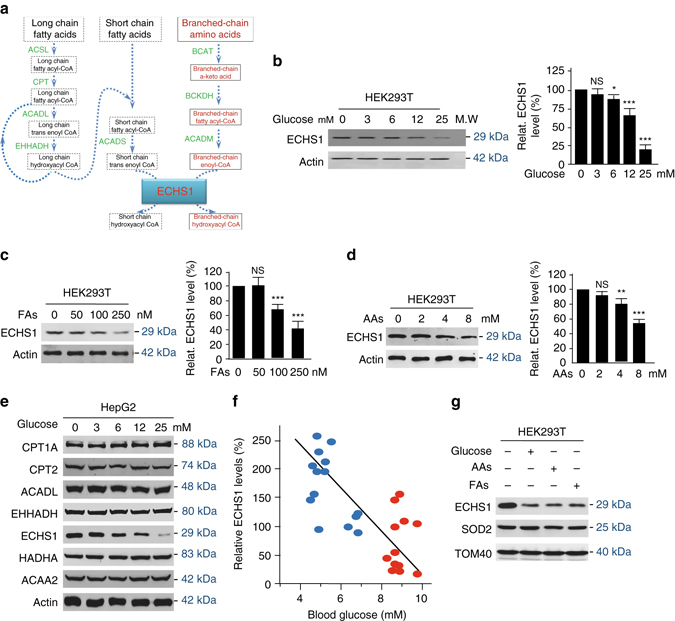
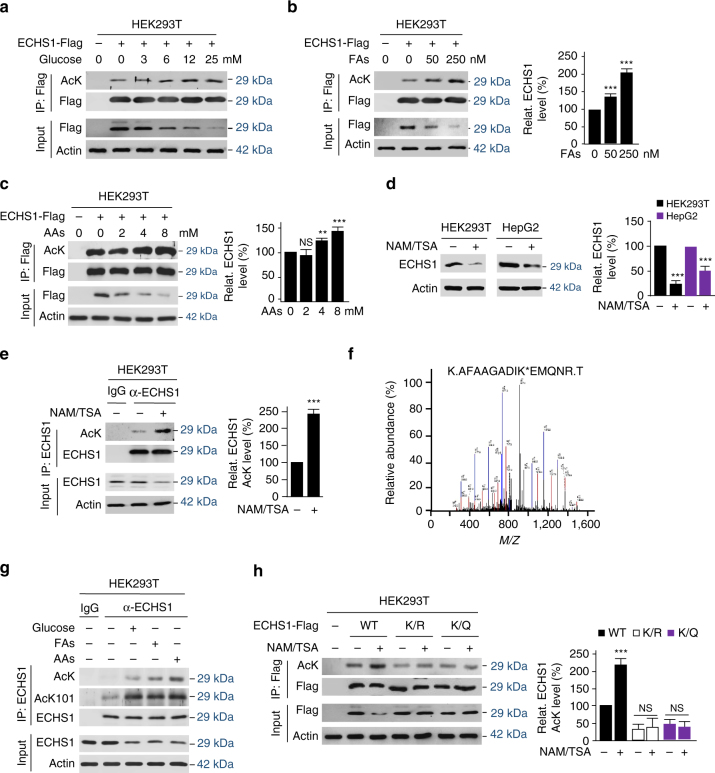
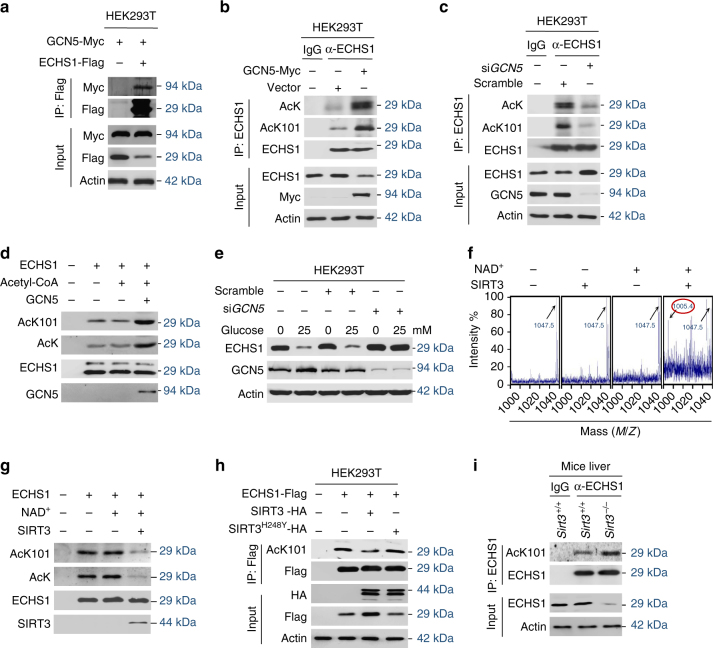
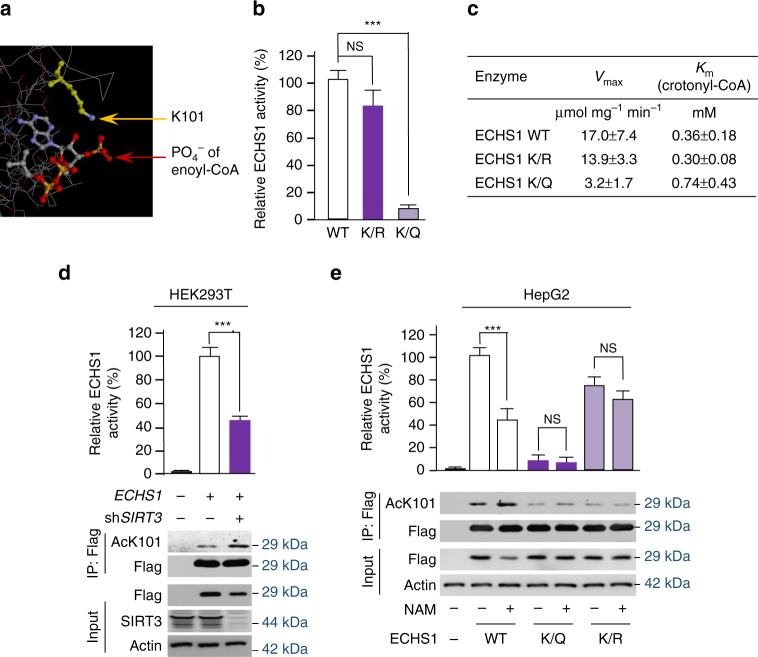
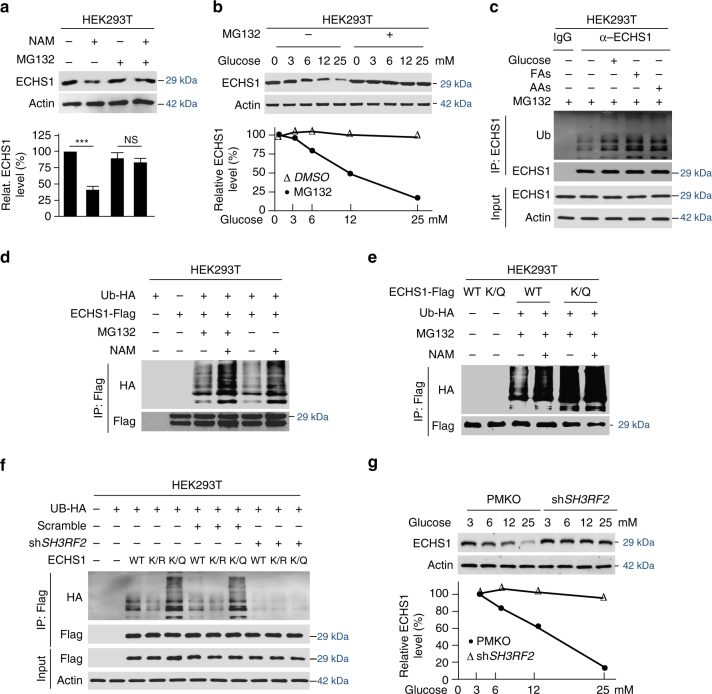
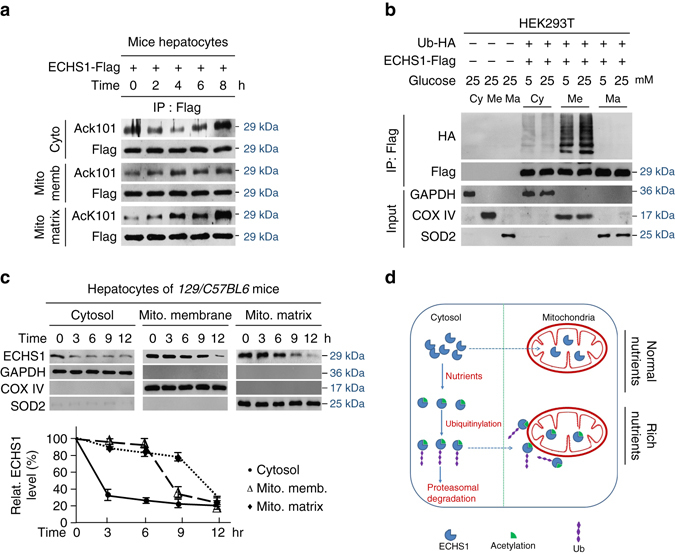
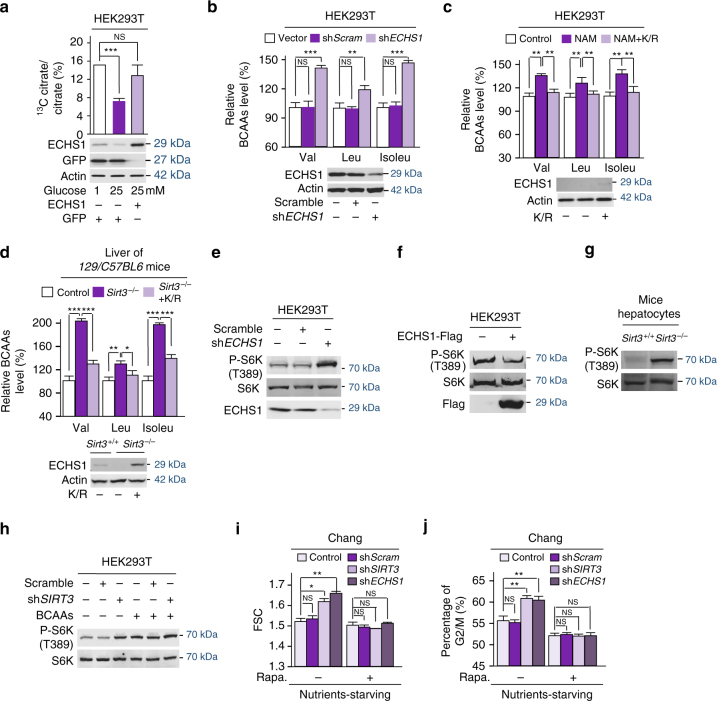
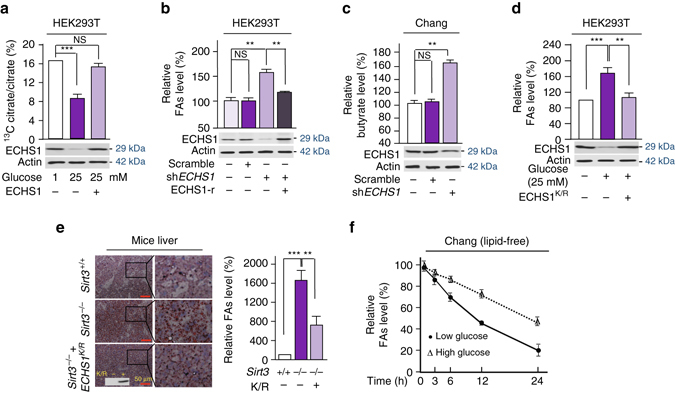
The oncogenic mechanisms of overnutrition, a confirmed independent cancer risk factor, remain poorly understood. Herein, we report that enoyl-CoA hydratase-1 (ECHS1), the enzyme involved in the oxidation of fatty acids (FAs) and branched-chain amino acids (BCAAs), senses nutrients and promotes mTOR activation and apoptotic resistance. Nutrients-promoted acetylation of lys 101 of ECHS1 impedes ECHS1 activity by impairing enoyl-CoA binding, promoting ECHS1 degradation and blocking its mitochondrial translocation through inducing ubiquitination. As a result, nutrients induce the accumulation of BCAAs and FAs that activate mTOR signaling and stimulate apoptosis, respectively. The latter was overcome by selection of BCL-2 overexpressing cells under overnutrition conditions. The oncogenic effects of nutrients were reversed by SIRT3, which deacetylates lys 101 acetylation. Severely decreased ECHS1, accumulation of BCAAs and FAs, activation of mTOR and overexpression of BCL-2 were observed in cancer tissues from metabolic organs. Our results identified ECHS1, a nutrients-sensing protein that transforms nutrient signals into oncogenic signals.
Overview
The claims and statistics of this paper haven’t been checked yet.
Free: it reads the open-access text and checks the first 5 claims that cite a source we can check. Create a free account to check every claim.
Integrity signals
Registry
Cites
Statistics
Figures
Verification
Claims the paper makes
The claims and statistics of this paper haven’t been checked yet.
Free: it reads the open-access text and checks the first 5 claims that cite a source we can check. Create a free account to check every claim.
Claims other papers make about this one
Each is checked against this paper’s own text: does it say what the citing paper says it does?
The cited source says what the claim attributes to it.
In the citing paper
“The connection between nutrient supplementation and acetylation of metabolic proteins exemplified by BCAT2, PHGDH, and GS is a concept that has been shown before with ACLY [42], methionine adenosyltransferase IIα (MATIIα) [67], enoyl-CoA hydratase-1 (ECHS1) [68], and splicing factors that function to regulate glucose metabolism [69]”
From Acetylation: a new target for protein degradation in cancer (2025) · cites this paper as [68]
Self-check
Percentages, sums and reported differences re-computed from the paper’s own numbers.
The self-check needs the paper’s full text.
Citations
Cites
Hallmarks of Cancer: The Next Generation
Hanahan, D., & Weinberg, R. A. (2011) · Cell · doi:10.1016/j.cell.2011.02.013 · Cited by 66,590
Repertoires of Autophagy in the Pathogenesis of Ocular Diseases
Li, Y.-J., Jiang, Q., Cao, G.-F., Yao, J., & Yan, B. (2015) · Cellular Physiology and Biochemistry · doi:10.1159/000373980 · Cited by 16,304
mTOR: from growth signal integration to cancer, diabetes and ageing
Zoncu, R., Efeyan, A., & Sabatini, D. M. (2011) · Nature Reviews Molecular Cell Biology · doi:10.1038/nrm3025 · Cited by 3,941
Metabolite profiles and the risk of developing diabetes
Wang, T. J., Larson, M. G., Vasan, R. S., Cheng, S., Rhee, E. P., McCabe, E., Lewis, G. D., Fox, C. S., Jacques, P. F., Fernandez, C., et al. (2011) · Nature Medicine · doi:10.1038/nm.2307 · Cited by 3,143 · cited 1×
“Protein-G-Agarose (16-266) was from Millipore, α-FLAG M2 Affinity Gel (A2200) was from Sigma-Aldrich.”
ABT-199, a potent and selective BCL-2 inhibitor, achieves antitumor activity while sparing platelets
Souers, A. J., Leverson, J. D., Boghaert, E. R., Ackler, S. L., Catron, N. D., Chen, J., Dayton, B. D., Ding, H., Enschede, S. H., Fairbrother, W. J., et al. (2013) · Nature Medicine · doi:10.1038/nm.3048 · Cited by 3,058 · cited 1×
“Protein-G-Agarose (16-266) was from Millipore, α-FLAG M2 Affinity Gel (A2200) was from Sigma-Aldrich.”
The Transcriptional Coactivators p300 and CBP Are Histone Acetyltransferases
Ogryzko, V. V., Schiltz, R. L., Russanova, V., Howard, B. H., & Nakatani, Y. (1996) · Cell · doi:10.1016/s0092-8674(00)82001-2 · Cited by 2,952 · cited 1×
“Protein-G-Agarose (16-266) was from Millipore, α-FLAG M2 Affinity Gel (A2200) was from Sigma-Aldrich.”
Caloric Restriction Delays Disease Onset and Mortality in Rhesus Monkeys
Colman, R. J., Anderson, R. M., Johnson, S. C., Kastman, E. K., Kosmatka, K. J., Beasley, T. M., Allison, D. B., Cruzen, C., Simmons, H. A., Kemnitz, J. W., et al. (2009) · Science · doi:10.1126/science.1173635 · Cited by 2,277 · cited 1×
“Protein-G-Agarose (16-266) was from Millipore, α-FLAG M2 Affinity Gel (A2200) was from Sigma-Aldrich.”
Regulation of cellular metabolism by protein lysine acetylation
Zhao, S., Xu, W., Jiang, W., Yu, W., Lin, Y., Zhang, T., Yao, J., Zhou, L., Zeng, Y., Li, H., et al. (2010) · Science · doi:10.1126/science.1179689 · Cited by 1,910 · cited 1×
“Protein-G-Agarose (16-266) was from Millipore, α-FLAG M2 Affinity Gel (A2200) was from Sigma-Aldrich.”
Self-citationSIRT3 regulates mitochondrial fatty-acid oxidation by reversible enzyme deacetylation
Hirschey, M. D., Shimazu, T., Goetzman, E., Jing, E., Schwer, B., Lombard, D. B., Grueter, C. A., Harris, C., Biddinger, S., Ilkayeva, O. R., et al. (2010) · Nature · doi:10.1038/nature08778 · Cited by 1,687
Beyond PTEN mutations: the PI3K pathway as an integrator of multiple inputs during tumorigenesis
Cully, M., You, H., Levine, A. J., & Mak, T. W. (2006) · Nature Reviews Cancer · doi:10.1038/nrc1819 · Cited by 1,233
Mammalian Sir2 homolog SIRT3 regulates global mitochondrial lysine acetylation
Lombard, D. B., Alt, F. W., Cheng, H.-L., Bunkenborg, J., Streeper, R. S., Mostoslavsky, R., Kim, J., Yancopoulos, G., Valenzuela, D., Murphy, A., et al. (2007) · Molecular and Cellular Biology · doi:10.1128/mcb.01636-07 · Cited by 1,216
Susztak, K., Raff, A. C., Schiffer, M., & Böttinger, E. P. (2006) · Diabetes · doi:10.2337/diabetes.55.01.06.db05-0894 · Cited by 1,096
Tumor suppressors and cell metabolism: a recipe for cancer growth
Jones, R. G., & Thompson, C. B. (2009) · Genes & Development · doi:10.1101/gad.1756509 · Cited by 1,085
Inhibition of eukaryotic translation elongation by cycloheximide and lactimidomycin
Schneider-Poetsch, T., Ju, J., Eyler, D. E., Dang, Y., Bhat, S., Merrick, W. C., Green, R., Shen, B., & Liu, J. O. (2010) · Nature Chemical Biology · doi:10.1038/nchembio.304 · Cited by 1,014 · cited 1×
“Protein-G-Agarose (16-266) was from Millipore, α-FLAG M2 Affinity Gel (A2200) was from Sigma-Aldrich.”
Branched-Chain Amino Acid Metabolism
Harper, A. E., Miller, R. H., & Block, K. P. (1984) · Annual Review of Nutrition · doi:10.1146/annurev.nu.04.070184.002205 · Cited by 1,009 · cited 1×
“Protein-G-Agarose (16-266) was from Millipore, α-FLAG M2 Affinity Gel (A2200) was from Sigma-Aldrich.”
Acetylation of Metabolic Enzymes Coordinates Carbon Source Utilization and Metabolic Flux
Wang, Q., Zhang, Y., Yang, C., Xiong, H., Lin, Y., Yao, J., Li, H., Xie, L., Zhao, W., Yao, Y., et al. (2010) · Science · doi:10.1126/science.1179687 · Cited by 1,008 · cited 3×
“Protein-G-Agarose (16-266) was from Millipore, α-FLAG M2 Affinity Gel (A2200) was from Sigma-Aldrich.”
Self-citationRapamycin passes the torch: a new generation of mTOR inhibitors
Benjamin, D., Colombi, M., Moroni, C., & Hall, M. N. (2011) · Nature Reviews Drug Discovery · doi:10.1038/nrd3531 · Cited by 989
Amino acid signalling upstream of mTOR
Jewell, J. L., Russell, R. C., & Guan, K.-L. (2013) · Nature Reviews Molecular Cell Biology · doi:10.1038/nrm3522 · Cited by 894 · cited 1×
“Protein-G-Agarose (16-266) was from Millipore, α-FLAG M2 Affinity Gel (A2200) was from Sigma-Aldrich.”
Hirschey, M. D., Shimazu, T., Jing, E., Grueter, C. A., Collins, A. M., Aouizerat, B., Stančáková, A., Goetzman, E., Lam, M. M., Schwer, B., et al. (2011) · Molecular Cell · doi:10.1016/j.molcel.2011.07.019 · Cited by 787 · cited 1×
“Protein-G-Agarose (16-266) was from Millipore, α-FLAG M2 Affinity Gel (A2200) was from Sigma-Aldrich.”
SIRT5 deacetylates carbamoyl phosphate synthetase 1 and regulates the urea cycle
Nakagawa, T., Lomb, D. J., Haigis, M. C., & Guarente, L. (2009) · Cell · doi:10.1016/j.cell.2009.02.026 · Cited by 787 · cited 1×
“Protein-G-Agarose (16-266) was from Millipore, α-FLAG M2 Affinity Gel (A2200) was from Sigma-Aldrich.”
SIRT3 Opposes Reprogramming of Cancer Cell Metabolism through HIF1α Destabilization
Finley, L. W. S., Carracedo, A., Lee, J., Souza, A., Egia, A., Zhang, J., Teruya-Feldstein, J., Moreira, P. I., Cardoso, S. M., Clish, C. B., et al. (2011) · Cancer Cell · doi:10.1016/j.ccr.2011.02.014 · Cited by 782 · cited 1×
“Protein-G-Agarose (16-266) was from Millipore, α-FLAG M2 Affinity Gel (A2200) was from Sigma-Aldrich.”
Branched-Chain Amino Acid Metabolism
Yudkoff, M. (1999) · Cited by 762
Roux, P. P., Ballif, B. A., Anjum, R., Gygi, S. P., & Blenis, J. (2004) · Proceedings of the National Academy of Sciences · doi:10.1073/pnas.0405659101 · Cited by 750
Free Fatty Acids Induce JNK-dependent Hepatocyte Lipoapoptosis
Malhi, H., Bronk, S. F., Werneburg, N. W., & Gores, G. J. (2006) · Journal of Biological Chemistry · doi:10.1074/jbc.m510660200 · Cited by 722 · cited 1×
“Protein-G-Agarose (16-266) was from Millipore, α-FLAG M2 Affinity Gel (A2200) was from Sigma-Aldrich.”
Obesity and cancer: the role of dysfunctional adipose tissue
van Kruijsdijk, R. C. M., van der Wall, E., & Visseren, F. L. J. (2009) · Cancer Epidemiology, Biomarkers & Prevention · doi:10.1158/1055-9965.epi-09-0372 · Cited by 715 · cited 1×
“Protein-G-Agarose (16-266) was from Millipore, α-FLAG M2 Affinity Gel (A2200) was from Sigma-Aldrich.”
Kintscher, U., Hartge, M., Hess, K., Foryst-Ludwig, A., Clemenz, M., Wabitsch, M., Fischer-Posovszky, P., Barth, T. F. E., Dragun, D., Skurk, T., et al. (2008) · Arteriosclerosis, Thrombosis, and Vascular Biology · doi:10.1161/atvbaha.108.165100 · Cited by 692
Mayers, J. R., Wu, C., Clish, C. B., Kraft, P., Torrence, M. E., Fiske, B. P., Yuan, C., Bao, Y., Townsend, M. K., Tworoger, S. S., et al. (2014) · Nature Medicine · doi:10.1038/nm.3686 · Cited by 649
Fatty Acid Synthase and Cancer: New Application of an Old Pathway
Kuhajda, F. P. (2006) · Cancer Research · doi:10.1158/0008-5472.can-05-4673 · Cited by 647
Kimball, S. R., & Jefferson, L. S. (2006) · The Journal of Nutrition · doi:10.1093/jn/136.1.227s · Cited by 631 · cited 1×
“Protein-G-Agarose (16-266) was from Millipore, α-FLAG M2 Affinity Gel (A2200) was from Sigma-Aldrich.”
Lv, L., Li, D., Zhao, D., Lin, R., Chu, Y., Zhang, H., Zha, Z., Liu, Y., Li, Z., Xu, Y., et al. (2011) · Molecular Cell · doi:10.1016/j.molcel.2011.04.025 · Cited by 610 · cited 1×
“Protein-G-Agarose (16-266) was from Millipore, α-FLAG M2 Affinity Gel (A2200) was from Sigma-Aldrich.”
Schwer, B., North, B. J., Frye, R. A., Ott, M., & Verdin, E. (2002) · The Journal of Cell Biology · doi:10.1083/jcb.200205057 · Cited by 598 · cited 1×
“Protein-G-Agarose (16-266) was from Millipore, α-FLAG M2 Affinity Gel (A2200) was from Sigma-Aldrich.”
Roles of p53, MYC and HIF-1 in regulating glycolysis–the seventh hallmark of cancer
Yeung, S. J., Pan, J., & Lee, M.-H. (2008) · Cellular and Molecular Life Sciences · doi:10.1007/s00018-008-8224-x · Cited by 514
Avalos, J. L., Bever, K. M., & Wolberger, C. (2005) · Molecular Cell · doi:10.1016/j.molcel.2005.02.022 · Cited by 464 · cited 1×
“Protein-G-Agarose (16-266) was from Millipore, α-FLAG M2 Affinity Gel (A2200) was from Sigma-Aldrich.”
HDAC inhibitors in cancer biology: emerging mechanisms and clinical applications
Khan, O., & La Thangue, N. B. (2012) · Immunology & Cell Biology · doi:10.1038/icb.2011.100 · Cited by 450 · cited 1×
“Protein-G-Agarose (16-266) was from Millipore, α-FLAG M2 Affinity Gel (A2200) was from Sigma-Aldrich.”
The structural basis of protein acetylation by the p300/CBP transcriptional coactivator
Liu, X., Wang, L., Zhao, K., Thompson, P. R., Hwang, Y., Marmorstein, R., & Cole, P. A. (2008) · Nature · doi:10.1038/nature06546 · Cited by 448 · cited 1×
“Protein-G-Agarose (16-266) was from Millipore, α-FLAG M2 Affinity Gel (A2200) was from Sigma-Aldrich.”
Intermittent high glucose enhances apoptosis in human umbilical vein endothelial cells in culture
Risso, A., Mercuri, F., Quagliaro, L., Damante, G., & Ceriello, A. (2001) · American Journal of Physiology-Endocrinology and Metabolism · doi:10.1152/ajpendo.2001.281.5.e924 · Cited by 425
Jiang, W., Wang, S., Xiao, M., Lin, Y., Zhou, L., Lei, Q., Xiong, Y., Guan, K.-L., & Zhao, S. (2011) · Molecular Cell · doi:10.1016/j.molcel.2011.04.028 · Cited by 415 · cited 1×
“Protein-G-Agarose (16-266) was from Millipore, α-FLAG M2 Affinity Gel (A2200) was from Sigma-Aldrich.”
Self-citationLipoapoptosis: its mechanism and its diseases
Unger, R. H., & Orci, L. (2002) · Biochimica et Biophysica Acta (BBA) - Molecular and Cell Biology of Lipids · doi:10.1016/s1388-1981(02)00342-6 · Cited by 361 · cited 1×
“Protein-G-Agarose (16-266) was from Millipore, α-FLAG M2 Affinity Gel (A2200) was from Sigma-Aldrich.”
Docking Motif-Guided Mapping of the Interactome of Protein Phosphatase-1
Hendrickx, A., Beullens, M., Ceulemans, H., Den Abt, T., Van Eynde, A., Nicolaescu, E., Lesage, B., & Bollen, M. (2009) · Chemistry & Biology · doi:10.1016/j.chembiol.2009.02.012 · Cited by 312 · cited 1×
“Protein-G-Agarose (16-266) was from Millipore, α-FLAG M2 Affinity Gel (A2200) was from Sigma-Aldrich.”
Fan, J., Shan, C., Kang, H.-B., Elf, S., Xie, J., Tucker, M., Gu, T.-L., Aguiar, M., Lonning, S., Chen, H., et al. (2014) · Molecular Cell · doi:10.1016/j.molcel.2013.12.026 · Cited by 305 · cited 1×
“Protein-G-Agarose (16-266) was from Millipore, α-FLAG M2 Affinity Gel (A2200) was from Sigma-Aldrich.”
Self-citationHo, F. M., Liu, S. H., Liau, C. S., Huang, P. J., & Lin-Shiau, S. Y. (2000) · Circulation · doi:10.1161/01.cir.101.22.2618 · Cited by 288
Non-alcoholic fatty liver disease: the hepatic consequence of obesity and the metabolic syndrome
Moore, J. B. (2010) · Proceedings of the Nutrition Society · doi:10.1017/s0029665110000030 · Cited by 217
Rose, D. P., & Connolly, J. M. (1991) · The Prostate · doi:10.1002/pros.2990180306 · Cited by 200
Overmyer, K. A., Evans, C. R., Qi, N. R., Minogue, C. E., Carson, J. J., Chermside-Scabbo, C. J., Koch, L. G., Britton, S. L., Pagliarini, D. J., Coon, J. J., et al. (2015) · Cell Metabolism · doi:10.1016/j.cmet.2015.02.007 · Cited by 198 · cited 1×
“Protein-G-Agarose (16-266) was from Millipore, α-FLAG M2 Affinity Gel (A2200) was from Sigma-Aldrich.”
Crystal structure and mechanism of histone acetylation of the yeast GCN5 transcriptional coactivator
Trievel, R. C., Rojas, J. R., Sterner, D. E., Venkataramani, R. N., Wang, L., Zhou, J., Allis, C. D., Berger, S. L., & Marmorstein, R. (1999) · Proceedings of the National Academy of Sciences · doi:10.1073/pnas.96.16.8931 · Cited by 181 · cited 1×
“Protein-G-Agarose (16-266) was from Millipore, α-FLAG M2 Affinity Gel (A2200) was from Sigma-Aldrich.”
SIRT3 is regulated by nutrient excess and modulates hepatic susceptibility to lipotoxicity
Bao, J., Scott, I., Lu, Z., Pang, L., Dimond, C. C., Gius, D., & Sack, M. N. (2010) · Free Radical Biology and Medicine · doi:10.1016/j.freeradbiomed.2010.07.009 · Cited by 157 · cited 1×
“Protein-G-Agarose (16-266) was from Millipore, α-FLAG M2 Affinity Gel (A2200) was from Sigma-Aldrich.”
Chen, L., Wei, T., Si, X., Wang, Q., Li, Y., Leng, Y., Deng, A., Chen, J., Wang, G., Zhu, S., et al. (2013) · Journal of Biological Chemistry · doi:10.1074/jbc.m113.458737 · Cited by 150 · cited 1×
“Protein-G-Agarose (16-266) was from Millipore, α-FLAG M2 Affinity Gel (A2200) was from Sigma-Aldrich.”
Acetylation Negatively Regulates Glycogen Phosphorylase by Recruiting Protein Phosphatase 1
Zhang, T., Wang, S., Lin, Y., Xu, W., Ye, D., Xiong, Y., Zhao, S., & Guan, K.-L. (2012) · Cell Metabolism · doi:10.1016/j.cmet.2011.12.005 · Cited by 133
Self-citationBahnson, B. J., Anderson, V. E., & Petsko, G. A. (2002) · Biochemistry · doi:10.1021/bi015844p · Cited by 125 · cited 1×
“Protein-G-Agarose (16-266) was from Millipore, α-FLAG M2 Affinity Gel (A2200) was from Sigma-Aldrich.”
Law, I. K. M., Liu, L., Xu, A., Lam, K. S. L., Vanhoutte, P. M., Che, C., Leung, P. T. Y., & Wang, Y. (2009) · PROTEOMICS · doi:10.1002/pmic.200800738 · Cited by 114 · cited 1×
“Protein-G-Agarose (16-266) was from Millipore, α-FLAG M2 Affinity Gel (A2200) was from Sigma-Aldrich.”
Self-citationENZYMES OF FATTY ACID METABOLISM
Stern, J. R., del Campillo-Campbell, A., & Raw, I. (1956) · Journal of Biological Chemistry · doi:10.1016/s0021-9258(18)65859-4 · Cited by 108
Generation of acetyllysine antibodies and affinity enrichment of acetylated peptides
Guan, K.-L., Yu, W., Lin, Y., Xiong, Y., & Zhao, S. (2010) · Nature Protocols · doi:10.1038/nprot.2010.117 · Cited by 106 · cited 1×
“Protein-G-Agarose (16-266) was from Millipore, α-FLAG M2 Affinity Gel (A2200) was from Sigma-Aldrich.”
Self-citationHopperton, K. E., Duncan, R. E., Bazinet, R. P., & Archer, M. C. (2013) · Experimental Cell Research · doi:10.1016/j.yexcr.2013.10.016 · Cited by 102
Rühl, M., Rupp, B., Nöh, K., Wiechert, W., Sauer, U., & Zamboni, N. (2012) · Biotechnology and Bioengineering · doi:10.1002/bit.24344 · Cited by 97 · cited 1×
“Protein-G-Agarose (16-266) was from Millipore, α-FLAG M2 Affinity Gel (A2200) was from Sigma-Aldrich.”
Type 2 Diabetes and Cancer: What Is the Connection?
Cannata, D., Fierz, Y., Vijayakumar, A., & LeRoith, D. (2010) · Mount Sinai Journal of Medicine: A Journal of Translational and Personalized Medicine · doi:10.1002/msj.20167 · Cited by 91 · cited 1×
“Protein-G-Agarose (16-266) was from Millipore, α-FLAG M2 Affinity Gel (A2200) was from Sigma-Aldrich.”
Clinical and biochemical characterization of four patients with mutations in ECHS1
Ferdinandusse, S., Friederich, M. W., Burlina, A., Ruiter, J. P. N., Coughlin, C. R., Dishop, M. K., Gallagher, R. C., Bedoyan, J. K., Vaz, F. M., Waterham, H. R., et al. (2015) · Orphanet Journal of Rare Diseases · doi:10.1186/s13023-015-0290-1 · Cited by 89 · cited 1×
“Protein-G-Agarose (16-266) was from Millipore, α-FLAG M2 Affinity Gel (A2200) was from Sigma-Aldrich.”
Zhang, X., Yang, J., Guo, Y., Ye, H., Yu, C., Xu, C., Xu, L., Wu, S., Sun, W., Wei, H., et al. (2010) · Hepatology · doi:10.1002/hep.23486 · Cited by 85 · cited 1×
“Protein-G-Agarose (16-266) was from Millipore, α-FLAG M2 Affinity Gel (A2200) was from Sigma-Aldrich.”
3-Methylglutaconic Aciduria Type I Is Caused by Mutations in AUH
IJlst, L., Loupatty, F. J., Ruiter, J. P. N., Durán, M., Lehnert, W., & Wanders, R. J. A. (2002) · The American Journal of Human Genetics · doi:10.1086/344712 · Cited by 75
[61] High-yield preparation of morphologically intact isolated parenchymal cells from rat liver
Berry, M. N. (1974) · Methods in enzymology on CD-ROM/Methods in enzymology · doi:10.1016/0076-6879(74)32064-2 · Cited by 73
Sirtuin-3 (SIRT3) and the Hallmarks of Cancer
Alhazzazi, T. Y., Kamarajan, P., Verdin, E. M., & Kapila, Y. L. (2013) · Genes & Cancer · doi:10.1177/1947601913486351 · Cited by 73 · cited 1×
“Protein-G-Agarose (16-266) was from Millipore, α-FLAG M2 Affinity Gel (A2200) was from Sigma-Aldrich.”
Li, H., Télémaque, S., Miller, R. E., & Marsh, J. D. (2005) · Diabetes · doi:10.2337/diabetes.54.2.540 · Cited by 68 · cited 1×
“Protein-G-Agarose (16-266) was from Millipore, α-FLAG M2 Affinity Gel (A2200) was from Sigma-Aldrich.”
Yu, W., Lin, Y., Yao, J., Huang, W., Lei, Q., Xiong, Y., Zhao, S., & Guan, K.-L. (2009) · Journal of Biological Chemistry · doi:10.1074/jbc.m901921200 · Cited by 66 · cited 1×
“Protein-G-Agarose (16-266) was from Millipore, α-FLAG M2 Affinity Gel (A2200) was from Sigma-Aldrich.”
Self-citationJanßen, U., Davis, E. M., Beau, M. M. L., & Stoffel, W. (1997) · Genomics · doi:10.1006/geno.1996.4597 · Cited by 50 · cited 1×
“Protein-G-Agarose (16-266) was from Millipore, α-FLAG M2 Affinity Gel (A2200) was from Sigma-Aldrich.”
Zhu, S., Xi, L., & Kukreja, R. C. (2011) · Journal of Cellular and Molecular Medicine · doi:10.1111/j.1582-4934.2011.01376.x · Cited by 46
Liu, X., Feng, R., & Du, L. (2010) · FEBS Letters · doi:10.1016/j.febslet.2010.06.002 · Cited by 46 · cited 1×
“Protein-G-Agarose (16-266) was from Millipore, α-FLAG M2 Affinity Gel (A2200) was from Sigma-Aldrich.”
SH3RF2 functions as an oncogene by mediating PAK4 protein stability
Kim, T. W., Kang, Y. K., Park, Z., Kim, Y., Hong, S. W., Oh, S. J., Sohn, H. A., Yang, S., Jang, Y. J., Lee, D. C., et al. (2013) · Carcinogenesis · doi:10.1093/carcin/bgt338 · Cited by 42 · cited 1×
“Protein-G-Agarose (16-266) was from Millipore, α-FLAG M2 Affinity Gel (A2200) was from Sigma-Aldrich.”
A STATISTICAL STUDY IN CANCER DEATH-RATES
MAYNARD, G. D. (1910) · Biometrika · doi:10.1093/biomet/7.3.276 · Cited by 38
Insulin-cancer relationships: Possible dietary implication
Yam, D. (1992) · Medical Hypotheses · doi:10.1016/0306-9877(92)90082-n · Cited by 21
FLJ23654 encodes a heart protein phosphatase 1-binding protein (Hepp1)
Chen, C.-Y., Lai, N., Yang, J., Huang, H.-L., Hung, W.-C., Li, C., Lin, T.-H., & Huang, H.-B. (2009) · Biochemical and Biophysical Research Communications · doi:10.1016/j.bbrc.2009.11.123 · Cited by 6 · cited 1×
“Protein-G-Agarose (16-266) was from Millipore, α-FLAG M2 Affinity Gel (A2200) was from Sigma-Aldrich.”
Cited by
Mitochondrial Sirtuin 3: New emerging biological function and therapeutic target
Zhang, J., Xiang, H., Liu, J., Chen, Y., He, R.-R., & Liu, B. (2020) · Theranostics · doi:10.7150/thno.45922 · Cited by 503
“SIRT3 inhibits this hyperacetylation to restore mitochondrial translocation and ECHS1 activity [101].”
BackgroundRichardson, N. E., Konon, E. N., Schuster, H. S., Mitchell, A. T., Boyle, C., Rodgers, A. C., Finke, M., Haider, L. R., Yu, D., Flores, V., et al. (2021) · Nature Aging · doi:10.1038/s43587-020-00006-2 · Cited by 267
The diversity and breadth of cancer cell fatty acid metabolism
Nagarajan, S. R., Butler, L. M., & Hoy, A. J. (2021) · Cancer & Metabolism · doi:10.1186/s40170-020-00237-2 · Cited by 185
Understanding the Function of Mammalian Sirtuins and Protein Lysine Acylation
Wang, M., & Lin, H. (2021) · Annual Review of Biochemistry · doi:10.1146/annurev-biochem-082520-125411 · Cited by 161
Qu, Y., Zhao, R., Zhang, H.-L., Zhou, Q., Xu, F., Zhang, X., Xu, W.-H., Shao, N., Zhou, S.-X., Dai, B., et al. (2019) · Cancer Research · doi:10.1158/0008-5472.can-19-1023 · Cited by 119
“Our 10 previous study revealed the existence of crosstalk between BCAA metabolism and 11 FAO via a reaction catalyzed by enoyl-CoA hydratase short-chain 1 (ECHS1) (24).”
BackgroundSelf-citation
Metadata
- Authors
- Zhang, Y.-K., Qu, Y.-Y., Lin, Y., Wu, X.-H., Chen, H.-Z., Wang, X., Zhou, K.-Q., Wei, Y., Guo, F., Yao, C.-F., He, X.-D., Liu, L.-X., Yang, C., Guan, Z.-Y., Wang, S.-D., Zhao, J., Liu, D.-P., Zhao, S.-M., & Xu, W.
- Affiliations
- Shanghai Medical College of Fudan University (CN)
- Chinese Academy of Medical Sciences & Peking Union Medical College (CN)
- Chinese Academy of Sciences (CN)
- City University of New York (US)
- Corresponding author
- Liu, De-Pei
- Xu, Wei
- Venue
- Nature Communications
- Published
- 2017-09-06
- Volume
- 8
- Issue
- 1
- Pages
- 464-464
- ISSN
- 2041-1723 (ISSN-L)
- PMC
- PMC5587591
- OpenAlex
- W2753506784
- Cited by
- 68
- References
- 69
- Citations by year
- 2026: 5 · 2025: 16 · 2024: 8 · 2023: 7 · 2022: 7 · 2021: 10 · 2020: 8 · 2019: 5 · 2018: 2
- FWCI
- 1.38
- Type
- journal article
- Language
- en
- Open access
- gold
- doi.org
- Licence
- cc-by
- creativecommons.org/licenses/by/4.0 (tdm)
- creativecommons.org/licenses/by/4.0 (vor)
- Locations
- Nature Communications (publishedVersion, cc-by)
- PubMed Central (publishedVersion, cc-by)
- PubMed (publishedVersion)
- RePEc: Research Papers in Economics (submittedVersion)
- DOAJ (DOAJ: Directory of Open Access Journals) (submittedVersion)
- DOAJ (DOAJ: Directory of Open Access Journals) (submittedVersion, cc-by-sa)
- Funders
- National Natural Science Foundation of China (2013CB531200, 81301717, 2013CB945100, 31330023, 81471454)
- National Institute on Alcohol Abuse and Alcoholism (U01AA020913)
- Topics
- Life Sciences › Biochemistry, Genetics and Molecular Biology › Cancer Research › Cancer, Lipids, and Metabolism
- Life Sciences › Biochemistry, Genetics and Molecular Biology › Molecular Biology › PI3K/AKT/mTOR signaling in cancer
- Life Sciences › Biochemistry, Genetics and Molecular Biology › Molecular Biology › Metabolism, Diabetes, and Cancer
- Keywords
- ECHS1, mTOR signaling, apoptosis, nutrient sensing, overnutrition, branched-chain amino acids, fatty acid oxidation, Bcl-2, ubiquitination, protein degradation, mitochondrial translocation, cancer risk
- MeSH terms
- Acetylation, Amino Acids, Branched-Chain, Animals, Enoyl-CoA Hydratase, Humans, Lysine, Male, Neoplasm Transplantation, Recombinant Proteins, Signal Transduction, Gene Expression Regulation, Neoplastic, Apoptosis, Mice, Knockout, Ubiquitin, HCT116 Cells, Cell Line, Tumor, Mice, Sirtuin 3, Hep G2 Cells, HEK293 Cells, TOR Serine-Threonine Kinases, Carcinogenesis
About these checks
Registry, retraction, Cites and statistics results are computed, not judged, with one exception: a printed reference that no index lists is read once by a model before it counts as a citation error. Claims are extracted by a model and kept only when their quote appears verbatim in the text; each cited source is then checked, with a model’s help, for whether it says what the claim relies on. Those verdicts can be wrong — read the claim’s quote and the cited source before relying on one.
Statistics and arithmetic are recomputed, not judged.
Confidence bands are shown only for fields calibrated on our annotated test set. None is calibrated yet, so no band is shown.
What counts as a claim ›How we measure confidence ›How we check this ›
Are you an author, or do you see a problem with this page? Request a review
Data sources
Bibliographic data: Semantic Scholar, OpenAlex, Crossref.
Contains information from the Semantic Scholar Academic Graph Datasets, made available under the ODC Attribution License (ODC-BY 1.0).
Semantic Scholar’s data is described in: Kinney, R., et al. (2023). The Semantic Scholar Open Data Platform. arXiv:2301.10140.
