

Sirt6 deficiency exacerbates podocyte injury and proteinuria through targeting Notch signaling
Open accessThe DOI matches its Crossref record; 52 of the 52 references it cites were found in a registry or an index.
Abstract
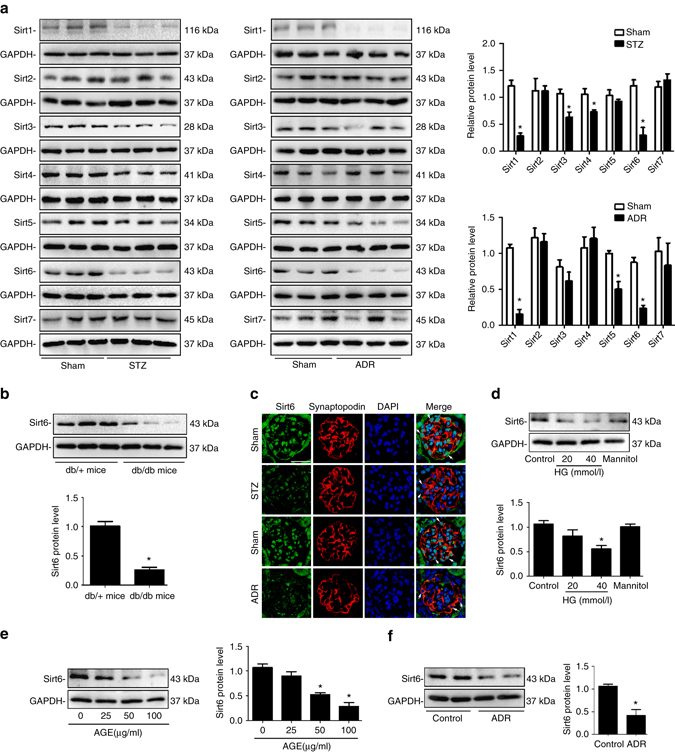
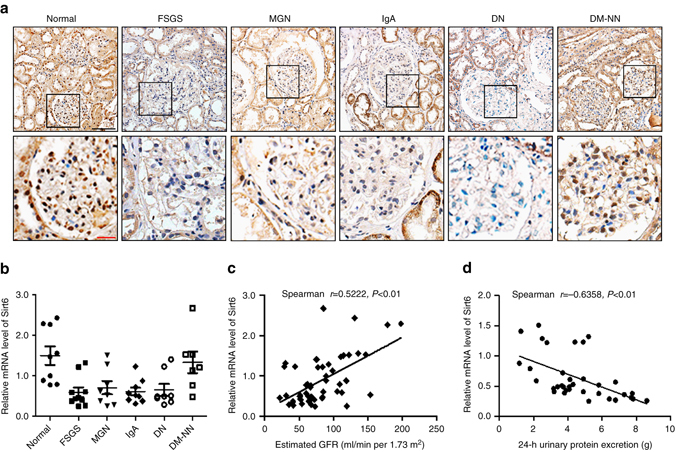
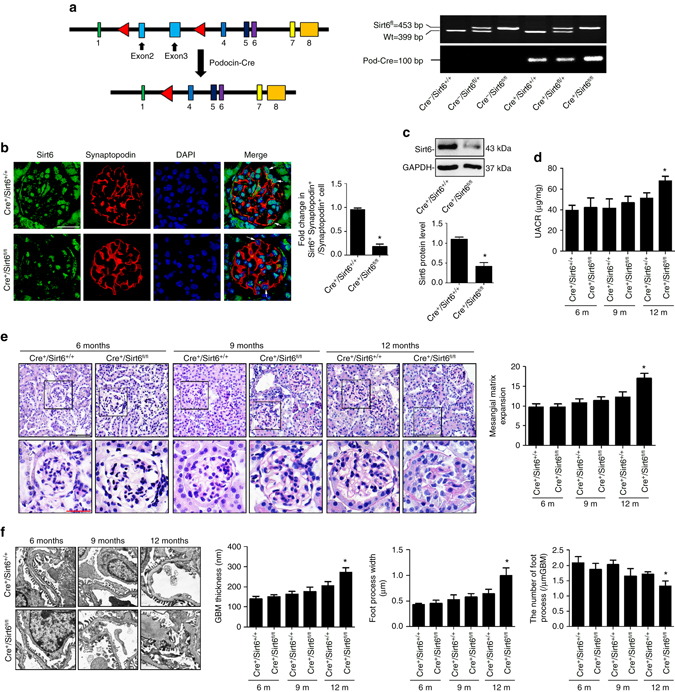
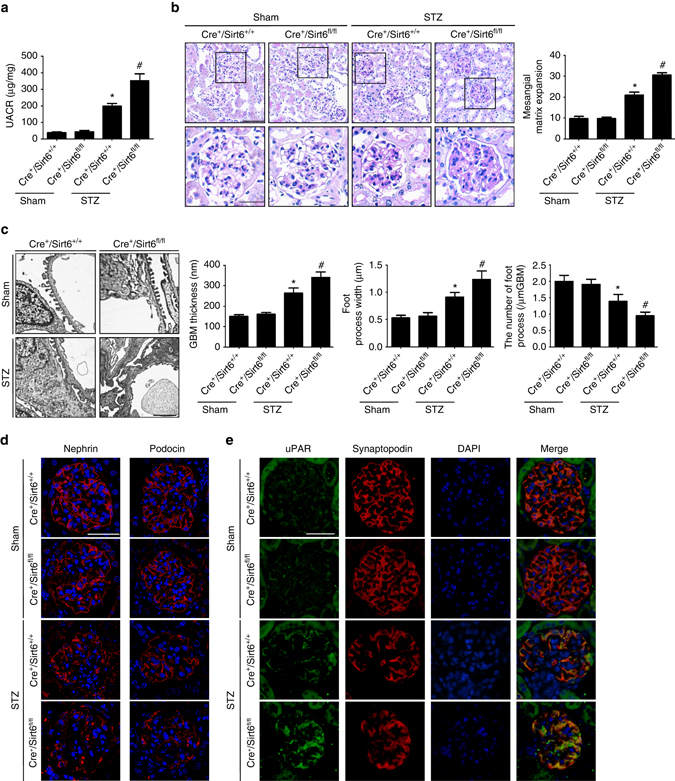
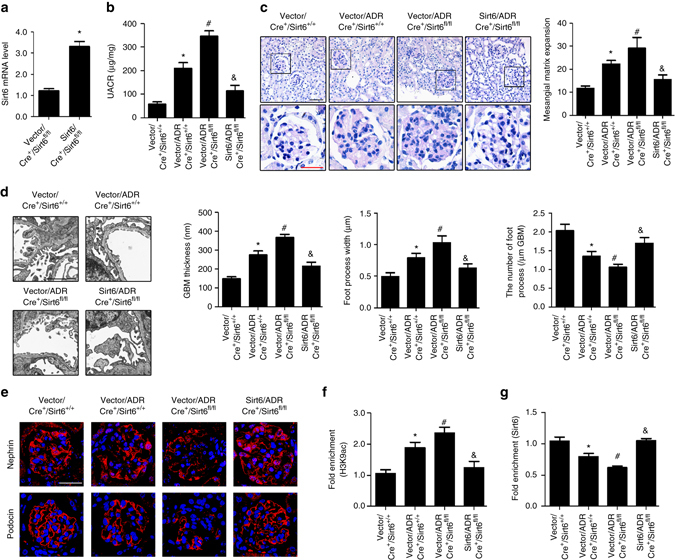
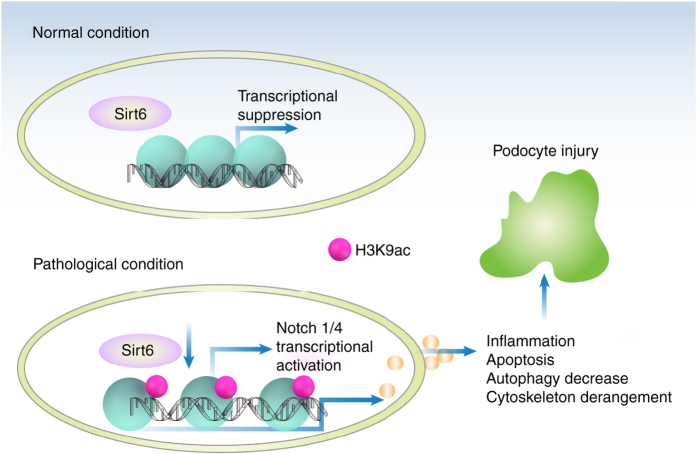
Podocyte injury is a major determinant of proteinuric kidney disease and the identification of potential therapeutic targets for preventing podocyte injury has clinical importance. Here, we show that histone deacetylase Sirt6 protects against podocyte injury through epigenetic regulation of Notch signaling. Sirt6 is downregulated in renal biopsies from patients with podocytopathies and its expression correlates with glomerular filtration rate. Podocyte-specific deletion of Sirt6 exacerbates podocyte injury and proteinuria in two independent mouse models, diabetic nephropathy, and adriamycin-induced nephropathy. Sirt6 has pleiotropic protective actions in podocytes, including anti-inflammatory and anti-apoptotic effects, is involved in actin cytoskeleton maintenance and promotes autophagy. Sirt6 also reduces urokinase plasminogen activator receptor expression, which is a key factor for podocyte foot process effacement and proteinuria. Mechanistically, Sirt6 inhibits Notch1 and Notch4 transcription by deacetylating histone H3K9. We propose Sirt6 as a potential therapeutic target for the treatment of proteinuric kidney disease.
Overview
The claims and statistics of this paper haven’t been checked yet.
Free: it reads the open-access text and checks the first 5 claims that cite a source we can check. Create a free account to check every claim.
Integrity signals
Registry
Cites
Statistics
Figures
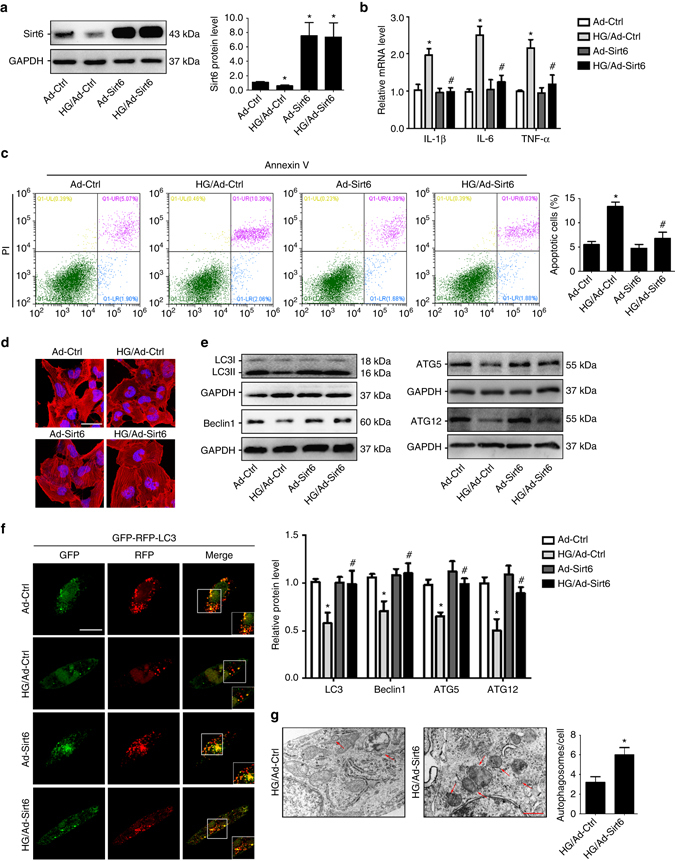
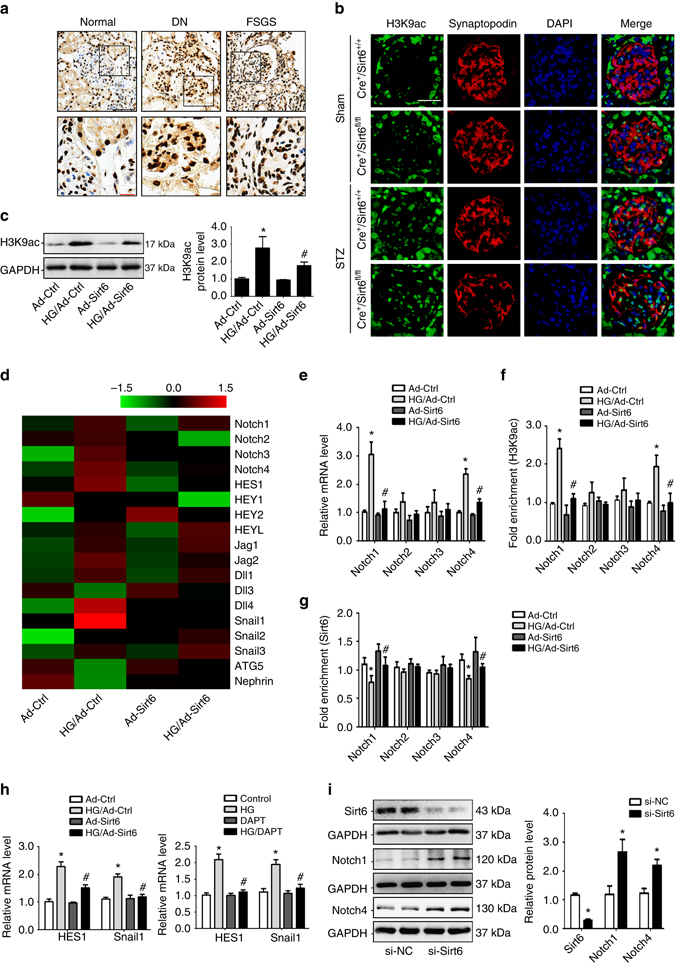
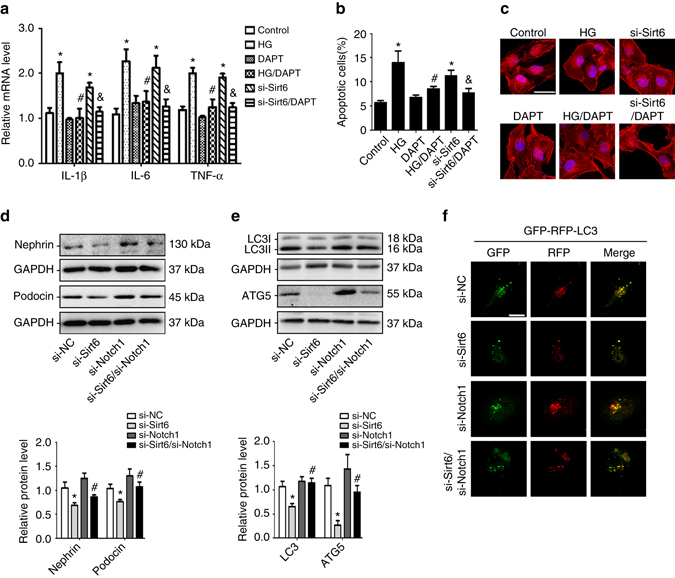
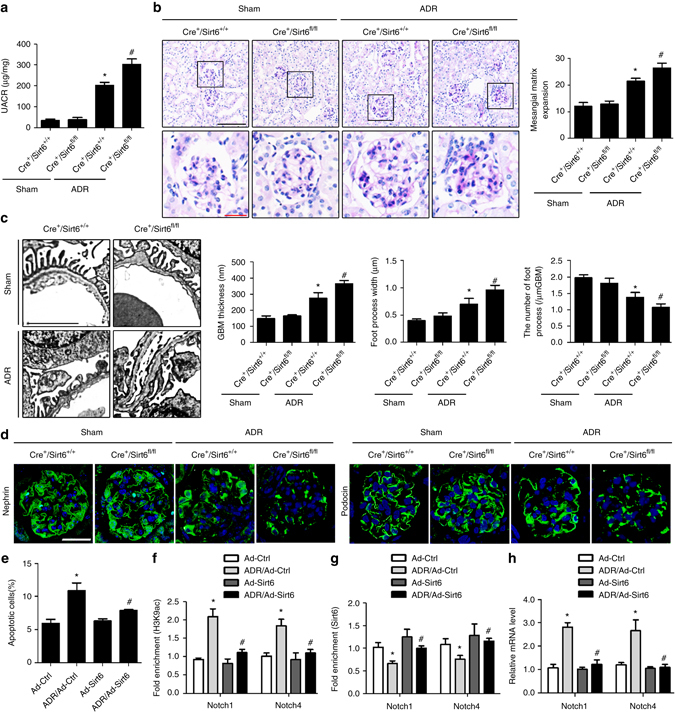
Verification
Claims the paper makes
The claims and statistics of this paper haven’t been checked yet.
Free: it reads the open-access text and checks the first 5 claims that cite a source we can check. Create a free account to check every claim.
Claims other papers make about this one
Each is checked against this paper’s own text: does it say what the citing paper says it does?
The source backs part of the claim, not all of it — or backs it for a different population, condition or comparison.
In the citing paper
“Podocyte-specific Sirt6 deletion accelerated podocyte injury and proteinuria in both STZ-induced diabetic mice and db/db mice.”
From Autophagy in kidney homeostasis and disease (2020) · cites this paper as [137]
Experimental — accuracy not yet measuredThe cited source says what the claim attributes to it.
In the citing paper
“Moreover, SIRT6 was decreased in kidney biopsy samples from patients with podocytopathies, including DKD137.”
From Autophagy in kidney homeostasis and disease (2020) · cites this paper as [137]
The cited source says what the claim attributes to it.
In the citing paper
“SIRT6 had an essential role in maintaining autophagy in podocytes treated with high glucose by inhibiting NOTCH signalling through deacetylation of acetylated histone 3 lysine 9 (H3K9ac) at Notch1 and Notch4 promoter sites137.”
From Autophagy in kidney homeostasis and disease (2020) · cites this paper as [137]
Self-check
Percentages, sums and reported differences re-computed from the paper’s own numbers.
The self-check needs the paper’s full text.
Citations
Cites
Rubinsztein, D. C., Mariño, G., & Kroemer, G. (2011) · Cell · doi:10.1016/j.cell.2011.07.030 · Cited by 2,107
Liang, H., Liang, P., Xu, Y., Wu, J., Liang, T., & Xu, X. (2009) · Journal of Neurotrauma · doi:10.1089/neu.2008.0850 · Cited by 1,750
Genomic Instability and Aging-like Phenotype in the Absence of Mammalian SIRT6
Mostoslavsky, R., Chua, K. F., Lombard, D. B., Pang, W. W., Fischer, M. R., Gellon, L., Liu, P., Mostoslavsky, G., Franco, S., Murphy, M. M., et al. (2006) · Cell · doi:10.1016/j.cell.2005.11.044 · Cited by 1,637
Recent progress in the biology and physiology of sirtuins
Finkel, T., Deng, C.-X., & Mostoslavsky, R. (2009) · Nature · doi:10.1038/nature08197 · Cited by 1,484
SIRT6 is a histone H3 lysine 9 deacetylase that modulates telomeric chromatin
Michishita, E., McCord, R. A., Berber, E., Kioi, M., Padilla-Nash, H., Damian, M., Cheung, P., Kusumoto, R., Kawahara, T. L. A., Barrett, J. C., et al. (2008) · Nature · doi:10.1038/nature06736 · Cited by 1,111
Circulating urokinase receptor as a cause of focal segmental glomerulosclerosis
Wei, C., El Hindi, S., Li, J., Fornoni, A., Goes, N., Sageshima, J., Maiguel, D., Karumanchi, S. A., Yap, H.-K., Saleem, M., et al. (2011) · Nature Medicine · doi:10.1038/nm.2411 · Cited by 841
Hartleben, B., Gödel, M., Meyer-Schwesinger, C., Liu, S., Ulrich, T., Köbler, S., Wiech, T., Grahammer, F., Arnold, S. J., Lindenmeyer, M. T., et al. (2010) · Journal of Clinical Investigation · doi:10.1172/jci39492 · Cited by 721
miR-33a/b contribute to the regulation of fatty acid metabolism and insulin signaling
Dávalos, A., Goedeke, L., Smibert, P., Ramírez, C. M., Warrier, N. P., Andreo, U., Cirera-Salinas, D., Rayner, K., Suresh, U., Pastor-Pareja, J. C., et al. (2011) · Proceedings of the National Academy of Sciences · doi:10.1073/pnas.1102281108 · Cited by 715
The Notch signaling pathway: Transcriptional regulation at Notch target genes
Borggrefe, T., & Oswald, F. (2009) · Cellular and Molecular Life Sciences · doi:10.1007/s00018-009-8668-7 · Cited by 661
Modification of kidney barrier function by the urokinase receptor
Wei, C., Möller, C. C., Altintas, M. M., Li, J., Schwarz, K., Zacchigna, S., Xie, L., Henger, A., Schmid, H., Rastaldi, M. P., et al. (2008) · Nature Medicine · doi:10.1038/nm1696 · Cited by 523
Cited by
Items 201–300 of 343
Chen, C., Xie, C., Xiong, Y., Wu, H., Wu, L., Zhu, J., Xing, C., & Mao, H. (2022) · Toxicology Letters · doi:10.1016/j.toxlet.2022.06.006 · Cited by 11
Jin, Q., Liu, T., Ma, F., Yang, L., Mao, H., Wang, Y., Li, P., Peng, L., & Zhan, Y. (2023) · Biomedicine & Pharmacotherapy · doi:10.1016/j.biopha.2023.115499 · Cited by 16
Wu, D., Jiang, T., Zhang, S., Huang, M., Zhu, Y., Chen, L., Yuanyuan, Z., Zhang, D., Yu, H., Yao, G., et al. (2023) · Inflammation · doi:10.1007/s10753-023-01935-x · Cited by 13
“Notch1 pathway was generally regarded as the down-stream pathway leading to podocyte injury in diabetic nephropathy [16] and focal segmental glomerulosclerosis [17].”
Tsai, Y., Huang, J., Yu, P.-S., Kuo, M., Wu, L., Chang, W., Hwang, S., & Hsu, Y. (2025) · Redox Report · doi:10.1080/13510002.2025.2528334 · Cited by 12
“For example, podocyte apoptosis results in podocyte depletion and glomerular injury, leading to albuminuria and glomerular structure damage [33].”
Tsai, Y., Cheng, K. H., Jiang, S. S., Hawse, J. R., Chuang, S. E., Chen, S. L., Huang, T., & Ch’ang, H.-J. (2023) · Journal of Biomedical Science · doi:10.1186/s12929-023-00937-z · Cited by 10
“KLF10 might also modulate stem cell phenotypes of PDAC through EMT and metabolic reprogramming [29, 30].”
BackgroundRutaecarpine alleviates inflammation and fibrosis by targeting CK2α in diabetic nephropathy
Chen, J., Hu, Z.-Y., Ma, Y., Jiang, S., Yin, J., Wang, Y., Wu, Y., & Liu, X. (2024) · Biomedicine & Pharmacotherapy · doi:10.1016/j.biopha.2024.117499 · Cited by 10
The SIRT6/BAP1/xCT signaling axis mediates ferroptosis in cisplatin-induced AKI
Yang, S., Chen, L., Din, S., Ye, Z., Zhou, X., Fan, C., & Li, W. (2024) · Cellular Signalling · doi:10.1016/j.cellsig.2024.111479 · Cited by 12
Sirtuins in kidney homeostasis and disease: where are we now?
Fan, Z., Wei, X. S., Zhu, X., & Du, Y. (2025) · Frontiers in Endocrinology · doi:10.3389/fendo.2024.1524674 · Cited by 11
Self-citationCellular senescence in kidney diseases
Wang, X., Li, Y., Chu, Q., Lv, H., Li, J., & Yi, F. (2025) · Chinese Medical Journal · doi:10.1097/cm9.0000000000003746 · Cited by 13
“[35] In endothelial cells, SIRT6 promotes the expression of GATA-binding protein 5, a novel regulator of blood pressure, via inhibiting NK3 homeobox 2 transcription, thereby modulating GATA5-mediated signaling pathways to protect against endothelial injury.”
Self-citationDai, Y., Gao, M., Li, L., Mao, Z., Xu, L., Yin, L., Qi, Y., & Peng, J. (2020) · Oxidative Medicine and Cellular Longevity · doi:10.1155/2020/9481841 · Cited by 12
“Sirtuin (Sirt) 6 can alleviate podocyte injury via anti-inflammatory and antiapoptotic actions [13].”
BackgroundSelf-citationDai, H., Liu, F., Qiu, X., Liu, W., Dong, Z., Jia, Y., Feng, Z., Liu, Z., Zhao, Q., Gao, Y., et al. (2020) · Evidence-based Complementary and Alternative Medicine · doi:10.1155/2020/7809427 · Cited by 10
“e occurrence of DKD is related to destruction of podocyte and alteration in the structure of the podocyte under high glucose levels, including podocyte hypertrophy, podocyte epithelial-mesenchymal transdifferentiation, podocyte detachment, and podocyte apoptosis [4, 5], which leads to the destruction of glomerular fil…”
BackgroundSelf-citationTetrandrine Attenuates Podocyte Injury by Inhibiting TRPC6-Mediated RhoA/ROCK1 Pathway
Mao, L., Ding, Y., Yu, D., Yin, J., & Yu, J. (2022) · Analytical Cellular Pathology · doi:10.1155/2022/7534181 · Cited by 10
“Podocyte injury is a major pathological feature of proteinuric kidney disease, and the identi fi cation of potential therapeutic targets for alleviating podocyte injury has clinical importance [36].”
miR-1187 induces podocyte injury and diabetic nephropathy through autophagy
Chen, B., & He, Q. (2023) · Diabetes and Vascular Disease Research · doi:10.1177/14791641231172139 · Cited by 12
“Studies showed that compared with healthy people, miR204 content in the kidney of patients with hypertension and DN decreased.13 Anti-miR-204 injection would aggravate proteinuria and fibrosis.14 miR-15b-5p induced mesangial cells apoptosis by targeting BCL-2 under HG. miR-15b-5p has the potential to predict kidney in…”
BackgroundInfluentialRole of protein phosphatase 2A in kidney disease (Review)
Shao, L., Ma, Y., Fang, Q., Huang, Z., Wan, S., Wang, J., & Yang, L. (2021) · Experimental and Therapeutic Medicine · doi:10.3892/etm.2021.10671 · Cited by 10
“Congenital or acquired podocyte damage can cause podocytes to lose certain specific markers, causing disappear‐ ance of FPs, detachment and proteinuria (75).”
BackgroundASH2L-mediated H3K4me3 drives diabetic nephropathy through HIPK2 and Notch1 pathway
Zhong, W., Chen, H., Zhang, Y., Li, Y., Xiao, C., & Liu, X. (2023) · Translational research · doi:10.1016/j.trsl.2023.10.002 · Cited by 11
Self-citationRole of Extracellular Vesicle-Derived Noncoding RNAs in Diabetic Kidney Disease
Hu, M., Shen, X., & Zhou, L. (2024) · Kidney Diseases · doi:10.1159/000539024 · Cited by 9
Role of sirtuins in sepsis and sepsis-induced organ dysfunction: A review
Yang, X., Wen, R., Yang, N., & Zhang, T. (2024) · International Journal of Biological Macromolecules · doi:10.1016/j.ijbiomac.2024.134853 · Cited by 10
Li, J., Zhou, Y., Shu, T., Lei, W., Tang, Q., Yang, Y., Zhang, J., Chen, W., Zhou, B., Hu, Q., et al. (2025) · Developmental Cell · doi:10.1016/j.devcel.2025.01.010 · Cited by 9
Wang, Q., Shi, H., Zhuang, H., Dong, G., Gao, K., Liu, L., Zhou, H., Nie, Y., Wang, J., & Liu, L. (2025) · International Journal of Medical Sciences · doi:10.7150/ijms.101520 · Cited by 9
“Furthermore, reduced levels of SIRT6 have been found in the plasma of cancer patients undergoing anthracycline-based chemotherapy[12].”
Jiang, J., Yin, J., Liu, X., Wang, H., & Lu, G. (2018) · Evidence-based Complementary and Alternative Medicine · doi:10.1155/2018/1741924 · Cited by 9
Lu, Z., Zhu, X., Ye, Y., Fu, H., & Mao, J. (2021) · Cytotechnology · doi:10.1007/s10616-021-00484-1 · Cited by 8
TM7SF1, an important autophagy regulatory protein in mouse podocytes
Hu, Y., Wang, Y., Zhang, X., Jin, X., Pei, W., Wang, L., Zhang, Y., & Gao, J. (2020) · Biochemical and Biophysical Research Communications · doi:10.1016/j.bbrc.2020.05.004 · Cited by 9
Self-citationDu, Y., Guo, H., Guo, L., Miao, J., Ren, H., Liu, K., Ren, L., He, J., Wang, X., Chen, J., et al. (2021) · Journal of Cellular and Molecular Medicine · doi:10.1111/jcmm.16788 · Cited by 8
Self-citationYi, Z., Yang, B., Wan, F., Lü, J., Liu, D., Lin, L., Xu, Y., Cen, Z., Fan, M., Liu, W., et al. (2024) · Journal of Ethnopharmacology · doi:10.1016/j.jep.2024.118650 · Cited by 10
Self-citationRole of Epigenetic Changes in the Pathophysiology of Diabetic Kidney Disease
Liebisch, M., & Wolf, G. (2024) · Glomerular Diseases · doi:10.1159/000541923 · Cited by 8
Lu, T., Fan, Z., Hou, J., Qi, X., Guo, M., Ju, J., Yang, Y., & Gu, C. (2019) · PubMed Central · Cited by 8
Chang, K., Xue, R., Zhao, M., Zhao, Y., Yu, W., Zhao, Z., & Liu, X. (2021) · Experimental Cell Research · doi:10.1016/j.yexcr.2021.112825 · Cited by 8
Elrashidy, R. A., Mohamed, H. E., Aal, S. M. A., Mohamed, S. R., Tolba, S. M., & Mahmoud, Y. K. (2024) · Archives of Biochemistry and Biophysics · doi:10.1016/j.abb.2024.109986 · Cited by 8
Zhai, S.-B., Li, M., Sun, B.-C., & Han, Y. (2019) · Inflammation · doi:10.1007/s10753-019-00993-4 · Cited by 8
Wu, D., Bai, J., Cui, S., Fu, B., Yin, Z., Cai, G., & Chen, X. (2020) · Annals of Translational Medicine · doi:10.21037/atm.2020.02.58 · Cited by 7
“As highly specialized and terminally differentiated epithelial cells, podocytes lack the ability to self-repopulate (46,47).”
BackgroundXia, J., Zhang, Y., Wang, Q., & Zhang, T. (2024) · Immunopharmacology and Immunotoxicology · doi:10.1080/08923973.2023.2300310 · Cited by 7
“Notch1 inhibition has been reported to promote podocyte autophagy and alleviate inflammatory injury [19].”
BackgroundSelf-citationLi, Y., Song, L., Du, Y., & Jiang, X. (2024) · Current Molecular Medicine · doi:10.2174/0115665240310818240531080353 · Cited by 8
Notch signaling in diabetic kidney disease: recent progress
Wang, Z., Tu, W., Long, Y.-N., Li, P., He, K.-Y., & Wu, J. (2025) · Frontiers in Endocrinology · doi:10.3389/fendo.2025.1537769 · Cited by 9
Self-citationJin, Q., Li, L., Qu, P., Ma, F., Li, P., Qiao, Y., Zhang, Y., Ran, S., Li, X., Liu, T., et al. (2025) · Journal of Advanced Research · doi:10.1016/j.jare.2025.10.008 · Cited by 9
Self-citationXiaoqin, G., Liu, X., Han, Z., Liao, H., & Li, R. (2025) · Renal Failure · doi:10.1080/0886022x.2025.2482121 · Cited by 10
“SIRT6 has been reported by numerous studies to be expressed in all major types of kidney cells, including mesangial cells, endothelial cells, podocytes, and proximal tubular epithelial cells [32].”
Inhibiting Autophagy in Renal Cell Cancer and the Associated Tumor Endothelium
Russell, K. L., Gorgulho, C. M., Allen, A. E., Vakaki, M. A., Wang, Y., Facciabene, A., Lee, D., Roy, P. S., Buchser, W., Appleman, L. J., et al. (2019) · The Cancer Journal · doi:10.1097/ppo.0000000000000374 · Cited by 7
Chen, M., Zhao, Y., Hu, S. N., Yuan, J.-B., Xie, K., Cai, S., Zhu, X.-Y., Du, J.-K., & Xu, P. (2025) · APOPTOSIS · doi:10.1007/s10495-025-02122-z · Cited by 6
Zhu, A., Ye, T., Tan, M., & Xu, J. (2025) · International Journal of Biological Macromolecules · doi:10.1016/j.ijbiomac.2025.147964 · Cited by 8
Ma, Y., Luo, N., Yue, C., Sun, Q., Wang, Y., Zhao, H., Song, R., Zou, H., Zhu, J., & Liu, Z. (2025) · Biochimica et Biophysica Acta (BBA) - Molecular Basis of Disease · doi:10.1016/j.bbadis.2025.168074 · Cited by 9
Xia, J., Sun, W., & Dun, J. (2022) · International Urology and Nephrology · doi:10.1007/s11255-022-03396-x · Cited by 6
“Podocyte injury induces a deficiency of the glomerular filtration barrier, leading to the development of DN [12].”
BackgroundMa, Y., Xie, D., Liu, J., Han, X., Xu, H., & Chen, Y. (2023) · International Immunopharmacology · doi:10.1016/j.intimp.2023.109715 · Cited by 9
Zhang, L., Song, Z., Mao, X., Yang, Y., Hou, B., Chen, Y., & Hao, Z. (2024) · International Immunopharmacology · doi:10.1016/j.intimp.2024.113864 · Cited by 7
Zhang, L., Song, Z., Mao, X., Yang, Y., Hou, B., Chen, Y., & Hao, Z. (2025) · International Immunopharmacology · doi:10.1016/j.intimp.2025.114302 · Cited by 6
Calycosin ameliorates albuminuria in nephrotic syndrome by targeting Notch1/Snail pathway
Ma, X., Guan, B., & Pang, L. (2025) · BMC Nephrology · doi:10.1186/s12882-025-04113-3 · Cited by 6
Research progress of sirtuins in renal and cardiovascular diseases
Wang, W., Li, J., & Cai, L. (2021) · Current Opinion in Nephrology & Hypertension · doi:10.1097/mnh.0000000000000660 · Cited by 7
“SIRT-6 Mitochondrial biogenesis" Oxidative stress# Inflammation# Apoptosis# Autophagy" Fibrosis# Podocyte actin cytoskeleton maintenance Renal fibrosis (unilateral ureteral obstruction and renal ischemia-reperfusion) and renal proximal tubular epithelial cells were treated with TGF-b [22&&] Diabetic nephropathy [32] A…”
BackgroundChemical Biology Tools for Protein Lysine Acylation
Xie, Y., Du, S., Liu, Z., Liu, M., Xu, Z., Wang, X., Kee, J. X., Yi, F., Sun, H., & Yao, S. Q. (2022) · Angewandte Chemie · doi:10.1002/ange.202200303 · Cited by 6
Self-citationAbility of NAD and Sirt1 to epigenetically suppress albuminuria
Hasegawa, K., Tamaki, M., Shibata, E., Inagaki, T., Minato, M., Yamaguchi, S., Shimizu, I., Miyakami, S., Tada, M., & Wakino, S. (2024) · Clinical and Experimental Nephrology · doi:10.1007/s10157-024-02502-w · Cited by 6
“A variety of studies using human renal samples underlying the correlation between Nampt/Sirt6 /TIMP-1 and diabetic nephropathy have been reported, which includes the important roles of these molecules mainly in the middle to late stages of DN [26, 27].”
BackgroundMicroRNA-30a Targets Notch1 to Alleviate Podocyte Injury in Lupus Nephritis
Guo, A., Sun, Y., Xu, X., & Xing, Q. (2022) · Immunological Investigations · doi:10.1080/08820139.2022.2027440 · Cited by 6
“Notch1 overexpression aggravates the injury of mature podocytes (Liu et al. 2017).”
BackgroundSelf-citationSelective Inhibition of Histone Deacetylase Class IIa With MC1568 Ameliorates Podocyte Injury
He, X., Sun, T., Zhang, P., Xia, Z., Gao, C., Ren, H., & Ji, D. (2022) · Frontiers in Medicine · doi:10.3389/fmed.2022.848938 · Cited by 6
Self-citationWu, D., Bai, J., Cui, S., Fu, B., Yin, Z., Cai, G., & Chen, X. (2020) · Annals of Translational Medicine · doi:10.21037/atm-2020-25 · Cited by 5
Acetylation and deacetylation dynamics in stress response to cancer and infections
Li, L., Zeng, Y., Cheng, G., & Yang, H. (2025) · Seminars in Immunology · doi:10.1016/j.smim.2025.101957 · Cited by 6
Mao, S., Yu, N. H., Wang, W., Mao, Y., Du, Y., Zhao, Q., Gu, X., & Kang, J. (2025) · Cell Biology and Toxicology · doi:10.1007/s10565-025-10031-9 · Cited by 9
miR‑199b‑5p mediates adriamycin‑induced podocyte apoptosis by inhibiting the expression of RGS10
Qu, G., He, T., Dai, A., Zhao, Y., Guan, D., Li, S., Shi, H., Gan, W., & Zhang, A. (2021) · Experimental and Therapeutic Medicine · doi:10.3892/etm.2021.10904 · Cited by 5
Ao, L., & Xie, Y. (2021) · PubMed Central · doi:10.11817/j.issn.1672-7347.2021.210199 · Cited by 12
The Protective Effect of Shen Qi Wan on Adenine‐Induced Podocyte Injury
Lin, Y., Zhang, J., Fu, Y., Ji, L., Lin, L., Chen, H., Yang, Y., & Li, C. (2020) · Evidence-based Complementary and Alternative Medicine · doi:10.1155/2020/5803192 · Cited by 5
Ma, X., Yu, M., Hao, C., & Yang, W. (2020) · Evidence-based Complementary and Alternative Medicine · doi:10.1155/2020/1027271 · Cited by 6
Ma, X., Hu, Z., Wang, Y., Ma, Y., Liu, G., & Liu, X. (2025) · The FASEB Journal · doi:10.1096/fj.202500946r · Cited by 6
Analysis of high glucose injury using human induced pluripotent stem cell-derived kidney organoids
Qian, Z., Yang, D., Li, Y., Dong, R., Da, J., Chen, Y., & Zha, Y. (2026) · BMC Nephrology · doi:10.1186/s12882-025-04566-6 · Cited by 6
Li, N., Liu, X., Wang, H., Duan, Y., Zhang, Y., Zhou, P., Dai, H., & Lan, T. (2024) · Chinese Medicine · doi:10.1186/s13020-024-00923-z · Cited by 4
“Hence, interventions aimed at restoring autophagy levels in podocytes during pathological conditions hold significant importance in the management of kidney diseases [35–37].”
BackgroundSelf-citationOverexpression of miR-99a in hippocampus leads to impairment of reversal learning in mice
Hu, Y., Liu, F., Peng, W., Song, S., Zhang, C., & Meng, X. (2021) · Behavioural Brain Research · doi:10.1016/j.bbr.2021.113542 · Cited by 7
Self-citationSirt6 regulates the proliferation of neural precursor cells and cortical neurogenesis in mice
Wei, Y., Wang, X., Ma, Z., Xiang, P., Liu, G., Yin, B., Hou, L., Shu, P., Liu, W., & Peng, X. (2023) · iScience · doi:10.1016/j.isci.2023.108706 · Cited by 7
“As suggested in our study, histone de-acetylation caused by SIRT6 could restrict the chromatin accessibility of Notch1 and downregulate its expression not only in podocytes, 28 but also in NSCs. 44 This function reveals another way in which deacetylases may modulate the Notch signaling pathway.”
BackgroundSelf-citationYang, C., Huang, F., Fang, H., & Zang, Y. (2024) · Diabetes Metabolic Syndrome and Obesity · doi:10.2147/dmso.s456205 · Cited by 6
“15 Current evidence indicates that activation of the PI3K/Akt/NF-κB signaling pathway significantly increases downstream inflammatory cytokines like TNF-α, IL-1β, and IL-6, 16 triggering renal inflammation and accelerating DN development.”
BackgroundKey profibrotic and pro-inflammatory pathways in the pathogenesis of diabetic kidney disease
Patel, D. M., Yang, Y., Shi, K., Wu, T., Cooper, M. E., & Chai, Z. (2021) · Diabetic Nephropathy · doi:10.2478/dine-2021-0005 · Cited by 4
Chen, Y., Wang, Z., Li, Q., Tian, M., Zhu, Y., Yu, L., Wang, J., & Sun, S. (2022) · Molecular Medicine Reports · doi:10.3892/mmr.2022.12728 · Cited by 4
“Studies have demonstrated that CXCL16 expression is upregulated in several kidney injury models from Correspondence to: Professor Shuzhen Sun, Department of Pediatrics, Shandong Provincial Hospital, Cheeloo College of Medicine, Shandong University, 324 Jing Wu Road, Jinan, Shandong 250021, P.r. china E‑mail: shuzhens0…”
MethodSelf-citationEicosapentaenoic acid reduces inflammation and apoptosis by SREBP1/TLR4/MYD88
Zhang, L., Jia, N., Yang, R. H., & Wang, F. (2020) · Bratislavské lekárske listy/Bratislava medical journal · doi:10.4149/bll_2020_135 · Cited by 5
Liu, M., Li, Z., Lu, Y., Sun, P., Chen, Y., & Yang, L. (2025) · Biomedicines · doi:10.3390/biomedicines13051231 · Cited by 4
“NOTCH4 , recognized as a significant participant in podocyte apoptosis [34], emerged as a key hub gene connected to both the HLA complex and zinc finger protein clusters, indicating its role in linking immune response and transcriptional regulation (Figure 4, Supplementary Figure S2A–”
Self-citationThe secreted protease ADAMTS18 is a novel activator of latent TGF-β to exacerbate renal fibrosis
Wang, M., Xu, F., Niu, X., Zhang, M., Liu, H., Hong, T., Dang, S., & Zhang, W. (2025) · Communications Biology · doi:10.1038/s42003-025-08320-4 · Cited by 3
Targeting Mitochondrial Dysfunction by Natural Products for the Treatment of Diabetic Kidney Disease
Huo, J., Li, P., Feng, Q., Fu, W., Pan, S., Liu, D., & Liu, Z. (2025) · Phytotherapy Research · doi:10.1002/ptr.70059 · Cited by 3
“Podocyte-specific deletion of Sirt6 exacerbates podocyte injury and proteinuria in a mouse model of DKD (Liu, Liang, et al. 2017; Wang et al. 2022).”
Chromatin remodeling and epigenetic regulation in chronic kidney disease
Liang, J., & Wan, C. (2026) · Frontiers in Genetics · doi:10.3389/fgene.2026.1781322 · Cited by 8
“This epigenetic derepression activates Notch signaling, contributing to podocyte injury and proteinuria in diabetic kidney disease (Liu et al., 2017).”
Wu, X., Liu, S., Zhao, Q. P., Xu, M., Jia, C., Shi, J., Yu, J., & Dong, S. (2026) · Inflammation · doi:10.1007/s10753-025-02433-y · Cited by 3
Tang, M., Zhu, H., Li, S., & Qiao, L. (2026) · Diabetology & Metabolic Syndrome · doi:10.1186/s13098-026-02129-9 · Cited by 4
The histologic disorders and underlying mechanisms of podocytes during diabetes
Qian, S., Su, H., & Zhang, C. (2022) · Diabetic Nephropathy · doi:10.2478/dine-2022-0021 · Cited by 3
Self-citationThe Pathogenesis of Nephrotic Syndrome: A Perspective from B Cells
Zhu, S., Zhang, J., Gao, L., Ye, Q., & Mao, J. (2024) · Kidney Diseases · doi:10.1159/000540511 · Cited by 5
“Reduced sirt6 levels lead to increased H3K9ac levels in the Notch1 and Notch4 promoter regions, resulting in increased Notch transcription [91].”
Hao, D., Yang, X., Li, Z., Xie, B., Feng, Y., Liu, G., & Ren, X. (2024) · International Urology and Nephrology · doi:10.1007/s11255-024-04226-y · Cited by 3
Liu, J., Song, X., Li, X., Yang, M., Wang, F., Han, Y., Jiang, Y., Lei, Y., Jiang, M., Zhang, W., et al. (2024) · World Journal of Diabetes · doi:10.4239/wjd.v15.i12.2322 · Cited by 4
Wang, H., Wang, W., Jiang, Y., Cui, S., Kong, Y., Chen, Y. Q., & Zhu, S. (2024) · Inflammation · doi:10.1007/s10753-024-02215-y · Cited by 3
“After a week of acclimation, the DKD group received a 60% high-fat diet (HFD, Trophic, Nantong, China) for 12 weeks, followed by daily injections of 50 mg/kg STZ (streptozocin, Sigma, S0130) for a period of five days to induce DKD [15, 16].”
Research progress on non-coding RNA regulatory networks and targeted therapy in diabetic nephropathy
Wang, X., Jing, R., Yang, T., Shao, R., Yang, F., Shi, Y., Xiujuan, Y., An, D., & Liang, Y. (2025) · Frontiers in Endocrinology · doi:10.3389/fendo.2025.1625307 · Cited by 5
Self-citationThe Role of Hypoxia on the Trimethylation of H3K27 in Podocytes
Barth, J., Loeffler, I., Bondeva, T., Liebisch, M., & Wolf, G. (2023) · Biomedicines · doi:10.3390/biomedicines11092475 · Cited by 4
Acetylated Histone Modifications: Intersection of Diabetes and Atherosclerosis
Liu, R., Li, L., Wang, Z., Zhu, J., & Ji, Y. (2024) · Journal of Cardiovascular Pharmacology · doi:10.1097/fjc.0000000000001516 · Cited by 4
Self-citationMa, P., Shao, H., Xu, D., & Qi, X. (2025) · Journal of Bioenergetics and Biomembranes · doi:10.1007/s10863-024-10049-4 · Cited by 3
“The primary microvascular consequence of diabetes is dia - betic nephropathy, which is experienced by most diabetic patients worldwide (Liu et al. 2017a , b).”
InfluentialExploring the Sirtuin Functionality in Ageing Through Human Protein Interaction Networks
Nahálková, J. (2020) · SN Computer Science · doi:10.1007/s42979-020-00192-1 · Cited by 3
Nicotinamide Coenzymes and Metabolic Diseases
Lu, T., Qin, Z., & Wu, J. (2025) · Springer eBooks · doi:10.1007/978-981-97-9877-3_27 · Cited by 2
Guo, S., Li, S., Luo, H., Wang, L., & Chi, Y. (2025) · Journal of Radiation Research and Applied Sciences · doi:10.1016/j.jrras.2025.101819 · Cited by 2
Acetylation in renal physiology and pathophysiology
Zhang, J., Wu, J., Chen, Z., Liu, S., Li, P., & Chen, D. (2025) · Frontiers in Pharmacology · doi:10.3389/fphar.2025.1660109 · Cited by 4
Watabe, Y., Kobayashi, S., Nakayama, T., Takahashi, S., & Yoshihara, M. (2025) · F1000Research · doi:10.12688/f1000research.159630.3 · Cited by 2
Podocyte, tubular epithelial-immune cell interplay in the pathogenesis of lupus nephritis
Chen, J., Chen, Z.-X., Mou, X., Rui, K., & Tian, J. (2025) · Frontiers in Immunology · doi:10.3389/fimmu.2025.1682075 · Cited by 4
Li, L., Jiang, S., Jin, Q., Qu, P., Guo, Y., Lan, X., Li, X., Sun, C., Ai, S., Li, X., et al. (2025) · Advanced Science · doi:10.1002/advs.202516984 · Cited by 5
Yao, S., Li, Z., Ma, H., Yu, X., Hu, T., Wang, Z., Zhang, R., Liang, H., & Jiao, J. (2026) · Free Radical Biology and Medicine · doi:10.1016/j.freeradbiomed.2026.03.052 · Cited by 2
Self-citationOxidative Stress-Mediated Stem Cell Aging
Tian, Z., & Dai, X. (2021) · Springer eBooks · doi:10.1007/978-981-16-0522-2_3 · Cited by 2
Huang, Y., Cheng, J., Zhou, Y.-H., Zhang, Y. H., Zhou, S., Li, Q., Peng, L., Wang, M., Song, W., & Wu, G. (2021) · Annals of Translational Medicine · doi:10.21037/atm-21-5152 · Cited by 2
“For decades, we and other investigators have been dedicated to decoding the etiology and pathogenesis of podocyte-associated human glomerular diseases (6,18-20).”
InfluentialSelf-citationEpigenetic regulation of chronic kidney disease development following prenatal maternal stress
Sharma, V., Singh, S., Maini, J., & Srivastava, V. K. (2023) · Elsevier eBooks · doi:10.1016/b978-0-12-823931-5.00019-0 · Cited by 3
Role of KU70, SIRT1, and SIRT6 Proteins in Diabetic Rat Testis Tissue
Demirtaş, S., Ersoy, O., & Kızılay, G. (2024) · Türk doğa ve fen dergisi :/Türk doğa ve fen dergisi · doi:10.46810/tdfd.1483328 · Cited by 2
Corin protects against acute kidney injury in mice through anti-inflammatory effects
Sun, M., Wang, Z., & Jiang, J. (2024) · Biomedicine & Pharmacotherapy · doi:10.1016/j.biopha.2024.116162 · Cited by 2
Self-citationSun, Y., Yuan, C.-Y., Yu, J., Zhu, C., Xia, W., & Yin, J. (2022) · Open Chemistry · doi:10.1515/chem-2022-0259 · Cited by 1
Self-citationLiu, F., Xu, Z., Chen, G., Xu, X., Cao, H., & Chen, J. (2025) · Frontiers in Medicine · doi:10.3389/fmed.2024.1445550 · Cited by 1
Oliveira, D. C., de Oliveira, D. T., Neves, V. G. D. O., Fernandes, I. D. C., dos Santos, T. A. P., Carneiro, C. M., de Paiva, N. C. N., Barboza, N. R., & Guerra‐Sá, R. (2025) · Brazilian Journal of Medical and Biological Research · doi:10.1590/1414-431x2024e13043 · Cited by 1
Peng, Y., Sun, X., Ma, Y., Yang, X., Zhao, Y., Jia, Y., & Guo, Y. (2025) · BMC Nephrology · doi:10.1186/s12882-025-04244-7 · Cited by 1
“Previous research findings have indicated that the expression of SIRT6 is down-regulated in kidney-related diseases [24].”
Therapeutic potential of ISG20 in attenuating podocyte injury via inhibition of ferroptosis
Zhou, D., Chen, X., Jia, M., Liu, X., Huang, L., Xie, Y., Li, L., Fu, Y., Feng, Y., Yang, Z., et al. (2025) · Molecular Therapy — Nucleic Acids · doi:10.1016/j.omtn.2025.102818 · Cited by 2
“44,45 Prior optimization experiments confirmed robust GFP expression in renal parenchyma at 1 month post-injection, with no detectable toxicity in AAV-treated animals.”
Obradovic, M. M., Radovanović, J., Stanimirović, J., Zarić, B. L., & Isenović, E. R. (2026) · Acta Biochimica et Biophysica Sinica · doi:10.3724/abbs.2025255 · Cited by 1
NCOA3 as a Key Regulator in Diabetic Cognitive Dysfunction
Su, Y., Zhang, L., Cui, H., Zhang, C., & Meng, X. (2026) · Molecular Neurobiology · doi:10.1007/s12035-026-05667-5 · Cited by 1
“After 12 h of fasting and provision of drinking water, the weight of the mice was measured, and the injection dose was calculated based on the number of animals and the injection volume, referring to the literature [33].”
Self-citation
Metadata
- Authors
- Liu, M., Liang, K., Zhen, J., Zhou, M., Wang, X., Wang, Z., Wei, X., Zhang, Y., Sun, Y., Zhou, Z., Su, H., Zhang, C., Li, N., Gao, C., Peng, J., & Yi, F.
- Affiliations
- Shandong University (CN)
- Huazhong University of Science and Technology (CN)
- Virginia Commonwealth University (US)
- Corresponding author
- Yi, Fan
- ORCID
- Venue
- Nature Communications
- Published
- 2017-09-04
- Volume
- 8
- Issue
- 1
- Pages
- 413-413
- ISSN
- 2041-1723 (ISSN-L)
- PMC
- PMC5583183
- OpenAlex
- W2752265698
- Cited by
- 343
- References
- 52
- Citations by year
- 2026: 22 · 2025: 40 · 2024: 47 · 2023: 51 · 2022: 56 · 2021: 49 · 2020: 39 · 2019: 26 · 2018: 13
- FWCI
- 19.08
- Type
- journal article
- Language
- en
- Open access
- gold
- doi.org
- Licence
- cc-by
- creativecommons.org/licenses/by/4.0 (tdm)
- creativecommons.org/licenses/by/4.0 (vor)
- Locations
- Nature Communications (publishedVersion, cc-by)
- PubMed Central (publishedVersion, cc-by)
- PubMed (publishedVersion)
- RePEc: Research Papers in Economics (submittedVersion)
- DOAJ (DOAJ: Directory of Open Access Journals) (submittedVersion)
- DOAJ (DOAJ: Directory of Open Access Journals) (submittedVersion, cc-by-sa)
- Funders
- National Natural Science Foundation of China (81400730, 81600570, 81470958, 91642204, 81371317, 81525005)
- National Science Fund for Distinguished Young Scholars (81525005)
- Topics
- Health Sciences › Medicine › Nephrology › Renal Diseases and Glomerulopathies
- Health Sciences › Medicine › Geriatrics and Gerontology › Sirtuins and Resveratrol in Medicine
- Health Sciences › Medicine › Nephrology › Chronic Kidney Disease and Diabetes
- Keywords
- SIRT6, podocyte injury, proteinuria, Notch signaling, Notch1, Notch4, histone deacetylase, epigenetic regulation, diabetic nephropathy, adriamycin nephropathy, uPAR, actin cytoskeleton, autophagy, podocyte apoptosis, podocytopathy, glomerular filtration barrier
- MeSH terms
- Acetylation, Animals, Autophagy, Biopsy, Diabetes Mellitus, Experimental, Diabetic Nephropathies, Doxorubicin, Histones, Humans, Inflammation, Kidney, Lysine, Male, Promoter Regions, Genetic, Proteinuria, Signal Transduction, Down-Regulation, Apoptosis, Gene Deletion, Mice, Knockout, Integrases, Sirtuins, Podocytes, Rats, Receptors, Notch
About these checks
Registry, retraction, Cites and statistics results are computed, not judged, with one exception: a printed reference that no index lists is read once by a model before it counts as a citation error. Claims are extracted by a model and kept only when their quote appears verbatim in the text; each cited source is then checked, with a model’s help, for whether it says what the claim relies on. Those verdicts can be wrong — read the claim’s quote and the cited source before relying on one.
Statistics and arithmetic are recomputed, not judged.
Confidence bands are shown only for fields calibrated on our annotated test set. None is calibrated yet, so no band is shown.
What counts as a claim ›How we measure confidence ›How we check this ›
Are you an author, or do you see a problem with this page? Request a review
Data sources
Bibliographic data: Semantic Scholar, OpenAlex, Crossref.
Contains information from the Semantic Scholar Academic Graph Datasets, made available under the ODC Attribution License (ODC-BY 1.0).
Semantic Scholar’s data is described in: Kinney, R., et al. (2023). The Semantic Scholar Open Data Platform. arXiv:2301.10140.
