

Sirt6 deficiency exacerbates podocyte injury and proteinuria through targeting Notch signaling
Open accessThe DOI matches its Crossref record; 52 of the 52 references it cites were found in a registry or an index.
Abstract
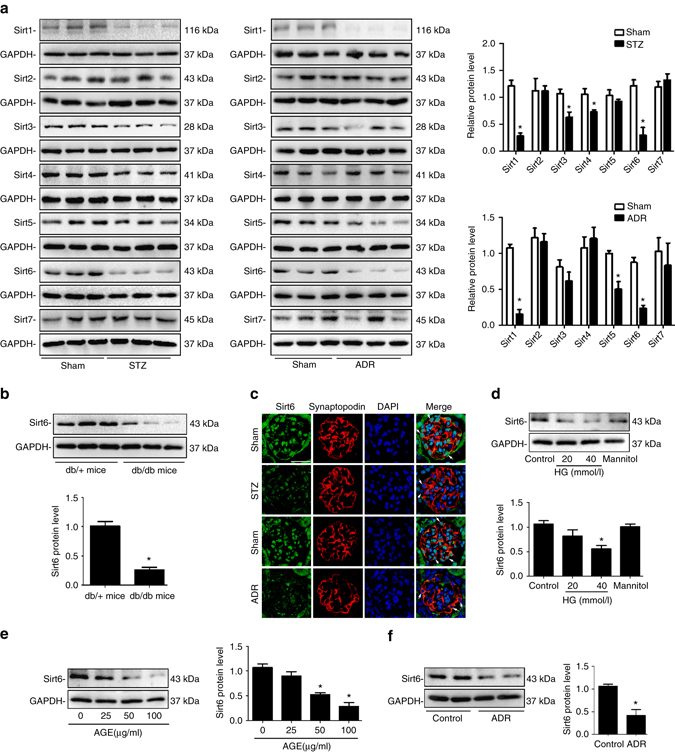
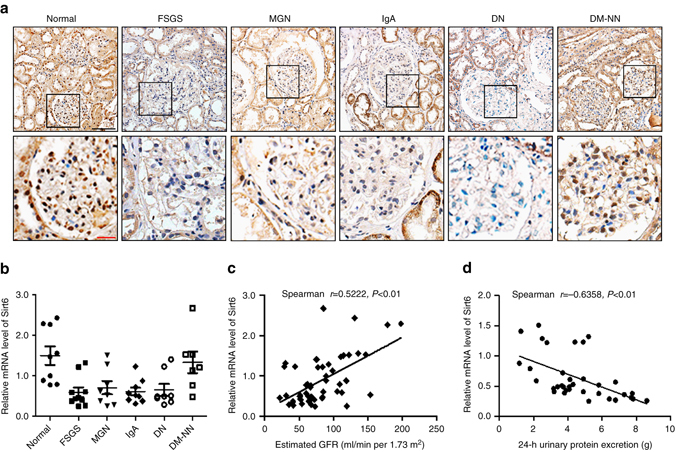
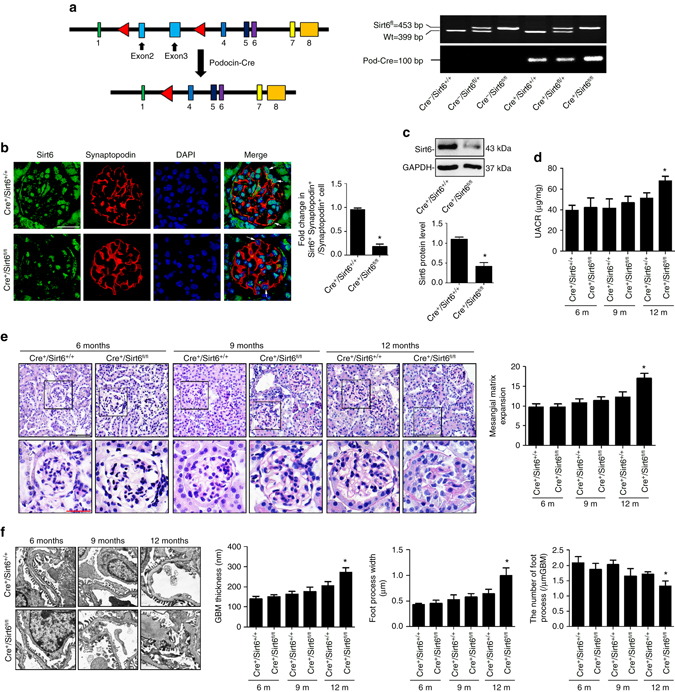
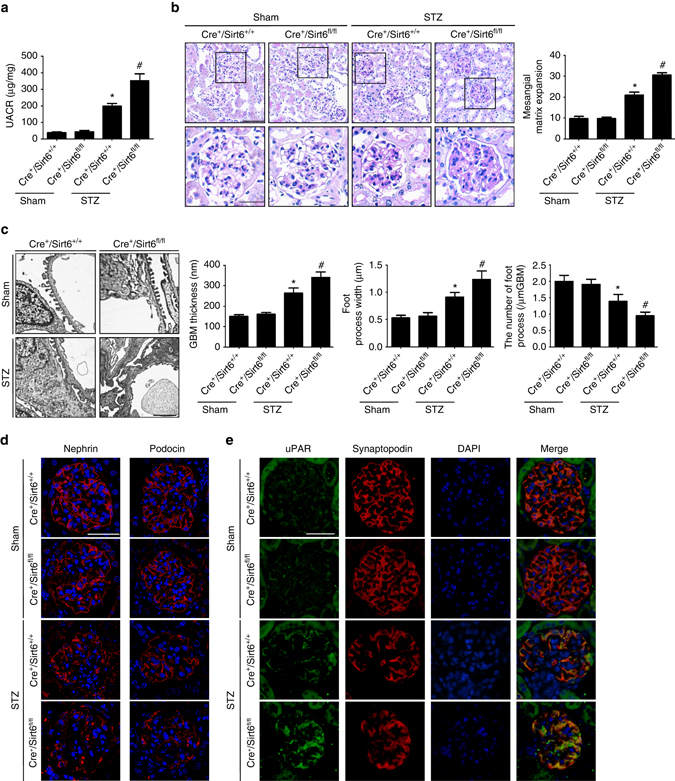
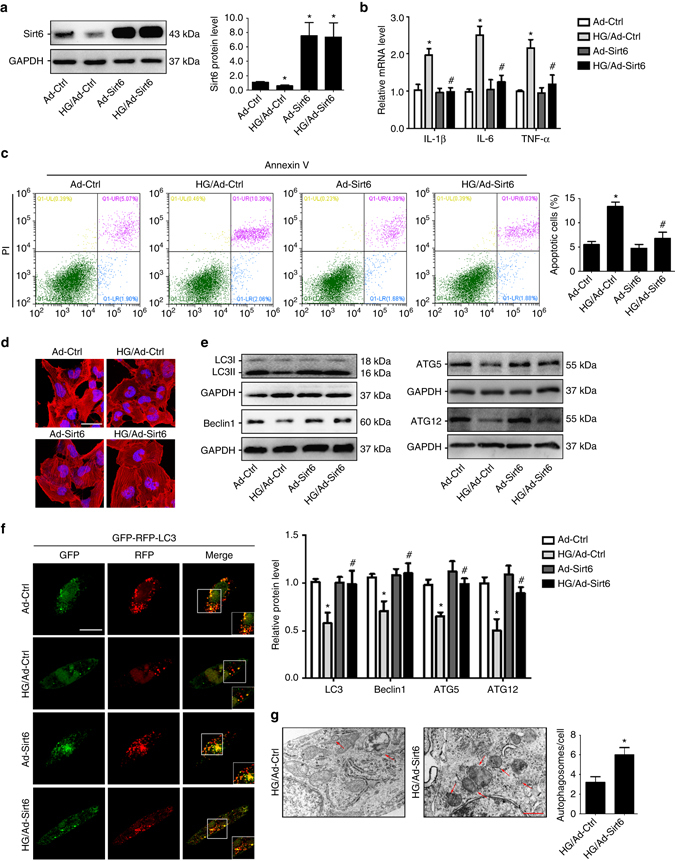
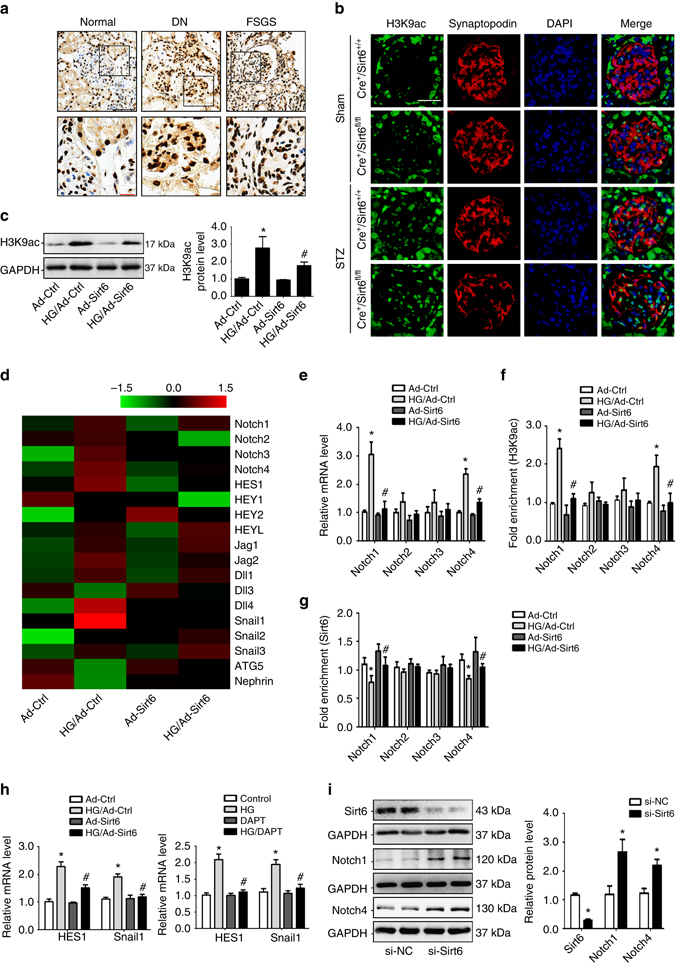
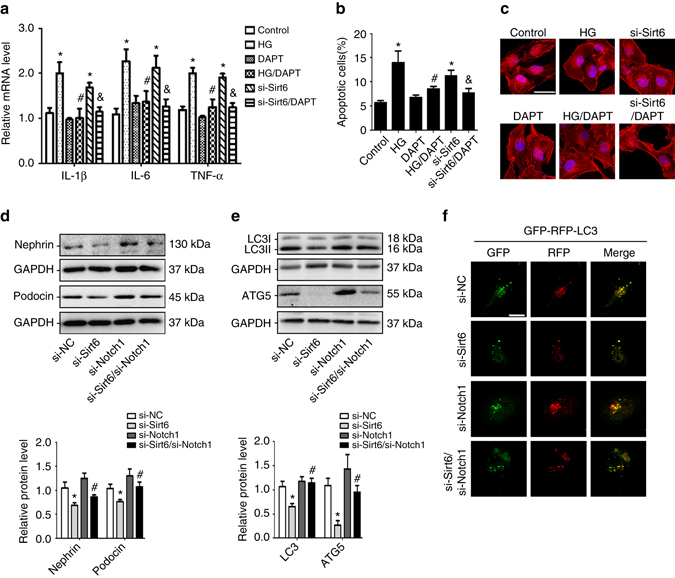
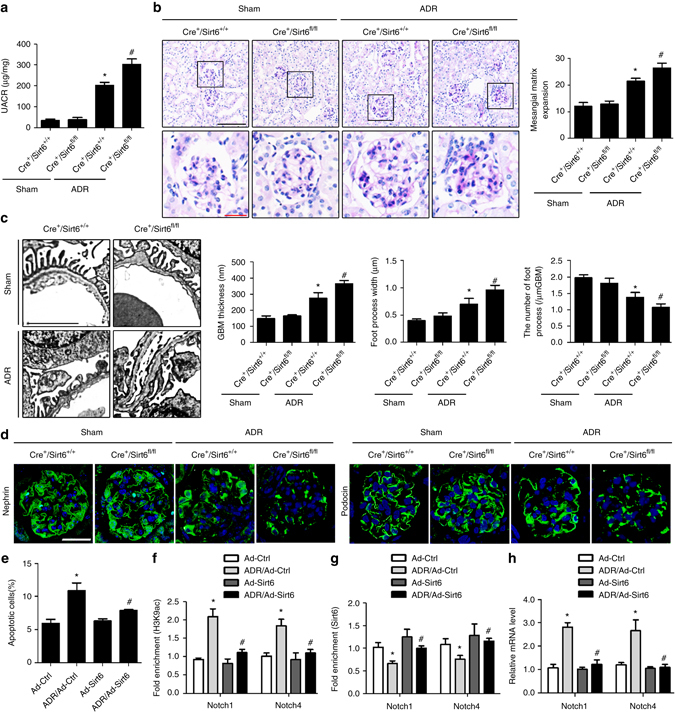
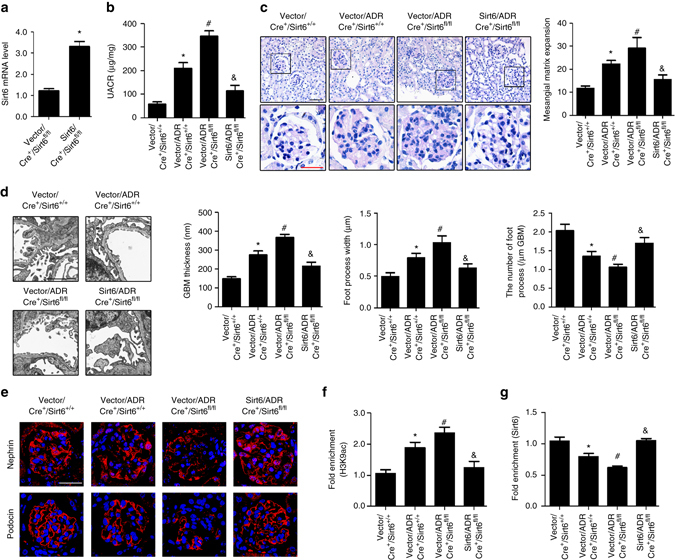
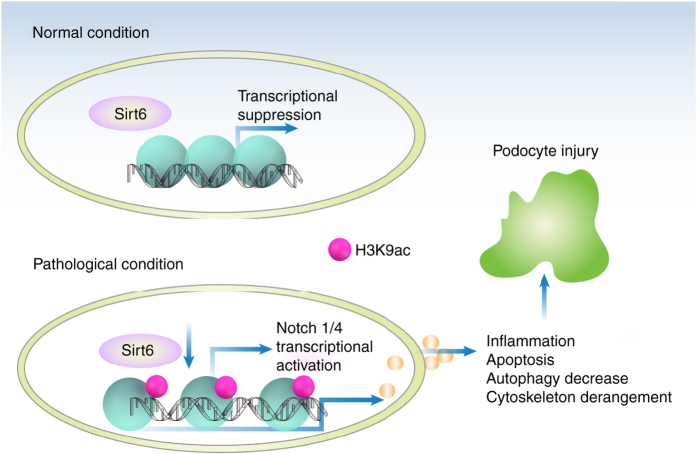
Podocyte injury is a major determinant of proteinuric kidney disease and the identification of potential therapeutic targets for preventing podocyte injury has clinical importance. Here, we show that histone deacetylase Sirt6 protects against podocyte injury through epigenetic regulation of Notch signaling. Sirt6 is downregulated in renal biopsies from patients with podocytopathies and its expression correlates with glomerular filtration rate. Podocyte-specific deletion of Sirt6 exacerbates podocyte injury and proteinuria in two independent mouse models, diabetic nephropathy, and adriamycin-induced nephropathy. Sirt6 has pleiotropic protective actions in podocytes, including anti-inflammatory and anti-apoptotic effects, is involved in actin cytoskeleton maintenance and promotes autophagy. Sirt6 also reduces urokinase plasminogen activator receptor expression, which is a key factor for podocyte foot process effacement and proteinuria. Mechanistically, Sirt6 inhibits Notch1 and Notch4 transcription by deacetylating histone H3K9. We propose Sirt6 as a potential therapeutic target for the treatment of proteinuric kidney disease.
Overview
The claims and statistics of this paper haven’t been checked yet.
Free: it reads the open-access text and checks the first 5 claims that cite a source we can check. Create a free account to check every claim.
Integrity signals
Registry
Cites
Statistics
Figures
Verification
Claims the paper makes
The claims and statistics of this paper haven’t been checked yet.
Free: it reads the open-access text and checks the first 5 claims that cite a source we can check. Create a free account to check every claim.
Claims other papers make about this one
Each is checked against this paper’s own text: does it say what the citing paper says it does?
The source backs part of the claim, not all of it — or backs it for a different population, condition or comparison.
In the citing paper
“Podocyte-specific Sirt6 deletion accelerated podocyte injury and proteinuria in both STZ-induced diabetic mice and db/db mice.”
From Autophagy in kidney homeostasis and disease (2020) · cites this paper as [137]
Experimental — accuracy not yet measuredThe cited source says what the claim attributes to it.
In the citing paper
“Moreover, SIRT6 was decreased in kidney biopsy samples from patients with podocytopathies, including DKD137.”
From Autophagy in kidney homeostasis and disease (2020) · cites this paper as [137]
The cited source says what the claim attributes to it.
In the citing paper
“SIRT6 had an essential role in maintaining autophagy in podocytes treated with high glucose by inhibiting NOTCH signalling through deacetylation of acetylated histone 3 lysine 9 (H3K9ac) at Notch1 and Notch4 promoter sites137.”
From Autophagy in kidney homeostasis and disease (2020) · cites this paper as [137]
Self-check
Percentages, sums and reported differences re-computed from the paper’s own numbers.
The self-check needs the paper’s full text.
Citations
Cites
Rubinsztein, D. C., Mariño, G., & Kroemer, G. (2011) · Cell · doi:10.1016/j.cell.2011.07.030 · Cited by 2,107
Liang, H., Liang, P., Xu, Y., Wu, J., Liang, T., & Xu, X. (2009) · Journal of Neurotrauma · doi:10.1089/neu.2008.0850 · Cited by 1,750
Genomic Instability and Aging-like Phenotype in the Absence of Mammalian SIRT6
Mostoslavsky, R., Chua, K. F., Lombard, D. B., Pang, W. W., Fischer, M. R., Gellon, L., Liu, P., Mostoslavsky, G., Franco, S., Murphy, M. M., et al. (2006) · Cell · doi:10.1016/j.cell.2005.11.044 · Cited by 1,637
Recent progress in the biology and physiology of sirtuins
Finkel, T., Deng, C.-X., & Mostoslavsky, R. (2009) · Nature · doi:10.1038/nature08197 · Cited by 1,484
SIRT6 is a histone H3 lysine 9 deacetylase that modulates telomeric chromatin
Michishita, E., McCord, R. A., Berber, E., Kioi, M., Padilla-Nash, H., Damian, M., Cheung, P., Kusumoto, R., Kawahara, T. L. A., Barrett, J. C., et al. (2008) · Nature · doi:10.1038/nature06736 · Cited by 1,111
Circulating urokinase receptor as a cause of focal segmental glomerulosclerosis
Wei, C., El Hindi, S., Li, J., Fornoni, A., Goes, N., Sageshima, J., Maiguel, D., Karumanchi, S. A., Yap, H.-K., Saleem, M., et al. (2011) · Nature Medicine · doi:10.1038/nm.2411 · Cited by 841
Hartleben, B., Gödel, M., Meyer-Schwesinger, C., Liu, S., Ulrich, T., Köbler, S., Wiech, T., Grahammer, F., Arnold, S. J., Lindenmeyer, M. T., et al. (2010) · Journal of Clinical Investigation · doi:10.1172/jci39492 · Cited by 721
miR-33a/b contribute to the regulation of fatty acid metabolism and insulin signaling
Dávalos, A., Goedeke, L., Smibert, P., Ramírez, C. M., Warrier, N. P., Andreo, U., Cirera-Salinas, D., Rayner, K., Suresh, U., Pastor-Pareja, J. C., et al. (2011) · Proceedings of the National Academy of Sciences · doi:10.1073/pnas.1102281108 · Cited by 670
The Notch signaling pathway: Transcriptional regulation at Notch target genes
Borggrefe, T., & Oswald, F. (2009) · Cellular and Molecular Life Sciences · doi:10.1007/s00018-009-8668-7 · Cited by 661
Modification of kidney barrier function by the urokinase receptor
Wei, C., Möller, C. C., Altintas, M. M., Li, J., Schwarz, K., Zacchigna, S., Xie, L., Henger, A., Schmid, H., Rastaldi, M. P., et al. (2008) · Nature Medicine · doi:10.1038/nm1696 · Cited by 523
Cited by
Notch signaling pathway: architecture, disease, and therapeutics
Zhou, B., Lin, W., Long, Y., Yang, Y., Zhang, H., Wu, K., & Chu, Q. (2022) · Signal Transduction and Targeted Therapy · doi:10.1038/s41392-022-00934-y · Cited by 1,114
Autophagy in kidney homeostasis and disease
Tang, C., Livingston, M. J., Liu, Z., & Dong, Z. (2020) · Nature Reviews Nephrology · doi:10.1038/s41581-020-0309-2 · Cited by 496
Signaling pathways of chronic kidney diseases, implications for therapeutics
Yuan, Q., Tang, B., & Zhang, C. (2022) · Signal Transduction and Targeted Therapy · doi:10.1038/s41392-022-01036-5 · Cited by 453
Self-citationMolecular pathways that drive diabetic kidney disease
Mohandes, S., Doke, T., Hu, H., Mukhi, D., Dhillon, P., & Susztak, K. (2023) · Journal of Clinical Investigation · doi:10.1172/jci165654 · Cited by 341
“Also in mouse models, Sirt6 has been shown to protect from podocyte injury via silencing of Notch signaling (37).”
BackgroundMechanistic Pathogenesis of Endothelial Dysfunction in Diabetic Nephropathy and Retinopathy
Yang, J., & Liu, Z. (2022) · Frontiers in Endocrinology · doi:10.3389/fendo.2022.816400 · Cited by 281
Elevation of JAML Promotes Diabetic Kidney Disease by Modulating Podocyte Lipid Metabolism
Fu, Y., Sun, Y., Wang, M., Hou, Y., Huang, W., Zhou, D., Wang, Z., Yang, S., Tang, W., Zhen, J., et al. (2020) · Cell Metabolism · doi:10.1016/j.cmet.2020.10.019 · Cited by 217
Self-citationMETTL3-mediated m6A modification of TIMP2 mRNA promotes podocyte injury in diabetic nephropathy
Jiang, L., Liu, X., Hu, X., Gao, L., Zeng, H., Wang, X., Huang, Y., Zhu, W., Wang, J., Wen, J., et al. (2022) · Molecular Therapy · doi:10.1016/j.ymthe.2022.01.002 · Cited by 193
Self-citationYang, H., Xie, T., Li, D., Du, X., Wang, T., Li, C., Song, X., Xu, L., Yi, F., Liang, X., et al. (2019) · Molecular Metabolism · doi:10.1016/j.molmet.2019.02.007 · Cited by 185
“Mice underwent unilateral nephrectomy (Unx) with intrarenal delivery with shTim-3-lv or ctrl-lv (2 10(6) IU/kidney) to the intact kidney [27,28].”
MethodSelf-citationCheng, Q., Pan, J., Zhou, Z.-L., Yin, F., Xie, H.-Y., Chen, P.-P., Li, J.-Y., Zheng, P.-Q., Zhou, L., Zhang, W., et al. (2021) · Acta Pharmacologica Sinica · doi:10.1038/s41401-020-00525-z · Cited by 183
Self-citationEmerging roles of SIRT6 in human diseases and its modulators
Liu, G., Chen, H., Liu, H., Zhang, W., & Zhou, J. (2021) · Medicinal Research Reviews · doi:10.1002/med.21753 · Cited by 176
“SIRT6 transcriptionally inhibits Notch1 and Notch4 signaling pathways to exert pleiotropic protective actions in podocytes.(264,265) Along with this observation, SIRT6 overexpression was found to protect kidney from various damages via stimuli such as cisplatin‐induced acute kidney injury, sepsis‐induced acute kidney…”
BackgroundFan, Y., Yang, Q., Yang, Y., Gao, Z., Ma, Y., Zhang, L., Liang, W., & Ding, G. (2019) · International Journal of Biological Sciences · doi:10.7150/ijbs.29323 · Cited by 174
“H3K9 has been proved to play an important role in the Notch signaling pathway regulated by Sirt6 [18].”
BackgroundInfluentialZhou, D., Zhou, M., Wang, Z., Fu, Y., Jia, M., Wang, X., Liu, M., Zhang, Y., Sun, Y., Lu, Y., et al. (2019) · Cell Death & Disease · doi:10.1038/s41419-019-1754-3 · Cited by 162
Self-citationZhang, J., Li, Y., Liu, Q., Huang, Y., Li, R., Wu, T., Zhang, Z., Zhou, J., Huang, H., Tang, Q., et al. (2021) · Hepatology · doi:10.1002/hep.31418 · Cited by 158
“(39,40) In kidney fibrosis and other diseases, Sirt6 protects against fibrosis and injury by epigenetic regulation of histones in proximal tubules or podocytes.(16,41,42) Sirt6 also acts as a key modulator in the epithelial to mesenchymal transition by inactivating TGF-β1 and nuclear factor-κB signaling pathways, whic…”
BackgroundLiu, X., Jiang, L., Li, Y., Huang, Y., Hu, X.-R., Zhu, W., Wang, X., Wu, Y., Meng, X., & Qi, X. (2021) · Acta Pharmacologica Sinica · doi:10.1038/s41401-021-00721-5 · Cited by 178
Self-citationSIRT6 in Aging, Metabolism, Inflammation and Cardiovascular Diseases
Guo, Z., Li, P., Ge, J., & Li, H. (2022) · Aging and Disease · doi:10.14336/ad.2022.0413 · Cited by 174
Guo, J., Wang, Z., Wu, J., Liu, M., Li, M., Sun, Y., Huang, W. C., Li, Y., Zhang, Y., Tang, W., et al. (2019) · Circulation Research · doi:10.1161/circresaha.118.314032 · Cited by 156
Self-citationChoi, M. E. (2020) · Annual Review of Physiology · doi:10.1146/annurev-physiol-021119-034658 · Cited by 150
Recent Advances in Diabetic Kidney Diseases: From Kidney Injury to Kidney Fibrosis
Hung, P.-H., Hsu, Y.-C., Chen, T.-H., & Lin, C.-L. (2021) · International Journal of Molecular Sciences · doi:10.3390/ijms222111857 · Cited by 149
A novel SIRT6 activator ameliorates neuroinflammation and ischemic brain injury via EZH2/FOXC1 axis
He, T., Shang, J., Gao, C., Guan, X., Chen, Y., Zhu, L., Zhang, L., Zhang, C., Zhang, J., & Pang, T. (2021) · Acta Pharmaceutica Sinica B · doi:10.1016/j.apsb.2020.11.002 · Cited by 132
Self-citationHan, Q., Xie, Q. R., Li, F., Cheng, Y., Wu, T., Zhang, Y., Lu, X., Wong, A. S. T., Sha, J., & Xia, W. (2021) · Theranostics · doi:10.7150/thno.53886 · Cited by 134
“In contrast to a previous report in which SIRT6 inhibited the Notch pathway by significantly reducing the level of H3K9ac in the promoter region of Notch1 and Notch4 in podocyte injury [54], we found that SIRT6 activated the Notch pathway in prostate cancer, indicating that a different molecular mechanism of the activ…”
ResultSelf-citationPodocyte injury of diabetic nephropathy: Novel mechanism discovery and therapeutic prospects
Li, X., Zhang, Y., Xing, X., Mi, L., Liu, Y., Xu, A., & Zhang, J. (2023) · Biomedicine & Pharmacotherapy · doi:10.1016/j.biopha.2023.115670 · Cited by 158
Self-citationLiu, L., Bai, F., Song, H., Xiao, R., Wang, Y., Yang, H., Ren, X., Li, S., Gao, L., Ma, C., et al. (2022) · Redox Biology · doi:10.1016/j.redox.2022.102260 · Cited by 130
Li, B., Xin, Z., Gao, S., Li, Y., Guo, S., Fu, Y., Zhang, P., Wang, D., Cheng, J., Liu, L., et al. (2022) · Theranostics · doi:10.7150/thno.78878 · Cited by 125
“Furthermore, studies in diabetic patients shows deficient SIRT6 expression in many human tissues, suggesting that SIRT6 has a protective effect on diabetes-associated diseases [20, 23, 24].”
Zheng, W., Guo, J., & Liu, Z. (2021) · Clinical Epigenetics · doi:10.1186/s13148-021-01079-5 · Cited by 113
Revisiting Experimental Models of Diabetic Nephropathy
Giralt-López, A., den Bosch, M. M. V., Vergara, A., García-Carro, C., Serón, D., Jacobs-Cachá, C., & Soler, M. J. (2020) · International Journal of Molecular Sciences · doi:10.3390/ijms21103587 · Cited by 111
Zhu, M., Wang, L., Yang, D., Li, C., Pang, S.-T., Li, X., Li, R., Yang, B., Lian, Y., Ma, L., et al. (2019) · Biomedicine & Pharmacotherapy · doi:10.1016/j.biopha.2019.109088 · Cited by 105
Programmed Cell Death in Diabetic Nephropathy: A Review of Apoptosis, Autophagy, and Necroptosis
Erekat, N. S. (2022) · Medical Science Monitor · doi:10.12659/msm.937766 · Cited by 106
“The decreased number of podocytes is associated with proteinuria and glomerular structural damage in diabetic nephropathy [105,106].”
BackgroundLi, Y., Su, X., Gao, Y., Lv, C., Gao, Z., Liu, Y., Wang, Y., Li, S., & Wang, Z. (2020) · Biochimica et Biophysica Acta (BBA) - Molecular Basis of Disease · doi:10.1016/j.bbadis.2020.165764 · Cited by 102
Self-citationSirtuin 6 overexpression relieves sepsis-induced acute kidney injury by promoting autophagy
Zhang, Y., Wang, L., Meng, L., Cao, G., & Wu, Y. (2019) · Cell Cycle · doi:10.1080/15384101.2019.1568746 · Cited by 94
“This is for the first time that researchers demonstrated that SIRT6 plays a crucial role in maintaining glomerular function [17].”
BackgroundSelf-citationWang, Y., Wang, S., Yu, X., Zhang, J., Wang, S., Yang, Z. R., & Liu, C. (2021) · Life Sciences · doi:10.1016/j.lfs.2021.119551 · Cited by 97
Miao, H., Wang, Y., Su, W. C., Zou, L., Zhuang, S., Yu, X.-Y., Liu, F., & Zhao, Y. (2023) · Acta Pharmacologica Sinica · doi:10.1038/s41401-023-01148-w · Cited by 102
“Liu et al. reported that Sirt6 expression was decreased in DKD and adriamycin-induced nephropathy in mice, and Sirt6 de fi ciency deteriorated podocyte injury and proteinuria [9].”
InfluentialCai, J., Liu, Z., Huang, X., Shu, S., Hu, X., Zheng, M., Tang, C., Liu, Y., Chen, G., Sun, L., et al. (2020) · Kidney International · doi:10.1016/j.kint.2019.08.028 · Cited by 87
Diabetic Nephropathy: Novel Molecular Mechanisms and Therapeutic Targets
Zoja, C., Xinaris, C., & Macconi, D. (2020) · Frontiers in Pharmacology · doi:10.3389/fphar.2020.586892 · Cited by 97
“Furthermore, the activation of Notch signaling is part of the mechanism through which podocytespecific loss of sirtuin-6 exacerbates podocyte injury and proteinuria in DN (Liu et al., 2017).”
BackgroundDing, H., Li, J., Li, Y., Yang, M.-L., Nie, S., Zhou, M., Zhou, Z., Yang, X., Liu, Y., & Hou, F. F. (2021) · Molecular Therapy · doi:10.1016/j.ymthe.2021.03.012 · Cited by 82
Self-citationInflammasome: structure, biological functions, and therapeutic targets
Dai, Y., Zhou, J., & Shi, C. (2023) · MedComm · doi:10.1002/mco2.391 · Cited by 98
“And it has been demonstrated that noncanonical inflammasome also play a part in the progression of MS.”
BackgroundInfluentialChen, Y., Chen, J., Jiang, M., Fu, Y., Zhu, Y., Jiao, N., Liu, L., Du, Q., Wu, H., Xu, H., et al. (2020) · Life Sciences · doi:10.1016/j.lfs.2020.117653 · Cited by 78
The Role of Sirtuins in Kidney Diseases
Hong, Y. A., Kim, J. E., Jo, M.-J., & Ko, G.-J. (2020) · International Journal of Molecular Sciences · doi:10.3390/ijms21186686 · Cited by 77
“SIRT6 is predominantly a nuclear protein and deacetylates diverse proteins, including H3K9 and H3K56 [66].”
BackgroundInfluentialUpdates on the epigenetic roles of sirtuins
Kosciuk, T., Wang, M., Hong, J. Y., & Lin, H. (2019) · Current Opinion in Chemical Biology · doi:10.1016/j.cbpa.2019.01.023 · Cited by 79
SIRT6 in Senescence and Aging-Related Cardiovascular Diseases
Li, X., Liu, L., Li, T., Liu, M., Wang, Y., Ma, H., Mu, N., & Wang, H. (2021) · Frontiers in Cell and Developmental Biology · doi:10.3389/fcell.2021.641315 · Cited by 70
Self-citationSu, J., Gao, C., Xie, L., Fan, Y., Shen, Y., Huang, Q., Wang, N., Xu, Y., Yang, N., & Gui, D. (2021) · Frontiers in Pharmacology · doi:10.3389/fphar.2021.638422 · Cited by 73
Self-citationLiu, X., Jiang, L., Zeng, H.-X., Gao, L., Guo, S., Chen, C., Liu, X., Zhang, M., Ma, L., Li, Y., et al. (2023) · Autophagy · doi:10.1080/15548627.2023.2286128 · Cited by 79
“Exfoliation and death of podocytes, compensatory hypertrophy of surviving podocytes and podocyte fusion are some of the most important pathological changes in the early stage of DN, and podocyte injury-induced proteinuria can lead to the continuous progression of DN [3].”
BackgroundRavi, V., Jain, A., Khan, D., Ahamed, F., Mishra, S., Giri, M., Inbaraj, M., Krishna, S., Sarikhani, M., Maity, S., et al. (2019) · Nucleic Acids Research · doi:10.1093/nar/gkz648 · Cited by 67
Oxidative stress and inflammation regulation of sirtuins: New insights into common oral diseases
Pan, Z., Dong, H., Huang, N., & Fang, J. (2022) · Frontiers in Physiology · doi:10.3389/fphys.2022.953078 · Cited by 64
“’s study showed that SIRT6 inhibited apoptosis in podocytes exposed to high glucose in vitro, through inhibiting Notch signaling in a deacetylation activity dependent manner (Liu et al., 2017).”
BackgroundSirtuins at the Service of Healthy Longevity
Watroba, M., & Szukiewicz, D. (2021) · Frontiers in Physiology · doi:10.3389/fphys.2021.724506 · Cited by 64
A KDM6A–KLF10 reinforcing feedback mechanism aggravates diabetic podocyte dysfunction
Lin, C., Hsu, Y., Huang, Y., Shih, Y., Wang, C., Chiang, W., & Chang, P. (2019) · EMBO Molecular Medicine · doi:10.15252/emmm.201809828 · Cited by 66
“…histone deacetylases (HDACs) such as SIRT1, SIRT6, HDAC2, HDAC4, and HDAC9 as well as histone acetyltransferases (HATs) such as GCN5 have been linked to podocyte dysfunction in diabetic nephropathy (Noh et al, 2009; Bock et al, 2013; Wang et al, 2014; Yacoub et al, 2014; Liu et al, 2016, 2017).”
BackgroundSirt6 deficiency aggravates angiotensin II-induced cholesterol accumulation and injury in podocytes
Yang, Q., Hu, J., Yang, Y., Chen, Z., Feng, J., Zhu, Z., Wang, H., Yang, D., Liang, W., & Ding, G. (2020) · Theranostics · doi:10.7150/thno.45003 · Cited by 70
“Notch activation plays an important role in podocyte injury induced by several stimuli, including Ang II [53, 54], high glucose [23] and adriamycin [23].”
BackgroundResearch progress on multiple cell death pathways of podocytes in diabetic kidney disease
Yang, C., Zhang, Z., Liu, J., Chen, P., Li, J., Shu, H., Chu, Y., & Li, L. (2023) · Molecular Medicine · doi:10.1186/s10020-023-00732-4 · Cited by 73
“…capacity of podocytes is limited in the diabetic environment due to factors, such as high glucose (HG), growth factors, fatty acids, angiotensin II (Ang II), transforming growth factor-β (TGF-β), hormones, and mechanical stretching (Liu et al. 2017; Anil Kumar et al. 2014; Wolf et al. 2005).”
BackgroundHe, M., Li, Y., Wang, L., Guo, B., Mei, W., Zhu, B., Zhang, J., Ding, Y., Meng, B., Zhang, L., et al. (2020) · Diabetologia · doi:10.1007/s00125-020-05197-2 · Cited by 62
“DKD mice Streptozotocin (STZ; Sigma-Aldrich, St Louis, MO, USA)-treated mice fed with high-fat diet (HFD) (41% energy from fat, 42% carbohydrate and 17% protein) were used to produce DKD models following previous studies [19, 20].”
MethodSelf-citationWoo, S. J., Noh, H. S., Lee, N. Y., Cheon, Y., Yi, S. M., Jeon, H. M., Bae, E. J., Lee, S., & Park, B. (2018) · EBioMedicine · doi:10.1016/j.ebiom.2018.11.005 · Cited by 65
“In addition to joint inflammation, a number of studies have demonstrated that Sirt6 exhibits pronounced anti-inflammatory properties in various inflammatory disease models, such as allergic airway inflammation, steatohepatitis, and proteinuric kidney disease [34].”
BackgroundPodocyte Aging: Why and How Getting Old Matters
Shankland, S. J., Wang, Y., Shaw, A., Vaughan, J., Pippin, J. W., & Wessely, O. (2021) · Journal of the American Society of Nephrology · doi:10.1681/asn.2021050614 · Cited by 67
“In fact, many proteins involved in podocyte effacement in different clinical settings are also altered during aging.(23,35,134,135) RNA-seq data(35) identified actin and several other regulators involved in the regulation of actin polymerization and cell motility as altered in aged podocytes(6) (Table 1).”
BackgroundEpigenetics in kidney diseases
Ding, H., Zhang, L., Yang, Q., Zhang, X., & Li, X. (2020) · Advances in clinical chemistry · doi:10.1016/bs.acc.2020.09.005 · Cited by 70
Zhao, Y., Fan, S., Zhu, H., Zhao, Q., Fang, Z., Xu, D., Lin, W., Lin, L., Hu, X., Wu, G., et al. (2024) · Nature Communications · doi:10.1038/s41467-024-49854-1 · Cited by 56
“In addition, the accumulation of in fl ammation in podocytes is associated with aggravated podocyte injury 10,11 .”
BackgroundJAML promotes acute kidney injury mainly through a macrophage-dependent mechanism
Huang, W. C., Wang, B.-O., Hou, Y., Fu, Y., Cui, S., Zhu, J., Zhan, X.-Y., Li, R., Tang, W., Wu, J., et al. (2022) · JCI Insight · doi:10.1172/jci.insight.158571 · Cited by 60
“Cell apoptosis was determined by propidium iodide–annexin V staining as described (59).”
MethodSelf-citationMimura, I., Chen, Z., & Natarajan, R. D. (2024) · Kidney International · doi:10.1016/j.kint.2024.10.031 · Cited by 68
Epithelial SIRT6 governs IL-17A pathogenicity and drives allergic airway inflammation and remodeling
Quan, J., Wen, X., Su, G., Zhong, Y., Huang, T., Xiong, Z., Huang, J., Lv, Y., Li, S., Luo, S., et al. (2023) · Nature Communications · doi:10.1038/s41467-023-44179-x · Cited by 62
“Liuetal.indicatedthat Sirt6 de fi ciencyexacerbates podocyte injury and proteinuria 26 .”
BackgroundLi, X., Jiang, H., Liu, X., Liu, Y., Tang, J., Shi, J., Yu, X., Wang, X., Du, L., Lü, Q., et al. (2021) · Biochemical Pharmacology · doi:10.1016/j.bcp.2021.114675 · Cited by 56
Self-citationLeonurine ameliorates adriamycin-induced podocyte injury via suppression of oxidative stress
Liu, X., Cao, W., Qi, J., Li, Q., Zhao, M., Chen, Z., Zhu, J., Huang, Z., Wu, L., Zhang, B., et al. (2018) · Free Radical Research · doi:10.1080/10715762.2018.1500021 · Cited by 53
“Although dramatic advances have occurred in the understanding of the pathogenesis of podocyte injury in recent years [4], the efficacy of strategies currently available for the prevention of proteinuria kidney disease is still unsatisfactory.”
BackgroundEpigenetics and Inflammation in Diabetic Nephropathy
Shao, B., Zhang, S., Li, H.-D., Meng, X., & Chen, H. (2021) · Frontiers in Physiology · doi:10.3389/fphys.2021.649587 · Cited by 59
Chen, J., Yuan, S., Zhou, J., Huang, X., Wu, W., Cao, Y., Liu, H., Hu, Q., Li, X., Guan, X., et al. (2022) · Phytomedicine · doi:10.1016/j.phymed.2022.154477 · Cited by 54
Sirtuins in kidney health and disease
Perico, L., Remuzzi, G., & Benigni, A. (2024) · Nature Reviews Nephrology · doi:10.1038/s41581-024-00806-4 · Cited by 61
“SIRT3 exerts anti-apoptotic effects by controlling ROS accumulation 66 , whereas SIRT6 protects against apoptosis via regulation of Notch signalling and the actin cytoskeleton 67 .”
Zuo, Y., Chen, L., He, X., Ye, Z., Li, L., Liu, Z., & Zhou, S. (2021) · Diabetes Metabolic Syndrome and Obesity · doi:10.2147/dmso.s298950 · Cited by 53
“nied by the release of inflammatory factors including interleukin (IL)-1β, IL-18, etc.(2) The morphological”
BackgroundSirtuins and their influence on autophagy
Baeken, M. W. (2023) · Journal of Cellular Biochemistry · doi:10.1002/jcb.30377 · Cited by 56
“87 Here, E2F transcription factor 7 (E2F7) may be a potential mediator of NOTCH1's inhibiting activity.”
Wang, Z., Sun, W., Li, R., & Liu, Y. (2022) · Bioengineered · doi:10.1080/21655979.2021.2023794 · Cited by 48
“Therefore, podocyte injury has become the focus of research to clarify the pathogenesis of DN in recent years [37,38].”
BackgroundSelf-citationLi, J., Yue, S., Fang, J., Zeng, J.-L., Chen, S., Tian, J., Nie, S., Liu, X., & Ding, H. (2022) · Molecular Therapy — Nucleic Acids · doi:10.1016/j.omtn.2022.04.002 · Cited by 50
Zhan, P., Zhang, Y., Shi, W., Liu, X., Qiao, Z., Wang, Z., Wang, X., Wu, J., Tang, W., Sun, Y., et al. (2022) · Kidney International · doi:10.1016/j.kint.2022.04.027 · Cited by 47
Self-citationModes of podocyte death in diabetic kidney disease: an update
Jiang, A., Song, A., & Zhang, C. (2022) · Journal of Nephrology · doi:10.1007/s40620-022-01269-1 · Cited by 51
Self-citationLiu, J.-L., Zhang, L., Huang, Y., Li, X., Liu, Y.-F., Zhang, S., Zhao, Y., Chen, X., Liu, Y., He, L., et al. (2023) · Molecular Therapy · doi:10.1016/j.ymthe.2023.03.027 · Cited by 58
Gao, F., Qian, M., Liu, G., Ao, W., Dai, D., & Yin, C. (2021) · Journal of Inflammation · doi:10.1186/s12950-021-00291-7 · Cited by 49
“Sirt6 deficiency exacerbates proteinuria and podocyte injury by targeting Notch signaling pathway [28].”
BackgroundYu, J., Sun, W., Song, Y., Liu, J., Xue, F., Gong, K., Yang, X., & Kang, Q. (2019) · Chemico-Biological Interactions · doi:10.1016/j.cbi.2019.01.018 · Cited by 44
Wang, J., Ishfaq, M., & Li, J. (2021) · Veterinary Immunology and Immunopathology · doi:10.1016/j.vetimm.2021.110192 · Cited by 44
Roles of SIRT6 in kidney disease: a novel therapeutic target
Yang, X., Feng, J., Liang, W., Zhu, Z., Chen, Z., Hu, J., Yang, D., & Ding, G. (2021) · Cellular and Molecular Life Sciences · doi:10.1007/s00018-021-04061-9 · Cited by 49
“A reduction in SIRT6 leads to increased H3K9 acetylation in the Notch1 and Notch4 promoters, and the activation of Notch signaling further exacerbates cell damage [94].”
BackgroundCyanidin ameliorates the progression of osteoarthritis via the Sirt6/NF-κB axis in vitro and in vivo
Jiang, C., Sun, Z., Hu, J., Yu, J. H., Guo, Q., Xu, J.-J., Chen, Z., Jiang, R., & Wu, Y. (2019) · Food & Function · doi:10.1039/c9fo00742c · Cited by 50
Podocytopathy: The role of actin cytoskeleton
Ahmadian, E., Eftekhari, A., Atakishizada, S., Valiyeva, M. N., Ardalan, M., Khalilov, R. I., & Kavetskyy, T. S. (2022) · Biomedicine & Pharmacotherapy · doi:10.1016/j.biopha.2022.113920 · Cited by 48
Zhou, D., Zhou, M., Wang, Z., Fu, Y., Jia, M., Wang, X., Liu, M., Zhang, Y., Sun, Y., Zhou, Y., et al. (2019) · Journal of Molecular Medicine · doi:10.1007/s00109-019-01828-3 · Cited by 46
Self-citationMiR-125b attenuates human hepatocellular carcinoma malignancy through targeting SIRT6.
Shi, S., Yang, Y., Liu, M., Liu, B., Yang, X. P., Yu, M., Qi, H., Ren, M., Wang, Z., Zou, J., et al. (2018) · Europe PMC (PubMed Central) · Cited by 49
Self-citationYang, Y., Wang, X., Zhang, Y., & Wei‐jie, Y. (2019) · Cell Death and Disease · doi:10.1038/s41419-019-1514-4 · Cited by 42
Self-citationWang, Z., Wu, Q., Wang, H., Gao, Y., Nie, K., Tang, Y., Su, H., Hu, M., Gong, J., Fang, K., et al. (2022) · Phytomedicine · doi:10.1016/j.phymed.2022.154276 · Cited by 46
Self-citationQu, H., Gong, X., Liu, X., Zhang, R., Wang, Y., Huang, B., Zhang, L., Zheng, H., & Zheng, Y. (2021) · Diabetes · doi:10.2337/db20-1157 · Cited by 44
Fan, Y., Cheng, J., Yang, Q., Feng, J., Hu, J., Ren, Z., Yang, H., Yang, D., & Ding, G. (2021) · Food & Function · doi:10.1039/d0fo03467c · Cited by 46
Yang, X., Chen, Z., Luo, Z., Yang, D., Hao, Y., Hu, J., Feng, J., Zhu, Z., Luo, Q., Zhang, Z., et al. (2023) · Cellular Signalling · doi:10.1016/j.cellsig.2023.110777 · Cited by 45
Sirtuins in kidney diseases: potential mechanism and therapeutic targets
Jin, Q., Ma, F., Liu, T., Yang, L., Mao, H., Wang, Y., Liang, P., Li, P., & Zhan, Y. (2024) · Cell Communication and Signaling · doi:10.1186/s12964-023-01442-4 · Cited by 45
“In addition, Sirt6 overexpression protects against podocyte apoptosis and inflammatory injury by deacetylating H3K9, inhibiting Notch1 and Notch4 transcription, and enhancing autophagy [14].”
BackgroundDu, L., Guo, C., Zeng, S., Yu, K., Liu, M., & Li, Y. (2024) · Renal Failure · doi:10.1080/0886022x.2024.2377785 · Cited by 46
“…and exerting anti-inflammatory and anti-apoptotic effects, cytoskeletal remodeling, and auto-phagy promotion, all of which help reduce proteinuria [15]. our study demonstrates a reduction in the expression of Sirt6 in the renal tissue of diabetic mice and in high-glucose-in-duced podocyte injury,…”
BackgroundInfluentialSelf-citationSIRT1–SIRT7 in Diabetic Kidney Disease: Biological Functions and Molecular Mechanisms
Qi, W., Hu, C., Zhao, D., & Li, X. (2022) · Frontiers in Endocrinology · doi:10.3389/fendo.2022.801303 · Cited by 44
“Additionally, another study demonstrated that in db/db mice and AGE/HG-induced human podocytes, overexpression of SIRT6 showed anti-apoptosis and anti-inflammatory effects by inhibiting the Notch pathway (31).”
BackgroundXiao, R., Wang, Q., Peng, J., Yu, Z., Zhang, J., & Xia, Y. (2022) · Molecular Neurobiology · doi:10.1007/s12035-022-03037-5 · Cited by 38
Self-citationLi, Q., Wang, Z., Zhang, Y., Zhu, J., Li, L., Wang, X., Cui, X., Sun, Y., Tang, W., Gao, C., et al. (2018) · Kidney International · doi:10.1016/j.kint.2018.02.031 · Cited by 41
Self-citationPodocyte apoptosis in diabetic nephropathy by BASP1 activation of the p53 pathway via WT1
Zhang, Y., Xu, C., Ye, Q., Tong, L., Jiang, H., Zhu, X., Huang, L., Lin, W., Fu, H., Wang, J., et al. (2021) · Acta Physiologica · doi:10.1111/apha.13634 · Cited by 38
Self-citationGong, Q., Lai, T., Liang, L., Jiang, Y., & Liu, F. (2023) · Molecular Medicine · doi:10.1186/s10020-023-00733-3 · Cited by 40
“Disturbed podocyte process maintenance, abnormal filopodia formation, and impaired glomerular filtration barrier maintenance are typically observed in conditions like IgA nephropathy, diabetic nephropathy, and acute kidney injury (Liu et al. 2017; Lee et al. 2020).”
BackgroundPodocyte Death in Diabetic Kidney Disease: Potential Molecular Mechanisms and Therapeutic Targets
Zhong, S., Wang, N., & Zhang, C. (2024) · International Journal of Molecular Sciences · doi:10.3390/ijms25169035 · Cited by 48
“…, specifically exacerbated podocyte damage and proteinuria in DKD mouse models, with its mechanism involving the downregulation of Notch1 and Notch4 gene transcription by deacetylating H3K9, thereby protecting podocytes from apoptosis and inflammation by increasing autophagic flux [91].”
BackgroundSelf-citationLiang, T., Qi, C., Lai, Y., Xie, J., Wang, H., Zhang, L., Lin, T., Jv, M., Li, J., Wang, Y., et al. (2020) · Journal of Cellular and Molecular Medicine · doi:10.1111/jcmm.15772 · Cited by 38
Self-citationNIX-mediated mitophagy protects against proteinuria-induced tubular cell apoptosis and renal injury
Xu, D., Chen, P., Wang, B., Wang, Y., Miao, N., Yin, F., Cheng, Q., Zhou, Z., Xie, H., Zhou, L., et al. (2019) · American Journal of Physiology-Renal Physiology · doi:10.1152/ajprenal.00360.2018 · Cited by 35
Self-citationFrom inflammation to renal fibrosis: A one-way road in autoimmunity?
Roccatello, D., Lan, H.-Y., Sciascia, S., Sethi, S. M., Fornoni, A., & Glassock, R. J. (2023) · Autoimmunity Reviews · doi:10.1016/j.autrev.2023.103466 · Cited by 41
Yang, H., Sun, J., Sun, A., Yu, W., Xie, W., Xie, P., Zhang, L., Zhao, L., & Huang, Y. (2024) · Biomedicine & Pharmacotherapy · doi:10.1016/j.biopha.2024.117140 · Cited by 44
Metabolic mechanisms orchestrated by Sirtuin family to modulate inflammatory responses
Li, X., Li, Y., Hao, Q., Jin, J., & Wang, Y. (2024) · Frontiers in Immunology · doi:10.3389/fimmu.2024.1448535 · Cited by 49
Molecular signaling pathways in doxorubicin-induced nephrotoxicity and potential therapeutic agents
Lu, C., Wei, J., Gao, C., Sun, M., Dong, D., & Mu, Z. (2024) · International Immunopharmacology · doi:10.1016/j.intimp.2024.113373 · Cited by 40
Self-citationCarbon monoxide alleviates senescence in diabetic nephropathy by improving autophagy
Chen, L., Mei, G., Jiang, C., Cheng, X., Li, D., Zhao, Y., Chen, H., Wan, C., Yao, P., Gao, C., et al. (2021) · Cell Proliferation · doi:10.1111/cpr.13052 · Cited by 34
Self-citationThe Role of Molecular and Cellular Aging Pathways on Age-Related Hearing Loss
Ege, T., Tao, L., & North, B. J. (2024) · International Journal of Molecular Sciences · doi:10.3390/ijms25179705 · Cited by 46
“Overexpression of SIRT2 [162] and SIRT6 in mice has been shown to improve longevity [163], in various mouse models.”
BackgroundGai, T., Zhang, H., Hu, Y., Li, R., Wang, J., Chen, X., Wang, J., Chen, Z., Jing, Y., Wang, C., et al. (2025) · Bioactive Materials · doi:10.1016/j.bioactmat.2025.02.033 · Cited by 71
“We further conducted GSEA analysis, which revealed that mECM-DNA-CPO significantly upregulated cell cycle progression while down-regulating the acetylation of histones bound to the promoters of Sirt6, Notch1, and Notch4 genes [48] (Fig.”
Self-citationHistones and heart failure in diabetes
Yerra, V. G., & Advani, A. (2018) · Cellular and Molecular Life Sciences · doi:10.1007/s00018-018-2857-1 · Cited by 34
“Elsewhere, in glomerular podocytes, the class III HDAC, SIRT6 limits inflammation and deacetylates H3K9 at the promoter regions of the Notch ligands, Notch1 and Notch4 [149]; the proinflammatory phenotype of macrophages in Type 2 diabetes has been attributed to a Jmjd3-mediated loss of the repressive H3K27me3 mark at…”
BackgroundLiu, L., Yao, W., Wang, P., Shi, M., Wang, J., Ma, H., & Sun, D. (2021) · International Journal of Stem Cells · doi:10.15283/ijsc20184 · Cited by 34
“Liu et al. (18) demonstrated that SIRT6 was downregulated in diabetic nephropathy and adriamycin-induced nephropathy models.”
Jin, J., Li, W., Wang, T., Park, B., Park, S. K., & Kang, K. P. (2022) · Cells · doi:10.3390/cells11091477 · Cited by 37
Metadata
- Authors
- Liu, M., Liang, K., Zhen, J., Zhou, M., Wang, X., Wang, Z., Wei, X., Zhang, Y., Sun, Y., Zhou, Z., Su, H., Zhang, C., Li, N., Gao, C., Peng, J., & Yi, F.
- Affiliations
- Shandong University (CN)
- Huazhong University of Science and Technology (CN)
- Virginia Commonwealth University (US)
- Corresponding author
- Yi, Fan
- ORCID
- Venue
- Nature Communications
- Published
- 2017-09-04
- Volume
- 8
- Issue
- 1
- Pages
- 413-413
- ISSN
- 2041-1723 (ISSN-L)
- PMC
- PMC5583183
- OpenAlex
- W2752265698
- Cited by
- 343
- References
- 52
- Citations by year
- 2026: 22 · 2025: 40 · 2024: 47 · 2023: 51 · 2022: 56 · 2021: 49 · 2020: 39 · 2019: 26 · 2018: 13
- FWCI
- 19.08
- Type
- journal article
- Language
- en
- Open access
- gold
- doi.org
- Licence
- cc-by
- creativecommons.org/licenses/by/4.0 (tdm)
- creativecommons.org/licenses/by/4.0 (vor)
- Locations
- Nature Communications (publishedVersion, cc-by)
- PubMed Central (publishedVersion, cc-by)
- PubMed (publishedVersion)
- RePEc: Research Papers in Economics (submittedVersion)
- DOAJ (DOAJ: Directory of Open Access Journals) (submittedVersion)
- DOAJ (DOAJ: Directory of Open Access Journals) (submittedVersion, cc-by-sa)
- Funders
- National Natural Science Foundation of China (81400730, 81600570, 81470958, 91642204, 81371317, 81525005)
- National Science Fund for Distinguished Young Scholars (81525005)
- Topics
- Health Sciences › Medicine › Nephrology › Renal Diseases and Glomerulopathies
- Health Sciences › Medicine › Geriatrics and Gerontology › Sirtuins and Resveratrol in Medicine
- Health Sciences › Medicine › Nephrology › Chronic Kidney Disease and Diabetes
- Keywords
- SIRT6, podocyte injury, proteinuria, Notch signaling, Notch1, Notch4, histone deacetylase, epigenetic regulation, diabetic nephropathy, adriamycin nephropathy, uPAR, actin cytoskeleton, autophagy, podocyte apoptosis, podocytopathy, glomerular filtration barrier
- MeSH terms
- Acetylation, Animals, Autophagy, Biopsy, Diabetes Mellitus, Experimental, Diabetic Nephropathies, Doxorubicin, Histones, Humans, Inflammation, Kidney, Lysine, Male, Promoter Regions, Genetic, Proteinuria, Signal Transduction, Down-Regulation, Apoptosis, Gene Deletion, Mice, Knockout, Integrases, Sirtuins, Podocytes, Rats, Receptors, Notch
About these checks
Registry, retraction, Cites and statistics results are computed, not judged, with one exception: a printed reference that no index lists is read once by a model before it counts as a citation error. Claims are extracted by a model and kept only when their quote appears verbatim in the text; each cited source is then checked, with a model’s help, for whether it says what the claim relies on. Those verdicts can be wrong — read the claim’s quote and the cited source before relying on one.
Statistics and arithmetic are recomputed, not judged.
Confidence bands are shown only for fields calibrated on our annotated test set. None is calibrated yet, so no band is shown.
What counts as a claim ›How we measure confidence ›How we check this ›
Are you an author, or do you see a problem with this page? Request a review
Data sources
Bibliographic data: Semantic Scholar, OpenAlex, Crossref.
Contains information from the Semantic Scholar Academic Graph Datasets, made available under the ODC Attribution License (ODC-BY 1.0).
Semantic Scholar’s data is described in: Kinney, R., et al. (2023). The Semantic Scholar Open Data Platform. arXiv:2301.10140.
