

The DOI matches its Crossref record; 89 of the 89 references it cites were found in a registry or an index.
Tau exacerbates excitotoxic brain damage in an animal model of stroke
Open accessAbstract
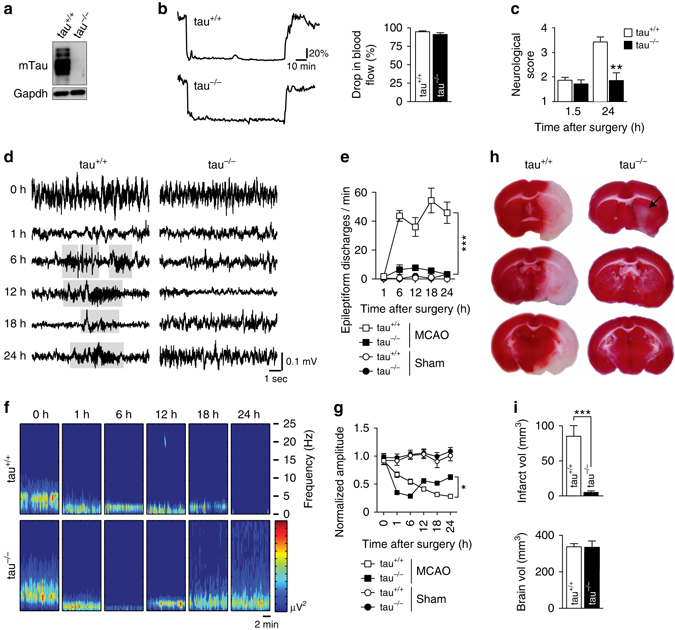
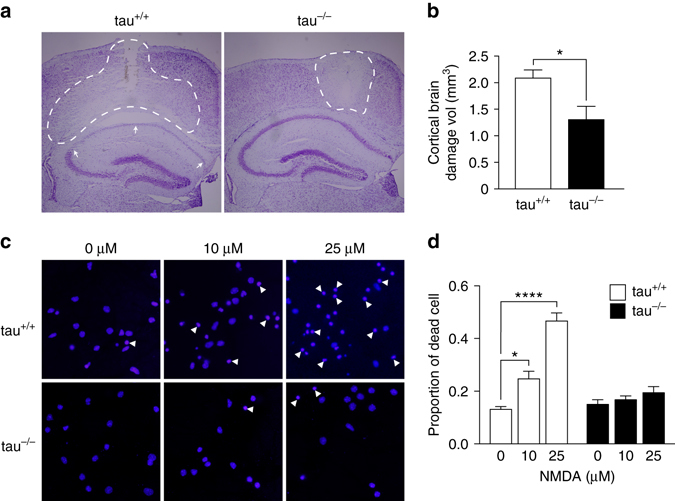
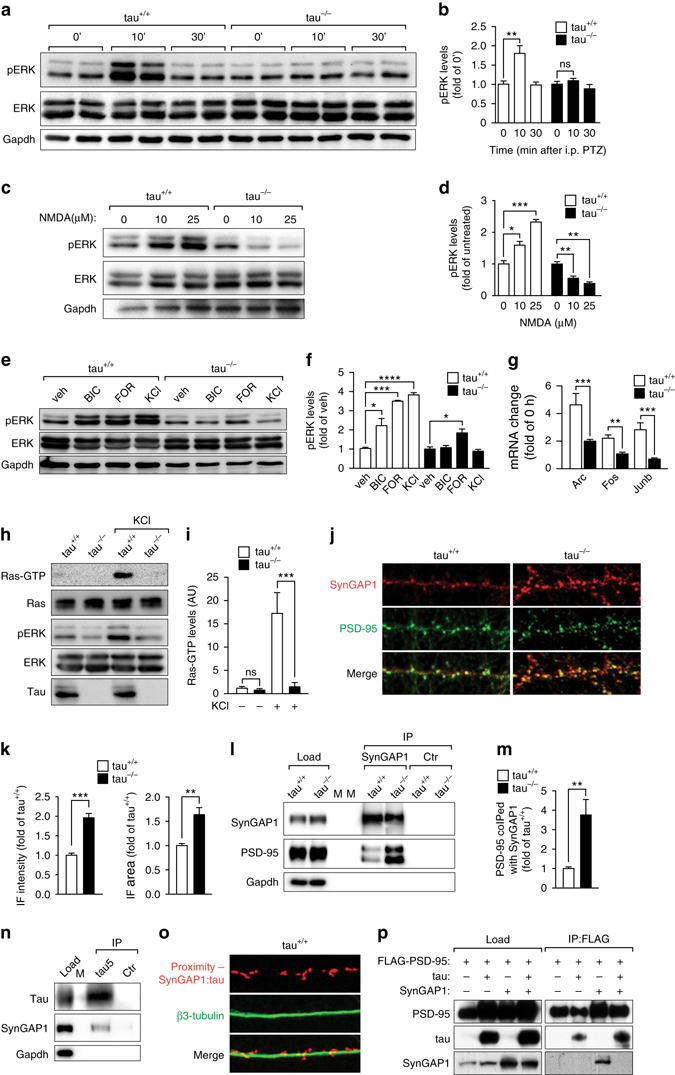
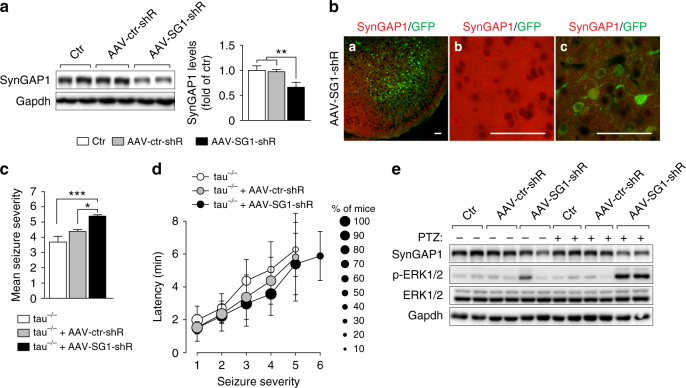
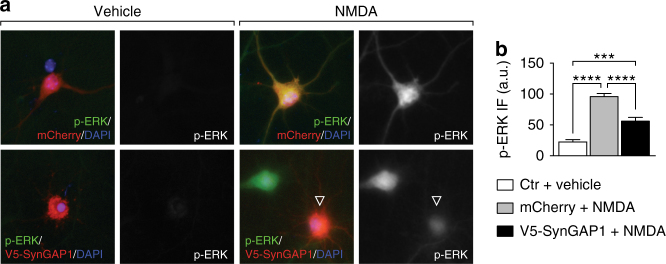
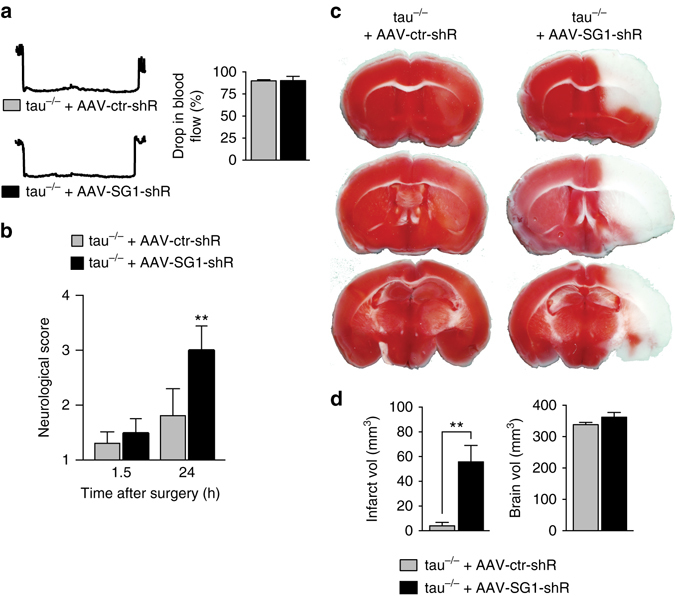
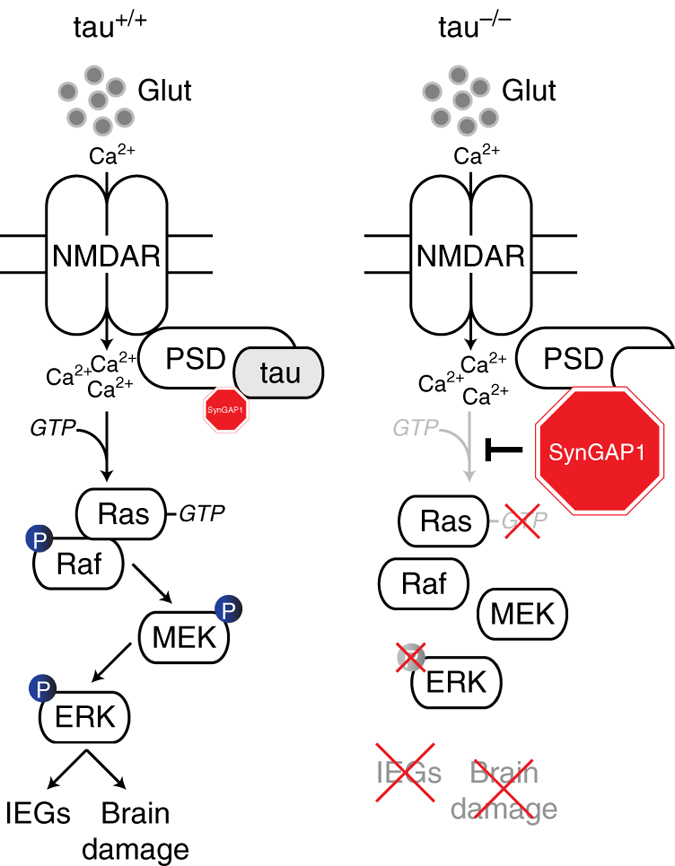
Neuronal excitotoxicity induced by aberrant excitation of glutamatergic receptors contributes to brain damage in stroke. Here we show that tau-deficient (tau −/− ) mice are profoundly protected from excitotoxic brain damage and neurological deficits following experimental stroke, using a middle cerebral artery occlusion with reperfusion model. Mechanistically, we show that this protection is due to site-specific inhibition of glutamate-induced and Ras/ERK-mediated toxicity by accumulation of Ras-inhibiting SynGAP1, which resides in a post-synaptic complex with tau. Accordingly, reducing SynGAP1 levels in tau −/− mice abolished the protection from pharmacologically induced excitotoxicity and middle cerebral artery occlusion-induced brain damage. Conversely, over-expression of SynGAP1 prevented excitotoxic ERK activation in wild-type neurons. Our findings suggest that tau mediates excitotoxic Ras/ERK signaling by controlling post-synaptic compartmentalization of SynGAP1.
Overview
The claims and statistics of this paper haven’t been checked yet.
Run the check — free, no account needed. It reads the open-access text and checks the sources it cites.
Integrity signals
Registry
Cites
Statistics
Figures
Verification
Claims the paper makes
The claims and statistics of this paper haven’t been checked yet.
Run the check — free, no account needed. It reads the open-access text and checks the sources it cites.
Claims other papers make about this one
Each is checked against this paper’s own text: does it say what the citing paper says it does?
The source backs part of the claim, not all of it — or backs it for a different population, condition or comparison.
In the citing paper
“However, these same mechanisms may render neurons vulnerable to excitotoxicity, as tau-dependent Fyn-PSD-95-NMDAR coupling amplifies glutamate receptor activation under pathological conditions [52, 124].”
From Tau Ablation Rewires Brain Cell Programs in Health and Restores Function in Disease (2026) · cites this paper as [124]
Experimental — accuracy not yet measured
Self-check
Percentages, sums and reported differences re-computed from the paper’s own numbers.
The self-check needs the paper’s full text.
Citations
Cites
Fast gapped-read alignment with Bowtie 2
Langmead, B., & Salzberg, S. L. (2012) · Nature Methods · doi:10.1038/nmeth.1923 · Cited by 56,400
Systematic and integrative analysis of large gene lists using DAVID bioinformatics resources
Huang, D. W., Sherman, B. T., & Lempicki, R. A. (2009) · Nature Protocols · doi:10.1038/nprot.2008.211 · Cited by 35,890
Trapnell, C., Roberts, A., Goff, L. A., Pertea, G. M., Kim, D., Kelley, D. R., Pimentel, H., Salzberg, S. L., Rinn, J. L., & Pachter, L. S. (2012) · Nature Protocols · doi:10.1038/nprot.2012.016 · Cited by 12,145
Amyloid oligomers exacerbate tau pathology in a mouse model of tauopathy
Selenica, M.-L. B., Brownlow, M., Jimenez, J. P., Lee, D. C., Pena, G., Dickey, C. A., Gordon, M. N., & Morgan, D. (2013) · Neurodegenerative Diseases · doi:10.1159/000337230 · Cited by 10,359
A Randomized Trial of Intraarterial Treatment for Acute Ischemic Stroke
Berkhemer, O. A., Fransen, P. S. S., Beumer, D., van den Berg, L. A., Lingsma, H. F., Yoo, A. J., Schonewille, W. J., Vos, J. A., Nederkoorn, P. J., Wermer, M. J. H., et al. (2014) · New England Journal of Medicine · doi:10.1056/nejmoa1411587 · Cited by 6,778
Thrombolysis with Alteplase 3 to 4.5 Hours after Acute Ischemic Stroke
Hacke, W., Kaste, M., Bluhmki, E., Brozman, M., Dávalos, A., Guidetti, D., Larrue, V., Lees, K. R., Medeghri, Z., Machnig, T., et al. (2008) · New England Journal of Medicine · doi:10.1056/nejmoa0804656 · Cited by 6,684
Endovascular therapy for ischemic stroke with perfusion-imaging selection.
Campbell, B., Mitchell, P. J., Kleinig, T., Dewey, H., Churilov, L., Yassi, N., Yan, B., Dowling, R., Parsons, M., Oxley, T., et al. (2015) · New England Journal of Medicine · doi:10.1056/nejmoa1414792 · Cited by 5,432
KEGG for integration and interpretation of large-scale molecular data sets
Kanehisa, M., Goto, S., Sato, Y., Furumichi, M., & Tanabe, M. (2012) · Nucleic Acids Research · doi:10.1093/nar/gkr988 · Cited by 4,848
Benardete, E. A., & Nair, A. K. (2015) · Cerebrovascular Diseases Extra · doi:10.1159/000370060 · Cited by 2,559
Treatment Strategies for Acute Ischemic Stroke Caused by Carotid Artery Occlusion
Li, W., Yin, Q., Xu, G., & Liu, X. (2016) · Interventional Neurology · doi:10.1159/000445304 · Cited by 2,319
Cited by
Sorted by citations
Reconsideration of Amyloid Hypothesis and Tau Hypothesis in Alzheimer's Disease
Kametani, F., & Hasegawa, M. (2018) · Frontiers in Neuroscience · doi:10.3389/fnins.2018.00025 · Cited by 836
Kent, S. A., Spires-Jones, T. L., & Durrant, C. S. (2020) · Acta Neuropathologica · doi:10.1007/s00401-020-02196-w · Cited by 446
Dendritic Tau in Alzheimer’s Disease
Ittner, A., & Ittner, L. M. (2018) · Neuron · doi:10.1016/j.neuron.2018.06.003 · Cited by 278
Self-citationCell Death Mechanisms in Cerebral Ischemia–Reperfusion Injury
Zhang, Q., Jia, M., Wang, Y., Wang, Q., & Wu, J. (2022) · Neurochemical Research · doi:10.1007/s11064-022-03697-8 · Cited by 332
Tau: Enabler of diverse brain disorders and target of rapidly evolving therapeutic strategies
Chang, C.-W., Shao, E., & Mucke, L. (2021) · Science · doi:10.1126/science.abb8255 · Cited by 263
Metadata
- Authors
- Bi, M., Gladbach, A., van Eersel, J., Ittner, A., Przybyla, M., van Hummel, A., Chua, S. W., van der Hoven, J., Lee, W. S., Müller, J., Parmar, J., Jonquieres, G. V., Stefen, H., Guccione, E., Fath, T., Housley, G. D., Klugmann, M., Ke, Y. D., & Ittner, L. M.
- Affiliations
- UNSW Sydney (AU)
- Agency for Science, Technology and Research (SG)
- Corresponding author
- Ittner, Lars M.
- ORCID
- Venue
- Nature Communications
- Published
- 2017-09-07
- Volume
- 8
- Issue
- 1
- Pages
- 473-473
- ISSN
- 2041-1723 (ISSN-L)
- PMC
- PMC5589746
- OpenAlex
- W2751298713
- Cited by
- 167
- References
- 89
- Citations by year
- 2026: 10 · 2025: 14 · 2024: 20 · 2023: 13 · 2022: 22 · 2021: 25 · 2020: 27 · 2019: 22 · 2018: 13 · 2017: 1
- FWCI
- 8.43
- Type
- journal article
- Language
- en
- Open access
- gold
- doi.org
- Locations
- Nature Communications (publishedVersion, cc-by)
- Europe PMC (PubMed Central) (publishedVersion, cc-by)
- PubMed Central (publishedVersion, cc-by)
- PubMed (publishedVersion)
- National University of Singapore (submittedVersion, cc-by)
- RePEc: Research Papers in Economics (submittedVersion)
- DOAJ (DOAJ: Directory of Open Access Journals) (submittedVersion)
- DOAJ (DOAJ: Directory of Open Access Journals) (submittedVersion, cc-by-sa)
- Funders
- University of New South Wales
- Medical Research Council
- Australian Research Council
- National Health and Medical Research Council
- Topics
- Life Sciences › Neuroscience › Cellular and Molecular Neuroscience › Neuroscience and Neuropharmacology Research
- Life Sciences › Neuroscience › Cellular and Molecular Neuroscience › Alzheimer's disease research and treatments
- Life Sciences › Neuroscience › Neurology › Neuroinflammation and Neurodegeneration Mechanisms
- Keywords
- tau protein, excitotoxicity, stroke, SYNGAP1, Ras/ERK signaling, glutamate receptors, middle cerebral artery occlusion, neuroprotection
- MeSH terms
- Animals, Brain Injuries, Cells, Cultured, Disease Models, Animal, Humans, Male, Mice, Inbred C57BL, Neurons, Synaptosomes, Signal Transduction, tau Proteins, Mice, Knockout, Infarction, Middle Cerebral Artery, Stroke, ras GTPase-Activating Proteins, Gene Expression Profiling
About these checks
Registry, retraction, Cites and statistics results are computed, not judged, with one exception: a printed reference that no index lists is read once by a model before it counts as a citation error. Claims are extracted by a model and kept only when their quote appears verbatim in the text; each cited source is then checked, with a model’s help, for whether it says what the claim relies on. Those verdicts can be wrong — read the claim’s quote and the cited source before relying on one.
Statistics and arithmetic are recomputed, not judged.
Confidence bands are shown only for fields calibrated on our annotated test set. None is calibrated yet, so no band is shown.
What counts as a claim ›How we measure confidence ›How we check this ›
Are you an author, or do you see a problem with this page? Request a review
