

The DOI matches its Crossref record; 89 of the 89 references it cites were found in a registry or an index.
Tau exacerbates excitotoxic brain damage in an animal model of stroke
Open accessAbstract
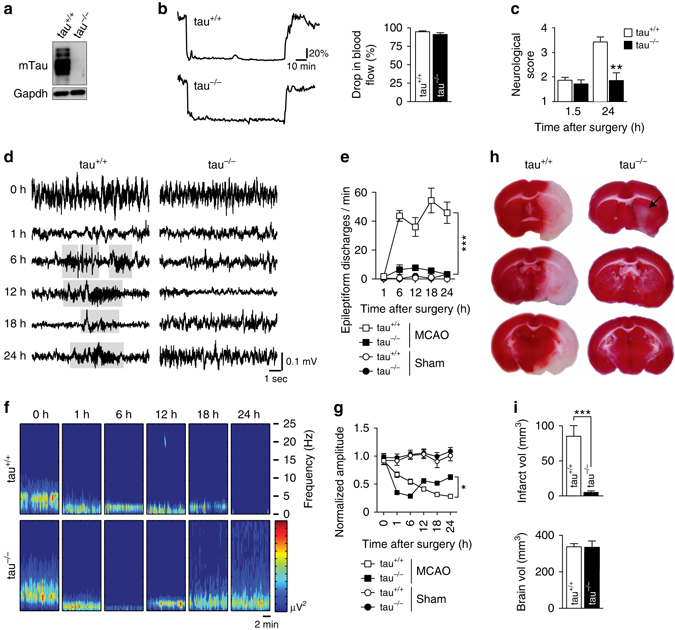
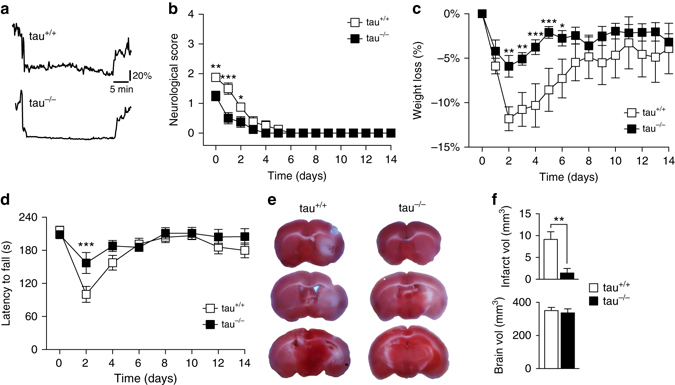
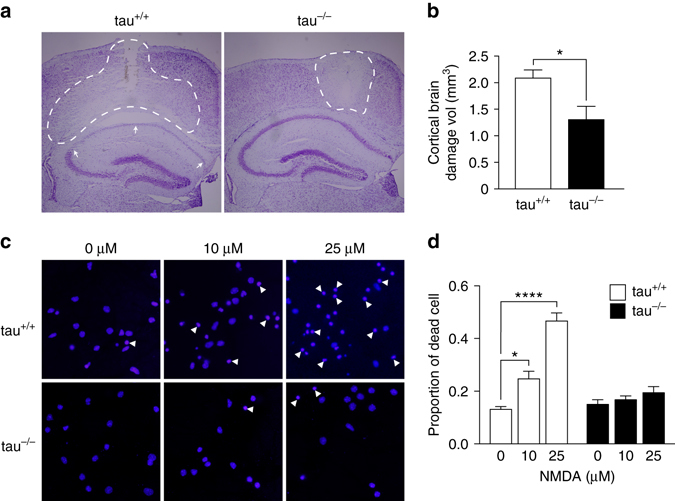
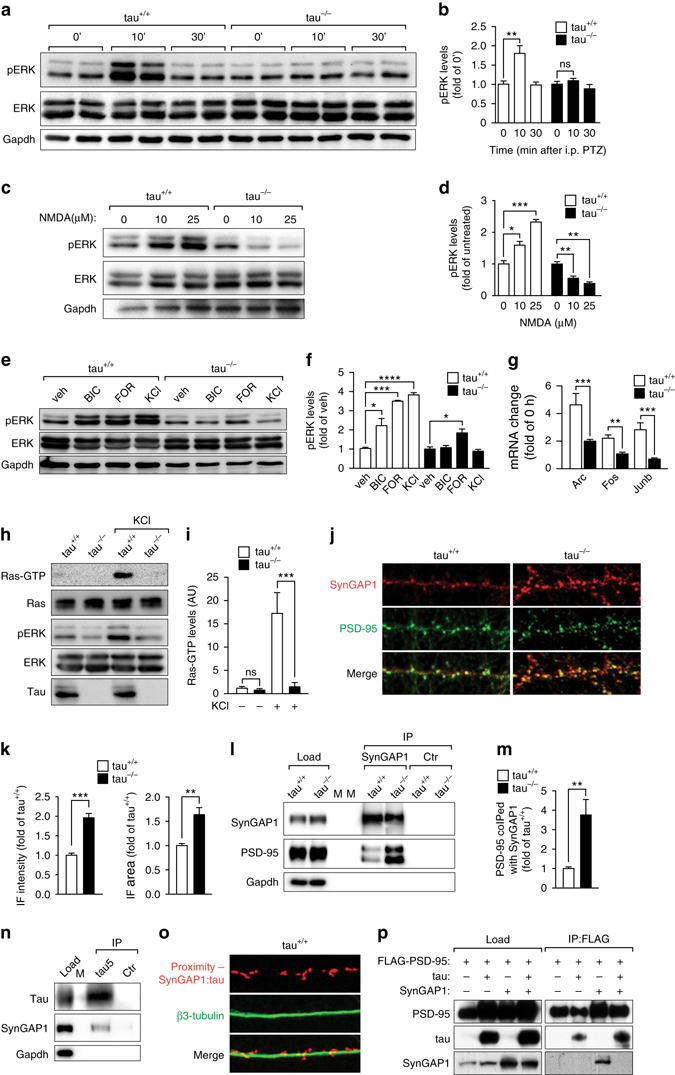
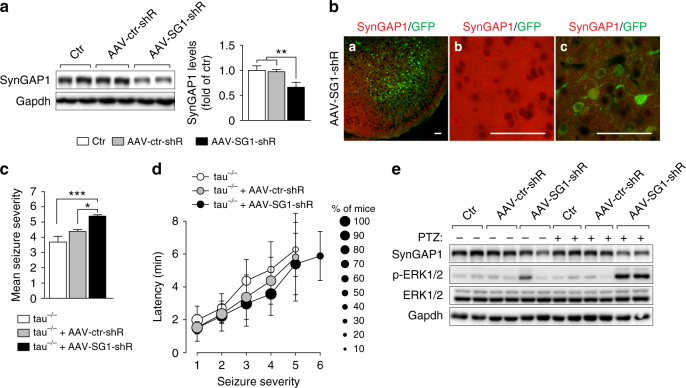
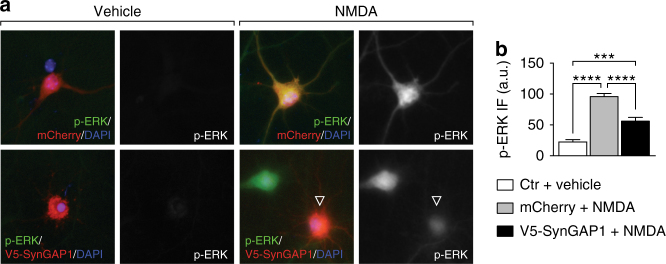
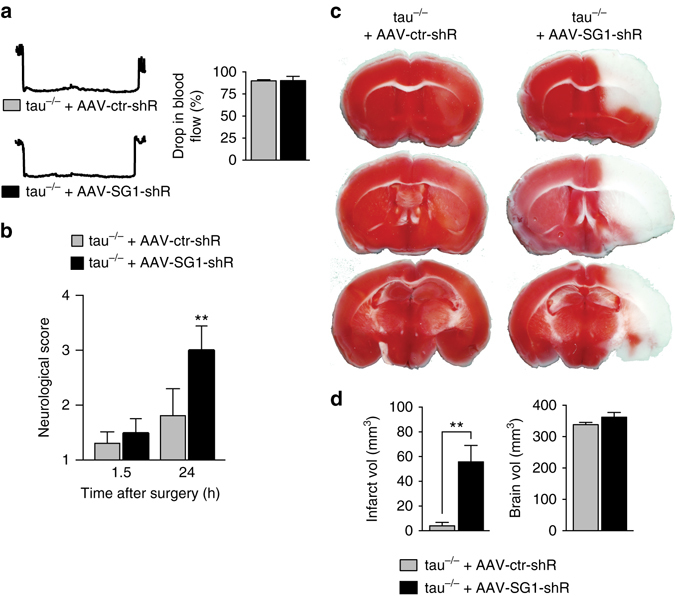
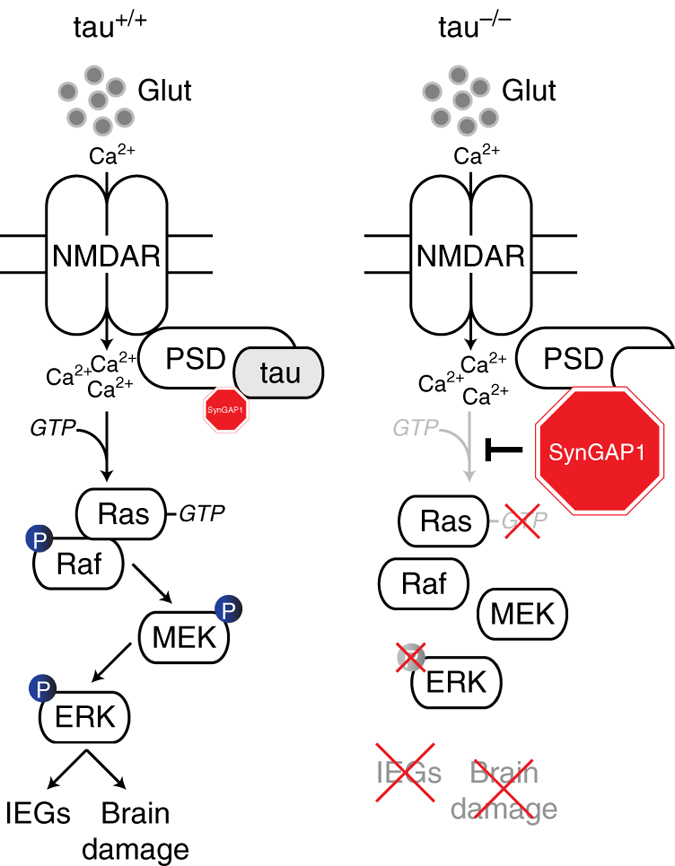
Neuronal excitotoxicity induced by aberrant excitation of glutamatergic receptors contributes to brain damage in stroke. Here we show that tau-deficient (tau −/− ) mice are profoundly protected from excitotoxic brain damage and neurological deficits following experimental stroke, using a middle cerebral artery occlusion with reperfusion model. Mechanistically, we show that this protection is due to site-specific inhibition of glutamate-induced and Ras/ERK-mediated toxicity by accumulation of Ras-inhibiting SynGAP1, which resides in a post-synaptic complex with tau. Accordingly, reducing SynGAP1 levels in tau −/− mice abolished the protection from pharmacologically induced excitotoxicity and middle cerebral artery occlusion-induced brain damage. Conversely, over-expression of SynGAP1 prevented excitotoxic ERK activation in wild-type neurons. Our findings suggest that tau mediates excitotoxic Ras/ERK signaling by controlling post-synaptic compartmentalization of SynGAP1.
Overview
The claims and statistics of this paper haven’t been checked yet.
Run the check — free, no account needed. It reads the open-access text and checks the sources it cites.
Integrity signals
Registry
Cites
Statistics
Figures
Verification
Claims the paper makes
The claims and statistics of this paper haven’t been checked yet.
Run the check — free, no account needed. It reads the open-access text and checks the sources it cites.
Claims other papers make about this one
Each is checked against this paper’s own text: does it say what the citing paper says it does?
The source backs part of the claim, not all of it — or backs it for a different population, condition or comparison.
In the citing paper
“However, these same mechanisms may render neurons vulnerable to excitotoxicity, as tau-dependent Fyn-PSD-95-NMDAR coupling amplifies glutamate receptor activation under pathological conditions [52, 124].”
From Tau Ablation Rewires Brain Cell Programs in Health and Restores Function in Disease (2026) · cites this paper as [124]
Experimental — accuracy not yet measured
Self-check
Percentages, sums and reported differences re-computed from the paper’s own numbers.
The self-check needs the paper’s full text.
Citations
Cites
Fast gapped-read alignment with Bowtie 2
Langmead, B., & Salzberg, S. L. (2012) · Nature Methods · doi:10.1038/nmeth.1923 · Cited by 56,400
Systematic and integrative analysis of large gene lists using DAVID bioinformatics resources
Huang, D. W., Sherman, B. T., & Lempicki, R. A. (2009) · Nature Protocols · doi:10.1038/nprot.2008.211 · Cited by 35,890
Trapnell, C., Roberts, A., Goff, L. A., Pertea, G. M., Kim, D., Kelley, D. R., Pimentel, H., Salzberg, S. L., Rinn, J. L., & Pachter, L. S. (2012) · Nature Protocols · doi:10.1038/nprot.2012.016 · Cited by 12,145
Amyloid oligomers exacerbate tau pathology in a mouse model of tauopathy
Selenica, M.-L. B., Brownlow, M., Jimenez, J. P., Lee, D. C., Pena, G., Dickey, C. A., Gordon, M. N., & Morgan, D. (2013) · Neurodegenerative Diseases · doi:10.1159/000337230 · Cited by 10,359
A Randomized Trial of Intraarterial Treatment for Acute Ischemic Stroke
Berkhemer, O. A., Fransen, P. S. S., Beumer, D., van den Berg, L. A., Lingsma, H. F., Yoo, A. J., Schonewille, W. J., Vos, J. A., Nederkoorn, P. J., Wermer, M. J. H., et al. (2014) · New England Journal of Medicine · doi:10.1056/nejmoa1411587 · Cited by 6,778
Thrombolysis with Alteplase 3 to 4.5 Hours after Acute Ischemic Stroke
Hacke, W., Kaste, M., Bluhmki, E., Brozman, M., Dávalos, A., Guidetti, D., Larrue, V., Lees, K. R., Medeghri, Z., Machnig, T., et al. (2008) · New England Journal of Medicine · doi:10.1056/nejmoa0804656 · Cited by 6,684
Endovascular therapy for ischemic stroke with perfusion-imaging selection.
Campbell, B., Mitchell, P. J., Kleinig, T., Dewey, H., Churilov, L., Yassi, N., Yan, B., Dowling, R., Parsons, M., Oxley, T., et al. (2015) · New England Journal of Medicine · doi:10.1056/nejmoa1414792 · Cited by 5,432
KEGG for integration and interpretation of large-scale molecular data sets
Kanehisa, M., Goto, S., Sato, Y., Furumichi, M., & Tanabe, M. (2012) · Nucleic Acids Research · doi:10.1093/nar/gkr988 · Cited by 4,848
Benardete, E. A., & Nair, A. K. (2015) · Cerebrovascular Diseases Extra · doi:10.1159/000370060 · Cited by 2,559
Treatment Strategies for Acute Ischemic Stroke Caused by Carotid Artery Occlusion
Li, W., Yin, Q., Xu, G., & Liu, X. (2016) · Interventional Neurology · doi:10.1159/000445304 · Cited by 2,319
Cited by
Sorted by citations
Reconsideration of Amyloid Hypothesis and Tau Hypothesis in Alzheimer's Disease
Kametani, F., & Hasegawa, M. (2018) · Frontiers in Neuroscience · doi:10.3389/fnins.2018.00025 · Cited by 836
Kent, S. A., Spires-Jones, T. L., & Durrant, C. S. (2020) · Acta Neuropathologica · doi:10.1007/s00401-020-02196-w · Cited by 446
Dendritic Tau in Alzheimer’s Disease
Ittner, A., & Ittner, L. M. (2018) · Neuron · doi:10.1016/j.neuron.2018.06.003 · Cited by 278
Self-citationCell Death Mechanisms in Cerebral Ischemia–Reperfusion Injury
Zhang, Q., Jia, M., Wang, Y., Wang, Q., & Wu, J. (2022) · Neurochemical Research · doi:10.1007/s11064-022-03697-8 · Cited by 332
Tau: Enabler of diverse brain disorders and target of rapidly evolving therapeutic strategies
Chang, C.-W., Shao, E., & Mucke, L. (2021) · Science · doi:10.1126/science.abb8255 · Cited by 263
The pathological role of ferroptosis in ischemia/reperfusion-related injury
Yan, H.-F., Tuo, Q., Yin, Q., & Lei, P. (2020) · 动物学研究 · doi:10.24272/j.issn.2095-8137.2020.042 · Cited by 251
Tau Proteins and Tauopathies in Alzheimer’s Disease
Chong, F. P., Ng, K. Y., Koh, R. Y., & Chye, S. M. (2018) · Cellular and Molecular Neurobiology · doi:10.1007/s10571-017-0574-1 · Cited by 260
Cellular and pathological functions of tau
Bravo, C. P., Naguib, S. A., & Gan, L. (2024) · Nature Reviews Molecular Cell Biology · doi:10.1038/s41580-024-00753-9 · Cited by 271
Glutamate excitotoxicity: Potential therapeutic target for ischemic stroke
Shen, Z., Xiang, M., Chen, C., Ding, F., Wang, Y., Shang, C., Xin, L., Zhang, Y., & Cui, X. (2022) · Biomedicine & Pharmacotherapy · doi:10.1016/j.biopha.2022.113125 · Cited by 241
Tau Protein Interaction Partners and Their Roles in Alzheimer’s Disease and Other Tauopathies
Sinsky, J., Pichlerova, K., & Hanes, J. (2021) · International Journal of Molecular Sciences · doi:10.3390/ijms22179207 · Cited by 220
Wu, F., Han, B., Wu, S., Yang, L., Leng, S., Li, M., Liao, J., Wang, G., Ye, Q., Zhang, Y., et al. (2019) · Journal of Neuroscience · doi:10.1523/jneurosci.0299-19.2019 · Cited by 210
Tapia‐Rojas, C., Cabezas-Opazo, F., Deaton, C. A., Vergara, E. H., Johnson, G. V. W., & Quintanilla, R. A. (2018) · Progress in Neurobiology · doi:10.1016/j.pneurobio.2018.12.005 · Cited by 207
Understanding the Amyloid Hypothesis in Alzheimer’s Disease
Paroni, G., Bisceglia, P., & Seripa, D. (2019) · Journal of Alzheimer s Disease · doi:10.3233/jad-180802 · Cited by 194
Goulay, R., Romo, L. M., Hol, E. M., & Dijkhuizen, R. M. (2019) · Translational Stroke Research · doi:10.1007/s12975-019-00755-2 · Cited by 144
Penke, B., Szűcs, M., & Bogár, F. (2020) · Molecules · doi:10.3390/molecules25071659 · Cited by 119
Iron homeostasis imbalance and ferroptosis in brain diseases
Long, H., Zhu, W., Wei, L., & Zhao, J. (2023) · MedComm · doi:10.1002/mco2.298 · Cited by 108
Tau Reduction Prevents Key Features of Autism in Mouse Models
Tai, C., Chang, C.-W., Yu, G.-Q., Lopez, I., Yu, X., Wang, X., Guo, W., & Mucke, L. (2020) · Neuron · doi:10.1016/j.neuron.2020.01.038 · Cited by 96
Zhang, W., Kandel, N., Zhou, Y., Smith, N. S., Ferreira, B. C. L. B., Perez, M., Claure, M. L., Mintz, K. J., Wang, C., & Leblanc, R. M. (2022) · Journal of Colloid and Interface Science · doi:10.1016/j.jcis.2022.02.124 · Cited by 94
Brandt, R., Trushina, N. I., & Bakota, L. (2020) · Frontiers in Neurology · doi:10.3389/fneur.2020.590059 · Cited by 97
Species-conserved SYNGAP1 phenotypes associated with neurodevelopmental disorders
Kılınç, M., Creson, T. K., Rojas, C., Aceti, M., Ellegood, J., Vaissière, T., Lerch, J. P., & Rumbaugh, G. (2018) · Molecular and Cellular Neuroscience · doi:10.1016/j.mcn.2018.03.008 · Cited by 87
Kim, N., Chen, D., Zhou, X. Z., & Lee, T. H. (2019) · International Journal of Molecular Sciences · doi:10.3390/ijms20133131 · Cited by 89
Chang, C.-W., Evans, M. D., Yu, X., Yu, G.-Q., & Mucke, L. (2021) · Cell Reports · doi:10.1016/j.celrep.2021.109855 · Cited by 81
Zhang, M., Xu, L., & Yang, H. (2018) · International Journal of Molecular Sciences · doi:10.3390/ijms19071970 · Cited by 79
Wang, P., Cui, Y., Liu, Y., Li, Z., Bai, H., Zhao, Y., & Chang, Y. (2022) · Redox Biology · doi:10.1016/j.redox.2022.102475 · Cited by 77
Tau Protein Dysfunction after Brain Ischemia
Pluta, R. M., Ułamek-Kozioł, M., Januszewski, S., & Czuczwar, S. J. (2018) · Journal of Alzheimer s Disease · doi:10.3233/jad-180772 · Cited by 73
Shi, Y., Zhang, X., Ying, P.-J., Wu, Z., Lin, L., Chen, W., Zheng, G., & Zhu, W. (2021) · Frontiers in Pharmacology · doi:10.3389/fphar.2021.639898 · Cited by 73
Tau-induced pathology in epilepsy and dementia: notions from patients and animal models.
Sánchez, M., García-Cabrero, A., Sánchez-Elexpuru, G., Burgos, D., & Serratosa, J. (2018) · International Journal of Molecular Sciences · doi:10.3390/ijms19041092 · Cited by 68
Tau Phosphorylation and Aggregation in the Developing Human Brain
Hefti, M. M., Kim, S., Bell, A. J., Betters, R. K., Fiock, K. L., Iida, M. A., Smalley, M. E., Farrell, K. W., Fowkes, M. E., & Crary, J. F. (2019) · Journal of Neuropathology & Experimental Neurology · doi:10.1093/jnen/nlz073 · Cited by 67
Zhang, W., Liu, Y., Wang, Z., He, S., Liu, W., Wu, Y., Yang, L., Hu, C., & Wang, Y. (2024) · Journal of Controlled Release · doi:10.1016/j.jconrel.2024.03.050 · Cited by 59
Neurodegenerative pathways as targets for acquired epilepsy therapy development
Casillas-Espinosa, P. M., Ali, I. Y., & O'Brien, T. J. (2020) · Epilepsia Open · doi:10.1002/epi4.12386 · Cited by 59
Pluta, R. M., Ułamek-Kozioł, M., Kocki, J., Bogucki, J., Januszewski, S., Bogucka‐Kocka, A., & Czuczwar, S. J. (2019) · Molecular Neurobiology · doi:10.1007/s12035-019-01799-z · Cited by 58
Mueller, C., John, C., Perera, G., Aarsland, D., Ballard, C. G., & Stewart, R. J. (2020) · European Journal of Epidemiology · doi:10.1007/s10654-020-00643-2 · Cited by 58
Blood tau‐PT217 contributes to the anesthesia/surgery‐induced delirium‐like behavior in aged mice
Lu, J., Liang, F., Bai, P., Liu, C., Xu, M., Sun, Z., Tian, W., Dong, Y., Zhang, Y., Quan, Q., et al. (2023) · Alzheimer s & Dementia · doi:10.1002/alz.13118 · Cited by 51
Webber, E. K., Fivaz, M., Stutzmann, G. E., & Griffioen, G. (2023) · Alzheimer's & Dementia · doi:10.1002/alz.13065 · Cited by 50
Datta, D., Conroy, A. L., Castelluccio, P., Ssenkusu, J. M., Park, G. S., Opoka, R. O., Bangirana, P., Idro, R., Saykin, A. J., & John, C. C. (2019) · Clinical Infectious Diseases · doi:10.1093/cid/ciz325 · Cited by 49
The Role of Amyloid-Beta and Tau in the Early Pathogenesis of Alzheimer’s Disease
Yin, X., Qiu, Y., Zhao, C., Zhou, Z., Bao, J., & Qian, W. (2021) · Medical Science Monitor · doi:10.12659/msm.933084 · Cited by 48
Galangin inhibited ferroptosis through activation of the PI3K / AKT pathway in vitro and in vivo
Chen, K., Xue, R., Geng, Y., & Zhang, S. (2022) · The FASEB Journal · doi:10.1096/fj.202200935r · Cited by 46
Tau is required for the function of extrasynaptic NMDA receptors
Pallas‐Bazarra, N., Draffin, J. E., Cuadros, R., Esteban, J. A., & Ávila, J. (2019) · Scientific Reports · doi:10.1038/s41598-019-45547-8 · Cited by 48
Ułamek-Kozioł, M., Czuczwar, S. J., Januszewski, S., & Pluta, R. M. (2020) · International Journal of Molecular Sciences · doi:10.3390/ijms21030892 · Cited by 46
Fyn-tau Ablation Modifies PTZ-Induced Seizures and Post-seizure Hallmarks of Early Epileptogenesis
Putra, M. R. E., Puttachary, S., Liu, G., Lee, G. S., & Thippeswamy, T. (2020) · Frontiers in Cellular Neuroscience · doi:10.3389/fncel.2020.592374 · Cited by 48
Yu, B., Yao, Y., Zhang, X., Ruan, M., Zhang, Z., Xu, L., Liang, T., & Lu, J. (2021) · Frontiers in Pharmacology · doi:10.3389/fphar.2021.666790 · Cited by 42
Tau in Oligodendrocytes Takes Neurons in Sickness and in Health
LoPresti, P. (2018) · International Journal of Molecular Sciences · doi:10.3390/ijms19082408 · Cited by 44
Tau as a potential therapeutic target for ischemic stroke
Chen, X., & Jiang, H. (2019) · Aging · doi:10.18632/aging.102547 · Cited by 45
miR-221 Exerts Neuroprotective Effects in Ischemic Stroke by Inhibiting the Proinflammatory Response
Shan, Y., Hu, J., Lv, H., Cui, X., & Di, W. (2021) · Journal of Stroke and Cerebrovascular Diseases · doi:10.1016/j.jstrokecerebrovasdis.2020.105489 · Cited by 45
Generation of a New Tau Knockout (tau Δex1 ) Line Using CRISPR/Cas9 Genome Editing in Mice
Tan, D. C. S., Yao, S., Ittner, A., Bertz, J., Ke, Y. D., Ittner, L. M., & Delerue, F. (2018) · Journal of Alzheimer s Disease · doi:10.3233/jad-171058 · Cited by 45
Self-citationThe need to incorporate aged animals into the preclinical modeling of neurological conditions
Sun, M., McDonald, S. J., Brady, R. D., Collins‐Praino, L. E., Yamakawa, G. R., Monif, M., O'Brien, T. J., CLOUD, G. C., Sobey, C. G., Mychasiuk, R., et al. (2019) · Neuroscience & Biobehavioral Reviews · doi:10.1016/j.neubiorev.2019.12.027 · Cited by 44
Fang, C., Xu, H., Yuan, L., Zhu, Z., Wang, X., Liu, Y., Zhang, A., Shao, A., & Lou, M. (2022) · Oxidative Medicine and Cellular Longevity · doi:10.1155/2022/1949718 · Cited by 46
Neuronal levels and sequence of tau modulate the power of brain rhythms
Das, M. M., Maeda, S., Hu, B., Yu, G.-Q., Guo, W., Lopez, I., Yu, X., Tai, C., Wang, X., & Mucke, L. (2018) · Neurobiology of Disease · doi:10.1016/j.nbd.2018.05.020 · Cited by 42
Guo, W. P., Hu, C., Wang, Y., Zhang, W., Zhang, S., Peng, J., Wang, Y., & Wu, J. (2025) · Acta Pharmaceutica Sinica B · doi:10.1016/j.apsb.2025.01.005 · Cited by 39
Yang, Y., Yang, L. Y., Salayandia, V. M., Thompson, J. F., Torbey, M., & Yang, Y. R. (2021) · Translational Stroke Research · doi:10.1007/s12975-020-00883-0 · Cited by 40
Loss of LAMP5 interneurons drives neuronal network dysfunction in Alzheimer’s disease
Deng, Y., Bi, M., Delerue, F., Forrest, S. L., Chan, G., van der Hoven, J., van Hummel, A., Feiten, A., Lee, S., Martínez-Valbuena, I., et al. (2022) · Acta Neuropathologica · doi:10.1007/s00401-022-02457-w · Cited by 38
Self-citationPrikas, E., Parić, E., Asih, P. R., Stefanoska, K., Stefen, H., Fath, T., Poljak, A., & Ittner, A. (2022) · The EMBO Journal · doi:10.15252/embj.2021110242 · Cited by 41
Self-citationShared genes between Alzheimer’s disease and ischemic stroke
Wei, C., Cui, P., Li, H., Lang, W., Liu, G., & Ma, X. (2019) · CNS Neuroscience & Therapeutics · doi:10.1111/cns.13117 · Cited by 38
Rapid initiation of cell cycle reentry processes protects neurons from amyloid-β toxicity
Ippati, S., Deng, Y., van der Hoven, J., Heu, C., van Hummel, A., Chua, S. W., Parić, E., Chan, G., Feiten, A., Fath, T., et al. (2021) · Proceedings of the National Academy of Sciences · doi:10.1073/pnas.2011876118 · Cited by 39
Self-citationPluta, R. M., Furmaga-Jabłońska, W., Januszewski, S., & Czuczwar, S. J. (2022) · Nutrients · doi:10.3390/nu14020248 · Cited by 39
Gil, R. S., Pascovici, D., Venturato, J., Brown-Wright, H., Mehta, P. M., Martin, L. M. S., Wu, J. X., Luan, W., Chui, Y. K., Bademosi, A. T., et al. (2024) · Nature Communications · doi:10.1038/s41467-024-45646-9 · Cited by 37
Hayden, E. Y., Putman, J. N., Nuñez, S., Shin, W. S., Oberoi, M. R., Charreton, M., Dutta, S., Li, Z., Komuro, Y., Joy, M. T., et al. (2019) · Acta Neuropathologica Communications · doi:10.1186/s40478-019-0783-6 · Cited by 37
Dendritic/Post-synaptic Tau and Early Pathology of Alzheimer’s Disease
Yin, X., Zhao, C., Qiu, Y., Zhou, Z., Bao, J., & Qian, W. (2021) · Frontiers in Molecular Neuroscience · doi:10.3389/fnmol.2021.671779 · Cited by 41
Pluta, R. M., Ułamek-Kozioł, M., Januszewski, S., & Czuczwar, S. J. (2020) · International Journal of Molecular Sciences · doi:10.3390/ijms21134599 · Cited by 37
Li, S., Hu, W., Deng, F., Chen, S., Zhu, P., Wang, M., Chen, X., Wang, Y., Hu, X., Zhao, B., et al. (2021) · DNA and Cell Biology · doi:10.1089/dna.2020.5662 · Cited by 35
Interactions Between Ferroptosis and Oxidative Stress in Ischemic Stroke
Liu, D., Yang, S., & Yu, S. (2024) · Antioxidants · doi:10.3390/antiox13111329 · Cited by 37
Capraro, A., O’Meally, D., Waters, S. A., Patel, H. R., Georges, A., & Waters, P. D. (2019) · BMC Genomics · doi:10.1186/s12864-019-5750-x · Cited by 34
Reduction of advanced tau-mediated memory deficits by the MAP kinase p38γ
Ittner, A., Asih, P. R., Tan, A. R. P., Prikas, E., Bertz, J., Stefanoska, K., Lin, Y., Volkerling, A. M., Ke, Y. D., Delerue, F., et al. (2020) · Acta Neuropathologica · doi:10.1007/s00401-020-02191-1 · Cited by 35
Self-citationShi, Q., Zhang, Q., Peng, Y., Zhang, X., Wang, Y., & Shi, L. (2019) · Journal of Pharmacy and Pharmacology · doi:10.1111/jphp.13096 · Cited by 32
Xu, A., Zhang, H., Zhang, Y., Wu, J., & Huang, Z. (2025) · Acta Pharmaceutica Sinica B · doi:10.1016/j.apsb.2025.07.026 · Cited by 40
Pluta, R. M., Ouyang, L., Januszewski, S., Li, Y., & Czuczwar, S. J. (2021) · International Journal of Molecular Sciences · doi:10.3390/ijms22052460 · Cited by 31
Wicha, P., Das, S., & Mahakkanukrauh, P. (2021) · Anatomy & Cell Biology · doi:10.5115/acb.20.290 · Cited by 30
Secondary neurodegeneration following Stroke: what can blood biomarkers tell us?
Brunelli, S., Giannella, E., Bizzaglia, M., Angelis, D. D., & Sancesario, G. M. (2023) · Frontiers in Neurology · doi:10.3389/fneur.2023.1198216 · Cited by 30
The link between Alzheimer’s disease and stroke: A detrimental synergism
Behl, T., Kaur, I., Sehgal, A., Khandige, P. S., Imran, M., Gulati, M., Anwer, M. K., Elossaily, G. M., Ali, N., Wal, P., et al. (2024) · Ageing Research Reviews · doi:10.1016/j.arr.2024.102388 · Cited by 35
Amini-Khoei, H., Saghaei, E., Mobini, G. R., Sabzevary‐Ghahfarokhi, M., Ahmadi, R., Bagheri, N., & Mokhtari, T. (2019) · Neuropeptides · doi:10.1016/j.npep.2019.101942 · Cited by 29
Shared pathophysiology: Understanding stroke and Alzheimer’s disease
Sriram, S., Mehkri, Y., Quintin, S. S., & Lucke-Wold, B. P. (2022) · Clinical Neurology and Neurosurgery · doi:10.1016/j.clineuro.2022.107306 · Cited by 29
Post-Ischemic Neurodegeneration of the Hippocampus Resembling Alzheimer’s Disease Proteinopathy
Pluta, R. M., Januszewski, S., & Czuczwar, S. J. (2021) · International Journal of Molecular Sciences · doi:10.3390/ijms23010306 · Cited by 30
Friend or foe: role of pathological tau in neuronal death
Wu, M., Chen, Z., Jiang, M. H., Bao, B., Li, D., Yin, X., Wang, X., Liu, D., & Zhu, L. (2023) · Molecular Psychiatry · doi:10.1038/s41380-023-02024-z · Cited by 28
Przybyla, M., van Eersel, J., van Hummel, A., van der Hoven, J., Sabale, M., Harasta, A. E., Müller, J., Gajwani, M., Prikas, E., Mueller, T., et al. (2020) · Brain · doi:10.1093/brain/awaa133 · Cited by 29
Self-citationPluta, R. M., Czuczwar, S. J., Januszewski, S., & Jabłoński, M. (2021) · Cells · doi:10.3390/cells10092213 · Cited by 24
Tian, X., Yang, W., Jiang, W., Zhang, Z., Liu, J., & Tu, H. (2024) · Molecular & Cellular Proteomics · doi:10.1016/j.mcpro.2024.100723 · Cited by 25
He, X., Li, G., Li, L., Li, M., Liang, F., Chen, X., & Hu, X. (2020) · Molecular Brain · doi:10.1186/s13041-020-00659-5 · Cited by 24
Molecular Tweezers: Supramolecular Hosts with Broad-Spectrum Biological Applications
Shahpasand‐Kroner, H., Siddique, I. A., Malik, R., Linares, G. R., Ivanova, M. I., Ichida, J. K., Weil, T., Münch, J., Sánchez‐García, E., Klärner, F., et al. (2022) · Pharmacological Reviews · doi:10.1124/pharmrev.122.000654 · Cited by 25
Kaneko, Y., Tuazon, J. P., Ji, X., & Borlongan, C. V. (2018) · Cellular Physiology and Biochemistry · doi:10.1159/000495722 · Cited by 25
Diagnosis of cerebral malaria: Tools to reduce Plasmodium falciparum associated mortality
Muppidi, P., Wright, E., Wassmer, S. C., & Gupta, H. (2023) · Frontiers in Cellular and Infection Microbiology · doi:10.3389/fcimb.2023.1090013 · Cited by 23
Pluta, R. M., Ułamek-Kozioł, M., Januszewski, S., & Czuczwar, S. J. (2020) · International Journal of Molecular Sciences · doi:10.3390/ijms21093186 · Cited by 22
Liu, G., Thangavel, R., Rysted, J., Kim, Y., Francis, M. B., Adams, E., Lin, Z., Taugher, R. J., Wemmie, J. A., Usachev, Y. M., et al. (2019) · Journal of Neuroscience Research · doi:10.1002/jnr.24517 · Cited by 22
Ke, Y. D., van Hummel, A., Au, C. G., Chan, G., Lee, W. S., van der Hoven, J., Przybyla, M., Deng, Y., Sabale, M., Morey, N., et al. (2024) · Neuron · doi:10.1016/j.neuron.2024.01.022 · Cited by 21
Self-citationFeng, P., Zhang, A., Su, M., Cai, H., Wang, X., & Zhang, Y. (2020) · Brain Research · doi:10.1016/j.brainres.2020.147141 · Cited by 21
ALS/FTD-causing mutation in cyclin F causes the dysregulation of SFPQ
Rayner, S. L., Cheng, F., Hogan, A. L., Grima, N., Yang, S., Ke, Y. D., Au, C. G., Morsch, M., Luca, A. D., Davidson, J. M., et al. (2021) · Human Molecular Genetics · doi:10.1093/hmg/ddab073 · Cited by 25
Self-citationBiomarkers of mature neuronal differentiation and related diseases
Yuan, X., Li, W., Qi, Y., Ou, Y., Long, Q., & Zhang, P. (2024) · Future Science OA · doi:10.1080/20565623.2024.2410146 · Cited by 24
Schulz, L., Ramirez, P., Lemieux, A., Gonzalez, E. M., Thomson, T., & Frost, B. E. (2022) · Neuroscience · doi:10.1016/j.neuroscience.2022.04.017 · Cited by 20
Zheng, X., Yang, J., Zhu, Z., Fang, Y., Tian, Y., Xie, M., Wang, W., & Liu, Y. (2022) · Molecular Neurobiology · doi:10.1007/s12035-021-02702-5 · Cited by 19
Hoque, A., Williamson, N. A., Ameen, S. S., Ciccotosto, G. D., Hossain, M. I., Oakhill, J. S., Ng, D. C. H., Ang, C., & Cheng, H. (2019) · Cell Death and Disease · doi:10.1038/s41419-019-1445-0 · Cited by 19
Li, L.-L., Liu, Y., Sun, C., Yan, Y., Tang, Z., Sun, J., Li, L., Song, Z., Wang, D., Li, X.-H., et al. (2020) · Journal of Ethnopharmacology · doi:10.1016/j.jep.2020.113014 · Cited by 19
Protein Aggregation in the Pathogenesis of Ischemic Stroke
Wu, S., & Du, L. (2020) · Cellular and Molecular Neurobiology · doi:10.1007/s10571-020-00899-y · Cited by 18
An Introduction to Ultrasensitive Assays for Plasma Tau Detection
Ding, X., Tuo, Q., & Lei, P. (2021) · Journal of Alzheimer s Disease · doi:10.3233/jad-201499 · Cited by 20
Yang, L., Gao, Y., Lopes, L. S., Lian, J., Fu, W., Tan, H., Yang, S., Xie, Z., Huang, Y., Zhang, J., et al. (2025) · Cyborg and Bionic Systems · doi:10.34133/cbsystems.0262 · Cited by 18
Au, N. P. B., Wu, T., Kumar, G., Jin, Y., Li, Y. Y. T., Chan, S. L., Lai, J. H. C., Chan, K. W. Y., Yu, K. N., Wang, X., et al. (2023) · Brain Behavior and Immunity · doi:10.1016/j.bbi.2023.09.015 · Cited by 21
Stroke and Alzheimer’s Disease: A Mendelian Randomization Study
Wang, T., Ni, Q., Wang, K., Han, Z., & Sun, B. (2020) · Frontiers in Genetics · doi:10.3389/fgene.2020.00581 · Cited by 18
Putra, M. R. E., Rao, N. S., Gardner, C., Liu, G., Trommater, J., Bunney, M., Gage, M., Bassuk, A. G., Hefti, M. M., Lee, G. S., et al. (2024) · Brain Communications · doi:10.1093/braincomms/fcae327 · Cited by 17
Kaur, A., Rohit, & Aran, K. R. (2025) · Brain Research · doi:10.1016/j.brainres.2025.149472 · Cited by 17
Fu, D.-L., Li, J.-H., Shi, Y., Zhang, X.-L., Lin, Y., & Zheng, G. (2020) · Frontiers in Physiology · doi:10.3389/fphys.2020.00057 · Cited by 17
RetractedThe reduction of astrocytic tau prevents amyloid-β-induced synaptotoxicity
Cisternas, P., Taylor, X., Martínez, P., Maldonado, O., Jury, N., & Lasagna‐Reeves, C. A. (2022) · Brain Communications · doi:10.1093/braincomms/fcac235 · Cited by 15
Tau and GSK-3β are Critical Contributors to α-Synuclein-Mediated Post-Stroke Brain Damage
Mehta, S. L., Kim, T., Chelluboina, B., & Vemuganti, R. (2022) · NeuroMolecular Medicine · doi:10.1007/s12017-022-08731-0 · Cited by 16
Metadata
- Authors
- Bi, M., Gladbach, A., van Eersel, J., Ittner, A., Przybyla, M., van Hummel, A., Chua, S. W., van der Hoven, J., Lee, W. S., Müller, J., Parmar, J., Jonquieres, G. V., Stefen, H., Guccione, E., Fath, T., Housley, G. D., Klugmann, M., Ke, Y. D., & Ittner, L. M.
- Affiliations
- UNSW Sydney (AU)
- Agency for Science, Technology and Research (SG)
- Corresponding author
- Ittner, Lars M.
- ORCID
- Venue
- Nature Communications
- Published
- 2017-09-07
- Volume
- 8
- Issue
- 1
- Pages
- 473-473
- ISSN
- 2041-1723 (ISSN-L)
- PMC
- PMC5589746
- OpenAlex
- W2751298713
- Cited by
- 167
- References
- 89
- Citations by year
- 2026: 10 · 2025: 14 · 2024: 20 · 2023: 13 · 2022: 22 · 2021: 25 · 2020: 27 · 2019: 22 · 2018: 13 · 2017: 1
- FWCI
- 8.43
- Type
- journal article
- Language
- en
- Open access
- gold
- doi.org
- Locations
- Nature Communications (publishedVersion, cc-by)
- Europe PMC (PubMed Central) (publishedVersion, cc-by)
- PubMed Central (publishedVersion, cc-by)
- PubMed (publishedVersion)
- National University of Singapore (submittedVersion, cc-by)
- RePEc: Research Papers in Economics (submittedVersion)
- DOAJ (DOAJ: Directory of Open Access Journals) (submittedVersion)
- DOAJ (DOAJ: Directory of Open Access Journals) (submittedVersion, cc-by-sa)
- Funders
- University of New South Wales
- Medical Research Council
- Australian Research Council
- National Health and Medical Research Council
- Topics
- Life Sciences › Neuroscience › Cellular and Molecular Neuroscience › Neuroscience and Neuropharmacology Research
- Life Sciences › Neuroscience › Cellular and Molecular Neuroscience › Alzheimer's disease research and treatments
- Life Sciences › Neuroscience › Neurology › Neuroinflammation and Neurodegeneration Mechanisms
- Keywords
- tau protein, excitotoxicity, stroke, SYNGAP1, Ras/ERK signaling, glutamate receptors, middle cerebral artery occlusion, neuroprotection
- MeSH terms
- Animals, Brain Injuries, Cells, Cultured, Disease Models, Animal, Humans, Male, Mice, Inbred C57BL, Neurons, Synaptosomes, Signal Transduction, tau Proteins, Mice, Knockout, Infarction, Middle Cerebral Artery, Stroke, ras GTPase-Activating Proteins, Gene Expression Profiling
About these checks
Registry, retraction, Cites and statistics results are computed, not judged, with one exception: a printed reference that no index lists is read once by a model before it counts as a citation error. Claims are extracted by a model and kept only when their quote appears verbatim in the text; each cited source is then checked, with a model’s help, for whether it says what the claim relies on. Those verdicts can be wrong — read the claim’s quote and the cited source before relying on one.
Statistics and arithmetic are recomputed, not judged.
Confidence bands are shown only for fields calibrated on our annotated test set. None is calibrated yet, so no band is shown.
What counts as a claim ›How we measure confidence ›How we check this ›
Are you an author, or do you see a problem with this page? Request a review
