

The DOI matches its Crossref record; 44 of the 44 references it cites were found in a registry or an index.
Irisin is a pro-myogenic factor that induces skeletal muscle hypertrophy and rescues denervation-induced atrophy
Open accessAbstract
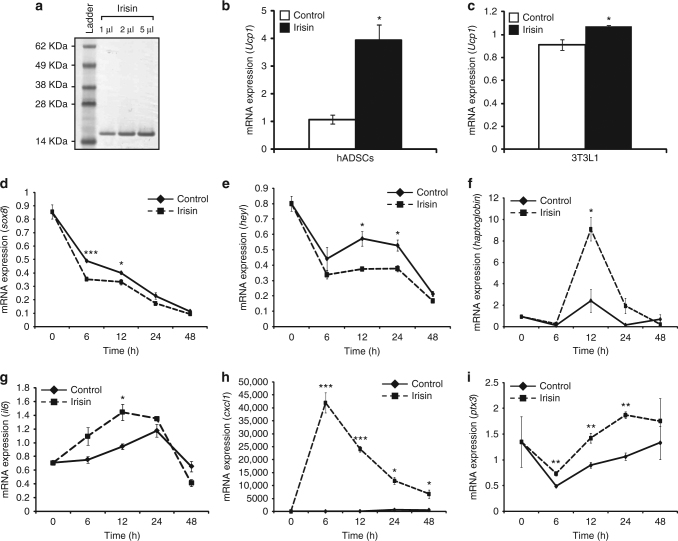
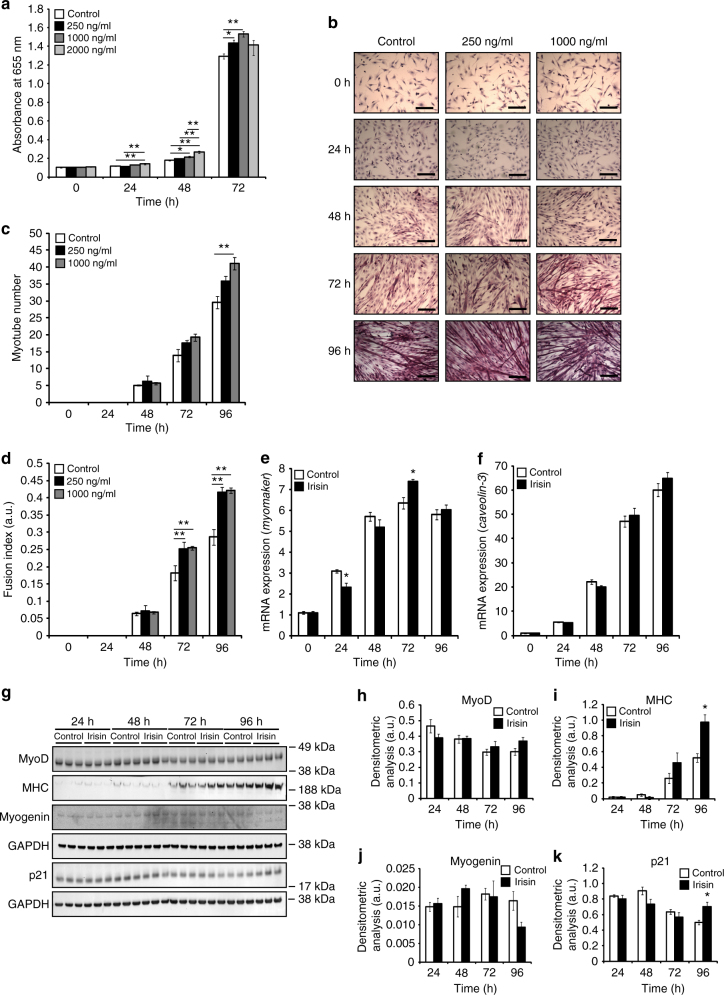
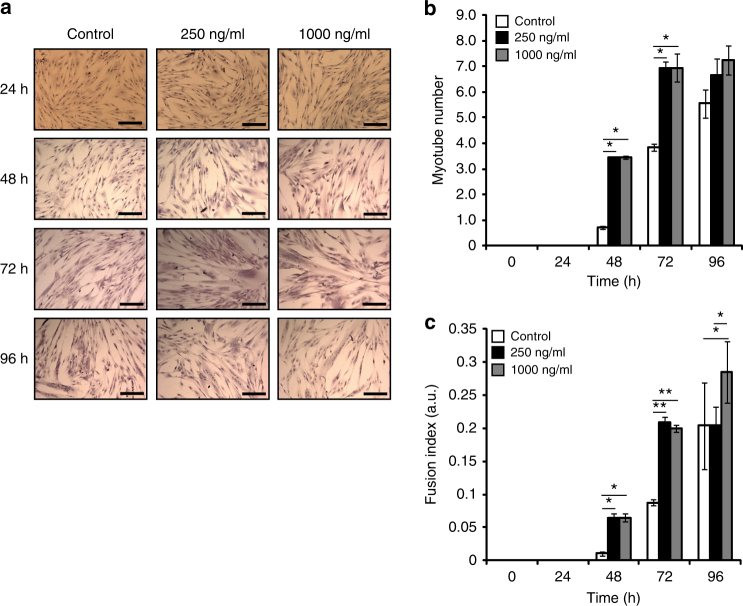
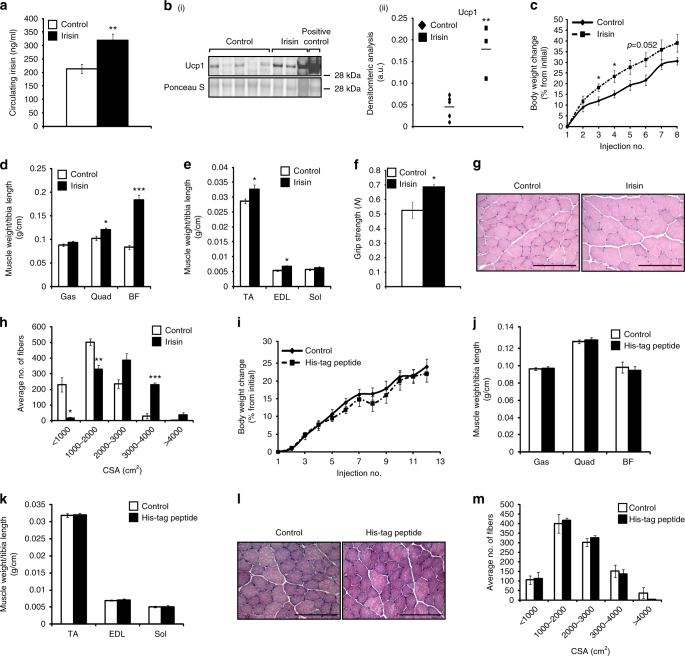
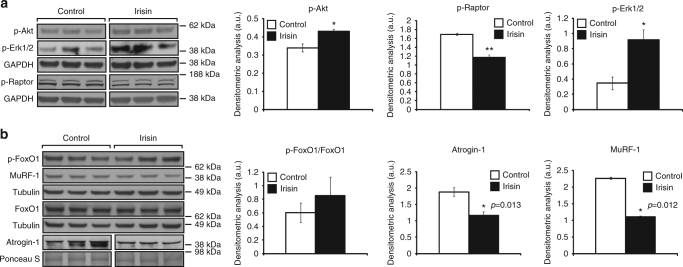
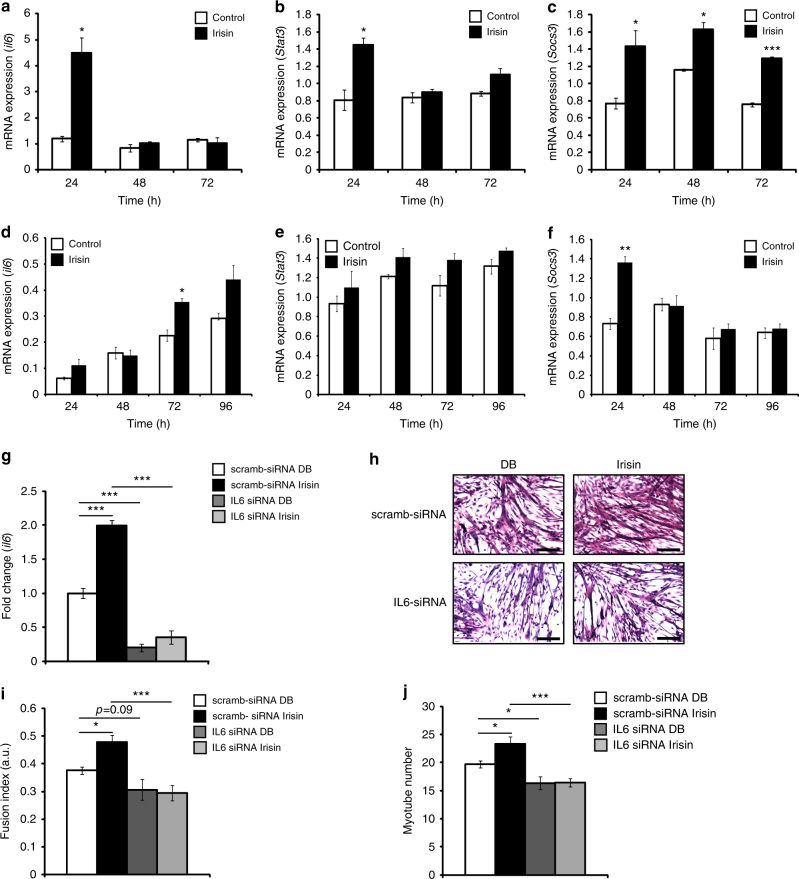
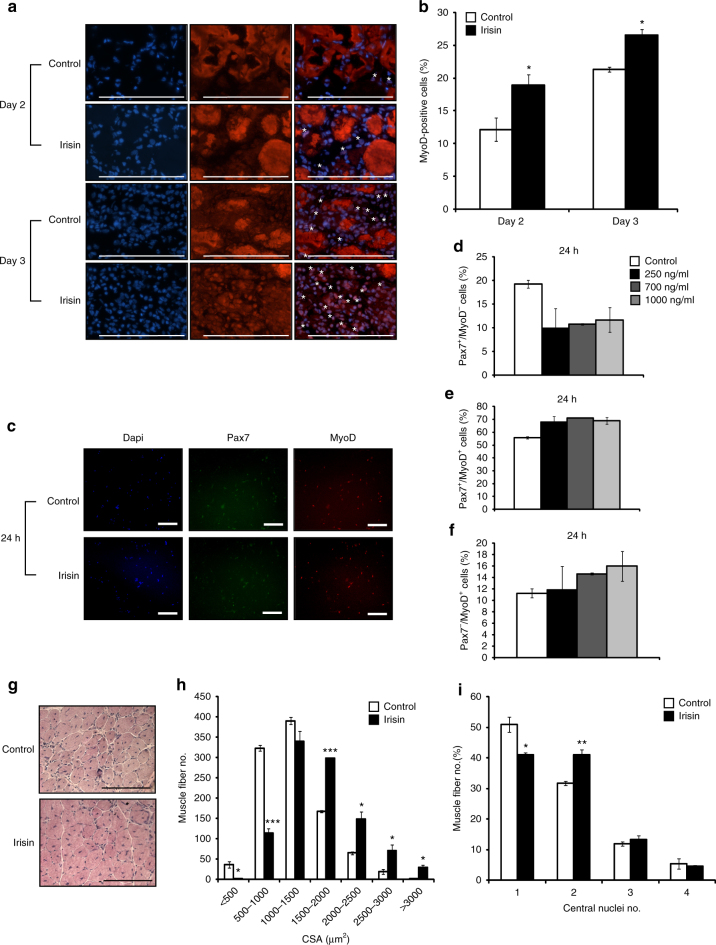
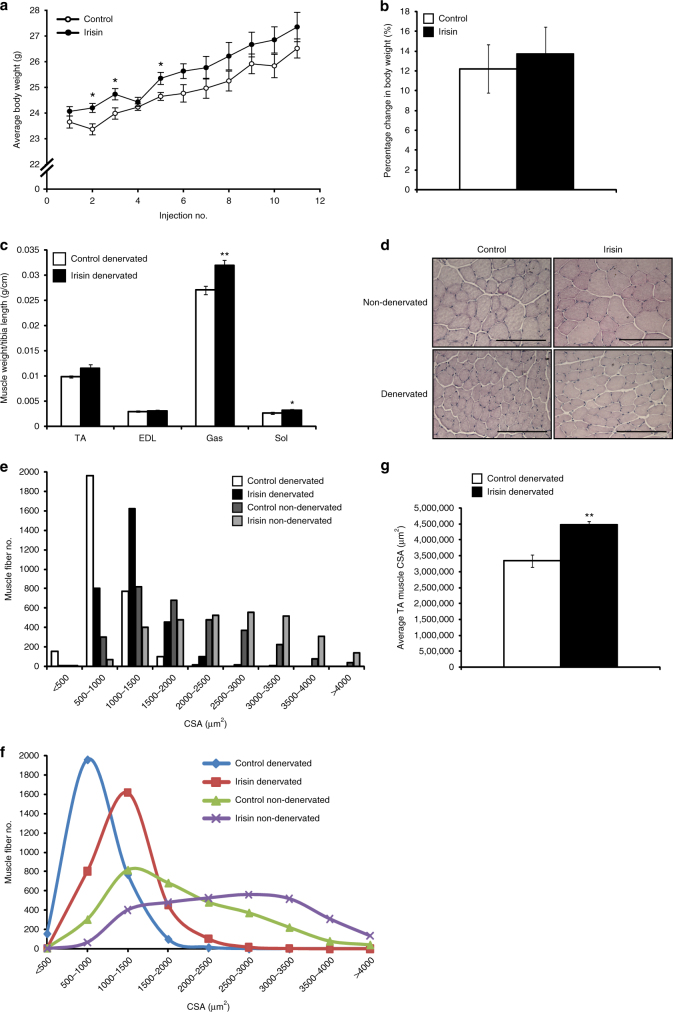
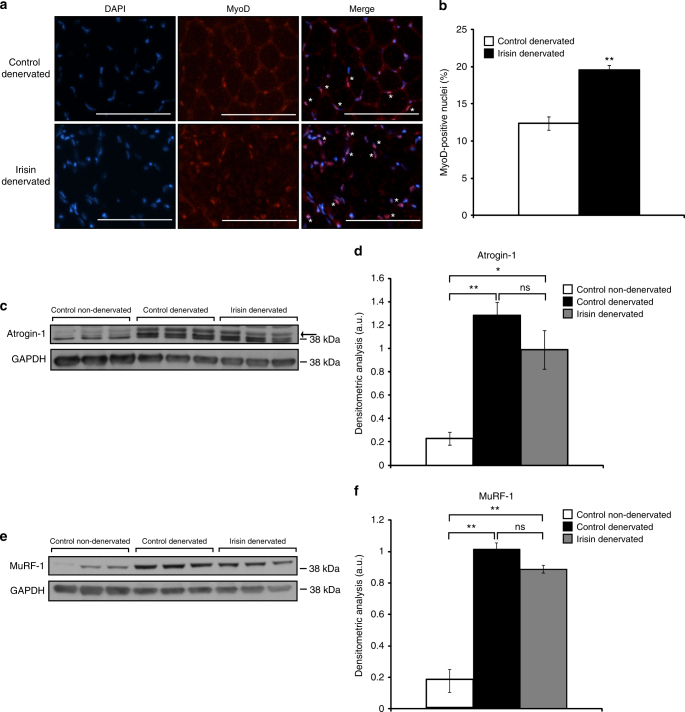
Exercise induces expression of the myokine irisin, which is known to promote browning of white adipose tissue and has been shown to mediate beneficial effects following exercise. Here we show that irisin induces expression of a number of pro-myogenic and exercise response genes in myotubes. Irisin increases myogenic differentiation and myoblast fusion via activation of IL6 signaling. Injection of irisin in mice induces significant hypertrophy and enhances grip strength of uninjured muscle. Following skeletal muscle injury, irisin injection improves regeneration and induces hypertrophy. The effects of irisin on hypertrophy are due to activation of satellite cells and enhanced protein synthesis. In addition, irisin injection rescues loss of skeletal muscle mass following denervation by enhancing satellite cell activation and reducing protein degradation. These data suggest that irisin functions as a pro-myogenic factor in mice.
Overview
The claims and statistics of this paper haven’t been checked yet.
Run the check — free, no account needed. It reads the open-access text and checks the sources it cites.
Integrity signals
Registry
Cites
Statistics
Figures
Verification
Claims the paper makes
The claims and statistics of this paper haven’t been checked yet.
Run the check — free, no account needed. It reads the open-access text and checks the sources it cites.
Claims other papers make about this one
Each is checked against this paper’s own text: does it say what the citing paper says it does?
In the citing paper
“On the other hand, aerobic exercise, which also induces IL6 (Benrick et al., 2012; Pedersen and Febbraio, 2008; Reza et al., 2017), is highly associated with improved outcomes in depression and anxiety.”
From Origin and function of stress-induced IL-6 in murine models (2020) · cites this paper as Reza et al., 2017
Self-check
Percentages, sums and reported differences re-computed from the paper’s own numbers.
The self-check needs the paper’s full text.
Citations
Cites
A PGC1-α-dependent myokine that drives brown-fat-like development of white fat and thermogenesis
Boström, P., Wu, J., Jedrychowski, M. P., Korde, A., Ye, L., Lo, J. C., Rasbach, K. A., Boström, E. A., Choi, J. H., Long, J. Z., et al. (2012) · Nature · doi:10.1038/nature10777 · Cited by 4,810
Identification of ubiquitin ligases required for skeletal muscle atrophy.
Bodine, S. C., Latres, E., Baumhueter, S., Lai, V. K.-M., Nunez, L., Clarke, B. A., Poueymirou, W. T., Panaro, F. J., Na, E., Dharmarajan, K., et al. (2001) · Science · doi:10.1126/science.1065874 · Cited by 3,521
Bodine, S. C., Stitt, T. N., Gonzalez, M., Kline, W. O., Stover, G. L., Bauerlein, R., Zlotchenko, E., Scrimgeour, A., Lawrence, J. C., Glass, D. J., et al. (2001) · Nature Cell Biology · doi:10.1038/ncb1101-1014 · Cited by 2,752
Serial passaging and differentiation of myogenic cells isolated from dystrophic mouse muscle
Yaffe, D., & Saxel, O. (1977) · Nature · doi:10.1038/270725a0 · Cited by 2,153 · cited 1×
“American Type Culture Collection (ATCC) murine C2C12 myoblasts (Yaffe and Saxel, 1977)40 were maintained in proliferation medium, consisting of Dulbecco’s modified Eagle’s medium (DMEM) (Invitrogen, Carlsbad, CA, USA), 10% fetal bovine serum (HyClone, Thermo Scientific, USA), and 1% penicillin/…”
MethodRommel, C., Bodine, S. C., Clarke, B. A., Rossman, R., Nunez, L., Stitt, T. N., Yancopoulos, G. D., & Glass, D. J. (2001) · Nature Cell Biology · doi:10.1038/ncb1101-1009 · Cited by 1,583
The role of exercise and PGC1α in inflammation and chronic disease
Handschin, C., & Spiegelman, B. M. (2008) · Nature · doi:10.1038/nature07206 · Cited by 1,083
Huh, J. Y., Panagiotou, G., Mougios, V., Brinkoetter, M., Vamvini, M. T., Schneider, B. E., & Mantzoros, C. S. (2012) · Metabolism · doi:10.1016/j.metabol.2012.09.002 · Cited by 1,040
Myostatin, a Negative Regulator of Muscle Growth, Functions by Inhibiting Myoblast Proliferation
Thomas, M., Langley, B., Berry, C., Sharma, M., Kirk, S., Bass, J., & Kambadur, R. (2000) · Journal of Biological Chemistry · doi:10.1074/jbc.m004356200 · Cited by 1,014
Self-citationThe Molecular Basis of Skeletal Muscle Atrophy
Jackman, R. W., & Kandarian, S. C. (2004) · American Journal of Physiology-Cell Physiology · doi:10.1152/ajpcell.00579.2003 · Cited by 1,008
Interleukin-6 Is an Essential Regulator of Satellite Cell-Mediated Skeletal Muscle Hypertrophy
Serrano, A. L., Baeza-Raja, B., Perdiguero, E., Jardí, M., & Muñoz-Cánoves, P. (2008) · Cell Metabolism · doi:10.1016/j.cmet.2007.11.011 · Cited by 873
Cited by
Sorted by citations
Items 101–200 of 335
Exercise-induced CLCF1 attenuates age-related muscle and bone decline in mice
Kang, J. S., Kim, J. H., Kim, M. J., Min, B., Lee, S.-M., Go, G.-Y., Kim, J., Kim, S., Kwak, J. Y., Chun, S.-W., et al. (2025) · Nature Communications · doi:10.1038/s41467-025-59959-w · Cited by 24
“To investigate thisfurther,wemeasuredCLCF1levelsinmiceat3,8,and18monthsof age,andobservedaprogressivedeclineinCLCF1levelswithincreasing age (Fig.”
Irisin induces white adipose tissue browning in mice as assessed by magnetic resonance imaging
Chen, Y., Ding, J., Zhao, Y., Ju, S., Mao, H. Z., & Peng, X. (2021) · Experimental Biology and Medicine · doi:10.1177/15353702211006049 · Cited by 24
Irisin Serum Levels and Skeletal Muscle Assessment in a Cohort of Charcot-Marie-Tooth Patients
Colaianni, G., Oranger, A., Dicarlo, M., Lovero, R., Storlino, G., Pignataro, P., Fontana, A., Serio, F. D., Ingravallo, A., Caputo, G., et al. (2022) · Frontiers in Endocrinology · doi:10.3389/fendo.2022.886243 · Cited by 26
Effects of Muscles on Bone Metabolism—with a Focus on Myokines
Kim, B. (2022) · Annals of Geriatric Medicine and Research · doi:10.4235/agmr.22.0054 · Cited by 26
Lumican, an Exerkine, Protects against Skeletal Muscle Loss
Cho, H. J., Lee, Y., Kim, D. A., Moon, S. A., Lee, S. E., Lee, S. H., & Koh, J. (2022) · International Journal of Molecular Sciences · doi:10.3390/ijms231710031 · Cited by 24
“Interestingly, irisin, as an exerkine, was shown to exert pro-myogenic effects [10], suggesting that exerkines may afford beneficial effects on skeletal muscle in an autocrine manner.”
BackgroundAdipokines in Rheumatoid Arthritis: Emerging Biomarkers and Therapeutic Targets
Bilski, J., Schramm‐Luc, A., Szczepanik, M., Mazur-Biały, A. I., Bonior, J., Luc, K., Zawojska, K., & Szklarczyk, J. (2023) · Biomedicines · doi:10.3390/biomedicines11112998 · Cited by 28
“In myotubes, irisin induces the expression of pro-myogenic genes, increases myogenic differentiation, and promotes myoblast fusion [417,418].”
BackgroundYüksel, B., Demiral, İ., Zeybek, Ü., Çelik, F., Buyru, F., Yeh, J., & Baştu, E. (2020) · Metabolic Syndrome and Related Disorders · doi:10.1089/met.2019.0083 · Cited by 23
“19 These findings encouraged hypotheses of exercise-mimicking effects produced by irisin administration, as seen in the recent study by Ye et al., which defined irisin as an agent reversing insulin.”
Salivary and serum irisin in healthy adults before and after exercise
Missaglia, S., Tommasini, E., Vago, P., Pecci, C., Galvani, C., Silvestrini, A., Mordente, A., & Tavian, D. (2023) · European Journal of Translational Myology · doi:10.4081/ejtm.2023.11093 · Cited by 20
Irisin and Its Role in Postmenopausal Osteoporosis and Sarcopenia
Falsetti, I., Palmini, G., Donati, S., Aurilia, C., Iantomasi, T., & Brandi, M. L. (2024) · Biomedicines · doi:10.3390/biomedicines12040928 · Cited by 23
“These e ff ects are a tt ributed to the ability of irisin to activate satellite protein synthesis [26].”
BackgroundYuan, B., Zheng, X., Wu, M., Yang, Y., Chen, J., Gao, H., & Liu, J. (2023) · ACS Omega · doi:10.1021/acsomega.2c05351 · Cited by 22
Peng, H.-Y., Liang, Y., Tan, T., Chuang, H., Lin, Y., & Lin, J.-C. (2018) · International Journal of Molecular Sciences · doi:10.3390/ijms19092646 · Cited by 22
“Several studies revealed the impact of cold exposure and exercise on inducing white-to-brown shift within white adipose tissues (WATs) [4,5].”
BackgroundPan, Y., Zhou, S.-J., Feng, J., Bai, Q., Lata, A., & Zhang, A. (2019) · Kidney & Blood Pressure Research · doi:10.1159/000499880 · Cited by 22
Molecular mechanisms and potential interventions during aging-associated sarcopenia
Luo, X., Wang, J., Ju, Q., Li, T., & Bi, X. (2024) · Mechanisms of Ageing and Development · doi:10.1016/j.mad.2024.112020 · Cited by 23
Zhang, L., Li, C., Xiong, J., Chang, C. H., & Sun, Y. (2022) · Frontiers in Physiology · doi:10.3389/fphys.2022.929926 · Cited by 22
“Mstn is a well-recognized negative regulator of muscle growth, whereas Fndc5 is a positive one in skeletal muscles (Cohen et al., 2015; Reza et al., 2017).”
BackgroundLee, E. J., Shaikh, S., Choi, D., Ahmad, K., Baig, M. H., Lim, J. H., Lee, Y., Park, S. J., Kim, Y., Park, S., et al. (2019) · Cells · doi:10.3390/cells8121565 · Cited by 20
“Recently, it has been shown that irisin injection stimulated muscle hypertrophy and increased regeneration in injured skeletal muscle [72].”
Role and Functions of Irisin: A Perspective on Recent Developments and Neurodegenerative Diseases
Minuti, A., Raffaele, I., Scuruchi, M., Lui, M., Muscarà, C., & Calabrò, M. (2025) · Antioxidants · doi:10.3390/antiox14050554 · Cited by 27
“In vitro experiments suggested that irisin enhances myogenesis, primarily by promoting myoblasts’ fusion [46].”
Time-dependent unloading effects on muscle and bone and involvement of FNDC5/irisin axis
Sanesi, L., Storlino, G., Dicarlo, M., Oranger, A., Zerlotin, R., Pignataro, P., Suriano, C., Guida, G., Grano, M., Colaianni, G., et al. (2023) · npj Microgravity · doi:10.1038/s41526-023-00251-w · Cited by 21
Zhang, Y., Wang, L., Kang, H., Lin, C.-Y. J., & Fan, Y. (2023) · International Journal of Molecular Sciences · doi:10.3390/ijms24076551 · Cited by 21
“Irisin has been recognized as a pro-myogenic effector that promotes the differentiation and fusion of myogenic myoblasts through IL-6 signaling both in vitro and in vivo [16].”
BackgroundInfluentialBMAL1/PGC1α4-FNDC5/irisin axis impacts distinct outcomes of time-of-day resistance exercise
Guo, M., Shen, F., Guo, X., Zhang, J., Ma, Y., Wu, X., Zuo, H., Yao, J., Hu, Y., Wang, D., et al. (2024) · Journal of sport and health science/Journal of Sport and Health Science · doi:10.1016/j.jshs.2024.100968 · Cited by 21
“20 (cid:2) 23 However, the daily variance of irisin and its physiological influences in skeletal muscle have not been investigated.”
Role of Exosomal miR ‐223 in Chronic Skeletal Muscle Inflammation
Tian, Y. Y., Wang, T., Bu, H., Shao, G., Zhang, W., & Zhang, L. (2022) · Orthopaedic Surgery · doi:10.1111/os.13232 · Cited by 19
Zhou, T., Wang, S., Pan, Y., Dong, X., Wu, L., Meng, J., Zhang, J., Pang, Q., & Zhang, A. (2023) · Kidney & Blood Pressure Research · doi:10.1159/000533926 · Cited by 19
“Colaianni et al. [49] found that serum irisin levels were signi fi cantly reduced in patients with Charcot-Marie-tooth hereditary poly-neuropathy and muscular atrophy.”
BackgroundZhang, S., Tan, R., Zhang, K., Meng, S., Xu, X., Zhang, Q., Zhi, C., Wang, Z., Liang, X., Zhu, S., et al. (2024) · Nano Energy · doi:10.1016/j.nanoen.2024.109548 · Cited by 19
Nguyen, T. T., Dao, T., Nguyen, H. T., Park, J.-H., Jeong, S.-J., Kim, S., Jo, Y., Thieu, N. T. H., Zhao, J., Ding, F., et al. (2026) · Endocrinology and Metabolism · doi:10.3803/enm.2025.2656 · Cited by 23
“…indicate that increasing irisin levels can help maintain both muscle and bone mass. Irisin therefore exemplifies a beneficial myokine that diminishes with aging; sustaining exercise-induced irisin secretion may be one mechanism through which physical activity protects against sarcopenia [64,65].”
Nagendra, A. H., Najar, M. A., Bose, B., & Sudheer Shenoy, P. (2022) · Journal of Hazardous Materials · doi:10.1016/j.jhazmat.2022.128654 · Cited by 18
Kou, G.-N., Li, P., Shi, Y., Traore, S. S., Shi, X.-Y., Amoah, A., Cui, Z., & Lyu, Q. (2022) · Journal of Agricultural and Food Chemistry · doi:10.1021/acs.jafc.2c02794 · Cited by 17
Natural constituents from food sources: potential therapeutic agents against muscle wasting
Shen, S., Yu, H., Gan, L., Yang, Y., & Lin, L. (2019) · Food & Function · doi:10.1039/c9fo00912d · Cited by 20
Irisin in degenerative musculoskeletal diseases: Functions in system and potential in therapy
Wang, Y.-T., Zheng, S., Jiang, S., Luo, Y., Wu, Y., Naranmandakh, S., Li, Y., Liu, S.-G., & Xiao, W. (2024) · Pharmacological Research · doi:10.1016/j.phrs.2024.107480 · Cited by 21
Circulating irisin levels in patients with sarcopenia: a systematic review and meta-analysis
Zhang, L., Peng, Y., Kong, Y., Zhang, X., Li, Z., & Jia, H. (2024) · European Geriatric Medicine · doi:10.1007/s41999-024-01097-5 · Cited by 17
Cosio, P. L., Moreno-Simonet, L., Fernández, D., Lloret, M., Padullés, X., Padulles, J. M., Farrán-Codina, A., Rodas, G., & Cadefau, J. A. (2024) · European Journal of Applied Physiology · doi:10.1007/s00421-024-05694-x · Cited by 16
“…according to manufacturer’s instruction (intra-assay variability <10%; inter-assay variability <15%), owing to its protective effect against inflammatory and oxidative processes (Askari et al. 2018; Trettel et al. 2023) and promotion of muscle regeneration (Reza et al. 2017; Zhang et al. 2023).”
Exercise-mitigated sex-based differences in aging: from genetic alterations to heart performance
Börzsei, D., Priksz, D., Szabó, R., Bombicz, M., Karácsonyi, Z., Puskás, L. G., Fehér, L. Z., Radak, Z. O., Kupai, K., Berkó, A. M., et al. (2020) · American Journal of Physiology-Heart and Circulatory Physiology · doi:10.1152/ajpheart.00643.2020 · Cited by 16
Effects of marathon race on selected myokines and sclerostin in middle-aged male amateur runners
Śliwicka, E., Cisoń, T., Pilaczyńska-Szczȩśniak, Ł., Ziemba, A. W., & Straburzyńska‐Lupa, A. (2021) · Scientific Reports · doi:10.1038/s41598-021-82288-z · Cited by 19
Cui, W., Liu, C., Wang, J., Zhang, Y., Shen, Q., Feng, Z., Wu, J., & Li, J. (2019) · European Journal of Pharmacology · doi:10.1016/j.ejphar.2019.172612 · Cited by 16
Adipose-derived exosomes ameliorate skeletal muscle atrophy via miR-146a-5p/IGF-1R signaling
Qin, M., Zhu, J., Xing, L., Fan, Y., Luo, J., Sun, J., Chen, T., Zhang, Y., & Xi, Q. (2024) · Journal of Nanobiotechnology · doi:10.1186/s12951-024-02983-7 · Cited by 22
Wang, C., Zhang, B., Ratliff, A. C., Arlington, J., Chen, J., Xiong, Y., Yue, F., Nie, Y., Hu, K., Jin, W. L., et al. (2019) · The FASEB Journal · doi:10.1096/fj.201900582r · Cited by 16
“Myofiber size may be regulated at both cellular (myogenic differentiation and myoblast fusion) (46) and molecular (protein synthesis anddegradation) level.”
BackgroundChen, X., Li, M., Chen, B., Wang, W., Zhang, L., Ji, Y., Chen, Z., Ni, X., Shen, Y., & Sun, H. (2021) · Annals of Translational Medicine · doi:10.21037/atm-21-1230 · Cited by 14
“Peripheral nerve injury leads to the loss of innervation of skeletal muscle, and then the loss of signal transmission and material exchange with nerves, resulting in a series of pathological changes, such as the reduction of cross-sectional area of muscle fibers, destruction of myofilaments and sarcomeres, degradation…”
BackgroundCordingley, D. M., Anderson, J. E., & Cornish, S. M. (2022) · Journal of Science in Sport and Exercise · doi:10.1007/s42978-022-00164-2 · Cited by 18
“Although primarily known for the “browning” of white adipose tissue [78], irisin also promotes muscle hypertrophy [72] by upregulating expression of insulin-like growth factor-1 (IGF-1), down-regulating myostatin expression [41], and increasing satellite cell activation, myoblast proliferation, and myotube formation […”
BackgroundCrosstalk between bone and muscle in chronic kidney disease
Wong, L., & McMahon, L. P. (2023) · Frontiers in Endocrinology · doi:10.3389/fendo.2023.1146868 · Cited by 15
“Higher expression of tumour necrosis factor-alpha (TNF-a) and IL-6 were observed in the muscle of CKD patients and mice compared to healthy controls and were associated with the development of muscle atrophy (19).”
BackgroundInfluentialStorlino, G., Dicarlo, M., Zerlotin, R., Pignataro, P., Sanesi, L., Suriano, C., Oranger, A., Mori, G., Passeri, G., Colucci, S. C., et al. (2023) · International Journal of Molecular Sciences · doi:10.3390/ijms24129896 · Cited by 15
“Of note, as already demonstrated by other authors in a mouse model of denervation-induced atrophy [33], we showed here that haptoglobin, which promotes skeletal muscle hypertrophy, was significantly upregulated by irisin treatment in the ovx mouse model.”
BackgroundResultHan, L., Li, P., He, Q., Yang, C. G., Jiang, M., Wang, Y., Cao, Y., Han, X., Liu, X., & Wu, W. (2023) · Aging and Disease · doi:10.14336/ad.2023.1125 · Cited by 17
MyoV: a deep learning-based tool for the automated quantification of muscle fibers
Gu, S., Wen, C., Xiao, Z., Huang, Q., Jiang, Z., Liu, H., Gao, J., Li, J., Sun, C., & Yang, N. (2023) · Briefings in Bioinformatics · doi:10.1093/bib/bbad528 · Cited by 15
“Muscle fibers are elongated, multinucleated cells originating from the fusion of numerous mononucleated muscle precursor cells known as myoblasts during embryonic and fetal development [11–13].”
BackgroundThe role and underlying mechanisms of irisin in exercise-mediated cardiovascular protection
Guo, W., Peng, J., Su, J., Xia, J., Deng, W., Li, P., Chen, Y., Liu, G., Wang, S., & Huang, J. (2024) · PeerJ · doi:10.7717/peerj.18413 · Cited by 18
Molecular targets of exercise mimetics and their natural activators
Jang, Y. J., & Byun, S. (2021) · BMB Reports · doi:10.5483/bmbrep.2021.54.12.151 · Cited by 17
“The level of irisin positively correlates with muscle mass and muscle strength (19) and injection of irisin rescues denervation-induced loss of skeletal muscle mass by enhancing satellite cell activation and reducing protein degradation (22).”
BackgroundLi, J., Zhang, Y., Yu, F., Pan, Y., Zhang, Z., He, Y., Yang, H., & Zhou, P. (2023) · ACS Omega · doi:10.1021/acsomega.3c03513 · Cited by 14
Exerkines and myokines in aging sarcopenia
Wang, H., He, W., Chen, P., Wang, H., Wang, H., Zhu, L., & Liu, X. (2025) · Frontiers in Endocrinology · doi:10.3389/fendo.2025.1592491 · Cited by 20
Arabzadeh, E., Shirvani, H., Zahmatkesh, M. E., Malayeri, S. R., Meftahi, G. H., & Rostamkhani, F. (2022) · 3 Biotech · doi:10.1007/s13205-022-03253-9 · Cited by 14
Vanhorebeek, I., Gunst, J., Casaer, M. P., Derese, I., Derde, S., Pauwels, L., Segers, J., Hermans, G., Gosselink, R., & den Berghe, G. V. (2023) · Journal of the Endocrine Society · doi:10.1210/jendso/bvad001 · Cited by 18
“Indeed, this treatment induced significant hypertrophy and enhanced grip strength of uninjured muscle, improved regeneration and rescued loss of muscle mass of denervation-induced injured muscle, and showed beneficial effects in hind limb ischemia–reperfusion injury [44, 45].”
Chi, Y.-L., & Lin, J.-C. (2018) · Biochimica et Biophysica Acta (BBA) - Molecular Cell Research · doi:10.1016/j.bbamcr.2018.08.001 · Cited by 14
Bekki, M., Hashida, R., Kawaguchi, T., Goshima, N., Yoshiyama, T., Otsuka, T., Koya, S., Hirota, K., Matsuse, H., Niizeki, T., et al. (2018) · JCSM Rapid Communications · doi:10.1002/j.2617-1619.2018.tb00009.x · Cited by 14
Therapeutic Targets in Amyotrophic Lateral Sclerosis: Focus on Ion Channels and Skeletal Muscle
Tarantino, N., Canfora, I., Camerino, G. M., & Pierno, S. (2022) · Cells · doi:10.3390/cells11030415 · Cited by 14
The role of irisin in exercise-induced muscle and metabolic health: a narrative review
Mohammed, S. N., Jasim, M. H., Mahmood, S. H., Saleh, E. N., & Hashemzadeh, A. (2025) · Naunyn-Schmiedeberg s Archives of Pharmacology · doi:10.1007/s00210-025-04083-1 · Cited by 13
“These effects collectively support muscle hypertrophy and strength, which can enhance functional capacity and physical performance (Reza et al. 2017).”
InfluentialHIF-1α Negatively Regulates Irisin Expression Which Involves in Muscle Atrophy Induced by Hypoxia
Liu, S., Fu, P., Ning, K., Wang, R., Yang, B., Chen, J., & Xu, H. (2022) · International Journal of Molecular Sciences · doi:10.3390/ijms23020887 · Cited by 14
“have found that irisin increases myogenic differentiation and myoblast fusion by activating IL-6 signaling and further improves injured skeletal muscle by promoting protein synthesis [15].”
BackgroundThe Cellular and Molecular Signature of ALS in Muscle
Anakor, E., Duddy, W. J., & Duguez, S. (2022) · Journal of Personalized Medicine · doi:10.3390/jpm12111868 · Cited by 14
“Other examples of muscle secreted factors important for NMJ stabilization and dysregulated in ALS animal models and patients include: Insulin Like Growth Factor-1 (IGF-1) [137–140] or Glial-Cell-Line-Derived Neurotrophic Factor (GDNF) [141–145], Irisin [146] and Brain-Derived Neurotrophic Factor (BDNF) [138,147].”
BackgroundÖzçatal, Y., Akat, F., Tatar, Y., Fıçıcılar, H., Serdaroğlu, B., Çelikkan, F. T., & Baştuğ, M. (2023) · Cytokine · doi:10.1016/j.cyto.2023.156279 · Cited by 14
Sharma, A. R., Chatterjee, S., Lee, Y., & Lee, S. (2023) · Aging and Disease · doi:10.14336/ad.2023.00903 · Cited by 15
“Furthermore, introducing irisin in mice models also explicated irisin's capacity to induce muscle hypertrophy by the IGF-1/mTOR/Akt pathway, which simultaneously activates the synthesis of the muscle proteins [98].”
BackgroundCosio, P. L., Moreno-Simonet, L., Porcelli, A., Lloret, M., Padullés, X., Padulles, J. M., Farrán-Codina, A., & Cadefau, J. A. (2024) · Frontiers in Physiology · doi:10.3389/fphys.2023.1331878 · Cited by 13
Zhang, J., Gao, Y., & Yan, J. (2024) · Metabolites · doi:10.3390/metabo14020088 · Cited by 15
“…myoblast proliferation and fusion [13], maintains muscle protein balance by down-regulating protein degradation and up-regulating protein synthesis [12], stimulates muscle growth by up-regulating the mRNA expression of myokines that play positive roles in skeletal muscles, such as insulin-like…”
BackgroundOrioli, L., & Thissen, J. (2025) · Frontiers in Endocrinology · doi:10.3389/fendo.2025.1554617 · Cited by 17
Mst1/2 Is Necessary for Satellite Cell Differentiation to Promote Muscle Regeneration
Yang, J., Wang, K., An, Y., Wu, R., Li, J., Wang, H., & Dong, Y. (2021) · Stem Cells · doi:10.1093/stmcls/sxab010 · Cited by 13
Fndc5/irisin is regulated by myogenesis stage, irisin, muscle type and training.
Lavi, G., Horwitz, A., Einstein, O., Zipori, R., Gross, O., & Birk, R. Z. (2022) · PubMed Central · Cited by 13
Cosio, P. L., Peláez, M., Cadefau, J. A., & Farrán-Codina, A. (2022) · Biological Research For Nursing · doi:10.1177/10998004221142580 · Cited by 13
“Likewise, irisin has been shown to be a potent inducer of IL-6 (Reza et al., 2017), and since both myokines are released in response to muscle contraction, it is suggested that both feeds back into each other during exercise.”
BackgroundInfluentialCui, W., Liu, C., Zhang, Y., Shen, Q., Feng, Z., Wang, J., Lu, S.-F., Wu, J., & Li, J. (2019) · Toxicology and Applied Pharmacology · doi:10.1016/j.taap.2019.114625 · Cited by 13
Lu, C., Wang, C., Lin, Y., Kuo, C., Lai, Y.-H., Hsu, B., & Tsai, J. (2021) · International Journal of Endocrinology · doi:10.1155/2021/8890042 · Cited by 13
“Irisin, a newly discovered myokine, which is cleaved from the precursor fibronectin type III domain-containing 5 (FNDC5), is primarily known for its modulatory role in phenotypic changes of white adipose tissue to brown adipose tissue to increase energy expenditure and improve glucose homeostasis; irisin also activate…”
BackgroundMomenzadeh, S., Zamani, S., Tabrizi, Z. P. F., Barreiro, C., & Jami, M. (2021) · Biochimie · doi:10.1016/j.biochi.2021.06.016 · Cited by 14
Hua, X., Hou, M., Deng, L., Lv, N., Xu, Y. X., Zhu, X., Yang, H., Shi, Q., Liu, H., & He, F. (2023) · Regenerative Biomaterials · doi:10.1093/rb/rbad096 · Cited by 12
“These effects are achieved through the activation of myogenic differentiation in muscle-derived satellite stem cells and the prevention of myotube-related protein degradation [18].”
BackgroundRole of irisin and myostatin on sarcopenia in malnourished patients diagnosed with GLIM criteria.
de Luis, D., Primo, D., Izaola, O., & Gomez, J. J. L. (2023) · Nutrition (Burbank, Los Angeles County, Calif.) · doi:10.1016/j.nut.2023.112348 · Cited by 13
Hurley-Novatny, A. C., Chang, D., Murakami, K., Wang, L., & Li, H. (2024) · Frontiers in Endocrinology · doi:10.3389/fendo.2024.1398050 · Cited by 17
Lu, C., Li, Z., Yang, J., Feng, L., Wang, C., & Shi, Q. (2019) · Journal of Clinical Densitometry · doi:10.1016/j.jocd.2019.05.002 · Cited by 12
High-velocity resistance training improves executive function in mobility-limited older adults
Feter, N., Schaun, G. Z., Smith, E. C., Cassuriaga, J., Alt, R., Redig, L., Alberton, C. L., Coombes, J. S., & Rombaldi, A. J. (2023) · Archives of Gerontology and Geriatrics · doi:10.1016/j.archger.2023.105081 · Cited by 16
Sun, Y., Wei, X., Zhao, T. M., Shi, H., Hao, X., Wang, Y., Zhang, H., Yao, Z., Zheng, M., Ma, T., et al. (2024) · FEBS Open Bio · doi:10.1002/2211-5463.13780 · Cited by 11
Neira, G., Hernández‐Pardos, A. W., Becerril, S., Ramírez, B., Valentí, V., Moncada, R., Catalán, V., Gómez‐Ambrosi, J., Burrell, M. A., Silva, C., et al. (2024) · Obesity · doi:10.1002/oby.24132 · Cited by 11
“FNDC5/irisin exerts autocrine and paracrine actions in skeletal myofibers, promoting myogenesis and inhibiting muscle atrophy [14, 15].”
Li, J., Zhou, Z., Wu, Y., Zhao, J., Duan, H.-K., Peng, Y., Wang, X., Fan, Z., Yin, L., Li, M., et al. (2024) · Theranostics · doi:10.7150/thno.101422 · Cited by 15
“Irisin might be an ideal therapeutic target for not only the metabolic disease by reducing diet-induced obesity and insulin resistance [35], but also the non-metabolic diseases including sarcopenia [102], osteoporosis [103].”
Zhang, K., Du, Y., Yang, S. Z., & Sun, G. (2025) · Scientific Reports · doi:10.1038/s41598-025-00066-7 · Cited by 11
“In addition, Irisin maintains musculoskeletal homeostasis by binding to integrin αVβ5 25,26 .”
Impacts of rat hindlimb Fndc5/irisin overexpression on muscle and adipose tissue metabolism
Farrash, W. F., Brook, M. S., Crossland, H., Phillips, B. E., Cegielski, J., Wilkinson, D. J., Constantin‐Teodosiu, D., Greenhaff, P. L., Smith, K., Cleasby, M. E., et al. (2020) · American Journal of Physiology-Endocrinology and Metabolism · doi:10.1152/ajpendo.00034.2020 · Cited by 13
Zhang, Q., Zhang, S., Zhang, L., Zhang, D., & Yang, L. (2021) · Clinical & Experimental Immunology · doi:10.1111/cei.13656 · Cited by 10
“It is reported that irisin is a promyogenic factor with the potential of myogenesis [22,23] and we speculated that the increased irisin in muscle of EAE mice may improve myodynamia; the underlying mechanism needs to be further explored.”
BackgroundXu, K., Shen, R., Zhang, L., Gao, X., Wang, X., Zhang, C., Chen, X., & Wang, X. (2025) · Advanced Science · doi:10.1002/advs.202504064 · Cited by 10
Horváth, L., Pekár, M., Švagera, Z., Horká, V., Mráz, M., & Bužga, M. (2025) · Physiological Research · doi:10.33549/physiolres.935751 · Cited by 14
“In vitro activation of skeletal muscle by irisin leads to a significant proliferation of murine myoblasts and a higher concentration of activated myoblast nuclei in a dose-dependent manner, while also accelerating muscle regeneration and attenuating muscle atrophy after denervation in mice [39].”
Wang, S., Pan, Y., Pang, Q., & Zhang, A. (2024) · Calcified Tissue International · doi:10.1007/s00223-024-01283-4 · Cited by 10
“Interventions involving irisin could induce skeletal muscle hypertrophy and mitigate denerva-tion-induced atrophy [9].”
SIRT1 and exercise-induced bone metabolism: a regulatory nexus
Liu, L., Zhang, J., Cui, R., Wang, N., Zhang, Y., Liu, L., Zhang, X., & Liu, Q. (2025) · Frontiers in Cell and Developmental Biology · doi:10.3389/fcell.2025.1522821 · Cited by 11
Li, W.-J., Yin, R., Xia, X., Xing, Q.-X., & Xu, S. (2025) · Scientific Reports · doi:10.1038/s41598-025-07378-8 · Cited by 10
“Research demonstrated that increased irisin levels could promote muscle growth, while injecting irisin induced skeletal muscle hypertrophy and enhanced skeletal muscle regeneration after muscle injury 12 .”
Demir, L., & Oflazoğlu, U. (2023) · Supportive Care in Cancer · doi:10.1007/s00520-023-08041-6 · Cited by 10
“Reza et al. stated that irisin improved muscle mass in atrophied mice through myogenic signalling [25].”
BackgroundShirvani, H., Rahmati-Ahmadabad, S., Kowsari, E., Fry, H. L., Kazemi, M., & Kaviani, M. (2020) · Gene · doi:10.1016/j.gene.2020.145018 · Cited by 10
Li, X., Duan, H., Liu, Q., Umar, M., Luo, W., Yang, X., Zhu, J., & Li, M. (2018) · International Journal of Biological Macromolecules · doi:10.1016/j.ijbiomac.2018.11.092 · Cited by 10
Arabzadeh, E., Shirvani, H., Masjedi, M. R., Ghanei, M., Hofmeister, M., & Rostamkhani, F. (2023) · 3 Biotech · doi:10.1007/s13205-023-03849-9 · Cited by 9
“In muscle tissue, irisin affects the differentiation of myogenic from myoblast fusion with activation of IL6 signaling (Reza et al. 2017).”
BackgroundGu, S., Gao, J., Li, Z., Zhang, S., Wen, C., Sun, C., Yan, W., Hou, Z., Yang, N., & Li, J. (2024) · Foods · doi:10.3390/foods13243997 · Cited by 9
Ahn, B. M., Noh, Y., Lee, J. J., Park, J. H. Y., Lee, K. W., & Jang, Y. J. (2025) · Biomedicine & Pharmacotherapy · doi:10.1016/j.biopha.2025.118316 · Cited by 9
Joshi, A. S., da Silva, M. T., Vuong, T. A., Xu, B., Singh, R. K., & Kumar, A. (2025) · EMBO Molecular Medicine · doi:10.1038/s44321-025-00337-w · Cited by 9
“In a parallel experiment, cultured myotubes were treated with 4 μ 8C (an inhibitor of IRE1 α endonuclease activity) for 24 h followed by measuring levels of p-STAT3 protein.”
Irisin and the muscle–brain axis: Mechanisms and translational potential
Arosio, B., & Picca, A. (2026) · Experimental Gerontology · doi:10.1016/j.exger.2026.113028 · Cited by 11
Effect of single bout downhill running on the serum irisin concentrations in rats
Murao, M., Imano, T., Akiyama, J., 川上, 照., & Nakajima, M. (2019) · Growth Factors · doi:10.1080/08977194.2020.1742118 · Cited by 9
Tsuchiya, Y., & Goto, K. (2021) · Cytokine · doi:10.1016/j.cyto.2021.155553 · Cited by 9
Irisin: A Potentially Fresh Insight into the Molecular Mechanisms Underlying Vascular Aging
Wang, Y., Wang, M., & Wang, Y. (2023) · Aging and Disease · doi:10.14336/ad.2023.1112 · Cited by 10
“Recombinant irisin administration or gene gain/loss of function has been used in preclinical investigations to modify irisin levels in animal and tissue engineering models [6–8].”
Irisin/FNDC5: A participant in camel metabolism
Kirat, D., Hamada, M. M. Z., Moustafa, A., & Miyasho, T. (2020) · Saudi Journal of Biological Sciences · doi:10.1016/j.sjbs.2020.10.061 · Cited by 10
Sousa, R. A. L. D., Magalhães, C. O. D. E., Dias, I. R., de Oliveira, L. R. S., Caria, A. C. I., & Cassilhas, R. C. (2022) · Revista da Associação Médica Brasileira · doi:10.1590/1806-9282.20211210 · Cited by 10
Berciano, M. T., Gatius, A., Puente-Bedia, A., Rufino-Gómez, A., Tarabal, O., Rodríguez-Rey, J. C., Calderó, J., Lafarga, M., & Tapia, O. (2024) · International Journal of Molecular Sciences · doi:10.3390/ijms252212415 · Cited by 8
“It is well established that PGC-1 α activates the downstream factor FDCN5 (fibronectin type III domain containing 5), which is cleaved in the sarcolemma of skeletal myofibers to give rise to the myokine irisin [73–76].”
Seong, E. J., Kim, Y., Su, Z., Kang, H., & Lee, J. H. (2025) · Pharmaceutical Research · doi:10.1007/s11095-025-03834-2 · Cited by 8
“In addition, irisin induces myogenesis by activating IL-6 signaling [36], whereas IL-6 also plays a role in inducing muscle atrophy through inflammatory responses [37], so high concentrations of irisin may have induced muscle atrophy through IL-6.”
Potential effect of Irisin on sarcopenia: a systematic review
Chen, Y., Qian, M., Gao, F., Li, G., Peng, K., Sun, Q., Sun, Y., Liu, G., Ge, Y., Yang, M., et al. (2025) · BMC Musculoskeletal Disorders · doi:10.1186/s12891-025-08767-w · Cited by 8
“Experimental studies demonstrate irisin’s regenerative capacity: In murine models of muscle injury, irisin activates satellite cells and regulates protein synthesis/degradation balance, facilitating tissue repair and hypertrophy [12].”
Comprehensive Transcriptome Profiling of NAFLD- and NASH-Induced Skeletal Muscle Dysfunction
Guo, M., Xiang, L., Yao, J., Zhang, J., Zhu, S., Wang, D., Liu, C., Li, G., Wang, J., Gao, Y., et al. (2022) · Frontiers in Endocrinology · doi:10.3389/fendo.2022.851520 · Cited by 8
Kumar, H. S., Barnett, E. N., Fowlkes, J. L., Kalaitzoglou, E., & Annamalai, R. T. (2023) · JBMR Plus · doi:10.1002/jbm4.10804 · Cited by 8
“(48,49) Interestingly, when muscle constructs are co-cultured with bone constructs, the effect of the exercise regimens changed markedly.”
BackgroundSadeghabadi, Z. A., Abbasalipourkabir, R., Mohseni, R., & Ziamajidi, N. (2019) · Archives of Physiology and Biochemistry · doi:10.1080/13813455.2019.1702060 · Cited by 8
“Irisin promotes myogenesis through increasing myocyte cell proliferation and genes expression of myogenin and myonectin, as well as, inhibiting genes expression of atrophy-related markers including MAFbx and MuRF1 (Rodr ıguez et al. 2015, Reza et al. 2017).”
BackgroundPierucci, F., Chirco, A., & Meacci, E. (2023) · International Journal of Molecular Sciences · doi:10.3390/ijms241310548 · Cited by 8
“The ability of irisin to modulate IL-6 signaling [18] was also mediated by SphK/S1P.”
BackgroundInfluentialOh, J., Park, S. H., Kim, D. S., Choi, W., Jang, J., Rahmawati, L., Jang, W. Y., Lim, H. K., Hwang, J. Y., Gu, G. R., et al. (2023) · Molecules · doi:10.3390/molecules28041950 · Cited by 7
“Irisin causes skeletal muscle hypertrophy by activating muscle satellite cells and protein synthesis [18].”
Metadata
- Authors
- Reza, M. M., Subramaniyam, N., Sim, C. M., Ge, X., Sathiakumar, D., McFarlane, C., Sharma, M., & Kambadur, R.
- Affiliations
- Nanyang Technological University (SG)
- Agency for Science, Technology and Research (SG)
- National University of Singapore (SG)
- Corresponding author
- Kambadur, Ravi
- Venue
- Nature Communications
- Published
- 2017-10-24
- Volume
- 8
- Issue
- 1
- Pages
- 1104-1104
- ISSN
- 2041-1723 (ISSN-L)
- PMC
- PMC5653663
- OpenAlex
- W2765141291
- Cited by
- 335
- References
- 43
- Citations by year
- 2026: 33 · 2025: 50 · 2024: 47 · 2023: 48 · 2022: 54 · 2021: 37 · 2020: 29 · 2019: 27 · 2018: 9 · 2017: 1
- FWCI
- 7.38
- Type
- journal article
- Language
- en
- Open access
- gold
- doi.org
- Locations
- Nature Communications (publishedVersion, cc-by)
- PubMed Central (publishedVersion, cc-by)
- PubMed (publishedVersion)
- UEA Digital Repository (University of East Anglia) (acceptedVersion)
- ResearchOnline - JCU (James Cook University) (submittedVersion)
- RePEc: Research Papers in Economics (submittedVersion)
- DOAJ (DOAJ: Directory of Open Access Journals) (submittedVersion, cc-by-sa)
- DOAJ (DOAJ: Directory of Open Access Journals) (submittedVersion)
- DR-NTU (Nanyang Technological University) (submittedVersion, cc-by)
- Funders
- Agency for Science, Technology and Research
- Nanyang Technological University
- Medical Research Council
- National Medical Research Council
- Topics
- Life Sciences › Biochemistry, Genetics and Molecular Biology › Molecular Biology › Muscle Physiology and Disorders
- Health Sciences › Medicine › Physiology (medical) › Exercise and Physiological Responses
- Health Sciences › Nursing › Nutrition and Dietetics › Muscle metabolism and nutrition
- Keywords
- irisin, myokines, skeletal muscle hypertrophy, denervation-induced atrophy, satellite cells, myogenesis, myoblast fusion, IL-6 signaling, muscle regeneration, skeletal muscle injury, protein synthesis, protein degradation
- MeSH terms
- Animals, Atrophy, Denervation, Fibronectins, Humans, Hypertrophy, Male, Mice, Inbred C57BL, Stem Cells, Interleukin-6, Muscle, Skeletal, Muscle Fibers, Skeletal, Muscle Development, Mice, Adipose Tissue, White
About these checks
Registry, retraction, Cites and statistics results are computed, not judged, with one exception: a printed reference that no index lists is read once by a model before it counts as a citation error. Claims are extracted by a model and kept only when their quote appears verbatim in the text; each cited source is then checked, with a model’s help, for whether it says what the claim relies on. Those verdicts can be wrong — read the claim’s quote and the cited source before relying on one.
Statistics and arithmetic are recomputed, not judged.
Confidence bands are shown only for fields calibrated on our annotated test set. None is calibrated yet, so no band is shown.
What counts as a claim ›How we measure confidence ›How we check this ›
Are you an author, or do you see a problem with this page? Request a review
