

The DOI matches its Crossref record; 44 of the 44 references it cites were found in a registry or an index.
Irisin is a pro-myogenic factor that induces skeletal muscle hypertrophy and rescues denervation-induced atrophy
Open accessAbstract
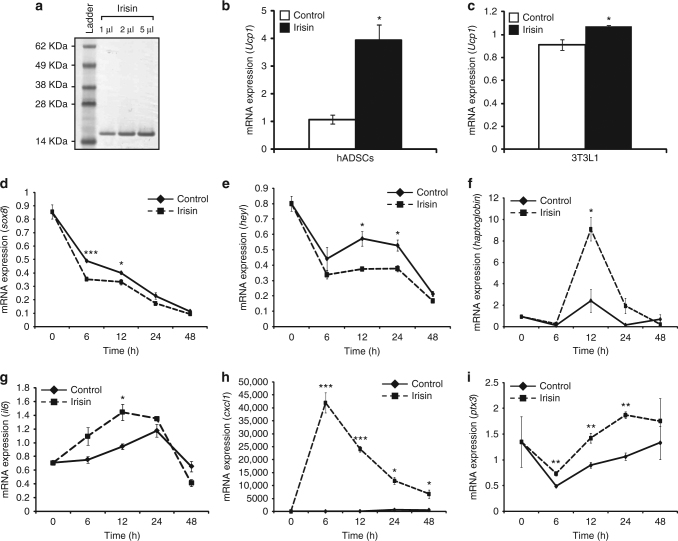
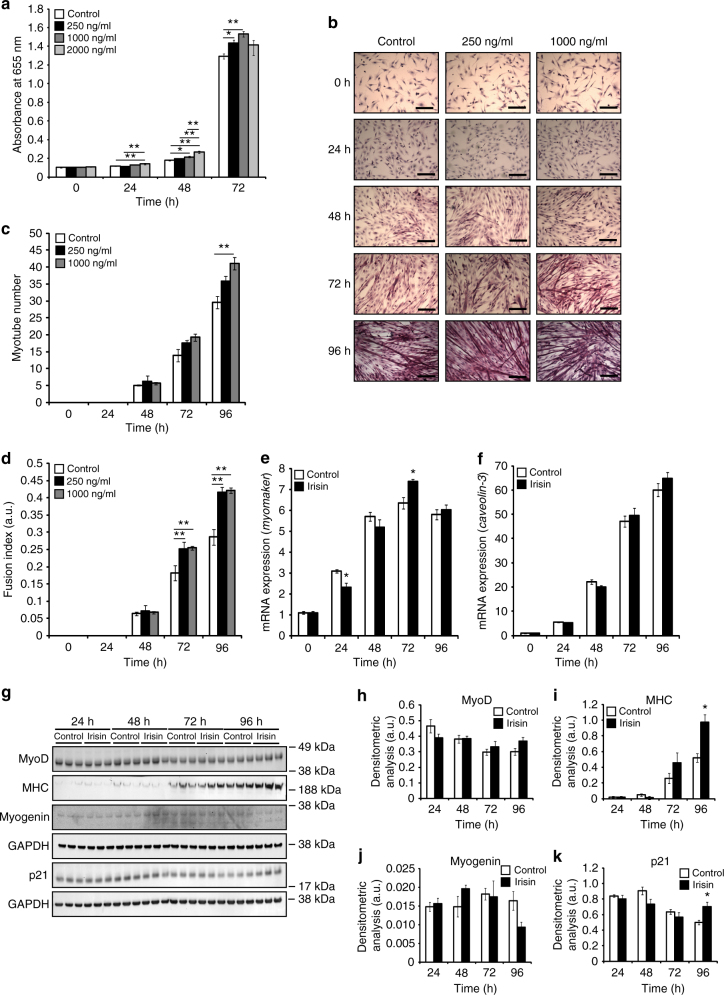
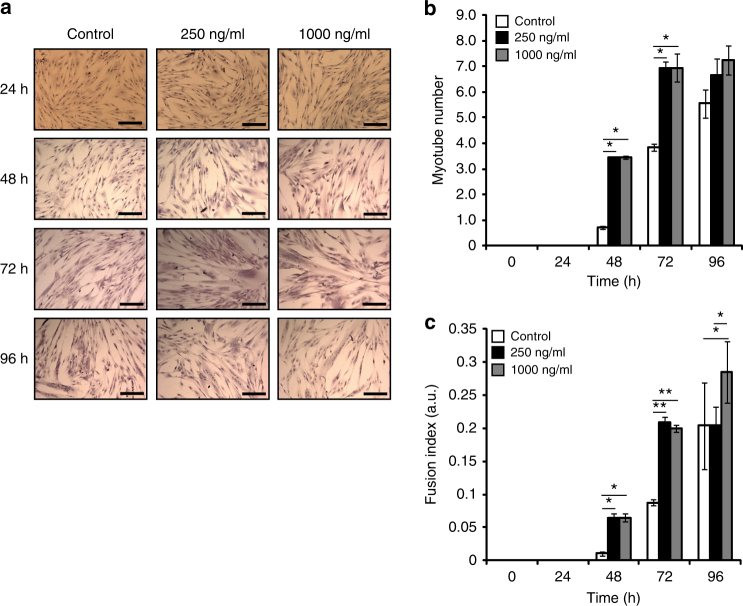
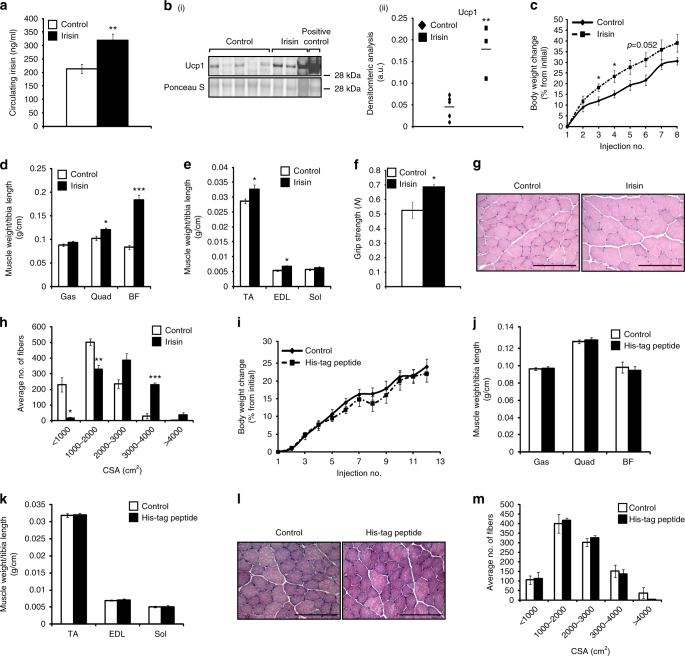
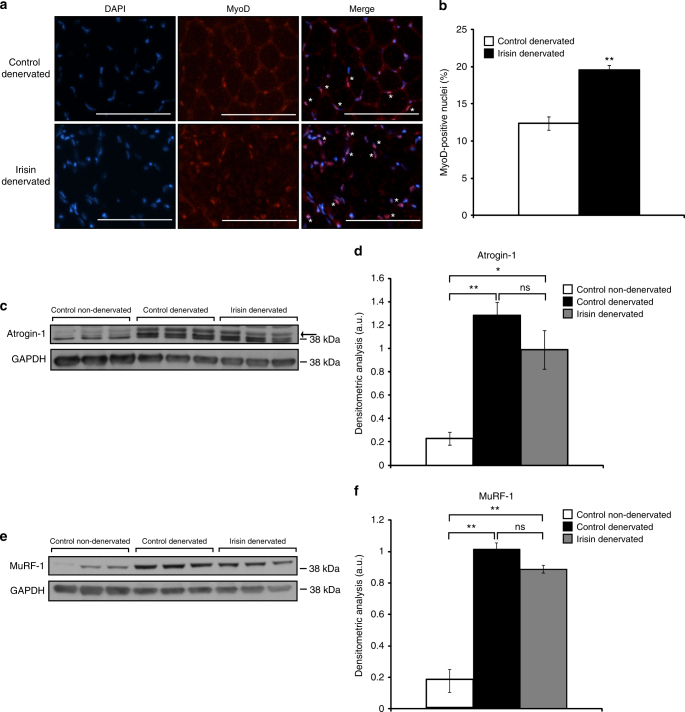
Exercise induces expression of the myokine irisin, which is known to promote browning of white adipose tissue and has been shown to mediate beneficial effects following exercise. Here we show that irisin induces expression of a number of pro-myogenic and exercise response genes in myotubes. Irisin increases myogenic differentiation and myoblast fusion via activation of IL6 signaling. Injection of irisin in mice induces significant hypertrophy and enhances grip strength of uninjured muscle. Following skeletal muscle injury, irisin injection improves regeneration and induces hypertrophy. The effects of irisin on hypertrophy are due to activation of satellite cells and enhanced protein synthesis. In addition, irisin injection rescues loss of skeletal muscle mass following denervation by enhancing satellite cell activation and reducing protein degradation. These data suggest that irisin functions as a pro-myogenic factor in mice.
Overview
The claims and statistics of this paper haven’t been checked yet.
Run the check — free, no account needed. It reads the open-access text and checks the sources it cites.
Integrity signals
Registry
Cites
Statistics
Figures
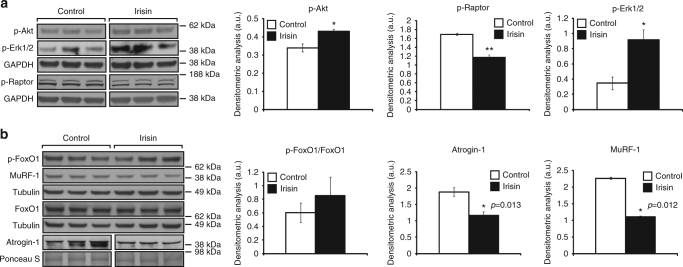
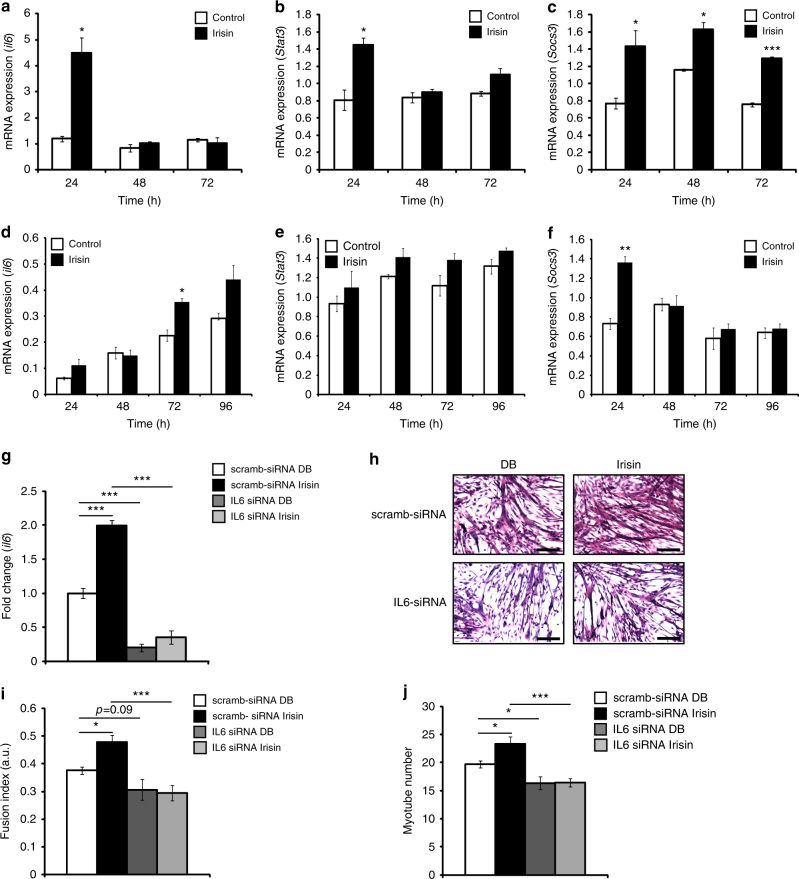
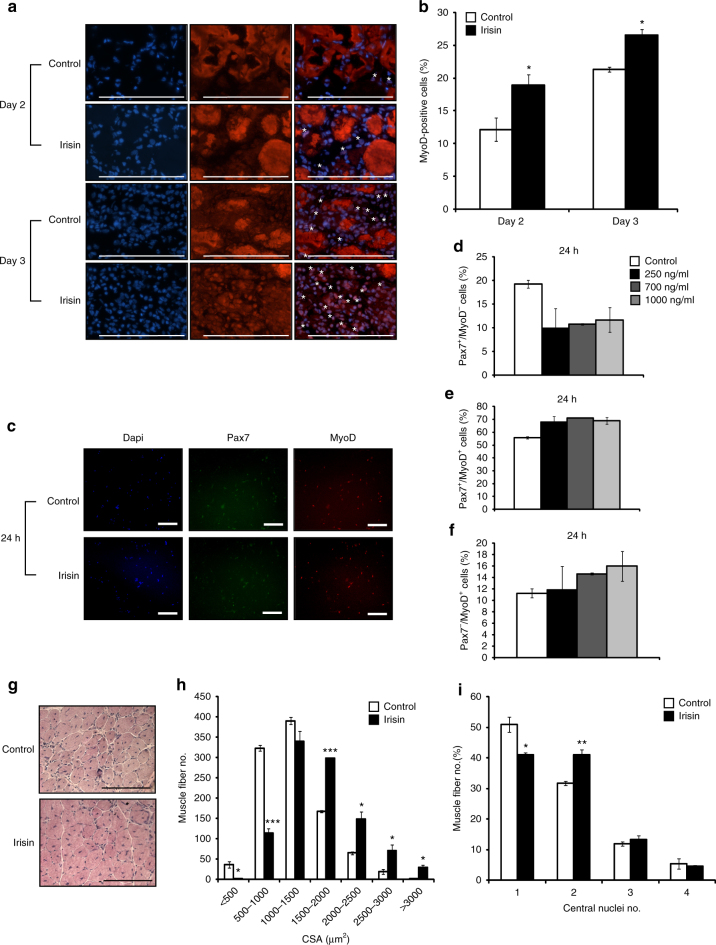
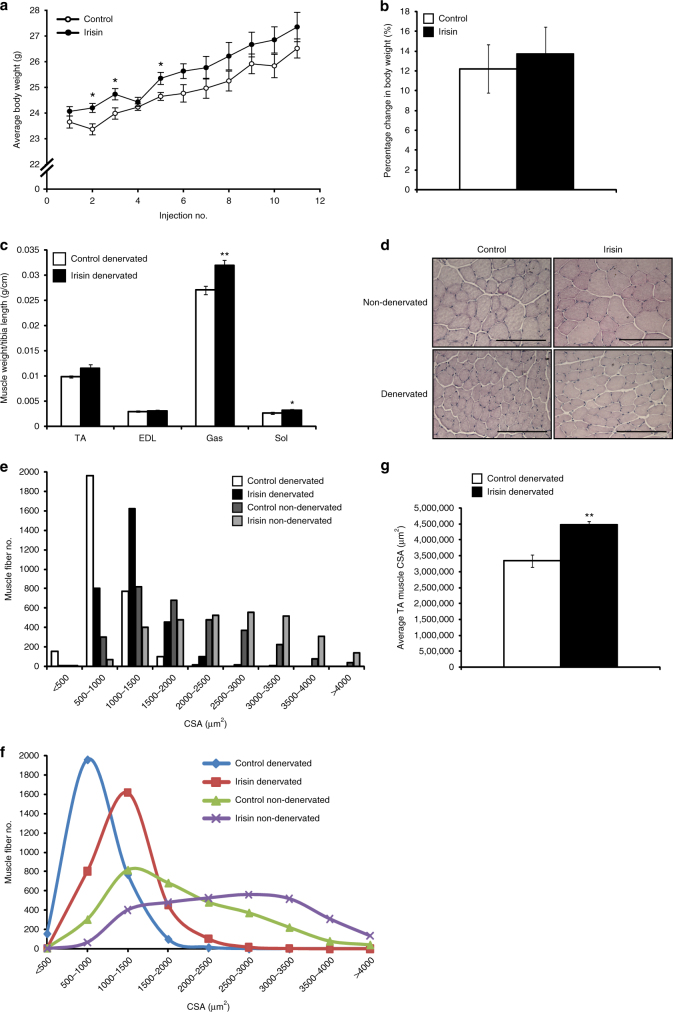
Verification
Claims the paper makes
The claims and statistics of this paper haven’t been checked yet.
Run the check — free, no account needed. It reads the open-access text and checks the sources it cites.
Claims other papers make about this one
Each is checked against this paper’s own text: does it say what the citing paper says it does?
In the citing paper
“On the other hand, aerobic exercise, which also induces IL6 (Benrick et al., 2012; Pedersen and Febbraio, 2008; Reza et al., 2017), is highly associated with improved outcomes in depression and anxiety.”
From Origin and function of stress-induced IL-6 in murine models (2020) · cites this paper as Reza et al., 2017
Self-check
Percentages, sums and reported differences re-computed from the paper’s own numbers.
The self-check needs the paper’s full text.
Citations
Cites
A PGC1-α-dependent myokine that drives brown-fat-like development of white fat and thermogenesis
Boström, P., Wu, J., Jedrychowski, M. P., Korde, A., Ye, L., Lo, J. C., Rasbach, K. A., Boström, E. A., Choi, J. H., Long, J. Z., et al. (2012) · Nature · doi:10.1038/nature10777 · Cited by 4,810
Identification of ubiquitin ligases required for skeletal muscle atrophy.
Bodine, S. C., Latres, E., Baumhueter, S., Lai, V. K.-M., Nunez, L., Clarke, B. A., Poueymirou, W. T., Panaro, F. J., Na, E., Dharmarajan, K., et al. (2001) · Science · doi:10.1126/science.1065874 · Cited by 3,521
Bodine, S. C., Stitt, T. N., Gonzalez, M., Kline, W. O., Stover, G. L., Bauerlein, R., Zlotchenko, E., Scrimgeour, A., Lawrence, J. C., Glass, D. J., et al. (2001) · Nature Cell Biology · doi:10.1038/ncb1101-1014 · Cited by 2,752
Serial passaging and differentiation of myogenic cells isolated from dystrophic mouse muscle
Yaffe, D., & Saxel, O. (1977) · Nature · doi:10.1038/270725a0 · Cited by 2,153 · cited 1×
“American Type Culture Collection (ATCC) murine C2C12 myoblasts (Yaffe and Saxel, 1977)40 were maintained in proliferation medium, consisting of Dulbecco’s modified Eagle’s medium (DMEM) (Invitrogen, Carlsbad, CA, USA), 10% fetal bovine serum (HyClone, Thermo Scientific, USA), and 1% penicillin/…”
MethodRommel, C., Bodine, S. C., Clarke, B. A., Rossman, R., Nunez, L., Stitt, T. N., Yancopoulos, G. D., & Glass, D. J. (2001) · Nature Cell Biology · doi:10.1038/ncb1101-1009 · Cited by 1,583
The role of exercise and PGC1α in inflammation and chronic disease
Handschin, C., & Spiegelman, B. M. (2008) · Nature · doi:10.1038/nature07206 · Cited by 1,083
Huh, J. Y., Panagiotou, G., Mougios, V., Brinkoetter, M., Vamvini, M. T., Schneider, B. E., & Mantzoros, C. S. (2012) · Metabolism · doi:10.1016/j.metabol.2012.09.002 · Cited by 1,040
Myostatin, a Negative Regulator of Muscle Growth, Functions by Inhibiting Myoblast Proliferation
Thomas, M., Langley, B., Berry, C., Sharma, M., Kirk, S., Bass, J., & Kambadur, R. (2000) · Journal of Biological Chemistry · doi:10.1074/jbc.m004356200 · Cited by 1,014
Self-citationThe Molecular Basis of Skeletal Muscle Atrophy
Jackman, R. W., & Kandarian, S. C. (2004) · American Journal of Physiology-Cell Physiology · doi:10.1152/ajpcell.00579.2003 · Cited by 1,008
Interleukin-6 Is an Essential Regulator of Satellite Cell-Mediated Skeletal Muscle Hypertrophy
Serrano, A. L., Baeza-Raja, B., Perdiguero, E., Jardí, M., & Muñoz-Cánoves, P. (2008) · Cell Metabolism · doi:10.1016/j.cmet.2007.11.011 · Cited by 873
Irisin and FGF21 are cold-induced endocrine activators of brown fat function in humans
Lee, P., Linderman, J. D., Smith, S., Brychta, R. J., Wang, J., Idelson, C., Perron, R. M., Werner, C. D., Phan, G. Q., Kammula, U. S., et al. (2014) · Cell Metabolism · doi:10.1016/j.cmet.2013.12.017 · Cited by 802
Moreno-Navarrete, J. M., Ortega, F., Serrano, M., Guerra, E., Pardo, G., Tinahones, F., Ricart, W., & Fernández-Real, J. M. (2013) · The Journal of Clinical Endocrinology & Metabolism · doi:10.1210/jc.2012-2749 · Cited by 788
Zhang, Y., Li, R., Meng, Y., Li, S., Donelan, W., Zhao, Y., Qi, L., Zhang, M., Wang, X., Cui, T., et al. (2014) · Diabetes · doi:10.2337/db13-1106 · Cited by 733
Myomaker is a membrane activator of myoblast fusion and muscle formation
Millay, D. P., O'Rourke, J. R., Sutherland, L. B., Bezprozvannaya, S., Shelton, J. M., Bassel‐Duby, R., & Olson, E. N. (2013) · Nature · doi:10.1038/nature12343 · Cited by 619
FNDC5/irisin is not only a myokine but also an adipokine
Roca-Rivada, A., Castelao, C., Senin, L. L., Landrove, M. O., Baltar, J., Crujeiras, A. B., Seoane, L. M., Casanueva, F. F., & Pardo, M. (2013) · PLoS ONE · doi:10.1371/journal.pone.0060563 · Cited by 612
Muscle‐derived interleukin‐6: possible biological effects
Pedersen, B. K., Steensberg, A., & Schjerling, P. (2001) · The Journal of Physiology · doi:10.1111/j.1469-7793.2001.0329c.xd · Cited by 599
Detection and Quantitation of Circulating Human Irisin by Tandem Mass Spectrometry
Jedrychowski, M. P., Wrann, C. D., Paulo, J. A., Gerber, K. K., Szpyt, J., Robinson, M. M., Nair, K. S., Gygi, S. P., & Spiegelman, B. M. (2015) · Cell Metabolism · doi:10.1016/j.cmet.2015.08.001 · Cited by 585
AKT-Independent Signaling Downstream of Oncogenic PIK3CA Mutations in Human Cancer
Vasudevan, K. M., Barbie, D. A., Davies, M. A., Rabinovsky, R., McNear, C. J., Kim, J. J., Hennessy, B. T., Tseng, H., Pochanard, P., Kim, S. Y., et al. (2009) · Cancer Cell · doi:10.1016/j.ccr.2009.04.012 · Cited by 522
McFarlane, C., Plummer, E., Thomas, M., Hennebry, A., Ashby, M. G., Ling, N., Smith, H., Sharma, M., & Kambadur, R. (2006) · Journal of Cellular Physiology · doi:10.1002/jcp.20757 · Cited by 496
In vivo satellite cell activation via Myf5 and MyoD in regenerating mouse skeletal muscle
Cooper, R. N., Tajbakhsh, S., Mouly, V., Cossu, G., BUCKINGHAM, M. E., & Butler-Browne, G. S. (1999) · Journal of Cell Science · doi:10.1242/jcs.112.17.2895 · Cited by 457
Mechanism of work-induced hypertrophy of skeletal muscle
GOLDBERG, A. L., ETLINGER, J. D., GOLDSPINK, D. F., & JABLECKI, C. (1975) · Medicine and Science in Sports and Exercise · doi:10.1249/00005768-197500730-00016 · Cited by 402
Irisin – a myth rather than an exercise-inducible myokine
Albrecht, E., Norheim, F., Thiede, B., Holen, T., Ohashi, T., Schering, L., Lee-Ødegård, S., Brenmoehl, J., Thomas, S., Drevon, C. A., et al. (2015) · Scientific Reports · doi:10.1038/srep08889 · Cited by 355
Evidence against a Beneficial Effect of Irisin in Humans
Raschke, S., Elsen, M., Gassenhuber, J., Sommerfeld, M. R., Schwahn, U., Brockmann, B., Jung, R., Wisløff, U., Tjønna, A. E., Raastad, T., et al. (2013) · PLoS ONE · doi:10.1371/journal.pone.0073680 · Cited by 327
Myosin synthesis in cultures of differentiating chicken embryo skeletal muscle
Paterson, B. M., & Strohman, R. C. (1972) · Developmental Biology · doi:10.1016/0012-1606(72)90050-4 · Cited by 326
Huh, J. Y., Dincer, F., Mesfum, E., & Mantzoros, C. S. (2014) · International Journal of Obesity · doi:10.1038/ijo.2014.42 · Cited by 309
Shan, T., Liang, X., Bi, P., & Kuang, S. (2013) · The FASEB Journal · doi:10.1096/fj.12-225755 · Cited by 301
P38 MAPK Links Oxidative Stress to Autophagy-Related Gene Expression in Cachectic Muscle Wasting
McClung, J. M., Judge, A. R., Powers, S. K., & Yan, Z. (2010) · American Journal of Physiology-Cell Physiology · doi:10.1152/ajpcell.00192.2009 · Cited by 277
Exercise-induced satellite cell activation in growing and mature skeletal muscle
Darr, K. C., & Schultz, E. (1987) · Journal of Applied Physiology · doi:10.1152/jappl.1987.63.5.1816 · Cited by 268
Baeza-Raja, B., & Muñoz-Cánoves, P. (2004) · Molecular Biology of the Cell · doi:10.1091/mbc.e03-08-0585 · Cited by 247
The Implication of Brown Adipose Tissue for Humans
Ravussin, É., & Galgani, J. E. (2011) · Annual Review of Nutrition · doi:10.1146/annurev-nutr-072610-145209 · Cited by 173
Quach, N. L., Biressi, S., Reichardt, L. F., Keller, C., & Rando, T. A. (2009) · Molecular Biology of the Cell · doi:10.1091/mbc.e09-02-0175 · Cited by 151
Kelly, D. P. (2012) · Science · doi:10.1126/science.1221688 · Cited by 133
Brown adipose tissue—a new role in humans?
Lidell, M. E., & Enerbäck, S. (2010) · Nature Reviews Endocrinology · doi:10.1038/nrendo.2010.64 · Cited by 131
Giangregorio, L., Webber, C. E., Phillips, S. M., Hicks, A. L., Craven, B. C., Bugaresti, J., & McCartney, N. (2006) · Applied Physiology Nutrition and Metabolism · doi:10.1139/h05-036 · Cited by 110
Resistance training and insulin action in humans: effects of de-training
Andersen, J. L., Schjerling, P., Andersen, L. L., & Dela, F. (2003) · The Journal of Physiology · doi:10.1111/j.1469-7793.2003.01049.x · Cited by 86
Wang, H., Xiao, Y., Fu, L., Zhao, H., Zhang, Y., Wan, X., Qin, Y., Huang, Y., Gao, H., & Li, X. (2010) · BMC Biotechnology · doi:10.1186/1472-6750-10-14 · Cited by 84
Haptoglobin Is Required to Prevent Oxidative Stress and Muscle Atrophy
Bertaggia, E., Scabia, G., Dalise, S., Verso, F. L., Santini, F., Vitti, P., Chisari, C., Sandri, M., & Maffei, M. (2014) · PLoS ONE · doi:10.1371/journal.pone.0100745 · Cited by 79
Effect of exercise on protein metabolism in humans as explored with stable isotopes.
Millward, D. J., Davies, C., Halliday, D., Wolman, S. L., Matthews, D. E., & Rennie, M. J. (1982) · PubMed · Cited by 76
The IL-6 Paradox: Context Dependent Interplay of SOCS3 and AMPK
Sarvas, J. L. (2013) · Journal of Diabetes & Metabolism · doi:10.4172/2155-6156.s13-003 · Cited by 69
Resistance training and insulin action in humans: effects of de-training
Andersen, J. L., Schjerling, P., Andersen, L. L., et al. (2003) · The Journal of Physiology · doi:10.1113/jphysiol.2003.043554 · Cited by 67
Lack of Smad3 signaling leads to impaired skeletal muscle regeneration
Ge, X., Vajjala, A., McFarlane, C., Wahli, W., Sharma, M., & Kambadur, R. (2012) · American Journal of Physiology-Endocrinology and Metabolism · doi:10.1152/ajpendo.00113.2012 · Cited by 57
Leow, S. C., Poschmann, J., Too, P. G., Yin, J., Joseph, R., McFarlane, C., Dogra, S. K., Shabbir, A., Ingham, P. W., Prabhakar, S., et al. (2016) · Development · doi:10.1242/dev.131573 · Cited by 53
Nadra, K., Médard, J., Mul, J. D., Han, G., Grès, S., Pende, M., METZGER, D., Chambon, P., Cuppen, E. P. J. G., Saulnier‐Blache, J. S., et al. (2012) · Molecular and Cellular Biology · doi:10.1128/mcb.00512-12 · Cited by 49
Effect of exercise on protein degradation: 3-Methylhistidine and creatinine excretion
Radha, E., & Bessman, S. P. (1983) · Biochemical Medicine · doi:10.1016/0006-2944(83)90058-3 · Cited by 25
Cited by
Sorted by citations
Role of Myokines in Regulating Skeletal Muscle Mass and Function
Lee, J. H., & Jun, H.-S. (2019) · Frontiers in Physiology · doi:10.3389/fphys.2019.00042 · Cited by 432
Skeletal muscle atrophy: From mechanisms to treatments
Yin, L., Li, N., Jia, W., Wang, N., Liang, M., Yang, X., & Du, G. (2021) · Pharmacological Research · doi:10.1016/j.phrs.2021.105807 · Cited by 423
Origin and function of stress-induced IL-6 in murine models
Qing, H., Desrouleaux, R., Israni-Winger, K., Mineur, Y. S., Fogelman, N., Zhang, C., Rashed, S., Palm, N. W., Sinha, R., Picciotto, M. R., et al. (2020) · Cell · doi:10.1016/j.cell.2020.05.054 · Cited by 303
“On the other hand, aerobic exercise, which also induces IL6 (Benrick et al., 2012; Pedersen and Febbraio, 2008; Reza et al., 2017), is highly associated with improved outcomes in depression and anxiety.”
Chen, L., Hsiao, F., Akishita, M., Assantachai, P., Lee, W., Lim, W. S., Muangpaisan, W., Kim, M., Merchant, R. A., Peng, L., et al. (2025) · Nature Aging · doi:10.1038/s43587-025-01004-y · Cited by 388
“…demonstrates metabolic benefits that may translate to muscle health improvements 84 ; irisin, a myokine that promotes muscle regeneration and may enhance exercise-induced adaptations 85 ; and apelin, which has shown promise in promoting muscle regeneration and function in preclinical studies 86 .”
Polyzos, S. A., Anastasilakis, A. D., Efstathiadou, Z. A., Makras, P., Perakakis, N., Kountouras, J., & Mantzoros, C. S. (2018) · Endocrine · doi:10.1007/s12020-017-1476-1 · Cited by 262
Metadata
- Authors
- Reza, M. M., Subramaniyam, N., Sim, C. M., Ge, X., Sathiakumar, D., McFarlane, C., Sharma, M., & Kambadur, R.
- Affiliations
- Nanyang Technological University (SG)
- Agency for Science, Technology and Research (SG)
- National University of Singapore (SG)
- Corresponding author
- Kambadur, Ravi
- Venue
- Nature Communications
- Published
- 2017-10-24
- Volume
- 8
- Issue
- 1
- Pages
- 1104-1104
- ISSN
- 2041-1723 (ISSN-L)
- PMC
- PMC5653663
- OpenAlex
- W2765141291
- Cited by
- 335
- References
- 43
- Citations by year
- 2026: 33 · 2025: 50 · 2024: 47 · 2023: 48 · 2022: 54 · 2021: 37 · 2020: 29 · 2019: 27 · 2018: 9 · 2017: 1
- FWCI
- 7.38
- Type
- journal article
- Language
- en
- Open access
- gold
- doi.org
- Locations
- Nature Communications (publishedVersion, cc-by)
- PubMed Central (publishedVersion, cc-by)
- PubMed (publishedVersion)
- UEA Digital Repository (University of East Anglia) (acceptedVersion)
- ResearchOnline - JCU (James Cook University) (submittedVersion)
- RePEc: Research Papers in Economics (submittedVersion)
- DOAJ (DOAJ: Directory of Open Access Journals) (submittedVersion, cc-by-sa)
- DOAJ (DOAJ: Directory of Open Access Journals) (submittedVersion)
- DR-NTU (Nanyang Technological University) (submittedVersion, cc-by)
- Funders
- Agency for Science, Technology and Research
- Nanyang Technological University
- Medical Research Council
- National Medical Research Council
- Topics
- Life Sciences › Biochemistry, Genetics and Molecular Biology › Molecular Biology › Muscle Physiology and Disorders
- Health Sciences › Medicine › Physiology (medical) › Exercise and Physiological Responses
- Health Sciences › Nursing › Nutrition and Dietetics › Muscle metabolism and nutrition
- Keywords
- irisin, myokines, skeletal muscle hypertrophy, denervation-induced atrophy, satellite cells, myogenesis, myoblast fusion, IL-6 signaling, muscle regeneration, skeletal muscle injury, protein synthesis, protein degradation
- MeSH terms
- Animals, Atrophy, Denervation, Fibronectins, Humans, Hypertrophy, Male, Mice, Inbred C57BL, Stem Cells, Interleukin-6, Muscle, Skeletal, Muscle Fibers, Skeletal, Muscle Development, Mice, Adipose Tissue, White
About these checks
Registry, retraction, Cites and statistics results are computed, not judged, with one exception: a printed reference that no index lists is read once by a model before it counts as a citation error. Claims are extracted by a model and kept only when their quote appears verbatim in the text; each cited source is then checked, with a model’s help, for whether it says what the claim relies on. Those verdicts can be wrong — read the claim’s quote and the cited source before relying on one.
Statistics and arithmetic are recomputed, not judged.
Confidence bands are shown only for fields calibrated on our annotated test set. None is calibrated yet, so no band is shown.
What counts as a claim ›How we measure confidence ›How we check this ›
Are you an author, or do you see a problem with this page? Request a review
