

The DOI matches its Crossref record; 43 of the 43 references it cites were found in a registry or an index.
The circular RNA circBIRC6 participates in the molecular circuitry controlling human pluripotency
Open accessAbstract
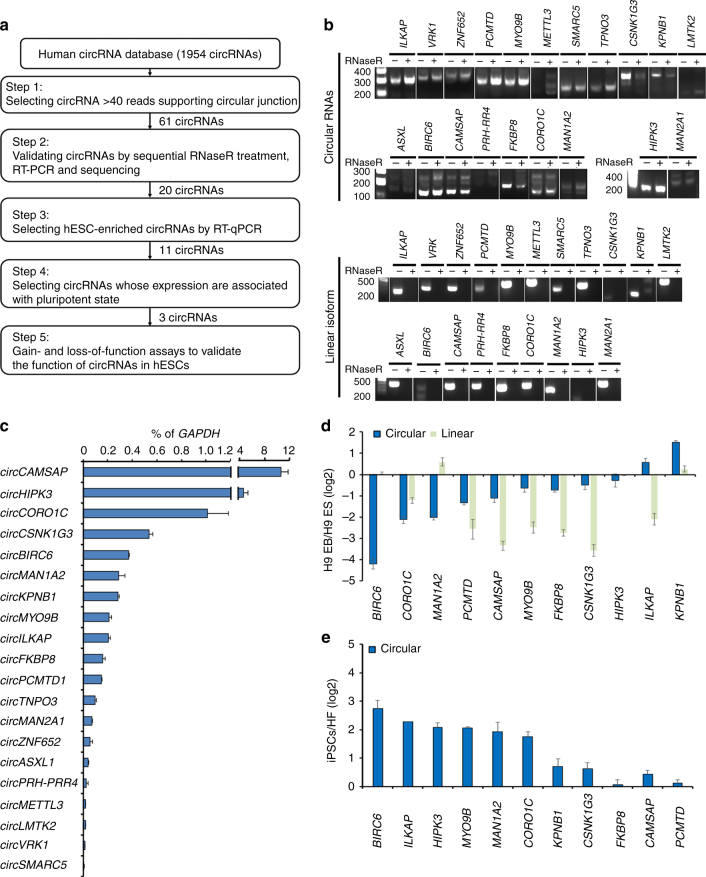
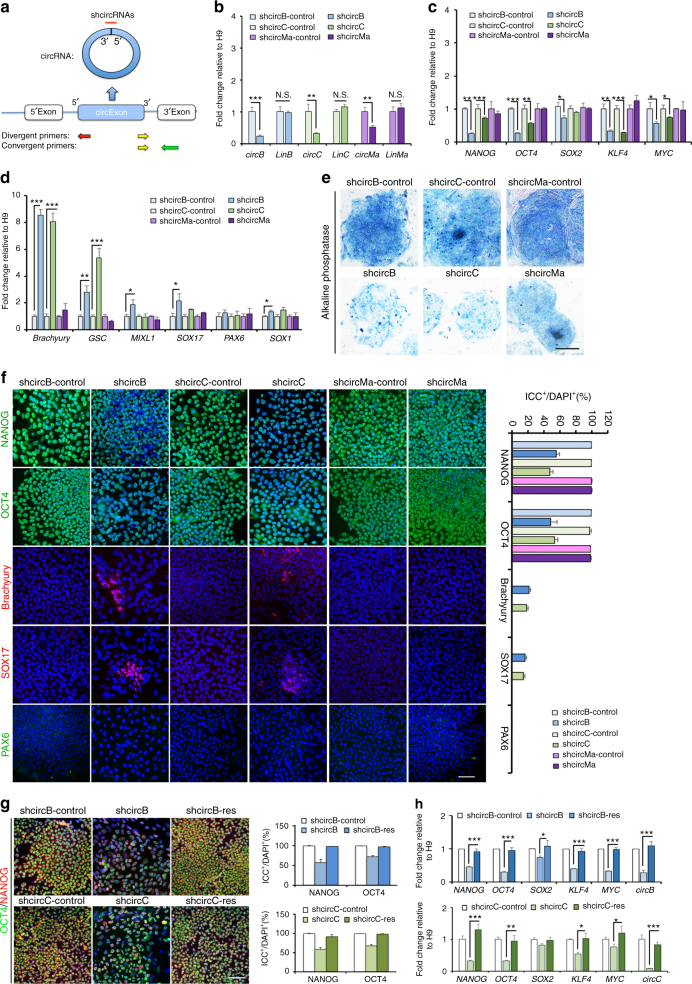
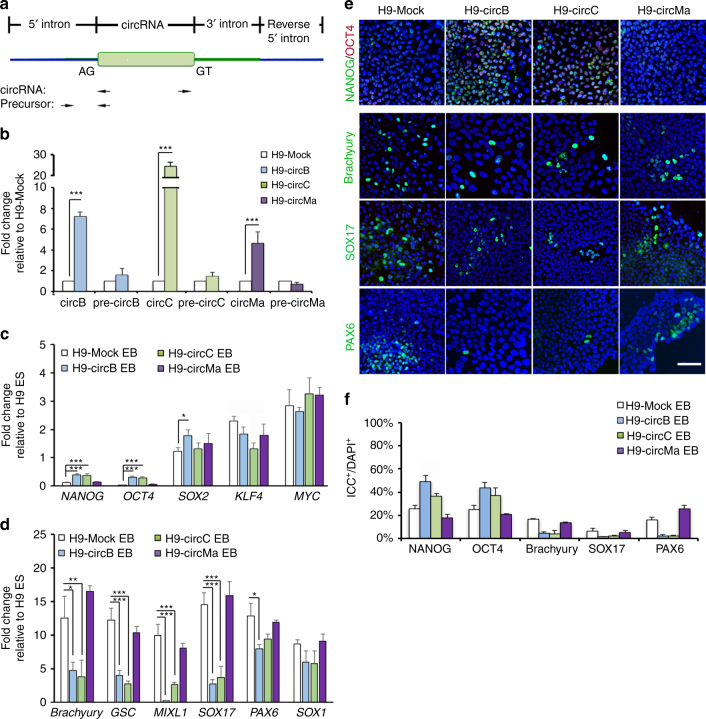
Accumulating evidence indicates that circular RNAs (circRNAs) are abundant in the human transcriptome. However, their involvement in biological processes, including pluripotency, remains mostly undescribed. We identified a subset of circRNAs that are enriched in undifferentiated human embryonic stem cells (hESCs) and demonstrated that two, circBIRC6 and circCORO1C, are functionally associated with the pluripotent state. Mechanistically, we found that circBIRC6 is enriched in the AGO2 complex and directly interacts with microRNAs, miR-34a, and miR-145, which are known to modulate target genes that maintain pluripotency. Correspondingly, circBIRC6 attenuates the downregulation of these target genes and suppresses hESC differentiation. We further identified hESC-enriched splicing factors (SFs) and demonstrated that circBIRC6 biogenesis in hESCs is promoted by the SF ESRP1, whose expression is controlled by the core pluripotency-associated factors, OCT4 and NANOG. Collectively, our data suggest that circRNA serves as a microRNA "sponge" to regulate the molecular circuitry, which modulates human pluripotency and differentiation.
Overview
The claims and statistics of this paper haven’t been checked yet.
Run the check — free, no account needed. It reads the open-access text and checks the sources it cites.
Integrity signals
Registry
Cites
Statistics
Figures
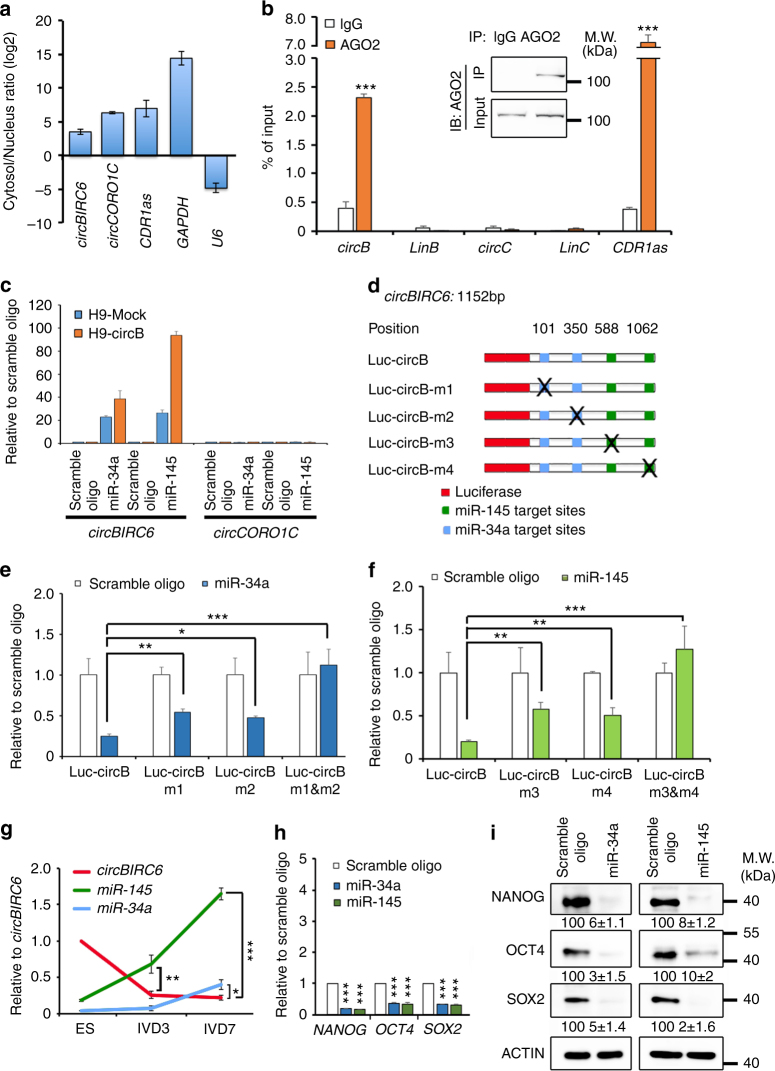
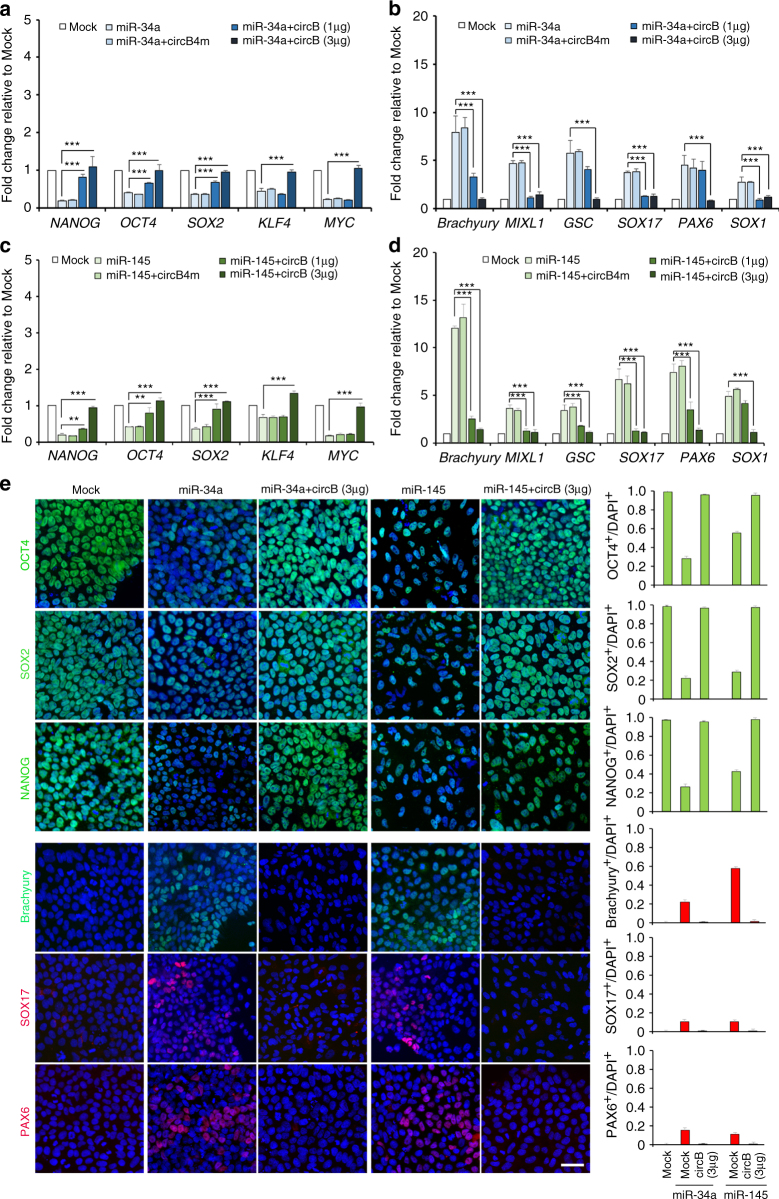
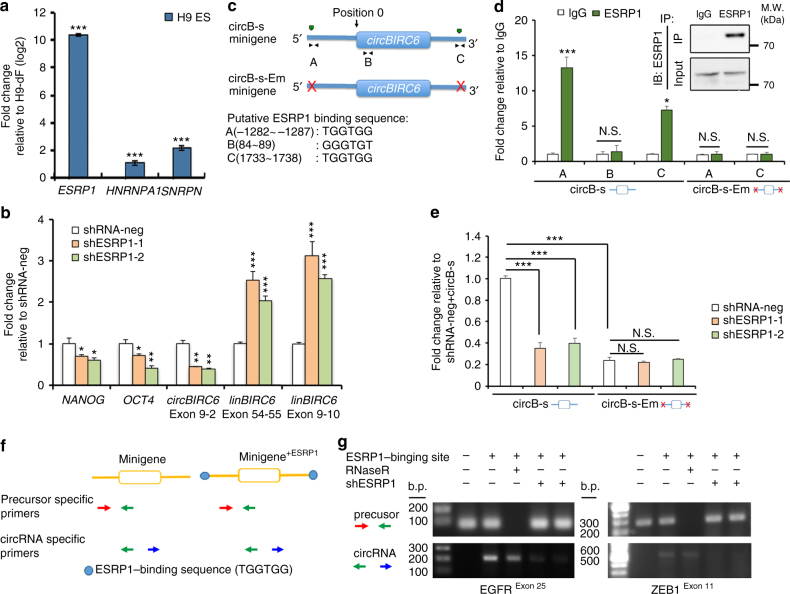
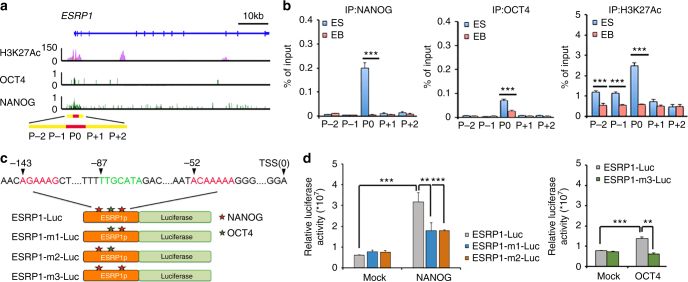
Verification
Claims the paper makes
The claims and statistics of this paper haven’t been checked yet.
Run the check — free, no account needed. It reads the open-access text and checks the sources it cites.
Claims other papers make about this one
Each is checked against this paper’s own text: does it say what the citing paper says it does?
In the citing paper
“In this way, modulation of MRE load with competing endogenous RNAs (ceRNAs), such as with circular RNAs (circRNAs) (96), can act to sequester miRISC from target mRNA, leading to derepression of target mRNA (97).”
From Overview of MicroRNA Biogenesis, Mechanisms of Actions, and Circulation (2018) · cites this paper as [97]
Self-check
Percentages, sums and reported differences re-computed from the paper’s own numbers.
The self-check needs the paper’s full text.
Citations
Cites
An integrated encyclopedia of DNA elements in the human genome
The ENCODE Project Consortium (2012) · Nature · doi:10.1038/nature11247 · Cited by 18,072
Circular RNAs are a large class of animal RNAs with regulatory potency
Memczak, S., Jens, M., Elefsinioti, A., Torti, F., Krueger, J., Rybak, A., Maier, L., Mackowiak, S. D., Gregersen, L. H., Munschauer, M., et al. (2013) · Nature · doi:10.1038/nature11928 · Cited by 7,990
Natural RNA circles function as efficient microRNA sponges
Hansen, T. B., Jensen, T. I., Clausen, B. H., Bramsen, J. B., Finsen, B., Damgaard, C. K., & Kjems, J. (2013) · Nature · doi:10.1038/nature11993 · Cited by 7,985
Circular RNAs are abundant, conserved, and associated with ALU repeats
Jeck, W. R., Sorrentino, J. A., Wang, K., Slevin, M. K., Burd, C. E., Liu, J., Marzluff, W. F., & Sharpless, N. E. (2013) · RNA · doi:10.1261/rna.035667.112 · Cited by 4,388
circRNA biogenesis competes with pre-mRNA splicing
Ashwal-Fluss, R., Meyer, M., Pamudurti, N. R., Ivanov, A., Bartok, O., Hanan, M., Evantal, N., Memczak, S., Rajewsky, N., & Kadener, S. (2014) · Molecular Cell · doi:10.1016/j.molcel.2014.08.019 · Cited by 3,083
The role of site accessibility in microRNA target recognition
Kertesz, M., Iovino, N., Unnerstall, U., Gaul, U., & Segal, E. (2007) · Nature Genetics · doi:10.1038/ng2135 · Cited by 2,460
Circular RNAs in the Mammalian Brain Are Highly Abundant, Conserved, and Dynamically Expressed
Rybak-Wolf, A., Stottmeister, C., Glažar, P., Jens, M., Pino, N., Giusti, S., Hanan, M., Behm, M., Bartok, O., Ashwal-Fluss, R., et al. (2015) · Molecular Cell · doi:10.1016/j.molcel.2015.03.027 · Cited by 2,423
The RNA Binding Protein Quaking Regulates Formation of circRNAs
Conn, S. J., Pillman, K. A., Toubia, J., Conn, V. M., Salmanidis, M., Phillips, C. A., Roslan, S., SCHREIBER, A. W., Gregory, P. A., & Goodall, G. J. (2015) · Cell · doi:10.1016/j.cell.2015.02.014 · Cited by 2,205
Zheng, Q., Bao, C., Guo, W., Li, S., Chen, J., Chen, B., Luo, Y., Lyu, D., Li, Y., Shi, G., et al. (2016) · Nature Communications · doi:10.1038/ncomms11215 · Cited by 2,041
Complementary Sequence-Mediated Exon Circularization
Zhang, X.-O., Wang, H.-B., Zhang, Y., Lu, X., Chen, L.-L., & Yang, L. (2014) · Cell · doi:10.1016/j.cell.2014.09.001 · Cited by 1,999
circBase: a database for circular RNAs
Glažar, P., Papavasileiou, P., & Rajewsky, N. (2014) · RNA · doi:10.1261/rna.043687.113 · Cited by 1,911
Foxo3 circular RNA retards cell cycle progression via forming ternary complexes with p21 and CDK2
Du, W. W., Yang, W., Liu, E., Yang, Z., Dhaliwal, P., & Yang, B. B. (2016) · Nucleic Acids Research · doi:10.1093/nar/gkw027 · Cited by 1,699
Expanded identification and characterization of mammalian circular RNAs
Guo, J. U., Agarwal, V., Guo, H., & Bartel, D. P. (2014) · Genome biology · doi:10.1186/s13059-014-0409-z · Cited by 1,591
Itskovitz‐Eldor, J., Schuldiner, M., Kenyagin‐Karsenti, D., Eden, A., Yanuka, O., Amit, M., Soreq, H., & Benvenisty, N. (2000) · Molecular Medicine · doi:10.1007/bf03401776 · Cited by 1,502
Mis-splicing yields circular RNA molecules.
Cocquerelle, C., Mascrez, B., Hétuin, D., & Bailleul, B. (1993) · The FASEB Journal · doi:10.1096/fasebj.7.1.7678559 · Cited by 1,197
MicroRNA-145 Regulates OCT4, SOX2, and KLF4 and Represses Pluripotency in Human Embryonic Stem Cells
Xu, N., Papagiannakopoulos, T. Y., Pan, G., Thomson, J. A., & Kosik, K. S. (2009) · Cell · doi:10.1016/j.cell.2009.02.038 · Cited by 1,160
Embryonic Stem Cell-Specific MicroRNAs
Houbaviy, H. B., Murray, M. F., & Sharp, P. A. (2003) · Developmental Cell · doi:10.1016/s1534-5807(03)00227-2 · Cited by 1,142
Linking the p53 tumour suppressor pathway to somatic cell reprogramming
Kawamura, T., Suzuki, J., Wang, Y. V., Menendez, S., Morera, L. B., Raya, A., Wahl, G. M., & Belmonte, J. C. I. (2009) · Nature · doi:10.1038/nature08311 · Cited by 1,115
Circular transcripts of the testis-determining gene Sry in adult mouse testis
Capel, B., Swain, A., Nicolis, S. K., Hacker, A., Walter, M. A., Koopman, P. A., Goodfellow, P. N., & Lovell-Badge, R. H. (1993) · Cell · doi:10.1016/0092-8674(93)90279-y · Cited by 1,112
Nigro, J. M., Cho, K. R., Fearon, E. R., Kern, S. E., Ruppert, J. M., Oliner, J., Kinzler, K. W., & Vogelstein, B. (1991) · Cell · doi:10.1016/0092-8674(91)90244-s · Cited by 906
Wang, Y., Xu, Z., Jiang, J., Xu, C., Kang, J., Xiao, L., Wu, M., Xiong, J., Guo, X., & Liu, H. (2013) · Developmental Cell · doi:10.1016/j.devcel.2013.03.002 · Cited by 795
Exon Circularization Requires Canonical Splice Signals
Starke, S., Jost, I., Roßbach, O., Schneider, T. P., Schreiner, S., Hung, L.-H., & Bindereif, A. (2014) · Cell Reports · doi:10.1016/j.celrep.2014.12.002 · Cited by 774
Reprogramming of Mouse and Human Cells to Pluripotency Using Mature MicroRNAs
Miyoshi, N., Ishii, H., Nagano, H., Haraguchi, N., Dewi, D. L., Kano, Y., Nishikawa, S., Tanemura, M., Mimori, K., Tanaka, F., et al. (2011) · Cell stem cell · doi:10.1016/j.stem.2011.05.001 · Cited by 756
Suzuki, H. (2006) · Nucleic Acids Research · doi:10.1093/nar/gkl151 · Cited by 687
Circular RNA ITCH has inhibitory effect on ESCC by suppressing the Wnt/β-catenin pathway
Li, F., Zhang, L., Li, W., Deng, J., Zheng, J., An, M., Lü, J., & Zhou, Y. (2015) · Oncotarget · doi:10.18632/oncotarget.3469 · Cited by 634
Xu, H., Guo, S., Li, W., & Yu, P. (2015) · Scientific Reports · doi:10.1038/srep12453 · Cited by 536
Ng, S., Johnson, R., & Stanton, L. W. (2012) · The EMBO Journal · doi:10.1038/emboj.2011.459 · Cited by 514
Kramer, M. C., Liang, D., Tatomer, D. C., Gold, B., March, Z. M., Cherry, S. R., & Wilusz, J. E. (2015) · Genes & Development · doi:10.1101/gad.270421.115 · Cited by 498
miR-34 miRNAs provide a barrier for somatic cell reprogramming
Choi, Y. J., Lin, C., Ho, J. J., He, X., Okada, N., Bu, P., Zhong, Y., Kim, S. Y., Bennett, M. J., Chen, C., et al. (2011) · Nature Cell Biology · doi:10.1038/ncb2366 · Cited by 387
An ESRP‐regulated splicing programme is abrogated during the epithelial–mesenchymal transition
Warzecha, C. C., Jiang, P., Amirikian, K., Dittmar, K. A., Lu, H., Shen, S., Guo, W., Xing, Y., & Carstens, R. P. (2010) · The EMBO Journal · doi:10.1038/emboj.2010.195 · Cited by 383
An Alternative Splicing Switch Regulates Embryonic Stem Cell Pluripotency and Reprogramming
Gabut, M., Samavarchi‐Tehrani, P., Wang, X., Slobodeniuc, V., O’Hanlon, D., Sung, H., Alvarez, M., Talukder, S., Pan, Q., Mazzoni, E. O., et al. (2011) · Cell · doi:10.1016/j.cell.2011.08.023 · Cited by 368
The transcriptional and signalling networks of pluripotency
Ng, H., & Surani, M. A. (2011) · Nature Cell Biology · doi:10.1038/ncb0511-490 · Cited by 335
Yang, W., Du, W. W., Li, X., Yee, A., & Yang, B. B. (2015) · Oncogene · doi:10.1038/onc.2015.460 · Cited by 316
Lal, A., Thomas, M. P., Altschuler, G. M., Navarro, F., O’Day, E. M., Li, X. L., Concepcion, C. P., Han, Y.-C., Thiery, J., Rajani, D. K., et al. (2011) · PLoS Genetics · doi:10.1371/journal.pgen.1002363 · Cited by 249
Zhang, J., Sun, Q., Zhang, Z., Ge, S., Han, Z.-G., & Chen, W.-T. (2012) · Oncogene · doi:10.1038/onc.2012.28 · Cited by 226
The Developmental Potential of iPSCs Is Greatly Influenced by Reprogramming Factor Selection
Buganim, Y., Markoulaki, S., van Wietmarschen, N., Hoke, H., Wu, T., Ganz, K., Akhtar-Zaidi, B., He, Y., Abraham, B. J., Porubsky, D., et al. (2014) · Cell Stem Cell · doi:10.1016/j.stem.2014.07.003 · Cited by 163
Dittmar, K. A., Jiang, P., Park, J. W., Amirikian, K., Wan, J., Shen, S., Xing, Y., & Carstens, R. P. (2012) · Molecular and Cellular Biology · doi:10.1128/mcb.06536-11 · Cited by 139
Alternative Splicing of MBD2 Supports Self-Renewal in Human Pluripotent Stem Cells
Lu, Y., Loh, Y., Li, H., Cesana, M., Ficarro, S. B., Parikh, J. R., Salomonis, N., Toh, C.-X. D., Andreadis, S. T., Luckey, C. J., et al. (2014) · Cell stem cell · doi:10.1016/j.stem.2014.04.002 · Cited by 115
SON connects the splicing-regulatory network with pluripotency in human embryonic stem cells
Lu, X., Göke, J., Sachs, F., Jacques, P., Liang, H., Feng, B., Bourque, G., Bubulya, P. A., & Ng, H. (2013) · Nature Cell Biology · doi:10.1038/ncb2839 · Cited by 104
Wu, C.-S., Yu, C., Chuang, C.-Y., Hsiao, M., Kao, C.-F., Kuo, H., & Chuang, T. (2013) · Genome Research · doi:10.1101/gr.159483.113 · Cited by 101
Self-citationIs an observed non-co-linear RNA product spliced intrans, incisor justin vitro?
Yu, C., Liu, H.-J., Hung, L.-Y., Kuo, H., & Chuang, T. (2014) · Nucleic Acids Research · doi:10.1093/nar/gku643 · Cited by 61
Self-citationYu, C., & Kuo, H. (2016) · Stem Cells · doi:10.1002/stem.2386 · Cited by 31
Self-citationTemplate properties of mutagenic cytosine analogues in reverse transcription
Suzuki, T., Moriyama, K., Otsuka, C., Loakes, D., & Negishi, K. (2006) · Nucleic Acids Research · doi:10.1093/nar/gkl761 · Cited by 23
Cited by
Sorted by citations
Overview of MicroRNA Biogenesis, Mechanisms of Actions, and Circulation
O'Brien, J., Hayder, H., Zayed, Y., & Peng, C. (2018) · Frontiers in Endocrinology · doi:10.3389/fendo.2018.00402 · Cited by 5,287
The biogenesis, biology and characterization of circular RNAs
Kristensen, L. S., Andersen, M. S., Stagsted, L. V. W., Ebbesen, K. K., Hansen, T. B., & Kjems, J. (2019) · Nature Reviews Genetics · doi:10.1038/s41576-019-0158-7 · Cited by 4,823
The Biogenesis, Functions, and Challenges of Circular RNAs
Li, X., Yang, L. C., & Chen, L. (2018) · Molecular Cell · doi:10.1016/j.molcel.2018.06.034 · Cited by 2,060
The expanding regulatory mechanisms and cellular functions of circular RNAs
Chen, L. (2020) · Nature Reviews Molecular Cell Biology · doi:10.1038/s41580-020-0243-y · Cited by 1,726
The emerging roles of circRNAs in cancer and oncology
Kristensen, L. S., Jakobsen, T., Hager, H., & Kjems, J. (2021) · Nature Reviews Clinical Oncology · doi:10.1038/s41571-021-00585-y · Cited by 1,273
Metadata
- Authors
- Yu, C.-Y., Li, T.-C., Wu, Y.-Y., Yeh, C.-H., Chiang, W., Chuang, C.-Y., & Kuo, H.-C.
- Affiliations
- Institute of Cellular and Organismic Biology, Academia Sinica (TW)
- Genomics Research Center, Academia Sinica (TW)
- National Taiwan University (TW)
- Corresponding author
- Kuo, Hung-Chih
- Venue
- Nature Communications
- Published
- 2017-10-27
- Volume
- 8
- Issue
- 1
- Pages
- 1149-1149
- ISSN
- 2041-1723 (ISSN-L)
- PMC
- PMC5658440
- OpenAlex
- W2766512489
- Cited by
- 336
- References
- 43
- Citations by year
- 2026: 10 · 2025: 20 · 2024: 26 · 2023: 23 · 2022: 63 · 2021: 72 · 2020: 50 · 2019: 43 · 2018: 26 · 2017: 2
- FWCI
- 13.74
- Type
- journal article
- Language
- en
- Open access
- gold
- doi.org
- Locations
- Nature Communications (publishedVersion, cc-by)
- PubMed Central (publishedVersion, cc-by)
- PubMed (publishedVersion)
- RePEc: Research Papers in Economics (submittedVersion)
- DOAJ (DOAJ: Directory of Open Access Journals) (submittedVersion, cc-by-sa)
- Funders
- Academia Sinica (AS-104-TP-B09, 105-0210-01-13-01, AS‐103‐TP‐B10)
- Ministry of Science and Technology, Taiwan (MOST103-2321-B001-065)
- National Health Research Institutes (NHRI-EX104-10320SI, EX104)
- Topics
- Life Sciences › Biochemistry, Genetics and Molecular Biology › Molecular Biology › Circular RNAs in diseases
- Life Sciences › Biochemistry, Genetics and Molecular Biology › Molecular Biology › RNA Research and Splicing
- Life Sciences › Biochemistry, Genetics and Molecular Biology › Molecular Biology › Pluripotent Stem Cells Research
- Keywords
- circular RNA, human embryonic stem cells, miR-34a, miR-145, microRNA sponge, ESRP1, splicing factors, Oct4, Nanog, cell differentiation, circRNA biogenesis
- MeSH terms
- Nanog Homeobox Protein, RNA, Circular, Animals, Cell Differentiation, Exoribonucleases, Humans, Mice, Inbred ICR, Microfilament Proteins, RNA, Gene Expression Profiling, MicroRNAs, Pluripotent Stem Cells, Octamer Transcription Factor-3, Inhibitor of Apoptosis Proteins, Mice, Embryonic Stem Cells, Argonaute Proteins
About these checks
Registry, retraction, Cites and statistics results are computed, not judged, with one exception: a printed reference that no index lists is read once by a model before it counts as a citation error. Claims are extracted by a model and kept only when their quote appears verbatim in the text; each cited source is then checked, with a model’s help, for whether it says what the claim relies on. Those verdicts can be wrong — read the claim’s quote and the cited source before relying on one.
Statistics and arithmetic are recomputed, not judged.
Confidence bands are shown only for fields calibrated on our annotated test set. None is calibrated yet, so no band is shown.
What counts as a claim ›How we measure confidence ›How we check this ›
Are you an author, or do you see a problem with this page? Request a review
