

Widespread theta synchrony and high-frequency desynchronization underlies enhanced cognition
Open accessThe DOI matches its Crossref record; 59 of the 59 references it cites were found in a registry or an index.
Abstract
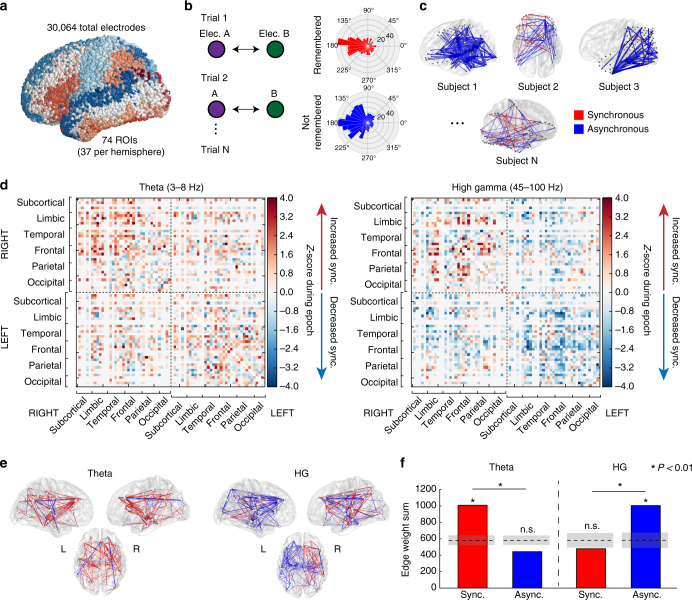
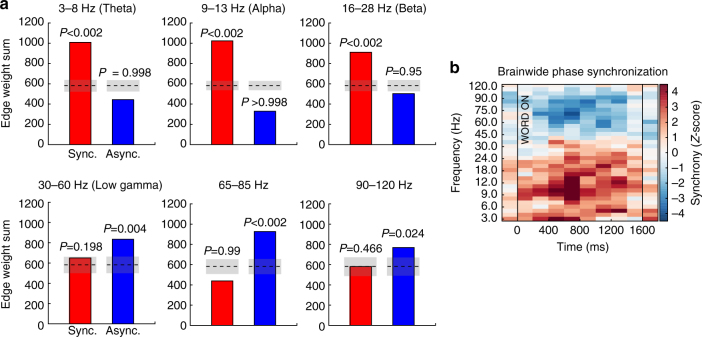
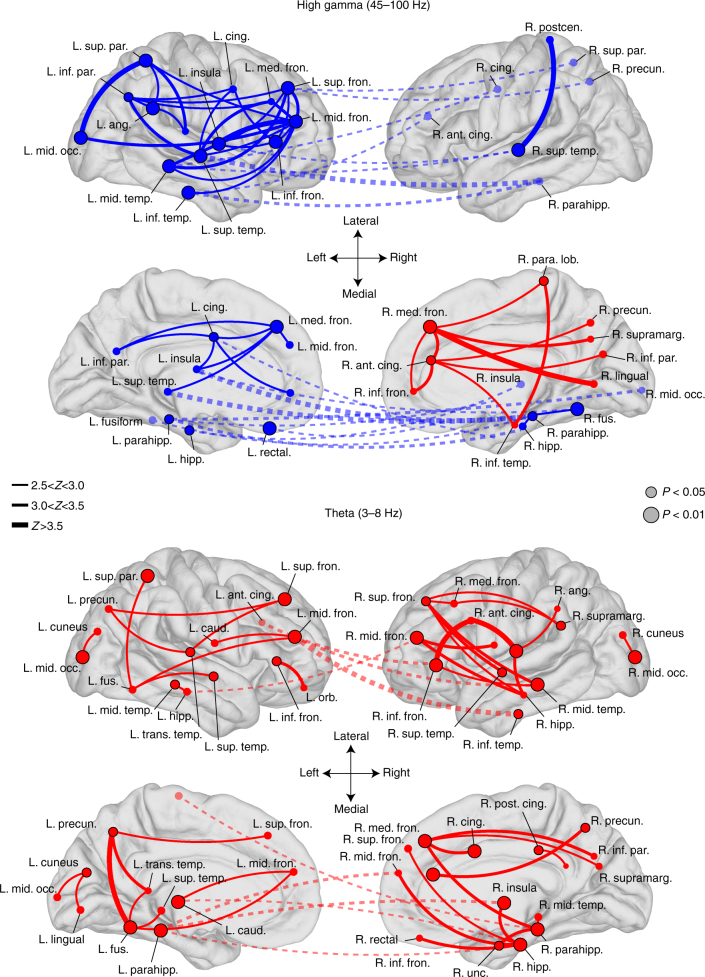
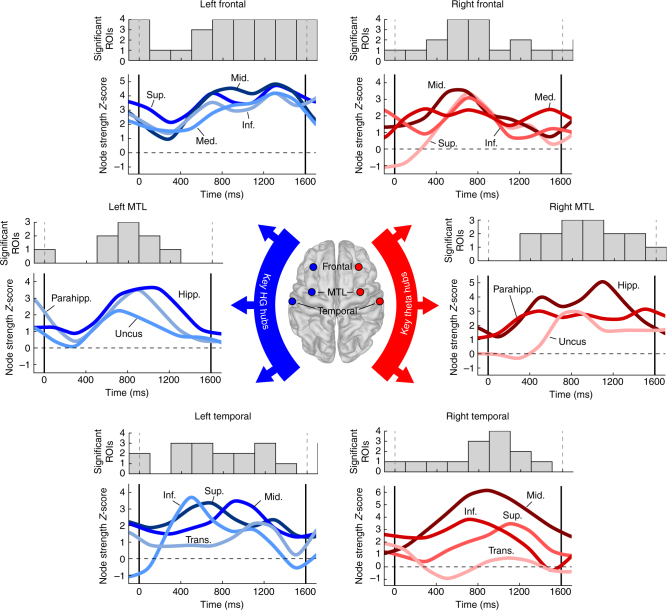
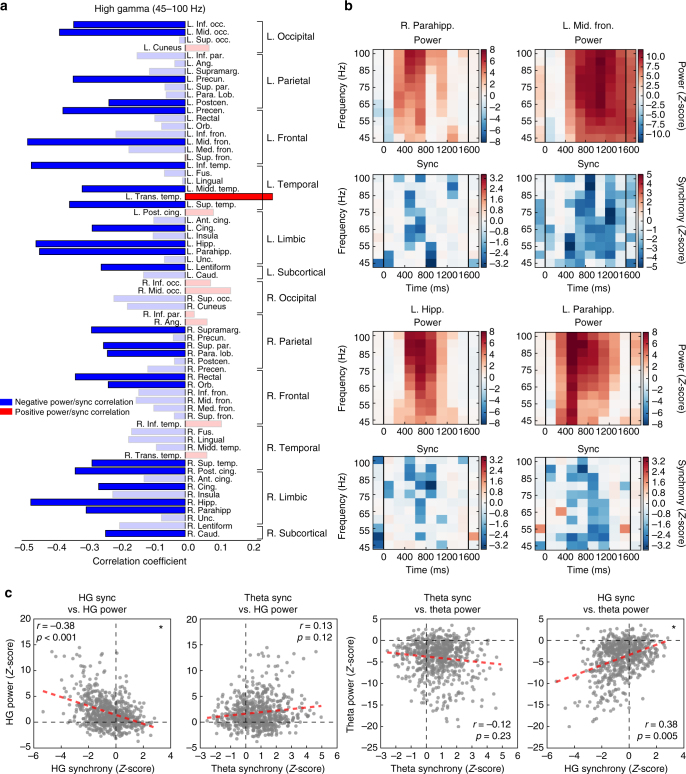
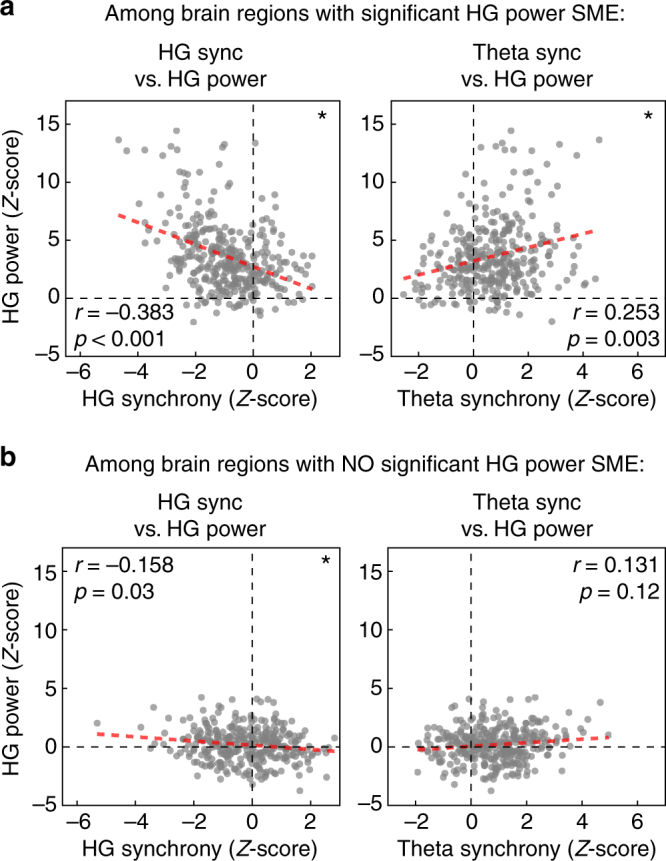
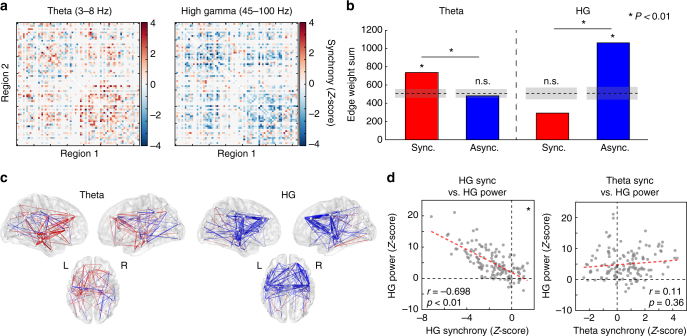
The idea that synchronous neural activity underlies cognition has driven an extensive body of research in human and animal neuroscience. Yet, insufficient data on intracranial electrical connectivity has precluded a direct test of this hypothesis in a whole-brain setting. Through the lens of memory encoding and retrieval processes, we construct whole-brain connectivity maps of fast gamma (30-100 Hz) and slow theta (3-8 Hz) spectral neural activity, based on data from 294 neurosurgical patients fitted with indwelling electrodes. Here we report that gamma networks desynchronize and theta networks synchronize during encoding and retrieval. Furthermore, for nearly all brain regions we studied, gamma power rises as that region desynchronizes with gamma activity elsewhere in the brain, establishing gamma as a largely asynchronous phenomenon. The abundant phenomenon of theta synchrony is positively correlated with a brain region's gamma power, suggesting a predominant low-frequency mechanism for inter-regional communication.
Overview
The claims and statistics of this paper haven’t been checked yet.
Free: it reads the open-access text and checks the first 5 claims that cite a source we can check. Create a free account to check every claim.
Integrity signals
Registry
Cites
Statistics
Figures
Verification
Claims the paper makes
The claims and statistics of this paper haven’t been checked yet.
Free: it reads the open-access text and checks the first 5 claims that cite a source we can check. Create a free account to check every claim.
Claims other papers make about this one
Each is checked against this paper’s own text: does it say what the citing paper says it does?
The source backs part of the claim, not all of it — or backs it for a different population, condition or comparison.
In the citing paper
“Present findings of theta synchrony for handwriting suggest that low-frequency connections support the integration of information during memory formation, and follow from earlier studies that have reported low-frequency entrainment to be essential to cognition (Solomon et al., 2017).”
From Handwriting but not typewriting leads to widespread brain connectivity: a high-density EEG study with implications for the classroom (2024) · cites this paper as Solomon et al., 2017
Experimental — accuracy not yet measuredThe source backs part of the claim, not all of it — or backs it for a different population, condition or comparison.
In the citing paper
“Present findings of theta synchrony for handwriting suggest that low-frequency connections support the integration of information during memory formation, and follow from earlier studies that have reported low-frequency entrainment to be essential to cognition (Solomon et al., 2017).”
From Handwriting but not typewriting leads to widespread brain connectivity: a high-density EEG study with implications for the classroom (2024) · cites this paper as Solomon et al., 2017
Experimental — accuracy not yet measuredThe cited source says what the claim attributes to it.
In the citing paper
“Others have suggested that theta connectivity activity (see Figure 3) is positively correlated with a brain region’s gamma power, suggesting a potent low-frequency mechanism for communication between brain regions (Solomon et al., 2017).”
From Handwriting but not typewriting leads to widespread brain connectivity: a high-density EEG study with implications for the classroom (2024) · cites this paper as Solomon et al., 2017
Self-check
Percentages, sums and reported differences re-computed from the paper’s own numbers.
The self-check needs the paper’s full text.
Citations
Cites
Complex brain networks: graph theoretical analysis of structural and functional systems
Bullmore, E., & Sporns, O. (2009) · Nature Reviews Neuroscience · doi:10.1038/nrn2575 · Cited by 11,820
Complex network measures of brain connectivity: Uses and interpretations
Rubinov, M., & Sporns, O. (2010) · NeuroImage · doi:10.1016/j.neuroimage.2009.10.003 · Cited by 11,522
Neuronal Oscillations in Cortical Networks
Buzsáki, G., & Draguhn, A. (2004) · Science · doi:10.1126/science.1099745 · Cited by 6,576
AVANTS, B., EPSTEIN, C., GROSSMAN, M., & GEE, J. (2008) · Medical Image Analysis · doi:10.1016/j.media.2007.06.004 · Cited by 5,669
The brainweb: phase synchronization and large-scale integration
Varela, F., Lachaux, J.-P., Rodriguez, E., & Martinerie, J. (2001) · Nature Reviews Neuroscience · doi:10.1038/35067550 · Cited by 4,761
Automatically Parcellating the Human Cerebral Cortex
Fischl, B. (2004) · Cerebral Cortex · doi:10.1093/cercor/bhg087 · Cited by 4,253
Measuring phase synchrony in brain signals
Lachaux, J.-P., Rodriguez, E., Martinerie, J., & Varela, F. J. (1999) · Human Brain Mapping · doi:10.1002/(sici)1097-0193(1999)8:4<194::aid-hbm4>3.0.co;2-c · Cited by 3,798
Automated Talairach Atlas labels for functional brain mapping
Lancaster, J. L., Woldorff, M. G., Parsons, L. M., Liotti, M., Freitas, C. S., Rainey, L., Kochunov, P. V., Nickerson, D., Mikiten, S. A., & Fox, P. T. (2000) · Human Brain Mapping · doi:10.1002/1097-0193(200007)10:3<120::aid-hbm30>3.0.co;2-8 · Cited by 3,387
CircStat : A MATLAB Toolbox for Circular Statistics
Berens, P. (2009) · Journal of Statistical Software · doi:10.18637/jss.v031.i10 · Cited by 3,099
Buckner, R. L., Sepulcre, J., Talukdar, T., Krienen, F. M., Liu, H., Hedden, T., Andrews-Hanna, J. R., Sperling, R. A., & Johnson, K. A. (2009) · The Journal of Neuroscience · doi:10.1523/jneurosci.5062-08.2009 · Cited by 2,862
Cited by
Items 101–200 of 244
Pinet, S., & Longcamp, M. (2025) · Frontiers in Psychology · doi:10.3389/fpsyg.2024.1517235 · Cited by 11
Emotion Induction Modulates Neural Dynamics Related to the Originality of Ideational Creativity
Khalil, R., Frühholz, S., & Godde, B. (2025) · Human Brain Mapping · doi:10.1002/hbm.70182 · Cited by 10
“…in the theta and alpha ranges, frequently synchronize distant brain areas; simultaneously, high-frequency gamma activity is associated with local computations such as sensory processing or memory encoding (Roux and Uhlhaas 2014; Solomon et al. 2017; Voytek et al. 2010; Zioga et al. 2024).”
Réboli, L. A., Maciel, R. M., de Oliveira, J. C., Moraes, M. F. D., Tilelli, C. Q., & Cota, V. R. (2022) · Behavioural Brain Research · doi:10.1016/j.bbr.2022.113843 · Cited by 10
Hotspot of human verbal memory encoding in the left anterior prefrontal cortex
Topçu, Ç., Marks, V. S., Saboo, K., Lech, M., Nejedlý, P., Křemen, V., Worrell, G. A., & Kucewicz, M. T. (2022) · EBioMedicine · doi:10.1016/j.ebiom.2022.104135 · Cited by 10
Self-citationTheta tACS impairs episodic memory more than tDCS
Murray, N. W. G., Graham, P. L., Sowman, P. F., & Savage, G. R. (2023) · Scientific Reports · doi:10.1038/s41598-022-27190-y · Cited by 10
Parenti, L., Navare, U. P., Marchesi, S., Roselli, C., & Wykowska, A. (2023) · Cortex · doi:10.1016/j.cortex.2023.09.018 · Cited by 11
“Synchrony in low frequencies, such as theta, is thought to underlie long-range communication between brain regions during various cognitive processes (Canolty & Knight., 2010; Formica et al., 2022; Solomon et al., 2017), including attribution of mental states and intentions.”
BackgroundDifferential online and offline effects of theta-tACS on memory encoding and retrieval
Paßmann, S., Baselgia, S., Kasten, F. H., Herrmann, C. S., & Rasch, B. (2024) · Cognitive Affective & Behavioral Neuroscience · doi:10.3758/s13415-024-01204-w · Cited by 10
“The importance of this link was demonstrated in several studies (Backus et al., 2016; Burke et al., 2013; Solomon et al., 2017, 2019), showing that the degree of coherence between PFC and the hippocampus influences memory performance positively.”
BackgroundMethodResultInfluentialRamayya, A. G., Yang, A. I., Buch, V., Burke, J. F., Richardson, A. G., Brandon, C., Stein, J. M., Davis, K. A., Chen, H. I., Proekt, A., et al. (2020) · eNeuro · doi:10.1523/eneuro.0252-20.2020 · Cited by 10
“Moreover, low frequency components of iEEG data, such as theta, can measure widespread network changes that can also be observed at the level of scalp EEG (Buzsáki, 2006; Burke et al., 2013; Solomon et al., 2017; Bickel et al., 2018).”
BackgroundMethodResultInfluentialSelf-citationSynchronous Theta Networks Characterize Successful Memory Retrieval
Rao, A. M., DeHaan, R. D., & Kahana, M. J. (2025) · Journal of Neuroscience · doi:10.1523/jneurosci.1332-24.2025 · Cited by 9
Self-citationDynamic signatures of the Eureka effect: an EEG study
Lu, Y., & Singer, W. (2023) · Cerebral Cortex · doi:10.1093/cercor/bhad150 · Cited by 9
“Recently, increased theta phase locking has been found connecting a large set of brain regions to support memory encoding and recall (Burke et al., 2013; Clouter et al., 2017; Solomon et al., 2017; Wang et al., 2018; Solomon et al., 2019).”
Wynn, S. C., Marshall, T. R., & Nyhus, E. (2025) · Imaging Neuroscience · doi:10.1162/imag_a_00429 · Cited by 9
“…and neuroimaging studies have reported comparable findings while using various versions of memory tasks (Burgess & Ali, 2002; Gattas et al., 2023; Gruber et al., 2008; Rutishauser, Ross, Mamelak, & Schuman, 2010; Solomon et al., 2017; Vivekananda et al., 2021; Wynn et al., 2020a).”
Gómez-Rodellar, A., Mekyska, J., Gómez‐Vilda, P., Brabenec, L., Šimko, P., & Rektorová, I. (2023) · International Journal of Neural Systems · doi:10.1142/s0129065723500284 · Cited by 10
Szirmai, D., Zabihi, A., Kói, T., Hegyi, P. J., Wenning, A. S., Engh, M. A., Molnár, Z., Csukly, G., & Horváth, A. (2024) · Heliyon · doi:10.1016/j.heliyon.2024.e31277 · Cited by 8
Olson, R. J., Bartlett, L., Sonneborn, A., Milton, R., Bretton-Granatoor, Z., Firdous, A., Harris, A. Z., & Abbas, A. I. (2023) · Neuropharmacology · doi:10.1016/j.neuropharm.2024.110030 · Cited by 8
Preoperative network activity predicts the response to subthalamic DBS for Parkinson's disease
Unadkat, P., Vo, A., Ma, Y., Tang, C. C., DHAWAN, V. M., Niethammer, M., Nguyen, N., Peng, S., Mishra, A., Ramdhani, R., et al. (2025) · Neurotherapeutics · doi:10.1016/j.neurot.2025.e00699 · Cited by 9
“Recent evidence has suggested that low frequency activity, particularly in the theta range, is critical for inter-regional neural communication within spatially distributed cortical networks [60,61].”
Improved emotion differentiation under reduced acoustic variability of speech in autism
Duville, M. M., Alonso-Valerdi, L. M., & Ibarra-Zárate, D. I. (2024) · BMC Medicine · doi:10.1186/s12916-024-03341-y · Cited by 8
“On the other hand, gamma ERD together with theta ERS may correlate with successful verbal memory encoding/retrieval [86], and with semantic, syntactic, and phonological processes [87].”
BackgroundCreativity comes in waves: An EEG-focused exploration of the creative brain.Preprint
Stevens, C. E., & Zabelina, D. L. (2019) · PsyArXiv (OSF Preprints) · doi:10.31234/osf.io/ke6wq · Cited by 8
Moraresku, S., Hammer, J., Dimakopoulos, V. S., Kajšová, M., Janča, R., Ježdík, P., Kalina, A., Marusič, P., & Vlček, K. (2025) · Neuroscience Bulletin · doi:10.1007/s12264-025-01371-x · Cited by 7
“To mitigate this potential bias, we focused on the differences between task and baseline PLV and applied permutation testing with cluster correction [22, 24].”
Vandewouw, M. M., Pang, E. W., Lai, M., Kelley, E. A., Ayub, M., Lerch, J. P., Taylor, M. J., & Anagnostou, E. A. (2023) · iScience · doi:10.1016/j.isci.2023.106384 · Cited by 7
Winkelman, M. (2024) · Zygon® · doi:10.16995/zygon.11589 · Cited by 7
Biomarkers of memory variability in traumatic brain injury
Adamovich‐Zeitlin, R., Wanda, P. A., Solomon, E. A., Phan, T., Lega, B. C., Jobst, B. C., Gross, R. E., Ding, K., Diaz-Arrastia, R. R., & Kahana, M. J. (2020) · Brain Communications · doi:10.1093/braincomms/fcaa202 · Cited by 7
Self-citationSpectral tilt underlies mathematical problem solvingPreprint
Randazzo, M. J., Ezzyat, Y., & Kahana, M. J. (2019) · bioRxiv (Cold Spring Harbor Laboratory) · doi:10.1101/601880 · Cited by 7
“Unlike the largely asynchronous high-frequency power modulations, these low frequency power changes undergo synchronization, which may provide a mechanism for inter-regional communication (Burke et al., 2013; Solomon et al., 2017).”
BackgroundSelf-citationImbalzano, G., Montanaro, E., Ledda, C., Donetto, F., D'Angelo, F., Campisi, C., Artusi, C. A., Romagnolo, A., Rizzone, M. G., Bozzali, M., et al. (2025) · Movement Disorders · doi:10.1002/mds.30218 · Cited by 6
Brain Oscillatory Modes as a Proxy of Stroke Recovery
Harquel, S., Cadic‐Melchior, A., Morishita, T., Fleury, L., Ceroni, M., Menoud, P., Brügger, J., Beanato, E., Meyer, N. H., Evangelista, G. G., et al. (2025) · Neurorehabilitation and neural repair · doi:10.1177/15459683251363241 · Cited by 6
DLPFC TMS suppresses high-frequency neural activity in the human sgACC
Solomon, E. A., Hassan, U., Trapp, N. T., Boes, A. D., & Keller, C. J. (2025) · Brain stimulation · doi:10.1016/j.brs.2025.11.012 · Cited by 6
Self-citationNeurophysiological Perspective on Allostasis and Homeostasis: Dynamic Adaptation in Viable Systems
Mushiake, H. (2022) · Journal of Robotics and Mechatronics · doi:10.20965/jrm.2022.p0710 · Cited by 6
Bhattacharya, A., & Butail, S. (2023) · International Journal of Human-Computer Interaction · doi:10.1080/10447318.2023.2171275 · Cited by 6
“…in h power as the brain switches from rest to trial state is well accepted (G (cid:2) omez-Ram (cid:2) ı rez et al., 2017; Klimesch, 1999; Solomon et al., 2017), an accompanied increase in mean frequency is related to the speed of processing information (Klimesch, 1999); this implies…”
BackgroundLarge-Scale and Multiscale Networks in the Rodent Brain during Novelty Exploration
Cohen, M. X., Englitz, B., & França, A. S. C. (2021) · eNeuro · doi:10.1523/eneuro.0494-20.2021 · Cited by 6
“Intracranial EEG studies in humans have confirmed that theta synchronization is widespread and linked to cognitive operations (Solomon et al., 2017).”
BackgroundChaitanya, G., Hinds, W. A., Kragel, J. E., He, X., Sideman, N., Ezzyat, Y., Sperling, M. R., Sharan, A. D., & Tracy, J. I. (2019) · Neuroscience · doi:10.1016/j.neuroscience.2019.11.001 · Cited by 6
Self-citationAdam, C. D., Mirzakhalili, E., Gagnon, K. G., Cottone, C., Arena, J. D., Ulyanova, A. V., Johnson, V. E., & Wolf, J. A. (2026) · eLife · doi:10.7554/elife.100642 · Cited by 5
“…which can temporally link distant brain regions in time, while gamma oscillations reflect processing important for selecting behaviorally relevant cell ensembles locally ( Sirota et al., 2008 ; Solomon et al., 2017 ; Summerfield and Mangels, 2005 ; de Almeida et al., 2009 ; Senior et al., 2008 ).”
Quantum-inspired entanglement between collaborating brains during human memory encoding
Yang, X. J., Jiang, Y., Zhou, Q., Pei, K., Guo, C., & Zhang, P. (2026) · Proceedings of the National Academy of Sciences · doi:10.1073/pnas.2520834123 · Cited by 5
“As a primary locus of early visual processing and attention modulation, the occipital cortex is well positioned to support enhanced cross - brain alignment during joint visual monitoring, accounting for its elevated AS probabilities under collaborative conditions (50, 53).”
Binding events, building meaning: A new framework for pragmatic interpretation
Shi, E. R. (2026) · Journal of Neurolinguistics · doi:10.1016/j.jneuroling.2026.101359 · Cited by 6
Adam, C. D., Mirzakhalili, E., Gagnon, K. G., Cottone, C., Arena, J. D., Ulyanova, A. V., Johnson, V. E., & Wolf, J. A. (2026) · eLife · doi:10.7554/elife.100642.3 · Cited by 5
Gander, S., Rouge, C., Peiffer, A., Wens, V., Tiège, X. D., & Urbain, C. M. (2025) · Imaging Neuroscience · doi:10.1162/imag_a_00555 · Cited by 5
“…of fMRI responses ( Heeger & Ress, 2002; Logothetis, 2008), these past studies could not investigate theta frequency band (4– 8 Hz) oscillatory activity, which has been reported as critical for learning and memory processes ( Fell & Axmacher, 2011; Solomon et al., 2017; Staresina & Wimber, 2019).”
Millisecond-Scale White Matter Dynamics Underlying Visuomotor Integration
Ueda, R., Uda, H., Hatano, K., Sakakura, K., Kuroda, N., Kitazawa, Y., Kanno, A., Lee, M.-H., Jeong, J.-W., Luat, A. F., et al. (2025) · NeuroImage · doi:10.1016/j.neuroimage.2025.121352 · Cited by 5
Qin, Y. F., Jiang, S., Xiong, S., Li, S., Fu, Q., Yang, L., Du, P., Luo, C., & Yao, D. (2023) · Journal of Neuroscience Research · doi:10.1002/jnr.25183 · Cited by 5
“Moreover, the negative relationship between the disturbed connectivity and frontal theta power also illuminated the role of the counteraction between activation network and deactivation network on the information processing and resource allocation underling enhanced cognition (Solomon et al., 2017).”
BackgroundMRIES: A Matlab Toolbox for Mapping the Responses to Intracranial Electrical Stimulation
Sun, K., Wang, H., Bai, Y., Zhou, W., & Wang, L. Y. (2021) · Frontiers in Neuroscience · doi:10.3389/fnins.2021.652841 · Cited by 5
Thinakaran, A. A., Fulcher, T., Chung, H., Woodward, A. L., & Colomer, M. (2025) · Scientific Reports · doi:10.1038/s41598-025-13713-w · Cited by 4
“For example, it has been suggested that an increase in theta synchronization mediates the coordination of memory-related brain networks during encoding and retrieval of information 62 .”
Firestone, E., Uda, H., Kuroda, N., Sakakura, K., Sonoda, M., Ueda, R., Kitazawa, Y., Lee, M., Jeong, J., Luat, A. F., et al. (2025) · Brain Communications · doi:10.1093/braincomms/fcaf403 · Cited by 4
Dede, A. J. O., Cross, Z. R., Gray, S. M., Kelly, J. P., Yin, Q., Vahidi, P., Asano, E., Schuele, S., Rosenow, J. M., Wu, J. Y., et al. (2025) · PLoS Biology · doi:10.1371/journal.pbio.3003481 · Cited by 4
“…with lower variance in the hit distribution, a higher central tendency in the hit distribution, and similar representation at very strong connectivity strengths between hit and miss trials (see inset), a z-scored analysis would replicate prior findings of stronger connectivity for hit trials [47].”
InfluentialWolters, A., Temel, Y., Clusmann, H., & Hescham, S. (2024) · Deep Brain Stimulation · doi:10.1016/j.jdbs.2024.07.003 · Cited by 4
Oscillatory Brain Mechanisms for Memory Formation: Online and Offline Processes
Hanslmayr, S., Staresina, B. P., & Jensen, O. B. (2024) · Oxford University Press eBooks · doi:10.1093/oxfordhb/9780190917982.013.25 · Cited by 4
Prefrontal, Frontal, and Temporal Theta EEG Asymmetries and Self-Reports of Emotional Regulation
Cherenfant, M., Chandanathil, M., Robinson, R. E., & Millis, R. M. (2024) · Cureus · doi:10.7759/cureus.68771 · Cited by 5
Target Detection Modulates Electroencephalographic Spectral Correlates of Memory Encoding
Broitman, A. W., & Swallow, K. M. (2025) · Journal of Cognitive Neuroscience · doi:10.1162/jocn_a_02328 · Cited by 4
Visualization of functional and effective connectivity underlying auditory descriptive naming
Kitazawa, Y., Sakakura, K., Uda, H., Kuroda, N., Ueda, R., Firestone, E., Lee, M.-H., Jeong, J., Sonoda, M., Osawa, S.-I., et al. (2025) · Clinical Neurophysiology · doi:10.1016/j.clinph.2025.04.008 · Cited by 4
Panda, E. J., Kember, J., Emami, Z., Nayman, C., Valiante, T. A., & Pang, E. W. (2022) · Neuropsychologia · doi:10.1016/j.neuropsychologia.2022.108181 · Cited by 4
Adam, C. D., Mirzakhalili, E., Gagnon, K. G., Cottone, C., Arena, J. D., Ulyanova, A. V., Johnson, V. E., & Wolf, J. A. (2024) · eLife · doi:10.7554/elife.100642.1 · Cited by 4
No Benefit in Memory Performance after Nocturnal Memory Reactivation Coupled with Theta-tACS
Baselgia, S., Kasten, F. H., Herrmann, C. S., Rasch, B., & Paßmann, S. (2024) · Clocks & Sleep · doi:10.3390/clockssleep6020015 · Cited by 3
Assessment of Fractal Synchronization during an Epileptic Seizure
Gorshkov, O. G., & Ombao, H. (2024) · Entropy · doi:10.3390/e26080666 · Cited by 3
Koizumi, K., Kunii, N., Ueda, K., Nagata, K., Fujitani, S., Shimada, S., & Nakao, M. (2023) · Biomedicines · doi:10.3390/biomedicines11082262 · Cited by 3
“Most conventional studies reporting a decrease in power in these bands when questioning the presence of words [52,54,57,92,93,95,96] may seem contradictory to P02’s results at first glance.”
Разумникова, О. М. (2022) · Neuroscience and Behavioral Physiology · doi:10.1007/s11055-022-01214-6 · Cited by 3
Single neurons throughout human memory regions phase-lock to hippocampal thetaPreprint
Schonhaut, D. R., Ramayya, A. G., Solomon, E. A., Herweg, N. A., Fried, I., & Kahana, M. J. (2020) · bioRxiv (Cold Spring Harbor Laboratory) · doi:10.1101/2020.06.30.180174 · Cited by 4
“Prior studies have assessed functional connections between memoryrelated regions using implanted macroelectrodes, which integrate activity over many thousands of neurons [26, 27, 28, 29, 30].”
BackgroundSelf-citationEEG-Based Cognitive Impairment Classification using Support Vector Machine Algorithm
Karuppathal, E., Kalpana, R., Deepsika, D., & Senthil Nadhan, J. (2024) · International Conference on Bio Signals, Images, and Instrumentation (ICBSII) · doi:10.1109/icbsii61384.2024.10564031 · Cited by 2
“Conversely, if it is lower than the baseline value, it signifies de-synchronization or reduced connectivity between the two electrodes [26].”
BackgroundBrain Oscillations in Bipolar Disorder: Insights from Quantitative EEG Studies
Bahadori, A. R., Naghavi, E., Allami, P., Dahaghin, S., Davari, A., Ansari, S., Ranji, S., Sheikhvatan, M., Shafiee, S., & Tafakhori, A. (2025) · Clinical EEG and Neuroscience · doi:10.1177/15500594251360059 · Cited by 2
“49 Multiple studies report increased theta power in bipolar patients, particularly in resting-state conditions, 13,22,50 enhancing diagnostic accuracy.”
Tang, Y., Liu, D., Li, S., Zhu, L., Zhu, Y., Shi, N., Wang, Y., Zhu, Y., Gao, T., & Ma, Y. (2025) · Neurological Sciences · doi:10.1007/s10072-025-08519-7 · Cited by 2
Network hubs supporting memory encoding: Implications for cognitive preservation in epilepsy surgery
Matoušková, B., Cimbálník, J., Daniel, P., Kojan, M., Román, R., Jurkovičová, L., Pail, M., Brázdil, M., Kucewicz, M., & Klimeš, P. (2025) · Epilepsia · doi:10.1111/epi.18705 · Cited by 2
Self-citationMedial Pulvinar Nucleus as a Causal Hub for Heteromodal Naming
Woolnough, O., Thomas, T. M., Snyder, K. M., Wheeler, E., Gavvala, J. R., & Tandon, N. (2026) · Journal of Neuroscience · doi:10.1523/jneurosci.1872-25.2025 · Cited by 2
Solorio, A., Alonso-Valerdi, L. M., & Ibarra-Zárate, D. I. (2026) · Applied Acoustics · doi:10.1016/j.apacoust.2026.111267 · Cited by 2
Low-frequency modulations bridge the language and default mode networks
Woolnough, O., Murphy, E., Dehaene, S., & Tandon, N. (2026) · Progress in Neurobiology · doi:10.1016/j.pneurobio.2026.102944 · Cited by 2
Analysing the Cognitive load for Monolinguals using EEG
Sukeerthi, S., Veezhinathan, M., & Geethanjali, B. (2020) · International Conference on Advanced Computing and Communication Systems (ICACCS) · doi:10.1109/icaccs48705.2020.9074467 · Cited by 2
Prediction of cortical theta oscillations in humans for phase-locked visual stimulation
Brügger, D., & Abegg, M. H. (2021) · Journal of Neuroscience Methods · doi:10.1016/j.jneumeth.2021.109288 · Cited by 2
What is the Relationship Between Scalp EEG, Intracranial EEG, and Microelectrode Activities?
Sarnthein, J., & Imbach, L. (2023) · Studies in neuroscience, psychology and behavioral economics · doi:10.1007/978-3-031-20910-9_16 · Cited by 2
Velocities of hippocampal traveling waves are proportional to their coherence frequency
Goelman, G., Benoliel, T., Israel, Z. H., Heymann, S., Leon, J., & Ekstein, D. (2025) · PLoS ONE · doi:10.1371/journal.pone.0313900 · Cited by 2
“Consistent with these disparities, studies have shown that memory encoding and retrieval processes in whole-brain human connectivity tend to desynchronize for fast gamma (30–100 Hz) and synchronize for slow theta (3–8 Hz) during encoding and retrieval [35].”
Xu, Y., Yang, X., Si, Z., Liu, M., Li, Z., Yang, X., & Zhao, Z. (2025) · Brain Sciences · doi:10.3390/brainsci15070722 · Cited by 2
“This oscillatory shift may reflect a fundamental neural adaptation strategy: when the demarcation structure in the visual environment is removed, the brain compensates by increasing internal coordination via the synchronization of low-frequency rhythms [76].”
Neural oscillation mechanism of creativity
Chaoqun, Y. E., Lin, Y., & Chunlei, L. I. U. (2021) · Advances in Psychological Science · doi:10.3724/sp.j.1042.2021.00697 · Cited by 2
Human as machine: A discussion on the transformations and exhaustion of a metaphorPreprint
Pastor, A. (2021) · OSF Preprints (OSF Preprints) · doi:10.31219/osf.io/d9pr6 · Cited by 2
Das, A., & Menon, V. (2024) · eLife · doi:10.7554/elife.99018.3 · Cited by 2
Frontoparietal Patterns of Delta and Beta EEG Oscillations as Markers of Creativity Strategies
Разумникова, О. М. (2023) · Human Physiology · doi:10.1134/s0362119723700330 · Cited by 1
Intracranial EEGs evidenced visual object processing in the human medial temporal lobe subregions
Qi, Z., Xiong, H. F., Zhuo, J., Cao, D., Liu, H., Shi, W., Lang, Y., Liu, Y., Zhang, G., & Jiang, T. (2024) · Neuroscience · doi:10.1016/j.neuroscience.2024.07.030 · Cited by 1
Out of Sight, Out of Mind? Neuronal Gamma Oscillations During Occlusion Events in Infants
Slinning, R., Agyei, S. B., Kristoffersen, S. H., van der Weel, F. R., & van der Meer, A. L. H. (2024) · Developmental Psychobiology · doi:10.1002/dev.70006 · Cited by 2
Phase Consistency Dynamics of Memory Encoding
Colyer, R. A., & Kahana, M. J. (2025) · Journal of Neuroscience · doi:10.1523/jneurosci.2077-24.2025 · Cited by 1
Self-citationWeiss, S. A., Sawczuk, N., Rubinstein, D., Sperling, M. R., Wendel-Mitoraj, K. E., Österman, P., Dumay-Roscher, R., Mikell, C. B., Mofakham, S., Coulehan, K., et al. (2025) · Frontiers in Neurology · doi:10.3389/fneur.2025.1627528 · Cited by 1
“Additional evidence that supports LMTG is the optimal memory hot spot for the verbal free recall task includes prior literature utilizing subsequent memory effect analysis (56–58), and open-(7) and closed-loop (5, 6) electrical stimulation of the LMTG enhancing word encoding performance.”
Self-citationWang, M., Wang, J., Zhao, J., Yao, L., & Wang, Y. (2025) · Annual International Conference of the IEEE Engineering in Medicine and Biology Society (EMBC) · doi:10.1109/embc58623.2025.11253846 · Cited by 1
“Future work could explore adaptive frequency band selection, advanced feature interaction mechanism such as attention-based fusion [32], and dynamic PAC modeling to better capture the intricate multimodal dependencies and enhance the method’s effectiveness.”
Mujib, M. D., Rao, A. Z., Qazi, S. A., Alokaily, A. O., Aldohbeyb, A. A., Mubashir, N., Hussain, S., Fatima, M., Nasir, N., Imran, E. S., et al. (2026) · IEEE Transactions on Neural Systems and Rehabilitation Engineering · doi:10.1109/tnsre.2026.3679482 · Cited by 1
“Although our study did not directly analyze these interactions, after administering BBS in AD patients, we observed increased θ - and decreased γ -connectivity, which aligns with Burke et al. [49], who linked reduced γ -connectivity to synchronized γ -oscillations [50].”
Concept Cells and the Neural Bases of Human Memory
Arruda, B. S., & Quiroga, R. Q. (2026) · Acta Physiologica · doi:10.1111/apha.70234 · Cited by 42
How Can I Analyze Connectivity in iEEG Data?
Solomon, E. A. (2023) · Studies in neuroscience, psychology and behavioral economics · doi:10.1007/978-3-031-20910-9_32 · Cited by 1
Self-citationA study of brain mechanisms by which light affects theta bands in working memory
Zhu, Q., Wu, Y., & Li, Q. (2024) · International Conference on Bioinformatics and Intelligent Computing (BIC) · doi:10.1145/3665689.3665712 · Cited by 1
“Solomon [7] and others demonstrated that event-related synchronization in theta activity mirrors cognitive processes, and this evidence suggests that theta wave activity influences memory regulation in humans.”
BackgroundFactors Influencing the Adoption of the Intentional Stance: The Human Observer
Roselli, C., Marchesi, S., Spatola, N., Ghiglino, D., Navare, U. P., & Bossi, F. (2024) · Springer eBooks · doi:10.1007/978-3-031-65483-1_3 · Cited by 1
Das, A., & Menon, V. (2024) · eLife · doi:10.7554/elife.99018.1 · Cited by 1
Rhythmic sampling supports episodic memory formation
Fukuda, K., Herrmann, B., Decker, A. L., Biba, T. M., & Duncan, K. (2022) · TSpace (University of Toronto) · doi:10.17605/osf.io/wnhuz · Cited by 1
Cadic‐Melchior, A. (2023) · Infoscience (Ecole Polytechnique Fédérale de Lausanne) · doi:10.5075/epfl-thesis-9626 · Cited by 1
From Beat to Memory: Rhythmic Priming Effects on Verbal Memory Performance
Owusu, B.-A. R. (2025) · MacSphere (McMaster University) · doi:10.71548/17228 · Cited by 1
Young, J., Friedman, J. S., Oxley, T. J., Palmese, C. A., Panov, F. E., Ghatan, S., Fifi, J. T., & Marcuse, L. V. (2018) · Epilepsy & Behavior Case Reports · doi:10.1016/j.ebcr.2018.04.003
“Thispat-tern of synchrony closely resembles the pattern observed in poor memory performance in behavioral testing of patients implanted with intracranial EEG [9].”
BackgroundMethodResultWeiss, A. R. (2017) · Oxford University Research Archive (ORA) (University of Oxford) · doi:10.5287/ora-5zr0akegg
Lim, P. C., Ward, E. J., Vickery, T. J., & Johnson, M. R. (2018) · Journal of Vision · doi:10.1167/18.10.367
Noise Evaluation System for Biosignal Sensors Using Pseudo-Skin and Helmholtz Coil
Inaoka, M., Izumi, S., Yoshimoto, S., Nezu, T., Noda, Y., Araki, T., Uemura, T., & Sekitani, T. (2019) · International Symposium on Medical Information and Communication Technology · doi:10.1109/ismict.2019.8743712
“In the case of brain implant devices, numerous initial work-ups are required, such as pathological analysis of brain diseases [4] and the brain functions themselves [5].”
BackgroundThe Role of Theta- / Gamma-Coupling in Working Memory Dysfunction in Schizophrenia
Lynn, P. A. (2019) · University of Minnesota Digital Conservancy (University of Minnesota)
Borghetti, L. (2019) · OhioLink ETD Center (Ohio Library and Information Network)
Hebscher, M. (2018) · TSpace (University of Toronto)
Dimakopoulos, V. S., Boran, E., Hilfiker, P., Stieglitz, L. H., Grünwald, T., Mégevand, P., & Sarnthein, J. (2020) · bioRxiv (Cold Spring Harbor Laboratory) · doi:10.1101/2020.06.05.136515
Brain Networks Involved in Higher Cognitive Functions in Adults with Autism Spectrum Disorder
Yuk, V. (2020) · TSpace (University of Toronto)
Zou, R., & Liu, G. (2021) · Journal of Medical Imaging and Health Informatics · doi:10.1166/jmihi.2021.3532
Hayden, B. Y. (2019) · Faculty Opinions – Post-Publication Peer Review of the Biomedical Literature · doi:10.3410/f.732604092.793565486
Detection of phase coupling in interacting networks of cortical columnsPreprint
Abé, T., Asai, Y., & Villa, A. E. P. (2022) · doi:10.36227/techrxiv.19606189.v1
Intracranial EEG in Episodic Memory Research: Possibilities, Limitations, Results
Vorobiova, A. N. (2022) · The Russian Journal of Cognitive Science · doi:10.47010/22.1-2.1
Causal evidence of coherent theta rhythms in the modulation of multiregional brain communicationPreprint
Ferraro, G. D., Qiao, S., Sedillo, J. I., & Pesaran, B. (2023) · bioRxiv (Cold Spring Harbor Laboratory) · doi:10.1101/2023.09.20.558632
Synchronous Brain Activities in Mathematical Task Processing
Tobler, S., Poikonen, H., Gashaj, V., Trninić, D., Formaz, C., & Kapur, M. (2023) · Proceedings. · doi:10.22318/icls2023.172722
Разумникова, О. М. (2023) · Human Physiology · doi:10.31857/s013116462260094x
Difference in Mentalizing Function Between Face-To-Face and Online Communications
Kim, J., Watanabe, H., & Yokosawa, K. (2024) · World Congress on Medical Physics and Biomedical Engineering, September 7 - 12, 2009, Munich, Germany · doi:10.1007/978-3-031-61625-9_35
Metadata
- Authors
- Solomon, E. A., Kragel, J. E., Sperling, M. R., Sharan, A., Worrell, G., Kucewicz, M., Inman, C. S., Lega, B., Davis, K. A., Stein, J. M., Jobst, B. C., Zaghloul, K. A., Sheth, S. A., Rizzuto, D. S., & Kahana, M. J.
- Affiliations
- University of Pennsylvania (US)
- Thomas Jefferson University Hospital (US)
- Mayo Clinic (US)
- Emory University (US)
- The University of Texas Southwestern Medical Center (US)
- Hospital of the University of Pennsylvania (US)
- Dartmouth–Hitchcock Medical Center (US)
- National Institutes of Health (US)
- Columbia University Irving Medical Center (US)
- Corresponding author
- Solomon, E. A.
- Kahana, M. J.
- ORCID
- Venue
- Nature Communications
- Published
- 2017-11-22
- Volume
- 8
- Issue
- 1
- Pages
- 1704-1704
- ISSN
- 2041-1723 (ISSN-L)
- PMC
- PMC5700170
- OpenAlex
- W2770613913
- Cited by
- 221
- References
- 59
- Citations by year
- 2026: 15 · 2025: 31 · 2024: 36 · 2023: 30 · 2022: 21 · 2021: 21 · 2020: 26 · 2019: 23 · 2018: 18
- FWCI
- 10.52
- Type
- journal article
- Language
- en
- Open access
- gold
- doi.org
- Licence
- cc-by
- creativecommons.org/licenses/by/4.0 (tdm)
- creativecommons.org/licenses/by/4.0 (vor)
- Locations
- Nature Communications (publishedVersion, cc-by)
- Europe PMC (PubMed Central) (publishedVersion, cc-by)
- PubMed Central (publishedVersion, cc-by)
- PubMed (publishedVersion)
- The Medicine Forum (submittedVersion, cc-by)
- RePEc: Research Papers in Economics (submittedVersion)
- DOAJ (DOAJ: Directory of Open Access Journals) (submittedVersion, cc-by-sa)
- Funders
- U.S. Department of Defense (N660011424032, T32NS091006)
- National Institutes of Health (5r01ns099348-04, MH55687)
- Defense Advanced Research Projects Agency (N66001, Cooperative Agreement N66001-14-2-4032, N66001-14-2-4032)
- National Institute of Mental Health (R01MH055687)
- National Institute of Neurological Disorders and Stroke (T32NS091006, (R01 NS099348)
- Topics
- Life Sciences › Neuroscience › Cognitive Neuroscience › Neural dynamics and brain function
- Life Sciences › Neuroscience › Cognitive Neuroscience › Memory and Neural Mechanisms
- Life Sciences › Neuroscience › Cognitive Neuroscience › Functional Brain Connectivity Studies
- Keywords
- whole-brain connectivity, memory encoding, memory retrieval, interregional communication, neurosurgical patients, cognitive enhancement
- MeSH terms
- Animals, Brain, Cognition, Humans, Memory, Mental Recall, Theta Rhythm, Electroencephalography Phase Synchronization, Connectome, Gamma Rhythm
About these checks
Registry, retraction, Cites and statistics results are computed, not judged, with one exception: a printed reference that no index lists is read once by a model before it counts as a citation error. Claims are extracted by a model and kept only when their quote appears verbatim in the text; each cited source is then checked, with a model’s help, for whether it says what the claim relies on. Those verdicts can be wrong — read the claim’s quote and the cited source before relying on one.
Statistics and arithmetic are recomputed, not judged.
Confidence bands are shown only for fields calibrated on our annotated test set. None is calibrated yet, so no band is shown.
What counts as a claim ›How we measure confidence ›How we check this ›
Are you an author, or do you see a problem with this page? Request a review
Data sources
Bibliographic data: Semantic Scholar, OpenAlex, Crossref.
Contains information from the Semantic Scholar Academic Graph Datasets, made available under the ODC Attribution License (ODC-BY 1.0).
Semantic Scholar’s data is described in: Kinney, R., et al. (2023). The Semantic Scholar Open Data Platform. arXiv:2301.10140.
