

T cell‐targeting nanoparticles focus delivery of immunotherapy to improve antitumor immunity
Open accessThe DOI matches its Crossref record; 48 of the 48 references it cites were found in a registry or an index.
Abstract
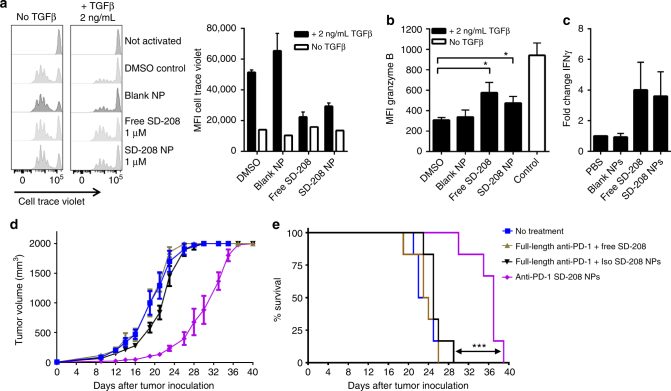
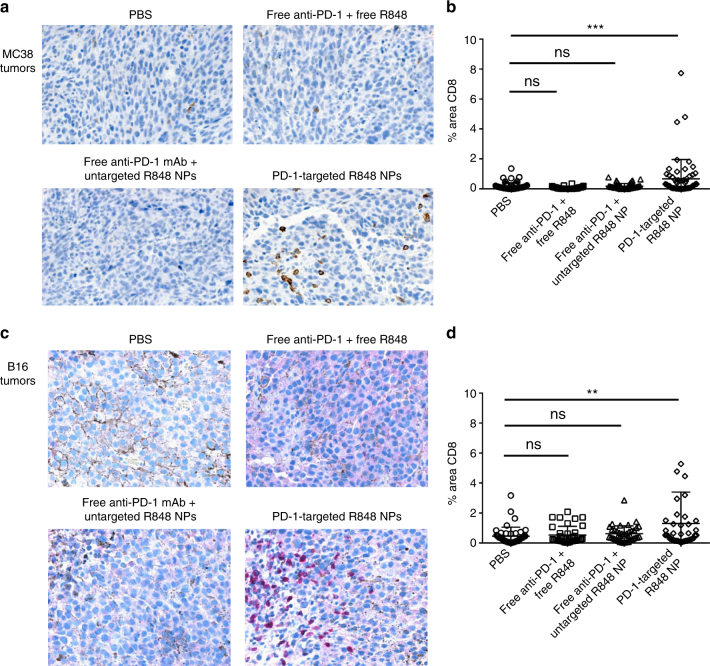
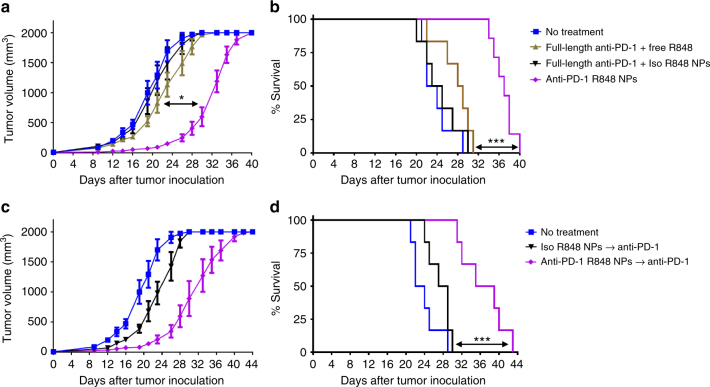
Abstract Targeted delivery of compounds to particular cell subsets can enhance therapeutic index by concentrating their action on the cells of interest. Because attempts to target tumors directly have yielded limited benefit, we instead target endogenous immune cell subsets in the circulation that can migrate actively into tumors. We describe antibody-targeted nanoparticles that bind to CD8 + T cells in the blood, lymphoid tissues, and tumors of mice. PD-1 + T cells are successfully targeted in the circulation and tumor. The delivery of an inhibitor of TGFβ signaling to PD-1-expressing cells extends the survival of tumor-bearing mice, whereas free drugs have no effect at such doses. This modular platform also enables PD-1-targeted delivery of a TLR7/8 agonist to the tumor microenvironment, increasing the proportion of tumor-infiltrating CD8 + T cells and sensitizing tumors to subsequent anti-PD-1. Targeted delivery of immunotherapy to defined subsets of endogenous leukocytes may be superior to administration of free drugs.
Overview
The claims and statistics of this paper haven’t been checked yet.
Free: it reads the open-access text and checks the first 5 claims that cite a source we can check. Create a free account to check every claim.
Integrity signals
Registry
Cites
Statistics
Figures
Verification
Claims the paper makes
The claims and statistics of this paper haven’t been checked yet.
Free: it reads the open-access text and checks the first 5 claims that cite a source we can check. Create a free account to check every claim.
Claims other papers make about this one
Each is checked against this paper’s own text: does it say what the citing paper says it does?
In the citing paper
“Targeting the immunosuppressive TGF‐β signaling in T cells by PLGA nanoparticles enhances antitumor immunity in mice. These nanoparticles bind to T cells and release a TGF‐βR1 inhibitor, SD‐208, that stimulates the potency of CD8+ Teff cells while inhibiting the inhibitory Treg cells in the TME [90].”
From Tumor microenvironment signaling and therapeutics in cancer progression (2023) · cites this paper as [90]
Self-check
Percentages, sums and reported differences re-computed from the paper’s own numbers.
The self-check needs the paper’s full text.
Citations
Cites
PD-1 and PD-L1 Immune Checkpoint Blockade to Treat Breast Cancer
Hartkopf, A. D., Taran, F.-A., Wallwiener, M., Walter, C. B., Krämer, B., Grischke, E.-M., & Brucker, S. Y. (2016) · Breast Care · doi:10.1159/000453569 · Cited by 30,845
Adverse Renal Effects of Immune Checkpoint Inhibitors: A Narrative Review
Wanchoo, R., Karam, S., Uppal, N. N., Barta, V. S., Deray, G., Devoe, C., Launay-Vacher, V., Jhaveri, K. D., & on behalf of Cancer and Kidney International Network Workgroup on Immune Checkpoint Inhibitors (2017) · American Journal of Nephrology · doi:10.1159/000455014 · Cited by 15,256
Intratumor Heterogeneity and Branched Evolution Revealed by Multiregion Sequencing
Gerlinger, M., Rowan, A. J., Horswell, S., Larkin, J., Endesfelder, D., Gronroos, E., Martinez, P., Matthews, N., Stewart, A., Tarpey, P., et al. (2012) · New England Journal of Medicine · doi:10.1056/nejmoa1113205 · Cited by 7,774 · cited 1×
“Adaptation is vital because cytotoxic agents select for resistant cancer clones, as tumors are heterogeneous and evolve when confronted with selection pressure 35 .”
BackgroundHerbst, R. S., Baas, P., Kim, D.-W., Felip, E., Pérez-Gracia, J. L., Han, J.-Y., Molina, J., Kim, J.-H., Arvis, C. D., Ahn, M.-J., et al. (2016) · The Lancet · doi:10.1016/s0140-6736(15)01281-7 · Cited by 6,449
Elements of cancer immunity and the cancer–immune set point
Chen, D. S., & Mellman, I. (2017) · Nature · doi:10.1038/nature21349 · Cited by 5,352 · cited 1×
“It has been suggested that elevated levels of TGF β may foster the development of excessive stromal features that can prevent the penetration of leukocytes into the tumor parenchyma 43 .”
BackgroundCancer immunotherapy comes of age
Mellman, I., Coukos, G., & Dranoff, G. (2011) · Nature · doi:10.1038/nature10673 · Cited by 3,893 · cited 1×
“Cancer immunotherapy can generate a coordinated and proliferative anti-tumor response that has the potential to be applicable across varied cancer types and their underlying mutations 36 .”
BackgroundSeiwert, T. Y., Burtness, B., Mehra, R., Weiss, J., Berger, R., Eder, J. P., Heath, K., McClanahan, T., Lunceford, J., Gause, C., et al. (2016) · The Lancet Oncology · doi:10.1016/s1470-2045(16)30066-3 · Cited by 1,745 · cited 1×
“Pembrolizumab is a fully humanized anti-PD-1 antibody that is approved for the treatment of melanoma 21 , non-small-cell lung cancer 22 , and head and neck cancer 23 .”
BackgroundStimulation of CD25(+)CD4(+) regulatory T cells through GITR breaks immunological self-tolerance
Shimizu, J., Yamazaki, S., Takahashi, T., Ishida, Y., & Sakaguchi, S. (2002) · Nature Immunology · doi:10.1038/ni759 · Cited by 1,729
Prabhakar, U., Maeda, H., Jain, R. K., Sevick-Muraca, E. M., Zamboni, W., Farokhzad, O. C., Barry, S. T., Gabizon, A., Grodzinski, P., & Blakey, D. C. (2013) · Cancer Research · doi:10.1158/0008-5472.can-12-4561 · Cited by 1,485
Nanoparticle uptake: The phagocyte problem
Gustafson, H. H., Holt-Casper, D., Grainger, D. W., & Ghandehari, H. (2015) · Nano Today · doi:10.1016/j.nantod.2015.06.006 · Cited by 1,411
Cited by
Engineering precision nanoparticles for drug delivery
Mitchell, M. J., Billingsley, M. M., Haley, R. M., Wechsler, M. E., Peppas, N. A., & Langer, R. (2021) · Nature Reviews Drug Discovery · doi:10.1038/s41573-020-0090-8 · Cited by 7,933
Delivery technologies for cancer immunotherapy
Riley, R. S., June, C. H., Langer, R., & Mitchell, M. J. (2019) · Nature Reviews Drug Discovery · doi:10.1038/s41573-018-0006-z · Cited by 2,607
Targeted drug delivery strategies for precision medicines
Manzari, M. T., Shamay, Y., Kiguchi, H., Rosen, N., Scaltriti, M., & Heller, D. A. (2021) · Nature Reviews Materials · doi:10.1038/s41578-020-00269-6 · Cited by 1,183
Concepts of nanoparticle cellular uptake, intracellular trafficking, and kinetics in nanomedicine
Donahue, N. D., Acar, H., & Wilhelm, S. (2019) · Advanced Drug Delivery Reviews · doi:10.1016/j.addr.2019.04.008 · Cited by 944
Enhancing cancer immunotherapy with nanomedicine
Irvine, D. J., & Dane, E. L. (2020) · Nature Reviews Immunology · doi:10.1038/s41577-019-0269-6 · Cited by 882
Self-citationNanomedicine in cancer therapy
Fan, D., Cao, Y., Cao, M., Wang, Y., Cao, Y., & Gong, T. (2023) · Signal Transduction and Targeted Therapy · doi:10.1038/s41392-023-01536-y · Cited by 878
Improving cancer immunotherapy using nanomedicines: progress, opportunities and challenges
Martin, J. D., Cabral, H., Stylianopoulos, T., & Jain, R. K. (2020) · Nature Reviews Clinical Oncology · doi:10.1038/s41571-019-0308-z · Cited by 682
Improving cancer immunotherapy through nanotechnology
Goldberg, M. S. (2019) · Nature reviews. Cancer · doi:10.1038/s41568-019-0186-9 · Cited by 628
Self-citationMaterial design for lymph node drug delivery
Schudel, A., Francis, D. M., & Thomas, S. N. (2019) · Nature Reviews Materials · doi:10.1038/s41578-019-0110-7 · Cited by 460
Feng, X., Xu, W., Li, Z., Song, W., Ding, J., & Chen, X. (2019) · Advanced Science · doi:10.1002/advs.201900101 · Cited by 363
Tumor microenvironment signaling and therapeutics in cancer progression
Goenka, A., Khan, F., Verma, B., Sinha, P., Dmello, C. C., Jogalekar, M. P., Gangadaran, P., & Ahn, B. (2023) · Cancer Communications · doi:10.1002/cac2.12416 · Cited by 323
Tumor microenvironment targeted nanotherapeutics for cancer therapy and diagnosis: A review
Thakkar, S., Sharma, D., Kalia, K., & Tekade, R. K. (2020) · Acta Biomaterialia · doi:10.1016/j.actbio.2019.09.009 · Cited by 316
Monocytes in the Tumor Microenvironment
Ugel, S., Canè, S., De Sanctis, F., & Bronte, V. (2021) · Annual Review of Pathology: Mechanisms of Disease · doi:10.1146/annurev-pathmechdis-012418-013058 · Cited by 314
Nanomaterials for T-cell cancer immunotherapy
Gong, N., Sheppard, N. C., Billingsley, M. M., June, C. H., & Mitchell, M. J. (2021) · Nature Nanotechnology · doi:10.1038/s41565-020-00822-y · Cited by 306
Bahmani, B., Gong, H., Luk, B. T., Haushalter, K. J., DeTeresa, E., Previti, M., Zhou, J., Gao, W., Bui, J. D., Zhang, L., et al. (2021) · Nature Communications · doi:10.1038/s41467-021-22311-z · Cited by 299
Li, J., & Kataoka, K. (2021) · Journal of the American Chemical Society · doi:10.1021/jacs.0c09029 · Cited by 281
Billingsley, M. M., Gong, N., Mukalel, A. J., Thatte, A. S., El‐Mayta, R., Patel, S. K., Metzloff, A. E., Swingle, K. L., Han, X., Xue, L., et al. (2024) · Small · doi:10.1002/smll.202304378 · Cited by 268
Hsieh, C.-H., Hsieh, H.-C., Shih, F.-H., Wang, P.-W., Yang, L.-X., Shieh, D.-B., & Wang, Y.-C. (2021) · Theranostics · doi:10.7150/thno.57803 · Cited by 256
Zhang, R., El-Mayta, R., Murdoch, T. J., Warzecha, C. C., Billingsley, M. M., Shepherd, S. J., Gong, N., Wang, L., Wilson, J. M., Lee, D., et al. (2021) · Biomaterials Science · doi:10.1039/d0bm01609h · Cited by 255
Nanomaterials in tumor immunotherapy: new strategies and challenges
Zhu, X., & Li, S. (2023) · Molecular Cancer · doi:10.1186/s12943-023-01797-9 · Cited by 251
Metabolic reprogramming and therapeutic resistance in primary and metastatic breast cancer
Liu, S., Zhang, X., Wang, W., Li, X., Sun, X., Zhao, Y., Wang, Q., Li, Y., Hu, F., & Ren, H. (2024) · Molecular Cancer · doi:10.1186/s12943-024-02165-x · Cited by 246
Gao, S., Yang, X., Xu, J., Qiu, N., & Zhai, G. (2021) · ACS Nano · doi:10.1021/acsnano.1c02103 · Cited by 236
Recent advances in active targeting of nanomaterials for anticancer drug delivery
Dutta, B., Barick, K. C., & Hassan, P. A. (2021) · Advances in Colloid and Interface Science · doi:10.1016/j.cis.2021.102509 · Cited by 232
The TLR7/8 agonist R848 remodels tumor and host responses to promote survival in pancreatic cancer
Michaelis, K. A., Norgard, M. A., Zhu, X., Levasseur, P. R., Sivagnanam, S., Liudahl, S. M., Burfeind, K. G., Olson, B., Pelz, K. R., Angeles Ramos, D. M., et al. (2019) · Nature Communications · doi:10.1038/s41467-019-12657-w · Cited by 230
Targeting immune cells for cancer therapy
Gun, S. Y., Lee, S. W. L., Sieow, J. L., & Wong, S. C. (2019) · Redox Biology · doi:10.1016/j.redox.2019.101174 · Cited by 229
Biological drug and drug delivery-mediated immunotherapy
Xiao, Q., Li, X., Li, Y., Wu, Z., Xu, C., Chen, Z., & He, W. (2021) · Acta Pharmaceutica Sinica B · doi:10.1016/j.apsb.2020.12.018 · Cited by 211
Han, X., Alu, A., Liu, H., Shi, Y., Wei, X., Cai, L., & Wei, Y. (2022) · Bioactive Materials · doi:10.1016/j.bioactmat.2022.01.011 · Cited by 209
Shields, C. W., Wang, L. L., Evans, M. A., & Mitragotri, S. (2020) · Advanced Materials · doi:10.1002/adma.201901633 · Cited by 193
Bhagchandani, S., Johnson, J. A., & Irvine, D. J. (2021) · Advanced Drug Delivery Reviews · doi:10.1016/j.addr.2021.05.013 · Cited by 188
Self-citationIntratumoral Immunotherapy for Early-stage Solid Tumors
Hong, W. X., Haebe, S., Lee, A. S., Westphalen, C. B., Norton, J. A., Jiang, W., & Levy, R. (2020) · Clinical Cancer Research · doi:10.1158/1078-0432.ccr-19-3642 · Cited by 183
“Finally, nanoparticles can be designed to target a specific immune cell subpopulation, for example, CD8þ T cells, to localize immunotherapeutic reagents and reduce off-target effects (85).”
BackgroundActive transcytosis and new opportunities for cancer nanomedicine
Pandit, S., Dutta, D., & Nie, S. (2020) · Nature Materials · doi:10.1038/s41563-020-0672-1 · Cited by 181
Emerging Nano‐/Microapproaches for Cancer Immunotherapy
Mi, Y., Hagan, C. T., Vincent, B. G., & Wang, A. Z. (2019) · Advanced Science · doi:10.1002/advs.201801847 · Cited by 177
Recent Advances in the Surface Functionalization of PLGA-Based Nanomedicines
El‐Hammadi, M. M., & Arias, J. L. (2022) · Nanomaterials · doi:10.3390/nano12030354 · Cited by 172
Advanced strategies to evade the mononuclear phagocyte system clearance of nanomaterials
Lu, J., Gao, X., Wang, S., He, Y., Ma, X., Zhang, T., & Liu, X. (2023) · Exploration · doi:10.1002/exp.20220045 · Cited by 172
Targeted modulation of immune cells and tissues using engineered biomaterials
Yousefpour, P., Ni, K., & Irvine, D. J. (2023) · Nature Reviews Bioengineering · doi:10.1038/s44222-022-00016-2 · Cited by 164
Self-citationNanomedicine and macroscale materials in immuno-oncology
Sun, Q., Barz, M., Geest, B. G. D., Diken, M., Hennink, W. E., Kiessling, F. M., Lammers, T., & Shi, Y. (2019) · Chemical Society Reviews · doi:10.1039/c8cs00473k · Cited by 163
Xiao, Z., Su, Z., Han, S., Huang, J., Lin, L., & Shuai, X. (2020) · Science Advances · doi:10.1126/sciadv.aay7785 · Cited by 161
Liu, J., Zhang, R., & Xu, Z. P. (2019) · Small · doi:10.1002/smll.201900262 · Cited by 161
Qi, J., Jin, F., You, Y., Du, Y., Liu, D., Xu, X., Wang, J., Zhu, L., Chen, M., Shu, G., et al. (2021) · Nature Communications · doi:10.1038/s41467-021-24902-2 · Cited by 157
Saeed, M., Gao, J., Shi, Y., Lammers, T., & Yu, H. (2019) · Theranostics · doi:10.7150/thno.37568 · Cited by 156
Sau, S., Alsaab, H. O., Bhise, K., Alzhrani, R., Nabil, G., & Iyer, A. K. (2018) · Journal of Controlled Release · doi:10.1016/j.jconrel.2018.01.028 · Cited by 150
Pan, J., Li, X., Shao, B., Xu, F., Huang, X., Guo, X., & Zhou, S. (2022) · Advanced Materials · doi:10.1002/adma.202106307 · Cited by 150
Engineering nanoparticle strategies for effective cancer immunotherapy
Yoon, H. Y., Selvan, S. T., Yang, Y., Kim, M. J., Yi, D. K., Kwon, I. C., & Kim, K. (2018) · Biomaterials · doi:10.1016/j.biomaterials.2018.03.036 · Cited by 148
Charge‐Reversal Polymer Nano‐modulators for Photodynamic Immunotherapy of Cancer
He, S., Li, J., Cheng, P., Zeng, Z., Zhang, C., Duan, H., & Pu, K. (2021) · Angewandte Chemie International Edition · doi:10.1002/anie.202106392 · Cited by 148
Nanotechnology approaches in the current therapy of skin cancer
Borgheti-Cardoso, L. N., Viegas, J. S. R., Silvestrini, A. V. P., Caron, A. L., Praça, F. S. G., Kravicz, M., & Bentley, M. V. L. B. (2020) · Advanced Drug Delivery Reviews · doi:10.1016/j.addr.2020.02.005 · Cited by 147
Sushnitha, M., Evangelopoulos, M., Tasciotti, E., & Taraballi, F. (2020) · Frontiers in Bioengineering and Biotechnology · doi:10.3389/fbioe.2020.00627 · Cited by 147
Kansız, S., & Elçin, Y. M. (2023) · Advances in Colloid and Interface Science · doi:10.1016/j.cis.2023.102930 · Cited by 143
Targeting the activity of T cells by membrane surface redox regulation for cancer theranostics
Shi, C., Zhang, Q., Yao, Y., Zeng, F., Du, C., Nijiati, S., Wen, X., Zhang, X., Yang, H., Chen, H., et al. (2022) · Nature Nanotechnology · doi:10.1038/s41565-022-01261-7 · Cited by 142
Cancer stem cells-emanated therapy resistance: Implications for liposomal drug delivery systems
Dianat-Moghadam, H., Heidarifard, M., Jahanban-Esfahlan, R., Panahi, Y., Hamishehkar, H., Pouremamali, F., Rahbarghazi, R., & Nouri, M. (2018) · Journal of Controlled Release · doi:10.1016/j.jconrel.2018.08.043 · Cited by 140
Symphony of nanomaterials and immunotherapy based on the cancer–immunity cycle
Li, Q., Shi, Z., Zhang, F., Zeng, W., Zhu, D., & Mei, L. (2021) · Acta Pharmaceutica Sinica B · doi:10.1016/j.apsb.2021.05.031 · Cited by 138
Nanoparticles for nucleic acid delivery: Applications in cancer immunotherapy
Mukalel, A. J., Riley, R. S., Zhang, R., & Mitchell, M. J. (2019) · Cancer Letters · doi:10.1016/j.canlet.2019.04.040 · Cited by 136
Nanoparticle-induced immune response: Health risk versus treatment opportunity?
Pondman, K. M., Gac, S. L., & Kishore, U. (2022) · Immunobiology · doi:10.1016/j.imbio.2022.152317 · Cited by 130
Toward Biomaterials for Enhancing Immune Checkpoint Blockade Therapy
Fan, Q., Chen, Z., Wang, C., & Liu, Z. (2018) · Advanced Functional Materials · doi:10.1002/adfm.201802540 · Cited by 129
Immunoadjuvants for cancer immunotherapy: A review of recent developments
Banstola, A., Jeong, J., & Yook, S. (2020) · Acta Biomaterialia · doi:10.1016/j.actbio.2020.07.063 · Cited by 127
Recent Advancements in Nanomedicine for ‘Cold’ Tumor Immunotherapy
Chen, Q., Sun, T., & Jiang, C. (2021) · Nano-Micro Letters · doi:10.1007/s40820-021-00622-6 · Cited by 124
Chronic Inflammation’s Transformation to Cancer: A Nanotherapeutic Paradigm
Sohrab, S. S., Raj, R., Nagar, A., Hawthorne, S. J., Paiva‐Santos, A. C., Kamal, M. A., El-Daly, M. M., Azhar, E. I., & Sharma, A. (2023) · Molecules · doi:10.3390/molecules28114413 · Cited by 124
Drug Delivery in Cancer Therapy, Quo Vadis?
Lu, Z., & Qiao, P. L. (2018) · Molecular Pharmaceutics · doi:10.1021/acs.molpharmaceut.8b00037 · Cited by 126
Nanotechnology-enhanced immunotherapy for metastatic cancer
Zhang, P., Meng, J., Li, Y., Chen, Y., Hou, Y., Tang, W., McHugh, K. J., & Jing, L. (2021) · The Innovation · doi:10.1016/j.xinn.2021.100174 · Cited by 123
The Development of Chiral Nanoparticles to Target NK Cells and CD8+ T Cells for Cancer Immunotherapy
Wang, W., Zhao, J., Hao, C., Hu, S., Chen, C., Cao, Y., Xu, Z., Guo, J., Xu, L., Sun, M., et al. (2022) · Advanced Materials · doi:10.1002/adma.202109354 · Cited by 120
Peng, X., Fang, J., Lou, C., Yang, L., Shan, S., Wang, Z., Chen, Y., Li, H., & Li, X. (2024) · Acta Pharmaceutica Sinica B · doi:10.1016/j.apsb.2024.05.010 · Cited by 119
Nanomedicines modulating tumor immunosuppressive cells to enhance cancer immunotherapy
Zhu, Y., Yu, X., Thamphiwatana, S., Zheng, Y., & Pang, Z. (2020) · Acta Pharmaceutica Sinica B · doi:10.1016/j.apsb.2020.08.010 · Cited by 118
Self-citationEngineering Prodrug Nanomedicine for Cancer Immunotherapy
Yang, B., Gao, J., Pei, Q., Xu, H., & Yu, H. (2020) · Advanced Science · doi:10.1002/advs.202002365 · Cited by 118
Chen, Z., Pan, H., Luo, Y., Yin, T., Zhang, B., Liao, J., Wang, M., Tang, X., Huang, G., Deng, G., et al. (2021) · Small · doi:10.1002/smll.202007494 · Cited by 117
Antibody-based drug delivery systems for cancer therapy: Mechanisms, challenges, and prospects
Chen, Z., Kankala, R. K., Yang, Z., Li, W., Xie, S., Li, H., Chen, A., & Zou, L. (2022) · Theranostics · doi:10.7150/thno.72594 · Cited by 117
Janko, C., Ratschker, T., Nguyen, K., Zschiesche, L., Tietze, R., Lyer, S., & Alexiou, C. (2019) · Frontiers in Oncology · doi:10.3389/fonc.2019.00059 · Cited by 116
Antibody Conjugation of Nanoparticles as Therapeutics for Breast Cancer Treatment
Juan, A., Cimas, F. J., Bravo, I., Pandiella, A., Ocaña, A., & Alonso‐Moreno, C. (2020) · International Journal of Molecular Sciences · doi:10.3390/ijms21176018 · Cited by 115
Huang, X., Williams, J. Z., Chang, R., Li, Z., Burnett, C. E., Hernández-López, R. A., Setiady, I., Gai, E., Patterson, D. M., Yu, W., et al. (2020) · Nature Nanotechnology · doi:10.1038/s41565-020-00813-z · Cited by 113
Antigen Presenting Cell Mimetic Lipid Nanoparticles for Rapid mRNA CAR T Cell Cancer Immunotherapy
Metzloff, A. E., Padilla, M. S., Gong, N., Billingsley, M. M., Han, X., Merolle, M., Mai, D., Figueroa‐Espada, C. G., Thatte, A. S., Haley, R. M., et al. (2024) · Advanced Materials · doi:10.1002/adma.202313226 · Cited by 68
Delivery technologies for T cell gene editing: Applications in cancer immunotherapy
Atsavapranee, E., Billingsley, M. M., & Mitchell, M. J. (2021) · EBioMedicine · doi:10.1016/j.ebiom.2021.103354 · Cited by 111
Biomimetic Nanoparticle Vaccines for Cancer Therapy
Kroll, A. V., Jiang, Y., Zhou, J., Holay, M., Fang, R. H., & Zhang, L. (2018) · Advanced Biosystems · doi:10.1002/adbi.201800219 · Cited by 110
The Role of Immune Checkpoint Inhibitors in Cancer Therapy
Basudan, A. (2022) · Clinics and Practice · doi:10.3390/clinpract13010003 · Cited by 110
From Design to Clinic: Engineered Nanobiomaterials for Immune Normalization Therapy of Cancer
Saeed, M., Chen, F., Ye, J., Shi, Y., Lammers, T., Geest, B. G. D., Xu, Z. P., & Yu, H. (2021) · Advanced Materials · doi:10.1002/adma.202008094 · Cited by 108
In Vivo T Cell-Targeting Nanoparticle Drug Delivery Systems: Considerations for Rational Design
Cevaal, P. M., Ali, A., Czuba‐Wojnilowicz, E., Symons, J., Lewin, S. R., Cortez‐Jugo, C., & Caruso, F. (2021) · ACS Nano · doi:10.1021/acsnano.0c09514 · Cited by 106
Polymeric micro- and nanoparticles for immune modulation
Ben‐Akiva, E., Est-Witte, S. E., Meyer, R. A., Rhodes, K. R., & Green, J. J. (2018) · Biomaterials Science · doi:10.1039/c8bm01285g · Cited by 102
Antibody‐Incorporated Nanomedicines for Cancer Therapy
Wu, S., Wu, F., & Chen, X. S. (2022) · Advanced Materials · doi:10.1002/adma.202109210 · Cited by 102
Zhu, R., Su, L., Dai, J., Li, Z., Bai, S., Li, Q., Chen, X. S., Song, J., & Yang, H. (2020) · ACS Nano · doi:10.1021/acsnano.9b07984 · Cited by 101
Zhao, Z., Ukidve, A., Krishnan, V., Fehnel, A., Pan, D. C., Gao, Y., Kim, J., Evans, M. A., Mandal, A., Guo, J., et al. (2020) · Nature Biomedical Engineering · doi:10.1038/s41551-020-00644-2 · Cited by 101
Boosting Checkpoint Immunotherapy with Biomaterials
Liu, L., Pan, Y., Zhao, C., Huang, P., Chen, X. S., & Rao, L. (2023) · ACS Nano · doi:10.1021/acsnano.2c11691 · Cited by 100
Antibody conjugated nanoparticles as a novel form of antibody drug conjugate chemotherapy
Johnston, M. C., & Scott, C. J. (2018) · Drug Discovery Today Technologies · doi:10.1016/j.ddtec.2018.10.003 · Cited by 97
Effect of physicochemical properties on in vivo fate of nanoparticle-based cancer immunotherapies
Wang, Y., Wang, J., Zhu, D., Wang, Y., Qing, G., Zhang, Y., Liu, X., & Liang, X. (2021) · Acta Pharmaceutica Sinica B · doi:10.1016/j.apsb.2021.03.007 · Cited by 96
Khan, S. H., Choi, Y., Veena, M. S., Lee, J. K., & Shin, D. S. (2025) · Frontiers in Immunology · doi:10.3389/fimmu.2024.1489827 · Cited by 98
JAK–STAT Targeting Offers Novel Therapeutic Opportunities in Sepsis
Clère-Jehl, R., Mariotte, A., Meziani, F., Bahram, S., Georgel, P., & Helms, J. (2020) · Trends in Molecular Medicine · doi:10.1016/j.molmed.2020.06.007 · Cited by 95
PLGA Particles in Immunotherapy
Horvath, D. J., & Basler, M. (2023) · Pharmaceutics · doi:10.3390/pharmaceutics15020615 · Cited by 95
Designing drug delivery systems for cell therapy
Wang, L., Gao, Y., Feng, Z., Mooney, D. J., & Mitragotri, S. (2024) · Nature Reviews Bioengineering · doi:10.1038/s44222-024-00214-0 · Cited by 94
Zhang, Z., Ma, B., Li, B., Li, Z., Gao, M., Zhao, H., Peng, R., Hu, J., Wang, Y., You, W., et al. (2025) · Cell Reports Medicine · doi:10.1016/j.xcrm.2025.102209 · Cited by 55
Improving Cancer Immunotherapy Outcomes Using Biomaterials
Yan, S., Luo, Z., Li, Z., Wang, Y., Tao, J., Gong, C., & Liu, X. (2020) · Angewandte Chemie International Edition · doi:10.1002/anie.202002780 · Cited by 93
Nanoparticles as Smart Carriers for Enhanced Cancer Immunotherapy
Thakur, N., Thakur, S., Chatterjee, S., Das, J., & Sil, P. C. (2020) · Frontiers in Chemistry · doi:10.3389/fchem.2020.597806 · Cited by 92
Use of nano engineered approaches to overcome the stromal barrier in pancreatic cancer
Meng, H., & Nel, A. E. (2018) · Advanced Drug Delivery Reviews · doi:10.1016/j.addr.2018.06.014 · Cited by 91
Deng, S., Gu, J., Jiang, Z., Cao, Y., Mao, F., Xue, Y., Wang, J., Dai, K., Qin, L., Liu, K., et al. (2022) · Journal of Nanobiotechnology · doi:10.1186/s12951-022-01613-4 · Cited by 91
Joo, S., Kim, J., Hong, J., Lahiji, S. F., & Kim, Y. (2023) · Advanced Materials · doi:10.1002/adma.202209966 · Cited by 91
Nano-immunotherapy: overcoming delivery challenge of immune checkpoint therapy
Kiaie, S. H., Salehi‐Shadkami, H., Sanaei, M., Azizi, M., Barough, M. S., Nasr, M. S., & Sheibani, M. (2023) · Journal of Nanobiotechnology · doi:10.1186/s12951-023-02083-y · Cited by 91
Debele, T. A., Yeh, C.-F., & Su, W. (2020) · Cancers · doi:10.3390/cancers12123773 · Cited by 90
Wang, K., Zhang, X., Ye, H., Wang, X., Fan, Z., Lu, Q., Li, S., Zhao, J., Zheng, S., He, Z., et al. (2023) · Nature Communications · doi:10.1038/s41467-023-42155-z · Cited by 89
Li, Y., Ayala‐Orozco, C., Rauta, P. R., & Krishnan, S. (2019) · Nanoscale · doi:10.1039/c9nr05371a · Cited by 88
Nano Drug Delivery System for Tumor Immunotherapy: Next-Generation Therapeutics
Zhou, L., Zou, M., Xu, Y., Lin, P., Lei, C., & Xia, X. (2022) · Frontiers in Oncology · doi:10.3389/fonc.2022.864301 · Cited by 87
Drug delivery systems targeting tumor-associated fibroblasts for cancer immunotherapy
Liu, M., Song, W., & Huang, L. (2019) · Cancer Letters · doi:10.1016/j.canlet.2019.01.032 · Cited by 85
Nanotechnology and immunoengineering: How nanotechnology can boost CAR-T therapy
Nawaz, W., Xu, S., Li, Y., Huang, B., Wu, X., & Wu, Z. (2020) · Acta Biomaterialia · doi:10.1016/j.actbio.2020.04.015 · Cited by 84
Zhang, L., Wang, Z., Zhang, R., Yang, H., Wang, W., Zhao, Y., He, W., Qiu, Z., He, W., Xiong, Y., et al. (2023) · ACS Nano · doi:10.1021/acsnano.3c08409 · Cited by 84
Non-viral nano-immunotherapeutics targeting tumor microenvironmental immune cells
Yong, S., Chung, J. Y., Song, Y., Kim, J., Ra, S., & Kim, Y. (2019) · Biomaterials · doi:10.1016/j.biomaterials.2019.119401 · Cited by 84
Cell-mediated and cell membrane-coated nanoparticles for drug delivery and cancer therapy
Yaman, S., Chintapula, U. K., Rodriguez, E., Ramachandramoorthy, H., & Nguyen, K. T. (2020) · Cancer Drug Resistance · doi:10.20517/cdr.2020.55 · Cited by 82
Metadata
- Authors
- Schmid, D., Park, C. G., Hartl, C. A., Subedi, N., Cartwright, A. N., Puerto, R. B., Zheng, Y., Maiarana, J., Freeman, G. J., Wucherpfennig, K. W., Irvine, D. J., & Goldberg, M. S.
- Affiliations
- Harvard University (US)
- Dana-Farber Cancer Institute (US)
- Koch Institute for Integrative Cancer Research At MIT (US)
- Howard Hughes Medical Institute (US)
- Corresponding author
- Goldberg, Michael S.
- ORCID
- Venue
- Nature Communications
- Published
- 2017-11-23
- Volume
- 8
- Issue
- 1
- Pages
- 1747-1747
- ISSN
- 2041-1723 (ISSN-L)
- PMC
- PMC5700944
- OpenAlex
- W2768778626
- Cited by
- 449
- References
- 48
- Citations by year
- 2026: 28 · 2025: 39 · 2024: 43 · 2023: 50 · 2022: 66 · 2021: 78 · 2020: 72 · 2019: 54 · 2018: 17
- FWCI
- 14.06
- Type
- journal article
- Language
- en
- Open access
- gold
- doi.org
- Licence
- cc-by
- creativecommons.org/licenses/by/4.0 (tdm)
- creativecommons.org/licenses/by/4.0 (vor)
- Locations
- Nature Communications (publishedVersion, cc-by)
- PubMed Central (publishedVersion, cc-by)
- PubMed (publishedVersion)
- Digital Access to Scholarship at Harvard (DASH) (Harvard University) (submittedVersion, cc-by)
- RePEc: Research Papers in Economics (submittedVersion)
- DOAJ (DOAJ: Directory of Open Access Journals) (submittedVersion, cc-by-sa)
- DSpace@MIT (Massachusetts Institute of Technology) (submittedVersion, cc-by-nc)
- Nature
- Funders
- Melanoma Research Alliance
- Dana-Farber/Harvard Cancer Center
- Topics
- Physical Sciences › Materials Science › Biomaterials › Nanoparticle-Based Drug Delivery
- Health Sciences › Medicine › Oncology › Cancer Immunotherapy and Biomarkers
- Life Sciences › Immunology and Microbiology › Immunology › Immunotherapy and Immune Responses
- Keywords
- antibody-targeted nanoparticles, CD8+ T cells, PD-1, TGF-beta inhibition, TLR7/8 agonist, tumor-infiltrating CD8+ T cells, antitumor immunity, targeted drug delivery, combination immunotherapy, tumor microenvironment
- MeSH terms
- Animals, Female, Humans, Imidazoles, Immunotherapy, Male, Melanoma, Experimental, Membrane Glycoproteins, Mice, Inbred C57BL, Neoplasms, Experimental, Transforming Growth Factor beta, Lymphocytes, Tumor-Infiltrating, Drug Delivery Systems, Mice, Knockout, CD8-Positive T-Lymphocytes, Cell Line, Tumor, Toll-Like Receptor 7, Toll-Like Receptor 8, Mice, Nanoparticles, Tumor Microenvironment, Programmed Cell Death 1 Receptor, Antibodies, Monoclonal, Humanized
About these checks
Registry, retraction, Cites and statistics results are computed, not judged, with one exception: a printed reference that no index lists is read once by a model before it counts as a citation error. Claims are extracted by a model and kept only when their quote appears verbatim in the text; each cited source is then checked, with a model’s help, for whether it says what the claim relies on. Those verdicts can be wrong — read the claim’s quote and the cited source before relying on one.
Statistics and arithmetic are recomputed, not judged.
Confidence bands are shown only for fields calibrated on our annotated test set. None is calibrated yet, so no band is shown.
What counts as a claim ›How we measure confidence ›How we check this ›
Are you an author, or do you see a problem with this page? Request a review
Data sources
Bibliographic data: Semantic Scholar, OpenAlex, Crossref.
Contains information from the Semantic Scholar Academic Graph Datasets, made available under the ODC Attribution License (ODC-BY 1.0).
Semantic Scholar’s data is described in: Kinney, R., et al. (2023). The Semantic Scholar Open Data Platform. arXiv:2301.10140.
