

Cardiopatch platform enables maturation and scale-up of human pluripotent stem cell-derived engineered heart tissues
Open accessThe DOI matches its Crossref record; 69 of the 69 references it cites were found in a registry or an index.
Abstract
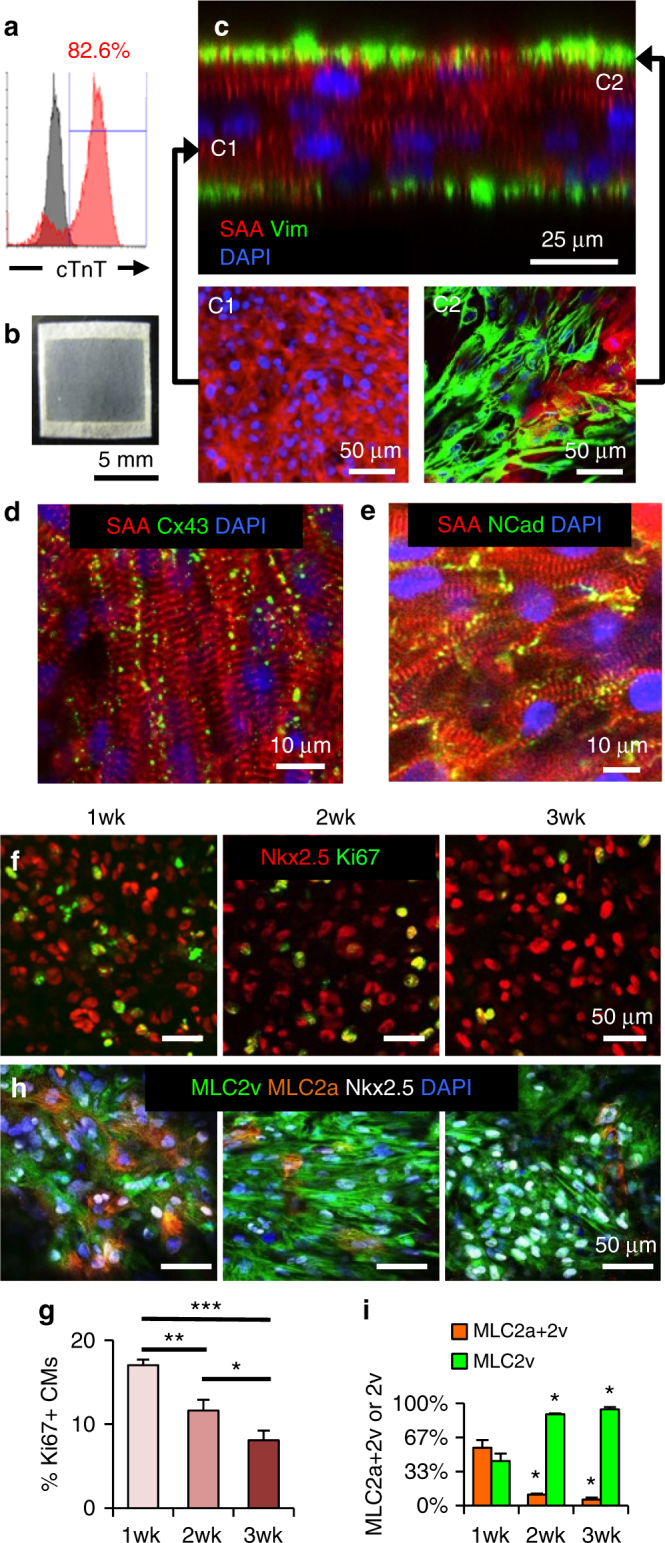
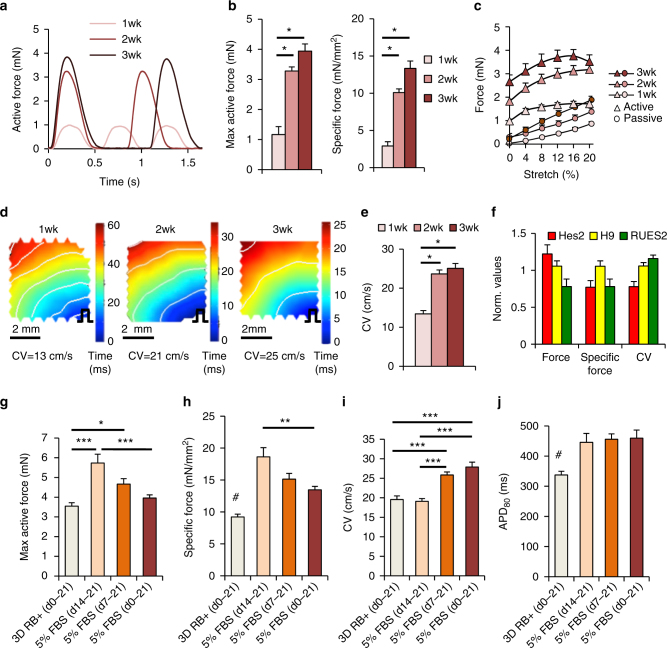
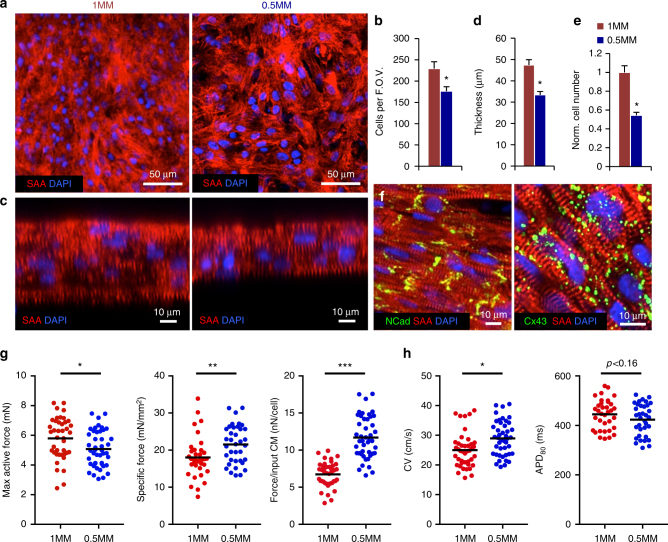
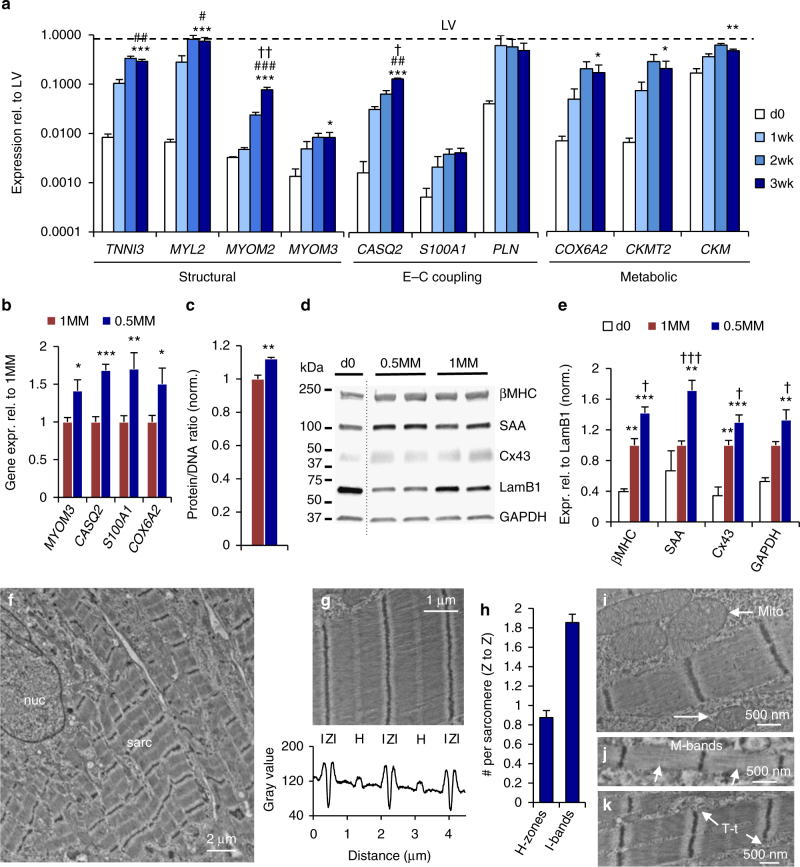
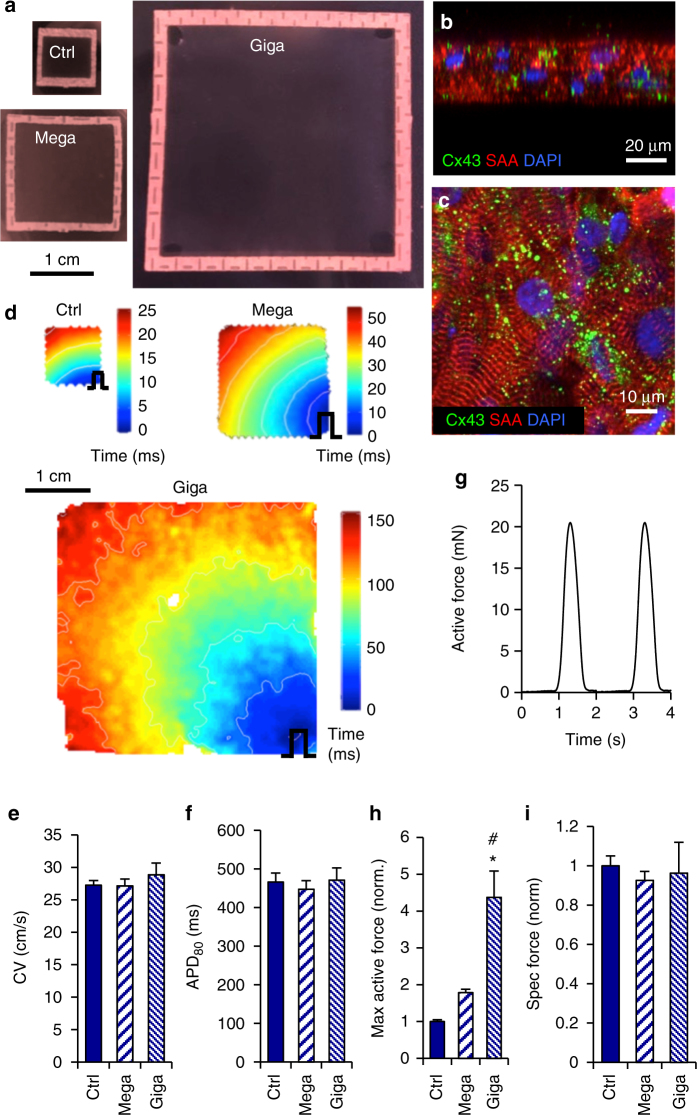
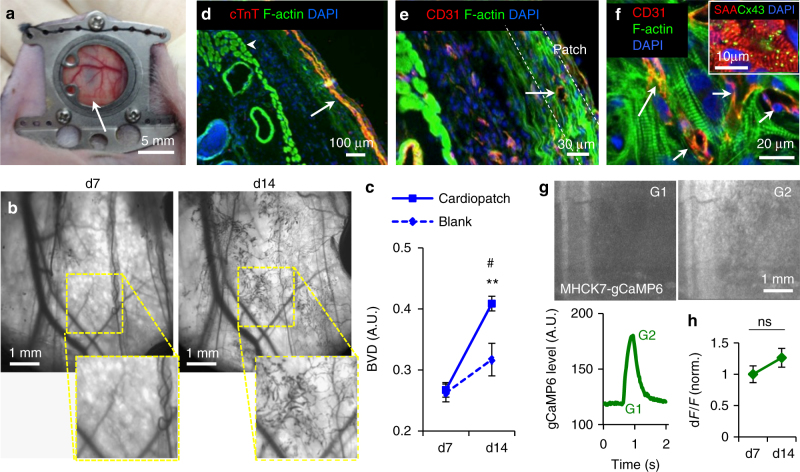
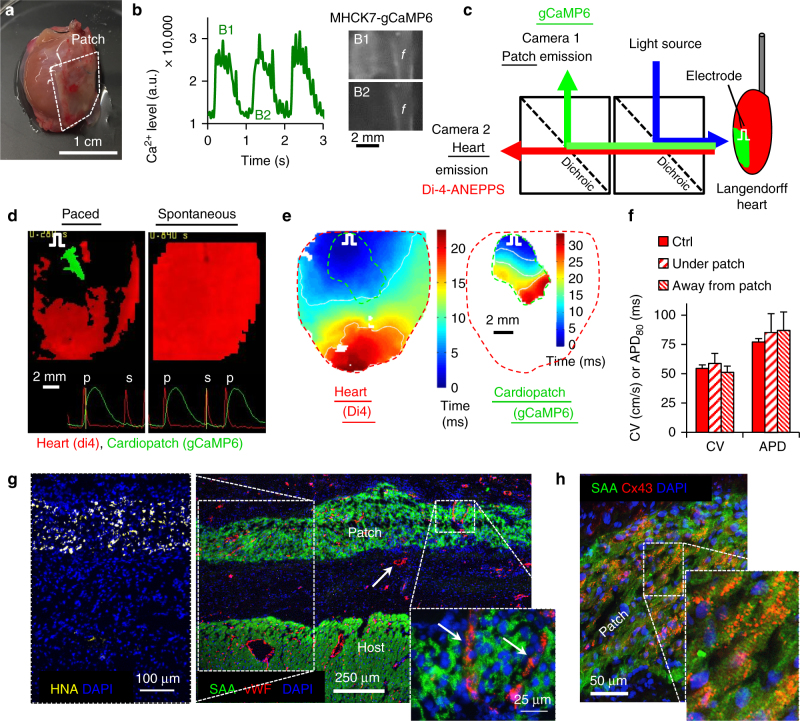
Despite increased use of human induced pluripotent stem cell-derived cardiomyocytes (hiPSC-CMs) for drug development and disease modeling studies, methods to generate large, functional heart tissues for human therapy are lacking. Here we present a “Cardiopatch” platform for 3D culture and maturation of hiPSC-CMs that after 5 weeks of differentiation show robust electromechanical coupling, consistent H-zones, I-bands, and evidence for T-tubules and M-bands. Cardiopatch maturation markers and functional output increase during culture, approaching values of adult myocardium. Cardiopatches can be scaled up to clinically relevant dimensions, while preserving spatially uniform properties with high conduction velocities and contractile stresses. Within window chambers in nude mice, cardiopatches undergo vascularization by host vessels and continue to fire Ca 2+ transients. When implanted onto rat hearts, cardiopatches robustly engraft, maintain pre-implantation electrical function, and do not increase the incidence of arrhythmias. These studies provide enabling technology for future use of hiPSC-CM tissues in human heart repair.
Overview
The claims and statistics of this paper haven’t been checked yet.
Free: it reads the open-access text and checks the first 5 claims that cite a source we can check. Create a free account to check every claim.
Integrity signals
Registry
Cites
Statistics
Figures
Verification
Claims the paper makes
The claims and statistics of this paper haven’t been checked yet.
Free: it reads the open-access text and checks the first 5 claims that cite a source we can check. Create a free account to check every claim.
Claims other papers make about this one
Each is checked against this paper’s own text: does it say what the citing paper says it does?
In the citing paper
“Shadrin et al. [242] combined hydrogel molding [243,244] and dynamic culture [245] techniques to develop a platform for culturing and maturing hiPSC-CMs to a clinically relevant size (from 7 mm × 7 mm–40 mm × 40 mm).”
From Cardiovascular disease models: A game changing paradigm in drug discovery and screening (2019) · cites this paper as [242]
Self-check
Percentages, sums and reported differences re-computed from the paper’s own numbers.
The self-check needs the paper’s full text.
Citations
Cites
Ultrasensitive fluorescent proteins for imaging neuronal activity
Chen, T.-W., Wardill, T. J., Sun, Y., Pulver, S. R., Renninger, S. L., Baohan, A., Schreiter, E. R., Kerr, R. A., Orger, M. B., Jayaraman, V., et al. (2013) · Nature · doi:10.1038/nature12354 · Cited by 6,474
Laflamme, M. A., Chen, K. Y., Naumova, A. V., Muskheli, V., Fugate, J. A., Dupras, S. K., Reinecke, H., Xu, C., Hassanipour, M., Police, S., et al. (2007) · Nature Biotechnology · doi:10.1038/nbt1327 · Cited by 2,206
Total Excitation of the Isolated Human Heart
DURRER, D., VAN DAM, R. T., FREUD, G. E., JANSE, M. J., MEIJLER, F. L., & ARZBAECHER, R. C. (1970) · Circulation · doi:10.1161/01.cir.41.6.899 · Cited by 1,777
Lian, X., Zhang, J., Azarin, S. M., Zhu, K., Hazeltine, L. B., Bao, X., Hsiao, C., Kamp, T. J., & Palecek, S. P. (2013) · Nature Protocols · doi:10.1038/nprot.2012.150 · Cited by 1,748 · cited 3×
“Structural analysis of implanted (dorsal window chamber and rat heart) cardiopatches was performed in one of two ways: (1) whole-mount staining, similar to in vitro protocol above, and (2) cryosectioning with subsequent immunostaining.”
BackgroundMethodLian, X., Hsiao, C., Wilson, G., Zhu, K., Hazeltine, L. B., Azarin, S. M., Raval, K. K., Zhang, J., Kamp, T. J., & Palecek, S. P. (2012) · Proceedings of the National Academy of Sciences · doi:10.1073/pnas.1200250109 · Cited by 1,717 · cited 3×
“Structural analysis of implanted (dorsal window chamber and rat heart) cardiopatches was performed in one of two ways: (1) whole-mount staining, similar to in vitro protocol above, and (2) cryosectioning with subsequent immunostaining.”
Chemically defined generation of human cardiomyocytes
Burridge, P. W., Matsa, E., Shukla, P., Lin, Z. C., Churko, J. M., Ebert, A. D., Lan, F., Diecke, S., Huber, B., Mordwinkin, N. M., et al. (2014) · Nature Methods · doi:10.1038/nmeth.2999 · Cited by 1,606 · cited 2×
“While significant progress has been made in generating miniature heart tissue surrogates for drug testing7,8,12,20, clinical translation of cardiac tissue engineering has faced several challenges, including: (1) inadequate cardiomyocyte maturation, (2) small tissue surface area, (3) small tissue thickness (no perfusab…”
BackgroundHuman embryonic-stem-cell-derived cardiomyocytes regenerate non-human primate hearts
Chong, J. J. H., Yang, X., Don, C. W., Minami, E., Liu, Y.-W., Weyers, J. J., Mahoney, W. M., Van Biber, B., Cook, S. M., Palpant, N. J., et al. (2014) · Nature · doi:10.1038/nature13233 · Cited by 1,408
Tohyama, S., Hattori, F., Sano, M., Hishiki, T., Nagahata, Y., Matsuura, T., Hashimoto, H., Suzuki, T., Yamashita, H., Satoh, Y., et al. (2013) · Cell Stem Cell · doi:10.1016/j.stem.2012.09.013 · Cited by 1,037
Engineered heart tissue grafts improve systolic and diastolic function in infarcted rat hearts
Zimmermann, W.-H., Melnychenko, I., Wasmeier, G., Didié, M., Naito, H., Nixdorff, U., Hess, A., Budinsky, L., Brune, K., Michaelis, B., et al. (2006) · Nature Medicine · doi:10.1038/nm1394 · Cited by 993
Biowire: a platform for maturation of human pluripotent stem cell–derived cardiomyocytes
Nunes, S. S., Miklas, J. W., Liu, J., Aschar-Sobbi, R., Xiao, Y., Zhang, B., Jiang, J., Massé, S., Gagliardi, M., Hsieh, A., et al. (2013) · Nature Methods · doi:10.1038/nmeth.2524 · Cited by 952
Research works printed but not linked: 1
- Weinberger F Cardiac repair in guinea pigs with human engineered heart tissue from induced pluripotent stem cells Sci. Transl. Med. 2016 8 363ra148 10.1126/scitranslmed.aaf8781 27807283 · DOI · Paper page
Cited by
Items 301–400 of 427
Approaches to Optimize Stem Cell-Derived Cardiomyocyte Maturation and Function
Gilbert, G. (2021) · Current Stem Cell Reports · doi:10.1007/s40778-021-00197-3 · Cited by 7
CRISPR Library Screening in Cultured Cardiomyocytes
DeLuca, S., & Bursac, N. (2022) · Methods in molecular biology · doi:10.1007/978-1-0716-2261-2_1 · Cited by 6
Self-citationFinklea, F. B., Hashemi, M., Tian, Y., Hammons, H., Halloin, C., Triebert, W., Zweigerdt, R., & Lipke, E. A. (2024) · Biotechnology and Bioengineering · doi:10.1002/bit.28818 · Cited by 6
“…of immaturity, including lower conduction velocities than adult CMs (30 – 100 cm/s) (Yang et al., 2014), although they are within the range reported for other hPSC ‐ CMs (1 – 30 cm/s) (Burridge et al., 2011; Feric & Radisic, 2016; Jackman et al., 2016; Shadrin et al., 2017; Zhang et al., 2013).”
Xu, X., Liu, Y., Yu, S., Cheung, S., Cui, M., Ai, Y., Zhang, Y., & Liang, Q. (2025) · Phytomedicine · doi:10.1016/j.phymed.2025.156985 · Cited by 6
Sharma, D., Jia, W., Chiu, A., Jang, H. J., Леонов, В. А., Chen, Z., Zhao, B., Luo, W., Tanoto, H., Zhang, J., et al. (2025) · Bioactive Materials · doi:10.1016/j.bioactmat.2025.06.044 · Cited by 17
Induced Pluripotent Stem Cell–Based Modeling of Single-Ventricle Congenital Heart Diseases
Parker, L. E., Kurzlechner, L. M., & Landstrom, A. P. (2023) · Current Cardiology Reports · doi:10.1007/s11886-023-01852-3 · Cited by 7
Dissecting cardiovascular disease-associated noncoding genetic variants using human iPSC models
Dababneh, S., Babini, H., Jiménez-Sábado, V., Teves, S. S., Kim, K.-H., & Tibbits, G. F. (2025) · Stem Cell Reports · doi:10.1016/j.stemcr.2025.102467 · Cited by 6
Mechanical influences on cardiovascular differentiation and disease modeling
Teng, E. L., & Engler, A. J. (2019) · Experimental Cell Research · doi:10.1016/j.yexcr.2019.02.019 · Cited by 6
“Specifically when using iPSC-derived progeny to create microphysiological systems, however, groups have emphasized the need to develop dynamic systems [59] that reproduce critical aspects of in vivo physiology [60] and electrical conduction [61].”
MethodGu, B., Li, X., Yao, C., Qu, X., Mao, M., Li, D., & He, J. (2023) · Microchemical Journal · doi:10.1016/j.microc.2023.108587 · Cited by 7
Developing 3D Organized Human Cardiac Tissue within a Microfluidic Platform
Veldhuizen, J., & Nikkhah, M. (2021) · Journal of Visualized Experiments · doi:10.3791/62539 · Cited by 7
Label-Free Raman Spectroscopy for Assessing Purity and Maturation of hiPSC-Derived Cardiac Tissue
Li, J., Li, M., Nawa, Y., Liu, Y., Bando, K., Hua, Y., Sun, L., Fujita, S., 澤芳樹, Fujita, K., et al. (2024) · Analytical Chemistry · doi:10.1021/acs.analchem.4c03871 · Cited by 5
Kargaran, P. K., Garmany, A., Garmany, R., Stutzman, M. J., Sadeghian, M., Ackerman, M. J., Pérez-Terzic, C. M., Terzic, A., & Behfar, A. (2025) · Scientific Reports · doi:10.1038/s41598-025-97676-y · Cited by 5
“However, a preferential increase in MLC2v positivity was observed suggesting increased maturity of ventricular-like cardiomyocytes as an increased MLC2V + has been associated with a greater maturity phenotype 42,43 .”
Wang, S., Zhao, X., Zhan, Y., Liang, J., Shi, J., Gu, J., & Wang, H. (2025) · Biomacromolecules · doi:10.1021/acs.biomac.5c01395 · Cited by 6
Nabavi, S. F., & Garmestani, H. (2026) · Journal of Manufacturing Processes · doi:10.1016/j.jmapro.2025.12.035 · Cited by 7
Kim, Y. H., Son, Y. H., Choi, Y., Kim, M. S., Park, S., & Lee, K. Y. (2026) · Microsystems & Nanoengineering · doi:10.1038/s41378-026-01249-6 · Cited by 8
Luo, Y., Mangan, R. J., Weaver, S., Zhao, S. A., Mosti, F., Thomas, M. C., Karra, R., Silver, D. L., Kellis, M., & Lowe, C. B. (2026) · Cell Genomics · doi:10.1016/j.xgen.2026.101363 · Cited by 5
Advancing Engineered Heart Muscle Tissue Complexity with Hydrogel Composites
Dickerson, D. A. (2022) · Advanced Biology · doi:10.1002/adbi.202200067 · Cited by 6
Xu, Z., Bo, T., Liu, C., Han, D. S., Zhang, J., Liu, J., Li, S., Li, W., Wang, J., Liang, J., et al. (2021) · Quantitative Imaging in Medicine and Surgery · doi:10.21037/qims-20-702 · Cited by 4
iPSC-Derived Micro-Heart Muscle for Medium-Throughput Pharmacology and Pharmacogenomic Studies
Simmons, D. W., & Huebsch, N. (2022) · Methods in molecular biology · doi:10.1007/978-1-0716-2261-2_8 · Cited by 4
Strategies for Tissue Engineering Vascularized Cardiac Patches to Treat Myocardial Infarctions
Morrissette-McAlmon, J. B. F., Hawthorne, R. N., Snyder, S., & Grayson, W. L. (2018) · Biological and medical physics, biomedical engineering · doi:10.1007/978-3-319-99319-5_6 · Cited by 4
Zhang, H., Badur, M. G., Spiering, S., Divakaruni, A. S., Meurs, N., Yu, M. S., Colas, A. R., Murphy, A. N., Mercola, M. A., & Metallo, C. M. (2020) · bioRxiv (Cold Spring Harbor Laboratory) · doi:10.1101/2020.03.14.991927 · Cited by 4
“…et al., 2018), electrical stimulation (Radisic et al., 2004, Nunes et al., 2013), and physical microenvironment (Ribeiro et al., 2015, Shadrin et al., 2017, Ulmer et al., 2018); however, manipulation of the nutrient environment/culture medium provides a promising avenue for promoting…”
BackgroundFujiwara, Y., Sasaki, M., Funaoka, S., Yoshikuni, T., Naka, Y., Ida, K., Aihara, T., Funakoshi, S., Imahashi, K., & Yoshida, Y. (2025) · Lab on a Chip · doi:10.1039/d4lc00691g · Cited by 5
Bioengineered Hydrogels for Restoring Cardiac Electronic Activity after Myocardial Infarction
Lin, M., Qin, J., Lin, S., Gu, Z., Li, Y., Lin, Z., Guo, J., Zhou, K., Hua, Y., & Li, Y. (2025) · Advanced Healthcare Materials · doi:10.1002/adhm.202502058 · Cited by 5
Advances in cardiac cell interaction studies: Implications for heart disease treatment
Huang, L., Xie, B., Xiang, A. P., & Xiang, Q. (2025) · Cellular Signalling · doi:10.1016/j.cellsig.2025.112161 · Cited by 4
Angiogenesis induction using organoid-tissue modules: A platform for modular vessel construction
Park, J. J., Seo, E., Gwak, H., Lee, J., Kim, H. J., Jeong, S., Kim, J., Lee, S., & Cho, J. Y. (2025) · Journal of Tissue Engineering · doi:10.1177/20417314251376104 · Cited by 4
“42 However, one of the fundamental challenges in large-scale 3D constructs is central necrosis due to limited diffusion of oxygen and nutrients, 43,44 necessitating the formation of functional vasculature.”
Zhang, X., Simmons, A. D., Huggler, K. S., Feeney, A. K., Leonov, V., Jang, H. J., Kamp, T. J., Cantor, J. R., Skala, M. C., & Palecek, S. P. (2025) · Bioengineering & Translational Medicine · doi:10.1002/btm2.70089 · Cited by 6
“61 Together, these findings suggest that while physiologic glucose suffices for initiating the myosin heavy chain isoform switch ( α -MHC to β -MHC), HPLM/B27 accelerates the later-stage myosin light chain transition (MLC2a to MLC2v) by Day 30.”
Lohbihler, M., Lim, A. A., Massé, S., Murareanu, B. M., Kwan, M., Mourad, O., Mastikhina, O., Elbatarny, M., Sarao, R., Qiang, B., et al. (2026) · Cell stem cell · doi:10.1016/j.stem.2026.02.012 · Cited by 4
Heart regeneration: from mouse to human
Weinberger, F., & Eschenhagen, T. (2019) · Current Opinion in Physiology · doi:10.1016/j.cophys.2019.10.010 · Cited by 3
Engineered Heart Muscle Models in Phenotypic Drug Screens
Zimmermann, W. (2020) · Handbook of experimental pharmacology · doi:10.1007/164_2020_385 · Cited by 3
Matsudaira, K., Takahashi, H., Hirayama-Shoji, K., Tsukagoshi, T., Nguyen, T., & Shimoyama, I. (2021) · Measurement Science and Technology · doi:10.1088/1361-6501/ac15dd · Cited by 4
Application of hiPSC as a Drug Tester Via Mimicking a Personalized Mini Heart
Wei, L., Xia, S., Li, Y., Qi, Y., Wang, Y., Zhang, D., Hua, Y., & Luo, S. (2022) · Frontiers in Genetics · doi:10.3389/fgene.2022.891159 · Cited by 3
Hou, H., Liu, S., Jiang, Q., Liu, M., & Qiu, X. (2023) · ACS symposium series · doi:10.1021/bk-2023-1438.ch011 · Cited by 3
Cardiac Disease Modeling with Engineered Heart Tissue
Cai, L., Wang, R., & Zhang, D. (2023) · Handbook of experimental pharmacology · doi:10.1007/164_2023_681 · Cited by 5
Regenerative Medicine and Biomarkers for Dilated Cardiomyopathy
Lesizza, P., Aleksova, A., Ortis, B., Beltrami, A. P., Giacca, M., & Sinagra, G. (2019) · Springer eBooks · doi:10.1007/978-3-030-13864-6_11 · Cited by 3
Human iPSC models of cardiac electrophysiology and arrhythmia
Yang, B., Lowenthal, J., Tomaselli, G. F., & Tung, L. (2022) · Elsevier eBooks · doi:10.1016/b978-0-323-85767-3.00006-2 · Cited by 5
Stem Cells and the Future of Heart Transplantation
Nakamura, K., & Stempien‐Otero, A. (2020) · Organ and tissue transplantation · doi:10.1007/978-3-319-58054-8_40 · Cited by 4
Pluripotent stem cell-derived cardiomyocyte transplantation: marching from bench to bedside
Yi, H., Liu, J., Wang, W., Li, H., Kong, W., Li, X., Zhang, W., Pahlavan, S., Tang, Y., Wang, X., et al. (2025) · Science China Life Sciences · doi:10.1007/s11427-024-2801-x · Cited by 2
“Paracrine effects from the cardiac patches or sheets Need for invasive thoracotomy (Gao et al., 2018; Gao et al., 2017; Shadrin et al., 2017; Weinberger et al., 2016) MID Dispersed PSC-CMs, cardiac spheroids, injectable cell patches”
InfluentialBioartificial Hearts, Assist Devices, and Myocardium: New Developments
Vaquero, P., Rozenbaum, A., Rocchi, M., Arfaee, M., Gründeman, P. F., & Kluin, J. (2025) · Transplantation · doi:10.1097/tp.0000000000005435 · Cited by 3
“…exists in recorded heart rates across studies, with some cases reporting 30–80 bpm 62,108,163,169,197 and others reaching up to 100–200 bpm. 69,82,112 The force-frequency relationship in patches is generally found to be positive up to 2.5–3 Hz, similar to the native human myocardium, which…”
InfluentialBacNa v Gene Therapy Improves Function of Infarcted Engineered Human Myocardium and NHPs
Wu, T., Tee, N., Siu, Y. Y., Tornatore, A., Bhattacharjee, A., Koconis, J., Loo, S. J., Su, L., Li, B., Ye, L., et al. (2025) · Circulation Research · doi:10.1161/circresaha.125.326570 · Cited by 2
Self-citationDdx61-enriched condensates refine heart regeneration programs
Pronobis, M. I., DeLuca, S., Lee, S., Garcia, L., Ou, J., Bursac, N., & Poss, K. D. (2025) · Nature Communications · doi:10.1038/s41467-025-64026-5 · Cited by 2
Self-citationAryan, L., Esteves, J. A. E., Tabor, J., Jordan, S. D., Carey, A., Jiang, H., Rentschler, S., & Huebsch, N. (2025) · Biofabrication · doi:10.1088/1758-5090/ae1259 · Cited by 2
“Human embryonic stem cells (hESC) or induced pluripotent stem cell (iPSC) derived cardiomyocytes (hESC-CM/iPSC-CM) can be generated en masse [3–6] and directly injected into the myocardium to induce repair [7, 8], or can be implanted using heart muscle grafts or patches [9–11].”
Cardiac tissue engineering strategies: Past, present, and future
Gezmiş, H., Carr, C. A., & Czernuszka, J. T. (2026) · Biophysics Reviews · doi:10.1063/5.0267408 · Cited by 2
Modelling of Genetic Cardiac Diseases
Prajapati, C., & Aalto‐Setälä, K. (2019) · IntechOpen eBooks · doi:10.5772/intechopen.84965 · Cited by 2
Bioengineering 3D Cardiac Microtissues Using Bioassembly
Gu, L., Feng, J., Zhang, D., & Chen, P. (2019) · Springer eBooks · doi:10.1007/978-3-030-20047-3_6 · Cited by 4
Cardiac Patch-Based Therapies of Ischemic Heart Injuries
Zhu, W., Pretorius, D., & Zhang, J. J. (2019) · Springer eBooks · doi:10.1007/978-3-030-20047-3_8 · Cited by 3
Yoshida, S., Sumomozawa, K., Nagamine, K., & Nishizawa, M. (2020) · Biomedical Microdevices · doi:10.1007/s10544-020-00505-4 · Cited by 2
“(Kofron and Mende 2017; Lemoine et al. 2017; Ralphe and De Lange 2013; Shadrin et al. 2017) As the electrophysiological property of hiPSC-CMs is known to be improved by electrical stimulation,(Godier-Furnémont et al. 2015; Ma et al. 2017; Richards et al. 2017; Visone et al. 2018) we embedded…”
BackgroundHighly Durable, Stretchable Multielectrode Array for Electro-mechanical Co-stimulation of Cells
Kim, A.-K., Shrivastava, S., Lee, H., & Lee, N. (2024) · Biomaterials Research · doi:10.34133/bmr.0030 · Cited by 2
“It has been reported that the expression of NKX2-5 decreased in long-term cultures [42].”
BackgroundMapping the landscape of PSC-CM research through bibliometric analysis
Li, J., Han, S., Yu, F., Li, T., Liao, B., & Liu, F. (2024) · Frontiers in Cardiovascular Medicine · doi:10.3389/fcvm.2024.1435874 · Cited by 2
Cell-Based, Cell-Free Patches for Cardio Repair
Lederman, L. (2018) · Genetic Engineering & Biotechnology News · doi:10.1089/gen.38.06.08 · Cited by 2
Docshin, P. M., Bairqdar, A., & Malashicheva, A. (2021) · Complex Issues of Cardiovascular Diseases · doi:10.17802/2306-1278-2021-10-3-72-78 · Cited by 2
Pushp, P., & Gupta, M. K. (2021) · Springer eBooks · doi:10.1007/978-981-16-4420-7_11 · Cited by 2
Microelectrode Arrays: A Valuable Tool to Analyze Stem Cell-Derived Cardiomyocytes
Kussauer, S., David, R., & Lemcke, H. (2021) · Springer eBooks · doi:10.1007/978-3-030-77052-5_1 · Cited by 3
Seguret, M., Davidson, P. M., Robben, S., Jouve, C., Pereira, C., Cerveau, C., Berre, M. L., Ribeiro, R. S. R., & Hulot, J. (2023) · eLife · doi:10.7554/elife.87739.1 · Cited by 4
Nautiyal, P., Wiedorn, V., Thomas, T., Bacca, N., White, A. E., & Agarwal, A. K. (2022) · Advanced Engineering Materials · doi:10.1002/adem.202101190 · Cited by 2
Revealing nervous and cardiac system interactions by iPSC-Based platforms
Burnaz, O. M., & Çağavi, E. (2022) · Elsevier eBooks · doi:10.1016/b978-0-323-85767-3.00002-5 · Cited by 1
Smart biomaterials and constructs for cardiac tissue regeneration
Noro, A., Leonardi, B., Natale, G., Bove, M., Martone, M., Pica, D. G., Leone, F., Mirra, R., Santini, M., & Fiorelli, A. (2023) · Elsevier eBooks · doi:10.1016/b978-0-323-85671-3.00013-0 · Cited by 1
Single-cell based models for cell–cell and cell–extracellular matrix interactions
Urdeitx, P., & Doweidar, M. H. (2023) · Elsevier eBooks · doi:10.1016/b978-0-12-823913-1.00003-8 · Cited by 1
Engineered Cardiac Tissues as a Platform for CRISPR‐Based Mitogen Discovery
DeLuca, S., Strash, N., Chen, Y., Patsy, M., Myers, A., Tejeda, L., Broders, S., Miranda, A., Jiang, X., & Bursac, N. (2024) · Advanced Healthcare Materials · doi:10.1002/adhm.202402201 · Cited by 2
Self-citationCardiovascular Complications in Lupus: Mechanistic Insights and Emerging Bioengineering Approaches
Horton, R. E., Folh, J., Tran, P. L. D. (., & Marchus, C. (2025) · Journal of Medical Devices · doi:10.1115/1.4070293 · Cited by 2
Biomaterial platforms in cardiovascular regenerative medicine – challenges and future perspectives
Vo, Q. D. (2025) · Regenerative Medicine · doi:10.1080/17460751.2025.2601482 · Cited by 1
Engineering Human 3D Cardiac Tissues for Predictive Functional Drug Screening
Baruch, E., Rosner, D., Riska, E., Yadid, M., Shapira, A., & Dvir, T. (2025) · Pharmaceutics · doi:10.3390/pharmaceutics18010018 · Cited by 2
“…approximation of conduction velocity, it is widely used to evaluate electrical propagation in engineered heart tissues and iPSC-derived 3D constructs, particularly when voltage-sensitive dyes or MEA-based measurements are impractical due to tissue thickness or optical constraints [28,42,43].”
A Hypoxia-reoxygenation Injury Model in Self-assembling Human Cardioids
Parker, L. E., Thomas, M. C., Williams, A. B., Weirnick, R., Ogliari, A. S., Karpurapu, A., Barreto, C., Manepalli, S., Peña, K. C., Brandt, A. N., et al. (2026) · Journal of Visualized Experiments · doi:10.3791/70310 · Cited by 1
Ghiringhelli, M., Shiff, D., Grinstein, H., Kerem, T., Gruber, A., Edri, O., Landesberg, M., Arbel, G., Shiti, A., Wexler, Y., et al. (2026) · Circulation Research · doi:10.1161/circresaha.125.326884 · Cited by 1
Modeling and simulation of human induced pluripotent stem cell‐derived cardiac tissue
Jung, A., & Staat, M. (2020) · GAMM-Mitteilungen · doi:10.1002/gamm.202000011 · Cited by 1
Pavlova, S. V., Chepeleva, E. V., Dementyeva, E. V., Grigor’eva, E. V., Sorokoumov, E. D., Slotvitsky, М. М., Ponomarenko, A., Dokuchaeva, A. A., Malakhova, A. A., Sergeevichev, D., et al. (2018) · Genes and Cells · doi:10.23868/201812047 · Cited by 1
In vivo models for biomaterials: applications from cardiovascular tissue engineering
Boktor, J. C., Abdollahi, S., Ong, C. S., & Hibino, N. (2020) · Elsevier eBooks · doi:10.1016/b978-0-08-102967-1.00011-6 · Cited by 1
Chanthra, N., & Uosaki, H. (2021) · Springer eBooks · doi:10.1007/978-3-030-77052-5_14 · Cited by 1
Dhahri, W., Wulkan, F., & Laflamme, M. A. (2022) · Springer eBooks · doi:10.1007/978-3-030-86140-7_14 · Cited by 1
Stem Cell Applications in Cardiac Tissue Regeneration
Sharma, V., Dash, S. K., Gupta, P. K., Zipporah, B. E., Haider, K. H., & Govarthanan, K. (2022) · Springer eBooks · doi:10.1007/978-981-19-2655-6_36 · Cited by 1
Applications of 4D bioprinting
Neagu, A. (2023) · Elsevier eBooks · doi:10.1016/b978-0-12-818653-4.00010-3 · Cited by 1
Silk for cardiac tissue engineering
Engel, F. B. (2024) · Elsevier eBooks · doi:10.1016/b978-0-323-96017-5.00003-0 · Cited by 1
Chronic Prestress Regulation of Micro-Heart Muscle PhysiologyPreprint
Simmons, D. W., Schuftan, D. R., Guo, J., Oguntuyo, K., Ramahdita, G., Munsell, M. K., Kandalaft, B., Pear, M., & Huebsch, N. (2022) · bioRxiv (Cold Spring Harbor Laboratory) · doi:10.1101/2022.07.23.501265 · Cited by 1
Organ-specific rewiring of mitochondrial integrity through COX7A dictates cellular ploidy controlPreprint
Chakraborty, A., DeLuca, S., Gangasani, M., Rogers, S. L., Bursac, N., & Fox, D. T. (2025) · bioRxiv (Cold Spring Harbor Laboratory) · doi:10.1101/2025.09.29.678879 · Cited by 1
“…onto acid-washed No. 1.5 coverslips (Corning) pre-coated with 0.5 mg/mL concanavalin A (Sigma-Aldrich) in water and air-dried prior use. hiPSC-CM Differentiation and Culture: hiPSCs were differentiated into cardiomyocytes (CMs) as previously described (Jackman et al., 2016; Shadrin et al., 2017).”
InfluentialSelf-citationDirected cell alignment via extrusion-based 3D bioprinting for cardiac tissue engineering
Lee, J. M. (2018) · DR-NTU (Nanyang Technological University) · doi:10.32657/10356/75094
Use of Human Cells and Heart Muscle Tissue Patches as Therapeutics for Heart Diseases
Batty, L. D., Ellis, M., Anderson, C. W., Luo, J., Riaz, M., Park, J., Das, S. K., Huang, Y., Jacoby, D. L., Campbell, S. G., et al. (2019) · Elsevier eBooks · doi:10.1016/b978-0-12-801238-3.65542-3
Stem Cells and the Future of Heart Transplantation
Nakamura, K., & Stempien‐Otero, A. (2020) · Organ and tissue transplantation · doi:10.1007/978-3-319-33280-2_40-1
Heart regeneration using somatic cells
Garbutt, T. A., Liu, J., & Li, Q. (2020) · Elsevier eBooks · doi:10.1016/b978-0-12-813706-2.00011-0
Finite Element Model for Cardiac Cell mechano-electrical stimulation
Urdeitx, P., & Doweidar, M. H. (2020) · Jornadas de jóvenes investigadores del I3A · doi:10.26754/jjii3a.4866
Li, X., Zhang, W., Zhang, C., Wo, Y., Ma, A., Li, Y., & Zhang, X. (2021) · Life Sciences · doi:10.1016/j.lfs.2021.119794
Signaling pathways regulate cardiovascular lineage commitment of hPSCs
Han, P., & Cho, H. C. (2021) · Elsevier eBooks · doi:10.1016/b978-0-323-90059-1.00013-0
Christidi, E. (2021) · cIRcle (University of British Columbia) · doi:10.14288/1.0402336
Stüdemann, T., & Weinberger, F. (2022) · Springer eBooks · doi:10.1007/978-3-030-86140-7_7
Strash, N., DeLuca, S., Carattini, G. L. J., Chen, Y., Scherba, J. C., Jain, M., Naseri, R., Wu, T., & Bursac, N. (2022) · bioRxiv (Cold Spring Harbor Laboratory) · doi:10.1101/2022.02.28.482357
Self-citationStem Cell Applications in Cardiac Tissue Regeneration
Sharma, V., Dash, S. K., Gupta, P. K., Zipporah, B. E., Haider, K. H., & Govarthanan, K. (2022) · Springer eBooks · doi:10.1007/978-981-16-6016-0_36-1
Kim, A.-K., Shrivastava, S., Lee, H., & Lee, N. (2023) · bioRxiv (Cold Spring Harbor Laboratory) · doi:10.1101/2023.05.15.540892
Chepeleva, E. V., Pavlova, S. V., Bgatova, N. P., Волков, А. М., Kazanskaya, G. M., & Sergeevichev, D. (2023) · International Journal of Molecular Sciences · doi:10.3390/ijms24129792
Seguret, M., Davidson, P., Robben, S., Jouve, C., Pereira, C., Cerveau, C., Berre, M. L., Ribeiro, R. S. R., & Hulot, J. (2023) · eLife · doi:10.7554/elife.87739.1.sa3
Kussauer, S., David, R., & Lemcke, H. (2023) · Springer eBooks · doi:10.1007/978-3-031-25378-2_1
Chanthra, N., & Uosaki, H. (2023) · Springer eBooks · doi:10.1007/978-3-031-25378-2_14
Multifaceted Role of Induced Pluripotent Stem Cells in Preclinical Cardiac Regeneration Research
Derish, I., & Cecere, R. (2023) · Springer eBooks · doi:10.1007/978-981-99-0846-2_33-1
Flandes‐Iparraguirre, M. (2023) · Depósito Académico Digital Universidad de Navarra (University of Navarra) · doi:10.15581/10171/69152 · Cited by 1
Lü, K., Seidel, T., Tomasi, R., Hagl, C. M., & Dendorfer, A. (2024) · Zeitschrift für Herz- Thorax- und Gefäßchirurgie · doi:10.1007/s00398-024-00644-3
Pluripotent Stem Cells in Myocardial Tissue Engineering and Heart Regeneration
Yusof, N. A. N. M., Esa, E., & Tan, J. J. (2024) · Elsevier eBooks · doi:10.1016/b978-0-443-15717-2.00084-6
Multifaceted Role of Induced Pluripotent Stem Cells in Preclinical Cardiac Regeneration Research
Derish, I., & Cecere, R. (2024) · Springer eBooks · doi:10.1007/978-981-99-7119-0_33
Modeling Arrhythmia in a Dish: An Open View from Human-Engineered Heart Constructs
Wang, S., Yang, P., Selvaraj, J. N., & Zhang, D. (2025) · International Journal of Drug Discovery and Pharmacology · doi:10.53941/ijddp.2025.100001
In vivo bioreactor matures iPSC-CMs for MLP disease modelingPreprint
Murphy, S. A., Cho, G.-S., Limphong, P., Lee, D. I., & Kwon, C. (2025) · bioRxiv (Cold Spring Harbor Laboratory) · doi:10.1101/2025.08.11.669708
Computational study of the excitation of human induced pluripotent stem cell‐derived cardiomyocytes
Shetty, R., Samurkashian, R., & Tung, L. (2025) · Experimental Physiology · doi:10.1113/ep092772
Metadata
- Authors
- Shadrin, I. Y., Allen, B. W., Qian, Y., Jackman, C. P., Carlson, A. L., Juhas, M. E., & Bursac, N.
- Affiliations
- Duke University (US)
- Corresponding author
- Bursac, Nenad
- Venue
- Nature Communications
- Published
- 2017-11-28
- Volume
- 8
- Issue
- 1
- Pages
- 1825-1825
- ISSN
- 2041-1723 (ISSN-L)
- PMC
- PMC5705709
- OpenAlex
- W2768142457
- Cited by
- 420
- References
- 69
- Citations by year
- 2026: 16 · 2025: 38 · 2024: 40 · 2023: 55 · 2022: 52 · 2021: 67 · 2020: 59 · 2019: 61 · 2018: 32
- FWCI
- 16.99
- Type
- journal article
- Language
- en
- Open access
- gold
- doi.org
- Licence
- cc-by
- creativecommons.org/licenses/by/4.0 (tdm)
- creativecommons.org/licenses/by/4.0 (vor)
- Locations
- Nature Communications (publishedVersion, cc-by)
- Europe PMC (PubMed Central) (publishedVersion, cc-by)
- PubMed Central (publishedVersion, cc-by)
- PubMed (publishedVersion)
- RePEc: Research Papers in Economics (submittedVersion)
- DOAJ (DOAJ: Directory of Open Access Journals) (submittedVersion, cc-by-sa)
- Funders
- National Institutes of Health (UG3TR002142, 5r01hl104326-05)
- National Heart, Lung, and Blood Institute (R01HL132389, R01-HL104326, F30HL122079, U01HL134764, R01HL126524)
- National Institute of General Medical Sciences (T32GM007171)
- National Center for Advancing Translational Sciences
- Topics
- Life Sciences › Biochemistry, Genetics and Molecular Biology › Molecular Biology › Pluripotent Stem Cells Research
- Health Sciences › Medicine › Surgery › Tissue Engineering and Regenerative Medicine
- Life Sciences › Biochemistry, Genetics and Molecular Biology › Molecular Biology › Congenital heart defects research
- Keywords
- human induced pluripotent stem cell-derived cardiomyocytes, engineered heart tissue, cardiomyocyte maturation, scale-up, electromechanical coupling, T-tubules, M-band, conduction velocity, vascularization, cardiac arrhythmias, cardiac repair, cell therapy
- MeSH terms
- Animals, Arrhythmias, Cardiac, Calcium, Cell Differentiation, Cell Line, Cells, Cultured, Disease Models, Animal, Humans, Male, Mice, Nude, Myocardial Contraction, Myocardial Infarction, Myocardium, Sarcomeres, Tissue Engineering, Myocytes, Cardiac, Pluripotent Stem Cells, Mice, Rats, Induced Pluripotent Stem Cells, Heterografts
About these checks
Registry, retraction, Cites and statistics results are computed, not judged, with one exception: a printed reference that no index lists is read once by a model before it counts as a citation error. Claims are extracted by a model and kept only when their quote appears verbatim in the text; each cited source is then checked, with a model’s help, for whether it says what the claim relies on. Those verdicts can be wrong — read the claim’s quote and the cited source before relying on one.
Statistics and arithmetic are recomputed, not judged.
Confidence bands are shown only for fields calibrated on our annotated test set. None is calibrated yet, so no band is shown.
What counts as a claim ›How we measure confidence ›How we check this ›
Are you an author, or do you see a problem with this page? Request a review
Data sources
Bibliographic data: Semantic Scholar, OpenAlex, Crossref.
Contains information from the Semantic Scholar Academic Graph Datasets, made available under the ODC Attribution License (ODC-BY 1.0).
Semantic Scholar’s data is described in: Kinney, R., et al. (2023). The Semantic Scholar Open Data Platform. arXiv:2301.10140.
