

Cardiopatch platform enables maturation and scale-up of human pluripotent stem cell-derived engineered heart tissues
Open accessThe DOI matches its Crossref record; 69 of the 69 references it cites were found in a registry or an index.
Abstract
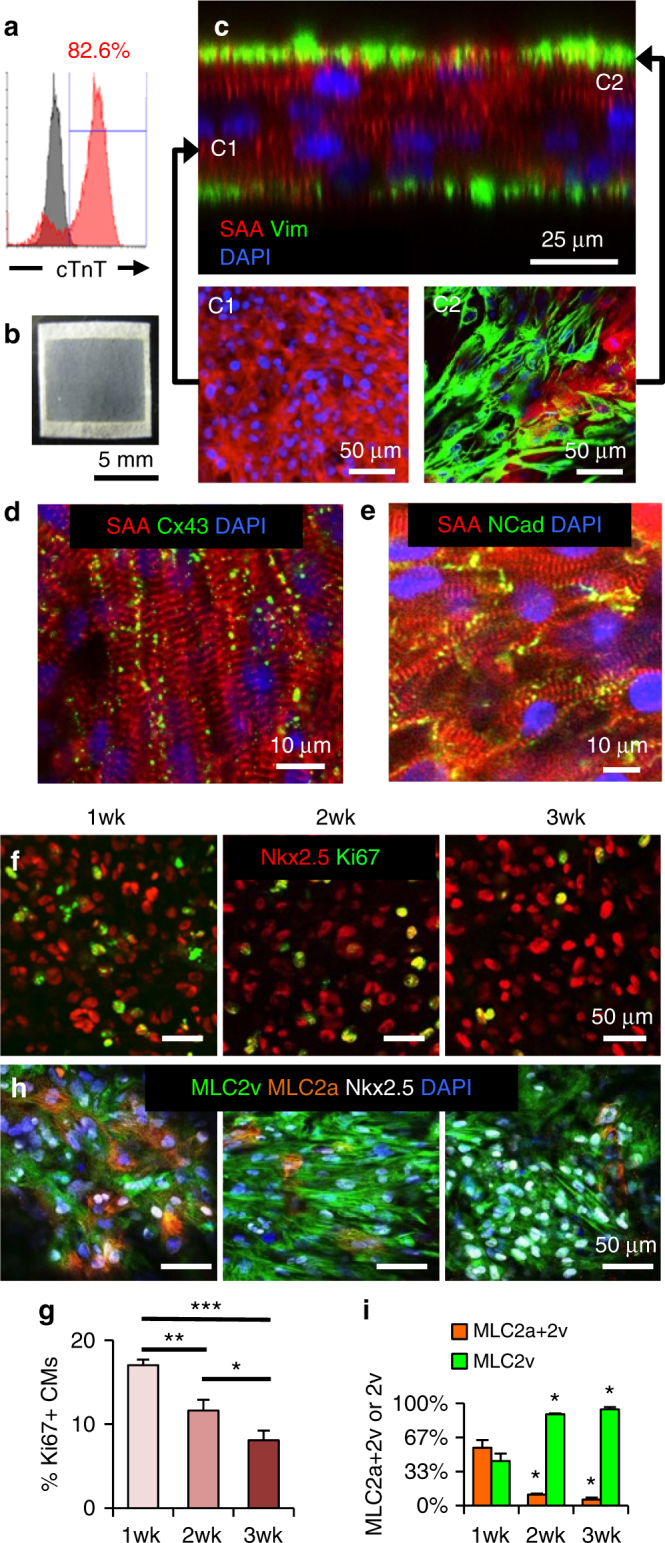
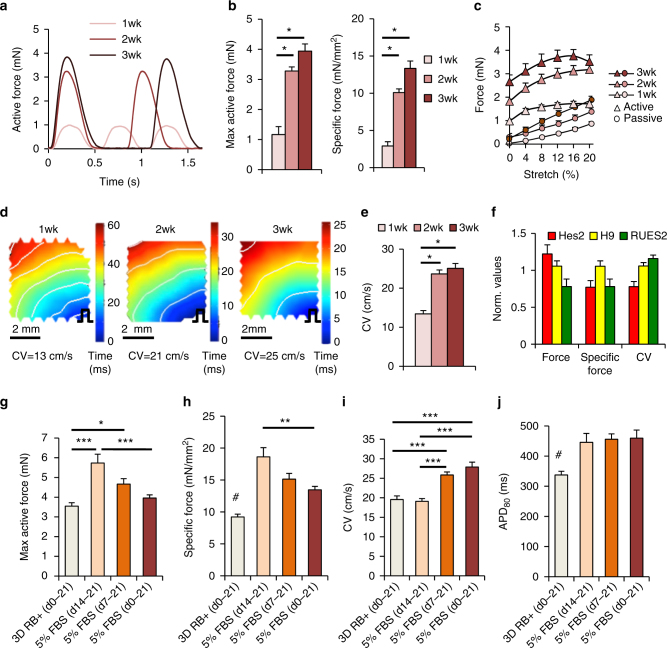
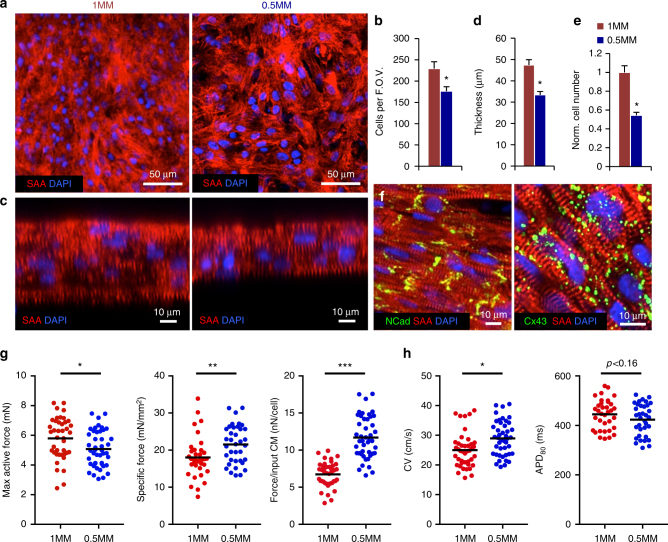
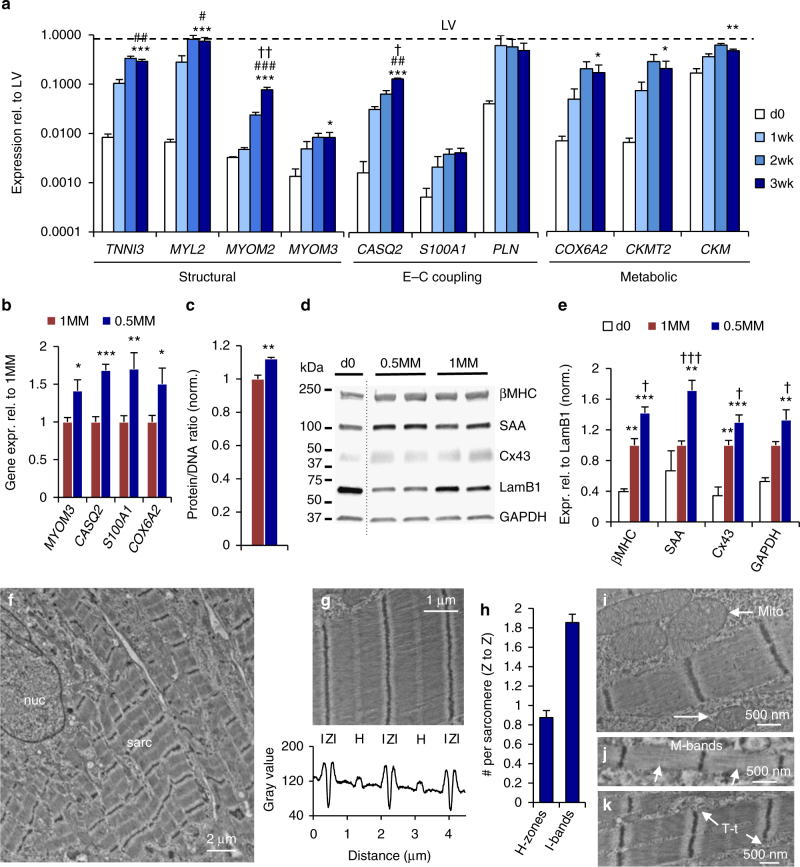
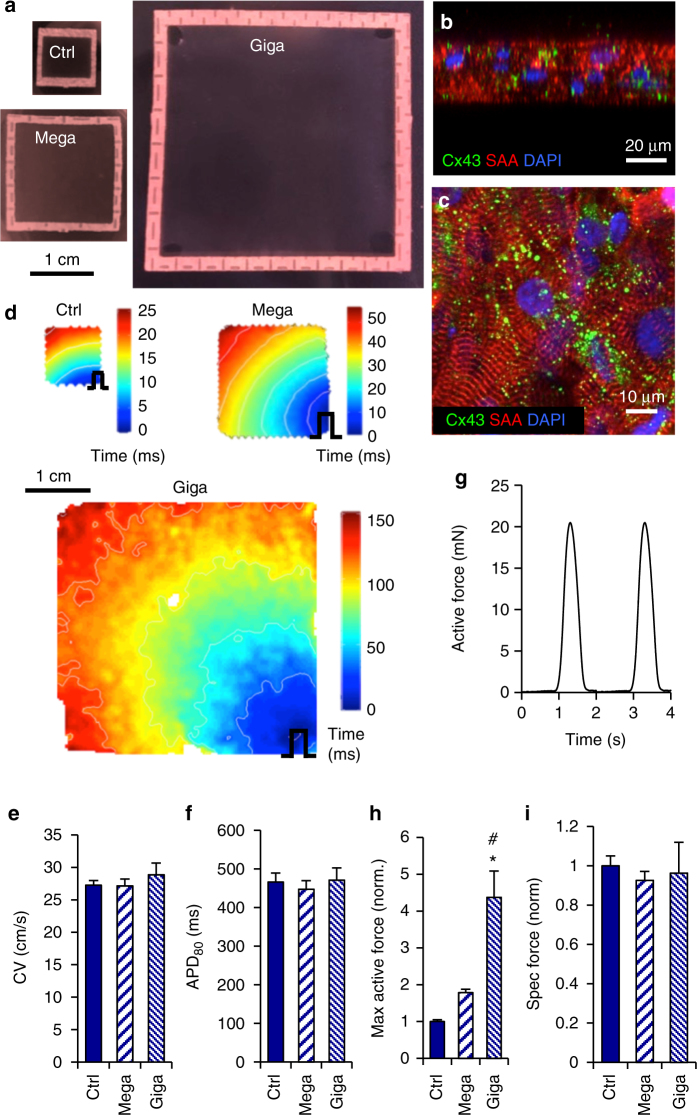
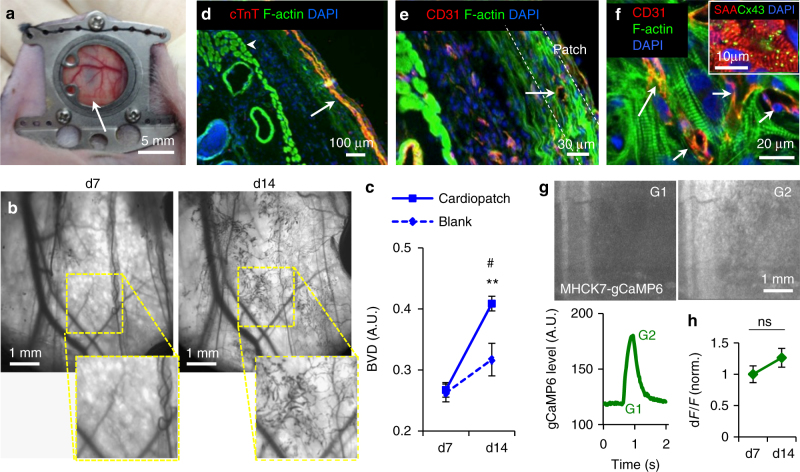
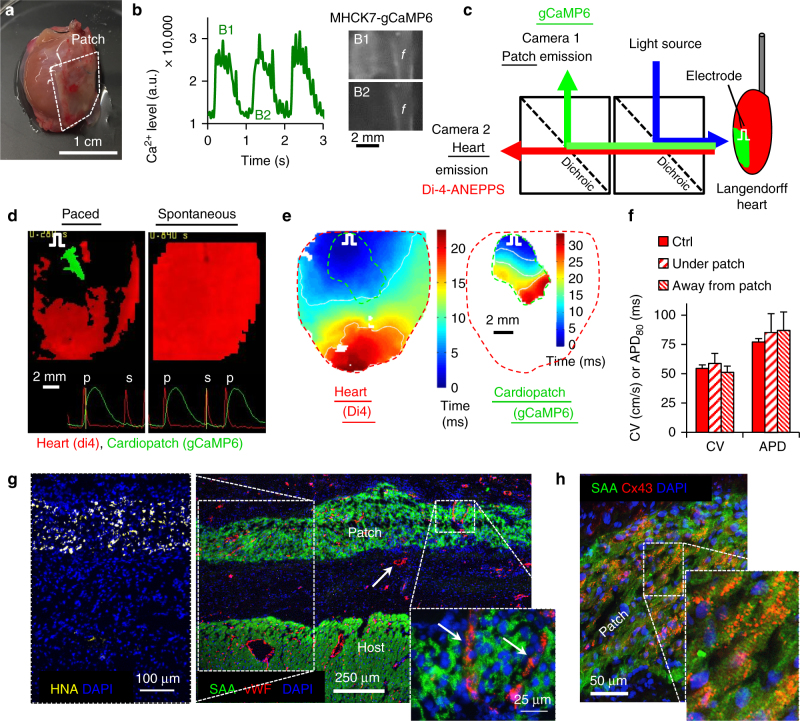
Despite increased use of human induced pluripotent stem cell-derived cardiomyocytes (hiPSC-CMs) for drug development and disease modeling studies, methods to generate large, functional heart tissues for human therapy are lacking. Here we present a “Cardiopatch” platform for 3D culture and maturation of hiPSC-CMs that after 5 weeks of differentiation show robust electromechanical coupling, consistent H-zones, I-bands, and evidence for T-tubules and M-bands. Cardiopatch maturation markers and functional output increase during culture, approaching values of adult myocardium. Cardiopatches can be scaled up to clinically relevant dimensions, while preserving spatially uniform properties with high conduction velocities and contractile stresses. Within window chambers in nude mice, cardiopatches undergo vascularization by host vessels and continue to fire Ca 2+ transients. When implanted onto rat hearts, cardiopatches robustly engraft, maintain pre-implantation electrical function, and do not increase the incidence of arrhythmias. These studies provide enabling technology for future use of hiPSC-CM tissues in human heart repair.
Overview
The claims and statistics of this paper haven’t been checked yet.
Free: it reads the open-access text and checks the first 5 claims that cite a source we can check. Create a free account to check every claim.
Integrity signals
Registry
Cites
Statistics
Figures
Verification
Claims the paper makes
The claims and statistics of this paper haven’t been checked yet.
Free: it reads the open-access text and checks the first 5 claims that cite a source we can check. Create a free account to check every claim.
Claims other papers make about this one
Each is checked against this paper’s own text: does it say what the citing paper says it does?
In the citing paper
“Shadrin et al. [242] combined hydrogel molding [243,244] and dynamic culture [245] techniques to develop a platform for culturing and maturing hiPSC-CMs to a clinically relevant size (from 7 mm × 7 mm–40 mm × 40 mm).”
From Cardiovascular disease models: A game changing paradigm in drug discovery and screening (2019) · cites this paper as [242]
Self-check
Percentages, sums and reported differences re-computed from the paper’s own numbers.
The self-check needs the paper’s full text.
Citations
Cites
Ultrasensitive fluorescent proteins for imaging neuronal activity
Chen, T.-W., Wardill, T. J., Sun, Y., Pulver, S. R., Renninger, S. L., Baohan, A., Schreiter, E. R., Kerr, R. A., Orger, M. B., Jayaraman, V., et al. (2013) · Nature · doi:10.1038/nature12354 · Cited by 6,474
Laflamme, M. A., Chen, K. Y., Naumova, A. V., Muskheli, V., Fugate, J. A., Dupras, S. K., Reinecke, H., Xu, C., Hassanipour, M., Police, S., et al. (2007) · Nature Biotechnology · doi:10.1038/nbt1327 · Cited by 2,206
Total Excitation of the Isolated Human Heart
DURRER, D., VAN DAM, R. T., FREUD, G. E., JANSE, M. J., MEIJLER, F. L., & ARZBAECHER, R. C. (1970) · Circulation · doi:10.1161/01.cir.41.6.899 · Cited by 1,777
Lian, X., Zhang, J., Azarin, S. M., Zhu, K., Hazeltine, L. B., Bao, X., Hsiao, C., Kamp, T. J., & Palecek, S. P. (2013) · Nature Protocols · doi:10.1038/nprot.2012.150 · Cited by 1,748 · cited 3×
“Structural analysis of implanted (dorsal window chamber and rat heart) cardiopatches was performed in one of two ways: (1) whole-mount staining, similar to in vitro protocol above, and (2) cryosectioning with subsequent immunostaining.”
BackgroundMethodLian, X., Hsiao, C., Wilson, G., Zhu, K., Hazeltine, L. B., Azarin, S. M., Raval, K. K., Zhang, J., Kamp, T. J., & Palecek, S. P. (2012) · Proceedings of the National Academy of Sciences · doi:10.1073/pnas.1200250109 · Cited by 1,717 · cited 3×
“Structural analysis of implanted (dorsal window chamber and rat heart) cardiopatches was performed in one of two ways: (1) whole-mount staining, similar to in vitro protocol above, and (2) cryosectioning with subsequent immunostaining.”
Chemically defined generation of human cardiomyocytes
Burridge, P. W., Matsa, E., Shukla, P., Lin, Z. C., Churko, J. M., Ebert, A. D., Lan, F., Diecke, S., Huber, B., Mordwinkin, N. M., et al. (2014) · Nature Methods · doi:10.1038/nmeth.2999 · Cited by 1,606 · cited 2×
“While significant progress has been made in generating miniature heart tissue surrogates for drug testing7,8,12,20, clinical translation of cardiac tissue engineering has faced several challenges, including: (1) inadequate cardiomyocyte maturation, (2) small tissue surface area, (3) small tissue thickness (no perfusab…”
BackgroundHuman embryonic-stem-cell-derived cardiomyocytes regenerate non-human primate hearts
Chong, J. J. H., Yang, X., Don, C. W., Minami, E., Liu, Y.-W., Weyers, J. J., Mahoney, W. M., Van Biber, B., Cook, S. M., Palpant, N. J., et al. (2014) · Nature · doi:10.1038/nature13233 · Cited by 1,408
Tohyama, S., Hattori, F., Sano, M., Hishiki, T., Nagahata, Y., Matsuura, T., Hashimoto, H., Suzuki, T., Yamashita, H., Satoh, Y., et al. (2013) · Cell Stem Cell · doi:10.1016/j.stem.2012.09.013 · Cited by 1,037
Engineered heart tissue grafts improve systolic and diastolic function in infarcted rat hearts
Zimmermann, W.-H., Melnychenko, I., Wasmeier, G., Didié, M., Naito, H., Nixdorff, U., Hess, A., Budinsky, L., Brune, K., Michaelis, B., et al. (2006) · Nature Medicine · doi:10.1038/nm1394 · Cited by 993
Biowire: a platform for maturation of human pluripotent stem cell–derived cardiomyocytes
Nunes, S. S., Miklas, J. W., Liu, J., Aschar-Sobbi, R., Xiao, Y., Zhang, B., Jiang, J., Massé, S., Gagliardi, M., Hsieh, A., et al. (2013) · Nature Methods · doi:10.1038/nmeth.2524 · Cited by 952
Research works printed but not linked: 1
- Weinberger F Cardiac repair in guinea pigs with human engineered heart tissue from induced pluripotent stem cells Sci. Transl. Med. 2016 8 363ra148 10.1126/scitranslmed.aaf8781 27807283 · DOI · Paper page
Cited by
Items 401–427 of 427
In silico evaluation of cardiac tissue-engineered patch interventions
Sayut, J., Jilberto, J., Bonini, M., Hirschvogel, M., Zhang, W., & Nordsletten, D. (2025) · Computers in Biology and Medicine · doi:10.1016/j.compbiomed.2025.111249 · Cited by 2
Mapping the trajectory of organoid research: Insights into complex models and advanced technologies
Zhang, Y., Wang, L., Zhao, Q., Gong, J., Tian, Y., Liu, Y., Chen, S., Zhao, X. J., Yang, Q., & Zhao, Y. (2025) · Engineered Regeneration · doi:10.1016/j.engreg.2025.11.003 · Cited by 2
Ultra‐Tiny Scale Technology for iPSC‐Based Cardiac Tissue Engineering
Park, C. Y., Kim, W., Sharma, H., Kim, D., Lee, S., & Kim, J. (2025) · Advanced Healthcare Materials · doi:10.1002/adhm.202502891
“For instance, Murry and colleagues conducted transplantation of human embryonic stem cell-derived cardiomyocytes (hESC-CMs) into infarcted non-human primate hearts, demonstrating significant improvements in left ventricular ejection fraction over three months [113].”
Vuckovic, S., Dinani, R., Nollet, E. E., Kuster, D. W. D., Buikema, J. W., Houtkooper, R. H., Nabben, M., van der Velden, J., & Goversen, B. (2022) · Figshare · doi:10.6084/m9.figshare.20375983
Hutschalik, T., Özgül, O. F., Casini, M., Szabo, B. R., Peyronnet, R., Bártulos, Ó., Argenziano, M., Schotten, U., & Matsa, E. (2024) · Figshare · doi:10.6084/m9.figshare.26945931
Dilated Cardiomyopathy : From Genetics to Clinical Management
(2019) · OAPEN (The OAPEN Foundation) · Cited by 4
Functional analysis of the FLNC W2164c missense variant associated with hypertrophic cardiomyopathy
Azad, A. J. (2023) · University of Birmingham Institutional Research Archive (University of Birmingham)
Panahi, B., Dababneh, S., Fadaei, S. S., Babini, H., Singh, S., Prondzynski, M., Akbari, M., Backx, P. H., Andrade, J. G., Rose, R. A., et al. (2026) · Cells · doi:10.3390/cells15020187 · Cited by 1
Fiedler, M. J., Vásquez‐Limeta, A., Reyes-Sanchez, E., Carter, L., & Altamirano, F. J. (2026) · Advanced Science · doi:10.64898/2026.02.11.705466
Setting Up an Engineered Heart Tissue Model
Kulmala, L. (2024) · Tampere University Institutional Repository (Tampere University)
Materials Used in Engineered Heart Tissues
Hafez, M. A. (2024) · Tampere University Institutional Repository (Tampere University)
Wu, T., Li, Y., Perelli, R. M., Siu, Y. Y., Tornatore, A., Moran, J. N., Jiang, X., DeLuca, S., Bers, D. M., Henriquez, C. S., et al. (2026) · Science Advances · doi:10.1126/sciadv.ady4551
“Maximum twitch amplitude, active and passive force-length curves, and parameters of twitch kinetics were derived as previously described using custom MATLAB software ( 21 ).”
Self-citationModelling ryanopathies using patient-specific induced pluripotent stem cell derived-cardiomyocytes
Sleiman, Y. (2019) · theses.fr (ABES) · doi:10.70675/697fa0a8z2f7fz4585z9337za7dbdc65075f
Yuqing, Z., Tan, G., Mao, Y., Wu, Y., Wang, C., Zhang, L., & Chang, C. (2026) · International Journal of Biological Macromolecules · doi:10.1016/j.ijbiomac.2026.152154 · Cited by 1
Wave propagation enhances extracellular signal strength in small excitable tissues
Jæger, K. H., & Tveito, A. (2026) · Scientific Reports · doi:10.1038/s41598-026-51791-6
“We observe that when the gap junction conductance is increased, the extracellular signal strength for the localized stimulation is considerably improved and consistently stronger compared to the other stimulation approaches.”
Hashemi, M., Devi, N. D., Kooh, Y. K. G., Chen, C., Malayath, G., Victor, J., Bahmani, B., & Huebsch, N. (2026) · bioRxiv (Cold Spring Harbor Laboratory) · doi:10.64898/2026.07.08.737331
“Given that MLC2a is predominantly expressed in fetal and immature cardiomyocytes [41, 42], its reduced expression in hiPSC-CM derived from 60 kDa EiCs ( Fig.”
Importance of Cell Alignment in Cardiac Tissue Engineering
Kitsuka, T., & Arai, K. (2026) · Biomaterials Connect · doi:10.69709/biomatc.2026.107707
Therapeutic applications of stem cells in human diseases
Hao, C., Bolideei, M., Alshorman, J., Tembo, K. M., Yekta, M. M., Mehran, M. J., & Zhang, Z. (2026) · Stem Cell Research & Therapy · doi:10.1186/s13287-026-05203-1 · Cited by 1
“…cardiac function after MI [53, 54]. iPSC-derived cardiomyocytes have also been incorporated into engineered heart tissues, scaffold-based constructs, and other three-dimensional systems designed to improve cell retention, maturation, and structural integration within injured myocardium [55, 56].”
Iglesias‐García, O., Ullate‐Agote, A., Qin, J., Oliván‐Viguera, A., García‐Mendívil, L., Cedillo‐Servín, G., Braig, J., Valdés‐Fernández, J., Dokter, I., Lusar, I. A., et al. (2026) · Materials Today Bio · doi:10.1016/j.mtbio.2026.103647
“In addition, progress has also been made in generating clinical-size cardiac tissues using fibrin hydrogels, representing an important step toward therapeutic applications [13,14].”
Human cardiovascular organoids: Biomedical applications and ethical challenges
Sen, K., Majumder, S., Stanišić, D., & Majumder, A. (2026) · American Heart Journal Plus Cardiology Research and Practice · doi:10.1016/j.ahjo.2026.100882 · Cited by 1
“In preclinical models of myocardial infarction, engineered cardiac tissue patches incorporating extracellular matrix scaffolds and vascular-supporting cell populations have demonstrated enhanced cell engraftment, improved neovascularization, and partial functional recover [131].”
Structural and functional remodeling of large-scale cardiac tubes
Szádocka, S., Teske, J., Franke, A., Mertens, M., Kriedemann, N., Witte, M., Drakhlis, L., Ruhparwar, A., Gruh, I., Zweigerdt, R., et al. (2026) · Biofabrication · doi:10.1088/1758-5090/aeadd2
“…biological cues have been explored, including static stretch [11], static growing stretch [12], cyclic stretch [13], shear stress from dynamic flow [14, 15], implementation of topographical cues [16], electrical stimulation [13, 17], as well as modification of culture medium by adding fatty acids…”
Flandes‐Iparraguirre, M., Vernon, M. J., Iglesias‐García, O., de Yébenes, M. G., Gavira, J. J., Janssens, S. P., Prósper, F., De‐Juan‐Pardo, E. M., & Mazo, M. M. (2026) · Biomaterials Advances · doi:10.1016/j.bioadv.2026.215221
Tubular SiO2−TiO2 Hybrid Inverse Opal Porous Layers as an Optical Interferometric Platform
Zhang, B., Zheng, X., Liu, L., Wan, Y., Wang, T., Zhai, Y., Liu, H., & Qian, W. (2026) · Analytical Chemistry · doi:10.1021/acs.analchem.6c03417
Additive manufacturing for cardiac tissue engineering
Ramesh, P., Beena, M., & Palaniappan, A. (2026) · Elsevier eBooks · doi:10.1016/b978-0-443-33889-2.00020-0
Bennett, P. (2026) · Dublin City University Open Access Institutional Repository (Dublin City University)
Metadata
- Authors
- Shadrin, I. Y., Allen, B. W., Qian, Y., Jackman, C. P., Carlson, A. L., Juhas, M. E., & Bursac, N.
- Affiliations
- Duke University (US)
- Corresponding author
- Bursac, Nenad
- Venue
- Nature Communications
- Published
- 2017-11-28
- Volume
- 8
- Issue
- 1
- Pages
- 1825-1825
- ISSN
- 2041-1723 (ISSN-L)
- PMC
- PMC5705709
- OpenAlex
- W2768142457
- Cited by
- 420
- References
- 69
- Citations by year
- 2026: 16 · 2025: 38 · 2024: 40 · 2023: 55 · 2022: 52 · 2021: 67 · 2020: 59 · 2019: 61 · 2018: 32
- FWCI
- 16.99
- Type
- journal article
- Language
- en
- Open access
- gold
- doi.org
- Licence
- cc-by
- creativecommons.org/licenses/by/4.0 (tdm)
- creativecommons.org/licenses/by/4.0 (vor)
- Locations
- Nature Communications (publishedVersion, cc-by)
- Europe PMC (PubMed Central) (publishedVersion, cc-by)
- PubMed Central (publishedVersion, cc-by)
- PubMed (publishedVersion)
- RePEc: Research Papers in Economics (submittedVersion)
- DOAJ (DOAJ: Directory of Open Access Journals) (submittedVersion, cc-by-sa)
- Funders
- National Institutes of Health (UG3TR002142, 5r01hl104326-05)
- National Heart, Lung, and Blood Institute (R01HL132389, R01-HL104326, F30HL122079, U01HL134764, R01HL126524)
- National Institute of General Medical Sciences (T32GM007171)
- National Center for Advancing Translational Sciences
- Topics
- Life Sciences › Biochemistry, Genetics and Molecular Biology › Molecular Biology › Pluripotent Stem Cells Research
- Health Sciences › Medicine › Surgery › Tissue Engineering and Regenerative Medicine
- Life Sciences › Biochemistry, Genetics and Molecular Biology › Molecular Biology › Congenital heart defects research
- Keywords
- human induced pluripotent stem cell-derived cardiomyocytes, engineered heart tissue, cardiomyocyte maturation, scale-up, electromechanical coupling, T-tubules, M-band, conduction velocity, vascularization, cardiac arrhythmias, cardiac repair, cell therapy
- MeSH terms
- Animals, Arrhythmias, Cardiac, Calcium, Cell Differentiation, Cell Line, Cells, Cultured, Disease Models, Animal, Humans, Male, Mice, Nude, Myocardial Contraction, Myocardial Infarction, Myocardium, Sarcomeres, Tissue Engineering, Myocytes, Cardiac, Pluripotent Stem Cells, Mice, Rats, Induced Pluripotent Stem Cells, Heterografts
About these checks
Registry, retraction, Cites and statistics results are computed, not judged, with one exception: a printed reference that no index lists is read once by a model before it counts as a citation error. Claims are extracted by a model and kept only when their quote appears verbatim in the text; each cited source is then checked, with a model’s help, for whether it says what the claim relies on. Those verdicts can be wrong — read the claim’s quote and the cited source before relying on one.
Statistics and arithmetic are recomputed, not judged.
Confidence bands are shown only for fields calibrated on our annotated test set. None is calibrated yet, so no band is shown.
What counts as a claim ›How we measure confidence ›How we check this ›
Are you an author, or do you see a problem with this page? Request a review
Data sources
Bibliographic data: Semantic Scholar, OpenAlex, Crossref.
Contains information from the Semantic Scholar Academic Graph Datasets, made available under the ODC Attribution License (ODC-BY 1.0).
Semantic Scholar’s data is described in: Kinney, R., et al. (2023). The Semantic Scholar Open Data Platform. arXiv:2301.10140.
