

Cardiopatch platform enables maturation and scale-up of human pluripotent stem cell-derived engineered heart tissues
Open accessThe DOI matches its Crossref record; 69 of the 69 references it cites were found in a registry or an index.
Abstract
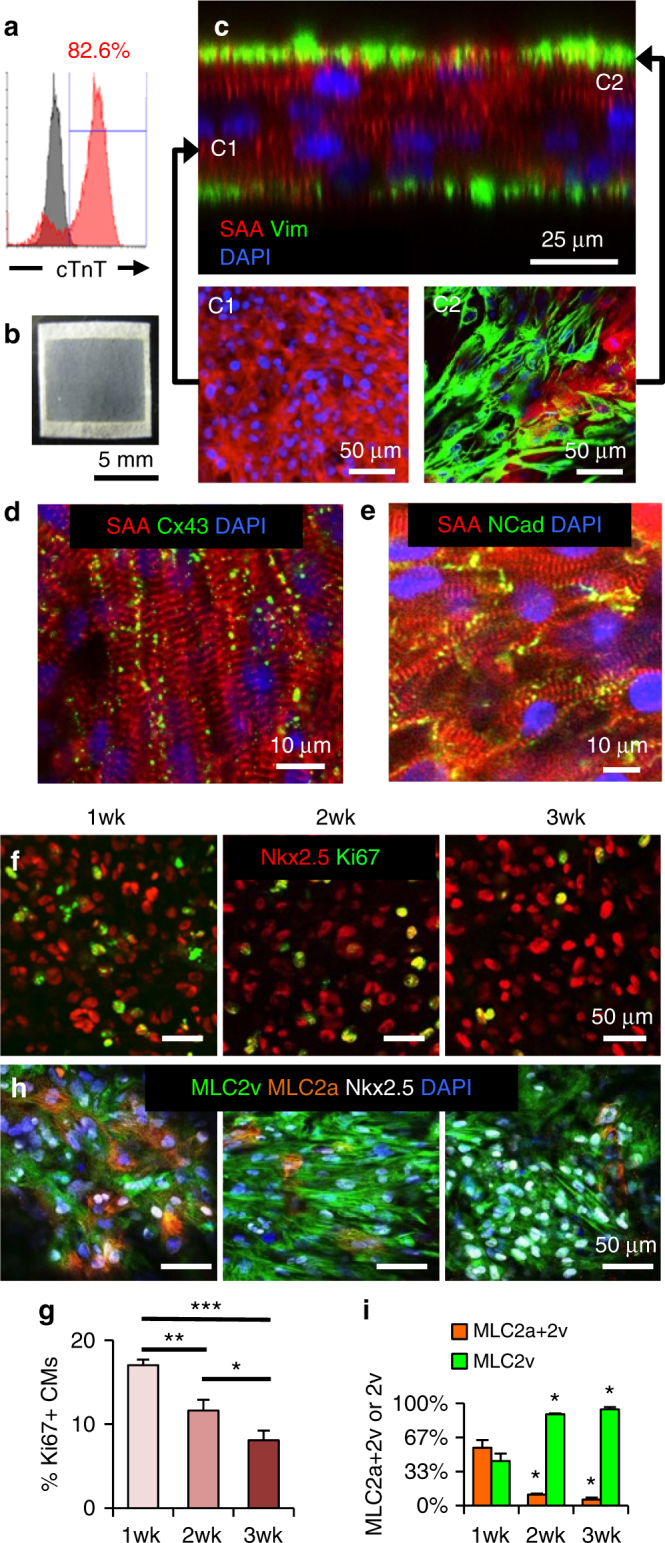
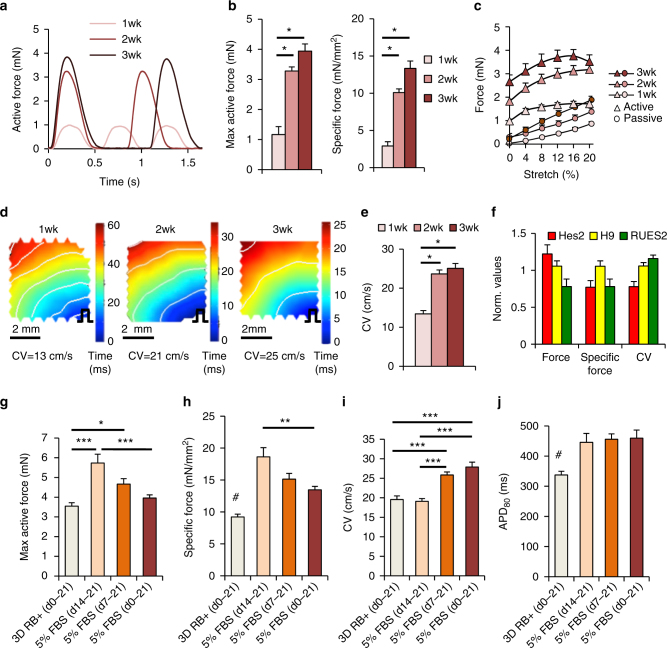
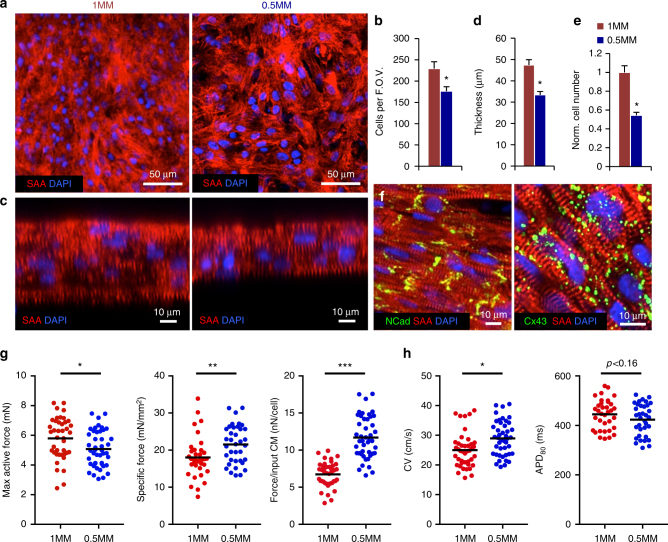
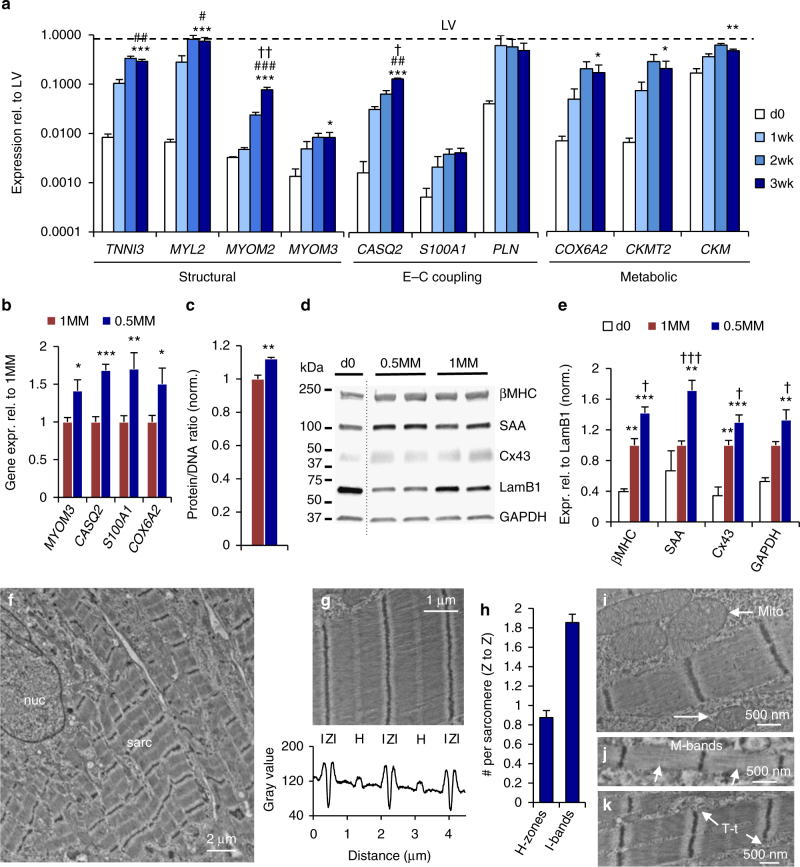
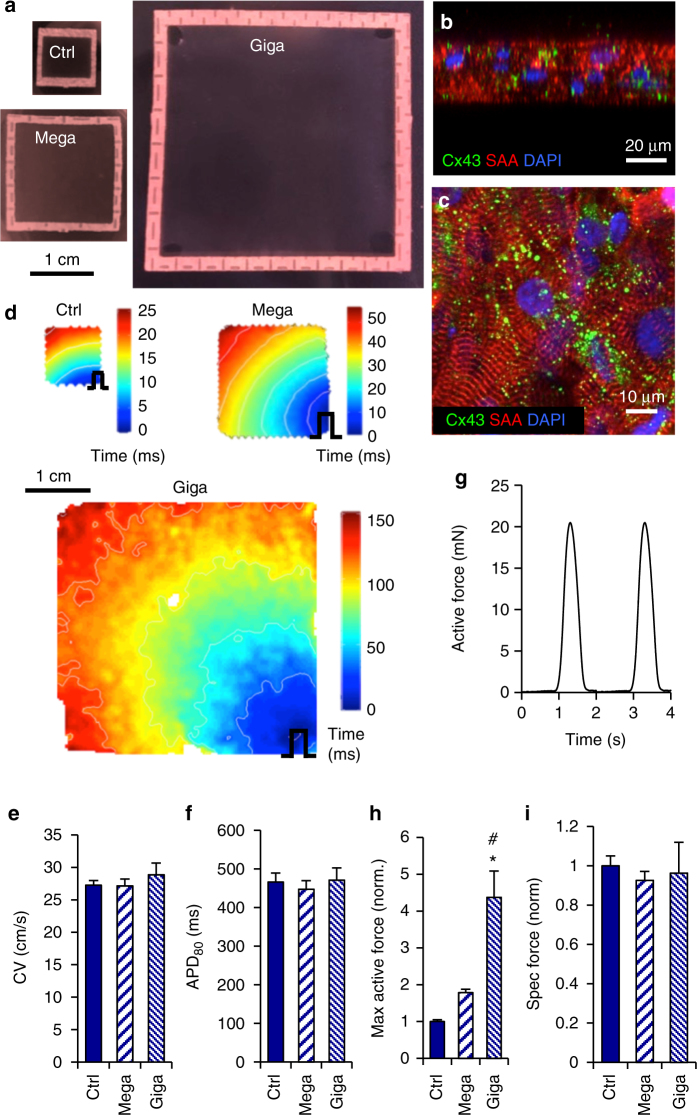
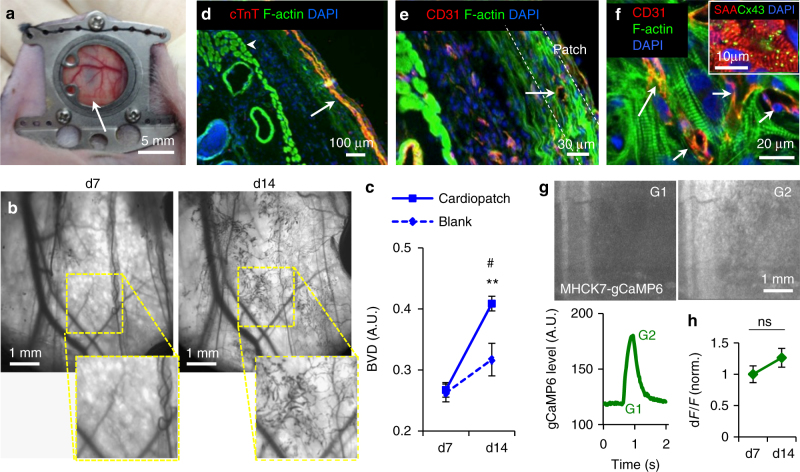
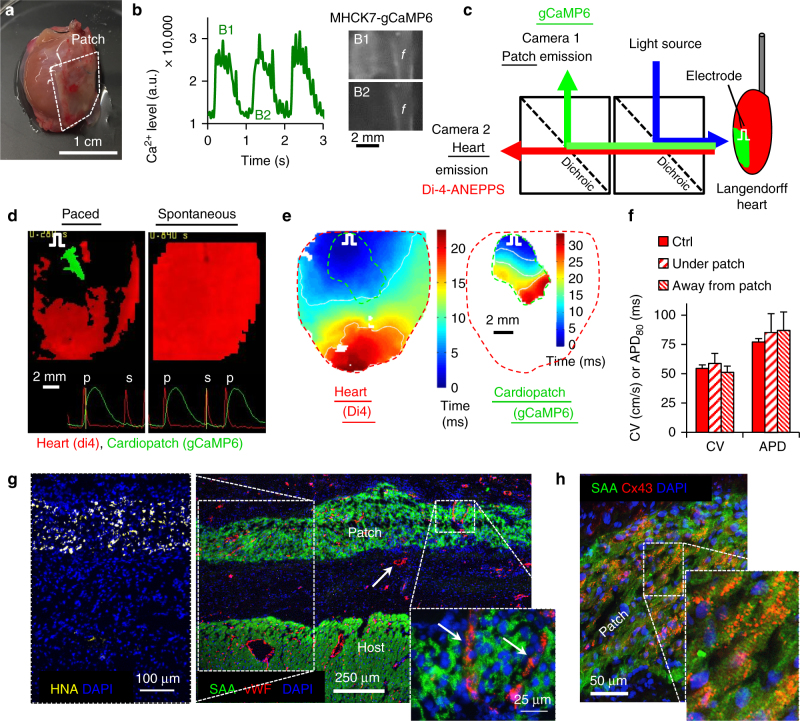
Despite increased use of human induced pluripotent stem cell-derived cardiomyocytes (hiPSC-CMs) for drug development and disease modeling studies, methods to generate large, functional heart tissues for human therapy are lacking. Here we present a “Cardiopatch” platform for 3D culture and maturation of hiPSC-CMs that after 5 weeks of differentiation show robust electromechanical coupling, consistent H-zones, I-bands, and evidence for T-tubules and M-bands. Cardiopatch maturation markers and functional output increase during culture, approaching values of adult myocardium. Cardiopatches can be scaled up to clinically relevant dimensions, while preserving spatially uniform properties with high conduction velocities and contractile stresses. Within window chambers in nude mice, cardiopatches undergo vascularization by host vessels and continue to fire Ca 2+ transients. When implanted onto rat hearts, cardiopatches robustly engraft, maintain pre-implantation electrical function, and do not increase the incidence of arrhythmias. These studies provide enabling technology for future use of hiPSC-CM tissues in human heart repair.
Overview
The claims and statistics of this paper haven’t been checked yet.
Free: it reads the open-access text and checks the first 5 claims that cite a source we can check. Create a free account to check every claim.
Integrity signals
Registry
Cites
Statistics
Figures
Verification
Claims the paper makes
The claims and statistics of this paper haven’t been checked yet.
Free: it reads the open-access text and checks the first 5 claims that cite a source we can check. Create a free account to check every claim.
Claims other papers make about this one
Each is checked against this paper’s own text: does it say what the citing paper says it does?
In the citing paper
“Shadrin et al. [242] combined hydrogel molding [243,244] and dynamic culture [245] techniques to develop a platform for culturing and maturing hiPSC-CMs to a clinically relevant size (from 7 mm × 7 mm–40 mm × 40 mm).”
From Cardiovascular disease models: A game changing paradigm in drug discovery and screening (2019) · cites this paper as [242]
Self-check
Percentages, sums and reported differences re-computed from the paper’s own numbers.
The self-check needs the paper’s full text.
Citations
Cites
Ultrasensitive fluorescent proteins for imaging neuronal activity
Chen, T.-W., Wardill, T. J., Sun, Y., Pulver, S. R., Renninger, S. L., Baohan, A., Schreiter, E. R., Kerr, R. A., Orger, M. B., Jayaraman, V., et al. (2013) · Nature · doi:10.1038/nature12354 · Cited by 6,474
Laflamme, M. A., Chen, K. Y., Naumova, A. V., Muskheli, V., Fugate, J. A., Dupras, S. K., Reinecke, H., Xu, C., Hassanipour, M., Police, S., et al. (2007) · Nature Biotechnology · doi:10.1038/nbt1327 · Cited by 2,206
Total Excitation of the Isolated Human Heart
DURRER, D., VAN DAM, R. T., FREUD, G. E., JANSE, M. J., MEIJLER, F. L., & ARZBAECHER, R. C. (1970) · Circulation · doi:10.1161/01.cir.41.6.899 · Cited by 1,777
Lian, X., Zhang, J., Azarin, S. M., Zhu, K., Hazeltine, L. B., Bao, X., Hsiao, C., Kamp, T. J., & Palecek, S. P. (2013) · Nature Protocols · doi:10.1038/nprot.2012.150 · Cited by 1,748 · cited 3×
“Structural analysis of implanted (dorsal window chamber and rat heart) cardiopatches was performed in one of two ways: (1) whole-mount staining, similar to in vitro protocol above, and (2) cryosectioning with subsequent immunostaining.”
BackgroundMethodLian, X., Hsiao, C., Wilson, G., Zhu, K., Hazeltine, L. B., Azarin, S. M., Raval, K. K., Zhang, J., Kamp, T. J., & Palecek, S. P. (2012) · Proceedings of the National Academy of Sciences · doi:10.1073/pnas.1200250109 · Cited by 1,717 · cited 3×
“Structural analysis of implanted (dorsal window chamber and rat heart) cardiopatches was performed in one of two ways: (1) whole-mount staining, similar to in vitro protocol above, and (2) cryosectioning with subsequent immunostaining.”
Chemically defined generation of human cardiomyocytes
Burridge, P. W., Matsa, E., Shukla, P., Lin, Z. C., Churko, J. M., Ebert, A. D., Lan, F., Diecke, S., Huber, B., Mordwinkin, N. M., et al. (2014) · Nature Methods · doi:10.1038/nmeth.2999 · Cited by 1,606 · cited 2×
“While significant progress has been made in generating miniature heart tissue surrogates for drug testing7,8,12,20, clinical translation of cardiac tissue engineering has faced several challenges, including: (1) inadequate cardiomyocyte maturation, (2) small tissue surface area, (3) small tissue thickness (no perfusab…”
BackgroundHuman embryonic-stem-cell-derived cardiomyocytes regenerate non-human primate hearts
Chong, J. J. H., Yang, X., Don, C. W., Minami, E., Liu, Y.-W., Weyers, J. J., Mahoney, W. M., Van Biber, B., Cook, S. M., Palpant, N. J., et al. (2014) · Nature · doi:10.1038/nature13233 · Cited by 1,408
Tohyama, S., Hattori, F., Sano, M., Hishiki, T., Nagahata, Y., Matsuura, T., Hashimoto, H., Suzuki, T., Yamashita, H., Satoh, Y., et al. (2013) · Cell Stem Cell · doi:10.1016/j.stem.2012.09.013 · Cited by 1,037
Engineered heart tissue grafts improve systolic and diastolic function in infarcted rat hearts
Zimmermann, W.-H., Melnychenko, I., Wasmeier, G., Didié, M., Naito, H., Nixdorff, U., Hess, A., Budinsky, L., Brune, K., Michaelis, B., et al. (2006) · Nature Medicine · doi:10.1038/nm1394 · Cited by 993
Biowire: a platform for maturation of human pluripotent stem cell–derived cardiomyocytes
Nunes, S. S., Miklas, J. W., Liu, J., Aschar-Sobbi, R., Xiao, Y., Zhang, B., Jiang, J., Massé, S., Gagliardi, M., Hsieh, A., et al. (2013) · Nature Methods · doi:10.1038/nmeth.2524 · Cited by 952
Engineering Adolescence: Maturation of Human Pluripotent Stem Cell–Derived Cardiomyocytes
Yang, X., Pabon, L., & Murry, C. E. (2014) · Circulation Research · doi:10.1161/circresaha.114.300558 · Cited by 939
Allogeneic transplantation of iPS cell-derived cardiomyocytes regenerates primate hearts
Shiba, Y., Gomibuchi, T., Seto, T., Wada, Y., Ichimura, H., Tanaka, Y., Ogasawara, T., Okada, K., Shiba, N., Sakamoto, K., et al. (2016) · Nature · doi:10.1038/nature19815 · Cited by 840
Growth of engineered human myocardium with mechanical loading and vascular coculture
Tulloch, N. L., Muskheli, V., Razumova, M. V., Korte, F. S., Regnier, M., Hauch, K. D., Pabon, L., Reinecke, H., & Murry, C. E. (2011) · Circulation Research · doi:10.1161/circresaha.110.237206 · Cited by 666
Tiburcy, M., Hudson, J. E., Balfanz, P., Schlick, S., Meyer, T., Chang Liao, M.-L., Levent, E., Raad, F., Zeidler, S., Wingender, E., et al. (2017) · Circulation · doi:10.1161/circulationaha.116.024145 · Cited by 645
Altered myocardial force-frequency relation in human heart failure.
Mulieri, L. A., Hasenfuss, G., Leavitt, B., Allen, P. D., & Alpert, N. R. (1992) · Circulation · doi:10.1161/01.cir.85.5.1743 · Cited by 597
Zhang, B., Montgomery, M., Chamberlain, M. D., Ogawa, S., Korolj, A., Pahnke, A., Wells, L. A., Massé, S., Kim, J., Reis, L., et al. (2016) · Nature Materials · doi:10.1038/nmat4570 · Cited by 593
Zhang, D., Shadrin, I. Y., Lam, J., Xian, H.-Q., Snodgrass, H. R., & Bursac, N. (2013) · Biomaterials · doi:10.1016/j.biomaterials.2013.04.026 · Cited by 565
Self-citationTissue engineering of vascularized cardiac muscle from human embryonic stem cells
Caspi, O., Lesman, A., Basevitch, Y., Gepstein, A., Arbel, G., Habib, I. H. M., Gepstein, L., & Levenberg, S. (2007) · Circulation Research · doi:10.1161/01.res.0000257776.05673.ff · Cited by 558
Molecular basis of physiological heart growth: fundamental concepts and new players
Maillet, M., van Berlo, J. H., & Molkentin, J. D. (2013) · Nature Reviews Molecular Cell Biology · doi:10.1038/nrm3495 · Cited by 536
Ruan, J.-L., Tulloch, N. L., Razumova, M. V., Saiget, M., Muskheli, V., Pabon, L., Reinecke, H., Regnier, M., & Murry, C. E. (2016) · Circulation · doi:10.1161/circulationaha.114.014998 · Cited by 467
Menasché, P., Vanneaux, V., Hagège, A., Bel, A., Cholley, B., Cacciapuoti, I., Parouchev, A., Benhamouda, N., Tachdjian, G., Tosca, L., et al. (2015) · European Heart Journal · doi:10.1093/eurheartj/ehv189 · Cited by 445
Zhang, J., Klos, M., Wilson, G. F., Herman, A. M., Lian, X., Raval, K. K., Barron, M. R., Hou, L., Soerens, A. G., Yu, J., et al. (2012) · Circulation Research · doi:10.1161/circresaha.112.273144 · Cited by 445
Human Engineered Heart Tissue: Analysis of Contractile Force
Mannhardt, I., Breckwoldt, K., Letuffe-Brenière, D., Schaaf, S., Schulz, H., Neuber, C., Benzin, A., Werner, T., Eder, A., Schulze, T., et al. (2016) · Stem Cell Reports · doi:10.1016/j.stemcr.2016.04.011 · Cited by 398
Lu, T.-Y., Lin, B., Kim, J., Sullivan, M., Tobita, K., Salama, G., & Yang, L. (2013) · Nature Communications · doi:10.1038/ncomms3307 · Cited by 370
Human engineered heart tissue as a versatile tool in basic research and preclinical toxicology
Schaaf, S., Shibamiya, A., Mewe, M., Eder, A., Stöhr, A., Hirt, M. N., Rau, T., Zimmermann, W.-H., Conradi, L., Eschenhagen, T., et al. (2011) · PLoS ONE · doi:10.1371/journal.pone.0026397 · Cited by 365
Bioengineered human myobundles mimic clinical responses of skeletal muscle to drugs
Madden, L., Juhas, M., Kraus, W. E., Truskey, G. A., & Bursac, N. (2015) · eLife · doi:10.7554/elife.04885 · Cited by 356
Self-citationHirt, M. N., Boeddinghaus, J., Mitchell, A., Schaaf, S., Börnchen, C., Müller, C., Schulz, H., Hubner, N., Stenzig, J., Stoehr, A., et al. (2014) · Journal of Molecular and Cellular Cardiology · doi:10.1016/j.yjmcc.2014.05.009 · Cited by 352
Bioengineering human myocardium on native extracellular matrix
Guyette, J. P., Charest, J. M., Mills, R. W., Jank, B. J., Moser, P. T., Gilpin, S. E., Gershlak, J. R., Okamoto, T., Gonzalez, G., Milan, D. J., et al. (2016) · Circulation Research · doi:10.1161/circresaha.115.306874 · Cited by 343
Transmural Dispersion of Repolarization in Failing and Nonfailing Human Ventricle
Glukhov, A. V., Fedorov, V. V., Lou, Q., Ravikumar, V. K., Kalish, P. W., Schuessler, R. B., Moazami, N., & Efimov, I. R. (2010) · Circulation Research · doi:10.1161/circresaha.109.204891 · Cited by 315
Kamakura, T., Makiyama, T., Sasaki, K., Yoshida, Y., Wuriyanghai, Y., Chen, J., Hattori, T., Ohno, S., Kita, T., Horie, M., et al. (2013) · Circulation Journal · doi:10.1253/circj.cj-12-0987 · Cited by 295
Hinds, S., Bian, W., Dennis, R. G., & Bursac, N. (2011) · Biomaterials · doi:10.1016/j.biomaterials.2011.01.062 · Cited by 287
Self-citationDesign and formulation of functional pluripotent stem cell-derived cardiac microtissues
Thavandiran, N., Dubois, N., Mikryukov, A., Massé, S., Beca, B., Simmons, C. A., Deshpande, V. S., McGarry, J. P., Chen, C. S., Nanthakumar, K., et al. (2013) · Proceedings of the National Academy of Sciences · doi:10.1073/pnas.1311120110 · Cited by 285
Cardiac repair in guinea pigs with human engineered heart tissue from induced pluripotent stem cells
Weinberger, F., Breckwoldt, K., Pecha, S., Kelly, A., Geertz, B., Starbatty, J., Yorgan, T., Cheng, K.-H., Lessmann, K., Stolen, T., et al. (2016) · Science Translational Medicine · doi:10.1126/scitranslmed.aaf8781 · Cited by 272
Human Engineered Heart Muscles Engraft and Survive Long Term in a Rodent Myocardial Infarction Model
Riegler, J., Tiburcy, M., Ebert, A., Tzatzalos, E., Raaz, U., Abilez, O. J., Shen, Q., Kooreman, N. G., Neofytou, E., Chen, V. C., et al. (2015) · Circulation Research · doi:10.1161/circresaha.115.306985 · Cited by 258
Juhas, M., Engelmayr, G. C., Fontanella, A. N., Palmer, G. M., & Bursac, N. (2014) · Proceedings of the National Academy of Sciences · doi:10.1073/pnas.1402723111 · Cited by 246
Self-citationPluripotent stem cell-derived cardiac tissue patch with advanced structure and function
Liau, B., Christoforou, N., Leong, K. W., & Bursac, N. (2011) · Biomaterials · doi:10.1016/j.biomaterials.2011.08.050 · Cited by 233
Self-citationBedada, F. B., Chan, S. S.-K., Metzger, S. K., Zhang, L., Zhang, J., Garry, D. J., Kamp, T. J., Kyba, M., & Metzger, J. M. (2014) · Stem Cell Reports · doi:10.1016/j.stemcr.2014.07.012 · Cited by 229
Miniaturized iPS-Cell-Derived Cardiac Muscles for Physiologically Relevant Drug Response Analyses
Huebsch, N., Loskill, P., Deveshwar, N., Spencer, C. I., Judge, L. M., Mandegar, M. A., B. Fox, C., Mohamed, T. M. A., Ma, Z., Mathur, A., et al. (2016) · Scientific Reports · doi:10.1038/srep24726 · Cited by 229
Mesoscopic hydrogel molding to control the 3D geometry of bioartificial muscle tissues
Bian, W., Liau, B., Badie, N., & Bursac, N. (2009) · Nature Protocols · doi:10.1038/nprot.2009.155 · Cited by 225
Self-citationNeagoe, C., Opitz, C. A., Makarenko, I., & Linke, W. A. (2003) · Journal of Muscle Research & Cell Motility · doi:10.1023/a:1026053530766 · Cited by 196
Kensah, G., Roa Lara, A., Dahlmann, J., Zweigerdt, R., Schwanke, K., Hegermann, J., Skvorc, D., Gawol, A., Azizian, A., Wagner, S., et al. (2013) · European Heart Journal · doi:10.1093/eurheartj/ehs349 · Cited by 193
Dynamic culture yields engineered myocardium with near-adult functional output
Jackman, C. P., Carlson, A. L., & Bursac, N. (2016) · Biomaterials · doi:10.1016/j.biomaterials.2016.09.024 · Cited by 188
Self-citationHasenfuss, G., Mulieri, L. A., Blanchard, E. M., Holubarsch, C., Leavitt, B. J., Ittleman, F., & Alpert, N. R. (1991) · Circulation Research · doi:10.1161/01.res.68.3.836 · Cited by 186
Dolnikov, K., Shilkrut, M., Zeevi-Levin, N., Gerecht-Nir, S., Amit, M., Danon, A., Itskovitz-Eldor, J., & Binah, O. (2006) · Stem Cells · doi:10.1634/stemcells.2005-0036 · Cited by 184
Advancing functional engineered cardiac tissues toward a preclinical model of human myocardium
Turnbull, I. C., Karakikes, I., Serrao, G. W., Backeris, P., Lee, J., Xie, C., Senyei, G., Gordon, R. E., Li, R. A., Akar, F. G., et al. (2014) · The FASEB Journal · doi:10.1096/fj.13-228007 · Cited by 184
Autonomous beating rate adaptation in human stem cell-derived cardiomyocytes
Eng, G., Lee, B. W., Protas, L., Gagliardi, M., Brown, K., Kass, R. S., Keller, G., Robinson, R. B., & Vunjak-Novakovic, G. (2016) · Nature Communications · doi:10.1038/ncomms10312 · Cited by 176
Palmer, G. M., Fontanella, A. N., Shan, S., Hanna, G., Zhang, G., Fraser, C. L., & Dewhirst, M. W. (2011) · Nature Protocols · doi:10.1038/nprot.2011.349 · Cited by 168
Distilling complexity to advance cardiac tissue engineering
Ogle, B. M., Bursac, N., Domian, I., Huang, N. F., Menasché, P., Murry, C. E., Pruitt, B., Radisic, M., Wu, J. C., Wu, S. M., et al. (2016) · Science Translational Medicine · doi:10.1126/scitranslmed.aad2304 · Cited by 163
Self-citationBlack, L. D., Meyers, J. D., Weinbaum, J. S., Shvelidze, Y. A., & Tranquillo, R. T. (2009) · Tissue Engineering Part A · doi:10.1089/ten.tea.2008.0502 · Cited by 161
Physiologic force-frequency response in engineered heart muscle by electromechanical stimulation
Godier-Furnémont, A. F. G., Tiburcy, M., Wagner, E., Dewenter, M., Lämmle, S., El-Armouche, A., Lehnart, S. E., Vunjak-Novakovic, G., & Zimmermann, W.-H. (2015) · Biomaterials · doi:10.1016/j.biomaterials.2015.03.055 · Cited by 156
Pedrotty, D. M., Klinger, R. Y., Kirkton, R. D., & Bursac, N. (2009) · Cardiovascular Research · doi:10.1093/cvr/cvp164 · Cited by 149
Self-citationControlling the structural and functional anisotropy of engineered cardiac tissues
Bian, W., Jackman, C. P., & Bursac, N. (2014) · Biofabrication · doi:10.1088/1758-5082/6/2/024109 · Cited by 130
Self-citationAssembly of the Cardiac Intercalated Disk during Pre- and Postnatal Development of the Human Heart
Vreeker, A., van Stuijvenberg, L., Hund, T. J., Mohler, P. J., Nikkels, P. G. J., & van Veen, T. A. B. (2014) · PLoS ONE · doi:10.1371/journal.pone.0094722 · Cited by 127
Striated muscle function, regeneration, and repair
Shadrin, I. Y., Khodabukus, A., & Bursac, N. (2016) · Cellular and Molecular Life Sciences · doi:10.1007/s00018-016-2285-z · Cited by 126
Self-citationJunctophilin-2 is necessary for T-tubule maturation during mouse heart development
Reynolds, J. O., Chiang, D. Y., Wang, W., Beavers, D. L., Dixit, S. S., Skapura, D. G., Landstrom, A. P., Song, L.-S., Ackerman, M. J., & Wehrens, X. H. T. (2013) · Cardiovascular Research · doi:10.1093/cvr/cvt133 · Cited by 122
Gerbin, K. A., Yang, X., Murry, C. E., & Coulombe, K. L. K. (2015) · PLOS ONE · doi:10.1371/journal.pone.0131446 · Cited by 119
Wendel, J. S., Ye, L., Tao, R., Zhang, J., Zhang, J., Kamp, T. J., & Tranquillo, R. T. (2015) · Stem Cells Translational Medicine · doi:10.5966/sctm.2015-0044 · Cited by 105
Chen, B., Guo, A., Zhang, C., Chen, R., Zhu, Y., Jiang, H., Kutschke, W. J., Zimmerman, K., Weiss, R. M., Zingman, L. V., et al. (2013) · Cardiovascular Research · doi:10.1093/cvr/cvt180 · Cited by 102
Anisotropic engineered heart tissue made from laser-cut decellularized myocardium
Schwan, J., Kwaczala, A. T., Ryan, T. J., Bartulos, O., Ren, Y., Sewanan, L. R., Morris, A. H., Jacoby, D. L., Qyang, Y., & Campbell, S. G. (2016) · Scientific Reports · doi:10.1038/srep32068 · Cited by 95
Cardiac growth and angiogenesis coordinated by intertissue interactions
Walsh, K. X., & Shiojima, I. (2007) · Journal of Clinical Investigation · doi:10.1172/jci34126 · Cited by 93
Kerscher, P., Turnbull, I. C., Hodge, A. J., Kim, J., Seliktar, D., Easley, C. J., Costa, K. D., & Lipke, E. A. (2016) · Biomaterials · doi:10.1016/j.biomaterials.2015.12.011 · Cited by 88
Local Tissue Geometry Determines Contractile Force Generation of Engineered Muscle Networks
Bian, W., Juhas, M., Pfeiler, T. W., & Bursac, N. (2012) · Tissue Engineering Part A · doi:10.1089/ten.tea.2011.0313 · Cited by 86
Self-citationForce Frequency Relationship of the Human Ventricle Increases During Early Postnatal Development
Wiegerinck, R. F., Cojoc, A., Zeidenweber, C. M., Ding, G., Shen, M., Joyner, R. W., Fernandez, J. D., Kanter, K. R., Kirshbom, P. M., Kogon, B. E., et al. (2009) · Pediatric Research · doi:10.1203/pdr.0b013e318199093c · Cited by 86
Kadota, S., Minami, I., Morone, N., Heuser, J. E., Agladze, K., & Nakatsuji, N. (2013) · European Heart Journal · doi:10.1093/eurheartj/ehs418 · Cited by 82
Human cardiac tissue engineering: from pluripotent stem cells to heart repair
Jackman, C. P., Shadrin, I. Y., Carlson, A. L., & Bursac, N. (2015) · Current Opinion in Chemical Engineering · doi:10.1016/j.coche.2014.11.004 · Cited by 54
Self-citationRogers, A. J., Fast, V. G., & Sethu, P. (2016) · Analytical Chemistry · doi:10.1021/acs.analchem.6b03105 · Cited by 31
The force-frequency relationship: insights from mathematical modeling
Puglisi, J. L., Negroni, J. A., Chen‐Izu, Y., & Bers, D. M. (2013) · AJP Advances in Physiology Education · doi:10.1152/advan.00072.2011 · Cited by 25
How to improve the overall quality of cardiac morphometric data
Gerdes, A. M. (2015) · American Journal of Physiology-Heart and Circulatory Physiology · doi:10.1152/ajpheart.00232.2015 · Cited by 17
Fan, L., Yao, J., Yang, C., Tang, D., & Xu, D. (2015) · Journal of Biomechanical Engineering · doi:10.1115/1.4030668 · Cited by 15
Research works printed but not linked: 1
- Weinberger F Cardiac repair in guinea pigs with human engineered heart tissue from induced pluripotent stem cells Sci. Transl. Med. 2016 8 363ra148 10.1126/scitranslmed.aaf8781 27807283 · DOI · Paper page
Cited by
Advanced maturation of human cardiac tissue grown from pluripotent stem cells
Ronaldson-Bouchard, K., Ma, S. P., Yeager, K., Chen, T., Song, L., Sirabella, D., Morikawa, K., Teles, D., Yazawa, M., & Vunjak-Novakovic, G. (2018) · Nature · doi:10.1038/s41586-018-0016-3 · Cited by 1,272
Biomanufacturing of organ-specific tissues with high cellular density and embedded vascular channels
Skylar-Scott, M. A., Uzel, S. G. M., Nam, L. L., Ahrens, J. H., Truby, R. L., Damaraju, S., & Lewis, J. A. (2019) · Science Advances · doi:10.1126/sciadv.aaw2459 · Cited by 943
Cardiomyocyte maturation: advances in knowledge and implications for regenerative medicine
Karbassi, E., Fenix, A., Marchiano, S., Muraoka, N., Nakamura, K., Yang, X., & Murry, C. E. (2020) · Nature Reviews Cardiology · doi:10.1038/s41569-019-0331-x · Cited by 755
Cardiomyocyte Maturation: New Phase in Development
Guo, Y., & Pu, W. T. (2020) · Circulation Research · doi:10.1161/circresaha.119.315862 · Cited by 653
Zhu, D., Li, Z., Huang, K., Caranasos, T. G., Rossi, J. S., & Cheng, K. (2021) · Nature Communications · doi:10.1038/s41467-021-21682-7 · Cited by 340
Metadata
- Authors
- Shadrin, I. Y., Allen, B. W., Qian, Y., Jackman, C. P., Carlson, A. L., Juhas, M. E., & Bursac, N.
- Affiliations
- Duke University (US)
- Corresponding author
- Bursac, Nenad
- Venue
- Nature Communications
- Published
- 2017-11-28
- Volume
- 8
- Issue
- 1
- Pages
- 1825-1825
- ISSN
- 2041-1723 (ISSN-L)
- PMC
- PMC5705709
- OpenAlex
- W2768142457
- Cited by
- 420
- References
- 69
- Citations by year
- 2026: 16 · 2025: 38 · 2024: 40 · 2023: 55 · 2022: 52 · 2021: 67 · 2020: 59 · 2019: 61 · 2018: 32
- FWCI
- 16.99
- Type
- journal article
- Language
- en
- Open access
- gold
- doi.org
- Licence
- cc-by
- creativecommons.org/licenses/by/4.0 (tdm)
- creativecommons.org/licenses/by/4.0 (vor)
- Locations
- Nature Communications (publishedVersion, cc-by)
- Europe PMC (PubMed Central) (publishedVersion, cc-by)
- PubMed Central (publishedVersion, cc-by)
- PubMed (publishedVersion)
- RePEc: Research Papers in Economics (submittedVersion)
- DOAJ (DOAJ: Directory of Open Access Journals) (submittedVersion, cc-by-sa)
- Funders
- National Institutes of Health (UG3TR002142, 5r01hl104326-05)
- National Heart, Lung, and Blood Institute (R01HL132389, R01-HL104326, F30HL122079, U01HL134764, R01HL126524)
- National Institute of General Medical Sciences (T32GM007171)
- National Center for Advancing Translational Sciences
- Topics
- Life Sciences › Biochemistry, Genetics and Molecular Biology › Molecular Biology › Pluripotent Stem Cells Research
- Health Sciences › Medicine › Surgery › Tissue Engineering and Regenerative Medicine
- Life Sciences › Biochemistry, Genetics and Molecular Biology › Molecular Biology › Congenital heart defects research
- Keywords
- human induced pluripotent stem cell-derived cardiomyocytes, engineered heart tissue, cardiomyocyte maturation, scale-up, electromechanical coupling, T-tubules, M-band, conduction velocity, vascularization, cardiac arrhythmias, cardiac repair, cell therapy
- MeSH terms
- Animals, Arrhythmias, Cardiac, Calcium, Cell Differentiation, Cell Line, Cells, Cultured, Disease Models, Animal, Humans, Male, Mice, Nude, Myocardial Contraction, Myocardial Infarction, Myocardium, Sarcomeres, Tissue Engineering, Myocytes, Cardiac, Pluripotent Stem Cells, Mice, Rats, Induced Pluripotent Stem Cells, Heterografts
About these checks
Registry, retraction, Cites and statistics results are computed, not judged, with one exception: a printed reference that no index lists is read once by a model before it counts as a citation error. Claims are extracted by a model and kept only when their quote appears verbatim in the text; each cited source is then checked, with a model’s help, for whether it says what the claim relies on. Those verdicts can be wrong — read the claim’s quote and the cited source before relying on one.
Statistics and arithmetic are recomputed, not judged.
Confidence bands are shown only for fields calibrated on our annotated test set. None is calibrated yet, so no band is shown.
What counts as a claim ›How we measure confidence ›How we check this ›
Are you an author, or do you see a problem with this page? Request a review
Data sources
Bibliographic data: Semantic Scholar, OpenAlex, Crossref.
Contains information from the Semantic Scholar Academic Graph Datasets, made available under the ODC Attribution License (ODC-BY 1.0).
Semantic Scholar’s data is described in: Kinney, R., et al. (2023). The Semantic Scholar Open Data Platform. arXiv:2301.10140.
