

Dendrogenin A drives LXR to trigger lethal autophagy in cancers
Open accessThe DOI matches its Crossref record; 67 of the 68 references it cites were found in a registry or an index.
Abstract
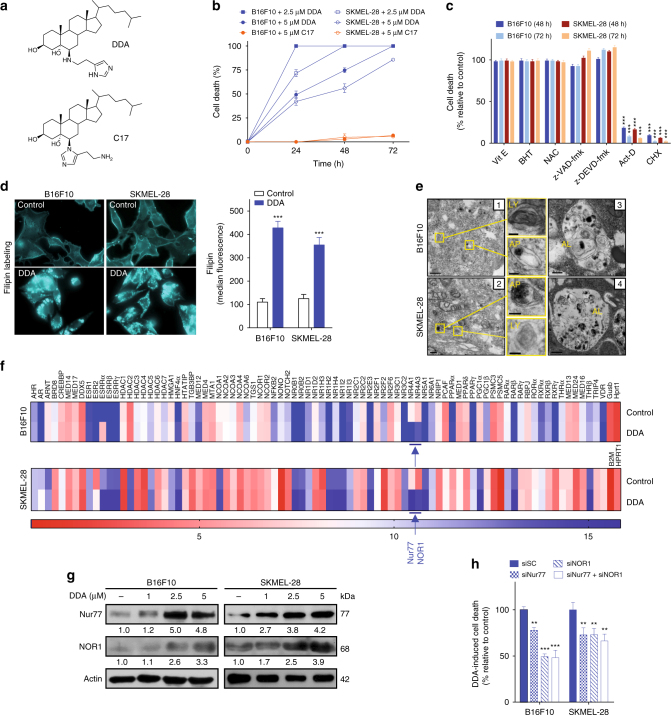
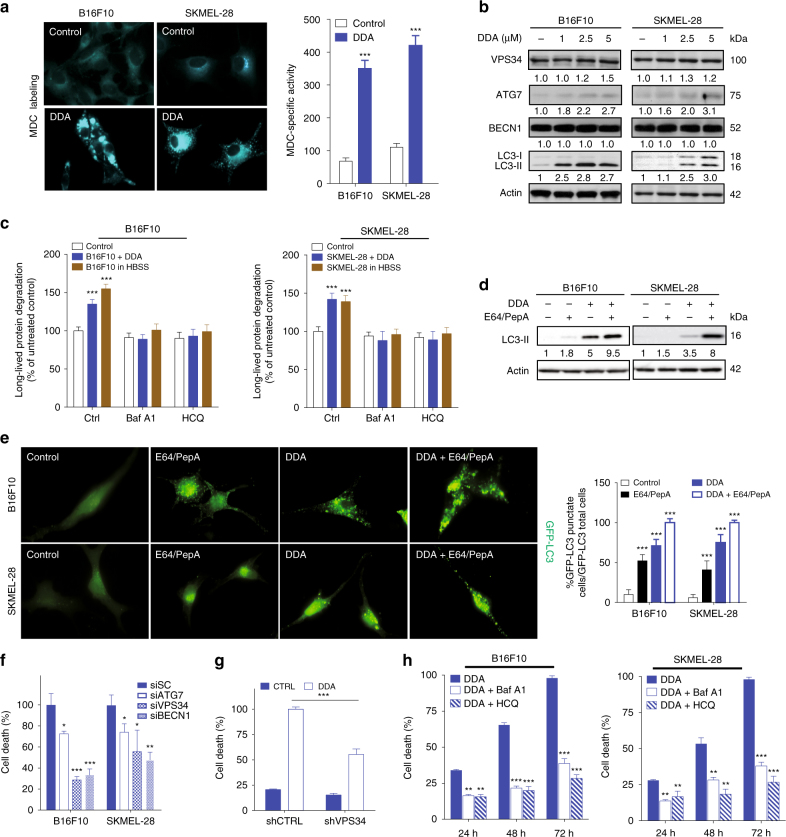
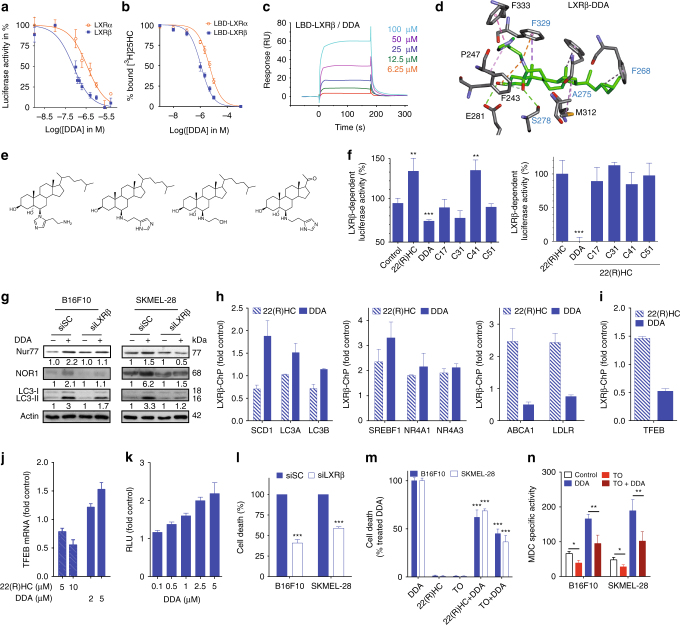
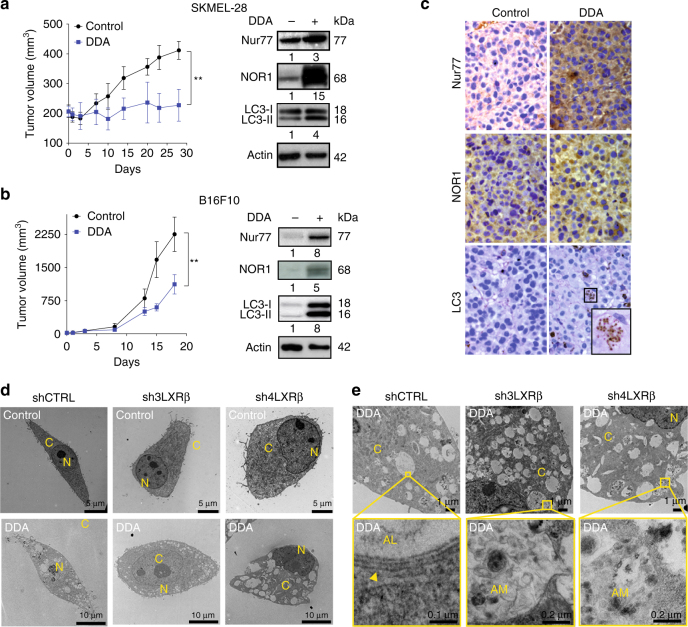
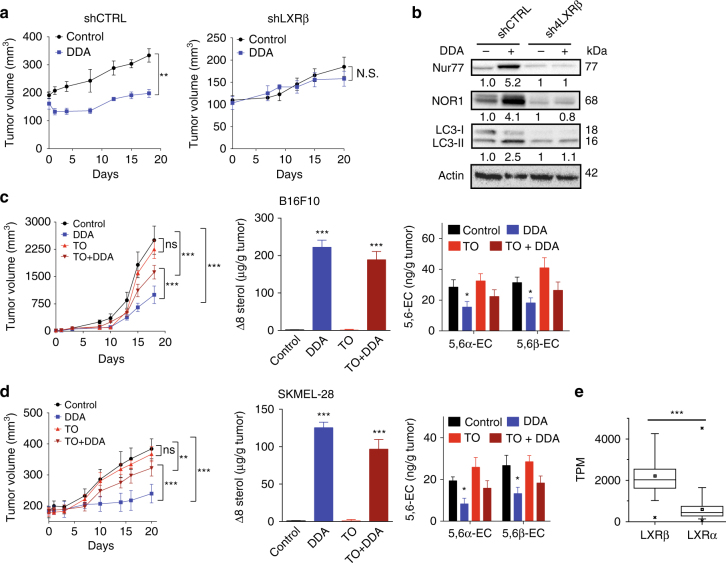
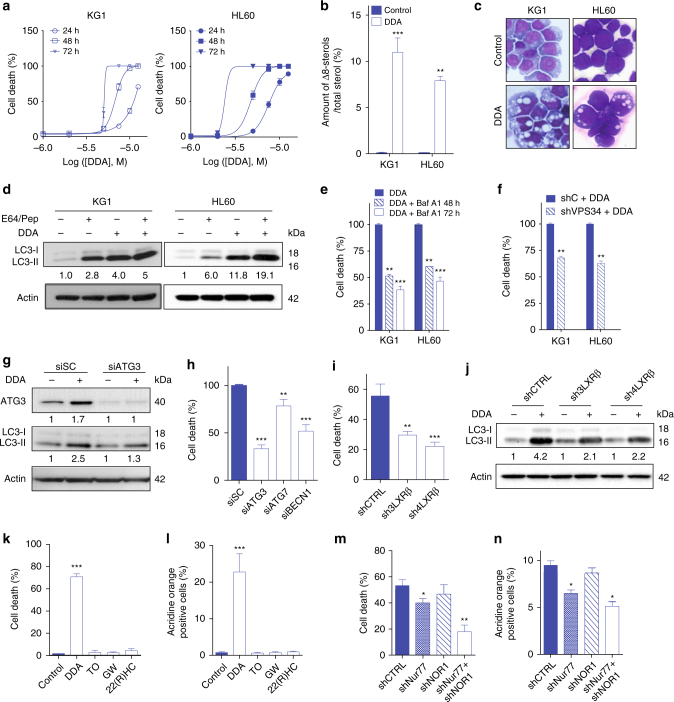
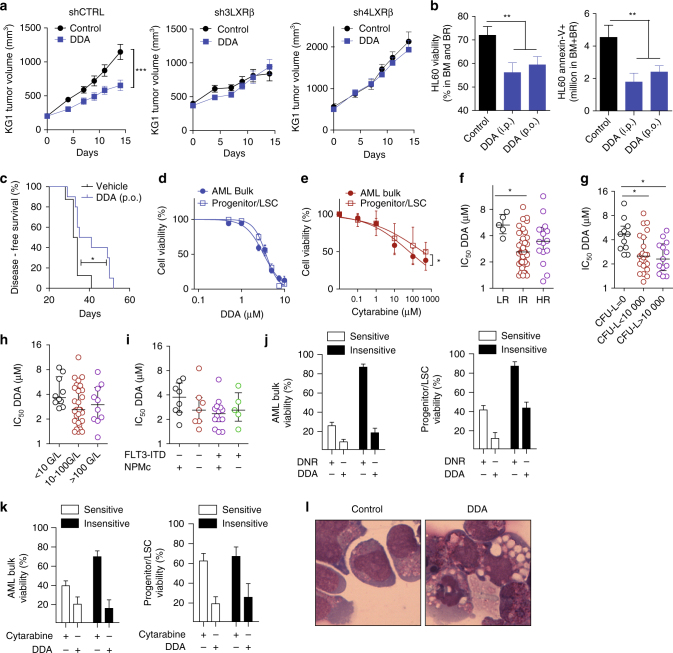
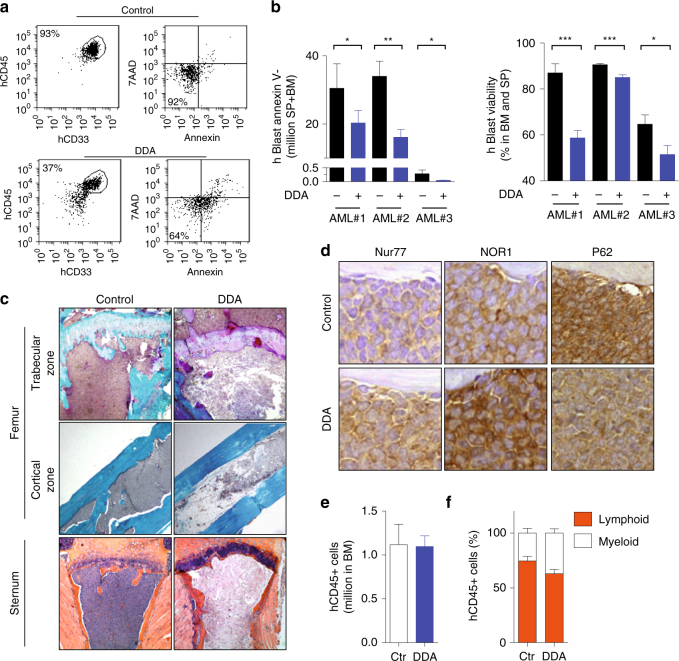
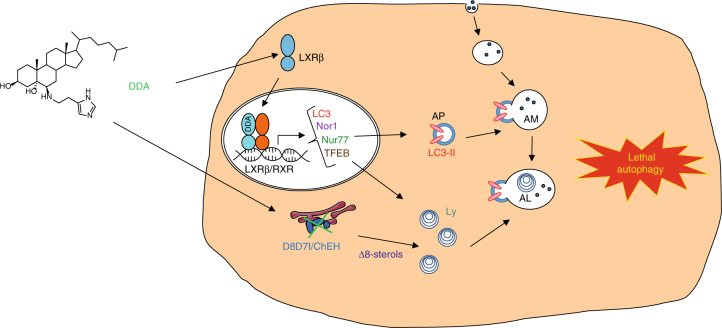
Dendrogenin A (DDA) is a newly discovered cholesterol metabolite with tumor suppressor properties. Here, we explored its efficacy and mechanism of cell death in melanoma and acute myeloid leukemia (AML). We found that DDA induced lethal autophagy in vitro and in vivo, including primary AML patient samples, independently of melanoma Braf status or AML molecular and cytogenetic classifications. DDA is a partial agonist on liver-X-receptor (LXR) increasing Nur77, Nor1, and LC3 expression leading to autolysosome formation. Moreover, DDA inhibited the cholesterol biosynthesizing enzyme 3β-hydroxysterol-Δ 8,7 -isomerase (D8D7I) leading to sterol accumulation and cooperating in autophagy induction. This mechanism of death was not observed with other LXR ligands or D8D7I inhibitors establishing DDA selectivity. The potent anti-tumor activity of DDA, its original mechanism of action and its low toxicity support its clinical evaluation. More generally, this study reveals that DDA can direct control a nuclear receptor to trigger lethal autophagy in cancers.
Overview
The claims and statistics of this paper haven’t been checked yet.
Free: it reads the open-access text and checks the first 5 claims that cite a source we can check. Create a free account to check every claim.
Integrity signals
Registry
Cites
Statistics
Figures
Verification
Claims the paper makes
The claims and statistics of this paper haven’t been checked yet.
Free: it reads the open-access text and checks the first 5 claims that cite a source we can check. Create a free account to check every claim.
Claims other papers make about this one
Each is checked against this paper’s own text: does it say what the citing paper says it does?
The cited source says what the claim attributes to it.
In the citing paper
“Blocking EBP activity has been shown to contribute to the death of tumor cells9,10,17,18.”
From Structural basis for human sterol isomerase in cholesterol biosynthesis and multidrug recognition (2019) · cites this paper as [10]
Self-check
Percentages, sums and reported differences re-computed from the paper’s own numbers.
The self-check needs the paper’s full text.
Citations
Cites
Guidelines for the use and interpretation of assays for monitoring autophagy (3rd edition).
Klionsky, D. J., Abdelmohsen, K., Abe, A., Abedin, M. J., Abeliovich, H., Acevedo Arozena, A., Adachi, H., Adams, C. M., Adams, P. D., Adeli, K., et al. (2016) · Autophagy · doi:10.1080/15548627.2015.1100356 · Cited by 5,894
Methods in Mammalian Autophagy Research
Mizushima, N., Yoshimori, T., & Levine, B. (2010) · Cell · doi:10.1016/j.cell.2010.01.028 · Cited by 4,497 · cited 1×
“To validate the induction of autophagy suggested by TEM analysis, complimentary assays were performed 23, 24 .”
Guidelines for the use and interpretation of assays for monitoring autophagy
Klionsky, D. J., Abdalla, F. C., Abeliovich, H., Abraham, R. T., Acevedo-Arozena, A., Adeli, K., Agholme, L., Agnello, M., Agostinis, P., Aguirre-Ghiso, J. A., et al. (2012) · Autophagy · doi:10.4161/auto.19496 · Cited by 4,330 · cited 4×
“Inhibition of one of the ChEH subunit, D8D7I, and the accumulation of its substrate, zymostenol, has been previously reported to be associated with autophagy 11, 14, 15, 23 .”
InfluentialSelf-consumption: the interplay of autophagy and apoptosis
Mariño, G., Niso-Santano, M., Baehrecke, E. H., & Kroemer, G. (2014) · Nature Reviews Molecular Cell Biology · doi:10.1038/nrm3735 · Cited by 2,172 · cited 1×
“Autophagy is a well established survival mechanism that helps cells to escape to death and is also a mechanism of resistance to chemotherapy and endocrine therapies 22, 23, 48 – 50 .”
Yue, S., Li, J., Lee, S.-Y., Lee, H. J., Shao, T., Song, B., Cheng, L., Masterson, T. A., Liu, X., Ratliff, T. L., et al. (2014) · Cell Metabolism · doi:10.1016/j.cmet.2014.01.019 · Cited by 929 · cited 3×
“RNA expression of the different genes of interest (Supplementary Tables 1, 2) were determined using the ΔΔ CT method, where the difference in the threshold cycle ( Δ CT) values of the target gene and the housekeeping gene for each sample was normalized to the Δ CT value of the untreated sample.”
Napolitano, G., & Ballabio, A. (2016) · Journal of Cell Science · doi:10.1242/jcs.146365 · Cited by 845 · cited 1×
“TFEB is a master transcription factor controlling genes involved in autophagy and lysosome organization and biogenesis 31 – 34 .”
27-Hydroxycholesterol Links Hypercholesterolemia and Breast Cancer Pathophysiology
Nelson, E. R., Wardell, S. E., Jasper, J. S., Park, S., Suchindran, S., Howe, M. K., Carver, N. J., Pillai, R. V., Sullivan, P. M., Sondhi, V., et al. (2013) · Science · doi:10.1126/science.1241908 · Cited by 839 · cited 7×
“To measure the ΔΨm, cells were incubated at 37 °C for 15 min in the presence of 40 nM DiOC6(3) (Molecular Probes) with or without 100 mM carbonyl cyanide m-chlorophenylhydrazone (CCCP).”
InfluentialExploiting the Mutanome for Tumor Vaccination
Castle, J. C., Kreiter, S., Diekmann, J., Löwer, M., van de Roemer, N., de Graaf, J., Selmi, A., Diken, M., Boegel, S., Paret, C., et al. (2012) · Cancer Research · doi:10.1158/0008-5472.can-11-3722 · Cited by 810
To Be or Not to Be? How Selective Autophagy and Cell Death Govern Cell Fate
Green, D. R., & Levine, B. (2014) · Cell · doi:10.1016/j.cell.2014.02.049 · Cited by 693 · cited 1×
“Cancers can upregulate autophagy to survive microenvironmental stress and to increase growth and aggressiveness 18 .”
Burnett, A. K., Hills, R. K., Milligan, D., Kjeldsen, L., Kell, J., Russell, N. H., Yin, J. A. L., Hunter, A., Goldstone, A. H., & Wheatley, K. (2011) · Journal of Clinical Oncology · doi:10.1200/jco.2010.31.4310 · Cited by 657
Research works printed but not linked: 1
- Viennois E Selective liver X receptor modulators (SLiMs): what use in human health? Mol. Cell Endocrinol. 2012 351 129 141 10.1016/j.mce.2011.08.036 21907760 · DOI
Cited by
Lam, S. M., Zhang, C., Wang, Z., Ni, Z., Zhang, S., Yang, S., Huang, X., Mo, L., Li, J., Lee, B., et al. (2021) · Nature Metabolism · doi:10.1038/s42255-021-00425-4 · Cited by 284
Karasinska, J. M., Topham, J. T., Kalloger, S. E., Jang, G. H., Denroche, R. E., Culibrk, L., Williamson, L. M., Wong, H.-L., Lee, M. K. C., O'Kane, G. M., et al. (2020) · Clinical Cancer Research · doi:10.1158/1078-0432.ccr-19-1543 · Cited by 211
“Dendrogenin A is a recently identified cholesterol derivative formed from cholesterol-5,6-epoxides and histamine with LXR activating and antitumor properties (49).”
BackgroundMeyer, N. E., Henkel, L. M., Linder, B., Zielke, S., Tascher, G., Trautmann, S., Geißlinger, G., Münch, C., Fulda, S., Tegeder, I., et al. (2021) · Autophagy · doi:10.1080/15548627.2021.1874208 · Cited by 122
“[5] Segala G, David M, Medina P de, et al.”
BackgroundAutophagy in Cancer Cell Death
Linder, B., & Kögel, D. (2019) · Biology · doi:10.3390/biology8040082 · Cited by 127
“(DDA) induced lethal autophagy, reminiscent of ACD, in myeloma and acute myeloid leukemia in vitro and in vivo [19].”
BackgroundOxysterol research: a brief review
Griffiths, W. J., & Wang, Y. (2019) · Biochemical Society Transactions · doi:10.1042/bst20180135 · Cited by 110
Oxysterols as lipid mediators: Their biosynthetic genes, enzymes and metabolites
Griffiths, W. J., & Wang, Y. (2020) · Prostaglandins & Other Lipid Mediators · doi:10.1016/j.prostaglandins.2019.106381 · Cited by 102
Squalene epoxidase as a promising metabolic target in cancer treatment
Cirmena, G., Franceschelli, P., Isnaldi, E., Ferrando, L., Mariano, M. D., Ballestrero, A., & Zoppoli, G. (2018) · Cancer Letters · doi:10.1016/j.canlet.2018.03.034 · Cited by 107
CAMK2/CaMKII activates MLKL in short-term starvation to facilitate autophagic flux
Zhan, Q., Jeon, J., Li, Y., Huang, Y., Xiong, J., Wang, Q., Xu, T., Li, Y., Ji, F., Du, G., et al. (2021) · Autophagy · doi:10.1080/15548627.2021.1954348 · Cited by 98
“autophagic degradation by autolysosomes [37], in the ECStreated N2a cells.”
BackgroundAutophagy modulation: a prudent approach in cancer treatment?
Bishop, E., & Bradshaw, T. D. (2018) · Cancer Chemotherapy and Pharmacology · doi:10.1007/s00280-018-3669-6 · Cited by 95
Lipid metabolic Reprogramming: Role in Melanoma Progression and Therapeutic Perspectives
Pellerin, L., Carrié, L., Dufau, C., Nieto, L., Ségui, B., Levade, T., Riond, J., & Andrieu‐Abadie, N. (2020) · Cancers · doi:10.3390/cancers12113147 · Cited by 97
The Effects of Cholesterol-Derived Oncometabolites on Nuclear Receptor Function in Cancer
Silvente‐Poirot, S., Dalenc, F., & Poirot, M. (2018) · Cancer Research · doi:10.1158/0008-5472.can-18-1487 · Cited by 83
“A good example is the endogenous DDA ligand (33, 34).”
BackgroundSelf-citationChallenges and Therapeutic Opportunities of Autophagy in Cancer Therapy
Silva, V. R., Neves, S. P., Santos, L. D. S., Dias, R. B., & Bezerra, D. P. (2020) · Cancers · doi:10.3390/cancers12113461 · Cited by 81
“Dendrogenin A (DDA) showed tumor-suppressive properties in vitro and in vivo, triggering lethal autophagy in leukemia [286,287].”
BackgroundInfluentialCholesterol metabolism pathways – are the intermediates more important than the products?
Wang, Y., Yutuc, E., & Griffiths, W. J. (2021) · FEBS Journal · doi:10.1111/febs.15727 · Cited by 75
Cholesterol metabolism: from lipidomics to immunology
Griffiths, W. J., & Wang, Y. (2022) · Journal of Lipid Research · doi:10.1016/j.jlr.2021.100165 · Cited by 68
“25-HC@DDAB was found to selectively accumulate in lung tissue and downregulate the NF-κB and SREBP-2 pathways and in peripheral blood mononuclear cells derived from COVID-19 patients, reducing inflammatory cytokine levels (115).”
BackgroundInfluentialPoirot, M., & Silvente‐Poirot, S. (2018) · Biochemical Pharmacology · doi:10.1016/j.bcp.2018.01.046 · Cited by 71
Self-citationStructural basis for human sterol isomerase in cholesterol biosynthesis and multidrug recognition
Long, T., Hassan, A., Thompson, B. M., McDonald, J. G., Wang, J., & Li, X. (2019) · Nature Communications · doi:10.1038/s41467-019-10279-w · Cited by 67
The nuclear receptor 4A family members: mediators in human disease and autophagy
Chen, L., Fan, F., Wu, L. J., & Zhao, Y. (2020) · Cellular & Molecular Biology Letters · doi:10.1186/s11658-020-00241-w · Cited by 71
The dual role of autophagy in acute myeloid leukemia
Seo, W., Silwal, P., Song, I., & Jo, E. (2022) · Journal of Hematology & Oncology · doi:10.1186/s13045-022-01262-y · Cited by 73
“LXRβ‐, Nur77‐, and NOR1‐ dependent induction of lethal autophagy Anti‐leukemic effect KG1, HL‐60, AML patients samples, AML xenograft in mice [186]”
BackgroundCioccoloni, G., Soteriou, C., Websdale, A., Wallis, L. W., Zulyniak, M. A., & Thorne, J. L. (2020) · Critical Reviews in Food Science and Nutrition · doi:10.1080/10408398.2020.1835820 · Cited by 69
Nury, T., Sghaier, R., Zarrouk, A., Ménétrier, F., Uzun, T., Leoni, V., Caccia, C., Meddeb, W., Namsi, A., Sassi, K., et al. (2018) · Biochimie · doi:10.1016/j.biochi.2018.07.009 · Cited by 58
Oxysterols are potential physiological regulators of ageing
de Médina, P., Silvente‐Poirot, S., & Poirot, M. (2022) · Ageing Research Reviews · doi:10.1016/j.arr.2022.101615 · Cited by 56
Self-citationScreening for liver X receptor modulators: Where are we and for what use?
Buñay, J., Fouache, A., Trousson, A., de Joussineau, C., Bouchareb, E., Zhu, Z., Kocer, A., Morel, L., Baron, S., & Lobaccaro, J. A. (2021) · British Journal of Pharmacology · doi:10.1111/bph.15286 · Cited by 48
Self-citationCholesterol Metabolism in Cancer and Cell Death
Chen, F., Lu, Y., Lin, J., Kang, R., & Liu, J. (2023) · Antioxidants and Redox Signaling · doi:10.1089/ars.2023.0340 · Cited by 53
Xiang, X., Tian, Y., Hu, J., Xiong, R., Bautista, M., Deng, L., Yue, Q., Li, Y., Kuang, W., Li, J., et al. (2021) · Biochemical Pharmacology · doi:10.1016/j.bcp.2021.114475 · Cited by 56
Targeting cholesterol homeostasis in hematopoietic malignancies
Brendolan, A., & Russo, V. E. A. (2021) · Blood · doi:10.1182/blood.2021012788 · Cited by 55
Yu, M., Liu, T., Chen, Y.-C., Li, Y., & Li, W. (2018) · Journal of Experimental & Clinical Cancer Research · doi:10.1186/s13046-018-0779-2 · Cited by 53
“Autophagy is involved in type-II programmed cell death, particularly in apoptosis-deficient cells, and may be exploited to suppress tumor growth [47, 48].”
de Médina, P., Diallo, K., Huc‐Claustre, E., Attia, M., Soulès, R., Silvente‐Poirot, S., & Poirot, M. (2020) · British Journal of Pharmacology · doi:10.1111/bph.15205 · Cited by 49
“Although DDA was a poor modulator of canonical LXR-dependent genes, it activated via LXRβ the transcription of genes encoding master regulators of lysosome biogenesis and autophagy such as the transcription factor EB (TFEB) (Segala et al., 2017).”
BackgroundMethodResultInfluentialSelf-citationFont-Díaz, J., Jiménez‐Panizo, A., Caelles, C., Vivanco, M. D., Pérez, P., Aranda, A., Estébanez‐Perpiñá, E., Castrillo, A., Ricote, M., & Valledor, A. F. (2020) · Seminars in Cancer Biology · doi:10.1016/j.semcancer.2020.12.007 · Cited by 52
Therapeutic potential of NR4A1 in cancer: Focus on metabolism
Deng, S., Chen, B., Huo, J., & Liu, X. (2022) · Frontiers in Oncology · doi:10.3389/fonc.2022.972984 · Cited by 46
“In acute myeloid leukemia, DDA also partly activates LXR to increase NR4A1, further inhibiting the expression level of cholesterol biosynthesizing enzyme 3bhydroxysterol-D8,7-isomerase (D8D7I), leading to cancer autophagy induction (91).”
BackgroundRole of the autophagy-related marker LC3 expression in hepatocellular carcinoma: a meta-analysis
Meng, Y., Lou, X., Yang, L., Li, D., & Hou, Y. (2020) · Journal of Cancer Research and Clinical Oncology · doi:10.1007/s00432-020-03174-1 · Cited by 49
Kim, Y. S., Nam, H. J., Han, C. Y., Joo, M. S., Jang, K., Jun, D. W., & Kim, S. G. (2021) · Hepatology · doi:10.1002/hep.31423 · Cited by 48
“LXRβ regulates autophagy in MEF cells and cortical neurons,(30,31) and melanoma in terms of cholesterol metabolism.(32) In the study, partial LXR agonists (cholesterol metabolites; dendrogenin A) acted more strongly on LXRβ.”
BackgroundBauriaud, M., Vija-Racaru, L., Brillouet, S., Mallinger, A., de Médina, P., Rives, A., Payré, B., Poirot, M., Courbon, F., & Silvente‐Poirot, S. (2019) · The Journal of Steroid Biochemistry and Molecular Biology · doi:10.1016/j.jsbmb.2019.105390 · Cited by 45
Self-citationChapuis, N., Poulain, L., Birsen, R., Tamburini, J., & Bouscary, D. (2019) · Frontiers in Oncology · doi:10.3389/fonc.2019.00405 · Cited by 52
“DDA is a partial agonist on liver-X-receptor (LXR) which induces lethal autophagy in vitro and in vivo in AML independently of their molecular and cytogenetic characteristics (56).”
BackgroundGriffiths, W. J., & Wang, Y. (2021) · Frontiers in Physiology · doi:10.3389/fphys.2021.723224 · Cited by 50
Castelli, G., Pelosi, E., & Testa, U. (2019) · Cancers · doi:10.3390/cancers11020260 · Cited by 43
“Thus, TP53 is a key regulator of many fundamental cellular processes, such as cell proliferation, senescence and apoptosis; however, recent studies indicate a key role of TP53 also in cell metabolism, stem cell division and cell death by ferroptosis [356].”
BackgroundThe contribution of cholesterol and epigenetic changes to the pathophysiology of breast cancer
Munir, M. T., Ponce, C., Powell, C. A., Tarafdar, K., Yanagita, T., Choudhury, M., Gollahon, L., & Rahman, S. M. (2018) · The Journal of Steroid Biochemistry and Molecular Biology · doi:10.1016/j.jsbmb.2018.05.001 · Cited by 41
Record, M., Attia, M., Carayon, K., Pucheu, L., Buñay, J., Soulès, R., Ayadi, S., Payré, B., Perrin‐Cocon, L., Bourgailh, F., et al. (2022) · Journal of Extracellular Vesicles · doi:10.1002/jev2.12211 · Cited by 37
“Experiments were performed as described previously (Segala et al., 2017).”
InfluentialSelf-citationImpact of cholesterol-pathways on breast cancer development, a metabolic landscape
González-Ortiz, A., Galindo‐Hernández, O., Acevedo, G. N. H., Hurtado-Ureta, G., & García‐González, V. (2021) · Journal of Cancer · doi:10.7150/jca.54637 · Cited by 43
“Reports suggest that DDA treatment in B16F10 cells increased the mRNA levels of ABCG5, NOR1, Nur77, LC3A, and LC3B [155-157], proteins involucrated in the formation of autophagosomes.”
BackgroundAutophagy a Close Relative of AML Biology
Joffre, C., Ducau, C., Poillet-Perez, L., Courdy, C., & Mas, V. M. (2021) · Biology · doi:10.3390/biology10060552 · Cited by 37
“This metabolite leads to cell death by inhibiting a sterol isomerase, therefore perturbing cholesterol metabolism and inducing lethal autophagy [52].”
BackgroundLiu, Z., Fan, M., Hou, J., Pan, S., Xu, Y., Zhang, H., Liu, C., Hao, X., Li, X., & Wang, H. (2023) · Cell Death and Disease · doi:10.1038/s41419-023-05677-4 · Cited by 40
Fouache, A., Zabaiou, N., de Joussineau, C., Morel, L., Silvente‐Poirot, S., Namsi, A., Lizard, G., Poirot, M., Makishima, M., Baron, S., et al. (2019) · The Journal of Steroid Biochemistry and Molecular Biology · doi:10.1016/j.jsbmb.2019.03.028 · Cited by 40
Self-citationNuclear Receptor Nur77 Deficiency Alters Dendritic Cell Function
Karthaus, N., Kers‐Rebel, E. D., Looman, M. W. G., Ichinose, H., de Vries, C. J. M., & Ansems, M. (2018) · Frontiers in Immunology · doi:10.3389/fimmu.2018.01797 · Cited by 36
“Interestingly, in tumor cells, the natural steroid Dendrogenin A has been shown to stimulate expression of Nur77 via binding to LXRβ and induce lethal autophagy (91, 92), opening up new perspectives for cancer treatment (93).”
BackgroundTargeting Liver X Receptors for the Treatment of Non-Alcoholic Fatty Liver Disease
Kim, H.-J., Park, C., & Kim, T. H. (2023) · Cells · doi:10.3390/cells12091292 · Cited by 41
Is cholesterol a risk factor for breast cancer incidence and outcome?
Hassen, C. B., Goupille, C., Vigor, C., Durand, T., Guéraud, F., Silvente‐Poirot, S., Poirot, M., & Frank, P. G. (2023) · The Journal of Steroid Biochemistry and Molecular Biology · doi:10.1016/j.jsbmb.2023.106346 · Cited by 39
Self-citationPoirot, M., Soulès, R., Mallinger, A., Dalenc, F., & Silvente‐Poirot, S. (2018) · Biochimie · doi:10.1016/j.biochi.2018.04.008 · Cited by 32
Self-citationWang, Y., Yutuc, E., & Griffiths, W. J. (2020) · British Journal of Pharmacology · doi:10.1111/bph.15191 · Cited by 38
“oxysterols also activate these receptors (Segala et al., 2017).”
BackgroundStructural enzymology of cholesterol biosynthesis and storage
Long, T., Debler, E., & Li, X. (2022) · Current Opinion in Structural Biology · doi:10.1016/j.sbi.2022.102369 · Cited by 35
Sassi, K., Nury, T., Zarrouk, A., Sghaier, R., Khalafi‐Nezhad, A., Véjux, A., Samadi, M. H., Aissa‐Fennira, F. B., & Lizard, G. (2019) · The Journal of Steroid Biochemistry and Molecular Biology · doi:10.1016/j.jsbmb.2019.04.020 · Cited by 32
The nuclear receptor NR4A1 is regulated by SUMO modification to induce autophagic cell death
Zárraga-Granados, G., Muciño-Hernández, G., Sánchez‐Carbente, M. D. R., Villamizar-Gálvez, W., Peñas-Rincón, A., Arredondo, C., Andrés, M. E., Wood, C. D., Covarrubias, L., & Castro‐Obregón, S. (2020) · PLoS ONE · doi:10.1371/journal.pone.0222072 · Cited by 30
Dendrogenin A Synergizes with Cytarabine to Kill Acute Myeloid Leukemia Cells In Vitro and In Vivo
Serhan, N., Mouchel, P., de Médina, P., Segala, G., Mougel, A., Saland, E., Rives, A., Lamazière, A., Després, G., Sarry, J., et al. (2020) · Cancers · doi:10.3390/cancers12071725 · Cited by 30
Self-citationRamalingam, P. S., Elangovan, S., Ramaiah, M. J., & Arumugam, S. (2024) · Frontiers in Cell and Developmental Biology · doi:10.3389/fcell.2024.1386102 · Cited by 27
Gómez‐Coronado, D., Lasunción, M. A., Martínez-Botas, J., & Fernández‐Suárez, M. E. (2020) · Seminars in Cancer Biology · doi:10.1016/j.semcancer.2020.08.015 · Cited by 27
Porter, N. A., Xu, L., & Pratt, D. A. (2020) · Chemistry · doi:10.3390/chemistry2020025 · Cited by 30
Cholesterol metabolism in tumor immunity: Mechanisms and therapeutic opportunities for cancer
Guo, X., Zhu, B., Li, J., Guo, P., Niu, Y., Shi, J., Yokoyama, W., Huang, Q., & Shao, D. (2025) · Biochemical Pharmacology · doi:10.1016/j.bcp.2025.116802 · Cited by 30
The Role of Cholesterol Metabolism and Its Regulation in Tumor Development
Wu, Y., Song, W., Su, M., He, J., Hu, R., & Zhao, Y. (2025) · Cancer Medicine · doi:10.1002/cam4.70783 · Cited by 27
“Inhibition of EBP leads to the accumulation of its substrate enzymes, sterols, and enzymatic enols, thereby promoting autophagy in tumor cells [171].”
Ma, L., Vidana Gamage, H. E., Tiwari, S., Han, C., Henn, M. A., Krawczynska, N., Dibaeinia, P., Koelwyn, G. J., Das Gupta, A., Bautista Rivas, R. O., et al. (2022) · Endocrinology · doi:10.1210/endocr/bqac072 · Cited by 21
Unearthing the Janus-face cholesterogenesis pathways in cancer
Madan, B., Virshup, D. M., Nes, W. D., & Leaver, D. J. (2021) · Biochemical Pharmacology · doi:10.1016/j.bcp.2021.114611 · Cited by 20
Qin, H., Gao, F., Wang, Y., Huang, B., Peng, L., Mo, B., & Wang, C. (2019) · International Journal of Molecular Medicine · doi:10.3892/ijmm.2019.4184 · Cited by 20
“dendrogenin A (ddA), a natural metabolite of cholesterol and histamine, induces Nur77-dependent lethal autophagy in melanoma and acute myeloid leukemia (36).”
BackgroundTiwari, M., Srivastava, P., Abbas, S., Jegatheesan, J., Ranjan, A., Sharma, S., Maurya, V. P., Saxena, A. K., & Sharma, L. K. (2024) · Cells · doi:10.3390/cells13050447 · Cited by 20
“Segala et al. demonstrated novel pharmacological control of lethal autophagy by a nuclear receptor through the action of a cholesterol metabolite [198].”
BackgroundShedding light on the roles of liver X receptors in cancer by using chemical probes
Pontini, L., & Marinozzi, M. (2020) · British Journal of Pharmacology · doi:10.1111/bph.15200 · Cited by 18
Dendrogenin A Enhances Anti-Leukemic Effect of Anthracycline in Acute Myeloid Leukemia
Mouchel, P., Serhan, N., Betous, R., Farge, T., Saland, E., de Médina, P., Hoffmann, J., Sarry, J., Poirot, M., Silvente‐Poirot, S., et al. (2020) · Cancers · doi:10.3390/cancers12102933 · Cited by 17
“ChEH activity is carried out by two enzymatic subunits involved in cholesterol synthesis, namely the 3 β -hydroxysterol- ∆ 8,7-isomerase (D8D7I or EBP) and the 3 β -hydroxysterol- ∆ 7-reductase (DHCR7) [6].”
InfluentialSelf-citationCholesterol Derivatives as Promising Anticancer Agents in Glioblastoma Metabolic Therapy
Sassi, K., Nury, T., Samadi, M. H., Aissa‐Fennira, F. B., Véjux, A., & Lizard, G. (2021) · Exon Publications eBooks · doi:10.36255/exonpublications.gliomas.2021.chapter6 · Cited by 17
Feng, L., Weng, J., Yao, C., Wang, R., Wang, N., Zhang, Y., Tanaka, Y., & Su, L. (2022) · Biology · doi:10.3390/biology11040543 · Cited by 16
“Cells were maintained following the previous study [27,29,30].”
Liver X receptors and the hallmarks of aging: From molecular mechanisms to therapeutic opportunities
Poirot, M., Buñay, J., Ayadi, S., Silvente‐Poirot, S., & de Médina, P. (2025) · Ageing Research Reviews · doi:10.1016/j.arr.2025.102967 · Cited by 26
“…malignant cells toward differentiation into normal-like cell phenotype, while inducing autophagic cell death in acute myeloid leukemia and melanoma (Bauriaud-Mallet et al., 2019; de Medina et al., 2009; de Medina et al., 2013; Mouchel et al., 2020; Segala et al., 2017; Serhan et al., 2020).”
InfluentialSelf-citationKhallouki, F., Owen, R. W., Silvente‐Poirot, S., & Poirot, M. (2018) · Biomedicines · doi:10.3390/biomedicines6010021 · Cited by 14
“We next investigated the putative impact of BrA on other targets involved in the chemoprevention of breast cancers such as ERα [41] and cholesterol-5,6-epoxide hydrolase (ChEH) [15,21,42] and found that BrA does not modulate ER and does not inhibit ChEH (Table 3).”
Self-citationBousset, L., Rambur, A., Fouache, A., Buñay, J., Morel, L., Lobaccaro, J. A., Baron, S., Trousson, A., & de Joussineau, C. (2018) · International Journal of Molecular Sciences · doi:10.3390/ijms19092545 · Cited by 16
“pointed out that dendrogenin A, a newly discovered cholesterol metabolite and activator of LXRs, is able to specifically induce lethal autophagy of cancer cells in vitro and in vivo [137].”
BackgroundSelf-citationKhallouki, F., Owen, R. W., Akdad, M., Bouhali, B. E., Silvente‐Poirot, S., & Poirot, M. (2019) · Elsevier eBooks · doi:10.1016/b978-0-12-811907-5.00001-4 · Cited by 21
Self-citationCharacterization and prognostic value of LXR splice variants in triple-negative breast cancer
Lianto, P., Hutchinson, S. A., Moore, J. B., Hughes, T. A., & Thorne, J. L. (2021) · iScience · doi:10.1016/j.isci.2021.103212 · Cited by 13
A fast UPLC–HILIC method for an accurate quantification of dendrogenin A in human tissues
Soulès, R., Combe, F. A., Huc‐Claustre, E., de Médina, P., Rives, A., Chatelut, É., Dalenc, F., Franchet, C., Silvente‐Poirot, S., Poirot, M., et al. (2019) · The Journal of Steroid Biochemistry and Molecular Biology · doi:10.1016/j.jsbmb.2019.105447 · Cited by 12
Self-citationMeta‑analysis of the autophagy‑associated protein LC3 as a prognostic marker in colorectal cancer
Shen, N., Wang, L., Wu, J., Chen, X., Hu, F., & Su, Y. (2023) · Experimental and Therapeutic Medicine · doi:10.3892/etm.2023.12191 · Cited by 14
“Previously, LC3 has been reported to serve a role in number of malignan‐ cies including the brain, colorectal and melanoma (8,18,19).”
BackgroundOxysterols: An expanding family of structurally diversified bioactive steroids
Poirot, M., & Silvente‐Poirot, S. (2019) · The Journal of Steroid Biochemistry and Molecular Biology · doi:10.1016/j.jsbmb.2019.105443 · Cited by 13
Self-citationExploring the nexus of nuclear receptors in hematological malignancies
Manickasamy, M. K., Sajeev, A., BharathwajChetty, B., Alqahtani, M. S., Abbas, M. A. E., Hegde, M., Aswani, B. S., Shakibaei, M., Sethi, G., & Kunnumakkara, A. B. (2024) · Cellular and Molecular Life Sciences · doi:10.1007/s00018-023-05085-z · Cited by 12
“This treatment also stimulated the expression of Nor1 and Nur77, leading to the formation of autolysosomes while concurrently suppressing 3β-hydroxysterol-Δ8,7-isomerase (D8D7I), inducing sterol accumulation in both in vitro and in vivo [74].”
BackgroundNuclear Receptors as Autophagy-Based Antimicrobial Therapeutics
Silwal, P., Paik, S., Jeon, S. M., & Jo, E. (2020) · Cells · doi:10.3390/cells9091979 · Cited by 12
“LXRs are involved in the regulation of autophagy in various pathological conditions, including cancers [203,204].”
BackgroundPotential implications of natural compounds on aging and metabolic regulation
Li, Z., Chen, L., Qu, L., Yu, W., Liu, T., Ning, F., Li, J., Guo, X., Sun, F.-J., Sun, B., et al. (2024) · Ageing Research Reviews · doi:10.1016/j.arr.2024.102475 · Cited by 14
Buñay, J., Record, M., de Médina, P., Ayadi, S., Pucheu, L., Colacios, C., Ségui, B., Höring, M., Liebisch, G., Martin, H., et al. (2026) · Journal of Extracellular Vesicles · doi:10.1002/jev2.70225 · Cited by 13
“DDA was synthesised as previously described (Segala et al. 2017 ) and was confirmed to be 99% pure by LC/MS.”
InfluentialSelf-citationMLKL Protects Pulmonary Endothelial Cells in Acute Lung Injury
Li, Y., Liu, Y., Yao, X., Zhu, L., Yang, L., & Zhan, Q. (2024) · American Journal of Respiratory Cell and Molecular Biology · doi:10.1165/rcmb.2023-0207oc · Cited by 10
Oxysterols in tumor immune microenvironment (TIME)
Liu, Y., Qin, J., Li, X., & Wu, G. (2024) · The Journal of Steroid Biochemistry and Molecular Biology · doi:10.1016/j.jsbmb.2024.106634 · Cited by 9
The Cholesterol-5,6-Epoxide Hydrolase: A Metabolic Checkpoint in Several Diseases
de Médina, P., Ayadi, S., Diallo, K., Buñay, J., Pucheu, L., Soulès, R., Record, M., Brillouet, S., Vija, L., Courbon, F., et al. (2023) · Advances in experimental medicine and biology · doi:10.1007/978-3-031-43883-7_8 · Cited by 8
Self-citationSingha, B., Gogoi, P. P., Longkumer, P., Ahmed, B., Boruah, N., Bezbaruah, B., & Sinha, U. B. (2025) · Computers in Biology and Medicine · doi:10.1016/j.compbiomed.2025.110433 · Cited by 10
Lipid metabolic alterations in cancer: Common pathophysiology with cardiovascular disease
Llena-Meler, M., Canfrán‐Duque, A., Madrigal‐Matute, J., & Rotllán, N. (2026) · Seminars in Cancer Biology · doi:10.1016/j.semcancer.2026.01.003 · Cited by 13
Oxysterols at the crossroads of cholesterol metabolism and cancer
Buñay, J., Ayadi, S., Gressein, C., de Médina, P., Silvente‐Poirot, S., & Poirot, M. (2026) · Seminars in Cancer Biology · doi:10.1016/j.semcancer.2026.03.001 · Cited by 8
Self-citationde Médina, P., Ayadi, S., Soulès, R., Payré, B., Rup-Jacques, S., Silvente‐Poirot, S., Samadi, M. H., & Poirot, M. (2023) · The Journal of Steroid Biochemistry and Molecular Biology · doi:10.1016/j.jsbmb.2023.106396 · Cited by 9
Self-citationAutophagy: A Potential Target for Rescuing Sepsis-induced Hepatic Failure
Hsu, C. (2019) · The Chinese Journal of Physiology · doi:10.4103/cjp.cjp_25_19 · Cited by 8
Tang, Y., Chen, K., Luan, X., Zhang, J., Liu, R., Zheng, X., Xie, S., Ke, H., Zhang, X., & Chen, W. (2020) · International Journal of Oncology · doi:10.3892/ijo.2020.5143 · Cited by 7
“Furthermore, Segala et al (25) have reported that dendrogenin A, a cholesterol metabolite, directly controls a nuclear receptor to trigger lethal autophagy in melanoma.”
Wang, Y., Bendre, S. V., Krauklis, S. A., Steelman, A. J., & Nelson, E. R. (2025) · Endocrinology · doi:10.1210/endocr/bqaf031 · Cited by 6
Deshwal, S., Baidya, A. T. K., Kumar, R., & Sandhir, R. (2022) · The Journal of Steroid Biochemistry and Molecular Biology · doi:10.1016/j.jsbmb.2022.106150 · Cited by 6
Zhao, J., Liu, J., Liu, S., Tian, S., Yuan, H., & Li, S. (2023) · Epigenomics · doi:10.2217/epi-2023-0027 · Cited by 4
Yan, Z., Li, Y., Ding, Y., Sun, J., Wang, H., Xu, W., Ding, X., Zhang, J., Zhang, W., Tang, J., et al. (2025) · International Immunopharmacology · doi:10.1016/j.intimp.2025.115746 · Cited by 3
Nuclear Receptors and Lipid Sensing
Thorne, J. L., & Cioccoloni, G. (2022) · Advances in experimental medicine and biology · doi:10.1007/978-3-031-11836-4_5 · Cited by 4
de Médina, P., Buñay, J., Ayadi, S., Silvente‐Poirot, S., & Poirot, M. (2026) · Biochemical Pharmacology · doi:10.1016/j.bcp.2026.118003 · Cited by 5
Self-citation5,6-epoxycholestanols metabolism and functions: Defining the epoxycholestanoid (EChA) family
Buñay, J., Ayadi, S., Gressein, C., Boudani, M., Commerçon, R., Le, P., Pucheu, L., Record, M., de Médina, P., Silvente‐Poirot, S., et al. (2026) · Progress in Lipid Research · doi:10.1016/j.plipres.2026.101386 · Cited by 5
Self-citationMetNC: Predicting Metabolites in vivo for Natural Compounds
Chen, Z., Yan, D., Zhang, M., Han, W., Wang, Y., Xu, S., Tang, K., Gao, J., & Cao, Z. (2022) · Frontiers in Chemistry · doi:10.3389/fchem.2022.881975 · Cited by 3
“NCs undergo complex and dynamic biotransformation processes to produce a series of metabolites (Beniddir et al., 2021), part of which may relate to ef fi cacy (Segala et al., 2017), safety (Kloprogge et al., 2018), and adverse reactions (Hughes et al., 2016).”
BackgroundCurrent Understanding of the Role of Autophagy in the Treatment of Myeloid Leukemia
Kubota, Y., & Kimura, S. H. (2024) · International Journal of Molecular Sciences · doi:10.3390/ijms252212219 · Cited by 4
“Dendrogenin A (DDA) is a cholesterol metabolite with tumor-suppressor activity that induces lethal autophagy by activating liver-X-receptor β (LXR β ) and inhibits the cholestrogenic function of 3 β -hydroxysterol- ∆ 8,7-isomerase (D8D7I) [90].”
Wang, Y., Yutuc, E., & Griffiths, W. J. (2020) · Authorea · doi:10.22541/au.158713501.10820437 · Cited by 2
Cioccoloni, G., Soteriou, C., Websdale, A., Wallis, L. W., Zulyniak, M. A., & Thorne, J. L. (2020) · doi:10.22541/au.159413291.11622259 · Cited by 2
Baptista, E. C. M. S., Pereira, C. S. G. P., García, P. A., Ferreira, I. C. F. R., & Barreira, J. C. M. (2025) · Clinical Nutrition ESPEN · doi:10.1016/j.clnesp.2025.01.026 · Cited by 2
Honda, A., Ueda, H., Miyazaki, T., & Ikegami, T. (2025) · Current Opinion in Endocrine and Metabolic Research · doi:10.1016/j.coemr.2025.100583 · Cited by 1
Lagunas‐Rangel, F. A. (2026) · Diseases · doi:10.3390/diseases14070246 · Cited by 2
“In AML, DDA sensitized both leukemic cell lines and primary patient samples to Ara-C, supporting the concept that pharmacological exploitation of endogenous cholesterol metabolites may represent an alternative strategy to target cholesterol-dependent metabolic vulnerabilities [116,117].”
Sterol flux rewiring: Cholesterol biosynthesis as a dynamic signaling network
Poirot, M., de Médina, P., & Silvente‐Poirot, S. (2026) · Journal of Biological Chemistry · doi:10.1016/j.jbc.2026.113381 · Cited by 3
“Whereas tamoxifen enhances cholesterol epoxidation, the endogenous ChEH inhibitor dendrogenin A (DDA) induces catalase expression and limits cholesterol epoxidation despite acting on the same enzymatic complex (47, 48).”
InfluentialSelf-citationModulation of Autophagy and Apoptosis in Leukemia
Torre, L. D., Beato, A., Capone, V., Carannante, D., Verrilli, G., Favale, G., Taherigorji, H., Naseer, M., Altucci, L., Benedetti, R., et al. (2023) · Elsevier eBooks · doi:10.1016/b978-0-443-15717-2.00039-1 · Cited by 1
Metadata
- Authors
- Segala, G., David, M., de Medina, P., Poirot, M. C., Serhan, N., Vergez, F., Mougel, A., Saland, E., Carayon, K., Leignadier, J., Caron, N., Voisin, M., Cherier, J., Ligat, L., Lopez, F., Noguer, E., Rives, A., Payré, B., Saati, T. A., Lamaziere, A., Despres, G., Lobaccaro, J.-M., Baron, S., Demur, C., de Toni, F., Larrue, C., Boutzen, H., Thomas, F., Sarry, J.-E., Tosolini, M., Picard, D., Record, M., Récher, C., Poirot, M., & Silvente-Poirot, S.
- Affiliations
- Université Toulouse III - Paul Sabatier (FR)
- Centre Hospitalier Universitaire de Toulouse (FR)
- Inserm (FR)
- Centre National de la Recherche Scientifique (FR)
- Centre de Recherches en Cancérologie de Toulouse (FR)
- University of Geneva (CH)
- Corresponding author
- Poirot, Mathias C.
- Récher, Christian
- ORCID
- Venue
- Nature Communications
- Published
- 2017-12-04
- Volume
- 8
- Issue
- 1
- Pages
- 1903-1903
- ISSN
- 2041-1723 (ISSN-L)
- PMC
- PMC5712521
- OpenAlex
- W2768673582
- Cited by
- 125
- References
- 68
- Citations by year
- 2026: 19 · 2025: 8 · 2024: 9 · 2023: 9 · 2022: 11 · 2021: 16 · 2020: 23 · 2019: 18 · 2018: 12
- FWCI
- 11.36
- Type
- journal article
- Language
- en
- Open access
- gold
- doi.org
- Licence
- cc-by
- creativecommons.org/licenses/by/4.0 (tdm)
- creativecommons.org/licenses/by/4.0 (vor)
- Locations
- Nature Communications (publishedVersion, cc-by)
- Europe PMC (PubMed Central) (publishedVersion, cc-by)
- PubMed Central (publishedVersion, cc-by)
- PubMed (publishedVersion)
- Archive ouverte UNIGE (University of Geneva) (publishedVersion, other-oa)
- HAL (submittedVersion, cc-by)
- RePEc: Research Papers in Economics (submittedVersion)
- DOAJ (DOAJ: Directory of Open Access Journals) (submittedVersion, cc-by-sa)
- Archive ouverte UNIGE (University of Geneva) (submittedVersion, cc-by)
- Funders
- Association pour la Recherche sur le Cancer
- Agence Nationale de la Recherche (ANR-11-RPIB-0015, ANR-11-RPIB-015-02, ANR-11-PHUC-0001, 10-LABX-57, ANR-10LABX-57, ANR-10, ANR-10-LABX)
- Topics
- Life Sciences › Biochemistry, Genetics and Molecular Biology › Cell Biology › Autophagy in Disease and Therapy
- Life Sciences › Biochemistry, Genetics and Molecular Biology › Cancer Research › Cancer, Lipids, and Metabolism
- Life Sciences › Biochemistry, Genetics and Molecular Biology › Biochemistry › Cholesterol and Lipid Metabolism
- Keywords
- liver X receptor, autophagy, melanoma, acute myeloid leukemia, tumor suppressor, nuclear receptor agonists, Nur77, NOR-1, LC3, sterol accumulation, nuclear receptor ligands, anticancer activity
- MeSH terms
- Liver X Receptors, Animals, Antineoplastic Agents, Autophagy, Cholestanols, Humans, Imidazoles, Melanoma, Melanoma, Experimental, Microtubule-Associated Proteins, Leukemia, Myeloid, Acute, Gene Expression, Cell Death, HL-60 Cells, Membrane Transport Proteins, Cell Line, Tumor, Mice, Drug Partial Agonism, Nuclear Receptor Subfamily 4, Group A, Member 1, HEK293 Cells, In Vitro Techniques
About these checks
Registry, retraction, Cites and statistics results are computed, not judged, with one exception: a printed reference that no index lists is read once by a model before it counts as a citation error. Claims are extracted by a model and kept only when their quote appears verbatim in the text; each cited source is then checked, with a model’s help, for whether it says what the claim relies on. Those verdicts can be wrong — read the claim’s quote and the cited source before relying on one.
Statistics and arithmetic are recomputed, not judged.
Confidence bands are shown only for fields calibrated on our annotated test set. None is calibrated yet, so no band is shown.
What counts as a claim ›How we measure confidence ›How we check this ›
Are you an author, or do you see a problem with this page? Request a review
Data sources
Bibliographic data: Semantic Scholar, OpenAlex, Crossref.
Contains information from the Semantic Scholar Academic Graph Datasets, made available under the ODC Attribution License (ODC-BY 1.0).
Semantic Scholar’s data is described in: Kinney, R., et al. (2023). The Semantic Scholar Open Data Platform. arXiv:2301.10140.
