

Interaction of suppressor of cytokine signalling 3 with cavin-1 links SOCS3 function and cavin-1 stability
Open accessThe DOI matches its Crossref record; 73 of the 73 references it cites were found in a registry or an index.
Abstract
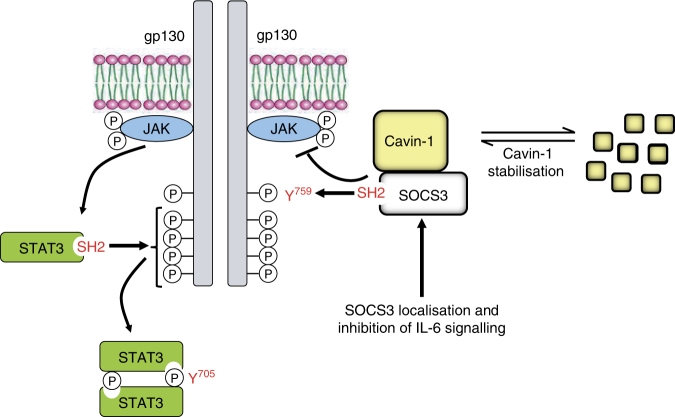
Effective suppression of JAK–STAT signalling by the inducible inhibitor “suppressor of cytokine signalling 3” (SOCS3) is essential for limiting signalling from cytokine receptors. Here we show that cavin-1, a component of caveolae, is a functionally significant SOCS3-interacting protein. Biochemical and confocal imaging demonstrate that SOCS3 localisation to the plasma membrane requires cavin-1. SOCS3 is also critical for cavin-1 stabilisation, such that deletion of SOCS3 reduces the expression of cavin-1 and caveolin-1 proteins, thereby reducing caveola abundance in endothelial cells. Moreover, the interaction of cavin-1 and SOCS3 is essential for SOCS3 function, as loss of cavin-1 enhances cytokine-stimulated STAT3 phosphorylation and abolishes SOCS3-dependent inhibition of IL-6 signalling by cyclic AMP. Together, these findings reveal a new functionally important mechanism linking SOCS3-mediated inhibition of cytokine signalling to localisation at the plasma membrane via interaction with and stabilisation of cavin-1.
Overview
The claims and statistics of this paper haven’t been checked yet.
Free: it reads the open-access text and checks the first 5 claims that cite a source we can check. Create a free account to check every claim.
Integrity signals
Registry
Cites
Statistics
Figures
Verification
Claims the paper makes
The claims and statistics of this paper haven’t been checked yet.
Free: it reads the open-access text and checks the first 5 claims that cite a source we can check. Create a free account to check every claim.
Claims other papers make about this one
Each is checked against this paper’s own text: does it say what the citing paper says it does?
In the citing paper
“In mice, macrophage-specific ablation of SOCS1 increases systemic inflammation and IR [76], and a loss of function of the cavin-1 binding sites on SOCS3 consequently induces lipodystrophy and IR in mice [77].”
From Sarcopenic obesity, insulin resistance, and their implications in cardiovascular and metabolic consequences (2020) · cites this paper as [77]
Self-check
Percentages, sums and reported differences re-computed from the paper’s own numbers.
The self-check needs the paper’s full text.
Citations
Cites
Cox, J., & Mann, M. (2008) · Nature Biotechnology · doi:10.1038/nbt.1511 · Cited by 14,855 · cited 1×
“Tandem af fi nity-puri fi ed ubiquiti-nomes from WT and SOCS3 − / − MEFs were then analysed using an Orbitrap Velos FTMS and data processed using the MaxQuant computational platform 24 (170).”
Andromeda: A Peptide Search Engine Integrated into the MaxQuant Environment
Cox, J., Neuhauser, N., Michalski, A., Scheltema, R. A., Olsen, J. V., & Mann, M. (2011) · Journal of Proteome Research · doi:10.1021/pr101065j · Cited by 5,500
Principles of interleukin (IL)-6-type cytokine signalling and its regulation
HEINRICH, P. C., BEHRMANN, I., HAAN, S., HERMANNS, H. M., MÜLLER-NEWEN, G., & SCHAPER, F. (2003) · Biochemical Journal · doi:10.1042/bj20030407 · Cited by 3,884 · cited 2×
“Other cytokine receptor complexes that utilise gp130 include those for leukaemia inhibitory factor (LIF) and oncostatin M (OSM): LIF signals via gp130/LIF receptor (LIFR) heterodimers, while OSM signals downstream using either LIFR/gp130 or OSM receptor/ gp130 complexes 41 .”
Self-citationRevisiting STAT3 signalling in cancer: new and unexpected biological functions
Yu, H., Lee, H., Herrmann, A., Buettner, R., & Jove, R. (2014) · Nature Reviews Cancer · doi:10.1038/nrc3818 · Cited by 2,137
The JAK-STAT Pathway: Impact on Human Disease and Therapeutic Intervention
O'Shea, J. J., Schwartz, D. M., Villarino, A. V., Gadina, M., McInnes, I. B., & Laurence, A. (2015) · Annual Review of Medicine · doi:10.1146/annurev-med-051113-024537 · Cited by 1,599
Caveolae as plasma membrane sensors, protectors and organizers
Parton, R. G., & del Pozo, M. A. (2013) · Nature Reviews Molecular Cell Biology · doi:10.1038/nrm3512 · Cited by 924
Serine phosphorylation of STATs
Decker, T., & Kovarik, P. (2000) · Oncogene · doi:10.1038/sj.onc.1203481 · Cited by 887 · cited 1×
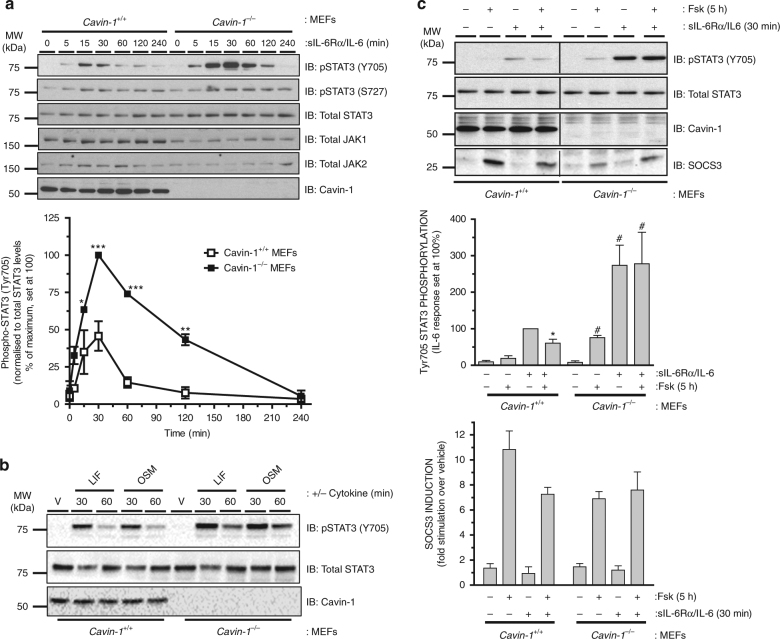
“Interest-ingly, Tyr705 phosphorylation was speci fi cally enhanced as STAT3 phosphorylation on Ser727 (which is mediated by several candidate Ser/Thr kinases 40 ) was unaffected by cavin-1 deletion.”
SOCS3 negatively regulates IL-6 signaling in vivo
Croker, B. A., Krebs, D. L., Zhang, J.-G., Wormald, S., Willson, T. A., Stanley, E. G., Robb, L., Greenhalgh, C. J., Förster, I., Clausen, B. E., et al. (2003) · Nature Immunology · doi:10.1038/ni931 · Cited by 840 · cited 1×
“Previous studies have demonstrated that depletion or loss of SOCS3 results in prolonged activation of STAT3 in response to speci fi c cytokines 42 – 44 , similar to the effect observed upon cavin-1 deletion.”
Dissecting the Interaction between Nitric Oxide Synthase (NOS) and Caveolin
Garcı́a-Cardeña, G., Martasek, P., Masters, B. S. S., Skidd, P. M., Couet, J., Li, S., Lisanti, M. P., & Sessa, W. C. (1997) · Journal of Biological Chemistry · doi:10.1074/jbc.272.41.25437 · Cited by 821 · cited 1×
“The importance of caveolae and other lipid raft microdomains for maintaining signalling from the plasma membrane has been demonstrated for a variety of systems, including endothelial nitric oxide synthase and Src 47,48 .”
Li, S., Couet, J., & Lisanti, M. P. (1996) · Journal of Biological Chemistry · doi:10.1074/jbc.271.46.29182 · Cited by 777 · cited 1×
“The importance of caveolae and other lipid raft microdomains for maintaining signalling from the plasma membrane has been demonstrated for a variety of systems, including endothelial nitric oxide synthase and Src 47,48 .”
PTRF-Cavin, a Conserved Cytoplasmic Protein Required for Caveola Formation and Function
Hill, M. M., Bastiani, M., Luetterforst, R., Kirkham, M., Kirkham, A., Nixon, S. J., Walser, P., Abankwa, D., Oorschot, V. M. J., Martin, S., et al. (2008) · Cell · doi:10.1016/j.cell.2007.11.042 · Cited by 737 · cited 2×
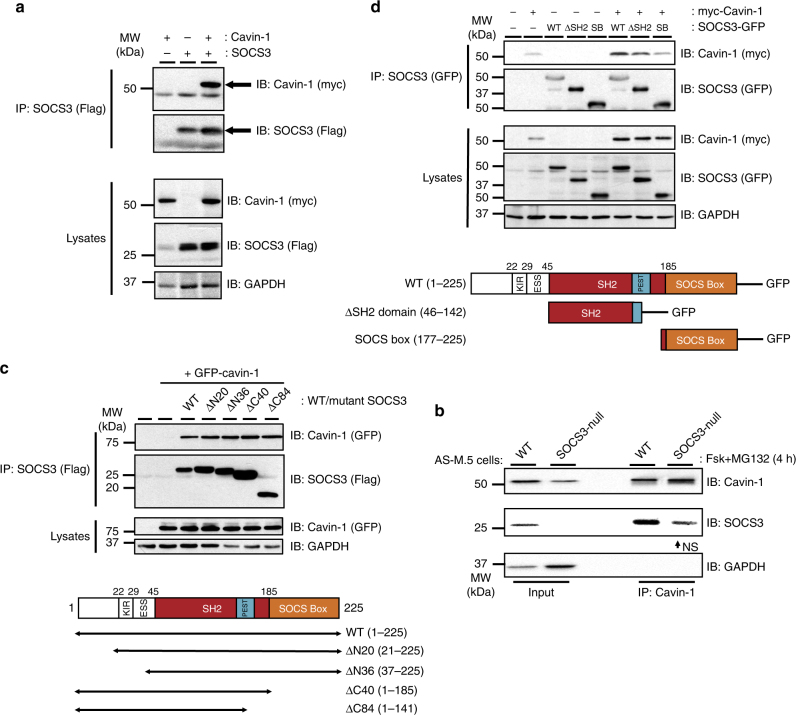
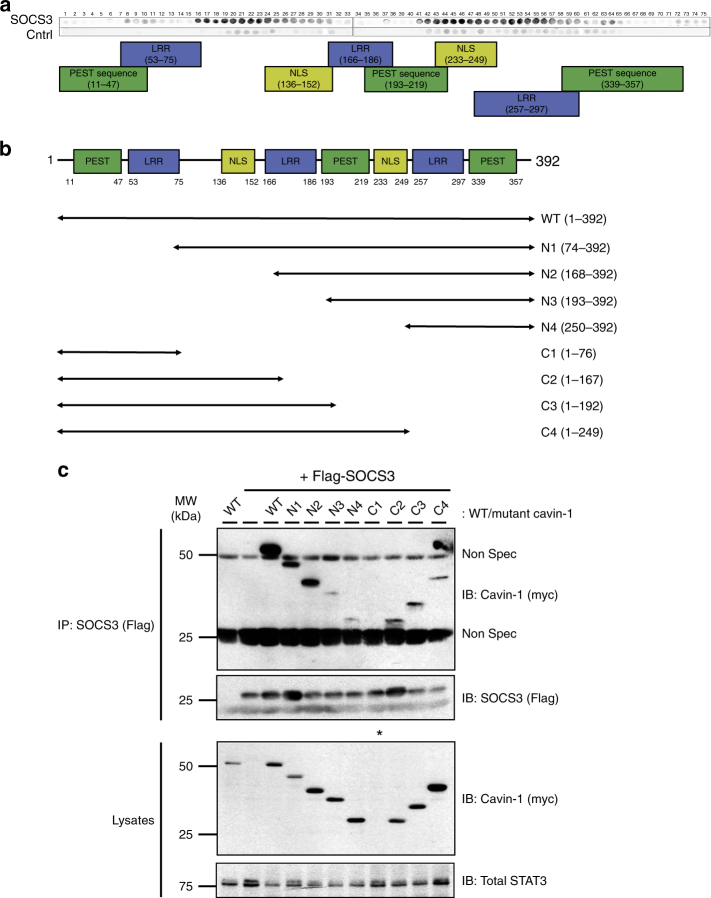
“To identify the regions within SOCS3 that are important for SOCS3/cavin-1 interaction, we initially utilised a panel of Flag-tagged N-and C-terminal SOCS3 truncation mutants 30,31 for their ability to co-IP green fl uorescent protein (GFP)-tagged cavin-1 32 as compared to WT SOCS3.”
Kawaguchi, T., Yoshida, T., Harada, M., Hisamoto, T., Nagao, Y., Ide, T., Taniguchi, E., Kumemura, H., Hanada, S., Maeyama, M., et al. (2004) · The American Journal of Pathology · doi:10.1016/s0002-9440(10)63408-6 · Cited by 536 · cited 1×
“Immortalised SOCS3 − / − and cavin-1 − / − MEFs and the corresponding WT cell lines have been described previously 59,69 .”
Janus kinase inhibitors in autoimmune diseases
O'Shea, J. J., Kontzias, A., Yamaoka, K., Tanaka, Y., & Laurence, A. (2013) · Annals of the Rheumatic Diseases · doi:10.1136/annrheumdis-2012-202576 · Cited by 453 · cited 1×
“Cavin-1, which is one of a family of four related proteins (cavins 1 to 4), is recruited by one or more “ caveolin ” proteins (caveolins 1 to 3) to the plasma membrane during the latter stages of caveola biogenesis, and is thought to be essential for caveola formation by stabilising caveolin…”
SOCS3 regulates the plasticity of gp130 signaling
Lang, R., Pauleau, A.-L., Parganas, E., Takahashi, Y., Mages, J., Ihle, J. N., Rutschman, R., & Murray, P. J. (2003) · Nature Immunology · doi:10.1038/ni932 · Cited by 439
Nicholson, S. E., Willson, T. A., Farley, A., Starr, R., Zhang, J., Baca, M., Alexander, W. S., Metcalf, D., Hilton, D. J., & Nicola, N. A. (1999) · The EMBO Journal · doi:10.1093/emboj/18.2.375 · Cited by 407 · cited 1×
“…SOCS3 (hereafter termed pcDNA3/Flag-SOCS3), the truncation mutants Δ N20, Δ N36, Δ C40, and Δ C84, R71K-mutated SOCS3, and the Δ PEST mutant SOCS3 (generously provided by Dr Jeff Babon, Walter and Eliza Hall Institute of Medical Research, Australia) have all been described previously 30,31,33,71 .”
Sasaki, A., Yasukawa, H., Suzuki, A., Kamizono, S., Syoda, T., Kinjyo, I., Sasaki, M., Johnston, J. A., & Yoshimura, A. (1999) · Genes to Cells · doi:10.1046/j.1365-2443.1999.00263.x · Cited by 398 · cited 3×
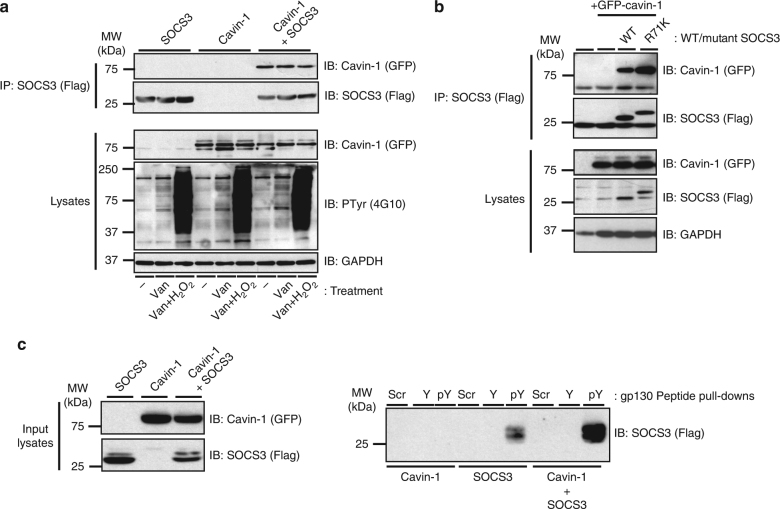
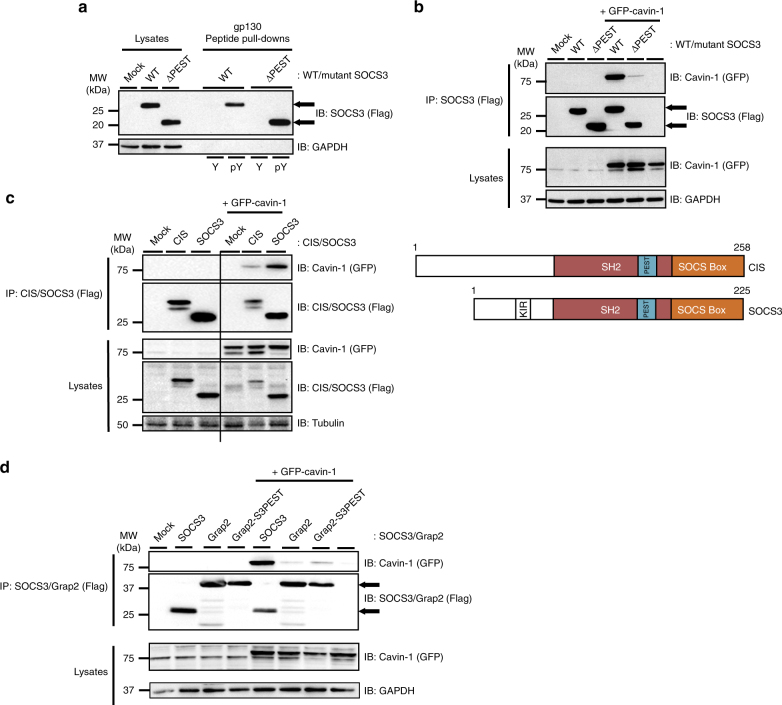
“Secondly, we tested R71K-mutated SOCS3, in which the conserved PTyr binding site within the SOCS3 SH2 domain is disrupted 30,31 , for its ability to form a complex with cavin-1.”
Hayashi, Y. K., Matsuda, C., Ogawa, M., Goto, K., Tominaga, K., Mitsuhashi, S., Park, Y.-E., Nonaka, I., Hino-Fukuyo, N., Haginoya, K., et al. (2009) · Journal of Clinical Investigation · doi:10.1172/jci38660 · Cited by 394 · cited 2×
“In each case, a lack of functional cavin-1 is associated with the downregulation and/or mislocalisation of all three caveolin subtypes in skeletal muscle and an absence of cell surface caveolae in patient-derived fi bro-blasts 64 and skeletal muscle 63 .”
Schmitz, J., Weissenbach, M., Haan, S., Heinrich, P. C., & Schaper, F. (2000) · Journal of Biological Chemistry · doi:10.1074/jbc.275.17.12848 · Cited by 388 · cited 1×
“…SOCS3 can inhibit gp130 signalling independently of interaction with the SOCS3 binding site and works instead via direct inhibition of JAK1 19,56 These data would also suggest that any functional de fi cits in Δ PEST SOCS3 in localising to gp130 would be overcome by its overexpression.”
Self-citationDeletion of Cavin/PTRF Causes Global Loss of Caveolae, Dyslipidemia, and Glucose Intolerance
Liu, L., Brown, D., McKee, M., LeBrasseur, N. K., Yang, D., Albrecht, K. H., Ravid, K., & Pilch, P. F. (2008) · Cell Metabolism · doi:10.1016/j.cmet.2008.07.008 · Cited by 352 · cited 3×
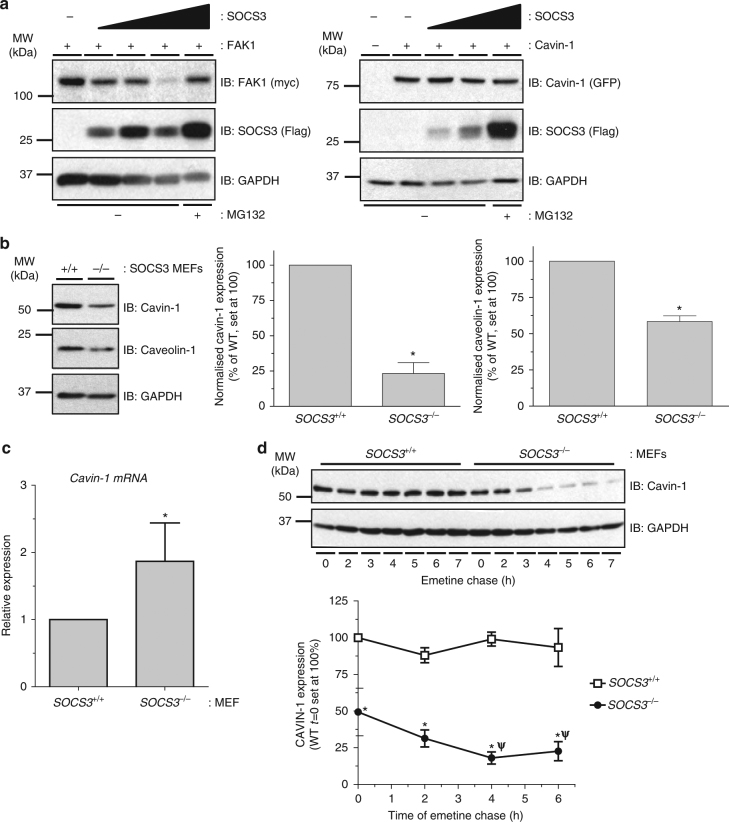
“1b), which is consistent with previous studies showing that loss of cavin-1 triggers reductions in all three caveolin isoforms 14 .”
Self-citationNiwa, Y., Kanda, H., Shikauchi, Y., Saiura, A., Matsubara, K., Kitagawa, T., Yamamoto, J., Kubo, T., & Yoshikawa, H. (2005) · Oncogene · doi:10.1038/sj.onc.1208788 · Cited by 339 · cited 2×
“To examine this, we compared the ability of increasing levels of SOCS3 to trigger the proteasomal degradation of co-transfected cavin-1 and FAK1, a previously characterised substrate of ECS SOCS38,9 .”
A Tandem Affinity Tag for Two-step Purification under Fully Denaturing Conditions
Tagwerker, C., Flick, K., Cui, M., Guerrero, C., Dou, Y., Auer, B., Baldi, P., Huang, L., & Kaiser, P. (2006) · Molecular & Cellular Proteomics · doi:10.1074/mcp.m500368-mcp200 · Cited by 336
Kershaw, N. J., Murphy, J. M., Liau, N. P. D., Varghese, L. N., Laktyushin, A., Whitlock, E. L., Lucet, I. S., Nicola, N. A., & Babon, J. J. (2013) · Nature Structural & Molecular Biology · doi:10.1038/nsmb.2519 · Cited by 301 · cited 12×
“However, despite advances in our molecular understanding of how SOCS3 interacts with cytokine receptors and JAKs, the extent to which other cellular proteins regulate SOCS3 function is unclear.”
InfluentialExploring the caves: cavins, caveolins and caveolae
Hansen, C. G., & Nichols, B. J. (2010) · Trends in Cell Biology · doi:10.1016/j.tcb.2010.01.005 · Cited by 295 · cited 1×
“Cavin-1 is required for stabilisation and maturation of caveolae at the plasma membrane, although it is also present with caveolin-1 in non-lipid raft fractions 37 .”
Janus kinase inhibitors for the treatment of myeloproliferative neoplasias and beyond
Quintás-Cardama, A., Kantarjian, H., Cortes, J., & Verstovsek, S. (2011) · Nature Reviews Drug Discovery · doi:10.1038/nrd3264 · Cited by 290 · cited 1×
“Therefore, sustained pathway activation perpe-tuates chronic in fl ammatory conditions such as rheumatoid arthritis and colitis, haematological malignancies such as poly-cythemia vera, and also solid tumour development 3 – 5 .”
MURC/Cavin-4 and cavin family members form tissue-specific caveolar complexes
Bastiani, M., Liu, L., Hill, M. M., Jedrychowski, M. P., Nixon, S. J., Lo, H. P., Abankwa, D., Luetterforst, R., Fernandez-Rojo, M., Breen, M. R., et al. (2009) · Journal of Cell Biology · doi:10.1083/jcb.200903053 · Cited by 281 · cited 3×
“Immortalised SOCS3 − / − and cavin-1 − / − MEFs and the corresponding WT cell lines have been described previously 59,69 .”
Self-citationSelective inhibition of protein tyrosine phosphatase activities by H2O2 and vanadate In vitro
Hecht, D., & Zick, Y. (1992) · Biochemical and Biophysical Research Communications · doi:10.1016/0006-291x(92)91123-8 · Cited by 273 · cited 2×
“First, we treated transfected HEK293 cells with protein Tyr phosphatase inhibitor sodium orthovanadate in the presence or absence of hydrogen peroxide 23 .”
Dominant Negative Stat3 Mutant Inhibits Interleukin-6-induced Jak-STAT Signal Transduction
Kaptein, A., Paillard, V., & Saunders, M. (1996) · Journal of Biological Chemistry · doi:10.1074/jbc.271.11.5961 · Cited by 245 · cited 1×
“Therefore, together these data indicate that cavin-1 co-localised with a plasma membrane pool transcriptionally active complexes 39 .”
Rajab, A., Straub, V., McCann, L. J., Seelow, D., Varon, R., Barresi, R., Schulze, A., Lucke, B., Lützkendorf, S., Karbasiyan, M., et al. (2010) · PLoS Genetics · doi:10.1371/journal.pgen.1000874 · Cited by 236 · cited 2×
“In each case, a lack of functional cavin-1 is associated with the downregulation and/or mislocalisation of all three caveolin subtypes in skeletal muscle and an absence of cell surface caveolae in patient-derived fi bro-blasts 64 and skeletal muscle 63 .”
SHP2 and SOCS3 Contribute to Tyr-759-dependent Attenuation of Interleukin-6 Signaling through gp130
Lehmann, U., Schmitz, J., Weissenbach, M., Sobota, R. M., Hörtner, M., Friederichs, K., Behrmann, I., Tsiaris, W., Sasaki, A., Schneider-Mergener, J., et al. (2003) · Journal of Biological Chemistry · doi:10.1074/jbc.m210552200 · Cited by 236 · cited 4×
“Secondly, we tested R71K-mutated SOCS3, in which the conserved PTyr binding site within the SOCS3 SH2 domain is disrupted 30,31 , for its ability to form a complex with cavin-1.”
InfluentialSelf-citationInhibition of IL-6 family cytokines by SOCS3
Babon, J. J., Varghese, L. N., & Nicola, N. A. (2014) · Seminars in Immunology · doi:10.1016/j.smim.2013.12.004 · Cited by 216 · cited 10×
“…of cytokine signalling ” (SOCS) proteins comprise a family of eight related members (cytokine-inducible SH2-containing protein (CIS), SOCS1 – 7) identi fi ed initially by their role as cytokine-inducible negative feedback inhibitors of signal propagation from speci fi c cytokine receptors 6 .”
InfluentialEHD2 regulates caveolar dynamics via ATP-driven targeting and oligomerization
Morén, B., Shah, C., Howes, M. T., Schieber, N. L., McMahon, H. T., Parton, R. G., Daumke, O., & Lundmark, R. (2012) · Molecular Biology of the Cell · doi:10.1091/mbc.e11-09-0787 · Cited by 207 · cited 1×
“Similar observations have recently been reported for Eps15 homology domain-containing protein 2 (EHD2) which, to our knowledge, is the only other example of a cavin-1-interacting protein that regulates caveola stability, although a direct effect on cavin-1 turnover has not been examined 58 .”
Prevention of Amino Acid Conversion in SILAC Experiments with Embryonic Stem Cells
Bendall, S. C., Hughes, C., Stewart, M. H., Doble, B., Bhatia, M., & Lajoie, G. A. (2008) · Molecular & Cellular Proteomics · doi:10.1074/mcp.m800113-mcp200 · Cited by 205 · cited 1×
“Arginine can be metabolised from 13 C 6 - arginine to an isotope of the non-essential amino acid 13 C 5 -proline via the arginase pathway thus complicating data analysis 70 .”
Quantitative Analysis of global Ubiquitination in HeLa Cells by Mass Spectrometry
Meierhofer, D., Wang, X., Huang, L., & Kaiser, P. (2008) · Journal of Proteome Research · doi:10.1021/pr800468j · Cited by 194 · cited 2×
“…allow two-step tandem af fi nity puri fi cation of the ubiquitinome via sequential Ni-NTA and streptavidin af fi nity chromatography under fully denaturing conditions necessary to inactivate deubiquitinases and prevent co-puri fi cation of non-covalently interacting ubiquitin-binding proteins 21,22 .”
Ley, R., Ewings, K. E., Hadfield, K., Howes, E., Balmanno, K., & Cook, S. J. (2004) · Journal of Biological Chemistry · doi:10.1074/jbc.m311578200 · Cited by 194
Suppression of cytokine signaling: The SOCS perspective
Linossi, E. M., Babon, J. J., Hilton, D. J., & Nicholson, S. E. (2013) · Cytokine & Growth Factor Reviews · doi:10.1016/j.cytogfr.2013.03.005 · Cited by 192 · cited 4×
“…of cytokine signalling ” (SOCS) proteins comprise a family of eight related members (cytokine-inducible SH2-containing protein (CIS), SOCS1 – 7) identi fi ed initially by their role as cytokine-inducible negative feedback inhibitors of signal propagation from speci fi c cytokine receptors 6 .”
InfluentialSehgal, P. B., Guo, G. G., Shah, M., Kumar, V., & Patel, K. (2002) · Journal of Biological Chemistry · doi:10.1074/jbc.m200018200 · Cited by 184
Molecular Composition and Ultrastructure of the Caveolar Coat Complex
Ludwig, A., Howard, G., Mendoza-Topaz, C., Deerinck, T., Mackey, M., Sandin, S., Ellisman, M. H., & Nichols, B. J. (2013) · PLoS Biology · doi:10.1371/journal.pbio.1001640 · Cited by 171 · cited 2×
“Thus, it would be anticipated that SOCS3 should interact with both cavin-1/cavin-2 and cavin-1/ cavin-3 oligomers and therefore distribute itself uniformly around caveolar bulbs similarly to cavin-1 61 .”
Interleukin-6 signalling: More than Jaks and STATs
Eulenfeld, R., Dittrich, A., Khouri, C., Müller, P. J., Mütze, B., Wolf, A., & Schaper, F. (2012) · European Journal of Cell Biology · doi:10.1016/j.ejcb.2011.09.010 · Cited by 171 · cited 2×
“ytokines control many important biological responses, including haematopoiesis, T-cell differentiation and expansion, and in fl ammatory status 1,2 .”
Self-citationBabon, J. J., McManus, E. J., Yao, S., DeSouza, D. P., Mielke, L. A., Sprigg, N. S., Willson, T. A., Hilton, D. J., Nicola, N. A., Baca, M., et al. (2006) · Molecular Cell · doi:10.1016/j.molcel.2006.03.024 · Cited by 163 · cited 4×
“To do this, we utilised a Δ PEST SOCS3 deletion mutant in which the PEST motif (Pro129-Arg163) was removed and replaced with (Gly-Ser)x4 36 .”
InfluentialSands, W. A., Woolson, H. D., Milne, G. R., Rutherford, C., & Palmer, T. M. (2006) · Molecular and Cellular Biology · doi:10.1128/mcb.00207-06 · Cited by 156 · cited 6×
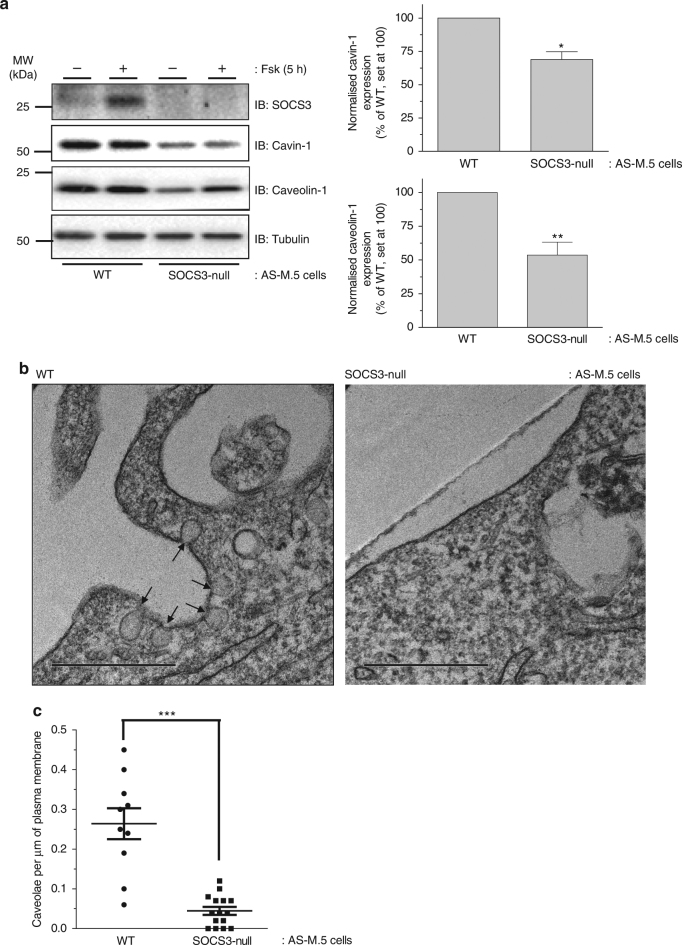
“SOCS3-null clones were identi fi ed by immunoblotting whole-cell extracts with SOCS3 antibody following cellular treatment with Fsk (50 μ M, 5 h) to induce SOCS3 gene expression 26,45 .”
InfluentialSelf-citationPodar, K., Tai, Y.-T., Cole, C. E., Hideshima, T., Sattler, M., Hamblin, A., Mitsiades, N., Schlossman, R. L., Davies, F. E., Morgan, G. J., et al. (2003) · Journal of Biological Chemistry · doi:10.1074/jbc.m208636200 · Cited by 145
Deacetylase Activity Is Required for cAMP Activation of a Subset of CREB Target Genes
Fass, D. M., Butler, J. E. F., & Goodman, R. H. (2003) · Journal of Biological Chemistry · doi:10.1074/jbc.m305905200 · Cited by 137 · cited 1×
“…similar to that observed in MEFs and primary EC lines as previously reported 26,27 However, this effect was lost in SOCS3-null AS-M.5 cells, while Nur77, a well-characterised cAMP-inducible gene product 29 , was detectable in both WT and SOCS3-null AS-M.5 cells following Fsk treatment (Fig.”
Gambin, Y., Ariotti, N., McMahon, K.-A., Bastiani, M., Sierecki, E., Kovtun, O., Polinkovsky, M. E., Magenau, A., Jung, W., Okano, S., et al. (2014) · eLife · doi:10.7554/elife.01434 · Cited by 135 · cited 2×
“While each of the cavins is detectable on individual caveolae 59 , cavin-2 and cavin-3 appear to form distinct hetero-oligomeric complexes with cavin-1 rather than with each other 60 .”
Park, D. S., Lee, H., Frank, P. G., Razani, B., Nguyen, A., Parlow, A. F., Russell, R. G., Hulit, J., Pestell, R. G., & Lisanti, M. P. (2002) · Molecular Biology of the Cell · doi:10.1091/mbc.02-05-0071 · Cited by 124 · cited 1×
“Localisation of JAK – STAT signalling components, including gp130, receptors for growth hormone, ciliary neurotrophic factor and LIF, and JAK2 to lipid rafts has been determined by biochemical fractionation of cell extracts 15 – 18 ,49 – 52 .”
The SOCS Box Domain of SOCS3: Structure and Interaction with the ElonginBC-Cullin5 Ubiquitin Ligase
Babon, J. J., Sabo, J. K., Soetopo, A., Yao, S., Bailey, M. F., Zhang, J., Nicola, N. A., & Norton, R. S. (2008) · Journal of Molecular Biology · doi:10.1016/j.jmb.2008.06.038 · Cited by 114
Negative regulation of FAK signaling by SOCS proteins
Liu, E., Côté, J., & Vuori, K. (2003) · The EMBO Journal · doi:10.1093/emboj/cdg503 · Cited by 107 · cited 1×
“Following SOCS3-dependent ubiquitylation, targets such as FAK1 can be degraded either by the proteasome 8,9 or, in the case of the granulocyte colony-stimulating factor receptor (G-CSFR), by traf fi cking into lysosomal compartments following internalisation 10 .”
Rutherford, C., Childs, S., Ohotski, J., McGlynn, L., Riddick, M., MacFarlane, S., Tasker, D., Pyne, S., Pyne, N. J., Edwards, J., et al. (2013) · Cell Death & Disease · doi:10.1038/cddis.2013.455 · Cited by 100 · cited 2×
“Cell lysates were prepared as described previously 74 .”
Self-citationLin, Q., Dai, Q., Meng, H., Sun, A., Wei, J., Peng, K., Childress, C., Chen, M., Shao, G., & Yang, W. (2017) · Journal of Cell Science · doi:10.1242/jcs.207068 · Cited by 83 · cited 1×
“It would also be important to assess any functional consequences of SOCS3 on gp130 ubiquitylation 57 and receptor traf fi cking 10 in order to fully assess the impact of cavin-1 on SOCS3 function.”
CUE domain containing 2 regulates degradation of progesterone receptor by ubiquitin–proteasome
Zhang, P., Zhao, J., Li, H., Man, J.-H., He, K., Zhou, T., Pan, X., Li, A., Gong, W.-L., Jin, B.-F., et al. (2007) · The EMBO Journal · doi:10.1038/sj.emboj.7601602 · Cited by 82 · cited 1×
“However, in contrast to cavin-1, CUEDC2 localises to the cytoplasm and nucleus 55 .”
Lipid rafts play an important role for maintenance of embryonic stem cell self-renewal
Lee, M. Y., Ryu, J. M., Lee, S. H., Park, J. H., & Han, H. J. (2010) · Journal of Lipid Research · doi:10.1194/jlr.m001545 · Cited by 82 · cited 2×
“While some studies have demonstrated localisation of cytokine receptors and JAKs in lipid raft microdomains 15 – 18 , little is known about the impact of caveolin expression/function on JAK – STAT signalling and no studies have speci fi cally examined a role for cavins.”
Yarwood, S. J., Borland, G., Sands, W. A., & Palmer, T. M. (2008) · Journal of Biological Chemistry · doi:10.1074/jbc.m710342200 · Cited by 78 · cited 3×
“…localising SOCS3 to the plasma membrane and the sustained phosphorylation of STAT3 on Tyr705 observed following sIL-6R α /IL-6 stimulation of cavin-1 − / − MEFs, we examined the impact of cavin-1 deletion on the inhibitory effect of cAMP which has previously been shown to be SOCS3 dependent 26,45 .”
Self-citationSubramaniam, P. S., & Johnson, H. M. (2002) · The Journal of Immunology · doi:10.4049/jimmunol.169.4.1959 · Cited by 76 · cited 1×
“Given the distinct roles of different SOCS family members in regulating signalling 62 , the functional signi fi cance of the identi fi ed PEST motifs and their roles in determining the localisation of individual SOCS proteins via distinct protein interactions warrant further investigation.”
Brender, C., Tannahill, G. M., Jenkins, B. J., Fletcher, J., Columbus, R., Saris, C. J. M., Ernst, M., Nicola, N. A., Hilton, D. J., Alexander, W. S., et al. (2007) · Blood · doi:10.1182/blood-2006-08-041541 · Cited by 66 · cited 1×
“Previous studies have demonstrated that depletion or loss of SOCS3 results in prolonged activation of STAT3 in response to speci fi c cytokines 42 – 44 , similar to the effect observed upon cavin-1 deletion.”
Caveolar and Lipid Raft Localization of the Growth Hormone Receptor and Its Signaling Elements
Yang, N., Huang, Y., Jiang, J., & Frank, S. J. (2004) · Journal of Biological Chemistry · doi:10.1074/jbc.m400625200 · Cited by 64
Yanagisawa, M., Nakamura, K., & Taga, T. (2004) · Genes to Cells · doi:10.1111/j.1365-2443.2004.00764.x · Cited by 62
Phosphodiesterase-8A binds to and regulates Raf-1 kinase
Brown, K. M., Day, J. P., Huston, E., Zimmermann, B., Hampel, K., Christian, F., Romano, D., Terhzaz, S., Lee, L. C. Y., Willis, M. J., et al. (2013) · Proceedings of the National Academy of Sciences · doi:10.1073/pnas.1303004110 · Cited by 60
Self-citationDwianingsih, E. K., Takeshima, Y., Itoh, K., Yamauchi, Y., Awano, H., Malueka, R. G., Nishida, A., Ota, M., Yagi, M., & Matsuo, M. (2010) · Molecular Genetics and Metabolism · doi:10.1016/j.ymgme.2010.06.016 · Cited by 58
Novel PTRF mutation in a child with mild myopathy and very mild congenital lipodystrophy
Ardissone, A., Bragato, C., Caffi, L. G., Blàsevich, F., Maestrini, S., Bianchi, M. L., Morandi, L. O., Moroni, I., & Mora, M. (2013) · BMC Medical Genetics · doi:10.1186/1471-2350-14-89 · Cited by 57 · cited 1×
“Several inactivating frameshift mutations within exon 2 of the cavin-1 gene that result in the production of altered cavin-1 proteins have been identi fi ed in patients with general lipodystrophy, muscular dystrophy, and insulin resistance 63 – 66 .”
Co-Regulation of Cell Polarization and Migration by Caveolar Proteins PTRF/Cavin-1 and Caveolin-1
Hill, M. M. C., Daud, N. H., Aung, C. S., Loo, D., Martin, S., Murphy, S., Black, D. M., Barry, R. E., Simpson, F., Liu, L., et al. (2012) · PLoS ONE · doi:10.1371/journal.pone.0043041 · Cited by 55 · cited 2×
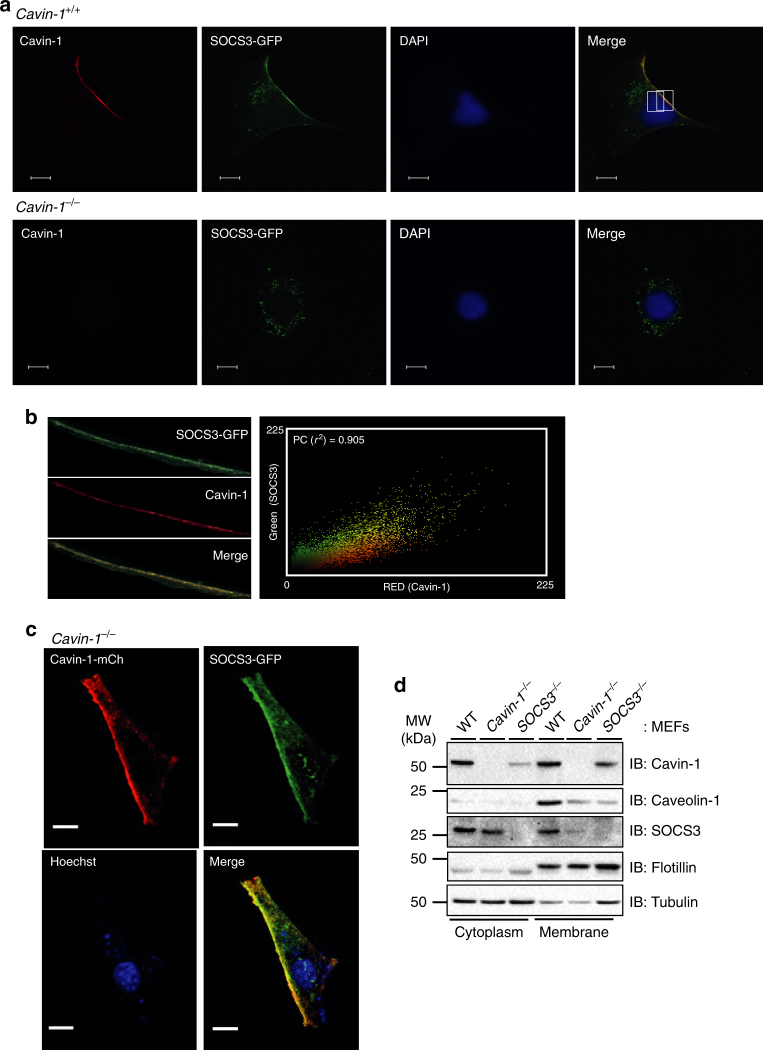
“Endogenous cavin-1 was localised predominantly at the plasma membrane of the trailing edge of the cells as described by others 38 .”
Self-citationWoolson, H. D., Thomson, V. S., Rutherford, C. L., Yarwood, S. J., & Palmer, T. M. (2009) · Cellular Signalling · doi:10.1016/j.cellsig.2009.07.009 · Cited by 53 · cited 3×
“For these experiments, cells were also pre-treated with forskolin (Fsk) to elevate cAMP levels and increase SOCS3 expression in WT MEFs 26,27 stability in WT versus SOCS3 − / − MEFs demonstrated that the absence of SOCS3 signi fi cantly reduced the half-life from > 8 h (WT MEFs) to 2 h ( SOCS3 − / −…”
Self-citationYajima, T., Murofushi, Y., Zhou, H., Park, S., Housman, J., Zhong, Z., Nakamura, M., Machida, M., Hwang, K., Gu, Y., et al. (2011) · Circulation · doi:10.1161/circulationaha.111.028498 · Cited by 49 · cited 1×
“In this regard, cardiac-speci fi c homozygous deletion of murine SOCS3 results in contractile dysfunction and the occurrence of a variety of ventricular arrhythmias 67 , the latter of which is also observed in patients with inactivating cavin-1 mutations 64 .”
Babon, J. J., Yao, S., DeSouza, D. P., Harrison, C. F., Fabri, L. J., Liepinsh, E., Scrofani, S. D., Baca, M., & Norton, R. S. (2005) · The FEBS Journal · doi:10.1111/j.1742-4658.2005.05010.x · Cited by 48 · cited 5×
“We noted the presence of a PEST sequence within the classic SH2 domain structure is also displayed by CIS but none of the other SOCS family proteins 33 .”
InfluentialBuk, D. M., Waibel, M., Braig, C., Martens, A. S., Heinrich, P. C., & Graeve, L. (2004) · Journal of Cell Science · doi:10.1242/jcs.01049 · Cited by 40 · cited 1×
“Localisation of JAK – STAT signalling components, including gp130, receptors for growth hormone, ciliary neurotrophic factor and LIF, and JAK2 to lipid rafts has been determined by biochemical fractionation of cell extracts 15 – 18 ,49 – 52 .”
Wölfler, A., Irandoust, M. I., Meenhuis, A., Gits, J., Roovers, O., & Touw, I. P. (2009) · Traffic · doi:10.1111/j.1600-0854.2009.00928.x · Cited by 37 · cited 2×
“It would also be important to assess any functional consequences of SOCS3 on gp130 ubiquitylation 57 and receptor traf fi cking 10 in order to fully assess the impact of cavin-1 on SOCS3 function.”
Establishment and Characterization of an Angiosarcoma-Derived Cell Line, AS-M
Krump‐Konvalinkova, V., Bittinger, F., Olert, J., Bräuninger, W., Brunner, J., & Kirkpatrick, C. J. (2003) · Endothelium · doi:10.1080/10623320390272316 · Cited by 35 · cited 5×
“…ECs generously provided by Dr Vera Krump-Konvalinkova and Professor Charles Kirkpatrick (Johannes Gutenberg University of Mainz, Germany) 28 were cultured in endothelial growth medium-2 supplemented with 2% (w/v) FBS, hydrocortisone, ascorbate, and recombinant growth factors as…”
InfluentialMukhopadhyay, S., Shah, M., Xu, F., Patel, K., Tuder, R. M., & Sehgal, P. B. (2007) · American Journal of Physiology-Lung Cellular and Molecular Physiology · doi:10.1152/ajplung.00377.2007 · Cited by 34
Sue, S., & Dyson, H. J. (2009) · Journal of Molecular Biology · doi:10.1016/j.jmb.2009.03.048 · Cited by 32
Elsasser, T. H., Kahl, S., Li, C., Sartin, J. L., Garrett, W. M., & Rodrigo, J. (2007) · Endocrinology · doi:10.1210/en.2006-1737 · Cited by 31
Sotgia, F., Schubert, W., Pestell, R. G., & Lisanti, M. P. (2006) · Cancer Biology & Therapy · doi:10.4161/cbt.5.3.2390 · Cited by 29
Zhang, W., Wang, L., Wang, Q., Luo, X. G., Fang, D., Chen, Y., Pan, X., Man, J., Xia, Q., Jin, B., et al. (2011) · Journal of Biological Chemistry · doi:10.1074/jbc.m111.276832 · Cited by 27 · cited 14×
“Therefore, the presence of cavin-1 was necessary for SOCS3-mediated inhibition of IL-6 signalling by cAMP.”
InfluentialSuessmuth, Y., Elliott, J., Percy, M. J., Inami, M., Attal, H., Harrison, C. N., Inokuchi, K., McMullin, M., & Johnston, J. A. (2009) · British Journal of Haematology · doi:10.1111/j.1365-2141.2009.07860.x · Cited by 23 · cited 1×
“Finally, a F136L germline SOCS3 mutation found in a subset of polycythemia vera patients has been shown to display an impaired capacity to inhibit erythropoietin receptor-JAK2 signalling 68 .”
Conformational flexibility may explain multiple cellular roles of PEST motifs
Sandhu, K. S., & Dash, D. (2006) · Proteins: Structure, Function, and Bioinformatics · doi:10.1002/prot.20918 · Cited by 22 · cited 1×
“PEST motifs are unstructured hypermobile regions that have roles in multiple cellular processes by controlling protein – protein interactions and protein turnover 34,35 .”
Safhi, M. M. A., Rutherford, C. L., Ledent, C. A., Sands, W. A., & Palmer, T. M. (2010) · Molecular Pharmacology · doi:10.1124/mol.109.062455 · Cited by 15 · cited 1×
“Equivalent amounts of protein, as determined by bicinchoninic acid protein assay, were resolved by SDS-PAGE, transferred to a nitrocellulose membrane, and analysed by immunoblotting as previously described 26,74,75 .”
Self-citation
Research works printed but not linked: 3
- Palade G Fine structure of blood capillaries J. Appl. Phys. 1953 24 1424
- Tagwerker C A tandem affinity tag for two-step purification under fully denaturing conditions: application in ubiquitin profiling and protein complex identification combined with in vivo cross-linking Mol. Cell. Proteom. 2006 5 737 748 10.1074/mcp.M500368-MCP200 16432255 · DOI · Paper page
- Cox J Mann M MaxQuant enables high peptide identification rates, individualized p.p.b.-range mass accuracies and proteome-wide protein quantification Nat. Biotechnol. 2008 26 1367 1372 10.1038/nbt.1511 19029910 · DOI · Paper page
Cited by
Hong, S.-H., & Choi, K. M. (2020) · International Journal of Molecular Sciences · doi:10.3390/ijms21020494 · Cited by 390
Targeting SOCS proteins to control JAK-STAT signalling in disease
Durham, G. A., Williams, J. J. L., Nasim, M. T., & Palmer, T. M. (2019) · Trends in Pharmacological Sciences · doi:10.1016/j.tips.2019.03.001 · Cited by 183
Self-citationJin, W., Zhao, J., Yang, E., Wang, Y., Wang, Q., Wu, Y., Tong, F., Tan, Y., Zhou, J., & Kang, C. (2022) · Theranostics · doi:10.7150/thno.71029 · Cited by 112
“Previous studies have demonstrated that cytokine receptors of STAT3 are localized in lipid raft microdomains, and PTRF deletion triggers an increase in IL-6-stimulated Tyr705 STAT3 phosphorylation [40].”
Dewulf, M., Köster, D., Sinha, B., de Lesegno, C. V., Chambon, V., Bigot, A., Bensalah, M., Négroni, E., Tardif, N., Podkalicka, J., et al. (2019) · Nature Communications · doi:10.1038/s41467-019-09405-5 · Cited by 99
SOCS Proteins Participate in the Regulation of Innate Immune Response Caused by Viruses
Huang, S., Liu, K., Cheng, A., Wang, M., Cui, M., Huang, J., Zhu, D., Chen, S., Liu, M., Zhao, X., et al. (2020) · Frontiers in Immunology · doi:10.3389/fimmu.2020.558341 · Cited by 94
“So far, only SOCS1, 3, 5, 7 and CIS in the SOCS family contain this sequence (23, 24), but it has not been found in SOCS2, 4 and 6 (25, 26).”
Metadata
- Authors
- Williams, J. J. L., Alotaiq, N., Mullen, W., Burchmore, R., Liu, L., Baillie, G. S., Schaper, F., Pilch, P. F., & Palmer, T. M.
- Affiliations
- University of Bradford (GB)
- University of Glasgow (GB)
- Boston University (US)
- Otto-von-Guericke-Universität Magdeburg (DE)
- Corresponding author
- Williams, Jamie J. L.
- Palmer, Timothy M.
- ORCID
- Venue
- Nature Communications
- Published
- 2018-01-12
- Volume
- 9
- Issue
- 1
- Pages
- 168-168
- ISSN
- 2041-1723 (ISSN-L)
- PMC
- PMC5766592
- OpenAlex
- W2782917952
- Cited by
- 35
- References
- 73
- Citations by year
- 2026: 2 · 2025: 5 · 2022: 7 · 2021: 2 · 2020: 9 · 2019: 9 · 2018: 1
- FWCI
- 1.97
- Type
- journal article
- Language
- en
- Open access
- gold
- doi.org
- Licence
- cc-by
- creativecommons.org/licenses/by/4.0 (tdm)
- creativecommons.org/licenses/by/4.0 (vor)
- Locations
- Nature Communications (publishedVersion, cc-by)
- PubMed Central (publishedVersion, cc-by)
- PubMed (publishedVersion)
- Bradford Scholars (University of Bradford) (publishedVersion, other-oa)
- ENLIGHTEN (Jurnal Bimbingan dan Konseling Islam) (acceptedVersion, cc-by-sa)
- Repository@Hull (Worktribe) (University of Hull) (submittedVersion, cc-by)
- RePEc: Research Papers in Economics (submittedVersion)
- DOAJ (DOAJ: Directory of Open Access Journals) (submittedVersion, cc-by-sa)
- DOAJ (DOAJ: Directory of Open Access Journals) (submittedVersion)
- Funders
- British Heart Foundation (PG/12/1/29276, PG/14/32/30812)
- Diabetes UK (11/0004309)
- University of Glasgow
- National Institutes of Health
- Directorate for Biological Sciences
- Biotechnology and Biological Sciences Research Council (BB/F016735, BB/F016735/1)
- National Institute of Diabetes and Digestive and Kidney Diseases (R01DK112945, R01DK097708)
- Topics
- Life Sciences › Immunology and Microbiology › Immunology › Cytokine Signaling Pathways and Interactions
- Life Sciences › Biochemistry, Genetics and Molecular Biology › Cell Biology › Caveolin-1 and cellular processes
- Life Sciences › Biochemistry, Genetics and Molecular Biology › Genetics › Genetic and Kidney Cyst Diseases
- Keywords
- SOCS3, cavin-1, caveolae, caveolin-1, JAK/STAT signaling, STAT3 phosphorylation, IL-6 signaling, protein stability, protein-protein interaction, plasma membrane localization, endothelial cells, cyclic AMP
- MeSH terms
- Suppressor of Cytokine Signaling 3 Protein, Animals, Gene Expression Regulation, Humans, Membrane Proteins, Protein Binding, RNA-Binding Proteins, Gene Deletion, Caveolae, STAT Transcription Factors, Mice, Janus Kinases, HEK293 Cells
About these checks
Registry, retraction, Cites and statistics results are computed, not judged, with one exception: a printed reference that no index lists is read once by a model before it counts as a citation error. Claims are extracted by a model and kept only when their quote appears verbatim in the text; each cited source is then checked, with a model’s help, for whether it says what the claim relies on. Those verdicts can be wrong — read the claim’s quote and the cited source before relying on one.
Statistics and arithmetic are recomputed, not judged.
Confidence bands are shown only for fields calibrated on our annotated test set. None is calibrated yet, so no band is shown.
What counts as a claim ›How we measure confidence ›How we check this ›
Are you an author, or do you see a problem with this page? Request a review
Data sources
Bibliographic data: Semantic Scholar, OpenAlex, Crossref.
Contains information from the Semantic Scholar Academic Graph Datasets, made available under the ODC Attribution License (ODC-BY 1.0).
Semantic Scholar’s data is described in: Kinney, R., et al. (2023). The Semantic Scholar Open Data Platform. arXiv:2301.10140.
