

Interaction of suppressor of cytokine signalling 3 with cavin-1 links SOCS3 function and cavin-1 stability
Open accessThe DOI matches its Crossref record; 73 of the 73 references it cites were found in a registry or an index.
Abstract
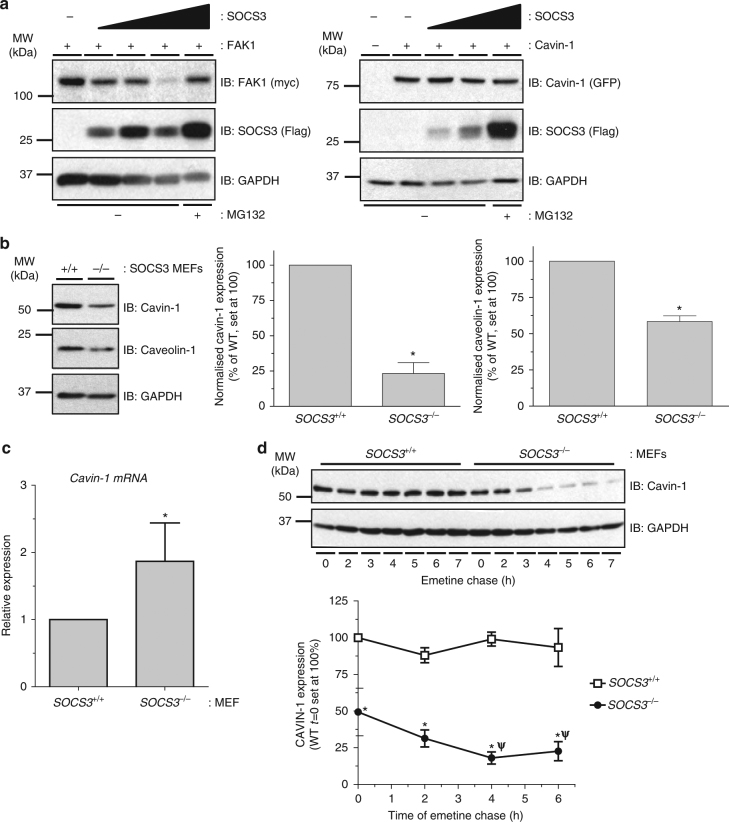
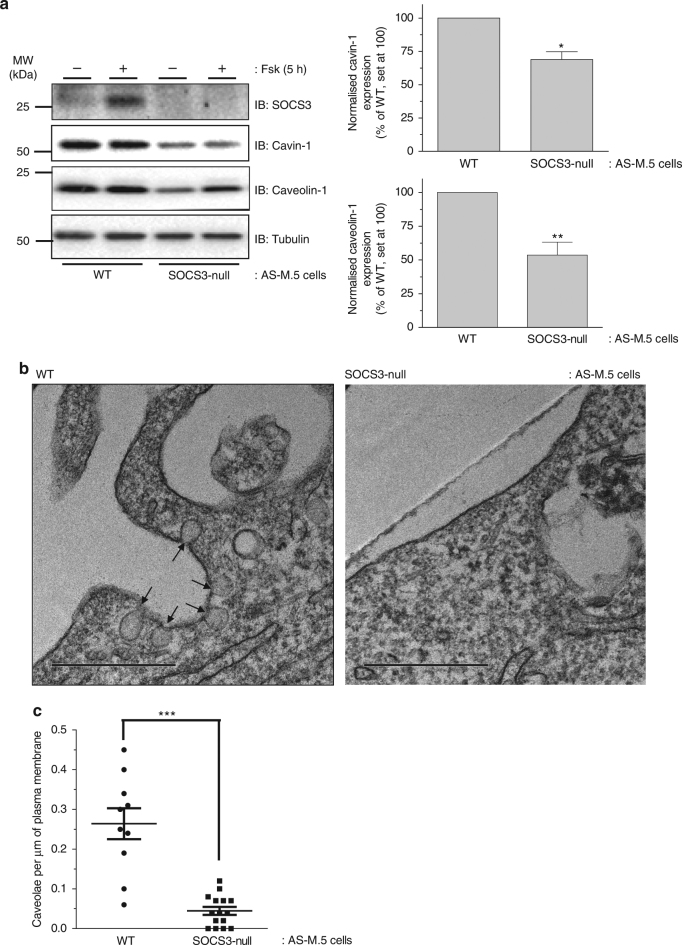
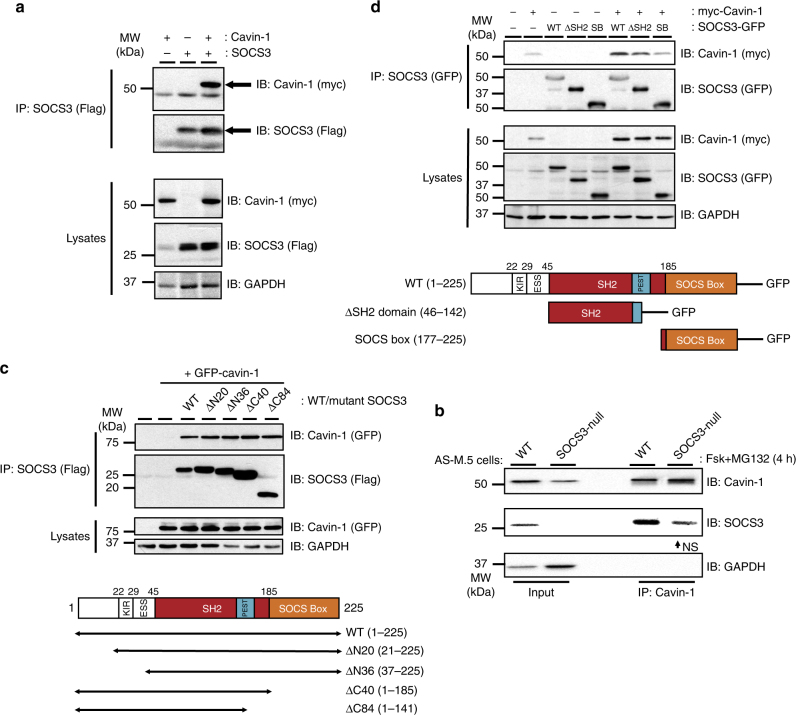
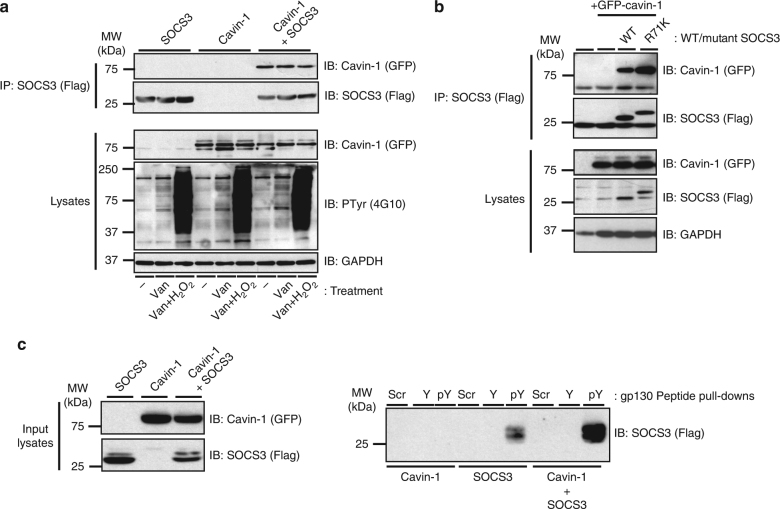
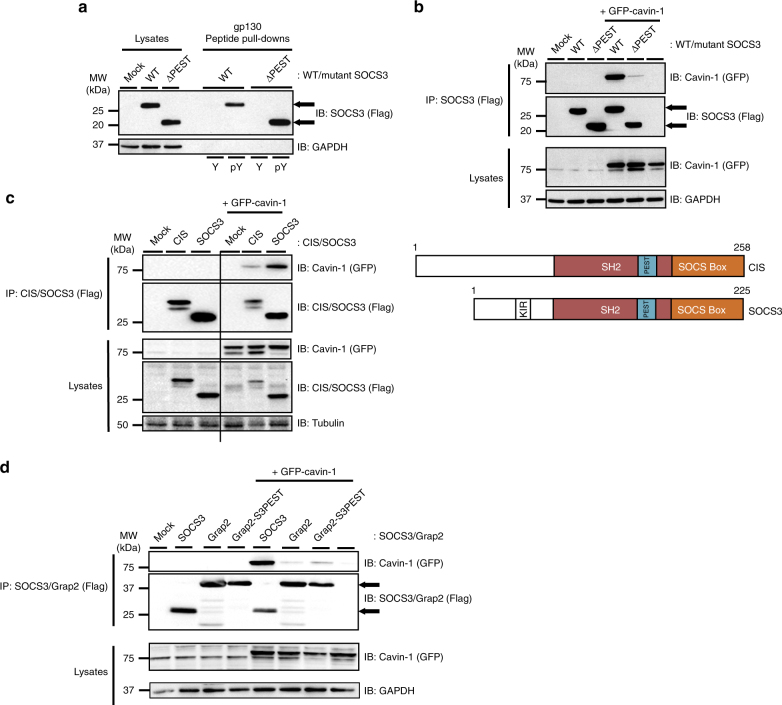
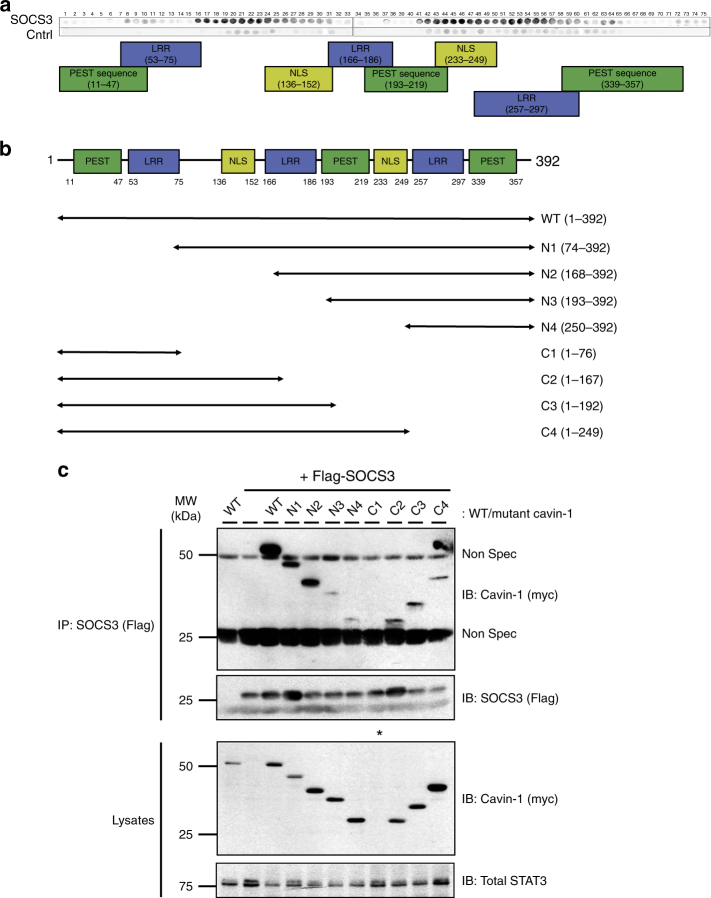
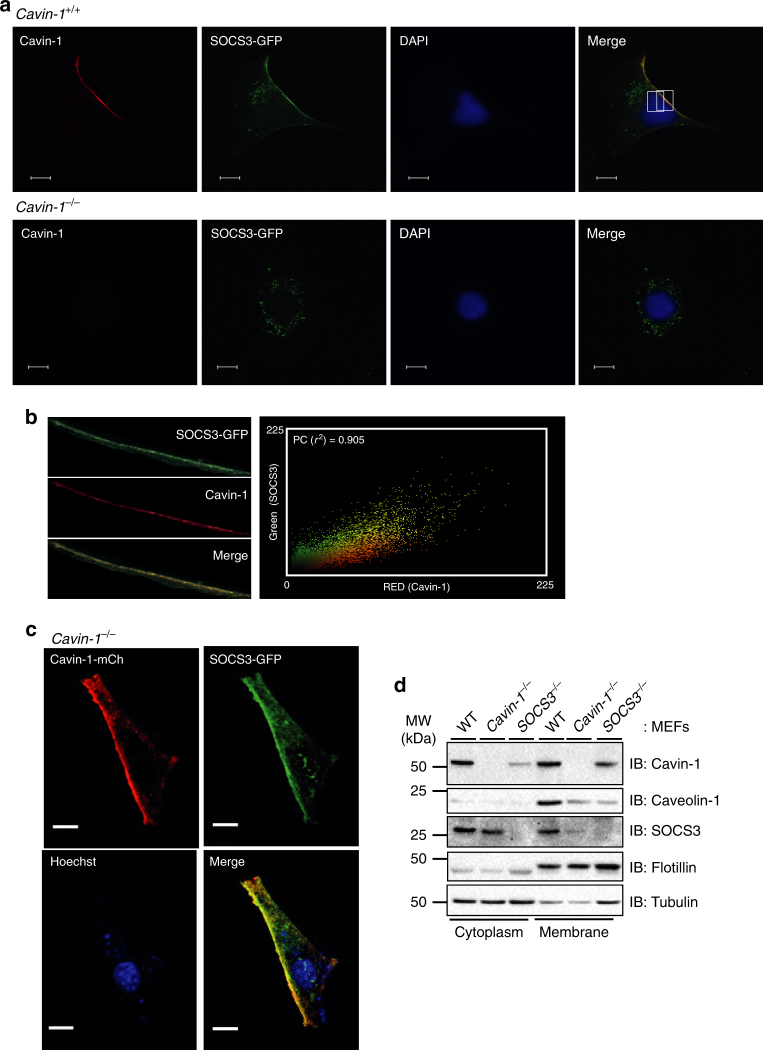
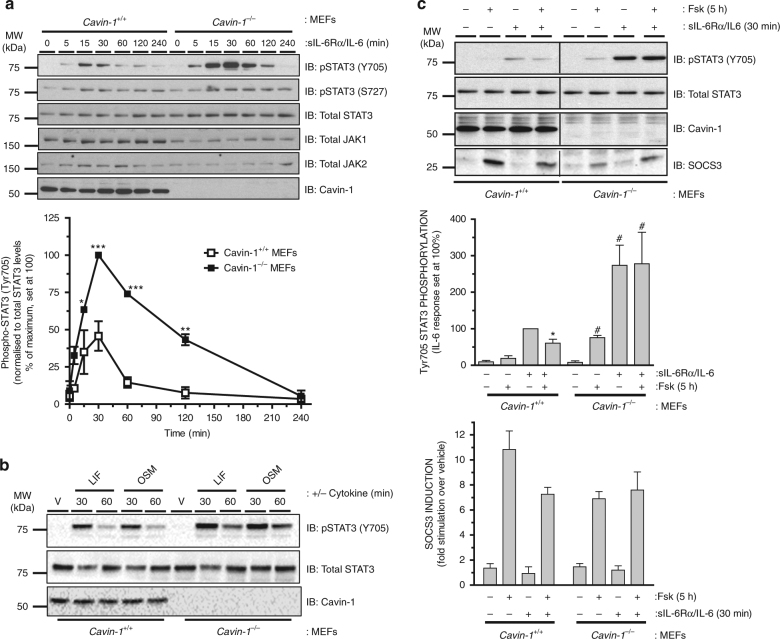
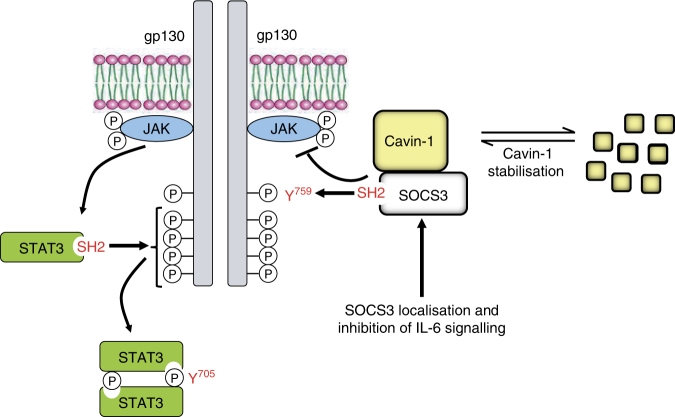
Effective suppression of JAK–STAT signalling by the inducible inhibitor “suppressor of cytokine signalling 3” (SOCS3) is essential for limiting signalling from cytokine receptors. Here we show that cavin-1, a component of caveolae, is a functionally significant SOCS3-interacting protein. Biochemical and confocal imaging demonstrate that SOCS3 localisation to the plasma membrane requires cavin-1. SOCS3 is also critical for cavin-1 stabilisation, such that deletion of SOCS3 reduces the expression of cavin-1 and caveolin-1 proteins, thereby reducing caveola abundance in endothelial cells. Moreover, the interaction of cavin-1 and SOCS3 is essential for SOCS3 function, as loss of cavin-1 enhances cytokine-stimulated STAT3 phosphorylation and abolishes SOCS3-dependent inhibition of IL-6 signalling by cyclic AMP. Together, these findings reveal a new functionally important mechanism linking SOCS3-mediated inhibition of cytokine signalling to localisation at the plasma membrane via interaction with and stabilisation of cavin-1.
Overview
The claims and statistics of this paper haven’t been checked yet.
Free: it reads the open-access text and checks the first 5 claims that cite a source we can check. Create a free account to check every claim.
Integrity signals
Registry
Cites
Statistics
Figures
Verification
Claims the paper makes
The claims and statistics of this paper haven’t been checked yet.
Free: it reads the open-access text and checks the first 5 claims that cite a source we can check. Create a free account to check every claim.
Claims other papers make about this one
Each is checked against this paper’s own text: does it say what the citing paper says it does?
In the citing paper
“In mice, macrophage-specific ablation of SOCS1 increases systemic inflammation and IR [76], and a loss of function of the cavin-1 binding sites on SOCS3 consequently induces lipodystrophy and IR in mice [77].”
From Sarcopenic obesity, insulin resistance, and their implications in cardiovascular and metabolic consequences (2020) · cites this paper as [77]
Self-check
Percentages, sums and reported differences re-computed from the paper’s own numbers.
The self-check needs the paper’s full text.
Citations
Cites
Cox, J., & Mann, M. (2008) · Nature Biotechnology · doi:10.1038/nbt.1511 · Cited by 14,855 · cited 1×
“Tandem af fi nity-puri fi ed ubiquiti-nomes from WT and SOCS3 − / − MEFs were then analysed using an Orbitrap Velos FTMS and data processed using the MaxQuant computational platform 24 (170).”
Andromeda: A Peptide Search Engine Integrated into the MaxQuant Environment
Cox, J., Neuhauser, N., Michalski, A., Scheltema, R. A., Olsen, J. V., & Mann, M. (2011) · Journal of Proteome Research · doi:10.1021/pr101065j · Cited by 5,500
Principles of interleukin (IL)-6-type cytokine signalling and its regulation
HEINRICH, P. C., BEHRMANN, I., HAAN, S., HERMANNS, H. M., MÜLLER-NEWEN, G., & SCHAPER, F. (2003) · Biochemical Journal · doi:10.1042/bj20030407 · Cited by 3,884 · cited 2×
“Other cytokine receptor complexes that utilise gp130 include those for leukaemia inhibitory factor (LIF) and oncostatin M (OSM): LIF signals via gp130/LIF receptor (LIFR) heterodimers, while OSM signals downstream using either LIFR/gp130 or OSM receptor/ gp130 complexes 41 .”
Self-citationRevisiting STAT3 signalling in cancer: new and unexpected biological functions
Yu, H., Lee, H., Herrmann, A., Buettner, R., & Jove, R. (2014) · Nature Reviews Cancer · doi:10.1038/nrc3818 · Cited by 2,137
The JAK-STAT Pathway: Impact on Human Disease and Therapeutic Intervention
O'Shea, J. J., Schwartz, D. M., Villarino, A. V., Gadina, M., McInnes, I. B., & Laurence, A. (2015) · Annual Review of Medicine · doi:10.1146/annurev-med-051113-024537 · Cited by 1,599
Caveolae as plasma membrane sensors, protectors and organizers
Parton, R. G., & del Pozo, M. A. (2013) · Nature Reviews Molecular Cell Biology · doi:10.1038/nrm3512 · Cited by 924
Serine phosphorylation of STATs
Decker, T., & Kovarik, P. (2000) · Oncogene · doi:10.1038/sj.onc.1203481 · Cited by 887 · cited 1×
“Interest-ingly, Tyr705 phosphorylation was speci fi cally enhanced as STAT3 phosphorylation on Ser727 (which is mediated by several candidate Ser/Thr kinases 40 ) was unaffected by cavin-1 deletion.”
SOCS3 negatively regulates IL-6 signaling in vivo
Croker, B. A., Krebs, D. L., Zhang, J.-G., Wormald, S., Willson, T. A., Stanley, E. G., Robb, L., Greenhalgh, C. J., Förster, I., Clausen, B. E., et al. (2003) · Nature Immunology · doi:10.1038/ni931 · Cited by 840 · cited 1×
“Previous studies have demonstrated that depletion or loss of SOCS3 results in prolonged activation of STAT3 in response to speci fi c cytokines 42 – 44 , similar to the effect observed upon cavin-1 deletion.”
Dissecting the Interaction between Nitric Oxide Synthase (NOS) and Caveolin
Garcı́a-Cardeña, G., Martasek, P., Masters, B. S. S., Skidd, P. M., Couet, J., Li, S., Lisanti, M. P., & Sessa, W. C. (1997) · Journal of Biological Chemistry · doi:10.1074/jbc.272.41.25437 · Cited by 821 · cited 1×
“The importance of caveolae and other lipid raft microdomains for maintaining signalling from the plasma membrane has been demonstrated for a variety of systems, including endothelial nitric oxide synthase and Src 47,48 .”
Li, S., Couet, J., & Lisanti, M. P. (1996) · Journal of Biological Chemistry · doi:10.1074/jbc.271.46.29182 · Cited by 777 · cited 1×
“The importance of caveolae and other lipid raft microdomains for maintaining signalling from the plasma membrane has been demonstrated for a variety of systems, including endothelial nitric oxide synthase and Src 47,48 .”
Research works printed but not linked: 3
- Palade G Fine structure of blood capillaries J. Appl. Phys. 1953 24 1424
- Tagwerker C A tandem affinity tag for two-step purification under fully denaturing conditions: application in ubiquitin profiling and protein complex identification combined with in vivo cross-linking Mol. Cell. Proteom. 2006 5 737 748 10.1074/mcp.M500368-MCP200 16432255 · DOI · Paper page
- Cox J Mann M MaxQuant enables high peptide identification rates, individualized p.p.b.-range mass accuracies and proteome-wide protein quantification Nat. Biotechnol. 2008 26 1367 1372 10.1038/nbt.1511 19029910 · DOI · Paper page
Cited by
Hong, S.-H., & Choi, K. M. (2020) · International Journal of Molecular Sciences · doi:10.3390/ijms21020494 · Cited by 390
Targeting SOCS proteins to control JAK-STAT signalling in disease
Durham, G. A., Williams, J. J. L., Nasim, M. T., & Palmer, T. M. (2019) · Trends in Pharmacological Sciences · doi:10.1016/j.tips.2019.03.001 · Cited by 183
Self-citationJin, W., Zhao, J., Yang, E., Wang, Y., Wang, Q., Wu, Y., Tong, F., Tan, Y., Zhou, J., & Kang, C. (2022) · Theranostics · doi:10.7150/thno.71029 · Cited by 112
“Previous studies have demonstrated that cytokine receptors of STAT3 are localized in lipid raft microdomains, and PTRF deletion triggers an increase in IL-6-stimulated Tyr705 STAT3 phosphorylation [40].”
Dewulf, M., Köster, D., Sinha, B., de Lesegno, C. V., Chambon, V., Bigot, A., Bensalah, M., Négroni, E., Tardif, N., Podkalicka, J., et al. (2019) · Nature Communications · doi:10.1038/s41467-019-09405-5 · Cited by 99
SOCS Proteins Participate in the Regulation of Innate Immune Response Caused by Viruses
Huang, S., Liu, K., Cheng, A., Wang, M., Cui, M., Huang, J., Zhu, D., Chen, S., Liu, M., Zhao, X., et al. (2020) · Frontiers in Immunology · doi:10.3389/fimmu.2020.558341 · Cited by 94
“So far, only SOCS1, 3, 5, 7 and CIS in the SOCS family contain this sequence (23, 24), but it has not been found in SOCS2, 4 and 6 (25, 26).”
Understanding SOCS protein specificity
Linossi, E. M., Calleja, D. J., & Nicholson, S. E. (2018) · Growth Factors · doi:10.1080/08977194.2018.1518324 · Cited by 58
“Co-expression of CUEDC2 stabilized SOCS3 protein levels, and although it was not tested whether this was a phosphotyrosine-dependent interaction, it is possible that CUEDC2 regulates SOCS3 function through binding the PEST motif, similar to Cavin-1 (Williams et al., 2018; Zhang et al., 2012).”
InfluentialCurrent Update on Transcellular Brain Drug Delivery
Pawar, B., Vasdev, N., Gupta, T., Mhatre, M., More, A., Anup, N., & Tekade, R. K. (2022) · Pharmaceutics · doi:10.3390/pharmaceutics14122719 · Cited by 52
Overview of Crosstalk Between Multiple Factor of Transcytosis in Blood Brain Barrier
Tjakra, M., Wang, Y., Vania, V., Hou, Z., Durkan, C., Wang, N., & Wang, G. (2020) · Frontiers in Neuroscience · doi:10.3389/fnins.2019.01436 · Cited by 49
“…in Neuroscience | www.frontiersin.org 3 January 2020 | Volume 13 | Article 1436 In the neurovascular unit within adult mice, the expression of PDGFRβ exclusively persists only at pericytes (Winkler et al., 2010), differing from humans which also retain it in general ECs (Muhl et al., 2017).”
Lacombe, A., Maclean, A. E., Ovciarikova, J., Tottey, J., Mühleip, A., Fernandes, P., & Sheiner, L. (2019) · Molecular Microbiology · doi:10.1111/mmi.14357 · Cited by 48
“, Molecular Microbiology, 0, 1–19 procedure (Williams et al., 2018), were analysed as previously described (Akpunarlieva et al.”
Sadeghi, I., Gispert, J. D., Palumbo, E., Muñoz-Aguirre, M., Wucher, V., D’Argenio, V., Santpere, G., Navarro, A., Guigó, R., & Vilor‐Tejedor, N. (2022) · Computational and Structural Biotechnology Journal · doi:10.1016/j.csbj.2022.08.037 · Cited by 43
SOCS and Herpesviruses, With Emphasis on Cytomegalovirus Retinitis
Alston, C. I., & Dix, R. D. (2019) · Frontiers in Immunology · doi:10.3389/fimmu.2019.00732 · Cited by 38
“The predicted locations for these PEST motifs vary, and to our knowledge no such predicted sequence has yet been found for SOCS2, SOCS4, or SOCS6 (35, 36).”
Endosomes as Signaling Platforms for IL-6 Family Cytokine Receptors
Schmidt‐Arras, D., & Rose‐John, S. (2021) · Frontiers in Cell and Developmental Biology · doi:10.3389/fcell.2021.688314 · Cited by 38
“Surprisingly, genetic deficiency of caveolin-1 resulted in enhanced STAT3 phosphorylation upon IL-6 stimulation (Williams et al., 2018).”
Proteomimetics of Natural Regulators of JAK–STAT Pathway: Novel Therapeutic Perspectives
Manna, S. L., Benedictis, I. D., & Marasco, D. (2022) · Frontiers in Molecular Biosciences · doi:10.3389/fmolb.2021.792546 · Cited by 33
“However, at present, no structures of SOCS3 or its SH2 domain with either full length cavin-1 (Williams et al., 2018) or CUEDC2 are available (Zhang et al.”
The miR-155 regulates cytokines expression by SOSC1 signal pathways of fish in vitro and in vivo
Tang, X., Fu, J.-H., Tan, X., Shi, Y., Ye, J., Guan, W., Shi, Y., & Xu, M. (2020) · Fish & Shellfish Immunology · doi:10.1016/j.fsi.2020.07.042 · Cited by 31
Approaches to Visualising Endocytosis of LDL-Related Lipoproteins
Siddiqui, H., Yevstigneyev, N. S., Madani, G., & McCormick, S. P. A. (2022) · Biomolecules · doi:10.3390/biom12020158 · Cited by 30
Deciphering the relationship between caveolae-mediated intracellular transport and signalling events
Popov, L. (2022) · Cellular Signalling · doi:10.1016/j.cellsig.2022.110399 · Cited by 27
Low, J., Brennen, W. N., Meeker, A. K., Ikonen, E., Simons, B. W., & Laiho, M. (2020) · Molecular Cancer Research · doi:10.1158/1541-7786.mcr-20-0364 · Cited by 23
“CAVIN1 was recently reported to interact with suppressor of cytokine signaling 3 (SOCS3), and is required for SOCS3 localization and function, suggesting at least one mechanism how CAVIN1 limits JAK–STAT inflammatory signaling (46).”
Tsai, C.-H., Lee, Y., Li, C.-H., Cheng, Y., & Kang, J. (2019) · Cell Biology and Toxicology · doi:10.1007/s10565-019-09499-z · Cited by 18
The interleukin 6 trans -signaling increases prostaglandin E2 production in human granulosa cells
Li, S., Chang, H., Xie, J., Wang, J. H., Yang, J., & Leung, P. C. K. (2021) · Biology of Reproduction · doi:10.1093/biolre/ioab128 · Cited by 15
“As an inducible inhibitor, SOCS3 is essential for limiting the signaling activated by cytokine receptors and can effectively suppress JAK/STAT signaling in many cells [38].”
SOCS3: An Immunological Biomarker Offering Potential Therapeutic Targets for Malignant Tumors
Zhang, Y., Chu, M., Ye, M., Yin, Y., & Chen, H. (2025) · Biological Procedures Online · doi:10.1186/s12575-025-00296-z · Cited by 14
“SOCS3 protein is an important intracellular inhibitor associated with the body’ s immunity [47].”
Tian, B., Tang, D., Wu, J., Liang, M., Du, H., & wei, Q. (2019) · Fish & Shellfish Immunology · doi:10.1016/j.fsi.2019.11.022 · Cited by 12
Diffusing caveolin-1 scaffolds regulate mechanosignalling
Mani, S. K., Tardif, N., Rossier, O., Khater, I. M., Zhou, X., Breton, V., Vicente, F. N., Radhakrishnan, A. V., Gracia, C., Troncoso, P. G., et al. (2026) · Nature Cell Biology · doi:10.1038/s41556-026-01966-0 · Cited by 11
“In this context, it is noteworthy that another member of the SOCS family, SOCS3, relies on Cavin1 for its localization at the plasma membrane in endothelial cells, and that STAT3 activation is increased when Cavin1 is depleted 103 .”
Cavin-1 promotes M2 macrophages/microglia polarization via SOCS3
Huang, W., Hong, Y., He, W., Jiang, L., Deng, W., Peng, B., Tang, F., Shen, C., Lan, Q., Huang, H., et al. (2022) · Inflammation Research · doi:10.1007/s00011-022-01550-w · Cited by 11
“Cavin-1 is a SOCS3 interacting protein with important function, and it can regulate the signal transduction of cytokine receptor by interacting with SOCS3 [34].”
Nishi, M., Ogata, T., Cannistraci, C. V., Ciucci, S., Nakanishi, N., Higuchi, Y., Sakamoto, A., Tsuji, Y., Mizushima, K., & Matoba, S. (2019) · Journal of the American Heart Association · doi:10.1161/jaha.119.012047 · Cited by 10
“A recent study demonstrated that the phosphorylation of STAT3 is regulated by the interaction of Cavin-1 with SOCS3 (suppressor of cytokine signaling 3) in a shared signal-transducing receptor for a family of cytokines, gp130-mediated cytokine signaling.(56) Cavin-1 localizes SOCS3 in the caveolae at the plasma membra…”
Gorelik, A., Paulo, J. A., Schroeter, C. B., Lad, M., Shurr, A., Mastrokalou, C., Siddiqi, S., Suyari, O., Brognard, J., Walter, D., et al. (2025) · Proceedings of the National Academy of Sciences · doi:10.1073/pnas.2424985122 · Cited by 9
Self-citationPotential Molecular Mechanism of the NPPB Gene in Postischemic Heart Failure with and without T2DM
Guan, Y., Yin, R., Deng, G., Zheng, P., Liu, C., & Wei, B. (2020) · BioMed Research International · doi:10.1155/2020/2159460 · Cited by 7
“Moreover, proteins encoded by cavin-1 are also believed to modify lipid metabolism and insulin-regulated gene expression [23, 24].”
Williams, J. J. L., Baillie, G. S., & Palmer, T. M. (2020) · Methods in molecular biology · doi:10.1007/978-1-0716-0732-9_10 · Cited by 3
Self-citationPotential Molecular Mechanism of the NPPB Gene in Post-Ischemic Heart Failure with and without T2DMPreprint
Guan, Y., Yin, R., Deng, G., Zheng, P., Liu, C.-X., & Wei, B. (2020) · Research Square · doi:10.21203/rs.3.rs-21106/v1 · Cited by 2
Potential molecular mechanism of the NPPB gene in post-ischemic heart failure with and without T2DMPreprint
Guan, Y., Yin, R., Deng, G., Zheng, P., Liu, C.-X., & Wei, B. (2020) · doi:10.21203/rs.2.21573/v1 · Cited by 2
ARAP2 regulates responses to interferon-gamma by restricting SOCS1
Keating, N., Doggett, K., Bidgood, G. M., Meza Guzman, L. G., Dagley, L. F., Li, K., Williams, B. E., Gabrielyan, A., Alvarado, C., Broomfield, B. J., et al. (2025) · Cell Reports · doi:10.1016/j.celrep.2025.116667 · Cited by 1
ARAP2 regulates responses to interferon-gamma by restricting SOCS1
Keating, N., Doggett, K., Bidgood, G. M., Meza Guzman, L. G., Dagley, L. F., Li, K., Gabrielyan, A., Alvarado, C., Williams, B. E., Broomfield, B. J., et al. (2025) · doi:10.1101/2025.04.28.650977 · Cited by 1
Role of caveolin-3 and caveolae mechanics in muscle pathophysiology
Dewulf, M. (2018) · theses.fr (ABES) · doi:10.70675/d07e312ezabf8z4efbzb8d0z5d053425597e
Mechanosignaling through Caveolae : A New Role for the Control of JAK-STAT Signaling
Tardif, N. (2018) · theses.fr (ABES) · doi:10.70675/07b0a479z381fz420bz961dz69384f253495 · Cited by 1
Remote control of JAK-STAT signaling through caveolae mechanics
Mani, S. K. (2021) · theses.fr (ABES) · doi:10.70675/2f49e467z6a6fz4721zaf0dzbd18a954fe93
Du, Y., & Dang, Y. (2025) · Current Drug Targets · doi:10.2174/0113894501383009250410081726 · Cited by 2
Fibrose musculaire : acteurs cellulaires et stratégies thérapeutiques
Bensalah, M. (2019) · theses.fr (ABES) · doi:10.70675/26f11f97zd40az491cz93fcz9608314a2b03
SOCS3 Stabilizes PARP1 to Suppress Adipogenic Transcription and Abdominal Adipogenesis in Avian
Wang, Z., Tian, Z., Qv, L., Zhao, M., Zhao, Q., Ma, Z., Yue, Q., Yin, Z., Hou, Z., & Li, H. (2026) · The FASEB Journal · doi:10.1096/fj.202601300rr
“Beyond its canonical inhibitory role, SOCS3 exhibits context-dependent bifunctionality; for instance, it can enhance the stability of the CAVIN1/CAV1 complex, thereby modulating caveolae-mediated signaling [6].”
Metadata
- Authors
- Williams, J. J. L., Alotaiq, N., Mullen, W., Burchmore, R., Liu, L., Baillie, G. S., Schaper, F., Pilch, P. F., & Palmer, T. M.
- Affiliations
- University of Bradford (GB)
- University of Glasgow (GB)
- Boston University (US)
- Otto-von-Guericke-Universität Magdeburg (DE)
- Corresponding author
- Williams, Jamie J. L.
- Palmer, Timothy M.
- ORCID
- Venue
- Nature Communications
- Published
- 2018-01-12
- Volume
- 9
- Issue
- 1
- Pages
- 168-168
- ISSN
- 2041-1723 (ISSN-L)
- PMC
- PMC5766592
- OpenAlex
- W2782917952
- Semantic Scholar
- 0ecf94b55eb891079a5bd26e3b2ebee5e49106ad
- Cited by
- 35
- References
- 73
- Citations by year
- 2026: 2 · 2025: 5 · 2022: 7 · 2021: 2 · 2020: 9 · 2019: 9 · 2018: 1
- FWCI
- 1.97
- Type
- journal article
- Language
- en
- Open access
- gold
- doi.org
- Licence
- cc-by
- creativecommons.org/licenses/by/4.0 (tdm)
- creativecommons.org/licenses/by/4.0 (vor)
- Locations
- Nature Communications (publishedVersion, cc-by)
- PubMed Central (publishedVersion, cc-by)
- PubMed (publishedVersion)
- Bradford Scholars (University of Bradford) (publishedVersion, other-oa)
- ENLIGHTEN (Jurnal Bimbingan dan Konseling Islam) (acceptedVersion, cc-by-sa)
- Repository@Hull (Worktribe) (University of Hull) (submittedVersion, cc-by)
- RePEc: Research Papers in Economics (submittedVersion)
- DOAJ (DOAJ: Directory of Open Access Journals) (submittedVersion, cc-by-sa)
- DOAJ (DOAJ: Directory of Open Access Journals) (submittedVersion)
- Funders
- British Heart Foundation (PG/12/1/29276, PG/14/32/30812)
- Diabetes UK (11/0004309)
- University of Glasgow
- National Institutes of Health
- Directorate for Biological Sciences
- Biotechnology and Biological Sciences Research Council (BB/F016735, BB/F016735/1)
- National Institute of Diabetes and Digestive and Kidney Diseases (R01DK112945, R01DK097708)
- Topics
- Life Sciences › Immunology and Microbiology › Immunology › Cytokine Signaling Pathways and Interactions
- Life Sciences › Biochemistry, Genetics and Molecular Biology › Cell Biology › Caveolin-1 and cellular processes
- Life Sciences › Biochemistry, Genetics and Molecular Biology › Genetics › Genetic and Kidney Cyst Diseases
- Keywords
- SOCS3, cavin-1, caveolae, caveolin-1, JAK/STAT signaling, STAT3 phosphorylation, IL-6 signaling, protein stability, protein-protein interaction, plasma membrane localization, endothelial cells, cyclic AMP
- MeSH terms
- Suppressor of Cytokine Signaling 3 Protein, Animals, Gene Expression Regulation, Humans, Membrane Proteins, Protein Binding, RNA-Binding Proteins, Gene Deletion, Caveolae, STAT Transcription Factors, Mice, Janus Kinases, HEK293 Cells
About these checks
Registry, retraction, Cites and statistics results are computed, not judged, with one exception: a printed reference that no index lists is read once by a model before it counts as a citation error. Claims are extracted by a model and kept only when their quote appears verbatim in the text; each cited source is then checked, with a model’s help, for whether it says what the claim relies on. Those verdicts can be wrong — read the claim’s quote and the cited source before relying on one.
Statistics and arithmetic are recomputed, not judged.
Confidence bands are shown only for fields calibrated on our annotated test set. None is calibrated yet, so no band is shown.
What counts as a claim ›How we measure confidence ›How we check this ›
Are you an author, or do you see a problem with this page? Request a review
Data sources
Bibliographic data: Semantic Scholar, OpenAlex, Crossref.
Contains information from the Semantic Scholar Academic Graph Datasets, made available under the ODC Attribution License (ODC-BY 1.0).
Semantic Scholar’s data is described in: Kinney, R., et al. (2023). The Semantic Scholar Open Data Platform. arXiv:2301.10140.
