

DNA methyltransferase inhibition upregulates MHC-I to potentiate cytotoxic T lymphocyte responses in breast cancer
Open accessThe DOI matches its Crossref record; 29 of the 29 references it cites were found in a registry or an index.
Abstract
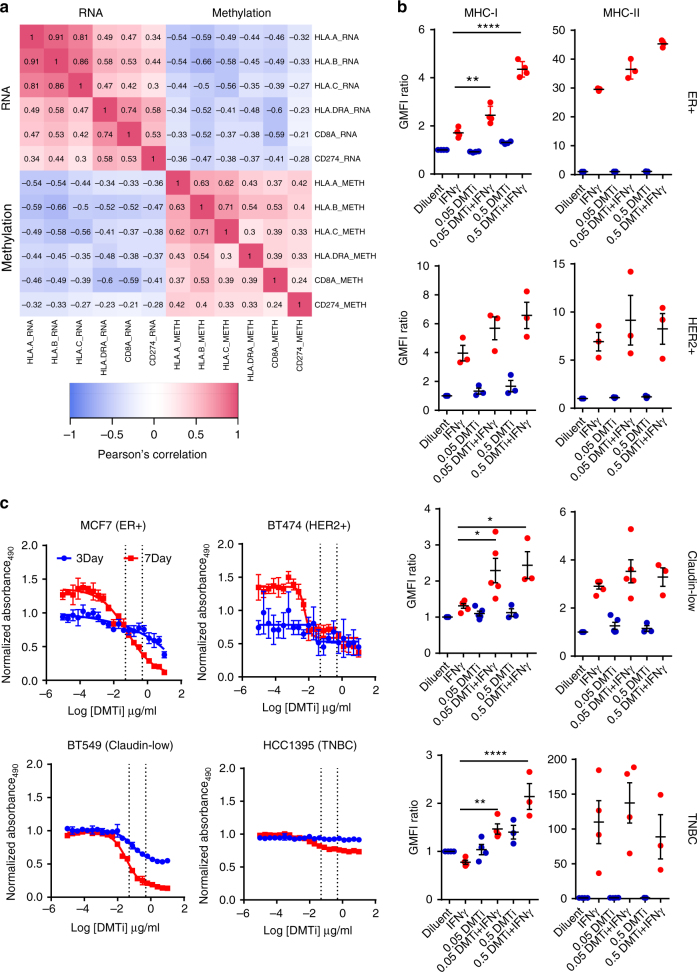
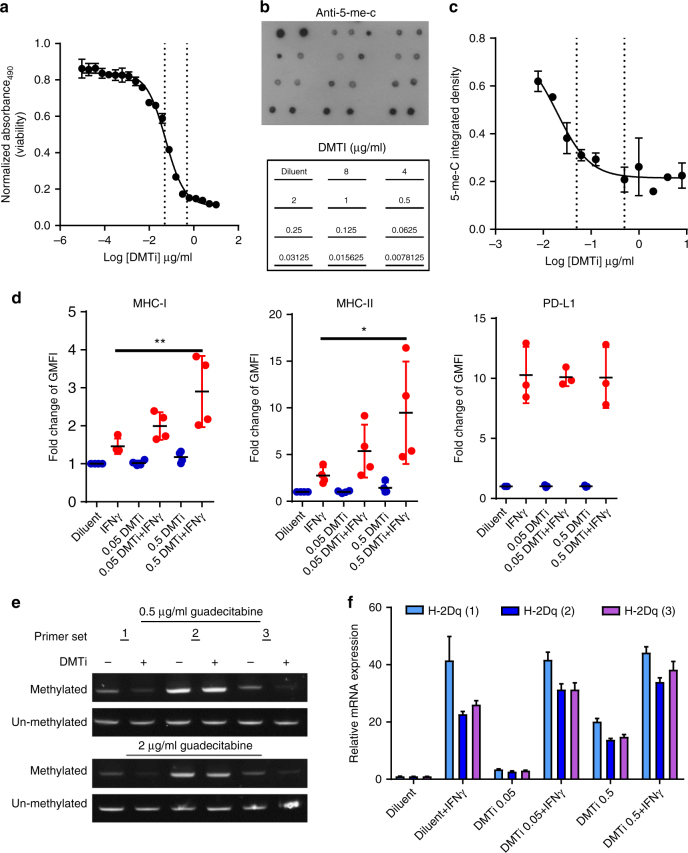
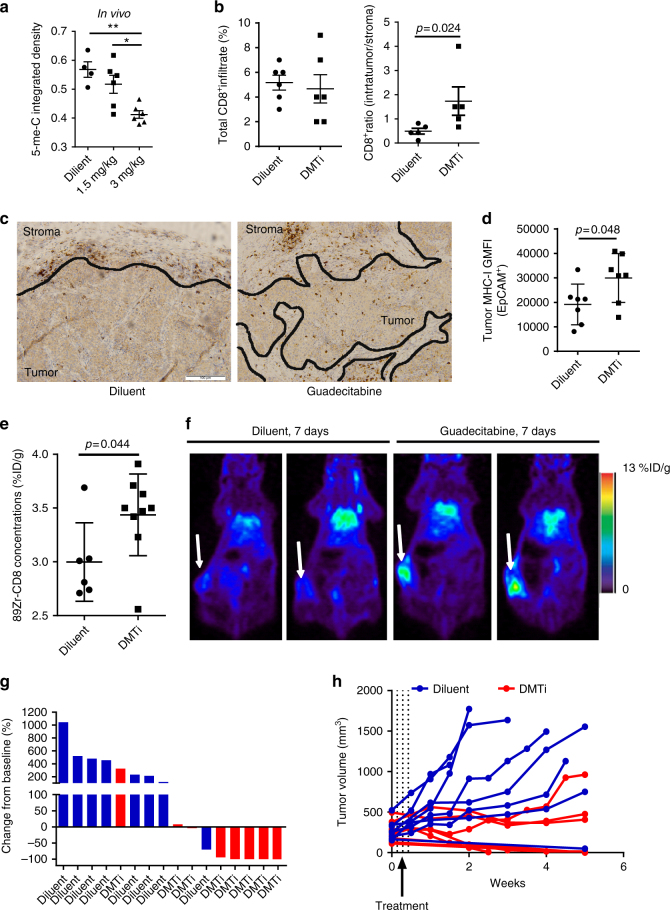
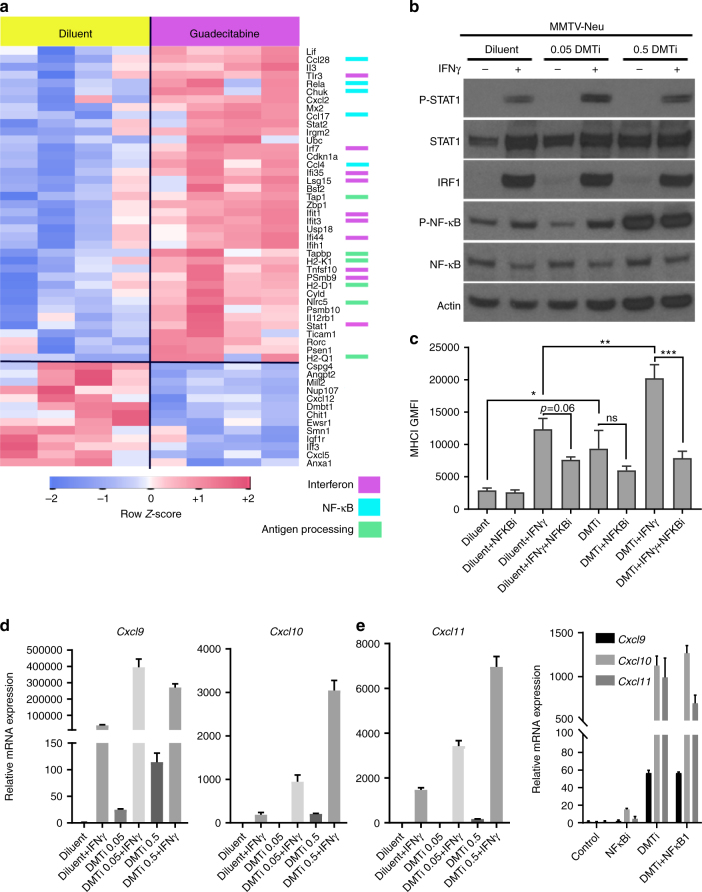
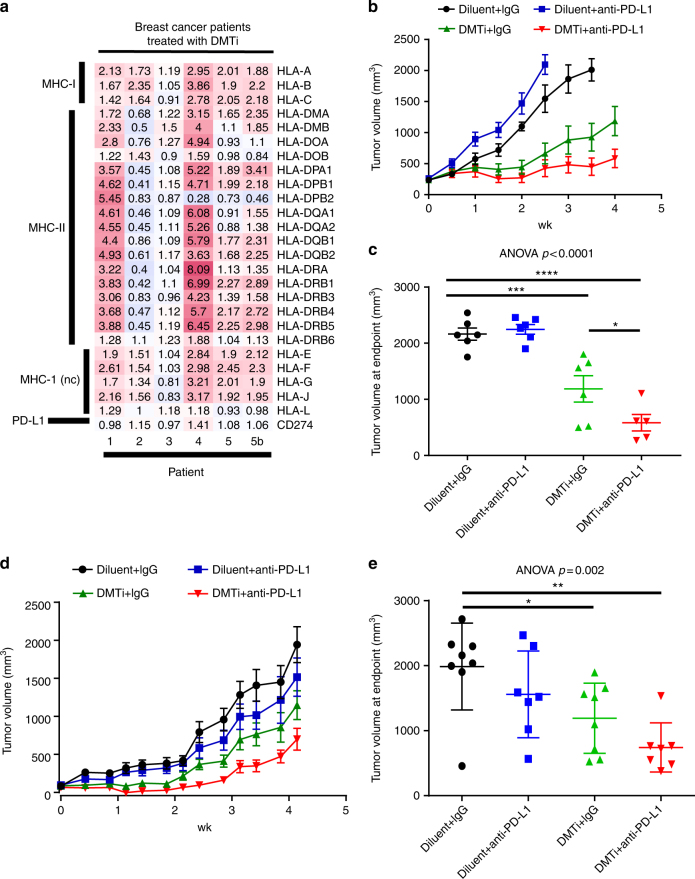
Potentiating anti-tumor immunity by inducing tumor inflammation and T cell-mediated responses are a promising area of cancer therapy. Immunomodulatory agents that promote these effects function via a wide variety of mechanisms, including upregulation of antigen presentation pathways. Here, we show that major histocompatibility class-I (MHC-I) genes are methylated in human breast cancers, suppressing their expression. Treatment of breast cancer cell lines with a next-generation hypomethylating agent, guadecitabine, upregulates MHC-I expression in response to interferon-γ. In murine tumor models of breast cancer, guadecitabine upregulates MHC-I in tumor cells promoting recruitment of CD8+ T cells to the microenvironment. Finally, we show that MHC-I genes are upregulated in breast cancer patients treated with hypomethylating agents. Thus, the immunomodulatory effects of hypomethylating agents likely involve upregulation of class-I antigen presentation to potentiate CD8+ T cell responses. These strategies may be useful to potentiate anti-tumor immunity and responses to checkpoint inhibition in immune-refractory breast cancers.
Overview
The claims and statistics of this paper haven’t been checked yet.
Free: it reads the open-access text and checks the first 5 claims that cite a source we can check. Create a free account to check every claim.
Integrity signals
Registry
Cites
Statistics
Figures
Verification
Claims the paper makes
The claims and statistics of this paper haven’t been checked yet.
Free: it reads the open-access text and checks the first 5 claims that cite a source we can check. Create a free account to check every claim.
Claims other papers make about this one
Each is checked against this paper’s own text: does it say what the citing paper says it does?
The source backs part of the claim, not all of it — or backs it for a different population, condition or comparison.
In the citing paper
“epigenetic reprogramming with shRNAs targeting DNA methyltransferase 1 (DNMT1) or pan-DNMT blockers like decitabine and guadecitabine has been shown to resemble EZH2 inhibition in its capacity to promote CXCL9 and CXCL10 secretion in various models of breast, lung, and ovarian carcinoma”
From Immunomodulation by targeted anticancer agents (2021) · cites this paper as Luo et al., 2018
Experimental — accuracy not yet measuredIn the citing paper
“various DNMT inhibitors have been consistently associated with improved MHC class I presentation”
From Immunomodulation by targeted anticancer agents (2021) · cites this paper as Luo et al., 2018
In the citing paper
“reconfiguration of the TME (Luo et al., 2018; Travers et al., 2019; Wanget al., 2015; Yu et al., 2019) in support of anticancer immunity or increased sensitivity to CTLA4-or PD-1 blockage”
From Immunomodulation by targeted anticancer agents (2021) · cites this paper as Luo et al., 2018
In the citing paper
“Treatment with DNA methyltransferase inhibitors has been shown to reverse the epigenetic suppression of MHC-I, which facilitated antigen presentation, immunogenicity, and tumor immune targeting”
From Hallmarks of response, resistance, and toxicity to immune checkpoint blockade (2021) · cites this paper as Luo et al., 2018
Self-check
Percentages, sums and reported differences re-computed from the paper’s own numbers.
The self-check needs the paper’s full text.
Citations
Cites
PD-1 and PD-L1 Immune Checkpoint Blockade to Treat Breast Cancer
Hartkopf, A. D., Taran, F.-A., Wallwiener, M., Walter, C. B., Krämer, B., Grischke, E.-M., & Brucker, S. Y. (2016) · Breast Care · doi:10.1159/000453569 · Cited by 30,845
Nishimura, R., Osako, T., Nishiyama, Y., Tashima, R., Nakano, M., Fujisue, M., Toyozumi, Y., & Arima, N. (2013) · Oncology · doi:10.1159/000353099 · Cited by 13,166
Comprehensive molecular portraits of human breast tumours
The Cancer Genome Atlas Network (2012) · Nature · doi:10.1038/nature11412 · Cited by 12,129
Neoantigens in cancer immunotherapy
Schumacher, T. N., & Schreiber, R. D. (2015) · Science · doi:10.1126/science.aaa4971 · Cited by 4,783
Molecular and genetic properties of tumors associated with local immune cytolytic activity
Rooney, M. S., Shukla, S. A., Wu, C. J., Getz, G., & Hacohen, N. (2015) · Cell · doi:10.1016/j.cell.2014.12.033 · Cited by 3,825
Mutations Associated with Acquired Resistance to PD-1 Blockade in Melanoma
Zaretsky, J. M., Garcia-Diaz, A., Shin, D. S., Escuin-Ordinas, H., Hugo, W., Hu-Lieskovan, S., Torrejon, D. Y., Abril-Rodriguez, G., Sandoval, S., Barthly, L., et al. (2016) · New England Journal of Medicine · doi:10.1056/nejmoa1604958 · Cited by 3,237
Chiappinelli, K. B., Strissel, P. L., Desrichard, A., Li, H., Henke, C., Akman, B., Hein, A., Rote, N. S., Cope, L. M., Snyder, A., et al. (2015) · Cell · doi:10.1016/j.cell.2015.07.011 · Cited by 2,022
Self-citationRoulois, D., Loo Yau, H., Singhania, R., Wang, Y., Danesh, A., Shen, S. Y., Han, H., Liang, G., Jones, P. A., Pugh, T. J., et al. (2015) · Cell · doi:10.1016/j.cell.2015.07.056 · Cited by 1,527
Primary Resistance to PD-1 Blockade Mediated by JAK1/2 Mutations
Shin, D. S., Zaretsky, J. M., Escuin-Ordinas, H., Garcia-Diaz, A., Hu-Lieskovan, S., Kalbasi, A., Grasso, C. S., Hugo, W., Sandoval, S., Torrejon, D. Y., et al. (2017) · Cancer Discovery · doi:10.1158/2159-8290.cd-16-1223 · Cited by 1,337
Epigenetic silencing of TH1-type chemokines shapes tumour immunity and immunotherapy
Peng, D., Kryczek, I., Nagarsheth, N., Zhao, L., Wei, S., Wang, W., Sun, Y., Zhao, E., Vatan, L., Szeliga, W., et al. (2015) · Nature · doi:10.1038/nature15520 · Cited by 1,201
Cited by
Items 101–200 of 275
Investigating T Cell Immunity in Cancer: Achievements and Prospects
Zeng, Z., Chew, H. Y., Cruz, J. L. G., Leggatt, G. R., & Wells, J. W. (2021) · International Journal of Molecular Sciences · doi:10.3390/ijms22062907 · Cited by 38
Immune Resistance Mechanisms and the Road to Personalized Immunotherapy
Piper, M., Kluger, H. M., Ruppin, E., & Hu‐Lieskovan, S. (2023) · American Society of Clinical Oncology Educational Book · doi:10.1200/edbk_390290 · Cited by 43
Domankevich, V., Efrati, M., Schmidt, M. T., Glikson, E., Mansour, F., Shai, A., Cohen, A., Zilberstein, Y., Flaisher, E., Galalae, R. M., et al. (2020) · Frontiers in Oncology · doi:10.3389/fonc.2020.00990 · Cited by 35
Epigenetic Reprogramming for Targeting IDH-Mutant Malignant Gliomas
Park, J., & Turcan, Ş. (2019) · Cancers · doi:10.3390/cancers11101616 · Cited by 36
Epigenetic regulation of autophagy: A key modification in cancer cells and cancer stem cells
Mandhair, H. K., Novak, U., & Radpour, R. (2021) · World Journal of Stem Cells · doi:10.4252/wjsc.v13.i6.542 · Cited by 33
Wong, R. S. J., Ong, R. J. M., & Lim, J. S. (2023) · Cancer Drug Resistance · doi:10.20517/cdr.2023.58 · Cited by 31
Seliger, B., & Ferrone, S. (2019) · Methods in molecular biology · doi:10.1007/978-1-4939-9773-2_15 · Cited by 32
Epigenetics of Dendritic Cells in Tumor Immunology
Godoy‐Tena, G., & Ballestar, E. (2022) · Cancers · doi:10.3390/cancers14051179 · Cited by 31
5-Azacytidine Potentiates Anti-tumor Immunity in a Model of Pancreatic Ductal Adenocarcinoma
Ebelt, N. D., Zuniga, E., Johnson, B. L., Diamond, D. J., & Manuel, E. R. (2020) · Frontiers in Immunology · doi:10.3389/fimmu.2020.00538 · Cited by 34
“In fact, recent studies in immunocompetent melanoma, ovarian, colorectal and breast cancer models (14, 15, 25) have shown that activation (i.”
BackgroundInfluentialAnichini, A., Molla, A., Nicolini, G., Perotti, V., Sgambelluri, F., Covre, A., Fazio, C., Lofiego, M. F., Giacomo, A. M. D., Coral, S., et al. (2022) · Journal of Experimental & Clinical Cancer Research · doi:10.1186/s13046-022-02529-5 · Cited by 39
“and improve antigen processing and presentation [12].”
BackgroundHargadon, K. M. (2023) · Cellular and Molecular Life Sciences · doi:10.1007/s00018-023-04689-9 · Cited by 36
Engineering an active immunotherapy for personalized cancer treatment and prevention of recurrence
Wu, K., Lyu, F., Wu, S.-Y., Sharma, S., Deshpande, R. P., Tyagi, A., Zhao, D., Xing, F., Singh, R. N., & Watabe, K. (2023) · Science Advances · doi:10.1126/sciadv.ade0625 · Cited by 29
CAR T-Cell Cancer Therapy Targeting Surface Cancer/Testis Antigens
Jakobsen, M. K., & Gjerstorff, M. F. (2020) · Frontiers in Immunology · doi:10.3389/fimmu.2020.01568 · Cited by 27
Trnkova, L., Buociková, V., Mego, M., Čumová, A., Buríková, M., Boháč, M., Miklikova, S., Cihova, M., & Smolková, B. (2024) · Biomedicine & Pharmacotherapy · doi:10.1016/j.biopha.2024.116559 · Cited by 32
Epigenetic Modifiers: Anti-Neoplastic Drugs With Immunomodulating Potential
Maes, K., Mondino, A., Lasarte, J. J., Agirre, X., Vanderkerken, K., Prósper, F., & Breckpot, K. (2021) · Frontiers in Immunology · doi:10.3389/fimmu.2021.652160 · Cited by 26
Priming a vascular-selective cytokine response permits CD8+ T-cell entry into tumors
Kim, D. J., Anandh, S., Null, J. L., Przanowski, P., Bhatnagar, S., Kumar, P., Shelton, S. E., Grundy, E. E., Chiappinelli, K. B., Kamm, R. D., et al. (2023) · Nature Communications · doi:10.1038/s41467-023-37807-z · Cited by 27
“These mechanisms include the unmasking of immunogenicendogenous retroviruses (ERVs) that are epigenetically silenced, stimulation of Th1 chemokine expression, and enhanced expression of MHC, thereby augmenting the presentation of neoantigens to antigen-presenting cells (APCs) 8,9 .”
Baldwin, L. A., Bartoniček, N., Yang, J., Wu, S. Z., Deng, N., Roden, D. L., Chan, C., Al‐Eryani, G., Zanker, D. J., Parker, B. S., et al. (2022) · Nature Communications · doi:10.1038/s41467-022-34041-x · Cited by 27
Noronha, N., Durette, C., Cahuzac, M., Silva, B. E., Courtois, J., Humeau, J., Sauvat, A., Hardy, M., Vincent, K., Laverdure, J., et al. (2024) · Leukemia · doi:10.1038/s41375-024-02250-6 · Cited by 26
“Accordingly, some studies evidenced that hypomethylating agents promote CD8 + T-cell activity [16], while others demonstrate a speci fi c cytotoxic activity against cancer-testis antigens [14, 17, 18].”
BackgroundGetting the right combination to break the epigenetic code
Tolu, S. S., Viny, A. D., Amengual, J. E., Pro, B., & Bates, S. E. (2024) · Nature Reviews Clinical Oncology · doi:10.1038/s41571-024-00972-1 · Cited by 30
A Perspective on Therapeutic Pan-Resistance in Metastatic Cancer
Korentzelos, D. K., Clark, A. M., & Wells, A. H. (2020) · International Journal of Molecular Sciences · doi:10.3390/ijms21197304 · Cited by 21
Roussel, X., Daguindau, É., Berceanu, A., Desbrosses, Y., Warda, W., Rocha, M. N. D., Trad, R., Deconinck, É., Deschamps, M., & Ferrand, C. (2020) · Frontiers in Oncology · doi:10.3389/fonc.2020.599933 · Cited by 30
Natoli, M., Bonito, N. A., Robinson, J. D., Ghaem‐Maghami, S., & Mao, Y. (2020) · Cancer Immunology Immunotherapy · doi:10.1007/s00262-020-02544-5 · Cited by 23
“DNA methyltransferase inhibitors (DNMTi) have been reported to increase T cell-mediated cancer cell killing; one of the proposed mechanisms is through upregulation of MHC-I molecules [18].”
BackgroundAlexandraki, A., & Strati, K. (2022) · International Journal of Molecular Sciences · doi:10.3390/ijms232214042 · Cited by 25
Fan, W., Li, W., Li, L., Qin, M., Mao, C., Yuan, Z., Wang, P., Chu, B., & Jiang, Y. (2024) · European Journal of Pharmaceutical Sciences · doi:10.1016/j.ejps.2024.106767 · Cited by 26
Huang, C., Gao, Y., Chen, J., Hong, J. H., Jiang, Y., Chai, K. X. Y., Li, Y., Wang, P., Wang, Y., Gao, J., et al. (2025) · Cancer Discovery · doi:10.1158/2159-8290.cd-25-0587 · Cited by 31
“DNA methyltransferase (DNMT) inhibitors have been shown to enhance the efficacy of anti–PD-1 or CAR T-cell immuno-therapy in preclinical models of various solid tumors and hematologic malignancies (24–26).”
Lu, Z., Hu, J., Liu, W.-L., Wen, D., Wei, W., Wang, Y., Wang, Y., Liao, T., & Ji, Q. (2020) · Endocrinology · doi:10.1210/endocr/bqaa062 · Cited by 20
Acute Myeloid Leukemia Epigenetic Immune Escape From Nature Killer Cells by ICAM-1
Xiao, Y., Chen, J., Wang, J., Guan, W. P., Wang, M., Zhang, L., Wang, Z., Wang, L., & Yu, L. (2021) · Frontiers in Oncology · doi:10.3389/fonc.2021.751834 · Cited by 23
Traynor, S., Terp, M. G., Nielsen, A., Guldberg, P., Jakobsen, M. K., Pedersen, P. G., Gammelgaard, O. L., Pedersen, C. B., Pedersen, M., Rattenborg, S., et al. (2022) · Cancer Letters · doi:10.1016/j.canlet.2022.215982 · Cited by 23
Epigenetic Drugs and Their Immune Modulating Potential in Cancers
Liang, Y., & Turcan, Ş. (2022) · Biomedicines · doi:10.3390/biomedicines10020211 · Cited by 21
Bruijnesteijn, J. (2022) · HLA · doi:10.1111/tan.14957 · Cited by 23
“Deviations in the epigenetic pattern of HLA genes are observed during pathological conditions and these modifications might have a potential as a therapeutical target.(122) The clonal and differential expression of KIR is also associated with the methylation of their promotor regions, generating specific KIR receptor…”
BackgroundSeyhan, A. A., & Carini, C. (2022) · International Journal of Molecular Sciences · doi:10.3390/ijms24010041 · Cited by 24
Gassenmaier, M., Rentschler, M., Fehrenbacher, B., Eigentler, T., Ikenberg, K., Kosnopfel, C., Sinnberg, T. W., Niessner, H., Bösmüller, H. C., Wagner, N. B., et al. (2020) · American Journal Of Pathology · doi:10.1016/j.ajpath.2020.07.002 · Cited by 22
Immune checkpoint blockade for cancer therapy: current progress and perspectives
Ye, H., Liao, W., Pan, J., Shi, Y. P., & Wang, Q. (2025) · Journal of Zhejiang University SCIENCE B · doi:10.1631/jzus.b2300492 · Cited by 27
“Treatment with DNA methyltransferase in ‐ hibitors, individually or combined with histone deacet ‐ ylase (HDAC) inhibitor to modulate epigenetic status, promotes antigen presentation (Luo et al., 2018).”
Nanomedicine and epigenetics: New alliances to increase the odds in pancreatic cancer survival
Urbanova, M., Cihova, M., Buociková, V., Slopovský, J., Dubovan, P., Pinďák, D., Tomáš, M., García‐Bermejo, L., Rodríguez-Garrote, M., Earl, J., et al. (2023) · Biomedicine & Pharmacotherapy · doi:10.1016/j.biopha.2023.115179 · Cited by 20
Epigenetic reprogramming of T cells: unlocking new avenues for cancer immunotherapy
Singh, V., Nandi, S., Ghosh, A., Adhikary, S., Mukherjee, S., Roy, S., & Das, C. (2024) · Cancer and Metastasis Reviews · doi:10.1007/s10555-024-10167-w · Cited by 23
“This phenomenon often involves the downregulation of major histocompatibility complex class I (MHC-I) molecules or loss of antigen expression, resulting in a reduced ability to present antigens to the immune system [124].”
InfluentialHuang, K. C., Ke, T., Lai, C.-Y., Hong, W.-Z., Chang, H.-Y., Lee, C., Wu, C.-H., Chiang, S., Liang, J., Chen, J.-Y., et al. (2024) · Biomedicine & Pharmacotherapy · doi:10.1016/j.biopha.2024.116958 · Cited by 21
Fremd, C., Jaeger, D., & Schneeweiß, A. (2018) · Expert Review of Anticancer Therapy · doi:10.1080/14737140.2019.1537785 · Cited by 19
“Just recently, epigenetic mechanisms, here the use of a next-generation hypomethylating agent, guadecitabine, upregulate MHC-I expression in response to interferon-γ [56].”
BackgroundLai, T. J., Sun, L., Li, K., Prins, T. J., Treger, J. M., Li, T., Sun, M. Z., Nathanson, D. A., Liau, L. M., Lai, A., et al. (2024) · Cancer Research Communications · doi:10.1158/2767-9764.crc-23-0566 · Cited by 18
“Moreover, consistent with previous reports of the DAC enhancement of major histocompatibility complex class I (MHC-I) in other cancer types and in glioma (10, 38), DAC-upregulated pan-MHC-I genes ( HLA-A/B/C ) across all cell populations in our dataset (Fig.”
Kang, Z., Wang, J., Liu, J., Du, L., & Liu, X. (2025) · Frontiers in Immunology · doi:10.3389/fimmu.2025.1584087 · Cited by 24
Guo, J., Tang, B., Fu, J., Zhu, X., Xie, W.-L., Wang, N., Ding, Z., Song, Z., Yang, Y., Xu, G., et al. (2023) · Cellular Oncology · doi:10.1007/s13402-023-00885-8 · Cited by 19
Oltmanns, F., Antão, A. V., Irrgang, P., Viherlehto, V., Jörg, L., Schmidt, A. P., Wagner, J. T., Rückert, M., Flohr, A.-S., Geppert, C. I., et al. (2024) · Journal for ImmunoTherapy of Cancer · doi:10.1136/jitc-2023-008652 · Cited by 18
Ahmad, O., Ahmad, T. M., & Pfister, S. M. (2024) · Molecular Oncology · doi:10.1002/1878-0261.13598 · Cited by 22
Luo, Z., Wan, Z., Ren, P., Zhang, B., Huang, Y., West, R. E., Huang, H., Chen, Y., Nolin, T. D., Xie, W., et al. (2024) · Advanced Science · doi:10.1002/advs.202307940 · Cited by 18
HLA transgenic mice: application in reproducing idiosyncratic drug toxicity
Susukida, T., Aoki, S., Shirayanagi, T., Yamada, Y., Kuwahara, S., & Ito, K. (2020) · Drug Metabolism Reviews · doi:10.1080/03602532.2020.1800725 · Cited by 16
Singer, M., Valerin, J. B., Zhang, Z., Zhang, Z., Dayyani, F., Yaghmai, V., Choi, A., Imagawa, D. K., & Abi‐Jaoudeh, N. (2025) · Cells · doi:10.3390/cells14030166 · Cited by 21
Dong, H., Wen, C., He, L., Zhang, J., Xiang, N., Liang, L., Hu, L., Li, W., Liu, J., Shi, M., et al. (2024) · Journal of Translational Medicine · doi:10.1186/s12967-024-05572-2 · Cited by 21
“Increasing evidence has shown that the application of small molecule compounds for restoring MHC-I expression has great potential [16–18].”
BackgroundTackling Resistance to Cancer Immunotherapy: What Do We Know?
Gondhowiardjo, S. A., Handoko, H., Jayalie, V. F., Apriantoni, R., barata, A. R., Senoaji, F., Utami, I. J. W., Maubere, F., Nuryadi, E., & Giselvania, A. (2020) · Molecules · doi:10.3390/molecules25184096 · Cited by 18
Lopez, M., Spehner, L., André, F., Viot, J., Seffar, E., Marguier, A., Curtit, E., Meynard, G., Dobi, E., Ladoire, S., et al. (2025) · Breast Cancer Research · doi:10.1186/s13058-025-01962-6 · Cited by 15
“Previous studies have revealed that loss of HLA presentation is a frequent escape mechanism for neoantigen-specific immunity [17, 34–36].”
Lu, Y., Ma, S., Chan, Y.-T., Wu, Y., Feng, Y., & Wang, N. (2025) · Journal of Advanced Research · doi:10.1016/j.jare.2025.08.057 · Cited by 16
“These inhibitors can upregulate MHC molecules, cancer-testis antigens, and co-stimulatory genes in cancer cells, such as MHC I, B2M, CALR, CD58, PSMB8, and PSMB9, facilitating T-cell recognition of tumours [52].”
An, Y., Yu, Z., Liu, D., Han, L., Zhang, X., Xin, X., & Li, C. (2023) · Analytical and Bioanalytical Chemistry · doi:10.1007/s00216-023-04647-1 · Cited by 14
“Hypermethylation and hypomethylation are found in many cancers, such as breast cancer [3, 4], ovarian cancer [5], and lung cancer [6].”
BackgroundEpigenetic modulation and prostate cancer: Paving the way for NK cell anti-tumor immunity
dos Reis, F. D., Jerónimo, C., & Correia, M. P. (2023) · Frontiers in Immunology · doi:10.3389/fimmu.2023.1152572 · Cited by 17
“Guadecitabine ↑ MHC-I after stimulation with IFN-g (96)”
BackgroundMethodAdoptive neoantigen-reactive T cell therapy: improvement strategies and current clinical researches
Huang, R., Bi, Z., Hu, S., Zhang, Q., Su, X., & Zhang, W. (2023) · Biomarker Research · doi:10.1186/s40364-023-00478-5 · Cited by 16
Epigenome-Driven Strategies for Personalized Cancer Immunotherapy
Rocha, G. I. Y., Gomes, J. E. M., Leite, M. L., da Cunha, N. B., & Costa, F. F. (2023) · Cancer Management and Research · doi:10.2147/cmar.s272031 · Cited by 16
Strategies to overcome low MHC-I expression in paediatric and adult tumours
Guillaume, J., Perzolli, A., & Boes, M. L. (2023) · Immunotherapy Advances · doi:10.1093/immadv/ltad028 · Cited by 14
“Treatment with a DNA methyltransferase inhibitor (DNMT) in a murine breast cancer model upregulated MHC-I expression in tumour cells, which promoted the recruitment of CD8+ T cells to the micro-environment [139].”
BackgroundMaietta, I., González‐Fernández, Á., & Simón‐Vázquez, R. (2025) · Advanced Drug Delivery Reviews · doi:10.1016/j.addr.2025.115638 · Cited by 14
Nakajima, S., Kaneta, A., Okayama, H., Saito, K., Kikuchi, T., Endo, E., Matsumoto, T., Fukai, S., Sakuma, M., Sato, T., et al. (2023) · Cancers · doi:10.3390/cancers15102826 · Cited by 13
Zhang, Y., Zhao, H., Deng, W., Lai, J., Sang, K., & Chen, Q. (2024) · Communications Biology · doi:10.1038/s42003-024-06271-w · Cited by 17
“In contrast to previous reports, several DNMTi, including 5-azacytidine and decitabine, induce an IFN response in cancer cells by activating the dsRNA sensor 21,46 .”
Yu, V. Z., So, S. S., Lung, B. C.-C., Hou, G. Z., Wong, C. W.-Y., Chow, L. K.-Y., Chung, M. K. Y., Wong, Y., Wong, C. L.-Y., Chan, D. K., et al. (2024) · Cancer Letters · doi:10.1016/j.canlet.2024.216999 · Cited by 16
Jakobsen, M. K., Traynor, S., Nielsen, A., Dahl, C., Stæhr, M., Jakobsen, S. T., Madsen, M. S., Siersbæk, R., Terp, M. G., Jensen, J. B., et al. (2025) · Journal of Experimental & Clinical Cancer Research · doi:10.1186/s13046-025-03294-x · Cited by 17
Unveiling the Immunogenicity of Ovarian Tumors as the Crucial Catalyst for Therapeutic Success
Rodriguez, G. M., Yakubovich, E., & Vanderhyden, B. C. (2023) · Cancers · doi:10.3390/cancers15235694 · Cited by 13
“Nonetheless, TAA presentation is the pivotal factor enabling CTL-tumor cell recognition and killing [45].”
BackgroundEpigenetic modulation of immune cells: Mechanisms and implications
Fiordoro, S., Rosano, C., Pechkova, E., Barocci, S., & Izzotti, A. (2024) · Advances in Biological Regulation · doi:10.1016/j.jbior.2024.101043 · Cited by 12
Exploring and Targeting the Tumor Immune Microenvironment of Neuroblastoma
Masih, K. E., Wei, J., Milewski, D., & Khan, J. M. (2021) · Journal of Cellular Immunology · doi:10.33696/immunology.3.111 · Cited by 19
“Strategies, such as the use of hypomethylating agents or interferon-γ or IL-15 tethered to immune cells, could help upregulate MHC and render these tumors responsive to immunotherapeutic approaches [59-62].”
BackgroundLiu, Y., Liu, X., Huang, J., Shi, Y., Luo, Z., Zhang, J., Guo, X., Jiang, M., Li, X., Yin, H., et al. (2022) · Advanced Healthcare Materials · doi:10.1002/adhm.202202460 · Cited by 11
Mueller, W. A., & Rinkevich, B. (2020) · Journal of Molecular Evolution · doi:10.1007/s00239-020-09955-z · Cited by 17
Immunological characterization of hepatocellular carcinoma
Wang, S. Z., Lee, S. D., Sarkar, D., Lee, H. M., Khan, A. A., Bhati, C. S., Sharma, A., Kumaran, V., Bruno, D., COTTERELL, A. H., et al. (2021) · Hepatoma Research · doi:10.20517/2394-5079.2020.113 · Cited by 14
“In breast cancer, methylation of promoters in MHC genes have effectively cloaked tumors from immune surveillance([169]).”
BackgroundDNA methyltransferase inhibitors in oncology: clinical progress, limitations and future directions
Michael, D. C., & Mehdipour, P. (2026) · Epigenomics · doi:10.1080/17501911.2026.2637418 · Cited by 20
“The viral mimicry response may also generate neoanti-gen-like peptides, broadening the tumor-antigen repertoire and further sensitizing tumors to immune attack [207,223].”
Immune Checkpoint Molecules in Hodgkin Lymphoma and Other Hematological Malignancies
Alibrahim, M. N., Carbone, A., Alsaleh, N., & Gloghini, A. (2025) · Cancers · doi:10.3390/cancers17142292 · Cited by 14
“Epigenetic therapies, including HDAC and DNMT inhibitors, also show promise in increasing tumor immunogenicity and MHC expression [219–222].”
Re-Sensitizing Tumor Cells to Cancer Drugs with Epigenetic Regulators
Rauscher, S., Greil, R., & Geisberger, R. (2021) · Current Cancer Drug Targets · doi:10.2174/1568009620666210108102723 · Cited by 11
Mechanisms and strategies to overcome immunotherapy resistance in hepatobiliary malignancies
Xiong, J., & Wang, Q. (2022) · Hepatobiliary & pancreatic diseases international · doi:10.1016/j.hbpd.2022.07.006 · Cited by 11
Associating Immunotherapy and Targeted Therapies: Facts and Hopes
Ladoire, S., Rébé, C., & Ghiringhelli, F. (2022) · Clinical Cancer Research · doi:10.1158/1078-0432.ccr-22-1184 · Cited by 11
QSAR-driven rational design of novel DNA methyltransferase 1 inhibitors
Phanus‐umporn, C., Prachayasittikul, V., Nantasenamat, C., Prachayasittikul, S., & Prachayasittikul, V. (2020) · EXCLI journal · doi:10.17179/excli2020-1096 · Cited by 15
“Recently, several DNMT inhibitors (DNMTi) have been reported to successfully treat many diseases (e.g., breast cancer (Gupta et al., 2019; Luo et al., 2018), pancreatic carcinoma (Li et al., 2010), Huntington’s disease (Pan et al., 2016), acute myeloid leukemia (Benetatos and Vartholomatos,…”
BackgroundTout, I., Bougarn, S., Toufiq, M., Gopinath, N., Hussein, O., Sathappan, A., Chin-Smith, E. C., Rehaman, F., Mathew, R., Mathew, L. S., et al. (2025) · Journal of Translational Medicine · doi:10.1186/s12967-025-06176-0 · Cited by 10
“…as inhibitors of DNA methyl-transferases, the enzymes that are responsible for DNA methylation [15], and thereby reversing gene silencing through the demethylation of promoters, can increase the expression of MHC class I molecules, and potentiate the efficacy of anti-tumor immune responses [16].”
Müller‐Thomas, C., Heider, M., Piontek, G., Schlensog, M., Bassermann, F. C., Kirchner, T., Germing, U., Götze, K. S. S., & Rudelius, M. (2020) · British Journal of Haematology · doi:10.1111/bjh.16652 · Cited by 10
Yuan, S., Gao, Y., Xia, Y., Wang, Z., & Wang, X. (2022) · Frontiers in Genetics · doi:10.3389/fgene.2022.1008644 · Cited by 15
5-Azacytidine-Mediated Modulation of the Immune Microenvironment in Murine Acute Myeloid Leukemia
Ebelt, N. D., & Manuel, E. R. (2022) · Cancers · doi:10.3390/cancers15010118 · Cited by 13
Cho, H., & Kim, K. (2024) · Expert Opinion on Drug Delivery · doi:10.1080/17425247.2024.2348656 · Cited by 11
Kattner, A.-S., Holler, E., Herr, W., Reichle, A., Wolff, D., & Heudobler, D. (2020) · Frontiers in Oncology · doi:10.3389/fonc.2020.00443 · Cited by 9
“Induction of an interferon response as well as the upregulation of major histocompatibility class-I (MHC-I) genes by DNA methyltransferase inhibition by azacytidine might further enhance the T-cell response (26, 27).”
BackgroundAugmenting engineered T-cell strategies in solid cancers through epigenetic priming
Nielsen, A., Ormhøj, M., Traynor, S., & Gjerstorff, M. F. (2020) · Cancer Immunology Immunotherapy · doi:10.1007/s00262-020-02661-1 · Cited by 9
Wang, M. M., Koskela, S. A., Mehmood, A., Langguth, M., Maranou, E., & Figueiredo, C. R. (2023) · Frontiers in Immunology · doi:10.3389/fimmu.2023.1152228 · Cited by 13
Low-dose decitabine enhances the efficacy of viral cancer vaccines for immunotherapy
Russo, S., Feola, S., Feodoroff, M., Chiaro, J., Antignani, G., Fusciello, M., D’Alessio, F., Hamdan, F., Pellinen, T. S., Mölsä, R., et al. (2024) · Molecular Therapy Oncology · doi:10.1016/j.omton.2024.200766 · Cited by 12
“30 Con fi rming previous studies, 2,30,31 here, we showed that DAC effectively induces MHC class I at the cell surface and further in the presence of IFN-g in murine and human cancer cells.”
ResultRicciuti, B., Scalera, S., Wang, X., Elkrief, A., Tagliamento, M., Gariazzo, E., Paoloni, F., Miller, P. G., Pecci, F., Federico, A. D., et al. (2025) · Annals of Oncology · doi:10.1016/j.annonc.2025.06.003 · Cited by 9
A comprehensive review of mechanisms underlying resistance to immune checkpoint inhibitors
Bertucci, A., -, T. K., Billon, E., Fernez, T., & Rochigneux, P. (2026) · Frontiers in Immunology · doi:10.3389/fimmu.2026.1735741 · Cited by 13
“Inhibitors of DNA methyltransferases can restore MHC-I expression and improve antigen visibility to T cells (238).”
Chour, M., Porteu, F., Depil, S., & Alcazer, V. (2024) · American Journal of Hematology · doi:10.1002/ajh.27501 · Cited by 10
“121 However, one area of concern is the tumor specificity and recurrence of these antigens, since epigenetic and splicing dysregula-tions causing them are heterogeneous across patients.”
Multiple Dynamics in Tumor Microenvironment Under Radiotherapy
Huang, J., & Li, J. J. (2020) · Advances in experimental medicine and biology · doi:10.1007/978-3-030-44518-8_10 · Cited by 9
Gariazzo, E., Colamartini, F., Ubaldi, M., Santo, V., Brunetti, L., Tomarelli, C., Ognissanti, D., Nassar, J., Costabile, S., Romano, L., et al. (2026) · ImmunoTargets and Therapy · doi:10.2147/itt.s567238 · Cited by 8
Epigenetic modulation to overcome immune suppression in pancreatic cancer
Drndakova, L., Juhasikova, L., Hlavenova, I., Buociková, V., Durdiakova, S., Mego, M., Buc, M., & Smolková, B. (2026) · Clinical Epigenetics · doi:10.1186/s13148-026-02081-5 · Cited by 9
Tetens, A. R., Martin, A. M., Arnold, A., Novak, O., Idrizi, A., Tryggvadóttir, R., Craig-Schwartz, J., Liapodimitri, A., Lunsford, K., Barbato, M. I., et al. (2024) · Neuro-Oncology Advances · doi:10.1093/noajnl/vdae023 · Cited by 10
“50 Together, these data demonstrate that pharmacologic modulation of DNA methylation in DIPG can have a profound impact on gene expression and immunogenicity of DIPG.”
BackgroundPorter, L. H., Harrison, S., Risbridger, G. P., Lister, N. L., & Taylor, R. A. (2024) · The Journal of Steroid Biochemistry and Molecular Biology · doi:10.1016/j.jsbmb.2024.106571 · Cited by 10
“…in solid tumors, including the time and cost associated with adoptive T cell transfer, tumor antigen heterogeneity, the immunosuppressive TME and immune escape due to loss of target antigens, or in the case of TCR-Ts, immune evasion by downregulation or loss of surface HLA [130 – 132].”
BackgroundCui, W., Hu, G., Song, F., Wang, R., Cao, Z., Zhang, J., Wang, T.-J., Meng, F., Shen, C., Xu, S., et al. (2020) · Microchemical Journal · doi:10.1016/j.microc.2020.105775 · Cited by 7
Wang, L., Ren, G., & Lin, B. (2021) · Cancer Medicine · doi:10.1002/cam4.4108 · Cited by 6
Editorial: Epigenetic Regulation and Tumor Immunotherapy
Sun, H., Huang, B., Cao, J. P., Yan, Q., & Yin, M. (2022) · Frontiers in Oncology · doi:10.3389/fonc.2022.893157 · Cited by 6
“Numerous preclinical and clinical studies revealed that epigenetic agents, including DNMT inhibitors (3), HDAC inhibitors (4), EZH2 inhibitors (5), LSD1 inhibitors (6), KDM5 inhibitors (7), G9a inhibitors (8), and BET inhibitors (9–11), have the capacity to induce anti-tumor immune responses and modulate tumor immune…”
BackgroundHolliday, H., Khan, A., Ehteda, A., Nguyen, H., Ross, S. E., Jayatilleke, N., Gopalakrishnan, A., Wang, E., Colino‐Sanguino, Y., Kavanagh, D., et al. (2026) · Science Translational Medicine · doi:10.1126/scitranslmed.adr1557 · Cited by 9
Targeting CENP-E augments immunotherapy in non-small cell lung cancer via stabilizing PD-L1
Liang, J., Tian, C., Liu, L., Zeng, X., & Zhang, Y. (2023) · International Immunopharmacology · doi:10.1016/j.intimp.2023.111294 · Cited by 6
Hypomethylating agents as emerging therapeutics for triple-negative breast cancer
Auni, N. M. A. N. A., Redzwan, N. M., Fauzi, A. N., Yahya, M. M., & Wong, K. K. (2025) · Life Sciences · doi:10.1016/j.lfs.2025.123403 · Cited by 6
Lin, Y., Jin, H., She, Y., Zhang, Y., Cui, L., Xie, C., Liu, Y., Zhang, H., Guo, H., Wu, J., et al. (2025) · Proceedings of the National Academy of Sciences · doi:10.1073/pnas.2417529122 · Cited by 8
Aakko, S., Ylitalo, A., Kuusanmäki, H. A., Rannikko, J. H., Björkman, M. L., Mandelin, J., Heckman, C. A., Kontro, M., & Hollmén, M. (2025) · Scientific Reports · doi:10.1038/s41598-025-01675-y · Cited by 6
Xiang, K., Zhang, M., Yang, B., Liu, X., Wang, Y., Liu, H., Song, Y., Yuan, Y., Zhang, L., Wen, T., et al. (2024) · International Immunopharmacology · doi:10.1016/j.intimp.2024.112224 · Cited by 8
Liu, R., Wang, Y., Chai, H., & Miao, P. (2023) · The Analyst · doi:10.1039/d3an01780j · Cited by 5
Fang, D., Zhou, L., & Zheng, B. (2025) · Journal of Immunology Research · doi:10.1155/jimr/7192808 · Cited by 11
“Furthermore, Luo et al. [76] noted an increase in IL-10 in patients with PTC and HT, which promoted remodeling of major histocompatibility complex class I (MHC-I) molecules and impeded tumor immune evasion.”
Hojjatipour, T., Ajeli, M., Maali, A., & Azad, M. (2024) · Critical Reviews in Oncology/Hematology · doi:10.1016/j.critrevonc.2024.104498 · Cited by 7
Metadata
- Authors
- Luo, N., Nixon, M. J., Gonzalez-Ericsson, P. I., Sanchez, V., Opalenik, S. R., Li, H., Zahnow, C. A., Nickels, M. L., Liu, F., Tantawy, M. N., Sanders, M. E., Manning, H. C., & Balko, J. M.
- Affiliations
- Nankai University (CN)
- Vanderbilt University Medical Center (US)
- Pennsylvania State University (US)
- Johns Hopkins University (US)
- Corresponding author
- Balko, Justin M.
- ORCID
- Venue
- Nature Communications
- Published
- 2018-01-16
- Volume
- 9
- Issue
- 1
- Pages
- 248-248
- ISSN
- 2041-1723 (ISSN-L)
- PMC
- PMC5770411
- OpenAlex
- W2784179963
- Semantic Scholar
- b537bcab79d8c82fdd6df4b0db7731b2aea96f49
- Cited by
- 275
- References
- 29
- Citations by year
- 2026: 29 · 2025: 35 · 2024: 43 · 2023: 41 · 2022: 34 · 2021: 36 · 2020: 40 · 2019: 13 · 2018: 4
- FWCI
- 8.74
- Type
- journal article
- Language
- en
- Open access
- gold
- doi.org
- Licence
- cc-by
- creativecommons.org/licenses/by/4.0 (tdm)
- creativecommons.org/licenses/by/4.0 (vor)
- Locations
- Nature Communications (publishedVersion, cc-by)
- Europe PMC (PubMed Central) (publishedVersion, cc-by)
- PubMed Central (publishedVersion, cc-by)
- PubMed (publishedVersion)
- RePEc: Research Papers in Economics (submittedVersion)
- DOAJ (DOAJ: Directory of Open Access Journals) (submittedVersion)
- DOAJ (DOAJ: Directory of Open Access Journals) (submittedVersion, cc-by-sa)
- Funders
- V Foundation for Cancer Research
- Vanderbilt University (P30 CA68485, CA68485)
- Vanderbilt-Ingram Cancer Center (P30 CA 68485, CA098131, CA68485, Support Grant P30 CA68485)
- China Scholarship Council
- National Institutes of Health (1s10od016245-01, CA68485, CA098131)
- National Cancer Institute (P30 CA 68485, CA 098131, CA68485, P50CA098131, R00CA181491, P30CA068485)
- Topics
- Health Sciences › Medicine › Oncology › Cancer Immunotherapy and Biomarkers
- Life Sciences › Immunology and Microbiology › Immunology › Immunotherapy and Immune Responses
- Life Sciences › Biochemistry, Genetics and Molecular Biology › Molecular Biology › Epigenetics and DNA Methylation
- Keywords
- DNA methyltransferase inhibition, MHC class I, breast cancer, guadecitabine, hypomethylating agents, CD8+ T cells, cytotoxic T lymphocytes, antigen presentation, interferon-gamma, tumor immunology, immunomodulation, immune checkpoint blockade
- MeSH terms
- DNA (Cytosine-5-)-Methyltransferase 1, Animals, Antineoplastic Agents, Azacitidine, Breast Neoplasms, Female, Genes, MHC Class I, Humans, Mammary Neoplasms, Experimental, Promoter Regions, Genetic, T-Lymphocytes, Cytotoxic, Gene Expression Regulation, Enzymologic, Gene Expression Regulation, Neoplastic, Cell Line, Tumor, Mice
About these checks
Registry, retraction, Cites and statistics results are computed, not judged, with one exception: a printed reference that no index lists is read once by a model before it counts as a citation error. Claims are extracted by a model and kept only when their quote appears verbatim in the text; each cited source is then checked, with a model’s help, for whether it says what the claim relies on. Those verdicts can be wrong — read the claim’s quote and the cited source before relying on one.
Statistics and arithmetic are recomputed, not judged.
Confidence bands are shown only for fields calibrated on our annotated test set. None is calibrated yet, so no band is shown.
What counts as a claim ›How we measure confidence ›How we check this ›
Are you an author, or do you see a problem with this page? Request a review
Data sources
Bibliographic data: Semantic Scholar, OpenAlex, Crossref.
Contains information from the Semantic Scholar Academic Graph Datasets, made available under the ODC Attribution License (ODC-BY 1.0).
Semantic Scholar’s data is described in: Kinney, R., et al. (2023). The Semantic Scholar Open Data Platform. arXiv:2301.10140.
