

DNA methyltransferase inhibition upregulates MHC-I to potentiate cytotoxic T lymphocyte responses in breast cancer
Open accessThe DOI matches its Crossref record; 29 of the 29 references it cites were found in a registry or an index.
Abstract
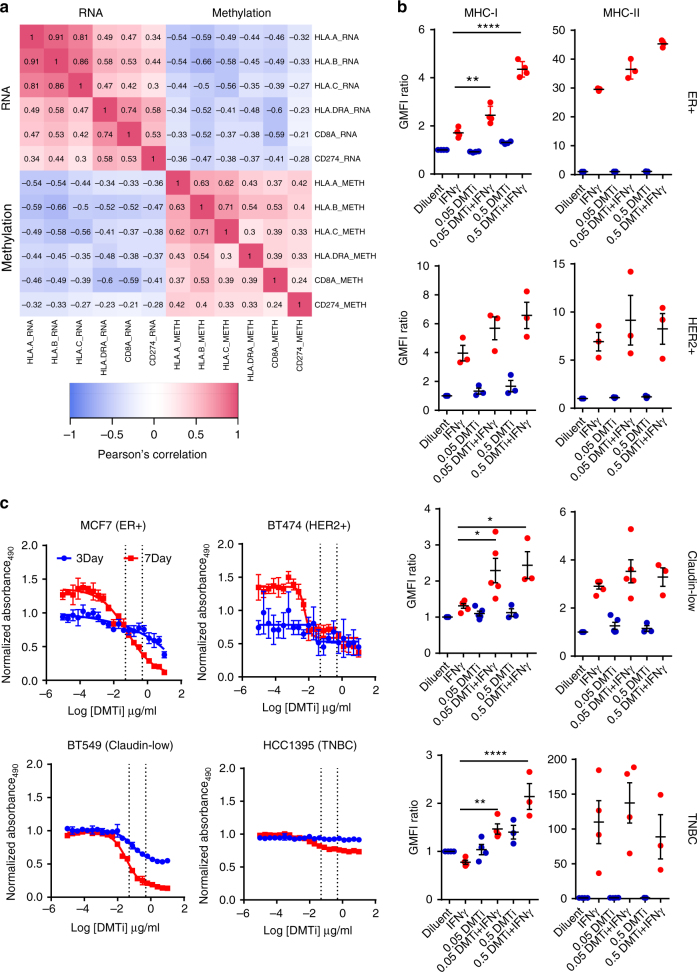
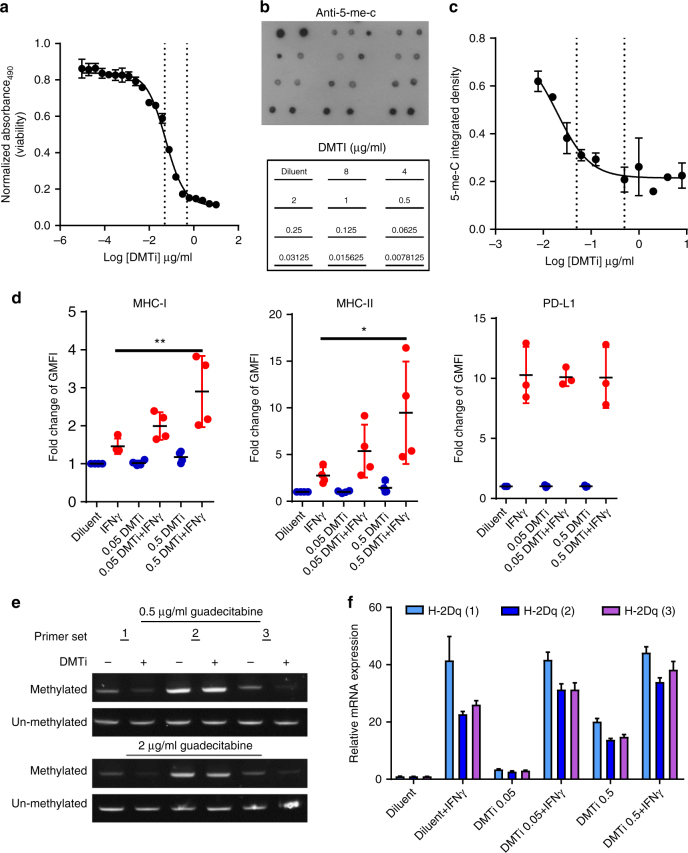
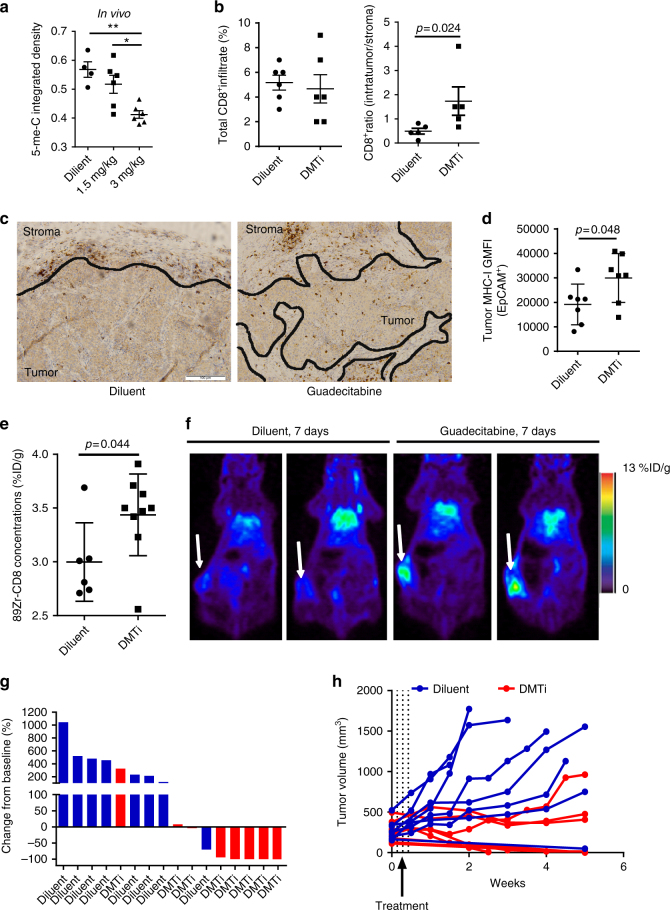
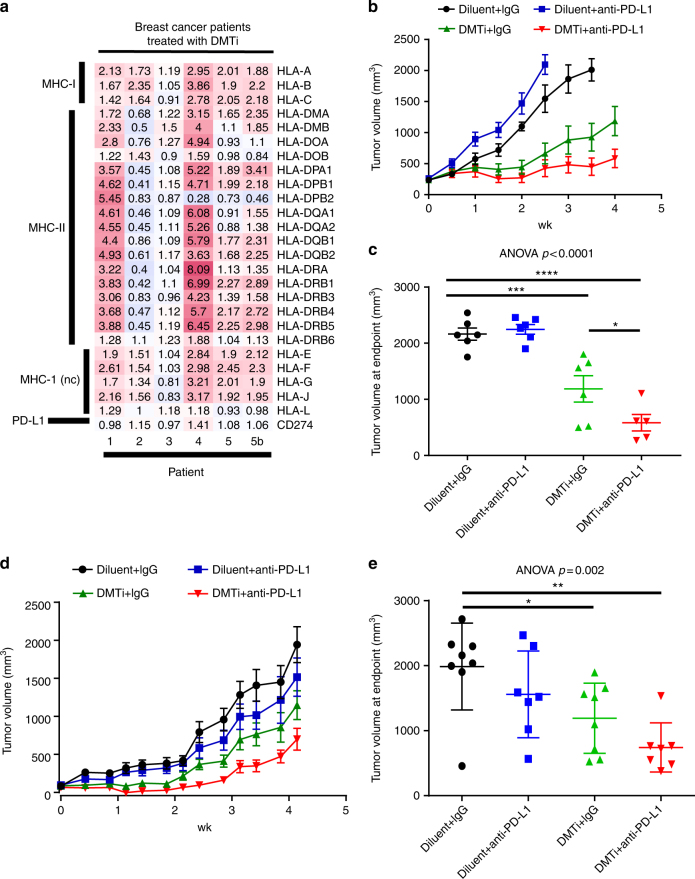
Potentiating anti-tumor immunity by inducing tumor inflammation and T cell-mediated responses are a promising area of cancer therapy. Immunomodulatory agents that promote these effects function via a wide variety of mechanisms, including upregulation of antigen presentation pathways. Here, we show that major histocompatibility class-I (MHC-I) genes are methylated in human breast cancers, suppressing their expression. Treatment of breast cancer cell lines with a next-generation hypomethylating agent, guadecitabine, upregulates MHC-I expression in response to interferon-γ. In murine tumor models of breast cancer, guadecitabine upregulates MHC-I in tumor cells promoting recruitment of CD8+ T cells to the microenvironment. Finally, we show that MHC-I genes are upregulated in breast cancer patients treated with hypomethylating agents. Thus, the immunomodulatory effects of hypomethylating agents likely involve upregulation of class-I antigen presentation to potentiate CD8+ T cell responses. These strategies may be useful to potentiate anti-tumor immunity and responses to checkpoint inhibition in immune-refractory breast cancers.
Overview
The claims and statistics of this paper haven’t been checked yet.
Free: it reads the open-access text and checks the first 5 claims that cite a source we can check. Create a free account to check every claim.
Integrity signals
Registry
Cites
Statistics
Figures
Verification
Claims the paper makes
The claims and statistics of this paper haven’t been checked yet.
Free: it reads the open-access text and checks the first 5 claims that cite a source we can check. Create a free account to check every claim.
Claims other papers make about this one
Each is checked against this paper’s own text: does it say what the citing paper says it does?
The source backs part of the claim, not all of it — or backs it for a different population, condition or comparison.
In the citing paper
“epigenetic reprogramming with shRNAs targeting DNA methyltransferase 1 (DNMT1) or pan-DNMT blockers like decitabine and guadecitabine has been shown to resemble EZH2 inhibition in its capacity to promote CXCL9 and CXCL10 secretion in various models of breast, lung, and ovarian carcinoma”
From Immunomodulation by targeted anticancer agents (2021) · cites this paper as Luo et al., 2018
Experimental — accuracy not yet measuredIn the citing paper
“various DNMT inhibitors have been consistently associated with improved MHC class I presentation”
From Immunomodulation by targeted anticancer agents (2021) · cites this paper as Luo et al., 2018
In the citing paper
“reconfiguration of the TME (Luo et al., 2018; Travers et al., 2019; Wanget al., 2015; Yu et al., 2019) in support of anticancer immunity or increased sensitivity to CTLA4-or PD-1 blockage”
From Immunomodulation by targeted anticancer agents (2021) · cites this paper as Luo et al., 2018
In the citing paper
“Treatment with DNA methyltransferase inhibitors has been shown to reverse the epigenetic suppression of MHC-I, which facilitated antigen presentation, immunogenicity, and tumor immune targeting”
From Hallmarks of response, resistance, and toxicity to immune checkpoint blockade (2021) · cites this paper as Luo et al., 2018
Self-check
Percentages, sums and reported differences re-computed from the paper’s own numbers.
The self-check needs the paper’s full text.
Citations
Cites
PD-1 and PD-L1 Immune Checkpoint Blockade to Treat Breast Cancer
Hartkopf, A. D., Taran, F.-A., Wallwiener, M., Walter, C. B., Krämer, B., Grischke, E.-M., & Brucker, S. Y. (2016) · Breast Care · doi:10.1159/000453569 · Cited by 30,845
Nishimura, R., Osako, T., Nishiyama, Y., Tashima, R., Nakano, M., Fujisue, M., Toyozumi, Y., & Arima, N. (2013) · Oncology · doi:10.1159/000353099 · Cited by 13,166
Comprehensive molecular portraits of human breast tumours
The Cancer Genome Atlas Network (2012) · Nature · doi:10.1038/nature11412 · Cited by 12,129
Neoantigens in cancer immunotherapy
Schumacher, T. N., & Schreiber, R. D. (2015) · Science · doi:10.1126/science.aaa4971 · Cited by 4,783
Molecular and genetic properties of tumors associated with local immune cytolytic activity
Rooney, M. S., Shukla, S. A., Wu, C. J., Getz, G., & Hacohen, N. (2015) · Cell · doi:10.1016/j.cell.2014.12.033 · Cited by 3,825
Mutations Associated with Acquired Resistance to PD-1 Blockade in Melanoma
Zaretsky, J. M., Garcia-Diaz, A., Shin, D. S., Escuin-Ordinas, H., Hugo, W., Hu-Lieskovan, S., Torrejon, D. Y., Abril-Rodriguez, G., Sandoval, S., Barthly, L., et al. (2016) · New England Journal of Medicine · doi:10.1056/nejmoa1604958 · Cited by 3,237
Chiappinelli, K. B., Strissel, P. L., Desrichard, A., Li, H., Henke, C., Akman, B., Hein, A., Rote, N. S., Cope, L. M., Snyder, A., et al. (2015) · Cell · doi:10.1016/j.cell.2015.07.011 · Cited by 2,022
Self-citationRoulois, D., Loo Yau, H., Singhania, R., Wang, Y., Danesh, A., Shen, S. Y., Han, H., Liang, G., Jones, P. A., Pugh, T. J., et al. (2015) · Cell · doi:10.1016/j.cell.2015.07.056 · Cited by 1,527
Primary Resistance to PD-1 Blockade Mediated by JAK1/2 Mutations
Shin, D. S., Zaretsky, J. M., Escuin-Ordinas, H., Garcia-Diaz, A., Hu-Lieskovan, S., Kalbasi, A., Grasso, C. S., Hugo, W., Sandoval, S., Torrejon, D. Y., et al. (2017) · Cancer Discovery · doi:10.1158/2159-8290.cd-16-1223 · Cited by 1,337
Epigenetic silencing of TH1-type chemokines shapes tumour immunity and immunotherapy
Peng, D., Kryczek, I., Nagarsheth, N., Zhao, L., Wei, S., Wang, W., Sun, Y., Zhao, E., Vatan, L., Szeliga, W., et al. (2015) · Nature · doi:10.1038/nature15520 · Cited by 1,201
Cited by
Hallmarks of response, resistance, and toxicity to immune checkpoint blockade
Morad, G., Helmink, B. A., Sharma, P., & Wargo, J. A. (2021) · Cell · doi:10.1016/j.cell.2021.09.020 · Cited by 1,648
Cancer Immune Evasion Through Loss of MHC Class I Antigen Presentation
Dhatchinamoorthy, K., Colbert, J. D., & Rock, K. L. (2021) · Frontiers in Immunology · doi:10.3389/fimmu.2021.636568 · Cited by 1,077
“HDAC inhibitors have also increased MHC I expression and MHC I pathway components in cancer cell lines (182, 190, 192, 193, 243, 252, 253).”
BackgroundInfluentialTurning Cold into Hot: Firing up the Tumor Microenvironment
Duan, Q., Zhang, H., Zheng, J., & Zhang, L. (2020) · Trends in Cancer · doi:10.1016/j.trecan.2020.02.022 · Cited by 934
Turning cold tumors into hot tumors by improving T-cell infiltration
Liu, Y.-T., & Sun, Z.-J. (2021) · Theranostics · doi:10.7150/thno.58390 · Cited by 827
Targeting the epigenetic regulation of antitumour immunity
Hogg, S. J., Beavis, P. A., Dawson, M. A., & Johnstone, R. W. (2020) · Nature Reviews Drug Discovery · doi:10.1038/s41573-020-0077-5 · Cited by 630
Epigenetic regulation in human cancer: the potential role of epi-drug in cancer therapy
Lu, Y., Chan, Y.-T., Tan, H.-Y., Li, S., Wang, N., & Feng, Y. (2020) · Molecular Cancer · doi:10.1186/s12943-020-01197-3 · Cited by 499
“The TME is comprised of variable materials including stromal cells, immune cells, extracellular matrix and cytokines, creating a favourable and immune-suppressive niche for tumour cells.”
BackgroundInfluentialCornel, A. M., Mimpen, I. L., & Nierkens, S. (2020) · Cancers · doi:10.3390/cancers12071760 · Cited by 464
The emerging role of epigenetic therapeutics in immuno-oncology
Topper, M. J., Vaz, M., Marrone, K. A., Brahmer, J. R., & Baylin, S. B. (2020) · Nature Reviews Clinical Oncology · doi:10.1038/s41571-019-0266-5 · Cited by 433
Interferons α and β in cancer: therapeutic opportunities from new insights
Borden, E. C. (2019) · Nature Reviews Drug Discovery · doi:10.1038/s41573-018-0011-2 · Cited by 423
Cancer Epigenetics, Tumor Immunity, and Immunotherapy
Cao, J., & Yan, Q. (2020) · Trends in Cancer · doi:10.1016/j.trecan.2020.02.003 · Cited by 346
“Suraweera A. et al. (2018) Combination therapy with histone deacetylase inhibitors (HDACi) for the treatment of cancer: achieving the full therapeutic potential of HDACi.”
BackgroundInfluentialDevelopment of Immunotherapy Combination Strategies in Cancer
Yap, T. A., Parkes, E. E., Peng, W., Moyers, J. T., Curran, M. A., & Tawbi, H. A. (2021) · Cancer Discovery · doi:10.1158/2159-8290.cd-20-1209 · Cited by 330
“Treatment with demethylating agents such as azacitdine upregulates MHC-I on tumor cells and also unmasks endogenous retroviruses, resulting in cytoplasmic dsRNA that activates innate immune responses, increasing tumor immunogenicity (37,168,169).”
BackgroundMechanisms of MHC-I Downregulation and Role in Immunotherapy Response
Taylor, B. C., & Balko, J. M. (2022) · Frontiers in Immunology · doi:10.3389/fimmu.2022.844866 · Cited by 298
Self-citationMechanisms driving the immunoregulatory function of cancer cells
van Weverwijk, A., & de Visser, K. E. (2023) · Nature Reviews Cancer · doi:10.1038/s41568-022-00544-4 · Cited by 272
Spliceosome-targeted therapies trigger an antiviral immune response in triple-negative breast cancer
Bowling, E. A., Wang, J. H., Gong, F., Wu, W., Neill, N. J., Kim, I. S., Tyagi, S., Orellana, M., Kurley, S. J., Dominguez-Vidaña, R., et al. (2021) · Cell · doi:10.1016/j.cell.2020.12.031 · Cited by 224
“Activation of tumor-intrinsic immune signaling via dsRNA-recognition pathways has been studied recently in the context of DNA methyltransferase inhibitors (Chiappinelli et al., 2015; Luo et al., 2018; Roulois et al., 2015; Stone et al., 2017) and ADAR perturbations (Gannon et al.”
BackgroundSelf-citationStomper, J., Rotondo, J. C., Greve, G., & Lübbert, M. (2021) · Leukemia · doi:10.1038/s41375-021-01218-0 · Cited by 221
Targeting MHC-I molecules for cancer: function, mechanism, and therapeutic prospects
Wu, X., Li, T., Jiang, R., Yang, X., Guo, H., & Yang, R. (2023) · Molecular Cancer · doi:10.1186/s12943-023-01899-4 · Cited by 223
“In consistency, administration of the inhibitors for these processes, including DNA Methyltransferases inhibitor (DNMTi) [16] and His-tone methyltransferase [17, 18] could up-regulate the expression of MHC-I complex.”
BackgroundCellular architecture of human brain metastases
Gonzalez, H., Mei, W., Robles, I., Hagerling, C., Allen, B. M., Hauge Okholm, T. L., Nanjaraj, A., Verbeek, T., Kalavacherla, S., van Gogh, M., et al. (2022) · Cell · doi:10.1016/j.cell.2021.12.043 · Cited by 219
Immunomodulation by targeted anticancer agents
Petroni, G., Buqué, A., Zitvogel, L., Kroemer, G., & Galluzzi, L. (2021) · Cancer Cell · doi:10.1016/j.ccell.2020.11.009 · Cited by 212
Deregulation of HLA-I in cancer and its central importance for immunotherapy
Hazini, A., Fisher, K., & Seymour, L. (2021) · Journal for ImmunoTherapy of Cancer · doi:10.1136/jitc-2021-002899 · Cited by 203
DNMT1: A key drug target in triple-negative breast cancer
Wong, K. K. (2021) · Seminars in Cancer Biology · doi:10.1016/j.semcancer.2020.05.010 · Cited by 198
Combining epigenetic and immune therapy to overcome cancer resistance
Gomez, S., Tabernacki, T., Kobyra, J., Roberts, P., & Chiappinelli, K. B. (2020) · Seminars in Cancer Biology · doi:10.1016/j.semcancer.2019.12.019 · Cited by 160
CD8+ T cell exhaustion and cancer immunotherapy
Wang, Q., Qin, Y., & Li, B. (2023) · Cancer Letters · doi:10.1016/j.canlet.2022.216043 · Cited by 155
The Transcriptional and Epigenetic Landscape of Cancer Cell Lineage Plasticity
Davies, A., Zoubeidi, A., Beltran, H., & Selth, L. A. (2023) · Cancer Discovery · doi:10.1158/2159-8290.cd-23-0225 · Cited by 182
Genome-wide methylation patterns predict clinical benefit of immunotherapy in lung cancer
Kim, J. Y., Choi, J. K., & Jung, H. (2020) · Clinical Epigenetics · doi:10.1186/s13148-020-00907-4 · Cited by 179
“DMTi treatment can promote anti-tumor immunity by upregulating immune-related genes [42] or endogenous retrovirus (ERV) [43].”
Mechanisms of resistance to immune checkpoint inhibitors
Nagasaki, J., Ishino, T., & Togashi, Y. (2022) · Cancer Science · doi:10.1111/cas.15497 · Cited by 138
Thompson, J. C., Davis, C. W., Deshpande, C. G., Hwang, W., Jeffries, S., Huang, A. C. C., Mitchell, T. C., Langer, C. J., & Albelda, S. Μ. (2020) · Journal for ImmunoTherapy of Cancer · doi:10.1136/jitc-2020-000974 · Cited by 129
HLA class I loss in colorectal cancer: implications for immune escape and immunotherapy
Anderson, P., Aptsiauri, N., Ruiz-Cabello, F., & Garrido, F. (2021) · Cellular & Molecular Immunology · doi:10.1038/s41423-021-00634-7 · Cited by 107
“We have shown in a melanoma cell line that HLA-I expression and antigen-specific CTL responses can be restored after 5-aza-2’-deoxycytidine treatment.107 Demethylation of HLA-I and APM-related genes, including the TAP and LMP2 genes,108,109 increased their sensitivity to IFN-γ-mediated induction of HLA-I.”
BackgroundInfluentialClinical advances in targeting epigenetics for cancer therapy
Feng, S., & Carvalho, D. D. D. (2021) · FEBS Journal · doi:10.1111/febs.15750 · Cited by 112
Extracellular Vesicles for Clinical Diagnostics: From Bulk Measurements to Single-Vesicle Analysis
Tran, H. L., Zheng, W., Issadore, D., Im, H., Cho, Y., Zhang, Y., Liu, D., Liu, Y., Li, B., Liu, F., et al. (2025) · ACS Nano · doi:10.1021/acsnano.5c00706 · Cited by 124
Self-citationSabbatino, F., Liguori, L., Polcaro, G., Salvato, I., Caramori, G., Salzano, F. A., Casolaro, V., Stellato, C., Col, J. D., & Pepe, S. (2020) · International Journal of Molecular Sciences · doi:10.3390/ijms21197295 · Cited by 115
The multifarious roles of the chemokine CXCL14 in cancer progression and immune responses
Westrich, J. A., Vermeer, D. W., Colbert, P. L., Spanos, W. C., & Pyeon, D. (2020) · Molecular Carcinogenesis · doi:10.1002/mc.23188 · Cited by 109
Oliveira, P. H., & Fang, G. (2020) · Trends in Microbiology · doi:10.1016/j.tim.2020.04.007 · Cited by 110
Novel strategies for cancer immunotherapy: counter-immunoediting therapy
Liu, S., Sun, Q., & Ren, X. (2023) · Journal of Hematology & Oncology · doi:10.1186/s13045-023-01430-8 · Cited by 114
“For example, it has been found that histone deacetylation (HDAC) inhibitors and DNA methyltransferase (DNMT) inhibitors can induce immunogenic cell death and promote tumor cell antigen presentation, MHC-I expression, and tumor-specific antigen production [191, 192].”
BackgroundTumor immune evasion through loss of MHC class-I antigen presentation
Sarı, G., & Rock, K. L. (2023) · Current Opinion in Immunology · doi:10.1016/j.coi.2023.102329 · Cited by 126
Epigenetic Mechanisms of Resistance to Immune Checkpoint Inhibitors
Perrier, A., Didelot, A., Laurent‐Puig, P., Blons, H., & Garinet, S. (2020) · Biomolecules · doi:10.3390/biom10071061 · Cited by 112
Therapeutic targeting of DNA methylation alterations in cancer
Lee, A. V., Nestler, K. A., & Chiappinelli, K. B. (2024) · Pharmacology & Therapeutics · doi:10.1016/j.pharmthera.2024.108640 · Cited by 124
Mechanisms, combination therapy, and biomarkers in cancer immunotherapy resistance
Yang, M., Cui, M., Sun, Y., Liu, S., & Jiang, W. (2024) · Cell Communication and Signaling · doi:10.1186/s12964-024-01711-w · Cited by 110
“Luo et al. demonstrated that the major histocompatibility complex (MHC) class I gene is methylated in breast cancer and that this suppression can be reversed by the hypomethylating drug guadecitabine [71].”
BackgroundVarayathu, H., Sarathy, V., Thomas, B. E., Mufti, S. S., & Naik, R. (2021) · Frontiers in Oncology · doi:10.3389/fonc.2021.559161 · Cited by 104
“Due to the availability of advanced genomic studies, it is evident that hypermethylation of tumor suppressor genes in the promoter region is one of the pathways of carcinogenesis (53).”
BackgroundA New Trend in Cancer Treatment: The Combination of Epigenetics and Immunotherapy
Liu, Z., Ren, Y., Weng, S., Xu, H., Li, L., & Han, X. (2022) · Frontiers in Immunology · doi:10.3389/fimmu.2022.809761 · Cited by 100
“It has been demonstrated by the re-expression of MHC class I after DNMTi and HDACi treatment of cells (50, 51).”
BackgroundSpotlight on TAP and its vital role in antigen presentation and cross-presentation
Mantel, I., Sadiq, B. A., & Blander, J. M. (2021) · Molecular Immunology · doi:10.1016/j.molimm.2021.12.013 · Cited by 103
Guadecitabine Plus Ipilimumab in Unresectable Melanoma: The NIBIT-M4 Clinical Trial
Giacomo, A. M. D., Covre, A., Finotello, F., Rieder, D., Danielli, R., Sigalotti, L., Giannarelli, D., Petitprez, F., Lacroix, L., Valente, M., et al. (2019) · Clinical Cancer Research · doi:10.1158/1078-0432.ccr-19-1335 · Cited by 90
“More recently, DHAs have also been shown to contribute to the activation of cellular immunity by modulating Thelper1-type (Th1)chemokines (6)and IFN-relatedgenes (7,8).”
BackgroundZhou, L., & Yu, D. C. W. (2024) · Pharmacological Research · doi:10.1016/j.phrs.2024.107205 · Cited by 110
Therapeutic vaccines for breast cancer: Has the time finally come?
Corti, C., Giachetti, P. P. M. B., Eggermont, A. M. M., Delaloge, S., & Curigliano, G. (2021) · European Journal of Cancer · doi:10.1016/j.ejca.2021.10.027 · Cited by 94
“In fact, a major hurdle undermining therapeutic CVs efficacy is the presence of immune-evasive mechanisms, particularly in solid tumours [37,38].”
Jan, C., Huang, S., Canoll, P., Bruce, J. N., Lin, Y., Pan, C., Lu, H.-M., Chiu, S., & Cho, D. (2021) · Journal for ImmunoTherapy of Cancer · doi:10.1136/jitc-2021-003050 · Cited by 88
Xie, Y., Wang, X., Wang, W., Pu, N., & Liu, L. (2025) · Journal of Translational Medicine · doi:10.1186/s12967-025-06422-5 · Cited by 80
Targeting MHC-I inhibitory pathways for cancer immunotherapy
Wang, J., Qiao, L., Chen, X., & Aifantis, I. (2024) · Trends in Immunology · doi:10.1016/j.it.2024.01.009 · Cited by 85
Epigenetic strategies to boost CAR T cell therapy
Akbari, B., Ghahri-Saremi, N., Soltantoyeh, T., Hadjati, J., Ghassemi, S., & Mirzaei, H. R. (2021) · Molecular Therapy · doi:10.1016/j.ymthe.2021.08.003 · Cited by 82
Nahas, M. R., Stroopinsky, D., Rosenblatt, J. M., Cole, L., Pyzer, A. R., Anastasiadou, E., Сергеева, А., Ephraim, A., Washington, A. J., Orr, S., et al. (2019) · British Journal of Haematology · doi:10.1111/bjh.15818 · Cited by 82
“Increased MHCI expression following HMA therapy has been observed in breast cancer (Luo et al, 2018).”
BackgroundNovel epigenetic therapeutic strategies and targets in cancer
Babar, Q., Saeed, A., Tabish, T. A., Pricl, S., Townley, H. E., & Thorat, N. D. (2022) · Biochimica et Biophysica Acta (BBA) - Molecular Basis of Disease · doi:10.1016/j.bbadis.2022.166552 · Cited by 88
Cao, W., Chen, G., Wu, L., Yu, K. N., Sun, M., Yang, M., Jiang, Y., Jiang, Y., Yuan, X., Peng, S., et al. (2022) · International Journal of Radiation Oncology*Biology*Physics · doi:10.1016/j.ijrobp.2022.07.1841 · Cited by 84
MHC Class I Deficiency in Solid Tumors and Therapeutic Strategies to Overcome It
Shklovskaya, E., & Rizos, H. (2021) · International Journal of Molecular Sciences · doi:10.3390/ijms22136741 · Cited by 78
Daher-Reyes, G. S., Merchán, B., & Yee, K. W. L. (2019) · Expert Opinion on Investigational Drugs · doi:10.1080/13543784.2019.1667331 · Cited by 67
Exposing Hidden Targets: Combining epigenetic and immunotherapy to overcome cancer resistance
Olino, K. L., Park, T. S., & Ahuja, N. (2020) · Seminars in Cancer Biology · doi:10.1016/j.semcancer.2020.01.001 · Cited by 68
Zebularine elevates STING expression and enhances cGAMP cancer immunotherapy in mice
Lai, J., Fu, Y., Tian, S., Huang, S., Luo, X., Lin, L., Zhang, X., Wang, H., Lin, Z., Zhao, H., et al. (2021) · Molecular Therapy · doi:10.1016/j.ymthe.2021.02.005 · Cited by 65
Papadatos-Pastos, D., Yuan, W., Pal, A., Crespo, M., Ferreira, A., Gürel, B., Prout, T., Ameratunga, M., Chénard-Poirier, M., Curcean, A., et al. (2022) · Journal for ImmunoTherapy of Cancer · doi:10.1136/jitc-2022-004495 · Cited by 66
“…DHCs upregulating the expression of HLA class I antigens with resultant T-cell recognition 10 11 and promotion of CD8 T-cells migration to tumor 12 ; (3) DHCs can augment T-cell response; decitabine (a nucleoside analog that reduces DNA methyltransferases) induces CD80 expression on cancer…”
Almawash, S. (2025) · Cancers · doi:10.3390/cancers17050880 · Cited by 80
Bispecific Antibodies for Triple Negative Breast Cancer
Dees, S., Ganesan, R., Singh, S., & Grewal, I. S. (2020) · Trends in cancer · doi:10.1016/j.trecan.2020.09.004 · Cited by 61
Extracellular Vesicles and Epigenetic Modifications Are Hallmarks of Melanoma Progression
Mannavola, F., D’Oronzo, S., Cives, M., Stucci, L. S., Ranieri, G., Silvestris, F., & Tucci, M. (2019) · International Journal of Molecular Sciences · doi:10.3390/ijms21010052 · Cited by 58
Balasubramanian, A., John, T., & Asselin-Labat, M.-L. (2022) · Biochemical Society Transactions · doi:10.1042/bst20210961 · Cited by 79
Penter, L., Liu, Y., Wolff, J. O., Yang, L., Taing, L., Jhaveri, A., Southard, J., Patel, M., Cullen, N. M., Pfaff, K. L., et al. (2023) · Blood · doi:10.1182/blood.2022018246 · Cited by 64
“Although hypomethylating agents have been implicated in upregulation of major histocompatibility complex class I and II expression, 48,49 such changes at transcript level across myeloid subsets after decitabine treatment were not detected in our dataset (supplemental Figure 5F-G).”
Immunotherapy resistance in non-small cell lung cancer: from mechanisms to therapeutic opportunities
Wang, H., Niu, X., Jin, Z., Zhang, S., Fan, R., Xiao, H., & Hu, S. (2025) · Journal of Experimental & Clinical Cancer Research · doi:10.1186/s13046-025-03519-z · Cited by 94
“The up-regulation of MHC-I expression is attributed to the demethylation of MHC genes [55].”
Playing hide and seek: Tumor cells in control of MHC class I antigen presentation
Jongsma, M. L. M., Neefjes, J., & Spaapen, R. M. (2021) · Molecular Immunology · doi:10.1016/j.molimm.2021.05.009 · Cited by 56
Gu, C., Gai, P., Kong, X., Hou, T., & Li, F. (2020) · Analytical Chemistry · doi:10.1021/acs.analchem.0c00160 · Cited by 52
Kong, S., Zhang, J., Wang, L., Li, W., Guo, H., Weng, Q., He, Q., Lou, H., Ding, L., & Yang, B. (2024) · Cancer Letters · doi:10.1016/j.canlet.2024.217432 · Cited by 71
Wang, X., Luo, X., Xiao, R., Liu, X., Zhou, F., Jiang, D., Bai, J., Cui, M., You, L., & Yupei, Z. (2026) · Signal Transduction and Targeted Therapy · doi:10.1038/s41392-025-02334-4 · Cited by 65
“405 Furthermore, Yu et al. demonstrated key immunological effects of decitabine in a colon cancer mouse model, including activation of antigen presentation mechanisms, accumulation of PD-1 + CD8 + T cells within the tumor, and heightened sensitivity to anti-PD-1 therapy.”
Yan, A., Zhang, Y., Lin, J., Song, L., Wang, X., & Liu, Z. (2018) · Frontiers in Aging Neuroscience · doi:10.3389/fnagi.2018.00160 · Cited by 55
“The membranes were blocked with 5% non-fat dried milk for 1 h and incubated with rabbit monoclonal anti-iNOS (cat.no.136918, 1:1,000, Abcam; Lizano et al., 2017), rabbit monoclonal anti-Arg1 (cat.no.93668, 1:1,000, Cell Signaling Technology; Mogami et al., 2017), rabbit monoclonal anti-p-NF-κB (cat.no.3033, 1:1,000, C…”
InfluentialTatárová, Z., Blumberg, D. C., Korkola, J. E., Heiser, L. M., Muschler, J. L., Schedin, P. S., Ahn, S. W., Mills, G. B., Coussens, L. M., Jonas, O. H., et al. (2022) · Nature Biotechnology · doi:10.1038/s41587-022-01379-y · Cited by 55
Resistance to immune checkpoint inhibitors and the tumor microenvironment
Kawashima, S., & Togashi, Y. (2022) · Experimental Dermatology · doi:10.1111/exd.14716 · Cited by 55
Vascular Signaling in Allogenic Solid Organ Transplantation – The Role of Endothelial Cells
Kummer, L., Zaradzki, M., Vijayan, V., Arif, R., Weigand, M. A., Immenschuh, S., Wagner, A. H., & Larmann, J. (2020) · Frontiers in Physiology · doi:10.3389/fphys.2020.00443 · Cited by 55
Emerging role of different DNA methyltransferases in the pathogenesis of cancer
Liu, P., Yang, F., Zhang, L., Hu, Y., Chen, B., Wang, J., Su, L., Wu, M., & Chen, W. (2022) · Frontiers in Pharmacology · doi:10.3389/fphar.2022.958146 · Cited by 61
Xu, Y., Li, P., Liu, Y., Xin, D., Lei, W., Liang, A., Han, W., & Qian, W. (2022) · 癌症:英文版 · doi:10.1002/cac2.12313 · Cited by 49
“During viral mimicry response, double-strand RNA is produced and activates immunogenic pattern recognition receptors, type I and III IFNs are secreted, thus further enhancing antigen processing and presentation through transporter 1 (TAP1) and human leukocyte antigen (HLA)-class I, respectively [48, 51].”
BackgroundInfluentialMendez, L., Posey, R. R., & Pandolfi, P. P. (2019) · Frontiers in Oncology · doi:10.3389/fonc.2019.01162 · Cited by 53
Immunomodulatory Effects of Drugs for Effective Cancer Immunotherapy
Matsushita, M., & Kawaguchi, M. (2018) · Journal of Oncology · doi:10.1155/2018/8653489 · Cited by 48
Jahan, S., Mukherjee, S., Ali, S., Bhardwaj, U., Choudhary, R. K., Balakrishnan, S., Naseem, A., Mir, S. A., Banawas, S., Alaidarous, M., et al. (2022) · Cells · doi:10.3390/cells11030490 · Cited by 49
Pei, H., Guo, W., Peng, Y., Xiong, H., & Chen, Y. (2022) · Medicinal Research Reviews · doi:10.1002/med.21886 · Cited by 46
“infiltration of CD8T cells in TME, and enhance the persistence of T cells in different types of cancer.(163,164) However, several problems cannot be underestimated in developing epigenetic drugs.”
BackgroundTao, H., Jin, C., Zhou, L., Deng, Z., Li, X., Dang, W., Fan, S., Li, B., Ye, F., Lu, J., et al. (2023) · Cancer Research · doi:10.1158/0008-5472.can-23-1082 · Cited by 50
Huang, K. C., Chiang, S., Ke, T., Chen, T.-W., Hu, C.-H., Yang, P.-C., Chang, H.-Y., Liang, J., Chen, W. T., & Chao, K. S. C. (2021) · OncoImmunology · doi:10.1080/2162402x.2021.1989790 · Cited by 42
“indicated that treatment with a novel hypomethylating agent, guadecitabine, upregulated MHC-I expression for antigen presentation and recruited CD8 T cells into the microenvironment in vivo and in breast cancer patients.(27) Moreover, DNMTi treatment sensitizes cells to anti-CTLA4 immunotherapy through the type I IFN…”
BackgroundPan-Cancer HLA Gene-Mediated Tumor Immunogenicity and Immune Evasion
Gong, X., & Karchin, R. (2022) · Molecular Cancer Research · doi:10.1158/1541-7786.mcr-21-0886 · Cited by 47
Yin, J., Gu, T., Chaudhry, N. Y., Davidson, N. E., & Huang, Y. (2024) · Frontiers in Immunology · doi:10.3389/fimmu.2023.1325615 · Cited by 46
Targeting DNA Methylation for Treating Triple-Negative Breast Cancer
Yu, J., Zayas, J., Qin, B., & Wang, L. (2019) · Pharmacogenomics · doi:10.2217/pgs-2019-0078 · Cited by 45
“The DNMT inhibitor, guadecitabine, could upregulate major histocompatibility class-I in breast cancer cells, which promoted recruitment of CD8+ T cells to the microenvironment [73].”
BackgroundZhou, Z., Mai, Y., Zhang, G., Wang, Y., Sun, P., Jing, Z., Li, Z., Xu, Y., Han, B. R., & Liu, J. (2024) · Cancer Letters · doi:10.1016/j.canlet.2024.217079 · Cited by 46
Breast cancer resistance mechanisms: challenges to immunotherapy
Hanna, A., & Balko, J. M. (2021) · Breast Cancer Research and Treatment · doi:10.1007/s10549-021-06337-x · Cited by 51
Self-citationJang, H. J., Hostetter, G. H., Macfarlane, A. W., Madaj, Z., Ross, E. A., Hinoue, T., Kulchycki, J. R., Burgos, R. S., Tafseer, M., Alpaugh, R. K., et al. (2023) · Clinical Cancer Research · doi:10.1158/1078-0432.ccr-22-3642 · Cited by 45
Lichtenegger, F. S., Schnorfeil, F. M., Rothe, M., Deiser, K., Altmann, T., Bücklein, V., Köhnke, T., Augsberger, C., Konstandin, N. P., Spiekermann, K., et al. (2020) · Clinical & Translational Immunology · doi:10.1002/cti2.1117 · Cited by 47
Colorectal cancer: The epigenetic role of microbiome
Sabit, H., Çevik, E., & Tombuloğlu, H. (2019) · World Journal of Clinical Cases · doi:10.12998/wjcc.v7.i22.3683 · Cited by 42
BET inhibitor JQ1 enhances anti-tumor immunity and synergizes with PD-1 blockade in CRC
Wang, H., Liu, G., Jin, X., Song, S., Chen, S., Zhou, P., Li, H., Liang, J., Li, B., Zhang, C., et al. (2022) · Journal of Cancer · doi:10.7150/jca.69375 · Cited by 38
“Some epigenetic drugs have been shown to remodel the TME and reverse immunosuppression in tumor-bearing animals [19, 20].”
BackgroundSelf-citationJie, C., Li, R., Cheng, Y., Wang, Z., Wu, Q., & Xie, C. (2023) · Frontiers in Immunology · doi:10.3389/fimmu.2023.1122352 · Cited by 40
“Further, DNMTis can remarkably increase IFN-g-induced Cxcr3 chemokine (Cxcl9/10/ 11) expression, promoted Th1 polarization, and helped CD8 + T cells enhance cytotoxic activity and enhance anti-PD-1 antibody response (125, 126).”
BackgroundGuo, R., Li, J., Hu, J., Fu, Q., Yan, Y., Xu, S., Wang, X., & Jiao, F. (2023) · International Immunopharmacology · doi:10.1016/j.intimp.2023.110417 · Cited by 40
Challenges and solutions for therapeutic TCR ‐based agents
Malviya, M., Aretz, Z. E. H., Molvi, Z., Lee, J., Pierre, S. A., Wallisch, P., Dao, T., & Scheinberg, D. A. (2023) · Immunological Reviews · doi:10.1111/imr.13233 · Cited by 40
Sinn, B. V., Weber, K. E., Schmitt, W., Fasching, P. A., Symmans, W. F., Blohmer, J., Karn, T., TAUBE, E. T., Klauschen, F., Marmé, F., et al. (2019) · Breast Cancer Research · doi:10.1186/s13058-019-1231-z · Cited by 45
Cell Intrinsic and Systemic Metabolism in Tumor Immunity and Immunotherapy
Coleman, M. F., Cozzo, A. J., Pfeil, A. J., Etigunta, S. K., & Hursting, S. D. (2020) · Cancers · doi:10.3390/cancers12040852 · Cited by 39
Zanker, D. J., Spurling, A., Brockwell, N. K., Owen, K. L., Zakhour, J. M., Robinson, T., Duivenvoorden, H. M., Hertzog, P. J., Mullins, S., Wilkinson, R. W., et al. (2020) · Clinical & Translational Immunology · doi:10.1002/cti2.1177 · Cited by 35
Thelen, M., Wennhold, K., Lehmann, J. M., Garcia-Marquez, M. A., Klein, S., Kochen, E., Lohneis, P., Lechner, A., Wagener‐Ryczek, S., Plum, P. S., et al. (2021) · npj Precision Oncology · doi:10.1038/s41698-021-00196-x · Cited by 38
Small molecule targeting of chromatin writers in cancer
Conery, A. R., Rocnik, J. L., & Trojer, P. (2021) · Nature Chemical Biology · doi:10.1038/s41589-021-00920-5 · Cited by 37
Amaro, A. A., Reggiani, F., Fenoglio, D., Gangemi, R. M. R., Tosi, A., Parodi, A., Banelli, B., Rigo, V., Mastracci, L., Grillo, F., et al. (2023) · Journal of Experimental & Clinical Cancer Research · doi:10.1186/s13046-023-02628-x · Cited by 39
“For in vivo treatment 1mg/kg guadecitabine (modified from [31]) was diluted in PBS and given to mice by Intraperitoneal (IP) injections to a final volume of 0.”
MethodBrunekreeft, K. L., Paijens, S. T., Wouters, M. C. A., Komdeur, F. L., Eggink, F. A., Lubbers, J. M., Workel, H. H., van der Slikke, E. C., Pröpper, N. E. J., Leffers, N., et al. (2020) · OncoImmunology · doi:10.1080/2162402x.2020.1760705 · Cited by 35
“In breast cancer methylation of MHC-I genes was shown to suppress MHC-I expression which could be reversed by DNA methyltransferase inhibition.(43) MHC-I could be upregulated via interferon-γ which can be induced by the use of, e.”
BackgroundEpigenetic modulation of immunotherapy and implications in head and neck cancer
Zhou, L., Xu, N., Shibata, H., Saloura, V., & Uppaluri, R. (2021) · Cancer and Metastasis Reviews · doi:10.1007/s10555-020-09944-0 · Cited by 37
Epigenetic Regulation of Immunotherapy Response in Triple-Negative Breast Cancer
Llinàs‐Arias, P., Íñiguez-Muñoz, S., McCann, K. E., Voorwerk, L., Orozco, J. I. J., Ensenyat-Méndez, M., Sesé, B., DiNome, M. L., & Marzese, D. M. (2021) · Cancers · doi:10.3390/cancers13164139 · Cited by 37
James, J. L., Taylor, B. C., Axelrod, M. L., Sun, X., Guerin, L. N., Ericsson, P. I. G., Wang, Y., Sanchez, V. M., Fahey, C. C., Sanders, M. E., et al. (2023) · Journal for ImmunoTherapy of Cancer · doi:10.1136/jitc-2023-007736 · Cited by 34
Self-citationTargeting the epigenetic processes to enhance antitumor immunity in small cell lung cancer
Luo, H., Shan, J., Zhang, H., Song, G., Li, Q., & Xu, C. (2022) · Seminars in Cancer Biology · doi:10.1016/j.semcancer.2022.02.018 · Cited by 35
Metadata
- Authors
- Luo, N., Nixon, M. J., Gonzalez-Ericsson, P. I., Sanchez, V., Opalenik, S. R., Li, H., Zahnow, C. A., Nickels, M. L., Liu, F., Tantawy, M. N., Sanders, M. E., Manning, H. C., & Balko, J. M.
- Affiliations
- Nankai University (CN)
- Vanderbilt University Medical Center (US)
- Pennsylvania State University (US)
- Johns Hopkins University (US)
- Corresponding author
- Balko, Justin M.
- ORCID
- Venue
- Nature Communications
- Published
- 2018-01-16
- Volume
- 9
- Issue
- 1
- Pages
- 248-248
- ISSN
- 2041-1723 (ISSN-L)
- PMC
- PMC5770411
- OpenAlex
- W2784179963
- Cited by
- 275
- References
- 29
- Citations by year
- 2026: 29 · 2025: 35 · 2024: 43 · 2023: 41 · 2022: 34 · 2021: 36 · 2020: 40 · 2019: 13 · 2018: 4
- FWCI
- 8.74
- Type
- journal article
- Language
- en
- Open access
- gold
- doi.org
- Licence
- cc-by
- creativecommons.org/licenses/by/4.0 (tdm)
- creativecommons.org/licenses/by/4.0 (vor)
- Locations
- Nature Communications (publishedVersion, cc-by)
- Europe PMC (PubMed Central) (publishedVersion, cc-by)
- PubMed Central (publishedVersion, cc-by)
- PubMed (publishedVersion)
- RePEc: Research Papers in Economics (submittedVersion)
- DOAJ (DOAJ: Directory of Open Access Journals) (submittedVersion)
- DOAJ (DOAJ: Directory of Open Access Journals) (submittedVersion, cc-by-sa)
- Funders
- V Foundation for Cancer Research
- Vanderbilt University (P30 CA68485, CA68485)
- Vanderbilt-Ingram Cancer Center (P30 CA 68485, CA098131, CA68485, Support Grant P30 CA68485)
- China Scholarship Council
- National Institutes of Health (1s10od016245-01, CA68485, CA098131)
- National Cancer Institute (P30 CA 68485, CA 098131, CA68485, P50CA098131, R00CA181491, P30CA068485)
- Topics
- Health Sciences › Medicine › Oncology › Cancer Immunotherapy and Biomarkers
- Life Sciences › Immunology and Microbiology › Immunology › Immunotherapy and Immune Responses
- Life Sciences › Biochemistry, Genetics and Molecular Biology › Molecular Biology › Epigenetics and DNA Methylation
- Keywords
- DNA methyltransferase inhibition, MHC class I, breast cancer, guadecitabine, hypomethylating agents, CD8+ T cells, cytotoxic T lymphocytes, antigen presentation, interferon-gamma, tumor immunology, immunomodulation, immune checkpoint blockade
- MeSH terms
- DNA (Cytosine-5-)-Methyltransferase 1, Animals, Antineoplastic Agents, Azacitidine, Breast Neoplasms, Female, Genes, MHC Class I, Humans, Mammary Neoplasms, Experimental, Promoter Regions, Genetic, T-Lymphocytes, Cytotoxic, Gene Expression Regulation, Enzymologic, Gene Expression Regulation, Neoplastic, Cell Line, Tumor, Mice
About these checks
Registry, retraction, Cites and statistics results are computed, not judged, with one exception: a printed reference that no index lists is read once by a model before it counts as a citation error. Claims are extracted by a model and kept only when their quote appears verbatim in the text; each cited source is then checked, with a model’s help, for whether it says what the claim relies on. Those verdicts can be wrong — read the claim’s quote and the cited source before relying on one.
Statistics and arithmetic are recomputed, not judged.
Confidence bands are shown only for fields calibrated on our annotated test set. None is calibrated yet, so no band is shown.
What counts as a claim ›How we measure confidence ›How we check this ›
Are you an author, or do you see a problem with this page? Request a review
Data sources
Bibliographic data: Semantic Scholar, OpenAlex, Crossref.
Contains information from the Semantic Scholar Academic Graph Datasets, made available under the ODC Attribution License (ODC-BY 1.0).
Semantic Scholar’s data is described in: Kinney, R., et al. (2023). The Semantic Scholar Open Data Platform. arXiv:2301.10140.
