

DNA methyltransferase inhibition upregulates MHC-I to potentiate cytotoxic T lymphocyte responses in breast cancer
Open accessThe DOI matches its Crossref record; 29 of the 29 references it cites were found in a registry or an index.
Abstract
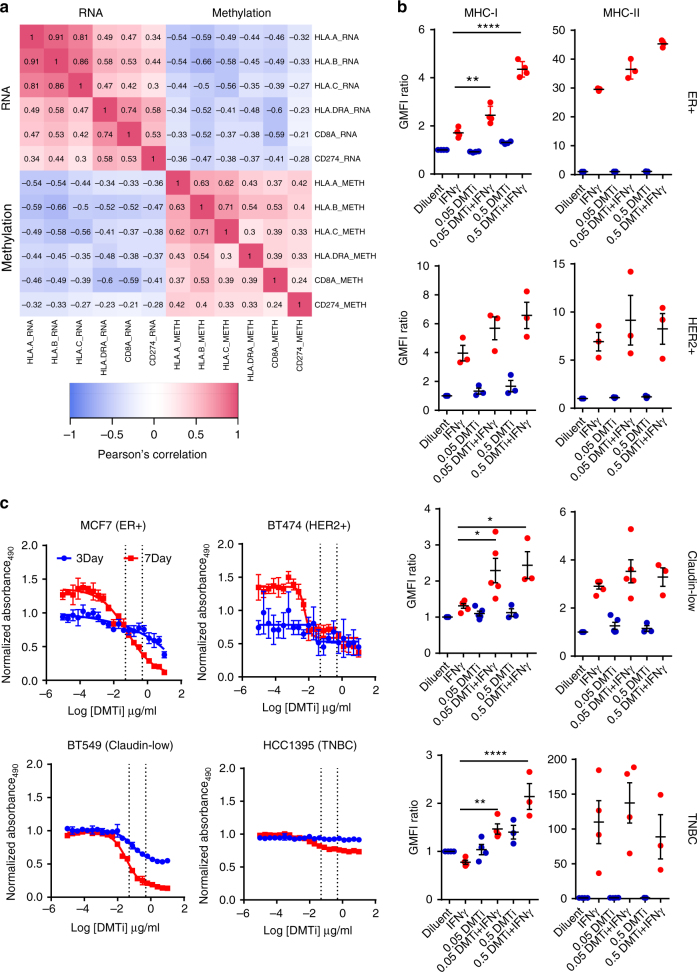
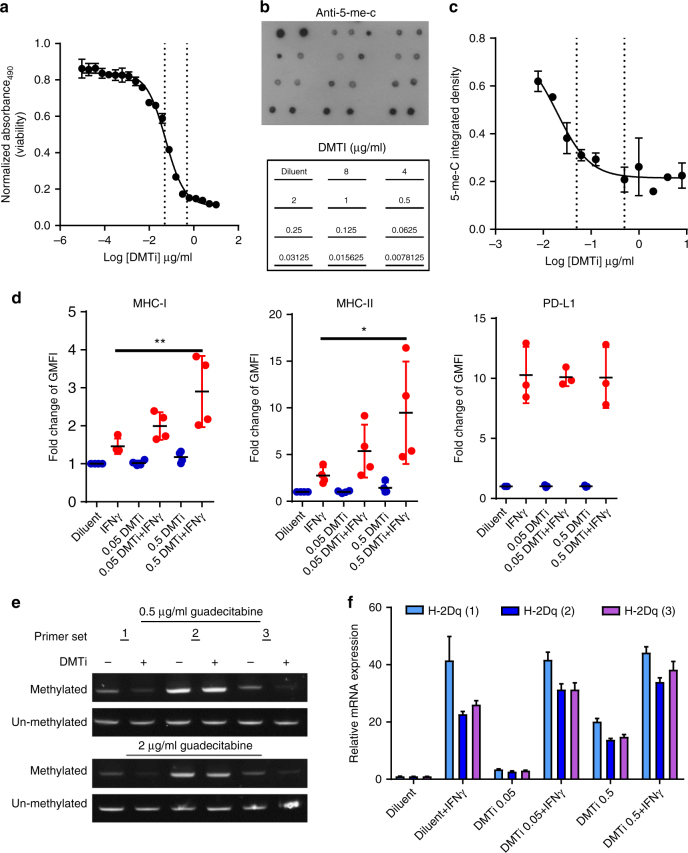
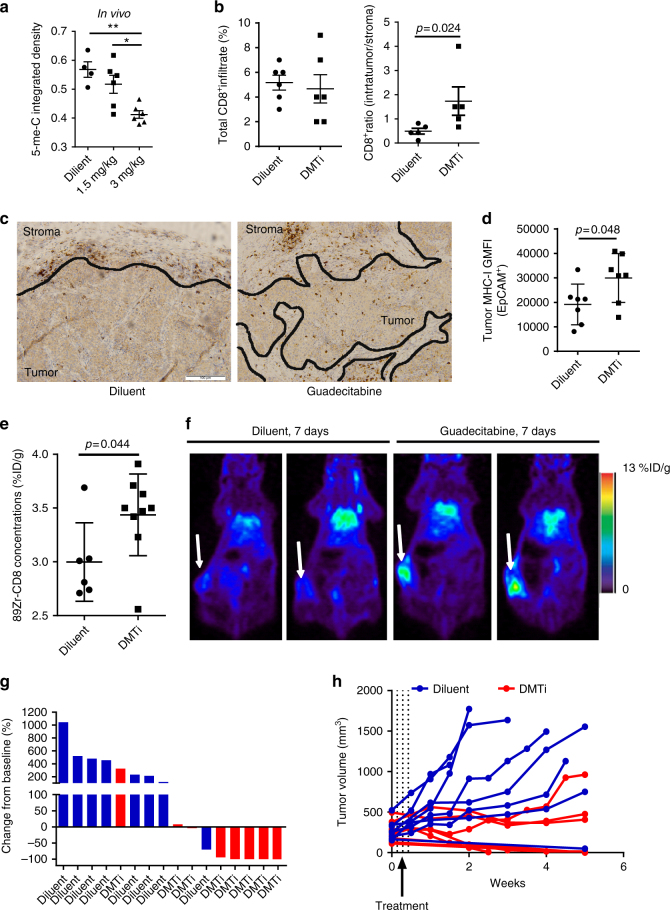
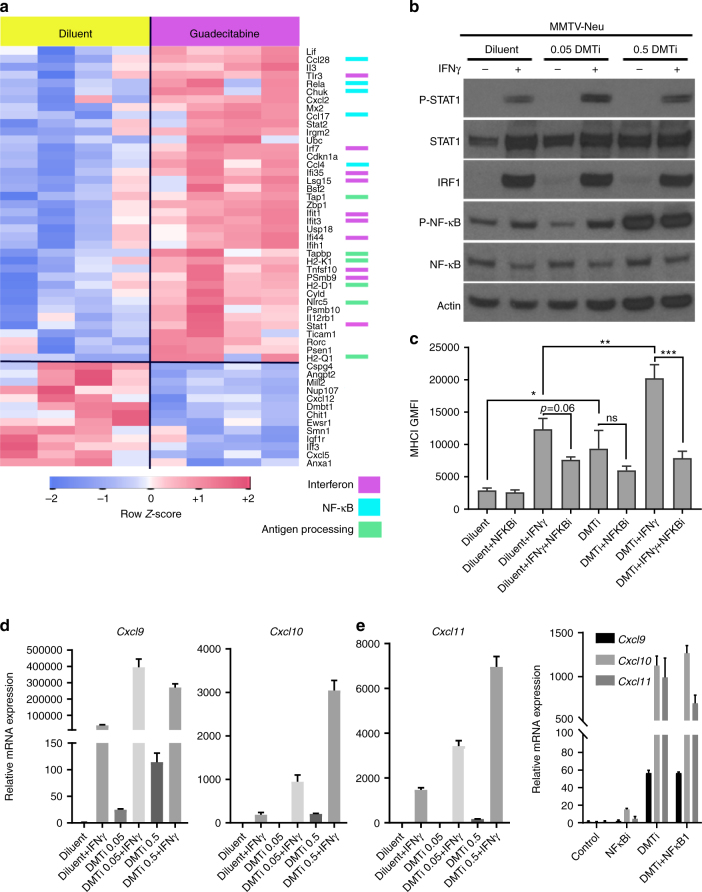
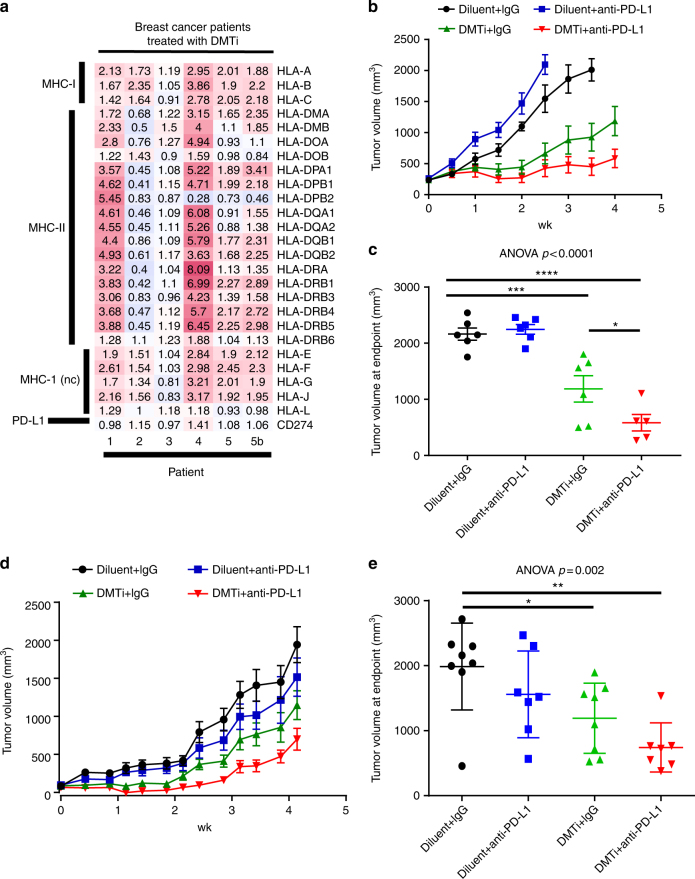
Potentiating anti-tumor immunity by inducing tumor inflammation and T cell-mediated responses are a promising area of cancer therapy. Immunomodulatory agents that promote these effects function via a wide variety of mechanisms, including upregulation of antigen presentation pathways. Here, we show that major histocompatibility class-I (MHC-I) genes are methylated in human breast cancers, suppressing their expression. Treatment of breast cancer cell lines with a next-generation hypomethylating agent, guadecitabine, upregulates MHC-I expression in response to interferon-γ. In murine tumor models of breast cancer, guadecitabine upregulates MHC-I in tumor cells promoting recruitment of CD8+ T cells to the microenvironment. Finally, we show that MHC-I genes are upregulated in breast cancer patients treated with hypomethylating agents. Thus, the immunomodulatory effects of hypomethylating agents likely involve upregulation of class-I antigen presentation to potentiate CD8+ T cell responses. These strategies may be useful to potentiate anti-tumor immunity and responses to checkpoint inhibition in immune-refractory breast cancers.
Overview
The claims and statistics of this paper haven’t been checked yet.
Free: it reads the open-access text and checks the first 5 claims that cite a source we can check. Create a free account to check every claim.
Integrity signals
Registry
Cites
Statistics
Figures
Verification
Claims the paper makes
The claims and statistics of this paper haven’t been checked yet.
Free: it reads the open-access text and checks the first 5 claims that cite a source we can check. Create a free account to check every claim.
Claims other papers make about this one
Each is checked against this paper’s own text: does it say what the citing paper says it does?
The source backs part of the claim, not all of it — or backs it for a different population, condition or comparison.
In the citing paper
“epigenetic reprogramming with shRNAs targeting DNA methyltransferase 1 (DNMT1) or pan-DNMT blockers like decitabine and guadecitabine has been shown to resemble EZH2 inhibition in its capacity to promote CXCL9 and CXCL10 secretion in various models of breast, lung, and ovarian carcinoma”
From Immunomodulation by targeted anticancer agents (2021) · cites this paper as Luo et al., 2018
Experimental — accuracy not yet measuredIn the citing paper
“various DNMT inhibitors have been consistently associated with improved MHC class I presentation”
From Immunomodulation by targeted anticancer agents (2021) · cites this paper as Luo et al., 2018
In the citing paper
“reconfiguration of the TME (Luo et al., 2018; Travers et al., 2019; Wanget al., 2015; Yu et al., 2019) in support of anticancer immunity or increased sensitivity to CTLA4-or PD-1 blockage”
From Immunomodulation by targeted anticancer agents (2021) · cites this paper as Luo et al., 2018
In the citing paper
“Treatment with DNA methyltransferase inhibitors has been shown to reverse the epigenetic suppression of MHC-I, which facilitated antigen presentation, immunogenicity, and tumor immune targeting”
From Hallmarks of response, resistance, and toxicity to immune checkpoint blockade (2021) · cites this paper as Luo et al., 2018
Self-check
Percentages, sums and reported differences re-computed from the paper’s own numbers.
The self-check needs the paper’s full text.
Citations
Cites
PD-1 and PD-L1 Immune Checkpoint Blockade to Treat Breast Cancer
Hartkopf, A. D., Taran, F.-A., Wallwiener, M., Walter, C. B., Krämer, B., Grischke, E.-M., & Brucker, S. Y. (2016) · Breast Care · doi:10.1159/000453569 · Cited by 30,845
Nishimura, R., Osako, T., Nishiyama, Y., Tashima, R., Nakano, M., Fujisue, M., Toyozumi, Y., & Arima, N. (2013) · Oncology · doi:10.1159/000353099 · Cited by 13,166
Comprehensive molecular portraits of human breast tumours
The Cancer Genome Atlas Network (2012) · Nature · doi:10.1038/nature11412 · Cited by 12,129
Neoantigens in cancer immunotherapy
Schumacher, T. N., & Schreiber, R. D. (2015) · Science · doi:10.1126/science.aaa4971 · Cited by 4,783
Molecular and genetic properties of tumors associated with local immune cytolytic activity
Rooney, M. S., Shukla, S. A., Wu, C. J., Getz, G., & Hacohen, N. (2015) · Cell · doi:10.1016/j.cell.2014.12.033 · Cited by 3,825
Mutations Associated with Acquired Resistance to PD-1 Blockade in Melanoma
Zaretsky, J. M., Garcia-Diaz, A., Shin, D. S., Escuin-Ordinas, H., Hugo, W., Hu-Lieskovan, S., Torrejon, D. Y., Abril-Rodriguez, G., Sandoval, S., Barthly, L., et al. (2016) · New England Journal of Medicine · doi:10.1056/nejmoa1604958 · Cited by 3,237
Chiappinelli, K. B., Strissel, P. L., Desrichard, A., Li, H., Henke, C., Akman, B., Hein, A., Rote, N. S., Cope, L. M., Snyder, A., et al. (2015) · Cell · doi:10.1016/j.cell.2015.07.011 · Cited by 2,022
Self-citationRoulois, D., Loo Yau, H., Singhania, R., Wang, Y., Danesh, A., Shen, S. Y., Han, H., Liang, G., Jones, P. A., Pugh, T. J., et al. (2015) · Cell · doi:10.1016/j.cell.2015.07.056 · Cited by 1,527
Primary Resistance to PD-1 Blockade Mediated by JAK1/2 Mutations
Shin, D. S., Zaretsky, J. M., Escuin-Ordinas, H., Garcia-Diaz, A., Hu-Lieskovan, S., Kalbasi, A., Grasso, C. S., Hugo, W., Sandoval, S., Torrejon, D. Y., et al. (2017) · Cancer Discovery · doi:10.1158/2159-8290.cd-16-1223 · Cited by 1,337
Epigenetic silencing of TH1-type chemokines shapes tumour immunity and immunotherapy
Peng, D., Kryczek, I., Nagarsheth, N., Zhao, L., Wei, S., Wang, W., Sun, Y., Zhao, E., Vatan, L., Szeliga, W., et al. (2015) · Nature · doi:10.1038/nature15520 · Cited by 1,201
Cited by
Items 201–275 of 275
Prediction and identification of HLA-A*0201-restricted epitopes from cancer testis antigen CT23
Zeng, X., Nong, W., Zou, X., Li, F., Ge, Y., Zhang, Q., Luo, B., Huang, W., Zou, J.-X., Fan, R., et al. (2023) · Human Vaccines & Immunotherapeutics · doi:10.1080/21645515.2023.2293299 · Cited by 4
“24 Likewise, Luo et al. 52 demonstrated that hypomethylating agent, guadecitabine, upregulated MHC-I to potentiate CTLs responses in breast cancer.”
BackgroundTumor therapy by targeting extracellular hydroxyapatite using novel drugs: A paradigm shift
Tantawy, M. N., McIntyre, J. O., Yull, F. E., Calcutt, M. W., Koktysh, D. S., Wilson, A. J., Zu, Z., Nyman, J. S., Rhoades, J., Peterson, T. E., et al. (2024) · Cancer Medicine · doi:10.1002/cam4.6812 · Cited by 5
Self-citationAdvances in Immune Checkpoint Therapy in Hepatocellular Carcinoma
Huang, Y., & Yu, W. (2024) · British Journal of Hospital Medicine · doi:10.12968/hmed.2024.0375 · Cited by 8
Cell repopulation, rewiring metabolism, and immune regulation in cancer radiotherapy
Huang, J., & Li, J. J. (2020) · Radiation Medicine and Protection · doi:10.1016/j.radmp.2020.02.001 · Cited by 4
He, F., Moawad, M. H. E. D., Alsaied, M. A., Abdul‐Hafez, H. A., Alhadrami, H. A., Azhari, A., & Nawas, B. A. A. (2026) · Clinical & Translational Oncology · doi:10.1007/s12094-026-04316-6 · Cited by 4
“In addition, guadecitabine in low dose with chemotherapy in SCLC (e.g. guadecitabine + carboplatin in relapsed SCLC) has been attempted to resensitize platinum-resistant disease, but a recent Phase II has only indicated marginal benefits [99].”
Shichkin, V. P., Morva, A., Ulaganathan, V. K., Erin, N., Nativi, C., Kranjc, S., & Rani, S. (2026) · Molecular Cancer · doi:10.1186/s12943-026-02655-0 · Cited by 3
“Interferons (IFN-α, -β, and -γ) further increase MHC-I expression via JAK/ STAT signaling, engaging NF-κB and IRFs, whereas NLRC5 in turn modulates IFN responses, forming a feed-back loop regulating MHC-I transcription [93].”
Velazquez-Caldelas, T. E., Zamora-Fuentes, J. M., & Lemus, E. H. (2024) · Frontiers in Immunology · doi:10.3389/fimmu.2024.1357726 · Cited by 4
Wang, K., Shi, J., Tong, X., Qu, N., Kong, X., Ni, S., Xing, J., Li, X., & Zheng, M. (2024) · Briefings in Bioinformatics · doi:10.1093/bib/bbae017 · Cited by 2
Jeong, Y. J., Lee, N.-R., & Oh, H. K. (2025) · Discover Oncology · doi:10.1007/s12672-025-03591-z · Cited by 3
“This aligns with prior findings that DNMT inhibitors can exhibit selective effects on gene expression depending on the cellular context [12].”
InfluentialJia, H., Chen, Y., Ma, G., Xu, S., Zhang, X., Chang, L., Yang, P., Xiao, Y., Xia, X., Zhang, S., et al. (2025) · EBioMedicine · doi:10.1016/j.ebiom.2025.105954 · Cited by 2
“56,57 In vivo studies confirm that combining DNMTis with ICB enhances T cell renewal and boosts CD8 + T cell anti-tumour activity.”
Deng, Y., Jia, Z. S., Zhang, H., Zhang, X., Liu, L., Wang, X., Song, H., Zhang, Z., Liu, C., Zhang, Q., et al. (2025) · ImmunoTargets and Therapy · doi:10.2147/itt.s543117 · Cited by 2
“…elements, including promoter and enhancers located proximal or distal to protein-coding genes, respectively, have for the most part been captured, including IL32, ITK, NCR2 and most methylated MHC class I genes, 38 which contributed to immunoinactiva-tion and failed to response to immunotherapy.”
The Trojan Horse Within: Mechanisms of Immune Evasion in Breast Cancer
Das, B., Winterbottom, C. W., & Sikandar, S. S. (2025) · Cancer Heterogeneity and Plasticity · doi:10.47248/chp2603010001 · Cited by 2
“Enhanced response to anti-PD-L1 immunotherapy, greater infiltration of CD8 + T-cells into the tumor, and normalization of MHC-I molecules on the cell surface were all results of this treatment, particularly when therapy was combined with IFN-γ [103].”
InfluentialMechanisms and therapeutic strategies for immunotherapy resistance in gastric cancer
Zhang, Z., Wu, C., Hu, X., Zhang, L., & Dong, X. (2025) · Cancer Cell International · doi:10.1186/s12935-025-04110-4 · Cited by 4
“Specifically, an increase in MHC-I gene expression inversely correlates with DNA methylation, likely due to the suppression of specific elements like NARLC5 [100, 101].”
The Role of Epigenetic Drugs in Cancer Therapy
Jasim, H. S. (2022) · South Asian Research Journal of Medical Sciences · doi:10.36346/sarjms.2022.v04i04.001 · Cited by 2
Drug-induced altered self-presentation increases tumor immunogenicity
Susukida, T., Sasaki, S., Shirayanagi, T., Aoki, S., Ito, K., & Hayakawa, Y. (2023) · Biomedicine & Pharmacotherapy · doi:10.1016/j.biopha.2023.115241 · Cited by 3
The DNA methylation landscape across the TCR loci in patients with acute myeloid leukemia
Pospiech, M., Beckford, J., Kumar, A. M. S., Tamizharasan, M., Brito, J., Liang, G., Mangul, S., & Alachkar, H. (2024) · International Immunopharmacology · doi:10.1016/j.intimp.2024.112376 · Cited by 2
Heinemann, F. S., & Gershon, P. D. (2024) · American Journal Of Pathology · doi:10.1016/j.ajpath.2024.07.015 · Cited by 2
De, S., & Ehrlich, M. (2024) · Genes · doi:10.3390/genes15091193 · Cited by 3
Liu, H., Yang, J., Zhao, C., Wang, G., Lu, R., & Wang, X. (2025) · Clinical Epigenetics · doi:10.1186/s13148-025-01953-6 · Cited by 2
“Luo et al. [38] reported 5-Aza enhanced IFN–γ response via upregulating the expression of MHC-I molecules in breast cancer.”
Epigenetic Regulation of Immune Responses in Endocrine-Related Cancers and Its Role in Immunotherapy
Akyuz, E. M., Gultekin, M., Ramage, J. M., Spendlove, I., Jackson, A. M., Adhikaree, J., & Malecka, A. A. (2025) · Cancers · doi:10.3390/cancers17203342 · Cited by 5
“For example, DNMTi Guadecitabine in the presence of IFN γ upregulated MHC class I expression in murine breast cancer while at the same time reducing the proportion of MDSCs and shifting the phenotype of remaining MDSCs into an antigen-presenting phenotype and promoting T cell responses [106,107].”
Prospects for breast cancer immunotherapy using microRNAs and transposable elements as objects
Mustafin, R. N. (2024) · Exploration of Targeted Anti-tumor Therapy · doi:10.37349/etat.2024.00261 · Cited by 2
Tatárová, Z., Blumberg, D. C., Korkola, J. E., Heiser, L. M., Muschler, J. L., Schedin, P. J., Ahn, S. W., Mills, G. B., Coussens, L. M., Jonas, O. H., et al. (2021) · bioRxiv (Cold Spring Harbor Laboratory) · doi:10.1101/2021.09.01.458631 · Cited by 2
“…as PD-L1 have been directly or indirectly associated with immunogenic cell death, increased tumor CD8+ T cell infiltrate and/or immune checkpoint blockade efficacy (Aguilera et al., 2016; Guerriero et al., 2017; Hu and McArthur, 2018; Luo et al., 2018; Obeid et al., 2007; Patnaik et al., 2017).”
BackgroundKhalil, M. I., Wang, J., Yang, C., Vu, L., Yin, C., Chadha, S., Nabors, H., Vocelle, D. B., May, D. G., Chrisopolus, R. J., et al. (2024) · bioRxiv (Cold Spring Harbor Laboratory) · doi:10.1101/2024.11.29.626106 · Cited by 2
Wang, Z., Li, J., Wang, F., Chen, C., Wu, X., Guo, W., Li, C., Luo, Y., Zhang, G., Zhang, S., et al. (2024) · Scientific Reports · doi:10.1038/s41598-024-77389-4 · Cited by 2
“Consistent with the previous study that targeting DNMT1 in breast tumors can upregulate major histocompatibility class-I mediated antigen presentation and tip the balance at equilibrium to elicit a CD8 + T cell response which promotes tumor regression and anti-tumor immunity 27 .”
Mutation in CDC42 Gene Set as a Response Biomarker for Immune Checkpoint Inhibitor Therapy
Wang, K., Zhang, Y., Su, Z., Wang, B., Zhou, Y., Tong, X., Xie, C., Luo, X., Zhang, S., & Zheng, M. (2025) · Cancer Medicine · doi:10.1002/cam4.70556 · Cited by 2
“MHC1 plays a crucial role in presenting antigens to CD8 T cells, and its down-regulation is associated with resistance to ICIs [38].”
Zou, L., Chen, J., Bai, X., Wang, Y., Lu, C., Qiaoli, W., Tuerhong, S., Li, M., Zheng, Q., Meng, F., et al. (2025) · Frontiers in Immunology · doi:10.3389/fimmu.2025.1693755 · Cited by 3
Oncogene Mutations: The Shared Antigen Vaccines That Work?
Paredes, R., Haldar, S. D., Pant, S., & O'Reilly, E. M. (2025) · Annual Review of Medicine · doi:10.1146/annurev-med-043024-111400 · Cited by 1
“Histone deacetylase inhibitors (e.g., vorinostat, romidepsin) restore MHC class I/II by modifying histones (72), while DNA methyltransferase inhibitors (e.g., azacitidine, decitabine) demethylate antigen-presentation gene promoters, increasing MHC transcription (73).”
Yan, Q., Qingqing, Z., Yu, S., & Zhang, W. (2025) · Critical Reviews in Clinical Laboratory Sciences · doi:10.1080/10408363.2025.2598380 · Cited by 3
“Consequently, genes required for antigen presentation may be upregulated in patients following DNMTi therapy [50,51].”
Harrer, D. C., Lüke, F., Pukrop, T., Reichle, A., & Heudobler, D. (2026) · International Journal of Molecular Sciences · doi:10.3390/ijms27021067 · Cited by 1
“Azacitidine-associated DNA methyltransferase inhibition may further enhance T-cell responses by inducing interferon and upregulating major histocompatibility class I (MHC-I) genes [80,87].”
InfluentialTargeting epigenetic regulators to boost T cell immunotherapy against cancer
Xiao, T., & Zhang, Y. E. (2026) · Cell & Bioscience · doi:10.1186/s13578-026-01533-y · Cited by 2
“DNMT inhibitors can reverse this silencing, reactivating TAA and MHC expression and enhancing tumor visibility [73].”
Epigenetic crosstalk in neuroblastoma development and progression
Drolet, N. A., Wolf, A. B., Yi, J. S., & Barbieri, E. (2026) · Frontiers in Cell and Developmental Biology · doi:10.3389/fcell.2026.1769372 · Cited by 2
“Similarly, since DNA hypermethylation represses MHC-I expression in cancer cells, treatment with iDNMTs can lead to MHC-I upregulation (Luo et al., 2018; Cornel et al., 2020).”
Multivalent Peptide-Guided EZH2 Degradation Sensitizes Immune Checkpoint Therapy in TNBC
Li, M., Zhao, H., Ma, L., Fang, Q., Yang, Y., Zeng, W., Fang, X., & Wang, C. (2026) · Journal of Medicinal Chemistry · doi:10.1021/acs.jmedchem.5c03182 · Cited by 1
Spitschak, A., Casalegno‐Garduño, R., & Pützer, B. M. (2026) · Biomarker Research · doi:10.1186/s40364-026-00925-z · Cited by 5
“Importantly, disruption of epigenetically maintained immune-evasion programs using DNA methyltransferase inhibitors can enhance responsiveness to PD-1/PD-L1 blockade, in part by restoring antigen presentation and cytotoxic T cell activity [279].”
Huang, D., Sun, D., Ou, C., Zhang, X., Luo, R., Kou, X., Li, X., Li, Y. P., Le, H., Li, W. J., et al. (2026) · Biomaterials · doi:10.1016/j.biomaterials.2026.124285 · Cited by 1
Cancer immunotherapy: mechanisms, clinical applications, resistance and future directions
Önal, A., Ayaz, F., & Aydemir, E. (2026) · Molecular Biology Reports · doi:10.1007/s11033-026-12017-0 · Cited by 1
Novel approaches for separating graft-versus-leukemia effects from graft-versus-host disease
Hasegawa, Y., Teshima, T., & Hashimoto, D. (2026) · Frontiers in Oncology · doi:10.3389/fonc.2026.1838922 · Cited by 1
“In solid tumor models, combined exposure to IFN-g and azacitidine has also been shown to markedly increase MHC I expression on tumor cells (88).”
Schmiechen, Z. C., Cruz-Hinojoza, E., Hilk, A. L., Ellefson, M. A., Tsai, A. K., Dres, O. M., Kang, L., Geuenich, M. J., Butler, J. Z., Burrack, A. L., et al. (2026) · Science Immunology · doi:10.1126/sciimmunol.adz4302 · Cited by 2
Allela, O. Q. B., Shareef, A., Sameer, H. N., Yaseen, A., Athab, Z. H., & Mm, A. (2026) · Current Medical Science · doi:10.1007/s11596-026-00227-3 · Cited by 2
“Notably, this repression can be overcome by using DNA methyltransferase inhibitors (DNMTis), which have already been demonstrated to restore MHC-I expression across a variety of tumor models [56].”
SABCS 2017 pathology: from bench to bedside
Bagó-Horváth, Z. (2018) · memo - Magazine of European Medical Oncology · doi:10.1007/s12254-018-0427-8 · Cited by 1
“were members of the interferon pathway involved in antiviral response [4, 5].”
BackgroundInhibitors targeting epigenetic modifications in cancer
Baghel, V. S., Shinde, S., Sinha, V., Dixit, V., Tiwari, A. K., Saxena, S., Vishvakarma, N. K., Shukla, D., & Bhatt, P. (2023) · Elsevier eBooks · doi:10.1016/b978-0-323-99521-4.00007-6 · Cited by 1
Epigenetic Regulation in Breast Cancer Tumor Microenvironment
Kaur, B., Mondal, P., & Meeran, S. M. (2023) · Epigenetics and human health · doi:10.1007/978-3-031-42365-9_6 · Cited by 2
Khalil, M., & Tsao, M. (2025) · Annals of Oncology · doi:10.1016/j.annonc.2025.07.009 · Cited by 1
Strategic Targeting of CENPE-PDL1 axis in NSCLCPreprint
Liang, J., Tian, C., Yang, Q., Gu, F., Pi, G., Liu, L., & Zhang, Y. (2020) · doi:10.21203/rs.3.rs-101164/v1
Pan-cancer HLA Gene-mediated Tumor Immunogenicity and Immune EvasionPreprint
Gong, X., & Karchin, R. (2021) · bioRxiv (Cold Spring Harbor Laboratory) · doi:10.1101/2021.05.17.444511
Clinical utility of solid tumor epigenetics
Demirdizen, E., Taranda, J., & Turcan, Ş. (2021) · Elsevier eBooks · doi:10.1016/b978-0-12-823928-5.00013-x
Repurposing Market Drugs to Target Epigenetic Enzymes in Human Diseases
Motolani, A., Martin, M., Sun, S., & Lu, T. (2022) · IntechOpen eBooks · doi:10.5772/intechopen.101397
“For example, in breast cancer models, the inhibition of DNMT exerts reduced cellular proliferation, migration, and anchorage-independent growth activity and potentiates anti-cancer immunity [41, 42].”
BackgroundTumor immunology and the application of immunotherapy in ovarian carcinoma
Paijens, S. T. (2021) · University of Groningen research database (University of Groningen / Centre for Information Technology) · doi:10.33612/diss.182133606
Anichini, A., Molla, A., Nicolini, G., Perotti, V., Sgambelluri, F., Covre, A., Fazio, C., Lofiego, M. F., Giacomo, A. M. D., Coral, S., et al. (2022) · Research Square · doi:10.21203/rs.3.rs-1918233/v1
Avendaño, C., & Menéndez, J. C. (2023) · Elsevier eBooks · doi:10.1016/b978-0-12-818549-0.00014-5
Epigenetic therapy in lung cancer
Conroy, M. R., O’Connor, Á., Bailey‐Whyte, M., & Dowling, C. M. (2023) · Elsevier eBooks · doi:10.1016/b978-0-323-91367-6.00004-0
Holliday, H., Khan, A., Ehteda, A., Nguyen, H. T., Ross, S. E., Jayatilleke, N., Gopalakrishnan, A., Wang, E., Colino‐Sanguino, Y., Kavanagh, D., et al. (2024) · bioRxiv (Cold Spring Harbor Laboratory) · doi:10.1101/2024.06.06.597703
井, 水. (2024) · Advances in Clinical Medicine · doi:10.12677/acm.2024.1492539
Toward Understanding Pharmacological Modulation of DNA Methylation
Horton, J. R. (2024) · Royal Society of Chemistry eBooks · doi:10.1039/9781837674916-00193
Drug Discovery for Chromatin Readers, Writers, Erasers, Remodelers and Epitranscriptomic Targets
(2024) · Royal Society of Chemistry eBooks · doi:10.1039/9781837674916-part3
Li, D., He, C., Tan, Z.-L., Wang, T., Wu, H., Zuo, P., Dimitrov, D. S., Wang, L., & Liao, X. (2025) · bioRxiv (Cold Spring Harbor Laboratory) · doi:10.1101/2025.06.05.658174
The Fundamentals of Cancer Immunity
Jia, H., Yang, L., & Liu, J. (2025) · Royal Society of Chemistry eBooks · doi:10.1039/9781837675739-00098 · Cited by 1
Xie, H., Ma, L., He, X., Zhao, S., Wang, J., Zhu, A., Liu, C., Piskareva, O., Deng, C., Meng, F., et al. (2025) · Frontiers in Immunology · doi:10.3389/fimmu.2025.1653533
Zhang, C., Xu, W., Chen, X., Wang, X., Cui, X., & Zhao, W. (2025) · Frontiers in Genetics · doi:10.3389/fgene.2025.1600883
Amaro, A. A., Reggiani, F., Fenoglio, D., Gangemi, R. M. R., Tosi, A., Parodi, A., Banelli, B., Rigo, V., Mastracci, L., Grillo, F., et al. (2023) · Figshare · doi:10.6084/m9.figshare.22621855
Amaro, A. A., Reggiani, F., Fenoglio, D., Gangemi, R. M. R., Tosi, A., Parodi, A., Banelli, B., Rigo, V., Mastracci, L., Grillo, F., et al. (2023) · Figshare · doi:10.6084/m9.figshare.22621864
Amaro, A. A., Reggiani, F., Fenoglio, D., Gangemi, R. M. R., Tosi, A., Parodi, A., Banelli, B., Rigo, V., Mastracci, L., Grillo, F., et al. (2023) · Figshare · doi:10.6084/m9.figshare.22621861
Amaro, A. A., Reggiani, F., Fenoglio, D., Gangemi, R. M. R., Tosi, A., Parodi, A., Banelli, B., Rigo, V., Mastracci, L., Grillo, F., et al. (2023) · Figshare · doi:10.6084/m9.figshare.22621867
Amaro, A. A., Reggiani, F., Fenoglio, D., Gangemi, R. M. R., Tosi, A., Parodi, A., Banelli, B., Rigo, V., Mastracci, L., Grillo, F., et al. (2023) · Figshare · doi:10.6084/m9.figshare.22621858
Kibar, T., Yesil, T., & Karslı, S. (2026) · Journal of Research in Pharmacy · doi:10.12991/jrespharm.1693168
Zhan, L.-Y., Zhe-ling, C., & Yang, L. (2026) · Clinical Drug Investigation · doi:10.1007/s40261-025-01520-0
“Similarly, guadecitabine has been shown to enhance MHC-I expression and increase CD8 + T cell infiltration in TME [54].”
Tuning epigenetics to enhance cancer virotherapy
Wang, Y., Zhang, L., Che, Y., Fu-hua, Y., & Sun, Z. (2026) · Acta Pharmaceutica Sinica B · doi:10.1016/j.apsb.2026.06.045 · Cited by 1
“Guadecitabine upregulates antigen presentation machinery and immune co-stimulatory molecules such as CD80/CD86/CD40 36,106 .”
Wang, S. J., Haynes, C., Graham, L., Kunuthuru, A., Tuzzolo, G., Surve, A., Isbell, M., He, J., Martin, R., & Bear, H. D. (2026) · Cancers · doi:10.3390/cancers18152480
“Luo et al. found that treatment with guadecitabine demethylated the promoter for MHC class I, thus increasing its transcription and expression [37].”
Amikishiev, S. V., Kuzmin, D. A., Ovcharenko, D., & Yuzhalin, A. E. (2026) · ONCOLOGIE · doi:10.1515/oncologie-2026-0225
“DNMTi, such as decitabine, can reverse this methylation and restore MHC-I, enhancing cytotoxic T lymphocyte recognition [22].”
Epigenetic reprogramming of lineage switching in cancer
Boyvatlı, E., Akman, B., Bağırsakçı, E., Atabey, N., & Erkek, S. (2026) · FEBS Letters · doi:10.1002/1873-3468.70433
“These include direct demethylation in promoters of MHC-I genes, in addition to activation of innate immune mechanisms, such as NF-j B signaling [139].”
Raut, S., & Bhatt, L. K. (2026) · Neuroscience · doi:10.1016/j.neuroscience.2026.08.039
Zhang, H., Zhou, K., Li, N., Duan, H., Hou, J., & Wu, D. (2026) · Frontiers in Immunology · doi:10.3389/fimmu.2026.1897496
The therapeutic potential of transposable element activity modulation
Morelli, G., D’Onghia, M., Mangiavacchi, A., & Orlando, V. (2026) · EMBO Molecular Medicine · doi:10.1038/s44321-026-00528-z
To, K. K. W., Ma, T., Wang, L., & Cho, W. C. S. (2026) · Expert Opinion on Therapeutic Targets · doi:10.1080/14728222.2026.2747520
Li, H., Hu, L., Cui, X., Cheng, X., Xu, T., Feng, H., Ye, F., 蒋奕玫, Song, Z., Jing, X., et al. (2026) · Genes & Diseases · doi:10.1016/j.gendis.2026.102549
Self-citation
Metadata
- Authors
- Luo, N., Nixon, M. J., Gonzalez-Ericsson, P. I., Sanchez, V., Opalenik, S. R., Li, H., Zahnow, C. A., Nickels, M. L., Liu, F., Tantawy, M. N., Sanders, M. E., Manning, H. C., & Balko, J. M.
- Affiliations
- Nankai University (CN)
- Vanderbilt University Medical Center (US)
- Pennsylvania State University (US)
- Johns Hopkins University (US)
- Corresponding author
- Balko, Justin M.
- ORCID
- Venue
- Nature Communications
- Published
- 2018-01-16
- Volume
- 9
- Issue
- 1
- Pages
- 248-248
- ISSN
- 2041-1723 (ISSN-L)
- PMC
- PMC5770411
- OpenAlex
- W2784179963
- Semantic Scholar
- b537bcab79d8c82fdd6df4b0db7731b2aea96f49
- Cited by
- 275
- References
- 29
- Citations by year
- 2026: 29 · 2025: 35 · 2024: 43 · 2023: 41 · 2022: 34 · 2021: 36 · 2020: 40 · 2019: 13 · 2018: 4
- FWCI
- 8.74
- Type
- journal article
- Language
- en
- Open access
- gold
- doi.org
- Licence
- cc-by
- creativecommons.org/licenses/by/4.0 (tdm)
- creativecommons.org/licenses/by/4.0 (vor)
- Locations
- Nature Communications (publishedVersion, cc-by)
- Europe PMC (PubMed Central) (publishedVersion, cc-by)
- PubMed Central (publishedVersion, cc-by)
- PubMed (publishedVersion)
- RePEc: Research Papers in Economics (submittedVersion)
- DOAJ (DOAJ: Directory of Open Access Journals) (submittedVersion)
- DOAJ (DOAJ: Directory of Open Access Journals) (submittedVersion, cc-by-sa)
- Funders
- V Foundation for Cancer Research
- Vanderbilt University (P30 CA68485, CA68485)
- Vanderbilt-Ingram Cancer Center (P30 CA 68485, CA098131, CA68485, Support Grant P30 CA68485)
- China Scholarship Council
- National Institutes of Health (1s10od016245-01, CA68485, CA098131)
- National Cancer Institute (P30 CA 68485, CA 098131, CA68485, P50CA098131, R00CA181491, P30CA068485)
- Topics
- Health Sciences › Medicine › Oncology › Cancer Immunotherapy and Biomarkers
- Life Sciences › Immunology and Microbiology › Immunology › Immunotherapy and Immune Responses
- Life Sciences › Biochemistry, Genetics and Molecular Biology › Molecular Biology › Epigenetics and DNA Methylation
- Keywords
- DNA methyltransferase inhibition, MHC class I, breast cancer, guadecitabine, hypomethylating agents, CD8+ T cells, cytotoxic T lymphocytes, antigen presentation, interferon-gamma, tumor immunology, immunomodulation, immune checkpoint blockade
- MeSH terms
- DNA (Cytosine-5-)-Methyltransferase 1, Animals, Antineoplastic Agents, Azacitidine, Breast Neoplasms, Female, Genes, MHC Class I, Humans, Mammary Neoplasms, Experimental, Promoter Regions, Genetic, T-Lymphocytes, Cytotoxic, Gene Expression Regulation, Enzymologic, Gene Expression Regulation, Neoplastic, Cell Line, Tumor, Mice
About these checks
Registry, retraction, Cites and statistics results are computed, not judged, with one exception: a printed reference that no index lists is read once by a model before it counts as a citation error. Claims are extracted by a model and kept only when their quote appears verbatim in the text; each cited source is then checked, with a model’s help, for whether it says what the claim relies on. Those verdicts can be wrong — read the claim’s quote and the cited source before relying on one.
Statistics and arithmetic are recomputed, not judged.
Confidence bands are shown only for fields calibrated on our annotated test set. None is calibrated yet, so no band is shown.
What counts as a claim ›How we measure confidence ›How we check this ›
Are you an author, or do you see a problem with this page? Request a review
Data sources
Bibliographic data: Semantic Scholar, OpenAlex, Crossref.
Contains information from the Semantic Scholar Academic Graph Datasets, made available under the ODC Attribution License (ODC-BY 1.0).
Semantic Scholar’s data is described in: Kinney, R., et al. (2023). The Semantic Scholar Open Data Platform. arXiv:2301.10140.
