

scNMT-seq enables joint profiling of chromatin accessibility DNA methylation and transcription in single cells
Open accessPublished version of a preprint
The DOI matches its Crossref record; 36 of the 37 references it cites were found in a registry or an index.
Abstract
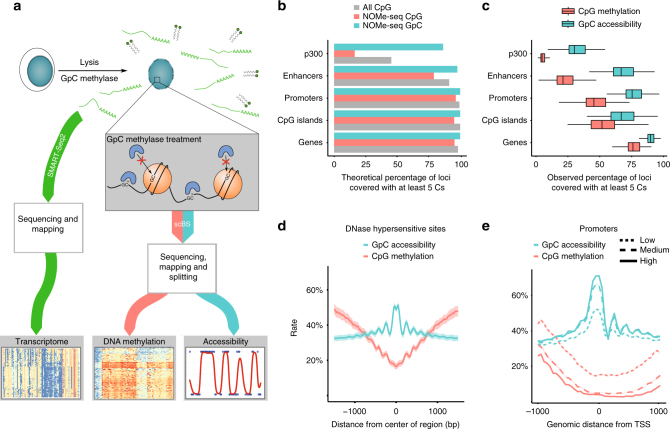
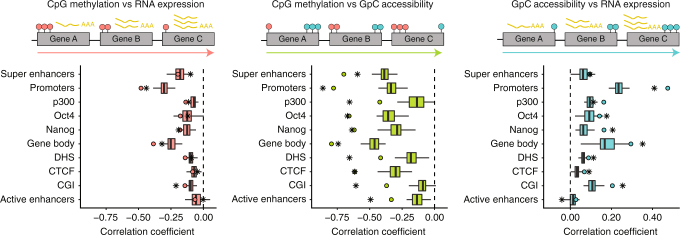
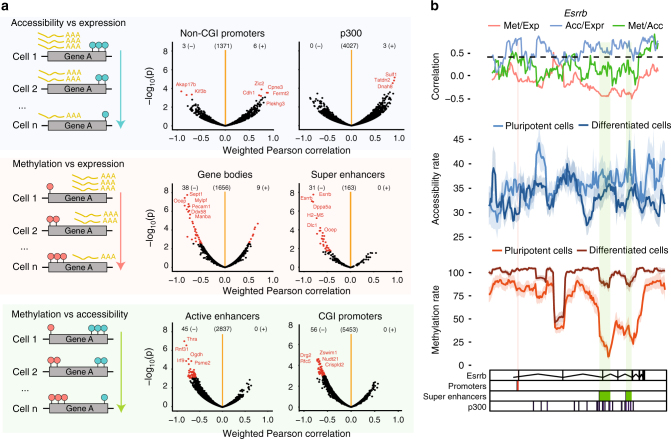
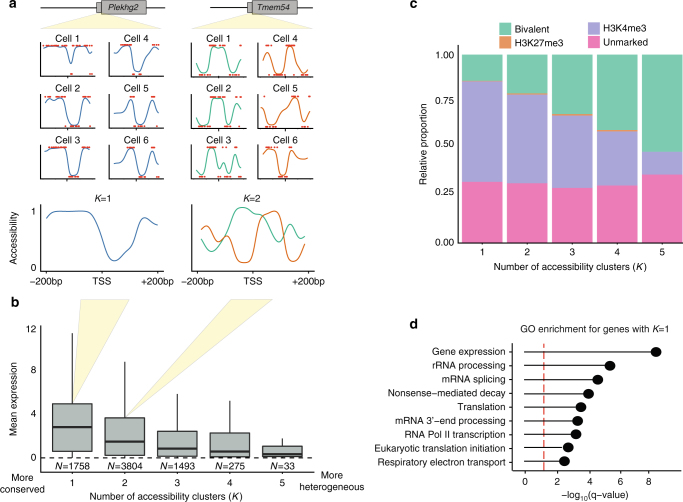
Parallel single-cell sequencing protocols represent powerful methods for investigating regulatory relationships, including epigenome-transcriptome interactions. Here, we report a single-cell method for parallel chromatin accessibility, DNA methylation and transcriptome profiling. scNMT-seq (single-cell nucleosome, methylation and transcription sequencing) uses a GpC methyltransferase to label open chromatin followed by bisulfite and RNA sequencing. We validate scNMT-seq by applying it to differentiating mouse embryonic stem cells, finding links between all three molecular layers and revealing dynamic coupling between epigenomic layers during differentiation.
Overview
The claims and statistics of this paper haven’t been checked yet.
Free: it reads the open-access text and checks the first 5 claims that cite a source we can check. Create a free account to check every claim.
Integrity signals
Registry
Cites
Statistics
Figures
Verification
Claims the paper makes
The claims and statistics of this paper haven’t been checked yet.
Free: it reads the open-access text and checks the first 5 claims that cite a source we can check. Create a free account to check every claim.
Claims other papers make about this one
Each is checked against this paper’s own text: does it say what the citing paper says it does?
The source backs part of the claim, not all of it — or backs it for a different population, condition or comparison.
In the citing paper
“Adding to the comprehensive tri-omics methods and WGBS technologies is single-cell nucleosome occupancy mapping, which is demonstrated in scNMT-seq29 and scNOMeRe-seq36 and by which DNA methylation, chromatin accessibility and transcripts from the same DNA molecule can be profiled.”
From The technological landscape and applications of single-cell multi-omics (2023) · cites this paper as [29]
Experimental — accuracy not yet measuredThe cited source says what the claim attributes to it.
In the citing paper
“For example, single-cell nucleosome, methylation and transcription sequencing (scNMT sequencing), combining epigenome and transcriptome data, are able to detect several “layers” of epigenomic and molecular dynamic coupling processes (309).”
From Epigenetic Modifications in Stress Response Genes Associated With Childhood Trauma (2019) · cites this paper as [309]
The cited source says what the claim attributes to it.
In the citing paper
“M&T‐seq (Angermueller et al, 2016) captures DNA methylation and transcriptome data, with NMT‐seq (preprint: Clark et al, 2018) further adding chromatin‐accessibility information using a GpC methyltransferase (Kelly et al, 2012).”
From Using single-cell genomics to understand developmental processes and cell fate decisions (2018) · cites this paper as Clark et al, 2018
In the citing paper
“Many groups have built from this foundation to develop technologies that co-profile the DNA methylome and transcriptome28–31.”
From The technological landscape and applications of single-cell multi-omics (2023) · cites this paper as [29]
Self-check
Percentages, sums and reported differences re-computed from the paper’s own numbers.
The self-check needs the paper’s full text.
Citations
Cites
featureCounts: an efficient general purpose program for assigning sequence reads to genomic features
Liao, Y., Smyth, G. K., & Shi, W. (2014) · Bioinformatics · doi:10.1093/bioinformatics/btt656 · Cited by 27,219
HISAT: a fast spliced aligner with low memory requirements
Kim, D., Langmead, B., & Salzberg, S. L. (2015) · Nature Methods · doi:10.1038/nmeth.3317 · Cited by 24,112
An integrated encyclopedia of DNA elements in the human genome
The ENCODE Project Consortium (2012) · Nature · doi:10.1038/nature11247 · Cited by 18,072
Bismark: a flexible aligner and methylation caller for Bisulfite-Seq applications
Krueger, F., & Andrews, S. R. (2011) · Bioinformatics · doi:10.1093/bioinformatics/btr167 · Cited by 5,297
Self-citationHuman DNA methylomes at base resolution show widespread epigenomic differences
Lister, R., Pelizzola, M., Dowen, R. H., Hawkins, R. D., Hon, G., Tonti-Filippini, J., Nery, J. R., Lee, L., Ye, Z., Ngo, Q.-M., et al. (2009) · Nature · doi:10.1038/nature08514 · Cited by 4,673
Full-length RNA-seq from single cells using Smart-seq2
Picelli, S., Faridani, O. R., Björklund, Å. K., Winberg, G., Sagasser, S., & Sandberg, R. (2014) · Nature Protocols · doi:10.1038/nprot.2014.006 · Cited by 4,137
The accessible chromatin landscape of the human genome
Thurman, R. E., Rynes, E., Humbert, R., Vierstra, J., Maurano, M. T., Haugen, E., Sheffield, N. C., Stergachis, A. B., Wang, H., Vernot, B., et al. (2012) · Nature · doi:10.1038/nature11232 · Cited by 2,679
Smart-seq2 for sensitive full-length transcriptome profiling in single cells
Picelli, S., Björklund, Å. K., Faridani, O. R., Sagasser, S., Winberg, G., & Sandberg, R. (2013) · Nature Methods · doi:10.1038/nmeth.2639 · Cited by 2,358
Single-cell chromatin accessibility reveals principles of regulatory variation
Buenrostro, J. D., Wu, B., Litzenburger, U. M., Ruff, D., Gonzales, M. L., Snyder, M. P., Chang, H. Y., & Greenleaf, W. J. (2015) · Nature · doi:10.1038/nature14590 · Cited by 2,308
A step-by-step workflow for low-level analysis of single-cell RNA-seq data with Bioconductor
Lun, A. T. L., McCarthy, D. J., & Marioni, J. C. (2016) · F1000Research · doi:10.12688/f1000research.9501.2 · Cited by 1,574
Self-citation
Cited by
Items 101–200 of 698
Computational strategies for single-cell multi-omics integration
Adossa, N., Khan, S., Rytkönen, K. T., & Elo, L. L. (2021) · Computational and Structural Biotechnology Journal · doi:10.1016/j.csbj.2021.04.060 · Cited by 111
“…modalities simultaneously from single cells are currently developed, such as scNOMeRe [59] that collects transcriptome data from cytoplasmic extract and DNA methylation and chromatin accessibility data from nuclei or scNMT-seq [29] that instead of chromatin accessibility collects nucleosome data.”
BackgroundAdvances in bulk and single-cell multi-omics approaches for systems biology and precision medicine
Li, Y., Ma, L., Wu, D., & Chen, G. (2021) · Briefings in Bioinformatics · doi:10.1093/bib/bbab024 · Cited by 133
Simultaneous quantification of protein–DNA contacts and transcriptomes in single cells
Rooijers, K., Markodimitraki, C. M., Rang, F. J., de Vries, S. S., Chialastri, A., de Luca, K. L., Mooijman, D., Dey, S. S., & Kind, J. (2019) · Nature Biotechnology · doi:10.1038/s41587-019-0150-y · Cited by 109
Cell fate decisions, transcription factors and signaling during early retinal development
Diacou, R., Nandigrami, P., Fiser, A., Liu, W., Ashery‐Padan, R., & Cvekl, A. (2022) · Progress in Retinal and Eye Research · doi:10.1016/j.preteyeres.2022.101093 · Cited by 121
Multifactorial profiling of epigenetic landscapes at single-cell resolution using MulTI-Tag
Meers, M. P., Llagas, G., Janssens, D. H., Codomo, C. A., & Henikoff, S. (2022) · Nature Biotechnology · doi:10.1038/s41587-022-01522-9 · Cited by 111
Single-cell sequencing technology applied to epigenetics for the study of tumor heterogeneity
Hu, Y., Shen, F., Yang, X., Han, T., Long, Z., Wen, J., Huang, J., Shen, J., & Guo, Q. (2023) · Clinical Epigenetics · doi:10.1186/s13148-023-01574-x · Cited by 108
“…cells, providing comprehensive analysis across different cellular levels; high throughput capabilities; higher costs; technical complexity [157] scNOMeRe-seq scNOMeRe-seq is a sequencing technique that allows for the simultaneous analysis of nucleosome occupancy and DNA methylation…”
BackgroundOmicVerse: a framework for bridging and deepening insights across bulk and single-cell sequencing
Zeng, Z., Ma, Y., Hu, L., Tan, B., Liu, P., Wang, Y., Xing, C., Xiong, Y., & Du, H. (2024) · Nature Communications · doi:10.1038/s41467-024-50194-3 · Cited by 102
“While scNMT-seq can capture both modalities simulaneously, obtaining unpaired data from identical tissues is more common 57 .”
A deep generative model for multi-view profiling of single-cell RNA-seq and ATAC-seq data
Li, G., Fu, S., Wang, S., Zhu, C., Duan, B., Tang, C., Chen, X., Chuai, G., Wang, P. Q., & Liu, Q. (2022) · Genome biology · doi:10.1186/s13059-021-02595-6 · Cited by 109
“Finally, it is worth noting that the multi-modal deep generation models described here could also be extended to parallel profiling of other epigenomic data, such as DNA methylation level [36, 37], TFs [38], and spatial chromatin structure [31].”
BackgroundPálfy, M., Schulze, G., Valen, E., & Vastenhouw, N. L. (2020) · PLoS Genetics · doi:10.1371/journal.pgen.1008546 · Cited by 112
Histone lysine demethylases and their functions in cancer
Sterling, J., Menezes, S. V., Abbassi, R. H., & Munoz, L. (2020) · International Journal of Cancer · doi:10.1002/ijc.33375 · Cited by 105
“DNA methylation impacts genomic stability and acts as a gene silencing mechanism.(2) Analyses of cancer cell methylomes have highlighted the critical role of DNA hypomethylation in the promoters of key oncogenic genes.”
BackgroundXiong, H., Luo, Y., Wang, Q., Yu, X., & He, A. (2021) · Nature Methods · doi:10.1038/s41592-021-01129-z · Cited by 100
“For example, several various single-cell co-assays (combined scATAC-and scRNA-seq) for joint analysis of accessible chromatin and gene expression have been developed, permitting inference of the correlation between cis-regulatory elements and putative target genes (Cao et al., 2018; Chen et al., 2019; Clark et al., 20…”
BackgroundBayesian inference of gene expression states from single-cell RNA-seq data
Breda, J., Zavolan, M., & van Nimwegen, E. (2021) · Nature Biotechnology · doi:10.1038/s41587-021-00875-x · Cited by 108
Ge, S., Sun, S., Xu, H., Cheng, Q. S., & Ren, Z. (2025) · Briefings in Bioinformatics · doi:10.1093/bib/bbaf136 · Cited by 108
“Current transcriptome-focused multimodal techniques include combinationssuchasgDNA-mRNA[137,138],mRNA-methylation [139,140],mRNA-ATAC [141–143],mRNA-proteome [144,145],and mRNA-methylation-ATAC [146, 147].”
Li, X., Li, Y., Dong, L., Chang, Y., Zhang, X., Wang, C., Chen, M., Bo, X., Chen, H., Han, W., et al. (2023) · Journal of Clinical Investigation · doi:10.1172/jci165673 · Cited by 100
Single-cell omics: experimental workflow, data analyses and applications
Sun, F., Li, H., Sun, D., Fu, S., Gu, L., Shao, X., Wang, Q., Dong, X., Duan, B., Xing, F., et al. (2024) · Science China Life Sciences · doi:10.1007/s11427-023-2561-0 · Cited by 102
Deep cross-omics cycle attention model for joint analysis of single-cell multi-omics data
Zuo, C., Dai, H., & Chen, L. (2021) · Bioinformatics · doi:10.1093/bioinformatics/btab403 · Cited by 88
Big data: Historic advances and emerging trends in biomedical research
Cremin, C. J., Dash, S., & Huang, X. (2022) · Current Research in Biotechnology · doi:10.1016/j.crbiot.2022.02.004 · Cited by 104
Understanding the Relevance of DNA Methylation Changes in Immune Differentiation and Disease
de la Calle‐Fabregat, C., Morante-Palacios, O., & Ballestar, E. (2020) · Genes · doi:10.3390/genes11010110 · Cited by 95
“Currently, state-of-the-art, single-cell sequencing technologies allow parallel multi-omics analyses [5,6] that are poised to uncover epigenetic heterogeneity at the level of resolution of the individual cell.”
BackgroundInvited Review: Epigenetics in neurodevelopment
Salinas, R. D., Connolly, D. R., & Song, H. (2020) · Neuropathology and Applied Neurobiology · doi:10.1111/nan.12608 · Cited by 91
Exploring the untapped potential of single‐cell and spatial omics in plant biology
Nobori, T. (2025) · New Phytologist · doi:10.1111/nph.70220 · Cited by 96
Emerging insights in senescence: pathways from preclinical models to therapeutic innovations
Mansfield, L., Ramponi, V., Gupta, K., Stevenson, T., Mathew, A. B., Barinda, A. J., Herbstein, F., & Morsli, S. (2024) · npj Aging · doi:10.1038/s41514-024-00181-1 · Cited by 88
New insights into hematopoietic differentiation landscapes from single-cell RNA sequencing
Watcham, S., Kuciński, I., & Göttgens, B. (2019) · Blood · doi:10.1182/blood-2018-08-835355 · Cited by 99
Feature selection revisited in the single-cell era
Yang, P., Huang, H., & Liu, C. (2021) · Genome Biology · doi:10.1186/s13059-021-02544-3 · Cited by 83
“Some examples include ASAP-seq for profiling gene expression, chromatin accessibility and protein levels [113]; scMT-seq for profiling gene expression and DNA methylation [114] and its extension, scNMT-seq, for gene expression, chromatin accessibility and DNA methylation [115]; SHARE-seq and SNARE-seq for gene express…”
MethodSingle-Cell Multi-omics: An Engine for New Quantitative Models of Gene Regulation
Packer, J., & Trapnell, C. (2018) · Trends in Genetics · doi:10.1016/j.tig.2018.06.001 · Cited by 85
“Currently, two such methods, scNMT-seq [97] and Pi-ATAC [98], exist, but they are limited by low throughput.”
MethodGatzmann, F., Falckenhayn, C., Gutekunst, J., Hanna, K., Raddatz, G., Carneiro, V. C., & Lyko, F. (2018) · Epigenetics & Chromatin · doi:10.1186/s13072-018-0229-6 · Cited by 85
“Consistent with observations in mouse embryonic stem cells [34], the most expressed genes (quintile 5) had a considerably elevated level of chromatin accessibility (Fig.”
Single-cell sequencing and its applications in head and neck cancer
Qi, Z., Barrett, T. F., Parikh, A. S., Tirosh, I., & Puram, S. V. (2019) · Oral Oncology · doi:10.1016/j.oraloncology.2019.104441 · Cited by 88
Barnett, K. R., Decato, B. E., Scott, T. J., Hansen, T. J., Chen, B., Attalla, J., Smith, A. D., & Hodges, E. C. (2020) · Molecular Cell · doi:10.1016/j.molcel.2020.01.004 · Cited by 101
“Although approaches that enable joint profiling of chromatin features and DNAme, including NOME-seq (nucleosome occupancyandmethylomesequencing), scNMT-seq (single-cell nucleosome, methylation, and transcription sequencing), and ChIP-BS (ChIP coupled with bisulfite sequencing) have been described, ATAC-Me offers some…”
Kriebel, A. R., & Welch, J. D. (2022) · Nature Communications · doi:10.1038/s41467-022-28431-4 · Cited by 83
Single cell transcriptomics in neuroscience: cell classification and beyond
Tasic, B. (2018) · Current Opinion in Neurobiology · doi:10.1016/j.conb.2018.04.021 · Cited by 83
Gemmell, N. J., Todd, E. V., Goikoetxea, A., Ortega‐Recalde, O., & Hore, T. A. (2019) · Current topics in developmental biology/Current Topics in Developmental Biology · doi:10.1016/bs.ctdb.2018.12.014 · Cited by 93
Untangling the web of intratumour heterogeneity
Li, Z., Seehawer, M., & Polyák, K. (2022) · Nature Cell Biology · doi:10.1038/s41556-022-00969-x · Cited by 86
Into the multiverse: advances in single-cell multiomic profiling
Ogbeide, S., Giannese, F., Mincarelli, L., & Macaulay, I. C. (2022) · Trends in Genetics · doi:10.1016/j.tig.2022.03.015 · Cited by 82
Single-Cell Dissection of the Multiomic Landscape of High-Grade Serous Ovarian Cancer
Wang, Y., Xie, H., Chang, X., Hu, W., Li, M., Li, Y., Liu, H., Cheng, H., Wang, S., Zhou, L., et al. (2022) · Cancer Research · doi:10.1158/0008-5472.can-21-3819 · Cited by 86
“Similarly, using the multiomics technology, Clark and colleagues utilized RNA data to reconstruct developmental trajectories of mouse embryonic stem cells and explored the epigenetic and transcriptomic properties of different cell states along these trajectories (40).”
MethodMoudgil, A., Wilkinson, M., Chen, X., He, J., Cammack, A. J., Vasek, M. J., Lagunas, T., Qi, Z., Lalli, M. A., Guo, C., et al. (2020) · Cell · doi:10.1016/j.cell.2020.06.037 · Cited by 94
DNA Methylation in Epidermal Differentiation, Aging, and Cancer
Köhler, F., & Rodríguez‐Paredes, M. (2019) · Journal of Investigative Dermatology · doi:10.1016/j.jid.2019.05.011 · Cited by 88
“A recently developed technique called single-cell nucleosome, methylation, and transcription sequencing has already been able to simultaneously analyze not only DNA methylation and gene expression but also chromatin accessibility throughout mouse embryonic stem cell differentiation at single-cell resolution (Clark et…”
MethodImmunology in the Era of Single-Cell Technologies
Efremova, M., Vento-Tormo, R., Park, J.-E., Teichmann, S. A., & James, K. R. (2020) · Annual Review of Immunology · doi:10.1146/annurev-immunol-090419-020340 · Cited by 79
“These include parallel extraction of the transcriptome and methylome [M&T-seq (95), sci-CAR (96)]; transcriptome, accessible chromatin sites, and DNA methylation [scNMTseq (97)]; and transcriptome and proteome (97–99).”
MethodNoack, F., Vangelisti, S., Raffl, G., Carido, M., Diwakar, J., Chong, F., & Bonev, B. (2022) · Nature Neuroscience · doi:10.1038/s41593-021-01002-4 · Cited by 81
The Tiger Rattlesnake genome reveals a complex genotype underlying a simple venom phenotype
Margres, M. J., Rautsaw, R. M., Strickland, J. L., Mason, A. J., Schramer, T. D., Hofmann, E. P., Stiers, E., Ellsworth, S. A., Nystrom, G. S., Hogan, M., et al. (2021) · Proceedings of the National Academy of Sciences · doi:10.1073/pnas.2014634118 · Cited by 81
“The redundancy of methylating inaccessible regions, however, was less clear (44, 45).”
BackgroundDefining Cell Identity with Single‐Cell Omics
Mincarelli, L., Lister, A., Lipscombe, J., & Macaulay, I. C. (2018) · PROTEOMICS · doi:10.1002/pmic.201700312 · Cited by 82
Deep learning for bioimage analysis in developmental biology
Hallou, A., Yevick, H. G., Dumitrascu, B., & Uhlmann, V. (2021) · Development · doi:10.1242/dev.199616 · Cited by 85
“Data from fundamentally different modalities, such as image data accompanied by single-cell gene expression or chromatin packing (Clark et al., 2018; Gundersen et al., 2019), poses additional challenges.”
BackgroundSingle-molecule long-read sequencing reveals the chromatin basis of gene expression
Wang, Y., Wang, A., Liu, Z., Thurman, A. L., Powers, L. S., Zou, M., Zhao, Y., Hefel, A., Li, Y., Zabner, J., et al. (2019) · Genome Research · doi:10.1101/gr.251116.119 · Cited by 74
Advances and applications in single-cell and spatial genomics
Wang, J., Ye, F., Chai, H., Jiang, Y., Wang, T., Ran, X., Xia, Q., Xu, Z., Fu, Y., Zhang, G., et al. (2024) · Science China Life Sciences · doi:10.1007/s11427-024-2770-x · Cited by 79
Computational methods for single-cell multi-omics integration and alignment
Stanojevic, S., Li, Y., Ristivojevic, A., & Garmire, L. X. (2022) · Genomics, Proteomics & Bioinformatics · doi:10.1016/j.gpb.2022.11.013 · Cited by 74
“For triple-omics data generation, single-cell nucleosome, methylation, and transcription sequencing (scNMT) [11] measures gene expression, chromatin accessibility, and DNA methylation, while single-cell triple-omics sequencing (scTrio-seq) [9,12] captures single nucleotide polymorphisms (SNPs), gene expression, and DN…”
Time-resolved single-cell RNA-seq using metabolic RNA labelling
Erhard, F., Saliba, A.-E., Lusser, A., Toussaint, C., Hennig, T., Prusty, B. K., Kirschenbaum, D., Abadie, K., Miska, E. A., Friedel, C. C., et al. (2022) · Nature Reviews Methods Primers · doi:10.1038/s43586-022-00157-z · Cited by 73
Parallel bimodal single-cell sequencing of transcriptome and chromatin accessibility
Xing, Q. R., Farran, C. A. E., Zeng, Y. Y., Yi, Y., Warrier, T., Gautam, P., Collins, J. J., Xu, J., Dröge, P., Koh, C.-G., et al. (2020) · Genome Research · doi:10.1101/gr.257840.119 · Cited by 74
“ies with the intention of mining in-depth molecular distinctions between subpopulations (Clark et al. 2018; Liu et al. 2019).”
BackgroundComputational methods for the integrative analysis of single-cell data
Forcato, M., Romano, O., & Bicciato, S. (2021) · Briefings in Bioinformatics · doi:10.1093/bib/bbaa042 · Cited by 71
“This approach is clearly exemplified in two studies that integrated data from the parallel single-cell profiling of DNA methylation and gene expression [50,51].”
BackgroundMethodBeyond assembly: the increasing flexibility of single-molecule sequencing technology
Hook, P. W., & Timp, W. (2023) · Nature Reviews Genetics · doi:10.1038/s41576-023-00600-1 · Cited by 78
Hansen, T. J., & Hodges, E. C. (2022) · Genome Research · doi:10.1101/gr.276766.122 · Cited by 82
“Furthermore, integrated approaches have recently been described that combinemeasurements of chromatin accessibility with analysis of transcription and other epigenomic features from a single population of cells (Kelly et al. 2012; Clark et al. 2018; Barnett et al. 2020; Chen et al. 2022).”
BackgroundGene regulatory network inference in single-cell biology
Akers, K., & Murali, T. M. (2021) · Current Opinion in Systems Biology · doi:10.1016/j.coisb.2021.04.007 · Cited by 77
Introduction to Single-Cell DNA Methylation Profiling Methods
Ahn, J., Heo, S., Lee, J., & Bang, D. (2021) · Biomolecules · doi:10.3390/biom11071013 · Cited by 76
Decoding gene regulation in the mouse embryo using single-cell multi-omicsPreprint
Argelaguet, R., Lohoff, T., Li, J., Nakhuda, A., Drage, D., Krueger, F., Velten, L., Clark, S. J., & Reik, W. (2022) · bioRxiv (Cold Spring Harbor Laboratory) · doi:10.1101/2022.06.15.496239 · Cited by 75
“Single-cell multimodal technologies have huge potential for the study of gene regulation (Chen 60 et al., 2019; Clark et al., 2018; Luo et al., 2022; Ma et al., 2020; Zhu et al., 2019, 2021).”
BackgroundSelf-citationTechnologies and applications of single-cell DNA methylation sequencing
Liu, F., Wang, Y., Gu, H., & Wang, X. (2023) · Theranostics · doi:10.7150/thno.82582 · Cited by 58
“Furthermore, single-cell multi-omics sequencing shows that only a small percentage of promoter methylation levels are negatively associated with gene expression [81, 92, 148].”
BackgroundMethodA plate-based single-cell ATAC-seq workflow for fast and robust profiling of chromatin accessibility
Xu, W., Wen, Y., Liang, Y., Xu, Q., Wang, X., Jin, W., & Chen, X. (2021) · Nature Protocols · doi:10.1038/s41596-021-00583-5 · Cited by 67
The Pediatric Cell Atlas: Defining the Growth Phase of Human Development at Single-Cell Resolution
Taylor, D. M., Aronow, B. J., Tan, K., Bernt, K., Salomonis, N., Greene, C. S., Frolova, A., Henrickson, S. E., Wells, A., Pei, L., et al. (2019) · Developmental Cell · doi:10.1016/j.devcel.2019.03.001 · Cited by 59
Melissa: Bayesian clustering and imputation of single-cell methylomes
Kapourani, C.-A., & Sanguinetti, G. (2019) · Genome biology · doi:10.1186/s13059-019-1665-8 · Cited by 71
“With the advent of novel technologies measuring gene expression and multiple epigenomic features in individual cells (Clark et al., 2018), interpretable Bayesian models like Melissa are likely to play an important role in furthering our understanding of epigenetic control of gene expression in single cells.”
MethodInfluentialSelf-citationOmics Approaches to Study Formation and Function of Human Placental Syncytiotrophoblast
Jaremek, A., Jeyarajah, M. J., Bhattad, G. J., & Renaud, S. J. (2021) · Frontiers in Cell and Developmental Biology · doi:10.3389/fcell.2021.674162 · Cited by 72
“, DNA methylome and chromatin accessibility) have recently been developed (Clark et al., 2018).”
BackgroundSingle-cell profiling of transcriptome and histone modifications with EpiDamID
Rang, F. J., de Luca, K. L., de Vries, S. S., Valdes‐Quezada, C., Boele, E., Nguyen, P. D., Guerreiro, I. M., Sato, Y., Kimurâ, H., Bakkers, J., et al. (2022) · Molecular Cell · doi:10.1016/j.molcel.2022.03.009 · Cited by 67
Acute depletion of CTCF rewires genome-wide chromatin accessibility
Xu, B., Wang, H., Wright, S., Hyle, J. W., Zhang, Y., Shao, Y., Niu, M., Fan, Y., Rosikiewicz, W., Djekidel, M. N., et al. (2021) · Genome biology · doi:10.1186/s13059-021-02466-0 · Cited by 73
DNA methylation controls stemness of astrocytes in health and ischaemia
Kremer, L. P. M., Cerrizuela, S., El‐Sammak, H., Shukairi, M. E. A., Ellinger, T., Straub, J., Korkmaz, A., Volk, K., Brunken, J., Kleber, S., et al. (2024) · Nature · doi:10.1038/s41586-024-07898-9 · Cited by 67
“We increased the throughput 13 from 96 to 384 cells per run, miniaturized the volume and updated the scRNA-seq protocol to Smart-seq3 16 (for our modified scNMT-seq protocol see ref.”
InfluentialPaired single-cell multi-omics data integration with Mowgli
Huizing, G.-J., Deutschmann, I. M., Peyré, G., & Cantini, L. (2023) · Nature Communications · doi:10.1038/s41467-023-43019-2 · Cited by 69
Epigenetic priming by Dppa2 and 4 in pluripotency facilitates multi-lineage commitment
Eckersley-Maslin, M. A., Parry, A., Blotenburg, M., Krueger, C., Ito, Y., Franklin, V. N. R., Narita, M., D’Santos, C. S., & Reik, W. (2020) · Nature Structural & Molecular Biology · doi:10.1038/s41594-020-0443-3 · Cited by 64
Self-citationHuang, Y., Li, L., An, G., Yang, X., Cui, M., Song, X., Lin, J., Zhang, X., Yao, Z., Wan, C., et al. (2023) · Nature Cell Biology · doi:10.1038/s41556-023-01232-7 · Cited by 59
Vries, N. L. D., Mahfouz, A. E., Koning, F., & de Miranda, N. F. C. C. (2020) · Frontiers in Oncology · doi:10.3389/fonc.2020.01254 · Cited by 63
Single-cell joint profiling of multiple epigenetic proteins and gene transcription
Xiong, H., Wang, Q., Li, C. C., & He, A. (2024) · Science Advances · doi:10.1126/sciadv.adi3664 · Cited by 60
SoRelle, E. D., Dai, J., Reinoso-Vizcaíno, N. M., Barry, A. P., Chan, C. C. W., & Luftig, M. A. (2022) · Cell Reports · doi:10.1016/j.celrep.2022.111286 · Cited by 60
Single-cell RNA-seq methods to interrogate virus-host interactions
Ratnasiri, K., Wilk, A. J., Lee, M. J., Khatri, P., & Blish, C. A. (2022) · Seminars in Immunopathology · doi:10.1007/s00281-022-00972-2 · Cited by 57
Joint single-cell profiling resolves 5mC and 5hmC and reveals their distinct gene regulatory effects
Fabyanic, E. B., Hu, P., Qiu, Q., Berríos, K. N., Connolly, D. R., Wang, T., Flournoy, J., Zhou, Z., Kohli, R. M., & Wu, H. (2023) · Nature Biotechnology · doi:10.1038/s41587-023-01909-2 · Cited by 59
“…nuclei with independent workflows opens the door to integrate this method with other single-cell sequencing modalities compatible with the BS-seq workflow, such as RNA expression 52,53 , nucleosome positions 54 , chromatin accessibility 53,55,56 and three-dimensional chromatin structure 57,58 .”
Single-cell transcriptional profiling: a window into embryonic cell-type specification
Pijuan-Sala, B., Guibentif, C., & Göttgens, B. (2018) · Nature Reviews Molecular Cell Biology · doi:10.1038/s41580-018-0002-5 · Cited by 58
Expression dynamics of repetitive DNA in early human embryonic development
Yandım, C., & Karakülah, G. (2019) · BMC Genomics · doi:10.1186/s12864-019-5803-1 · Cited by 58
Nucleosome Positioning and Spacing: From Mechanism to Function
Singh, A. K., & Mueller‐Planitz, F. (2021) · Journal of Molecular Biology · doi:10.1016/j.jmb.2021.166847 · Cited by 66
Enhancer-associated H3K4 methylation safeguards in vitro germline competence
Bleckwehl, T., Crispatzu, G., Schaaf, K., Respuela, P., Bartusel, M., Benson, L., Clark, S. J., Dorighi, K. M., Barral, A., Laugsch, M., et al. (2021) · Nature Communications · doi:10.1038/s41467-021-26065-6 · Cited by 51
Self-citationMostly natural sequencing-by-synthesis for scRNA-seq using Ultima sequencing
Simmons, S. K., Lithwick-Yanai, G., Adiconis, X., Oberstrass, F., Iremadze, N., Geiger-Schuller, K., Thakore, P. I., Frangieh, C. J., Barad, O., Almogy, G., et al. (2023) · Nature Biotechnology · doi:10.1038/s41587-022-01452-6 · Cited by 50
NF-κB dynamics in the language of immune cells
Aqdas, M., & Sung, M. (2022) · Trends in Immunology · doi:10.1016/j.it.2022.11.005 · Cited by 58
Boyeau, P., Regier, J., Gayoso, A., Jordan, M. I., Lopez, R., & Yosef, N. (2023) · Proceedings of the National Academy of Sciences · doi:10.1073/pnas.2209124120 · Cited by 60
Single cell transcriptomics: moving towards multi-omics
Song, Y., Xu, X., Wang, W., Tian, T., Zhu, Z., & Yang, C. J. (2019) · The Analyst · doi:10.1039/c8an01852a · Cited by 61
Vlahos, A., Mansell, T., Saffery, R., & Novakovic, B. (2019) · PLoS Genetics · doi:10.1371/journal.pgen.1008236 · Cited by 61
Single-Cell Multiomics Techniques: From Conception to Applications
Dimitriu, M. A., Lazar-Contes, I., Roszkowski, M., & Mansuy, I. M. (2022) · Frontiers in Cell and Developmental Biology · doi:10.3389/fcell.2022.854317 · Cited by 53
Generating human blastoids modeling blastocyst-stage embryos and implantation
Khoei, H. H., Javali, A., Kagawa, H., Sommer, T. M., Sestini, G., David, L., Slováková, J., Novatchkova, M., Reimer, Y. S. O., & Rivron, N. C. (2023) · Nature Protocols · doi:10.1038/s41596-023-00802-1 · Cited by 56
A Roadmap for the Human Gut Cell Atlas
Zilbauer, M., James, K. R., Kaur, M., Pott, S., Li, Z., Burger, A., Thiagarajah, J. R., Burclaff, J., Jahnsen, F. L., Perrone, F., et al. (2023) · Nature Reviews Gastroenterology & Hepatology · doi:10.1038/s41575-023-00784-1 · Cited by 55
Mapping chromatin modifications at the single cell level
Ludwig, C. H., & Bintu, L. (2019) · Development · doi:10.1242/dev.170217 · Cited by 54
Integration of single-cell multi-omics for gene regulatory network inference
Hu, X., Hu, Y., Wu, F., Leung, R. W. T., & Qin, J. (2020) · Computational and Structural Biotechnology Journal · doi:10.1016/j.csbj.2020.06.033 · Cited by 63
“For instance, single-cell nucleosome, methylation and transcription sequencing (scNMT-seq) detects chromatin accessibility, DNA methylation and transcriptome profiling in parallel [21].”
BackgroundSingle-Cell Applications of Next-Generation Sequencing
Anaparthy, N., Ho, Y.-J., Martelotto, L. G., Hammell, M., & Hicks, J. B. (2019) · Cold Spring Harbor Perspectives in Medicine · doi:10.1101/cshperspect.a026898 · Cited by 59
“Further advances in multi-omics undoubtedly await, likely involving some of the novel methods described above, and exemplified most recently by a report from Clark et al. (2018) on the combination of chromatin accessibility, DNA methylation, and transcription as scNMT-Seq.”
MethodNeurodegeneration cell per cell
Balusu, S., Praschberger, R., Lauwers, E., Strooper, B. D., & Verstreken, P. (2023) · Neuron · doi:10.1016/j.neuron.2023.01.016 · Cited by 59
Muscle aging and sarcopenia: The pathology, etiology, and most promising therapeutic targets
Grima-Terrén, M., Campanario, S., Ramírez‐Pardo, I., Cisneros, A., Hong, X., Perdiguero, E., Serrano, A. L., Isern, J., & Muñoz‐Cánoves, P. (2024) · Molecular Aspects of Medicine · doi:10.1016/j.mam.2024.101319 · Cited by 61
Single-cell manifold-preserving feature selection for detecting rare cell populations
Liang, S., Mohanty, V., Dou, J., Miao, Q., Huang, Y., Müftüoğlu, M., Ding, L., Peng, W., & Chen, K. (2021) · Nature Computational Science · doi:10.1038/s43588-021-00070-7 · Cited by 57
Unravelling the complex genetics of common kidney diseases: from variants to mechanisms
Sullivan, K. M., & Suszták, K. (2020) · Nature Reviews Nephrology · doi:10.1038/s41581-020-0298-1 · Cited by 55
Chromatin accessibility dynamics during cell fate reprogramming
Li, D., Shu, X., Zhu, P., & Pei, D. (2021) · EMBO Reports · doi:10.15252/embr.202051644 · Cited by 55
“…DNase-seq (Boyle et al , 2008; Hesselberth et al , 2009), FAIRE-seq (Giresi et al , 2007; Simon et al , 2012), MNase-seq (Schones et al , 2008), ATAC-seq (Buenrostro et al , 2013; Buenrostro et al , 2015b) (Cusanovich et al , 2015), and NOMe-seq (Kelly et al , 2012; Pott, 2017; Clark et al , 2018).”
Single-cell ATAC-seq signal extraction and enhancement with SCATE
Ji, Z., Zhou, W., Hou, W., & Ji, H. (2020) · Genome biology · doi:10.1186/s13059-020-02075-3 · Cited by 54
Simultaneous Profiling of Gene Expression and Chromatin Accessibility in Single Cells
Reyes, M., Billman, K., Hacohen, N., & Blainey, P. C. (2019) · Advanced Biosystems · doi:10.1002/adbi.201900065 · Cited by 48
Lattke, M., & Guillemot, F. (2022) · WIREs Mechanisms of Disease · doi:10.1002/wsbm.1557 · Cited by 51
“…single-cell-multi-omics approaches, such as sci-CAR (Cao et al., 2018) or scCAT-seq (Liu et al., 2019), which combine scATAC-Seq and scRNA-Seq, or scNMT-seq (Clark et al., 2018), which combines the analysis of chromatin accessibility, DNA-methylation and gene expression in individual single cells.”
Opportunities and Challenges in Advancing Plant Research with Single-cell Omics
Rhaman, M. S., Ali, M., Ye, W., & Li, B. (2024) · Genomics Proteomics & Bioinformatics · doi:10.1093/gpbjnl/qzae026 · Cited by 54
Single cell analysis of normal and leukemic hematopoiesis
Povinelli, B. J., Rodríguez-Meira, A., & Mead, A. J. (2017) · Molecular Aspects of Medicine · doi:10.1016/j.mam.2017.08.006 · Cited by 56
Flynn, E., Almonte-Loya, A., & Fragiadakis, G. K. (2023) · Annual Review of Biomedical Data Science · doi:10.1146/annurev-biodatasci-020422-050645 · Cited by 54
Lineage Tracing: Computational Reconstruction Goes Beyond the Limit of Imaging.
Wu, S.-H. S., Lee, J., & Koo, B. (2019) · PubMed Central · doi:10.14348/molcells.2019.0006 · Cited by 47
Single-cell genomics to understand disease pathogenesis
Nomura, S. (2021) · Journal of Human Genetics · doi:10.1038/s10038-020-00844-3 · Cited by 45
Williams, K., Yokomori, K., & Mortazavi, A. (2022) · Frontiers in Genetics · doi:10.3389/fgene.2022.835099 · Cited by 53
“Assays for single-cell ATAC-seq, DNA methylation sequencing and ChIP-seq are already available, and some of these assays can be combined with RNA-seq from the same cell or nucleus (Smallwood et al., 2014; Clark et al., 2016; Clark et al., 2018; Grosselin et al., 2019; Lareau et al., 2019; Linker et al., 2019).”
Progress in single-cell multimodal sequencing and multi-omics data integration
Wang, X. J., Wu, X., Hong, N., & Jin, W. (2023) · Biophysical Reviews · doi:10.1007/s12551-023-01092-3 · Cited by 49
“The single-cell nucleosome, methylation, and transcription sequencing (scNMT-seq) (Clark et al., 2018) is based on scM&T-seq and scNOMe-seq.”
Epigenetic principles underlying epileptogenesis and epilepsy syndromes
Conboy, K., Henshall, D. C., & Brennan, G. P. (2020) · Neurobiology of Disease · doi:10.1016/j.nbd.2020.105179 · Cited by 47
Computational Methods for Single-Cell Imaging and Omics Data Integration
Watson, E. R., Fard, A. T., & Mar, J. C. (2022) · Frontiers in Molecular Biosciences · doi:10.3389/fmolb.2021.768106 · Cited by 50
“Argelaguet, Velten (Argelaguet et al., 2018) performed an integrative analysis of various biological data (drug response, mutation status, and transcriptome and DNA methylation pro fi les) using a joint matrix factorization approach formulated in a Bayesian framework.”
MethodIqbal, F., Lupieri, A., Aikawa, M., & Aïkawa, E. (2020) · Arteriosclerosis Thrombosis and Vascular Biology · doi:10.1161/atvbaha.120.314776 · Cited by 46
Metadata
- Authors
- Clark, S. J., Argelaguet, R., Kapourani, C.-A., Stubbs, T. M., Lee, H. J., Alda-Catalinas, C., Krueger, F., Sanguinetti, G., Kelsey, G., Marioni, J. C., Stegle, O., & Reik, W.
- Affiliations
- Babraham Institute (GB)
- European Bioinformatics Institute (GB)
- University of Edinburgh (GB)
- Corresponding author
- Clark, Stephen J.
- Marioni, John C.
- Stegle, Oliver
- Reik, Wolf
- ORCID
- Venue
- Nature Communications
- Published
- 2018-02-22
- Volume
- 9
- Issue
- 1
- Pages
- 781-781
- ISSN
- 2041-1723 (ISSN-L)
- PMC
- PMC5823944
- OpenAlex
- W2793965282
- Cited by
- 657
- References
- 37
- Citations by year
- 2026: 52 · 2025: 57 · 2024: 66 · 2023: 80 · 2022: 97 · 2021: 92 · 2020: 96 · 2019: 74 · 2018: 40
- FWCI
- 27.57
- Type
- journal article
- Language
- en
- Open access
- gold
- doi.org
- Licence
- cc-by
- creativecommons.org/licenses/by/4.0 (tdm)
- creativecommons.org/licenses/by/4.0 (vor)
- Locations
- Nature Communications (publishedVersion, cc-by)
- Europe PMC (PubMed Central) (publishedVersion, cc-by)
- PubMed Central (publishedVersion, cc-by)
- PubMed (publishedVersion)
- SDL (submittedVersion, cc-by)
- RePEc: Research Papers in Economics (submittedVersion)
- DOAJ (DOAJ: Directory of Open Access Journals) (submittedVersion)
- DOAJ (DOAJ: Directory of Open Access Journals) (submittedVersion, cc-by-sa)
- Figshare (submittedVersion, cc-by)
- Edinburgh Research Explorer (University of Edinburgh) (submittedVersion, other-oa)
- NOVA (University of Newcastle Australia) (submittedVersion, cc-by)
- Apollo (University of Cambridge) (submittedVersion, cc-by)
- Apollo (cc-by)
- Funders
- Wellcome Trust (105031/Z/14/Z)
- European Molecular Biology Laboratory
- Cancer Research UK (22231)
- University of Edinburgh
- Directorate for Biological Sciences
- Medical Research Council (MR/K011332/1)
- Engineering and Physical Sciences Research Council (EP/L016427/1, 1497322)
- Biotechnology and Biological Sciences Research Council (BBS/E/B/000C0422, BBS/E/B/000C0426, BBS/E/B/0000H334, 1645504)
- Topics
- Life Sciences › Biochemistry, Genetics and Molecular Biology › Molecular Biology › Epigenetics and DNA Methylation
- Life Sciences › Biochemistry, Genetics and Molecular Biology › Molecular Biology › Single-cell and spatial transcriptomics
- Life Sciences › Biochemistry, Genetics and Molecular Biology › Molecular Biology › Genomics and Chromatin Dynamics
- Keywords
- single-cell chromatin accessibility, DNA methylation, single-cell transcriptomics, bisulfite sequencing, mouse embryonic stem cell differentiation, epigenetic regulation
- MeSH terms
- Animals, Cell Differentiation, Chromatin, Female, Histones, Male, Nucleosomes, Transcription, Genetic, Sequence Analysis, DNA, DNA Methylation, Mice, Embryonic Stem Cells, Single-Cell Analysis
About these checks
Registry, retraction, Cites and statistics results are computed, not judged, with one exception: a printed reference that no index lists is read once by a model before it counts as a citation error. Claims are extracted by a model and kept only when their quote appears verbatim in the text; each cited source is then checked, with a model’s help, for whether it says what the claim relies on. Those verdicts can be wrong — read the claim’s quote and the cited source before relying on one.
Statistics and arithmetic are recomputed, not judged.
Confidence bands are shown only for fields calibrated on our annotated test set. None is calibrated yet, so no band is shown.
What counts as a claim ›How we measure confidence ›How we check this ›
Are you an author, or do you see a problem with this page? Request a review
Data sources
Bibliographic data: Semantic Scholar, OpenAlex, Crossref.
Contains information from the Semantic Scholar Academic Graph Datasets, made available under the ODC Attribution License (ODC-BY 1.0).
Semantic Scholar’s data is described in: Kinney, R., et al. (2023). The Semantic Scholar Open Data Platform. arXiv:2301.10140.
