

scNMT-seq enables joint profiling of chromatin accessibility DNA methylation and transcription in single cells
Open accessPublished version of a preprint
The DOI matches its Crossref record; 36 of the 37 references it cites were found in a registry or an index.
Abstract
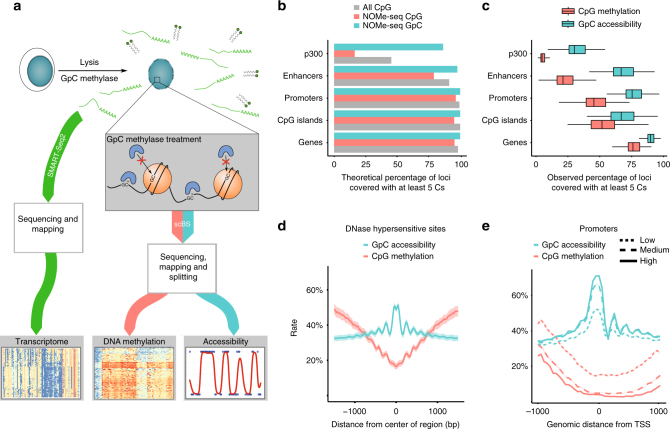
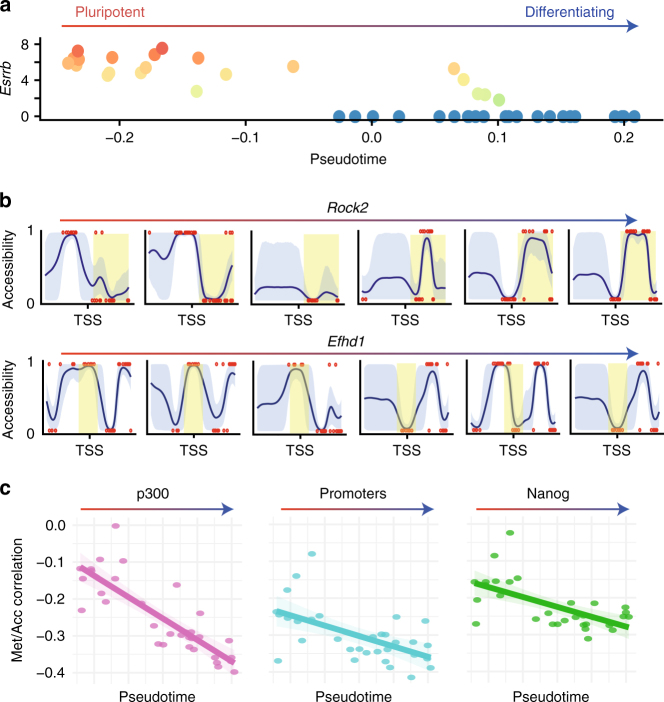
Parallel single-cell sequencing protocols represent powerful methods for investigating regulatory relationships, including epigenome-transcriptome interactions. Here, we report a single-cell method for parallel chromatin accessibility, DNA methylation and transcriptome profiling. scNMT-seq (single-cell nucleosome, methylation and transcription sequencing) uses a GpC methyltransferase to label open chromatin followed by bisulfite and RNA sequencing. We validate scNMT-seq by applying it to differentiating mouse embryonic stem cells, finding links between all three molecular layers and revealing dynamic coupling between epigenomic layers during differentiation.
Overview
The claims and statistics of this paper haven’t been checked yet.
Free: it reads the open-access text and checks the first 5 claims that cite a source we can check. Create a free account to check every claim.
Integrity signals
Registry
Cites
Statistics
Figures
Verification
Claims the paper makes
The claims and statistics of this paper haven’t been checked yet.
Free: it reads the open-access text and checks the first 5 claims that cite a source we can check. Create a free account to check every claim.
Claims other papers make about this one
Each is checked against this paper’s own text: does it say what the citing paper says it does?
The source backs part of the claim, not all of it — or backs it for a different population, condition or comparison.
In the citing paper
“Adding to the comprehensive tri-omics methods and WGBS technologies is single-cell nucleosome occupancy mapping, which is demonstrated in scNMT-seq29 and scNOMeRe-seq36 and by which DNA methylation, chromatin accessibility and transcripts from the same DNA molecule can be profiled.”
From The technological landscape and applications of single-cell multi-omics (2023) · cites this paper as [29]
Experimental — accuracy not yet measuredThe cited source says what the claim attributes to it.
In the citing paper
“For example, single-cell nucleosome, methylation and transcription sequencing (scNMT sequencing), combining epigenome and transcriptome data, are able to detect several “layers” of epigenomic and molecular dynamic coupling processes (309).”
From Epigenetic Modifications in Stress Response Genes Associated With Childhood Trauma (2019) · cites this paper as [309]
The cited source says what the claim attributes to it.
In the citing paper
“M&T‐seq (Angermueller et al, 2016) captures DNA methylation and transcriptome data, with NMT‐seq (preprint: Clark et al, 2018) further adding chromatin‐accessibility information using a GpC methyltransferase (Kelly et al, 2012).”
From Using single-cell genomics to understand developmental processes and cell fate decisions (2018) · cites this paper as Clark et al, 2018
In the citing paper
“Many groups have built from this foundation to develop technologies that co-profile the DNA methylome and transcriptome28–31.”
From The technological landscape and applications of single-cell multi-omics (2023) · cites this paper as [29]
Self-check
Percentages, sums and reported differences re-computed from the paper’s own numbers.
The self-check needs the paper’s full text.
Citations
Cites
featureCounts: an efficient general purpose program for assigning sequence reads to genomic features
Liao, Y., Smyth, G. K., & Shi, W. (2014) · Bioinformatics · doi:10.1093/bioinformatics/btt656 · Cited by 27,219
HISAT: a fast spliced aligner with low memory requirements
Kim, D., Langmead, B., & Salzberg, S. L. (2015) · Nature Methods · doi:10.1038/nmeth.3317 · Cited by 24,112
An integrated encyclopedia of DNA elements in the human genome
The ENCODE Project Consortium (2012) · Nature · doi:10.1038/nature11247 · Cited by 18,072
Bismark: a flexible aligner and methylation caller for Bisulfite-Seq applications
Krueger, F., & Andrews, S. R. (2011) · Bioinformatics · doi:10.1093/bioinformatics/btr167 · Cited by 5,297
Self-citationHuman DNA methylomes at base resolution show widespread epigenomic differences
Lister, R., Pelizzola, M., Dowen, R. H., Hawkins, R. D., Hon, G., Tonti-Filippini, J., Nery, J. R., Lee, L., Ye, Z., Ngo, Q.-M., et al. (2009) · Nature · doi:10.1038/nature08514 · Cited by 4,673
Full-length RNA-seq from single cells using Smart-seq2
Picelli, S., Faridani, O. R., Björklund, Å. K., Winberg, G., Sagasser, S., & Sandberg, R. (2014) · Nature Protocols · doi:10.1038/nprot.2014.006 · Cited by 4,137
The accessible chromatin landscape of the human genome
Thurman, R. E., Rynes, E., Humbert, R., Vierstra, J., Maurano, M. T., Haugen, E., Sheffield, N. C., Stergachis, A. B., Wang, H., Vernot, B., et al. (2012) · Nature · doi:10.1038/nature11232 · Cited by 2,679
Smart-seq2 for sensitive full-length transcriptome profiling in single cells
Picelli, S., Björklund, Å. K., Faridani, O. R., Sagasser, S., Winberg, G., & Sandberg, R. (2013) · Nature Methods · doi:10.1038/nmeth.2639 · Cited by 2,358
Single-cell chromatin accessibility reveals principles of regulatory variation
Buenrostro, J. D., Wu, B., Litzenburger, U. M., Ruff, D., Gonzales, M. L., Snyder, M. P., Chang, H. Y., & Greenleaf, W. J. (2015) · Nature · doi:10.1038/nature14590 · Cited by 2,308
A step-by-step workflow for low-level analysis of single-cell RNA-seq data with Bioconductor
Lun, A. T. L., McCarthy, D. J., & Marioni, J. C. (2016) · F1000Research · doi:10.12688/f1000research.9501.2 · Cited by 1,574
Self-citation
Cited by
Items 401–500 of 698
Mircea, M., & Semrau, S. (2021) · Biochemical Society Transactions · doi:10.1042/bst20210135 · Cited by 12
Caprioli, C., Nazari, I., Milovanovic, S., & Pelicci, P. G. (2022) · Frontiers in Oncology · doi:10.3389/fonc.2021.796477 · Cited by 9
Curated single cell multimodal landmark datasets for R/Bioconductor
Eckenrode, K. B., Righelli, D., Ramos, M., Argelaguet, R., Vanderaa, C., Geistlinger, L., Culhane, A. C., Gatto, L., Carey, V. J., Morgan, M. T., et al. (2023) · PLoS Computational Biology · doi:10.1371/journal.pcbi.1011324 · Cited by 9
Self-citationSingle‐cell analysis of CD8 T lymphocyte diversity during adaptive immunity
Arsenio, J. (2019) · WIREs Systems Biology and Medicine · doi:10.1002/wsbm.1475 · Cited by 11
“…(Angermueller et al., 2016), which simultaneously measures the methylation state and transcriptome of individual cells, and scNMT-seq (single-cell nucleosome, methylation, and transcription sequencing), which combines chromatin accessibility analysis to the preceding method (Clark et al., 2018).”
MethodMapping DNA Methylation in Mammals: The State of the Art
Lentini, A., & Nestor, C. E. (2020) · Methods in molecular biology · doi:10.1007/978-1-0716-0876-0_4 · Cited by 10
Pearson, H. C. L., Hunt, K. V., Trahair, T. N., Lock, R. B., Lee, H. J., & de Bock, C. E. (2022) · HemaSphere · doi:10.1097/hs9.0000000000000734 · Cited by 10
Self-citationUnraveling the intricacies of host-pathogen interaction through single-cell genomics
Gioacchino, E., Vandelannoote, K., Ruberto, A. A., Popovici, J., & Cantaert, T. (2024) · Microbes and Infection · doi:10.1016/j.micinf.2024.105313 · Cited by 8
Single-cell sequencing advances in research on mesenchymal stem/stromal cells
Long, Q., Zhang, P., Ou, Y., Li, W., Qi, Y., & Yuan, X. (2024) · Human Cell · doi:10.1007/s13577-024-01076-9 · Cited by 8
Li, Y., Cai, G., Chen, F., Wen, K., & Ou-Yang, L. (2025) · Communications Biology · doi:10.1038/s42003-025-08372-6 · Cited by 10
Single-Cell Analysis of Foot-and-Mouth Disease Virus
Wang, H., Xin, X. L., Zheng, C., & Shen, C. (2020) · Frontiers in Microbiology · doi:10.3389/fmicb.2020.00361 · Cited by 9
Quantifying Genomic Imprinting at Tissue and Cell Resolution in the Brain
Varrault, A., Dubois, E., Digarcher, A. L., & Bouschet, T. (2020) · Epigenomes · doi:10.3390/epigenomes4030021 · Cited by 10
“In addition to imaging techniques that investigate a limited number of genes, single-cell RNA-sequencing (scRNA-seq) (Figure 3) is emerging as a powerful technique to get insights into cell-specific imprinting transcriptome-wide.”
MethodSingle‐Cell Sequencing to Unveil the Mystery of Embryonic Development
Li, Z., Lin, F., Zhong, C., Wang, S., Xue, X., & Shao, Y. (2021) · Advanced Biology · doi:10.1002/adbi.202101151 · Cited by 8
Zhang, S., Chen, S., & Zhu, R. (2022) · ACS Sensors · doi:10.1021/acssensors.2c01582 · Cited by 8
Hematopoietic Stem Cells in Health and Disease—Insights from Single-Cell Multi-omic Approaches
Haas, S. F. (2020) · Current Stem Cell Reports · doi:10.1007/s40778-020-00174-2 · Cited by 9
Chapeau‐Blondeau, F., & Belin, É. (2020) · Annals of Telecommunications · doi:10.1007/s12243-020-00803-1 · Cited by 8
MarkerCapsule: Explainable Single Cell Typing using Capsule NetworksPreprint
Ray, S., & Schönhuth, A. (2020) · bioRxiv (Cold Spring Harbor Laboratory) · doi:10.1101/2020.09.22.307512 · Cited by 12
qingmei, S., Deng, E., Luo, L., Zhang, J., Yang, Q., Su, D., & Fan, X. (2026) · Clinical and Translational Medicine · doi:10.1002/ctm2.70584 · Cited by 7
Sahu, P., Satapathy, A., Satapathy, A., & Satapathy, T. (2025) · Letters in Drug Design & Discovery · doi:10.1016/j.lddd.2026.100286 · Cited by 10
Advanced analysis and applications of single-cell transcriptome sequencing
Zhao, R.-H., Yicheng, B., Jingying, Z., Hu, M., Xinyan, Z., Yang, M., Tengfei, D., & Junjing, J. (2023) · All Life · doi:10.1080/26895293.2023.2199140 · Cited by 7
Zhang, Z., Zhao, L., Gao, M., Chen, Y., Wang, J., & Wang, C. (2024) · Computers in Biology and Medicine · doi:10.1016/j.compbiomed.2024.108287 · Cited by 8
scMFG: a single-cell multi-omics integration method based on feature grouping
Ma, L., Liu, J., Sun, W., Zhao, C., & Yu, L. (2025) · BMC Genomics · doi:10.1186/s12864-025-11319-0 · Cited by 8
“For instance, techniques such as sci-CAR [8], SNARE-seq [9], SHARE-seq [10], and 10x multiome, which combines transcription and chromatin accessibility sequencing, as well as scNMT-seq [11], which profiles chromatin accessibility, DNA methylation, and gene expression jointly, have emerged.”
Scalable integration of multiomic single-cell data using generative adversarial networks
Giansanti, V., Giannese, F., Botrugno, O. A., Gandolfi, G., Balestrieri, C., Antoniotti, M., Tonon, G., & Cittaro, D. (2024) · Bioinformatics · doi:10.1093/bioinformatics/btae300 · Cited by 8
“…transcriptome (Klein et al. 2015, Macosko et al. 2015, Rosenberg et al. 2018, Clark et al. 2023), genome (Wang et al. 2012, Zong et al. 2012, Chen et al. 2017), epige-nome (Rotem et al. 2015, Clark et al. 2018, Bartosovic et al. 2021), and proteome (Stoeckius et al. 2017, Gebreyesus et al. 2022).”
Exploring genome-transcriptome correlations in cancer
Ronemus, M., Bradford, D., Laster, Z., & Li, S. (2025) · Biochemical Society Transactions · doi:10.1042/bst20240108 · Cited by 7
Zeng, P., Ma, Y., & Lin, Z. (2022) · Bioinformatics · doi:10.1093/bioinformatics/btac739 · Cited by 9
Computational modelling in single-cell cancer genomics: methods and future directions
Zhang, A. W., & Campbell, K. R. (2020) · Physical Biology · doi:10.1088/1478-3975/abacfe · Cited by 7
Capraz, T., Vöhringer, H. S., Serrano, K. S. A. K., Flores, R. O. R., Sáez-Rodríguez, J., & Huber, W. (2024) · bioRxiv (Cold Spring Harbor Laboratory) · doi:10.1101/2024.10.10.617527 · Cited by 7
Bonarota, M.-S., García, J. F., Massonnet, M., Zaccheo, M., Figueroa-Balderas, R. E., Cochetel, N., & Cantù, D. (2025) · Molecular Plant-Microbe Interactions · doi:10.1094/mpmi-08-25-0099-r · Cited by 6
Decoding Vascular Cell Diversity: Single-Cell Approaches to Mechanisms of Vascular Disease
Schwartzman, W. E., Jiang, J., Rao, J. S., Schnitzler, G. R., Maurya, M., Widdup, L., Pepin, M. E., Kang, H. Y., Zheng, C. X., & Gupta, R. M. (2026) · Circulation Research · doi:10.1161/circresaha.125.326001 · Cited by 6
How stress affects gene expression through epigenetic modifications
Bainomugisa, C. K., & Mehta, D. (2022) · Elsevier eBooks · doi:10.1016/b978-0-12-823039-8.00014-9 · Cited by 7
Flexible Copula Model for Integrating Correlated Multi-Omics Data from Single-Cell Experiments
Ma, Z., Davis, S. W., & Ho, Y. (2022) · Biometrics · doi:10.1111/biom.13701 · Cited by 7
“The second type of data is proportion-valued within the interval (0,1), which often arises from experiments such as measuring the DNA methylation levels (e.g., Weinhold et al. , 2016; Liu et al. , 2021) or chromatin accessibility (e.g., Smallwood et al. , 2014; Clark et al. , 2018).”
BackgroundMethodApplications of single‐cell multi‐omics sequencing in deep understanding of brain diseases
Zhang, X., Lü, P., & Shen, X. (2022) · Clinical and Translational Discovery · doi:10.1002/ctd2.95 · Cited by 6
Abnizova, I., Stapel, C., Boekhorst, R. T., Lee, J. T. H., & Hemberg, M. (2024) · BMC Biology · doi:10.1186/s12915-024-01869-2 · Cited by 6
“…accessible regions (DARs) for ectoderm, endoderm, and mesoderm and similarly accessible regions (SARs) within each 100-bp window: where A1 , A2 , and A3 are the accessibility levels for the three lineages, defined as the fraction of accessible (methylated here) GC to all GC in the window [47].”
BackgroundMethodEmerging Single-cell Approaches to Understand HIV in the Central Nervous System
Corley, M. J., & Farhadian, S. (2021) · Current HIV/AIDS Reports · doi:10.1007/s11904-021-00586-7 · Cited by 6
Heads or tails: making the spinal cord
Needham, J., & Metzis, V. (2022) · Developmental Biology · doi:10.1016/j.ydbio.2022.03.002 · Cited by 6
Sivakumar, R., Pena, M. M., Ghosh, P., Liao, Y.-Y., Paret, M. L., Jones, J. B., & Potnis, N. (2023) · Microbiology Spectrum · doi:10.1128/spectrum.02852-23 · Cited by 7
Single-cell multiomics: a new frontier in drug research and development
Ma, J., Dong, C. F., He, A., & Xiong, H. (2024) · Frontiers in Drug Discovery · doi:10.3389/fddsv.2024.1474331 · Cited by 5
IT-scC&T-seq streamlines scalable, parallel profiling of protein–DNA interactions in single cells
Ma, J., Jin, W., Rong, L., Gao, Z., Zaman, H., Shakhawat, H. M., Long, F., Zhang, Z., Huang, J., Lu, X., et al. (2025) · Genome biology · doi:10.1186/s13059-025-03661-z · Cited by 5
“However, its adaptable design is amenable to future development of multi-epitope strategies, potentially employing antibody-pA-Tn5 conjugates for simultaneous multi-target profiling [18, 52–57].”
Bond, D. R., Burnard, S. M., Uddipto, K., Hunt, K. V., Harvey, B. M., Reinhardt, L. S., Lawlor-O’Neill, C., Roper, E. A., Humphries, S., Murray, H. C., et al. (2025) · Leukemia · doi:10.1038/s41375-025-02693-5 · Cited by 5
Self-citationGenetic and epigenetic drivers of neurodegenerative disorders
Roy, K., Syed, M., Narad, P., & Sengupta, A. (2025) · Progress in brain research · doi:10.1016/bs.pbr.2025.08.002 · Cited by 5
Artificial intelligence meets epigenetics: a new frontier in precision oncology
Srivastava, R. (2026) · Epigenetics Reports · doi:10.1080/28361512.2026.2614541 · Cited by 6
Burbank, L. P., Sisterson, M. S., Wei, W., Ortega, B., Luna, N., & Naegele, R. P. (2023) · Plant Disease · doi:10.1094/pdis-03-23-0492-re · Cited by 6
Into the microscale: Low-input sequencing technologies and applications in medicine
Li, Y., Xu, F., Qiao, J., & Yuan, P. (2023) · The Innovation Medicine · doi:10.59717/j.xinn-med.2023.100041 · Cited by 5
Yang, C., Jin, Y., & Yin, Y. (2024) · Life Medicine · doi:10.1093/lifemedi/lnae015 · Cited by 5
Analyzing genomic and epigenetic profiles in single cells by hybrid transposase (scGET-seq)
Cittaro, D., Lazarević, D., Tonon, G., & Giannese, F. (2023) · STAR Protocols · doi:10.1016/j.xpro.2023.102176 · Cited by 5
Immune heterogeneity in cardiovascular diseases from a single-cell perspective
Su, X., Wang, L., Ma, N., Yang, X., Liu, C., Yang, F., Li, J., Yi, X., & Xing, Y. (2023) · Frontiers in Cardiovascular Medicine · doi:10.3389/fcvm.2023.1057870 · Cited by 5
Statistical and machine learning methods for immunoprofiling based on single-cell data
Zhang, J., Li, J., & Lin, L. (2023) · Human Vaccines & Immunotherapeutics · doi:10.1080/21645515.2023.2234792 · Cited by 7
“19 , 92 These innovative approaches offer a more Most existing methods combine data from multiple views into one using weights, transformations, or simplification based on similarity or dimension reduction.”
BackgroundSingle-Cell RNA Sequencing and Its Applications in Pituitary Research
Yang, S., Deng, C., Pu, C., Bai, X., Tian, C., Chang, M., & Feng, M. (2024) · Neuroendocrinology · doi:10.1159/000540352 · Cited by 5
Multiplexed multimodal single-cell technologies: From observation to perturbation analysis
Lee, S.-H., Park, J., & Hwang, B. (2024) · Molecules and Cells · doi:10.1016/j.mocell.2024.100147 · Cited by 5
Application of multi-omics in single cells
Animal Genomics and Improvement Lab, U., Kang, X., Liu, A., Liu, G. E., & Animal Genomics and Improvement Lab, U. (2018) · Annals of Biotechnology · doi:10.33582/2637-4927/1007 · Cited by 6
“…Integration data generated from nuclear transcriptomic and DNA accessibility maps allow for the cell-type distinctions in human brain tissues Lake et al., 2018 [60] Mouse embryonic stem cell scM&T-seq Transcriptome, DNA methylome: DNA methylome and transcriptome profile were investigated…”
De novo programming: establishment of epigenome in mammalian oocytes
Qian, J., & Guo, F. (2022) · Biology of Reproduction · doi:10.1093/biolre/ioac091 · Cited by 6
“scNOMe-seq, single-cell nucleosome occupancy and methylome sequencing [142]; scNMT-seq, single-cell nucleosome, methylation, and transcription sequencing [143].”
MethodA single-cell chromatin map of human embryos
Pérez-Palacios, R., & Bourc’his, D. (2018) · Nature Cell Biology · doi:10.1038/s41556-018-0134-z · Cited by 5
Sparse functional data analysis accounts for missing information in single-cell epigenomicsPreprint
Madrigal, P., Dai, X., & Hadjipantelis, P. Z. (2018) · bioRxiv (Cold Spring Harbor Laboratory) · doi:10.1101/504365 · Cited by 5
“data is sparsely distributed along the genome (Clark et al., 2018).”
BackgroundMethodInfluentialAdaptative Machine Translation between paired Single-Cell Multi-Omics DataPreprint
Martinez‐de‐Morentin, X., Khan, S. A., Lehmann, R., Qu, S., Maillo, A., Kiani, N. A., Prósper, F., Tegner, J. N., & Gómez-Cabrero, D. (2021) · bioRxiv (Cold Spring Harbor Laboratory) · doi:10.1101/2021.01.27.428400 · Cited by 7
“For prediction, aLIBRA considered the following values: number of layers [1,2], number of nodes [128,256,512], alpha [0.05,0.1,0.3], dropout [0.1,0.2], batch size [32,64,128] and mid layers size [10,30,50,70].”
BackgroundMethodInfluentialDemetçi, P., Tran, Q. H., Redko, I., & Singh, R. (2022) · bioRxiv (Cold Spring Harbor Laboratory) · doi:10.1101/2022.11.09.515883 · Cited by 5
Maternal SMARCA5 is required for major ZGA in mouse embryosPreprint
Kubinyecz, O., Drage, D., Santos, F., Krueger, C., Okkenhaug, H., Alda-Catalinas, C., Eckersley-Maslin, M. A., Taubenschmid, J., & Reik, W. (2023) · bioRxiv (Cold Spring Harbor Laboratory) · doi:10.1101/2023.12.05.570276 · Cited by 5
“To assess if gene expression coupled with epigenetic changes in Smarca5 maternal knockout embryos were causing the developmental arrest, we performed single-embryo NMT-seq (Clark et al., 2018), which provides simultaneous transcription, DNA methylation and chromatin accessibility data from the same embryo.”
BackgroundMethodInfluentialSelf-citationInterpretable data integration for single-cell and spatial multi-omics
Yang, C., He, Z., Nie, Q. H., & Zhang, L. (2026) · Cell Systems · doi:10.1016/j.cels.2025.101479 · Cited by 5
Single-cell technology for improvement in significant crops
Srivastava, U., Kanchan, S., Kesheri, M., & Sharma, A. (2025) · Elsevier eBooks · doi:10.1016/b978-0-443-23736-2.00012-5 · Cited by 5
A comparison of integration methods for single‐cell RNA sequencing data and ATAC sequencing data
Kan, Y., Wang, W., Qi, Y., Zhang, Z., Liang, X., & Jin, S. (2025) · Quantitative Biology · doi:10.1002/qub2.91 · Cited by 5
“A variety of experimental technologies [24, 78–80] and different data modalities [34, 80–84] give us a new insight in identifying gene networks and molecular layers.”
High-throughput sequencing reveals landscapes of female germ cell development
Zhao, Z., Schatten, H., & Sun, Q. (2020) · Molecular Human Reproduction · doi:10.1093/molehr/gaaa059 · Cited by 4
Sahni, S., Chattopadhyay, P., Khare, K., & Pandey, R. (2021) · Pathogens · doi:10.3390/pathogens10111467 · Cited by 4
“Single-cell technologies have also profoundly enhanced our comprehension of cellular plasticity, transcriptional dynamics, and gene regulatory relationships [7,8].”
BackgroundPark, K., Jeon, M. C., Kim, B., Cha, B., & Kim, J. (2022) · Genomics & Informatics · doi:10.5808/gi.21078 · Cited by 4
“scM&T-seq Manually or FACS 10-100 Need pre-separation of DNA and RNA [27] scNMT-seq Manually or FACS 10-100 Triple-omic library Need pre-separation of DNA and RNA [28] scChaRM-seq Manually or FACS 10-100 Triple-omic library Need pre-separation of DNA and RNA [29] scTrio-seq Manually or FACS 10-100 Triple-omic library…”
BackgroundMethodInfluentialSchwaiger, M., Mohn, F., Bühler, M., & Kaaij, L. J. T. (2024) · BMC Genomics · doi:10.1186/s12864-024-10625-3 · Cited by 4
Ridha, I., Xu, C., Zhang, Y., Chung, Y., Park, J. G., LaBaer, J., & Murugan, V. (2024) · DNA · doi:10.3390/dna4040028 · Cited by 4
Understanding the Biology and Pathogenesis of the Kidney by Single-Cell Transcriptomic Analysis
Ye, Y., Song, H., Zhang, J., & Shi, S. (2018) · Kidney Diseases · doi:10.1159/000492470 · Cited by 3
Epigenetic inheritance of metabolic signals
van Steenwyk, G., Jawaid, A., & Mansuy, I. M. (2019) · Elsevier eBooks · doi:10.1016/b978-0-12-816843-1.00011-4 · Cited by 4
Single-Cell Omics in Personalized Medicine
Buriani, A., Fortinguerra, S., Sorrenti, V., Gabbia, D., & Carrara, M. (2019) · Elsevier eBooks · doi:10.1016/b978-0-12-817532-3.00014-1 · Cited by 6
Imprinted Genes and Hypothalamic Function
Pulix, M., & Plagge, A. (2020) · Masterclass in neuroendocrinology · doi:10.1007/978-3-030-40002-6_10 · Cited by 5
Single-Cell Transcriptome Sequencing Using Microfluidics
Chen, Y., Jung, S., Choi, Y., & Yoon, E. (2021) · Springer eBooks · doi:10.1007/978-981-10-8953-4_42 · Cited by 4
Single-cell technologies: a new lens into epigenetic regulation in development
Bolondi, A., Kretzmer, H., & Meissner, A. (2022) · Current Opinion in Genetics & Development · doi:10.1016/j.gde.2022.101947 · Cited by 4
LIBRA: an adaptative integrative tool for paired single‐cell multi‐omics data
Martinez‐de‐Morentin, X., Khan, S. A., Lehmann, R., Qu, S., Maillo, A., Kiani, N. A., Prósper, F., Tegner, J. N., & Gómez-Cabrero, D. (2023) · Quantitative Biology · doi:10.15302/j-qb-022-0318 · Cited by 4
Profiling DNA Methylation Genome-Wide in Single Cells
Galvão, A. M., & Kelsey, G. (2020) · Methods in molecular biology · doi:10.1007/978-1-0716-0958-3_15 · Cited by 4
Self-citationChialastri, A., Karzbrun, E., Khankhel, A. H., Radeke, M. J., Streichan, S. J., & Dey, S. S. (2022) · bioRxiv (Cold Spring Harbor Laboratory) · doi:10.1101/2022.02.10.479957 · Cited by 4
Kidney diseases and single-cell sequencing research: a bibliometric analysis from 2015 to 2024
Li, Y., Hou, J., Zhang, X., Wu, X., Lin, S., Liu, W., Wang, Y., & Zheng, H. (2025) · Renal Failure · doi:10.1080/0886022x.2025.2521457 · Cited by 3
The applications of single-cell multiomics in drug screening
Xue, Q., Hu, H. F., Wang, R., Wu, F., & Xiong, H. (2025) · Pharmaceutical Science Advances · doi:10.1016/j.pscia.2025.100090 · Cited by 3
“(3) Information conversion. scNMT-seq uses a GpC methyltransferase to enzymatically label accessible chromatin, enabling the joint profiling of DNA methylation, chromatin accessibility, and the transcriptome following a bisulfite conversion step [41].”
Cutting-edge technologies in neural regeneration
Li, C.-P., Wang, Y., Zhou, C.-W., Ding, C., Teng, P., Nie, R., & Yang, S. (2025) · Cell Regeneration · doi:10.1186/s13619-025-00260-y · Cited by 3
“By integrating multi-modal profiling, single-cell sequencing allows for the comprehensive analysis of genomes, transcriptomes, and epigenomes (Buenrostro et al. 2015; Clark et al. 2018; Stuart et al. 2019; Svensson et al. 2018).”
A Single-Cell Omics Technical Guide for Advancing Neuropsychiatric Research
Casmey, K., Zimmermann, M., Xie, Y., Codeluppi-Arrowsmith, S. A., & Turecki, G. (2025) · Genes · doi:10.3390/genes16121394 · Cited by 3
“Transcriptome, chromatin accessibility, and DNA methylome can be profiled together via scNMT-seq [315], scChaRM-seq [316], scNOMeRe-seq [317], and snmCAT-seq [173].”
An expanded role for single-cell chemical genomics profiling in drug discovery
Wyatt, A., Hoffer-Hawlik, K., Giglio, R. M., Azizi, E., & McFaline‐Figueroa, J. L. (2026) · Biochemical Journal · doi:10.1042/bcj20253273 · Cited by 4
Principles of epigenetics and DNA methylation
Giorda, R. (2020) · Elsevier eBooks · doi:10.1016/b978-0-12-819262-7.00001-5 · Cited by 4
Wasney, M., & Pott, S. (2023) · Methods in molecular biology · doi:10.1007/978-1-0716-2899-7_12 · Cited by 3
Progress in multifactorial single-cell chromatin profiling methods
Stuart, T. (2024) · Biochemical Society Transactions · doi:10.1042/bst20231471 · Cited by 3
Yang, Y., Meng, L., Zhang, T., & Tan, J. (2025) · Current Cancer Drug Targets · doi:10.2174/0115680096372729250715050452 · Cited by 3
“Techniques such as ECCITE-seq[59], scNMT-seq [60], and DOGMA-seq [61] now allow simultaneous measurement of different reads ( e.g. , RNA expression, surface protein expression, cloning, DNA methylation, and chromatin accessibility) from the same single cell.”
On fitness: how do mutations shape the biology of cancer?
Majewski, I. J. (2019) · Biochemical Society Transactions · doi:10.1042/bst20180224 · Cited by 3
Single-Cell Epigenomics In Cancer Research
Çaçan, E. (2019) · Biomedical Journal of Scientific & Technical Research · doi:10.26717/bjstr.2019.21.003619 · Cited by 3
“scNMT-seq combines RNA-seq with chromatin accessibility and methylome profiling performed in the same cell [44].”
MethodRecent advances in computational-based approaches in epigenetics studies
Joshi, A., & Romanowska, J. (2020) · Elsevier eBooks · doi:10.1016/b978-0-12-819414-0.00028-8 · Cited by 5
Analytics methods and tools for integration of biomedical data in medicine
Zhang, L., Karimzadeh, M., Welch, M. L., McIntosh, C., & Wang, B. (2020) · Elsevier eBooks · doi:10.1016/b978-0-12-821259-2.00007-7 · Cited by 3
LISA2: Learning Complex Single-Cell Trajectory and Expression Trends
Chen, Y., Zhang, Y., Li, J. Y. H., & Ouyang, Z. (2021) · Frontiers in Genetics · doi:10.3389/fgene.2021.681206 · Cited by 5
“…has impacted the studies of transcriptomics (Briggs et al., 2018; Farrell et al., 2018; Hochgerner et al., 2018), epigenomics (Rotem et al., 2015; Clark et al., 2018; Gaiti et al., 2019; Sinnamon et al., 2019), proteomics (Palii et al., 2019; Specht et al., 2019), and multiple-omics (Pott, 2017;…”
BackgroundSingle-cell protein-DNA interactomics and multiomics tools for deciphering genome regulation
Xiong, H., Wang, R., & He, A. (2023) · National Science Open · doi:10.1360/nso/20220057 · Cited by 3
Field theory of enzyme-substrate systems with restricted long-range interactions
Olmeda, F., & Rulands, S. (2024) · Physical review. E · doi:10.1103/physreve.110.024404 · Cited by 3
“For one-dimensional substrates, single-cell sequencing technologies allow measuring the consequences of enzyme binding, such as chemical modifications of the DNA or histone tails, with the resolution of single base pairs and in individual cells [10, 11].”
BackgroundHatipoğlu, A., & Altuntaş, V. (2025) · Journal of Polytechnic · doi:10.2339/politeknik.1509329 · Cited by 3
Zhang, B., Lan, X., Tan, S., Xie, Z., Zhu, L., Gong, X., Dai, X., Fang, X., & Xu, W. (2025) · TrAC Trends in Analytical Chemistry · doi:10.1016/j.trac.2025.118170 · Cited by 4
Zhang, B., Nan, M., Wang, L., HanWen, W., Chen, X. '., Shi, Y., Ma, Y., & Gao, J. (2025) · BMC Genomics · doi:10.1186/s12864-025-11462-8 · Cited by 5
“With the advancement of sequencing technolog [6–10], more and more single-cell multi-omics data from the same cells can be used for integrative analysis, but meth-ods for unmatched data are not applicable to the setting that features are measured from the same cell. single-cell multi-omics data…”
Mauger, F., & Deleuze, J. (2019) · Elsevier eBooks · doi:10.1016/b978-0-12-814259-2.00003-0 · Cited by 3
MLG: multilayer graph clustering for multi-condition scRNA-seq data
Lu, S., Conn, D. J., Chen, S., Johnson, K. D., Bresnick, E. H., & Keleş, S. (2021) · Nucleic Acids Research · doi:10.1093/nar/gkab823 · Cited by 3
MOJITOO: a fast and universal method for integration of multimodal single cell dataPreprint
Cheng, M., Li, Z., & Costa, I. G. (2022) · bioRxiv (Cold Spring Harbor Laboratory) · doi:10.1101/2022.01.19.476907 · Cited by 3
Germ-cell specific eIF4E1B regulates maternal RNA translation to ensure zygotic genome activationPreprint
Yang, G., Xin, Q., Feng, I., & Dean, J. (2022) · Research Square · doi:10.1101/2022.07.27.501690 · Cited by 3
Using CRISPR barcoding as a molecular clock to capture dynamic processes at single-cell resolution
Andres-Lopez, Y., Santambrogio, A., Kafetzopoulos, I., Todd, C. D., Khouri-Gonzalez, C. E., Gonzalez-Alvarez, J.-E., Alda-Catalinas, C., Clark, S. J., Reik, W., & Hernando-Herraez, I. (2026) · Genome Research · doi:10.1101/gr.280915.125 · Cited by 3
Self-citationSequencing-based methods for single-cell multi-omics studies
Qin, S., Liu, S., & Weng, X. (2023) · Science China Chemistry · doi:10.1007/s11426-023-1793-7 · Cited by 3
Single-cell mosaic integration and cell state transfer with auto-scaling self-attention mechanism
Rong, Z., Song, J., Yu, Y., Mi, L., Qiu, M., Song, Y., & Hou, Y. (2024) · Briefings in Bioinformatics · doi:10.1093/bib/bbae540 · Cited by 2
“For example, 10X Genomics Multiome [3] measures RNA expression alongside DNA fragments associated with regions of open chromatin; CITE-seq [4] captures transcriptome and epitope jointly; scNMT-seq [ 5] profiles chromatin accessibility, DNA methylation, and gene expression concurrently.”
Unveiling Long Non-coding RNA Networks from Single-Cell Omics Data Through Artificial Intelligence
Cao, G., & Chen, D. (2024) · Methods in molecular biology · doi:10.1007/978-1-0716-4290-0_11 · Cited by 2
Securing diagonal integration of multimodal single-cell data against ambiguous mapping
Zhou, H., Cao, K., & Lu, Y. Y. (2025) · Bioinformatics · doi:10.1093/bioinformatics/btaf345 · Cited by 2
“5a) was generated using the sc-NMT sequencing technology (Clark et al. 2018), a sequencing technology that simultaneously profiles DNA methylation and chromatin accessibility within the same cell.”
Metadata
- Authors
- Clark, S. J., Argelaguet, R., Kapourani, C.-A., Stubbs, T. M., Lee, H. J., Alda-Catalinas, C., Krueger, F., Sanguinetti, G., Kelsey, G., Marioni, J. C., Stegle, O., & Reik, W.
- Affiliations
- Babraham Institute (GB)
- European Bioinformatics Institute (GB)
- University of Edinburgh (GB)
- Corresponding author
- Clark, Stephen J.
- Marioni, John C.
- Stegle, Oliver
- Reik, Wolf
- ORCID
- Venue
- Nature Communications
- Published
- 2018-02-22
- Volume
- 9
- Issue
- 1
- Pages
- 781-781
- ISSN
- 2041-1723 (ISSN-L)
- PMC
- PMC5823944
- OpenAlex
- W2793965282
- Cited by
- 657
- References
- 37
- Citations by year
- 2026: 52 · 2025: 57 · 2024: 66 · 2023: 80 · 2022: 97 · 2021: 92 · 2020: 96 · 2019: 74 · 2018: 40
- FWCI
- 27.57
- Type
- journal article
- Language
- en
- Open access
- gold
- doi.org
- Licence
- cc-by
- creativecommons.org/licenses/by/4.0 (tdm)
- creativecommons.org/licenses/by/4.0 (vor)
- Locations
- Nature Communications (publishedVersion, cc-by)
- Europe PMC (PubMed Central) (publishedVersion, cc-by)
- PubMed Central (publishedVersion, cc-by)
- PubMed (publishedVersion)
- SDL (submittedVersion, cc-by)
- RePEc: Research Papers in Economics (submittedVersion)
- DOAJ (DOAJ: Directory of Open Access Journals) (submittedVersion)
- DOAJ (DOAJ: Directory of Open Access Journals) (submittedVersion, cc-by-sa)
- Figshare (submittedVersion, cc-by)
- Edinburgh Research Explorer (University of Edinburgh) (submittedVersion, other-oa)
- NOVA (University of Newcastle Australia) (submittedVersion, cc-by)
- Apollo (University of Cambridge) (submittedVersion, cc-by)
- Apollo (cc-by)
- Funders
- Wellcome Trust (105031/Z/14/Z)
- European Molecular Biology Laboratory
- Cancer Research UK (22231)
- University of Edinburgh
- Directorate for Biological Sciences
- Medical Research Council (MR/K011332/1)
- Engineering and Physical Sciences Research Council (EP/L016427/1, 1497322)
- Biotechnology and Biological Sciences Research Council (BBS/E/B/000C0422, BBS/E/B/000C0426, BBS/E/B/0000H334, 1645504)
- Topics
- Life Sciences › Biochemistry, Genetics and Molecular Biology › Molecular Biology › Epigenetics and DNA Methylation
- Life Sciences › Biochemistry, Genetics and Molecular Biology › Molecular Biology › Single-cell and spatial transcriptomics
- Life Sciences › Biochemistry, Genetics and Molecular Biology › Molecular Biology › Genomics and Chromatin Dynamics
- Keywords
- single-cell chromatin accessibility, DNA methylation, single-cell transcriptomics, bisulfite sequencing, mouse embryonic stem cell differentiation, epigenetic regulation
- MeSH terms
- Animals, Cell Differentiation, Chromatin, Female, Histones, Male, Nucleosomes, Transcription, Genetic, Sequence Analysis, DNA, DNA Methylation, Mice, Embryonic Stem Cells, Single-Cell Analysis
About these checks
Registry, retraction, Cites and statistics results are computed, not judged, with one exception: a printed reference that no index lists is read once by a model before it counts as a citation error. Claims are extracted by a model and kept only when their quote appears verbatim in the text; each cited source is then checked, with a model’s help, for whether it says what the claim relies on. Those verdicts can be wrong — read the claim’s quote and the cited source before relying on one.
Statistics and arithmetic are recomputed, not judged.
Confidence bands are shown only for fields calibrated on our annotated test set. None is calibrated yet, so no band is shown.
What counts as a claim ›How we measure confidence ›How we check this ›
Are you an author, or do you see a problem with this page? Request a review
Data sources
Bibliographic data: Semantic Scholar, OpenAlex, Crossref.
Contains information from the Semantic Scholar Academic Graph Datasets, made available under the ODC Attribution License (ODC-BY 1.0).
Semantic Scholar’s data is described in: Kinney, R., et al. (2023). The Semantic Scholar Open Data Platform. arXiv:2301.10140.
