

LOTUS domain protein MARF1 binds CCR4-NOT deadenylase complex to post-transcriptionally regulate gene expression in oocytes
Open accessThe DOI matches its Crossref record; 58 of the 58 references it cites were found in a registry or an index.
Abstract
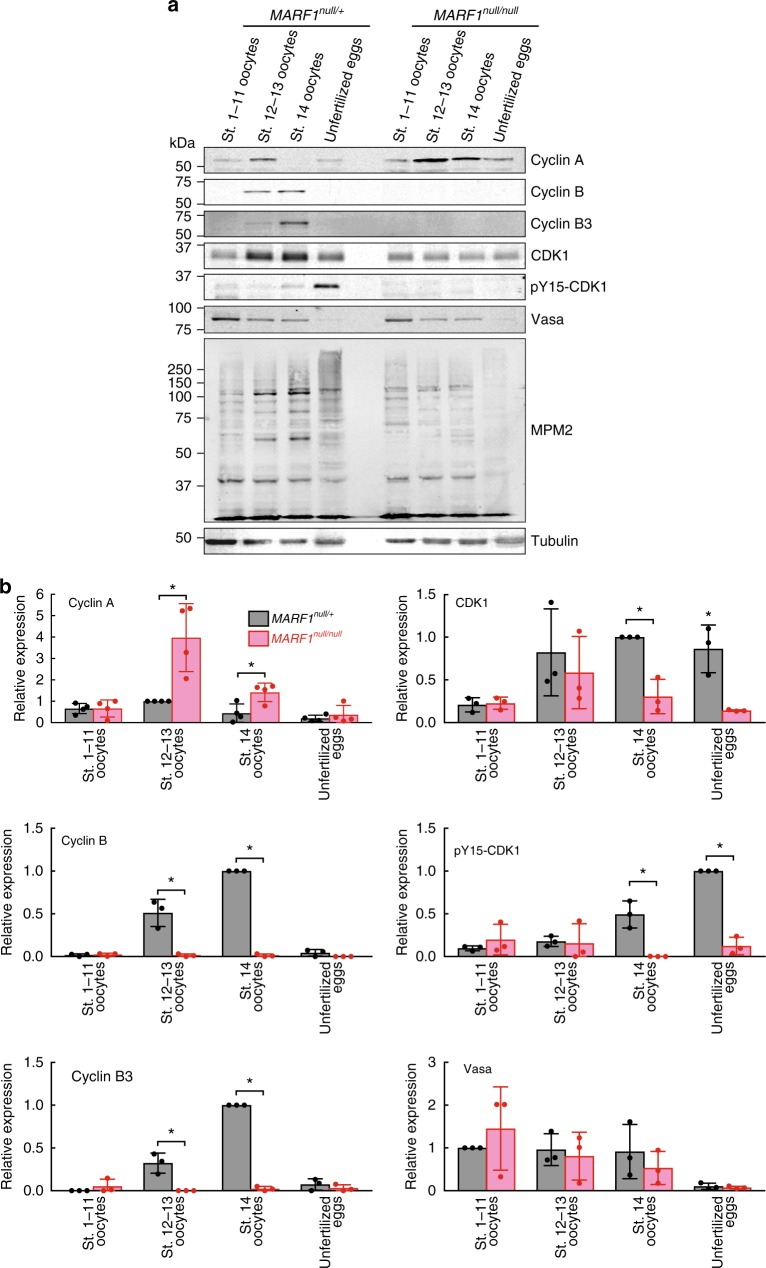
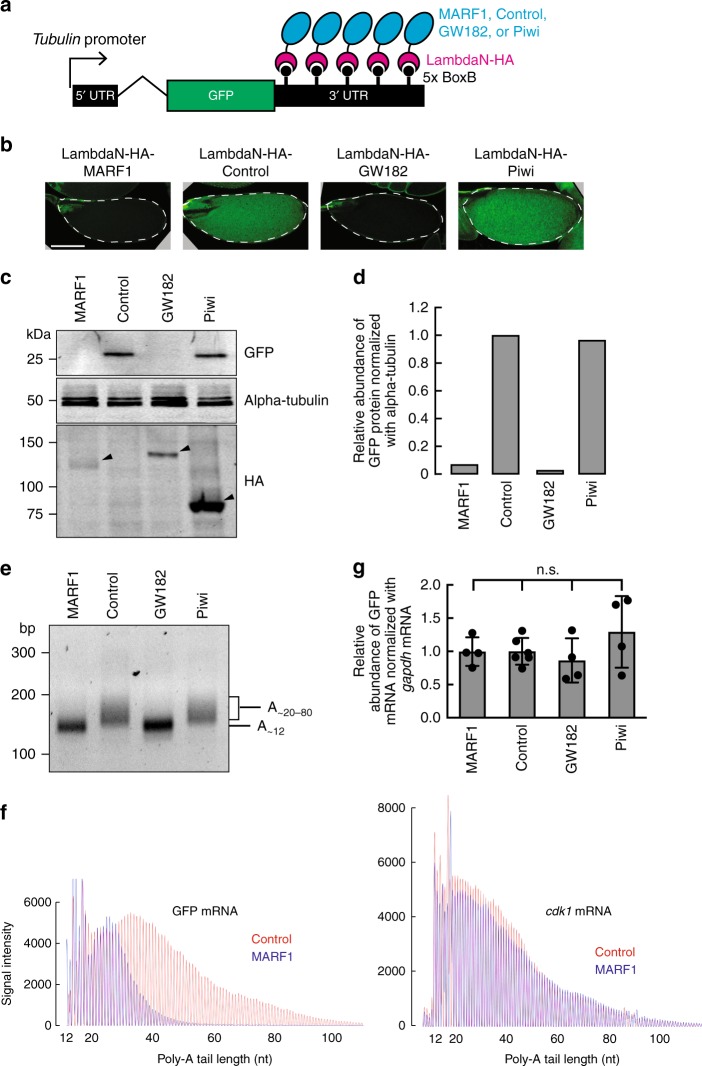
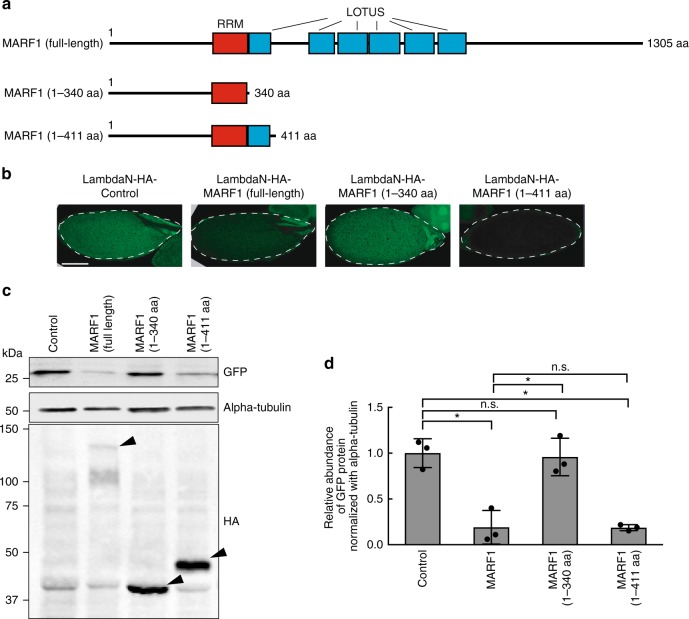
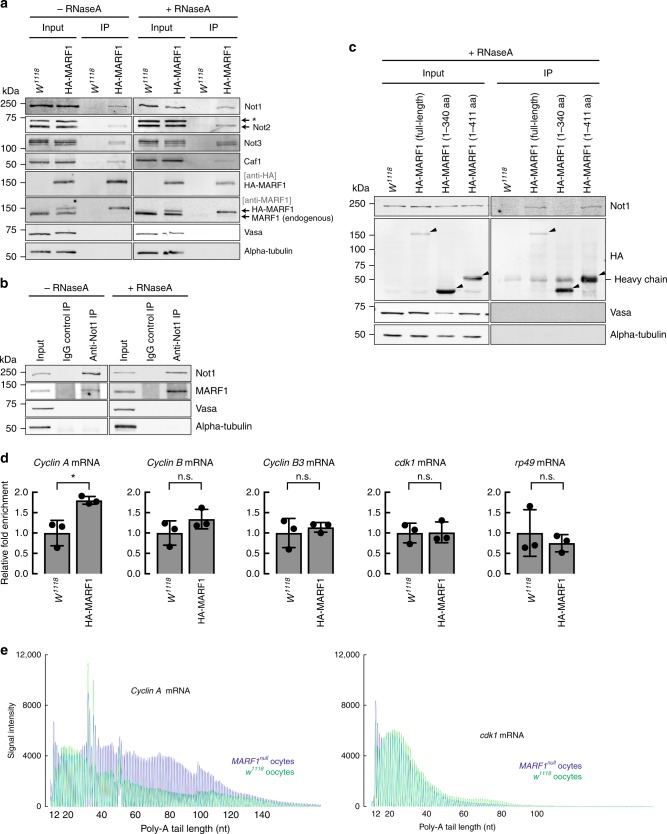
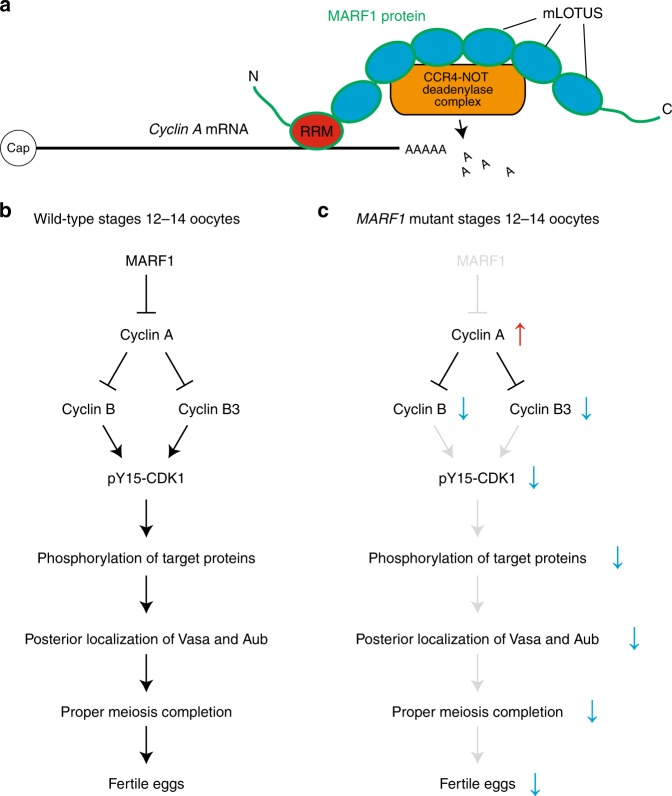
Post-transcriptional regulation of gene expression plays an essential role during oocyte maturation. Here we report that Drosophila MARF1 (Meiosis Regulator And mRNA Stability Factor 1), which consists of one RNA-recognition motif and six tandem LOTUS domains with unknown molecular function, is essential for oocyte maturation. When tethered to a reporter mRNA, MARF1 post-transcriptionally silences reporter expression by shortening reporter mRNA poly-A tail length and thereby reducing reporter protein level. This activity is mediated by the MARF1 LOTUS domain, which binds the CCR4-NOT deadenylase complex. MARF1 binds cyclin A mRNA and shortens its poly-A tail to reduce Cyclin A protein level during oocyte maturation. This study identifies MARF1 as a regulator in oocyte maturation and defines the conserved LOTUS domain as a post-transcriptional effector domain that recruits CCR4-NOT deadenylase complex to shorten target mRNA poly-A tails and suppress their translation.
Overview
The claims and statistics of this paper haven’t been checked yet.
Free: it reads the open-access text and checks the first 5 claims that cite a source we can check. Create a free account to check every claim.
Integrity signals
Registry
Cites
Statistics
Figures
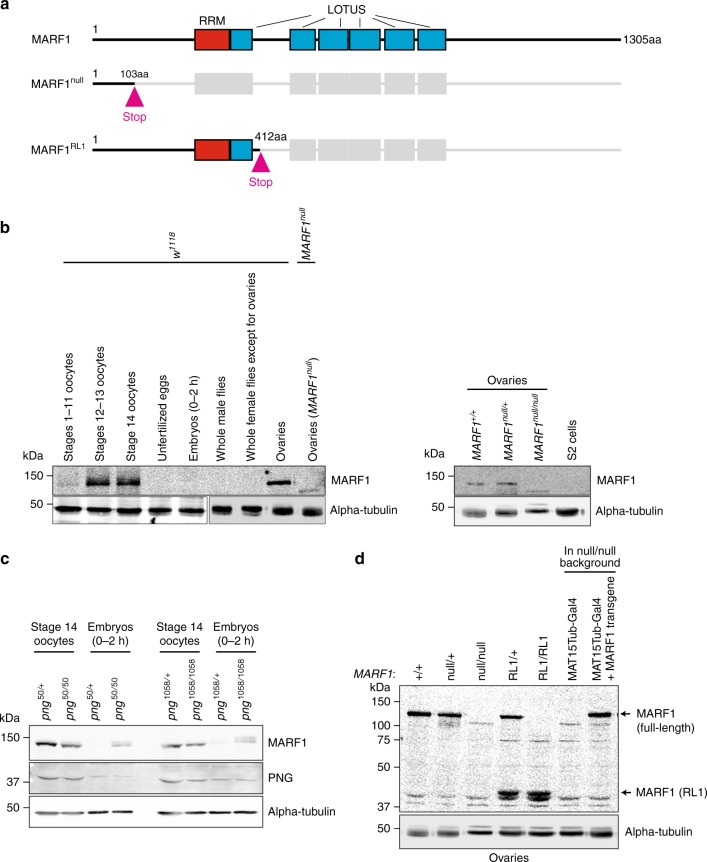
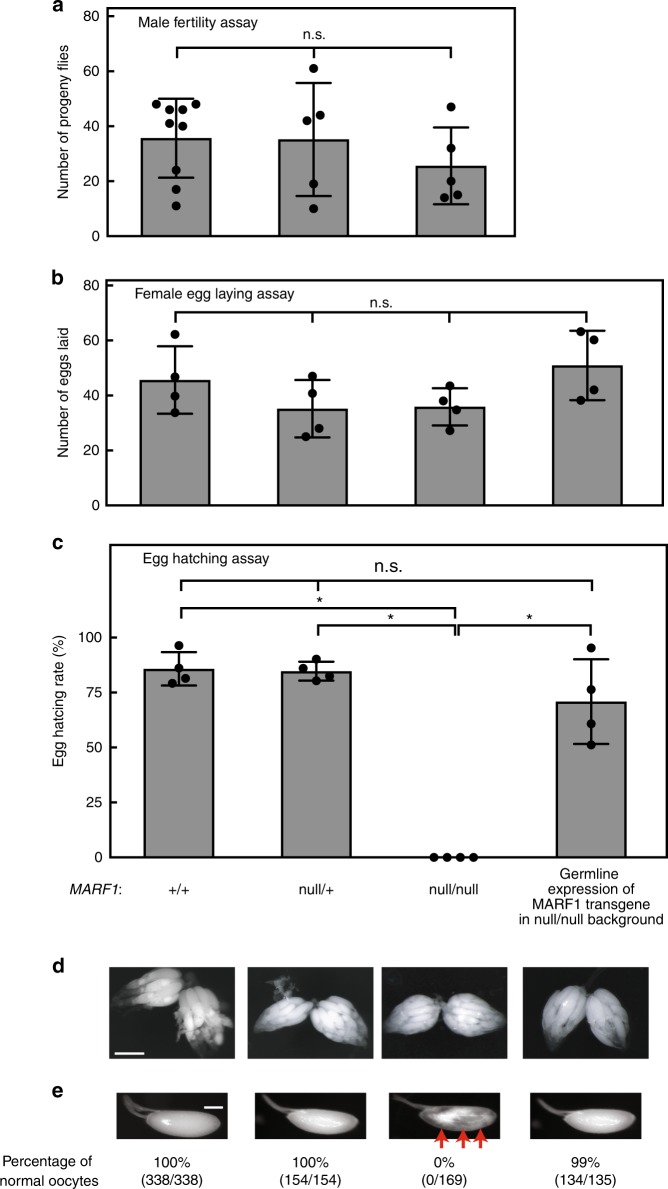
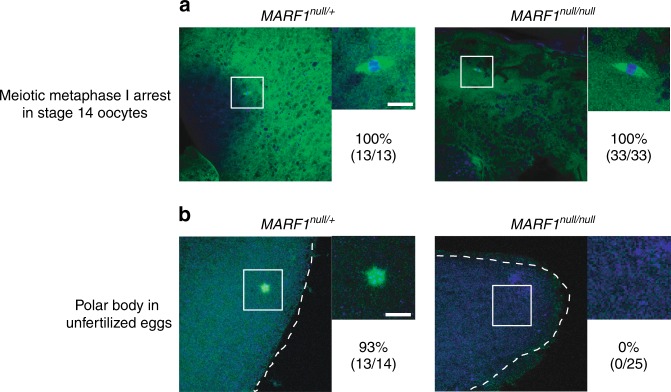
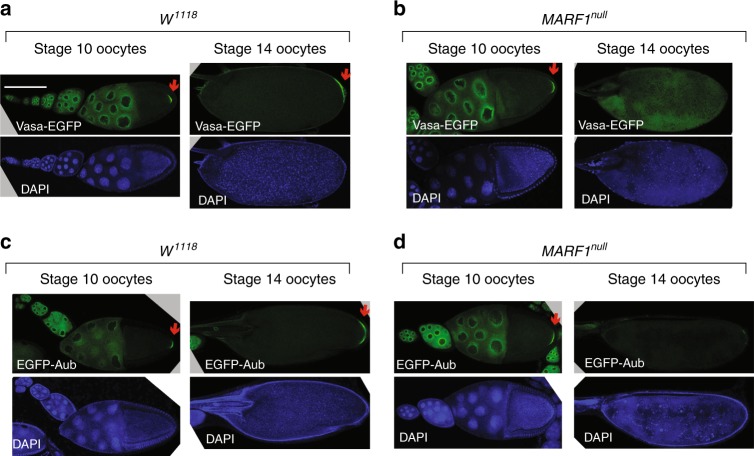
Verification
Claims the paper makes
The claims and statistics of this paper haven’t been checked yet.
Free: it reads the open-access text and checks the first 5 claims that cite a source we can check. Create a free account to check every claim.
Claims other papers make about this one
Each is checked against this paper’s own text: does it say what the citing paper says it does?
The source backs part of the claim, not all of it — or backs it for a different population, condition or comparison.
In the citing paper
“A recent study of CG17018 has confirmed that it is indeed required for female fertility in Drosophila, despite lacking some domains present in MARF1.”
From Functional unknomics: Systematic screening of conserved genes of unknown function (2023) · cites this paper as [38]
Experimental — accuracy not yet measured
Self-check
Percentages, sums and reported differences re-computed from the paper’s own numbers.
The self-check needs the paper’s full text.
Citations
Cites
An optimized transgenesis system for Drosophila using germ-line-specific φC31 integrases
Bischof, J., Maeda, R. K., Hediger, M., Karch, F., & Basler, K. (2007) · Proceedings of the National Academy of Sciences · doi:10.1073/pnas.0611511104 · Cited by 1,866
oskar organizes the germ plasm and directs localization of the posterior determinant nanos
Ephrussi, A., Dickinson, L. K., & Lehmann, R. (1991) · Cell · doi:10.1016/0092-8674(91)90137-n · Cited by 820
Monoclonal antibodies to mitotic cells.
Davis, F. M., Tsao, T. Y., Fowler, S. K., & Rao, P. N. (1983) · Proceedings of the National Academy of Sciences · doi:10.1073/pnas.80.10.2926 · Cited by 602
Highly Improved Gene Targeting by Germline-Specific Cas9 Expression in Drosophila
Kondo, S., & Ueda, R. (2013) · Genetics · doi:10.1534/genetics.113.156737 · Cited by 575
oskar mRNA is localized to the posterior pole of the Drosophila oocyte
Kim-Ha, J., Smith, J. L., & Macdonald, P. M. (1991) · Cell · doi:10.1016/0092-8674(91)90136-m · Cited by 565
Cyclin-dependent kinase-1: linking apoptosis to cell cycle and mitotic catastrophe
Castedo, M., Perfettini, J.-L., Roumier, T., & Kroemer, G. (2002) · Cell Death & Differentiation · doi:10.1038/sj.cdd.4401130 · Cited by 345
Nakamura, A., Amikura, R., Hanyu, K., & Kobayashi, S. (2001) · Development · doi:10.1242/dev.128.17.3233 · Cited by 334
smaug protein represses translation of unlocalized nanos mRNA in the Drosophila embryo.
Smibert, C. A., Wilson, J. E., Kerr, K., & Macdonald, P. M. (1996) · Genes & Development · doi:10.1101/gad.10.20.2600 · Cited by 237
A complex containing the CCR4 and CAF1 proteins is involved in mRNA deadenylation in Drosophila
Temme, C., Zaessinger, S., Meyer, S., Simonelig, M., & Wahle, E. (2004) · The EMBO Journal · doi:10.1038/sj.emboj.7600273 · Cited by 211
Dicer Partner Proteins Tune the Length of Mature miRNAs in Flies and Mammals
Fukunaga, R., Han, B. W., Hung, J.-H., Xu, J., Weng, Z., & Zamore, P. D. (2012) · Cell · doi:10.1016/j.cell.2012.09.027 · Cited by 206
Self-citation
Cited by
Functional unknomics: Systematic screening of conserved genes of unknown function
Rocha, J. J., Jayaram, S. A., Stevens, T. J., Muschalik, N., Shah, R. D., Emran, S., Robles, C., Freeman, M., & Munro, S. (2023) · PLOS Biology · doi:10.1371/journal.pbio.3002222 · Cited by 70
Zhang, Z.-J., Gao, Q., Fang, X., Ding, Z., Gao, D., Xu, W., Cao, Q., Qiao, J., Yang, Y., Han, C., et al. (2020) · eLife · doi:10.7554/elife.53753 · Cited by 38
“These results indicate that HvCCR4 has no RNA-binding activity as described previously (Yamaji et al., 2017; Zhu et al., 2018; Arae et al., 2019; Meijer et al., 2019; Webster et al., 2019), and that the BYSMV N protein can bind mRNAs nonspecifically in vitro.”
BackgroundLOTUS domain is a novel class of G-rich and G-quadruplex RNA binding domain
Ding, D., Wei, C., Dong, K., Liu, J., Stanton, A. R., Xu, C., Min, J., Hu, J. P., & Chen, C. (2020) · Nucleic Acids Research · doi:10.1093/nar/gkaa652 · Cited by 32
“However, the RNA binding activity of the LO-TUS domain has not been convincingly shown (9–13).”
LOTUS-domain proteins - developmental effectors from a molecular perspective
Kubíková, J., Reinig, R., Salgania, H. K., & Jeske, M. (2020) · Biological Chemistry · doi:10.1515/hsz-2020-0270 · Cited by 28
“Instead, EDC4-binding to MARF1 has an opposite effect and impairs reporter mRNA repression, possibly through interfering with binding of the mLOTUS domains to their mRNA target sequences (Brothers et al. 2020).”
BackgroundInfluentialNovel LOTUS-domain proteins are organizational hubs that recruit C. elegans Vasa to germ granules
Cipriani, P. G., Bay, O. K., Zinno, J., Gutwein, M. R., Gan, H. H., Mayya, V. K., Chung, G., Chen, J., Fahs, H. Z., Guan, Y., et al. (2021) · eLife · doi:10.7554/elife.60833 · Cited by 28
“six mLOTUS domains and regulates oocyte maturation by recruiting the CCR4-NOT complex, which regulates polyadenylation, to inhibit translation of a cyclin mRNA (Zhu et al., 2018).”
BackgroundMarnik, E. A., Almeida, M. V., Cipriani, P. G., Chung, G., Caspani, E., Karaulanov, E., Gan, H. H., Zinno, J., Isolehto, I. J., Kielisch, F., et al. (2022) · PLoS Genetics · doi:10.1371/journal.pgen.1010245 · Cited by 26
“This results in the shortening of poly-A tails and translational regulation of targeted RNA transcripts.[20] In mice, MARF1 localizes to germ granules in oocytes, where it is critical for normal oocyte development.”
BackgroundInvolvement of PIN‐like domain nucleases in tRNA processing and translation regulation
Gobert, A., Bruggeman, M., & Giegé, P. (2019) · IUBMB Life · doi:10.1002/iub.2062 · Cited by 26
“In Drosophila, a MARF1 ortholog even lacks the NYN domain (65), which suggests that a functional Drosophila MARF1 might be reconstituted by the interaction with another NYN domain protein in vivo.”
BackgroundP-bodies directly regulate MARF1-mediated mRNA decay in human cells
Brothers, W. R., Fakim, H., Kajjo, S., & Fabian, M. R. (2022) · Nucleic Acids Research · doi:10.1093/nar/gkac557 · Cited by 23
“This ortholog has significantly diverged from other MARF1 proteins, where it does not contain a NYN endonuclease domain and, rather than interacting with the mRNA decapping complex, it interacts with the CCR4NOT deadenylation machinery through its first LOTUS domain (30).”
BackgroundLiao, S. E., Kandasamy, S. K., Zhu, L., & Fukunaga, R. (2019) · RNA · doi:10.1261/rna.070268.118 · Cited by 21
“For the female fertility assay, fivetestvirgin females were mated with three wild-type (OregonR) males in a cage with a 6-cm grape juice agar plate with wet yeast paste (Genesee) (Fukunaga et al. 2012; Zhu et al. 2018b).”
InfluentialSelf-citationZhu, L., Liao, S. E., & Fukunaga, R. (2019) · RNA Biology · doi:10.1080/15476286.2019.1630799 · Cited by 22
Self-citationSalgania, H. K., Metz, J., & Jeske, M. (2024) · Nature Communications · doi:10.1038/s41467-024-47233-4 · Cited by 17
“Drosophila meiosis regulator and mRNA stability factor 1 (MARF1) is an oocyte-speci fi c protein that recruits the CCR4-NOT complex to target mRNAs, thereby controlling meiosis 57 .”
Zhu, L., Liao, S. E., Ai, Y., & Fukunaga, R. (2019) · PLoS ONE · doi:10.1371/journal.pone.0217603 · Cited by 20
Self-citationZhu, L., & Fukunaga, R. (2021) · PLoS Genetics · doi:10.1371/journal.pgen.1009655 · Cited by 18
“For the female fertility assay, five test virgin females were mated with three wild-type (OregonR) males in a cage with a 6-cm grape juice agar plate with wet yeast paste (Genesee) [56,61,62].”
MethodSelf-citationSalgania, H. K., Metz, J., & Jeske, M. (2022) · doi:10.1101/2022.03.04.482790 · Cited by 17
Drosophila MARF1 ensures proper oocyte maturation by regulating nanos expression
Kawaguchi, S., Ueki, M., & Kai, T. (2020) · PLoS ONE · doi:10.1371/journal.pone.0231114 · Cited by 27
A non-canonical role for the EDC4 decapping factor in regulating MARF1-mediated mRNA decay
Brothers, W. R., Hebert, S., Kleinman, C. L., & Fabian, M. R. (2020) · eLife · doi:10.7554/elife.54995 · Cited by 15
“Drosophila MARF1 protein lacks a NYN domain; however, its first LOTUS domain has been reported to recruit the CCR4-NOT complex to bring about deadenylation of targeted mRNAs (Zhu et al., 2018).”
BackgroundSong, X., Liao, X.-Y., Zheng, X., Liu, J., Zhang, Z.-W., Zhang, L., & Yan, Y. (2021) · Cancers · doi:10.3390/cancers13040834 · Cited by 14
“Components of the Ccr4–Not complex (NOT proteins) are involved in the cell cycle progression or cell death by modulating the decay of transcripts encoding p53 [32,33], Atg7 [15], p27 [34], insulin-like growth factor binding protein-5 (IGFBP-5) [33], receptor-interacting protein kinase 1 (RIPK1), and RIPK3 [35] in vert…”
BackgroundDiverse roles of biomolecular condensation in eukaryotic translational regulation
Zhang, Y., Kang, J.-Y., Liu, M., & Huang, Y. (2023) · RNA Biology · doi:10.1080/15476286.2023.2275108 · Cited by 14
“Additionally, meiosis arrest female 1 (MARF1), another newly identified P-body component, was discovered to mediate the CCR4-NOT-independent RNA decay and play a crucial role in development [112–114].”
BackgroundSuyama, R., & Kai, T. (2024) · FEBS Journal · doi:10.1111/febs.17360 · Cited by 10
“…other proteins and over 200 maternal mRNAs in germ granules, which contributes to embryonic and axial formation [144]. dMarf1, the Drosophila homolog of MARF1, is important for oocyte maturation, though the specific role of its LOTUS domain in structure formation remains unclear [146,147].”
Aristolochic acid I exposure decreases oocyte quality
Li, W., Zhang, J., Yu, X., Meng, F., Huang, J., Zhang, L., & Wang, S. (2022) · Frontiers in Cell and Developmental Biology · doi:10.3389/fcell.2022.838992 · Cited by 11
Wu, S., Dou, T., Yuan, S., Yan, S., Xu, Z., Liu, Y., Jian, Z., Zhao, J., Zhao, R., Zi, X., et al. (2024) · BMC Genomics · doi:10.1186/s12864-024-10316-z · Cited by 8
Li, H., Yuan, Y., Ramirez, C., Xia, C., Zhang, C., Kud, J., Kuhl, J. C., Caplan, A., Dandurand, L., & Xiao, F. (2024) · The Plant Cell · doi:10.1093/plcell/koae264 · Cited by 6
Diverse functions of deadenylases in DNA damage response and genomic integrity
Yan, Y. (2020) · Wiley Interdisciplinary Reviews - RNA · doi:10.1002/wrna.1621 · Cited by 7
Gene–Environment Interaction During Bioremediation
Enerijiofi, K. E., Odozi, E. B., Musa, S. I., Chuka, N. E., & Ikhajiagbe, B. (2022) · Environmental contamination remediation and management · doi:10.1007/978-3-031-08446-1_15 · Cited by 5
Schall, P. Z., & Latham, K. E. (2023) · Physiological Genomics · doi:10.1152/physiolgenomics.00048.2023 · Cited by 5
Xu, L., Liu, T., Xiong, X., Shen, X., Huang, L. F., Yu, Y., & Cao, J. (2022) · Frontiers in Plant Science · doi:10.3389/fpls.2022.932793 · Cited by 8
“…that AtC3H18 can be recruited by the interactions between its LOTUS domain and other proteins located in mRNP granules, as studies have found that the LOTUS domains of mammalian TDRD5, TDRD7 and MARF1 can bind to proteins or complexes located in PBs (Jeske et al., 2017; Zhu et al., 2018).”
BackgroundDinh, P. T. N., Lee, S. H., & Choi, I. (2025) · Genes · doi:10.3390/genes17010047 · Cited by 3
“Among these, the meiotic regulator Marf1, identified as a hub gene in the Middle-aged group, plays a critical role in maintaining maternal mRNA stability and oocyte competence [41].”
RNA-binding protein Miso/CG44249 is crucial for minor splicing during oogenesis inDrosophila
Taira, Y., Zhu, L., & Fukunaga, R. (2025) · RNA · doi:10.1261/rna.080311.124 · Cited by 2
“Western blot was performed as previously described (Kandasamy et al. 2017; Zhu et al. 2018b; Liao et al. 2019; Zhu and Fukunaga 2021).”
InfluentialSelf-citationAzlan, A., Zhu, L., & Fukunaga, R. (2024) · eLife · doi:10.7554/elife.103828.1 · Cited by 1
Self-citationAzlan, A., Zhu, L., & Fukunaga, R. (2025) · eLife · doi:10.7554/elife.103828 · Cited by 1
“We generated the sakura null strain by introducing indels within the Sakura coding region using the CRISPR/Cas9 genome editing system, as we previously reported ( Zhu et al., 2018a ; Zhu et al., 2018b ; Zhu et al., 2019b ; Zhu and Fukunaga, 2021 ).”
InfluentialSelf-citationAzlan, A., & Fukunaga, R. (2025) · PLOS Genetics · doi:10.1371/journal.pgen.1011792
Self-citation(2025) · doi:10.7554/elife.103828.4
Self-citationDai, K. (2021) · Journal of Ambient Intelligence and Humanized Computing · doi:10.1007/s12652-021-03217-6
RetractedTibbo, M., Jawasreh, K. I. Z., Stella, A., Al-Najar, M., Mahmoud, A., Yusuf, E., Boettcher, P. J., & Looft, C. (2024) · Research Square · doi:10.21203/rs.3.rs-4006847/v1
Azlan, A., Zhu, L., & Fukunaga, R. (2025) · eLife · doi:10.7554/elife.103828.2
Self-citationAzlan, A., Zhu, L., & Fukunaga, R. (2025) · eLife · doi:10.7554/elife.103828.3
Self-citationCNOT3 resists ovarian aging by accelerating oocyte maturation and promoting ESCs differentiation
Li, N., Huang, E., Wang, R., Li, J., & Yuan, X. (2026) · Stem Cell Research & Therapy · doi:10.1186/s13287-026-04908-7
“The CCR4-NOT transcription complex subunit 3 ( CNOT3 ) has been proven to be involved in the transcription, translation and homeostasis of mRNAs [21], and is an important reproductive regulatory factor for mammals [22, 23].”
Schiaffini, M. (2020) · theses.fr (ABES) · doi:10.70675/9686bcf9zcabez4eedzaba8z223b774e2da4
PAM1 regulates meiosis by coupling RNA processing to the chromosome axis
Du, Q., Wang, M., Tiang, C.-L., Sheehan, M. J., Altendorf, P., Yu, J., Hudecz, O., Roitinger, E., Wang, R., Bukowski, R., et al. (2026) · Proceedings of the National Academy of Sciences · doi:10.1073/pnas.2535316123
N4BP1 uses tandem KH domains to associate with EDC4 and mRNA decapping factors in P-bodies
Piłat, P., Garg, A., Heinemann, U., Wilamowski, M., & Jura, J. (2026) · Communications Biology · doi:10.1038/s42003-026-10938-x
“More recently, EDC4 was shown to interact with the RNA-binding protein MARF1 (meiosis regulator and mRNA stability factor 1) 34 – 37 , which contains an NYN endonuclease domain adopting a PIN-like fold 36 along with several RNA-binding regions 38 .”
Azlan, A., & Fukunaga, R. (2025) · doi:10.1101/2025.07.01.662550
Self-citation
Metadata
- Authors
- Zhu, L., Kandasamy, S. K., Liao, S. E., & Fukunaga, R.
- Affiliations
- Johns Hopkins University (US)
- Corresponding author
- Fukunaga, Ryuya
- Venue
- Nature Communications
- Published
- 2018-10-02
- Volume
- 9
- Issue
- 1
- Pages
- 4031-4031
- ISSN
- 2041-1723 (ISSN-L)
- PMC
- PMC6168497
- OpenAlex
- W2893635239
- Semantic Scholar
- d7ea21bec83ec7e27769438070b5a9b104c88c48
- Cited by
- 40
- References
- 58
- Citations by year
- 2026: 3 · 2025: 6 · 2024: 7 · 2023: 3 · 2022: 6 · 2021: 4 · 2020: 7 · 2019: 4
- FWCI
- 1.33
- Type
- journal article
- Language
- en
- Update notices
- correction (2019-03-01)
- Open access
- gold
- doi.org
- Licence
- cc-by
- creativecommons.org/licenses/by/4.0 (tdm)
- creativecommons.org/licenses/by/4.0 (vor)
- Locations
- Nature Communications (publishedVersion, cc-by)
- Europe PMC (PubMed Central) (publishedVersion, cc-by)
- PubMed Central (publishedVersion, cc-by)
- PubMed (publishedVersion)
- RePEc: Research Papers in Economics (submittedVersion)
- DOAJ (DOAJ: Directory of Open Access Journals) (submittedVersion)
- DOAJ (DOAJ: Directory of Open Access Journals) (submittedVersion, cc-by-sa)
- Funders
- U.S. Department of Health & Human Services | NIH | National Institute of General Medical Sciences (R01GM116841)
- American Heart Association (15SDG23220028)
- Topics
- Life Sciences › Biochemistry, Genetics and Molecular Biology › Molecular Biology › RNA Research and Splicing
- Health Sciences › Medicine › Reproductive Medicine › Reproductive Biology and Fertility
- Life Sciences › Biochemistry, Genetics and Molecular Biology › Molecular Biology › Developmental Biology and Gene Regulation
- Keywords
- oocyte maturation, post-transcriptional regulation, RNA-binding proteins, Drosophila, mRNA stability, protein synthesis inhibition
- MeSH terms
- Animals, Drosophila, Female, Fertility, Male, Meiosis, Membrane Proteins, Oocytes, Ribonucleases, Cyclin A, Protein Transport, RNA 3' End Processing, Drosophila Proteins, Animals, Genetically Modified
About these checks
Registry, retraction, Cites and statistics results are computed, not judged, with one exception: a printed reference that no index lists is read once by a model before it counts as a citation error. Claims are extracted by a model and kept only when their quote appears verbatim in the text; each cited source is then checked, with a model’s help, for whether it says what the claim relies on. Those verdicts can be wrong — read the claim’s quote and the cited source before relying on one.
Statistics and arithmetic are recomputed, not judged.
Confidence bands are shown only for fields calibrated on our annotated test set. None is calibrated yet, so no band is shown.
What counts as a claim ›How we measure confidence ›How we check this ›
Are you an author, or do you see a problem with this page? Request a review
Data sources
Bibliographic data: Semantic Scholar, OpenAlex, Crossref.
Contains information from the Semantic Scholar Academic Graph Datasets, made available under the ODC Attribution License (ODC-BY 1.0).
Semantic Scholar’s data is described in: Kinney, R., et al. (2023). The Semantic Scholar Open Data Platform. arXiv:2301.10140.
