

Sleep-like cortical OFF-periods disrupt causality and complexity in the brain of unresponsive wakefulness syndrome patients
Open accessThe DOI matches its Crossref record; 75 of the 75 references it cites were found in a registry or an index.
Abstract
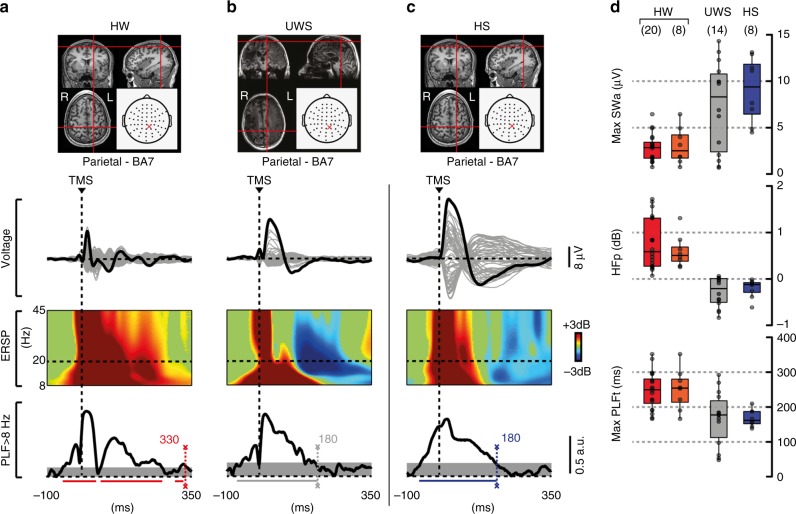
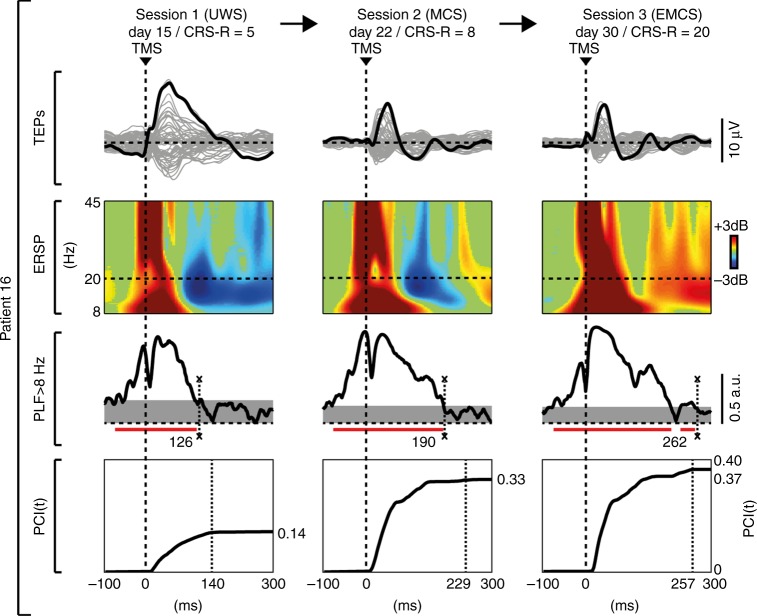
Unresponsive wakefulness syndrome (UWS) patients may retain intact portions of the thalamocortical system that are spontaneously active and reactive to sensory stimuli but fail to engage in complex causal interactions, resulting in loss of consciousness. Here, we show that loss of brain complexity after severe injuries is due to a pathological tendency of cortical circuits to fall into silence (OFF-period) upon receiving an input, a behavior typically observed during sleep. Spectral and phase domain analysis of EEG responses to transcranial magnetic stimulation reveals the occurrence of OFF-periods in the cortex of UWS patients (N = 16); these events never occur in healthy awake individuals (N = 20) but are similar to those detected in healthy sleeping subjects (N = 8). Crucially, OFF-periods impair local causal interactions, and prevent the build-up of global complexity in UWS. Our findings link potentially reversible local events to global brain dynamics that are relevant for pathological loss and recovery of consciousness.
Overview
The claims and statistics of this paper haven’t been checked yet.
Free: it reads the open-access text and checks the first 5 claims that cite a source we can check. Create a free account to check every claim.
Integrity signals
Registry
Cites
Statistics
Figures
Verification
Claims the paper makes
The claims and statistics of this paper haven’t been checked yet.
Free: it reads the open-access text and checks the first 5 claims that cite a source we can check. Create a free account to check every claim.
Claims other papers make about this one
Each is checked against this paper’s own text: does it say what the citing paper says it does?
The source backs part of the claim, not all of it — or backs it for a different population, condition or comparison.
In the citing paper
“Indeed, across various physiological and pathological conditions and experimental models, decreases and increases of PCI during loss and recovery of consciousness are invariably associated with the obliteration and resurgence of recurrent waves of activations.[36][37][38][39]”
From An integrative, multiscale view on neural theories of consciousness (2024) · cites this paper as [37]
Experimental — accuracy not yet measuredThe cited source says what the claim attributes to it.
In the citing paper
“Along these lines, the collapse of complexity observed experimentally during sleep and in unresponsive wakefulness syndrome (''vegetative'' state) patients has been associated with a breakdown of feedback interactions.37,[172][173][174]”
From An integrative, multiscale view on neural theories of consciousness (2024) · cites this paper as [37]
Self-check
Percentages, sums and reported differences re-computed from the paper’s own numbers.
The self-check needs the paper’s full text.
Citations
Cites
Delorme, A., & Makeig, S. (2004) · Journal of Neuroscience Methods · doi:10.1016/j.jneumeth.2003.10.009 · Cited by 24,371
Brain stem reticular formation and activation of the EEG
Moruzzi, G., & Magoun, H. W. (1949) · Electroencephalography and Clinical Neurophysiology · doi:10.1016/0013-4694(49)90219-9 · Cited by 4,307
Steriade, M., Nunez, A., & Amzica, F. (1993) · The Journal of Neuroscience · doi:10.1523/jneurosci.13-08-03252.1993 · Cited by 1,903
Giacino, J. T., Kalmar, K., & Whyte, J. (2004) · Archives of Physical Medicine and Rehabilitation · doi:10.1016/j.apmr.2004.02.033 · Cited by 1,874
Integrated information theory: from consciousness to its physical substrate
Tononi, G., Boly, M., Massimini, M., & Koch, C. (2016) · Nature Reviews Neuroscience · doi:10.1038/nrn.2016.44 · Cited by 1,727
Self-citationCellular and network mechanisms of rhythmic recurrent activity in neocortex
Sanchez-Vives, M. V., & McCormick, D. A. (2000) · Nature Neuroscience · doi:10.1038/79848 · Cited by 1,539
Breakdown of cortical effective connectivity during sleep
Massimini, M., Ferrarelli, F., Huber, R., Esser, S. K., Singh, H., & Tononi, G. (2005) · Science · doi:10.1126/science.1117256 · Cited by 1,534
Self-citationUnresponsive wakefulness syndrome: a new name for the vegetative state or apallic syndrome
the European Task Force on Disorders of Consciousness, Laureys, S., Celesia, G. G., Cohadon, F., Lavrijsen, J., León-Carrión, J., Sannita, W. G., Sazbon, L., Schmutzhard, E., von Wild, K. R., et al. (2010) · BMC Medicine · doi:10.1186/1741-7015-8-68 · Cited by 1,281
Self-citationSleep and arousal: thalamocortical mechanisms
McCormick, D. A., & Bal, T. (1997) · Annual Review of Neuroscience · doi:10.1146/annurev.neuro.20.1.185 · Cited by 1,267
A theoretically based index of consciousness independent of sensory processing and behavior
Casali, A. G., Gosseries, O., Rosanova, M., Boly, M., Sarasso, S., Casali, K. R., Casarotto, S., Bruno, M.-A., Laureys, S., Tononi, G., et al. (2013) · Science Translational Medicine · doi:10.1126/scitranslmed.3006294 · Cited by 1,246
Self-citation
Cited by
Recovery from disorders of consciousness: mechanisms, prognosis and emerging therapies
Edlow, B. L., Claassen, J., Schiff, N. D., & Greer, D. M. (2021) · Nature Reviews Neurology · doi:10.1038/s41582-020-00428-x · Cited by 731
Vucic, S., Stanley Chen, K.-H., Kiernan, M. C., Hallett, M., Benninger, D. H., Di Lazzaro, V., Rossini, P. M., Benussi, A., Berardelli, A., Currà, A., et al. (2023) · Clinical Neurophysiology · doi:10.1016/j.clinph.2023.03.010 · Cited by 212
Self-citationComanducci, A., Boly, M., Claassen, J., De Lucia, M., Gibson, R. M., Juan, E., Laureys, S., Naccache, L., Owen, A. M., Rosanova, M., et al. (2020) · Clinical Neurophysiology · doi:10.1016/j.clinph.2020.07.015 · Cited by 208
“In these cases, both qEEG and TMS/EEG can be employed as a dynamic read-out to longitudinally track the evolution of the state of thalamo-cortical circuits towards a desired endpoint, such as increasing probability of a MCS classification (qEEG) and a reduction of bistability associated with increasing complexity (TMS…”
InfluentialSelf-citationConsciousness and complexity: a consilience of evidence
Sarasso, S., Casali, A. G., Casarotto, S., Rosanova, M., Sinigaglia, C., & Massimini, M. (2021) · Neuroscience of Consciousness · doi:10.1093/nc/niab023 · Cited by 171
“…more relevant in the present context, a direct link between bistability and loss of complexity has also been demonstrated in brain-injured humans (Rosanova et al. 2018); not only the buildup of causal interactions and complexity is blocked by OFF-periods in unconscious patients but also both…”
Self-citationMethods for analysis of brain connectivity: An IFCN-sponsored review
Rossini, P. M., Di Iorio, R., Bentivoglio, M., Bertini, G., Ferreri, F., Gerloff, C., Ilmoniemi, R. J., Miraglia, F., Nitsche, M. A., Pestilli, F., et al. (2019) · Clinical Neurophysiology · doi:10.1016/j.clinph.2019.06.006 · Cited by 162
Self-citationManaging disorders of consciousness: the role of electroencephalography
Bai, Y., Lin, Y., & Ziemann, U. (2021) · Journal of Neurology · doi:10.1007/s00415-020-10095-z · Cited by 137
Belardinelli, P., Biabani, M., Blumberger, D. M., Bortoletto, M., Casarotto, S., David, O., Desideri, D., Etkin, A., Ferrarelli, F., Fitzgerald, P. B., et al. (2019) · Brain Stimulation · doi:10.1016/j.brs.2019.01.010 · Cited by 137
Self-citationCasarotto, S., Fecchio, M., Rosanova, M., Varone, G., D’Ambrosio, S., Sarasso, S., Pigorini, A., Russo, S., Comanducci, A., Ilmoniemi, R. J., et al. (2022) · Journal of Neuroscience Methods · doi:10.1016/j.jneumeth.2022.109486 · Cited by 132
Self-citationComolatti, R., Pigorini, A., Casarotto, S., Fecchio, M., Faria, G., Sarasso, S., Rosanova, M., Gosseries, O., Boly, M., Bodart, O., et al. (2019) · Brain Stimulation · doi:10.1016/j.brs.2019.05.013 · Cited by 131
“Protocols and informed consents were approved by the local ethical committees [16,17,31].”
BackgroundMethodSelf-citationLocal sleep-like cortical reactivity in the awake brain after focal injury
Sarasso, S., D’Ambrosio, S., Fecchio, M., Casarotto, S., Viganò, A., Landi, C., Mattavelli, G., Gosseries, O., Quarenghi, M., Laureys, S., et al. (2020) · Brain · doi:10.1093/brain/awaa338 · Cited by 128
Self-citationLee, M., Sanz, L. R. D., Barra, A., Wolff, A., Nieminen, J. O., Boly, M., Rosanova, M., Casarotto, S., Bodart, O., Annen, J., et al. (2022) · Nature Communications · doi:10.1038/s41467-022-28451-0 · Cited by 155
Self-citationBrain responsivity provides an individual readout for motor recovery after stroke
Tscherpel, C., Dern, S., Hensel, L., Ziemann, U., Fink, G. R., & Grefkes, C. (2020) · Brain · doi:10.1093/brain/awaa127 · Cited by 140
Zilio, F., Gomez-Pilar, J., Cao, S., Zhang, J., Zang, D., Qi, Z., Tan, J., Hiromi, T., Wu, X., Fogel, S., et al. (2021) · NeuroImage · doi:10.1016/j.neuroimage.2020.117579 · Cited by 114
Loss of consciousness reduces the stability of brain hubs and the heterogeneity of brain dynamics
López‐González, A., Panda, R., Ponce‐Alvarez, A., Zamora‐López, G., Escrichs, A., Martial, C., Thibaut, A., Gosseries, O., Kringelbach, M. L., Annen, J., et al. (2021) · Communications Biology · doi:10.1038/s42003-021-02537-9 · Cited by 129
Self-citationAn integrative, multiscale view on neural theories of consciousness
Storm, J. F., Klink, P. C., Aru, J., Senn, W., Goebel, R., Pigorini, A., Avanzini, P., Vanduffel, W., Roelfsema, P. R., Massimini, M., et al. (2024) · Neuron · doi:10.1016/j.neuron.2024.02.004 · Cited by 114
Self-citationLee, M., Baird, B., Gosseries, O., Nieminen, J. O., Boly, M., Postle, B. R., Tononi, G., & Lee, S.-W. (2019) · Scientific Reports · doi:10.1038/s41598-019-41274-2 · Cited by 90
Self-citationModulation of cortical slow oscillations and complexity across anesthesia levels
Dasilva, M., Camassa, A., Navarro-Guzman, A., Pazienti, A., Perez-Mendez, L., Zamora-López, G., Mattia, M., & Sanchez-Vives, M. V. (2021) · NeuroImage · doi:10.1016/j.neuroimage.2020.117415 · Cited by 90
Arena, A., Comolatti, R., Thon, S., Casali, A. G., & Storm, J. F. (2021) · eneuro · doi:10.1523/eneuro.0343-20.2021 · Cited by 66
“3-1), supporting the July/August 2021, 8(4) ENEURO.0343-20.2021 eNeuro.org idea that the OFF period can indeed interrupt the deterministic response to the stimulation, as previously observed in UWS and NREM sleep in humans (Pigorini et al., 2015; Rosanova et al., 2018).”
BackgroundMethodResultInfluentialSelf-citationLuppi, A. I., Mediano, P. A. M., Rosas, F. E., Allanson, J., Pickard, J. D., Williams, G. B., Craig, M. M., Finoia, P., Peattie, A. R. D., Coppola, P., et al. (2022) · Communications Biology · doi:10.1038/s42003-022-03330-y · Cited by 87
Sleep-like cortical dynamics during wakefulness and their network effects following brain injury
Massimini, M., Corbetta, M., Sanchez-Vives, M. V., Andrillon, T., Deco, G., Rosanova, M., & Sarasso, S. (2024) · Nature Communications · doi:10.1038/s41467-024-51586-1 · Cited by 82
“Notably, a similar dissociation can also occur in pathological conditions, such as severe brain injury 65 and stroke 68 .”
InfluentialSelf-citationThe role of neuronavigation in TMS–EEG studies: Current applications and future perspectives
Lioumis, P., & Rosanova, M. (2022) · Journal of Neuroscience Methods · doi:10.1016/j.jneumeth.2022.109677 · Cited by 73
Self-citationLuppi, A. I., Cain, J. A., Spindler, L. R. B., Górska, U., Toker, D., Hudson, A. E., Brown, E. N., Diringer, M. N., Stevens, R. D., Massimini, M., et al. (2021) · Neurocritical Care · doi:10.1007/s12028-021-01281-6 · Cited by 70
“Indeed, work in rodents and cortical slices alike has recently demonstrated that neuronal “off” periods determine a dramatic collapse of large-scale interactions and complexity during non-REM sleep and anesthesia [90–92], which can also be assessed by using EEG coupled with TMS in humans with brain damage [77, 78].”
BackgroundSelf-citationBridging Single Neuron Dynamics to Global Brain States
Goldman, J. S., Tort-Colet, N., di Volo, M., Susin, E., Bouté, J., Dali, M., Carlu, M., Nghiem, T.-A., Górski, T., & Destexhe, A. (2019) · Frontiers in Systems Neuroscience · doi:10.3389/fnsys.2019.00075 · Cited by 53
“, 2015) leading to causal global interactions (Rosanova et al., 2018).”
BackgroundOrigin and dynamics of cortical slow oscillations
Sanchez-Vives, M. V. (2020) · Current Opinion in Physiology · doi:10.1016/j.cophys.2020.04.005 · Cited by 65
Barbero‐Castillo, A., Mateos‐Aparicio, P., Porta, L. D., Camassa, A., Perez-Mendez, L., & Sanchez-Vives, M. V. (2021) · Journal of Neuroscience · doi:10.1523/jneurosci.1837-20.2021 · Cited by 62
“, 2018), resembling reported findings for LFP recordings in humans (Pigorini et al., 2015; Rosanova et al., 2018).”
BackgroundResultInfluentialComputational Models in Electroencephalography
Glomb, K., Cabral, J., Cattani, A., Mazzoni, A., Raj, A., & Franceschiello, B. (2021) · Brain Topography · doi:10.1007/s10548-021-00828-2 · Cited by 68
Sinitsyn, D. O., Poydasheva, A. G., Bakulin, I. S., Legostaeva, L. A., Iazeva, E. G., Sergeev, D. V., Sergeeva, A. N., Kremneva, E. I., Николаевна, М. С., Lagoda, D. Y., et al. (2020) · Brain Sciences · doi:10.3390/brainsci10120917 · Cited by 57
“This result replicates a previous study by [28], in which the loss of complexity after severe brain injury was related to a pathological propensity of cortical neurons to enter a state of inactivity (OFF-period) after receiving an input.”
ResultSelf-citationMeasuring Consciousness in the Intensive Care Unit
Edlow, B. L., Fecchio, M., Bodien, Y. G., Comanducci, A., Rosanova, M., Casarotto, S., Young, M. J., Li, J., Dougherty, D. D., Koch, C., et al. (2023) · Neurocritical Care · doi:10.1007/s12028-023-01706-4 · Cited by 50
Self-citationAmunts, K., Axer, M., Banerjee, S., Bitsch, L., Bjaalie, J. G., Brauner, P., Brovelli, A., Calarco, N., Carrère, M., Caspers, S., et al. (2024) · Imaging Neuroscience · doi:10.1162/imag_a_00137 · Cited by 83
“…• To identify and address key ethical and societal issues While we do not claim that there is a ‘one size fits all’ approach to addressing these aspects, we are convinced that discussions around the theme of digital brain research will help drive progress in the broader field of neuroscience.”
BackgroundLuppi, A. I., Uhrig, L., Tasserie, J., Signorelli, C. M., Stamatakis, E. A., Destexhe, A., Jarraya, B., & Cofré, R. (2024) · Nature Communications · doi:10.1038/s41467-024-46382-w · Cited by 62
“…need for both complexity and integration of brain signals in order to support consciousness, 78,103,104 represents one of the most accurate markers of consciousness currently available in humans, sensitive to boththeseverityofdisordersofconsciousnessandthetypeanddepth of anaesthesia 56,105 – 108 .”
Yang, Y., He, Q., Xia, X., Dang, Y., Chen, X., He, J., & Zhao, J. (2022) · CNS Neuroscience & Therapeutics · doi:10.1111/cns.13870 · Cited by 49
Parmigiani, S., Mikulan, E., Russo, S., Sarasso, S., Zauli, F. M., Rubino, A., Cattani, A., Fecchio, M., Giampiccolo, D., Lanzone, J., et al. (2022) · Brain stimulation · doi:10.1016/j.brs.2022.04.007 · Cited by 56
Self-citationReduced emergent character of neural dynamics in patients with a disrupted connectome
Luppi, A. I., Mediano, P. A. M., Rosas, F. E., Allanson, J., Pickard, J. D., Williams, G. B., Craig, M. M., Finoia, P., Peattie, A. R. D., Coppola, P., et al. (2023) · NeuroImage · doi:10.1016/j.neuroimage.2023.119926 · Cited by 49
Luppi, A. I., Cabral, J., Cofré, R., Mediano, P. A. M., Rosas, F. E., Qureshi, A. Y., Kuceyeski, A. F., Tagliazucchi, E., Raimondo, F., Deco, G., et al. (2023) · NeuroImage · doi:10.1016/j.neuroimage.2023.120162 · Cited by 47
“…residual consciousness, the Perturbational Complexity Index, relies on evaluating the EEG response to brief perturbations induced by pulses of transcranial magnetic stimulation ( Lee et al., 2022 ; Casali et al., 2013 ; Casarotto et al., 2016 ; Rosanova et al., 2018 ; Sarasso et al., 2021 ).”
BackgroundThalamic feedback shapes brain responses evoked by cortical stimulation in mice and humans
Russo, S., Claar, L. D., Furregoni, G., Marks, L. C., Krishnan, G. P., Zauli, F. M., Hassan, G., Solbiati, M., d’Orio, P., Mikulan, E., et al. (2025) · Nature Communications · doi:10.1038/s41467-025-58717-2 · Cited by 59
“…through electrical stimulation ( ES ), or non-invasively via transcranial magnetic stimulation ( TMS ) — are commonly used for functional mapping of brain networks 4 – 7 , the diagnosis of brain dysfunctions 8 – 10 , and the detection of consciousness in behaviorally unresponsive patients 11 – 16 .”
Self-citationOlsen, S. T., Basu, I., Bilge, M. T., Kanabar, A., Boggess, M. J., Rockhill, A. P., Gosai, A. K., Hahn, E. M., Peled, N., Ennis, M. M., et al. (2020) · Frontiers in Human Neuroscience · doi:10.3389/fnhum.2020.569973 · Cited by 45
Altered brain dynamics index levels of arousal in complete locked-in syndrome
Zilio, F., Gómez‐Pilar, J., Chaudhary, U., Fogel, S. M., Fomina, T., Synofzik, M., Schöls, L. J., Cao, S., Zhang, J., Huang, Z., et al. (2023) · Communications Biology · doi:10.1038/s42003-023-05109-1 · Cited by 42
Yang, Y., He, Q., Dang, Y., Xia, X., Xu, X., Chen, X., Zhao, J., & He, J. (2023) · Stroke and Vascular Neurology · doi:10.1136/svn-2022-001998 · Cited by 42
Harquel, S., Cadic‐Melchior, A., Morishita, T., Fleury, L., Witon, A., Ceroni, M., Brügger, J., Meyer, N. H., Evangelista, G. G., Egger, P., et al. (2024) · Stroke · doi:10.1161/strokeaha.123.045174 · Cited by 44
“17 In addition, GABA receptors were suggested to be the main actors involved in this atypical brain response.”
BackgroundCortico-thalamo-cortical interactions modulate electrically evoked EEG responses in mice
Claar, L. D., Rembado, I., Kuyat, J. R., Russo, S., Marks, L. C., Olsen, S. R., & Koch, C. (2023) · eLife · doi:10.7554/elife.84630.3 · Cited by 36
“, 2013) and is reminiscent of the bi-stability reported in deep sleep and in unconscious patients following a brief stimulation (Hill & Tononi, 2005; Pigorini et al., 2015; Rosanova et al., 2018; Timofeev et al., 2001a; Usami et al., 2015).”
BackgroundCholinergic Switch between Two Types of Slow Waves in Cerebral Cortex
Nghiem, T.-A. E., Tort‐Colet, N., Górski, T., Ferrari, U., Moghimyfiroozabad, S., Goldman, J. S., Teleńczuk, B., Capone, C., Bal, T., di Volo, M., et al. (2020) · Cerebral Cortex · doi:10.1093/cercor/bhz320 · Cited by 42
“stimulation (Rosanova et al. 2018) appears consistent with anesthesia-type slow waves, suggesting that adaptation-like mechanisms could play a critical role in impairing information”
BackgroundClinical Decision on Disorders of Consciousness After Acquired Brain Injury: Stepping Forward
Zheng, R., Qi, Z., Wang, Z., Xu, Z., Wu, X., & Mao, Y. Q. (2022) · Neuroscience Bulletin · doi:10.1007/s12264-022-00909-7 · Cited by 40
“Furthermore, recent evidence suggests that the transcranial magnetic stimulation (TMS)-EEG paradigm reveals sleep-like cortical OFF-periods in the sleep stages of UWS/VS patients, and not in healthy participants [82].”
BackgroundThe lack of temporal brain dynamics asymmetry as a signature of impaired consciousness states
Guzman, E. G., Perl, Y. S., Vohryzek, J., Escrichs, A., Manasova, D., Türker, B., Tagliazucchi, E., Kringelbach, M. L., Sitt, J. D., & Deco, G. (2023) · Interface Focus · doi:10.1098/rsfs.2022.0086 · Cited by 45
“Although integration between brain areas and visiting a large repertoire of brain states are the main characteristics for a healthy brain, they are impaired in DOC patients characterized by a loss of communication at the whole-brain level [43,46–49], a loss of functional complexity [34,50] and a loss of integration [4…”
Clinical utility and prospective of TMS–EEG: Updated review from an international expert group
Ziemann, U., Bai, Y., Baumer, F. M., Beck, M. M., Belardinelli, P., Belvisi, D., Bender, S., Bergmann, T. O., Bortoletto, M., Casarotto, S., et al. (2026) · Clinical Neurophysiology · doi:10.1016/j.clinph.2025.2111487 · Cited by 51
Self-citationIntracortical and intercortical networks in patients after stroke: a concurrent TMS-EEG study
Bai, Z., Zhang, J., & Fong, K. N. K. (2023) · Journal of NeuroEngineering and Rehabilitation · doi:10.1186/s12984-023-01223-7 · Cited by 32
“The latter type can be physiological in healthy people during non-rapid eye movement sleep and pathological in patients with unresponsive wakefulness syndrome [18].”
BackgroundResultPérez‐Zabalza, M., Reig, R., Manrique, J., Jercog, D., Winograd, M., Parga, N., & Sanchez-Vives, M. V. (2020) · The Journal of Physiology · doi:10.1113/jp279476 · Cited by 35
“The role of GABAA-Rs on the termination of Up states and the initiation of the Down states suggests that they may also have a role in the so-called Off-periods that disrupt local causal interactions in the cortical network in unresponsive wakefulness syndrome and natural sleep (Rosanova et al. 2018).”
BackgroundTinnitus: at a crossroad between phantom perception and sleep
Milinski, L., Nodal, F. R., Vyazovskiy, V. V., & Bajo, V. M. (2022) · Brain Communications · doi:10.1093/braincomms/fcac089 · Cited by 30
Crone, J. S., Lutkenhoff, E. S., Vespa, P. M., & Monti, M. M. (2020) · Neuroscience of Consciousness · doi:10.1093/nc/niaa008 · Cited by 32
Arai, N., Nakanishi, T., Nakajima, S., Li, X., Wada, M., Daskalakis, Z. J., Goodman, M. S., Blumberger, D. M., Mimura, M., & Noda, Y. (2021) · Neuroscience & Biobehavioral Reviews · doi:10.1016/j.neubiorev.2021.09.029 · Cited by 26
Liu, Y., Li, Z., & Bai, Y. (2023) · Frontiers in Neuroscience · doi:10.3389/fnins.2022.1024278 · Cited by 33
“VS/UWS patients showed a specific off-period and a shorter causal effect duration than those of healthy subjects (Rosanova et al., 2018).”
BackgroundInfluentialMorattel, B., Mustaki, L., Montemurro, M., Letovanec, I., Durham, A., Becce, F., Omoumi, P., Summa, P. G. D., Matter, M., Rüdiger, H. A., et al. (2020) · European Journal of Surgical Oncology · doi:10.1016/j.ejso.2020.01.025 · Cited by 26
Frohlich, J., Bird, L. M., Dell’Italia, J., Johnson, M. A., Hipp, J. F., & Monti, M. M. (2020) · Neuroscience of Consciousness · doi:10.1093/nc/niaa005 · Cited by 25
Low frequency oscillations drive EEG’s complexity changes during wakefulness and sleep
González, J., Mateos, D. M., Cavelli, M., Mondino, A., Pascovich, C., Torterolo, P., & Rubido, N. (2022) · Neuroscience · doi:10.1016/j.neuroscience.2022.04.025 · Cited by 29
Deterministic and Stochastic Components of Cortical Down States: Dynamics and Modulation
Camassa, A., Galluzzi, A., Mattia, M., & Sanchez-Vives, M. V. (2022) · Journal of Neuroscience · doi:10.1523/jneurosci.0914-22.2022 · Cited by 29
A measure centrality index for systematic empirical comparison of consciousness theories
Chis-Ciure, R., Melloni, L., & Northoff, G. (2024) · Neuroscience & Biobehavioral Reviews · doi:10.1016/j.neubiorev.2024.105670 · Cited by 22
“…2016, 2015; Hutchison et al., 2014; Kung et al., 2019; Lee et al., 2022, 2009; Marshall et al., 2016; Mikulan et al., 2018; Monti et al., 2013; Nir and Tononi, 2010; Noirhomme et al., 2010; Rosanova et al., 2018, 2012; Sanders et al., 2018, 2012; Schartner et al., 2017, 2015; Shin et al., 2013).”
Casarotto, S., Hassan, G., Rosanova, M., Sarasso, S., Derchi, C., Trimarchi, P. D., Viganò, A., Russo, S., Fecchio, M., Devalle, G., et al. (2024) · European Journal of Neuroscience · doi:10.1111/ejn.16299 · Cited by 26
“…the one hand, bistability is known to underlie slow (delta) EEG waves (Sanchez-Vives et al., 2017), and on the other hand, it plays a critical role in breaking down the chain of causal interactions, thus leading to low PCI values (Arena et al., 2021; D ’ Andola et al., 2018; Rosanova et al., 2018).”
BackgroundSelf-citationLocal neuronal sleep after stroke: The role of cortical bistability in brain reorganization
Tscherpel, C., Mustin, M., Massimini, M., Paul, T., Ziemann, U., Fink, G. R., & Grefkes, C. (2024) · Brain stimulation · doi:10.1016/j.brs.2024.07.008 · Cited by 23
Self-citationZheng, Z. S., & Monti, M. M. (2022) · Frontiers in Neuroanatomy · doi:10.3389/fnana.2022.960439 · Cited by 25
“, 2015), whereas the GPe connectivity to thalamus and frontal cortex might be more important for maintaining the appropriate balance between excitation and inhibition that is required for the emergence of complex pattern of casual interactions among cortical neurons (Rosanova et al., 2018; Lutkenhoff et al., 2020a).”
BackgroundCattani, A., Galluzzi, A., Fecchio, M., Pigorini, A., Mattia, M., & Massimini, M. (2023) · eneuro · doi:10.1523/eneuro.0435-22.2023 · Cited by 21
“Second and third columns show results related to TMS-EEG re-edited from (Rosanova et al., 2018) encompassing healthy wakefulness (W-red), healthy NREM sleep (NREM-blue) and UWS patients during wakefulness (grey W).”
InfluentialSelf-citationMartino, E. D., Casali, A. G., Casarotto, S., Hassan, G., Rosanova, M., Graven‐Nielsen, T., & de Andrade, D. C. (2023) · Cerebral Cortex · doi:10.1093/cercor/bhad259 · Cited by 25
Self-citationLutkenhoff, E. S., Johnson, M. A., Casarotto, S., Massimini, M., & Monti, M. M. (2020) · Brain stimulation · doi:10.1016/j.brs.2020.07.012 · Cited by 28
“In light of the known associations between specific cortical and subcortical circuits and depth of DOC impairment [31,32,34,55,56], we perform a novel secondary analysis of previously published data [51,52,57] to explore whether the PCI is related to specific, localized, brain pathology (i.e., cortical ribbon and subc…”
BackgroundMethodInfluentialSelf-citationM-current modulation of cortical slow oscillations: Network dynamics and computational modeling
Porta, L. D., Barbero‐Castillo, A., Sanchez‐Sanchez, J. M., & Sanchez-Vives, M. V. (2023) · PLoS Computational Biology · doi:10.1371/journal.pcbi.1011246 · Cited by 25
“Moreover, slow oscillations have been observed to arise in certain pathological conditions, such as disorders of consciousness [4], while the presence of delta waves during wakefulness has long been regarded as a diagnostic biomarker for lesions such as stroke [5].”
BackgroundMensen, A., Pigorini, A., Facchin, L., Schöne, C., D’Ambrosio, S., Jendoubi, J., Jaramillo, V., Chiffi, K., Eberhard‐Moscicka, A. K., Sarasso, S., et al. (2018) · Journal of Neuroscience Methods · doi:10.1016/j.jneumeth.2018.12.011 · Cited by 26
“(Rosanova et al., 2012, 2018).”
Self-citationEagleman, S. L., Chander, D., Reynolds, C., Ouellette, N. T., & MacIver, M. B. (2019) · PLoS ONE · doi:10.1371/journal.pone.0223921 · Cited by 25
Gallucci, A., Varoli, E., Mauro, L. D., Hassan, G., Rovida, M., Comanducci, A., Casarotto, S., Re, V. L., & Lauro, L. J. R. (2023) · European Journal of Neuroscience · doi:10.1111/ejn.16149 · Cited by 24
Self-citationGutzen, R., Bonis, G. D., Luca, C. D., Pastorelli, E., Capone, C., Mascaro, A. L. A., Resta, F., Manasanch, A., Pavone, F. S., Sanchez-Vives, M. V., et al. (2024) · Cell Reports Methods · doi:10.1016/j.crmeth.2023.100681 · Cited by 21
“Such a generalized approach may be applied to different types of propagating fluctuating activity associated with different brain states, including various expressions of slow waves 54,55 (as we do here), burst suppressions, 56,57 or waves in higher frequencies.”
Complex slow waves in the human brain under 5-MeO-DMT
Blackburne, G., McAlpine, R. G., Fabus, M. S., Liardi, A., Kamboj, S. K., Mediano, P. A. M., & Skipper, J. I. (2025) · Cell Reports · doi:10.1016/j.celrep.2025.116040 · Cited by 34
“23,24 Thus, these results with 5-MeO-DMT challenge the idea that amplified low-frequency rhythms have a one-to-one correspondence with reductions in conscious level.”
Lei, L., Liu, K., Yang, Y., Doubliez, A., Hu, X., Xu, Y., & Zhou, Y. (2021) · Clinical Neurophysiology · doi:10.1016/j.clinph.2021.08.027 · Cited by 21
Neuropsychology of Consciousness: Some History and a Few New Trends
Berlucchi, G., & Marzi, C. A. (2019) · Frontiers in Psychology · doi:10.3389/fpsyg.2019.00050 · Cited by 20
Arena, A., Juel, B. E., Comolatti, R., Thon, S. H., & Storm, J. F. (2022) · Neuroscience of Consciousness · doi:10.1093/nc/niac004 · Cited by 17
Psychedelics and disorders of consciousness: the current landscape and the path forward
Cardone, P., Alnagger, N., Annen, J., Bicego, A., Gosseries, O., & Martial, C. (2024) · Neuroscience of Consciousness · doi:10.1093/nc/niae025 · Cited by 20
“…perturbation such as a transcranial magnetic stimulation (TMS) pulse (Casali et al. 2013) or an intracortical stimulation (Como-latti et al. 2019), and that decreases during general anaesthesia, sleep, and DoC (Casali et al. 2013, Casarotto et al. 2015, Rosanova et al. 2018, Comolatti et al. 2019).”
BackgroundSelf-citationWillacker, L., Raiser, T. M., Bassi, M., Bender, A., Comanducci, A., Rosanova, M., Sobel, N., Arzi, A., Belloli, L. M. L., Casarotto, S., et al. (2022) · BMC Neurology · doi:10.1186/s12883-022-02958-x · Cited by 17
“To evaluate the occurrence of pathological OFF-periods that may disrupt the emergence of global complex corticocortical interactions, time-frequency decomposition of TEPs is computed as described in [40].”
MethodSelf-citationBinder, M., Górska, U., Pipinis, E., Voicikas, A., & Griškova-Bulanova, I. (2020) · NeuroImage Clinical · doi:10.1016/j.nicl.2020.102261 · Cited by 21
Billeri, L., Filoni, S., Russo, E. F., Portaro, S., Militi, D., Calabrò, R. S., & Naro, A. (2020) · Brain Sciences · doi:10.3390/brainsci10010042 · Cited by 13
“In this regard, the loss of brain complexity after severe injuries was shown to depend on a pathological tendency of cortical circuits to fall into silence (OFF-period) upon receiving an input (a behavior typically observed during sleep) [129].”
BackgroundGórska, U., & Binder, M. (2019) · International Journal of Psychophysiology · doi:10.1016/j.ijpsycho.2019.08.001 · Cited by 16
Donati, F. L., Mayeli, A., Sharma, K., Janssen, S. A., LaGoy, A. D., Casali, A. G., & Ferrarelli, F. (2023) · Brain Sciences · doi:10.3390/brainsci13040534 · Cited by 12
Self-citationHönigsperger, C., Storm, J. F., & Arena, A. (2023) · European Journal of Neuroscience · doi:10.1111/ejn.16108 · Cited by 16
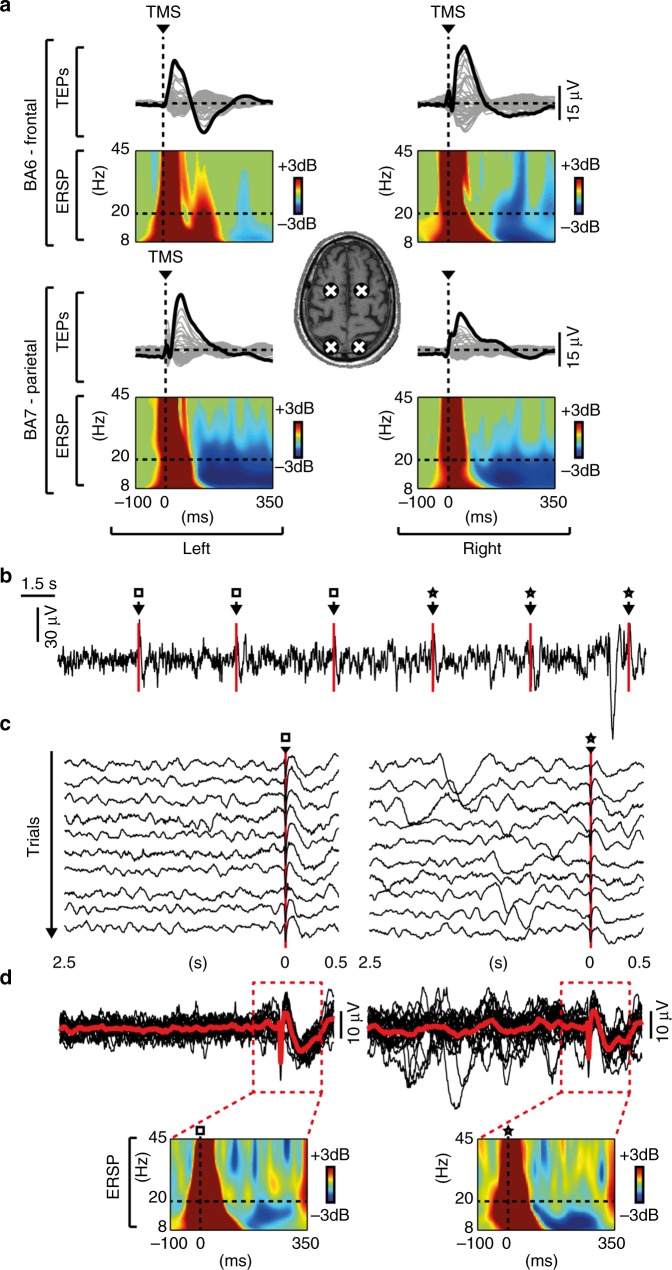
“During wakefulness, stimulation triggered long-lasting, phase-locked responses, lasting up to 230 ms, across several cortical areas (Figure 2a, bottom), similar to previous results observed in rats (Arena et al., 2021) and humans (Pigorini et al., 2015; Rosanova et al., 2018).”
ResultMoser, J., Bensaid, S., Kroupi, E., Schleger, F., Wendling, F., Ruffini, G., & Preissl, H. T. (2019) · Frontiers in Systems Neuroscience · doi:10.3389/fnsys.2019.00023 · Cited by 22
“, Propofol and Ketamine), whereby in both cases patients are behaviorally unresponsive but in case of Ketamine they report vivid dreams (e.g., Casali et al., 2013; Sarasso et al., 2015; Casarotto et al., 2016; Bodart et al., 2017; Rosanova et al., 2018).”
BackgroundAssessing the state of consciousness for individual patients using complex, statistical stimuli
Górska, U., Rupp, A., Celikel, T., & Englitz, B. (2020) · NeuroImage Clinical · doi:10.1016/j.nicl.2020.102471 · Cited by 12
“Recently, it was proven that cortical activity in UWS patients exhibits a pathological tendency to fall into periods of silence during down states, preventing the buildup of any complex response upon receiving 630 an input (Rosanova et al., 2018).”
Paths to Oblivion: Common Neural Mechanisms of Anaesthesia and Disorders of ConsciousnessPreprint
Luppi, A. I., Mediano, P. A. M., Rosas, F. E., Allanson, J. E., Pickard, J. D., Williams, G. B., Craig, M. M., Finoia, P., Peattie, A. R. D., Coppola, P., et al. (2021) · bioRxiv (Cold Spring Harbor Laboratory) · doi:10.1101/2021.02.14.431140 · Cited by 12
Spatiotemporal network dynamics and structural correlates in the human cerebral cortex in vitro
Covelo, J., Camassa, A., Sanchez‐Sanchez, J. M., Manasanch, A., Porta, L. D., Cancino-Fuentes, N., Barbero‐Castillo, A., Robles, R. M., Bosch, M., Tapia‐González, S., et al. (2025) · Progress in Neurobiology · doi:10.1016/j.pneurobio.2025.102719 · Cited by 14
“Additionally, it creates an opportunity to investigate the mechanisms behind slow oscillations associated with pathological conditions, such as disorders of consciousness (Rosanova et al., 2018) or brain lesions (Baldassarre et al., 2016; Russo et al., 2021).”
Khorev, V. S., Kurkin, S., Николаевна, П. Е., Radutnaya, M., Bondar, E., Mayorova, L. A., & Hramov, A. E. (2025) · The European Physical Journal Special Topics · doi:10.1140/epjs/s11734-024-01454-2 · Cited by 11
Hemispherotomy leads to persistent sleep-like slow waves in the isolated cortex of awake humans
Colombo, M. A., Favaro, J., Mikulan, E., Pigorini, A., Zauli, F. M., Sartori, I., d’Orio, P., Castana, L., Toldo, I., Sartori, S., et al. (2025) · PLoS Biology · doi:10.1371/journal.pbio.3003060 · Cited by 13
Self-citationMoffet, E. W., Verhagen, R., Jones, B., Findlay, G., Juan, E., Bugnon, T., Mensen, A., Aparicio, M. K., Maganti, R. K., Struck, A. F., et al. (2020) · Frontiers in Systems Neuroscience · doi:10.3389/fnsys.2020.549309 · Cited by 11
“In neurological disease, focal SWA is a non-specific EEG finding, also occurring secondary to deafferentation in brain lesions caused by stroke or traumatic brain injury—in which case it may be independent of sleep-wakefulness processes (Dunkley et al., 2015; Rabiller et al., 2015; Rosanova et al., 2018).”
BackgroundSelf-citationSound disrupts sleep-associated brain oscillations in rodents in a meaning-dependent manner
van Kronenberg, P., Milinski, L., Kruschke, Z., & de Hoz, L. (2022) · Scientific Reports · doi:10.1038/s41598-022-09457-6 · Cited by 9
Assadzadeh, S., Annen, J., Sanz, L. R. D., Barra, A., Bonin, E., Thibaut, A., Boly, M., Laureys, S., Gosseries, O., & Robinson, P. A. (2023) · Journal of Neuroscience Methods · doi:10.1016/j.jneumeth.2023.109958 · Cited by 11
Self-citationEffect of Propofol on Heart Rate and Its Coupling to Cortical Slow Waves in Humans
Fabus, M. S., SLEIGH, J. W., & Warnaby, C. E. (2023) · Anesthesiology · doi:10.1097/aln.0000000000004795 · Cited by 11
“14 18 In this study, we first performed an advanced secondary analysis of EEG and electrocardiographic data collected in n = 16 healthy volunteers undergoing a slow propofol infusion up to 4 μg/ml estimated effect-site concentration.”
MethodLiaukovich, K. M., Sazhin, S., Дмитриевич, Б. П., & Ukraintseva, Y. V. (2022) · International Journal of Molecular Sciences · doi:10.3390/ijms231911785 · Cited by 8
Neural models for detection and classification of brain states and transitions
Marin‐Llobet, A., Manasanch, A., Porta, L. D., Torao‐Angosto, M., & Sanchez-Vives, M. V. (2025) · Communications Biology · doi:10.1038/s42003-025-07991-3 · Cited by 15
“These oscillations rhythmically shift between active “ Up states ” and quiescent “ Downstates ” 24 (alsoknownasOff-periods 8 ), leadingtoa reductioninboth information processing and spatiotemporal complexity 25 – 30 .”
Reduction of sleep-like perilesional slow waves and clinical evolution after stroke: A TMS-EEG study
Sarasso, S., D’Ambrosio, S., Russo, S., Bernardelli, L., Hassan, G., Comanducci, A., Giampaulis, P. D., Vecchia, L. A. D., Lanzone, J., & Massimini, M. (2025) · Clinical Neurophysiology · doi:10.1016/j.clinph.2025.2110746 · Cited by 11
Self-citationComplex slow waves radically reorganise human brain dynamics under 5-MeO-DMTPreprint
Blackburne, G., McAlpine, R. G., Fabus, M. S., Liardi, A., Kamboj, S. K., Mediano, P. A. M., & Skipper, J. I. (2024) · bioRxiv (Cold Spring Harbor Laboratory) · doi:10.1101/2024.10.04.616717 · Cited by 8
“The amplification of low-frequency oscillations is thought to be a domain-general indicator of loss of consciousness beyond SWS, such as the period of slow-wave activity saturation (SWAS) in general anaesthesia [21], and coma patients being diagnosed with unresponsive wakefulness syndrome [22, 23].”
BackgroundLocal brain-state dependency of effective connectivity: a pilot TMS–EEG study
Granö, I., Mutanen, T. P., Tervo, A. E., Nieminen, J. O., Souza, V. H., Fecchio, M., Rosanova, M., Lioumis, P., & Ilmoniemi, R. J. (2022) · Open Research Europe · doi:10.12688/openreseurope.14634.1 · Cited by 7
Self-citationSleep disrupts complex spiking dynamics in the neocortex and hippocampus
González, J., Cavelli, M., Tort, A. B. L., Torterolo, P., & Rubido, N. (2023) · PLoS ONE · doi:10.1371/journal.pone.0290146 · Cited by 11
Comolatti, R., Pigorini, A., Casarotto, S., Fecchio, M., Faria, G., Sarasso, S., Rosanova, M., Gosseries, O., Boly, M., Bodart, O., et al. (2018) · bioRxiv (Cold Spring Harbor Laboratory) · doi:10.1101/445882 · Cited by 11
Self-citationCardone, P., Bodart, O., Kirsch, M., Sanfilippo, J., Virgillito, A., Martial, C., Simon, J., Wannez, S., Sanders, R., Laureys, S., et al. (2023) · British Journal of Anaesthesia · doi:10.1016/j.bja.2023.05.030 · Cited by 7
Self-citationComolatti, R., Hassan, G., Mikulan, E., Russo, S., Colombo, M. A., Litterio, E., Furregoni, G., D’Ambrosio, S., Fecchio, M., Parmigiani, S., et al. (2025) · Brain stimulation · doi:10.1016/j.brs.2025.07.016 · Cited by 11
Self-citationZhang, Y., Wan, X., Wang, Y., Li, X., Du, J., Yan, X., Zhu, Z., Lǐ, Y., & Song, W. (2025) · CNS Neuroscience & Therapeutics · doi:10.1111/cns.70583 · Cited by 5
Evoked slow oscillations and dynamic network reorganization after stroke
Tscherpel, C., Mustin, M., Rosjat, N., Mais, L.-T., Ziemann, U., Fink, G. R., Daun, S., & Grefkes, C. (2025) · Brain Communications · doi:10.1093/braincomms/fcaf391 · Cited by 9
“22,34,39 Recordings with either < 90 artefact-free trials or > 10 poor channels were excluded from further analyses.”
H‐current modulation of cortical Up and Down states
Porta, L. D., Barbero‐Castillo, A., Sanchez‐Sanchez, J. M., Cancino-Fuentes, N., & Sanchez-Vives, M. V. (2025) · The Journal of Physiology · doi:10.1113/jp287616 · Cited by 7
“On the other hand, slow oscillations also manifest in clinical conditions, emerging as a result of pathological states (Rosanova et al., 2018; Sanchez-Vives et al., 2017; van der Lander et al., 2024), or around brain lesions (Massimini et al., 2024; Russo et al., 2021; Sarasso et al., 2020).”
Cortico-thalamo-cortical interactions modulate electrically evoked EEG responses in micePreprint
Claar, L. D., Rembado, I., Kuyat, J. R., Russo, S., Marks, L. C., Olsen, S. R., & Christof Koch, A. (2022) · bioRxiv (Cold Spring Harbor Laboratory) · doi:10.1101/2022.07.22.501195 · Cited by 5
Metadata
- Authors
- Rosanova, M., Fecchio, M., Casarotto, S., Sarasso, S., Casali, A. G., Pigorini, A., Comanducci, A., Seregni, F., Devalle, G., Citerio, G., Bodart, O., Boly, M., Gosseries, O., Laureys, S., & Massimini, M.
- Affiliations
- University of Milan (IT)
- Universidade Federal de São Paulo (BR)
- Cambridge University Hospitals NHS Foundation Trust (GB)
- Don Carlo Gnocchi Foundation (IT)
- University of Milano-Bicocca (IT)
- University of Liège (BE)
- University of Wisconsin–Madison (US)
- Corresponding author
- Massimini, M.
- ORCID
- Venue
- Nature Communications
- Published
- 2018-10-24
- Volume
- 9
- Issue
- 1
- Pages
- 4427-4427
- ISSN
- 2041-1723 (ISSN-L)
- PMC
- PMC6200777
- OpenAlex
- W2896619892
- Semantic Scholar
- ed93b4c5a4df0d290131e05674451e4cd48ae231
- Cited by
- 167
- References
- 75
- Citations by year
- 2026: 16 · 2025: 27 · 2024: 18 · 2023: 33 · 2022: 23 · 2021: 15 · 2020: 19 · 2019: 13 · 2018: 3
- FWCI
- 9.75
- Type
- journal article
- Language
- en
- Open access
- gold
- doi.org
- Licence
- cc-by
- creativecommons.org/licenses/by/4.0 (tdm)
- creativecommons.org/licenses/by/4.0 (vor)
- Locations
- Nature Communications (publishedVersion, cc-by)
- Europe PMC (PubMed Central) (publishedVersion, other-oa)
- PubMed Central (publishedVersion, cc-by)
- PubMed (publishedVersion)
- RePEc: Research Papers in Economics (submittedVersion)
- Archivio Istituzionale della Ricerca (Universita Degli Studi Di Milano) (submittedVersion, other-oa)
- BOA (University of Milano-Bicocca) (submittedVersion, other-oa)
- DOAJ (DOAJ: Directory of Open Access Journals) (submittedVersion, cc-by-sa)
- DOAJ (DOAJ: Directory of Open Access Journals) (submittedVersion)
- ORBi (University of Liège) (submittedVersion, other-oa)
- Zenodo (CERN European Organization for Nuclear Research) (submittedVersion, cc-by)
- Funders
- National Science Foundation (720270, 785907)
- James S. McDonnell Foundation
- Tiny Blue Dot Foundation
- European Commission (720270, HORIZON2020, H2020, 785907, 686764)
- Schweizerischer Nationalfonds zur Förderung der Wissenschaftlichen Forschung (720270, CRSII3_160803/1, 160803)
- Fundação de Amparo à Pesquisa do Estado de São Paulo (16/08263-9)
- Ministero della Salute (GR-2011-02352031)
- Horizon 2020 Framework Programme (686764, No. 720270, 720270, 785907)
- Topics
- Health Sciences › Medicine › Clinical Neurology › Traumatic Brain Injury Research
- Life Sciences › Neuroscience › Cognitive Neuroscience › Neural dynamics and brain function
- Life Sciences › Neuroscience › Cognitive Neuroscience › Functional Brain Connectivity Studies
- Keywords
- vegetative state, thalamocortical system, transcranial magnetic stimulation, EEG responses, causal interaction, brain complexity, loss of consciousness, consciousness recovery
- MeSH terms
- Brain, Electroencephalography, Humans, Sleep, Wakefulness, Persistent Vegetative State
About these checks
Registry, retraction, Cites and statistics results are computed, not judged, with one exception: a printed reference that no index lists is read once by a model before it counts as a citation error. Claims are extracted by a model and kept only when their quote appears verbatim in the text; each cited source is then checked, with a model’s help, for whether it says what the claim relies on. Those verdicts can be wrong — read the claim’s quote and the cited source before relying on one.
Statistics and arithmetic are recomputed, not judged.
Confidence bands are shown only for fields calibrated on our annotated test set. None is calibrated yet, so no band is shown.
What counts as a claim ›How we measure confidence ›How we check this ›
Are you an author, or do you see a problem with this page? Request a review
Data sources
Bibliographic data: Semantic Scholar, OpenAlex, Crossref.
Contains information from the Semantic Scholar Academic Graph Datasets, made available under the ODC Attribution License (ODC-BY 1.0).
Semantic Scholar’s data is described in: Kinney, R., et al. (2023). The Semantic Scholar Open Data Platform. arXiv:2301.10140.
