

Structure and pro-toxic mechanism of the human Hsp90/PPIase/Tau complex
Open accessThe DOI matches its Crossref record; 78 of the 78 references it cites were found in a registry or an index.
Abstract
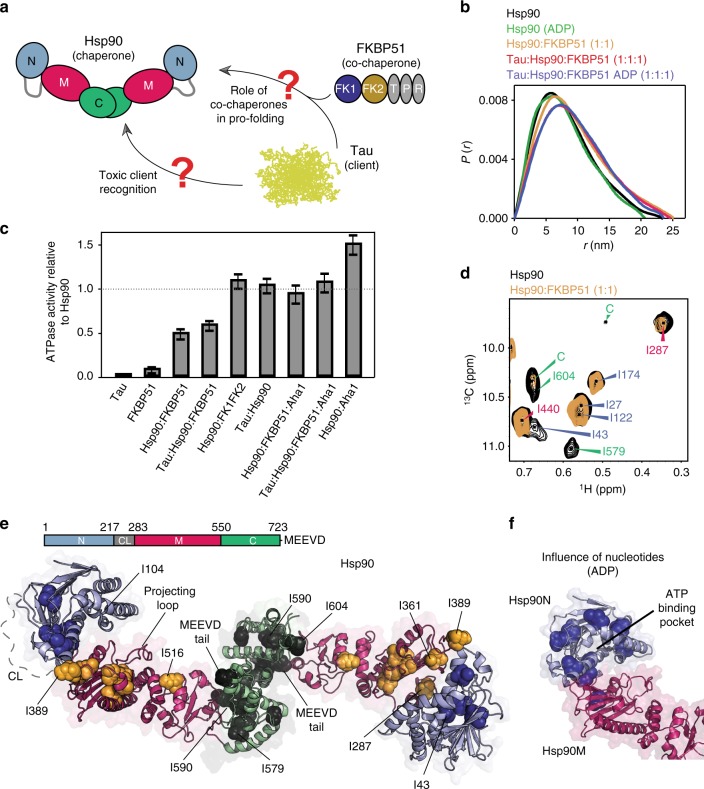
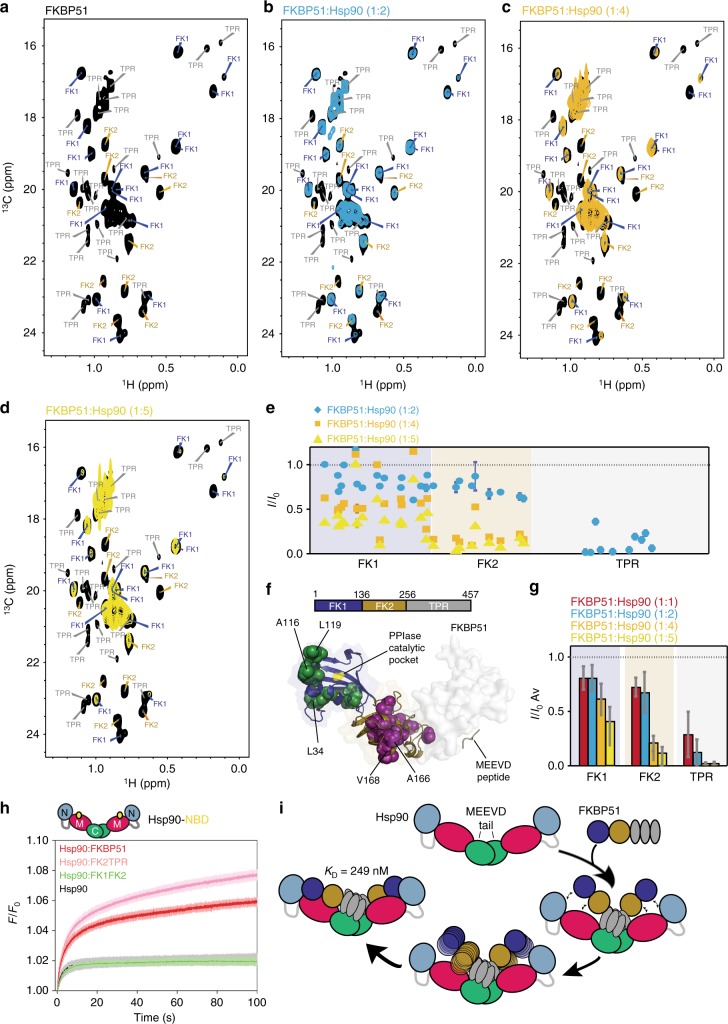
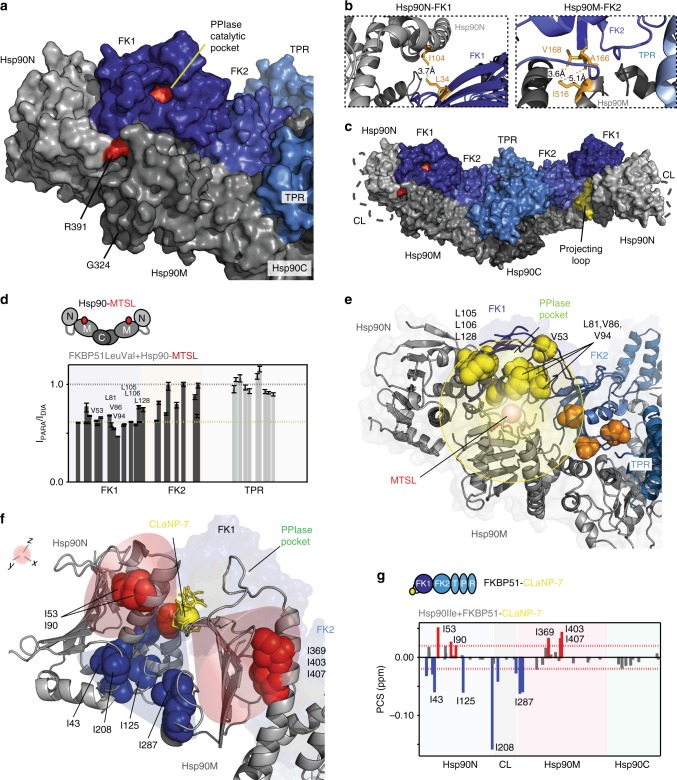
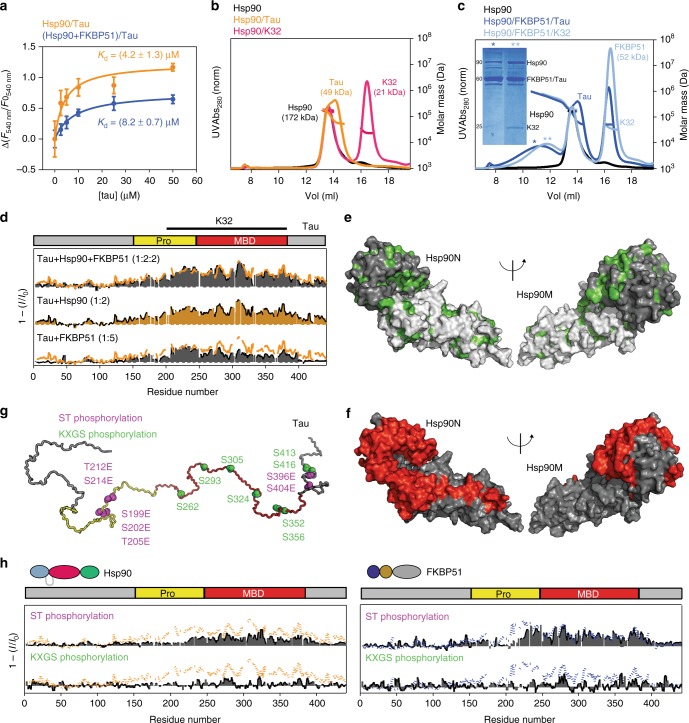
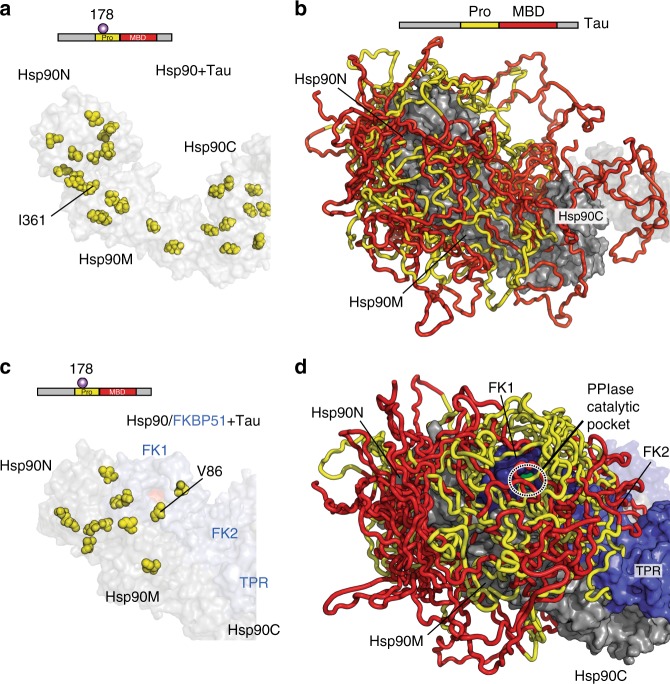
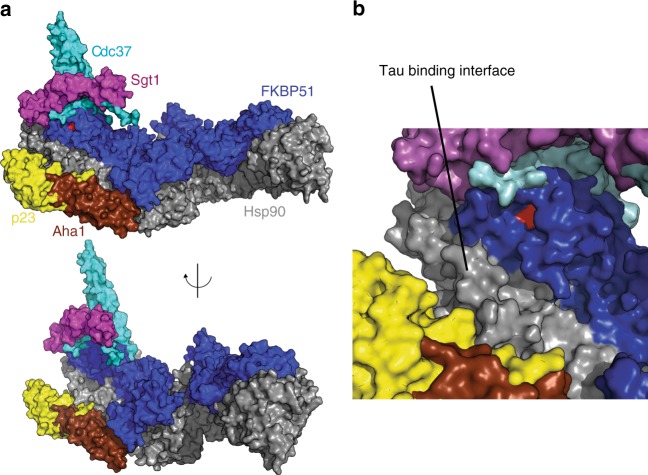
The molecular chaperone Hsp90 is critical for the maintenance of cellular homeostasis and represents a promising drug target. Despite increasing knowledge on the structure of Hsp90, the molecular basis of substrate recognition and pro-folding by Hsp90/co-chaperone complexes remains unknown. Here, we report the solution structures of human full-length Hsp90 in complex with the PPIase FKBP51, as well as the 280 kDa Hsp90/FKBP51 complex bound to the Alzheimer’s disease-related protein Tau. We reveal that the FKBP51/Hsp90 complex, which synergizes to promote toxic Tau oligomers in vivo, is highly dynamic and stabilizes the extended conformation of the Hsp90 dimer resulting in decreased Hsp90 ATPase activity. Within the ternary Hsp90/FKBP51/Tau complex, Hsp90 serves as a scaffold that traps the PPIase and nucleates multiple conformations of Tau’s proline-rich region next to the PPIase catalytic pocket in a phosphorylation-dependent manner. Our study defines a conceptual model for dynamic Hsp90/co-chaperone/client recognition.
Overview
The claims and statistics of this paper haven’t been checked yet.
Free: it reads the open-access text and checks the first 5 claims that cite a source we can check. Create a free account to check every claim.
Integrity signals
Registry
Cites
Statistics
Figures
Verification
Claims the paper makes
The claims and statistics of this paper haven’t been checked yet.
Free: it reads the open-access text and checks the first 5 claims that cite a source we can check. Create a free account to check every claim.
Claims other papers make about this one
Each is checked against this paper’s own text: does it say what the citing paper says it does?
The cited source says what the claim attributes to it.
In the citing paper
“By NMR, Hsp90 is identified to interact with tau transiently in the apo state and function as a scaffold in complex with FKBP51”
From The structure of an Hsp90-immunophilin complex reveals cochaperone recognition of the client maturation state (2021) · cites this paper as Oroz et al., 2018
Self-check
Percentages, sums and reported differences re-computed from the paper’s own numbers.
The self-check needs the paper’s full text.
Citations
Cites
Neuropathological stageing of Alzheimer-related changes.
Braak, H., & Braak, E. (1991) · Acta Neuropathologica · doi:10.1007/bf00308809 · Cited by 16,123
NMRPipe: A multidimensional spectral processing system based on UNIX pipes
Delaglio, F., Grzesiek, S., Vuister, G., Zhu, G., Pfeifer, J., & Bax, A. (1995) · Journal of Biomolecular NMR · doi:10.1007/bf00197809 · Cited by 15,965
Molecular chaperones in protein folding and proteostasis
Hartl, F. U., Bracher, A., & Hayer-Hartl, M. (2011) · Nature · doi:10.1038/nature10317 · Cited by 3,381
Protein Misfolding, Amyloid Formation, and Human Disease: A Summary of Progress Over the Last Decade
Chiti, F., & Dobson, C. M. (2017) · Annual Review of Biochemistry · doi:10.1146/annurev-biochem-061516-045115 · Cited by 2,629
Tau in physiology and pathology
Wang, Y., & Mandelkow, E. (2016) · Nature Reviews Neuroscience · doi:10.1038/nrn.2015.1 · Cited by 2,251
Self-citationClassification of Intrinsically Disordered Regions and Proteins
van der Lee, R., Buljan, M., Lang, B., Weatheritt, R. J., Daughdrill, G. W., Dunker, A. K., Fuxreiter, M., Gough, J., Gsponer, J., Jones, D. T., et al. (2014) · Chemical Reviews · doi:10.1021/cr400525m · Cited by 2,174
HSP90 at the hub of protein homeostasis: emerging mechanistic insights
Taipale, M., Jarosz, D. F., & Lindquist, S. (2010) · Nature Reviews Molecular Cell Biology · doi:10.1038/nrm2918 · Cited by 1,818
Molecular Chaperones and Protein Quality Control
Bukau, B., Weissman, J., & Horwich, A. (2006) · Cell · doi:10.1016/j.cell.2006.04.014 · Cited by 1,557
Schopf, F. H., Biebl, M. M., & Buchner, J. (2017) · Nature Reviews Molecular Cell Biology · doi:10.1038/nrm.2017.20 · Cited by 1,540
The HADDOCK web server for data-driven biomolecular docking
de Vries, S. J., van Dijk, M., & Bonvin, A. M. J. J. (2010) · Nature Protocols · doi:10.1038/nprot.2010.32 · Cited by 1,400
Cited by
Nguyen, P. H., Ramamoorthy, A., Sahoo, B. R., Zheng, J., Faller, P., Straub, J. E., Dominguez, L., Shea, J.-E., Dokholyan, N. V., De Simone, A., et al. (2021) · Chemical Reviews · doi:10.1021/acs.chemrev.0c01122 · Cited by 678
Tau Protein Interaction Partners and Their Roles in Alzheimer’s Disease and Other Tauopathies
Sinsky, J., Pichlerova, K., & Hanes, J. (2021) · International Journal of Molecular Sciences · doi:10.3390/ijms22179207 · Cited by 220
Diffractive Nonlocal Metasurfaces
Overvig, A., & Alù, A. (2022) · Laser & Photonics Reviews · doi:10.1002/lpor.202100633 · Cited by 206
Structural and functional complexity of HSP90 in cellular homeostasis and disease
Chiosis, G., Digwal, C. S., Trepel, J. B., & Neckers, L. (2023) · Nature Reviews Molecular Cell Biology · doi:10.1038/s41580-023-00640-9 · Cited by 202
Weiner, M., Ni, X., Li, M., Alù, A., & Khanikaev, A. B. (2020) · Science Advances · doi:10.1126/sciadv.aay4166 · Cited by 180
Hsp27 chaperones FUS phase separation under the modulation of stress-induced phosphorylation
Liu, Z., Zhang, S., Gu, J., Tong, Y., Li, Y., Gui, X., Long, H., Wang, C., Zhao, C., Lu, J., et al. (2020) · Nature Structural & Molecular Biology · doi:10.1038/s41594-020-0399-3 · Cited by 167
Structural basis for client recognition and activity of Hsp40 chaperones
Jiang, Y., Rossi, P., & Kalodimos, C. G. (2019) · Science · doi:10.1126/science.aax1280 · Cited by 149
Folding or holding?—Hsp70 and Hsp90 chaperoning of misfolded proteins in neurodegenerative disease
Rutledge, B. S., Choy, W., & Duennwald, M. L. (2022) · Journal of Biological Chemistry · doi:10.1016/j.jbc.2022.101905 · Cited by 135
Hsp90 and Its Co-Chaperones in Neurodegenerative Diseases
Bohush, A., Bieganowski, P., & Filipek, A. (2019) · International Journal of Molecular Sciences · doi:10.3390/ijms20204976 · Cited by 133
Hähle, A., Merz, S., Meyners, C., & Hausch, F. (2019) · Biomolecules · doi:10.3390/biom9010035 · Cited by 119
“Although the TPR domain as well as a flanking C-terminal motif are crucial for the binding of FKBP51 to Hsp90, recent NMR experiments suggest that the complex formation occurs via a large surface area which also involves the FK1 and FK2 domains [23,24].”
BackgroundParamagnetic Chemical Probes for Studying Biological Macromolecules
Miao, Q., Nitsche, C., Orton, H. W., Overhand, M., Otting, G., & Ubbink, M. (2022) · Chemical Reviews · doi:10.1021/acs.chemrev.1c00708 · Cited by 118
The mechanism of Hsp90-induced oligomerizaton of Tau
Weickert, S., Wawrzyniuk, M., John, L., Rüdiger, S., & Drescher, M. (2020) · Science Advances · doi:10.1126/sciadv.aax6999 · Cited by 102
Biological Actions of the Hsp90-binding Immunophilins FKBP51 and FKBP52
Zgajnar, N., De Leo, S., Lotufo, C., Erlejman, A., Piwien-Pilipuk, G., & Galigniana, M. (2019) · Biomolecules · doi:10.3390/biom9020052 · Cited by 94
Plant commensal type VII secretion system causes iron leakage from roots to promote colonization
Liu, Y., Shu, X., Chen, L., Zhang, H., Feng, H., Sun, X., Xiong, Q., Li, G., Xun, W., Xu, Z., et al. (2023) · Nature Microbiology · doi:10.1038/s41564-023-01402-1 · Cited by 81
Baker, J. D., McMillan, I. O., Ospina, S. R., Gulick, D., & Blair, L. J. (2018) · International Journal of Molecular Sciences · doi:10.3390/ijms20010079 · Cited by 79
Self-citationLee, K., Thwin, A. C., Nadel, C. M., Tse, E., Gates, S. N., Gestwicki, J. E., & Southworth, D. R. (2021) · Molecular Cell · doi:10.1016/j.molcel.2021.07.023 · Cited by 76
Cryo-EM reveals how Hsp90 and FKBP immunophilins co-regulate the glucocorticoid receptor
Noddings, C. M., Johnson, J. L., & Agard, D. A. (2023) · Nature Structural & Molecular Biology · doi:10.1038/s41594-023-01128-y · Cited by 75
“The FKBP51:Hsp90 interactions are analogous to the FKBP52:Hsp90 interactions, including Hsp90B MEEVD :FKBP TPR and Hsp90 CTD :FKBP H7e , also seen in the Hsp90:FKBP51:p23 structure 19 , but distinct from a previous nuclear magnetic resonance model 56 (Fig.”
Fichou, Y., Al-Hilaly, Y. K., Devred, F., Smet-Nocca, C., Tsvetkov, P. O., Verelst, J., Winderickx, J., Geukens, N., Vanmechelen, E., Perrotin, A., et al. (2019) · Acta Neuropathologica Communications · doi:10.1186/s40478-019-0682-x · Cited by 64
Client binding shifts the populations of dynamic Hsp90 conformations through an allosteric network
Lopez, A., Dahiya, V., Delhommel, F., Freiburger, L., Stehle, R., Asami, S., Rutz, D., Blair, L., Buchner, J., & Sattler, M. (2021) · Science Advances · doi:10.1126/sciadv.abl7295 · Cited by 59
Self-citationHsp90 co-chaperones, FKBP52 and Aha1, promote tau pathogenesis in aged wild-type mice
Criado‐Marrero, M., Gebru, N. T., Blazier, D. M., Gould, L. A., Baker, J. D., Beaulieu‐Abdelahad, D., & Blair, L. J. (2021) · Acta Neuropathologica Communications · doi:10.1186/s40478-021-01159-w · Cited by 58
Self-citationAdvances towards Understanding the Mechanism of Action of the Hsp90 Complex
Prodromou, C., & Bjorklund, D. M. (2022) · Biomolecules · doi:10.3390/biom12050600 · Cited by 52
Chaperones—A New Class of Potential Therapeutic Targets in Alzheimer’s Disease
Batko, J., Antosz, K., Miśków, W., Pszczołowska, M., Walczak, K., & Leszek, J. (2024) · International Journal of Molecular Sciences · doi:10.3390/ijms25063401 · Cited by 51
The characterization of protein interactions – what, how and how much?
Walport, L. J., Low, J. K. K., Matthews, J. M., & Mackay, J. P. (2021) · Chemical Society Reviews · doi:10.1039/d1cs00548k · Cited by 51
Hervás, R., & Oroz, J. (2020) · International Journal of Molecular Sciences · doi:10.3390/ijms21239186 · Cited by 46
Self-citationThe plasma peptides of Alzheimer’s disease
Florentinus-Mefailoski, A., Bowden, P., Scheltens, P., Killestein, J., Teunissen, C. E., & Marshall, J. G. (2021) · Clinical Proteomics · doi:10.1186/s12014-021-09320-2 · Cited by 45
Metamorphism in TDP-43 prion-like domain determines chaperone recognition
Carrasco, J., Antón, R., Valbuena, A., Pantoja‐Uceda, D., Mukhi, M., Hervás, R., Laurents, D. V., Gasset, M., & Oroz, J. (2023) · Nature Communications · doi:10.1038/s41467-023-36023-z · Cited by 44
Self-citationDynamic Aha1 co‐chaperone binding to human Hsp90
Oroz, J., Blair, L. J., & Zweckstetter, M. (2019) · Protein Science · doi:10.1002/pro.3678 · Cited by 40
Self-citationThe Charged Linker Modulates the Conformations and Molecular Interactions of Hsp90
López, A., Elimelech, A. R., Klimm, K., & Sattler, M. (2021) · ChemBioChem · doi:10.1002/cbic.202000699 · Cited by 30
Assembly mechanism of early Hsp90-Cdc37-kinase complexes
Keramisanou, D., Kumar, M. V. V., Boose, N., Abzalimov, R. R., & Gelis, I. (2022) · Science Advances · doi:10.1126/sciadv.abm9294 · Cited by 30
Structural Basis for Chaperone‐Independent Ubiquitination of Tau Protein by Its E3 Ligase CHIP
Munari, F., Mollica, L., Valente, C., Parolini, F., Kachoie, E. A., Arrigoni, G., D’Onofrio, M., Capaldi, S., & Assfalg, M. (2022) · Angewandte Chemie International Edition · doi:10.1002/anie.202112374 · Cited by 27
Molecular basis of the interaction of Hsp90 with its co‐chaperone Hop
Lott, A., Oroz, J., & Zweckstetter, M. (2020) · Protein Science · doi:10.1002/pro.3969 · Cited by 27
Self-citationGlucocorticoid receptor complexes form cooperatively with the Hsp90 co-chaperones Pp5 and FKBPs
Kaziales, A., Barkovits, K., Marcus, K., & Richter, K. (2020) · Scientific Reports · doi:10.1038/s41598-020-67645-8 · Cited by 24
The role of the FKBP51–Hsp90 complex in Alzheimer’s disease: An emerging new drug target
Jeanne, X., Török, Z., Vígh, L., & Prodromou, C. (2024) · Cell Stress and Chaperones · doi:10.1016/j.cstres.2024.11.006 · Cited by 24
Severe oligomeric tau toxicity can be reversed without long-term sequelae
Martinisi, A., Flach, M., Sprenger, F., Frank, S., Tolnay, M., & Winkler, D. T. (2021) · Brain · doi:10.1093/brain/awaa445 · Cited by 23
Key Physicochemical and Biological Factors of the Phase Behavior of Tau
Nam, G., Lin, Y., Lim, M. H., & Lee, Y. (2020) · Chem · doi:10.1016/j.chempr.2020.09.012 · Cited by 23
Nasal vaccine delivery attenuates brain pathology and cognitive impairment in tauopathy model mice
Takeuchi, H., Imamura, K., Ji, B., Tsukita, K., Enami, T., Takao, K., Miyakawa, T., Hasegawa, M., Sahara, N., Iwata, N., et al. (2020) · npj Vaccines · doi:10.1038/s41541-020-0172-y · Cited by 23
Jiang, L., Chakraborty, P., Zhang, L., Wong, M., Hill, S. E., Webber, C. J., Libera, J., Blair, L. J., Wolozin, B. L., & Zweckstetter, M. (2023) · Science Advances · doi:10.1126/sciadv.add9789 · Cited by 22
Self-citationGarcía-Gómara, M., Legarra-Marcos, N., Serena, M., Rojas-de-Miguel, E., Espelosin, M., Marcilla, I., Pérez‐Mediavilla, A., Luquín, M. R., Lanciego, J. L., Burrell, M. A., et al. (2025) · Molecular Therapy · doi:10.1016/j.ymthe.2025.01.049 · Cited by 21
Tau phosphorylation suppresses oxidative stress-induced mitophagy via FKBP8 receptor modulation
Isei, M. O., Crockett, M., Chen, E., Rodwell‐Bullock, J., Carroll, T., Girardi, P., Nehrke, K. W., & Johnson, G. V. W. (2025) · PLoS ONE · doi:10.1371/journal.pone.0307358 · Cited by 20
Verkhivker, G. M. (2022) · Journal of Molecular Biology · doi:10.1016/j.jmb.2022.167506 · Cited by 16
Soto, O. B., Ramirez, C. S., Koyani, R. D., Rodriguez‐Palomares, I. A., Dirmeyer, J. R., Grajeda, B. I., Roy, S., & Cox, M. B. (2023) · Journal of Cellular Biochemistry · doi:10.1002/jcb.30406 · Cited by 16
The multiple facets of the Hsp90 machine
Blair, L. J., Genest, O., & Mollapour, M. (2019) · Nature Structural & Molecular Biology · doi:10.1038/s41594-018-0177-7 · Cited by 16
Self-citationChaperoning activity of the cyclophilin family prevents tau aggregation
Hill, S. E., Esquivel, A. R., Ospina, S. R., Rahal, L. M., Dickey, C. A., & Blair, L. J. (2022) · Protein Science · doi:10.1002/pro.4448 · Cited by 16
Self-citationCui, L., Huang, H., Zhang, H., Wang, X., Qin, X., Tu, T., Zhang, J., Su, X., Yu, H., Bai, Y., et al. (2022) · Bioengineered · doi:10.1080/21655979.2022.2084496 · Cited by 16
Structural and biochemical insights into FKBP51 as a Hsp90 co‐chaperone
Baischew, A., Engel, S., Geiger, T. M., Taubert, M. C., & Hausch, F. (2023) · Journal of Cellular Biochemistry · doi:10.1002/jcb.30384 · Cited by 15
Lorenzo, D. D., Bisi, N., Kaffy, J., Ramirez, L. M., Zweckstetter, M., Lequin, O., Garfagnini, I., Luo, J., Hannappel, Y., Ennen, I., et al. (2025) · Nature Communications · doi:10.1038/s41467-025-63824-1 · Cited by 15
Self-citationThe role of heat shock proteins in preventing amyloid toxicity
Törner, R., Kupreichyk, T., Hoyer, W., & Boisbouvier, J. (2022) · Frontiers in Molecular Biosciences · doi:10.3389/fmolb.2022.1045616 · Cited by 14
Liu, Y., Lian, J., Fu, Y., Wang, S., Liu, Y., Zhang, R., & Han, H. (2025) · Neurobiology of Stress · doi:10.1016/j.ynstr.2025.100762 · Cited by 13
Verkhivker, G. M. (2022) · The Journal of Physical Chemistry B · doi:10.1021/acs.jpcb.2c03464 · Cited by 13
Interplay of p23 with FKBP51 and their chaperone complex in regulating tau aggregation
Chakraborty, P., & Zweckstetter, M. (2025) · Nature Communications · doi:10.1038/s41467-025-56028-0 · Cited by 12
Self-citationImpact of Co-chaperones and Posttranslational Modifications Toward Hsp90 Drug Sensitivity
Backe, S. J., Woodford, M. R., Ahanin, E. F., Sager, R., Bourboulia, D., & Mollapour, M. (2022) · Sub-cellular biochemistry/Subcellular biochemistry · doi:10.1007/978-3-031-14740-1_11 · Cited by 11
Structural and Kinetic Views of Molecular Chaperones in Multidomain Protein Folding
Kawagoe, S., Ishimori, K., & Saio, T. (2022) · International Journal of Molecular Sciences · doi:10.3390/ijms23052485 · Cited by 10
Yadav, R. P., Boyd, K. K., & Artemyev, N. O. (2022) · Journal of Biological Chemistry · doi:10.1016/j.jbc.2022.101620 · Cited by 10
Cools, R., Vermeulen, K., Vonck, E., Baekelandt, V., Varlow, C., Narykina, V., Cawthorne, C., Laere, K. V., Vanduffel, W., Vasdev, N., et al. (2025) · Journal of Nuclear Medicine · doi:10.2967/jnumed.124.268961 · Cited by 10
Mitochondrial–nuclear communication by FKBP51 shuttling
Zgajnar, N. R., Lagadari, M., Gallo, L. I., Piwien‐Pilipuk, G., & Galigniana, M. D. (2023) · Journal of Cellular Biochemistry · doi:10.1002/jcb.30386 · Cited by 10
DnaJs are enriched in tau regulators
Esquivel, A. R., Hill, S. E., & Blair, L. J. (2023) · International Journal of Biological Macromolecules · doi:10.1016/j.ijbiomac.2023.127486 · Cited by 8
Self-citationSUMO conjugation as regulator of the glucocorticoid receptor-FKBP51 cellular response to stress
Liberman, A. C., Budziñski, M. L., Sokn, C., Gobbini, R. P., Ugo, M. B., & ARZT, E. S. (2019) · Steroids · doi:10.1016/j.steroids.2019.108520 · Cited by 8
Conformational Priming of RepA-WH1 for Functional Amyloid Conversion Detected by NMR Spectroscopy
Pantoja‐Uceda, D., Oroz, J., Fernández, C., de Alba, E., Giraldo, R., & Laurents, D. V. (2020) · Structure · doi:10.1016/j.str.2019.12.007 · Cited by 8
Self-citationRegulation of tau by peptidyl-prolyl isomerases
Zhuang, S., Chakraborty, P., & Zweckstetter, M. (2023) · Current Opinion in Structural Biology · doi:10.1016/j.sbi.2023.102739 · Cited by 8
Self-citationNguyen, N. L., Hoang, T. X., & Kim, J. Y. (2024) · Molecular Neurobiology · doi:10.1007/s12035-024-04295-1 · Cited by 7
Radiosynthesis and Evaluation of [18F]FEHSP990 as Novel PET Tracer for Hsp90 PET Imaging
Cools, R., Vermeulen, K., Celen, S., Leitao, R. C. F., & Bormans, G. M. (2025) · Journal of Labelled Compounds and Radiopharmaceuticals · doi:10.1002/jlcr.4144 · Cited by 7
Molecular mechanism of PINK1 regulation by the Hsp90 machinery
Tian, X., Su, J., Wang, Z., Liu, T., Xiong, H., Sun, S., Mei, K., & Sui, S. (2025) · Nature Communications · doi:10.1038/s41467-025-65859-w · Cited by 6
Tira, R., Leo, G., Prandini, L., Barracchia, C. G., D’Onofrio, M., Mollica, L., Capaldi, S., Assfalg, M., & Munari, F. (2025) · Angewandte Chemie International Edition · doi:10.1002/anie.202504292 · Cited by 6
Protein Dynamics at the Heart of Chaperone Function: Insights from Solution NMR
Ge, P., Dai, L., Kalodimos, C. G., & Huang, C. (2025) · Journal of Molecular Biology · doi:10.1016/j.jmb.2025.169377 · Cited by 4
Molecular-level interplay between intrinsically disordered clients and Hsp90
Ramirez, L. M., & Zweckstetter, M. (2023) · Current Opinion in Chemical Biology · doi:10.1016/j.cbpa.2023.102304 · Cited by 4
Self-citationFKBP51 functions in the regulation of circadian rhythm and Alzheimer's disease
Johnson, J. L. (2025) · Cell Stress and Chaperones · doi:10.1016/j.cstres.2025.02.002 · Cited by 4
Structural Basis for Chaperone‐Independent Ubiquitination of Tau Protein by Its E3 Ligase CHIP
Munari, F., Mollica, L., Valente, C., Parolini, F., Kachoie, E. A., Arrigoni, G., D’Onofrio, M., Capaldi, S., & Assfalg, M. (2022) · Angewandte Chemie · doi:10.1002/ange.202112374 · Cited by 4
Li, Z., Liu, X., & Zeng, H. (2025) · International Journal of Molecular Medicine · doi:10.3892/ijmm.2025.5701 · Cited by 4
Whalen, K. M., & Freeman, B. (2026) · Cell Stress and Chaperones · doi:10.1016/j.cstres.2026.100190 · Cited by 3
Role of FK506 binding protein 51 in central nervous system diseases
Peng, H., Wei, Y., Qiu, Y., Bi, R., Zeng, L., Hu, B., & Li, Y. Q. (2026) · Frontiers in Molecular Neuroscience · doi:10.3389/fnmol.2025.1725945 · Cited by 3
Ferrari, L., & Rüdiger, S. (2019) · Heat shock proteins · doi:10.1007/978-3-030-23158-3_21 · Cited by 3
Preclinical Evaluation of HSP90 Noninvasive Imaging in Colorectal Cancer Diagnosis
Zou, L., Chang, Q., Chen, C., Li, A., Luo, Y., Wang, X., Li, X., Wu, Z., Zhou, M., Xu, H., et al. (2025) · Analytical Chemistry · doi:10.1021/acs.analchem.4c05864 · Cited by 3
Potential use of heat shock protein 90 as a biomarker for the diagnosis of human diseases
Rivas-Macho, A., Romeo, M. V., Rackles, E., Olabarría, G., Falcón‐Pérez, J. M., Berganza, J., Cortajarena, A. L., & Goñi‐de‐Cerio, F. (2023) · Expert Review of Molecular Diagnostics · doi:10.1080/14737159.2023.2246883 · Cited by 3
EFhd2 co-aggregates with monomeric and filamentous tau in vitro
Soliman, A. S., Umstead, A., Lamp, J. A., & Vega, I. E. (2024) · Frontiers in Neuroscience · doi:10.3389/fnins.2024.1373410 · Cited by 2
Insights into the Allosteric Regulation of Human Hsp90 Revealed by NMR Spectroscopy
Goričan, T., & Grdadolnik, S. G. (2024) · Biomolecules · doi:10.3390/biom15010037 · Cited by 1
Singh, S., Saini, V., Shevtsov, M., & Jha, H. C. (2025) · Advances in protein chemistry and structural biology · doi:10.1016/bs.apcsb.2025.11.005 · Cited by 1
Broad kinase inhibition mitigates early neuronal dysfunction and cognitive deficits in tauopathyPreprint
Koren, S. A., Hamm, M. J., Cloyd, R., Fontaine, S. N., Chishti, E. A., Lanzillotta, C., Rodriguez-Rivera, J., Ingram, A., Bell, M. C., Escobar, S. M. G., et al. (2020) · bioRxiv (Cold Spring Harbor Laboratory) · doi:10.1101/2020.07.31.229583 · Cited by 1
English, E. A., Böken, D., Cotton, M. W., Cheetham, M. R., Jackson, J., Meisl, G., Danial, J. S. H., Matthews, P. M., Fancy, N. N., & Klenerman, D. (2026) · Advanced Science · doi:10.1002/advs.77453 · Cited by 1
Maehara, N., Hattori, S., Nakamura, A., Nagatoishi, S., Hirota, A., Kudo, K., Yoshikawa, Y., Matsunaga, R., Tsumoto, K., Miyakawa, T., et al. (2026) · Cell Reports · doi:10.1016/j.celrep.2026.117468 · Cited by 1
Romero, J. A. L., Meyners, C., Rupp, N., Hausch, F., & Kolmar, H. (2023) · Protein Engineering Design and Selection · doi:10.1093/protein/gzad014 · Cited by 1
Tang, Z., Xie, H., Xu, Y., Zhou, Z., Lu, F., Wu, Q., Liang, W., Zhong, M., & Li, S. (2026) · Drug Design Development and Therapy · doi:10.2147/dddt.s602287 · Cited by 1
Optimization of Hsp90/Aha1 Small-Molecule Disruptors Via the Evaluation of Amide Bioisosteres
Catalfano, K. C., Keegan, B. M., & Blagg, B. S. J. (2025) · ACS Medicinal Chemistry Letters · doi:10.1021/acsmedchemlett.5c00592 · Cited by 1
Bioinspired Hybrid Fluorescent Ligands for the FK1 Domain of FKBP52
de la Sierra-Gallay, I. L., Belnou, M., Chambraud, B., Genet, M., TILBEURGH, H. V., Nicaise, M., Desmadril, M., Baulieu, É.-É., Jacquot, Y., & Byrne, C. (2020) · Journal of Medicinal Chemistry · doi:10.1021/acs.jmedchem.0c00825 · Cited by 1
Cryo-Electron Microscopy in the Study of Protein–Protein Interactions
Thach, T. T., Vinothkumar, K. R., & Ramaswamy, S. (2026) · Challenges and advances in computational chemistry and physics · doi:10.1007/978-3-032-07880-3_3 · Cited by 1
Tira, R., Leo, G., Prandini, L., Barracchia, C. G., D’Onofrio, M., Mollica, L., Capaldi, S., Assfalg, M., & Munari, F. (2025) · Angewandte Chemie · doi:10.1002/ange.202504292 · Cited by 1
Chaperone effects on tau amyloid formation
Baughman, H. E. R. (2019) · ResearchWorks at the University of Washington (University of Washington) · Cited by 1
Jeanne, X., Oberoi, J., Roe, S. M., Baud, M. G. J., Spencer, J., Török, Z., Vígh, L., & Prodromou, C. (2025) · Cell Stress and Chaperones · doi:10.1016/j.cstres.2025.100131
Introduction: Molecular Chaperones and Protein Quality Control
Balchin, D., Rangel, M. A., & Samant, R. S. (2023) · Royal Society of Chemistry eBooks · doi:10.1039/bk9781839165986-00001
NMR Study of the Structure and Dynamics of Chaperone–Client Complexes
Saio, T. (2023) · Royal Society of Chemistry eBooks · doi:10.1039/bk9781839165986-00162
Exploring the human Hsp70-Hop-Hsp90 system for Tau recognition
Moll, A. (2022) · eDiss (Georg-August-Universität Göttingen) · doi:10.53846/goediss-9131
Integrative Methods to Investigate Chaperones in Regulating Protein Phase Separation and Aggregation
Li, D., Zhang, S., & Liu, C. (2023) · Royal Society of Chemistry eBooks · doi:10.1039/bk9781839165986-00319
Criado‐Marrero, M., Gebru, N. T., Blazier, D. M., Gould, L. A., Baker, J. D., Beaulieu‐Abdelahad, D., & Blair, L. J. (2021) · Figshare · doi:10.6084/m9.figshare.14391487
Self-citationThe molecular mechanism of Hsp90-induced oligomerization of TauPreprint
Weickert, S., Wawrzyniuk, M., John, L., Rüdiger, S., & Drescher, M. (2019) · bioRxiv (Cold Spring Harbor Laboratory) · doi:10.1101/614289
Modification of tau pathology by yeast prion seeding and tau oligomer expression
Flach, M. (2020) · edoc (University of Basel) · doi:10.5451/unibas-ep79908
Study of protein folding within a chaperonin
Debled, E. C. (2019) · theses.fr (ABES) · doi:10.70675/9383e8a8z9fc5z48cfza9dfzda04d9437a56
Martinisi, A. (2020) · edoc (University of Basel)
Cools, R. (2025) · Lirias (KU Leuven)
Pramanik, U., Nandy, A., Khamari, L., & Mukherjee, S. (2022) · Langmuir · doi:10.1021/acs.langmuir.2c02409
Metadata
- Authors
- Oroz, J., Chang, B. J., Wysoczanski, P., Lee, C.-T., Pérez-Lara, Á., Chakraborty, P., Hofele, R. V., Baker, J. D., Blair, L. J., Biernat, J., Urlaub, H., Mandelkow, E., Dickey, C. A., & Zweckstetter, M.
- Affiliations
- Consejo Superior de Investigaciones Científicas (ES)
- Max Planck Institute for Biophysical Chemistry (DE)
- German Center for Neurodegenerative Diseases (DE)
- University of South Florida (US)
- Center of Advanced European Studies and Research (DE)
- Universitätsmedizin Göttingen (DE)
- Corresponding author
- Zweckstetter, Markus
- ORCID
- Venue
- Nature Communications
- Published
- 2018-10-31
- Volume
- 9
- Issue
- 1
- Pages
- 4532-4532
- ISSN
- 2041-1723 (ISSN-L)
- PMC
- PMC6208366
- OpenAlex
- W2898525239
- Cited by
- 100
- References
- 78
- Citations by year
- 2026: 10 · 2025: 18 · 2024: 5 · 2023: 19 · 2022: 17 · 2021: 8 · 2020: 12 · 2019: 9 · 2018: 2
- FWCI
- 2.83
- Type
- journal article
- Language
- en
- Open access
- gold
- doi.org
- Licence
- cc-by
- creativecommons.org/licenses/by/4.0 (tdm)
- creativecommons.org/licenses/by/4.0 (vor)
- Locations
- Nature Communications (publishedVersion, cc-by)
- Europe PMC (PubMed Central) (publishedVersion, other-oa)
- PubMed Central (publishedVersion, cc-by)
- PubMed (publishedVersion)
- RePEc: Research Papers in Economics (submittedVersion)
- DIGITAL.CSIC (Spanish National Research Council (CSIC)) (submittedVersion, cc-by)
- DOAJ (DOAJ: Directory of Open Access Journals) (submittedVersion, cc-by-sa)
- DOAJ (DOAJ: Directory of Open Access Journals) (submittedVersion)
- DZNE Pub (submittedVersion, cc-by)
- GoeScholar The Publication Server of the Georg-August-Universität Göttingen (Georg-August-Universität Göttingen) (submittedVersion, cc-by)
- MPG.PuRe (Max Planck Society) (submittedVersion, cc-by)
- MPG.PuRe (Max Planck Society) (submittedVersion, other-oa)
- MPG.PuRe (Max Planck Society) (submittedVersion)
- Funders
- EC | European Research Council (787679 - LLPS-NMR)
- Deutsche Forschungsgemeinschaft (SFB860/B2, SFB860/A10)
- U.S. Department of Health & Human Services | National Institutes of Health (R01 NS073899, R01 MH103848)
- Topics
- Life Sciences › Biochemistry, Genetics and Molecular Biology › Molecular Biology › Heat shock proteins research
- Life Sciences › Neuroscience › Cellular and Molecular Neuroscience › Alzheimer's disease research and treatments
- Life Sciences › Biochemistry, Genetics and Molecular Biology › Molecular Biology › Protein Structure and Dynamics
- Keywords
- HSP90, FKBP51, tau protein, molecular chaperones, substrate recognition, tau oligomers, Alzheimer's disease, ATPase activity, conformational dynamics, proline-rich region, phosphorylation, co-chaperones, solution structure
- MeSH terms
- Tacrolimus Binding Protein 5, Humans, Models, Molecular, Magnetic Resonance Spectroscopy, Phosphorylation, Protein Binding, Protein Conformation, tau Proteins, HSP90 Heat-Shock Proteins, Tacrolimus Binding Proteins, Biocatalysis
About these checks
Registry, retraction, Cites and statistics results are computed, not judged, with one exception: a printed reference that no index lists is read once by a model before it counts as a citation error. Claims are extracted by a model and kept only when their quote appears verbatim in the text; each cited source is then checked, with a model’s help, for whether it says what the claim relies on. Those verdicts can be wrong — read the claim’s quote and the cited source before relying on one.
Statistics and arithmetic are recomputed, not judged.
Confidence bands are shown only for fields calibrated on our annotated test set. None is calibrated yet, so no band is shown.
What counts as a claim ›How we measure confidence ›How we check this ›
Are you an author, or do you see a problem with this page? Request a review
Data sources
Bibliographic data: Semantic Scholar, OpenAlex, Crossref.
Contains information from the Semantic Scholar Academic Graph Datasets, made available under the ODC Attribution License (ODC-BY 1.0).
Semantic Scholar’s data is described in: Kinney, R., et al. (2023). The Semantic Scholar Open Data Platform. arXiv:2301.10140.
