

Structure and pro-toxic mechanism of the human Hsp90/PPIase/Tau complex
Open accessThe DOI matches its Crossref record; 78 of the 78 references it cites were found in a registry or an index.
Abstract
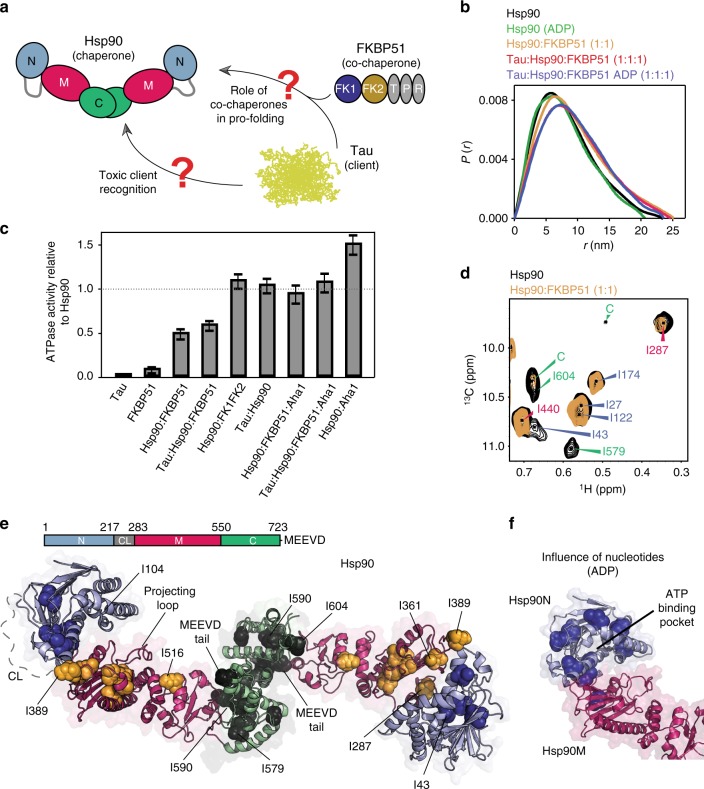
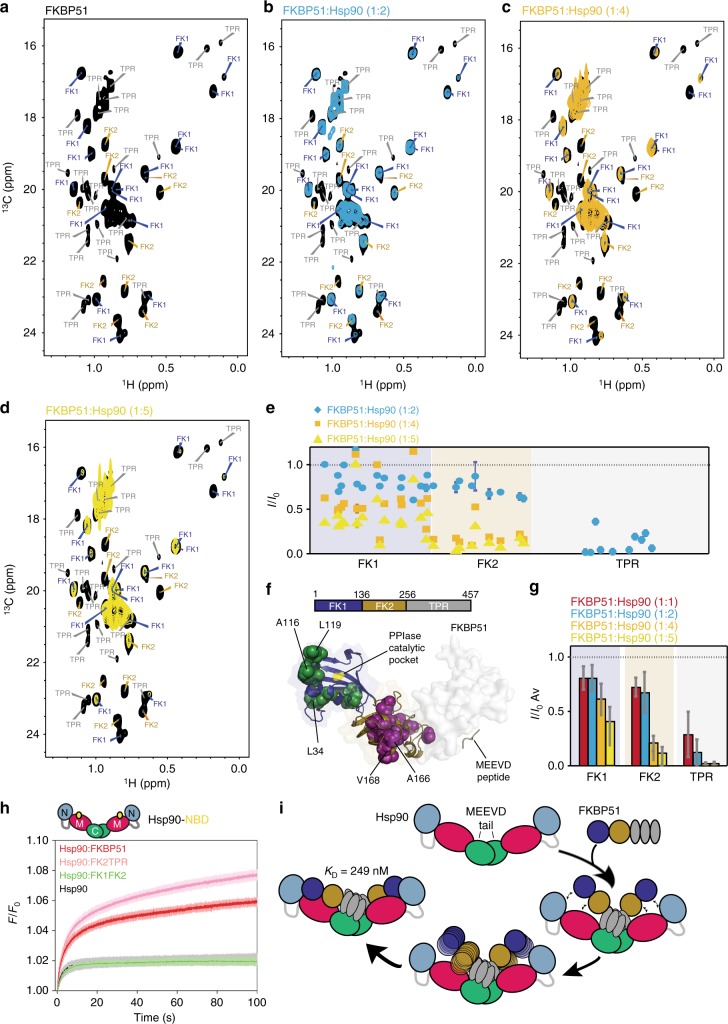
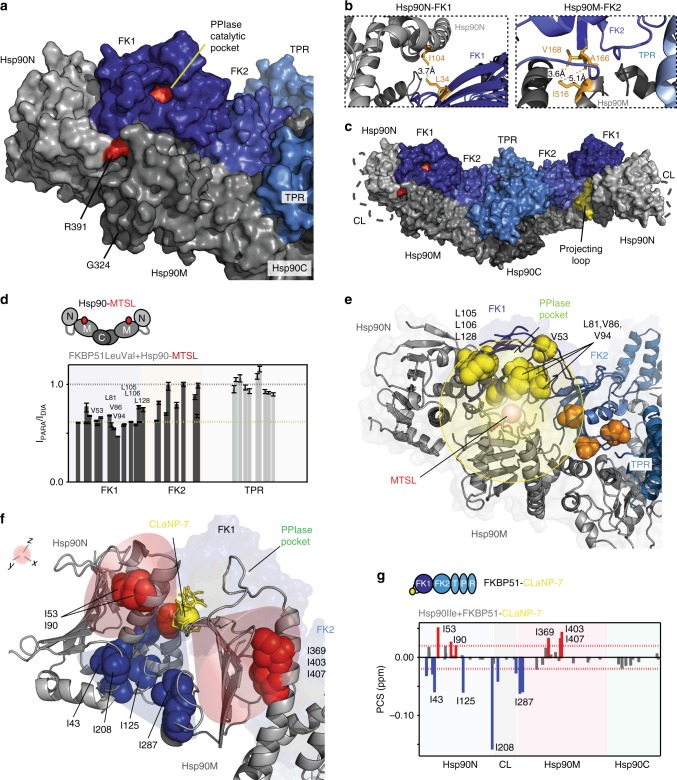
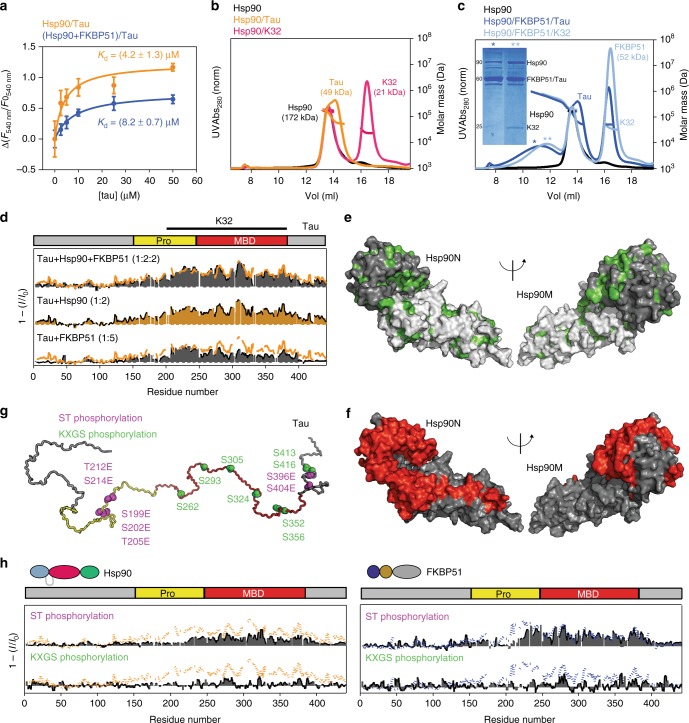
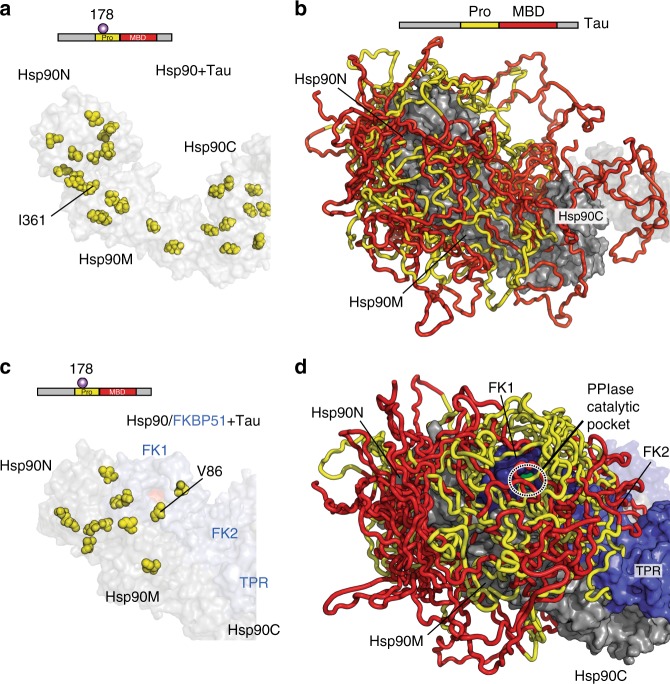
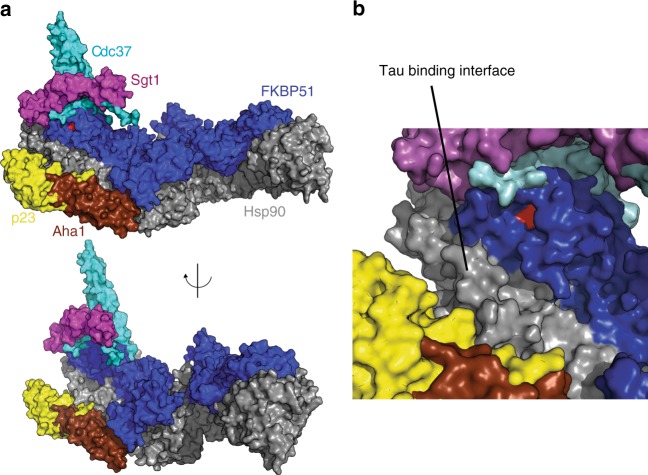
The molecular chaperone Hsp90 is critical for the maintenance of cellular homeostasis and represents a promising drug target. Despite increasing knowledge on the structure of Hsp90, the molecular basis of substrate recognition and pro-folding by Hsp90/co-chaperone complexes remains unknown. Here, we report the solution structures of human full-length Hsp90 in complex with the PPIase FKBP51, as well as the 280 kDa Hsp90/FKBP51 complex bound to the Alzheimer’s disease-related protein Tau. We reveal that the FKBP51/Hsp90 complex, which synergizes to promote toxic Tau oligomers in vivo, is highly dynamic and stabilizes the extended conformation of the Hsp90 dimer resulting in decreased Hsp90 ATPase activity. Within the ternary Hsp90/FKBP51/Tau complex, Hsp90 serves as a scaffold that traps the PPIase and nucleates multiple conformations of Tau’s proline-rich region next to the PPIase catalytic pocket in a phosphorylation-dependent manner. Our study defines a conceptual model for dynamic Hsp90/co-chaperone/client recognition.
Overview
The claims and statistics of this paper haven’t been checked yet.
Free: it reads the open-access text and checks the first 5 claims that cite a source we can check. Create a free account to check every claim.
Integrity signals
Registry
Cites
Statistics
Figures
Verification
Claims the paper makes
The claims and statistics of this paper haven’t been checked yet.
Free: it reads the open-access text and checks the first 5 claims that cite a source we can check. Create a free account to check every claim.
Claims other papers make about this one
Each is checked against this paper’s own text: does it say what the citing paper says it does?
The cited source says what the claim attributes to it.
In the citing paper
“By NMR, Hsp90 is identified to interact with tau transiently in the apo state and function as a scaffold in complex with FKBP51”
From The structure of an Hsp90-immunophilin complex reveals cochaperone recognition of the client maturation state (2021) · cites this paper as Oroz et al., 2018
Self-check
Percentages, sums and reported differences re-computed from the paper’s own numbers.
The self-check needs the paper’s full text.
Citations
Cites
Neuropathological stageing of Alzheimer-related changes.
Braak, H., & Braak, E. (1991) · Acta Neuropathologica · doi:10.1007/bf00308809 · Cited by 16,123
NMRPipe: A multidimensional spectral processing system based on UNIX pipes
Delaglio, F., Grzesiek, S., Vuister, G., Zhu, G., Pfeifer, J., & Bax, A. (1995) · Journal of Biomolecular NMR · doi:10.1007/bf00197809 · Cited by 15,965
Molecular chaperones in protein folding and proteostasis
Hartl, F. U., Bracher, A., & Hayer-Hartl, M. (2011) · Nature · doi:10.1038/nature10317 · Cited by 3,381
Protein Misfolding, Amyloid Formation, and Human Disease: A Summary of Progress Over the Last Decade
Chiti, F., & Dobson, C. M. (2017) · Annual Review of Biochemistry · doi:10.1146/annurev-biochem-061516-045115 · Cited by 2,629
Tau in physiology and pathology
Wang, Y., & Mandelkow, E. (2016) · Nature Reviews Neuroscience · doi:10.1038/nrn.2015.1 · Cited by 2,251
Self-citationClassification of Intrinsically Disordered Regions and Proteins
van der Lee, R., Buljan, M., Lang, B., Weatheritt, R. J., Daughdrill, G. W., Dunker, A. K., Fuxreiter, M., Gough, J., Gsponer, J., Jones, D. T., et al. (2014) · Chemical Reviews · doi:10.1021/cr400525m · Cited by 2,174
HSP90 at the hub of protein homeostasis: emerging mechanistic insights
Taipale, M., Jarosz, D. F., & Lindquist, S. (2010) · Nature Reviews Molecular Cell Biology · doi:10.1038/nrm2918 · Cited by 1,818
Molecular Chaperones and Protein Quality Control
Bukau, B., Weissman, J., & Horwich, A. (2006) · Cell · doi:10.1016/j.cell.2006.04.014 · Cited by 1,557
Schopf, F. H., Biebl, M. M., & Buchner, J. (2017) · Nature Reviews Molecular Cell Biology · doi:10.1038/nrm.2017.20 · Cited by 1,540
The HADDOCK web server for data-driven biomolecular docking
de Vries, S. J., van Dijk, M., & Bonvin, A. M. J. J. (2010) · Nature Protocols · doi:10.1038/nprot.2010.32 · Cited by 1,400
Chaperone machines for protein folding, unfolding and disaggregation
Saibil, H. (2013) · Nature Reviews Molecular Cell Biology · doi:10.1038/nrm3658 · Cited by 1,169
Crystal structure of an Hsp90–nucleotide–p23/Sba1 closed chaperone complex
Ali, M. M. U., Roe, S. M., Vaughan, C. K., Meyer, P., Panaretou, B., Piper, P. W., Prodromou, C., & Pearl, L. H. (2006) · Nature · doi:10.1038/nature04716 · Cited by 962
Cleveland, D. W., Hwo, S.-Y., & Kirschner, M. W. (1977) · Journal of Molecular Biology · doi:10.1016/0022-2836(77)90213-3 · Cited by 915
Clore, G. M., & Iwahara, J. (2009) · Chemical Reviews · doi:10.1021/cr900033p · Cited by 782
The prolyl isomerase PIN1: a pivotal new twist in phosphorylation signalling and disease
Lu, K. P., & Zhou, X. Z. (2007) · Nature Reviews Molecular Cell Biology · doi:10.1038/nrm2261 · Cited by 682
Structural Polymorphism of 441-Residue Tau at Single Residue Resolution
Mukrasch, M. D., Bibow, S., Korukottu, J., Jeganathan, S., Biernat, J., Griesinger, C., Mandelkow, E., & Zweckstetter, M. (2009) · PLoS Biology · doi:10.1371/journal.pbio.1000034 · Cited by 652
Self-citationTugarinov, V., Hwang, P. M., Ollerenshaw, J. E., & Kay, L. E. (2003) · Journal of the American Chemical Society · doi:10.1021/ja030153x · Cited by 649
Battiste, J. L., & Wagner, G. (2000) · Biochemistry · doi:10.1021/bi000060h · Cited by 625
Identification of cross-linked peptides from complex samples
Yang, B., Wu, Y.-J., Zhu, M., Fan, S.-B., Lin, J., Zhang, K., Li, S., Chi, H., Li, Y.-X., Chen, H.-F., et al. (2012) · Nature Methods · doi:10.1038/nmeth.2099 · Cited by 574
Tugarinov, V., Kanelis, V., & Kay, L. E. (2006) · Nature Protocols · doi:10.1038/nprot.2006.101 · Cited by 537
Meyer, P., Prodromou, C., Hu, B., Vaughan, C., Roe, S. M., Panaretou, B., Piper, P. W., & Pearl, L. H. (2003) · Molecular Cell · doi:10.1016/s1097-2765(03)00065-0 · Cited by 491
Shiau, A. K., Harris, S. F., Southworth, D. R., & Agard, D. A. (2006) · Cell · doi:10.1016/j.cell.2006.09.027 · Cited by 455
Structural basis for signal-sequence recognition by the translocase motor SecA as determined by NMR.
Gelis, I., Bonvin, A. M. J. J., Keramisanou, D., Koukaki, M., Gouridis, G., Karamanou, S., Economou, A., & Kalodimos, C. G. (2007) · Cell · doi:10.1016/j.cell.2007.09.039 · Cited by 433
Atomic structure of Hsp90-Cdc37-Cdk4 reveals that Hsp90 traps and stabilizes an unfolded kinase
Verba, K. A., Wang, R. Y.-R., Arakawa, A., Liu, Y., Shirouzu, M., Yokoyama, S., & Agard, D. A. (2016) · Science · doi:10.1126/science.aaf5023 · Cited by 424
Structure, Function and Regulation of the Hsp90 Machinery
Buchner, J., & Li, J. (2013) · Biomedical Journal · doi:10.4103/2319-4170.113230 · Cited by 420
Protein NMR Using Paramagnetic Ions
Otting, G. (2010) · Annual Review of Biophysics · doi:10.1146/annurev.biophys.093008.131321 · Cited by 387
Ying, J., Delaglio, F., Torchia, D. A., & Bax, A. (2017) · Journal of Biomolecular NMR · doi:10.1007/s10858-016-0072-7 · Cited by 331
Sites of Tau Important for Aggregation Populate β-Structure and Bind to Microtubules and Polyanions
Mukrasch, M. D., Biernat, J., von Bergen, M., Griesinger, C., Mandelkow, E., & Zweckstetter, M. (2005) · Journal of Biological Chemistry · doi:10.1074/jbc.m501565200 · Cited by 324
Self-citationJensen, M. R., Zweckstetter, M., Huang, J.-R., & Blackledge, M. (2014) · Chemical Reviews · doi:10.1021/cr400688u · Cited by 323
Self-citationAccelerated neurodegeneration through chaperone-mediated oligomerization of tau
Blair, L. J., Nordhues, B. A., Hill, S. E., Scaglione, K. M., O’Leary, J. C., Fontaine, S. N., Breydo, L., Zhang, B., Li, P., Wang, L., et al. (2013) · Journal of Clinical Investigation · doi:10.1172/jci69003 · Cited by 322
Self-citationMerkley, E. D., Rysavy, S., Kahraman, A., Hafen, R. P., Daggett, V., & Adkins, J. N. (2014) · Protein Science · doi:10.1002/pro.2458 · Cited by 319
Hsp90-Tau complex reveals molecular basis for specificity in chaperone action
Karagöz, G. E., Duarte, A. M. S., Akoury, E., Ippel, H., Biernat, J., Morán Luengo, T., Radli, M., Didenko, T., Nordhues, B. A., Veprintsev, D. B., et al. (2014) · Cell · doi:10.1016/j.cell.2014.01.037 · Cited by 318
Self-citationConformational dynamics of the molecular chaperone Hsp90
Krukenberg, K. A., Street, T. O., Lavery, L. A., & Agard, D. A. (2011) · Quarterly Reviews of Biophysics · doi:10.1017/s0033583510000314 · Cited by 308
Leitner, A., Reischl, R., Walzthoeni, T., Herzog, F., Bohn, S., Förster, F., & Aebersold, R. (2012) · Molecular & Cellular Proteomics · doi:10.1074/mcp.m111.014126 · Cited by 307
Structural basis for recruitment of the ATPase activator Aha1 to the Hsp90 chaperone machinery
Meyer, P. (2004) · The EMBO Journal · doi:10.1038/sj.emboj.7600141 · Cited by 291
Luo, W., Dou, F., Rodina, A., Chip, S., Kim, J., Zhao, Q., Moulick, K., Aguirre, J., Wu, N., Greengard, P., et al. (2007) · Proceedings of the National Academy of Sciences · doi:10.1073/pnas.0701055104 · Cited by 274
Chemical cross-linking/mass spectrometry targeting acidic residues in proteins and protein complexes
Leitner, A., Joachimiak, L. A., Unverdorben, P., Walzthoeni, T., Frydman, J., Förster, F., & Aebersold, R. (2014) · Proceedings of the National Academy of Sciences · doi:10.1073/pnas.1320298111 · Cited by 263
Nakamura, K., Greenwood, A., Binder, L., Bigio, E. H., Denial, S., Nicholson, L., Zhou, X. Z., & Lu, K. P. (2012) · Cell · doi:10.1016/j.cell.2012.02.016 · Cited by 258
Sinars, C. R., Cheung-Flynn, J., Rimerman, R. A., Scammell, J. G., Smith, D. F., & Clardy, J. (2003) · Proceedings of the National Academy of Sciences · doi:10.1073/pnas.0231020100 · Cited by 254
Asymmetric Activation of the Hsp90 Dimer by Its Cochaperone Aha1
Retzlaff, M., Hagn, F., Mitschke, L., Hessling, M., Gugel, F., Kessler, H., Richter, K., & Buchner, J. (2010) · Molecular Cell · doi:10.1016/j.molcel.2010.01.006 · Cited by 244
Akt and CHIP coregulate tau degradation through coordinated interactions
Dickey, C. A., Koren, J., Zhang, Y.-J., Xu, Y.-F., Jinwal, U. K., Birnbaum, M. J., Monks, B., Sun, M., Cheng, J. Q., Patterson, C., et al. (2008) · Proceedings of the National Academy of Sciences · doi:10.1073/pnas.0709180105 · Cited by 226
Self-citationSouthworth, D. R., & Agard, D. A. (2008) · Molecular Cell · doi:10.1016/j.molcel.2008.10.024 · Cited by 224
Fuzzy complexes: Specific binding without complete folding
Sharma, R., Raduly, Z., Miskei, M., & Fuxreiter, M. (2015) · FEBS Letters · doi:10.1016/j.febslet.2015.07.022 · Cited by 223
The Hsp90 cochaperone, FKBP51, increases Tau stability and polymerizes microtubules
Jinwal, U. K., Koren, J., Borysov, S. I., Schmid, A. B., Abisambra, J. F., Blair, L. J., Johnson, A. G., Jones, J. R., Shults, C. L., O'Leary, J. C., et al. (2010) · The Journal of Neuroscience · doi:10.1523/jneurosci.4815-09.2010 · Cited by 214
Self-citationSchwalbe, M., Ozenne, V., Bibow, S., Jaremko, M., Jaremko, L., Gajda, M., Jensen, M. R., Biernat, J., Becker, S., Mandelkow, E., et al. (2014) · Structure · doi:10.1016/j.str.2013.10.020 · Cited by 196
Self-citationIsolation of Hsp90 mutants by screening for decreased steroid receptor function.
Bohen, S. P., & Yamamoto, K. R. (1993) · Proceedings of the National Academy of Sciences · doi:10.1073/pnas.90.23.11424 · Cited by 195
Pirkl, F., & Buchner, J. (2001) · Journal of Molecular Biology · doi:10.1006/jmbi.2001.4595 · Cited by 179
Keizers, P. H. J., Saragliadis, A., Hiruma, Y., Overhand, M., & Ubbink, M. (2008) · Journal of the American Chemical Society · doi:10.1021/ja8054832 · Cited by 177
Binding Mechanisms of Intrinsically Disordered Proteins: Theory, Simulation, and Experiment
Mollica, L., Bessa, L. M., Hanoulle, X., Jensen, M. R., Blackledge, M., & Schneider, R. (2016) · Frontiers in Molecular Biosciences · doi:10.3389/fmolb.2016.00052 · Cited by 175
Mayer, M. P., & Le Breton, L. (2015) · Molecular Cell · doi:10.1016/j.molcel.2015.02.022 · Cited by 174
Molecular chaperones: The busy life of Hsp90
Mayer, M. P., & Bukau, B. (1999) · Current Biology · doi:10.1016/s0960-9822(99)80203-6 · Cited by 168
Structural basis for the antifolding activity of a molecular chaperone
Huang, C., Rossi, P., Saio, T., & Kalodimos, C. G. (2016) · Nature · doi:10.1038/nature18965 · Cited by 167
Tugarinov, V., Kay, L. E., Ibraghimov, I., & Orekhov, V. Y. (2005) · Journal of the American Chemical Society · doi:10.1021/ja044032o · Cited by 164
Mixed Hsp90–cochaperone complexes are important for the progression of the reaction cycle
Li, J., Richter, K., & Buchner, J. (2011) · Nature Structural & Molecular Biology · doi:10.1038/nsmb.1965 · Cited by 155
Radanyi, C., Chambraud, B., & Baulieu, E. E. (1994) · Proceedings of the National Academy of Sciences · doi:10.1073/pnas.91.23.11197 · Cited by 155
Southworth, D. R., & Agard, D. A. (2011) · Molecular Cell · doi:10.1016/j.molcel.2011.04.023 · Cited by 143
The Plasticity of the Hsp90 Co-chaperone System
Sahasrabudhe, P., Rohrberg, J., Biebl, M. M., Rutz, D. A., & Buchner, J. (2017) · Molecular Cell · doi:10.1016/j.molcel.2017.08.004 · Cited by 136
Structural analysis of the interaction between Hsp90 and the tumor suppressor protein p53
Hagn, F., Lagleder, S., Retzlaff, M., Rohrberg, J., Demmer, O., Richter, K., Buchner, J., & Kessler, H. (2011) · Nature Structural & Molecular Biology · doi:10.1038/nsmb.2114 · Cited by 127
Zhang, M., Kadota, Y., Prodromou, C., Shirasu, K., & Pearl, L. H. (2010) · Molecular Cell · doi:10.1016/j.molcel.2010.05.010 · Cited by 122
Genest, O., Reidy, M., Street, T. O., Hoskins, J. R., Camberg, J. L., Agard, D. A., Masison, D. C., & Wickner, S. (2013) · Molecular Cell · doi:10.1016/j.molcel.2012.11.017 · Cited by 118
Jahn, M., Rehn, A., Pelz, B., Hellenkamp, B., Richter, K., Rief, M., Buchner, J., & Hugel, T. (2014) · Proceedings of the National Academy of Sciences · doi:10.1073/pnas.1414073111 · Cited by 112
Cunningham, C. N., Krukenberg, K. A., & Agard, D. A. (2008) · Journal of Biological Chemistry · doi:10.1074/jbc.m800046200 · Cited by 106
Two FKBP-related proteins are associated with progesterone receptor complexes.
Smith, D. F., Baggenstoss, B. A., Marion, T. N., & Rimerman, R. A. (1993) · Journal of Biological Chemistry · doi:10.1016/s0021-9258(17)46853-0 · Cited by 103
Rosenzweig, R., Sekhar, A., Nagesh, J., & Kay, L. E. (2017) · eLife · doi:10.7554/elife.28030 · Cited by 101
Bibow, S., Ozenne, V., Biernat, J., Blackledge, M., Mandelkow, E., & Zweckstetter, M. (2011) · Journal of the American Chemical Society · doi:10.1021/ja205836j · Cited by 98
Self-citationA pH-Sensitive, Colorful, Lanthanide-Chelating Paramagnetic NMR Probe
Liu, W.-M., Keizers, P. H. J., Hass, M. A. S., Blok, A. J., Timmer, M., Sarris, A. J. C., Overhand, M., & Ubbink, M. (2012) · Journal of the American Chemical Society · doi:10.1021/ja307824e · Cited by 86
Phosphorylation of Human Tau Protein by Microtubule Affinity-Regulating Kinase 2
Schwalbe, M., Biernat, J., Bibow, S., Ozenne, V., Jensen, M. R., Kadavath, H., Blackledge, M., Mandelkow, E., & Zweckstetter, M. (2013) · Biochemistry · doi:10.1021/bi401266n · Cited by 78
Self-citationA molecular mechanism of chaperone-client recognition
He, L., Sharpe, T., Mazur, A., & Hiller, S. (2016) · Science Advances · doi:10.1126/sciadv.1601625 · Cited by 78
Christian, H., Hofele, R. V., Urlaub, H., & Ficner, R. (2014) · Nucleic Acids Research · doi:10.1093/nar/gkt985 · Cited by 76
Self-citationPin1 affects Tau phosphorylation in response to Aβ oligomers
Bulbarelli, A., Lonati, E., Cazzaniga, E., Gregori, M., & Masserini, M. (2009) · Molecular and Cellular Neuroscience · doi:10.1016/j.mcn.2009.06.001 · Cited by 66
Mechanistic basis for the recognition of a misfolded protein by the molecular chaperone Hsp90
Oroz, J., Kim, J. H., Chang, B. J., & Zweckstetter, M. (2017) · Nature Structural & Molecular Biology · doi:10.1038/nsmb.3380 · Cited by 61
Self-citationMolecular Chaperones in Cellular Protein Folding: The Birth of a Field
Horwich, A. L. (2014) · Cell · doi:10.1016/j.cell.2014.03.029 · Cited by 57
Elucidating the Mechanism of Substrate Recognition by the Bacterial Hsp90 Molecular Chaperone
Street, T. O., Zeng, X., Pellarin, R., Bonomi, M., Šali, A., Kelly, M. J. S., Chu, F., & Agard, D. A. (2014) · Journal of Molecular Biology · doi:10.1016/j.jmb.2014.04.001 · Cited by 55
Kerfah, R., Plevin, M. J., Pessey, O., Hamelin, O., Gans, P., & Boisbouvier, J. (2014) · Journal of Biomolecular NMR · doi:10.1007/s10858-014-9887-2 · Cited by 49
Kumar, R., Moche, M., Winblad, B., & Pavlov, P. F. (2017) · Scientific Reports · doi:10.1038/s41598-017-14731-z · Cited by 40
Reconstructing the Hsp90/Tau Machine
Jinwal, U. K., Koren, J., & Dickey, C. A. (2013) · Current Enzyme Inhibition · doi:10.2174/1573408011309010006 · Cited by 26
Self-citationDaturpalli, S., Knieß, R. A., Lee, C.-T., & Mayer, M. P. (2017) · Journal of Molecular Biology · doi:10.1016/j.jmb.2017.03.025 · Cited by 23
Self-citationPhosphorylation Pattern of tau Associated with Distinct Changes of the Growth Cone Cytoskeleton
Šimić, G., Diana, A., & Hof, P. R. (2003) · Progress in molecular and subcellular biology · doi:10.1007/978-3-642-55557-2_2 · Cited by 19
Cited by
Nguyen, P. H., Ramamoorthy, A., Sahoo, B. R., Zheng, J., Faller, P., Straub, J. E., Dominguez, L., Shea, J.-E., Dokholyan, N. V., De Simone, A., et al. (2021) · Chemical Reviews · doi:10.1021/acs.chemrev.0c01122 · Cited by 678
Tau Protein Interaction Partners and Their Roles in Alzheimer’s Disease and Other Tauopathies
Sinsky, J., Pichlerova, K., & Hanes, J. (2021) · International Journal of Molecular Sciences · doi:10.3390/ijms22179207 · Cited by 220
Diffractive Nonlocal Metasurfaces
Overvig, A., & Alù, A. (2022) · Laser & Photonics Reviews · doi:10.1002/lpor.202100633 · Cited by 206
Structural and functional complexity of HSP90 in cellular homeostasis and disease
Chiosis, G., Digwal, C. S., Trepel, J. B., & Neckers, L. (2023) · Nature Reviews Molecular Cell Biology · doi:10.1038/s41580-023-00640-9 · Cited by 202
“As part of this complex and when binding to the Alzheimer disease protein tau, HSP90 serves as a scaffold to trap FKBP5 and nucleate multiple conformations of tau 108 .”
BackgroundWeiner, M., Ni, X., Li, M., Alù, A., & Khanikaev, A. B. (2020) · Science Advances · doi:10.1126/sciadv.aay4166 · Cited by 180
Metadata
- Authors
- Oroz, J., Chang, B. J., Wysoczanski, P., Lee, C.-T., Pérez-Lara, Á., Chakraborty, P., Hofele, R. V., Baker, J. D., Blair, L. J., Biernat, J., Urlaub, H., Mandelkow, E., Dickey, C. A., & Zweckstetter, M.
- Affiliations
- Consejo Superior de Investigaciones Científicas (ES)
- Max Planck Institute for Biophysical Chemistry (DE)
- German Center for Neurodegenerative Diseases (DE)
- University of South Florida (US)
- Center of Advanced European Studies and Research (DE)
- Universitätsmedizin Göttingen (DE)
- Corresponding author
- Zweckstetter, Markus
- ORCID
- Venue
- Nature Communications
- Published
- 2018-10-31
- Volume
- 9
- Issue
- 1
- Pages
- 4532-4532
- ISSN
- 2041-1723 (ISSN-L)
- PMC
- PMC6208366
- OpenAlex
- W2898525239
- Cited by
- 100
- References
- 78
- Citations by year
- 2026: 10 · 2025: 18 · 2024: 5 · 2023: 19 · 2022: 17 · 2021: 8 · 2020: 12 · 2019: 9 · 2018: 2
- FWCI
- 2.83
- Type
- journal article
- Language
- en
- Open access
- gold
- doi.org
- Licence
- cc-by
- creativecommons.org/licenses/by/4.0 (tdm)
- creativecommons.org/licenses/by/4.0 (vor)
- Locations
- Nature Communications (publishedVersion, cc-by)
- Europe PMC (PubMed Central) (publishedVersion, other-oa)
- PubMed Central (publishedVersion, cc-by)
- PubMed (publishedVersion)
- RePEc: Research Papers in Economics (submittedVersion)
- DIGITAL.CSIC (Spanish National Research Council (CSIC)) (submittedVersion, cc-by)
- DOAJ (DOAJ: Directory of Open Access Journals) (submittedVersion, cc-by-sa)
- DOAJ (DOAJ: Directory of Open Access Journals) (submittedVersion)
- DZNE Pub (submittedVersion, cc-by)
- GoeScholar The Publication Server of the Georg-August-Universität Göttingen (Georg-August-Universität Göttingen) (submittedVersion, cc-by)
- MPG.PuRe (Max Planck Society) (submittedVersion, cc-by)
- MPG.PuRe (Max Planck Society) (submittedVersion, other-oa)
- MPG.PuRe (Max Planck Society) (submittedVersion)
- Funders
- EC | European Research Council (787679 - LLPS-NMR)
- Deutsche Forschungsgemeinschaft (SFB860/B2, SFB860/A10)
- U.S. Department of Health & Human Services | National Institutes of Health (R01 NS073899, R01 MH103848)
- Topics
- Life Sciences › Biochemistry, Genetics and Molecular Biology › Molecular Biology › Heat shock proteins research
- Life Sciences › Neuroscience › Cellular and Molecular Neuroscience › Alzheimer's disease research and treatments
- Life Sciences › Biochemistry, Genetics and Molecular Biology › Molecular Biology › Protein Structure and Dynamics
- Keywords
- HSP90, FKBP51, tau protein, molecular chaperones, substrate recognition, tau oligomers, Alzheimer's disease, ATPase activity, conformational dynamics, proline-rich region, phosphorylation, co-chaperones, solution structure
- MeSH terms
- Tacrolimus Binding Protein 5, Humans, Models, Molecular, Magnetic Resonance Spectroscopy, Phosphorylation, Protein Binding, Protein Conformation, tau Proteins, HSP90 Heat-Shock Proteins, Tacrolimus Binding Proteins, Biocatalysis
About these checks
Registry, retraction, Cites and statistics results are computed, not judged, with one exception: a printed reference that no index lists is read once by a model before it counts as a citation error. Claims are extracted by a model and kept only when their quote appears verbatim in the text; each cited source is then checked, with a model’s help, for whether it says what the claim relies on. Those verdicts can be wrong — read the claim’s quote and the cited source before relying on one.
Statistics and arithmetic are recomputed, not judged.
Confidence bands are shown only for fields calibrated on our annotated test set. None is calibrated yet, so no band is shown.
What counts as a claim ›How we measure confidence ›How we check this ›
Are you an author, or do you see a problem with this page? Request a review
Data sources
Bibliographic data: Semantic Scholar, OpenAlex, Crossref.
Contains information from the Semantic Scholar Academic Graph Datasets, made available under the ODC Attribution License (ODC-BY 1.0).
Semantic Scholar’s data is described in: Kinney, R., et al. (2023). The Semantic Scholar Open Data Platform. arXiv:2301.10140.
