

Whole genome sequencing puts forward hypotheses on metastasis evolution and therapy in colorectal cancer
Open accessThe DOI matches its Crossref record; 70 of the 71 references it cites were found in a registry or an index.
Abstract
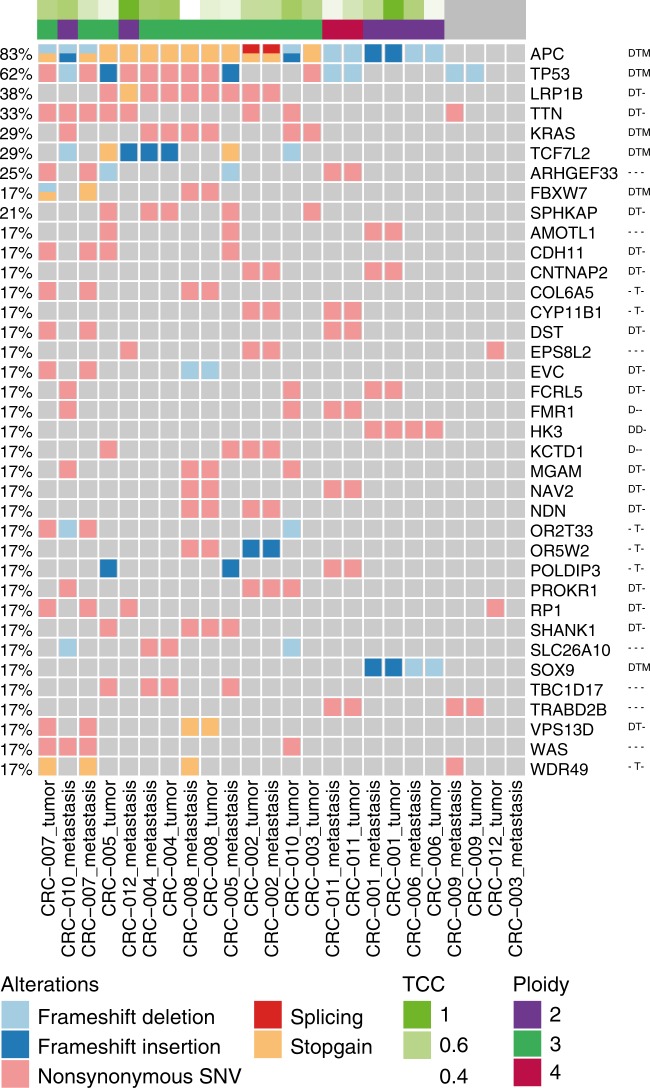
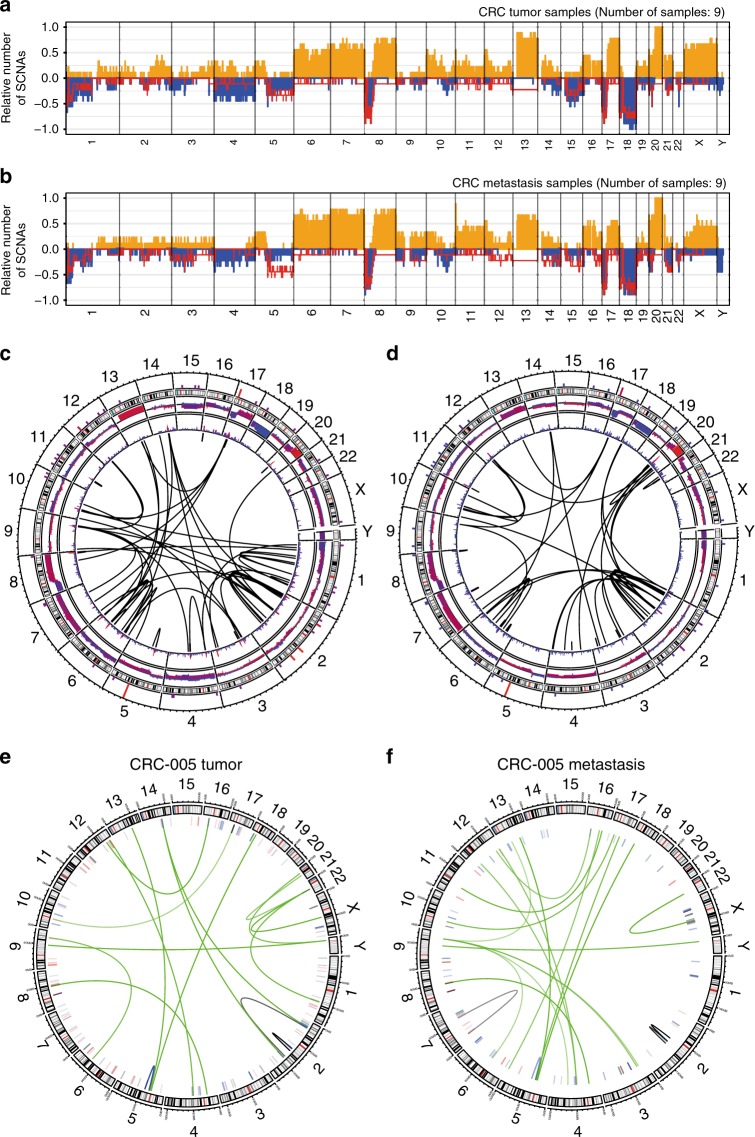
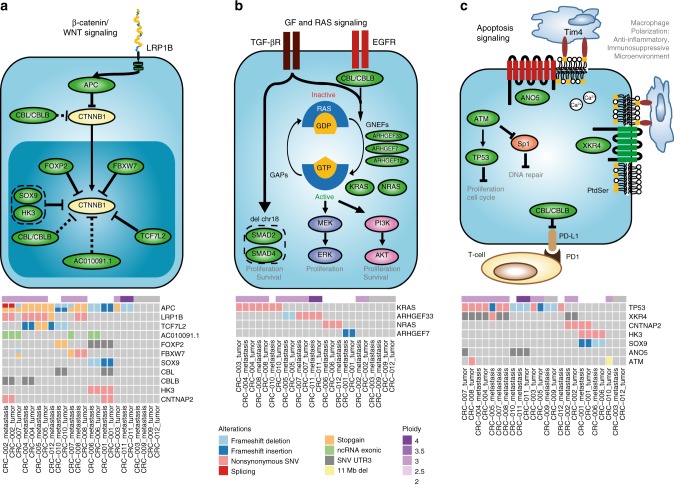
Incomplete understanding of the metastatic process hinders personalized therapy. Here we report the most comprehensive whole-genome study of colorectal metastases vs. matched primary tumors. 65% of somatic mutations originate from a common progenitor, with 15% being tumor- and 19% metastasis-specific, implicating a higher mutation rate in metastases. Tumor- and metastasis-specific mutations harbor elevated levels of BRCAness. We confirm multistage progression with new components ARHGEF7/ARHGEF33. Recurrently mutated non-coding elements include ncRNAs RP11-594N15.3, AC010091, SNHG14, 3’ UTRs of FOXP2, DACH2, TRPM3, XKR4, ANO5, CBL, CBLB, the latter four potentially dual protagonists in metastasis and efferocytosis-/PD-L1 mediated immunosuppression. Actionable metastasis-specific lesions include FAT1, FGF1, BRCA2, KDR, and AKT2-, AKT3-, and PDGFRA-3’ UTRs. Metastasis specific mutations are enriched in PI3K-Akt signaling, cell adhesion, ECM and hepatic stellate activation genes, suggesting genetic programs for site-specific colonization. Our results put forward hypotheses on tumor and metastasis evolution, and evidence for metastasis-specific events relevant for personalized therapy.
Overview
The claims and statistics of this paper haven’t been checked yet.
Free: it reads the open-access text and checks the first 5 claims that cite a source we can check. Create a free account to check every claim.
Integrity signals
Registry
Cites
Statistics
Figures
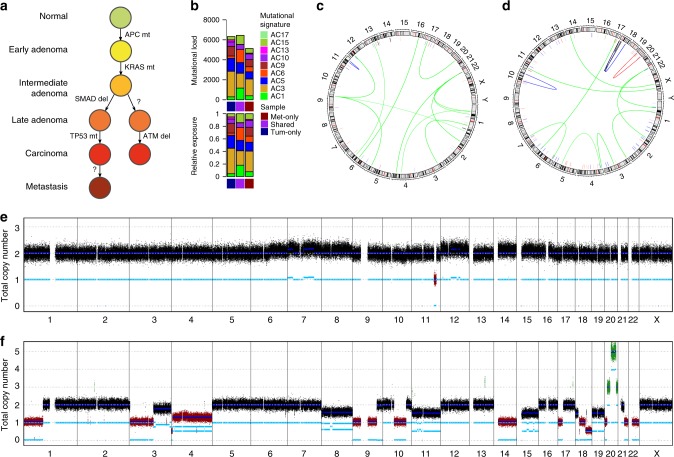
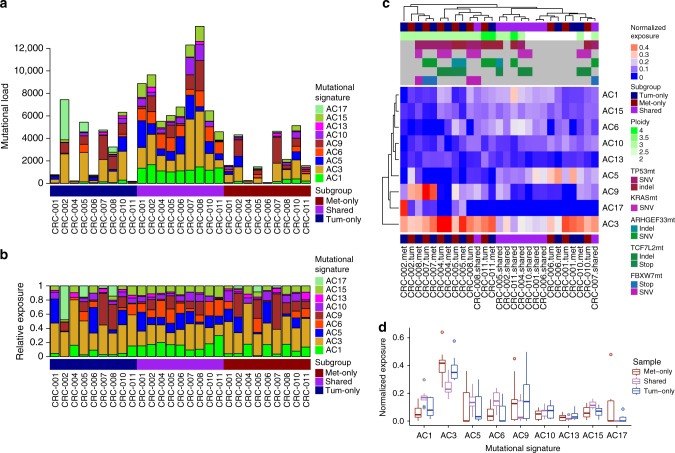
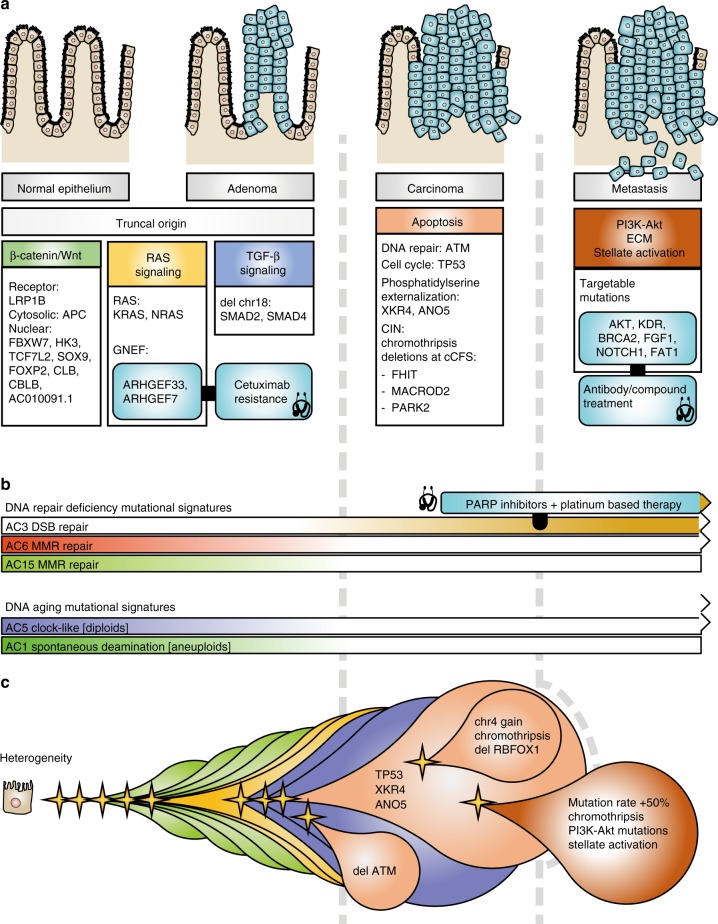
Verification
Claims the paper makes
The claims and statistics of this paper haven’t been checked yet.
Free: it reads the open-access text and checks the first 5 claims that cite a source we can check. Create a free account to check every claim.
Claims other papers make about this one
Each is checked against this paper’s own text: does it say what the citing paper says it does?
In the citing paper
“Mutations in the PI3K/AKT/mTOR pathway are common in mCRC [102], contribute to malignant transformation [103], and are implicated in resistance to front-line therapy [104].”
From Recent Advances in Therapeutic Strategies to Improve Colorectal Cancer Treatment (2024) · cites this paper as [102]
Self-check
Percentages, sums and reported differences re-computed from the paper’s own numbers.
The self-check needs the paper’s full text.
Citations
Cites
Hallmarks of Cancer: The Next Generation
Hanahan, D., & Weinberg, R. A. (2011) · Cell · doi:10.1016/j.cell.2011.02.013 · Cited by 66,590
The Sequence Alignment/Map format and SAMtools
Li, H., Handsaker, B., Wysoker, A., Fennell, T., Ruan, J., Homer, N., Marth, G., Abecasis, G., Durbin, R., & 1000 Genome Project Data Processing Subgroup (2009) · Bioinformatics · doi:10.1093/bioinformatics/btp352 · Cited by 62,041
Fast and accurate short read alignment with Burrows-Wheeler transform
Li, H., & Durbin, R. (2009) · Bioinformatics · doi:10.1093/bioinformatics/btp324 · Cited by 58,607
An integrated encyclopedia of DNA elements in the human genome
The ENCODE Project Consortium (2012) · Nature · doi:10.1038/nature11247 · Cited by 18,072
ANNOVAR: functional annotation of genetic variants from high-throughput sequencing data
Wang, K., Li, M., & Hakonarson, H. (2010) · Nucleic Acids Research · doi:10.1093/nar/gkq603 · Cited by 14,621
Signatures of mutational processes in human cancer
Initiative, A. P. C. G., Alexandrov, L. B., ICGC Breast Cancer Consortium, ICGC MMML-Seq Consortium, PedBrain, I., Nik-Zainal, S., Wedge, D. C., Aparicio, S. A. J. R., Behjati, S., Biankin, A. V., et al. (2013) · Nature · doi:10.1038/nature12477 · Cited by 9,660
Self-citationComprehensive molecular characterization of human colon and rectal cancer
The Cancer Genome Atlas Network (2012) · Nature · doi:10.1038/nature11252 · Cited by 8,499
Vogelstein, B., Papadopoulos, N., Velculescu, V. E., Zhou, S., Diaz, L. A., & Kinzler, K. W. (2013) · Science · doi:10.1126/science.1235122 · Cited by 7,863
dbSNP: the NCBI database of genetic variation
Sherry, S. T. (2001) · Nucleic Acids Research · doi:10.1093/nar/29.1.308 · Cited by 7,502
Tumor Metastasis: Molecular Insights and Evolving Paradigms
Valastyan, S., & Weinberg, R. A. (2011) · Cell · doi:10.1016/j.cell.2011.09.024 · Cited by 4,011
Cited by
Tumor-resident intracellular microbiota promotes metastatic colonization in breast cancer
Fu, A., Yao, B., Dong, T., Chen, Y., Yao, J., Liu, Y., Li, H., Bai, H., Liu, X., Zhang, Y., et al. (2022) · Cell · doi:10.1016/j.cell.2022.02.027 · Cited by 981
Cancer progression and the invisible phase of metastatic colonization
Klein, C. A. (2020) · Nature Reviews Cancer · doi:10.1038/s41568-020-00300-6 · Cited by 375
Extracellular Matrix Alterations in Metastatic Processes
Paolillo, M., & Schinelli, S. (2019) · International Journal of Molecular Sciences · doi:10.3390/ijms20194947 · Cited by 377
“In a recent, comprehensive whole-genome study of colorectal metastases, the authors found a higher mutation rate in metastases, compared to matched primary tumors; interestingly, metastases specific mutations were mainly correlated to PI3K-Akt signaling, cell adhesion, ECM and hepatic stellate activation genes, which…”
Bhattacharjee, S., Hamberger, F., Ravichandra, A., Miller, M., Nair, A., Affo, S., Filliol, A., Chin, L., Savage, T. M., Yin, D., et al. (2021) · Journal of Clinical Investigation · doi:10.1172/jci146987 · Cited by 367
Mo, S., Tang, P., Luo, W., Zhang, L., Li, Y., Hu, X., Ma, X., Chen, Y., Bao, Y., He, X., et al. (2022) · Advanced Science · doi:10.1002/advs.202204097 · Cited by 198
Haragan, A., Field, J. K., Davies, M. P. A., Escriu, C., Gruver, A., & Gosney, J. R. (2019) · Lung Cancer · doi:10.1016/j.lungcan.2019.06.005 · Cited by 179
The genomic and transcriptional landscape of primary central nervous system lymphoma
Radke, J., Ishaque, N., Koll, R., Gu, Z., Schumann, E., Sieverling, L., Uhrig, S., Hübschmann, D., Toprak, U. H., López, C., et al. (2022) · Nature Communications · doi:10.1038/s41467-022-30050-y · Cited by 180
“2.177, https://github.com/DKFZ-ODCF/ IndelCallingWork fl ow) as previously described 162 .”
InfluentialSelf-citationSuper enhancers define regulatory subtypes and cell identity in neuroblastoma
Gartlgruber, M., Sharma, A. K., Quintero, A., Dreidax, D., Jansky, S., Park, Y.-G., Kreth, S., Meder, J., Doncevic, D., Saary, P., et al. (2020) · Nature Cancer · doi:10.1038/s43018-020-00145-w · Cited by 169
Self-citationAllgayer, H., Mahapatra, S., Mishra, B., Swain, B., Saha, S., Khanra, S., Kumari, K., Panda, V. K., Malhotra, D., Patil, N. S., et al. (2025) · Molecular Cancer · doi:10.1186/s12943-025-02338-2 · Cited by 127
“…have been identified only in the metastases, suggesting their participation in the onset of distant metastasis, underscoring observations at human CRC metastases that were shown to bear, in part, specific alterations that were not shared with the corresponding primary tumors [303, 304, 347].”
Self-citationWu, D., Weinan, X., Li, X., Yu, Z.-W., Gu, X.-Y., Jinxue, T., & Li, M. (2019) · Cell Death and Disease · doi:10.1038/s41419-019-1707-x · Cited by 110
Peritoneal Metastases From Colorectal Cancer: Defining and Addressing the Challenges
Kranenburg, O., der Speeten, K. V., & de Hingh, I. H. J. T. (2021) · Frontiers in Oncology · doi:10.3389/fonc.2021.650098 · Cited by 102
“Despite these overall similarities, sitespecific genetic differences affecting distinct biological processes exist between CRC liver and brain metastases, illustrating the principle of site-specific adaptation (79, 80).”
BackgroundContribution of Anoctamins to Cell Survival and Cell Death
Kunzelmann, K., Ousingsawat, J., Benedetto, R. D., Cabrita, I., & Schreiber, R. (2019) · Cancers · doi:10.3390/cancers11030382 · Cited by 97
“Colorectal cancer [77,78] Thyroid cancer [79]”
Rac1 Signaling: From Intestinal Homeostasis to Colorectal Cancer Metastasis
Kotelevets, L., & Chastre, E. (2020) · Cancers · doi:10.3390/cancers12030665 · Cited by 101
Masoodi, T., Siraj, S., Siraj, A. K., Azam, S., Qadri, Z., Parvathareddy, S. K., Tulbah, A. M., Al‐Dayel, F., Alhusaini, H., Alomar, O., et al. (2020) · British Journal of Cancer · doi:10.1038/s41416-020-0763-4 · Cited by 92
Mendelaar, P. A. J., Smid, M., van Riet, J., Angus, L., Labots, M., Steeghs, N., Hendriks, M. P., Cirkel, G. A., van Rooijen, J. M., Ten Tije, A. J., et al. (2021) · Nature Communications · doi:10.1038/s41467-020-20887-6 · Cited by 81
Recent Advances in Therapeutic Strategies to Improve Colorectal Cancer Treatment
Gmeiner, W. H. (2024) · Cancers · doi:10.3390/cancers16051029 · Cited by 78
“Mutations in the PI3K/AKT/mTOR pathway are common in mCRC [102], contribute to malignant transformation [103], and are implicated in resistance to front-line therapy [104].”
BackgroundAl-Joufi, F., Setia, A., Salem-Bekhit, M. M., Sahu, R. K., Alqahtani, F. Y., Widyowati, R., & Aleanizy, F. (2022) · Nanomaterials · doi:10.3390/nano12010169 · Cited by 94
“Fourth, in hereditary cancer syndromes, the germline forms of significant genetic abnormalities are generally associated with the development of rare colon cancers, which are caused by somatic occurrences of hereditary diseases [4].”
BackgroundAl‐Joufi, F. A., Setia, A., Salem-Bekhit, M. M., Sahu, R. K., Alqahtani, F. Y., Widyowati, R., & Aleanizy, F. S. (2022) · Universitas Airlangga Repository (Universitas Airlangga) · Cited by 72
Deng, Z., Wang, H., Liu, J., Deng, Y., & Zhang, N. (2021) · Cell Death and Disease · doi:10.1038/s41419-021-03890-7 · Cited by 74
“PI3K/AKT signaling in metastasis Genomic profiling reveals that metastasis specific genetic mutation or activation are enriched in PI3K/AKT signaling pathway in multiple types of cancer, including colorectal cancer [135, 146], melanoma [147, 148], prostate cancer [149], lung cancer, breast cancer, and renal cell carci…”
BackgroundZhuang, Y., Wang, H., Jiang, D., Li, Y., Feng, L., Tian, C., Pu, M., Wang, X., Zhang, J., Hu, Y., et al. (2021) · BMC Cancer · doi:10.1186/s12885-021-08108-9 · Cited by 54
“More specifically, it is basically formed a consensus that CRC progression is sequential gains of mutations in Wnt signaling, RAS signaling, TGF-beta signaling, p53 signaling, PI3K-Akt signaling and MAPK signaling [29].”
BackgroundKyrochristos, I. D., & Roukos, D. H. (2019) · Cancer Treatment Reviews · doi:10.1016/j.ctrv.2019.101894 · Cited by 54
“Comparative analysis of matched primary and metastatic tumors revealed high levels of mutational concordance, ranging between 80 and 100% for tNGS of known gene panels [68,70] and 65–70% for WES/WGS [67,73], while high heterogeneity was an adverse prognostic factor [67].”
BackgroundMarongiu, L., & Allgayer, H. (2021) · Molecular Oncology · doi:10.1002/1878-0261.13100 · Cited by 52
Self-citationGenetic Alterations of Metastatic Colorectal Cancer
Testa, U., Castelli, G., & Pelosi, E. (2020) · Biomedicines · doi:10.3390/biomedicines8100414 · Cited by 44
Efferocytosis and Its Associated Cytokines: A Light on Non-tumor and Tumor Diseases?
Lin, D., Kang, X., Shen, L. H., Tu, S., Lenahan, C., Chen, Y., Wang, X., & Shao, A. (2020) · Molecular Therapy — Oncolytics · doi:10.1016/j.omto.2020.04.010 · Cited by 53
“Ishaque et al.(73) demonstrated that several mutated noncoding elements have dual protagonists in metastasis and efferocytosis-/PD-L1 mediated immunosuppression in colorectal cancer.”
Regulation of Metastatic Tumor Dormancy and Emerging Opportunities for Therapeutic Intervention
Tamamouna, V., Pavlou, E., Neophytou, C. M., Papageorgis, P., & Costeas, P. (2022) · International Journal of Molecular Sciences · doi:10.3390/ijms232213931 · Cited by 53
Zhu, M., Gong, Z., Wu, Q., Shi, X., Su, Q., & Zhang, Y. (2020) · Clinical and Translational Medicine · doi:10.1002/ctm2.1 · Cited by 41
“Distant metastasis is the main obstacle in cancer treatment and is one of the leading causes of death among CRC patients.(1) In CRC, metastatic progression often occurs in hepar, lung, and lymph nodes.”
BackgroundOkamoto, T., duVerle, D. A., Yaginuma, K., Natsume, Y., Yamanaka, H., Kusama, D., Fukuda, M., Yamamoto, M., Perraudeau, F., Srivastava, U., et al. (2021) · Stem Cell Reports · doi:10.1016/j.stemcr.2021.02.012 · Cited by 44
“6%) were identified as metastasis-specific mutations, confirming the results of previous analysis (Ishaque et al., 2018).”
BackgroundResultMarongiu, L., Landry, J. J. M., Rausch, T., Abba, M. L., Delécluse, S., Delecluse, H., & Allgayer, H. (2021) · Molecular Oncology · doi:10.1002/1878-0261.13070 · Cited by 45
Self-citationYang, C., Zhang, Y., Yan, M., Wang, J., Wang, J., Wang, M., Xuan, Y., Cheng, H., Ma, J., Chai, C., et al. (2024) · BMC Cancer · doi:10.1186/s12885-023-11791-5 · Cited by 49
“The high mortality of CRC is due to tumor metastasis and chemoresistance which lead to the main therapy failure in CRC [3, 4].”
BackgroundOttaiano, A., Caraglia, M., Mauro, A. D., Botti, G., Lombardi, A., Galon, J., Luce, A., D’Amore, L., Perri, F., Santorsola, M., et al. (2020) · Cancers · doi:10.3390/cancers12103073 · Cited by 37
“Unfortunately, very little is known in CRC where it appears overexpressed compared to normal mucosa and positively related to aggressiveness of CRC cells [34,35].”
BackgroundTanaka, A., Ogawa, M., Zhou, Y., Namba, K., Hendrickson, R. C., Miele, M. M., Li, Z., Klimstra, D. S., Buckley, P. G., Gulcher, J. R., et al. (2024) · Cell Reports · doi:10.1016/j.celrep.2024.113810 · Cited by 41
Zhou, X., Xu, Y., Zhu, L., Su, Z., Han, X., Zhang, Z., Huang, Y., & Liu, Q. (2020) · Micromachines · doi:10.3390/mi11070645 · Cited by 30
Allgayer, H., Leupold, J. H., & Patil, N. (2019) · Seminars in Cancer Biology · doi:10.1016/j.semcancer.2019.07.018 · Cited by 36
Self-citationPotassium Channel Protein KCNK6 Promotes Breast Cancer Cell Proliferation, Invasion, and Migration
Hou, X., Tang, L., Li, X., Xiong, F., Mo, Y., Jiang, X., Deng, X., Peng, M., Wu, P., Zhao, M., et al. (2021) · Frontiers in Cell and Developmental Biology · doi:10.3389/fcell.2021.616784 · Cited by 29
Zhang, X., Zhu, J., Yan, J., Xiao, Y., Yang, R., Huang, R., Zhou, J., Wang, Z., Xiao, W., Zheng, C., et al. (2020) · Phytomedicine · doi:10.1016/j.phymed.2020.153326 · Cited by 32
Li, C., Xu, J., Wang, X., Zhang, C., Yu, Z., Liu, J., Tai, Z., Luo, Z., Yi, X., & Zhong, Z. (2021) · Cell Death Discovery · doi:10.1038/s41420-021-00607-9 · Cited by 30
“The average percentage of liver metastasis-private mutation is higher than of primary-private mutations, this tendency was consistent to what has been previously described [8], however our data showed that liver metastasis-related signaling pathways include HGF/MET and its down-stream KRAS-MEK/ERK or PIK3CA-MTOR signa…”
BackgroundResultLi, D., Jiang, S., Xin Min, Z. H. O. U., Si, C., Shao, P., Jiang, Q., Zhu, L., Shen, L., Meng, Q., Yin, J. C., et al. (2022) · Frontiers in Oncology · doi:10.3389/fonc.2021.783564 · Cited by 26
“Abnormal activation of the cytokine receptor c-KIT, which is usually suppressed in the CRC cells, would result in an increase in the metastatic potential of the cancer cells (20, 21).”
BackgroundBulk and Single-Cell Next-Generation Sequencing: Individualizing Treatment for Colorectal Cancer
Kyrochristos, I. D., Ziogas, D. E., GOUSSIA, A. C., Glantzounis, G. K., & Roukos, D. H. (2019) · Cancers · doi:10.3390/cancers11111809 · Cited by 26
“Mutational concordance between matched primary and metastatic tumors was variable and dependable upon the sequencing method used, with exome and genome sequencing unveiling higher heterogeneity than tNGS [57,63].”
BackgroundMethodResultInfluentialNoncoding RNA mutations in cancer
Zhou, H., Hao, X., Zhang, P., & He, S. (2023) · WIREs RNA · doi:10.1002/wrna.1812 · Cited by 24
“3, ac010091, and snhg14 in metastatic colorectal cancer (Ishaque et al., 2018; Mendelaar et al., 2021), lncRNA RP11-69I8.”
BackgroundTargeted therapy of advanced parathyroid carcinoma guided by genomic and transcriptomic profiling
Teleanu, M., Fuß, C. T., Paramasivam, N., Pirmann, S., Möck, A., Terkamp, C., Kircher, S., Landwehr, L., Lenschow, C., Schlegel, N., et al. (2023) · Molecular Oncology · doi:10.1002/1878-0261.13398 · Cited by 26
Self-citationChlorogenic acid and intestinal health: mechanistic insights and therapeutic applications
Xu, J., Zhao, X., Yang, S., Tang, M., Zhao, R., & Hu, S. (2025) · Food & Function · doi:10.1039/d5fo00853k · Cited by 28
Binding blockade between TLN1 and integrin β1 represses triple-negative breast cancer
Zhang, Y., Sun, L., Li, H., Ai, L., Ma, Q., Qiao, X., Yang, J., Zhang, H., Ou, X., Wang, Y., et al. (2022) · eLife · doi:10.7554/elife.68481 · Cited by 30
Yang, G., Yu, X., Weisenberger, D. J., Lü, T., & Liang, G. (2023) · Cancers · doi:10.3390/cancers15112934 · Cited by 28
From Genomic Exploration to Personalized Treatment: Next-Generation Sequencing in Oncology
Vashisht, V., Vashisht, A., Mondal, A. K., Woodall, J., & Kolhe, R. B. (2024) · Current Issues in Molecular Biology · doi:10.3390/cimb46110744 · Cited by 31
“Notably, PDGFRA and KDR play crucial roles in enhancing metastatic potential, highlighting the complex interplay driving tumor heterogeneity [54].”
Dietary Modulation of Bacteriophages as an Additional Player in Inflammation and Cancer
Marongiu, L., Burkard, M., Venturelli, S., & Allgayer, H. (2021) · Cancers · doi:10.3390/cancers13092036 · Cited by 24
Self-citationColorectal cancer liver metastasis: genomic evolution and crosstalk with the liver microenvironment
Liu, Q.-L., Zhou, H., Zhou, Z., & Chen, H. (2023) · Cancer and Metastasis Reviews · doi:10.1007/s10555-023-10107-0 · Cited by 26
Analysis of super-enhancer using machine learning and its application to medical biology
Hamamoto, R., Takasawa, K., Shinkai, N., Machino, H., Kouno, N., Asada, K., Komatsu, M., & Kaneko, S. (2023) · Briefings in Bioinformatics · doi:10.1093/bib/bbad107 · Cited by 28
Guo, X., Lei, R., Zhou, Q.-N., Zhang, G., Hu, B.-L., & Liang, Y. (2023) · BMC Cancer · doi:10.1186/s12885-023-11277-4 · Cited by 25
“Regarding the ten genes with a significant differential mutation frequency between the two signatures, mutation of EP400[38], RNF43[39], TRPM3[40],TEP1[41], MCF2[42] have been reported to associated with pathogenesis or prognosis of CRC, and the expression of DSCAML1[43], RYR1[44] and DNAH5[45] was…”
BackgroundAbbes, S., Baldi, S., Sellami, H., Amedei, A., & Keskes, L. (2023) · World Journal of Gastrointestinal Oncology · doi:10.4251/wjgo.v15.i3.425 · Cited by 21
Gmeiner, W. H. (2021) · OncoTargets and Therapy · doi:10.2147/ott.s242224 · Cited by 18
“metastatic lesions vs corresponding primary tumors and normal samples in 12 mCRC patients.(10) In general there”
BackgroundThe roles of PD-L1 in the various stages of tumor metastasis
He, Y., Zhu, M. Q., Lai, X., Zhang, H., & Jiang, W. (2024) · Cancer and Metastasis Reviews · doi:10.1007/s10555-024-10189-4 · Cited by 22
“While the precise mechanisms through which PD-L1 promotes EMT remain incompletely elucidated, some studies emphasized the significance of the PI3K/AKT axis as an important signaling pathway in PD-L1-mediated EMT process [35, 38, 39].”
Viganò, L., Arachchige, V. S. J., & Fiz, F. (2022) · World Journal of Gastroenterology · doi:10.3748/wjg.v28.i6.608 · Cited by 22
Cytogenetic signatures favoring metastatic organotropism in colorectal cancer
Golas, M. M., Gunawan, B., Gutenberg, A., Danner, B. C., Gerdes, J. S., Stadelmann, C., FÜZESI, L., Liersch, T., & Sander, B. O. (2025) · Nature Communications · doi:10.1038/s41467-025-58413-1 · Cited by 22
“Primary CRC and its metastases share a majority of somatic mutations with few exclusive mutations private to the primary tumor or metastasis 46,47 .”
Yeoh, Y., Low, T. Y., Abu, N., & Lee, P. Y. (2021) · PeerJ · doi:10.7717/peerj.12338 · Cited by 19
Dou, M., Maier, F. C., & Fyta, M. (2019) · Nanoscale · doi:10.1039/c9nr03235e · Cited by 17
Patil, N., Abba, M. L., Zhou, C., Chang, S., Gaiser, T., Leupold, J. H., & Allgayer, H. (2021) · Cancers · doi:10.3390/cancers13235951 · Cited by 20
Self-citationAlves, J. M., Prado‐Lòpez, S., Tomás, L., Valecha, M. V., Estévez‐Gómez, N., Alvariño, P., Geisel, D., Modest, D. P., Sauer, I. M., Pratschke, J., et al. (2022) · Cancer Letters · doi:10.1016/j.canlet.2022.215767 · Cited by 18
Liang, P., Deng, H., Zhao, Y., Chen, Y., Zhang, J., He, J., & Liang, W. (2023) · Translational Lung Cancer Research · doi:10.21037/tlcr-23-357 · Cited by 14
Clonal Evolution and Timing of Metastatic Colorectal Cancer
Siraj, S., Masoodi, T., Siraj, A. K., Azam, S., Qadri, Z., Ahmed, S. O., Albalawy, W. N., Alobaisi, K., Parvathareddy, S. K., AlManea, H. M., et al. (2020) · Cancers · doi:10.3390/cancers12102938 · Cited by 18
“The intratumour heterogeneity, post-dissemination, in treated metastases was likely resultant of the collective dysregulation of DNA repair processes, from defective DNA MMR and HR, and the capecitabine and 5-FU chemotherapy, comparable to recent studies [14,32,37].”
ResultTackling Tumour Cell Heterogeneity at the Super-Resolution Level in Human Colorectal Cancer Tissue
Lang, F., Contreras-Gerenas, M. F., Gelléri, M., Neumann, J., Kröger, O., Sadlo, F., Berniak, K., Marx, A., Cremer, C. G., Wagenknecht, H., et al. (2021) · Cancers · doi:10.3390/cancers13153692 · Cited by 16
“These might include programs to promote migration, invasion and metastasis [5], programs to interact with, and reprogram, the tumour cell microenvironment, to increase the transcription of genes that, for example, contribute to prime metastatic niches, to initiate programs of resistance towards particularly inflicted…”
BackgroundSelf-citationFunctional Genomic Analysis of Breast Cancer Metastasis: Implications for Diagnosis and Therapy
Yu, Z., Song, M. L., Chouchane, L., & Ma, X. (2021) · Cancers · doi:10.3390/cancers13133276 · Cited by 18
Salek, M., Förster, J. D., Becker, J. P., Meyer, M., Charoentong, P., Lyu, Y., Lindner, K. A. M., Lotsch, C., Volkmar, M., Momburg, F., et al. (2024) · Molecular & Cellular Proteomics · doi:10.1016/j.mcpro.2024.100825 · Cited by 16
“2.177, https://github.com/DKFZ-ODCF/IndelCallingWork fl ow) as previously described (31).”
BackgroundInfluentialHigh SPINK4 Expression Predicts Poor Outcomes among Rectal Cancer Patients Receiving CCRT
Chen, T., Tian, Y., Chou, C.-L., Chan, T., He, H.-L., Li, W., Tsai, H.-H., Li, C., & Lai, H.-Y. (2021) · Current Oncology · doi:10.3390/curroncol28040218 · Cited by 19
“In CRC, metastasis-specific mutations are enhanced in phosphatidylinositol 3-kinase (PI3K)/AKT signaling, cell adhesion, and ECM, implying genetic programming for specific recombination and colonization [39].”
BackgroundThe genomic and transcriptional landscape of primary central nervous system lymphomaPreprint
Radke, J., Ishaque, N., Koll, R., Gu, Z., Schumann, E., Sieverling, L., Uhrig, S., Hübschmann, D., Toprak, U. H., López, C., et al. (2021) · medRxiv · doi:10.1101/2021.07.30.21261280 · Cited by 14
Self-citationProgression to Metastasis of Solid Cancer
Zacksenhaus, E., & Egan, S. E. (2021) · Cancers · doi:10.3390/cancers13040717 · Cited by 13
“Moreover, whole genome sequencing of colorectal cancer revealed that 19% of mutations are metastatic-specific [20].”
BackgroundZhou, H., Liu, H., Li, J., Wang, J., Fu, X., Li, Y., Mao, S., & Du, J. (2023) · Genes & Genomics · doi:10.1007/s13258-023-01412-7 · Cited by 12
Jiang, Z., Ju, Y., Ali, A., Chung, P. E. D., Skowron, P., Wang, D., Shrestha, M., Li, H., Liu, J. C., Vorobieva, I., et al. (2023) · Nature Communications · doi:10.1038/s41467-023-39935-y · Cited by 14
Gambaro, K., Marques, M., McNamara, S., du Tertre, M. C., Diaz, Z., Hoffert, C., Srivastava, A., Hébert, S., Samson, B., Lespérance, B., et al. (2021) · Clinical and Translational Medicine · doi:10.1002/ctm2.401 · Cited by 13
Zheng, Z., Xie, J., Xiong, L., Gao, M., Li, Q., Dai, C., Liang, Z., Wang, Y., Xue, J., Wang, Q., et al. (2020) · Medical Oncology · doi:10.1007/s12032-020-01425-2 · Cited by 11
“Previous researches had reported that PI3K-Akt signaling pathway and ECM-receptor interaction prompted the molecular mechanism of CRC [18, 19].”
BackgroundComplement C5 is a novel biomarker for liver metastasis of colorectal cancer
Chang, H., Jin, L., Xie, P., Zhang, B., Yu, M., Li, H., Liu, S., Yan, J., Zhou, B., Li, X., et al. (2022) · Journal of Gastrointestinal Oncology · doi:10.21037/jgo-22-829 · Cited by 11
“We also identified 30 significant enrichment terms in the down-regulated group, including BP [19], MF [6], and CC [5] (available at https://cdn. amegroups.cn/static/public/jgo-22-829-3.xlsx).”
A third Notch in colorectal cancer progression and metastasis
Koch, U., & Radtke, F. (2020) · The Journal of Experimental Medicine · doi:10.1084/jem.20201017 · Cited by 11
Cancer fitness genes: emerging therapeutic targets for metastasis
Shen, M., & Kang, Y. (2022) · Trends in cancer · doi:10.1016/j.trecan.2022.08.007 · Cited by 13
Genomic alterations of oligodendrogliomas at distant recurrence
Liu, G., Bu, C., Guo, G., Zhang, Z., Sheng, Z., Deng, K., Wu, S., Xu, S., Bu, Y., Gao, Y., et al. (2023) · Cancer Medicine · doi:10.1002/cam4.6327 · Cited by 11
Siraj, S., Masoodi, T., Siraj, A. K., Azam, S., Qadri, Z., Parvathareddy, S. K., Bu, R., Siddiqui, K. S., Al-Sobhi, S. S., Aldawish, M., et al. (2022) · Cancers · doi:10.3390/cancers14061584 · Cited by 10
“As such, ATR (ataxia telangiectasia and Rad3related kinase) and immune-checkpoint inhibitors could potentially be alternatives for the majority of our RAI-refractory tumors, due to the collective high TMB and/or involvement of aberrant APOBEC activity, via synthetic lethality [25,26,58].”
BackgroundHlaváč, V., Červenková, L., Šůsová, S., Holý, P., Liška, V., Vyčítal, O., Šorejs, O., Fiala, O., Daum, O., & Souček, P. (2023) · JCO Precision Oncology · doi:10.1200/po.22.00557 · Cited by 10
Fatfat, Z., Hussein, M. M., Fatfat, M., & Gali‐Muhtasib, H. U. (2025) · Molecules and Cells · doi:10.1016/j.mocell.2025.100200 · Cited by 12
“Sequencing also helped to identify clinically relevant metastasis-specific mutations (Ishaque et al., 2018).”
Clinical-grade whole-genome sequencing and 3′ transcriptome analysis of colorectal cancer patients
Stodolna, A., He, M., Vasipalli, M., Kingsbury, Z., Becq, J., Stockton, J., Dilworth, M., James, J., Sillo, T., Blakeway, D., et al. (2021) · Genome Medicine · doi:10.1186/s13073-021-00852-8 · Cited by 10
Chen, S., & Allgayer, H. (2023) · Cancers · doi:10.3390/cancers15235580 · Cited by 10
“…be used as an independent biomarker for olaparib treatment, it would ideally complement our previous findings on the persistence of BRCA-ness mutational signatures in metastatic colorectal cancers [5,6] to better predict the putative response to olaparib in metastatic colorectal cancer patients.”
Self-citationDong, X., Zhang, K., Yi, S., Wang, L., Wang, X., Li, M., Liang, S., Wang, Y., & Zeng, Y. (2024) · Biochemical and Biophysical Research Communications · doi:10.1016/j.bbrc.2024.150598 · Cited by 9
A novel 10-gene immune-related lncRNA signature model for the prognosis of colorectal cancer
Ma, B., Cao, L., & Li, Y. (2021) · Mathematical Biosciences & Engineering · doi:10.3934/mbe.2021477 · Cited by 8
Genomic Study of Chinese Quadruple-negative GISTs Using Next-generation Sequencing Technology
Wang, S., Sun, R., Han, Q., Wang, S., Wang, E., & Liu, Y. (2020) · Applied immunohistochemistry & molecular morphology · doi:10.1097/pai.0000000000000842 · Cited by 8
Enhancing the optical detection of mutants from healthy DNA with diamondoids
Sarap, C. S., Partovi‐Azar, P., & Fyta, M. (2019) · Journal of Materials Chemistry B · doi:10.1039/c9tb00122k · Cited by 7
Integrative reconstruction of cancer genome karyotypes using InfoGenomeR
Lee, Y., & Lee, H. (2021) · Nature Communications · doi:10.1038/s41467-021-22671-6 · Cited by 7
“Tumour evolution has been investigated in the context of single nucleotide variants (SNVs) and CNAs 23,39,40 .”
BackgroundKyrochristos, I. D., Glantzounis, G. K., GOUSSIA, A. C., Eliades, A., Achilleos, A., Tsangaras, K., Hadjidemetriou, I., Elpidorou, M., Ioannides, M., Koumbaris, G., et al. (2022) · Frontiers in Oncology · doi:10.3389/fonc.2022.855463 · Cited by 7
Molecular and Clonal Evolution in vivo Reveal a Common Pathway of Metastatic Relapsed Glioma
Liu, G., Bu, C., Guo, G., Zhang, Z., Sheng, Z., Deng, K., Wu, S., Xu, S., Bu, Y., Gao, Y., et al. (2022) · iScience · doi:10.1016/j.isci.2023.107528 · Cited by 7
Meyer, M., Parpoulas, C., Barthélémy, T., Becker, J. P., Charoentong, P., Lyu, Y., Börsig, S., Bulbuc, N., Tessmer, C., Weinacht, L., et al. (2024) · Frontiers in Immunology · doi:10.3389/fimmu.2023.1294565 · Cited by 9
Transient receptor potential (TRP) channels in human colorectal cancer: evidence and perspectives.
Rizopoulos, T., & Assimakopoulou, M. (2021) · PubMed · doi:10.14670/hh-18-308 · Cited by 10
Shen, M., Su, Y., Song, S., Liu, D., Liu, Z., Chen, D., Pan, Y., Zhang, L., & Xu, X. (2023) · Cellular and Molecular Biology · doi:10.14715/cmb/2023.69.3.8 · Cited by 6
“Importantly, SNHG14 has also been indicated as CRC progress promoters by a recent report (20).”
BackgroundAnoctamin 5 promotes osteosarcoma development by increasing degradation of Nel-like proteins 1 and 2
Pan, R., Lu, Q., Ren, C., Li, H., Zeng, F., Tian, X., & Chen, H. (2021) · Aging · doi:10.18632/aging.203212 · Cited by 6
“showed that ANO5 expression was positively associated with metastasis of colorectal cancer [18].”
BackgroundBolduan, F., Müller‐Bötticher, N., Debnath, O., Eichhorn, I., Giesecke, Y., Wetzel, A., Sahay, S., Żemojtel, T., Jäger, M., Ungethuem, U., et al. (2025) · Scientific Reports · doi:10.1038/s41598-025-01912-4 · Cited by 5
“Interestingly, SBS3 was not detected in the shared mutations but was present in the mutations specific to primaries or metastasis, suggesting that this signature is a late acquired characteristic of siNET evolution, consistent with observations in colorectal cancer 30 .”
InfluentialSelf-citationGenome-wide analysis of genetic predisposition to common polygenic cancers
Nazarian, A., Arbeev, K. G., Yashkin, A. P., & Kulminski, A. M. (2022) · Journal of Applied Genetics · doi:10.1007/s13353-021-00679-4 · Cited by 6
“2017), SPHKAP (Ishaque et al. 2018), and ATP6AP2 (Jung et al.”
InfluentialHuang, Z., Iqbal, Z., Zhao, Z., Chen, X., Mahmmod, A., Liu, J., Li, W., & Deng, Z. (2024) · International Journal of Molecular Medicine · doi:10.3892/ijmm.2024.5405 · Cited by 5
“…of cancer, including TMEM16A‑mediated gastrointestinal stromal tumor (18), leiomyosarcoma (90), head and neck cancer (91), carcinoma of the lungs (92), pancreatic cancer (93), prostate cancer (94), breast cancer (95), colorectal cancer (96), gastric cancer (97), glioma and glioblastoma (98),…”
BackgroundWeidle, U. H., Brinkmann, U., & Ausländer, S. (2020) · Cancer Genomics & Proteomics · doi:10.21873/cgp.20204 · Cited by 5
Mutational Signatures Associate With Survival in Gastrointestinal Carcinomas
Karihtala, P., Porvari, K., & Kilpivaara, O. (2022) · Cancer Genomics & Proteomics · doi:10.21873/cgp.20340 · Cited by 7
Vergara, I. A., Aivazian, K., Carlino, M. S., Guminski, A. D., Maher, N. G., Shannon, K. F., Ch’ng, S., Saw, R. P. M., Long, G. V., Wilmott, J. S., et al. (2023) · Modern Pathology · doi:10.1016/j.modpat.2023.100099 · Cited by 7
Current status and perspectives of genetic testing in gastrointestinal cancer (Review)
Matsuoka, T., & Yashiro, M. (2023) · Oncology Letters · doi:10.3892/ol.2023.14155 · Cited by 6
“Similarly, WGS analysis of metastatic vs. matched primary colorectal lesions, 65% of somatic mutations originate from a common progenitor, with 15% being tumor‑ and 19% metas‑ tasis‑specific (111).”
BackgroundWei, M.-H., Su, J., Zhang, J., Liu, S., Ma, J., & Meng, X. P. (2023) · Frontiers in Oncology · doi:10.3389/fonc.2023.1043160 · Cited by 5
“MMR, mismatch repair; BER, base excision repair; FA, Fanconi anemia; HRR, homologous recombination repair; NHEJ, nonhomologous end-joining; NER, nucleotide excision repair; TLS, translesion DNA synthesis; CPF, checkpoint factors.”
BackgroundInfluentialHu, C.-T., Wang, J., Hou, T., Yan, Z.-W., Zu, L., Fu, G., & Shen, W. (2023) · Technology in Cancer Research & Treatment · doi:10.1177/15330338231185285 · Cited by 4
“5 (5-42) 8 (8) 10 (4-31) 18 (5-42) Hu et al 3”
JAK1 Is a Novel Target of Tumor- and Invasion-Suppressive microRNA 494-5p in Colorectal Cancer
Patil, N., Abdelrahim, O., Leupold, J. H., & Allgayer, H. (2023) · Cancers · doi:10.3390/cancers16010024 · Cited by 4
“The mechanisms affecting miR dysregulation include, amongst others, an amplification or deletion of miR genes [17], epigenetic deregulation [18], transcriptional regulation of miR genes [6,19], or deregulations within miR biogenesis pathways [13,16,20,21].”
BackgroundSelf-citationAbbastabar, M., Allgayer, H., Sepidarkish, M., Sadeghi, F., Ghasemi, M., Pourbagher, R., & Parsian, H. (2023) · Cancers · doi:10.3390/cancers16010171 · Cited by 3
“In contrast to the comprehensive investigations that have revealed the pathogenetic mechanisms leading to the formation of primary tumors, the biological basis of metastatic disease remains poorly understood [5].”
BackgroundResultSelf-citation
Metadata
- Authors
- Ishaque, N., Abba, M. L., Hauser, C., Patil, N., Paramasivam, N., Huebschmann, D., Leupold, J. H., Balasubramanian, G. P., Kleinheinz, K., Toprak, U. H., Hutter, B., Benner, A., Shavinskaya, A., Zhou, C., Gu, Z., Kerssemakers, J., Marx, A., Moniuszko, M., Kozlowski, M., Reszec, J., Niklinski, J., Eils, J., Schlesner, M., Eils, R., Brors, B., & Allgayer, H.
- Affiliations
- German Cancer Research Center (DE)
- Heidelberg University (DE)
- University Medical Centre Mannheim (DE)
- Medical University of Białystok (PL)
- Corresponding author
- Allgayer, Heike
- ORCID
- Ishaque, Naveed
- Abba, Mohammed L.
- Hauser, Christine
- Paramasivam, Nagarajan
- Huebschmann, Daniel
- Balasubramanian, Gnana Prakash
- Kleinheinz, Kortine
- Toprak, Umut H.
- Hutter, Barbara
- Benner, Axel
- Zhou, Chan
- Gu, Zuguang
- Kerssemakers, Jules
- Marx, Alexander
- Moniuszko, Marcin
- Schlesner, Matthias
- Eils, Roland
- Brors, Benedikt
- Allgayer, Heike
- Venue
- Nature Communications
- Published
- 2018-11-14
- Volume
- 9
- Issue
- 1
- Pages
- 4782-4782
- ISSN
- 2041-1723 (ISSN-L)
- PMC
- PMC6235880
- OpenAlex
- W2899802902
- Cited by
- 132
- References
- 71
- Citations by year
- 2026: 4 · 2025: 9 · 2024: 16 · 2023: 25 · 2022: 24 · 2021: 28 · 2020: 16 · 2019: 10
- FWCI
- 4.61
- Type
- journal article
- Language
- en
- Open access
- gold
- doi.org
- Licence
- cc-by
- creativecommons.org/licenses/by/4.0 (tdm)
- creativecommons.org/licenses/by/4.0 (vor)
- Locations
- Nature Communications (publishedVersion, cc-by)
- Europe PMC (PubMed Central) (publishedVersion, other-oa)
- PubMed Central (publishedVersion, cc-by)
- PubMed (publishedVersion)
- RePEc: Research Papers in Economics (submittedVersion)
- DOAJ (DOAJ: Directory of Open Access Journals) (submittedVersion, cc-by-sa)
- DOAJ (DOAJ: Directory of Open Access Journals) (submittedVersion)
- OPUS (Augsburg University) (submittedVersion, cc-by)
- Funders
- Deutsches Krebsforschungszentrum
- Deutsche Forschungsgemeinschaft (AL 465/9-1)
- Universität Heidelberg
- Alfried Krupp von Bohlen und Halbach-Stiftung (70112168)
- Deutsche Krebshilfe (70112168)
- Heidelberger Zentrum für Personalisierte Onkologie Deutsches Krebsforschungszentrum In Der Helmholtz-Gemeinschaft
- Topics
- Life Sciences › Biochemistry, Genetics and Molecular Biology › Cancer Research › Cancer Genomics and Diagnostics
- Health Sciences › Medicine › Oncology › Colorectal Cancer Treatments and Studies
- Health Sciences › Medicine › Pathology and Forensic Medicine › Genetic factors in colorectal cancer
- Keywords
- colorectal cancer, metastasis, somatic mutations, tumor-specific mutations, common progenitor, BRCAness, SNHG14, 3' UTR mutations, efferocytosis, PD-L1, immunosuppression, PI3K/Akt signaling, cell adhesion, extracellular matrix, hepatic stellate cells, targeted therapy
- MeSH terms
- Whole Genome Sequencing, Anoctamins, Adenocarcinoma, Aged, Cell Adhesion, DNA-Binding Proteins, Extracellular Matrix, Female, Humans, Liver Neoplasms, Male, Membrane Proteins, Middle Aged, Neoplasm Metastasis, Nuclear Proteins, Transcription Factors, Colorectal Neoplasms, Signal Transduction, 3' Untranslated Regions, Receptor, Platelet-Derived Growth Factor alpha, RNA, Untranslated, BRCA2 Protein, Membrane Transport Proteins, Vascular Endothelial Growth Factor Receptor-2, Adaptor Proteins, Signal Transducing, TRPM Cation Channels, Proto-Oncogene Proteins c-cbl, Apoptosis Regulatory Proteins, Proto-Oncogene Proteins c-akt, Forkhead Transcription Factors, Hepatic Stellate Cells, Precision Medicine, Rho Guanine Nucleotide Exchange Factors
About these checks
Registry, retraction, Cites and statistics results are computed, not judged, with one exception: a printed reference that no index lists is read once by a model before it counts as a citation error. Claims are extracted by a model and kept only when their quote appears verbatim in the text; each cited source is then checked, with a model’s help, for whether it says what the claim relies on. Those verdicts can be wrong — read the claim’s quote and the cited source before relying on one.
Statistics and arithmetic are recomputed, not judged.
Confidence bands are shown only for fields calibrated on our annotated test set. None is calibrated yet, so no band is shown.
What counts as a claim ›How we measure confidence ›How we check this ›
Are you an author, or do you see a problem with this page? Request a review
Data sources
Bibliographic data: Semantic Scholar, OpenAlex, Crossref.
Contains information from the Semantic Scholar Academic Graph Datasets, made available under the ODC Attribution License (ODC-BY 1.0).
Semantic Scholar’s data is described in: Kinney, R., et al. (2023). The Semantic Scholar Open Data Platform. arXiv:2301.10140.
