

The DOI matches its Crossref record; 59 of the 59 references it cites were found in a registry or an index.
Microbial abundance, activity and population genomic profiling with mOTUs2
Open accessAbstract
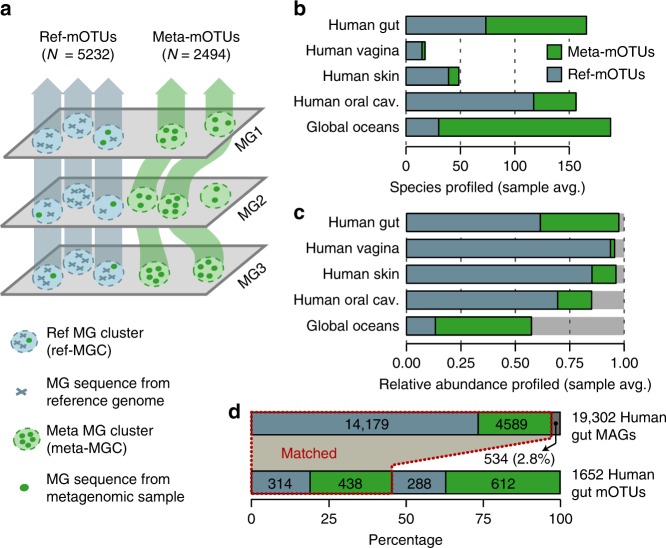
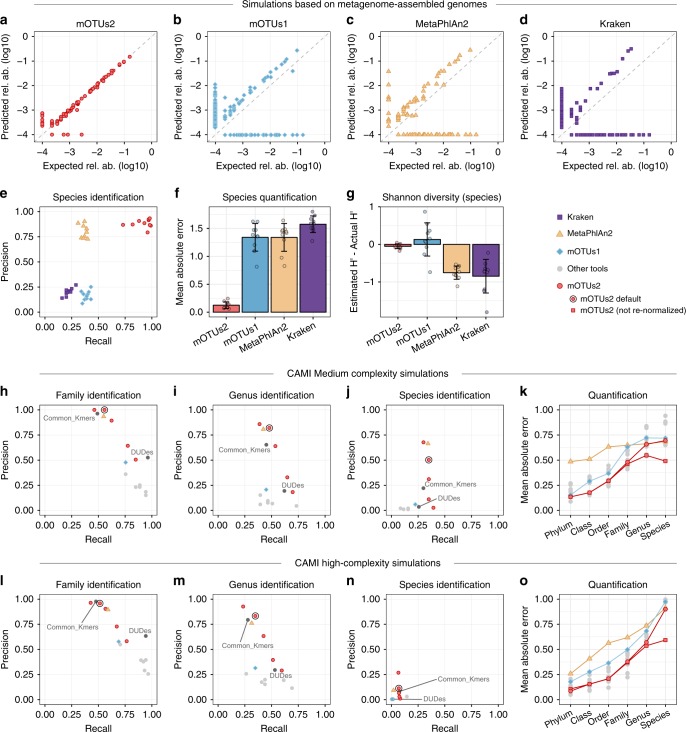
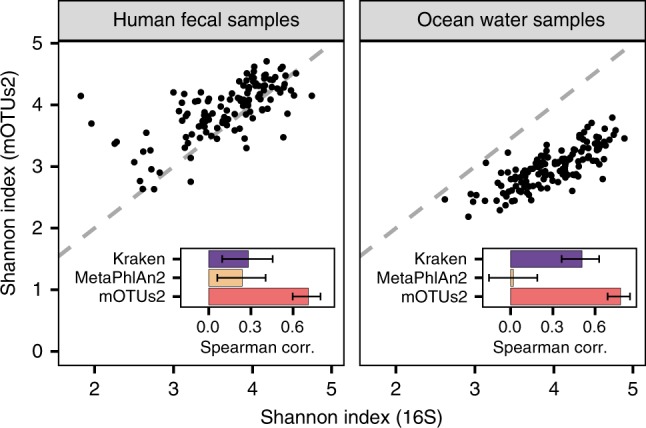
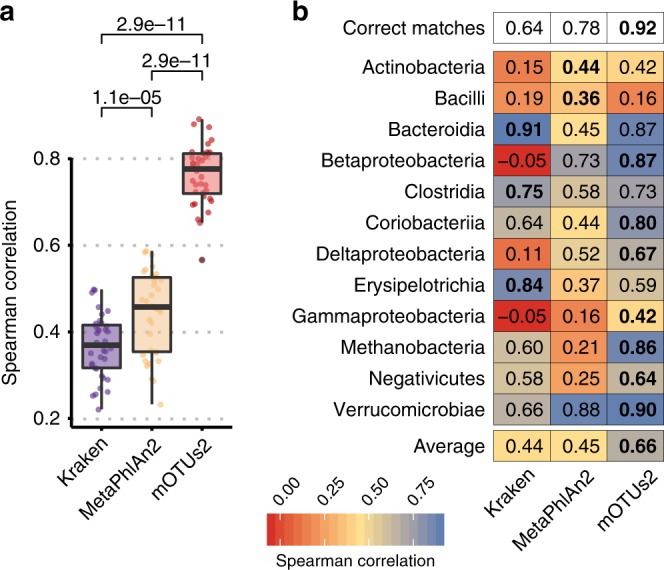
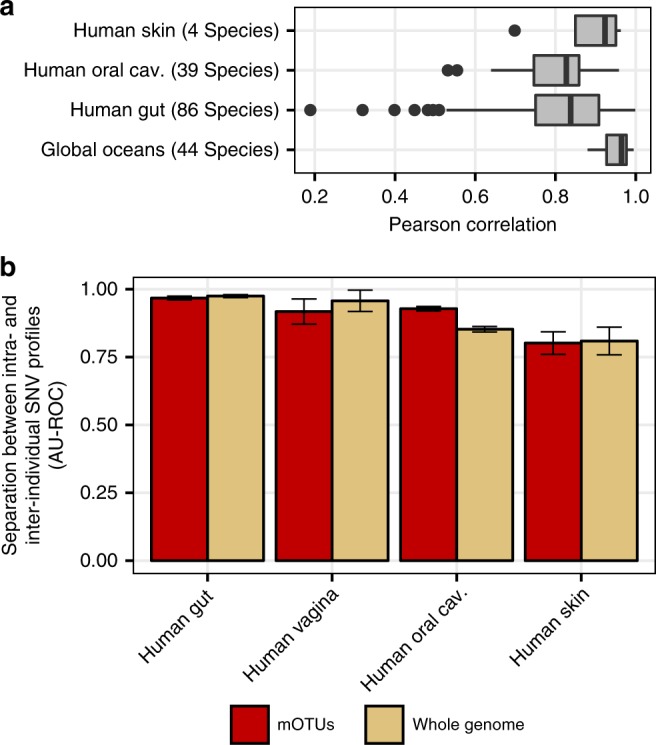
Metagenomic sequencing has greatly improved our ability to profile the composition of environmental and host-associated microbial communities. However, the dependency of most methods on reference genomes, which are currently unavailable for a substantial fraction of microbial species, introduces estimation biases. We present an updated and functionally extended tool based on universal (i.e., reference-independent), phylogenetic marker gene (MG)-based operational taxonomic units (mOTUs) enabling the profiling of >7700 microbial species. As more than 30% of them could not previously be quantified at this taxonomic resolution, relative abundance estimates based on mOTUs are more accurate compared to other methods. As a new feature, we show that mOTUs, which are based on essential housekeeping genes, are demonstrably well-suited for quantification of basal transcriptional activity of community members. Furthermore, single nucleotide variation profiles estimated using mOTUs reflect those from whole genomes, which allows for comparing microbial strain populations (e.g., across different human body sites).
Overview
The claims and statistics of this paper haven’t been checked yet.
Run the check — free, no account needed. It reads the open-access text and checks the sources it cites.
Integrity signals
Registry
Cites
Statistics
Figures
Verification
Claims the paper makes
The claims and statistics of this paper haven’t been checked yet.
Run the check — free, no account needed. It reads the open-access text and checks the sources it cites.
Claims other papers make about this one
Each is checked against this paper’s own text: does it say what the citing paper says it does?
In the citing paper
“These three profiling tools have consistently been shown to outperform other methods across multiple evaluations (McIntyre et al., 2017; Meyer et al., 2019; Milanese et al., 2019; Sczyrba et al., 2017; Truong et al., 2015; Ye et al., 2019).”
From Integrating taxonomic, functional, and strain-level profiling of diverse microbial communities with bioBakery 3 (2021) · cites this paper as Milanese et al., 2019
In the citing paper
“Additional phylogenetic marker gene-based operational taxonomic unit profiling is performed using mOTUs2 (35) on all reads that pass QC, which allows sensitive and accurate quantification for both known and unknown species.”
From MGnify: the microbiome analysis resource in 2020 (2019) · cites this paper as [35]
Self-check
Percentages, sums and reported differences re-computed from the paper’s own numbers.
The self-check needs the paper’s full text.
Citations
Cites
The Sequence Alignment/Map format and SAMtools
Li, H., Handsaker, B., Wysoker, A., Fennell, T., Ruan, J., Homer, N., Marth, G., Abecasis, G., Durbin, R., & 1000 Genome Project Data Processing Subgroup (2009) · Bioinformatics · doi:10.1093/bioinformatics/btp352 · Cited by 62,041
Fast and accurate short read alignment with Burrows-Wheeler transform
Li, H., & Durbin, R. (2009) · Bioinformatics · doi:10.1093/bioinformatics/btp324 · Cited by 58,607
IQ-TREE: A Fast and Effective Stochastic Algorithm for Estimating Maximum-Likelihood Phylogenies
Nguyen, L.-T., Schmidt, H. A., von Haeseler, A., & Minh, B. Q. (2015) · Molecular Biology and Evolution · doi:10.1093/molbev/msu300 · Cited by 26,046
UPARSE: highly accurate OTU sequences from microbial amplicon reads
Edgar, R. C. (2013) · Nature Methods · doi:10.1038/nmeth.2604 · Cited by 16,770
Fast, scalable generation of high-quality protein multiple sequence alignments using Clustal Omega
Sievers, F., Wilm, A., Dineen, D., Gibson, T., Karplus, K., Li, W.-Z., Lopez, R., McWilliam, H., Remmert, M., Söding, J., et al. (2011) · Molecular Systems Biology · doi:10.1038/msb.2011.75 · Cited by 15,576
pROC: an open-source package for R and S+ to analyze and compare ROC curves
Robin, X., Turck, N., Hainard, A., Tiberti, N., Lisacek, F., Sanchez, J.-C., & Müller, M. (2011) · BMC Bioinformatics · doi:10.1186/1471-2105-12-77 · Cited by 13,697
Parks, D. H., Imelfort, M., Skennerton, C. T., Hugenholtz, P., & Tyson, G. W. (2015) · Genome Research · doi:10.1101/gr.186072.114 · Cited by 12,496
Structure, function and diversity of the healthy human microbiome
The Human Microbiome Project Consortium (2012) · Nature · doi:10.1038/nature11234 · Cited by 11,726
A human gut microbial gene catalogue established by metagenomic sequencing
MetaHIT Consortium, Qin, J., Li, R., Raes, J., Arumugam, M., Burgdorf, K. S., Manichanh, C., Nielsen, T., Pons, N., Levenez, F., et al. (2010) · Nature · doi:10.1038/nature08821 · Cited by 11,624
Self-citationVSEARCH: a versatile open source tool for metagenomics
(2016) · doi:10.7717/peerj.2584 · Cited by 10,773
Cited by
Sorted by citations
Items 101–200 of 477
Staphylococcus cohnii is a potentially biotherapeutic skin commensal alleviating skin inflammation
Ito, Y., Sasaki, T., Li, Y., Tanoue, T., Sugiura, Y., Skelly, A. N., Suda, W., Kawashima, Y., Okahashi, N., Watanabe, E., et al. (2021) · Cell Reports · doi:10.1016/j.celrep.2021.109052 · Cited by 55
Younginger, B. S., Mayba, O., Reeder, J., Nagarkar, D. R., Modrusan, Z. D., Albert, M. L., & Byrd, A. L. (2023) · Cell Reports Medicine · doi:10.1016/j.xcrm.2023.100920 · Cited by 48
Wirbel, J., Essex, M., Forslund, S. K., & Zeller, G. (2024) · Genome biology · doi:10.1186/s13059-024-03390-9 · Cited by 57
Prevalence and Specificity of Chemoreceptor Profiles in Plant-Associated Bacteria
Sanchis-López, C., Cerna‐Vargas, J. P., Santamaría‐Hernando, S., Ramos, C., Krell, T., Rodríguez‐Palenzuela, P., López‐Solanilla, E., Huerta‐Cepas, J., & Rodríguez‐Herva, J. J. (2021) · mSystems · doi:10.1128/msystems.00951-21 · Cited by 47
Captivity Influences the Gut Microbiome of Rhinopithecus roxellana
Wang, X., Wang, Z., Pan, H., Qi, J., Li, D., Zhang, L., Shen, Y., Xiang, Z., & Li, M. (2021) · Frontiers in Microbiology · doi:10.3389/fmicb.2021.763022 · Cited by 49
Impact of long-term dietary habits on the human gut resistome in the Dutch population
Stege, P. B., Hordijk, J., Shetty, S. A., Visser, M., Viveen, M. C., Rogers, M. R. C., Gijsbers, E. F., Dierikx, C. M., van der Plaats, R. Q. J., van Duijkeren, E., et al. (2022) · Scientific Reports · doi:10.1038/s41598-022-05817-4 · Cited by 47
Leung, H., Xiong, L., Ni, Y., Busch, A., Bauer, M. W., Press, A. T., & Panagiotou, G. (2023) · npj Biofilms and Microbiomes · doi:10.1038/s41522-023-00398-0 · Cited by 46
Tourlousse, D. M., Narita, K., Miura, T., Ohashi, A., Matsuda, M., Ohyama, Y., Shimamura, M., Furukawa, M., Kasahara, K., Kameyama, K., et al. (2022) · Microbiology Spectrum · doi:10.1128/spectrum.01915-21 · Cited by 42
Xie, Z., & Manichanh, C. (2022) · Computational and Structural Biotechnology Journal · doi:10.1016/j.csbj.2022.07.010 · Cited by 46
Govender, K. N., & Eyre, D. W. (2022) · Microbial Genomics · doi:10.1099/mgen.0.000886 · Cited by 48
Critical Assessment of Metagenome Interpretation - the second round of challengesPreprint
Meyer, F., Fritz, A., Deng, Z.-L., Koslicki, D., Gurevich, A. A., Robertson, G., Alser, M., Antipov, D., Beghini, F., Bertrand, D., et al. (2021) · bioRxiv (Cold Spring Harbor Laboratory) · doi:10.1101/2021.07.12.451567 · Cited by 42
Metagenomics as a Tool To Monitor Reclaimed-Water Quality
Hong, P., Mantilla‐Calderon, D., & Wang, C. (2020) · Applied and Environmental Microbiology · doi:10.1128/aem.00724-20 · Cited by 41
Benítez‐Páez, A., Hess, A. L., Krautbauer, S., Liebisch, G., Christensen, L. H., Hjorth, M. F., Larsen, T. M., & Sanz, Y. (2021) · Molecular Nutrition & Food Research · doi:10.1002/mnfr.202000996 · Cited by 45
Zünd, M., Ruscheweyh, H., Field, C. M., Meyer, N., Miguelangel Cuenca, V., Hoces, D., Hardt, W., & Sunagawa, S. (2021) · Microbiome · doi:10.1186/s40168-021-01033-w · Cited by 38
Bowers, R. M., Nayfach, S., Schulz, F., Jungbluth, S. P., Ruhl, I. A., Sheremet, A., Lee, J., Goudeau, D., Eloe‐Fadrosh, E. A., Stepanauskas, R., et al. (2021) · The ISME Journal · doi:10.1038/s41396-021-01178-4 · Cited by 38
Ngugi, D. K., Salcher, M. M., Andrei, A., Ghai, R., Klotz, F., Chiriac, M., Ionescu, D., Büsing, P., Grossart, H., Xing, P., et al. (2023) · Science Advances · doi:10.1126/sciadv.adc9392 · Cited by 36
“For this purpose, we used the universally conserved single-copy marker gene COG0012 [a ribosome-associated guanosine triphosphatase (GTPase)], which was recently used in metagenomics to determine operational taxonomic units (i.e., mOTUs) at the species level ( 53 ).”
Dmitrijeva, M., Ruscheweyh, H., Feer, L., Li, K., Miravet‐Verde, S., Sintsova, A., Mende, D. R., Zeller, G., & Sunagawa, S. (2024) · Nucleic Acids Research · doi:10.1093/nar/gkae1004 · Cited by 44
“Here, we introduce the mOTUs online database (mOTUs-db; https://motus-db.org ), which enables interactive searching and browsing of the genome resource underlying the mOTUs taxonomic profiling tool (mOTUs profiler; https: //motus-tool.org ) ( 10 , 20 , 21 ).”
Murphy, A. R. J., Scanlan, D. J., Chen, Y., Adams, N. B. P., Cadman, W. A., Bottrill, A. R., Bending, G. D., Hammond, J. P., Hitchcock, A., Wellington, E. M. H., et al. (2021) · Nature Communications · doi:10.1038/s41467-021-24646-z · Cited by 39
Sun, Z., Liu, J., Zhang, M., Wang, T., Huang, S. W., Weiss, S. T., & Liu, Y. (2023) · Nature Communications · doi:10.1038/s41467-023-41099-8 · Cited by 44
“Indeed, the benchmark study of CAMI2 (Critical Assessment of Metagenome Interpretation: second round of challenge) 14 shows that several widely used tools for metagenome analysis, such as Bracken 16 , MetaPhlAn2 17 , and mOTUs2 18 , have an average Precision range of 0.11 to 0.60 and Recallrangeof0.”
InfluentialWu, Y., Gao, N., Sun, C., Feng, T., Liu, Q., & Chen, W. (2024) · Microbiome · doi:10.1186/s40168-024-01784-2 · Cited by 40
Hauptfeld, E., Pappas, N., van Iwaarden, S., Snoek, B. L., Aldas-Vargas, A., Dutilh, B. E., & von Meijenfeldt, F. A. B. (2024) · Nature Communications · doi:10.1038/s41467-024-47155-1 · Cited by 38
ter Horst, A. M., Fudyma, J., Sones, J. L., & Emerson, J. (2023) · The ISME Journal · doi:10.1038/s41396-023-01516-8 · Cited by 37
Metabolic models predict bacterial passengers in colorectal cancer
Garza, D. R., Taddese, R., Wirbel, J., Zeller, G., Boleij, A., Huynen, M. A., & Dutilh, B. E. (2020) · Cancer & Metabolism · doi:10.1186/s40170-020-0208-9 · Cited by 38
Gut microbiota in healthy and unhealthy long-living people
Zhang, S., Zeng, B., Chen, Y., Yang, M., Kong, F., Wei, L., Li, F., Zhao, J., & Li, Y. (2021) · Gene · doi:10.1016/j.gene.2021.145510 · Cited by 37
Ducarmon, Q. R., Terveer, E. M., Nooij, S., Bloem, M. N., Vendrik, K. E. W., Caljouw, M. A. A., Sanders, I. M. J. G., van Dorp, S. M., Wong, M. C., Zwittink, R. D., et al. (2021) · Genome Medicine · doi:10.1186/s13073-021-00869-z · Cited by 35
Lam, T. J., & Ye, Y. (2022) · Scientific Reports · doi:10.1038/s41598-022-22541-1 · Cited by 39
Zhang, Y., Nair, S., Zhang, Z., Zhao, J., Zhao, H., Lu, L., Chang, L., & Jiao, N. (2024) · Environmental Science & Technology · doi:10.1021/acs.est.3c09921 · Cited by 37
Dark CO2 fixation in temperate beech and pine forest soils
Akinyede, R., Taubert, M., Schrumpf, M., Trumbore, S. E., & Küsel, K. (2021) · Soil Biology and Biochemistry · doi:10.1016/j.soilbio.2021.108526 · Cited by 36
Mende, D. R., Boeuf, D., & DeLong, E. F. (2019) · Frontiers in Microbiology · doi:10.3389/fmicb.2019.02273 · Cited by 34
Busi, S. B., Pramateftaki, P. V., Brandani, J., Fodelianakis, S., Peter, H., Halder, R., Wilmes, P., & Battin, T. J. (2020) · PeerJ · doi:10.7717/peerj.9973 · Cited by 34
Ruscheweyh, H., Milanese, A., Paoli, L., Sintsova, A., Mende, D. R., Zeller, G., & Sunagawa, S. (2021) · Current Protocols · doi:10.1002/cpz1.218 · Cited by 34
Pryszlak, A., Wenzel, T., Seitz, K. W., Hildebrand, F., Kartal, E., Cosenza, M. R., Beneš, V., Bork, P., & Merten, C. A. (2021) · Cell Reports Methods · doi:10.1016/j.crmeth.2021.100137 · Cited by 33
Metabolic engineering of human gut microbiome: Recent developments and future perspectives
Li, P., Roos, S., Luo, H., Ji, B., & Nielsen, J. (2023) · Metabolic Engineering · doi:10.1016/j.ymben.2023.06.006 · Cited by 34
TIPP2: metagenomic taxonomic profiling using phylogenetic markers
Shah, N., Molloy, E. K., Pop, M., & Warnow, T. J. (2021) · Bioinformatics · doi:10.1093/bioinformatics/btab023 · Cited by 33
Wirbel, J., Zych, K., Essex, M., Karcher, N., Kartal, E., Salazar, G., Peer Bork, B., Sunagawa, S., & Zeller, G. (2020) · bioRxiv (Cold Spring Harbor Laboratory) · doi:10.1101/2020.02.06.931808 · Cited by 33
Pereira‐Marques, J., Ferreira, R. M., & Figueiredo, C. (2024) · Gut Microbes · doi:10.1080/19490976.2024.2323235 · Cited by 36
Exploring Cereal Metagenomics: Unravelling Microbial Communities for Improved Food Security
Masenya, K., Manganyi, M. C., & Dikobe, T. B. (2024) · Microorganisms · doi:10.3390/microorganisms12030510 · Cited by 36
Daly, G., Ghini, V., Adessi, A., Fondi, M., Buchan, A., & Viti, C. (2022) · FEMS Microbiology Reviews · doi:10.1093/femsre/fuac020 · Cited by 30
The gut microbiome in solid organ transplantation
Arassi, M. B., Zeller, G., Karcher, N., Zimmermann, M., & Tönshoff, B. (2020) · Pediatric Transplantation · doi:10.1111/petr.13866 · Cited by 27
Feng, C., Zhang, W., Zhang, T., Li, B., He, Q., Kwok, L., & Zhang, H. (2022) · Journal of Functional Foods · doi:10.1016/j.jff.2022.105140 · Cited by 29
Uffelen, A. V., Posadas, A., Roosens, N. H. C., Marchal, K., Keersmaecker, S. C. J. D., & Vanneste, K. (2024) · Scientific Data · doi:10.1038/s41597-024-03672-8 · Cited by 31
“Examples of popular taxonomic profilers used in this study include MetaPhlAn3 25 and mOTUs2 26 .”
A hidden confounder for microbiome studies: medications used years before sample collection
Aasmets, O., Taba, N., Krigul, K. L., Andreson, R., Estonian Biobank Research Team, Org, E., Metspalu, M., Metspalu, A., Milani, L., & Esko, T. (2025) · mSystems · doi:10.1128/msystems.00541-25 · Cited by 30
“We further focused on the associations between drug usage and the presence-absence (PA) and abundance (centered log-ratio [CLR] transformed) of 530 mOTUs (20), which were prevalent in at least 10% of the cohort.”
Goussarov, G., Mysara, M., Vandamme, P. A. R., & Houdt, R. V. (2022) · MicrobiologyOpen · doi:10.1002/mbo3.1298 · Cited by 27
Ubiquitous occurrence of a dimethylsulfoniopropionate ABC transporter in abundant marine bacteria
Li, C., Mausz, M. A., Murphy, A. R. J., Zhang, N., Chen, X., Wang, S., Gao, C., Aguiló‐Ferretjans, M. D. M., Silvano, E., Lidbury, I. D. E. A., et al. (2023) · The ISME Journal · doi:10.1038/s41396-023-01375-3 · Cited by 31
Evidence of cospeciation between termites and their gut bacteria on a geological time scale
Arora, J., Buček, A., Hellemans, S., Beránková, T., Arias, J. R., Fisher, B. L., Clitheroe, C., Brune, A., Kinjo, Y., Šobotník, J., et al. (2023) · Proceedings of the Royal Society B Biological Sciences · doi:10.1098/rspb.2023.0619 · Cited by 27
Shi, Z., Hu, G., Li, M. W., Zhang, L., Li, X., Li, L., Wang, X., Fu, X., Sun, Z., Zhang, X., et al. (2022) · Gut · doi:10.1136/gutjnl-2022-328256 · Cited by 27
“We applied shotgun metagenomic sequencing to their faecal samples, profiled their gut metagenomes using mOTUs2 V.2.5, 3 and trained a patient-stratification classifier with all species-level taxonomic features using the LASSO algorithm implemented in SIAMCAT.”
InfluentialSubstrate uptake patterns shape niche separation in marine prokaryotic microbiome
Zhao, Z., Amano, C., Reinthaler, T., Orellana, M. V., & Herndl, G. J. (2024) · Science Advances · doi:10.1126/sciadv.adn5143 · Cited by 25
“We examined the relationship between depth-related community variation, as reflected by phylogenetic marker gene-based operational taxonomic units (mOTUs) ( 33 ), and the changes of genes/ transcripts encoding ABC transporters and TBDTs.”
Chang, T., Gavelis, G. S., Brown, J. M., & Stepanauskas, R. (2024) · Microbiome · doi:10.1186/s40168-024-01848-3 · Cited by 27
Alterations of the Gut Microbiome Associated to Methane Metabolism in Mexican Children with Obesity
Murga-Garrido, S. M., Orbe-Orihuela, Y. C., Díaz-Benítez, C. E., Castañeda-Márquez, A. C., Cornejo‐Granados, F., Ochoa‐Leyva, A., Sánchez‐Flores, A., Cruz, M., Burguete-García, A. I., & Lagunas-Martínez, A. (2022) · Children · doi:10.3390/children9020148 · Cited by 28
Nørgaard, J. C., Jørgensen, M., Moestrup, K. S., Ilett, E. E., Zucco, A. G., Marandi, R. Z., Noguera-Julián, M., Paredes, R., Lundgren, J. D., Sengeløv, H., et al. (2023) · The Journal of Infectious Diseases · doi:10.1093/infdis/jiad033 · Cited by 27
Zhang, L., Lin, T., Liu, W., & Ling, F. (2024) · ACS Environmental Au · doi:10.1021/acsenvironau.3c00074 · Cited by 25
Newberry, E. A., Bhandari, R., Kemble, J. M., Sikora, E. J., & Potnis, N. (2020) · Environmental Microbiology · doi:10.1111/1462-2920.14989 · Cited by 25
Study protocol of the Bergen brain-gut-microbiota-axis study
Berentsen, B., Bharath, H. N., Teige, E. P., Lied, G. A., Lundervold, A. J., Lundervold, K., Steinsvik, E. K., Hillestad, E. M. R., Valeur, J., Brønstad, I., et al. (2020) · Medicine · doi:10.1097/md.0000000000021950 · Cited by 25
Systems Biology: A Multi-Omics Integration Approach to Metabolism and the Microbiome
Son, J. W., Shoaie, S., & Lee, S. (2020) · Endocrinology and Metabolism · doi:10.3803/enm.2020.303 · Cited by 26
“While powerful, 16S rRNA amplicon sequencing is dependent on reference genomes from isolated bacteria, making it difficult to uncover the whole bacterial population, which includes unculturable species [46].”
Nousias, O., & Montesanto, F. (2021) · Marine Genomics · doi:10.1016/j.margen.2021.100866 · Cited by 25
Next steps after 15 stimulating years of human gut microbiome research
Clavel, T., Horz, H., Segata, N., & Vehreschild, M. J. G. T. (2021) · Microbial Biotechnology · doi:10.1111/1751-7915.13970 · Cited by 26
Gaballa, A., Wiedmann, M., & Carroll, L. M. (2023) · Frontiers in Cellular and Infection Microbiology · doi:10.3389/fcimb.2023.1060519 · Cited by 25
YACHT : an ANI-based statistical test to detect microbial presence/absence in a metagenomic sample
Koslicki, D., White, S., Ma, C., & Novikov, A. (2024) · Bioinformatics · doi:10.1093/bioinformatics/btae047 · Cited by 25
“Anadditional drawback of this approach is that, in contrast to clade-specific marker gene approaches (Segata et al. 2012, Sunagawa et al. 2013, Milanese et al. 2019) or clade-specific k -mer based approaches (Lu et al. 2017, Wood et al. 2019), our method, when used as a taxonomic profiler, does not…”
Rachtman, E., Balaban, M., Bafna, V., & Mirarab, S. (2020) · Molecular Ecology Resources · doi:10.1111/1755-0998.13135 · Cited by 24
Computational Metagenomics: State of the Art
Pita-Galeana, M. A., Ruhle, M., López-Vázquez, L., de Anda‐Jáuregui, G., & Lemus, E. H. (2025) · International Journal of Molecular Sciences · doi:10.3390/ijms26189206 · Cited by 28
“When computational resources are limited, marker-based approaches such as MetaPhlAn [50] mOTUs [51], are recommended.”
Identification and profiling of microbial community from industrial sludge
Sharma, P., & Singh, S. P. (2022) · Archives of Microbiology · doi:10.1007/s00203-022-02831-y · Cited by 24
Bacterial catabolism of membrane phospholipids links marine biogeochemical cycles
Westermann, L. M., Lidbury, I. D. E. A., Li, C., Wang, N., Murphy, A. R. J., Aguiló‐Ferretjans, M. D. M., Quareshy, M., Shanmugan, M., Torcello-Requena, A., Silvano, E., et al. (2023) · Science Advances · doi:10.1126/sciadv.adf5122 · Cited by 24
“Retrieved hits were manually checked via sequence alignment and phylogenetic reconstruction, and values were normalized by taking the median abundance of 10 prokaryotic single-copy marker genes/transcripts ( 34 , 40 ) for four different sampling depths and nine different oceanic sampling sites (Fig.”
Baud, G., Prasad, A., Ellegaard, K., & Engel, P. (2023) · Genome biology · doi:10.1186/s13059-023-03131-4 · Cited by 25
Metaproteomic analysis decodes trophic interactions of microorganisms in the dark ocean
Zhao, Z., Amano, C., Reinthaler, T., Baltar, F., Orellana, M. V., & Herndl, G. J. (2024) · Nature Communications · doi:10.1038/s41467-024-50867-z · Cited by 26
“Analysis of gene-based operational taxonomic units (mOTUs) 85 was also performed for both, the metagenomics and metatranscriptomic datasets to cover the microbial abundance and activity, respectively.”
Yan, Y., Wang, Z., Zhou, Y., Gao, Z., Ning, L., Zhao, Y., Xuan, B., Ma, Y., Tong, T., Huang, X., et al. (2023) · Cell Reports Medicine · doi:10.1016/j.xcrm.2023.101153 · Cited by 26
Aizpurua, O., Dunn, R. R., Hansen, L. H., Gilbert, M. T. P., & Alberdi, A. (2023) · Critical Reviews in Biotechnology · doi:10.1080/07388551.2023.2254933 · Cited by 23
“Once a sample is sequenced, read-based taxonomic or functional profiling [48] allows generating rarefaction curves to estimate completeness (relative diversity captured compared to the total estimated diversity) of the characterized community [49].”
Taxometer: Improving taxonomic classification of metagenomics contigs
Kutuzova, S., Nielsen, M. E., Líndez, P. P., Nissen, J. N., & Rasmussen, S. (2024) · Nature Communications · doi:10.1038/s41467-024-52771-y · Cited by 21
Strain-Resolved Dynamics of the Lung Microbiome in Patients with Cystic Fibrosis
Dmitrijeva, M., Kahlert, C. R., Feigelman, R., Kleiner, R. L., Nolte, O., Albrich, W. C., Baty, F., & von Mering, C. (2021) · mBio · doi:10.1128/mbio.02863-20 · Cited by 22
Ioannou, M., Borkent, J., Andreu‐Sánchez, S., Wu, J., Fu, J., Sommer, I. E., & Haarman, B. C. M. (2024) · Brain Behavior and Immunity · doi:10.1016/j.bbi.2024.07.009 · Cited by 23
“Scaled counts were produced (Milanese et al., 2019) and used in subsequent analyses.”
Multi-Omics Strategies for Investigating the Microbiome in Toxicology Research
Morgan, E. W., Perdew, G. H., & Patterson, A. D. (2022) · Toxicological Sciences · doi:10.1093/toxsci/kfac029 · Cited by 23
The Relationship Between Gut Microbiome and Bile Acids in Primates With Diverse Diets
Li, X., Wang, X., Wang, Z., Zhang, M., Wang, S., Xiang, Z., Pan, H., & Li, M. (2022) · Frontiers in Microbiology · doi:10.3389/fmicb.2022.899102 · Cited by 21
Shen, W. X., Liang, S. R., Jiang, Y., & Chen, Y. (2022) · Patterns · doi:10.1016/j.patter.2022.100658 · Cited by 21
Garcia, A. R., Zhang, J., Greppi, A., Constancias, F., Wortmann, E., Wandres, M., Hurley, K. A., Pascual‐García, A., Ruscheweyh, H., Sturla, S. J., et al. (2021) · Environmental Microbiology · doi:10.1111/1462-2920.15431 · Cited by 20
A novel class of sulfur-containing aminolipids widespread in marine roseobacters
Smith, A. F., Silvano, E., Päuker, O., Guillonneau, R., Quareshy, M., Murphy, A. R. J., Mausz, M. A., Stirrup, R., Rihtman, B., Aguiló‐Ferretjans, M. D. M., et al. (2021) · The ISME Journal · doi:10.1038/s41396-021-00933-x · Cited by 20
“Abundance was normalised as a percentage of the median mapped read abundance of genes/transcripts of ten prokaryotic single-copy marker genes (Milanese et al 2019).”
Buffet‐Bataillon, S., Rizk, G., Cattoir, V., Sassi, M., Thibault, V., Giudice, J. D., & Gangneux, J. (2022) · Microorganisms · doi:10.3390/microorganisms10040711 · Cited by 20
Pinto, S., Šajbenová, D., Benincà, E., Nooij, S., Terveer, E. M., Keller, J. J., Jong, A. E. V. D. M., Bogaards, J. A., & Steyerberg, E. W. (2024) · Journal of Crohn s and Colitis · doi:10.1093/ecco-jcc/jjae137 · Cited by 21
“28,29 Unassigned, human-derived, Archaeal, and low-quality reads were removed from the data, which resulted in 93 different families (i.e. 1552 unique mOTUs).”
Díaz-García, C. V., Moreno, E., Talavera-Rodríguez, A., Martín-Fernández, L., González-Bodí, S., Martín‐Pedraza, L., Pérez-Molina, J. A., Dronda, F., Gosalbes, M. J., Luna, L., et al. (2024) · Microbiome · doi:10.1186/s40168-024-01919-5 · Cited by 21
“0.1 with default parameters (marker genes cutoff -g 3 and minimum alignment length -l 70 for higher sensitivity) [26].”
InfluentialInter-comparison of marine microbiome sampling protocols
Pascoal, F., Tomasino, M. P., Piredda, R., Quero, G. M., Torgo, L., Poulain, J., Galand, P. E., Fuhrman, J. A., Mitchell, A., Tinta, T., et al. (2023) · ISME Communications · doi:10.1038/s43705-023-00278-w · Cited by 20
Oh, M., & Zhang, L. (2023) · Scientific Reports · doi:10.1038/s41598-023-31210-w · Cited by 22
Carroll, L. M., Pierneef, R., Mafuna, T., Magwedere, K., & Matle, I. (2023) · Frontiers in Microbiology · doi:10.3389/fmicb.2023.1181376 · Cited by 19
“…marker gene-based species cluster (specI cluster) using classify-genomes (https://github.com/AlessioMilanese/classify-genomes; accessed 3 June 2020; Milanese et al., 2019) and version 3 of the specI taxonomy (Mende et al., 2013). specI clusters reported by classify-genomes were treated as species…”
Saenz, C., Fang, Q., Gnanasekaran, T., Trammell, S. A. J., Buijink, J. A., Pisano, P., Wierer, M., Moens, F., Lengger, B., Brejnrod, A., et al. (2023) · Microbiology Spectrum · doi:10.1128/spectrum.03933-22 · Cited by 18
Torcello-Requena, A., Murphy, A. R. J., Lidbury, I. D. E. A., Pitt, F. D., Stark, R., Millard, A. D., Puxty, R. J., Chen, Y., & Scanlan, D. J. (2024) · Proceedings of the National Academy of Sciences · doi:10.1073/pnas.2312892121 · Cited by 19
“Noncyanobacterial sequences were filtered and excluded and the abundance/expression values from metatranscriptome and metagenome screens were normalized using a set of ten single - copy marker genes (53).”
InfluentialZhao, Z., Zhao, Y., Marotta, F., Xamxidin, M., Li, H., Xu, J., Hu, B., & Wu, M. (2024) · Frontiers in Microbiology · doi:10.3389/fmicb.2024.1424368 · Cited by 21
“Species-level abundance was obtained using mOTUs v3 (Milanese et al., 2019) based on unassembled metagenomic sequencing data.”
MethodPetersen, A. Ø., Jokinen, M., Plichta, D. R., Liebisch, G., Gronwald, W., Dettmer, K., Oefner, P. J., Vlamakis, H. C., Chung, D. C., Ranki, A., et al. (2021) · Journal of Allergy and Clinical Immunology · doi:10.1016/j.jaci.2021.03.025 · Cited by 20
Liao, H., Shang, J., & Sun, Y. (2023) · Bioinformatics · doi:10.1093/bioinformatics/btad747 · Cited by 18
“These cohorts contain 1644 samples in total and have composition profiles available, which are generated by Metaphlan2 [25] or mOTU2 [26].”
Assessing environmental gradients in relation to dark CO 2 fixation in estuarine wetland microbiomes
Grüterich, L., Woodhouse, J. N., Mueller, P., Tiemann, A., Ruscheweyh, H., Sunagawa, S., Grossart, H., & Streit, W. R. (2024) · Applied and Environmental Microbiology · doi:10.1128/aem.02177-24 · Cited by 18
The rumen microbiome inhibits methane formation through dietary choline supplementation
Li, Y., Kreuzer, M., Clayssen, Q., Ebert, M., Ruscheweyh, H., Sunagawa, S., Kunz, C., Attwood, G. T., Amelchanka, S. L., & Terranova, M. (2021) · Scientific Reports · doi:10.1038/s41598-021-01031-w · Cited by 19
Pal, S., Sharma, G., & Subramanian, S. (2021) · BMC Genomics · doi:10.1186/s12864-021-07955-x · Cited by 18
Kindler, G. S., Wong, H. L., Larkum, A. W. D., Johnson, M. S., MacLeod, F. I., & Burns, B. P. (2021) · FEMS Microbiology Ecology · doi:10.1093/femsec/fiab158 · Cited by 21
Artificial intelligence for microbiology and microbiome research
Wang, X.-W., Wang, T. D., & Liu, Y. (2026) · Cell Systems · doi:10.1016/j.cels.2026.101531 · Cited by 24
Gut Microbiota Composition and Metabolic Potential of Long-Living People in China
Zhang, S., Ning, R., Zeng, B., Deng, F., Kong, F., Guo, W., Zhao, J., & Li, Y. (2022) · Frontiers in Aging Neuroscience · doi:10.3389/fnagi.2022.820108 · Cited by 18
Garcia, A. R., Greppi, A., Constancias, F., Ruscheweyh, H., Gasser, J., Hurley, K. A., Sturla, S. J., Schwab, C., & Lacroix, C. (2023) · Frontiers in Microbiomes · doi:10.3389/frmbi.2023.1194516 · Cited by 17
Segmental patterning of microbiota and immune cells in the murine intestinal tract
Anandakumar, H., Rauch, A., Wimmer, M. I., Yarritu, A., Koch, G., McParland, V. J., Bartolomaeus, H., & Wilck, N. (2024) · Gut Microbes · doi:10.1080/19490976.2024.2398126 · Cited by 17
Genomic and phenotypic imprints of microbial domestication on cheese starter cultures
Somerville, V., Thierer, N., Schmidt, R. S., Roetschi, A., Braillard, L., Haueter, M., Berthoud, H., Shani, N., von Ah, U., Mazel, F., et al. (2024) · Nature Communications · doi:10.1038/s41467-024-52687-7 · Cited by 20
“1B) and determined their taxonomic composition using a short read taxonomic pro fi ler (mOTU2 45 ).”
Gihawi, A., Rallapalli, G., Hurst, R., Cooper, C. S., Leggett, R. M., & Brewer, D. S. (2019) · Genome biology · doi:10.1186/s13059-019-1819-8 · Cited by 17
Uncharted biosynthetic potential of the ocean microbiomePreprint
Paoli, L., Ruscheweyh, H., Forneris, C. C., Kautsar, S. A., Clayssen, Q., Salazar, G., Milanese, A., Gehrig, D., Larralde, M. F., Carroll, L. M., et al. (2021) · bioRxiv (Cold Spring Harbor Laboratory) · doi:10.1101/2021.03.24.436479 · Cited by 17
Gut microbiota insights into human adaption to high‐plateau diet
Huang, Y., Liu, J., Tun, H. M., Stanton, C., Chen, T., El-Nezami, H. S., Wei, H., Wang, M., & Wu, Q. (2022) · iMeta · doi:10.1002/imt2.6 · Cited by 15
“…sets, we did not perform assembly ‐ based metagenomic analysis that requires high sequencing depths, rather we applied marker gene ‐ based operational taxonomic units (mOTUs; version 2.6) that use 10 universal single ‐ copy marker genes for taxonomic profiling with high precision and low error [3].”
MethodInfluentialA revisit to universal single-copy genes in bacterial genomes
Wang, S., Ventolero, M. F. H., Hu, H., & Li, X. (2022) · Scientific Reports · doi:10.1038/s41598-022-18762-z · Cited by 17
“To identify the corresponding sequences of a USCG in a given genome, we used the tool 307 fetchMG [6].”
InfluentialConsistency across multi‐omics layers in a drug‐perturbed gut microbial community
Wuyts, S., Alves, R., Zimmermann‐Kogadeeva, M., Nishijima, S., Blasche, S., Driessen, M., Geyer, P. E., Hercog, R., Kartal, E., Maier, L., et al. (2023) · Molecular Systems Biology · doi:10.15252/msb.202311525 · Cited by 19
“5 for metagenomics and metatranscriptomics (Milanese et al , 2019)), and targeted analyses based on mapping to the 32 reference genomes of species comprising our community (Materials and Methods).”
InfluentialGhiasi, N. M., Sadrosadati, M., Mustafa, H., Gollwitzer, A., Fırtına, C., Eudine, J., Mao, H., Lindegger, J., Cavlak, M. B., Alser, M., et al. (2024) · Proceedings - International Symposium on Computer Architecture/Proceedings · doi:10.1109/isca59077.2024.00054 · Cited by 19
“Some tools incur a large number of random accesses to search the database (e.g., [48, 49, 51, 53, 54, 64, 73–78]), which hinders ISP’s large potential by preventing the full utilization of SSD internal bandwidth.”
Influential
Metadata
- Authors
- Milanese, A., Mende, D. R., Paoli, L., Salazar, G., Ruscheweyh, H.-J., Cuenca, M., Hingamp, P., Alves, R., Costea, P. I., Coelho, L. P., Schmidt, T. S. B., Almeida, A., Mitchell, A. L., Finn, R. D., Huerta-Cepas, J., Bork, P., Zeller, G., & Sunagawa, S.
- Affiliations
- European Molecular Biology Laboratory (DE)
- University of Hawaiʻi at Mānoa (US)
- SIB Swiss Institute of Bioinformatics (CH)
- Centre National de la Recherche Scientifique (FR)
- Heidelberg University (DE)
- European Bioinformatics Institute (GB)
- Corresponding author
- Zeller, Georg
- Sunagawa, Shinichi
- ORCID
- Venue
- Nature Communications
- Published
- 2019-03-04
- Volume
- 10
- Issue
- 1
- Pages
- 1014-1014
- ISSN
- 2041-1723 (ISSN-L)
- PMC
- PMC6399450
- OpenAlex
- W2920716817
- Cited by
- 446
- References
- 59
- Citations by year
- 2026: 24 · 2025: 43 · 2024: 74 · 2023: 73 · 2022: 89 · 2021: 82 · 2020: 42 · 2019: 17
- FWCI
- 20.03
- Type
- journal article
- Language
- en
- Open access
- gold
- doi.org
- Locations
- Nature Communications (publishedVersion, cc-by)
- Europe PMC (PubMed Central) (publishedVersion, cc-by)
- PubMed Central (publishedVersion, cc-by)
- PubMed (publishedVersion)
- MDC Repository (Max-Delbrueck-Center for Molecular Medicine) (acceptedVersion)
- HAL (submittedVersion, cc-by)
- RePEc: Research Papers in Economics (submittedVersion)
- DIGITAL.CSIC (Spanish National Research Council (CSIC)) (submittedVersion, cc-by)
- DOAJ (DOAJ: Directory of Open Access Journals) (submittedVersion)
- DOAJ (DOAJ: Directory of Open Access Journals) (submittedVersion, cc-by-sa)
- Online Publication Service of Würzburg University (Würzburg University) (submittedVersion, cc-by)
- Repository for Publications and Research Data (ETH Zurich) (submittedVersion, cc-by)
- ETH Zürich Research Collection (cc-by)
- Funders
- European Molecular Biology Organization (GA-2013-609409, ALTF 721-2015, LTFCOFUND2013)
- Novartis Foundation (LTFCOFUND2013, GA-2013-609409)
- Bundesministerium für Bildung und Forschung (031A537B)
- Eidgenössische Technische Hochschule Zürich (PHRT 521)
- Novartis Stiftung für Medizinisch-Biologische Forschung
- Helmut Horten Stiftung
- German Network for Bioinformatics Infrastructure (031 A537B)
- Topics
- Life Sciences › Biochemistry, Genetics and Molecular Biology › Molecular Biology › Genomics and Phylogenetic Studies
- Physical Sciences › Environmental Science › Ecology › Microbial Community Ecology and Physiology
- Life Sciences › Biochemistry, Genetics and Molecular Biology › Molecular Biology › Gut microbiota and health
- Keywords
- operational taxonomic units, housekeeping genes, microbial community composition, single nucleotide variants, human microbiome, metagenomics
- MeSH terms
- Host Microbial Interactions, Algorithms, Genetic Markers, Humans, Phylogeny, Cluster Analysis, Sequence Alignment, Genome, Sequence Analysis, DNA, Computational Biology, Genes, Essential, Gene Expression Profiling, Metagenomics, Molecular Sequence Annotation, Microbiota
About these checks
Registry, retraction, Cites and statistics results are computed, not judged, with one exception: a printed reference that no index lists is read once by a model before it counts as a citation error. Claims are extracted by a model and kept only when their quote appears verbatim in the text; each cited source is then checked, with a model’s help, for whether it says what the claim relies on. Those verdicts can be wrong — read the claim’s quote and the cited source before relying on one.
Statistics and arithmetic are recomputed, not judged.
Confidence bands are shown only for fields calibrated on our annotated test set. None is calibrated yet, so no band is shown.
What counts as a claim ›How we measure confidence ›How we check this ›
Are you an author, or do you see a problem with this page? Request a review
