

ER stress-induced mediator C/EBP homologous protein thwarts effector T cell activity in tumors through T-bet repression
Open accessThe DOI matches its Crossref record; 60 of the 60 references it cites were found in a registry or an index.
Abstract
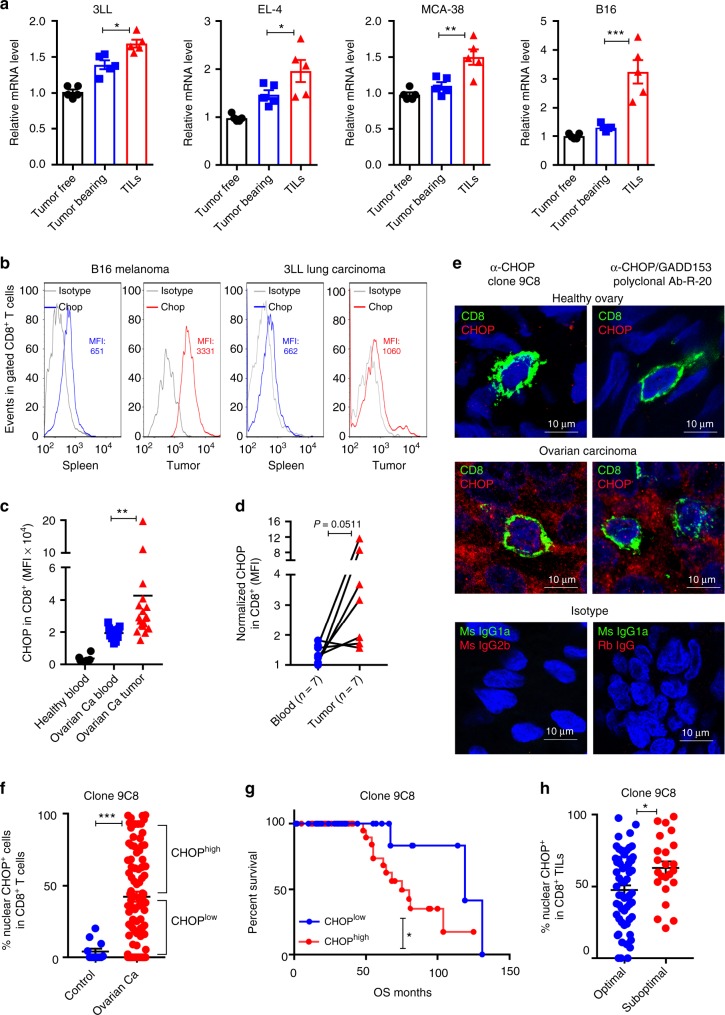
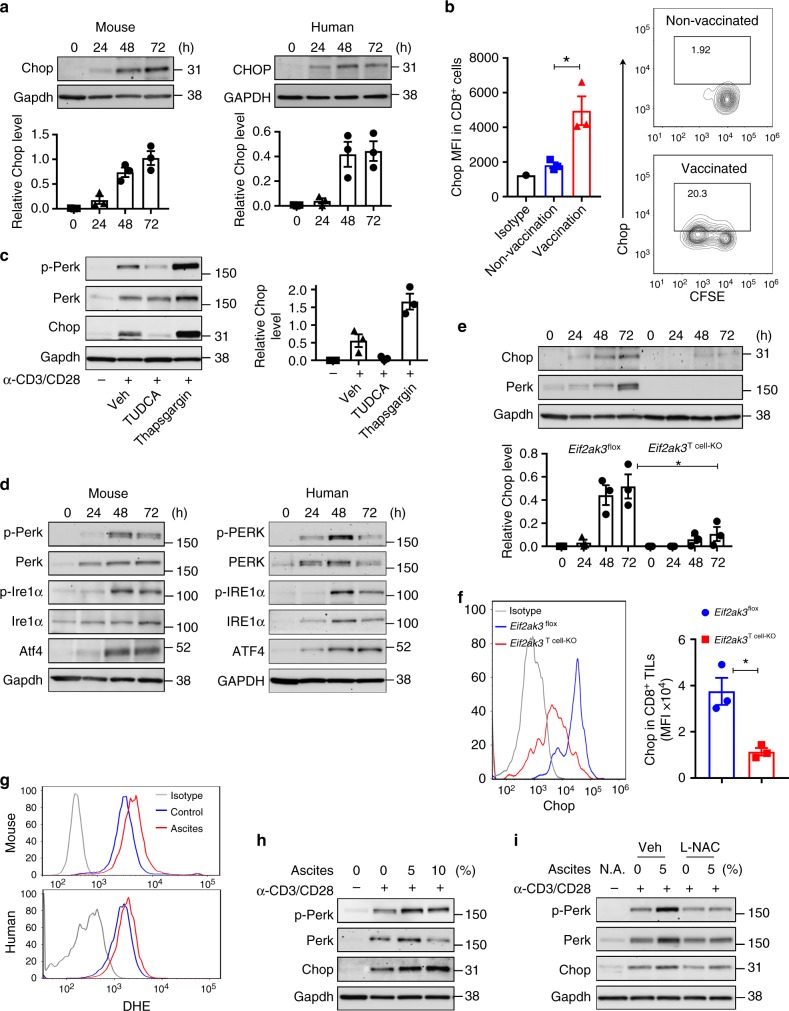
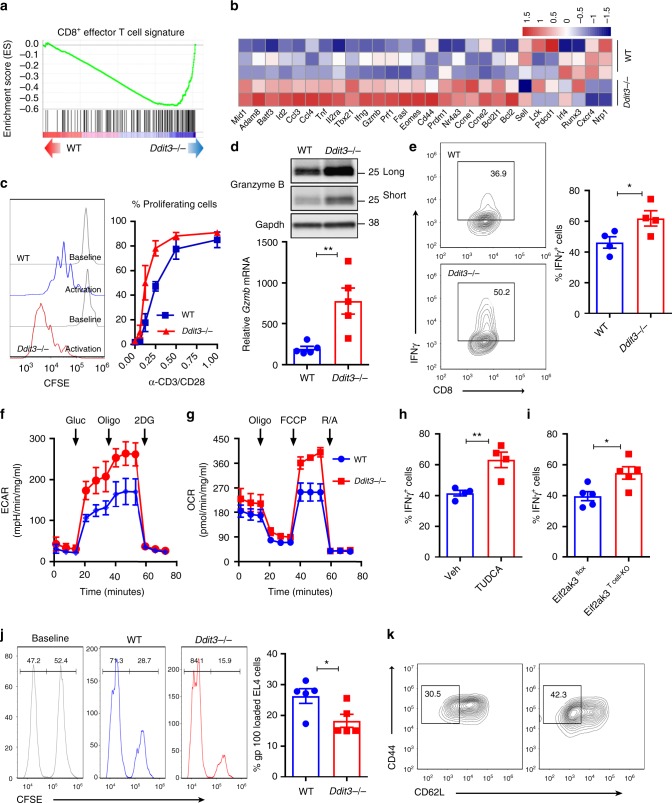
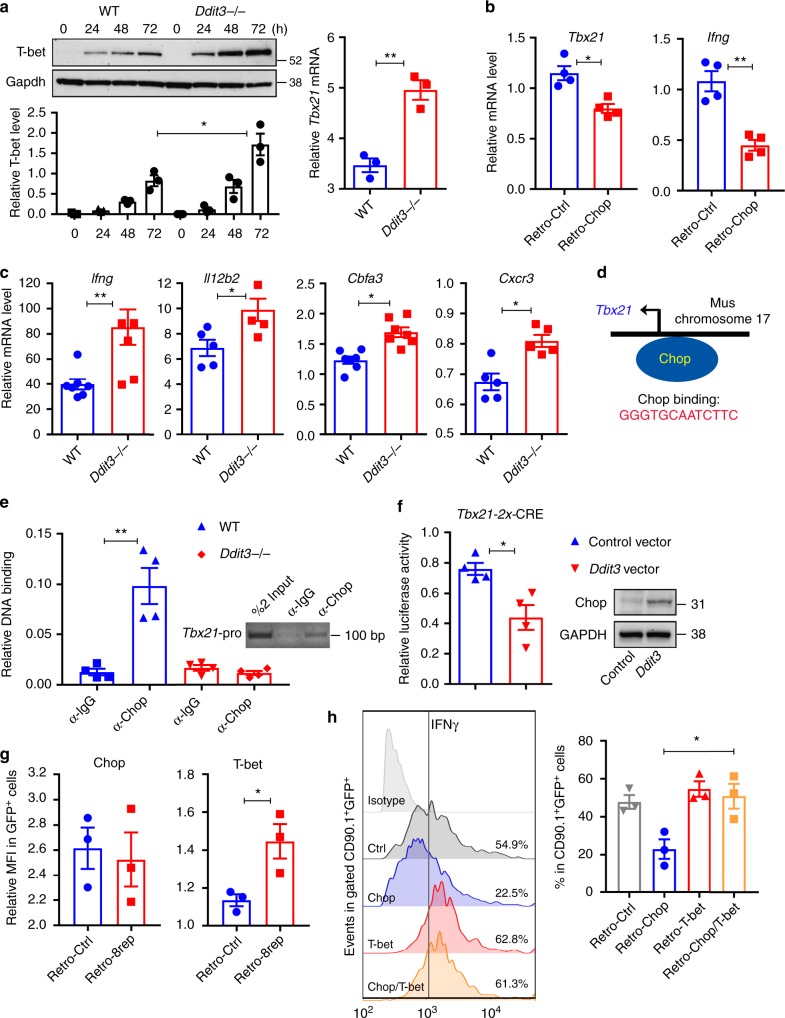
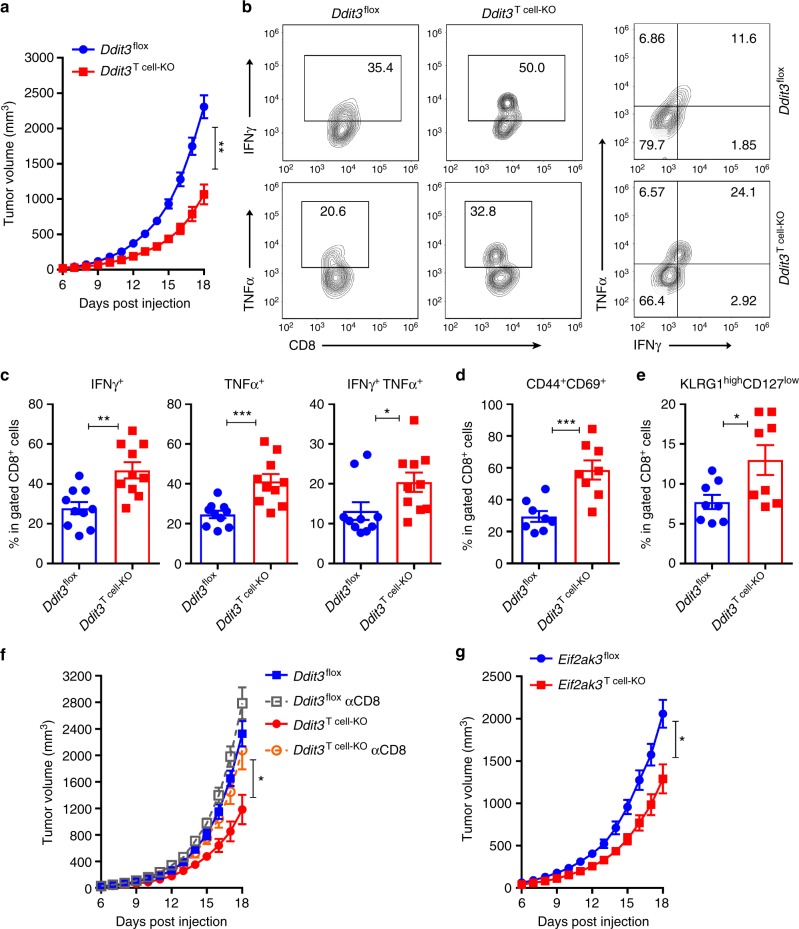
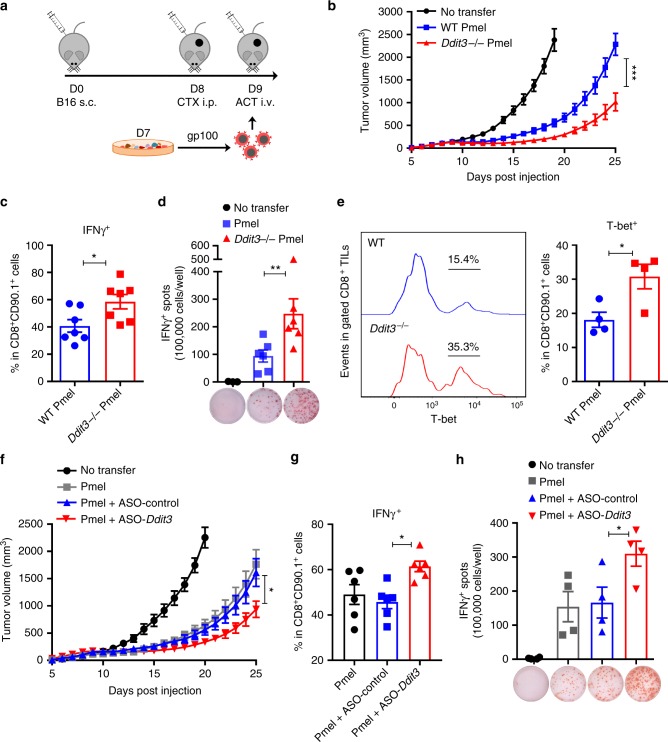
Understanding the intrinsic mediators that render CD8+ T cells dysfunctional in the tumor microenvironment is a requirement to develop more effective cancer immunotherapies. Here, we report that C/EBP homologous protein (Chop), a downstream sensor of severe endoplasmic reticulum (ER) stress, is a major negative regulator of the effector function of tumor-reactive CD8+ T cells. Chop expression is increased in tumor-infiltrating CD8+ T cells, which correlates with poor clinical outcome in ovarian cancer patients. Deletion of Chop in T cells improves spontaneous antitumor CD8+ T cell immunity and boosts the efficacy of T cell-based immunotherapy. Mechanistically, Chop in CD8+ T cells is elevated primarily through the ER stress-associated kinase Perk and a subsequent induction of Atf4; and directly represses the expression of T-bet, a master regulator of effector T cell function. These findings demonstrate the primary role of Chop in tumor-induced CD8+ T cell dysfunction and the therapeutic potential of blocking Chop or ER stress to unleash T cell-mediated antitumor immunity.
Overview
The claims and statistics of this paper haven’t been checked yet.
Free: it reads the open-access text and checks the first 5 claims that cite a source we can check. Create a free account to check every claim.
Integrity signals
Registry
Cites
Statistics
Figures
Verification
Claims the paper makes
The claims and statistics of this paper haven’t been checked yet.
Free: it reads the open-access text and checks the first 5 claims that cite a source we can check. Create a free account to check every claim.
Claims other papers make about this one
Each is checked against this paper’s own text: does it say what the citing paper says it does?
The cited source says what the claim attributes to it.
In the citing paper
“Even though both oxidative and ER stress have been shown to contribute to T cell dysfunction across different tumor types (44-51),”
From Bile acid synthesis impedes tumor-specific T cell responses during liver cancer (2025) · cites this paper as [46]
Self-check
Percentages, sums and reported differences re-computed from the paper’s own numbers.
The self-check needs the paper’s full text.
Citations
Cites
Oncology meets immunology: the cancer-immunity cycle.
Chen, D. S., & Mellman, I. (2013) · Immunity · doi:10.1016/j.immuni.2013.07.012 · Cited by 6,929
Cancer Immunoediting: Integrating Immunity’s Roles in Cancer Suppression and Promotion
Schreiber, R. D., Old, L. J., & Smyth, M. J. (2011) · Science · doi:10.1126/science.1203486 · Cited by 6,474
The Unfolded Protein Response: From Stress Pathway to Homeostatic Regulation
Walter, P., & Ron, D. (2011) · Science · doi:10.1126/science.1209038 · Cited by 5,924
Elements of cancer immunity and the cancer–immune set point
Chen, D. S., & Mellman, I. (2017) · Nature · doi:10.1038/nature21349 · Cited by 5,352
Innate and adaptive immune cells in the tumor microenvironment
Gajewski, T. F., Schreiber, H., & Fu, Y.-X. (2013) · Nature Immunology · doi:10.1038/ni.2703 · Cited by 4,148
Protein translation and folding are coupled by an endoplasmic-reticulum-resident kinase
Harding, H. P., Zhang, Y., & Ron, D. (1999) · Nature · doi:10.1038/16729 · Cited by 3,310
Immunogenic cell death in cancer and infectious disease
Galluzzi, L., Buqué, A., Kepp, O., Zitvogel, L., & Kroemer, G. (2017) · Nature Reviews Immunology · doi:10.1038/nri.2016.107 · Cited by 3,119
Kaufman, R. J. (1999) · Genes & Development · doi:10.1101/gad.13.10.1211 · Cited by 2,248
Chemokines in the cancer microenvironment and their relevance in cancer immunotherapy
Nagarsheth, N., Wicha, M. S., & Zou, W. (2017) · Nature Reviews Immunology · doi:10.1038/nri.2017.49 · Cited by 2,206
Munn, D. H., Sharma, M. D., Baban, B., Harding, H. P., Zhang, Y., Ron, D., & Mellor, A. L. (2005) · Immunity · doi:10.1016/j.immuni.2005.03.013 · Cited by 1,272
Self-citation
Cited by
Items 101–161 of 161
Evoking Ferroptosis by Synergistic Enhancement of a Cyclopentadienyl Iridium‐Betulin Immune Agonist
Lv, M., Zheng, Y., Wu, J., Shen, Z., Guo, B., Hu, G., Huang, Y., Zhao, J., Qian, Y., Su, Z. G., et al. (2023) · Angewandte Chemie · doi:10.1002/ange.202312897 · Cited by 9
Jung, A. R., Shin, S. Y., Kim, M. Y., Ha, U., Hong, S., Lee, J. Y., Kim, S. W., Chung, Y., & Park, Y. H. (2024) · International Journal of Molecular Sciences · doi:10.3390/ijms25052836 · Cited by 7
“Mechanistically, it has been demonstrated that upregulation of DDIT3 blunts tbx21 transcription in tumor-infiltrating CD8+ T cells, impairing T-cell effector immunity and indicating regulation of their antitumor activity [36].”
BackgroundIL-4 induces CD22 expression to restrain the effector program of virtual memory T cells
Yang, B., Piedfort, O., Sanchez, G. S., Lavergne, A., Gong, M., Peng, G., Madrigal, A., Petrellis, G., Katsandegwaza, B., Rodriguez-Rodriguez, L., et al. (2025) · Science Immunology · doi:10.1126/sciimmunol.adk4841 · Cited by 10
Targeting organelle function in T cells for cancer immunotherapy
Baldwin, J., Heuser-Loy, C., & Gattinoni, L. (2025) · Nature reviews. Immunology · doi:10.1038/s41577-025-01223-9 · Cited by 9
Wilson, A., Garmo, L. C., & Podgorski, I. (2022) · Pharmacology & Therapeutics · doi:10.1016/j.pharmthera.2022.108274 · Cited by 8
Kaur, B., Scavuzzi, B. M., Yang, M.-L., Yao, J., Jia, L., Abcouwer, S. F., & Zacks, D. N. (2024) · Investigative Ophthalmology & Visual Science · doi:10.1167/iovs.65.11.39 · Cited by 9
Jiao, S., Shen, Z., Fang, Q., Liu, X., Hao, Y., Kong, Y., Peng, S., Li, M., & Wang, G. (2025) · Comparative Biochemistry and Physiology Part C Toxicology & Pharmacology · doi:10.1016/j.cbpc.2025.110227 · Cited by 10
Ennis, C. S., Seen, M., Chen, A., Kang, H., Ilinski, A., Mahdaviani, K., Ko, N. Y., Monti, S., & Denis, G. V. (2025) · Communications Biology · doi:10.1038/s42003-025-08663-y · Cited by 9
ER stress: an emerging regulator in GVHD development
Choi, H.-J., & Yu, X. (2023) · Frontiers in Immunology · doi:10.3389/fimmu.2023.1212215 · Cited by 6
“Elevated CHOP in tumor infiltrated CD8 T cells directly cause repression of T-bet expression, a master regulator of effector T cell function (73).”
Porter, G., Norris, M. D., Apte, M. V., & Merlot, A. M. (2025) · Neoplasia · doi:10.1016/j.neo.2024.101115 · Cited by 7
“Interestingly, this finding aligns with a previous study showing that increased expression of CHOP in CD8 + T cells isolated from ovarian tumor suspensions was correlated with poor OS in ovarian cancer [54].”
The Cancer Moonshot Immuno-Oncology Translational Network at 5: accelerating cancer immunotherapies
Annapragada, A., Sikora, A. G., Marathe, H. G., Liu, S., Demetriou, M., Fong, L. H., Gao, J., Kufe, D. W., Morris, Z. S., Vilar, E., et al. (2023) · JNCI Journal of the National Cancer Institute · doi:10.1093/jnci/djad151 · Cited by 6
Navigating the landscape of the unfolded protein response in CD8+ T cells
Nair, K. A., & Liu, B. (2024) · Frontiers in Immunology · doi:10.3389/fimmu.2024.1427859 · Cited by 7
Wang, C., Jia, F., & He, F. (2026) · International Journal of Molecular Sciences · doi:10.3390/ijms27093784 · Cited by 6
“Sustained ER stress upregulates CHOP via ATF4, which directly inhibits T-box transcription factor Tbet expression—forming a ATF4-CHOP negative regulatory pathway for CD8 + T cell effector function [163].”
Extrinsic and Cell-Intrinsic Stress in the Immune Tumor Micro-Environment
Ummarino, A., Calà, N., & Allavena, P. (2024) · International Journal of Molecular Sciences · doi:10.3390/ijms252212403 · Cited by 9
ER stress sensor PERK promotes T cell pathogenicity in GVHD by regulating ER-associated degradation
Cheng, Q., Choi, H.-J., Wu, Y., Yuan, X., Pugel, A., Tian, L., Hendrix, M., Fu, D., Alimohammadi, R., Liu, C., et al. (2025) · Journal of Clinical Investigation · doi:10.1172/jci190958 · Cited by 6
“CHOP was reported to directly repress the expression of T-bet in CD8 + T cells (20).”
InfluentialWang, Z., Zhang, Y., Yang, R., Wang, Y., Guo, J., Sun, R., Zhou, Y. M., Li, S., Ge, Q., & Feng, Y. (2022) · Frontiers in Immunology · doi:10.3389/fimmu.2022.831194 · Cited by 5
Zhao, Y., Shang, Y., Luan, T., Yu, Z., Yang, Y., Niu, X., Li, H., Wang, S., Wang, C., & Liu, L. (2026) · Molecular Cancer · doi:10.1186/s12943-026-02674-x · Cited by 6
“CHOP is a downstream sensor of ER stress and upregulated in CD8 + T cells in the TME mainly via the PERK/ATF4 signaling [163].”
Gan, X., Xie, J., Dong, Z., Wu, Y., Zeng, X., Yang, Z., Liu, B., Zhu, M., Wang, B., Li, W., et al. (2024) · Current Medicinal Chemistry · doi:10.2174/0109298673281684240102072157 · Cited by 4
Mitochondrial‑associated endoplasmic reticulum membrane interference in ovarian cancer (Review)
Dong, Y.-F., Zhang, J., Zhou, J., Xiao, Y.-L., Pei, W., & Liu, H. (2024) · Oncology Reports · doi:10.3892/or.2024.8771 · Cited by 4
Liu, Z., Liu, Q., Zeng, A., & Song, L. (2025) · International Immunopharmacology · doi:10.1016/j.intimp.2025.114024 · Cited by 7
Kerr, S. R., & Katz, S. G. (2019) · PubMed Central · Cited by 5
The Advance Cancer Immunotherapy Techniques and the Future Perspective of Modified T Cell TherapyPreprint
Saber, M. A., Biswas, P., Dey, D., Kaium, M. A., Islam, M. A., Tripty, M. I. A., Rahman, M. H., Rahaman, T. I., Biswas, M. Y., Paul, P., et al. (2021) · Preprints.org · doi:10.20944/preprints202105.0142.v1 · Cited by 4
Stress-Mediated Attenuation of Translation Undermines T Cell Tumor ControlPreprint
Riesenberg, B., Hunt, E. G., Tennant, M. D., Hurst, K. E., Andrews, A. M., Leddy, L. R., Neskey, D. M., Hill, E. G., Rivera, G. O. R., Paulos, C. M., et al. (2022) · bioRxiv (Cold Spring Harbor Laboratory) · doi:10.1101/2022.01.31.478547 · Cited by 4
Sun, M., Yang, Q., Tan, Y., Hu, C., Zhao, S., Lu, X., Gao, J., & Xing, L. (2026) · Inflammation · doi:10.1007/s10753-026-02451-4 · Cited by 4
DNA mutation rates in evolution, longevity, and disease: An evolutionary and biological trade-off
Cao, D., Zeng, C., & Ren, R. (2026) · Cell investigation. · doi:10.1016/j.clnves.2026.100061 · Cited by 3
Immunologic Crosstalk of Endoplasmic Reticulum Stress Signaling in Bladder Cancer
Wan, S., Li, K., Wang, C., Yang, J.-W., Chen, S., Wang, H., Li, X., & Li, Y. (2024) · Current Cancer Drug Targets · doi:10.2174/0115680096272663231121100515 · Cited by 4
Luo, H., Ren, W., Ye, A.-H., Liu, L., Jiang, Y., Ye, F.-L., He, B., & Chen, Z. (2024) · Aging · doi:10.18632/aging.206091 · Cited by 4
“DDIT3, a member of CCAAT/enhancer-binding protein (C/EBP) family, can be induced by ER stress [35]; it serves a crucial function in governing both apoptosis and differentiation processes [36].”
BackgroundDils, A. T., Correa, L. O., Gronevelt, J. P., Liu, L., Kadiyala, P., Li, Q., & Carty, S. A. (2021) · bioRxiv (Cold Spring Harbor Laboratory) · doi:10.1101/2021.05.22.445275 · Cited by 3
Wang, Y., Zhu, X. F., Gu, W. J., & Zhang, G. H. (2025) · Discover Oncology · doi:10.1007/s12672-025-02164-4 · Cited by 3
Flindris, S., Flindris, K., Foutadakis, S., Kalinderis, M., Traianos, A., Kigka, V. I., Nteka, F., Mpourazanis, G., Styliara, I., Styliara, E., et al. (2025) · Cureus · doi:10.7759/cureus.94434 · Cited by 5
“Inhibition of CHOP or upstream PERK signaling may restore T-cell effector activity and improve patient survival [30].”
Basal level of ATF4 promotes T cell readiness for activation-induced proliferation
Yi, Y., Luo, C., Wang, J., Wang, Y., Jin, L., Sun, X., Hao, J., Deng, G., Jin, R., & Ge, Q. (2025) · iScience · doi:10.1016/j.isci.2025.114277 · Cited by 2
“11,12 Consistent with this, CD4 + T cells display mild IRE1 α phosphorylation at 24 h and robust IRE1 α and PERK activation at 48 h, 13,14 whereas the canonical stress-inducible transcription factor CHOP remains largely uninduced within 72 h. 15,16 Genetic interrogation has revealed that neither…”
S1P-S1PR1 signaling impairs CD8+ T cell metabolism and effector function in tumors
Basak, D., Ghosh, P., Gautam, A., Sarkar, I., Bhoumik, A., Chowdhury, S., Mahanti, S., Mandal, A., Chakraborty, R., Kar, A., et al. (2026) · EMBO Reports · doi:10.1038/s44319-026-00734-3 · Cited by 2
“Notably, CHOP, a downstream effector of the ER stress sensor PERK, was found to be upregulated in intratumoral CD8 ⁺ T cells, correlating with reduced effector function (Cao et al, 2019).”
InfluentialConejo-Garcia, J. R., Lopez-Bailon, L. U., & Anadon, C. M. (2024) · Journal of Leukocyte Biology · doi:10.1093/jleuko/qiae179 · Cited by 3
Self-citationSun, Y., Sen, S., Parmar, R., Arakawa-Hoyt, J. S., Cappelletti, M., Rossetti, M. M., Gjertson, D. W., Sigdel, T. K., Sarwal, M., Schaenman, J. M. D., et al. (2025) · Frontiers in Immunology · doi:10.3389/fimmu.2025.1542531 · Cited by 3
“Moreover, suppressors for T cell effector function and proliferation, GADD45A (28), CITED2 (29), DDIT3 (30), and KLF6 (31) were upregulated (Figure 3F).”
MEK-dependent bioenergetic demand drives terminal CD8+ T cell exhaustion
Mitra, T., Rahman, J. A., Hwee, M. A., Chen, Y.-T., Ramos, R. J. J. F., Liu, H., Hartman, T. E., Cross, J. R., de Jesus, M., Huse, M., et al. (2026) · Immunity · doi:10.1016/j.immuni.2026.06.012 · Cited by 6
Pan, B., Hong, S., Wang, X., Li, Y., Wang, C., Liu, Y., Chen, Y., Fang, C., Zheng, Y., Wang, S. L., et al. (2026) · Interdisciplinary medicine · doi:10.1002/inmd.70136 · Cited by 1
Peng, Z., Xu, T., Xia, Z., Han, H., Ding, B., Yang, L., Ren, W., & Ye, H. (2026) · iScience · doi:10.1016/j.isci.2026.116764 · Cited by 2
“…factor for CD8 + T cell function, blocking T-bet from activating effector genes such as IFN-γ and granzyme B, thereby reducing cytotoxicity 48 ; it upregulates BIM expression, markedly enhancing apoptosis under arginine depletion; and it suppresses GLUT1 expression, impairing glucose…”
Vavrusakova, B., Lenka, K., Pecinka, L., Selingerová, I., Uher, M., Holánek, M., Ema, Ř., Kazda, T., Lukáš, M., & Marek, S. (2026) · Journal of Mammary Gland Biology and Neoplasia · doi:10.1007/s10911-026-09614-x · Cited by 1
Giordano, G., Bochicchio, M. T., Niro, G., Lucchesi, A., & Napolitano, M. (2022) · Immunobiology · doi:10.1016/j.imbio.2022.152297 · Cited by 1
“This same pathway can enhance the susceptibility of the immune system dendritic cells (DCs) to SARS-CoV-2 and induce cytokine storm, both related to a higher risk of COVID-19 mortality [4,5].”
BackgroundInfluentialWang, S., Qin, W., Cheng, T., Zeng, C., Chen, X., & Xu, Y. (2024) · Journal of Inflammation Research · doi:10.2147/jir.s458860 · Cited by 1
Soumyakrishnan, S., Gowda, C. M. M., Uma, S., Kumar, M. A., Peela, S., & SREEPRIYA, M. (2022) · Elsevier eBooks · doi:10.1016/b978-0-323-98806-3.00009-x
CRISPR-Cas13d for CHO Cell Engineering and Antibody ProductionPreprint
Lin, M., Shen, C., Lin, Y.-J., Chou, M., Pham, N. N., Chang, Y., Chang, C.-W., Hwu, J. R., & Hu, Y. (2022) · doi:10.22541/au.164864667.70266203/v1
Chakraborty, P., Parikh, R. Y., Choi, S., Tran, D., Gooz, M. B., Hedley, Z. T., Kim, D., Pytel, D., Kang, I., Nadig, S. N., et al. (2023) · doi:10.1158/0008-5472.c.6513793.v1
Self-citationChakraborty, P., Parikh, R. Y., Choi, S., Tran, D., Gooz, M. B., Hedley, Z. T., Kim, D., Pytel, D., Kang, I., Nadig, S. N., et al. (2023) · doi:10.1158/0008-5472.c.6513793
Self-citationWang, W., Liu, P., Ma, J., Li, J., & Leng, L. (2024) · Skin Research and Technology · doi:10.1111/srt.13900
A mediterranean-mimicking diet harnesses gut microbiota–derived 3-IAA to rejuvenate T cellPreprint
Yu, X., Li, W., Feng, H., Li, Z., Zheng, H., Sun, S., Li, J., Li, B., & Wu, Q. (2026) · bioRxiv (Cold Spring Harbor Laboratory) · doi:10.64898/2026.01.05.697620
A mediterranean-mimicking diet harnesses gut microbiota–derived 3-IAA to rejuvenate T cellPreprint
Yu, X., Li, W., Feng, H., Li, Z., Zheng, H., Sun, S., Li, J., Li, B., & Wu, Q. (2026) · eLife · doi:10.7554/elife.110468.1
A mediterranean-mimicking diet harnesses gut microbiota–derived 3-IAA to rejuvenate T cellPreprint
Yu, X., Li, W., Feng, H., Li, Z., Zheng, H., Sun, S., Li, J., Li, B., & Wu, Q. (2026) · eLife · doi:10.7554/elife.110468
Kumar, S., Han, N., Tsagkogeorga, G., & Wan, M. X. (2026) · Discover Oncology · doi:10.1007/s12672-026-04910-8
“ER stress has been shown to impair delivery of junctional proteins (e.g., E-cadherin), promoting epithelial plasticity [67], while PERK-ATF4-CHOP signalling can constrain CD8 ⁺ T-cell effector function, contributing to immune dysfunction [68].”
Yerrabelli, R., Thibodeau, A., Nehar-Belaid, D., Marcheş, R., Ravichandran, S., Barnouin, Y., Sen, R., Paust, S., Stitzel, M. L., Ferrucci, L., et al. (2026) · bioRxiv (Cold Spring Harbor Laboratory) · doi:10.64898/2026.05.08.723786
Zhang, X., Zhang, J., & Shen, M. (2026) · Free Radical Biology and Medicine · doi:10.1016/j.freeradbiomed.2026.05.326 · Cited by 3
Wang, H., Shi, L., Jiang, K., Wu, S., Jiang, Z., Tao, Y., Li, J., Liu, J., Liu, J., Ni, J., et al. (2026) · Science Advances · doi:10.1126/sciadv.aee0517
Self-citationProximity-regulating nanotechnology for tumor treatment
Yuan, S., Li, Y., Guo, X., & Zhou, S. (2026) · Journal of Controlled Release · doi:10.1016/j.jconrel.2026.115240
Zhang, C., Li, L., & Zhang, T. (2026) · Biochimica et Biophysica Acta (BBA) - Reviews on Cancer · doi:10.1016/j.bbcan.2026.189686
Feng, G., Han, G., Bai, Y., Li, B., Zhao, F., Yang, R., Chen, X., Liu, R., Qian, N., Zheng, B., et al. (2026) · Bioactive Materials · doi:10.1016/j.bioactmat.2026.09.001
“ER stress can induce apoptosis through activation of signaling pathways such as C/EBP homologous protein (CHOP) [4].”
Jurgens, A. P., Popović, B., van Alphen, F. P. J., Steinmetz, M., Wardak, L., Bradarić, A., Engels, S., van der Zwaan, C., van den Biggelaar, M., Hoogendijk, A. J., et al. (2026) · Life Science Alliance · doi:10.26508/lsa.202603825 · Cited by 1
“Higher protein production can lead to unfolded protein response and consequentially, induce cell stress (Cao et al, 2019).”
Sun, X.-C., Liu, R.-Q., Li, Y.-X., Zhou, Y., Zhang, K., Wangja, S., Xiong, Z.-Q., Bahabayi, A., & Liu, C. (2026) · Immunology Letters · doi:10.1016/j.imlet.2026.107241
A meta-interaction basis for cell-cell communication in tissuesPreprint
Tang, J., Liang, S., Alam, S., Cheng, W., Zhang, Y., & Ma, J. (2026) · bioRxiv (Cold Spring Harbor Laboratory) · doi:10.64898/2026.09.21.753369
One-carbon metabolism sustains effector T cell function through cell-surface glycosylationPreprint
Wang, P., Yu, A., Mutaher, M., Eisele, A. S., Mouche, S., Hung, K., Larson, R., Gish, M., Zimmer, M. D., Brook, J. R., et al. (2026) · bioRxiv (Cold Spring Harbor Laboratory) · doi:10.64898/2026.10.06.756889
Endoplasmic reticulum stress in breast cancer metastasis: mechanisms and therapeutic implications
Xu, R., Foo, W., Luo, L., & Liu, X. (2026) · Journal of Pharmacy and Pharmacology · doi:10.1093/jpp/rgag127
Distinct sensing of BCAAs by mTOR and c-Myc governs T cell proliferation, independent of catabolism
Rome, K., Hall, E., Le, T. N. V., Jaccard, A., Wu, A., Snyder, N. W., Wellen, K. E., & Bailis, W. (2026) · EMBO Reports · doi:10.64898/2026.01.16.699967 · Cited by 1
Metadata
- Authors
- Cao, Y., Trillo-Tinoco, J., Sierra, R. A., Anadon, C., Dai, W., Mohamed, E., Cen, L., Costich, T. L., Magliocco, A., Marchion, D., Klar, R., Michel, S., Jaschinski, F., Reich, R. R., Mehrotra, S., Cubillos-Ruiz, J. R., Munn, D. H., Conejo-Garcia, J. R., & Rodriguez, P. C.
- Affiliations
- Moffitt Cancer Center (US)
- Medical University of South Carolina (US)
- Augusta University (US)
- ORCID
- Venue
- Nature Communications
- Published
- 2019-03-20
- Volume
- 10
- Issue
- 1
- Pages
- 1280-1280
- ISSN
- 2041-1723 (ISSN-L)
- PMC
- PMC6426975
- OpenAlex
- W2924317925
- Semantic Scholar
- 11916fa1486c92f038199e64629642f75a3c23d1
- Cited by
- 161
- References
- 60
- Citations by year
- 2026: 25 · 2025: 27 · 2024: 24 · 2023: 20 · 2022: 27 · 2021: 22 · 2020: 12 · 2019: 4
- FWCI
- 8.61
- Type
- journal article
- Language
- en
- Update notices
- correction (2019-08-15)
- Open access
- gold
- doi.org
- Licence
- cc-by
- creativecommons.org/licenses/by/4.0 (tdm)
- creativecommons.org/licenses/by/4.0 (vor)
- Locations
- Nature Communications (publishedVersion, cc-by)
- Europe PMC (PubMed Central) (publishedVersion, cc-by)
- PubMed Central (publishedVersion, cc-by)
- PubMed (publishedVersion)
- RePEc: Research Papers in Economics (submittedVersion)
- DOAJ (DOAJ: Directory of Open Access Journals) (submittedVersion)
- DOAJ (DOAJ: Directory of Open Access Journals) (submittedVersion, cc-by-sa)
- Funders
- U.S. Department of Defense (W81XWH1610438, W81XWH, P30-CA076292)
- Moffitt Cancer Center (P30CA076292, Cancer Center Support Grant (CCSG) CA076292, CA076292)
- National Institutes of Health (W81XWH)
- National Cancer Institute (R01CA157664, U01CA232758, R01CA211229, CA076292, R01CA178687, R01CA184185, R01CA103320, R01CA124515, P30CA076292, P30CA010815)
- Ovarian Cancer Academy
- Topics
- Life Sciences › Biochemistry, Genetics and Molecular Biology › Cell Biology › Endoplasmic Reticulum Stress and Disease
- Health Sciences › Medicine › Oncology › Cancer Immunotherapy and Biomarkers
- Life Sciences › Immunology and Microbiology › Immunology › T-cell and B-cell Immunology
- Keywords
- C/EBP homologous protein, CHOP, endoplasmic reticulum stress, PERK, ATF4, T-bet, CD8+ T cell dysfunction, tumor microenvironment, ovarian cancer, antitumor immunity, T cell-based immunotherapy, tumor-infiltrating T cells
- MeSH terms
- Carcinoma, Ovarian Epithelial, T-bet Transcription Factor, Animals, Female, Humans, Immunity, Cellular, Ovarian Neoplasms, Gene Expression Regulation, Neoplastic, Survival Analysis, Lymphocytes, Tumor-Infiltrating, Mice, Knockout, CD8-Positive T-Lymphocytes, Adoptive Transfer, eIF-2 Kinase, T-Box Domain Proteins, Xenograft Model Antitumor Assays, RNA, Small Interfering, Cell Line, Tumor, Mice, Activating Transcription Factor 4, Transcription Factor CHOP, Tumor Microenvironment, Endoplasmic Reticulum Stress
About these checks
Registry, retraction, Cites and statistics results are computed, not judged, with one exception: a printed reference that no index lists is read once by a model before it counts as a citation error. Claims are extracted by a model and kept only when their quote appears verbatim in the text; each cited source is then checked, with a model’s help, for whether it says what the claim relies on. Those verdicts can be wrong — read the claim’s quote and the cited source before relying on one.
Statistics and arithmetic are recomputed, not judged.
Confidence bands are shown only for fields calibrated on our annotated test set. None is calibrated yet, so no band is shown.
What counts as a claim ›How we measure confidence ›How we check this ›
Are you an author, or do you see a problem with this page? Request a review
Data sources
Bibliographic data: Semantic Scholar, OpenAlex, Crossref.
Contains information from the Semantic Scholar Academic Graph Datasets, made available under the ODC Attribution License (ODC-BY 1.0).
Semantic Scholar’s data is described in: Kinney, R., et al. (2023). The Semantic Scholar Open Data Platform. arXiv:2301.10140.
