

ER stress-induced mediator C/EBP homologous protein thwarts effector T cell activity in tumors through T-bet repression
Open accessThe DOI matches its Crossref record; 60 of the 60 references it cites were found in a registry or an index.
Abstract
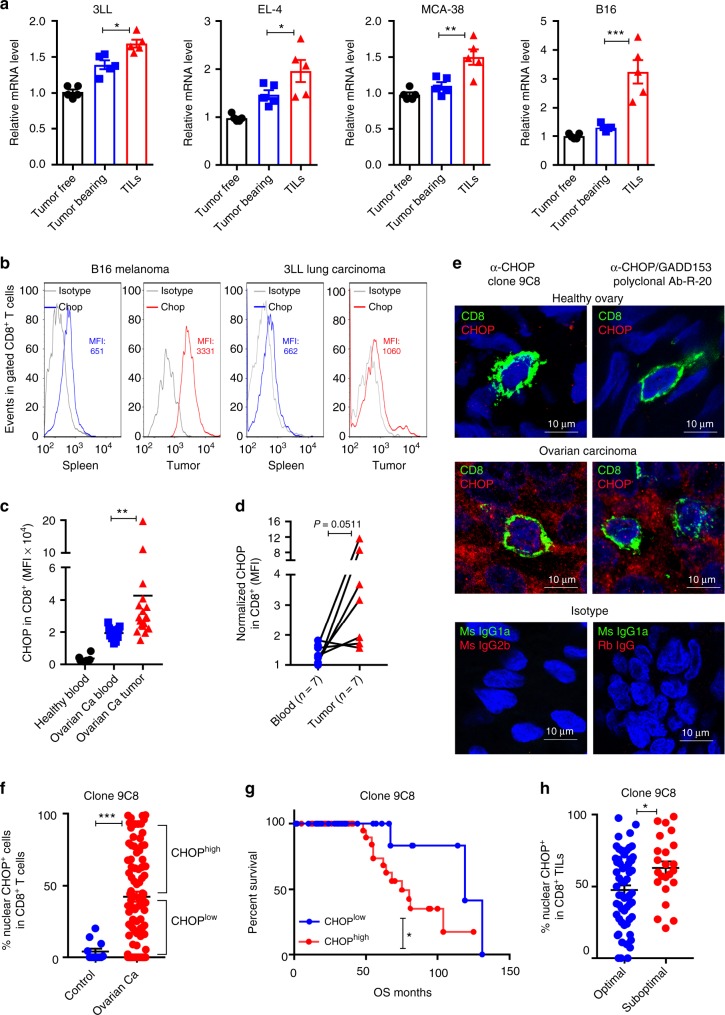
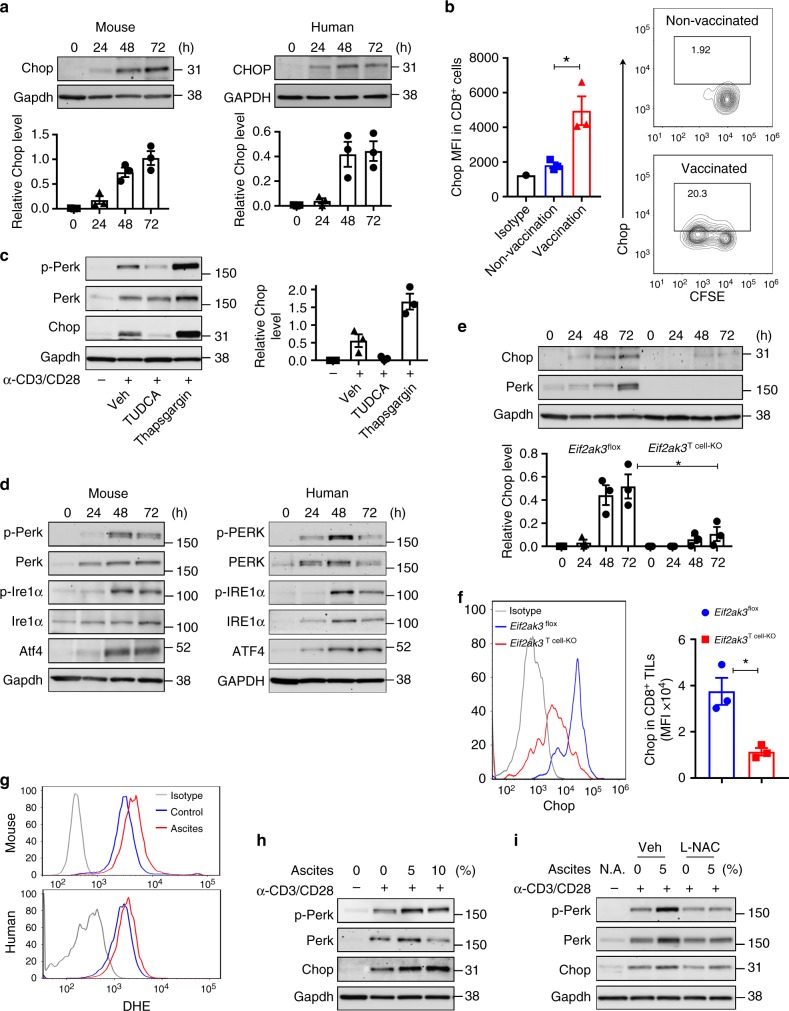
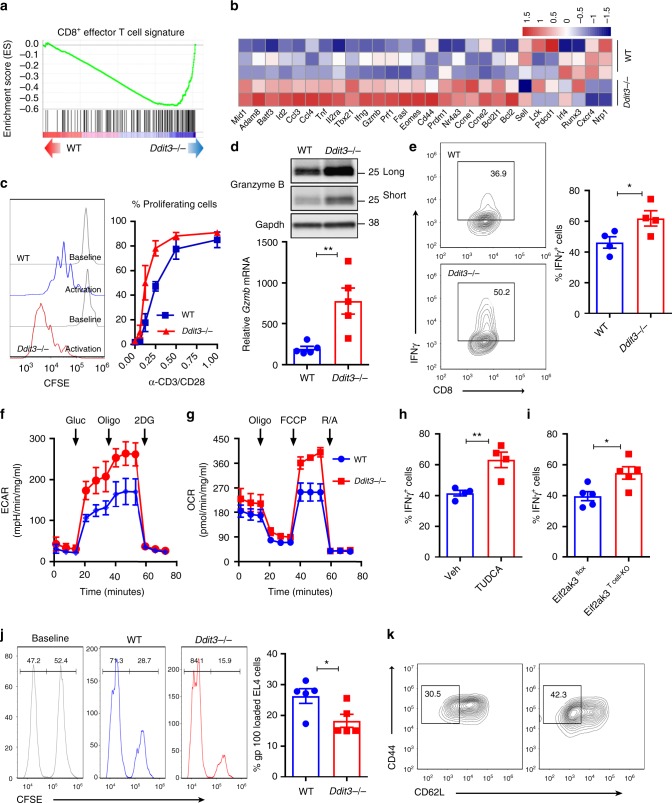
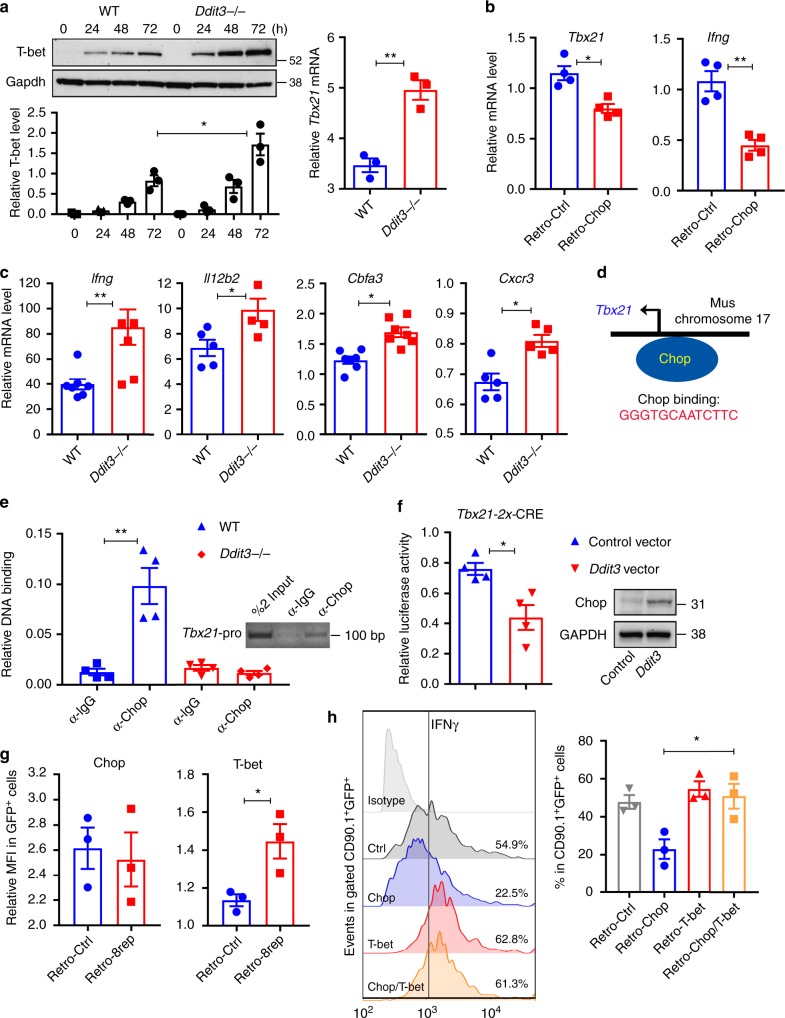
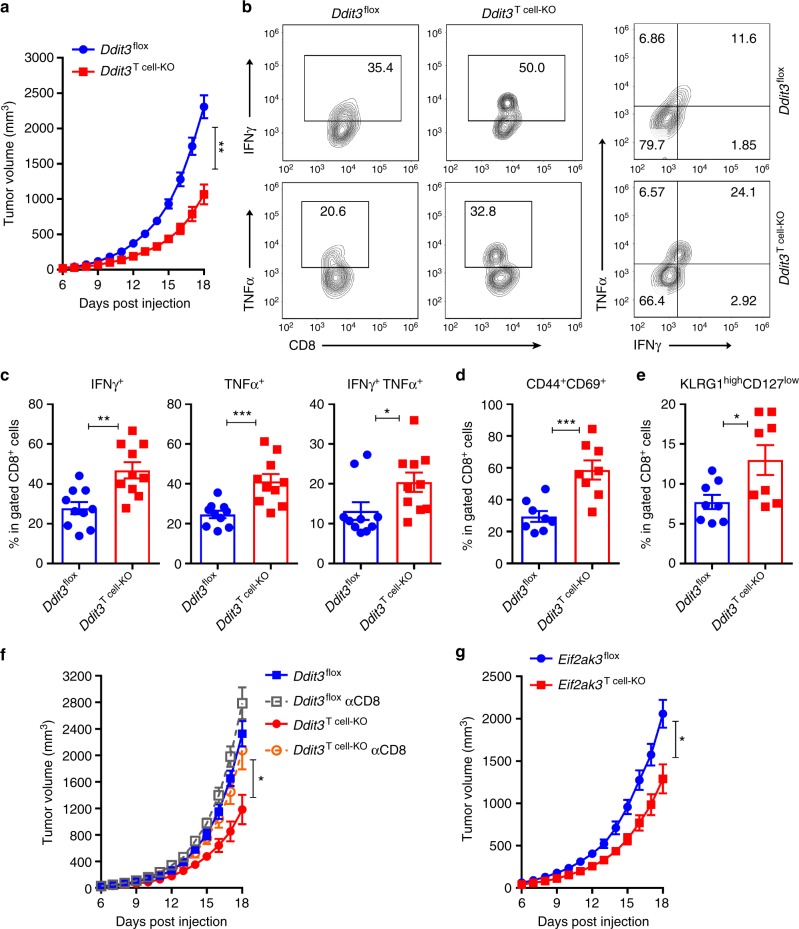
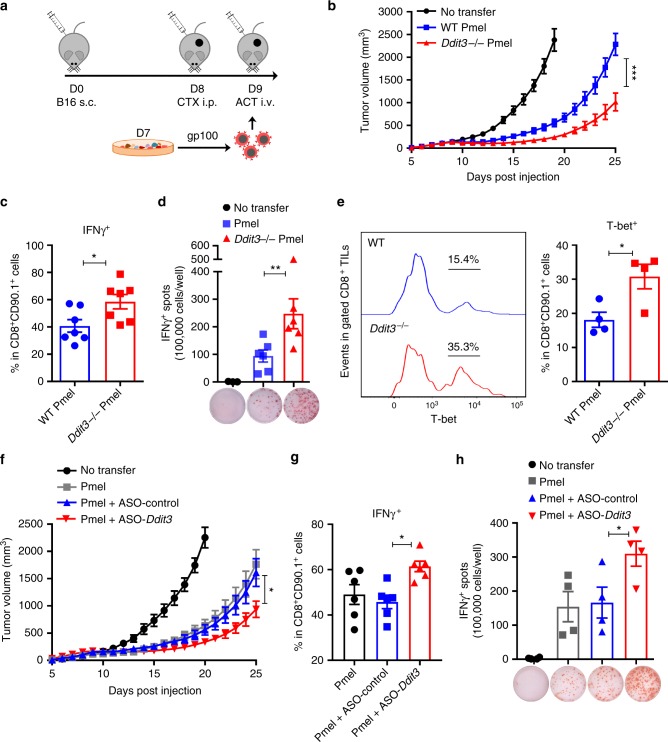
Understanding the intrinsic mediators that render CD8+ T cells dysfunctional in the tumor microenvironment is a requirement to develop more effective cancer immunotherapies. Here, we report that C/EBP homologous protein (Chop), a downstream sensor of severe endoplasmic reticulum (ER) stress, is a major negative regulator of the effector function of tumor-reactive CD8+ T cells. Chop expression is increased in tumor-infiltrating CD8+ T cells, which correlates with poor clinical outcome in ovarian cancer patients. Deletion of Chop in T cells improves spontaneous antitumor CD8+ T cell immunity and boosts the efficacy of T cell-based immunotherapy. Mechanistically, Chop in CD8+ T cells is elevated primarily through the ER stress-associated kinase Perk and a subsequent induction of Atf4; and directly represses the expression of T-bet, a master regulator of effector T cell function. These findings demonstrate the primary role of Chop in tumor-induced CD8+ T cell dysfunction and the therapeutic potential of blocking Chop or ER stress to unleash T cell-mediated antitumor immunity.
Overview
The claims and statistics of this paper haven’t been checked yet.
Free: it reads the open-access text and checks the first 5 claims that cite a source we can check. Create a free account to check every claim.
Integrity signals
Registry
Cites
Statistics
Figures
Verification
Claims the paper makes
The claims and statistics of this paper haven’t been checked yet.
Free: it reads the open-access text and checks the first 5 claims that cite a source we can check. Create a free account to check every claim.
Claims other papers make about this one
Each is checked against this paper’s own text: does it say what the citing paper says it does?
The cited source says what the claim attributes to it.
In the citing paper
“Even though both oxidative and ER stress have been shown to contribute to T cell dysfunction across different tumor types (44-51),”
From Bile acid synthesis impedes tumor-specific T cell responses during liver cancer (2025) · cites this paper as [46]
Self-check
Percentages, sums and reported differences re-computed from the paper’s own numbers.
The self-check needs the paper’s full text.
Citations
Cites
Oncology meets immunology: the cancer-immunity cycle.
Chen, D. S., & Mellman, I. (2013) · Immunity · doi:10.1016/j.immuni.2013.07.012 · Cited by 6,929
Cancer Immunoediting: Integrating Immunity’s Roles in Cancer Suppression and Promotion
Schreiber, R. D., Old, L. J., & Smyth, M. J. (2011) · Science · doi:10.1126/science.1203486 · Cited by 6,474
The Unfolded Protein Response: From Stress Pathway to Homeostatic Regulation
Walter, P., & Ron, D. (2011) · Science · doi:10.1126/science.1209038 · Cited by 5,924
Elements of cancer immunity and the cancer–immune set point
Chen, D. S., & Mellman, I. (2017) · Nature · doi:10.1038/nature21349 · Cited by 5,352
Innate and adaptive immune cells in the tumor microenvironment
Gajewski, T. F., Schreiber, H., & Fu, Y.-X. (2013) · Nature Immunology · doi:10.1038/ni.2703 · Cited by 4,148
Protein translation and folding are coupled by an endoplasmic-reticulum-resident kinase
Harding, H. P., Zhang, Y., & Ron, D. (1999) · Nature · doi:10.1038/16729 · Cited by 3,310
Immunogenic cell death in cancer and infectious disease
Galluzzi, L., Buqué, A., Kepp, O., Zitvogel, L., & Kroemer, G. (2017) · Nature Reviews Immunology · doi:10.1038/nri.2016.107 · Cited by 3,119
Kaufman, R. J. (1999) · Genes & Development · doi:10.1101/gad.13.10.1211 · Cited by 2,248
Chemokines in the cancer microenvironment and their relevance in cancer immunotherapy
Nagarsheth, N., Wicha, M. S., & Zou, W. (2017) · Nature Reviews Immunology · doi:10.1038/nri.2017.49 · Cited by 2,206
Munn, D. H., Sharma, M. D., Baban, B., Harding, H. P., Zhang, Y., Ron, D., & Mellor, A. L. (2005) · Immunity · doi:10.1016/j.immuni.2005.03.013 · Cited by 1,272
Self-citationDistinct Effects of T-bet in T H 1 Lineage Commitment and IFN-γ Production in CD4 and CD8 T Cells
Szabo, S. J., Sullivan, B. M., Stemmann, C., Satoskar, A. R., Sleckman, B. P., & Glimcher, L. H. (2002) · Science · doi:10.1126/science.1065543 · Cited by 1,172
Control of Effector CD8 + T Cell Function by the Transcription Factor Eomesodermin
Pearce, E. L., Mullen, A. C., Martins, G. A., Krawczyk, C. M., Hutchins, A. S., Zediak, V. P., Banica, M., DiCioccio, C. B., Gross, D. A., Mao, C.-A., et al. (2003) · Science · doi:10.1126/science.1090148 · Cited by 1,014
ER Stress Sensor XBP1 Controls Anti-tumor Immunity by Disrupting Dendritic Cell Homeostasis
Cubillos-Ruiz, J. R., Silberman, P. C., Rutkowski, M. R., Chopra, S., Perales-Puchalt, A., Song, M., Zhang, S., Bettigole, S. E., Gupta, D., Holcomb, K., et al. (2015) · Cell · doi:10.1016/j.cell.2015.05.025 · Cited by 933
Self-citationTumorigenic and Immunosuppressive Effects of Endoplasmic Reticulum Stress in Cancer
Cubillos-Ruiz, J. R., Bettigole, S. E., & Glimcher, L. H. (2017) · Cell · doi:10.1016/j.cell.2016.12.004 · Cited by 895
Self-citationThe unfolded protein response in immunity and inflammation
Grootjans, J., Kaser, A., Kaufman, R. J., & Blumberg, R. S. (2016) · Nature Reviews Immunology · doi:10.1038/nri.2016.62 · Cited by 816
Condamine, T., Dominguez, G. A., Youn, J.-I., Kossenkov, A. V., Mony, S., Alicea-Torres, K., Tcyganov, E., Hashimoto, A., Nefedova, Y., Lin, C., et al. (2016) · Science Immunology · doi:10.1126/sciimmunol.aaf8943 · Cited by 789
T cell anergy, exhaustion, senescence, and stemness in the tumor microenvironment
Crespo, J., Sun, H., Welling, T. H., Tian, Z., & Zou, W. (2013) · Current Opinion in Immunology · doi:10.1016/j.coi.2012.12.003 · Cited by 752
Maj, T., Wang, W., Crespo, J., Zhang, H., Wang, W., Wei, S., Zhao, L., Vatan, L., Shao, I., Szeliga, W., et al. (2017) · Nature Immunology · doi:10.1038/ni.3868 · Cited by 733
Ma, Y., Brewer, J. W., Alan Diehl, J., & Hendershot, L. M. (2002) · Journal of Molecular Biology · doi:10.1016/s0022-2836(02)00234-6 · Cited by 688
CD8 T Cell Exhaustion in Chronic Infection and Cancer: Opportunities for Interventions
Hashimoto, M., Kamphorst, A. O., Im, S. J., Kissick, H. T., Pillai, R. N., Ramalingam, S. S., Araki, K., & Ahmed, R. (2018) · Annual Review of Medicine · doi:10.1146/annurev-med-012017-043208 · Cited by 656
Opposing unfolded-protein-response signals converge on death receptor 5 to control apoptosis
Lu, M., Lawrence, D. A., Marsters, S., Acosta-Alvear, D., Kimmig, P., Mendez, A. S., Paton, A. W., Paton, J. C., Walter, P., & Ashkenazi, A. (2014) · Science · doi:10.1126/science.1254312 · Cited by 567
Ganesan, A.-P., Clarke, J., Wood, O., Garrido-Martin, E. M., Chee, S. J., Mellows, T., Samaniego-Castruita, D., Singh, D., Seumois, G., Alzetani, A., et al. (2017) · Nature Immunology · doi:10.1038/ni.3775 · Cited by 528
ER Stress Cooperates with Hypernutrition to Trigger TNF-Dependent Spontaneous HCC Development
Nakagawa, H., Umemura, A., Taniguchi, K., Font-Burgada, J., Dhar, D., Ogata, H., Zhong, Z., Valasek, M. A., Seki, E., Hidalgo, J., et al. (2014) · Cancer Cell · doi:10.1016/j.ccr.2014.07.001 · Cited by 525
NOD1 and NOD2 signalling links ER stress with inflammation
Keestra-Gounder, A. M., Byndloss, M. X., Seyffert, N., Young, B. M., Chávez-Arroyo, A., Tsai, A. Y., Cevallos, S. A., Winter, M. G., Pham, O. H., Tiffany, C. R., et al. (2016) · Nature · doi:10.1038/nature17631 · Cited by 519
Endoplasmic Reticulum Stress in Immunity
Bettigole, S. E., & Glimcher, L. H. (2015) · Annual Review of Immunology · doi:10.1146/annurev-immunol-032414-112116 · Cited by 513
Ramakrishnan, R., Assudani, D., Nagaraj, S., Hunter, T., Cho, H.-I., Antonia, S., Altiok, S., Celis, E., & Gabrilovich, D. I. (2010) · Journal of Clinical Investigation · doi:10.1172/jci40269 · Cited by 460
Antigen-driven effector CD8 T cell function regulated by T-bet
Sullivan, B. M., Juedes, A., Szabo, S. J., von Herrath, M., & Glimcher, L. H. (2003) · Proceedings of the National Academy of Sciences · doi:10.1073/pnas.2636938100 · Cited by 439
Halofuginone Inhibits T H 17 Cell Differentiation by Activating the Amino Acid Starvation Response
Sundrud, M. S., Koralov, S. B., Feuerer, M., Calado, D. P., Kozhaya, A. E., Rhule-Smith, A., Lefebvre, R. E., Unutmaz, D., Mazitschek, R., Waldner, H., et al. (2009) · Science · doi:10.1126/science.1172638 · Cited by 421
IRE1α–XBP1 controls T cell function in ovarian cancer by regulating mitochondrial activity
Song, M., Sandoval, T. A., Chae, C.-S., Chopra, S., Tan, C., Rutkowski, M. R., Raundhal, M., Chaurio, R. A., Payne, K. K., Konrad, C., et al. (2018) · Nature · doi:10.1038/s41586-018-0597-x · Cited by 413
Self-citationER stress regulates myeloid-derived suppressor cell fate through TRAIL-R-mediated apoptosis.
Condamine, T., Kumar, V., Ramachandran, I. R., Youn, J.-I., Celis, E., Finnberg, N., El-Deiry, W. S., Winograd, R., Vonderheide, R. H., English, N. R., et al. (2014) · Journal of Clinical Investigation · doi:10.1172/jci74056 · Cited by 365
Transcriptional repressor Blimp-1 is essential for T cell homeostasis and self-tolerance
Kallies, A., Hawkins, E. D., Belz, G. T., Metcalf, D., Hommel, M., Corcoran, L. M., Hodgkin, P. D., & Nutt, S. L. (2006) · Nature Immunology · doi:10.1038/ni1321 · Cited by 317
Transcriptional regulator Id2 mediates CD8+ T cell immunity
Cannarile, M. A., Lind, N. A., Rivera, R., Sheridan, A. D., Camfield, K. A., Wu, B. B., Cheung, K. P., Ding, Z., & Goldrath, A. W. (2006) · Nature Immunology · doi:10.1038/ni1403 · Cited by 255
Thevenot, P. T., Sierra, R. A., Raber, P. L., Al-Khami, A. A., Trillo-Tinoco, J., Zarreii, P., Ochoa, A. C., Cui, Y., Del Valle, L., & Rodriguez, P. C. (2014) · Immunity · doi:10.1016/j.immuni.2014.08.015 · Cited by 254
Self-citationEmerging functions of the unfolded protein response in immunity
Janssens, S., Pulendran, B., & Lambrecht, B. N. (2014) · Nature Immunology · doi:10.1038/ni.2991 · Cited by 236
Metabolic Control of CD8+ T Cell Fate Decisions and Antitumor Immunity
Zhang, L., & Romero, P. (2018) · Trends in Molecular Medicine · doi:10.1016/j.molmed.2017.11.005 · Cited by 235
Svoronos, N., Perales-Puchalt, A., Allegrezza, M. J., Rutkowski, M. R., Payne, K. K., Tesone, A. J., Nguyen, J. M., Curiel, T. J., Cadungog, M. G., Singhal, S., et al. (2017) · Cancer Discovery · doi:10.1158/2159-8290.cd-16-0502 · Cited by 217
Self-citationVitamin D Suppresses Th17 Cytokine Production by Inducing C/EBP Homologous Protein (CHOP) Expression
Chang, S. H., Chung, Y., & Dong, C. (2010) · Journal of Biological Chemistry · doi:10.1074/jbc.c110.185777 · Cited by 207
miR-211 Is a Prosurvival MicroRNA that Regulates chop Expression in a PERK-Dependent Manner
Chitnis, N. S., Pytel, D., Bobrovnikova-Marjon, E., Pant, D., Zheng, H., Maas, N. L., Frederick, B., Kushner, J. A., Chodosh, L. A., Koumenis, C., et al. (2012) · Molecular Cell · doi:10.1016/j.molcel.2012.08.025 · Cited by 205
Hayashi, K., Jutabha, P., Endou, H., Sagara, H., & Anzai, N. (2013) · The Journal of Immunology · doi:10.4049/jimmunol.1300923 · Cited by 202
Yan, D., Wang, H.-W., Bowman, R. L., & Joyce, J. A. (2016) · Cell Reports · doi:10.1016/j.celrep.2016.08.035 · Cited by 194
Translation is actively regulated during the differentiation of CD8+ effector T cells
Araki, K., Morita, M., Bederman, A. G., Konieczny, B. T., Kissick, H. T., Sonenberg, N., & Ahmed, R. (2017) · Nature Immunology · doi:10.1038/ni.3795 · Cited by 175
SATB1 Expression Governs Epigenetic Repression of PD-1 in Tumor-Reactive T Cells
Stephen, T. L., Payne, K. K., Chaurio, R. A., Allegrezza, M. J., Zhu, H., Perez-Sanz, J., Perales-Puchalt, A., Nguyen, J. M., Vara-Ailor, A. E., Eruslanov, E. B., et al. (2017) · Immunity · doi:10.1016/j.immuni.2016.12.015 · Cited by 160
Self-citationKamimura, D., & Bevan, M. J. (2008) · The Journal of Immunology · doi:10.4049/jimmunol.181.8.5433 · Cited by 147
Distinct Cytoplasmic and Nuclear Functions of the Stress Induced Protein DDIT3/CHOP/GADD153
Jauhiainen, A., Thomsen, C., Strömbom, L., Grundevik, P., Andersson, C., Danielsson, A., Andersson, M. K., Nerman, O., Rörkvist, L., Ståhlberg, A., et al. (2012) · PLoS ONE · doi:10.1371/journal.pone.0033208 · Cited by 122
Stephen, T. L., Rutkowski, M. R., Allegrezza, M. J., Perales-Puchalt, A., Tesone, A. J., Svoronos, N., Nguyen, J. M., Sarmin, F., Borowsky, M. E., Tchou, J., et al. (2014) · Immunity · doi:10.1016/j.immuni.2014.08.012 · Cited by 119
Self-citationChiribau, C.-B., Gaccioli, F., Huang, C. C., Yuan, C. L., & Hatzoglou, M. (2010) · Molecular and Cellular Biology · doi:10.1128/mcb.01507-09 · Cited by 104
The endoplasmic reticulum stress marker CHOP predicts survival in malignant mesothelioma
Dalton, L. E., Clarke, H. J., Knight, J., Lawson, M. H., Wason, J. M. S., Lomas, D. A., Howat, W., Rintoul, R. C., Rassl, D. M., & Marciniak, S. J. (2013) · British Journal of Cancer · doi:10.1038/bjc.2013.66 · Cited by 101
Unfolding anti-tumor immunity: ER stress responses sculpt tolerogenic myeloid cells in cancer
Cubillos-Ruiz, J. R., Mohamed, E., & Rodriguez, P. C. (2017) · Journal for ImmunoTherapy of Cancer · doi:10.1186/s40425-016-0203-4 · Cited by 96
Self-citationDeZwaan-McCabe, D., Riordan, J. D., Arensdorf, A. M., Icardi, M. S., Dupuy, A. J., & Rutkowski, D. T. (2013) · PLoS Genetics · doi:10.1371/journal.pgen.1003937 · Cited by 92
Van de Velde, L.-A., Guo, X.-Z. J., Barbaric, L., Smith, A. M., Oguin, T. H., Thomas, P. G., & Murray, P. J. (2016) · Cell Reports · doi:10.1016/j.celrep.2016.10.079 · Cited by 78
Petit, A.-E., Demotte, N., Scheid, B., Wildmann, C., Bigirimana, R., Gordon-Alonso, M., Carrasco, J., Valitutti, S., Godelaine, D., & van der Bruggen, P. (2016) · Nature Communications · doi:10.1038/ncomms12242 · Cited by 75
Surgical debulking of ovarian cancer: what difference does it make?
Schorge, J. O., McCann, C. K., & Carmen, M. G. D. (2010) · PubMed · Cited by 75
Kim, K. M., Yu, T. K., Chu, H. H., Park, H. S., Jang, K. Y., Moon, W. S., Kang, M. J., Lee, D. G., Kim, M. H., Lee, J. H., et al. (2011) · International Journal of Cancer · doi:10.1002/ijc.26463 · Cited by 70
Rüter, J., Barnett, B. G., Kryczek, I., Brumlik, M. J., Daniel, B. J., Coukos, G., Zou, W., & Curiel, T. J. (2009) · Frontiers in bioscience · doi:10.2741/3338 · Cited by 69
Hattori, T., Ohoka, N., Hayashi, H., & Onozaki, K. (2003) · FEBS Letters · doi:10.1016/s0014-5793(03)00283-7 · Cited by 58
Anti-leukemic mechanisms of pegylated arginase I in acute lymphoblastic T-cell leukemia
Morrow, K., Hernandez, C. P., Raber, P., Del Valle, L., Wilk, A. M., Majumdar, S., Wyczechowska, D., Reiss, K., & Rodriguez, P. C. (2013) · Leukemia · doi:10.1038/leu.2012.247 · Cited by 50
LncRNA RNCR3 promotes Chop expression by sponging miR-185-5p during MDSC differentiation
Shang, W., Tang, Z., Gao, Y., Qi, H., Su, L., Zhang, Y., & Yang, R. (2017) · Oncotarget · doi:10.18632/oncotarget.22906 · Cited by 49
Modulation of Endoplasmic Reticulum Stress Controls CD4+ T-cell Activation and Antitumor Function
Thaxton, J. E., Wallace, C., Riesenberg, B., Zhang, Y., Paulos, C. M., Beeson, C. C., Liu, B., & Li, Z. (2017) · Cancer Immunology Research · doi:10.1158/2326-6066.cir-17-0081 · Cited by 44
Pino, S. C., O’Sullivan-Murphy, B., Lidstone, E. A., Thornley, T. B., Jurczyk, A., Urano, F., Greiner, D. L., Mordes, J. P., Rossini, A. A., & Bortell, R. (2008) · Cell Stress and Chaperones · doi:10.1007/s12192-008-0038-0 · Cited by 42
Takano, S., Ando, T., Hiramatsu, N., Kanayama, A., Maekawa, S., Ohnuma, Y., Enomoto, N., Ogawa, H., Paton, A. W., Paton, J. C., et al. (2008) · Biochemical and Biophysical Research Communications · doi:10.1016/j.bbrc.2008.04.132 · Cited by 14
Cited by
Endoplasmic reticulum stress signals in the tumour and its microenvironment
Chen, X., & Cubillos-Ruiz, J. R. (2021) · Nature Reviews Cancer · doi:10.1038/s41568-020-00312-2 · Cited by 1,356
Self-citationTurning Cold into Hot: Firing up the Tumor Microenvironment
Duan, Q., Zhang, H., Zheng, J., & Zhang, L. (2020) · Trends in Cancer · doi:10.1016/j.trecan.2020.02.022 · Cited by 934
Disturbed mitochondrial dynamics in CD8+ TILs reinforce T cell exhaustion
Yu, Y.-R., Imrichova, H., Wang, H., Chao, T., Xiao, Z., Gao, M., Rincon-Restrepo, M., Franco, F., Genolet, R., Cheng, W.-C., et al. (2020) · Nature Immunology · doi:10.1038/s41590-020-0793-3 · Cited by 593
Pharmacological targeting of endoplasmic reticulum stress in disease
Marciniak, S. J., Chambers, J. E., & Ron, D. (2022) · Nature Reviews Drug Discovery · doi:10.1038/s41573-021-00320-3 · Cited by 520
Metabolic and epigenetic regulation of T-cell exhaustion
Franco, F., Jaccard, A., Romero, P., Yu, Y.-R., & Ho, P.-C. (2020) · Nature Metabolism · doi:10.1038/s42255-020-00280-9 · Cited by 455
Metadata
- Authors
- Cao, Y., Trillo-Tinoco, J., Sierra, R. A., Anadon, C., Dai, W., Mohamed, E., Cen, L., Costich, T. L., Magliocco, A., Marchion, D., Klar, R., Michel, S., Jaschinski, F., Reich, R. R., Mehrotra, S., Cubillos-Ruiz, J. R., Munn, D. H., Conejo-Garcia, J. R., & Rodriguez, P. C.
- Affiliations
- Moffitt Cancer Center (US)
- Medical University of South Carolina (US)
- Augusta University (US)
- ORCID
- Venue
- Nature Communications
- Published
- 2019-03-20
- Volume
- 10
- Issue
- 1
- Pages
- 1280-1280
- ISSN
- 2041-1723 (ISSN-L)
- PMC
- PMC6426975
- OpenAlex
- W2924317925
- Cited by
- 161
- References
- 60
- Citations by year
- 2026: 25 · 2025: 27 · 2024: 24 · 2023: 20 · 2022: 27 · 2021: 22 · 2020: 12 · 2019: 4
- FWCI
- 8.61
- Type
- journal article
- Language
- en
- Update notices
- correction (2019-08-15)
- Open access
- gold
- doi.org
- Licence
- cc-by
- creativecommons.org/licenses/by/4.0 (tdm)
- creativecommons.org/licenses/by/4.0 (vor)
- Locations
- Nature Communications (publishedVersion, cc-by)
- Europe PMC (PubMed Central) (publishedVersion, cc-by)
- PubMed Central (publishedVersion, cc-by)
- PubMed (publishedVersion)
- RePEc: Research Papers in Economics (submittedVersion)
- DOAJ (DOAJ: Directory of Open Access Journals) (submittedVersion)
- DOAJ (DOAJ: Directory of Open Access Journals) (submittedVersion, cc-by-sa)
- Funders
- U.S. Department of Defense (W81XWH1610438, W81XWH, P30-CA076292)
- Moffitt Cancer Center (P30CA076292, Cancer Center Support Grant (CCSG) CA076292, CA076292)
- National Institutes of Health (W81XWH)
- National Cancer Institute (R01CA157664, U01CA232758, R01CA211229, CA076292, R01CA178687, R01CA184185, R01CA103320, R01CA124515, P30CA076292, P30CA010815)
- Ovarian Cancer Academy
- Topics
- Life Sciences › Biochemistry, Genetics and Molecular Biology › Cell Biology › Endoplasmic Reticulum Stress and Disease
- Health Sciences › Medicine › Oncology › Cancer Immunotherapy and Biomarkers
- Life Sciences › Immunology and Microbiology › Immunology › T-cell and B-cell Immunology
- Keywords
- C/EBP homologous protein, CHOP, endoplasmic reticulum stress, PERK, ATF4, T-bet, CD8+ T cell dysfunction, tumor microenvironment, ovarian cancer, antitumor immunity, T cell-based immunotherapy, tumor-infiltrating T cells
- MeSH terms
- Carcinoma, Ovarian Epithelial, T-bet Transcription Factor, Animals, Female, Humans, Immunity, Cellular, Ovarian Neoplasms, Gene Expression Regulation, Neoplastic, Survival Analysis, Lymphocytes, Tumor-Infiltrating, Mice, Knockout, CD8-Positive T-Lymphocytes, Adoptive Transfer, eIF-2 Kinase, T-Box Domain Proteins, Xenograft Model Antitumor Assays, RNA, Small Interfering, Cell Line, Tumor, Mice, Activating Transcription Factor 4, Transcription Factor CHOP, Tumor Microenvironment, Endoplasmic Reticulum Stress
About these checks
Registry, retraction, Cites and statistics results are computed, not judged, with one exception: a printed reference that no index lists is read once by a model before it counts as a citation error. Claims are extracted by a model and kept only when their quote appears verbatim in the text; each cited source is then checked, with a model’s help, for whether it says what the claim relies on. Those verdicts can be wrong — read the claim’s quote and the cited source before relying on one.
Statistics and arithmetic are recomputed, not judged.
Confidence bands are shown only for fields calibrated on our annotated test set. None is calibrated yet, so no band is shown.
What counts as a claim ›How we measure confidence ›How we check this ›
Are you an author, or do you see a problem with this page? Request a review
Data sources
Bibliographic data: Semantic Scholar, OpenAlex, Crossref.
Contains information from the Semantic Scholar Academic Graph Datasets, made available under the ODC Attribution License (ODC-BY 1.0).
Semantic Scholar’s data is described in: Kinney, R., et al. (2023). The Semantic Scholar Open Data Platform. arXiv:2301.10140.
