

ER stress-induced mediator C/EBP homologous protein thwarts effector T cell activity in tumors through T-bet repression
Open accessThe DOI matches its Crossref record; 60 of the 60 references it cites were found in a registry or an index.
Abstract
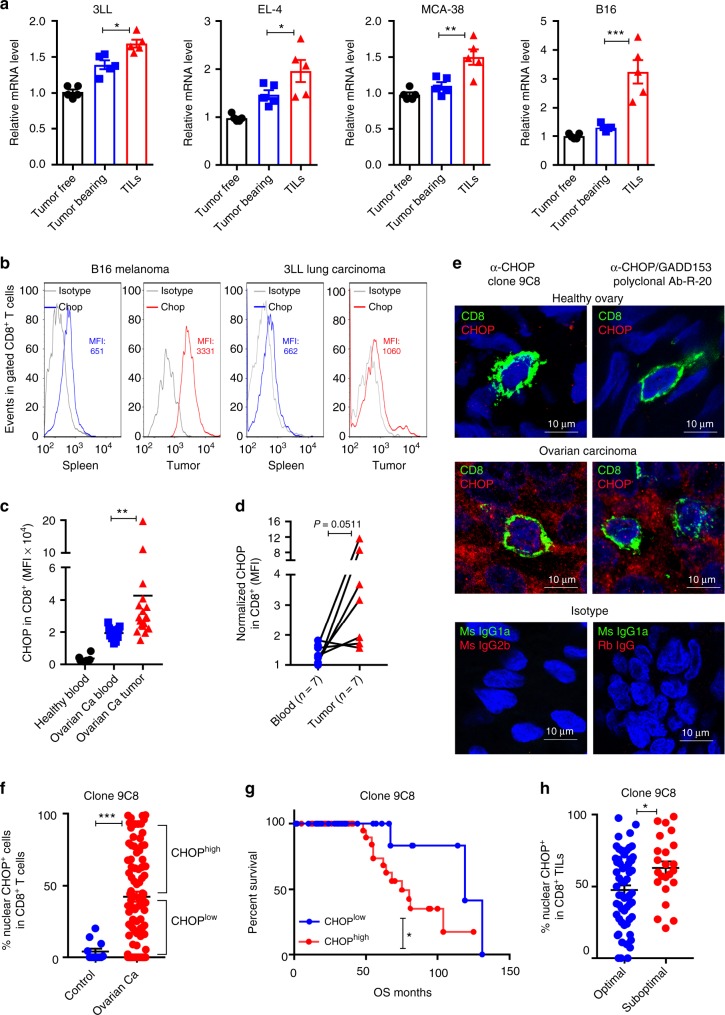
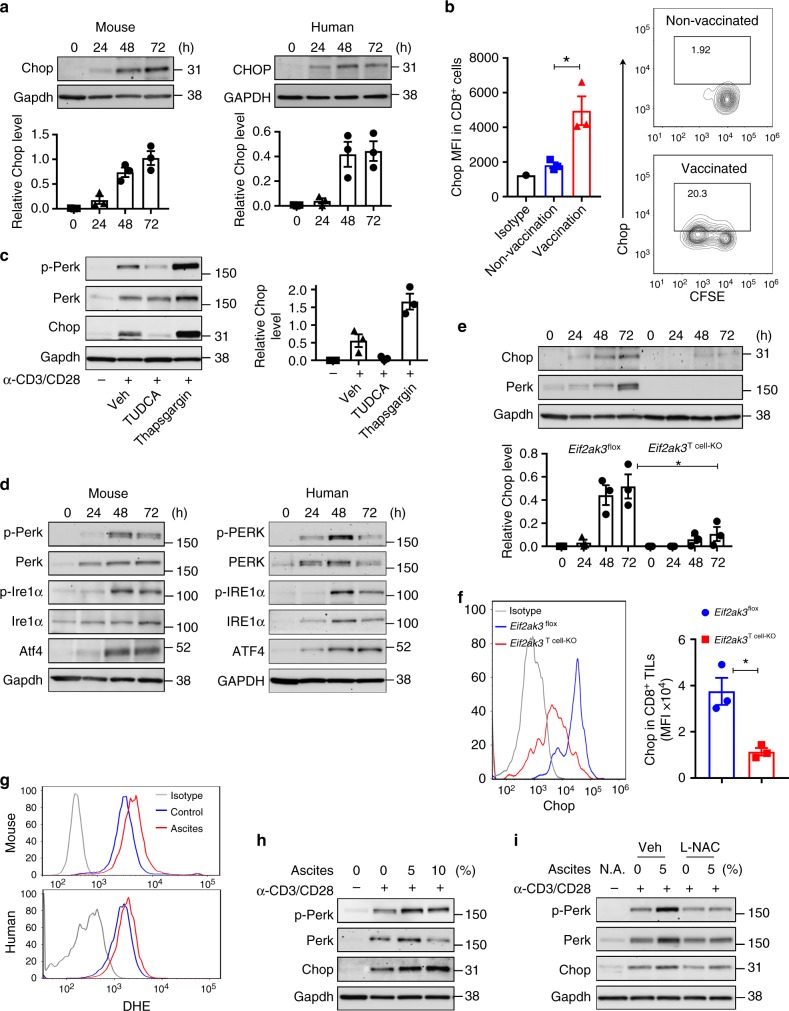
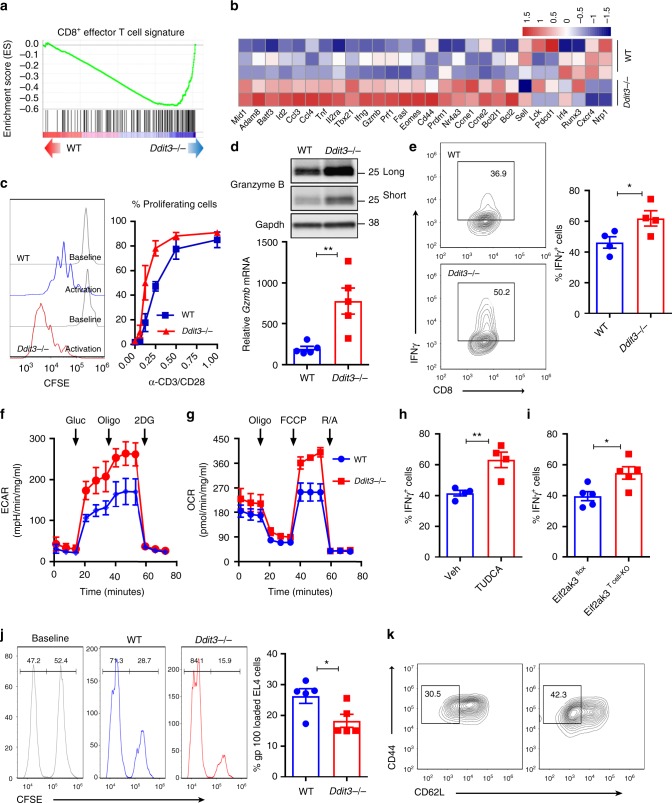
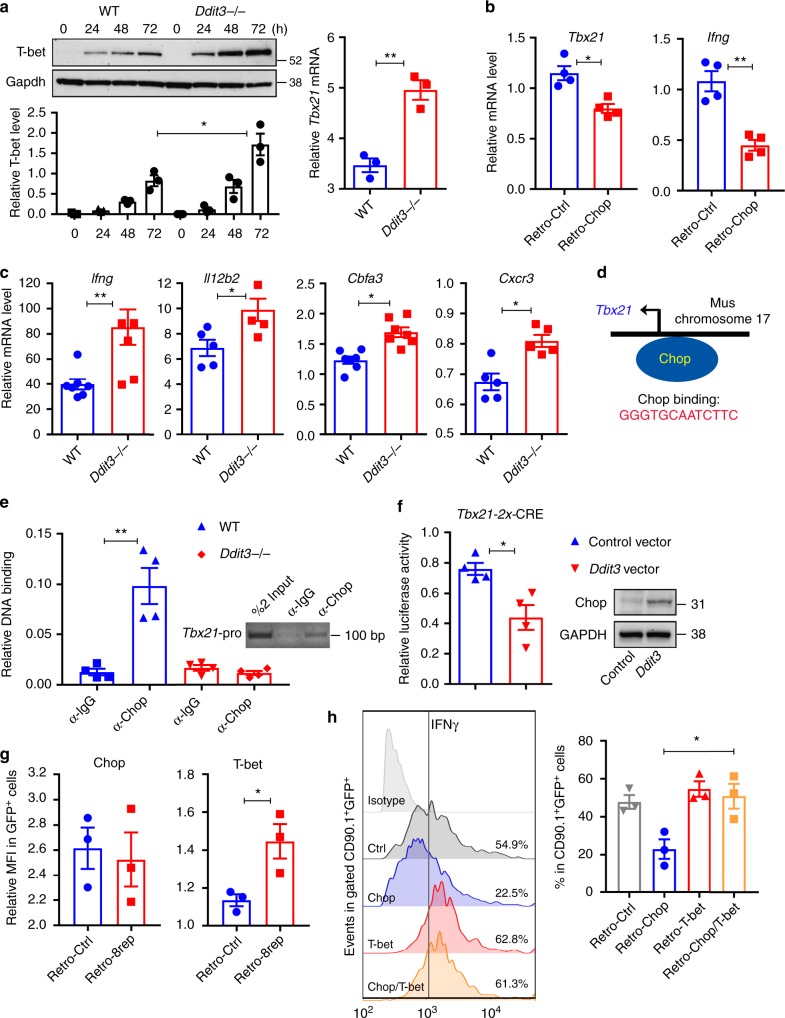
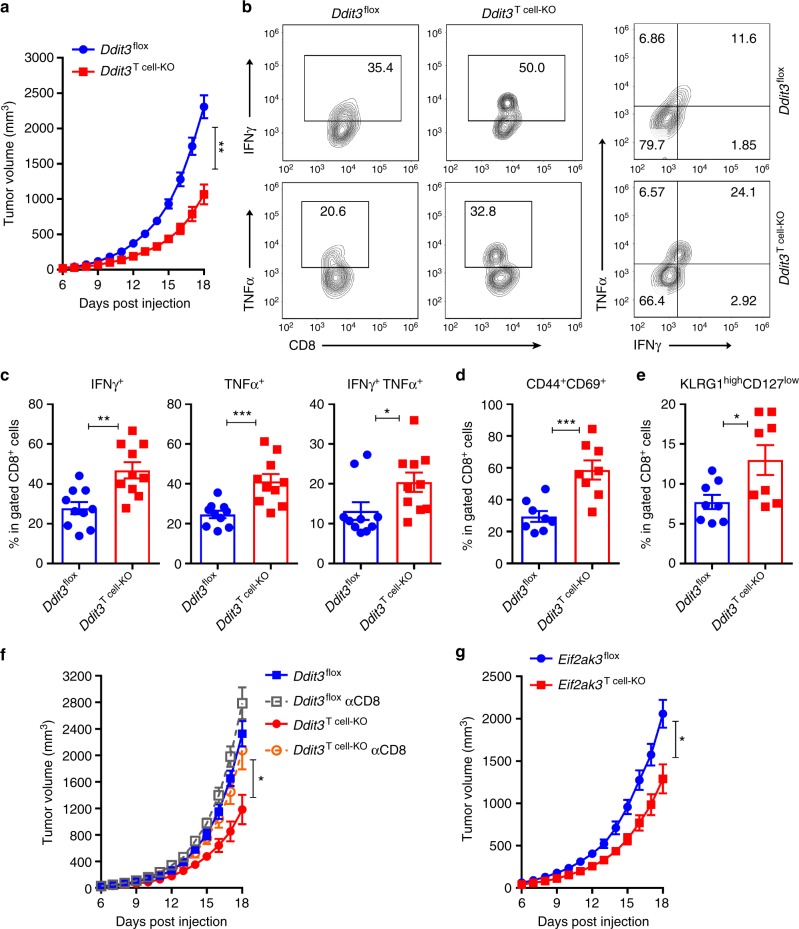
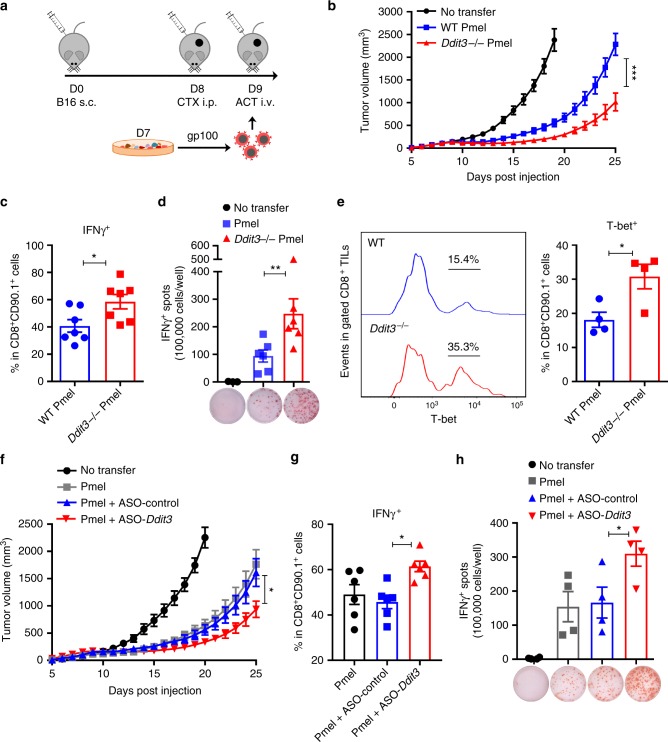
Understanding the intrinsic mediators that render CD8+ T cells dysfunctional in the tumor microenvironment is a requirement to develop more effective cancer immunotherapies. Here, we report that C/EBP homologous protein (Chop), a downstream sensor of severe endoplasmic reticulum (ER) stress, is a major negative regulator of the effector function of tumor-reactive CD8+ T cells. Chop expression is increased in tumor-infiltrating CD8+ T cells, which correlates with poor clinical outcome in ovarian cancer patients. Deletion of Chop in T cells improves spontaneous antitumor CD8+ T cell immunity and boosts the efficacy of T cell-based immunotherapy. Mechanistically, Chop in CD8+ T cells is elevated primarily through the ER stress-associated kinase Perk and a subsequent induction of Atf4; and directly represses the expression of T-bet, a master regulator of effector T cell function. These findings demonstrate the primary role of Chop in tumor-induced CD8+ T cell dysfunction and the therapeutic potential of blocking Chop or ER stress to unleash T cell-mediated antitumor immunity.
Overview
The claims and statistics of this paper haven’t been checked yet.
Free: it reads the open-access text and checks the first 5 claims that cite a source we can check. Create a free account to check every claim.
Integrity signals
Registry
Cites
Statistics
Figures
Verification
Claims the paper makes
The claims and statistics of this paper haven’t been checked yet.
Free: it reads the open-access text and checks the first 5 claims that cite a source we can check. Create a free account to check every claim.
Claims other papers make about this one
Each is checked against this paper’s own text: does it say what the citing paper says it does?
The cited source says what the claim attributes to it.
In the citing paper
“Even though both oxidative and ER stress have been shown to contribute to T cell dysfunction across different tumor types (44-51),”
From Bile acid synthesis impedes tumor-specific T cell responses during liver cancer (2025) · cites this paper as [46]
Self-check
Percentages, sums and reported differences re-computed from the paper’s own numbers.
The self-check needs the paper’s full text.
Citations
Cites
Oncology meets immunology: the cancer-immunity cycle.
Chen, D. S., & Mellman, I. (2013) · Immunity · doi:10.1016/j.immuni.2013.07.012 · Cited by 6,929
Cancer Immunoediting: Integrating Immunity’s Roles in Cancer Suppression and Promotion
Schreiber, R. D., Old, L. J., & Smyth, M. J. (2011) · Science · doi:10.1126/science.1203486 · Cited by 6,474
The Unfolded Protein Response: From Stress Pathway to Homeostatic Regulation
Walter, P., & Ron, D. (2011) · Science · doi:10.1126/science.1209038 · Cited by 5,924
Elements of cancer immunity and the cancer–immune set point
Chen, D. S., & Mellman, I. (2017) · Nature · doi:10.1038/nature21349 · Cited by 5,352
Innate and adaptive immune cells in the tumor microenvironment
Gajewski, T. F., Schreiber, H., & Fu, Y.-X. (2013) · Nature Immunology · doi:10.1038/ni.2703 · Cited by 4,148
Protein translation and folding are coupled by an endoplasmic-reticulum-resident kinase
Harding, H. P., Zhang, Y., & Ron, D. (1999) · Nature · doi:10.1038/16729 · Cited by 3,310
Immunogenic cell death in cancer and infectious disease
Galluzzi, L., Buqué, A., Kepp, O., Zitvogel, L., & Kroemer, G. (2017) · Nature Reviews Immunology · doi:10.1038/nri.2016.107 · Cited by 3,119
Kaufman, R. J. (1999) · Genes & Development · doi:10.1101/gad.13.10.1211 · Cited by 2,248
Chemokines in the cancer microenvironment and their relevance in cancer immunotherapy
Nagarsheth, N., Wicha, M. S., & Zou, W. (2017) · Nature Reviews Immunology · doi:10.1038/nri.2017.49 · Cited by 2,206
Munn, D. H., Sharma, M. D., Baban, B., Harding, H. P., Zhang, Y., Ron, D., & Mellor, A. L. (2005) · Immunity · doi:10.1016/j.immuni.2005.03.013 · Cited by 1,272
Self-citation
Cited by
Endoplasmic reticulum stress signals in the tumour and its microenvironment
Chen, X., & Cubillos-Ruiz, J. R. (2021) · Nature Reviews Cancer · doi:10.1038/s41568-020-00312-2 · Cited by 1,356
Self-citationTurning Cold into Hot: Firing up the Tumor Microenvironment
Duan, Q., Zhang, H., Zheng, J., & Zhang, L. (2020) · Trends in Cancer · doi:10.1016/j.trecan.2020.02.022 · Cited by 934
Disturbed mitochondrial dynamics in CD8+ TILs reinforce T cell exhaustion
Yu, Y.-R., Imrichova, H., Wang, H., Chao, T., Xiao, Z., Gao, M., Rincon-Restrepo, M., Franco, F., Genolet, R., Cheng, W.-C., et al. (2020) · Nature Immunology · doi:10.1038/s41590-020-0793-3 · Cited by 593
Pharmacological targeting of endoplasmic reticulum stress in disease
Marciniak, S. J., Chambers, J. E., & Ron, D. (2022) · Nature Reviews Drug Discovery · doi:10.1038/s41573-021-00320-3 · Cited by 520
Metabolic and epigenetic regulation of T-cell exhaustion
Franco, F., Jaccard, A., Romero, P., Yu, Y.-R., & Ho, P.-C. (2020) · Nature Metabolism · doi:10.1038/s42255-020-00280-9 · Cited by 455
Linoleic acid potentiates CD8+ T cell metabolic fitness and antitumor immunity
Nava Lauson, C. B., Tiberti, S., Corsetto, P. A., Conte, F., Tyagi, P., Machwirth, M., Ebert, S., Loffreda, A., Scheller, L., Sheta, D., et al. (2023) · Cell Metabolism · doi:10.1016/j.cmet.2023.02.013 · Cited by 291
PERK is a critical metabolic hub for immunosuppressive function in macrophages
Raines, L. N., Zhao, H., Wang, Y., Chen, H.-Y., Gallart-Ayala, H., Hsueh, P.-C., Cao, W., Koh, Y., Alamonte-Loya, A., Liu, P.-S., et al. (2022) · Nature Immunology · doi:10.1038/s41590-022-01145-x · Cited by 235
Mohamed, E., Sierra, R. A., Trillo-Tinoco, J., Cao, Y., Innamarato, P., Payne, K. K., de Mingo Pulido, A., Mandula, J., Zhang, S., Thevenot, P., et al. (2020) · Immunity · doi:10.1016/j.immuni.2020.03.004 · Cited by 215
“TMErelated stimulation of IRE1a, PERK, or CHOP promotes dysfunction of intra-tumoral T cells (Cao et al., 2019; Hurst et al., 2019; Song et al., 2018).”
BackgroundSelf-citationSiwecka, N., Rozpędek, W., Pytel, D., Wawrzynkiewicz, A., Dziki, A., Dziki, Ł., Diehl, J. A., & Majsterek, I. (2019) · International Journal of Molecular Sciences · doi:10.3390/ijms20184354 · Cited by 200
Immunobiology of high-grade serous ovarian cancer: lessons for clinical translation
Kandalaft, L. E., Dangaj Laniti, D., & Coukos, G. (2022) · Nature Reviews Cancer · doi:10.1038/s41568-022-00503-z · Cited by 180
Bile acid synthesis impedes tumor-specific T cell responses during liver cancer
Varanasi, S. K., Chen, D., Liu, Y., Johnson, M. A., Miller, C. M., Ganguly, S., Lande, K., LaPorta, M. A., Hoffmann, F. A., Mann, T. H., et al. (2025) · Science · doi:10.1126/science.adl4100 · Cited by 177
Anadon, C. M., Yu, X., Hänggi, K., Biswas, S., Chaurio, R. A., Martin, A., Payne, K. K., Mandal, G., Innamarato, P., Harro, C. M., et al. (2022) · Cancer Cell · doi:10.1016/j.ccell.2022.03.008 · Cited by 175
Self-citationEndoplasmic reticulum stress—a key guardian in cancer
Zhang, W., Shi, Y., Oyang, L., Cui, S., Li, S., Li, J., Liu, L., Li, Y., Peng, M., Tan, S., et al. (2024) · Cell Death Discovery · doi:10.1038/s41420-024-02110-3 · Cited by 173
Mandula, J. K., Chang, S., Mohamed, E., Jimenez, R., Sierra-Mondragon, R. A., Chang, D. C., Obermayer, A. N., Moran-Segura, C. M., Das, S., Vazquez-Martinez, J. A., et al. (2022) · Cancer Cell · doi:10.1016/j.ccell.2022.08.016 · Cited by 173
Self-citationLi, A., Song, N., Riesenberg, B., & Li, Z. (2020) · Frontiers in Immunology · doi:10.3389/fimmu.2019.03154 · Cited by 145
“Induces T-cell exhaustion (64, 65) Negative regulator of effector T cell (66, 70) Increase cytokine”
BackgroundDecoding endoplasmic reticulum stress signals in cancer cells and antitumor immunity
Salvagno, C., Mandula, J. K., Rodríguez, P. C., & Cubillos‐Ruiz, J. R. (2022) · Trends in cancer · doi:10.1016/j.trecan.2022.06.006 · Cited by 147
Self-citationControl of immune cell function by the unfolded protein response
Conza, G. D., Ho, P., Cubillos‐Ruiz, J. R., & Huang, S. C. (2023) · Nature reviews. Immunology · doi:10.1038/s41577-023-00838-0 · Cited by 119
Self-citationKatoh, Y., Yaguchi, T., Kubo, A., Iwata, T., Morii, K., Kato, D., Ohta, S., Satomi, R., Yamamoto, Y., Oyamada, Y., et al. (2022) · Journal for ImmunoTherapy of Cancer · doi:10.1136/jitc-2022-004616 · Cited by 125
IL-17 production by tissue-resident MAIT cells is locally induced in children with pneumonia
Lu, B., Liu, M., Wang, J., Fan, H., Yang, D., Zhang, L., Gu, X., Nie, J., Chen, Z., Corbett, A. J., et al. (2020) · Mucosal Immunology · doi:10.1038/s41385-020-0273-y · Cited by 108
Cribbs, A. P., Terlecki-Zaniewicz, S., Philpott, M., Baardman, J., Ahern, D., Lindow, M., Obad, S., Oerum, H., Sampey, B. P., Mander, P. K., et al. (2020) · Proceedings of the National Academy of Sciences · doi:10.1073/pnas.1919893117 · Cited by 109
“However, several upregulated genes such as DDIT3 show inverse patterns such as increased levels of repressive H3K27 marks with reduced H3K4me3 levels (Figure 3J), whereas the T-box transcription factor Tbet (TBX21) regulating Tcell functions and being a direct, repressed target of DDIT3 (42), follows a pattern of PRC-…”
BackgroundInfluentialTransgelin 2 guards T cell lipid metabolism and antitumour function
Hwang, S., Awasthi, D., Jeong, J., Sandoval, T. A., Chae, C.-S., Ramos, Y., Chen, T., Falco, M. M., Salvagno, C., Emmanuelli, A., et al. (2024) · Nature · doi:10.1038/s41586-024-08071-y · Cited by 96
Self-citationInterplay between endoplasmic reticulum stress and non-coding RNAs in cancer
Zhao, T., Du, J., & Zeng, H. (2020) · Journal of Hematology & Oncology · doi:10.1186/s13045-020-01002-0 · Cited by 83
Endoplasmic Reticulum Stress Signaling and the Pathogenesis of Hepatocarcinoma
Wei, J., & Fang, D. (2021) · International Journal of Molecular Sciences · doi:10.3390/ijms22041799 · Cited by 74
Evoking Ferroptosis by Synergistic Enhancement of a Cyclopentadienyl Iridium‐Betulin Immune Agonist
Lv, M., Zheng, Y., Wu, J., Shen, Z., Guo, B., Hu, G., Huang, Y., Zhao, J., Qian, Y., Su, Z. G., et al. (2023) · Angewandte Chemie International Edition · doi:10.1002/anie.202312897 · Cited by 62
Chakraborty, P., Parikh, R. Y., Choi, S., Tran, D. T., Gooz, M. B., Hedley, Z. T., Kim, D., Pytel, D., Kang, I., Nadig, S. N., et al. (2022) · Cancer Research · doi:10.1158/0008-5472.can-21-3155 · Cited by 67
Self-citationThe tumor microenvironment shapes the molecular characteristics of exhausted CD8+ T cells
Cheng, H., Ma, K., Zhang, L., & Li, G. (2021) · Cancer Letters · doi:10.1016/j.canlet.2021.02.013 · Cited by 65
Smolgovsky, S. A., Bayer, A. L., Kaur, K., Sanders, E. K., Aronovitz, M. A., Filipp, M. E., Thorp, E. B., Schiattarella, G. G., Hill, J. A., Blanton, R. M., et al. (2023) · Journal of Clinical Investigation · doi:10.1172/jci171874 · Cited by 61
Self-citationEndoplasmic reticulum stress responses in anticancer immunity
Hwang, S., Chang, S., Rodríguez, P. C., & Cubillos‐Ruiz, J. R. (2025) · Nature reviews. Cancer · doi:10.1038/s41568-025-00836-5 · Cited by 80
Self-citationCell stress response impairs de novo NAD+ biosynthesis in the kidney
Bignon, Y., Rinaldi, A. M., Nadour, Z., Poindessous, V., Nemazanyy, I., Lenoir, O., Fohlen, B., Weill-Raynal, P., Hertig, A., Karras, A., et al. (2021) · JCI Insight · doi:10.1172/jci.insight.153019 · Cited by 55
“The transcription factor DDIT3 has a repressive activity on numerous target genes 212 (24),(25),(26),(23), leaving the possibility that it could repress QPRT transcription.”
BackgroundThe UPRising connection between endoplasmic reticulum stress and the tumor microenvironment
Urra, H., Aravena, R., González-Johnson, L., & Hetz, C. A. (2024) · Trends in cancer · doi:10.1016/j.trecan.2024.09.011 · Cited by 52
Mesnage, R., Brandsma, I., Moelijker, N., Zhang, G., & Antoniou, M. N. (2021) · Food and Chemical Toxicology · doi:10.1016/j.fct.2021.112601 · Cited by 52
Hinzman, C. P., Singh, B. B., Bansal, S., Li, Y., Iliuk, A. B., Girgis, M. J., Herremans, K. M., Trevino, J. G., Singh, V. K., Banerjee, P. P., et al. (2022) · Journal of Extracellular Vesicles · doi:10.1002/jev2.12232 · Cited by 49
“DDIT3/CHOP is a key transcription factor upregulated in response to elevated UPR (Cao et al., 2019; Lu et al., 2014).”
BackgroundCellular stress responses and metabolic reprogramming in cancer progression and dormancy
Payne, K. K. (2021) · Seminars in Cancer Biology · doi:10.1016/j.semcancer.2021.06.004 · Cited by 50
Mukherjee, D., Chakraborty, S., Bercz, L. S., D’Alesio, L., Wedig, J., Torok, M. A., Pfau, T., Lathrop, H., Jasani, S., Guenther, A., et al. (2023) · iScience · doi:10.1016/j.isci.2023.107408 · Cited by 42
“ATF4 can switch between activation of pro-survival and pro-apoptotic genes that induce the expression of downstream proteins such as 4EBP1(6,7) or C/EBP homologous protein (CHOP), respectively, in normal cells.(8,9) Further, ATF4 along with CHOP can dephosphorylate eIF2a and generate reactive oxygen species (ROS) by r…”
BackgroundHan, S., Wu, Y., Jing, Z., Qiang, Y., Jiang, Y., Quan, Q., Yin, J., Jiang, L., & Yang, X. (2023) · Cancer Immunology Immunotherapy · doi:10.1007/s00262-023-03555-8 · Cited by 48
“Cao et al. [44] found that increased CHOP levels in CD8 + T cells have been associated with tumor reduction failure.”
BackgroundMesnage, R., Ferguson, S., Brandsma, I., Moelijker, N., Zhang, G., Mazzacuva, F., Caldwell, A., Halket, J. M., & Antoniou, M. N. (2022) · Food and Chemical Toxicology · doi:10.1016/j.fct.2022.113380 · Cited by 51
Gong, T., Zhang, X., Liu, X., Ye, Y., Tian, Z., Yin, S., Zhang, M., Tang, J. Y., & Liu, Y. (2024) · Translational research · doi:10.1016/j.trsl.2024.04.001 · Cited by 46
BATF is a major driver of NK cell epigenetic reprogramming and dysfunction in AML
Kumar, B., Singh, A. K., Başar, R., Uprety, N., Li, Y., Fan, H., Cortes, A. K. N., Kaplan, M., Acharya, S., Shaim, H., et al. (2024) · Science Translational Medicine · doi:10.1126/scitranslmed.adp0004 · Cited by 45
“…cell exhaustion (BATF, BATF3, and interferon regulatory factor 4) ( 19 , 39 , 40 ), T cell dysfunction [DNA damage-inducible transcript 3 (DDIT3)] ( 41 ), and TGF-β /SMAD signaling (ELF3) ( 42 ), whereas transwell-coculture and control NK cells displayed TF activities linked to T or NK cell…”
BackgroundPERK reprograms hematopoietic progenitor cells to direct tumor-promoting myelopoiesis in the spleen
Liu, M., Wu, C., Luo, S., Hua, Q., Chen, H., Weng, Y., Xu, J., Lin, H., Wang, L., Li, J., et al. (2022) · The Journal of Experimental Medicine · doi:10.1084/jem.20211498 · Cited by 45
Jiang, Z., Wang, H., Wang, X., Duo, H., Tao, Y., Jia, L., Li, X., Liu, J., Ni, J., Wu, E. J., et al. (2024) · Journal of Clinical Investigation · doi:10.1172/jci179874 · Cited by 46
“Additionally, CHOP deletion has been linked to increased antitumor activity of CD8 + T cells by promoting T-bet expression (51).”
Pan, X., Liu, Y., Liu, L., Pang, B., Sun, Z., Guan, S., Yan, Q., Mo, T., Chen, R., Xu, M., et al. (2021) · Journal of Ethnopharmacology · doi:10.1016/j.jep.2021.114923 · Cited by 43
The tumour-promoting role of protein homeostasis: Implications for cancer immunotherapy
Liang, R., Tan, H., Jin, H., Wang, J., Tang, Z., & Lu, X. (2023) · Cancer Letters · doi:10.1016/j.canlet.2023.216354 · Cited by 35
Ye, Y., Li, X., Wang, Z., Ye, F., Xu, W., Lu, R., Shen, H., & Miao, S. (2021) · International Journal of Biological Sciences · doi:10.7150/ijbs.56833 · Cited by 36
“Our previous studies have reported that DIM induces cells apoptosis and autophagy to inhibit proliferation in gastric cancer [4] and liver cancer [8].”
BackgroundYang, H., Zhang, M.-Z.-H., Sun, H., Chai, Y., Li, X., Jiang, Q., & Hou, J. (2021) · Frontiers in Oncology · doi:10.3389/fonc.2021.783194 · Cited by 38
Cao, S. “., Fachi, J. L., Ma, K., Antonova, A. U., Wang, Q., Cai, Z., Kaufman, R. J., Ciorba, M. A., Deepak, P., & Colonna, M. (2024) · Journal of Clinical Investigation · doi:10.1172/jci174198 · Cited by 38
“It has a proapoptotic function during prolonged ER stress but can also repress T-bet (53), which promotes the conversion of IL-22–producing ILC3s into IFN-γ –producing ILC1s in mice (54, 55).”
BackgroundTanaka, H., Miyama, R., Sakurai, Y., Tamagawa, S., Nakai, Y., Tange, K., Yoshioka, H., & Akita, H. (2021) · Pharmaceutics · doi:10.3390/pharmaceutics13122097 · Cited by 34
“The expression of a stress related-transcription factor C/EBP homologous protein (CHOP), a consequence of protein kinase RNA-like endoplasmic reticulum kinase (PERK)-dependent and tumor-induced ISRs, results in a decreased cytotoxicity of T cells [48].”
BackgroundExploring paraptosis as a therapeutic approach in cancer treatment
Chang, L., Chiang, S.-K., Chen, S., & Hung, M. (2024) · Journal of Biomedical Science · doi:10.1186/s12929-024-01089-4 · Cited by 42
“Intrinsic activation of PERK was observed in tumor-associated T cells and myeloid-derived suppressor cells [176, 177].”
BackgroundHumoral immune responses: Unsung heroes of the war on cancer
Conejo-Garcia, J. R., Biswas, S., & Chaurio, R. A. (2020) · Seminars in Immunology · doi:10.1016/j.smim.2020.101419 · Cited by 31
“A fourth possibility is that the metabolic restrictions caused by the Warburg effect, or production of Amino Acid-depleting enzymes such as IDO, LArginase or SLC43A2 [103] by tumor cells are alleviated in the microenvironment of intratumoral TLS, thus preventing the mechanisms of metabolically-driven ER stress that pa…”
BackgroundSelf-citationSaber, M. A., Biswas, P., Dey, D., Kaium, M. A., Islam, M. A., Tripty, I. A., Rahman, M. H., Rahaman, T. I., Biswas, M. Y., Paul, P., et al. (2021) · Processes · doi:10.3390/pr10010016 · Cited by 43
Shi, X., Li, Z., Yao, R.-Q., Cheng, Q., Li, W., Wu, R. T., Xie, Z., Zhu, Y., Qiu, X., Yang, S., et al. (2022) · npj Precision Oncology · doi:10.1038/s41698-022-00300-9 · Cited by 32
Endoplasmic Reticulum Stress in Cancer
Zhou, R., Wang, W., Li, B., Zhu, L., Huang, J., & Li, X. (2025) · MedComm · doi:10.1002/mco2.70263 · Cited by 45
“CHOP, a primary negative regulator of CD8 + T cell anticancer functions, is activated through the PERK–ATF4– CHOP axis under ER stress, suppressing the main regulator of T cell functions, T-bet [130].”
Stress-Mediated Attenuation of Translation Undermines T-cell Activity in Cancer
Riesenberg, B., Hunt, E. G., Tennant, M. D., Hurst, K. E., Andrews, A. M., Leddy, L. R., Neskey, D. M., Hill, E. G., Rivera, G. O. R., Paulos, C. M., et al. (2022) · Cancer Research · doi:10.1158/0008-5472.can-22-1744 · Cited by 34
Morin Inhibits Ovarian Cancer Growth through the Inhibition of NF-κB Signaling Pathway
Xu, M., & Zhang, Y. (2019) · Anti-Cancer Agents in Medicinal Chemistry · doi:10.2174/1871521409666191014164742 · Cited by 28
Endoplasmic Reticulum Quality Control in Immune Cells
Jiang, Y., Tao, Z., Chen, H., & Xia, S. (2021) · Frontiers in Cell and Developmental Biology · doi:10.3389/fcell.2021.740653 · Cited by 31
“A further study found that the proapoptotic factor CHOP can bind and inhibit the transcriptional activity of Tbx21, thereby downregulating the expression of T-bet protein, leading to a decrease in the cellular activity of effector CD8 T cells (Cao et al., 2019).”
BackgroundEndoplasmic Reticulum Stress: An Emerging Therapeutic Target for Intervertebral Disc Degeneration
Wang, D., He, X., Zheng, C., Wang, C., Peng, P., Gao, C., Xu, X., Ma, Y., Liu, M., Yang, L., et al. (2022) · Frontiers in Cell and Developmental Biology · doi:10.3389/fcell.2021.819139 · Cited by 29
Understanding resource competition to achieve predictable synthetic gene expression in eukaryotes
Blasi, R. D., Gabrielli, J., Shabestary, K., Ziarti, I., Ellis, T., Kontoravdi, C., Ledesma‐Amaro, R., & Ceroni, F. (2024) · Nature Reviews Bioengineering · doi:10.1038/s44222-024-00206-0 · Cited by 30
Endoplasmic reticulum stress: A key player in immune cell regulation and autoimmune disorders
Moreews, M., & Karlsson, M. C. I. (2025) · Seminars in Immunology · doi:10.1016/j.smim.2025.101954 · Cited by 30
Antitumor T‐cell function requires CPEB4‐mediated adaptation to chronic endoplasmic reticulum stress
Fernández‐Alfara, M., Sibilio, A., Martín, J., Uxó, E. T., Malumbres, M., Alcalde, V., Chanes, V., Cañellas-Socias, A., Palomo‐Ponce, S., Batlle, E., et al. (2023) · The EMBO Journal · doi:10.15252/embj.2022111494 · Cited by 25
The Roles of IDH1 in Tumor Metabolism and Immunity
Ni, Y., Shen, P., Wang, X. T., Liu, H., Luo, H., & Han, X. (2022) · Future Oncology · doi:10.2217/fon-2022-0583 · Cited by 24
Giansanti, M., Theinert, T., Boeing, S. K., Haas, D., Schlegel, P., Vacca, P., Nazio, F., & Caruana, I. (2023) · Molecular Cancer · doi:10.1186/s12943-023-01893-w · Cited by 27
“…which has been shown to be involved in the UPR-dependent autophagy activation, was reported to be upregulated in tumor-infiltrating CD8 + T cells and correlated with decreased clinical outcome in ovarian cancer patients [100], however, its connection with autophagy has not been investigated yet.”
BackgroundRoles and Clinical Significances of ATF6, EMC6, and APAF1 in Prognosis of Pancreatic Cancer
Xiao, W., Cao, R.-C., Yang, W.-J., Tan, J., Liu, R.-Q., Kan, H., Zhou, L., Zhang, N., Chen, Z., Chen, X., et al. (2022) · Frontiers in Genetics · doi:10.3389/fgene.2021.730847 · Cited by 22
“The C/EBP homologous protein (CHOP) is a downstream factor of severe ER stress (Cao et al., 2019), which is upregulated in response to dysregulated UPR and which is used in the stratification of mesothelioma patients (Dalton et al.”
BackgroundAdvances and obstacles of T cell-based immunotherapy in gynecological malignancies
Zhao, X., Ran, J., Li, S., & Chen, J. (2025) · Molecular Cancer · doi:10.1186/s12943-025-02411-w · Cited by 25
“Inhibition of Chop, either genetically or pharmacologically, restores interferon-γ production and cytotoxic granule exocytosis, suggesting this pathway as a therapeutic target to reverse T cell exhaustion [140].”
Stress relief for cancer immunotherapy: implications for the ER stress response in tumor immunity
Andrews, A. M., Tennant, M. D., & Thaxton, J. E. (2020) · Cancer Immunology Immunotherapy · doi:10.1007/s00262-020-02740-3 · Cited by 20
CD4+ T cell dysfunction in cancer
Venkatesh, H., & Fong, L. H. (2025) · The Journal of Experimental Medicine · doi:10.1084/jem.20241417 · Cited by 23
Ferrena, A., Wang, J., Zhang, R., Karadal-Ferrena, B., Al-Hardan, W., Singh, S., Borjihan, H., Schwartz, E. L., Zhao, H., Oktay, M. H., et al. (2023) · Molecular Cancer Therapeutics · doi:10.1158/1535-7163.mct-23-0173 · Cited by 20
Malignant ascites in ovarian cancer: New advances and translational opportunities
Boo, K. H., Lee, G., & Song, M. (2025) · Translational Oncology · doi:10.1016/j.tranon.2025.102568 · Cited by 24
“…transcription factor, CHOP, downregulates T-bet, which is a crucial regulator of CD8 + T cell cytotoxicity, through the PERK-ATF4 axis, further compromising CD8 + T cell cytotoxicity; elevated CHOP expression in CD8 + T cells is associated with poor outcomes and reduced anti-tumor function [58].”
Wang, Y., Liu, S., Chen, Q., Ren, Y., Li, Z., & Cao, S. (2021) · Life Sciences · doi:10.1016/j.lfs.2021.119521 · Cited by 17
Wang, S., Ma, X., Guo, J., Li, F., Chen, T., Ma, W., He, C.-Q., Wang, H., & He, H. (2022) · Virulence · doi:10.1080/21505594.2022.2044667 · Cited by 17
Prx1 Regulates Thapsigargin-Mediated UPR Activation and Apoptosis
Kim, E.-K., Kim, Y., Yang, J. Y., & Jang, H. H. (2022) · Genes · doi:10.3390/genes13112033 · Cited by 17
“Furthermore, it upregulates ATF4 to restore ER homeostasis or initiates the apoptosis pathway via the expression of UPR target genes [14,15].”
BackgroundWang, L., En, H., Yang, L., Zhang, Y., Sun, B., & Gao, J. (2019) · OncoTargets and Therapy · doi:10.2147/ott.s215145 · Cited by 17
“The data of TCGA database were also searched following the methods provided by Cao et al (2019) and Fan et al (2019).(19,20)”
MethodZou, X.-Z., Zhou, X., Feng, Y., Hao, J., Liang, B., & Jia, M.-W. (2021) · European Journal of Pharmacology · doi:10.1016/j.ejphar.2021.174222 · Cited by 17
Lu, Z. F., Bae, E., Verginadis, I. I., Zhang, H., Cho, C., McBrearty, N., George, S. S., Diehl, J. A., Koumenis, C., Bradley, L. M., et al. (2022) · Cancer Immunology Immunotherapy · doi:10.1007/s00262-022-03286-2 · Cited by 15
Gressler, A. E., Leng, H., Zinecker, H., & Simon, A. K. (2023) · Seminars in Immunology · doi:10.1016/j.smim.2023.101838 · Cited by 18
Shi, Y., Lu, Y., Zhu, C., Luo, Z., Li, X., Liu, Y., Jiang, M., Liu, X., Luo, L., Du, Y., et al. (2021) · Biomaterials · doi:10.1016/j.biomaterials.2021.120757 · Cited by 17
Endoplasmic Reticulum Stress: Triggers Microenvironmental Regulation and Drives Tumor Evolution
Peng, C., Wang, J., Wang, S., Zhao, Y., Wang, H., Wang, Y., Ma, Y., & Yang, J. (2025) · Cancer Medicine · doi:10.1002/cam4.70684 · Cited by 21
“However, targeting the PERK–CHOP pathway can increase the antitumor immunotherapeutic effect of T cells in the TME [116, 117].”
Tian, W., Qin, G., Jia, M., Li, W., Cai, W., Wang, H., Zhao, Y., Bao, X., Wei, W., Zhang, Y., et al. (2023) · Frontiers in Immunology · doi:10.3389/fimmu.2023.1198551 · Cited by 19
“Limited availability of glucose catabolism acetyl-CoA alters the chromatin accessibility to histone acetylation at Ifng and Tbx21 gene loci.”
BackgroundInfluentialCorrea, L. O., Jankowski, S. E., Hong, H. S., Armas, N. D., Vijendra, A. I., Reynolds, M. B., Fogo, G. M., Awad, D., Dils, A. T., Inoki, K. A., et al. (2024) · Cell Reports · doi:10.1016/j.celrep.2024.114156 · Cited by 15
Lymphoma accelerates T cell and tissue aging
Hesterberg, R. S., Davis, J. T., Handoo, K. J., Elmarsafawi, A. G., Augello, A. C., Cheng, C., Atkins, R. M., Lee, D. H., Yang, C., Yao, J., et al. (2025) · Cancer Cell · doi:10.1016/j.ccell.2025.07.023 · Cited by 16
“Indeed, in solid tumors, the UPR induces an expansion of T cell endoplasmic reticulum (ER) biomass, 63 and increases in OCRs of loci related to the UPR were manifest in CD4 + T cells from young lymphoma-bearing mice (Figure 4C).”
Unfolded protein responses in T cell immunity
Zhang, W., & Cao, X. (2025) · Frontiers in Immunology · doi:10.3389/fimmu.2024.1515715 · Cited by 16
Unfolded protein response in the activation-induced biological processes of CD8+ T cells
Shi, Y., Lu, Y., & You, J. (2021) · Pharmacological Research · doi:10.1016/j.phrs.2021.105654 · Cited by 16
Wang, J., Huo, C., Yin, J., Tian, L., Ma, L., & Wang, D. (2021) · Frontiers in Oncology · doi:10.3389/fonc.2021.773644 · Cited by 13
“The expression levels of miRs in para-cancerous nontumor tissues were obtained from the GEPIA database, TCGA, and the GTEx project using a standard processing pipeline (36, 37).”
MethodPratap, U. P., & Vadlamudi, R. K. (2022) · Immunometabolism · doi:10.1097/in9.0000000000000007 · Cited by 12
How the Unfolded Protein Response Is a Boon for Tumors and a Bane for the Immune System
Raines, L. N., & Huang, S. C. (2023) · ImmunoHorizons · doi:10.4049/immunohorizons.2200064 · Cited by 12
“Specifically, high expression of the CHOP protein has been implicated in this process, potentially shedding light on the underlying mechanisms of T cell dysregulation in cancers (88).”
BackgroundEndoplasmic reticulum stress in T cell‐mediated diseases
Chen, S., Wang, Q., Wang, H., & Xia, S. (2023) · Scandinavian Journal of Immunology · doi:10.1111/sji.13307 · Cited by 14
Modulation of Myeloid-Derived Suppressor Cells in the Tumor Microenvironment by Natural Products
Calderon, J. J., Prieto, K., Lasso, P., Fiorentino, S., & Barreto, A. (2023) · Archivum Immunologiae et Therapiae Experimentalis · doi:10.1007/s00005-023-00681-0 · Cited by 15
“Additionally, antioxidants such as NAC decrease ER stress in the TME (Cao et al. 2019; Thevenot et al. 2014).”
BackgroundLiu, S., Ma, S., Liu, G., Hou, L., Guan, Y., Liu, L., Meng, Y., Yu, W., Liu, T., Zhou, L., et al. (2025) · Advanced Science · doi:10.1002/advs.202411053 · Cited by 16
Zandhuis, N. D., Bradarić, A., van der Zwaan, C., Hoogendijk, A. J., Popović, B., & Wolkers, M. C. (2025) · European Journal of Immunology · doi:10.1002/eji.202451641 · Cited by 11
“PERK inhibits translation by phosphorylating EIF2A and induces the expression of CHOP through ATF4, which impairs T-cell function and induces apoptosis [38].”
Barriers and Opportunities for CAR T-Cell Targeting of Solid Tumors
Conejo-Garcia, J. R., & Guevara-Patino, J. A. (2022) · Immunological Investigations · doi:10.1080/08820139.2022.2096463 · Cited by 12
“…inhibition that emerge as obvious targets for CRISPRmediated ablation include immuno-inhibitory mediators of ER stress, such as PERK or XBP1, both of which paralyze T-cell effector activity at tumor beds (Cao et al. 2019; Song et al. 2018), and do not have effective and safe clinical inhibitors.”
BackgroundSelf-citationHarnessing nutrient scarcity for enhanced CAR-T-cell potency and safety in solid tumors
Manchon, E., Hirt, N., Versier, B., Soundiramourty, A., Juricek, L., Lebbé, C., Battistella, M., Christen, Y., Mallet, J. J., Charron, D. J., et al. (2025) · Cellular and Molecular Immunology · doi:10.1038/s41423-025-01290-x · Cited by 14
“Under low-arginine conditions, ATF4 confers immunosuppressive properties to activated CD4 + T cells, whereas its downstream effector CHOP, which is activated via the PERK ‒ ATF4 pathway, acts as a negative regulator of the antitumour response in CD8 + T cells [22, 24].”
Disordered regions in the IRE1α ER lumenal domain mediate its stress-induced clustering
Kettel, P., Marosits, L., Spinetti, E., Rechberger, M., Giannini, C., Radler, P., Niedermoser, I., Fischer, I., Versteeg, G. A., Loose, M., et al. (2024) · The EMBO Journal · doi:10.1038/s44318-024-00207-0 · Cited by 18
“Target primers for murine C/EBP homologous protein (CHOP) were 5 ′ -GGAGCT GGAAGCCTGGTATG-3 ′ for forward and 5 ′ -GGATGTGCGTGT GACCTCTG-3 ′ for reverse (Cao et al, 2019).”
BackgroundEpigenetics behind CD8+ T cell activation and exhaustion
Zu, H., & Chen, X. (2024) · Genes and Immunity · doi:10.1038/s41435-024-00307-1 · Cited by 14
“Chop directly represses the expression of T-Bet, a master regulator of effector T cell function [110].”
Toll-like receptors 2 and 4 stress signaling and sodium-glucose cotransporter-2 in kidney disease
Shelke, V., Kale, A., Anders, H., & Gaikwad, A. B. (2022) · Molecular and Cellular Biochemistry · doi:10.1007/s11010-022-04652-5 · Cited by 13
Archetypes of checkpoint-responsive immunity
Im, K. W., Combes, A. J., Spitzer, M. H., Satpathy, A. T., & Krummel, M. F. (2021) · Trends in Immunology · doi:10.1016/j.it.2021.09.007 · Cited by 15
Scharping, N. E., Ge, X., Matias, M. I., Jiang, F., Cafferata, A., Heeg, M., Monell, A., Galletti, G., Cheung, K. P., Rock, A. E., et al. (2025) · Cell · doi:10.1016/j.cell.2026.02.019 · Cited by 14
Repas, J., Frlic, T., Snedec, T., Kopitar, A. N., Sourij, H., Janež, A., & Pavlin, M. (2024) · International Journal of Molecular Sciences · doi:10.3390/ijms251910384 · Cited by 9
“The percentage of T-bet+ cells was even slightly reduced, consistent with the effect of chronic ER stress [75] even though the 2DG exposure was short-term (24 h).”
BackgroundPERK-Olating Through Cancer: A Brew of Cellular Decisions
Mazzolini, L., & Touriol, C. (2025) · Biomolecules · doi:10.3390/biom15020248 · Cited by 10
“The pharmacological inhibition of PERK reduced the CHOP levels and counteracted its effect on T-bet expression, thereby restoring the effector function of the CD8+ T cell [151].”
Unal, B., & Saatcioglu, F. (2025) · Biomarker Research · doi:10.1186/s40364-025-00813-y · Cited by 11
“Moreover, elevated expression of CHOP in infiltrating T cells was correlated with unfavorable clinical outcomes in ovarian cancer patients [187].”
InfluentialUnraveling the regulatory role of endoplasmic-reticulum-associated degradation in tumor immunity
Qin, X., Denton, W. D., Huiting, L. N., Smith, K. S., & Feng, H. (2020) · Critical Reviews in Biochemistry and Molecular Biology · doi:10.1080/10409238.2020.1784085 · Cited by 10
“Additionally, CHOP is upregulated in tumor-infiltrating CD8+ T cells to suppress their cytotoxic response (Cao et al. 2019).”
BackgroundLin, M., Shen, C., Lin, Y.-J., Chou, M., Pham, N. N., Chang, Y., Chang, C.-W., Hwu, J. R., Nguyen, M. T. T., & Hu, Y. (2021) · Journal of the Taiwan Institute of Chemical Engineers · doi:10.1016/j.jtice.2021.03.040 · Cited by 10
Peixoto, A., Freitas, R., Ferreira, D., Relvas‐Santos, M., Paulo, P., Cardoso, M., Soares, J., Gaiteiro, C., Palmeira, C., Teixeira, F., et al. (2021) · bioRxiv (Cold Spring Harbor Laboratory) · doi:10.1101/2021.02.14.431133 · Cited by 8
Metadata
- Authors
- Cao, Y., Trillo-Tinoco, J., Sierra, R. A., Anadon, C., Dai, W., Mohamed, E., Cen, L., Costich, T. L., Magliocco, A., Marchion, D., Klar, R., Michel, S., Jaschinski, F., Reich, R. R., Mehrotra, S., Cubillos-Ruiz, J. R., Munn, D. H., Conejo-Garcia, J. R., & Rodriguez, P. C.
- Affiliations
- Moffitt Cancer Center (US)
- Medical University of South Carolina (US)
- Augusta University (US)
- ORCID
- Venue
- Nature Communications
- Published
- 2019-03-20
- Volume
- 10
- Issue
- 1
- Pages
- 1280-1280
- ISSN
- 2041-1723 (ISSN-L)
- PMC
- PMC6426975
- OpenAlex
- W2924317925
- Cited by
- 161
- References
- 60
- Citations by year
- 2026: 25 · 2025: 27 · 2024: 24 · 2023: 20 · 2022: 27 · 2021: 22 · 2020: 12 · 2019: 4
- FWCI
- 8.61
- Type
- journal article
- Language
- en
- Update notices
- correction (2019-08-15)
- Open access
- gold
- doi.org
- Licence
- cc-by
- creativecommons.org/licenses/by/4.0 (tdm)
- creativecommons.org/licenses/by/4.0 (vor)
- Locations
- Nature Communications (publishedVersion, cc-by)
- Europe PMC (PubMed Central) (publishedVersion, cc-by)
- PubMed Central (publishedVersion, cc-by)
- PubMed (publishedVersion)
- RePEc: Research Papers in Economics (submittedVersion)
- DOAJ (DOAJ: Directory of Open Access Journals) (submittedVersion)
- DOAJ (DOAJ: Directory of Open Access Journals) (submittedVersion, cc-by-sa)
- Funders
- U.S. Department of Defense (W81XWH1610438, W81XWH, P30-CA076292)
- Moffitt Cancer Center (P30CA076292, Cancer Center Support Grant (CCSG) CA076292, CA076292)
- National Institutes of Health (W81XWH)
- National Cancer Institute (R01CA157664, U01CA232758, R01CA211229, CA076292, R01CA178687, R01CA184185, R01CA103320, R01CA124515, P30CA076292, P30CA010815)
- Ovarian Cancer Academy
- Topics
- Life Sciences › Biochemistry, Genetics and Molecular Biology › Cell Biology › Endoplasmic Reticulum Stress and Disease
- Health Sciences › Medicine › Oncology › Cancer Immunotherapy and Biomarkers
- Life Sciences › Immunology and Microbiology › Immunology › T-cell and B-cell Immunology
- Keywords
- C/EBP homologous protein, CHOP, endoplasmic reticulum stress, PERK, ATF4, T-bet, CD8+ T cell dysfunction, tumor microenvironment, ovarian cancer, antitumor immunity, T cell-based immunotherapy, tumor-infiltrating T cells
- MeSH terms
- Carcinoma, Ovarian Epithelial, T-bet Transcription Factor, Animals, Female, Humans, Immunity, Cellular, Ovarian Neoplasms, Gene Expression Regulation, Neoplastic, Survival Analysis, Lymphocytes, Tumor-Infiltrating, Mice, Knockout, CD8-Positive T-Lymphocytes, Adoptive Transfer, eIF-2 Kinase, T-Box Domain Proteins, Xenograft Model Antitumor Assays, RNA, Small Interfering, Cell Line, Tumor, Mice, Activating Transcription Factor 4, Transcription Factor CHOP, Tumor Microenvironment, Endoplasmic Reticulum Stress
About these checks
Registry, retraction, Cites and statistics results are computed, not judged, with one exception: a printed reference that no index lists is read once by a model before it counts as a citation error. Claims are extracted by a model and kept only when their quote appears verbatim in the text; each cited source is then checked, with a model’s help, for whether it says what the claim relies on. Those verdicts can be wrong — read the claim’s quote and the cited source before relying on one.
Statistics and arithmetic are recomputed, not judged.
Confidence bands are shown only for fields calibrated on our annotated test set. None is calibrated yet, so no band is shown.
What counts as a claim ›How we measure confidence ›How we check this ›
Are you an author, or do you see a problem with this page? Request a review
Data sources
Bibliographic data: Semantic Scholar, OpenAlex, Crossref.
Contains information from the Semantic Scholar Academic Graph Datasets, made available under the ODC Attribution License (ODC-BY 1.0).
Semantic Scholar’s data is described in: Kinney, R., et al. (2023). The Semantic Scholar Open Data Platform. arXiv:2301.10140.
