

Canonical PRC1 controls sequence-independent propagation of Polycomb-mediated gene silencing
Open accessThe DOI matches its Crossref record; 46 of the 47 references it cites were found in a registry or an index.
Abstract
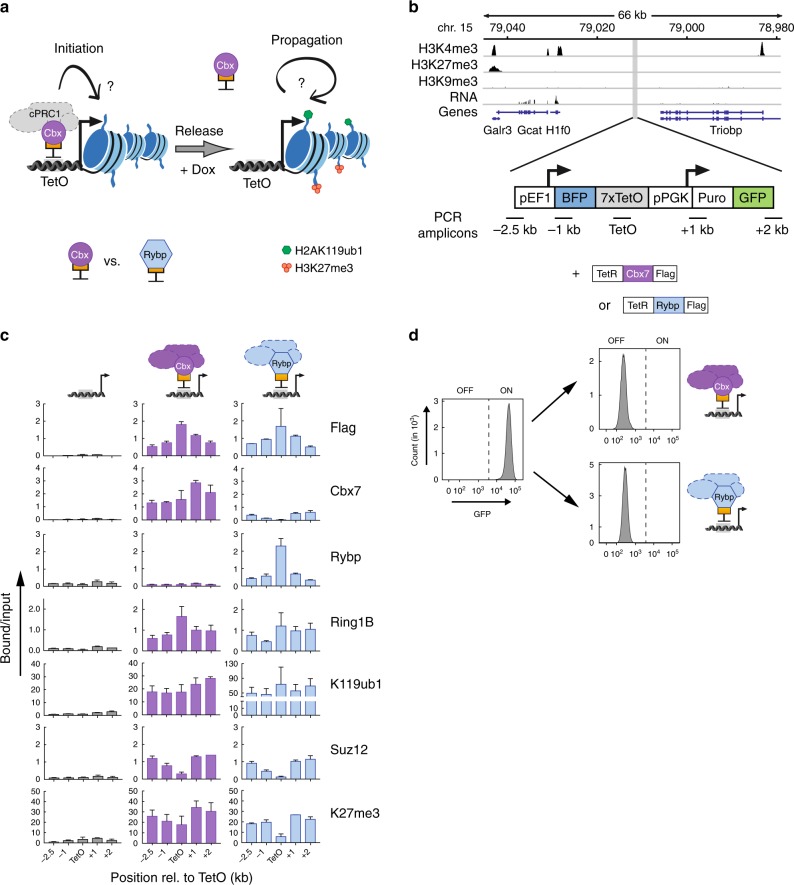
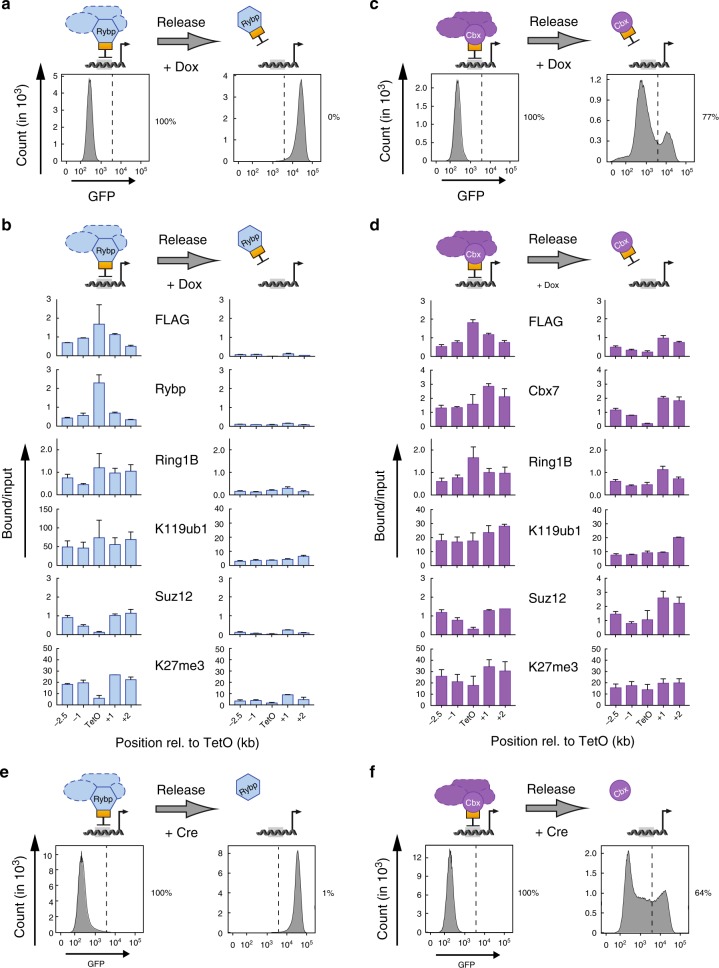
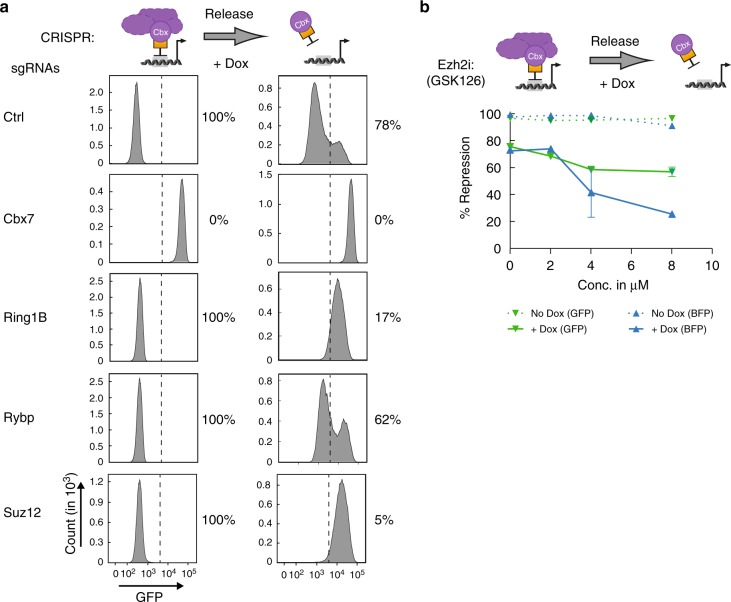
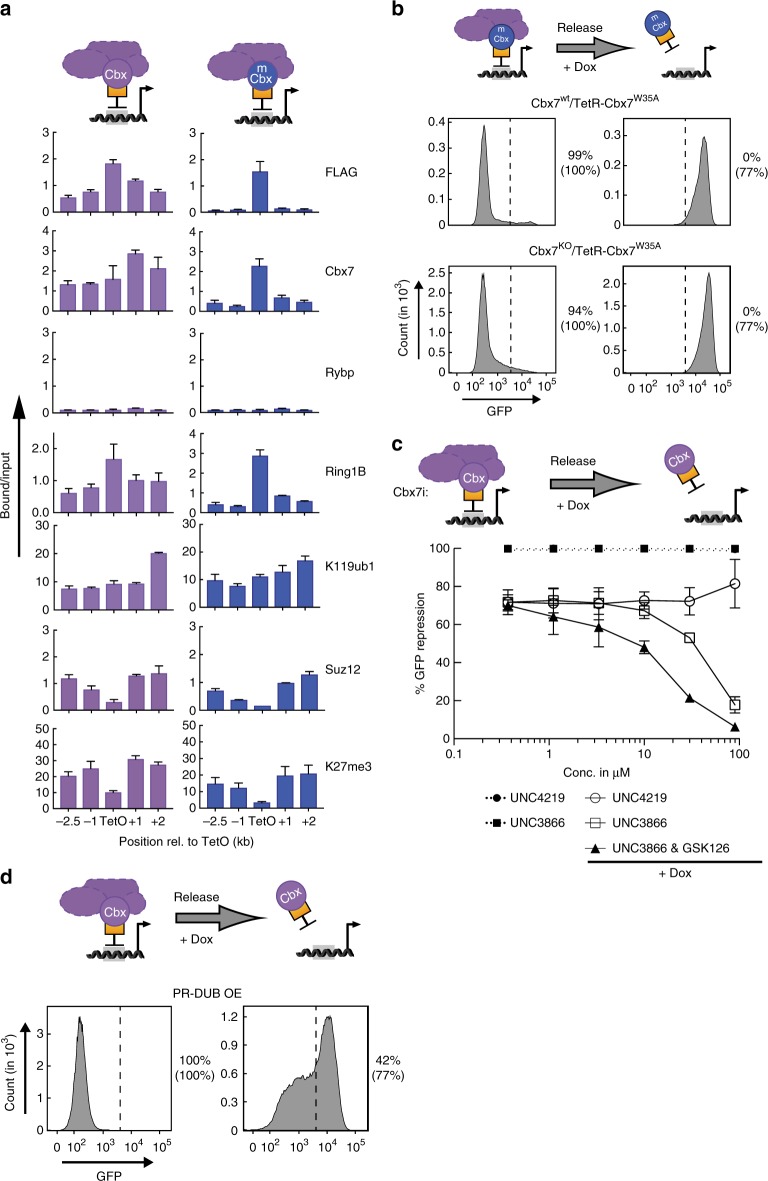
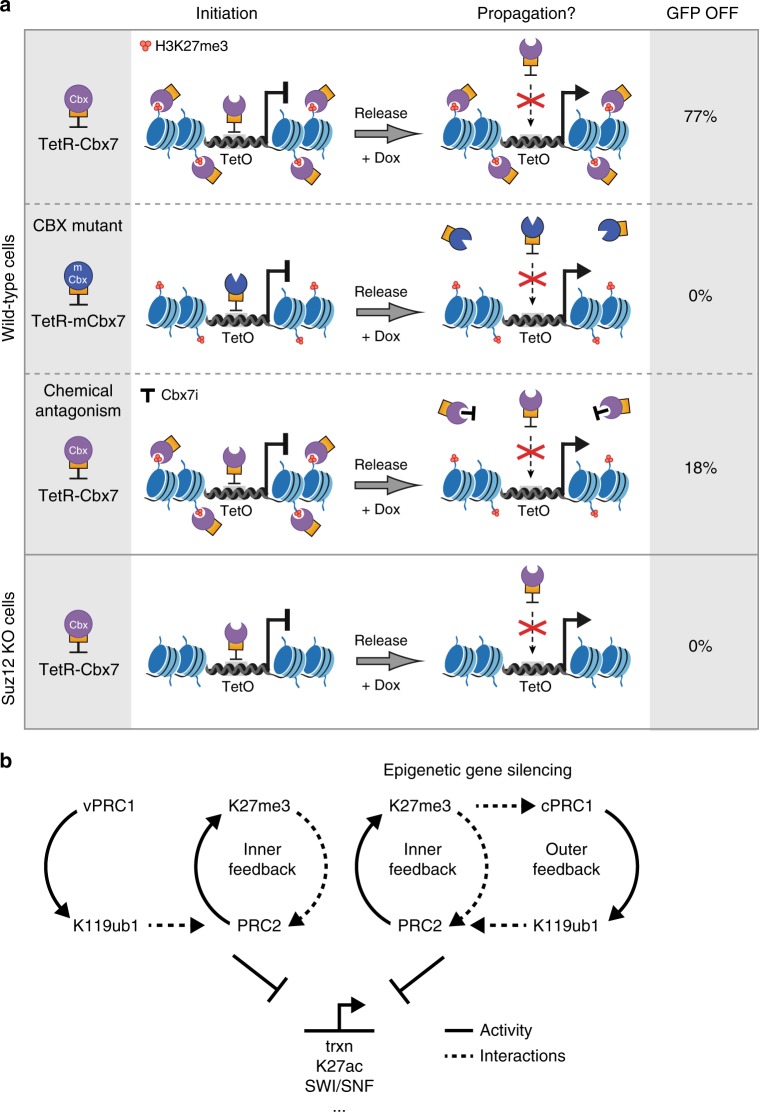
Polycomb group (PcG) proteins play critical roles in the epigenetic inheritance of cell fate. The Polycomb Repressive Complexes PRC1 and PRC2 catalyse distinct chromatin modifications to enforce gene silencing, but how transcriptional repression is propagated through mitotic cell divisions remains a key unresolved question. Using reversible tethering of PcG proteins to ectopic sites in mouse embryonic stem cells, here we show that PRC1 can trigger transcriptional repression and Polycomb-dependent chromatin modifications. We find that canonical PRC1 (cPRC1), but not variant PRC1, maintains gene silencing through cell division upon reversal of tethering. Propagation of gene repression is sustained by cis-acting histone modifications, PRC2-mediated H3K27me3 and cPRC1-mediated H2AK119ub1, promoting a sequence-independent feedback mechanism for PcG protein recruitment. Thus, the distinct PRC1 complexes present in vertebrates can differentially regulate epigenetic maintenance of gene silencing, potentially enabling dynamic heritable responses to complex stimuli. Our findings reveal how PcG repression is potentially inherited in vertebrates.
Overview
The claims and statistics of this paper haven’t been checked yet.
Free: it reads the open-access text and checks the first 5 claims that cite a source we can check. Create a free account to check every claim.
Integrity signals
Registry
Cites
Statistics
Figures
Verification
Claims the paper makes
The claims and statistics of this paper haven’t been checked yet.
Free: it reads the open-access text and checks the first 5 claims that cite a source we can check. Create a free account to check every claim.
Claims other papers make about this one
Each is checked against this paper’s own text: does it say what the citing paper says it does?
In the citing paper
“Loss of the target DNA sequence elements results in loss of PcG proteins and of gene silencing within a few cell divisions in Drosophila 35,36 , although sequence-independent propagation of silencing can be maintained in mammalian cell culture 37 .”
From Advances in epigenetics link genetics to the environment and disease (2019) · cites this paper as [37]
Self-check
Percentages, sums and reported differences re-computed from the paper’s own numbers.
The self-check needs the paper’s full text.
Citations
Cites
Shrestha, S., & Offer, S. M. (2016) · Medical Epigenetics · doi:10.1159/000444713 · Cited by 8,914
Role of Histone H3 Lysine 27 Methylation in Polycomb-Group Silencing
Cao, R., Wang, L., Wang, H., Xia, L., Erdjument-Bromage, H., Tempst, P., Jones, R. S., & Zhang, Y. (2002) · Science · doi:10.1126/science.1076997 · Cited by 3,775
EZH2 inhibition as a therapeutic strategy for lymphoma with EZH2-activating mutations
McCabe, M. T., Ott, H. M., Ganji, G., Korenchuk, S., Thompson, C., Van Aller, G. S., Liu, Y., Graves, A. P., III, A. D. P., Diaz, E., et al. (2012) · Nature · doi:10.1038/nature11606 · Cited by 1,786
An auxin-based degron system for the rapid depletion of proteins in nonplant cells
Nishimura, K., Fukagawa, T., Takisawa, H., Kakimoto, T., & Kanemaki, M. (2009) · Nature Methods · doi:10.1038/nmeth.1401 · Cited by 1,663
Histone Methyltransferase Activity of a Drosophila Polycomb Group Repressor Complex
Müller, J., Hart, C. M., Francis, N. J., Vargas, M. L., Sengupta, A., Wild, B., Miller, E. L., O'Connor, M. B., Kingston, R. E., & Simon, J. A. (2002) · Cell · doi:10.1016/s0092-8674(02)00976-5 · Cited by 1,562
Role of the polycomb protein EED in the propagation of repressive histone marks
Margueron, R., Justin, N., Ohno, K., Sharpe, M. L., Son, J., Drury III, W. J., Voigt, P., Martin, S. R., Taylor, W. R., De Marco, V., et al. (2009) · Nature · doi:10.1038/nature08398 · Cited by 1,196
Epigenetic Regulation of Cellular Memory by the Polycomb and Trithorax Group Proteins
Ringrose, L., & Paro, R. (2004) · Annual Review of Genetics · doi:10.1146/annurev.genet.38.072902.091907 · Cited by 1,077
de Napoles, M., Mermoud, J. E., Wakao, R., Tang, Y. A., Endoh, M., Appanah, R., Nesterova, T. B., Silva, J., Otte, A. P., Vidal, M., et al. (2004) · Developmental Cell · doi:10.1016/j.devcel.2004.10.005 · Cited by 888
Transcriptional regulation by Polycomb group proteins
Di Croce, L., & Helin, K. (2013) · Nature Structural & Molecular Biology · doi:10.1038/nsmb.2669 · Cited by 864
PCGF Homologs, CBX Proteins, and RYBP Define Functionally Distinct PRC1 Family Complexes
Gao, Z., Zhang, J., Bonasio, R., Strino, F., Sawai, A., Parisi, F., Kluger, Y., & Reinberg, D. (2012) · Molecular Cell · doi:10.1016/j.molcel.2012.01.002 · Cited by 848
Cited by
Advances in epigenetics link genetics to the environment and disease
Cavalli, G., & Heard, E. (2019) · Nature · doi:10.1038/s41586-019-1411-0 · Cited by 1,509
The molecular principles of gene regulation by Polycomb repressive complexes
Blackledge, N. P., & Klose, R. J. (2021) · Nature Reviews Molecular Cell Biology · doi:10.1038/s41580-021-00398-y · Cited by 476
PRC1 catalytic activity is central to polycomb system function
Blackledge, N. P., Fursova, N. A., Kelley, J. R., Huseyin, M. K., Feldmann, A., & Klose, R. J. (2020) · Molecular Cell · doi:10.1016/j.molcel.2019.12.001 · Cited by 243
High-Throughput Discovery and Characterization of Human Transcriptional Effectors
Tycko, J., DelRosso, N., Hess, G. T., Aradhana, Banerjee, A., Mukund, A., Van, M. V., Ego, B. K., Yao, D., Spees, K., et al. (2020) · Cell · doi:10.1016/j.cell.2020.11.024 · Cited by 160
Context-specific Polycomb mechanisms in development
Kim, J. J., & Kingston, R. E. (2022) · Nature Reviews Genetics · doi:10.1038/s41576-022-00499-0 · Cited by 134
Zhao, J., Wang, M., Chang, L., Yu, J., Song, A., Liu, C., Huang, W., Zhang, T., Wu, X., Shen, X., et al. (2020) · Nature Cell Biology · doi:10.1038/s41556-020-0484-1 · Cited by 122
van Wijnen, A. J., Bagheri, L., Badreldin, A. A., Larson, A. N., Dudakovic, A., Thaler, R., Paradise, C. R., & Wu, Z. (2020) · Bone · doi:10.1016/j.bone.2020.115659 · Cited by 118
Going beyond Polycomb: EZH2 functions in prostate cancer
Park, S. H., Fong, K.-W., Mong, E. F., Martin, M. C., Schiltz, G. E., & Yu, J. (2021) · Oncogene · doi:10.1038/s41388-021-01982-4 · Cited by 115
Eeftens, J. M., Kapoor, M., Michieletto, D., & Brangwynne, C. P. (2021) · Nature Communications · doi:10.1038/s41467-021-26147-5 · Cited by 105
Seif, E., Kang, J. J., Sasseville, C., Senkovich, O., Kaltashov, A., Boulier, E. L., Kapur, I., Kim, C. A., & Francis, N. J. (2020) · Nature Communications · doi:10.1038/s41467-020-19435-z · Cited by 107
PRC2 activity, recruitment, and silencing: a comparative perspective
Bieluszewski, T., Xiao, J. Y., Yang, Y., & Wagner, D. (2021) · Trends in Plant Science · doi:10.1016/j.tplants.2021.06.006 · Cited by 105
Wang, S., Denton, K. E., Hobbs, K., Weaver, T., McFarlane, J. M. B., Connelly, K. E., Gignac, M. C., Milosevich, N., Hof, F. A., Paci, I., et al. (2019) · ACS Chemical Biology · doi:10.1021/acschembio.9b00654 · Cited by 89
Maternal H3K27me3-dependent autosomal and X chromosome imprinting
Chen, Z., & Zhang, Y. (2020) · Nature Reviews Genetics · doi:10.1038/s41576-020-0245-9 · Cited by 81
Lamb, K. N., Bsteh, D., Dishman, S. N., Moussa, H. F., Fan, H., Stuckey, J. I., Norris, J. L., Cholensky, S. H., Li, D., Wang, J., et al. (2019) · Cell chemical biology · doi:10.1016/j.chembiol.2019.07.013 · Cited by 65
“Polycomb repressive complex 2 (PRC2), which contains the methyltransferase subunit EZH1/2, is responsible for deposition of the H3K27me3 mark (Cao et al., 2002; Czermin et al., 2002; Muller et al., 2002).”
BackgroundMethodResultInfluentialSelf-citationZepeda-Martinez, J. A., Pribitzer, C., Wang, J., Bsteh, D., Golumbeanu, S., Zhao, Q., Burkard, T. R., Reichholf, B., Rhie, S. K., Jude, J., et al. (2020) · Science Advances · doi:10.1126/sciadv.aax5692 · Cited by 61
Self-citationThe control of polycomb repressive complexes by long noncoding RNAs
Trotman, J. B., Braceros, K. C. A., Cherney, R. E., Murvin, M. M., & Calabrese, J. M. (2021) · Wiley Interdisciplinary Reviews - RNA · doi:10.1002/wrna.1657 · Cited by 53
Navigating the complexity of Polycomb repression: Enzymatic cores and regulatory modules
Tamburri, S., Rustichelli, S., Amato, S., & Pasini, D. (2024) · Molecular Cell · doi:10.1016/j.molcel.2024.07.030 · Cited by 48
The multiscale effects of polycomb mechanisms on 3D chromatin folding
Cheutin, T., & Cavalli, G. (2019) · Critical Reviews in Biochemistry and Molecular Biology · doi:10.1080/10409238.2019.1679082 · Cited by 44
“Conversely, reversible tethering of PcG proteins to ectopic sites in ESCs shows that canonical PRC1 maintains gene silencing through cell division, in contrast to variant PRC1 (Moussa et al. 2019).”
BackgroundXist-mediated chromatin changes that establish silencing of an entire X chromosome in mammals
Boeren, J., & Gribnau, J. H. (2020) · Current Opinion in Cell Biology · doi:10.1016/j.ceb.2020.11.004 · Cited by 44
A Review on Epigenetic Inheritance of Experiences in Humans
Ghai, M., & Kader, F. (2021) · Biochemical Genetics · doi:10.1007/s10528-021-10155-7 · Cited by 45
“2012), whereas PRC2 is responsible for mono-, di- and trimethylation of lysine 27 of histone H3 (H3K27me2/3) (Moussa et al. 2019).”
BackgroundYelagandula, R., Stecher, K., Novatchkova, M., Michetti, L., Michlits, G., Wang, J., Hofbauer, P., Vainorius, G., Pribitzer, C., Isbel, L., et al. (2023) · Nature Cell Biology · doi:10.1038/s41556-022-01051-2 · Cited by 41
Self-citationEpigenetic memory of cell fate commitment
Elsherbiny, A., & Dobreva, G. D. (2021) · Current Opinion in Cell Biology · doi:10.1016/j.ceb.2020.12.014 · Cited by 41
Epigenetic editing: from concept to clinic
Heller, E. A., Bintu, L., & Rots, M. G. (2025) · Nature Reviews Drug Discovery · doi:10.1038/s41573-025-01323-0 · Cited by 42
Kick-starting the zygotic genome: licensors, specifiers, and beyond
Zou, Z., Wang, Q., Wu, X., Schultz, R. M., & Xie, W. (2024) · EMBO Reports · doi:10.1038/s44319-024-00223-5 · Cited by 39
“This proposal is consistent with the notion that H3K27me3 is more stable than H2AK119ub and is thus more suitable to serve as long-term epigenetic memory (Moussa et al, 2019).”
Epigenetic control in Kaposi sarcoma-associated herpesvirus infection and associated disease
Fröhlich, J., & Grundhoff, A. T. (2020) · Seminars in Immunopathology · doi:10.1007/s00281-020-00787-z · Cited by 34
“H3 at lysine 9 or lysine 27 (H3K9 and H3K27, respectively) [89, 90].”
BackgroundPinter, S., Knodel, F., Choudalakis, M., Schnee, P., Kroll, C., Fuchs, M., Broehm, A., Weirich, S., Roth, M., Eisler, S. A., et al. (2021) · Nucleic Acids Research · doi:10.1093/nar/gkab180 · Cited by 35
“CiA has successfully been applied to study the dynamics of heterochromatin formation at the Oct4 locus in mouse embryonic stem cells (mESCs) after the recruitment of HP1 (44), components of the PRC2 complex (45) and, combined with a high throughput small molecule library screen, to identify compounds inducing the form…”
Lövkvist, C., Mikulski, P., Reeck, S., Hartley, M., Dean, C., & Howard, M. (2021) · eLife · doi:10.7554/elife.66454 · Cited by 31
SUMOylated PRC1 controls histone H3.3 deposition and genome integrity of embryonic heterochromatin
Liu, Z., Tardat, M., Gill, M. E., Royo, H., Thierry, R., Ozonov, E. A., & Peters, A. H. F. M. (2020) · The EMBO Journal · doi:10.15252/embj.2019103697 · Cited by 31
“Instead, vPRC1 complexes mediate repression of targets genes in ESCs by catalyzing H2AK119u1 (Fursova et al , 2019; Scelfo et al , 2019) and stimulate binding of PRC2 to their targets (Kalb et al , 2014; Cooper et al , 2016).”
Kumar, B. M., & Elsässer, S. J. (2019) · Cell Reports · doi:10.1016/j.celrep.2019.08.046 · Cited by 28
Polycomb group proteins in cancer: multifaceted functions and strategies for modulation
Wang, S. P., Ordonez‐Rubiano, S. C., Dhiman, A., Jiao, G., Strohmier, B. P., Krusemark, C. J., & Dykhuizen, E. C. (2021) · NAR Cancer · doi:10.1093/narcan/zcab039 · Cited by 28
“While PRC2/cPRC1 is not required for initiating Polycomb binding sites, it is critical for transcriptional repression (17) and may be sufficient for Polycomb maintenance/memory, at least in some cell types (44).”
BackgroundReprogramming CBX8-PRC1 function with a positive allosteric modulator
Suh, J. L., Bsteh, D., Hart, B., Si, Y., Weaver, T., Pribitzer, C., Lau, R., Soni, S., Ogana, H. A. N., Rectenwald, J. M., et al. (2021) · Cell chemical biology · doi:10.1016/j.chembiol.2021.10.003 · Cited by 28
Self-citationDimitrova, E., Feldmann, A., van der Weide, R. H., Flach, K. D., Lastuvkova, A., de Wit, E., & Klose, R. J. (2022) · Nature Structural & Molecular Biology · doi:10.1038/s41594-022-00840-5 · Cited by 28
Targeting Epigenetic protein–protein Interactions With small-molecule Inhibitors
Linhares, B. M., Grembecka, J. E., & Cierpicki, T. (2020) · Future Medicinal Chemistry · doi:10.4155/fmc-2020-0082 · Cited by 26
Cheng, Y., Song, Z., Fang, X., & Tang, Z. (2024) · Clinical Epigenetics · doi:10.1186/s13148-024-01666-2 · Cited by 23
“These can be broadly categorized into four groups: histone modifiers, site-specific DNA-binding proteins, RNA molecules, and CGIs [42, 43].”
BackgroundFunctions of Polycomb Proteins on Active Targets
Giner-Laguarda, N., & Vidal, M. (2020) · Epigenomes · doi:10.3390/epigenomes4030017 · Cited by 22
“Importantly, nucleosomes decorated with H3K27me3 and H2AUb contribute to their propagation, on the same sites, throughout cell division [62,82,83].”
BackgroundLoss of cohesin regulator PDS5A reveals repressive role of Polycomb loops
Bsteh, D., Moussa, H. F., Michlits, G., Yelagandula, R., Wang, J., Elling, U., & Bell, O. (2023) · Nature Communications · doi:10.1038/s41467-023-43869-w · Cited by 23
Self-citationEpigenetic inheritance is gated by naïve pluripotency and Dppa2
Carlini, V., Policarpi, C., & Hackett, J. A. (2022) · The EMBO Journal · doi:10.15252/embj.2021108677 · Cited by 20
“…methylation, or Poly-comb, can exhibit stable propagation (Hathaway et al , 2012; Amabile et al , 2016; Bintu et al , 2016; Saunderson et al , 2017; Moussa et al , 2019; O’Geen et al , 2019; Nunez et al , 2021), however, these studies do not extend in vivo , generally involve epigenetically…”
De Novo Polycomb Recruitment: Lessons from Latent Herpesviruses
Dochnal, S. A., Francois, A. K., & Cliffe, A. R. (2021) · Viruses · doi:10.3390/v13081470 · Cited by 19
“Although all complexes contain the RING1/2 catalytic subunit, vPRC1 is predominantly responsible for mediating H2AK119ub1, likely because RYBP stimulates PRC1 E3 ubiquitin ligase activity [18,41,43,47].”
BackgroundRecent progress on small molecules targeting epigenetic complexes
Itoh, Y., Takada, Y., Yamashita, Y., & Suzuki, T. (2022) · Current Opinion in Chemical Biology · doi:10.1016/j.cbpa.2022.102130 · Cited by 19
Stroggilos, R., Frantzi, M., Zoidakis, J., Mokou, M., Moulavasilis, N., Mavrogeorgis, E., Melidi, A., Makridakis, M., STRAVODIMOS, K. G., Roubelakis, M. G., et al. (2022) · Cancers · doi:10.3390/cancers14102542 · Cited by 17
“CBX7 is a component of the chromatin-modifier PRC1 complex, and is required for the propagation of the transcriptionally repressive state of multiple genes through cell division during embryonic development [60], including Hox genes [61].”
BackgroundWesley, N. A., Skrajna, A., Simmons, H. C., Budziszewski, G. R., Azzam, D. N., Cesmat, A. P., & McGinty, R. K. (2022) · Protein Science · doi:10.1002/pro.4339 · Cited by 18
RNAPII driven post-translational modifications of nucleosomal histones
Chan, W. S., Kumar, A., & Kono, H. (2022) · Trends in Genetics · doi:10.1016/j.tig.2022.04.010 · Cited by 16
Dynamical modeling of the H3K27 epigenetic landscape in mouse embryonic stem cells
Newar, K., Abdulla, A. Z., Salari, H., Fanchon, É., & Jost, D. (2022) · PLoS Computational Biology · doi:10.1371/journal.pcbi.1010450 · Cited by 16
RINGs, DUBs and Abnormal Brain Growth—Histone H2A Ubiquitination in Brain Development and Disease
Doyle, L. A., Bektaş, F. Ü., Chatzantonaki, E., Repton, C., Derrien, A., & Illingworth, R. S. (2022) · Epigenomes · doi:10.3390/epigenomes6040042 · Cited by 16
“A synthetic recruitment strategy highlighted the importance of cPRC1 specifically in the heritability of PRC1 binding across cell divisions [32].”
BackgroundLiver-specific deletion of miR-181ab1 reduces liver tumour progression via upregulation of CBX7
Chen, J., Zhao, Y., Zhang, F., Li, J., Boland, J. A., Cheng, N. C., Liu, K., Tiffen, J. C., Bertolino, P., Bowen, D. G., et al. (2022) · Cellular and Molecular Life Sciences · doi:10.1007/s00018-022-04452-6 · Cited by 14
“It usually functions by inhibiting gene expression [23, 48, 49].”
BackgroundGenomic context– and H2AK119 ubiquitination–dependent inheritance of human Polycomb silencing
Shafiq, T. A., Yu, J., Feng, W., Zhang, Y., Zhou, H., Paulo, J. A., Gygi, S. P., & Moazed, D. (2024) · Science Advances · doi:10.1126/sciadv.adl4529 · Cited by 12
“In support of this model, it has previously been shown that in a human cell line, mouse embryonic stem cells, and Chinese hamster ovarian cells, Polycomb silencing induced at a reporter gene inserted in a gene desert can be maintained in the absence of the initiator ( 14 – 16 ).”
InfluentialDe Novo Polycomb Recruitment and Repressive Domain Formation
Hernández-Romero, I. A., & Valdés, V. J. (2022) · Epigenomes · doi:10.3390/epigenomes6030025 · Cited by 11
“On the contrary, TetR- Rybp release causes gene reactivation and the displacement of PRC2 from chromatin [178].”
BackgroundInfluentialLow complexity domains, condensates, and stem cell pluripotency
Vodnala, M., Choi, E., & Fong, Y. W. (2021) · World Journal of Stem Cells · doi:10.4252/wjsc.v13.i5.416 · Cited by 12
Proteome-scale tagging and functional screening in mammalian cells by ORFtag
Nemčko, F., Himmelsbach, M., Loubière, V., Yelagandula, R., Pagani, M., Fasching, N., Brennecke, J., Elling, U., Stark, A., & Ameres, S. L. (2024) · Nature Methods · doi:10.1038/s41592-024-02339-x · Cited by 10
Self-citationEstablishment and maintenance of random monoallelic expression
Kanata, E., Duffié, R., & Schulz, E. G. (2024) · Development · doi:10.1242/dev.201741 · Cited by 10
Regulation, functions and therapeutic strategies of H2AK119ub1
Zhang, Y., Xu, K., Zhang, K., Chen, C., & Gu, Y. (2025) · Biochemical Pharmacology · doi:10.1016/j.bcp.2025.117122 · Cited by 5
Xu, F., Yu, D., Guo, J., Hu, J., Zhao, Y., Jiang, C., Meng, X., Cai, J., & Zhao, Y. (2025) · Mutation Research/Reviews in Mutation Research · doi:10.1016/j.mrrev.2025.108537 · Cited by 4
Auto-inhibition of PRC2 by the broadly expressed long isoform of AEBP2
Mucha, M., Lai, Z., McKenzie, N. J., Matrà, F., Boudes, M., Flanigan, S. F., Alejo-Vinogradova, M. T., Monger, C., Zhang, Q., Nimmo, D., et al. (2025) · The EMBO Journal · doi:10.1038/s44318-025-00616-9 · Cited by 4
“EV9A,B), as previously done with other Polycomb group proteins (Moussa et al, 2019).”
Self-citationCBX7 inhibitors affect H3K9 methyltransferase-regulated gene repression in leukemic cells
de Groot, A. P., Nguyen, H., Pouw, J. S., Weersing, E., Dethmers-Ausema, A., & de Haan, G. (2024) · Experimental Hematology · doi:10.1016/j.exphem.2024.104691 · Cited by 4
Kim, D. (2023) · Journal of Plant Biology · doi:10.1007/s12374-023-09397-2 · Cited by 3
Pcgf5: An important regulatory factor in early embryonic neural induction
Yang, X., Zhou, W., Zhou, J., Li, A., Zhang, C., Fang, Z., Wang, C., Liu, S., Hao, A., & Zhang, M. (2024) · Heliyon · doi:10.1016/j.heliyon.2024.e27634 · Cited by 3
A possible role for epigenetics in cancer initiation
Martinez, A., & Cavalli, G. (2025) · Comptes Rendus Biologies · doi:10.5802/crbiol.171 · Cited by 2
Li, X., Chen, Z., Wang, T., Wang, Z., & Yang, B. (2025) · Molecular Biotechnology · doi:10.1007/s12033-025-01415-7 · Cited by 1
Gene expression and coexpression alterations marking evolution of bladder cancerPreprint
Stroggilos, R., Frantzi, M., Zoidakis, J., Mavrogeorgis, E., Mokou, M., Roubelakis, M. G., Mischak, H., & Vlahou, A. (2021) · medRxiv · doi:10.1101/2021.06.15.21258890 · Cited by 1
Nemčko, F., Sabath, K., Pagani, M., Kleinfercher, S., Plaschka, C., & Stark, A. (2025) · bioRxiv (Cold Spring Harbor Laboratory) · doi:10.64898/2025.12.28.696747 · Cited by 1
EZH2 Serine 21 Phosphorylation Restrains Compact-State PRC2 Activation and H3K27me3 PropagationPreprint
Rashoff, A. Q., Matyas, M. N., Porter, E. G. P., Hazzard, R., Garcia, B. A., Kasinath, V., & Lewis, P. W. (2026) · bioRxiv (Cold Spring Harbor Laboratory) · doi:10.64898/2026.06.02.729660 · Cited by 1
Recruitment of Polycomb-Group Proteins at giant in Drosophila Embryos
Ravandi, E. G. (2019) · SMU Scholar (Southern Methodist University)
Morse, R. H. (2024) · Elsevier eBooks · doi:10.1016/b978-0-12-814809-9.00009-3
DelRosso, N. V., & Bintu, L. (2024) · Methods in molecular biology · doi:10.1007/978-1-0716-4051-7_4
Guan, S., Tang, J., Di, C., & Cheng, B. W. (2025) · STAR Protocols · doi:10.1016/j.xpro.2025.103597
“8,9 Therefore, this method is able to distinguish the contributions of various components in recruiting the other components and promoting complex assembly.”
Chromobox 4 (CBX4) Is a Novel Interactor of SS18::SSX in Synovial Sarcoma
Raquib, A. R., & Nielsen, T. O. (2025) · Laboratory Investigation · doi:10.1016/j.labinv.2025.104243
Boehlke, J., Dochnal, S. A., Misra, C. S., Francois, A. K., Boutell, C., & Cliffe, A. R. (2025) · bioRxiv (Cold Spring Harbor Laboratory) · doi:10.1101/2025.11.23.690028
Oei, T. A. (2024) · Digital Access to Scholarship at Harvard (DASH) (Harvard University)
Cellular assembly and functional resilience of the mammalian RNA exosome
Navalayeu, T., Beer, N., Bebjaková, M., Kalis, R. W., Hohmann, U., Stejskal, K., Krššáková, G., Fasching, N., Herzog, V. A., Popitsch, N., et al. (2026) · The EMBO Journal · doi:10.1038/s44318-026-00824-x
“To further substantiate these fi ndings using an independent kinetic approach, we generated a mES cell line carrying a doxycycline-inducible Exosc7-3xFLAG expression cassette integrated at a safe-harbor locus (Moussa et al, 2019).”
InfluentialNewly synthesized histones: passive or active players in the regulation of epigenetic inheritance?
Martin, C. J., & Parthun, M. R. (2026) · Nucleic Acids Research · doi:10.1093/nar/gkag819
“H3K27me3, H2AK119ub, PRC1, and PRC2 cooperate in a positive feed-back loop which establishes and maintains both marks [ 10 , 17 , 18 ].”
Polycomb Group Proteins in Drosophila melanogaster
Gao, F., Li, Z., Yu, X., Chen, S., & Ye, C. X. (2026) · Biology · doi:10.3390/biology15171470
“Another important question is how PRE-associated chromatin contacts contribute to the establishment, maintenance and inheritance of Polycomb domains, particularly during cell division and developmental transitions [69,165,166].”
Hat1 orchestrates heterochromatin structure by regulating localization of H3K9 methyltransferases
Martin, C. J., Popova, L. V., Nagarajan, P., Oser, E. A., Lovejoy, C. M., Sunkel, B. D., Stanton, B. Z., Freitas, M. A., & Parthun, M. R. (2026) · Journal of Biological Chemistry · doi:10.1016/j.jbc.2026.113659 · Cited by 1
Metadata
- Authors
- Moussa, H. F., Bsteh, D., Yelagandula, R., Pribitzer, C., Stecher, K., Bartalska, K., Michetti, L., Wang, J., Zepeda-Martinez, J. A., Elling, U., Stuckey, J. I., James, L. I., Frye, S. V., & Bell, O.
- Affiliations
- Institute of Molecular Biotechnology (AT)
- University of Southern California (US)
- Research Institute of Molecular Pathology (AT)
- University of North Carolina at Chapel Hill (US)
- Corresponding author
- Bell, Oliver
- ORCID
- Venue
- Nature Communications
- Published
- 2019-04-29
- Volume
- 10
- Issue
- 1
- Pages
- 1931-1931
- ISSN
- 2041-1723 (ISSN-L)
- PMC
- PMC6488670
- OpenAlex
- W2942581560
- Cited by
- 75
- References
- 47
- Citations by year
- 2026: 4 · 2025: 12 · 2024: 10 · 2023: 4 · 2022: 11 · 2021: 15 · 2020: 11 · 2019: 8
- FWCI
- 3.72
- Type
- journal article
- Language
- en
- Open access
- gold
- doi.org
- Licence
- cc-by
- creativecommons.org/licenses/by/4.0 (tdm)
- creativecommons.org/licenses/by/4.0 (vor)
- Locations
- Nature Communications (publishedVersion, cc-by)
- Europe PMC (PubMed Central) (publishedVersion, cc-by)
- PubMed Central (publishedVersion, cc-by)
- PubMed (publishedVersion)
- Institute of Science and Technology Austria (submittedVersion, cc-by)
- RePEc: Research Papers in Economics (submittedVersion)
- DOAJ (DOAJ: Directory of Open Access Journals) (submittedVersion)
- DOAJ (DOAJ: Directory of Open Access Journals) (submittedVersion, cc-by-sa)
- Funders
- Österreichischen Akademie der Wissenschaften (CDA00036/2014-C, NFG-05)
- Bundesministerium für Wissenschaft, Forschung und Wirtschaft
- National Institutes of Health
- University of North Carolina at Chapel Hill
- National Cancer Institute (R01CA218392)
- National Institute of General Medical Sciences (R01GM100919)
- Topics
- Life Sciences › Biochemistry, Genetics and Molecular Biology › Molecular Biology › Epigenetics and DNA Methylation
- Life Sciences › Biochemistry, Genetics and Molecular Biology › Molecular Biology › Genomics and Chromatin Dynamics
- Life Sciences › Biochemistry, Genetics and Molecular Biology › Molecular Biology › Chromatin Remodeling and Cancer
- Keywords
- PRC1, Polycomb group proteins, gene silencing, epigenetic inheritance, mitotic division, transcriptional repression, H3K27me3, H2AK119ub1, histone modifications, polycomb repressive complex 2, mouse embryonic stem cells, protein tethering, chromatin modification
- MeSH terms
- Mouse Embryonic Stem Cells, Animals, Cell Line, Chromatin, Histones, Mitosis, Protein Processing, Post-Translational, Transcription, Genetic, Gene Silencing, Feedback, Physiological, Inheritance Patterns, Epigenesis, Genetic, Mice, Polycomb Repressive Complex 1, Polycomb Repressive Complex 2
About these checks
Registry, retraction, Cites and statistics results are computed, not judged, with one exception: a printed reference that no index lists is read once by a model before it counts as a citation error. Claims are extracted by a model and kept only when their quote appears verbatim in the text; each cited source is then checked, with a model’s help, for whether it says what the claim relies on. Those verdicts can be wrong — read the claim’s quote and the cited source before relying on one.
Statistics and arithmetic are recomputed, not judged.
Confidence bands are shown only for fields calibrated on our annotated test set. None is calibrated yet, so no band is shown.
What counts as a claim ›How we measure confidence ›How we check this ›
Are you an author, or do you see a problem with this page? Request a review
Data sources
Bibliographic data: Semantic Scholar, OpenAlex, Crossref.
Contains information from the Semantic Scholar Academic Graph Datasets, made available under the ODC Attribution License (ODC-BY 1.0).
Semantic Scholar’s data is described in: Kinney, R., et al. (2023). The Semantic Scholar Open Data Platform. arXiv:2301.10140.
