

Canonical PRC1 controls sequence-independent propagation of Polycomb-mediated gene silencing
Open accessThe DOI matches its Crossref record; 46 of the 47 references it cites were found in a registry or an index.
Abstract
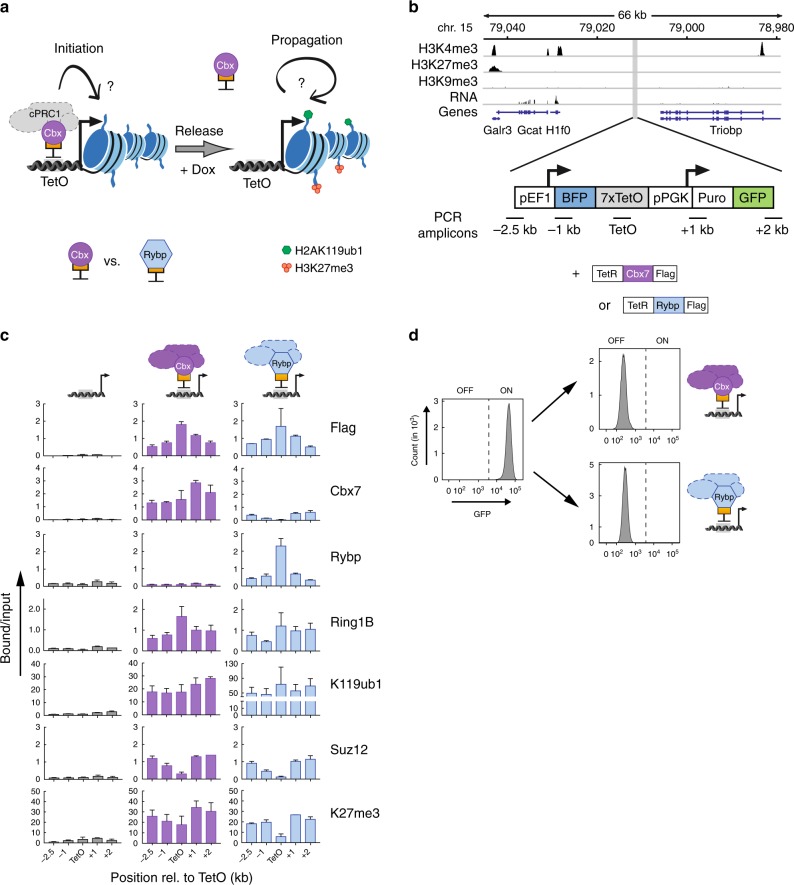
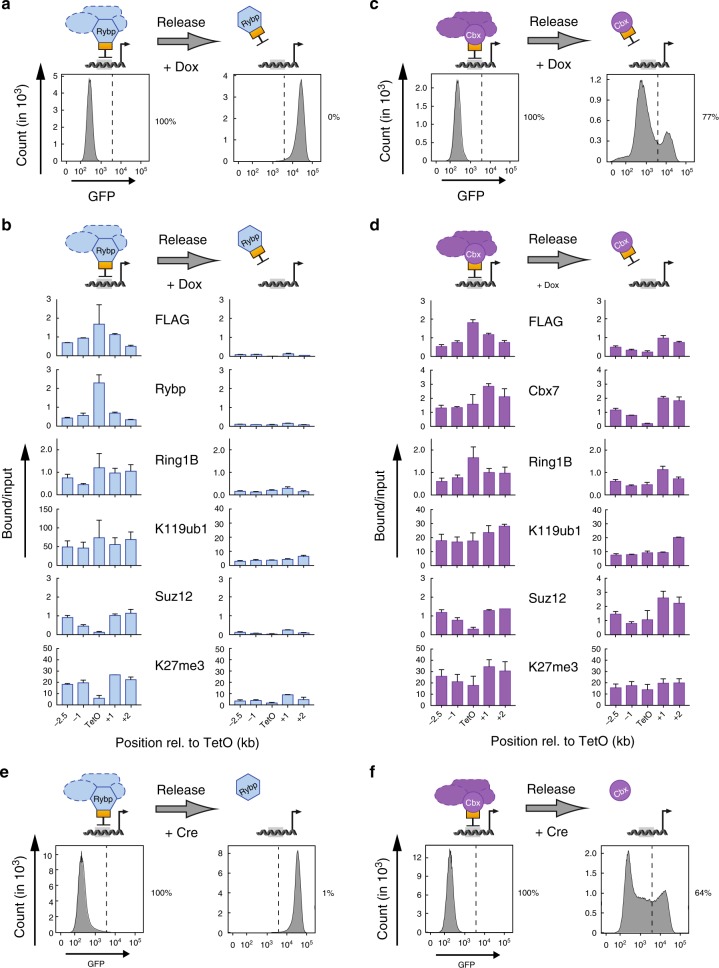
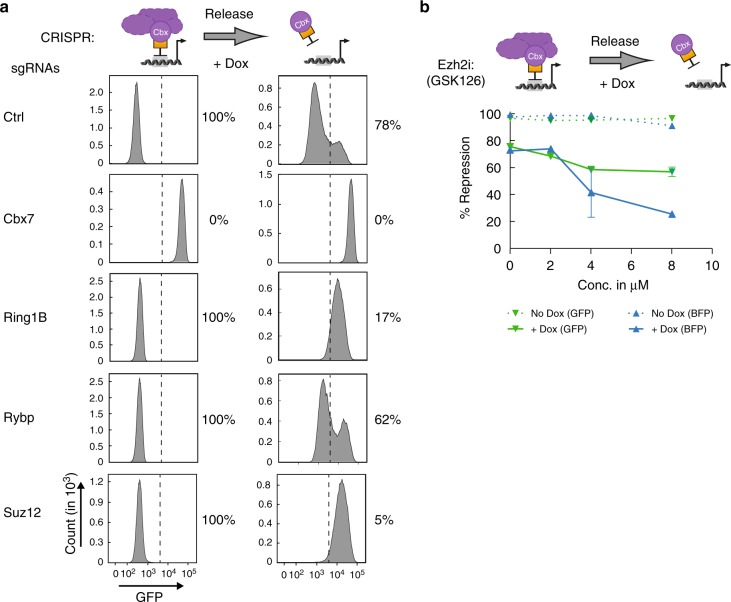
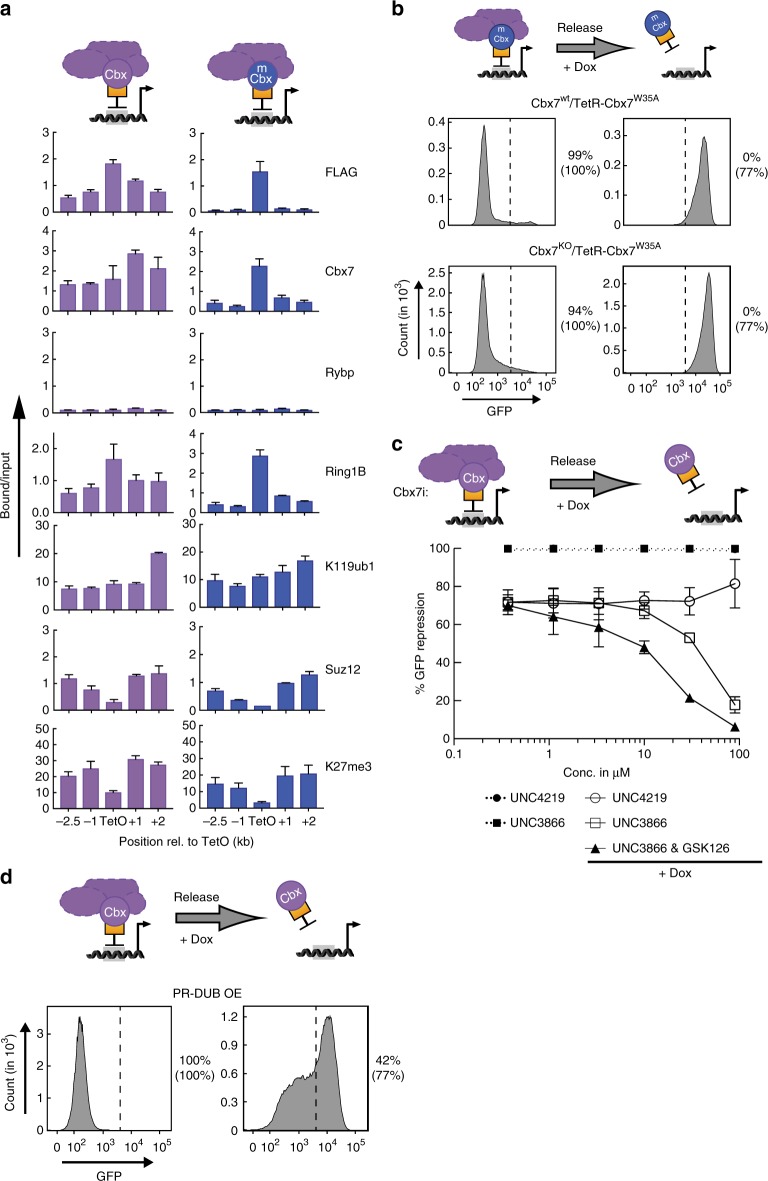
Polycomb group (PcG) proteins play critical roles in the epigenetic inheritance of cell fate. The Polycomb Repressive Complexes PRC1 and PRC2 catalyse distinct chromatin modifications to enforce gene silencing, but how transcriptional repression is propagated through mitotic cell divisions remains a key unresolved question. Using reversible tethering of PcG proteins to ectopic sites in mouse embryonic stem cells, here we show that PRC1 can trigger transcriptional repression and Polycomb-dependent chromatin modifications. We find that canonical PRC1 (cPRC1), but not variant PRC1, maintains gene silencing through cell division upon reversal of tethering. Propagation of gene repression is sustained by cis-acting histone modifications, PRC2-mediated H3K27me3 and cPRC1-mediated H2AK119ub1, promoting a sequence-independent feedback mechanism for PcG protein recruitment. Thus, the distinct PRC1 complexes present in vertebrates can differentially regulate epigenetic maintenance of gene silencing, potentially enabling dynamic heritable responses to complex stimuli. Our findings reveal how PcG repression is potentially inherited in vertebrates.
Overview
The claims and statistics of this paper haven’t been checked yet.
Free: it reads the open-access text and checks the first 5 claims that cite a source we can check. Create a free account to check every claim.
Integrity signals
Registry
Cites
Statistics
Figures
Verification
Claims the paper makes
The claims and statistics of this paper haven’t been checked yet.
Free: it reads the open-access text and checks the first 5 claims that cite a source we can check. Create a free account to check every claim.
Claims other papers make about this one
Each is checked against this paper’s own text: does it say what the citing paper says it does?
In the citing paper
“Loss of the target DNA sequence elements results in loss of PcG proteins and of gene silencing within a few cell divisions in Drosophila 35,36 , although sequence-independent propagation of silencing can be maintained in mammalian cell culture 37 .”
From Advances in epigenetics link genetics to the environment and disease (2019) · cites this paper as [37]
Self-check
Percentages, sums and reported differences re-computed from the paper’s own numbers.
The self-check needs the paper’s full text.
Citations
Cites
Shrestha, S., & Offer, S. M. (2016) · Medical Epigenetics · doi:10.1159/000444713 · Cited by 8,914
Role of Histone H3 Lysine 27 Methylation in Polycomb-Group Silencing
Cao, R., Wang, L., Wang, H., Xia, L., Erdjument-Bromage, H., Tempst, P., Jones, R. S., & Zhang, Y. (2002) · Science · doi:10.1126/science.1076997 · Cited by 3,775
EZH2 inhibition as a therapeutic strategy for lymphoma with EZH2-activating mutations
McCabe, M. T., Ott, H. M., Ganji, G., Korenchuk, S., Thompson, C., Van Aller, G. S., Liu, Y., Graves, A. P., III, A. D. P., Diaz, E., et al. (2012) · Nature · doi:10.1038/nature11606 · Cited by 1,786
An auxin-based degron system for the rapid depletion of proteins in nonplant cells
Nishimura, K., Fukagawa, T., Takisawa, H., Kakimoto, T., & Kanemaki, M. (2009) · Nature Methods · doi:10.1038/nmeth.1401 · Cited by 1,663
Histone Methyltransferase Activity of a Drosophila Polycomb Group Repressor Complex
Müller, J., Hart, C. M., Francis, N. J., Vargas, M. L., Sengupta, A., Wild, B., Miller, E. L., O'Connor, M. B., Kingston, R. E., & Simon, J. A. (2002) · Cell · doi:10.1016/s0092-8674(02)00976-5 · Cited by 1,562
Role of the polycomb protein EED in the propagation of repressive histone marks
Margueron, R., Justin, N., Ohno, K., Sharpe, M. L., Son, J., Drury III, W. J., Voigt, P., Martin, S. R., Taylor, W. R., De Marco, V., et al. (2009) · Nature · doi:10.1038/nature08398 · Cited by 1,196
Epigenetic Regulation of Cellular Memory by the Polycomb and Trithorax Group Proteins
Ringrose, L., & Paro, R. (2004) · Annual Review of Genetics · doi:10.1146/annurev.genet.38.072902.091907 · Cited by 1,077
de Napoles, M., Mermoud, J. E., Wakao, R., Tang, Y. A., Endoh, M., Appanah, R., Nesterova, T. B., Silva, J., Otte, A. P., Vidal, M., et al. (2004) · Developmental Cell · doi:10.1016/j.devcel.2004.10.005 · Cited by 888
Transcriptional regulation by Polycomb group proteins
Di Croce, L., & Helin, K. (2013) · Nature Structural & Molecular Biology · doi:10.1038/nsmb.2669 · Cited by 864
PCGF Homologs, CBX Proteins, and RYBP Define Functionally Distinct PRC1 Family Complexes
Gao, Z., Zhang, J., Bonasio, R., Strino, F., Sawai, A., Parisi, F., Kluger, Y., & Reinberg, D. (2012) · Molecular Cell · doi:10.1016/j.molcel.2012.01.002 · Cited by 848
Chromatin Compaction by a Polycomb Group Protein Complex
Francis, N. J., Kingston, R. E., & Woodcock, C. L. (2004) · Science · doi:10.1126/science.1100576 · Cited by 840
Simon, J. A., & Kingston, R. E. (2013) · Molecular Cell · doi:10.1016/j.molcel.2013.02.013 · Cited by 733
Blackledge, N. P., Farcas, A. M., Kondo, T., King, H. W., McGouran, J. F., Hanssen, L. L. P., Ito, S., Cooper, S., Kondo, K., Koseki, Y., et al. (2014) · Cell · doi:10.1016/j.cell.2014.05.004 · Cited by 731
A model for transmission of the H3K27me3 epigenetic mark
Hansen, K. H., Bracken, A. P., Pasini, D., Dietrich, N., Gehani, S. S., Monrad, A., Rappsilber, J., Lerdrup, M., & Helin, K. (2008) · Nature Cell Biology · doi:10.1038/ncb1787 · Cited by 717
The Polycomb Group Protein Suz12 Is Required for Embryonic Stem Cell Differentiation
Pasini, D., Bracken, A. P., Hansen, J. B., Capillo, M., & Helin, K. (2007) · Molecular and Cellular Biology · doi:10.1128/mcb.01432-06 · Cited by 696
Tavares, L., Dimitrova, E., Oxley, D., Webster, J., Poot, R., Demmers, J., Bezstarosti, K., Taylor, S., Ura, H., Koide, H., et al. (2012) · Cell · doi:10.1016/j.cell.2011.12.029 · Cited by 555
Eskeland, R., Leeb, M., Grimes, G. R., Kress, C., Boyle, S., Sproul, D., Gilbert, N., Fan, Y., Skoultchi, A. I., Wutz, A., et al. (2010) · Molecular Cell · doi:10.1016/j.molcel.2010.02.032 · Cited by 551
Bernstein, E., Duncan, E. M., Masui, O., Gil, J., Heard, E., & Allis, C. D. (2006) · Molecular and Cellular Biology · doi:10.1128/mcb.26.7.2560-2569.2006 · Cited by 530
KDM2B links the Polycomb Repressive Complex 1 (PRC1) to recognition of CpG islands
Farcas, A. M., Blackledge, N. P., Sudbery, I., Long, H. K., McGouran, J. F., Rose, N. R., Lee, S., Sims, D., Cerase, A., Sheahan, T. W., et al. (2012) · eLife · doi:10.7554/elife.00205 · Cited by 470
Histone H2A monoubiquitination promotes histone H3 methylation in Polycomb repression
Kalb, R., Latwiel, S., Baymaz, H. I., Jansen, P. W. T. C., Müller, C. W., Vermeulen, M., & Müller, J. (2014) · Nature Structural & Molecular Biology · doi:10.1038/nsmb.2833 · Cited by 447
Dynamics and Memory of Heterochromatin in Living Cells
Hathaway, N. A., Bell, O., Hodges, C., Miller, E. L., Neel, D. S., & Crabtree, G. R. (2012) · Cell · doi:10.1016/j.cell.2012.03.052 · Cited by 446
Self-citationGC-Rich Sequence Elements Recruit PRC2 in Mammalian ES Cells
Mendenhall, E. M., Koche, R. P., Truong, T., Zhou, V. W., Issac, B., Chi, A. S., Ku, M., & Bernstein, B. E. (2010) · PLoS Genetics · doi:10.1371/journal.pgen.1001244 · Cited by 412
Recruitment of PRC1 function at the initiation of X inactivation independent of PRC2 and silencing
Schoeftner, S., Sengupta, A. K., Kubicek, S., Mechtler, K., Spahn, L., Koseki, H., Jenuwein, T., & Wutz, A. (2006) · The EMBO Journal · doi:10.1038/sj.emboj.7601187 · Cited by 398
Identification of genetic elements that autonomously determine DNA methylation states
Lienert, F., Wirbelauer, C., Som, I., Dean, A., Mohn, F., & Schübeler, D. (2011) · Nature Genetics · doi:10.1038/ng.946 · Cited by 386
Targeting Polycomb systems to regulate gene expression: modifications to a complex story
Blackledge, N. P., Rose, N. R., & Klose, R. J. (2015) · Nature Reviews Molecular Cell Biology · doi:10.1038/nrm4067 · Cited by 361
Cooper, S., Dienstbier, M., Hassan, R., Schermelleh, L., Sharif, J., Blackledge, N. P., De Marco, V., Elderkin, S., Koseki, H., Klose, R., et al. (2014) · Cell Reports · doi:10.1016/j.celrep.2014.04.012 · Cited by 322
Epigenetic inheritance uncoupled from sequence-specific recruitment
Ragunathan, K., Jih, G., & Moazed, D. (2015) · Science · doi:10.1126/science.1258699 · Cited by 320
A Histone Mutant Reproduces the Phenotype Caused by Loss of Histone-Modifying Factor Polycomb
Pengelly, A. R., Copur, Ö., Jäckle, H., Herzig, A., & Müller, J. (2013) · Science · doi:10.1126/science.1231382 · Cited by 297
Cooper, S., Grijzenhout, A., Underwood, E., Ancelin, K., Zhang, T., Nesterova, T. B., Anil-Kirmizitas, B., Bassett, A., Kooistra, S. M., Agger, K., et al. (2016) · Nature Communications · doi:10.1038/ncomms13661 · Cited by 296
Polycomb-like proteins link the PRC2 complex to CpG islands
Li, H., Liefke, R., Jiang, J., Kurland, J. V., Tian, W., Deng, P., Zhang, W., He, Q., Patel, D. J., Bulyk, M. L., et al. (2017) · Nature · doi:10.1038/nature23881 · Cited by 289
H3K27me and PRC2 transmit a memory of repression across generations and during development
Gaydos, L. J., Wang, W., & Strome, S. (2014) · Science · doi:10.1126/science.1255023 · Cited by 268
Restricted epigenetic inheritance of H3K9 methylation
Audergon, P. N. C. B., Catania, S., Kagansky, A., Tong, P., Shukla, M., Pidoux, A. L., & Allshire, R. C. (2015) · Science · doi:10.1126/science.1260638 · Cited by 254
A cellular chemical probe targeting the chromodomains of Polycomb repressive complex 1
Stuckey, J. I., Dickson, B. M., Cheng, N., Liu, Y., Norris, J. L., Cholensky, S. H., Tempel, W., Qin, S., Huber, K. G., Sagum, C., et al. (2016) · Nature Chemical Biology · doi:10.1038/nchembio.2007 · Cited by 225
Self-citationCausal role for inheritance of H3K27me3 in maintaining the OFF state of a Drosophila HOX gene
Coleman, R. T., & Struhl, G. (2017) · Science · doi:10.1126/science.aai8236 · Cited by 221
Accurate H3K27 methylation can be established de novo by SUZ12-directed PRC2
Højfeldt, J. W., Laugesen, A., Willumsen, B. M., Damhofer, H., Hedehus, L., Tvardovskiy, A., Mohammad, F., Jensen, O. N., & Helin, K. (2018) · Nature Structural & Molecular Biology · doi:10.1038/s41594-018-0036-6 · Cited by 220
Epigenetics, cellular memory and gene regulation
Henikoff, S., & Greally, J. M. (2016) · Current Biology · doi:10.1016/j.cub.2016.06.011 · Cited by 213
Morey, L., Aloia, L., Cozzuto, L., Benitah, S. A., & Di Croce, L. (2013) · Cell Reports · doi:10.1016/j.celrep.2012.11.026 · Cited by 201
Cancer-associated ASXL1 mutations may act as gain-of-function mutations of the ASXL1–BAP1 complex
Balasubramani, A., Larjo, A., Bassein, J. A., Chang, X., Hastie, R. B., Togher, S. M., Lähdesmäki, H., & Rao, A. (2015) · Nature Communications · doi:10.1038/ncomms8307 · Cited by 194
Propagation of Polycomb-repressed chromatin requires sequence-specific recruitment to DNA
Laprell, F., Finkl, K., & Müller, J. (2017) · Science · doi:10.1126/science.aai8266 · Cited by 188
MTF2 recruits Polycomb Repressive Complex 2 by helical-shape-selective DNA binding
Perino, M., van Mierlo, G., Karemaker, I. D., van Genesen, S., Vermeulen, M., Marks, H., van Heeringen, S. J., & Veenstra, G. J. C. (2018) · Nature Genetics · doi:10.1038/s41588-018-0134-8 · Cited by 168
Transcriptional silencing by the Polycomb protein in Drosophila embryos.
Müller, J. (1995) · The EMBO Journal · doi:10.1002/j.1460-2075.1995.tb07104.x · Cited by 151
RYBP stimulates PRC1 to shape chromatin-based communication between Polycomb repressive complexes
Rose, N. R., King, H. W., Blackledge, N. P., Fursova, N. A., Ember, K. J., Fischer, R., Kessler, B. M., & Klose, R. J. (2016) · eLife · doi:10.7554/elife.18591 · Cited by 142
Jermann, P., Hoerner, L., Burger, L., & Schübeler, D. (2014) · Proceedings of the National Academy of Sciences · doi:10.1073/pnas.1400672111 · Cited by 135
DNA binding by PHF1 prolongs PRC2 residence time on chromatin and thereby promotes H3K27 methylation
Choi, J., Bachmann, A., Tauscher, K., Benda, C., Fierz, B., & Müller, J. (2017) · Nature Structural & Molecular Biology · doi:10.1038/nsmb.3488 · Cited by 133
A reversible haploid mouse embryonic stem cell biobank resource for functional genomics
Elling, U., Wimmer, R. A., Leibbrandt, A., Burkard, T., Michlits, G., Leopoldi, A., Micheler, T., Abdeen, D., Zhuk, S., Aspalter, I. M., et al. (2017) · Nature · doi:10.1038/nature24027 · Cited by 75
Self-citationMapping regulatory variants in hiPSC models
Hoffman, G. E., & Brennand, K. (2017) · Nature Genetics · doi:10.1038/s41588-017-0017-4 · Cited by 15
Cited by
Advances in epigenetics link genetics to the environment and disease
Cavalli, G., & Heard, E. (2019) · Nature · doi:10.1038/s41586-019-1411-0 · Cited by 1,509
The molecular principles of gene regulation by Polycomb repressive complexes
Blackledge, N. P., & Klose, R. J. (2021) · Nature Reviews Molecular Cell Biology · doi:10.1038/s41580-021-00398-y · Cited by 476
PRC1 catalytic activity is central to polycomb system function
Blackledge, N. P., Fursova, N. A., Kelley, J. R., Huseyin, M. K., Feldmann, A., & Klose, R. J. (2020) · Molecular Cell · doi:10.1016/j.molcel.2019.12.001 · Cited by 243
High-Throughput Discovery and Characterization of Human Transcriptional Effectors
Tycko, J., DelRosso, N., Hess, G. T., Aradhana, Banerjee, A., Mukund, A., Van, M. V., Ego, B. K., Yao, D., Spees, K., et al. (2020) · Cell · doi:10.1016/j.cell.2020.11.024 · Cited by 160
Context-specific Polycomb mechanisms in development
Kim, J. J., & Kingston, R. E. (2022) · Nature Reviews Genetics · doi:10.1038/s41576-022-00499-0 · Cited by 134
Metadata
- Authors
- Moussa, H. F., Bsteh, D., Yelagandula, R., Pribitzer, C., Stecher, K., Bartalska, K., Michetti, L., Wang, J., Zepeda-Martinez, J. A., Elling, U., Stuckey, J. I., James, L. I., Frye, S. V., & Bell, O.
- Affiliations
- Institute of Molecular Biotechnology (AT)
- University of Southern California (US)
- Research Institute of Molecular Pathology (AT)
- University of North Carolina at Chapel Hill (US)
- Corresponding author
- Bell, Oliver
- ORCID
- Venue
- Nature Communications
- Published
- 2019-04-29
- Volume
- 10
- Issue
- 1
- Pages
- 1931-1931
- ISSN
- 2041-1723 (ISSN-L)
- PMC
- PMC6488670
- OpenAlex
- W2942581560
- Cited by
- 75
- References
- 47
- Citations by year
- 2026: 4 · 2025: 12 · 2024: 10 · 2023: 4 · 2022: 11 · 2021: 15 · 2020: 11 · 2019: 8
- FWCI
- 3.72
- Type
- journal article
- Language
- en
- Open access
- gold
- doi.org
- Licence
- cc-by
- creativecommons.org/licenses/by/4.0 (tdm)
- creativecommons.org/licenses/by/4.0 (vor)
- Locations
- Nature Communications (publishedVersion, cc-by)
- Europe PMC (PubMed Central) (publishedVersion, cc-by)
- PubMed Central (publishedVersion, cc-by)
- PubMed (publishedVersion)
- Institute of Science and Technology Austria (submittedVersion, cc-by)
- RePEc: Research Papers in Economics (submittedVersion)
- DOAJ (DOAJ: Directory of Open Access Journals) (submittedVersion)
- DOAJ (DOAJ: Directory of Open Access Journals) (submittedVersion, cc-by-sa)
- Funders
- Österreichischen Akademie der Wissenschaften (CDA00036/2014-C, NFG-05)
- Bundesministerium für Wissenschaft, Forschung und Wirtschaft
- National Institutes of Health
- University of North Carolina at Chapel Hill
- National Cancer Institute (R01CA218392)
- National Institute of General Medical Sciences (R01GM100919)
- Topics
- Life Sciences › Biochemistry, Genetics and Molecular Biology › Molecular Biology › Epigenetics and DNA Methylation
- Life Sciences › Biochemistry, Genetics and Molecular Biology › Molecular Biology › Genomics and Chromatin Dynamics
- Life Sciences › Biochemistry, Genetics and Molecular Biology › Molecular Biology › Chromatin Remodeling and Cancer
- Keywords
- PRC1, Polycomb group proteins, gene silencing, epigenetic inheritance, mitotic division, transcriptional repression, H3K27me3, H2AK119ub1, histone modifications, polycomb repressive complex 2, mouse embryonic stem cells, protein tethering, chromatin modification
- MeSH terms
- Mouse Embryonic Stem Cells, Animals, Cell Line, Chromatin, Histones, Mitosis, Protein Processing, Post-Translational, Transcription, Genetic, Gene Silencing, Feedback, Physiological, Inheritance Patterns, Epigenesis, Genetic, Mice, Polycomb Repressive Complex 1, Polycomb Repressive Complex 2
About these checks
Registry, retraction, Cites and statistics results are computed, not judged, with one exception: a printed reference that no index lists is read once by a model before it counts as a citation error. Claims are extracted by a model and kept only when their quote appears verbatim in the text; each cited source is then checked, with a model’s help, for whether it says what the claim relies on. Those verdicts can be wrong — read the claim’s quote and the cited source before relying on one.
Statistics and arithmetic are recomputed, not judged.
Confidence bands are shown only for fields calibrated on our annotated test set. None is calibrated yet, so no band is shown.
What counts as a claim ›How we measure confidence ›How we check this ›
Are you an author, or do you see a problem with this page? Request a review
Data sources
Bibliographic data: Semantic Scholar, OpenAlex, Crossref.
Contains information from the Semantic Scholar Academic Graph Datasets, made available under the ODC Attribution License (ODC-BY 1.0).
Semantic Scholar’s data is described in: Kinney, R., et al. (2023). The Semantic Scholar Open Data Platform. arXiv:2301.10140.
