

Bacteroides fragilis polysaccharide A induces IL-10 secreting B and T cells that prevent viral encephalitis
Open accessThe DOI matches its Crossref record; 71 of the 71 references it cites were found in a registry or an index.
Abstract
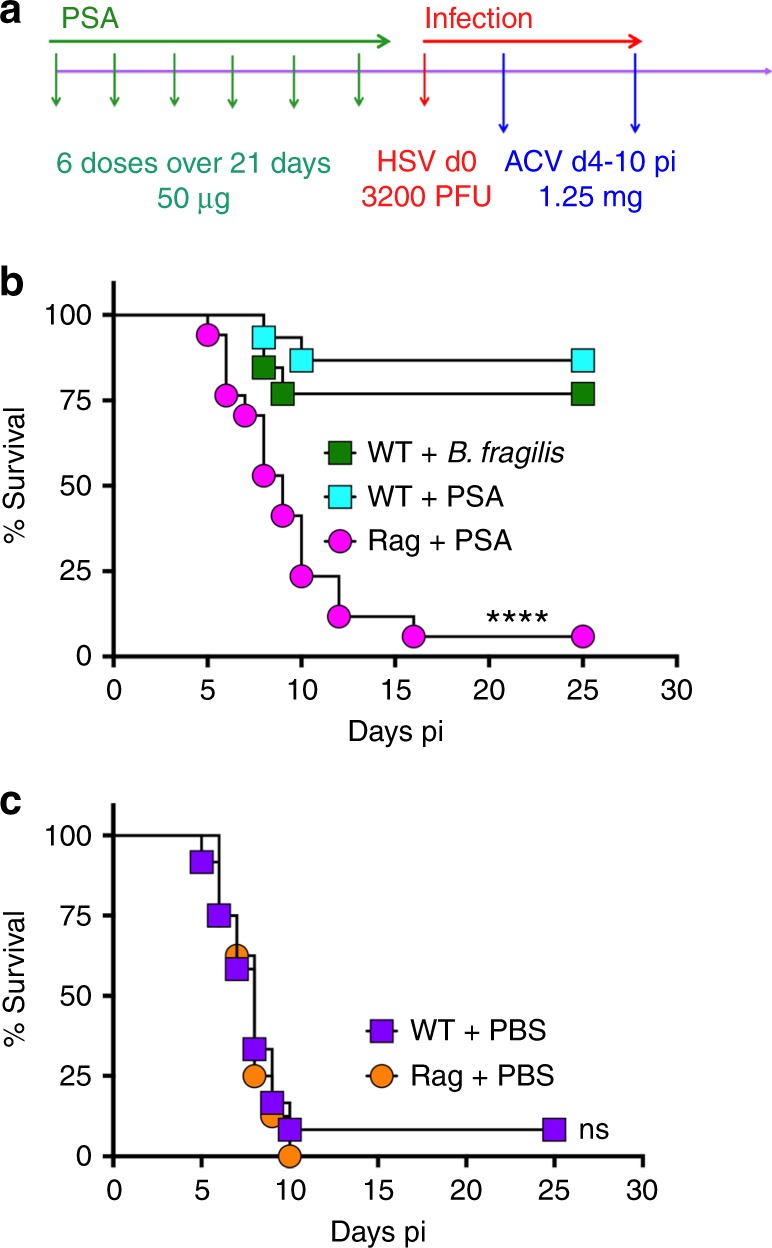
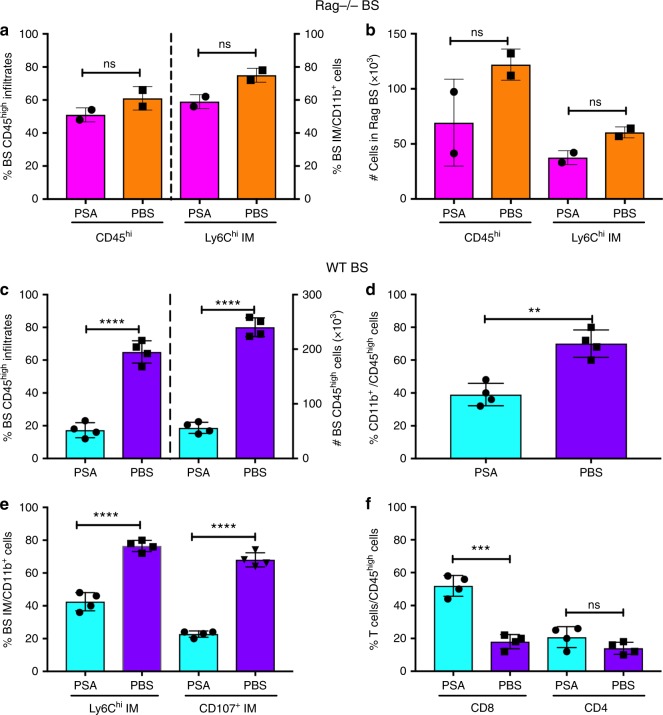
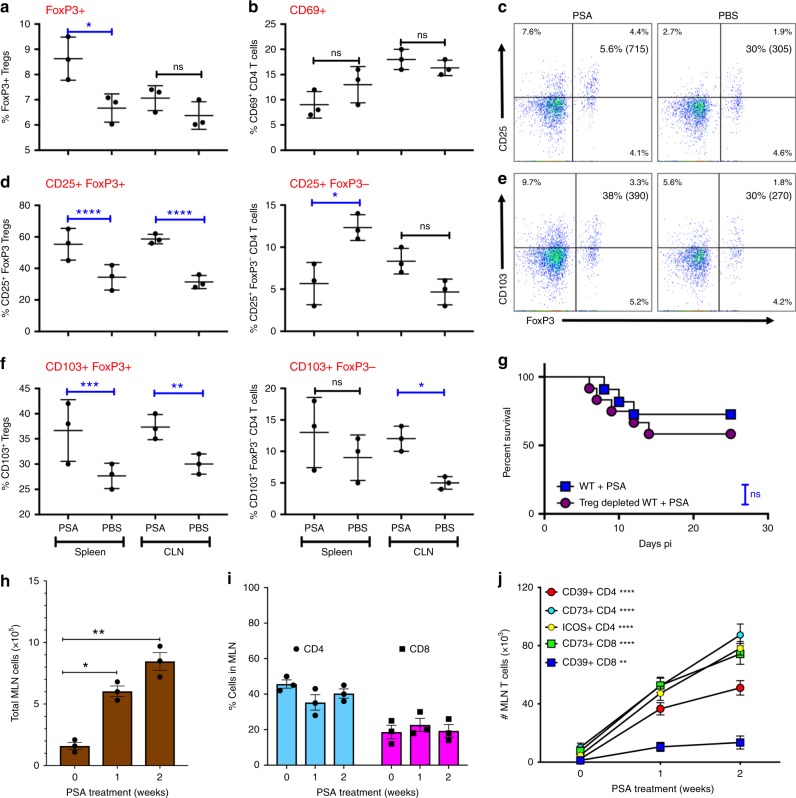
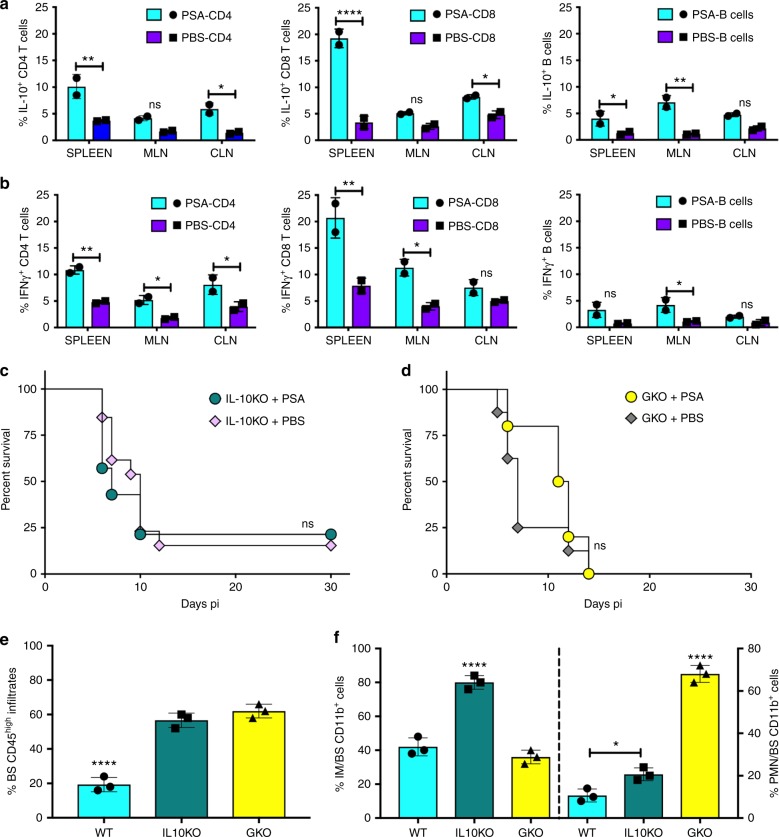
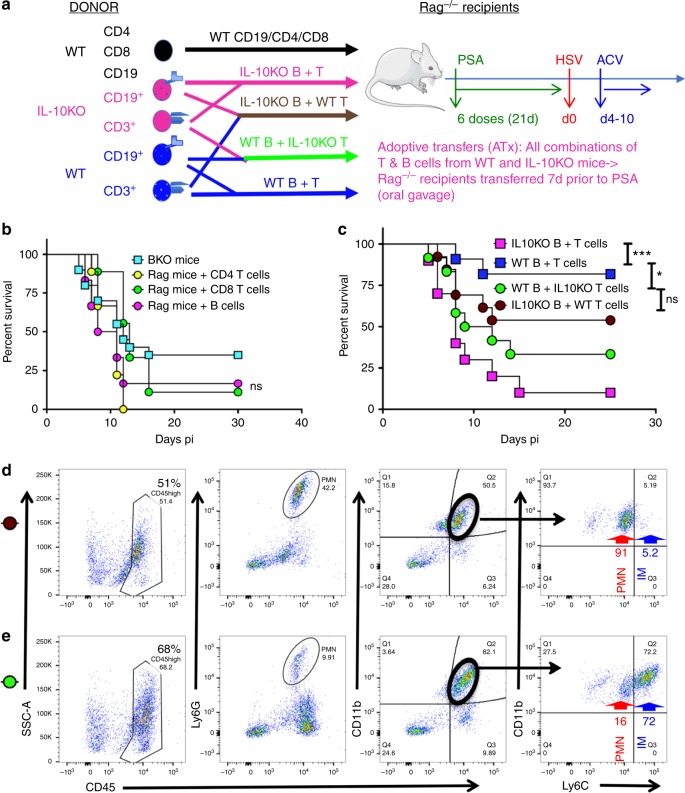
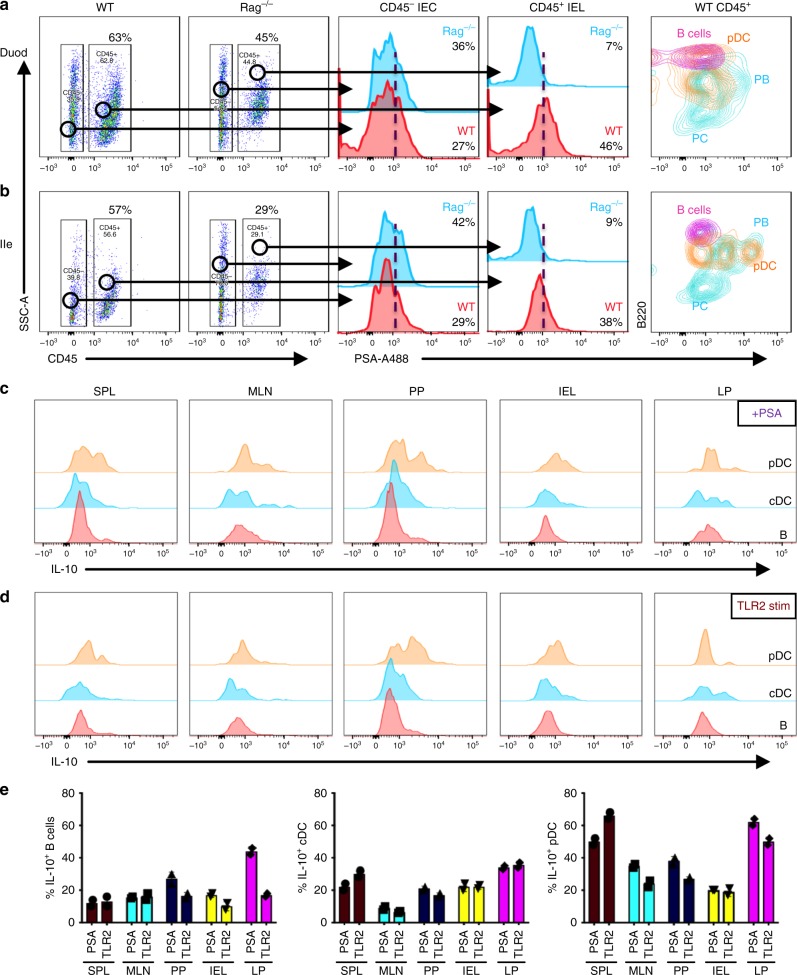
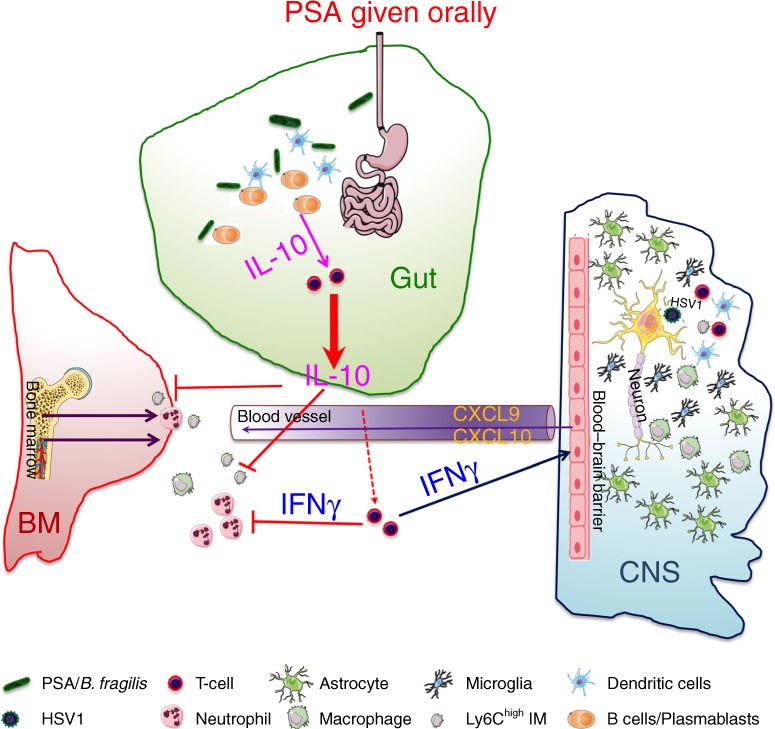
The gut commensal Bacteroides fragilis or its capsular polysaccharide A (PSA) can prevent various peripheral and CNS sterile inflammatory disorders. Fatal herpes simplex encephalitis (HSE) results from immune pathology caused by uncontrolled invasion of the brainstem by inflammatory monocytes and neutrophils. Here we assess the immunomodulatory potential of PSA in HSE by infecting PSA or PBS treated 129S6 mice with HSV1, followed by delayed Acyclovir (ACV) treatment as often occurs in the clinical setting. Only PSA-treated mice survived, with dramatically reduced brainstem inflammation and altered cytokine and chemokine profiles. Importantly, PSA binding by B cells is essential for induction of regulatory CD4 + and CD8 + T cells secreting IL-10 to control innate inflammatory responses, consistent with the lack of PSA mediated protection in Rag −/− , B cell- and IL-10-deficient mice. Our data reveal the translational potential of PSA as an immunomodulatory symbiosis factor to orchestrate robust protective anti-inflammatory responses during viral infections.
Overview
The claims and statistics of this paper haven’t been checked yet.
Free: it reads the open-access text and checks the first 5 claims that cite a source we can check. Create a free account to check every claim.
Integrity signals
Registry
Cites
Statistics
Figures
Verification
Claims the paper makes
The claims and statistics of this paper haven’t been checked yet.
Free: it reads the open-access text and checks the first 5 claims that cite a source we can check. Create a free account to check every claim.
Claims other papers make about this one
Each is checked against this paper’s own text: does it say what the citing paper says it does?
The cited source says what the claim attributes to it.
In the citing paper
“Polysaccharide A (PSA) produced by the commensal Bacteroides fragilis is another well-studied example of a single molecule promoting symbiosis and host immune system education.57–59”
From Interaction between microbiota and immunity in health and disease (2020) · cites this paper as [59]
Self-check
Percentages, sums and reported differences re-computed from the paper’s own numbers.
The self-check needs the paper’s full text.
Citations
Cites
Revised Estimates for the Number of Human and Bacteria Cells in the Body
Sender, R., Fuchs, S., & Milo, R. (2016) · PLOS Biology · doi:10.1371/journal.pbio.1002533 · Cited by 5,425
The Human Intestinal Microbiome in Health and Disease
Lynch, S. V., & Pedersen, O. (2016) · New England Journal of Medicine · doi:10.1056/nejmra1600266 · Cited by 3,637
An Immunomodulatory Molecule of Symbiotic Bacteria Directs Maturation of the Host Immune System
Mazmanian, S. K., Liu, C. H., Tzianabos, A. O., & Kasper, D. L. (2005) · Cell · doi:10.1016/j.cell.2005.05.007 · Cited by 2,910
Self-citationA microbial symbiosis factor prevents intestinal inflammatory disease
Mazmanian, S. K., Round, J. L., & Kasper, D. L. (2008) · Nature · doi:10.1038/nature07008 · Cited by 2,340
Self-citationRound, J. L., & Mazmanian, S. K. (2010) · Proceedings of the National Academy of Sciences · doi:10.1073/pnas.0909122107 · Cited by 2,233
Self-citationThe Toll-like receptor 2 pathway establishes colonization by a commensal of the human microbiota
Round, J. L., Lee, S. M., Li, J., Tran, G., Jabri, B., Chatila, T. A., & Mazmanian, S. K. (2011) · Science · doi:10.1126/science.1206095 · Cited by 1,604
Self-citationShen, P., Roch, T., Lampropoulou, V., O’Connor, R. A., Stervbo, U., Hilgenberg, E., Ries, S., Dang, V. D., Jaimes, Y., Daridon, C., et al. (2014) · Nature · doi:10.1038/nature12979 · Cited by 1,048
Use of axenic animals in studying the adaptation of mammals to their commensal intestinal microbiota
Smith, K., McCoy, K. D., & Macpherson, A. J. (2007) · Seminars in Immunology · doi:10.1016/j.smim.2006.10.002 · Cited by 785
Mining the Human Gut Microbiota for Immunomodulatory Organisms
Geva-Zatorsky, N., Sefik, E., Kua, L., Pasman, L., Tan, T. G., Ortiz-Lopez, A., Yanortsang, T. B., Yang, L., Jupp, R., Mathis, D., et al. (2017) · Cell · doi:10.1016/j.cell.2017.01.022 · Cited by 762
Gable, M. S., Sheriff, H., Dalmau, J., Tilley, D. H., & Glaser, C. A. (2012) · Clinical Infectious Diseases · doi:10.1093/cid/cir1038 · Cited by 733
Cited by
Items 201–284 of 284
Interplay of alpha-synuclein pathology and gut microbiome in Parkinson’s disease
Srivastava, A., Kataria, A., Yadav, D. K., Han, I., & Choi, E. H. (2022) · Elsevier eBooks · doi:10.1016/b978-0-323-91313-3.00003-9 · Cited by 4
Patel, S. H., Becker, E., Ploix, C. C., Steiner, G., Šćepanović, P., Fueth, M., Mudry, M. C. D. V., Eichinger‐Chapelon, A., Marrer‐Berger, E., & Claesson, M. J. (2023) · ImmunoHorizons · doi:10.4049/immunohorizons.2300103 · Cited by 5
Arianejad, M., Tajeddini, F., Zareardalan, M., Hosseinpour-Soleimani, F., Sisakht, M., Tajbakhsh, A., Pirsalehi, M.-T., & Negahdaripour, M. (2024) · Food Bioscience · doi:10.1016/j.fbio.2024.105498 · Cited by 4
Gut Bacteroides fragilis in health and diseases: an updated review
Yang, Y., Cao, X., Kato, N., & Wang, Y. (2025) · Journal of Future Foods · doi:10.1016/j.jfutfo.2024.11.025 · Cited by 8
Fuentes, J. J., Singh, S., Pudlo, N. A., Heaver, S. L., Ley, R. E., & Martens, E. C. (2025) · Journal of Bacteriology · doi:10.1128/jb.00178-25 · Cited by 4
The Inflammatory Processes Driven by Gut Microbiota
Buruş, A., Çeltikçi, B., & Aksoy, Y. (2021) · Acta Medica · doi:10.32552/2021.actamedica.548 · Cited by 6
“[35] Ramakrishna C, Kujawski M, Chu H, et al.”
BackgroundEngineering immunomodulatory nanoplatforms from commensal bacteria-derived polysaccharide A
Kakwere, H., Harriman, R., Pirir, M., Avila, C., Chan, K., & Lewis, J. S. (2022) · Journal of Materials Chemistry B · doi:10.1039/d1tb02590b · Cited by 4
Microbioma intestinal das aves e sua importância
Cruz, L. C. F., Costa, T. F., Sampaio, S. A., da Silva, N. G. D., de Abreu, J. M., Borges, K. F., Sales, G. M., Alexandrino, S. L. D. S. A., dos Santos, F. R., & Minafra, C. S. (2022) · Research Society and Development · doi:10.33448/rsd-v11i2.25583 · Cited by 6
Jalandra, R., Dhar, R., Pethusamy, K., Sharma, M., & Karmakar, S. (2022) · F1000Research · doi:10.12688/f1000research.122429.1 · Cited by 4
Chen, W., Du, L., Cai, C., Huang, L., Zheng, Q., Chen, J., Wang, L., Zhang, X., Fang, X., Wang, L., et al. (2023) · Journal of Functional Foods · doi:10.1016/j.jff.2023.105583 · Cited by 5
Gut bacteria at 6 months of age are associated with immune cell status in 1‐year‐old children
Nilsen, M., Nygaard, U. C., Brodin, P., Carlsen, K. L., Fredheim, C., Haugen, G. N., Hedlin, G., Jonassen, C. M., Jonsmoen, U. L., Lakshmikanth, T., et al. (2023) · Scandinavian Journal of Immunology · doi:10.1111/sji.13346 · Cited by 4
Zwitterionic Polysaccharides in Immunity
Gattoji, V. K., Valentin, G., Geremia, M. L., & Andreana, P. R. (2021) · Elsevier eBooks · doi:10.1016/b978-0-12-819475-1.00102-4 · Cited by 4
Gudi, R. R., Taylor, H. B., Johnson, B. M., Maurya, R., Mulligan, M. E., Carter, L., Westwater, C., & Vasu, C. (2025) · Immunology · doi:10.1111/imm.70032 · Cited by 4
Microbial membrane vesicles and the intestinal epithelium: a crosstalk in health and disease
Abubakari, A. W., Salvador‐Oke, K. T., M-Kamal, H. S., & Johnson, A. M. (2025) · Archives of Microbiology · doi:10.1007/s00203-025-04562-2 · Cited by 5
Nanotechnology – Microbiota synergy in cancer immunotherapy
Yang, J., Wang, J., Li, J., & Cui, J. (2025) · Critical Reviews in Oncology/Hematology · doi:10.1016/j.critrevonc.2025.105018 · Cited by 5
Bacteroides fragilis colonization induces protective systemic IgA
Harris, J., Gubitosi, N., Zoccoli-Rodriguez, V., Borg, K. M., Delaney, M., Cruz, T. N., Gaudette, B. T., & Wilmore, J. R. (2025) · Microbiome · doi:10.1186/s40168-025-02222-7 · Cited by 3
“While systemic induction of IL-10-producing immune cells by bacterial capsular polysaccharides has been shown to alleviate numerous diseases states, local induction of IL-10 and the subsequent dampening of innate immune cell recruitment can prevent clearance of abscess formation [36, 37].”
Gonzales, G., Malka, R. E., Bizios, R., Dion, G. R., & Guda, T. (2025) · Frontiers in Bioengineering and Biotechnology · doi:10.3389/fbioe.2025.1524013 · Cited by 5
Effects of Bacterial Metabolites on the Immune System: Enemies and Friends
AL-Jabri, Z., Al‐Reesi, I., Shizawi, N. A., Al-Balushi, M. S., Al-Jabri, A. A., & Said, E. A. (2021) · Endocrine Metabolic & Immune Disorders - Drug Targets · doi:10.2174/1871530321666211119150231 · Cited by 3
Modern understanding of latent autoimmune diabetes in adults
Иванович, Г. И., Rusyaeva, N. V., Nikonova, T. V., Кононенко, И. В., & Shestakova, M. V. (2023) · Diabetes Mellitus · doi:10.14341/dm12994 · Cited by 6
Dysbiosis in Multiple Sclerosis: Can Immunoglobulin Y Supplements Help?
Paraschiv, A.-C., Văcăraș, V., Nistor, C., Văcăraș, C., Nistor, D.-T., Vesa, Ș. C., Iluţ, S., & Muresanu, D. F. (2024) · Journal of Gastrointestinal and Liver Diseases · doi:10.15403/jgld-5241 · Cited by 5
Feng, S., Li, J., Qu, D., Tian, F., Yu, L., Zhang, H., Chen, W., Zhao, J., & Zhai, Q. (2022) · International Journal of Molecular Sciences · doi:10.3390/ijms23021003 · Cited by 3
Gut Microbiota: A Future Clinical Magic Bullet to Manifest Pathogenic Disease in the Current Future
Mina, P. R. (2023) · Journal of Pure and Applied Microbiology · doi:10.22207/jpam.17.1.43 · Cited by 3
Zhan, Y., Liang, J., Zhou, S., Zhang, C., Chen, X., Gao, L., Zhao, J., He, Y., Zhao, M., & Lu, Q. (2025) · International Journal of Biological Macromolecules · doi:10.1016/j.ijbiomac.2025.145903 · Cited by 2
Fisher, M. S., Philippova, J., Васильевич, К. В., & Sennikov, S. V. (2025) · International Journal of Molecular Sciences · doi:10.3390/ijms262311563 · Cited by 4
“…polysaccharide A (PSA) from Bacteroides fragilis induces IL-10–secreting regulatory T cells, including CD8 + subsets, in preclinical models [83,84], while short-chain fatty acids (SCFAs), produced primarily by fermenting Clostridium clusters, support regulatory T cell programs through…”
Osborne, L., Dunai, C., Huang, Y., Egbe, F. N., Turtle, L., Michael, B. D., & Ellul, M. A. (2026) · Frontiers in Immunology · doi:10.3389/fimmu.2026.1751672 · Cited by 3
“Instead, CD39+CD73+ T cells alone conferred suf fi cient HSE protection in mice (365).”
InfluentialMin, M., Chakkalakal, M., Pan, A., Nadora, D., Gahoonia, N., Thacker, S., Chaudhuri, R. K., Burney, W. A., & Sivamani, R. K. (2024) · Journal of Functional Foods · doi:10.1016/j.jff.2024.106320 · Cited by 3
Targeting gut microbiota to regulate the adaptive immune response in atherosclerosis
Giakomidi, D., Ishola, A., & Nus, M. (2025) · Frontiers in Cardiovascular Medicine · doi:10.3389/fcvm.2025.1502124 · Cited by 4
Dynamic changes in the gut microbiota of SPF Bama piglets during breast and formula feeding
Zhang, C., Liu, Z., Yu, H., Shen, Y., Lu, L., Kong, F., Sun, W. Y., Wei, X., Jin, L. G., Ge, L., et al. (2025) · Frontiers in Microbiology · doi:10.3389/fmicb.2025.1537286 · Cited by 2
Hamidzadeh, S. A. H., Katebi, A., Jajan, L. H.-G., Riazi‐Rad, F., Tavassol, Z. H., & Behrouzi, A. (2025) · Immunobiology · doi:10.1016/j.imbio.2025.153092 · Cited by 4
Symbiotic microbes from the human gut
Kumar, A., Singh, C. T., & Khan, M. R. (2023) · Elsevier eBooks · doi:10.1016/b978-0-323-99334-0.00003-7 · Cited by 2
Eribo, O. A., Naidoo, C., Theron, G., Walzl, G., du Plessis, N., & Chegou, N. N. (2023) · Microorganisms · doi:10.3390/microorganisms11020451 · Cited by 2
“The culture was incubated anaerobically at 37 ◦C for 24 h [34].”
Gut microbiota compositional profile in patients with posner-schlossman syndrome
Wang, N., Sun, C., Ju, Y., Huang, L., Liu, Y., Gu, M., Xu, C., Wang, M., Wu, Y., Zhang, D., et al. (2024) · Experimental Eye Research · doi:10.1016/j.exer.2024.109825 · Cited by 2
Next-generation microbial drugs developed from microbiome's natural products
Bhattarai, K., Bhattarai, K., & Baral, B. (2021) · Advances in genetics · doi:10.1016/bs.adgen.2021.08.007 · Cited by 2
Let’s review the gut microbiota in systemic lupus erythematosus
Almada-Correia, I., Costa‐Reis, P., Guerreiro, C. S., & Fonseca, J. E. (2022) · Exploration of Medicine · doi:10.37349/emed.2022.00112 · Cited by 2
Marik, A., Biswas, S., & Banerjee, E. R. (2024) · World Journal of Immunology · doi:10.5411/wji.v14.i1.96209 · Cited by 1
Shagaleeva, O. Y., Kashatnikova, D. A., Vorobyeva, E. A., Kardonsky, D. A., Silantiev, A. S., Efimov, B. A., Ivanov, V. A., Bespyatikh, Y. A., & Zakharzhevskaya, N. B. (2024) · Bulletin of Experimental Biology and Medicine · doi:10.1007/s10517-024-06237-2 · Cited by 2
Harriman, R., Tu, A. B., Wang, Z., Radoc, N., Kakwere, H., & Lewis, J. S. (2025) · Frontiers in Immunology · doi:10.3389/fimmu.2025.1599480 · Cited by 1
Yu, X., Yu, Y., & Liu, Z. (2026) · Annals of Animal Science · doi:10.2478/aoas-2025-0117 · Cited by 1
“Simulta - neously, some AMPs like prostate specific antigen (PSA) from Bacteroides fragilis activate regulatory T cells (Tregs), inducing IL-10 secretion to suppress excessive inflammation and protect tissues (Kayama and Takeda, 2014; Ramakrishna et al., 2019).”
Zhou, L., Song, Q., Cao, M., Qin, M., Wang, Z., Sun, Y., Xue, D., Zhang, Z., Shi, J., & Liu, J. (2026) · Cell Reports · doi:10.1016/j.celrep.2026.117099 · Cited by 1
Scarbrough, B. A., Moneghan, C., Salamat, S., Dooda, M. K., Murray, A. H., Costelloe, J., Jorgenson, M. A., & Troutman, J. M. (2026) · Biochemistry · doi:10.1021/acs.biochem.6c00056 · Cited by 1
Zhang, H., Zhang, S., & Zhu, J. (2026) · Expert Opinion on Therapeutic Targets · doi:10.1080/14728222.2026.2671689 · Cited by 2
Fang, Z., Ma, M., Yu, G., & Shang, Q. (2026) · Carbohydrate Polymers · doi:10.1016/j.carbpol.2026.125596 · Cited by 1
Babu, P., Prakash, V., Subhash, S., Vanuopadath, M., Haripriyan, J., Rajan, K., Anu, A. G., Padmakumar, S., Kumar, G. B., Nair, B. G., et al. (2026) · Frontiers in Cellular and Infection Microbiology · doi:10.3389/fcimb.2026.1905445 · Cited by 1
“Additionally, speci fi c commensal-derived molecules, such as polysaccharide A from B. fragilis , interact with TLR2 to drive regulatory T cell responses that further strengthen immune tolerance and prevent tissue-damaging in fl ammation (Ramakrishna et al., 2019).”
Lv, Y., Yang, Q., Cai, X., Chen, G., & Wang, S. (2026) · Autoimmunity Reviews · doi:10.1016/j.autrev.2026.104170 · Cited by 1
Modern Perspectives in Controlling Human Diseases through Probiotic Intervention
Das, J. D., Akhila, V. S., Paul, M., Shankar, A., Joseph, I., & Thomas, S. (2022) · Springer eBooks · doi:10.1007/978-981-16-7672-7_8 · Cited by 1
Dietary restriction in multiple sclerosis: evidence from preclinical and clinical studies
Liao, E., Ghezzi, L., & Piccio, L. M. (2022) · Advances in Clinical Neuroscience & Rehabilitation · doi:10.47795/mcln8939 · Cited by 2
“Bacteroides fragilis polysaccharide A induces IL-10 secreting B and T cells that prevent viral encephalitis.”
BackgroundZhu, N., Zhang, F., Zhou, H., Ma, W., Mao, H., Wang, M., Ke, Z., Wang, J., & Qi, L. (2023) · Vaccines · doi:10.3390/vaccines11030529 · Cited by 1
“PSA reduces brain stem inflammation and prevents fatal herpes simplex encephalitis (HSE) by binding to enteric-resident plasma blasts and inducing secretion of IL-10 and gamma-interferon (IFNγ) by CD4+T cells and CD8+T cells [51,52].”
BackgroundGut microbiota and acute kidney injury: immunological crosstalk link
Ali, A. M. M., Wu, L., & Ali, S. S. (2023) · International Urology and Nephrology · doi:10.1007/s11255-023-03760-5 · Cited by 1
Flores, F. P., Cirunay, A. R. T., & Esteban, M. A. S. (2024) · Elsevier eBooks · doi:10.1016/b978-0-443-19005-6.00010-4 · Cited by 1
In Silico Analysis of Probiotic Bacteria Changes Across COVID-19 Severity Stages
Taufer, C. R., da Silva, J., & Rampelotto, P. H. (2024) · Microorganisms · doi:10.3390/microorganisms12112353 · Cited by 2
“It also produces polysaccharide A, which enhances the immune response, protects against intestinal inflammation, and regulates natural resistance to viral infections [20–22].”
Role of microbiota-gut-brain axis in autoimmunity and multiple sclerosis
Mishra, Y., Maity, D., & Kaundal, R. K. (2025) · Elsevier eBooks · doi:10.1016/b978-0-443-21680-0.00007-9 · Cited by 1
Higher circulating EGF levels associate with a decreased risk of IgE sensitization in young children
Reinert‐Hartwall, L., Siljander, H., Härkönen, T., Vatanen, T., Ilonen, J., Niemelä, O. J., Luopajärvi, K., Доршакова, Н. В., Mokurov, S., Peet, A., et al. (2021) · Pediatric Allergy and Immunology · doi:10.1111/pai.13613 · Cited by 2
Microorganisms in Pathogenesis and Management of Rheumatoid Arthritis
Balakrishnan, B., & Taneja, V. (2022) · Springer eBooks · doi:10.1007/978-981-19-1946-6_16 · Cited by 1
Zuo, T., Yeoh, Y. K., & Ng, S. C. (2021) · Gastroenterology · doi:10.1053/j.gastro.2021.01.196 · Cited by 1
An RNA regulates iron homeostasis and host mucus colonization in Bacteroides thetaiotaomicronPreprint
Prezza, G., Fansler, R. T., Guest, T., Mädler, G., Schlauch, H., Zhu, W., & Westermann, A. J. (2025) · bioRxiv (Cold Spring Harbor Laboratory) · doi:10.1101/2025.09.08.672848 · Cited by 1
Activation of adenosine receptor A2a by gut symbionts promotes immune tolerancePreprint
Kostic, A. D., Xu, T., Zhao, L., Islam, M. Z., Pham, L. D., Corsi, M., Phillips, G. J., Wannemuehler, M. J., & Benoist, C. O. (2021) · Research Square · doi:10.21203/rs.3.rs-376619/v1
Collins, T. (2012) · RePEc: Research Papers in Economics
Bioactivities of Bacterial Polysaccharides
Cruz‐Aldaco, K., Govea‐Salas, M., Araújo, R. G., Medina, M. D. D., & Loredo‐Treviño, A. (2022) · Springer eBooks · doi:10.1007/978-3-030-42215-8_30 · Cited by 1
Das, J. K., Guo, F., Hunt, C. L., Steinmeyer, S. H., Plocica, J. A., Kobayashi, K. S., Jayaraman, A., Ficht, T. A., Alaniz, R. C., de Figueiredo, P., et al. (2022) · bioRxiv (Cold Spring Harbor Laboratory) · doi:10.1101/2022.02.26.482123
Research Progress of Gut Microbiota’s Function in Metabolic and Immunological Diseases
孙, 卓. (2022) · Open Journal of Natural Science · doi:10.12677/ojns.2022.106107
Microbiome therapeutics as an alternative to the antibiotics
Singh, B. (2023) · Elsevier eBooks · doi:10.1016/b978-0-323-99336-4.00004-5
Nandi, A., Kaur, A., Ghai, S., Singh, G., & Tiwari, A. (2023) · doi:10.14293/pr2199.000546.v1
Next-generation probiotics: Health-promoting bacteria of the human gut
Golić, N., Đokić, J., Tolinački, M., & Živković, M. (2023) · Arhiv za farmaciju · doi:10.5937/arhfarm73-46921 · Cited by 2
Gut commensals require Peyer’s patches to induce protective systemic IgA responsesPreprint
Wilmore, J. R., Harris, J., Zoccoli-Rodriguez, V., Delaney, M., Cruz, T., & Guadette, B. (2024) · Research Square · doi:10.21203/rs.3.rs-4220532/v1
“While systemic induction of IL-10-producing immune cells by CPs has been shown to alleviate numerous diseases states, local induction of IL-10 and the subsequent dampening of innate immune cell recruitment can prevent clearance of abscess formation 35-36 .”
BackgroundXie, Z., Huang, A., Xie, J., Yu, S., Chen, M., Cai, J., Huang, R., Zhu, Z., & Ding, Y. (2024) · LWT · doi:10.1016/j.lwt.2024.116557 · Cited by 1
Yeni Nesil Fonksiyonel Bileşenler Olarak Postbiyotikler ve Biyoaktif Özellikleri
ÖZBAY, M., & ERSAN, L. Y. (2024) · Uludağ Üniversitesi Ziraat Fakültesi dergisi/Bursa uludağ üniversitesi ziraat fakültesi dergisi · doi:10.20479/bursauludagziraat.1485713 · Cited by 2
Role of microbiota-gut-brain axis in brain infections and possible interventions
Sharma, P., Sharma, B., Vishwakarma, K., Setty, A. R. R., Sandeep, P., Dhiman, N., & Arora, S. (2025) · Elsevier eBooks · doi:10.1016/b978-0-443-21680-0.00012-2
Temporal dynamics of the gut microbiome preceding celiac disease in genetically at-risk childrenPreprint
Ahrens, A. P., Lynch, K., Hyöty, H., Lloyd, R. E., Petrosino, J., Triplett, E. W., & Agardh, D. (2025) · medRxiv · doi:10.1101/2025.05.29.25328357 · Cited by 3
Gudi, R. R., Taylor, H. B., Johnson, B. M., Maurya, R., Mulligan, M. E., Carter, L., Westwater, C., & Vasu, C. (2025) · bioRxiv (Cold Spring Harbor Laboratory) · doi:10.1101/2025.06.02.657398
MİKROBİYOM VE BAĞIŞIKLIK SİSTEMİ ARASINDAKİ ETKİLEŞİM: HOMEOSTAZ VE TOLERANS MEKANİZMALARI
Ouedraogo, A. B., Çeçen, E. M., & Yıldırım, M. (2025) · Veteriner Farmakoloji ve Toksikoloji Derneği Bülteni · doi:10.38137/vftd.1618052
Seong, H., Yoon, J. G., Nham, E., Choi, Y. J., Noh, J. Y., Cheong, H. J., Kim, W. J., Lim, S., & Song, J. Y. (2025) · Vaccines · doi:10.3390/vaccines13121248
“B. fragilis exhibits immunomodulatory properties and has the capacity to correct gut dysbiosis, thereby promoting immune homeostasis and enhancing host defense [30].”
Park, J., Choi, Y., Lee, W. J., Kang, A., Seo, E., Kim, M., Jang, K. B., Song, M., Oh, S., & Kim, Y. (2026) · Biomedicine & Pharmacotherapy · doi:10.1016/j.biopha.2026.119121
mGem: Applying microbiome therapeutic learnings to next-generation agricultural bioproducts
Holmes, E. C. (2026) · mBio · doi:10.1128/mbio.03323-25
“Proof-of-principle studies in mammalian systems have established that engineering precise molecular mechanisms (e.g., production of unique peptidoglycan fragments in Enterococcus [63] or extracellular polysaccharides in Bacteroides [64–66]) can shift immune signaling to ameliorate disease.”
Friend and Foe: Microbes in Orchestrating Immunity and Shaping Infection Dynamics
Nair, A. V. (2026) · ACS Infectious Diseases · doi:10.1021/acsinfecdis.5c00709
Caractérisation d'un nouveau RiPP issu du microbiote intestinal : la Ruminococcin C
Balty, C. (2019) · theses.fr (ABES) · doi:10.70675/868a1b04z92b0z4b42z965azf73521ce59dd
Kim, W.-S., Lee, S. H., Kwon, K.-J., Kim, S.-M., & Rhee, K. (2026) · Toxins · doi:10.3390/toxins18040189
“PSA presentation by dendritic cells induces differentiation of regulatory T cells (Tregs) producing anti-inflammatory cytokine IL-10, preventing experimental colitis and correcting systemic immune imbalances [5,6].”
Elsaghir, A., Wadan, A. S., & Witte, T. (2026) · BMC Immunology · doi:10.1186/s12865-026-00855-3
“Mutant strains deficient in PSA did not promote immunological maturation or confer disease protection, underscoring the essential function of this molecule in facilitating the immunomodulatory actions of B. fragilis [34, 200, 201, 203, 204].”
Dietary factors and next-generation probiotics for microbiota eubiosis and barrier fortification
Huang, C. P. (2026) · Elsevier eBooks · doi:10.1016/b978-0-443-40306-4.00015-6
Podoprigora, I. V., Zakharzhevskaya, N. B., Sergueïevna, D. M., Chaplin, A. V., Kardonsky, D. A., Vorobyeva, E. A., Kashatnikova, D. A., Kazakova, V. D., Kolesnikova, I. V., Smirnova, S. V., et al. (2026) · Frontiers in Microbiology · doi:10.3389/fmicb.2026.1897419
“Polysaccharide A of Bacteroides fragilis , by contrast, exerts relatively consistent immunomodulatory effects (Ramakrishna et al., 2019).”
Emerging bacterial membrane vesicles from microbial messengers to therapeutic nanocarriers
Stewart, G. E., Guo, Y., & Cao, S. (2026) · Journal of Controlled Release · doi:10.1016/j.jconrel.2026.115250 · Cited by 1
Truffin, D., Perreau, C., Sánchez, L. J., Heyse, J., Baudot, A., Vu, L. D., Beul, E. D., & den Abbeele, P. V. (2026) · Frontiers in Microbiology · doi:10.3389/fmicb.2026.1923298
“Interestingly, members of the Bacteroidota phylum have been associated with anti-inflammatory and favorable immune responses in various disease contexts (Ramakrishna et al., 2019; Shen et al., 2012; Vernay et al., 2020; Johnson et al., 2015; Routy et al., 2018).”
Gut microbiota-immune-bone axis in osteoporosis: mechanisms and intervention strategies
Huang, M., Xie, B., & Liu, H. (2026) · Frontiers in Pharmacology · doi:10.3389/fphar.2026.1879472
“Bacteroides fragilis , via its capsular polysaccharide A, induces regulatory B cell (Breg) differentiation and IL-10 secretion, which suppresses osteoclastogenesis by inhibiting JAK/STAT signaling in OPCs (Dawalibi et al., 2024; Ramakrishna et al., 2019).”
Metadata
- Authors
- Ramakrishna, C., Kujawski, M., Chu, H., Li, L., Mazmanian, S. K., & Cantin, E. M.
- Affiliations
- City Of Hope National Medical Center (US)
- California Institute of Technology (US)
- Corresponding author
- Ramakrishna, Chandran
- Cantin, Edouard M.
- Venue
- Nature Communications
- Published
- 2019-05-14
- Volume
- 10
- Issue
- 1
- Pages
- 2153-2153
- ISSN
- 2041-1723 (ISSN-L)
- PMC
- PMC6517419
- OpenAlex
- W2945318499
- Semantic Scholar
- 7b3d9020097e177d983a115fb465f126757e56c8
- Cited by
- 284
- References
- 71
- Citations by year
- 2026: 24 · 2025: 44 · 2024: 42 · 2023: 47 · 2022: 42 · 2021: 45 · 2020: 29 · 2019: 8
- FWCI
- 12.39
- Type
- journal article
- Language
- en
- Open access
- gold
- doi.org
- Licence
- cc-by
- creativecommons.org/licenses/by/4.0 (tdm)
- creativecommons.org/licenses/by/4.0 (vor)
- Locations
- Nature Communications (publishedVersion, cc-by)
- PubMed Central (publishedVersion, cc-by)
- PubMed (publishedVersion)
- CaltechAUTHORS (California Institute of Technology) (submittedVersion, cc-by)
- RePEc: Research Papers in Economics (submittedVersion)
- DOAJ (DOAJ: Directory of Open Access Journals) (submittedVersion, cc-by-sa)
- DOAJ (DOAJ: Directory of Open Access Journals) (submittedVersion)
- Funders
- California Institute of Technology
- Servier
- Genentech
- Medical Research Council
- National Institute of Diabetes and Digestive and Kidney Diseases (R00DK110534, K99DK110534)
- Topics
- Life Sciences › Immunology and Microbiology › Immunology › T-cell and B-cell Immunology
- Health Sciences › Medicine › Infectious Diseases › Herpesvirus Infections and Treatments
- Life Sciences › Neuroscience › Neurology › Vagus Nerve Stimulation Research
- Keywords
- Bacteroides fragilis, polysaccharide A, herpes simplex encephalitis, herpes simplex virus type 1, IL-10, regulatory T cells, regulatory B cells, gut commensals, immunomodulation, brainstem inflammation, anti-inflammatory response, symbiosis, Rag1-deficient mice, IL-10-deficient mice
- MeSH terms
- Gastrointestinal Microbiome, Host Microbial Interactions, Acyclovir, Animals, Antiviral Agents, B-Lymphocytes, Bacteroides fragilis, Chlorocebus aethiops, Disease Models, Animal, Female, Humans, Male, Polysaccharides, Bacterial, Symbiosis, T-Lymphocytes, Vero Cells, Interleukin-10, Herpesvirus 1, Human, Mice, Knockout, Encephalitis, Herpes Simplex, Mice
About these checks
Registry, retraction, Cites and statistics results are computed, not judged, with one exception: a printed reference that no index lists is read once by a model before it counts as a citation error. Claims are extracted by a model and kept only when their quote appears verbatim in the text; each cited source is then checked, with a model’s help, for whether it says what the claim relies on. Those verdicts can be wrong — read the claim’s quote and the cited source before relying on one.
Statistics and arithmetic are recomputed, not judged.
Confidence bands are shown only for fields calibrated on our annotated test set. None is calibrated yet, so no band is shown.
What counts as a claim ›How we measure confidence ›How we check this ›
Are you an author, or do you see a problem with this page? Request a review
Data sources
Bibliographic data: Semantic Scholar, OpenAlex, Crossref.
Contains information from the Semantic Scholar Academic Graph Datasets, made available under the ODC Attribution License (ODC-BY 1.0).
Semantic Scholar’s data is described in: Kinney, R., et al. (2023). The Semantic Scholar Open Data Platform. arXiv:2301.10140.
