

The DOI matches its Crossref record; 14 of the 14 references it cites were found in a registry or an index.
Ubiquitylome study identifies increased histone 2A ubiquitylation as an evolutionarily conserved aging biomarker
Abstract
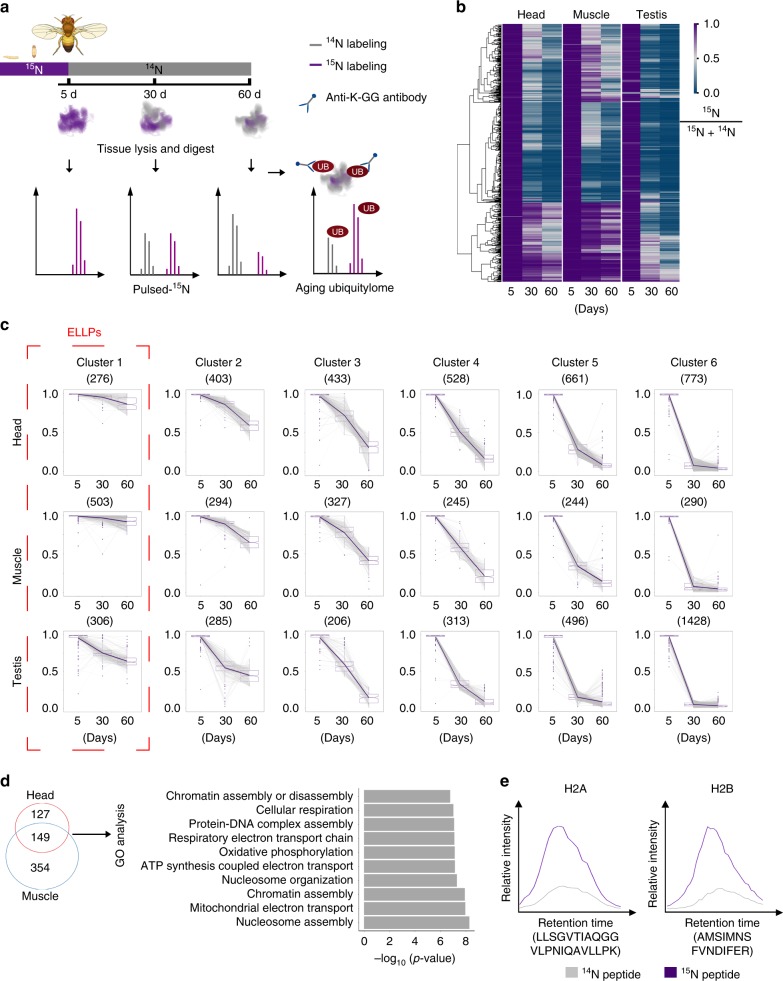
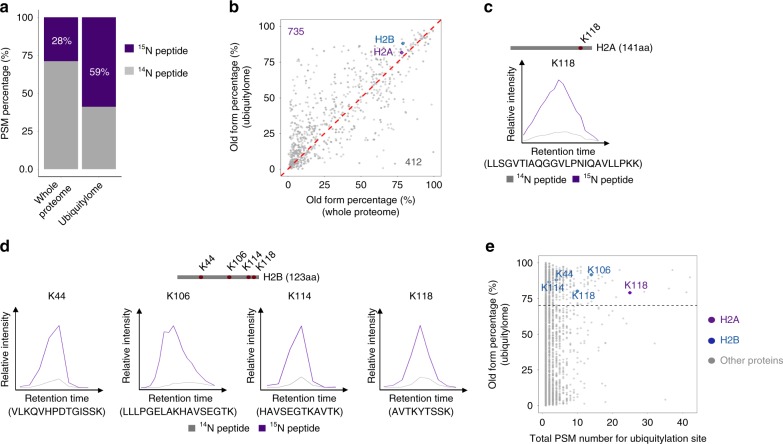
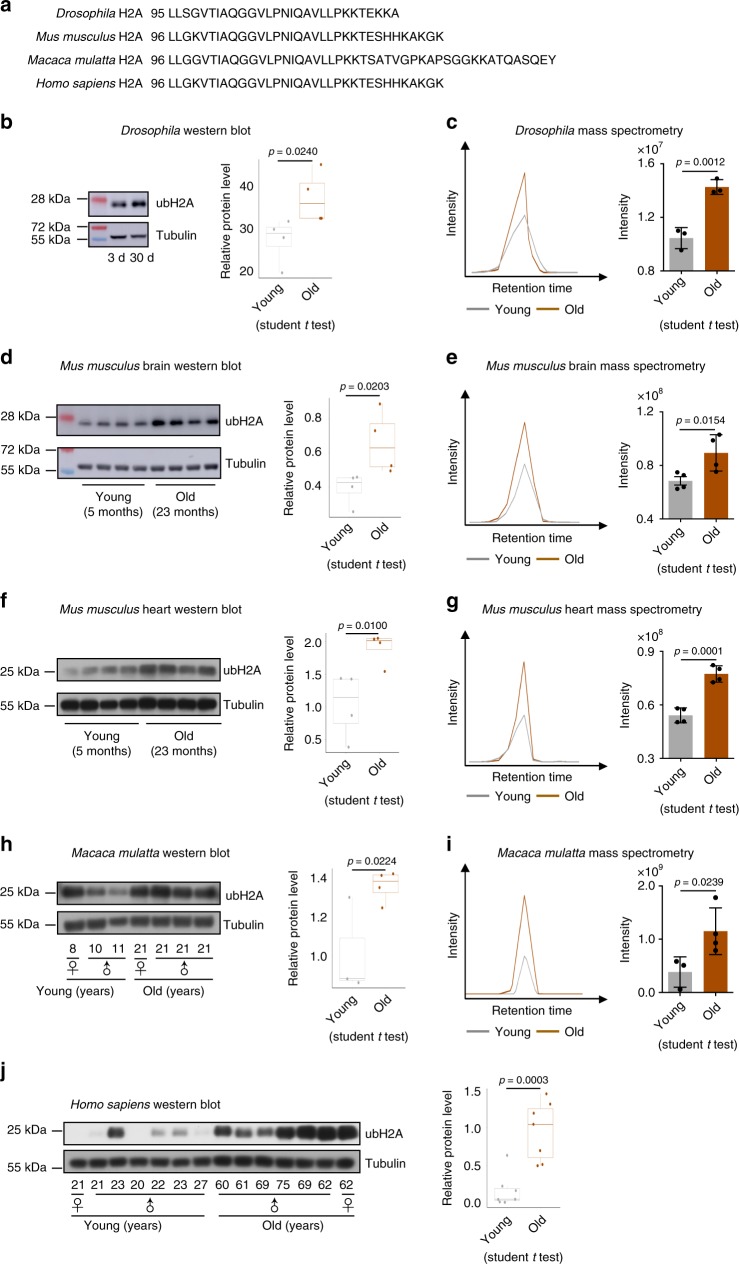
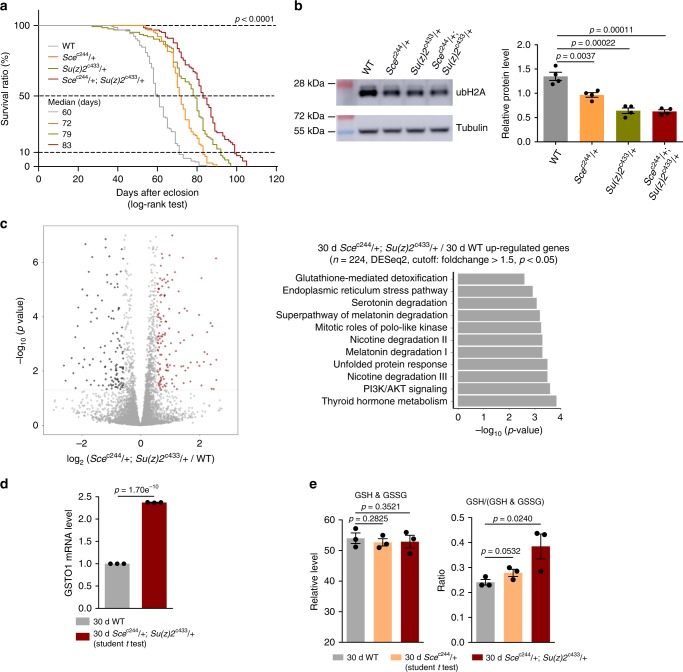
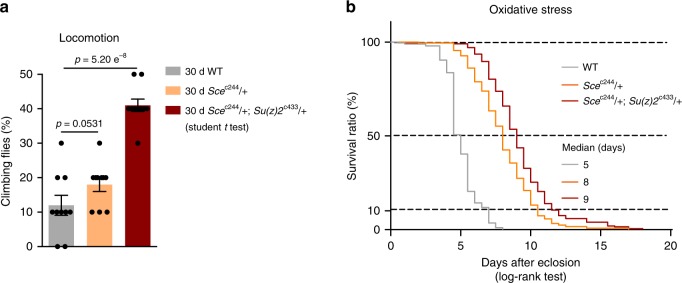
The long-lived proteome constitutes a pool of exceptionally stable proteins with limited turnover. Previous studies on ubiquitin-mediated protein degradation primarily focused on relatively short-lived proteins; how ubiquitylation modifies the long-lived proteome and its regulatory effect on adult lifespan is unclear. Here we profile the age-dependent dynamics of long-lived proteomes in Drosophila by mass spectrometry using stable isotope switching coupled with antibody-enriched ubiquitylome analysis. Our data describe landscapes of long-lived proteins in somatic and reproductive tissues of Drosophila during adult lifespan, and reveal a preferential ubiquitylation of older long-lived proteins. We identify an age-modulated increase of ubiquitylation on long-lived histone 2A protein in Drosophila , which is evolutionarily conserved in mouse, monkey, and human. A reduction of ubiquitylated histone 2A in mutant flies is associated with longevity and healthy lifespan. Together, our data reveal an evolutionarily conserved biomarker of aging that links epigenetic modulation of the long-lived histone protein to lifespan.
Overview
The claims and statistics of this paper haven’t been checked yet.
Run the check — free, no account needed. It reads the open-access text and checks the sources it cites.
Integrity signals
Registry
Cites
Statistics
Figures
Verification
Claims the paper makes
The claims and statistics of this paper haven’t been checked yet.
Run the check — free, no account needed. It reads the open-access text and checks the sources it cites.
Claims other papers make about this one
Each is checked against this paper’s own text: does it say what the citing paper says it does?
The cited source says what the claim attributes to it.
In the citing paper
“Moreover, some monoubiquitinylated proteins accumulate in aging tissues from flies, mice, monkeys and humans, as documented for histone 2A 86 .”
From Hallmarks of aging: An expanding universe (2023) · cites this paper as [86]
Self-check
Percentages, sums and reported differences re-computed from the paper’s own numbers.
The self-check needs the paper’s full text.
Citations
Cites
López-Otín, C., Blasco, M. A., Partridge, L., Serrano, M., & Kroemer, G. (2013) · Cell · doi:10.1016/j.cell.2013.05.039 · Cited by 14,982
RING Domain E3 Ubiquitin Ligases
Deshaies, R. J., & Joazeiro, C. A. P. (2009) · Annual Review of Biochemistry · doi:10.1146/annurev.biochem.78.101807.093809 · Cited by 2,679
Protein degradation and protection against misfolded or damaged proteins.
Goldberg, A. L. (2003) · Nature · doi:10.1038/nature02263 · Cited by 2,088
A multiubiquitin chain is confined to specific lysine in a targeted short-lived protein
Chau, V., Tobias, J. W., Bachmair, A., Marriott, D., Ecker, D. J., Gonda, D. K., & Varshavsky, A. (1989) · Science · doi:10.1126/science.2538923 · Cited by 1,535
Proteolysis: from the lysosome to ubiquitin and the proteasome
Ciechanover, A. (2005) · Nature Reviews Molecular Cell Biology · doi:10.1038/nrm1552 · Cited by 1,133
Epigenetic mechanisms of longevity and aging
Sen, P., Shah, P. P., Nativio, R., & Berger, S. L. (2016) · Cell · doi:10.1016/j.cell.2016.07.050 · Cited by 956
The mitochondrial deubiquitinase USP30 opposes parkin-mediated mitophagy
Bingol, B., Tea, J. S., Phu, L., Reichelt, M., Bakalarski, C. E., Song, Q., Foreman, O., Kirkpatrick, D. S., & Sheng, M. (2014) · Nature · doi:10.1038/nature13418 · Cited by 855
Histone H4 lysine 16 acetylation regulates cellular lifespan
Dang, W., Steffen, K. K., Perry, R., Dorsey, J. A., Johnson, F. B., Shilatifard, A., Kaeberlein, M., Kennedy, B. K., & Berger, S. L. (2009) · Nature · doi:10.1038/nature08085 · Cited by 667
USP10 Regulates p53 Localization and Stability by Deubiquitinating p53
Yuan, J., Luo, K., Zhang, L., Cheville, J. C., & Lou, Z. (2010) · Cell · doi:10.1016/j.cell.2009.12.032 · Cited by 637
Identification of long-lived proteins reveals exceptional stability of essential cellular structures
Toyama, B. H., Savas, J. N., Park, S. K., Harris, M. S., Ingolia, N. T., Yates, J. R., & Hetzer, M. W. (2013) · Cell · doi:10.1016/j.cell.2013.07.037 · Cited by 572
Research works printed but not linked: 51
- Kaushik, S. & Cuervo, A. M. Proteostasis and aging. Nat. Med 21, 1406–1415 (2015). · DOI · Paper page
- Evelyn, S. Vincow, G. M., Ruth, E. Thomas,. The PINK1–Parkin pathway promotes both mitophagy and selective respiratiory chain turnover in vivo. Proc. Natl Acad. Sci. 110, 6400–6405 (2012). · DOI · Paper page
- Visscher, M. et al. Proteome-wide changes in protein turnover rates in C. elegans models of longevity and age-related disease. Cell Rep. 16, 3041–3051 (2016). · DOI
- Zhang, Y. et al. Proteome scale turnover analysis in live animals using stable isotope metabolic labeling. Anal. Chem. 83, 1665–1672 (2011). · DOI
- Komander, D. & Rape, M. The ubiquitin code. Annu. Rev. Biochem. 81, 203–229 (2012). · DOI · Paper page
- Welchman, R. L., Gordon, C. & Mayer, R. J. Ubiquitin and ubiquitin-like proteins as multifunctional signals. Nat. Rev. Mol. cell Biol. 6, 599–609 (2005). · DOI
- Clague, M. J., Heride, C. & Urbe, S. The demographics of the ubiquitin system. Trends Cell Biol. 25, 417–426 (2015). · DOI
- Hershko, A. & Ciechanover, A. The ubiquitin system. Annu. Rev. Biochem. 67, 425–479 (1998). · DOI · Paper page
- Ciechanover, A., Heller, H., Elias, S., Haas, A. L. & Hershko, A. ATP-dependent conjugation of reticulocyte proteins with the polypeptide required for protein degradation. Proc. Natl Acad. Sci. USA 77, 1365–1368 (1980). · DOI
- Dikic, I. & Bremm, A. DUBs counteract parkin for efficient mitophagy. EMBO J. 33, 2442–2443 (2014). · DOI
- Geisler, S. et al. PINK1/Parkin-mediated mitophagy is dependent on VDAC1 and p62/SQSTM1. Nat. Cell Biol. 12, 119–131 (2010). · DOI · Paper page
- Kwon, Y. T. & Ciechanover, A. The ubiquitin code in the ubiquitin-proteasome system and autophagy. Trends Biochem Sci. 42, 873–886 (2017). · DOI
- Stringer, D. K. & Piper, R. C. A single ubiquitin is sufficient for cargo protein entry into MVBs in the absence of ESCRT ubiquitination. J. cell Biol. 192, 229–242 (2011). · DOI
- de Napoles, M. et al. Polycomb group proteins Ring1A/B link ubiquitylation of histone H2A to heritable gene silencing and X inactivation. Dev. Cell 7, 663–676 (2004). · DOI
- Lee, T. I. et al. Control of developmental regulators by Polycomb in human embryonic stem cells. Cell 125, 301–313 (2006). · DOI
- Boyer, L. A. et al. Polycomb complexes repress developmental regulators in murine embryonic stem cells. Nature 441, 349–353 (2006). · DOI
- Endoh, M. et al. Histone H2A mono-ubiquitination is a crucial step to mediate PRC1-dependent repression of developmental genes to maintain ES cell identity. PLoS Genet 8, e1002774 (2012). · DOI
- Grima, B., Chelot, E., Xia, R. & Rouyer, F. Role of histone H2A ubiquitination in Polycomb silencing. Nature 431, 869–873 (2004). · DOI
- Cao, R., Tsukada, Y. & Zhang, Y. Role of Bmi-1 and Ring1A in H2A ubiquitylation and Hox gene silencing. Mol. Cell 20, 845–854 (2005). · DOI
- Gorfinkiel, N. et al. The Drosophila Polycomb group gene Sex combs extra encodes the ortholog of mammalian Ring1 proteins. Mech. Dev. 121, 449–462 (2004). · DOI
- Gutierrez, L. et al. The role of the histone H2A ubiquitinase Sce in Polycomb repression. Development 139, 117–127 (2012). · DOI
- Lo, S. M., Ahuja, N. K. & Francis, N. J. Polycomb group protein Suppressor 2 of zeste is a functional homolog of Posterior Sex Combs. Mol. Cell Biol. 29, 515–525 (2009). · DOI
- Goldknopf, I. L. & Busch, H. Isopeptide linkage between nonhistone and histone 2A polypeptides of chromosomal conjugate-protein A24. Proc. Natl Acad. Sci. USA 74, 864–868 (1977). · DOI
- Pengelly, A. R., Kalb, R., Finkl, K. & Muller, J. Transcriptional repression by PRC1 in the absence of H2A monoubiquitylation. Genes Dev. 29, 1487–1492 (2015). · DOI
- Nakata, S. et al. The dynamics of histone H2A ubiquitination in HeLa cells exposed to rapamycin, ethanol, hydroxyurea, ER stress, heat shock and DNA damage. Biochem. Biophys. Res. Commun. 472, 46–52 (2016). · DOI
- Meas, R. & Mao, P. Histone ubiquitylation and its roles in transcription and DNA damage response. DNA Repair (Amst.) 36, 36–42 (2015). · DOI
- Ren, X. et al. Optimized gene editing technology for Drosophila melanogaster using germ line-specific Cas9. Proc. Natl Acad. Sci. USA 110, 19012–19017 (2013). · DOI
- Morillo Prado, J. R., Chen, X. & Fuller, M. T. Polycomb group genes Psc and Su(z)2 maintain somatic stem cell identity and activity in Drosophila. PLoS ONE 7, e52892 (2012). · DOI
- Zhu, P. et al. A histone H2A deubiquitinase complex coordinating histone acetylation and H1 dissociation in transcriptional regulation. Mol. Cell 27, 609–621 (2007). · DOI
- Zhou, W. et al. Histone H2A monoubiquitination represses transcription by inhibiting RNA polymerase II transcriptional elongation. Mol. Cell 29, 69–80 (2008). · DOI
- Schieber, M. & Chandel, N. S. TOR signaling couples oxygen sensing to lifespan in C. elegans. Cell Rep. 9, 9–15 (2014). · DOI
- D’Angelo, M. A., Raices, M., Panowski, S. H. & Hetzer, M. W. Age-dependent deterioration of nuclear pore complexes causes a loss of nuclear integrity in postmitotic cells. Cell 136, 284–295 (2009). · DOI · Paper page
- Mouchiroud, L. et al. The NAD(+)/sirtuin pathway modulates longevity through activation of mitochondrial UPR and FOXO signaling. Cell 154, 430–441 (2013). · DOI · Paper page
- Vernace, V. A., Arnaud, L., Schmidt-Glenewinkel, T. & Figueiredo-Pereira, M. E. Aging perturbs 26S proteasome assembly in Drosophila melanogaster. FASEB J. 21, 2672–2682 (2007). · DOI
- Wang, H. et al. Role of histone H2A ubiquitination in Polycomb silencing. Nature 431, 873–878 (2004). · DOI
- Nakagawa, T. et al. Deubiquitylation of histone H2A activates transcriptional initiation via trans-histone cross-talk with H3K4 di- and trimethylation. Genes Dev. 22, 37–49 (2008). · DOI
- Rhie, B. H., Song, Y. H., Ryu, H. Y. & Ahn, S. H. Cellular aging is associated with increased ubiquitylation of histone H2B in yeast telomeric heterochromatin. Biochem Biophys. Res Commun. 439, 570–575 (2013). · DOI
- Ni, Z., Ebata, A., Alipanahiramandi, E., Lee, S. S. & Two, S. E. T. domain containing genes link epigenetic changes and aging in Caenorhabditis elegans. Aging Cell 11, 315–325 (2012). · DOI
- Maures, T. J., Greer, E. L., Hauswirth, A. G. & Brunet, A. The H3K27 demethylase UTX-1 regulates C. elegans lifespan in a germline-independent, insulin-dependent manner. Aging Cell 10, 980–990 (2011). · DOI · Paper page
- Wisniewski, J. R., Zougman, A., Nagaraj, N. & Mann, M. Universal sample preparation method for proteome analysis. Nat. Methods 6, 359–362 (2009). · DOI · Paper page
- Xu, G., Paige, J. S. & Jaffrey, S. R. Global analysis of lysine ubiquitination by ubiquitin remnant immunoaffinity profiling. Nat. Biotechnol. 28, 868–873 (2010). · DOI
- Kim, W. et al. Systematic and quantitative assessment of the ubiquitin-modified proteome. Mol. Cell 44, 325–340 (2011). · DOI
- Park, S. K. et al. Census 2: isobaric labeling data analysis. Bioinformatics 30, 2208–2209 (2014). · DOI
- Park, S. K., Venable, J. D., Xu, T. & Yates, J. R. 3rd A quantitative analysis software tool for mass spectrometry-based proteomics. Nat. Methods 5, 319–322 (2008). · DOI
- MacLean, B. et al. Skyline: an open source document editor for creating and analyzing targeted proteomics experiments. Bioinformatics 26, 966–968 (2010). · DOI · Paper page
- Deshpande, S. A. et al. Quantifying Drosophila food intake: comparative analysis of current methodology. Nat. Methods 11, 535–540 (2014). · DOI
- Dobin, A. et al. STAR: ultrafast universal RNA-seq aligner. Bioinformatics 29, 15–21 (2013). · DOI · Paper page
- Anders, S., Pyl, P. T. & Huber, W. HTSeq--a Python framework to work with high-throughput sequencing data. Bioinformatics 31, 166–169 (2015). · DOI · Paper page
- Anders, S. & Huber, W. Differential expression analysis for sequence count data. Genome Biol. 11, R106 (2010). · DOI · Paper page
- Huang da, W., Sherman, B. T. & Lempicki, R. A. Bioinformatics enrichment tools: paths toward the comprehensive functional analysis of large gene lists. Nucleic Acids Res. 37, 1–13 (2009). · DOI · Paper page
- Huang da, W., Sherman, B. T. & Lempicki, R. A. Systematic and integrative analysis of large gene lists using DAVID bioinformatics resources. Nat. Protoc. 4, 44–57 (2009). · DOI · Paper page
Cited by
Sorted by citations
Hallmarks of aging: An expanding universe
López-Otín, C., Blasco, M. A., Partridge, L., Serrano, M., & Kroemer, G. (2023) · Cell · doi:10.1016/j.cell.2022.11.001 · Cited by 6,549
Metadata
- Authors
- Yang, L., Ma, Z., Wang, H., Niu, K., Cao, Y., Sun, L., Geng, Y., Yang, B., Gao, F., Chen, Z., Wu, Z., Li, Q., Shen, Y., Zhang, X., Jiang, H., Chen, Y., Liu, R., Liu, N., & Zhang, Y.
- Venue
- Nature Communications
- Published
- 2019-05-21
- Volume
- 10
- Issue
- 1
- ISSN
- 2041-1723
- PMC
- PMC6529468
- Cited by
- 40
- References
- 14
- Language
- en
- Funders
- National Natural Science Foundation of China (31671428, 31500665, 31530041)
About these checks
Registry, retraction, Cites and statistics results are computed, not judged, with one exception: a printed reference that no index lists is read once by a model before it counts as a citation error. Claims are extracted by a model and kept only when their quote appears verbatim in the text; each cited source is then checked, with a model’s help, for whether it says what the claim relies on. Those verdicts can be wrong — read the claim’s quote and the cited source before relying on one.
Statistics and arithmetic are recomputed, not judged.
Confidence bands are shown only for fields calibrated on our annotated test set. None is calibrated yet, so no band is shown.
What counts as a claim ›How we measure confidence ›How we check this ›
Are you an author, or do you see a problem with this page? Request a review
How to cite
Cite CoChat for the checks on this page, and the paper for its own findings.
- This page
- CoChat. (2026). Citation check: Ubiquitylome study identifies increased histone 2A ubiquitylation as an evolutionarily conserved aging biomarker. https://app.cochat.ai/papers/10.1038/s41467-019-10136-w
- The paper
- Yang, L., Ma, Z., Wang, H., Niu, K., Cao, Y., Sun, L., Geng, Y., Yang, B., Gao, F., Chen, Z., Wu, Z., Li, Q., Shen, Y., Zhang, X., Jiang, H., Chen, Y., Liu, R., Liu, N., & Zhang, Y. (2019). Ubiquitylome study identifies increased histone 2A ubiquitylation as an evolutionarily conserved aging biomarker. Nature Communications. https://doi.org/10.1038/s41467-019-10136-w
