

Repeat vaccination reduces antibody affinity maturation across different influenza vaccine platforms in humans
Open accessThe DOI matches its Crossref record; 51 of the 51 references it cites were found in a registry or an index.
Abstract
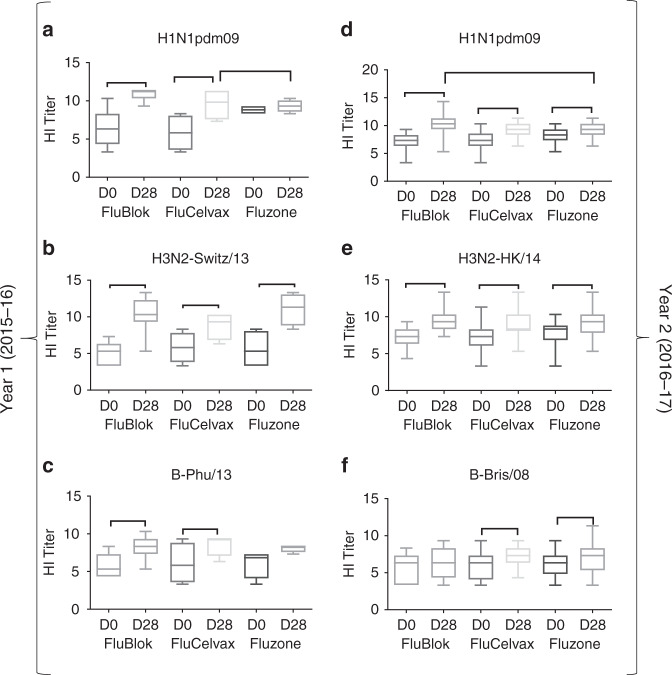
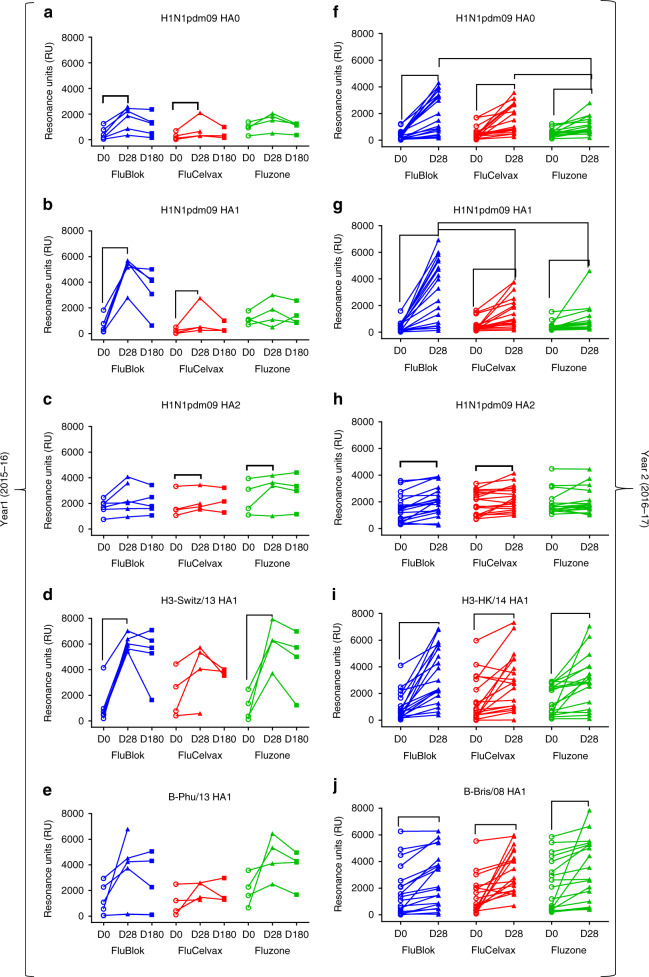
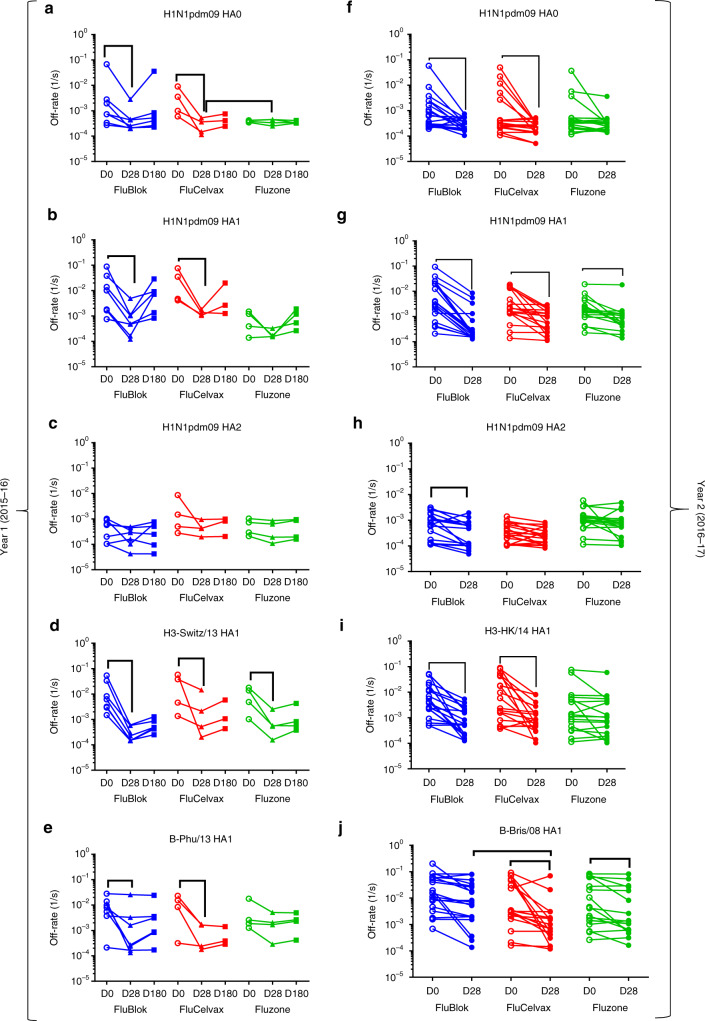
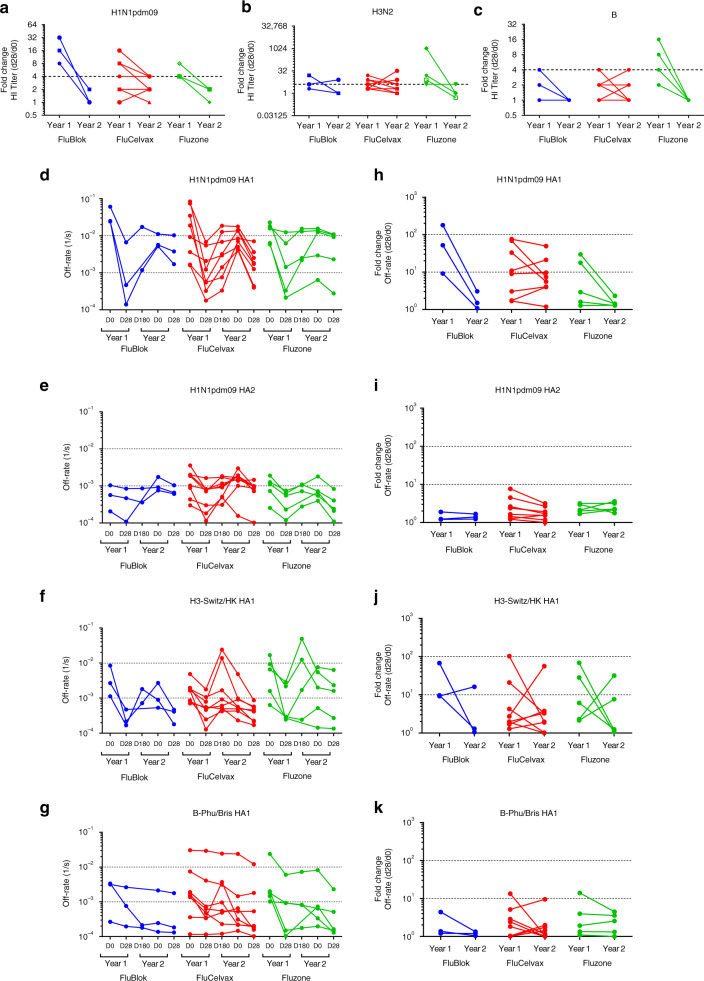
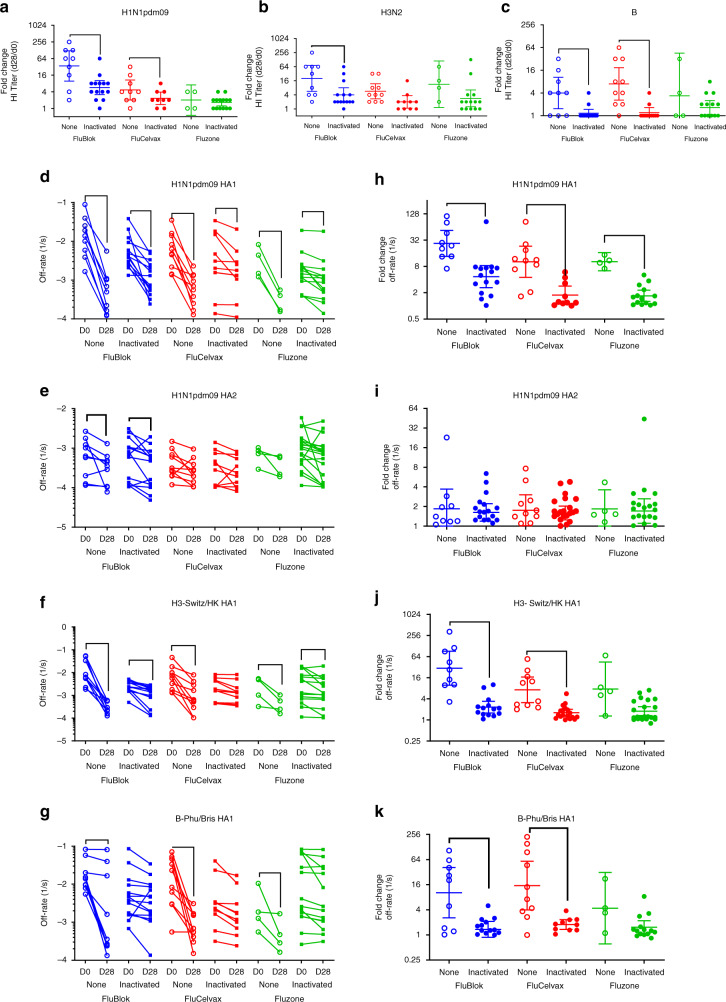
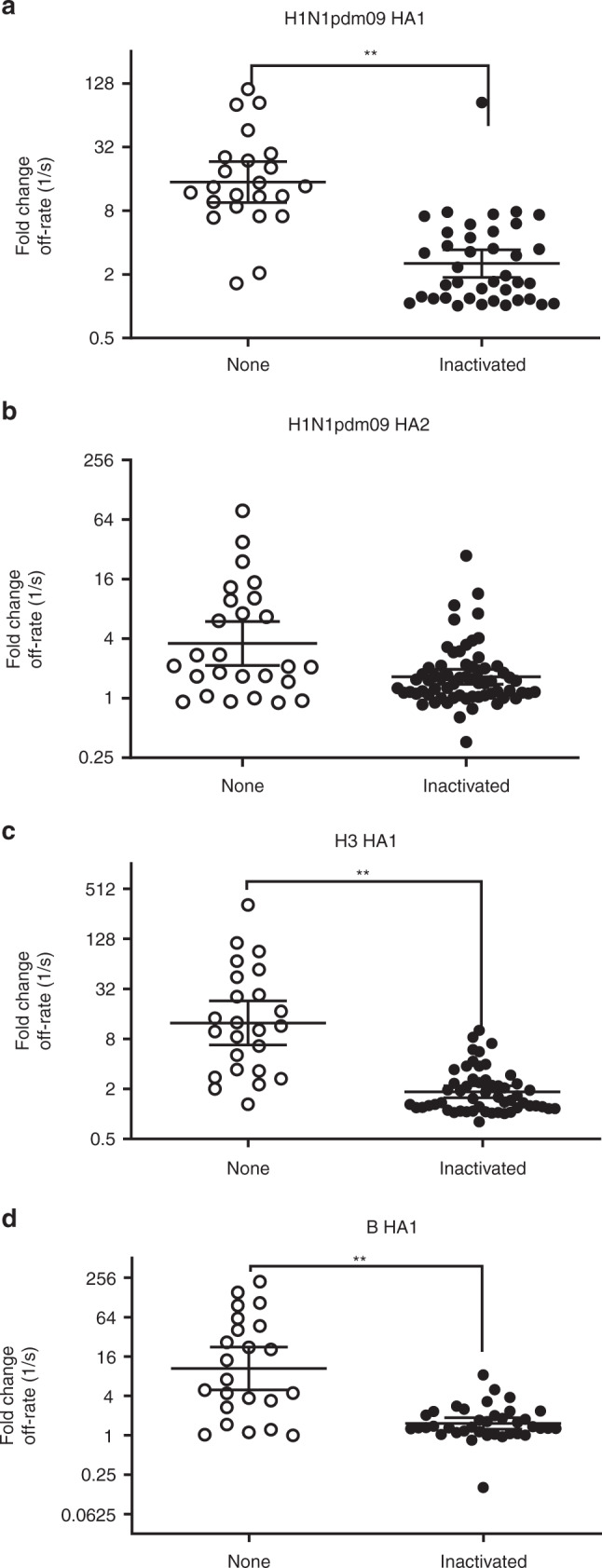
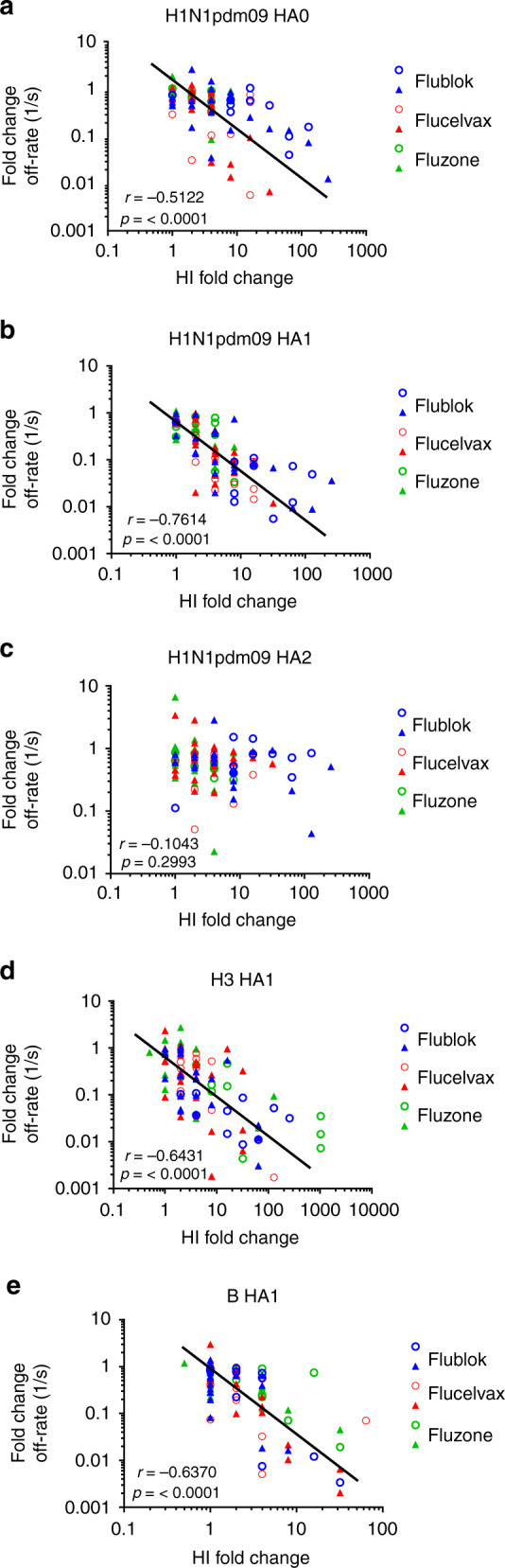
Several vaccines are approved in the United States for seasonal influenza vaccination every year. Here we compare the impact of repeat influenza vaccination on hemagglutination inhibition (HI) titers, antibody binding and affinity maturation to individual hemagglutinin (HA) domains, HA1 and HA2, across vaccine platforms. Fold change in HI and antibody binding to HA1 trends higher for H1N1pdm09 and H3N2 but not against B strains in groups vaccinated with FluBlok compared with FluCelvax and Fluzone. Antibody-affinity maturation occurs against HA1 domain of H1N1pdm09, H3N2 and B following vaccination with all vaccine platforms, but not against H1N1pdm09-HA2. Importantly, prior year vaccination of subjects receiving repeat vaccinations demonstrated reduced antibody-affinity maturation to HA1 of all three influenza virus strains irrespective of the vaccine platform. This study identifies an important impact of repeat vaccination on antibody-affinity maturation following vaccination, which may contribute to lower vaccine effectiveness of seasonal influenza vaccines in humans.
Overview
The claims and statistics of this paper haven’t been checked yet.
Free: it reads the open-access text and checks the first 5 claims that cite a source we can check. Create a free account to check every claim.
Integrity signals
Registry
Cites
Statistics
Figures
Verification
Claims the paper makes
The claims and statistics of this paper haven’t been checked yet.
Free: it reads the open-access text and checks the first 5 claims that cite a source we can check. Create a free account to check every claim.
Claims other papers make about this one
Each is checked against this paper’s own text: does it say what the citing paper says it does?
In the citing paper
“Recent work has shown adults have high H3N2 and B subtype memory due to prior exposure by vaccination or infection (Khurana et al., 2019).”
From Antibiotics-Driven Gut Microbiome Perturbation Alters Immunity to Vaccines in Humans (2019) · cites this paper as Khurana et al., 2019
Self-check
Percentages, sums and reported differences re-computed from the paper’s own numbers.
The self-check needs the paper’s full text.
Citations
Cites
1 retracted
Khurana, S., Verma, S., Verma, N., Crevar, C. J., Carter, D. M., Manischewitz, J., King, L. R., Ross, T. M., & Golding, H. (2010) · PLoS ONE · doi:10.1371/journal.pone.0011548 · Cited by 96
RetractedVictora, G. D., & Nussenzweig, M. C. (2012) · Annual Review of Immunology · doi:10.1146/annurev-immunol-020711-075032 · Cited by 1,878
Wiley, D. C., Wilson, I. A., & Skehel, J. J. (1981) · Nature · doi:10.1038/289373a0 · Cited by 1,615
Antibody Recognition of a Highly Conserved Influenza Virus Epitope
Ekiert, D. C., Bhabha, G., Elsliger, M.-A., Friesen, R. H. E., Jongeneelen, M., Throsby, M., Goudsmit, J., & Wilson, I. A. (2009) · Science · doi:10.1126/science.1171491 · Cited by 1,326
Throsby, M., van den Brink, E., Jongeneelen, M., Poon, L. L. M., Alard, P., Cornelissen, L., Bakker, A., Cox, F., van Deventer, E., Guan, Y., et al. (2008) · PLoS ONE · doi:10.1371/journal.pone.0003942 · Cited by 737
Zost, S. J., Parkhouse, K., Gumina, M. E., Kim, K., Diaz Perez, S., Wilson, P. C., Treanor, J. J., Sant, A. J., Cobey, S., & Hensley, S. E. (2017) · Proceedings of the National Academy of Sciences · doi:10.1073/pnas.1712377114 · Cited by 563
Self-citationVictora, G. D., Dominguez-Sola, D., Holmes, A. B., Deroubaix, S., Dalla-Favera, R., & Nussenzweig, M. C. (2012) · Blood · doi:10.1182/blood-2012-03-415380 · Cited by 411
High affinity germinal center B cells are actively selected into the plasma cell compartment
Phan, T. G., Paus, D., Chan, T. D., Turner, M. L., Nutt, S. L., Basten, A., & Brink, R. (2006) · The Journal of Experimental Medicine · doi:10.1084/jem.20061254 · Cited by 404
Khurana, S., Verma, N., Yewdell, J. W., Hilbert, A. K., Castellino, F., Lattanzi, M., Del Giudice, G., Rappuoli, R., & Golding, H. (2011) · Science Translational Medicine · doi:10.1126/scitranslmed.3002336 · Cited by 356
Ohmit, S. E., Thompson, M. G., Petrie, J. G., Thaker, S. N., Jackson, M. L., Belongia, E. A., Zimmerman, R. K., Gaglani, M., Lamerato, L., Spencer, S. M., et al. (2014) · Clinical Infectious Diseases · doi:10.1093/cid/cit736 · Cited by 343
Cited by
Antibiotics-Driven Gut Microbiome Perturbation Alters Immunity to Vaccines in Humans
Hagan, T., Cortese, M., Rouphael, N., Boudreau, C., Linde, C., Maddur, M. S., Das, J., Wang, H., Guthmiller, J., Zheng, N.-Y., et al. (2019) · Cell · doi:10.1016/j.cell.2019.08.010 · Cited by 572
“Recent work has shown adults have high H3N2 and B subtype memory due to prior exposure by vaccination or infection (Khurana et al., 2019).”
BackgroundSelf-citationTrombetta, C. M., Kistner, O., Montomoli, E., Viviani, S., & Marchi, S. (2022) · Vaccines · doi:10.3390/vaccines10050714 · Cited by 199
Who and when to vaccinate against influenza
Buchy, P., & Badur, S. (2020) · International Journal of Infectious Diseases · doi:10.1016/j.ijid.2020.02.040 · Cited by 126
Challenges of Making Effective Influenza Vaccines
Gouma, S., Anderson, E. M., & Hensley, S. E. (2020) · Annual Review of Virology · doi:10.1146/annurev-virology-010320-044746 · Cited by 106
“2A H3N2 viral strain and samples from the same cohort were unable to detect these differences (88).”
BackgroundRyu, S., & Cowling, B. J. (2020) · Cold Spring Harbor Perspectives in Medicine · doi:10.1101/cshperspect.a038356 · Cited by 146
“fusion of changes in antibody titer following vaccination versus infection (Chen et al. 2018; Khurana et al. 2019).”
BackgroundInfluentialInfluenza vaccination reveals sex dimorphic imprints of prior mild COVID-19
Sparks, R., Lau, W. W., Liu, C., Han, K. L., Vrindten, K. L., Sun, G., Cox, M., Andrews, S. F., Bansal, N., Failla, L. E., et al. (2023) · Nature · doi:10.1038/s41586-022-05670-5 · Cited by 93
Ravichandran, S., Lee, Y., Grubbs, G., Coyle, E. M., Klenow, L., Akasaka, O., Koga, M., Adachi, E., Saito, M., Nakachi, I., et al. (2021) · Science Advances · doi:10.1126/sciadv.abf2467 · Cited by 74
“Affinity maturation of spike-binding antibodies following acute SARS-CoV-2 infection in patients with COVID-19 To determine the antibody affinity maturation over time against different spike proteins/subdomains following virus infection, the dissociation kinetics (off-rate constants) of antigen-antibody complexes that…”
BackgroundMethodInfluentialSARS-CoV-2 immune repertoire in MIS-C and pediatric COVID-19
Ravichandran, S., Tang, J., Grubbs, G., Lee, Y., Pourhashemi, S., Hussaini, L., Lapp, S. A., Jerris, R. C., Singh, V., Chahroudi, A., et al. (2021) · Nature Immunology · doi:10.1038/s41590-021-01051-8 · Cited by 64
B Cell Responses against Influenza Viruses: Short-Lived Humoral Immunity against a Life-Long Threat
Guthmiller, J. J., Utset, H. A., & Wilson, P. C. (2021) · Viruses · doi:10.3390/v13060965 · Cited by 59
“Concordantly, de novo affinity maturation is blunted in subjects that are repeatedly vaccinated [147].”
BackgroundWild, K., Smits, M., Killmer, S., Strohmeier, S., Neumann‐Haefelin, C., Bengsch, B., Krammer, F., Schwemmle, M., Hofmann, M., Thimme, R., et al. (2021) · Nature Communications · doi:10.1038/s41467-021-27064-3 · Cited by 54
Dawood, F. S., Naleway, A. L., Flannery, B. L., Levine, M. Z., Murthy, K., Sambhara, S. R., Gangappa, S., Edwards, L., Ball, S. W., Grant, L. E., et al. (2021) · Clinical Infectious Diseases · doi:10.1093/cid/ciab566 · Cited by 53
“Although several recent trials have documented improved humoral immune responses to RIV4 compared to IIV4 in adults 18–64 years [17] and ≥65 years of age [18, 19], RIV4 and ccIIV4 have not been evaluated against IIV4 in highly influenza-vaccinated working-age adult populations in whom immune responses to influenza vac…”
BackgroundThe Nature of Immune Responses to Influenza Vaccination in High-Risk Populations
Wiggins, K., Smith, M. A., & Schultz‐Cherry, S. (2021) · Viruses · doi:10.3390/v13061109 · Cited by 55
“However, prior vaccination history may lead to decreased antibody affinity maturation to HA domains, resulting in decreased vaccine efficacy [43].”
BackgroundUnique features of a recombinant haemagglutinin influenza vaccine that influence vaccine performance
Arunachalam, B., Post, P. L., & Rudin, D. (2021) · npj Vaccines · doi:10.1038/s41541-021-00403-7 · Cited by 52
“A recent study by Khurana et al.60 further demonstrated, using surface plasmon resonance technology, that the observed broader specificity of antibodies induced by RIV4 may be linked to the presence of unique epitopes on HA060.”
BackgroundBao, W., Li, Y., Wang, T., Li, X., He, J., Wang, Y., Wen, F., & Chen, J. (2021) · Ageing Research Reviews · doi:10.1016/j.arr.2021.101337 · Cited by 49
Rockman, S. P., Laurie, K., Ong, C., Rajaram, S., McGovern, I., Tran, V., & Youhanna, J. E. (2022) · Vaccines · doi:10.3390/vaccines11010052 · Cited by 45
“Some authors have proposed that th simpler glycan structures may improve antibody responses and cross-protection from heterologous strains; however, these studies have not c are icit f antigen during vaccination (egg-based vaccine [Fluzone®, fi] c t i e 15 μg per strain, MDCK cell-based vac ine [Flucelvax] contained 1…”
BackgroundMethodResultInfluentialKhurana, S., Ravichandran, S., Hahn, M. A., Coyle, E. M., Stonier, S. W., Zak, S. E., Kindrachuk, J., Davey, R. T., Dye, J. M., & Chertow, D. S. (2020) · Cell Host & Microbe · doi:10.1016/j.chom.2020.01.001 · Cited by 41
“Technically, since antibodies are bivalent, the proper term for their binding to multivalent antigens like viruses is avidity, but here we use the term affinity throughout since we measured primarily monovalent interactions (Khurana et al., 2019).”
BackgroundRepeated vaccination and ‘vaccine exhaustion’: relevance to the COVID-19 crisis
Majumder, M. A. A., & Razzaque, M. S. (2022) · Expert Review of Vaccines · doi:10.1080/14760584.2022.2071705 · Cited by 36
“which may lower vaccine effectiveness of seasonal influenza vaccines in humans [5].”
BackgroundFactors influencing the immunogenicity of influenza vaccines
Wen, S., Wu, Z., Zhong, S., Mao, L., & Shu, Y. (2021) · Human Vaccines & Immunotherapeutics · doi:10.1080/21645515.2021.1875761 · Cited by 36
“Surender Khurana et al.136 also confirmed that, regardless of the vaccine platform, the antibodyaffinity maturation to HA of all three influenza virus strains can be reduced by repeated annual influenza vaccination.”
BackgroundPratama, N. R., Wafa, I. A., Budi, D. S., Sutanto, H., Asmarawati, T. P., Barlian Effendi, G., & Wungu, C. D. K. (2022) · Vaccines · doi:10.3390/vaccines10122180 · Cited by 30
“Moreover, a robust immune response and multiple infections or vaccinations can elicit strong immunoglobulin G (IgG)-binding affinity as a result of an affinity maturation process [48,49].”
BackgroundLiu, F., Gross, F. L., Joshi, S., Gaglani, M., Naleway, A. L., Murthy, K., Groom, H. C., Wesley, M. G., Edwards, L., Grant, L., et al. (2024) · Nature Communications · doi:10.1038/s41467-023-44551-x · Cited by 30
Wang, J., Deng, C., Liu, M., Liu, Y., Li, L., Huang, Z., Shang, L., Jiang, J., Li, Y., Mo, R., et al. (2022) · Nature Communications · doi:10.1038/s41467-022-34633-7 · Cited by 46
Kimble, J. B., Brand, M. W., Kaplan, B. S., Gauger, P., Coyle, E. M., Chilcote, K., Khurana, S., & Vincent, A. L. (2022) · Journal of Virology · doi:10.1128/jvi.01725-21 · Cited by 26
“The rHA1 and rHA2 domains from the H1N1 A/California/7/2009 HA was coupled to a GLC sensor chip with amine coupling with 500 resonance units (RU) in the test flow cells (16, 56).”
MethodMoritzky, S. A., Richards, K. A., Glover, M. A., Krammer, F., Chaves, F. A., Topham, D. J., Branche, A. R., Nayak, J. L., & Sant, A. J. (2022) · The Journal of Infectious Diseases · doi:10.1093/infdis/jiac068 · Cited by 28
Immune interference in effectiveness of influenza and COVID-19 vaccination
Xie, Y., Tian, X., Zhang, X., Yao, H., & Wu, N. (2023) · Frontiers in Immunology · doi:10.3389/fimmu.2023.1167214 · Cited by 32
“2016-2017 (73) A/(H1N1)pdm09- California/7, A/H3N2-Hong Kong/4801/2014, B/Victoria- Brisbane/60/2008 A/H3N2, A (H1N1)pdm09, B/Yamagata, B/ Victoria 43 (2855) NE 36 (18-50) 72 (47-85) NE”
BackgroundInfluentialOkoli, G. N., Racovitan, F., Abdulwahid, T., Hyder, S. K., Lansbury, L., Righolt, C. H., Mahmud, S. M., & Nguyen‐Van‐Tam, J. S. (2021) · Open Forum Infectious Diseases · doi:10.1093/ofid/ofab069 · Cited by 29
“glutinin 1 (HA1) domain of all 3 influenza virus strains irrespective of the vaccine platform [98].”
BackgroundHenry, C., Palm, A.-K. E., Utset, H. A., Huang, M., Ho, I. Y., Zheng, N., Fitzgerald, T. F., Neu, K. E., Chen, Y.-Q., Krammer, F., et al. (2019) · Journal of Virology · doi:10.1128/jvi.01150-19 · Cited by 23
“Additionally, a recent study comparing all three vaccine platforms demonstrated that fold change in HAI as well as antibody binding to the HA1 domain (head) tended to be higher in Flublok than in Flucelvax and Flublok (36).”
BackgroundRavichandran, S., Grubbs, G., Tang, J., Lee, Y., Huang, C., Golding, H., & Khurana, S. (2021) · Science Advances · doi:10.1126/sciadv.abi6533 · Cited by 24
“S9), as previously described ( 11 , 12 , 19 , 20 ).”
Fuentes, S., Hahn, M. A., Chilcote, K., Chemaly, R. F., Shah, D. P., Ye, X., Avadhanula, V., Piedra, P. A., Golding, H., & Khurana, S. (2019) · The Journal of Infectious Diseases · doi:10.1093/infdis/jiz608 · Cited by 19
“Off-rate constants were determined from 2 independent SPR runs [29, 30].”
BackgroundMethodTsuji, I., Dominguez, D., Egan, M. A., & Dean, H. J. (2021) · The Journal of Infectious Diseases · doi:10.1093/infdis/jiab064 · Cited by 17
“Correlation between neutralizing antibodies and affinity maturation has been described for human immunodeficiency virus (HIV) and influenza antibodies [41, 42].”
BackgroundHuman Antibody Repertoire following Ebola Virus Infection and Vaccination
Fuentes, S., Ravichandran, S., Coyle, E. M., Klenow, L., & Khurana, S. (2020) · iScience · doi:10.1016/j.isci.2020.100920 · Cited by 16
Tang, J., Lee, Y., Ravichandran, S., Grubbs, G., Huang, C., Stauft, C. B., Wang, T., Golding, B., Golding, H., & Khurana, S. (2022) · Annals of the Rheumatic Diseases · doi:10.1136/annrheumdis-2022-222115 · Cited by 18
Regan, A. K., Wesley, M. G., Gaglani, M., Kim, S. S., Edwards, L., Murthy, K., Jeddy, Z., Naleway, A. L., Flannery, B. L., Dawood, F. S., et al. (2022) · Influenza and Other Respiratory Viruses · doi:10.1111/irv.12988 · Cited by 17
Shaping Neonatal Immunization by Tuning the Delivery of Synergistic Adjuvants via Nanocarriers
Barman, S., Borriello, F., Brook, B., Pietrasanta, C., Leon, M. D., Sweitzer, C., Menon, M., van Haren, S. D., Soni, D., Saito, Y., et al. (2022) · ACS Chemical Biology · doi:10.1021/acschembio.2c00497 · Cited by 18
Sherman, A. C., Lai, L., Bower, M., Natrajan, M. S., Huerta, C., Karmali, V., Kleinhenz, J., Xu, Y., Rouphael, N., & Mulligan, M. J. (2020) · Vaccines · doi:10.3390/vaccines8040663 · Cited by 21
“Another mechanism proposed describes reduced serum antibody affinity maturation following vaccination, which has been shown in regards to the H1N1 HA1 domain [37].”
BackgroundWang, J., Deng, C., Liu, M., Liu, Y., Li, L., Huang, Z., Shang, L., Jiang, J., Li, Y., Mo, R., et al. (2022) · medRxiv · doi:10.1101/2022.02.19.22271215 · Cited by 16
Nie, J., Zhou, Y.-F., Ding, F., Liu, X., Yao, X., Xu, L., Chang, Y., Li, Z., Wang, Q., Li, Z., et al. (2024) · International Journal of Biological Macromolecules · doi:10.1016/j.ijbiomac.2024.129259 · Cited by 15
Zhang, J., Zhang, L., Li, J., Ma, J., Wang, Y., Sun, Y., Ma, C., Duan, W., Wang, Q., Yang, P., et al. (2024) · Vaccine · doi:10.1016/j.vaccine.2024.126662 · Cited by 15
Vatzia, E., Allen, E. R., Manjegowda, T., Morris, S. J., McNee, A., Martini, V., Kaliath, R., Ulaszewska, M., Boyd, A. C., Paudyal, B., et al. (2021) · Frontiers in Immunology · doi:10.3389/fimmu.2021.763912 · Cited by 16
“Furthermore, prior vaccinations can have a significant negative impact on antibody binding, antibody affinity maturation, and hemagglutinin inhibition responses to H1N1, H3N2, and B strains by inactivated vaccine platforms (5, 45).”
BackgroundVaccination against influenza viruses annually: Renewing or narrowing the protective shield?
Matz, H. C., & Ellebedy, A. H. (2025) · The Journal of Experimental Medicine · doi:10.1084/jem.20241283 · Cited by 16
Gil-Manso, S., Alonso, R., Catalán, P., Sánchez-Arcilla, I., Marzola, M., Correa‐Rocha, R., Pion, M., Muñóz, P., & Gregorio Marañón Microbiology-ID COVID-19 Study Group (2022) · Frontiers in Cellular and Infection Microbiology · doi:10.3389/fcimb.2022.1035155 · Cited by 19
“However, the administration of this third dose is controversial, since three doses in less than one year could cause the hyperstimulation of the immune system, which could be detrimental to immune memory by inducing cellular exhaustion, as has been described for repeated influenza vaccinations inducing declining prote…”
BackgroundBellusci, L., Grubbs, G., Sait, S., Yonker, L. M., Randolph, A. G., Novak, T., Kobayashi, T., Overcoming COVID−19 Investigators, & Khurana, S. (2023) · Nature Communications · doi:10.1038/s41467-023-43152-y · Cited by 12
“The puri fi ed recombinant SARS-CoV-2 RBD proteins were captured to a Ni-NTA sensor chip with 500 resonance units (RU) in the test fl ow channels 14,20,21,27 .”
Immune imprinting of SARS-CoV-2 responses: changing first immune impressions
Torresi, J., & Edeling, M. A. (2024) · mSphere · doi:10.1128/msphere.00758-23 · Cited by 14
“On the other hand, vaccination with seasonal vaccine can be associated with a progressive loss of vaccine efficacy especially in individuals over the age of 65 years and with increasing numbers of previous vaccinations (20–22).”
BackgroundMatsuura, T., Fukushima, W., Nakagama, Y., Kido, Y., Kase, T., Kondo, K., Kaku, N., Matsumoto, K., Suita, A., Mukai, E., et al. (2024) · Scientific Reports · doi:10.1038/s41598-024-57931-0 · Cited by 14
“A potential mechanism includes the attenuation of the immune response when the same vaccine is administered multiple times over a short period of time 35,36 .”
BackgroundComplexity of Viral Epitope Surfaces as Evasive Targets for Vaccines and Therapeutic Antibodies
Miller, N. L., Raman, R., Clark, T., & Sasisekharan, R. (2022) · Frontiers in Immunology · doi:10.3389/fimmu.2022.904609 · Cited by 15
“Likewise, hosts continually evolve new (in response to reinfection or additional vaccination) or matured (resulting from accumulation of somatic mutations within memory B cells) antibodies to neutralize viruses bearing mutated or homologous epitopes (18–20), wherein these responses are modulated by antigenic exposure…”
BackgroundFactors affecting the immunogenicity of influenza vaccines in human
Xu, Q., Wei, H., Wen, S., Chen, J., Lei, Y., Cheng, Y., Huang, W., Wang, D., & Shu, Y. (2023) · BMC Infectious Diseases · doi:10.1186/s12879-023-08158-3 · Cited by 15
“[17] indicated that repeated vaccination negatively affected antibody binding, antibody affinity maturation, and hemagglutination inhibition responses to H1N1, H3N2, and B strains manufactured by three different vaccine platforms.”
BackgroundBhatnagar, N., Kim, K., Subbiah, J., Muhammad-Worsham, S., Park, B. R., Liu, R., Grovenstein, P. B., Wang, B., & Kang, S. (2023) · Vaccines · doi:10.3390/vaccines11071209 · Cited by 11
“There are controversial studies reporting that annual repeat influenza vaccination does not improve protective immune responses [11,12], lowers vaccine efficacy against mismatched strains [13], and fails to increase antibody affinity maturation in humans [12,14,15].”
BackgroundTang, P., Cui, E.-H., Chang, W.-C., Chen, Y. Z., Wang, H., Du, E., & Wang, J. (2022) · Viruses · doi:10.3390/v14112443 · Cited by 11
Khurana, S., Grubbs, G., Ravichandran, S., Cluff, E., Kim, J., Kuehne, A. I., Zak, S. E., Dye, J. M., Lutwama, J. J., & Herbert, A. S. (2024) · Nature Communications · doi:10.1038/s41467-024-51021-5 · Cited by 11
Tang, J., Grubbs, G., Lee, Y., Wu, H., Luke, T. C., Egland, K. A., Bausch, C. L., Sullivan, E. J., & Khurana, S. (2022) · The Journal of Infectious Diseases · doi:10.1093/infdis/jiac031 · Cited by 10
“SARS-CoV-2 antibody-binding kinetics by SPR was described in previous publications from our laboratory [19, 21, 23, 27].”
MethodModel-based inference of neutralizing antibody avidities against influenza virus
Linnik, J., Syedbasha, M., Hollenstein, Y., Halter, J. P., Egli, A., & Stelling, J. (2022) · PLoS Pathogens · doi:10.1371/journal.ppat.1010243 · Cited by 10
A surface plasmon resonance based approach for measuring response to pneumococcal vaccine
Garrido-Jareño, M., Puchades‐Carrasco, L., Orti-Pérez, L., Sahuquillo-Arce, J. M., Meyer-García, M. D. C., Mollar‐Maseres, J., Lloret-Sos, C., Gil-Brusola, A., López-Hontangas, J. L., Beltrán-Garrido, J. M., et al. (2021) · Scientific Reports · doi:10.1038/s41598-021-85958-0 · Cited by 10
Fox, A., Sánchez‐Ovando, S., Carolan, L. A., Hadiprodjo, A. J., Chen, Y., Ho, F. C. S., Cheng, S. M. S., Thompson, M. G., Iuliano, A. D., Levine, M. Z., et al. (2025) · Clinical Infectious Diseases · doi:10.1093/cid/ciaf060 · Cited by 9
“A study using surface plasmon resonance off-rates as a measure of antibody affinity for HA1 subunit proteins indicated a sharp, but short-lived, rise in affinity maturation after first-time vaccination, but substantially less affinity maturation after repeat vaccination [33].”
Smith, C. L., Bednarchik, B., Aung, H., Wilk, D. J., Boxer, R. S., Daddato, A. E., Wilson, B. M., Gravenstein, S., & Canaday, D. H. (2023) · The Journal of Infectious Diseases · doi:10.1093/infdis/jiad071 · Cited by 7
Fowlkes, A., Peretz, A., Greenberg, D., Hirsch, A., Martin, E. T., Levine, M. Z., Edwards, L. J., Radke, S., Lauring, A. S., Ferdinands, J. M., et al. (2024) · International Journal of Infectious Diseases · doi:10.1016/j.ijid.2024.107260 · Cited by 7
“Previous studies have suggested that increased RIV4 immunogenicity may result from the higher antigen dose in the vaccine, a broader vaccine-induced antibody response to the purified recombinant HA, or improved affinity of antibodies elicited by recombinant HA to viral HA [25,29].”
Repeated Seasonal Influenza Vaccination: How Much Is Too Much of a Good Thing?
Stacey, H. D., & Miller, M. S. (2019) · The Journal of Infectious Diseases · doi:10.1093/infdis/jiz434 · Cited by 7
Li, M., Guo, P., Song, H., Chen, C., Zhou, H., & Pan, T. (2025) · Animal Diseases · doi:10.1186/s44149-025-00187-6 · Cited by 7
“…hemagglutinin (rHA)-based trivalent vaccine produced in Sf9 insect cells, and Flucelvax, a cell culture-based IIV manufactured using Madin–Darby Canine Kidney (MDCK) cells, offer some advantages (Barr et al. 2018; Buhler and Ramharter 2019; Cox et al. 2015; Khurana et al. 2019; Lamb 2019).”
Park, B. R., Jeeva, S., Kim, K., Kwon, Y., Oh, J., Kim, M. C., Shin, C. H., Seong, B. L., & Kang, S. (2021) · Virology · doi:10.1016/j.virol.2021.12.003 · Cited by 7
Influenza vaccination influencing level of specific humoral immunity in healthy individuals
Krivitskaya, V. Z., Kuznecova, E. V., Maiorova, V., Petrova, E. R., Соминина, А. А., & Danilenko, D. (2022) · Russian Journal of Infection and Immunity · doi:10.15789/2220-7619-ivi-1750 · Cited by 6
Dose Effects of Recombinant Adenovirus Immunization in Rodents
Weaver, E. A. (2019) · Vaccines · doi:10.3390/vaccines7040144 · Cited by 9
“A recent study that examined the response to repetitive vaccination in humans found that there was a significant reduction in hemagglutination inhibition titers after the second immunization with an identical vaccine [47].”
BackgroundRepeat Influenza Vaccination Effects in 2021/22 and 2022/23 in a Community-Based Cohort in Hong Kong
Zhong, J., Zhong, S., Touyon, L., Ho, F. C. S., Au, N. Y. M., Cheng, S. M. S., Ip, D., Peiris, M. J. S., Martin, E. T., Cobey, S. E., et al. (2026) · The Journal of Infectious Diseases · doi:10.1093/infdis/jiag051 · Cited by 6
“…the best protective measure against influenza, a growing body of evidence has reported that recipients of repeated influenza vaccination can experience attenuated antibody responses compared to first-time vaccinees in some years, albeit repeat vaccinees tend to possess higher baseline titers [3–9].”
Lin, P., Hsiao, P., Pan, C., Liu, M., Wang, J., Ching, C., Wu, F., Lin, Y., Yang, Y., Hsu, L., et al. (2023) · European Journal of Immunology · doi:10.1002/eji.202350525 · Cited by 6
“Accumulating evidence has suggested that repeated annual vaccination is associated with a reduced antibody response to the influenza vaccine [3–7].”
BackgroundPekarek, M. J., Madapong, A., Wiggins, J., & Weaver, E. A. (2025) · International Journal of Molecular Sciences · doi:10.3390/ijms26041538 · Cited by 8
Vesikari, T., Ramsey, K. P., Pitisuttithum, P., Capeding, R. Z., Heijnen, E., Sawlwin, D. C., Oberyé, J., Zhang, B., & Smolenov, I. V. (2020) · Vaccine · doi:10.1016/j.vaccine.2020.10.036 · Cited by 5
Impact of Pre-Existing Immunity and Age on Antibody Responses to Live Attenuated Influenza Vaccine
Hoen, L., Lartey, S. L., Zhou, F., Pathirana, R. D., Krammer, F., Mohn, K. G.-I., Cox, R. J., & Brokstad, K. A. (2024) · Vaccines · doi:10.3390/vaccines12080864 · Cited by 6
Kaplan, B. S., Souza, C. K., Kimble, J. B., Brand, M. W., Anderson, T. K., Gauger, P. C., Perez, D. R., & Baker, A. L. V. (2024) · Vaccine · doi:10.1016/j.vaccine.2024.126574 · Cited by 3
Hygiene, J. O. P. M. A. (2023) · PubMed Central · doi:10.15167/2421-4248/jpmh2022.63.4s1 · Cited by 6
Pedersen, K. S., Kristensen, C. S., Kvisgaard, L. K., & Larsen, L. E. (2021) · Vaccines · doi:10.3390/vaccines9101057 · Cited by 4
“The mechanism behind this is not known, although it may be due to the induction of anergy as seen in some human studies with repeated influenza virus vaccines [18,30,31] or other basic immunological features such as variability of MHC class II structures, etc.”
BackgroundResultZhang, T., Han, Y., Huang, W., Wei, H., Zhao, Y., Shu, L., Guo, Y., Ye, B., Zhou, J., & Liu, J. (2024) · Journal of Medical Virology · doi:10.1002/jmv.29743 · Cited by 3
Liaw, K., Konrath, K. M., Trachtman, A. R., Tursi, N. J., Gary, E. N., Livingston, C., Flowers, K., Chu, J. D., Hojecki, C. E., Laenger, N., et al. (2025) · Vaccine · doi:10.1016/j.vaccine.2025.127231 · Cited by 3
Versatile and Scalable Nanoparticle Vaccine as a Scaffold Against Newly Emerging Influenza Viruses
Pardini, A., Rothen, D. A., Krenger, P. S., Vogt, A. S., Josi, R., Liu, X., Tārs, K., Köpf, M., Vogel, M., & Bachmann, M. F. (2025) · Viruses · doi:10.3390/v17091165 · Cited by 3
“These findings indicate that both administration methods elicit functionally mature antibody responses, implying that affinity maturation enhances antibody avidity and functional quality [33].”
Hu, W., Sjoberg, P. A., DeMarcus, L. S., & Robbins, A. S. (2021) · Vaccines · doi:10.3390/vaccines10010058 · Cited by 4
“[28] observed a significant negative impact of repeat vaccination on antibody affinity maturation, which may contribute to lower VE of influenza vaccine.”
BackgroundDam Age Differentially Affects Immune Response of Her Calf to Bovine Respiratory Disease Vaccination
Reddout, C. C., Chase, C. C. L., Beck, P. A., & Salak‐Johnson, J. L. (2023) · Agriculture · doi:10.3390/agriculture14010068 · Cited by 3
Superspreading and Heterogeneity in Epidemics
Kroy, K. (2023) · Springer eBooks · doi:10.1007/978-3-031-05946-9_23 · Cited by 3
Long Prime–Boost Interval and Heightened Anti-GD2 Antibody Response to Carbohydrate Cancer Vaccine
Cheung, I. Y., Mauguen, A., Modak, S. I., Basu, E. M., Feng, Y., Kushner, B. H., & Cheung, N. V. (2024) · Vaccines · doi:10.3390/vaccines12060587 · Cited by 2
Cerda, C., Martínez-Valdebenito, C., Barriga, F., Contreras, M., Vidal, M., Moreno, R., Claverie, X., Contreras, P., Huenuman, L., García‐Salum, T., et al. (2020) · Revista chilena de infectología · doi:10.4067/s0716-10182020000200138 · Cited by 2
Inactivated and Recombinant Influenza Vaccines
Patel, M. M., Grohskopf, L. A., Sambhara, S. R., Belser, J. A., Katz, J. M., & Fry, A. M. (2023) · Elsevier eBooks · doi:10.1016/b978-0-323-79058-1.00033-5 · Cited by 5
Tawfik, A., Kawaguchi, T., Takahashi, M., Setoh, K., Yamaguchi, I., Tabara, Y., Steen, K. V., Sakuntabhai, A., & Matsuda, F. (2023) · Expert Review of Vaccines · doi:10.1080/14760584.2023.2262563 · Cited by 3
“Clinical trials reported contra-dicting evidence about reduced antibody response associated with repeated vaccination [11,12].”
BackgroundAstakhova, E. A., Baranov, K. O., Shilova, N. V., Polyakova, S. M., Zuev, E. V., Poteryaev, D. A., Taranin, A. V., & Filatov, A. V. (2024) · Vaccines · doi:10.3390/vaccines12121362 · Cited by 2
“Recently, for influenza vaccines, this schedule was shown to possibly adversely affect the affinity maturation [44,59,60] and lead to a reduction in the breadth of neutralization.”
Blyth, D. M., Liang, Z., Williams, M., & Murray, C. K. (2022) · Vaccine · doi:10.1016/j.vaccine.2021.12.031 · Cited by 2
Overview of Vaccine Drug Delivery System
(2020) · Journal of Science and Technology · doi:10.46243/jst.2020.v5.i3.pp147-159 · Cited by 2
Praphasiri, P., Prasert, K., Shrestha, M., Ditsungnoen, D., Chittaganpitch, M., Chawalchitiporn, S., Dawood, F. S., Sirilak, S., & Mott, J. A. (2023) · PLoS ONE · doi:10.1371/journal.pone.0279962 · Cited by 1
Ohrnberger, S., zu Natrup, C. M., Clever, S., Schünemann, L.-M., Armando, F., Ciurkiewicz, M., Baumgärtner, W., Kalodimou, G., Sutter, G., Tscherne, A., et al. (2025) · Journal of General Virology · doi:10.1099/jgv.0.002180 · Cited by 1
“The lower titres of neutralizing antibodies could indicate suboptimal B cell affinity maturation in the weeks following the LD booster, potentially limiting sustained antibody production [30, 31].”
Wan, X., Guan, M., Balamalaliyage, P., Chen, H., Prasai, K., Alcala, A., Driver, J. P., Olivier, A. K., Gu, W., Frymire, C., et al. (2026) · Nature Communications · doi:10.1038/s41467-026-70202-y · Cited by 5
Ashraf, M., Boivin, W. A., Nguyen‐Van‐Tam, J. S., Nolan, T. M., Stein, A. N., & Russell, C. A. (2026) · Expert Review of Vaccines · doi:10.1080/14760584.2026.2667732 · Cited by 2
Housel, L. A., Beltran, T., Spooner, C. E., Collins, L., Ewing, D. F., Williams, M., & McClenathan, B. M. (2020) · The Journal of Allergy and Clinical Immunology In Practice · doi:10.1016/j.jaip.2020.08.058
从街居制到社区制:城市基层治理模式的转变——以“北京市鲁谷街道社区管理体制改革”为个案
陈雪莲 (2009) · Huadong jingji guanli
Improving year-round protection against influenza infection in the tropics
Young, B. E. (2021) · DR-NTU (Nanyang Technological University) · doi:10.32657/10356/155395
Pawelec, G. (2020) · Faculty Opinions – Post-Publication Peer Review of the Biomedical Literature · doi:10.3410/f.736551116.793573749
Adhikari, E. H., & Spong, C. Y. (2022) · JAMA Network Open · doi:10.1001/jamanetworkopen.2022.26444
Choi, J., Ayoub, G., Ham, J., Huh, Y., Choi, S. E., Hwang, Y.-K., Noh, J. Y., Kim, S., Song, J. Y., Kim, E. S., et al. (2023) · Immune Network · doi:10.4110/in.2023.23.e18
“Most of the participants were medical personnel who received repeated influenza vaccinations annually (mostly with trivalent vaccines previously) that may induced more immunogenicity especially against type A antigen (29).”
BackgroundSeiler, P., Kaplan, B. S., Brice, D. C., Duan, S., Li, L., McGargill, M. A., Lee, N., Lin, C.-Y., Keating, R., Govorkova, E. A., et al. (2025) · Vaccine · doi:10.1016/j.vaccine.2025.127311
Oda, K., Danko, J., Villasante, E. F., Bergmann‐Leitner, E. S., Lee, R. J. Y., & Wijayalath, W. (2025) · Frontiers in Immunology · doi:10.3389/fimmu.2025.1663763
Chandra, K., Das, A. K., Upadhyay, B., Uddin, A., Hussain, S. M., Islam, F., Alvi, Y., Gautam, R., Kaur, J., Khan, S., et al. (2025) · Cureus · doi:10.7759/cureus.100037 · Cited by 2
Influenza Vaccine Immunogenicity in Hemodialysis Patients
Shurygina, A.-P. S., Romanovskaya-Romanko, E., Krivitskaya, V. Z., Sergeeva, M. V., Buzitskaya, J., Vasilyev, K., Shuklina, M. A., Vishnevskii, K. A., Dmitry, S., Aleksey, T., et al. (2026) · Vaccines · doi:10.3390/vaccines14010063
Impact of respiratory viral infections on tumor progression in Non-Small-Cell Lung Carcinoma (NSCLC)
Angrini, M. (2021) · theses.fr (ABES) · doi:10.70675/9c027d88z3675z44adza870z1802353e674a · Cited by 2
Hirsiger, J. R., Scarascia, S., Recher, M., Bantug, G. R., & Berger, C. T. (2026) · npj Vaccines · doi:10.1038/s41541-026-01477-x · Cited by 1
“Studies in humans have shown that following repeated immunization with the fl u vaccine, af fi nity maturation is limited and often completed within 4 weeks 57,58 but can extend over months 59 .”
Wang, W., Sun, Y., Liu, Q., Xia, Y., Wang, J., Hu, M., Kong, M., He, J., Gao, R., & Gao, Y. (2026) · Virologica Sinica · doi:10.1016/j.virs.2026.08.007
“Additional factors, including age (Frasca and Blomberg, 2020; Liu et al., 2021), sex (Engler et al., 2008; Furman et al., 2014), adjuvant use (Clark et al., 2009; Jackson et al., 2012), and prior infection history (Xie et al., 2017; Khurana et al., 2019), also influence vaccine effectiveness.”
Sergeeva, M. V., Kudar, P. A., Desheva, Y. A., Romanovskaya-Romanko, E., Krivitskaya, V. Z., Buzitskaya, J., Stukova, M., Kiseleva, I., & Lioznov, D. A. (2026) · Vaccines · doi:10.3390/vaccines14090800
“Prior vaccination may reduce antibody affinity maturation to the hemagglutinin (HA) head of the current vaccine strain [7].”
mRNA-based seasonal influenza vaccines: an overview of immunogenicity, efficacy, and safety
Domnich, A., & Orsi, A. (2026) · Frontiers in Immunology · doi:10.3389/fimmu.2026.1965512
Rani, R., Upadhyay, A., & Tomar, S. (2026) · Methods in molecular biology · doi:10.1007/978-1-0716-5496-5_17
Metadata
- Authors
- Khurana, S., Hahn, M., Coyle, E. M., King, L. R., Lin, T.-L., Treanor, J., Sant, A., & Golding, H.
- Affiliations
- Center for Biologics Evaluation and Research (US)
- University of Rochester Medicine (US)
- Corresponding author
- Khurana, Surender
- Venue
- Nature Communications
- Published
- 2019-07-26
- Volume
- 10
- Issue
- 1
- Pages
- 3338-3338
- ISSN
- 2041-1723 (ISSN-L)
- PMC
- PMC6659679
- OpenAlex
- W2966564986
- Cited by
- 101
- References
- 51
- Citations by year
- 2026: 10 · 2025: 10 · 2024: 12 · 2023: 14 · 2022: 19 · 2021: 19 · 2020: 11 · 2019: 5
- FWCI
- 10.47
- Type
- journal article
- Language
- en
- Open access
- gold
- doi.org
- Licence
- cc-by
- creativecommons.org/licenses/by/4.0 (tdm)
- creativecommons.org/licenses/by/4.0 (vor)
- Locations
- Nature Communications (publishedVersion, cc-by)
- PubMed Central (publishedVersion, cc-by)
- PubMed (publishedVersion)
- RePEc: Research Papers in Economics (submittedVersion)
- DOAJ (DOAJ: Directory of Open Access Journals) (submittedVersion, cc-by-sa)
- DOAJ (DOAJ: Directory of Open Access Journals) (submittedVersion)
- Funders
- U.S. Department of Health & Human Services | NIH | National Institute of Allergy and Infectious Diseases (CEIRS Contract No. HHSN272201400005C)
- Topics
- Health Sciences › Medicine › Epidemiology › Influenza Virus Research Studies
- Life Sciences › Biochemistry, Genetics and Molecular Biology › Molecular Biology › vaccines and immunoinformatics approaches
- Health Sciences › Medicine › Epidemiology › Respiratory viral infections research
- Keywords
- affinity maturation, hemagglutination inhibition, Fluzone, H1N1pdm09, H3N2, influenza B, vaccine effectiveness
- MeSH terms
- Adolescent, Adult, Antibodies, Viral, Antibody Affinity, Child, Child, Preschool, Female, Hemagglutination Inhibition Tests, Humans, Infant, Influenza, Human, Influenza Vaccines, Male, Middle Aged, Vaccination, Hemagglutinin Glycoproteins, Influenza Virus, Influenza A Virus, H1N1 Subtype, Influenza A Virus, H3N2 Subtype, Young Adult
About these checks
Registry, retraction, Cites and statistics results are computed, not judged, with one exception: a printed reference that no index lists is read once by a model before it counts as a citation error. Claims are extracted by a model and kept only when their quote appears verbatim in the text; each cited source is then checked, with a model’s help, for whether it says what the claim relies on. Those verdicts can be wrong — read the claim’s quote and the cited source before relying on one.
Statistics and arithmetic are recomputed, not judged.
Confidence bands are shown only for fields calibrated on our annotated test set. None is calibrated yet, so no band is shown.
What counts as a claim ›How we measure confidence ›How we check this ›
Are you an author, or do you see a problem with this page? Request a review
Data sources
Bibliographic data: Semantic Scholar, OpenAlex, Crossref.
Contains information from the Semantic Scholar Academic Graph Datasets, made available under the ODC Attribution License (ODC-BY 1.0).
Semantic Scholar’s data is described in: Kinney, R., et al. (2023). The Semantic Scholar Open Data Platform. arXiv:2301.10140.
