

The DOI matches its Crossref record; 40 of the 40 references it cites were found in a registry or an index.
Gut microbiota confers host resistance to obesity by metabolizing dietary polyunsaturated fatty acids
Open accessAbstract
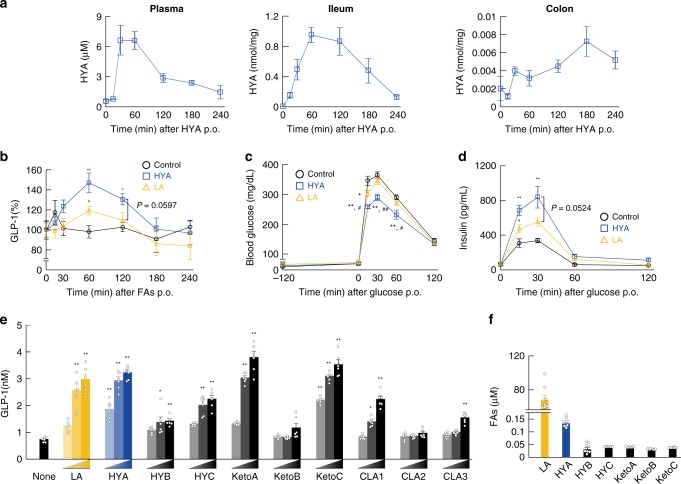
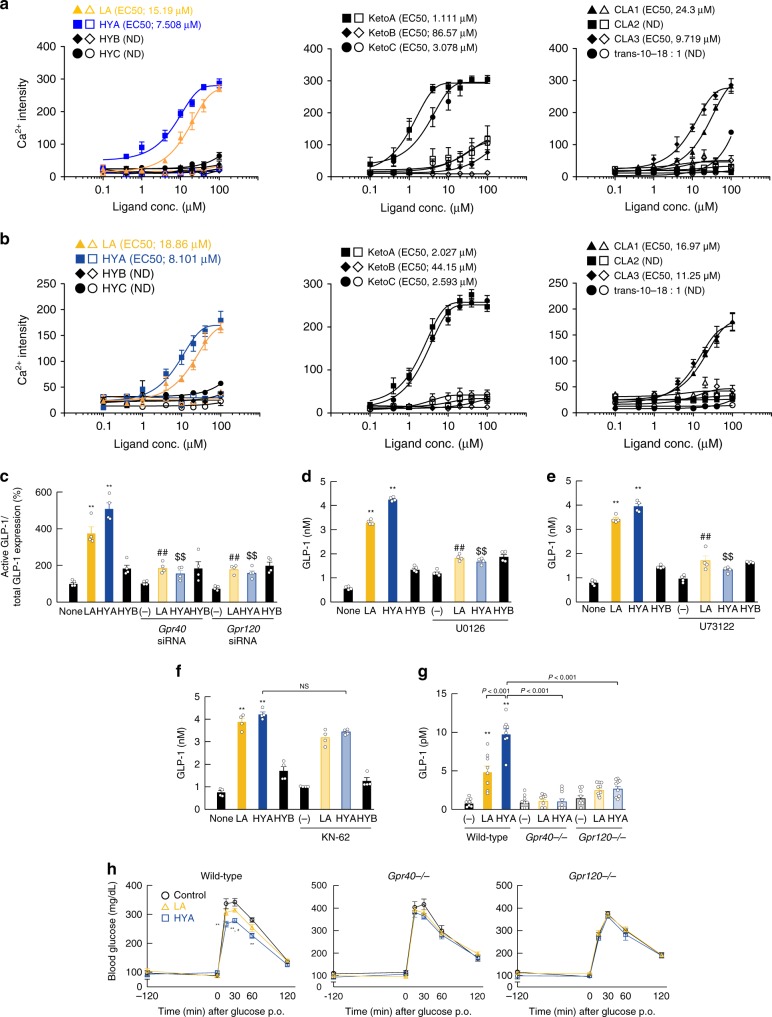
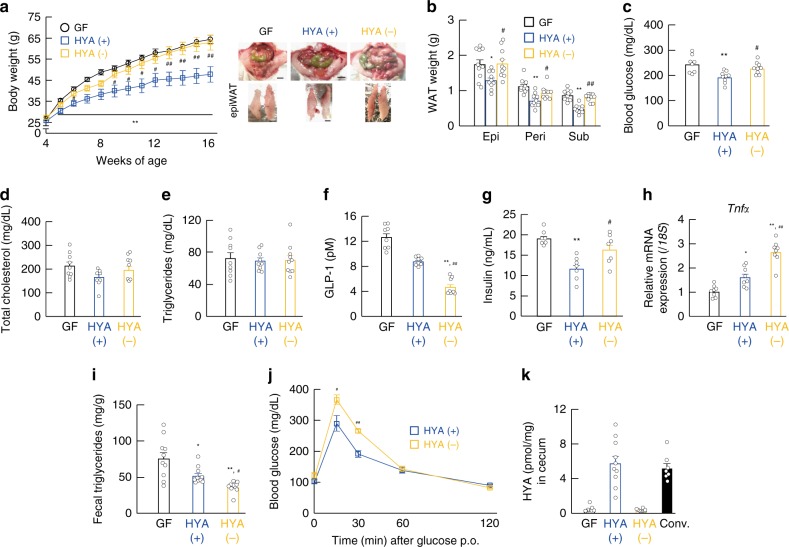
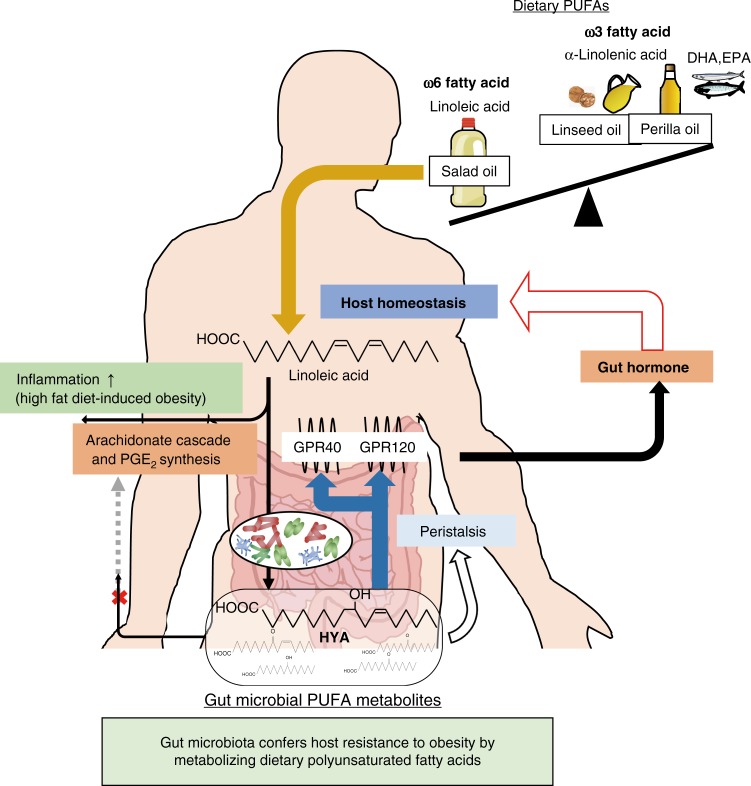
Gut microbiota mediates the effects of diet, thereby modifying host metabolism and the incidence of metabolic disorders. Increased consumption of omega-6 polyunsaturated fatty acid (PUFA) that is abundant in Western diet contributes to obesity and related diseases. Although gut-microbiota-related metabolic pathways of dietary PUFAs were recently elucidated, the effects on host physiological function remain unclear. Here, we demonstrate that gut microbiota confers host resistance to high-fat diet (HFD)-induced obesity by modulating dietary PUFAs metabolism. Supplementation of 10-hydroxy- cis -12-octadecenoic acid (HYA), an initial linoleic acid-related gut-microbial metabolite, attenuates HFD-induced obesity in mice without eliciting arachidonic acid-mediated adipose inflammation and by improving metabolic condition via free fatty acid receptors. Moreover, Lactobacillus -colonized mice show similar effects with elevated HYA levels. Our findings illustrate the interplay between gut microbiota and host energy metabolism via the metabolites of dietary omega-6-FAs thereby shedding light on the prevention and treatment of metabolic disorders by targeting gut microbial metabolites.
Overview
The claims and statistics of this paper haven’t been checked yet.
Run the check — free, no account needed. It reads the open-access text and checks the sources it cites.
Integrity signals
Registry
Cites
Statistics
Figures
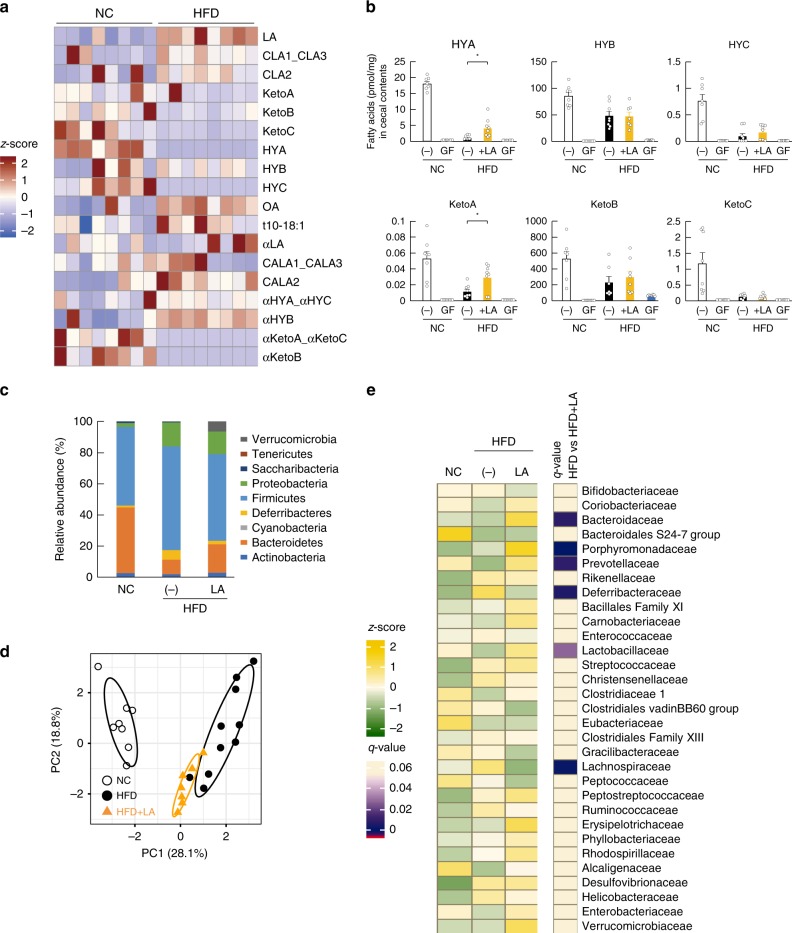
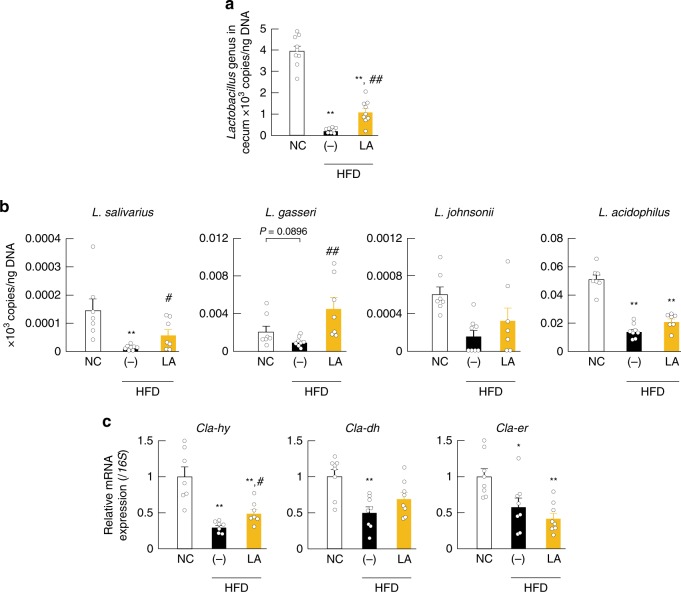
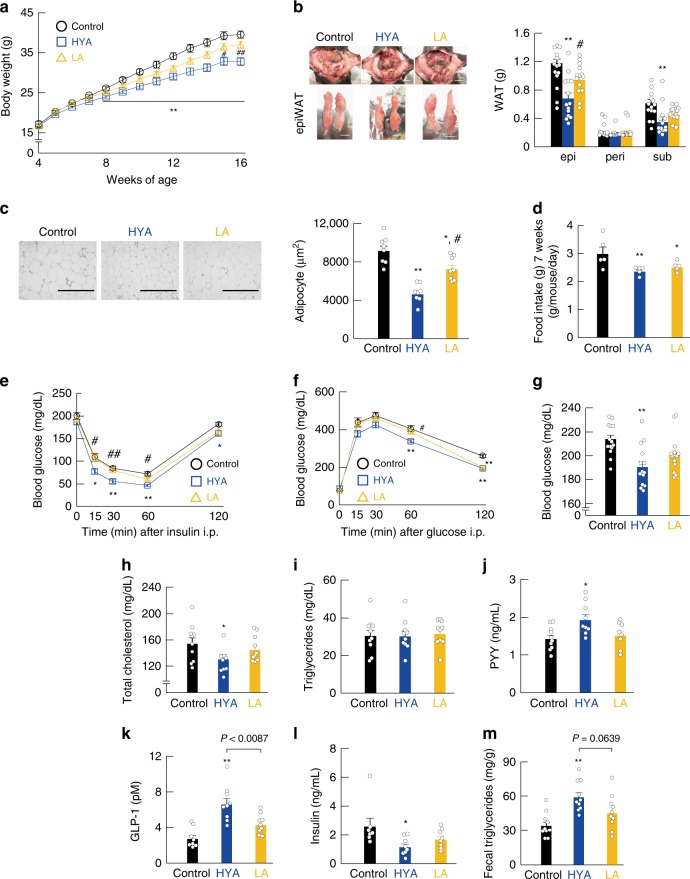
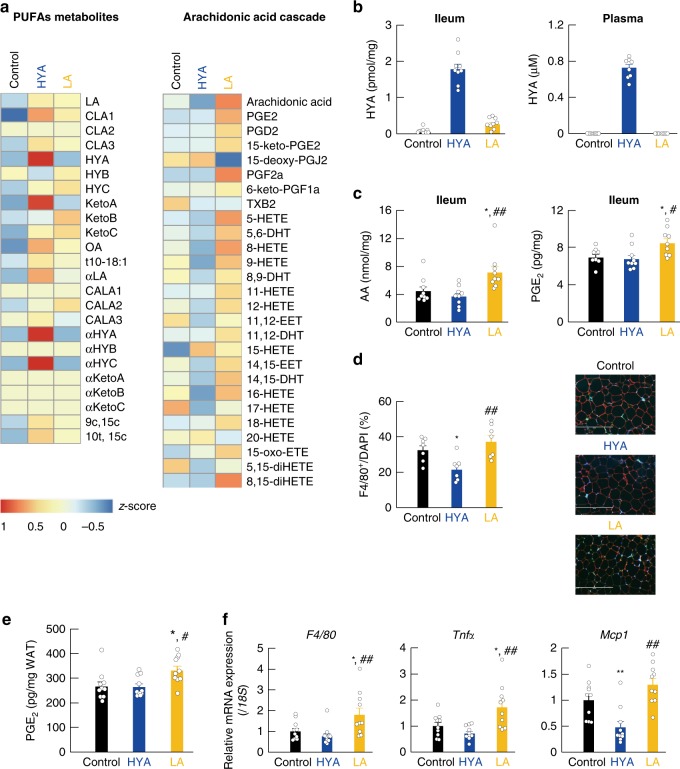
Verification
Claims the paper makes
The claims and statistics of this paper haven’t been checked yet.
Run the check — free, no account needed. It reads the open-access text and checks the sources it cites.
Claims other papers make about this one
Each is checked against this paper’s own text: does it say what the citing paper says it does?
In the citing paper
“The secretion of GLP-1 is modulated by the gut microbiota”
From Microbiota–gut–brain axis and its therapeutic applications in neurodegenerative diseases (2024) · cites this paper as [437]
Self-check
Percentages, sums and reported differences re-computed from the paper’s own numbers.
The self-check needs the paper’s full text.
Citations
Cites
An obesity-associated gut microbiome with increased capacity for energy harvest
Turnbaugh, P. J., Ley, R. E., Mahowald, M. A., Magrini, V., Mardis, E. R., & Gordon, J. I. (2006) · Nature · doi:10.1038/nature05414 · Cited by 12,444
Human gut microbes associated with obesity
Ley, R. E., Turnbaugh, P. J., Klein, S., & Gordon, J. I. (2006) · Nature · doi:10.1038/4441022a · Cited by 8,785
A core gut microbiome in obese and lean twins
Turnbaugh, P. J., Hamady, M., Yatsunenko, T., Cantarel, B. L., Duncan, A., Ley, R. E., Sogin, M. L., Jones, W. J., Roe, B. A., Affourtit, J. P., et al. (2009) · Nature · doi:10.1038/nature07540 · Cited by 7,823
Mechanisms linking obesity to insulin resistance and type 2 diabetes
Kahn, S. E., Hull, R. L., & Utzschneider, K. M. (2006) · Nature · doi:10.1038/nature05482 · Cited by 5,448
Turnbaugh, P. J., Bäckhed, F., Fulton, L., & Gordon, J. I. (2008) · Cell Host & Microbe · doi:10.1016/j.chom.2008.02.015 · Cited by 2,915
Oh, D. Y., Talukdar, S., Bae, E. J., Imamura, T., Morinaga, H., Fan, W., Li, P., Lu, W. J., Watkins, S. M., & Olefsky, J. M. (2010) · Cell · doi:10.1016/j.cell.2010.07.041 · Cited by 2,428
An Increase in the Omega-6/Omega-3 Fatty Acid Ratio Increases the Risk for Obesity
Simopoulos, A. P. (2016) · Nutrients · doi:10.3390/nu8030128 · Cited by 1,673
Free fatty acids regulate gut incretin glucagon-like peptide-1 secretion through GPR120
Hirasawa, A., Tsumaya, K., Awaji, T., Katsuma, S., Adachi, T., Yamada, M., Sugimoto, Y., Miyazaki, S., & Tsujimoto, G. (2004) · Nature Medicine · doi:10.1038/nm1168 · Cited by 1,580
Self-citationFree fatty acids regulate insulin secretion from pancreatic β cells through GPR40
Itoh, Y., Kawamata, Y., Harada, M., Kobayashi, M., Fujii, R., Fukusumi, S., Ogi, K., Hosoya, M., Tanaka, Y., Uejima, H., et al. (2003) · Nature · doi:10.1038/nature01478 · Cited by 1,538
Kimura, I., Ozawa, K., Inoue, D., Imamura, T., Kimura, K., Maeda, T., Terasawa, K., Kashihara, D., Hirano, K., Tani, T., et al. (2013) · Nature Communications · doi:10.1038/ncomms2852 · Cited by 1,512
Self-citation
Cited by
Sorted by citations
Microbiota–gut–brain axis and its therapeutic applications in neurodegenerative diseases
Loh, J. S., Mak, W. Q., Tan, L. K. S., Ng, C. X., Chan, H. H., Yeow, S. H., Foo, J. B., Ong, Y. S., How, C. W., & Khaw, K. Y. (2024) · Signal Transduction and Targeted Therapy · doi:10.1038/s41392-024-01743-1 · Cited by 1,193
Liu, B., Liu, X., Liang, Z., & Wang, J. (2021) · World Journal of Gastroenterology · doi:10.3748/wjg.v27.i25.3837 · Cited by 662
The role of the gut microbiome and its metabolites in metabolic diseases
Wu, J., Wang, K., Wang, X., Pang, Y., & Jiang, C. (2020) · Protein & Cell · doi:10.1007/s13238-020-00814-7 · Cited by 592
“In addition, a study in 2019 reported that the gut microbiota confers host resistance to HFD-induced obesity by modulating dietary polyunsaturated fatty acid (PUFA) metabolism by producing the gut microbial metabolite 10-hydroxy-cis-12-octadecenoic acid (HYA) (Miyamoto et al., 2019).”
BackgroundArroyave-Ospina, J. C., Wu, Z., Geng, Y., & Moshage, H. J. (2021) · Antioxidants · doi:10.3390/antiox10020174 · Cited by 560
“It has also been demonstrated that mice with transferred gut microbiota from calorie-restricted mice show resistance to obesity and hepatic lipid accumulation when challenged with an HFD [77], which can be explained in part by the role of gut microbiota in the metabolism of PUFAs from dietary sources [78].”
BackgroundGut microbiome lipid metabolism and its impact on host physiology
Brown, E., Clardy, J., & Xavier, R. J. (2023) · Cell Host & Microbe · doi:10.1016/j.chom.2023.01.009 · Cited by 490
Metadata
- Authors
- Miyamoto, J., Igarashi, M., Watanabe, K., Karaki, S.-I., Mukouyama, H., Kishino, S., Li, X., Ichimura, A., Irie, J., Sugimoto, Y., Mizutani, T., Sugawara, T., Miki, T., Ogawa, J., Drucker, D. J., Arita, M., Itoh, H., & Kimura, I.
- Affiliations
- Japan Agency for Medical Research and Development (JP)
- Tokyo University of Agriculture and Technology (JP)
- Shizuoka University (JP)
- Kyoto University (JP)
- Keio University (JP)
- Chiba University (JP)
- Mount Sinai Hospital (CA)
- Corresponding author
- Kimura, Ikuo
- ORCID
- Venue
- Nature Communications
- Published
- 2019-09-05
- Volume
- 10
- Issue
- 1
- Pages
- 4007-4007
- ISSN
- 2041-1723 (ISSN-L)
- PMC
- PMC6728375
- OpenAlex
- W2971602650
- Cited by
- 392
- References
- 40
- Citations by year
- 2026: 46 · 2025: 60 · 2024: 65 · 2023: 62 · 2022: 64 · 2021: 51 · 2020: 40 · 2019: 1
- FWCI
- 12.91
- Type
- journal article
- Language
- en
- Open access
- gold
- doi.org
- Locations
- Nature Communications (publishedVersion, cc-by)
- Europe PMC (PubMed Central) (publishedVersion, cc-by)
- PubMed Central (publishedVersion, cc-by)
- PubMed (publishedVersion)
- RePEc: Research Papers in Economics (submittedVersion)
- DOAJ (DOAJ: Directory of Open Access Journals) (submittedVersion, cc-by-sa)
- DOAJ (DOAJ: Directory of Open Access Journals) (submittedVersion)
- Funders
- MEXT | Japan Society for the Promotion of Science (JP15H05344, JP16H01355)
- Japan Agency for Medical Research and Development (JP18gm1010007)
- Topics
- Life Sciences › Biochemistry, Genetics and Molecular Biology › Molecular Biology › Gut microbiota and health
- Health Sciences › Nursing › Nutrition and Dietetics › Fatty Acid Research and Health
- Health Sciences › Medicine › Endocrinology, Diabetes and Metabolism › Adipokines, Inflammation, and Metabolic Diseases
- Keywords
- gut microbiota, obesity, omega-6 fatty acids, high-fat diet, linoleic acid metabolites, Lactobacillus, free fatty acid receptors, adipose tissue inflammation, arachidonic acid, energy metabolism, metabolic disorders
- MeSH terms
- Gastrointestinal Microbiome, Adipose Tissue, Animals, Cell Line, Dietary Fats, Unsaturated, Energy Metabolism, Fatty Acids, Unsaturated, Humans, Inflammation, Lactobacillus, Metabolic Diseases, Mice, Inbred C57BL, Obesity, Oleic Acids, Dietary Supplements, Linoleic Acid, Models, Animal, Fatty Acids, Omega-6, Mice, Diet, High-Fat, Diet, Western
About these checks
Registry, retraction, Cites and statistics results are computed, not judged, with one exception: a printed reference that no index lists is read once by a model before it counts as a citation error. Claims are extracted by a model and kept only when their quote appears verbatim in the text; each cited source is then checked, with a model’s help, for whether it says what the claim relies on. Those verdicts can be wrong — read the claim’s quote and the cited source before relying on one.
Statistics and arithmetic are recomputed, not judged.
Confidence bands are shown only for fields calibrated on our annotated test set. None is calibrated yet, so no band is shown.
What counts as a claim ›How we measure confidence ›How we check this ›
Are you an author, or do you see a problem with this page? Request a review
