

ImmGen report: sexual dimorphism in the immune system transcriptome
Open accessThe DOI matches its Crossref record; 77 of the 77 references it cites were found in a registry or an index.
Abstract
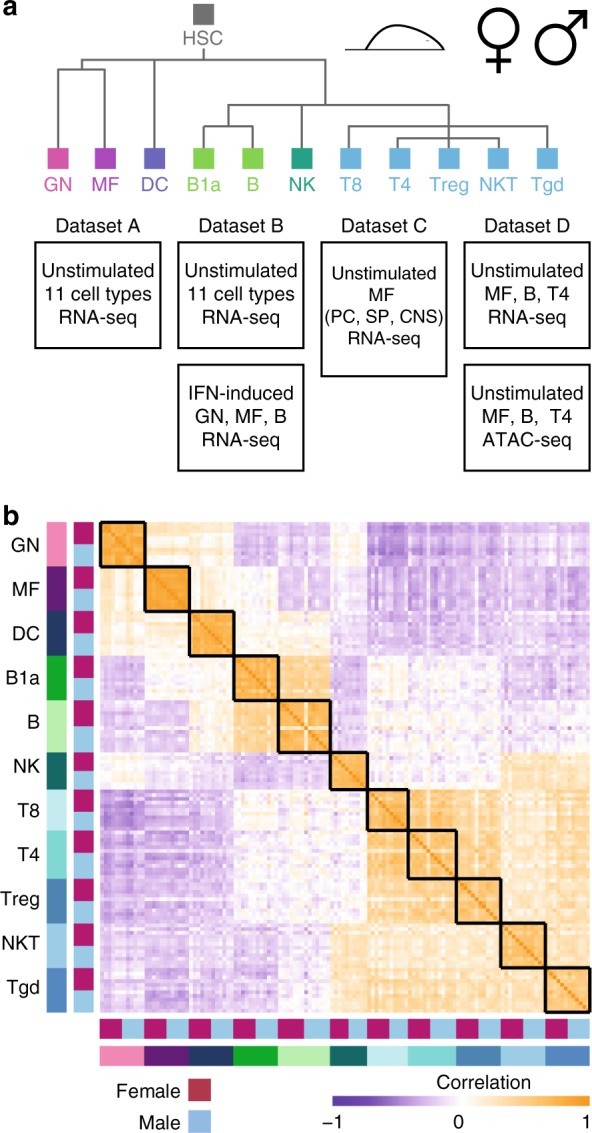
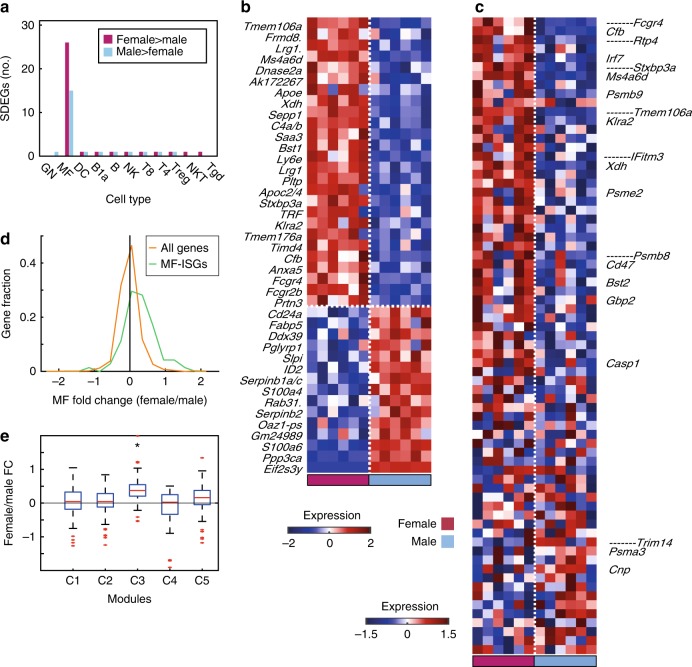
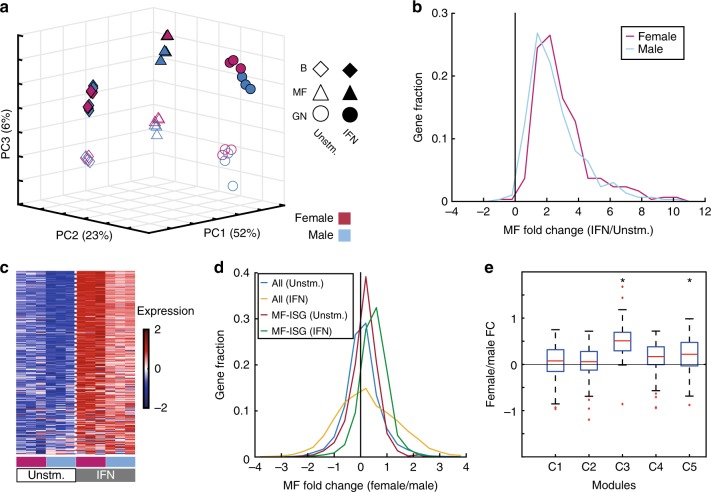
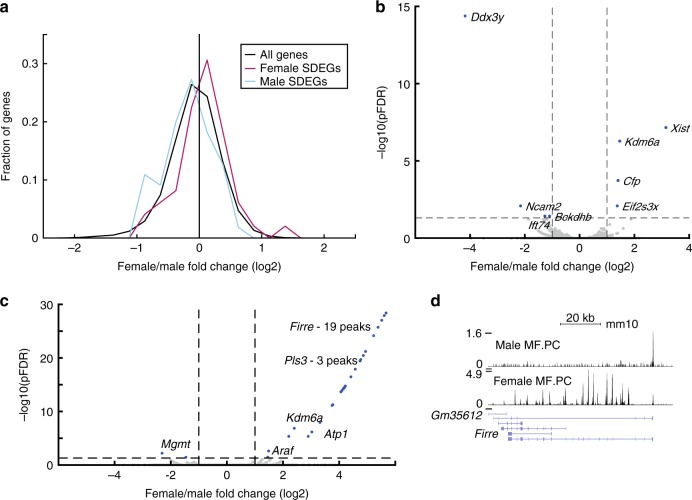
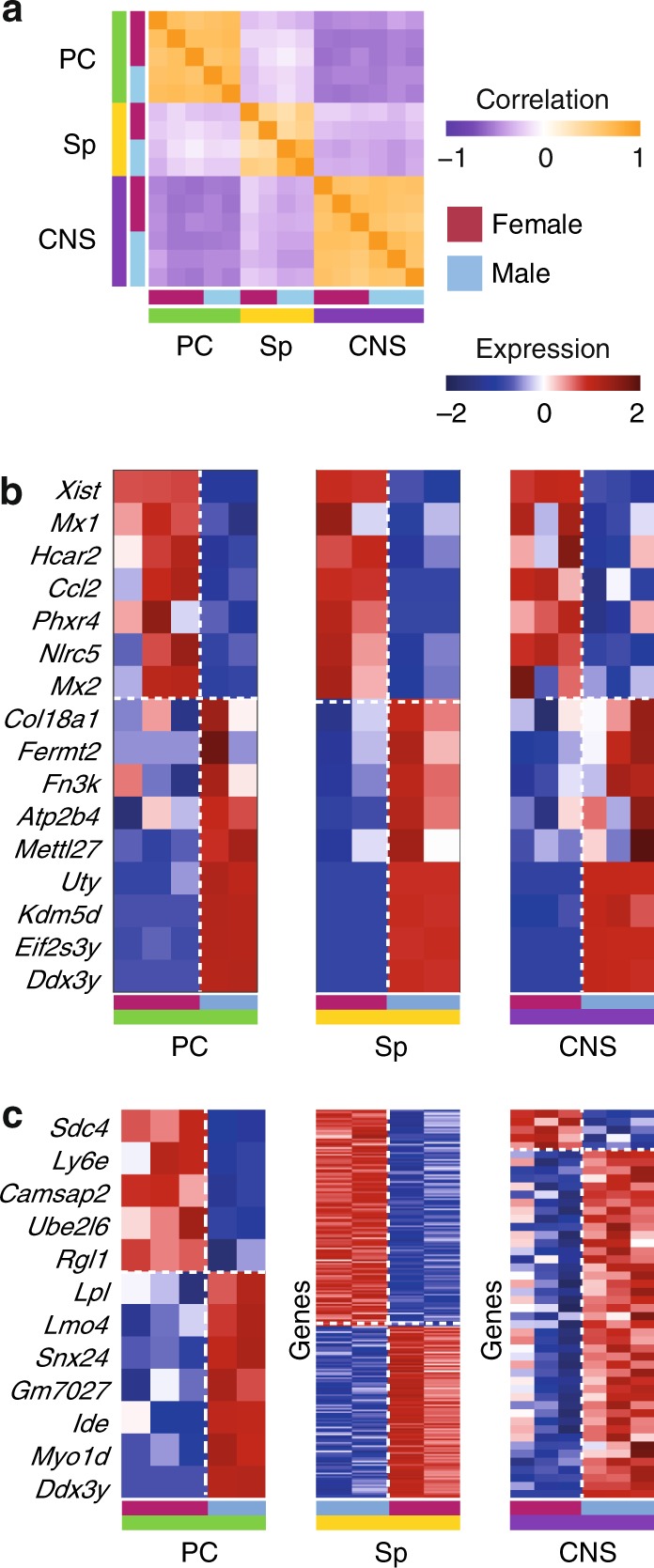
Sexual dimorphism in the mammalian immune system is manifested as more frequent and severe infectious diseases in males and, on the other hand, higher rates of autoimmune disease in females, yet insights underlying those differences are still lacking. Here we characterize sex differences in the immune system by RNA and ATAC sequence profiling of untreated and interferon-induced immune cell types in male and female mice. We detect very few differentially expressed genes between male and female immune cells except in macrophages from three different tissues. Accordingly, very few genomic regions display differences in accessibility between sexes. Transcriptional sexual dimorphism in macrophages is mediated by genes of innate immune pathways, and increases after interferon stimulation. Thus, the stronger immune response of females may be due to more activated innate immune pathways prior to pathogen invasion.
Overview
The claims and statistics of this paper haven’t been checked yet.
Free: it reads the open-access text and checks the first 5 claims that cite a source we can check. Create a free account to check every claim.
Integrity signals
Registry
Cites
Statistics
Figures
Verification
Claims the paper makes
The claims and statistics of this paper haven’t been checked yet.
Free: it reads the open-access text and checks the first 5 claims that cite a source we can check. Create a free account to check every claim.
Claims other papers make about this one
Each is checked against this paper’s own text: does it say what the citing paper says it does?
The source backs part of the claim, not all of it — or backs it for a different population, condition or comparison.
In the citing paper
“IFN-associated genes, including IFN regulatory factor (Irf1), are enriched in naive female brain microglia42,43 and subsequently are found to be more responsive to IFN stimulation.42,44”
From Characterization of the ocular inflammatory response to AAV reveals divergence by sex and age (2025) · cites this paper as [44]
Experimental — accuracy not yet measured
Self-check
Percentages, sums and reported differences re-computed from the paper’s own numbers.
The self-check needs the paper’s full text.
Citations
Cites
Controlling the False Discovery Rate: A Practical and Powerful Approach to Multiple Testing
Benjamini, Y., & Hochberg, Y. (1995) · Journal of the Royal Statistical Society Series B: Statistical Methodology · doi:10.1111/j.2517-6161.1995.tb02031.x · Cited by 109,482
The Sequence Alignment/Map format and SAMtools
Li, H., Handsaker, B., Wysoker, A., Fennell, T., Ruan, J., Homer, N., Marth, G., Abecasis, G., Durbin, R., & 1000 Genome Project Data Processing Subgroup (2009) · Bioinformatics · doi:10.1093/bioinformatics/btp352 · Cited by 62,041
Fast gapped-read alignment with Bowtie 2
Langmead, B., & Salzberg, S. L. (2012) · Nature Methods · doi:10.1038/nmeth.1923 · Cited by 56,400
Subramanian, A., Tamayo, P., Mootha, V. K., Mukherjee, S., Ebert, B. L., Gillette, M. A., Paulovich, A., Pomeroy, S. L., Golub, T. R., Lander, E. S., et al. (2005) · Proceedings of the National Academy of Sciences · doi:10.1073/pnas.0506580102 · Cited by 53,625
BEDTools: a flexible suite of utilities for comparing genomic features
Quinlan, A. R., & Hall, I. M. (2010) · Bioinformatics · doi:10.1093/bioinformatics/btq033 · Cited by 27,437
HISAT: a fast spliced aligner with low memory requirements
Kim, D., Langmead, B., & Salzberg, S. L. (2015) · Nature Methods · doi:10.1038/nmeth.3317 · Cited by 24,112
Trapnell, C., Roberts, A., Goff, L., Pertea, G., Kim, D., Kelley, D. R., Pimentel, H., Salzberg, S. L., Rinn, J. L., & Pachter, L. (2012) · Nature Protocols · doi:10.1038/nprot.2012.016 · Cited by 12,116
Statistical significance for genomewide studies
Storey, J. D., & Tibshirani, R. (2003) · Proceedings of the National Academy of Sciences · doi:10.1073/pnas.1530509100 · Cited by 9,692
Molecular signatures database (MSigDB) 3.0
Liberzon, A., Subramanian, A., Pinchback, R., Thorvaldsdóttir, H., Tamayo, P., & Mesirov, J. P. (2011) · Bioinformatics · doi:10.1093/bioinformatics/btr260 · Cited by 7,111
Full-length RNA-seq from single cells using Smart-seq2
Picelli, S., Faridani, O. R., Björklund, Å. K., Winberg, G., Sagasser, S., & Sandberg, R. (2014) · Nature Protocols · doi:10.1038/nprot.2014.006 · Cited by 4,137
Cited by
Items 101–200 of 277
Peskar, D., Kuret, T., Lakota, K., & Erman, A. (2023) · International Journal of Molecular Sciences · doi:10.3390/ijms24065758 · Cited by 17
Neuroinflammation at single cell level: What is new?
Brandão, W. N., de Oliveira, M. G., Andreoni, R., Nakaya, H. I., Farias, A. S., & Peron, J. P. S. (2020) · Journal of Leukocyte Biology · doi:10.1002/jlb.3mr0620-035r · Cited by 15
Duarte, C. L., Yamada, C., Garcia, C., Akkaoui, J., Ho, A., Nichols, F. C., & Movilă, A. (2022) · Journal of Cellular and Molecular Medicine · doi:10.1111/jcmm.17299 · Cited by 14
The role of endogenous Smad7 in regulating macrophage phenotype following myocardial infarction
Li, J., Li, R., Tuleta, I., Hernández, S. C., Humeres, C. D., Hanna, A., Chen, B., & Frangogiannis, N. G. (2022) · The FASEB Journal · doi:10.1096/fj.202101956rr · Cited by 16
Andrade, L. A., Gomes, D. S., Lima, S. V. M. A., Duque, A. M., Melo, M. S., Góes, M. A. D. O., Ribeiro, C. J. N., Peixoto, M. V. D. S., de Souza, C. D. F., & dos Santos, A. D. (2020) · Epidemiology and Infection · doi:10.1017/s0950268820002915 · Cited by 21
“Besides that, women are possibly less susceptible to viral infections due to the protective effects of the X chromosome and sex hormones, which have essential roles in the immune response [33, 34].”
BackgroundThe X Factor in Immunity: Sex Differences Shaped by the X Chromosome
Radovanovic, K., Wynalda, M., & Anguera, M. C. (2026) · Immunological Reviews · doi:10.1111/imr.70107 · Cited by 17
“Female macrophages from women infected with HIV produce higher levels of interferon signature gene (ISG) transcripts when normalized to viral load [228, 229].”
Kerzeli, I. K., Lord, M., Doroszko, M., Elgendy, R., Chourlia, A., Štěpánek, I., Larsson, E., van Hooren, L., Nelander, S., Malmström, P., et al. (2021) · PLoS ONE · doi:10.1371/journal.pone.0253178 · Cited by 16
Immune Sexual Dimorphism: Connecting the Dots
Gal-Oz, S. T., & Shay, T. (2021) · Physiology · doi:10.1152/physiol.00006.2021 · Cited by 16
Self-citationPan, M., Zou, Y., Wei, G., Zhang, C.-X., Zhang, K., Guo, H., & Xiong, W. (2024) · PLoS ONE · doi:10.1371/journal.pone.0308148 · Cited by 15
“In addition, gender-related differences in immune pathways and airway damage patterns [38, 39]; therefore, we further evaluated the associations of Sm-PFOS, PFOA and n-PFOA with COPD in female and male adults, respectively.”
BackgroundChi, G., Lu, J., He, T., Wang, Y., Zhou, X., Zhang, Y., & Qiu, L. (2024) · Scientific Reports · doi:10.1038/s41598-024-72947-2 · Cited by 14
“Additionally, sexual dimorphism in immune responses leads to differences in incidence rates in autoimmune disease between males and females 53,54 .”
Sex Bias in Systemic Sclerosis: from Clinical to Immunological Differences
Sakkas, L. I., Bogdanos, D. P., & Chikanza, I. C. (2025) · Clinical Reviews in Allergy & Immunology · doi:10.1007/s12016-025-09062-1 · Cited by 14
“RNA and assay of transposase accessible chromatin with sequencing (ATAC-seq) profiling of immune cells in female and male mice revealed differentially expressed genes only in macrophages, and these genes were for innate immune pathways [146].”
Kumar, R., Kumar, A., Phukan, M. M., Hussain, A., Borah, D., Gogoi, B., Chakraborty, P., & Buragohain, A. K. (2021) · Current Genomics · doi:10.2174/1389202922666210921101728 · Cited by 12
Looby, S. E. D., Kantor, A., Burdo, T. H., Currier, J. S., Fichtenbaum, C. J., Overton, E. T., Aberg, J. A., Malvestutto, C., Bloomfield, G. S., Erlandson, K. M., et al. (2022) · Clinical Infectious Diseases · doi:10.1093/cid/ciac166 · Cited by 12
Sex-specific mechanisms in the pathogenesis and progression of chronic kidney disease
Li, G., Xu, Z., Yang, H., Zhang, D., Liu, B., Song, Y., Li, Q., Zhang, Y., Zhou, H., & Wang, Y. (2025) · Autoimmunity Reviews · doi:10.1016/j.autrev.2025.103938 · Cited by 17
An intrinsically interpretable neural network architecture for sequence-to-function learning
Balcı, A. T., Ebeid, M. M., Benos, P. V., Kostka, D., & Chikina, M. D. (2023) · Bioinformatics · doi:10.1093/bioinformatics/btad271 · Cited by 15
“Large consortium projects such as ENCODE (ENCODE Project Consortium 2012; Gal-Oz et al. 2019) have generated extensive datasets profiling diverse functional properties of the noncoding genome across many tissues and cell-types, including transcription factor (TF) binding, regions of open chromatin, and biochemical mod…”
The immune–endocrine interplay in sex differential responses to viral infection and COVID-19
D’Onofrio, V., & Sékaly, R. (2024) · Trends in Immunology · doi:10.1016/j.it.2024.10.004 · Cited by 14
Parisien, M., Fillingim, M., Tanguay-Sabourin, C., Roy, M., Vachon‐Presseau, É., & Diatchenko, L. B. (2025) · British Journal of Anaesthesia · doi:10.1016/j.bja.2025.04.013 · Cited by 15
Evolution and Expression of the Immune System of a Facultatively Anadromous Salmonid
Colgan, T. J., Moran, P. A., Archer, L. C., Wynne, R., Hutton, S. A., McGinnity, P., & Reed, T. E. (2021) · Frontiers in Immunology · doi:10.3389/fimmu.2021.568729 · Cited by 14
Rodriguez‐Zas, S. L., Southey, B. R., Rymut, H. E., Rund, L. A., & Johnson, R. W. (2022) · Genes · doi:10.3390/genes14010077 · Cited by 11
“system transcriptome concluded that the stronger immune response of females relative to males could be associated with activated innate immune pathways [28].”
BackgroundValero, Y., Hurtado, C. F., & Mercado, L. A. (2024) · Fish & Shellfish Immunology · doi:10.1016/j.fsi.2024.109921 · Cited by 10
Mink (Neovison vison) fecal microbiomes are influenced by sex, temperature, and time postdefecation
Lafferty, D. J. R., Gillman, S. J., Jeakle, L., Roell, B. J., & McKenney, E. A. (2022) · Journal of Mammalogy · doi:10.1093/jmammal/gyab140 · Cited by 13
The influence of age and sex in sarcoidosis
Singha, A., Kirkland, M. E., Drake, W. P., & Crouser, E. D. (2022) · Current Opinion in Pulmonary Medicine · doi:10.1097/mcp.0000000000000882 · Cited by 13
Hoch, M., Rauthe, J., Cesnulevicius, K., Schultz, M., Lescheid, D., Wolkenhauer, O., Chiurchiù, V., & Gupta, S. K. (2023) · International Journal of Molecular Sciences · doi:10.3390/ijms24054342 · Cited by 11
“Both datasets have been described in detail in their respective published studies [70,71].”
MethodDimitrijević, M., Arsenović-Ranin, N., Bufan, B., Nacka-Aleksić, M., Kosec, D. J., Pilipović, I., Kotur‐Stevuljević, J., Simić, L., Sopta, J. P., & Leposavić, G. (2020) · Inflammation · doi:10.1007/s10753-020-01302-0 · Cited by 10
“transcriptome in mice indicating sex-specific transcriptional differences predominantly in the genes of innate immune pathways [97].”
BackgroundAbdelhakam, D. A., Badr, F. M., Teama, M. A. E. M., Elmihi, N. M. B., & El-Mohamdy, M. A. (2021) · Biomedical Reports · doi:10.3892/br.2021.1496 · Cited by 12
Park, S. C., Won, S. Y., Kim, N. H., Choi, H., Youk, T. M., Lee, H. J., & Jeon, H. H. (2021) · Annals of Translational Medicine · doi:10.21037/atm-20-5958 · Cited by 10
“Females express robust innate and adaptive immune response to viral infections (15).”
Scortegagna, M., Du, Y., Bradley, L. M., Wang, K., Molinolo, A., Ruppin, E., Murad, R., & Ronai, Z. A. (2023) · Cancer Research · doi:10.1158/0008-5472.can-23-0258 · Cited by 9
Fisher, J. L., Clark, A. D., Jones, E. F., & Lasseigne, B. N. (2024) · BMC Pharmacology and Toxicology · doi:10.1186/s40360-023-00727-1 · Cited by 12
“In addition, many SNPs of FCGR2B are associated with an increased risk of systemic lupus erythematosus, an autoimmune disease known to be more prevalent in females than males [69–71].”
Breznik, J. A., Foley, K. P., Maddiboina, D., Schertzer, J. D., Sloboda, D. M., & Bowdish, D. M. E. (2021) · ImmunoHorizons · doi:10.4049/immunohorizons.2100038 · Cited by 9
Sex-Biased Control of Inflammation and Metabolism by a Mitochondrial Nod-Like Receptor
Snäkä, T., Bekkar, A., Desponds, C., Prével, F., Claudinot, S., Isorce, N., Teixeira, F., Grasset, C., Xénarios, I., López‐Mejía, I. C., et al. (2022) · Frontiers in Immunology · doi:10.3389/fimmu.2022.882867 · Cited by 11
“Based on the GO analysis, we could group most of the modules into 2 main categories of GO terms (1): inflammation and infection and (2) mitochondria and metabolism (Supplementary Figure S1G).”
BackgroundMethodPandey, M. K. (2022) · Frontiers in Aging Neuroscience · doi:10.3389/fnagi.2022.902191 · Cited by 10
Sex disparities in outcomes among hospitalizations for heart failure
Appunni, S., Zhang, Y., Khosla, A. A., Rubens, M., Giri, A. R., Saxena, A., Ramamoorthy, V., Doke, M., McGranaghan, P., Chaparro, S. V., et al. (2024) · Scientific Reports · doi:10.1038/s41598-024-77109-y · Cited by 10
Sex‐dimorphic gene regulation in murine macrophages across niches
McGill, C. J., White, O. S., Lu, R. J., Sampathkumar, N. K., & Benayoun, B. A. (2025) · Immunology and Cell Biology · doi:10.1111/imcb.70030 · Cited by 10
“8 Here, we investigated the hypothesis that there is shared sex-dimorphic gene expression across macrophage niches.”
InfluentialOrganoid: a promising solution to current challenges in cancer immunotherapy
Kang, X., Cheemalamarri, S. K., & Yin, Q. (2025) · npj Biomedical Innovations. · doi:10.1038/s44385-025-00051-9 · Cited by 9
GAPDH, Interferon γ, and Nitric Oxide: Inhibitors of Coronaviruses
Awan, A. (2021) · Frontiers in Virology · doi:10.3389/fviro.2021.682136 · Cited by 8
“, stronger immune response in females) after activation of the innate immune system and particularly after interferon stimulation (106).”
BackgroundFragiadakis, G. K., Bjornson, Z. B., Madhireddy, D., Sachs, K., Chen, H. M., McIlwain, D. R., Spitzer, M. H., Bendall, S. C., & Nolan, G. P. (2022) · Frontiers in Immunology · doi:10.3389/fimmu.2022.867016 · Cited by 13
Kigar, S. L., Lynall, M.-E., DePuyt, A. E., Atkinson, R., Sun, V. H., Samuels, J. D., Eassa, N. E., Poffenberger, C. N., Lehmann, M. L., Listwak, S. J., et al. (2025) · Nature Communications · doi:10.1038/s41467-025-62840-5 · Cited by 11
“In addition, females may be more acutely susceptible to BBB permeability after stress induction 73 – 75 and exhibit a more robust anti-viral IFN-I response 76,77 .”
Lim, J. R., Nielsen, T. C., Dale, R. C., Jones, H. F., Beech, A., Nassar, N., Lain, S. J., & Shand, A. (2020) · Obstetric Medicine · doi:10.1177/1753495x20964680 · Cited by 11
Bea, A., Fehling, H., Hausmann, F., Habib, F. M., Lütkemeyer, M., Buer, L., Schäfer, C., Hansen, C., Honecker, B., Bonn, S., et al. (2025) · PLoS Pathogens · doi:10.1371/journal.ppat.1013427 · Cited by 8
“Nevertheless, the results indicated an early transcriptional regulation and strongly suggest the investigation of earlier time points in future in vitro studies or transcriptome profiling, complementing published work [87,88].”
Sex in Immune Cells and Parasitic Diseases — A Complex Relationship
Honecker, B., Hansen, C. S., & Lotter, H. (2026) · Immunological Reviews · doi:10.1111/imr.70097 · Cited by 8
BASOPHILS ACTIVATE PRURICEPTOR-LIKE VAGAL SENSORY NEURONSPreprint
Wang, J.-C., Nikpoor, A. R., Crosson, T., Kaufmann, E., Rafei, M., & Talbot, S. (2024) · bioRxiv (Cold Spring Harbor Laboratory) · doi:10.1101/2024.06.11.598517 · Cited by 6
Yang, Y., Chen, L., Shang, M., Cao, Q., Zhang, M., Zhang, L., Wang, J., Tong, X., & Sun, X. (2026) · Frontiers in Immunology · doi:10.3389/fimmu.2026.1750775 · Cited by 9
“Of note, this appears to be conserved across a variety of species, including birds and mice (43, 55).”
IL-6 decodes sex and diet-dependent circadian and metabolic rhythms
González-Vila, A., Ibrahim-Alasoufi, A. M., Luengo-Mateos, M., Pardo-García, V., Diaz-López, A., Fernández-Rodríguez, B., POUTANEN, M. H., Ohlsson, C., Tena‐Sempere, M., Diéguez-González, C., et al. (2025) · Molecular Metabolism · doi:10.1016/j.molmet.2025.102171 · Cited by 6
“Sex-speci fi c differences in immune function, circadian regulation, and metabolism add another layer of complexity to IL-6 ’ s role [30 e 33].”
Dubin, A., Parker, J., Böhne, A., & Roth, O. (2025) · Genome Biology and Evolution · doi:10.1093/gbe/evaf103 · Cited by 7
Byaruhanga, C., & Knobel, D. L. (2022) · PLoS ONE · doi:10.1371/journal.pone.0275578 · Cited by 5
“The differences in immune responses could be due to differences in the expression of genes encoded on the X and Y chromosomes [15] or differences in sex hormones that regulate the immune system [16].”
BackgroundAssociation between hypertension and clinical outcomes in COVID-19 patients: a case-controlled study
Aslanbeigi, F., Rahimi, H., Malekipour, A., Pahlevani, H., Najafizadeh, M., Ehteram, H., Izadpanah, F., & Kashani, H. H. (2023) · Annals of Medicine and Surgery · doi:10.1097/ms9.0000000000000391 · Cited by 8
“Women are less vulnerable to viral infection than males, likely due to the protection of X chromosomes and sex hormones, which play an important role in both innate and adaptive immunity([27]).”
BackgroundTomiyama, A. L. M. R., Cartarozzi, L. P., Coser, L. D. O., Chiarotto, G. B., & de Oliveira, A. L. R. (2023) · Frontiers in Cellular Neuroscience · doi:10.3389/fncel.2023.1211486 · Cited by 6
“Remarkably, T-cell activation, antigen presentation molecules, microglial activation, and interferon pathway are more intense in female subjects (Keren-Shaul et al., 2017; Zrzavy et al., 2017; Gal-Oz et al., 2019).”
BackgroundAllergen Exposure in Murine Neonates Promoted the Development of Asthmatic Lungs
Chen, J., Chan, C.-C., Ting, N., & Kuo, M. (2021) · Biomedicines · doi:10.3390/biomedicines9060688 · Cited by 6
“The potential effects of gender on murine asthmatic lungs essentially parallel the epidemiology of human asthma with greater susceptibility and severity in women [18,19], which was reportedly relevant to sex hormones [56,57] and gender difference in immune function itself [58,59].”
BackgroundTime isn’t kind to female T cells
McGill, C. J., & Benayoun, B. A. (2022) · Nature Aging · doi:10.1038/s43587-022-00185-0 · Cited by 7
Autologous precision-cut lung slice co-culture models for studying macrophage-driven fibrosis
Chang, S.-Y., Chang, W., Yang, D. C. H., Hong, Q.-S., Hsu, S., Wu, R., & Chen, C. (2025) · Frontiers in Physiology · doi:10.3389/fphys.2025.1526787 · Cited by 6
Liver Metastases License Neutrophils through IL1 to Potentiate Cancer Progression
Pearson, A. N., Waninger, J. J., Huber, A. K., Holcomb, E. A., James, J. G., Kyi, J., Elaimy, A. L., Wang, Z., Opsahl, E. L. L., SenGupta, S., et al. (2025) · Cancer Immunology Research · doi:10.1158/2326-6066.cir-24-1074 · Cited by 6
T cells in cardiovascular disease: solved and unsolved mysteries
Hou, Y., Gao, W., Zhou, B., & Lui, K. O. (2025) · Science China Life Sciences · doi:10.1007/s11427-024-2976-8 · Cited by 4
“Furthermore, sexual dimorphism in immune responses, including T cell function, can also contribute to variability in experimental findings (Gal-Oz et al., 2019).”
Zfp57 Exerts Maternal and Sexually Dimorphic Effects on Genomic Imprinting
Xu, Z., Shi, J., Zhang, Y., Liu, Y., Zhao, J., Chen, Q., Song, C., Geng, S., Xie, W., Wu, F., et al. (2022) · Frontiers in Cell and Developmental Biology · doi:10.3389/fcell.2022.784128 · Cited by 5
“Gender-specific differences have been observed in gene expression and immune response (Gal-Oz et al., 2019).”
Sex-dimorphic expression of extracellular matrix genes in mouse bone marrow neutrophils
McGill, C. J., Ewald, C. Y., & Benayoun, B. A. (2023) · PLoS ONE · doi:10.1371/journal.pone.0294859 · Cited by 6
“Indeed, the mammalian immune system shows broad differences between males vs. females, including aspects of innate and adaptive immune responses [2–4].”
Cross-Generational Impact of Maternal Exposure to Low Level of PM2.5 on Kidney Health
Chen, H., Nguyễn, L. T., Feng, M., Wang, B., Bai, X., Yarak, R. A., Chan, Y. L., Viswanathan, S., Komala, M. G., Pollock, C. A., et al. (2024) · American Journal of Nephrology · doi:10.1159/000542135 · Cited by 9
A Sex-Specific Anti-Inflammatory Role for p62 in Psoriasis-Like Disease
Mieczkowski, K., Bakiri, L., Griss, J., & Wagner, E. F. (2025) · Journal of Investigative Dermatology · doi:10.1016/j.jid.2025.04.004 · Cited by 4
The role of sex and pregnancy in multiple sclerosis: what do we know and what should we do?
McCombe, P. (2022) · Expert Review of Neurotherapeutics · doi:10.1080/14737175.2022.2060079 · Cited by 5
Whole blood stimulation provides preliminary evidence of altered immune function following SRC
Battista, A. P. D., Rhind, S. G., Shiu, M. Y., & Hutchison, M. G. (2024) · BMC Immunology · doi:10.1186/s12865-023-00595-8 · Cited by 4
Microheterogeneity in the Kinetics and Sex-Specific Response to Type I IFN
Gal-Oz, S. T., Baysoy, A., Vijaykumar, B., Mostafavi, S., Benoist, C. O., Shay, T., & Immunological Genome Project (2024) · The Journal of Immunology · doi:10.4049/jimmunol.2300453 · Cited by 6
“…IFN pathways in females (humans and mice) include higher expression of ISGs in the T cells of patients with HIV (20), in the neutrophils of healthy humans (21), and in the monocytes of patients with chronic low-grade in fl ammation (22), and also in naive and IFN-stimulated mouse macrophages (23).”
InfluentialSelf-citationPerturbomics of tumor-infiltrating NK cellsPreprint
Peng, L., Renauer, P. A., Ye, L., Yang, L., Park, J. J.-Y., Chow, R. D.-W., Zhang, Y., Lin, Q., Bai, M., Sanchez, A., et al. (2023) · bioRxiv (Cold Spring Harbor Laboratory) · doi:10.1101/2023.03.14.532653 · Cited by 7
Han, X., Xiao-bo, H., Wang, Y., Wang, Z., Cui, J., Zhao, W., Mo, G., Liu, Y., Zheng, M., Xie, F., et al. (2023) · Research Square · doi:10.21203/rs.3.rs-3145554/v1 · Cited by 4
Gwynne, M., West, K. A., van Dongen, S., Kourtzelis, I., Coverley, D., Teichmann, S. A., James, K. R., Hewitson, J. P., & Lagos, D. (2025) · The Journal of Immunology · doi:10.1093/jimmun/vkaf177 · Cited by 3
Okada, H., Nasti, A., Sakai, Y., Takeshita, Y., Iwabuchi, S., Ho, T. T. B., Hashiba, T., Takata, N., Sato, T., Urabe, T., et al. (2025) · Genes · doi:10.3390/genes16091075 · Cited by 3
Basophils activate oncostatin M receptor–expressing vagal sensory neurons
Wang, J.-C., Park, K., Roger, A., Nikpoor, A. R., Crosson, T., Sunwoo, H. H., Kaufmann, E., Rafei, M., Chang, E. H., & Talbot, S. (2025) · Journal of Allergy and Clinical Immunology · doi:10.1016/j.jaci.2025.10.027 · Cited by 4
Singh, K., Krishna Kumar, G., Ali, M., Choudhary, R., Khadia, M., Rabyang, S., Thinlas, T., Kumar, R., & Mishra, A. (2025) · Bioscience Reports · doi:10.1042/bsr20253746 · Cited by 5
“Although field often face practical constraints, gender-specific differences in immune regulation and hypoxia adaptation are well-documented and could affect key molecular signatures such as gene expression and cytokine responses [86].”
Savior Siblings Might Rescue Fetal Lethality But Not Adult Lymphoma in Irf2bp2-Null Mice
Vilmundarson, R. O., Heydarikhorneh, N., Duong, A., Ho, T., Keyhanian, K., Soheili, F., Chen, H., & Stewart, A. F. R. (2022) · Frontiers in Immunology · doi:10.3389/fimmu.2022.868053 · Cited by 3
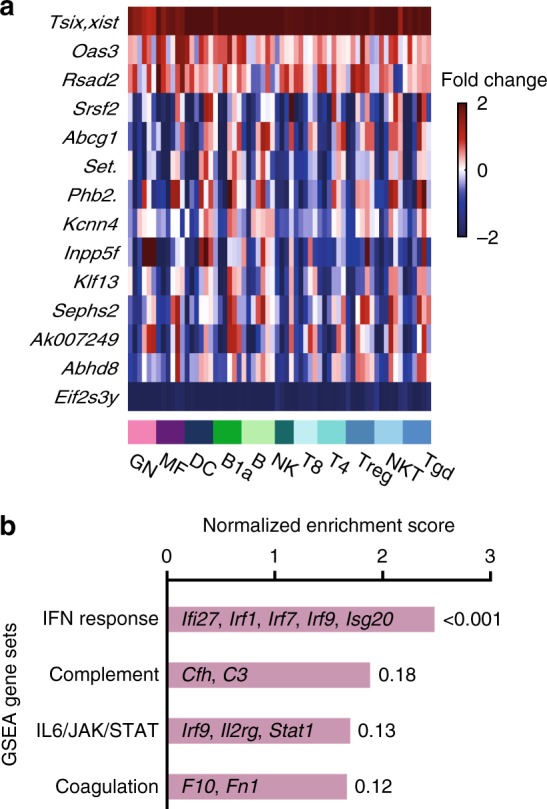
“If the Irf2bp2-positive myeloid cells in Irf2bp2 null livers were of maternal origin, we should have detected female-speci fi c immune transcripts in the RNA pro fi les of the 3 male Irf2bp2-null mice: the X-chromosome inactivation transcript Xist, Rsad2 and Oas3 (29).”
InfluentialPlantera, L., Immig, K., Fritsche, A., Reinicke, M., Zemer, A., Monsonego, A., Ceglarek, U., & Bechmann, I. (2025) · Molecular Nutrition & Food Research · doi:10.1002/mnfr.70168 · Cited by 3
“This observation aligns with existing literature demonstrating sexual dimorphism in the immune system [70–73], which manifests in differential susceptibility to infections [74, 75], autoimmune diseases [76, 77], cancer prevalence [78, 79], and variability in responses to vaccines [80, 81].”
Wang, B., Li, D., Li, J., An, W., Li, Z., Shao, Q., & Qin, L. (2022) · Archives of Oral Biology · doi:10.1016/j.archoralbio.2022.105586 · Cited by 3
COVID-19 Epigenetics and Implications for Public Health
Tunalıgil, V., Meral, G., Katı, A., Chattopadhyay, D., & Mandal, A. K. (2020) · Coronaviruses · doi:10.2174/2666796701999201005212515 · Cited by 3
“Females appear to be less susceptible to viral infections based on sex hormones and the X chromosome, which play essential roles in innate and adaptive immunity [5-12].”
Background[Retracted] A Systematic Analysis on COVID‐19 Patients in Inner Mongolia Based on Dynamic Monitoring
Lan, Y., Li, T., Gao, L., Wang, B., Chai, J., Shi, X., Su, R., Tian, G., Yang, J., & Sun, D. (2021) · BioMed Research International · doi:10.1155/2021/5559187 · Cited by 4
“Furthermore, some patients died from “consequent cytokine storm” due to total organ failure by viral inflammatory response [12, 13].”
BackgroundRetractedKutzer, M. A. M., Gupta, V., Neophytou, K., Doublet, V., Monteith, K. M., & Vale, P. F. (2022) · bioRxiv (Cold Spring Harbor Laboratory) · doi:10.1101/2022.06.09.495537 · Cited by 3
Sex-specific niche signaling contributes to sexual dimorphism following stem cell transplantationPreprint
Smith, J. N. P., Cordova, B. A., Richardson, B., Christo, K. F., Campanelli, J., Broncano, A. V., Chen, J., Lee, J., Cameron, S. J., Lathia, J. D., et al. (2022) · bioRxiv (Cold Spring Harbor Laboratory) · doi:10.1101/2022.06.13.495897 · Cited by 3
The Tabulae Paralytica: Multimodal single-cell and spatial atlases of spinal cord injuryPreprint
Skinnider, M. A., Gautier, M., Teo, A. Y. Y., Kathe, C., Hutson, T. H., Laskaratos, A., de Coucy, A., Regazzi, N., Aureli, V., James, N. D., et al. (2023) · bioRxiv (Cold Spring Harbor Laboratory) · doi:10.1101/2023.06.23.544348 · Cited by 3
“Sexual dimorphism in immune responses underlies differences in the prevalence of autoimmune disease between males and females 66,67 .”
BackgroundMicroglial depletion worsens lesion in female but not male C57BL/6J mice after P10 hypoxia-ischemiaPreprint
Guez‐Barber, D., Nicolayevsky, S. E., Johnson, K. J. D., Yun, S., & Eisch, A. J. (2023) · bioRxiv (Cold Spring Harbor Laboratory) · doi:10.1101/2023.10.17.562542 · Cited by 2
Sex Dimorphism in Expression of Immune Response Genes in DrosophilaPreprint
Khan, M., & Graze, R. M. (2024) · bioRxiv (Cold Spring Harbor Laboratory) · doi:10.1101/2024.07.27.605461 · Cited by 4
Multicondition and multimodal temporal profile inference during mouse embryonic development
Zhang, R., Qiu, C., Filippova, G. N., Li, G., Shendure, J., Vert, J., Deng, X., Distèche, C. M., & Noble, W. S. (2025) · Genome Research · doi:10.1101/gr.279997.124 · Cited by 4
A sex-dependent role of Kv1.3 channels from macrophages in metabolic syndrome
Peraza, D. A., Benito-Salamanca, L., Moreno‐Estar, S., Alonso, E., López‐López, J. R., Pérez-García, M. T., & Cidad, P. (2024) · Frontiers in Physiology · doi:10.3389/fphys.2024.1487775 · Cited by 2
Onuma, K., Watanabe, M., & Sasaki, N. (2026) · Animal Models and Experimental Medicine · doi:10.1002/ame2.70182 · Cited by 3
Takehara, K. K., Monell, A., Luna, V., Melisso, B., Mempel, K. M., Cheung, K. P., Zane, N., Challita, P. P., Ferry, A., Xu, E. C., et al. (2026) · Immunity · doi:10.1016/j.immuni.2026.03.003 · Cited by 2
Sexual Dimorphism in Allergic and Mast Cell-Associated Diseases
Kotha, A., Maldonado, T. D., Hamze, H., Hussain, Z. Y., Gobinathan, N., Yao, A. Z., Abudulkadir, M., Ching, J. M., & Ryan, J. J. (2026) · Clinical Reviews in Allergy & Immunology · doi:10.1007/s12016-026-09150-w · Cited by 2
“Importantly, the immune cells involved in asthma exhibit sexual dimorphism [17, 78, 141–145].”
Impact of sex differences on microglial function in Alzheimer’s disease
Figueiredo, E. V., Azevedo, C. V., Penitente, A. R., Pedrosa, V. R., da Silva, V. R. C., & Longo, B. M. (2026) · Alzheimer s Research & Therapy · doi:10.1186/s13195-026-02099-0 · Cited by 3
“Transcriptomic analyses also support sex-biased immune programs, including interferon-associated regulation, and some datasets report larger soma size in males [3, 23, 37, 40].”
Nader, M., Zmerli, O., Platt, D. E., Hamdan, H., Hamdash, S., Tayeh, R. A., Azar, J., Kadi, D., Sultan, Y., Bazarbachi, T., et al. (2022) · PLoS ONE · doi:10.1371/journal.pone.0275101 · Cited by 3
Keever, A., Collins, K. M., Clark, R. A., Framstad, A. L., & Ashley, J. W. (2023) · PeerJ · doi:10.7717/peerj.14814 · Cited by 3
“Alterations in pathways associated with immune function was a common finding when comparing male and female-derived cells, which is in agreement with prior published findings (Gal-Oz et al., 2019;Mun et al., 2021).”
ResultSommer, S. L., & Kontaridis, M. I. (2024) · Canadian Journal of Physiology and Pharmacology · doi:10.1139/cjpp-2023-0420 · Cited by 3
“Women have a lower threshold for immune activation (Gal-Oz et al. 2019), leading to increased inflammatory responses compared with men.”
Fresquez, A. M., Hogan, J. O., Rivera, P., Patterson, K. M., Singer, K., Reynolds, J. M., & White, C. (2024) · Journal of Biological Chemistry · doi:10.1016/j.jbc.2024.107422 · Cited by 3
“Sexual dimorphism in the innate immune system is well-established and determined by a complex interaction be-tween hormones, the environment, and genetics (1, 2).”
BackgroundNeuro-Endocrine-Immune Interactions in Maintaining the Integrity of the Body
Drela, N. (2024) · Integrated science · doi:10.1007/978-3-031-73061-0_2 · Cited by 4
Cros, A., Rigamonti, A., de Juan, A., Coillard, A., Rieux-Laucat, M., Tabtim-On, D., Papillon, E., Goudot, C., Cepika, A., Banchereau, R., et al. (2025) · Journal of Clinical Investigation · doi:10.1172/jci189937 · Cited by 3
“Sexual dimorphism has been shown for IFN-I responses in mice and humans, in particular for mononuclear phagocytes (37– 39).”
Prevalence, Demographics, and Risk of Severe Acute COVID-19
Munipalli, B., Knight, D. R. T., Logvinov, I. I., & Dabrh, A. M. A. (2021) · Cureus · doi:10.7759/cureus.18851 · Cited by 2
“Additionally, studies have shown that women are less susceptible to viral infection than men, possibly because the X chromosome and sex hormones provide protection and affect both innate and adaptive immunity [18].”
Leite, M. A. P., Cavalcanti, L. D. S., Nova, F. A. D. L. V., Pereira, R. R., de Lima, I. S. A., & Pontes, M. D. L. D. F. (2022) · Revista de Pesquisa Cuidado é Fundamental Online · doi:10.9789/2175-5361.rpcfo.v14.11880 · Cited by 2
Hackert, N. S., Radtke, F. A., Exner, T., Lorenz, H., Müller‐Tidow, C., Nigrovic, P. A., Wabnitz, G. H., & Grieshaber‐Bouyer, R. (2022) · bioRxiv (Cold Spring Harbor Laboratory) · doi:10.1101/2022.11.13.516246 · Cited by 2
“We further studied how the neutrophil transcriptome changes in inflammation, using a wide range of studies covering in vitro and in vivo inflammation as well as resting conditions in human (10-21) and mouse (12, 22-31).”
BackgroundChatterjee, B., Boughter, C. T., Gorga, K., Ohta, Y., Blair, C., Hill, E. M., Fasana, Z., Atuheirwe, M., Adebamowo, A., Ammar, F., et al. (2024) · bioRxiv (Cold Spring Harbor Laboratory) · doi:10.1101/2024.11.26.625490 · Cited by 2
Lu, R. J., Chen, S., Kim, M., Sampathkumar, N. K., Lee, E. H., Christensen, A., Wang, E., Lau, I. C. Y., Parihar, S., Ravikumar, C. K., et al. (2025) · bioRxiv (Cold Spring Harbor Laboratory) · doi:10.1101/2025.06.11.659200 · Cited by 3
Bell, R. D., Huang, M., Yuan, R., Wingert, C. K., Mishra, B., Seren, S., Singh, T., MacLauchlan, S., Gravallese, E. M., Singh, A., et al. (2025) · bioRxiv (Cold Spring Harbor Laboratory) · doi:10.1101/2025.11.24.690174 · Cited by 2
Al-Diab, O., Suenkel, C., Blanc, E., Catar, R. A., Ashraf, M., Zhao, H., Wang, P., Rinschen, M. M., Fritsche‐Guenther, R., Grahammer, F., et al. (2024) · Biology of Sex Differences · doi:10.1186/s13293-024-00647-7 · Cited by 1
“Sexual dimorphism of genes involved in the complement system has been also reported in different immune cell types, such as macrophages [151].”
BackgroundFajardo, R.-G., Uddandam, A., Cunningham, J., Longo, C., & Grandi, S. M. (2025) · Pharmacological Research · doi:10.1016/j.phrs.2025.107792 · Cited by 1
Jie, H., Yin, Q., Liu, W., Zeng, J., Xiang, H., Ma, Z., Li, H., & Ye, F. (2025) · Poultry Science · doi:10.1016/j.psj.2025.105732 · Cited by 3
Κοσμαρά, Δ., Papanikolaou, S., Stathopoulou, C., Papamatheakis, D.-A., Vatsellas, G., Cimmarrusti, A., Banos, A., Sidiropoulos, P. I., Lavigne, M. D., Verginis, P., et al. (2025) · Nature Communications · doi:10.1038/s41467-025-65309-7 · Cited by 2
“Sex-related molecular differences manifest cell-type speci fi city 15,19,20 and may be particularly prominent in monocytes/ macrophages 19,20,22,23,60 .”
The heterogeneity and sexual-dimorphism of human TCRαβ+CD4–CD8– double negative T cells
Tian, D., Qian, F., Pan, L., Yin, M., Liu, B., Zhang, Y., Yang, X., Yang, L., Sun, G. L., Zhang, Z., et al. (2026) · Journal of genetics and genomics/Journal of Genetics and Genomics · doi:10.1016/j.jgg.2026.04.008 · Cited by 1
Transcriptional and chromatin dynamics in macrophage differentiation and activation
Hoeksema, M. A., Neele, A. E., Prange, K. H. M., Glass, C. K., & de Winther, M. P. J. (2026) · Science Immunology · doi:10.1126/sciimmunol.aec1740 · Cited by 4
Sex differences in innate immune cell responses: Impact on cancer immunity and response to therapy
Ramin, S., & Medler, T. R. (2026) · Frontiers in Immunology · doi:10.3389/fimmu.2026.1864861 · Cited by 1
Metadata
- Authors
- Gal-Oz, S. T., Maier, B., Yoshida, H., Seddu, K., Elbaz, N., Czysz, C., Zuk, O., Stranger, B. E., Ner-Gaon, H., & Shay, T.
- Affiliations
- Ben-Gurion University of the Negev (IL)
- Icahn School of Medicine at Mount Sinai (US)
- Harvard University (US)
- University of Chicago (US)
- Hebrew University of Jerusalem (IL)
- Northwestern University (US)
- Corresponding author
- Shay, Tal
- ORCID
- Venue
- Nature Communications
- Published
- 2019-09-20
- Volume
- 10
- Issue
- 1
- Pages
- 4295-4295
- ISSN
- 2041-1723 (ISSN-L)
- PMC
- PMC6754408
- OpenAlex
- W2973429485
- Semantic Scholar
- 82a17badce6b4d024b40bb15942c54bb6e1318e5
- Cited by
- 274
- References
- 77
- Citations by year
- 2026: 24 · 2025: 37 · 2024: 50 · 2023: 36 · 2022: 59 · 2021: 37 · 2020: 31
- FWCI
- 29.05
- Type
- journal article
- Language
- en
- Open access
- gold
- doi.org
- Licence
- cc-by
- creativecommons.org/licenses/by/4.0 (tdm)
- creativecommons.org/licenses/by/4.0 (vor)
- Locations
- Nature Communications (publishedVersion, cc-by)
- PubMed Central (publishedVersion, cc-by)
- PubMed (publishedVersion)
- RePEc: Research Papers in Economics (submittedVersion)
- DOAJ (DOAJ: Directory of Open Access Journals) (submittedVersion, cc-by-sa)
- DOAJ (DOAJ: Directory of Open Access Journals) (submittedVersion)
- Funders
- U.S. Department of Health & Human Services | NIH | National Institute of Allergy and Infectious Diseases (R24AI072073)
- Israel Science Foundation (1644/15, 500/15)
- Hi-Tech, Bio-Tech, Chemo-tech fellowship of Ben-Gurion University of the Negev
- Topics
- Health Sciences › Medicine › Public Health, Environmental and Occupational Health › Sex and Gender in Healthcare
- Life Sciences › Biochemistry, Genetics and Molecular Biology › Genetics › Genetic and Clinical Aspects of Sex Determination and Chromosomal Abnormalities
- Life Sciences › Immunology and Microbiology › Immunology › Immune Response and Inflammation
- Keywords
- sexual dimorphism, immune system, sex differences, macrophages, innate immunity, interferon stimulation, gene expression, chromatin accessibility, autoimmune disease, infection susceptibility, immune transcriptome
- MeSH terms
- Animals, Female, Gene Expression Regulation, Humans, Immune System, Immunity, Innate, Interferons, Macrophages, Male, Mice, Inbred C57BL, Monocytes, RNA, Sex Characteristics, Sex Factors, Computational Biology, Gene Expression Profiling, Genomics, Mice, Epigenomics, Transcriptome
About these checks
Registry, retraction, Cites and statistics results are computed, not judged, with one exception: a printed reference that no index lists is read once by a model before it counts as a citation error. Claims are extracted by a model and kept only when their quote appears verbatim in the text; each cited source is then checked, with a model’s help, for whether it says what the claim relies on. Those verdicts can be wrong — read the claim’s quote and the cited source before relying on one.
Statistics and arithmetic are recomputed, not judged.
Confidence bands are shown only for fields calibrated on our annotated test set. None is calibrated yet, so no band is shown.
What counts as a claim ›How we measure confidence ›How we check this ›
Are you an author, or do you see a problem with this page? Request a review
Data sources
Bibliographic data: Semantic Scholar, OpenAlex, Crossref.
Contains information from the Semantic Scholar Academic Graph Datasets, made available under the ODC Attribution License (ODC-BY 1.0).
Semantic Scholar’s data is described in: Kinney, R., et al. (2023). The Semantic Scholar Open Data Platform. arXiv:2301.10140.
