

ImmGen report: sexual dimorphism in the immune system transcriptome
Open accessThe DOI matches its Crossref record; 77 of the 77 references it cites were found in a registry or an index.
Abstract
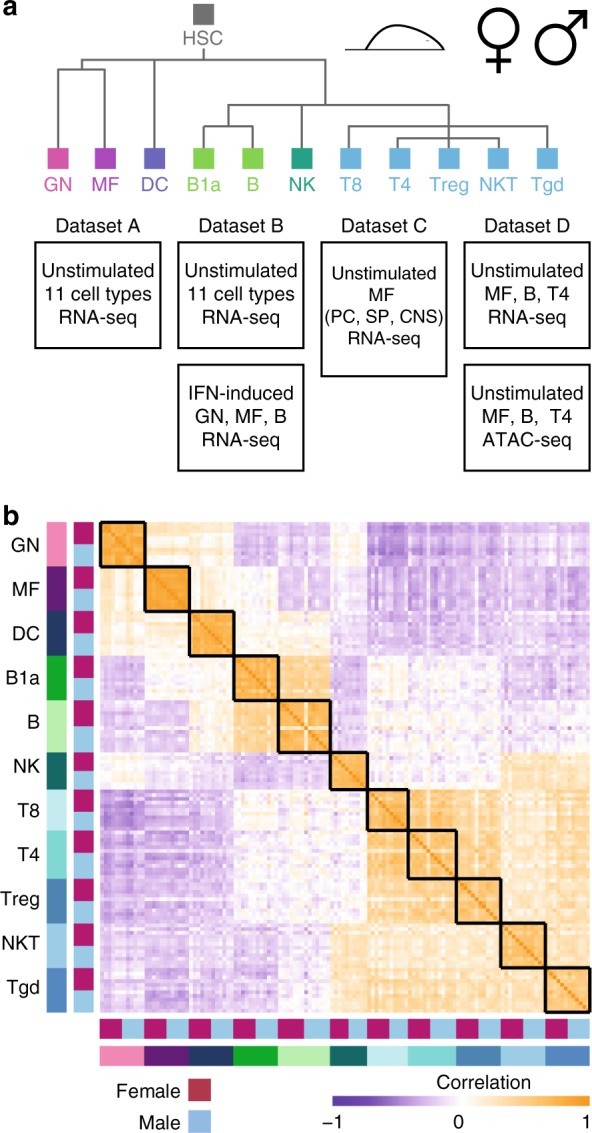
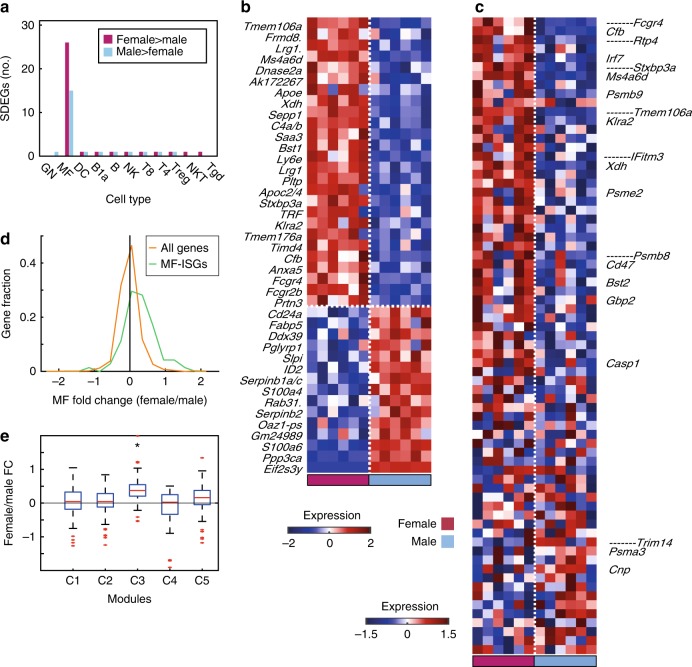
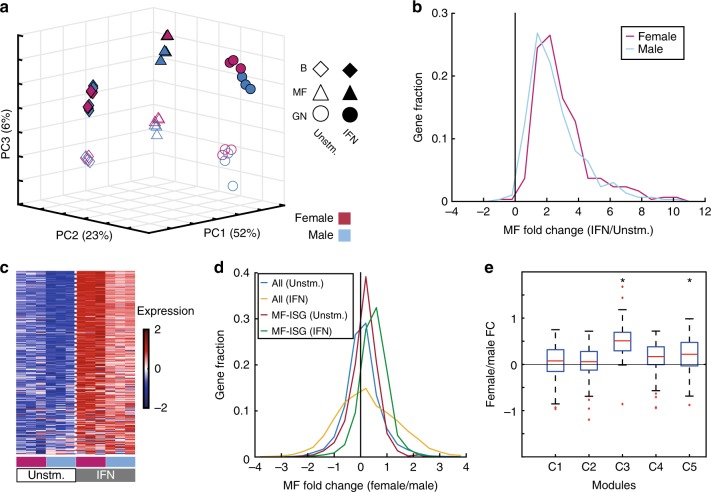
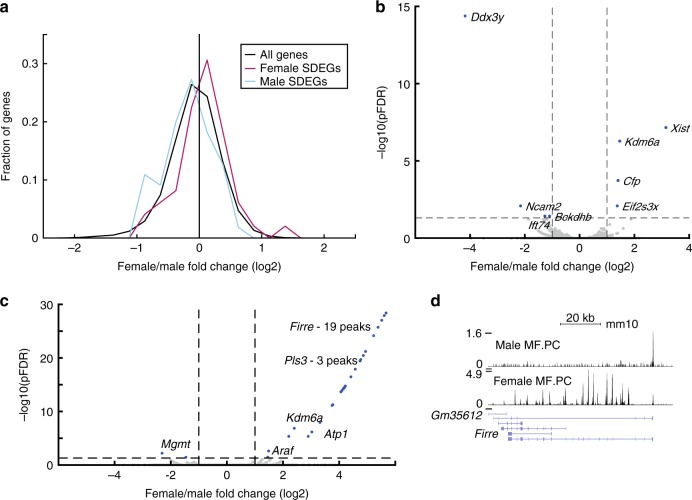
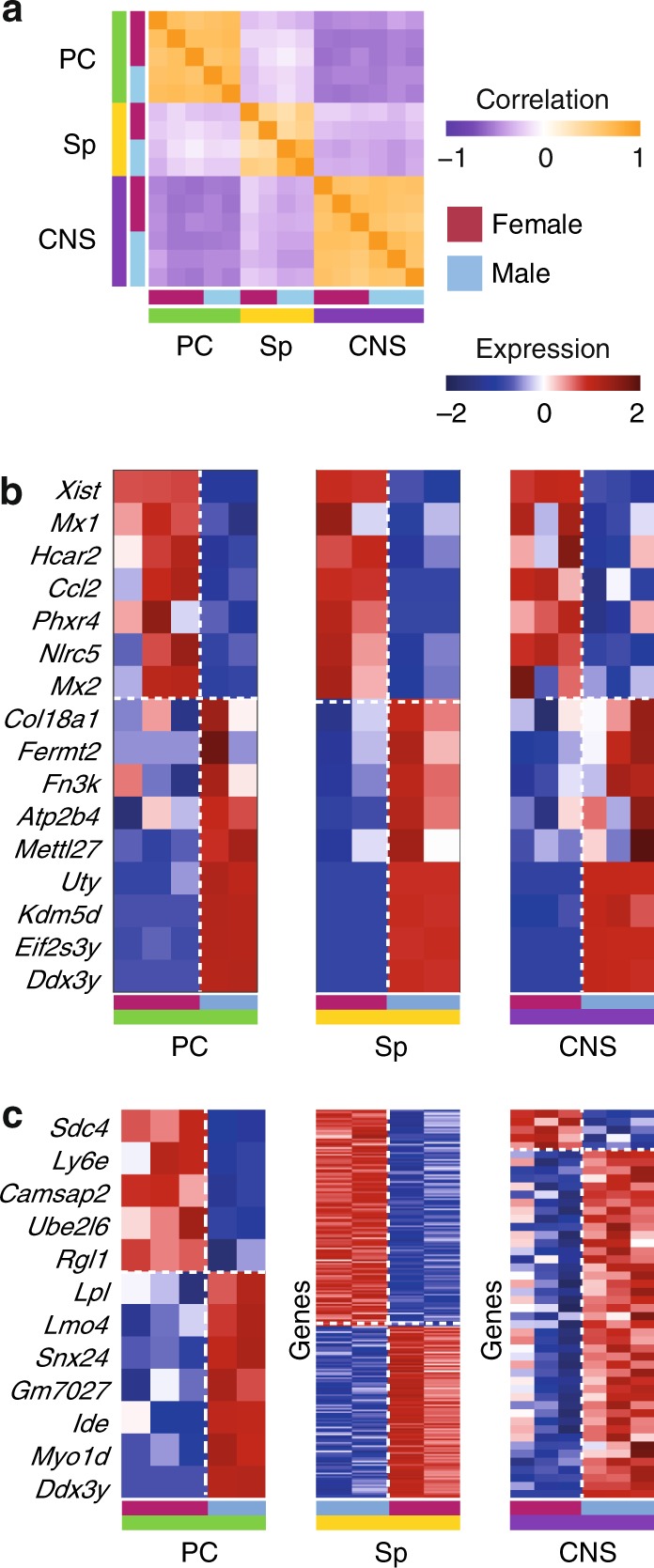
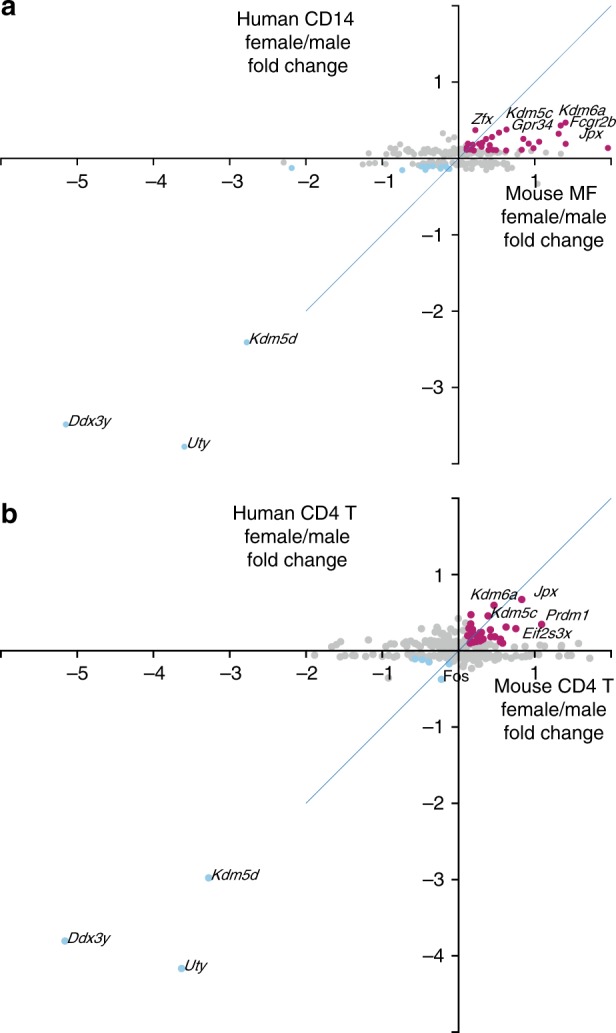
Sexual dimorphism in the mammalian immune system is manifested as more frequent and severe infectious diseases in males and, on the other hand, higher rates of autoimmune disease in females, yet insights underlying those differences are still lacking. Here we characterize sex differences in the immune system by RNA and ATAC sequence profiling of untreated and interferon-induced immune cell types in male and female mice. We detect very few differentially expressed genes between male and female immune cells except in macrophages from three different tissues. Accordingly, very few genomic regions display differences in accessibility between sexes. Transcriptional sexual dimorphism in macrophages is mediated by genes of innate immune pathways, and increases after interferon stimulation. Thus, the stronger immune response of females may be due to more activated innate immune pathways prior to pathogen invasion.
Overview
The claims and statistics of this paper haven’t been checked yet.
Free: it reads the open-access text and checks the first 5 claims that cite a source we can check. Create a free account to check every claim.
Integrity signals
Registry
Cites
Statistics
Figures
Verification
Claims the paper makes
The claims and statistics of this paper haven’t been checked yet.
Free: it reads the open-access text and checks the first 5 claims that cite a source we can check. Create a free account to check every claim.
Claims other papers make about this one
Each is checked against this paper’s own text: does it say what the citing paper says it does?
The source backs part of the claim, not all of it — or backs it for a different population, condition or comparison.
In the citing paper
“IFN-associated genes, including IFN regulatory factor (Irf1), are enriched in naive female brain microglia42,43 and subsequently are found to be more responsive to IFN stimulation.42,44”
From Characterization of the ocular inflammatory response to AAV reveals divergence by sex and age (2025) · cites this paper as [44]
Experimental — accuracy not yet measured
Self-check
Percentages, sums and reported differences re-computed from the paper’s own numbers.
The self-check needs the paper’s full text.
Citations
Cites
Controlling the False Discovery Rate: A Practical and Powerful Approach to Multiple Testing
Benjamini, Y., & Hochberg, Y. (1995) · Journal of the Royal Statistical Society Series B: Statistical Methodology · doi:10.1111/j.2517-6161.1995.tb02031.x · Cited by 109,482
The Sequence Alignment/Map format and SAMtools
Li, H., Handsaker, B., Wysoker, A., Fennell, T., Ruan, J., Homer, N., Marth, G., Abecasis, G., Durbin, R., & 1000 Genome Project Data Processing Subgroup (2009) · Bioinformatics · doi:10.1093/bioinformatics/btp352 · Cited by 62,041
Fast gapped-read alignment with Bowtie 2
Langmead, B., & Salzberg, S. L. (2012) · Nature Methods · doi:10.1038/nmeth.1923 · Cited by 56,400
Subramanian, A., Tamayo, P., Mootha, V. K., Mukherjee, S., Ebert, B. L., Gillette, M. A., Paulovich, A., Pomeroy, S. L., Golub, T. R., Lander, E. S., et al. (2005) · Proceedings of the National Academy of Sciences · doi:10.1073/pnas.0506580102 · Cited by 53,625
BEDTools: a flexible suite of utilities for comparing genomic features
Quinlan, A. R., & Hall, I. M. (2010) · Bioinformatics · doi:10.1093/bioinformatics/btq033 · Cited by 27,437
HISAT: a fast spliced aligner with low memory requirements
Kim, D., Langmead, B., & Salzberg, S. L. (2015) · Nature Methods · doi:10.1038/nmeth.3317 · Cited by 24,112
Trapnell, C., Roberts, A., Goff, L., Pertea, G., Kim, D., Kelley, D. R., Pimentel, H., Salzberg, S. L., Rinn, J. L., & Pachter, L. (2012) · Nature Protocols · doi:10.1038/nprot.2012.016 · Cited by 12,116
Statistical significance for genomewide studies
Storey, J. D., & Tibshirani, R. (2003) · Proceedings of the National Academy of Sciences · doi:10.1073/pnas.1530509100 · Cited by 9,692
Molecular signatures database (MSigDB) 3.0
Liberzon, A., Subramanian, A., Pinchback, R., Thorvaldsdóttir, H., Tamayo, P., & Mesirov, J. P. (2011) · Bioinformatics · doi:10.1093/bioinformatics/btr260 · Cited by 7,111
Full-length RNA-seq from single cells using Smart-seq2
Picelli, S., Faridani, O. R., Björklund, Å. K., Winberg, G., Sagasser, S., & Sandberg, R. (2014) · Nature Protocols · doi:10.1038/nprot.2014.006 · Cited by 4,137
Cited by
Risk factors of critical & mortal COVID-19 cases: A systematic literature review and meta-analysis
Zheng, Z., Peng, F., Xu, B., Zhao, J., Liu, H., Peng, J., Li, Q., Jiang, C., Zhou, Y., Liu, S., et al. (2020) · Journal of Infection · doi:10.1016/j.jinf.2020.04.021 · Cited by 2,074
“Studies have found that women are less susceptible to viral infection than men, possibly because of the protection of X chromosome and sex hormones, which play an important role in innate and adaptive immunity [28] .”
Risk and Protective Factors for COVID-19 Morbidity, Severity, and Mortality
Zhang, J.-J., Dong, X., Liu, G.-H., & Gao, Y.-D. (2022) · Clinical Reviews in Allergy & Immunology · doi:10.1007/s12016-022-08921-5 · Cited by 715
“Apart from anatomical, lifestyle, behavioral, comorbidities, and socioeconomic differences between men and women, the protective role of X chromosome and hormones in innate and adaptive immunity may also predispose women to be less susceptible to viral infection than men [16, 82, 83].”
BackgroundDick, S. A., Wong, A., Hamidzada, H., Nejat, S., Nechanitzky, R., Vohra, S., Mueller, B., Zaman, R., Kantores, C., Aronoff, L., et al. (2022) · Science Immunology · doi:10.1126/sciimmunol.abf7777 · Cited by 538
Bienvenu, L. A., Noonan, J., Wang, X., & Peter, K. (2020) · Cardiovascular Research · doi:10.1093/cvr/cvaa284 · Cited by 338
“A gene expression study of the immune system in mice by Gal-Oz et al.(71) indicated that this sexual dimorphism is restricted mainly to macrophages.”
BackgroundInfluentialSexual Dimorphism in Innate Immunity: The Role of Sex Hormones and Epigenetics
Shepherd, R., Cheung, A. S., Pang, K., Saffery, R., & Novakovic, B. (2021) · Frontiers in Immunology · doi:10.3389/fimmu.2020.604000 · Cited by 304
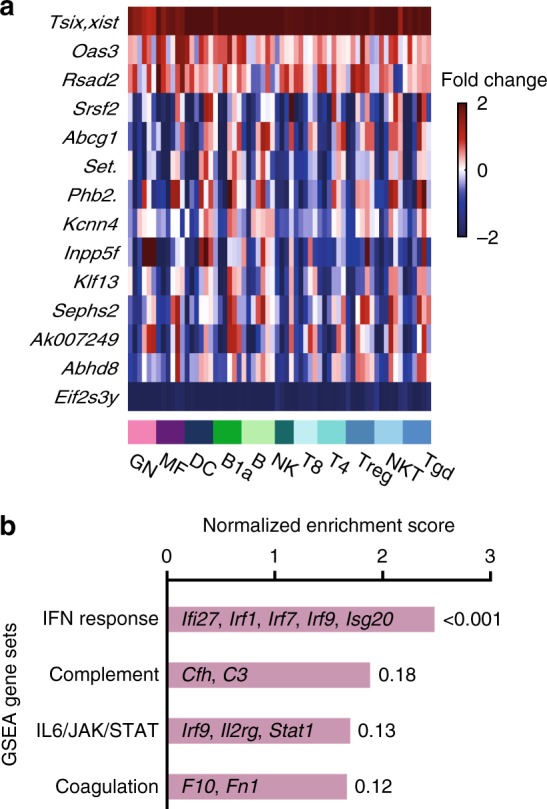
“Female-enriched pathways included the response to interferon, complement, IL-6/JAK/ STAT pathways and coagulation pathways (110).”
BackgroundInfluentialMechanisms and consequences of sex differences in immune responses
Dunn, S. E., Perry, W. A., & Klein, S. L. (2024) · Nature Reviews Nephrology · doi:10.1038/s41581-023-00787-w · Cited by 249
“For example, The ImmGen study found that neutrophils from female mice exhibit a higher expression of IFN-stimulated genes at steady state than those from male mice 60 .”
Androgen conspires with the CD8 + T cell exhaustion program and contributes to sex bias in cancer
Kwon, H., Schafer, J. M., Song, N.-J., Kaneko, S., Li, A., Xiao, T., Ma, A., Allen, C., Das, K., Zhou, L., et al. (2022) · Science Immunology · doi:10.1126/sciimmunol.abq2630 · Cited by 244
“In light of a well-established female bias in the IFN response at baseline and upon active inflammation (63), a sexspecific balance of androgen and type I IFN signaling may underlie sexual dimorphism in cancer immunity.”
BackgroundThe conneXion between sex and immune responses
Forsyth, K. S., Jiwrajka, N., Lovell, C. D., Toothacre, N. E., & Anguera, M. C. (2024) · Nature Reviews Immunology · doi:10.1038/s41577-024-00996-9 · Cited by 209
“Accordingly, peritoneal-derived macrophages from female mice also show increased expression of IFN-stimulated genes, and in a mouse model of sepsis, female mice became less sick and had fewer recoverable live bacteria in their circulation than male mice 29,30 .”
Macrophage-derived osteopontin (SPP1) protects from nonalcoholic steatohepatitis
Han, H., Ge, X., Komakula, S. S. B., Desert, R., Das, S., Song, Z., Chen, W., Athavale, D., Gaskell, H., Lantvit, D., et al. (2023) · Gastroenterology · doi:10.1053/j.gastro.2023.03.228 · Cited by 155
Exploring Sex-Related Differences in Microglia May Be a Game-Changer in Precision Medicine
Lynch, M. A. (2022) · Frontiers in Aging Neuroscience · doi:10.3389/fnagi.2022.868448 · Cited by 146
Qiu, P., Zhou, Y., Wang, F., Wang, H., Zhang, M., Pan, X., Zhao, Q., & Liu, J. (2020) · Aging Clinical and Experimental Research · doi:10.1007/s40520-020-01664-3 · Cited by 147
“On the one hand, it is generally believed that women have stronger innate and adaptive immune responses than men [25], which may be due to the protection of X chromosomes and sex hormones [26].”
BackgroundLu, R. J., Taylor, S., Contrepois, K., Kim, M., Bravo, J. I., Ellenberger, M., Sampathkumar, N. K., & Benayoun, B. A. (2021) · Nature Aging · doi:10.1038/s43587-021-00086-8 · Cited by 126
Single-cell and spatial atlases of spinal cord injury in the Tabulae Paralytica
Skinnider, M. A., Gautier, M., Teo, A. Y. Y., Kathe, C., Hutson, T. H., Laskaratos, A., de Coucy, A., Regazzi, N., Aureli, V., James, N. D., et al. (2024) · Nature · doi:10.1038/s41586-024-07504-y · Cited by 161
“Sexual dimorphism in immune responses underlies differences in the prevalence of autoimmune disease between males and females 44,45 .”
Summers, K. M., Bush, S. J., & Hume, D. A. (2020) · PLOS Biology · doi:10.1371/journal.pbio.3000859 · Cited by 117
“We initially included data from the large ImmGen UL1 project (GSE127267l; GSE124829; see [77]), but this project uses an ultra-low–input RNA-seq pipeline based upon 1,000 sorted cells and the scRNA-seq platform Smartseq2.”
Subramanian, S., Busch, C. J.-L., Molawi, K., Geirsdottir, L., Maurizio, J., Vargas Aguilar, S., Belahbib, H., Gimenez, G., Yuda, R. A. A., Burkon, M., et al. (2022) · Nature Immunology · doi:10.1038/s41590-022-01146-w · Cited by 103
Bain, C. C., Gibson, D. A., Steers, N. J., Boufea, K., Louwe, P. A., Doherty, C., González-Huici, V., Gentek, R., Magalhaes-Pinto, M., Shaw, T., et al. (2020) · Science Immunology · doi:10.1126/sciimmunol.abc4466 · Cited by 97
Bachmann, M. C., Bellalta, S., Basoalto, R., Gómez‐Valenzuela, F., Jalil, Y., Lépez, M., Matamoros, A., & Rommy von Bernhardi, M. (2020) · Frontiers in Immunology · doi:10.3389/fimmu.2020.570083 · Cited by 107
“Sex hormones exert antagonist effects on the immune system: Both estradiol and testosterone have a suppressive effect on the immune response (45).”
BackgroundHuang, C., Soleimani, J., Herasevich, S., Pinevich, Y., Pennington, K. M., Dong, Y., Pickering, B. W., & Barwise, A. K. (2020) · Mayo Clinic Proceedings · doi:10.1016/j.mayocp.2020.10.022 · Cited by 104
“Most studies found that male patients were more susceptible to development of critical illness or death than females, potentially because of the protection of the X chromosome and sex hormones, which play an essential role in innate and adaptive immunity.(110)”
BackgroundDu, P., Li, D., Wang, A., Shen, S., Ma, Z., & Li, X. (2021) · Canadian Journal of Infectious Diseases and Medical Microbiology · doi:10.1155/2021/6660930 · Cited by 106
“Besides, the stronger immune response of females may be due to more activated innate immune pathways prior to pathogen invasion. protective effects of the female X chromosome and sex hormones play an important role in innate and adaptive immunity [27].”
Hackert, N. S., Radtke, F. A., Exner, T., Lorenz, H., Müller‐Tidow, C., Nigrovic, P. A., Wabnitz, G. H., & Grieshaber‐Bouyer, R. (2023) · Nature Communications · doi:10.1038/s41467-023-43573-9 · Cited by 98
Sex differences in tissue-specific immunity and immunology
Sharma, S., Gibbons, A., & Saphire, E. O. (2025) · Science · doi:10.1126/science.adx4381 · Cited by 115
Marian, A. J. (2020) · Cardiovascular Pathology · doi:10.1016/j.carpath.2020.107278 · Cited by 96
The Immunological Genome Project, Aguilar, S. V., Aguilar, O. A., Allan, R. S., Amir, E.-A. D., Angeli, V., Artyomov, M. N., Asinovski, N., Astarita, J., Austen, K. F., et al. (2020) · Nature Immunology · doi:10.1038/s41590-020-0687-4 · Cited by 90
Self-citationChen, K.-H. E., Lainez, N. M., & Coss, D. (2021) · The Journal of Immunology · doi:10.4049/jimmunol.2000490 · Cited by 78
“Macrophages, particularly, demonstrate profound sex differences (22).”
COVID-19 mortality risk factors in older people in a long-term care center
Heras, E., Garibaldi, P., Boix, M., Valero, O., Castillo, J., Curbelo, Y., Gonzalez, E., Mendoza, O., Anglada, M., Miralles, J. C., et al. (2020) · European Geriatric Medicine · doi:10.1007/s41999-020-00432-w · Cited by 75
Sex- and age-dependent genetics of longevity in a heterogeneous mouse population
Sleiman, M. S. B., Roy, S., Gao, A. W., Sadler, M. C., von Alvensleben, G., Li, H., Sen, Ś., Harrison, D. E., Nelson, J. F., Strong, R., et al. (2022) · Science · doi:10.1126/science.abo3191 · Cited by 79
“The interferon response is not only sexually dimorphic and higher in female mice (30) but also a major determinant in mediating severity of infections, including COVID-19, likely explaining higher mortality in men who have lower type I interferon activity than women (31, 32).”
BackgroundResultSex differences in the inflammatory response to stroke
Tariq, M. B., Lee, J., & McCullough, L. D. (2022) · Seminars in Immunopathology · doi:10.1007/s00281-022-00969-x · Cited by 80
“NETs have also been implicated in a reduction of T cell activation threshold increasing the release of the proinflammatory cytokines IL-17 and IFN-γ [172, 173].”
BackgroundInfluentialThe X in seX-biased immunity and autoimmune rheumatic disease
Jiwrajka, N., & Anguera, M. C. (2022) · The Journal of Experimental Medicine · doi:10.1084/jem.20211487 · Cited by 71
Ambient Temperature and Years of Life Lost: A National Study in China
Liu, T., Zhou, C., Zhang, H., Huang, B., Xu, Y., Lin, L., Wang, L., Hu, R., Hou, Z., Xiao, Y., et al. (2020) · The Innovation · doi:10.1016/j.xinn.2020.100072 · Cited by 74
Sex Differences in Neurodegeneration: The Role of the Immune System in Humans
Lopez-Lee, C., Kodama, L., & Gan, L. (2022) · Biological Psychiatry · doi:10.1016/j.biopsych.2021.01.002 · Cited by 63
Peng, L., Renauer, P. A., Sferruzza, G., Yang, L., Zou, Y., Fang, Z., Park, J. J.-Y., Chow, R. D.-W., Zhang, Y., Lin, Q., et al. (2024) · Nature Biotechnology · doi:10.1038/s41587-024-02282-4 · Cited by 70
Tricarico, R., Nicolas, É., Hall, M. J., & Golemis, E. A. (2020) · Clinical Cancer Research · doi:10.1158/1078-0432.ccr-20-1741 · Cited by 63
TLR8 escapes X chromosome inactivation in human monocytes and CD4+ T cells
Youness, A., Cenac, C., Faz-López, B., Grunenwald, S., Barrat, F. J., Chaumeil, J., Mejía, J. E., & Guéry, J.-C. (2023) · Biology of Sex Differences · doi:10.1186/s13293-023-00544-5 · Cited by 58
“of innate immunity pathways prior to immune challenge, and that the resulting enhancement of 611 immune alertness made females less susceptible to infectious diseases (80).”
BackgroundMethodProduction of MHCII ‐expressing classical monocytes increases during aging in mice and humans
Barman, P. K., Shin, J. E., Lewis, S. A., Kang, S., Wu, D., Wang, Y., Yang, X., Nagarkatti, P. S., Nagarkatti, M., Messaoudi, I., et al. (2022) · Aging Cell · doi:10.1111/acel.13701 · Cited by 69
SeXY chromosomes and the immune system: reflections after a comparative study
Meester, I., Manilla-Muñoz, E., León-Cachón, R. B. R., Paniagua-Frausto, G., Carrión-Álvarez, D., Ruiz-Rodríguez, C., Rodríguez-Rangel, X., & García-Martínez, J. (2020) · Biology of Sex Differences · doi:10.1186/s13293-019-0278-y · Cited by 61
“Indeed, a recent study to identify sexually differentially expressed genes in 11 immune cell types of C56BL/6J mice found that the majority of such genes were autosomal [57].”
BackgroundSexual dimorphism of monocyte transcriptome in individuals with chronic low-grade inflammation
So, J., Tai, A., Lichtenstein, A. H., Wu, D., & Lamon‐Fava, S. (2021) · Biology of Sex Differences · doi:10.1186/s13293-021-00387-y · Cited by 53
Alzheimer’s disease-related transcriptional sex differences in myeloid cells
Coales, I., Tsartsalis, S., Fancy, N., Weinert, M., Clode, D., Owen, D., & Matthews, P. M. (2022) · Journal of Neuroinflammation · doi:10.1186/s12974-022-02604-w · Cited by 49
Emerging roles for endogenous retroviruses in immune epigenetic regulation*
Buttler, C. A., & Chuong, E. B. (2021) · Immunological Reviews · doi:10.1111/imr.13042 · Cited by 63
Microglia and macrophages in glioblastoma: landscapes and treatment directions
Solomou, G., Young, A. M. H., & Bulstrode, H. J. C. J. (2024) · Molecular Oncology · doi:10.1002/1878-0261.13657 · Cited by 59
Mun, S. H., Jastrzebski, S. L., Kalinowski, J., Zeng, S. L., Oh, B., Bae, S., Eugenia, G., Khan, N. M., Drissi, H., Zhou, P., et al. (2020) · Journal of Bone and Mineral Research · doi:10.1002/jbmr.4270 · Cited by 54
Hamade, A., Li, D., Tyryshkin, K., Xu, M., Conseil, G., Yolmo, P., Hamilton, J., Chenard, S. W., Siemens, D. R., & Koti, M. (2022) · Biology of Sex Differences · doi:10.1186/s13293-022-00428-0 · Cited by 43
TP53 Status, Patient Sex, and the Immune Response as Determinants of Lung Cancer Patient Survival
Freudenstein, D., Litchfield, C., Caramia, F., Wright, G. M., Solomon, B., Ball, D., Keam, S. P., Neeson, P. J., Haupt, Y., & Haupt, S. (2020) · Cancers · doi:10.3390/cancers12061535 · Cited by 54
“Genes of innate immunity pathways were found to mediate this disparity in the macrophages and noted to be stimulated by interferon [52].”
BackgroundFunctional genomics of inflamm-aging and immunosenescence
Lu, R. J., Wang, E. K., & Benayoun, B. A. (2021) · Briefings in Functional Genomics · doi:10.1093/bfgp/elab009 · Cited by 47
“Indeed, both the adult mammalian immune system [80,125] and the aging process [126] are sex-dimorphic, suggesting that the study of inflamm-aging should be stratified as a function of sex.”
BackgroundXie, J., Wang, Q., Xu, Y., Zhang, T., Chen, L., Zuo, X., Liu, J., Huang, L., Zhan, P., Lv, T., et al. (2021) · Annals of Palliative Medicine · doi:10.21037/apm-20-1863 · Cited by 49
“21037/apm-20-1863 and women which may cause a high risk of viral infection for men (102,103).”
BackgroundY disruption, autosomal hypomethylation and poor male lung cancer survival
Willis‐Owen, S. A. G., Domingo‐Sabugo, C., Starren, E., Liang, L., Freidin, M. B., Arseneault, M., Zhang, Y., Lu, S. K., Popat, S., Lim, E. K. S., et al. (2021) · Scientific Reports · doi:10.1038/s41598-021-91907-8 · Cited by 48
Chen, B., Li, R., Kubota, A., Alex, L., & Frangogiannis, N. G. (2022) · Scientific Reports · doi:10.1038/s41598-022-08278-x · Cited by 44
Comprehensive mapping of the human cytokine gene regulatory network
Santoso, C., Li, Z., Lal, S., Yuan, S., Gan, K. A., Agosto, L. M., Liu, X., Pro, S. C., Sewell, J. A., Henderson, A. J., et al. (2020) · Nucleic Acids Research · doi:10.1093/nar/gkaa1055 · Cited by 44
“The Immgen data was downloaded from the GEO repositories GSE122597 (Yoshida et al., 2019), GSE109125 (Yoshida et al., 2019), and GSE122108 (Gal-Oz et al., 2019).”
MethodWilmouth, J., Olabe, J., García-García, D., Lucas, C., Guiton, R., Roucher‐Boulez, F., Dufour, D., Damon‐Soubeyrand, C., Sahut‐Barnola, I., Pointud, J., et al. (2022) · Science Advances · doi:10.1126/sciadv.add0422 · Cited by 50
Hepatic immune regulation and sex disparities
Burra, P., Zanetto, A., Schnabl, B., Reiberger, T., Montaño‐Loza, A. J., Asselta, R., Karlsen, T. H., & Tacke, F. (2024) · Nature Reviews Gastroenterology & Hepatology · doi:10.1038/s41575-024-00974-5 · Cited by 45
“In mouse tissue macrophages, interferon response, complement, IL-6–JAK–STAT and coagulation pathways are enriched in females compared with males 50 .”
Gainullina, A., Mogilenko, D. A., Huang, L., Todorov, H., Narang, V., Kim, K.-W., Lim, S. Y., Kent, A., Jia, B., Seddu, K., et al. (2023) · Cell Reports · doi:10.1016/j.celrep.2023.112046 · Cited by 37
Self-citationMonteiro, S., Pinho, A. G., Macieira, M., Serre-Miranda, C., Cibrão, J. R., Lima, R., Soares-Cunha, C., Vasconcelos, N. L., Lentilhas-Graça, J., Duarte-Silva, S., et al. (2020) · Journal of Neuroinflammation · doi:10.1186/s12974-020-01945-8 · Cited by 36
“Also, the immune system displays sexual dimorphism, and differences in the genes expressed by immune cells from males or females have been described [46].”
BackgroundZhang, S., Wu, Z., Ma, D., Zhai, J., Han, X., Jiang, Z., Liu, S., Xu, J., Jiao, P., & Li, Z. (2022) · Communications Biology · doi:10.1038/s42003-022-04145-7 · Cited by 41
Are sex hormones promising candidates to explain sex disparities in the COVID-19 pandemic?
Brandi, M. L. (2021) · Reviews in Endocrine and Metabolic Disorders · doi:10.1007/s11154-021-09692-8 · Cited by 40
Genetics and Epigenetics of Sex Bias: Insights from Human Cancer and Autoimmunity
Credendino, S. C., Neumayer, C., & Cantone, I. (2020) · Trends in Genetics · doi:10.1016/j.tig.2020.06.016 · Cited by 51
Epigenetic and metabolic regulation of macrophage responsiveness and memory
Daskalaki, M., Lapi, I., Hurst, A. E., Al-Qahtani, A. A., Vergadi, E., & Tsatsanis, C. (2025) · The Journal of Immunology · doi:10.1093/jimmun/vkaf135 · Cited by 46
Ali, M. S., Lee, E., Lee, S., Lee, S., Boby, N., Suk, K., Birhanu, B. T., & Park, S. (2021) · Antioxidants · doi:10.3390/antiox10081276 · Cited by 39
“Female mice were used due to their strong immune response [28,29].”
MethodMcCombe, P., Hardy, T. A., Nona, R. J., & Greer, J. M. (2022) · Frontiers in Immunology · doi:10.3389/fimmu.2022.1038411 · Cited by 45
Sex-biased adaptive immune regulation in cancer development and therapy
Schafer, J. M., Xiao, T., Kwon, H., Collier, K. A., Chang, Y., Abdel-Hafiz, H. A., Bolyard, C. M., Chung, D., Yang, Y., Sundi, D., et al. (2022) · iScience · doi:10.1016/j.isci.2022.104717 · Cited by 34
“Using mouse models, it is important to point out that very few differentially expressed genes are seen between male and female immune cells except in macrophages, especially after interferon stimulation (Gal-Oz et al., 2019).”
BackgroundA comprehensive approach to modeling maternal immune activation in rodents
Bucknor, M. C., Gururajan, A., Dale, R. C., & Hofer, M. J. (2022) · Frontiers in Neuroscience · doi:10.3389/fnins.2022.1071976 · Cited by 39
“These observations have been confirmed at the transcriptomic level in mice, where females were observed to possess higher baseline levels of activated T cells and immunoglobulins (Gal-Oz et al., 2019).”
BackgroundSex—the most underappreciated variable in research: insights from helminth-infected hosts
Wesołowska, A. (2022) · Veterinary Research · doi:10.1186/s13567-022-01103-3 · Cited by 39
“Moreover, the stronger immune responses of females may be associated with more activated innate immune pathways prior to pathogen challenge, as demonstrated by transcriptional studies on the macrophage transcriptome [36].”
BackgroundExternal signals regulate continuous transcriptional states in hematopoietic stem cells
Fast, E. M., Sporrij, A., Manning, M. E., da Rocha, E. L., Yang, S. P., Zhou, Y., Guo, J., Baryawno, N., Barkas, N., Scadden, D. T., et al. (2021) · eLife · doi:10.7554/elife.66512 · Cited by 33
The multifaceted roles of NLRP3-modulating proteins in virus infection
Harris, J., & Borg, N. A. (2022) · Frontiers in Immunology · doi:10.3389/fimmu.2022.987453 · Cited by 31
Molecular profile of the rat peri-infarct region four days after stroke: Study with MANF
Teppo, J., Vaikkinen, A., Stratoulias, V., Mätlik, K., Anttila, J. E., Smolander, O., Pöhö, P., Harvey, B. K., Kostiainen, R. K., & Airavaara, M. (2020) · Experimental Neurology · doi:10.1016/j.expneurol.2020.113288 · Cited by 30
The Y chromosome and its impact on health and disease
Wilson, M. A. (2021) · Human Molecular Genetics · doi:10.1093/hmg/ddab215 · Cited by 34
“Given documented sex differences in aging (6), the immune system (7) and cancer (8) all possible underlying mechanisms should be investigated (Table 1).”
BackgroundLin, C.-Y., Chen, S.-Y., Lee, W., & Yen, G. (2021) · Journal of Functional Foods · doi:10.1016/j.jff.2021.104863 · Cited by 29
Epigenetic developmental mechanisms underlying sex differences in cancer
Rubin, J. B., Abou-Antoun, T., Ippolito, J. E., Llaci, L., Marquez, C., Wong, J. P., & Yang, L. (2024) · Journal of Clinical Investigation · doi:10.1172/jci180071 · Cited by 33
“Moreover, sex differences in DNA methylation in monocytes, B cells, and T cells (123) and open chromosome accessibility in macrophages (124) may regulate sex differences in the effector functions of these immune cells.”
Gender-Diverse Inclusion in Immunological Research: Benefits to Science and Health
Peckham, H., Webb, K., Rosser, E. C., Butler, G. E., & Ciurtin, C. (2022) · Frontiers in Medicine · doi:10.3389/fmed.2022.909789 · Cited by 27
On maternity and the stronger immune response in women
Mitchell, E., Graham, A. L., Úbeda, F., & Wild, G. (2022) · Nature Communications · doi:10.1038/s41467-022-32569-6 · Cited by 30
Translating the Transcriptome: Sex Differences in the Mechanisms of Depression and Stress, Revisited
Rainville, J. R., Lipuma, T., & Hodes, G. E. (2021) · Biological Psychiatry · doi:10.1016/j.biopsych.2021.02.003 · Cited by 26
Sex bias in systemic lupus erythematosus: a molecular insight
Bose, M., & Jefferies, C. A. (2022) · Immunometabolism · doi:10.1097/in9.0000000000000004 · Cited by 29
“Sexual dimorphism in the immune transcriptome has been suggested to be at the level of chromatin accessibility and regulated by type I IFN, suggesting potential sex differences in epigenetic remodeling may also underpin immune responses and potentially female-driven diseases such as SLE [75].”
BackgroundBlanton, L. V., Roman, A. K. S., Wood, G., Buscetta, A. J., Banks, N., Skaletsky, H., Godfrey, A. K., Pham, T. T., Hughes, J. F., Brown, L. G., et al. (2024) · Cell Genomics · doi:10.1016/j.xgen.2024.100628 · Cited by 27
A Tumor Suppressor Enhancer of PTEN in T-cell Development and Leukemia
Tottone, L., Lancho, O., Loh, J.-W., Singh, A., Kimura, S., Roels, J., Kuchmiy, A. A., Strubbe, S., Lawlor, M. A., da Silva-Diz, V., et al. (2020) · Blood Cancer Discovery · doi:10.1158/2643-3230.bcd-20-0201 · Cited by 42
Santiago, J. A., Quinn, J. P., & Potashkin, J. A. (2021) · International Journal of Molecular Sciences · doi:10.3390/ijms22137150 · Cited by 25
“Furthermore, the proinflammatory transcription factor STAT3 is activated in the spinal cord microglia of ALS patients, and it is increased in interferon induced-cell types in female mice compared to male [70,71].”
BackgroundMetabolic Sex Dimorphism of the Brain at the Gene, Cell, and Tissue Level
Lee, J. W., Profant, M. R., & Wang, C. (2022) · The Journal of Immunology · doi:10.4049/jimmunol.2100853 · Cited by 26
“epigenome levels, with further increases in response to external stimuli such as IFN signaling and aging (14, 15).”
BackgroundKim, H., Baek, S.-H., Kim, J., Ryu, S., Lee, J., Kim, J., Chung, Y., & Kim, S. (2023) · Schizophrenia · doi:10.1038/s41537-023-00398-1 · Cited by 31
Single-cell RNA-seq of primary bone marrow neutrophils from female and male adult mice
Kim, M., Lu, R. J., & Benayoun, B. A. (2022) · Scientific Data · doi:10.1038/s41597-022-01544-7 · Cited by 28
Pike, S. C., Welsh, N., Linzey, M., & Gilli, F. (2022) · Frontiers in Molecular Neuroscience · doi:10.3389/fnmol.2022.1019799 · Cited by 22
“Generally, females mount stronger humoral and cell-mediated immunity than males (Klein and Flanagan, 2016; Gal-Oz et al., 2019).”
BackgroundCordeiro, B., Ahn, J. J., Gawde, S., Ucciferri, C. C., Álvarez‐Sánchez, N., Revelo, X. S., Stickle, N. H., Massey, K., Brooks, D. G., Guthridge, J. M., et al. (2024) · Cell Metabolism · doi:10.1016/j.cmet.2024.07.017 · Cited by 25
Sex differences in bladder cancer: understanding biological and clinical implications
Chaudhary, P., Singha, B., Abdel-Hafiz, H. A., Velegraki, M., Sundi, D., Satturwar, S. P., Parwani, A. V., Grivennikov, S. I., You, S., Goodridge, H. S., et al. (2025) · Biology of Sex Differences · doi:10.1186/s13293-025-00715-6 · Cited by 31
“Macrophages have been reported to be the most sexually dimorphic immune cells, especially in their expression of type I interferon-stimulated genes (ISG) [174], which may promote anti-tumor immunity.”
Sex-specific regulation of IL-10 production in human adipose tissue in obesity
Subramanian, N., Tavira, B., Hofwimmer, K., Gutsmann, B., Massier, L., Abildgaard, J., Juul, A., Rydén, M., Arner, P., & Laurencikiene, J. (2022) · Frontiers in Endocrinology · doi:10.3389/fendo.2022.996954 · Cited by 21
“Sex-specific differences are seen in levels of circulating inflammatory cytokines like IL-6, TNFa and also C-reactive protein (CRP) (20) as well as in both arms of immunity (adaptive and non-adaptive) (19, 21).”
BackgroundSexual dimorphism in obesity is governed by RELMα regulation of adipose macrophages and eosinophils
Li, J., Ruggiero-Ruff, R. E., He, Y., Qiu, X., Lainez, N. M., Villa, P. A., Godzik, A., Coss, D., & Nair, M. G. (2023) · eLife · doi:10.7554/elife.86001 · Cited by 30
Hsu, K. S., Goodale, B. C., Ely, K. H., Hampton, T. H., Stanton, B. A., & Enelow, R. I. (2020) · Toxicological Sciences · doi:10.1093/toxsci/kfaa080 · Cited by 23
“Specific interrogation of sex differences in the effects of prenatal arsenic exposure will be an interesting direction for future studies, particularly in light of a recent study that reported sexual dimorphism in transcriptional programs of macrophages (Gal-Oz et al., 2019).”
BackgroundCharacterization of the ocular inflammatory response to AAV reveals divergence by sex and age
Clare, A. J., Langer, P. M., Ward, A., Chan, Y. K., Dick, A. D., & Copland, D. A. (2025) · Molecular Therapy · doi:10.1016/j.ymthe.2025.01.028 · Cited by 19
Shireman, J. M., Ammanuel, S. G., Eickhoff, J. C., & Dey, M. (2022) · Neuro-Oncology Advances · doi:10.1093/noajnl/vdac082 · Cited by 22
Achiro, J. M., Tao, Y., Gao, F., Lin, C.-H., Watanabe, M., Neumann, S., Coppola, G., Black, D. L., & Martin, K. C. (2024) · Frontiers in Molecular Neuroscience · doi:10.3389/fnmol.2024.1334862 · Cited by 22
Juzenaite, G., Secklehner, J., Vuononvirta, J., Helbawi, Y., Mackey, J. B. G., Dean, C. H., Harker, J. A., Carlin, L. M., Rankin, S. M., & Filippo, K. D. (2021) · Frontiers in Immunology · doi:10.3389/fimmu.2021.597595 · Cited by 18
“Sexual dimorphism has been shown with more frequent and severe infectious diseases in males and a stronger immune response in females (35).”
BackgroundSakkas, L. I., & Chikanza, I. C. (2023) · Rheumatology International · doi:10.1007/s00296-023-05446-8 · Cited by 22
Dong, M., Yang, Z., Chen, Y., Sun, J., Ma, W., Cheng, S., Sun, X., Xiao, J., He, G., Hu, J., et al. (2021) · Frontiers in Medicine · doi:10.3389/fmed.2021.655231 · Cited by 21
Arnold, M. L., & Saijo, K. (2021) · Frontiers in Molecular Neuroscience · doi:10.3389/fnmol.2021.717411 · Cited by 21
Franco‐Enzástiga, Ú., Inturi, N. N., Natarajan, K., Mwirigi, J. M., Mazhar, K., Schlachetzki, J. C. M., Schumacher, M. A., & Price, T. J. (2025) · Pain · doi:10.1097/j.pain.0000000000003508 · Cited by 19
Wang, H., & Jonas, K. J. (2021) · Journal of the International AIDS Society · doi:10.1002/jia2.25841 · Cited by 16
“Our studies thus cannot exclude the possibility of an influence of gender differences on the posterior distribution of the association between PLHIV with AANCCs and HIV monoinfection, given the fact that women were found less susceptible to viral-infection than men due to the differences in innate and adaptive immunit…”
cGAS-STING pathway targeted therapies and their applications in the treatment of high-grade glioma
Tripathi, S., Najem, H., Mahajan, A., Zhang, P., Low, J., Stegh, A. H., Curran, M. A., Ashley, D. M., James, C. D., & Heimberger, A. B. (2022) · F1000Research · doi:10.12688/f1000research.125163.1 · Cited by 17
“The Immunological Genome Project data revealed transcriptional sexual dimorphism in theC56BL/6Jmousewhere the genes of innate immune pathways increased before and after interferon stimulation in female macrophages.(85) In preclinical murine glioma models, sex specific preferential MDSC subtypes have been identified.”
BackgroundKutzer, M. A. M., Gupta, V., Neophytou, K., Doublet, V., Monteith, K. M., & Vale, P. F. (2023) · Open Biology · doi:10.1098/rsob.230025 · Cited by 19
Lifestyle and host determinants of antitumor immunity and cancer health disparities
Swaby, A. M., Atallah, A., Varol, O., Cristea, A., & Quail, D. F. (2023) · Trends in cancer · doi:10.1016/j.trecan.2023.08.007 · Cited by 19
Sexual dimorphism during integrative endocrine and immune responses to ionizing radiation in mice
Burke, M., Wong, K., Talyansky, Y., Mhatre, S. D., Mitchell, C., Juran, C. M., Olson, M., Iyer, J. S., Puukila, S., Tahimic, C. G. T., et al. (2024) · Scientific Reports · doi:10.1038/s41598-023-33629-7 · Cited by 21
“Indeed, disruption in tolerance processes are observed in autoimmunity 41 , which is more prevalent in females 8,42 .”
BackgroundSex differences in neuro(auto)immunity and chronic sciatic nerve pain
Linher‐Melville, K., Shah, A. A., & Singh, G. (2020) · Biology of Sex Differences · doi:10.1186/s13293-020-00339-y · Cited by 19
“With the exception of higher male expression of autosomal Rps17 (40S ribosomal protein S17) in Treg cells, 41 other autosomal cell type-specific genes differentially expressed between the sexes were limited to macrophages [171].”
BackgroundInfluentialMovahed, S. M. M., Akhavizadegan, H., Dolatkhani, F., Nejadghaderi, S. A., Aghajani, F., Faghir-Ganji, M., Ghazi, Z., & Ghasemi, H. (2021) · Journal of Medical Virology · doi:10.1002/jmv.26992 · Cited by 16
“The gender differences could be due to genetic factors and sex hormones.(44) Our findings showed that patients with hypertension who did not administered AAC have developed a significant higher rate of AKI (p = 0.”
BackgroundThome, A. D., Wang, J., Atassi, F., Thonhoff, J. R., Faridar, A., Zhao, W., Beers, D. R., Lai, E. C., & Appel, S. H. (2025) · Frontiers in Immunology · doi:10.3389/fimmu.2025.1571074 · Cited by 19
Sex differences in neuroimmunoendocrine communication. Involvement on longevity
Suárez, L. M., Cerro, E. D., Félix, J., González-Sánchez, M., Ceprián, N., Guerra‐Pérez, N., Novelle, M. G., de Toda, I. M., & la Fuente, M. D. (2023) · Mechanisms of Ageing and Development · doi:10.1016/j.mad.2023.111798 · Cited by 21
Mahajan, A. S., Dussold, C., Kim, S., Jarvis, R., Hurley, L., Tommasini-Ghelfi, S., Park, J., Forsyth, C. M., Zhang, B., Miska, J. M., et al. (2025) · Proceedings of the National Academy of Sciences · doi:10.1073/pnas.2409557122 · Cited by 15
Metadata
- Authors
- Gal-Oz, S. T., Maier, B., Yoshida, H., Seddu, K., Elbaz, N., Czysz, C., Zuk, O., Stranger, B. E., Ner-Gaon, H., & Shay, T.
- Affiliations
- Ben-Gurion University of the Negev (IL)
- Icahn School of Medicine at Mount Sinai (US)
- Harvard University (US)
- University of Chicago (US)
- Hebrew University of Jerusalem (IL)
- Northwestern University (US)
- Corresponding author
- Shay, Tal
- ORCID
- Venue
- Nature Communications
- Published
- 2019-09-20
- Volume
- 10
- Issue
- 1
- Pages
- 4295-4295
- ISSN
- 2041-1723 (ISSN-L)
- PMC
- PMC6754408
- OpenAlex
- W2973429485
- Semantic Scholar
- 82a17badce6b4d024b40bb15942c54bb6e1318e5
- Cited by
- 274
- References
- 77
- Citations by year
- 2026: 24 · 2025: 37 · 2024: 50 · 2023: 36 · 2022: 59 · 2021: 37 · 2020: 31
- FWCI
- 29.05
- Type
- journal article
- Language
- en
- Open access
- gold
- doi.org
- Licence
- cc-by
- creativecommons.org/licenses/by/4.0 (tdm)
- creativecommons.org/licenses/by/4.0 (vor)
- Locations
- Nature Communications (publishedVersion, cc-by)
- PubMed Central (publishedVersion, cc-by)
- PubMed (publishedVersion)
- RePEc: Research Papers in Economics (submittedVersion)
- DOAJ (DOAJ: Directory of Open Access Journals) (submittedVersion, cc-by-sa)
- DOAJ (DOAJ: Directory of Open Access Journals) (submittedVersion)
- Funders
- U.S. Department of Health & Human Services | NIH | National Institute of Allergy and Infectious Diseases (R24AI072073)
- Israel Science Foundation (1644/15, 500/15)
- Hi-Tech, Bio-Tech, Chemo-tech fellowship of Ben-Gurion University of the Negev
- Topics
- Health Sciences › Medicine › Public Health, Environmental and Occupational Health › Sex and Gender in Healthcare
- Life Sciences › Biochemistry, Genetics and Molecular Biology › Genetics › Genetic and Clinical Aspects of Sex Determination and Chromosomal Abnormalities
- Life Sciences › Immunology and Microbiology › Immunology › Immune Response and Inflammation
- Keywords
- sexual dimorphism, immune system, sex differences, macrophages, innate immunity, interferon stimulation, gene expression, chromatin accessibility, autoimmune disease, infection susceptibility, immune transcriptome
- MeSH terms
- Animals, Female, Gene Expression Regulation, Humans, Immune System, Immunity, Innate, Interferons, Macrophages, Male, Mice, Inbred C57BL, Monocytes, RNA, Sex Characteristics, Sex Factors, Computational Biology, Gene Expression Profiling, Genomics, Mice, Epigenomics, Transcriptome
About these checks
Registry, retraction, Cites and statistics results are computed, not judged, with one exception: a printed reference that no index lists is read once by a model before it counts as a citation error. Claims are extracted by a model and kept only when their quote appears verbatim in the text; each cited source is then checked, with a model’s help, for whether it says what the claim relies on. Those verdicts can be wrong — read the claim’s quote and the cited source before relying on one.
Statistics and arithmetic are recomputed, not judged.
Confidence bands are shown only for fields calibrated on our annotated test set. None is calibrated yet, so no band is shown.
What counts as a claim ›How we measure confidence ›How we check this ›
Are you an author, or do you see a problem with this page? Request a review
Data sources
Bibliographic data: Semantic Scholar, OpenAlex, Crossref.
Contains information from the Semantic Scholar Academic Graph Datasets, made available under the ODC Attribution License (ODC-BY 1.0).
Semantic Scholar’s data is described in: Kinney, R., et al. (2023). The Semantic Scholar Open Data Platform. arXiv:2301.10140.
