

ImmGen report: sexual dimorphism in the immune system transcriptome
Open accessThe DOI matches its Crossref record; 77 of the 77 references it cites were found in a registry or an index.
Abstract
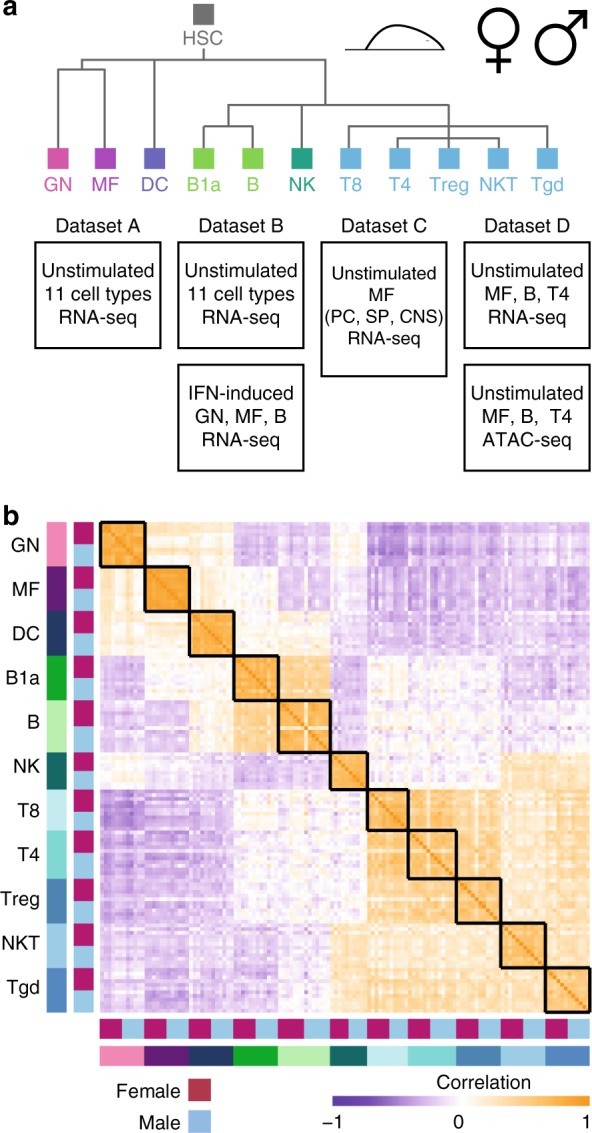
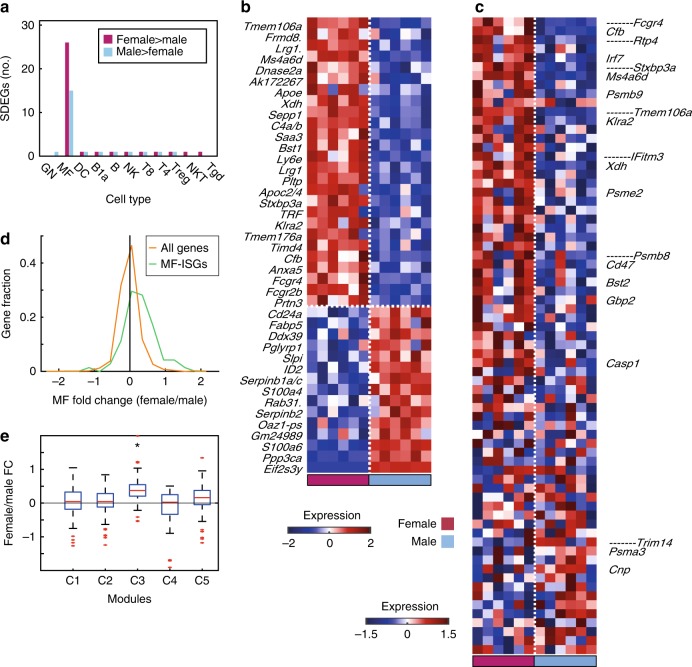
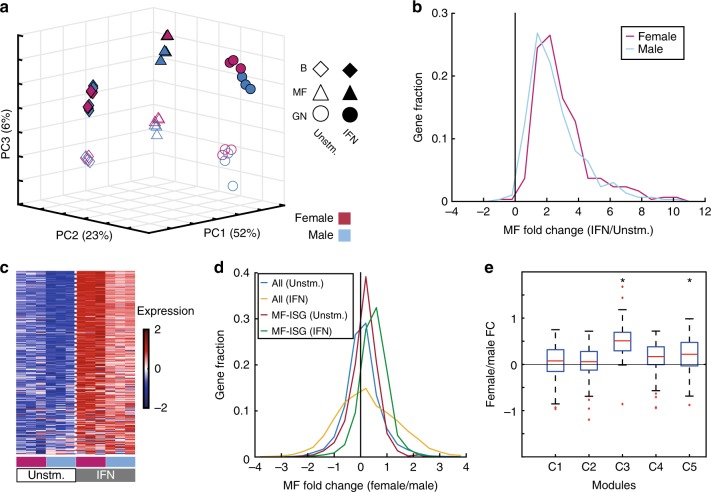
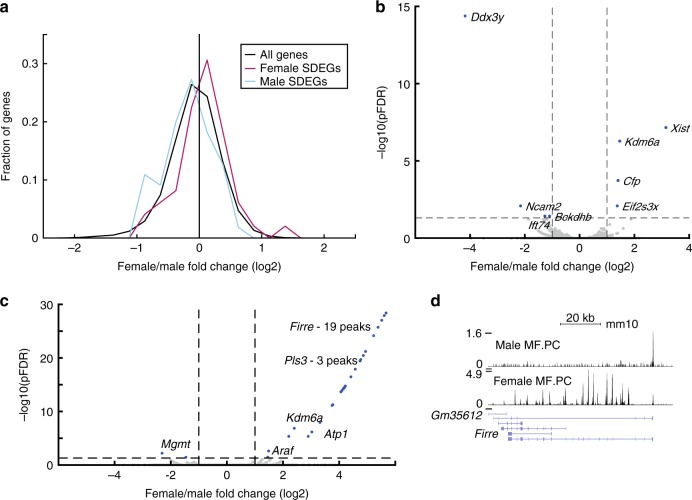
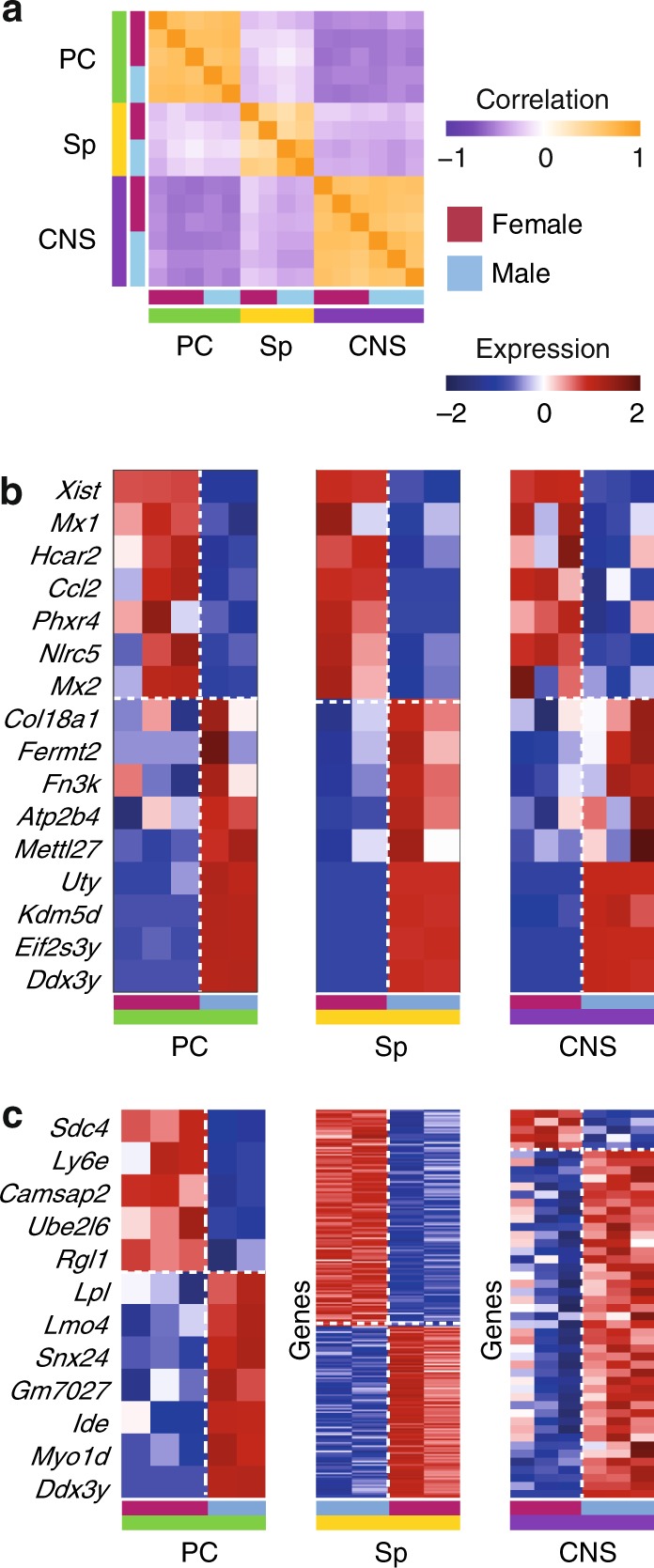
Sexual dimorphism in the mammalian immune system is manifested as more frequent and severe infectious diseases in males and, on the other hand, higher rates of autoimmune disease in females, yet insights underlying those differences are still lacking. Here we characterize sex differences in the immune system by RNA and ATAC sequence profiling of untreated and interferon-induced immune cell types in male and female mice. We detect very few differentially expressed genes between male and female immune cells except in macrophages from three different tissues. Accordingly, very few genomic regions display differences in accessibility between sexes. Transcriptional sexual dimorphism in macrophages is mediated by genes of innate immune pathways, and increases after interferon stimulation. Thus, the stronger immune response of females may be due to more activated innate immune pathways prior to pathogen invasion.
Overview
The claims and statistics of this paper haven’t been checked yet.
Free: it reads the open-access text and checks the first 5 claims that cite a source we can check. Create a free account to check every claim.
Integrity signals
Registry
Cites
Statistics
Figures
Verification
Claims the paper makes
The claims and statistics of this paper haven’t been checked yet.
Free: it reads the open-access text and checks the first 5 claims that cite a source we can check. Create a free account to check every claim.
Claims other papers make about this one
Each is checked against this paper’s own text: does it say what the citing paper says it does?
The source backs part of the claim, not all of it — or backs it for a different population, condition or comparison.
In the citing paper
“IFN-associated genes, including IFN regulatory factor (Irf1), are enriched in naive female brain microglia42,43 and subsequently are found to be more responsive to IFN stimulation.42,44”
From Characterization of the ocular inflammatory response to AAV reveals divergence by sex and age (2025) · cites this paper as [44]
Experimental — accuracy not yet measured
Self-check
Percentages, sums and reported differences re-computed from the paper’s own numbers.
The self-check needs the paper’s full text.
Citations
Cites
Controlling the False Discovery Rate: A Practical and Powerful Approach to Multiple Testing
Benjamini, Y., & Hochberg, Y. (1995) · Journal of the Royal Statistical Society Series B: Statistical Methodology · doi:10.1111/j.2517-6161.1995.tb02031.x · Cited by 109,482
The Sequence Alignment/Map format and SAMtools
Li, H., Handsaker, B., Wysoker, A., Fennell, T., Ruan, J., Homer, N., Marth, G., Abecasis, G., Durbin, R., & 1000 Genome Project Data Processing Subgroup (2009) · Bioinformatics · doi:10.1093/bioinformatics/btp352 · Cited by 62,041
Fast gapped-read alignment with Bowtie 2
Langmead, B., & Salzberg, S. L. (2012) · Nature Methods · doi:10.1038/nmeth.1923 · Cited by 56,400
Subramanian, A., Tamayo, P., Mootha, V. K., Mukherjee, S., Ebert, B. L., Gillette, M. A., Paulovich, A., Pomeroy, S. L., Golub, T. R., Lander, E. S., et al. (2005) · Proceedings of the National Academy of Sciences · doi:10.1073/pnas.0506580102 · Cited by 53,625
BEDTools: a flexible suite of utilities for comparing genomic features
Quinlan, A. R., & Hall, I. M. (2010) · Bioinformatics · doi:10.1093/bioinformatics/btq033 · Cited by 27,437
HISAT: a fast spliced aligner with low memory requirements
Kim, D., Langmead, B., & Salzberg, S. L. (2015) · Nature Methods · doi:10.1038/nmeth.3317 · Cited by 24,112
Trapnell, C., Roberts, A., Goff, L., Pertea, G., Kim, D., Kelley, D. R., Pimentel, H., Salzberg, S. L., Rinn, J. L., & Pachter, L. (2012) · Nature Protocols · doi:10.1038/nprot.2012.016 · Cited by 12,116
Statistical significance for genomewide studies
Storey, J. D., & Tibshirani, R. (2003) · Proceedings of the National Academy of Sciences · doi:10.1073/pnas.1530509100 · Cited by 9,692
Molecular signatures database (MSigDB) 3.0
Liberzon, A., Subramanian, A., Pinchback, R., Thorvaldsdóttir, H., Tamayo, P., & Mesirov, J. P. (2011) · Bioinformatics · doi:10.1093/bioinformatics/btr260 · Cited by 7,111
Full-length RNA-seq from single cells using Smart-seq2
Picelli, S., Faridani, O. R., Björklund, Å. K., Winberg, G., Sagasser, S., & Sandberg, R. (2014) · Nature Protocols · doi:10.1038/nprot.2014.006 · Cited by 4,137
Cell types in the mouse cortex and hippocampus revealed by single-cell RNA-seq
Zeisel, A., Muñoz-Manchado, A. B., Codeluppi, S., Lönnerberg, P., La Manno, G., Juréus, A., Marques, S., Munguba, H., He, L., Betsholtz, C., et al. (2015) · Science · doi:10.1126/science.aaa1934 · Cited by 3,124
Smart-seq2 for sensitive full-length transcriptome profiling in single cells
Picelli, S., Björklund, Å. K., Faridani, O. R., Sagasser, S., Winberg, G., & Sandberg, R. (2013) · Nature Methods · doi:10.1038/nmeth.2639 · Cited by 2,358
The Immunological Genome Project: networks of gene expression in immune cells
The Immunological Genome Project Consortium, Heng, T. S. P., Painter, M. W., Elpek, K., Lukacs-Kornek, V., Mauermann, N., Turley, S. J., Koller, D., Kim, F. S., Wagers, A. J., et al. (2008) · Nature Immunology · doi:10.1038/ni1008-1091 · Cited by 1,864
Ensembl BioMarts: a hub for data retrieval across taxonomic space
Kinsella, R. J., Kahari, A., Haider, S., Zamora, J., Proctor, G., Spudich, G., Almeida-King, J., Staines, D., Derwent, P., Kerhornou, A., et al. (2011) · Database · doi:10.1093/database/bar030 · Cited by 1,437
Banerjee, S., Biehl, A., Gadina, M., Hasni, S., & Schwartz, D. M. (2017) · Drugs · doi:10.1007/s40265-017-0701-9 · Cited by 1,206
Corces, M. R., Buenrostro, J. D., Wu, B., Greenside, P. G., Chan, S. M., Koenig, J. L., Snyder, M. P., Pritchard, J. K., Kundaje, A., Greenleaf, W. J., et al. (2016) · Nature Genetics · doi:10.1038/ng.3646 · Cited by 1,151
Type I Interferon in Systemic Lupus Erythematosus and Other Autoimmune Diseases
Banchereau, J., & Pascual, V. (2006) · Immunity · doi:10.1016/j.immuni.2006.08.010 · Cited by 963
A Gender Gap in Autoimmunity: Task Force on Gender, Multiple Sclerosis and Autoimmunity
Whitacre, C. C., Reingold, S. C., O'Looney, P. A., Blankenhorn, E., Brinley, F., Collier, E., Duquette, P., Fox, H., Giesser, B., Gilmore, W., et al. (1999) · Science · doi:10.1126/science.283.5406.1277 · Cited by 851
The Xs and Y of immune responses to viral vaccines
Klein, S. L., Jedlicka, A., & Pekosz, A. (2010) · The Lancet Infectious Diseases · doi:10.1016/s1473-3099(10)70049-9 · Cited by 815
Sex hormones, immune responses, and autoimmune diseases. Mechanisms of sex hormone action.
Ahmed, S. A., Penhale, W. J., & Talal, N. (1985) · PubMed · Cited by 813
The X chromosome in immune functions: when a chromosome makes the difference
Libert, C., Dejager, L., & Pinheiro, I. (2010) · Nature Reviews Immunology · doi:10.1038/nri2815 · Cited by 781
Microbiome Influences Prenatal and Adult Microglia in a Sex-Specific Manner
Thion, M. S., Low, D., Silvin, A., Chen, J., Grisel, P., Schulte-Schrepping, J., Blecher, R., Ulas, T., Squarzoni, P., Hoeffel, G., et al. (2018) · Cell · doi:10.1016/j.cell.2017.11.042 · Cited by 779
Regulation of the Immune System by Sex Steroids*
GROSSMAN, C. J. (1984) · Endocrine Reviews · doi:10.1210/edrv-5-3-435 · Cited by 667
The function of Fcγ receptors in dendritic cells and macrophages
Guilliams, M., Bruhns, P., Saeys, Y., Hammad, H., & Lambrecht, B. N. (2014) · Nature Reviews Immunology · doi:10.1038/nri3582 · Cited by 639
Sexual Dimorphism in Innate Immunity
Jaillon, S., Berthenet, K., & Garlanda, C. (2019) · Clinical Reviews in Allergy & Immunology · doi:10.1007/s12016-017-8648-x · Cited by 639
Topological organization of multichromosomal regions by the long intergenic noncoding RNA Firre
Hacisuleyman, E., Goff, L. A., Trapnell, C., Williams, A., Henao-Mejia, J., Sun, L., McClanahan, P., Hendrickson, D. G., Sauvageau, M., Kelley, D. R., et al. (2014) · Nature Structural & Molecular Biology · doi:10.1038/nsmb.2764 · Cited by 628
Banerjee, S., Biehl, A., Gadina, M., Hasni, S., & Schwartz, D. M. (2017) · Drugs · doi:10.1007/s40265-017-0736-y · Cited by 590
Mouse and human FcR effector functions
Bruhns, P., & Jönsson, F. (2015) · Immunological Reviews · doi:10.1111/imr.12350 · Cited by 579
Buja, A., & Eyuboglu, N. (1992) · Multivariate Behavioral Research · doi:10.1207/s15327906mbr2704_2 · Cited by 558
Polarization of the Effects of Autoimmune and Neurodegenerative Risk Alleles in Leukocytes
Raj, T., Rothamel, K., Mostafavi, S., Ye, C., Lee, M. N., Replogle, J. M., Feng, T., Lee, M., Asinovski, N., Frohlich, I., et al. (2014) · Science · doi:10.1126/science.1249547 · Cited by 506
Self-citationThe influence of sex and gender on the immune response
Oertelt-Prigione, S. (2012) · Autoimmunity Reviews · doi:10.1016/j.autrev.2011.11.022 · Cited by 459
Common Genetic Variants Modulate Pathogen-Sensing Responses in Human Dendritic Cells
Lee, M. N., Ye, C., Villani, A.-C., Raj, T., Li, W., Eisenhaure, T. M., Imboywa, S. H., Chipendo, P. I., Ran, F. A., Slowikowski, K., et al. (2014) · Science · doi:10.1126/science.1246980 · Cited by 442
Self-citationSex Differences in Lipid and Lipoprotein Metabolism: It's Not Just about Sex Hormones
Wang, X., Magkos, F., & Mittendorfer, B. (2011) · The Journal of Clinical Endocrinology & Metabolism · doi:10.1210/jc.2010-2061 · Cited by 422
Chiche, L., Jourde‐Chiche, N., Whalen, E., Presnell, S., Gersuk, V., Dang, K., Anguiano, E., Quinn, C., Burtey, S., Berland, Y., et al. (2014) · Arthritis & Rheumatology · doi:10.1002/art.38628 · Cited by 420
The cis-Regulatory Atlas of the Mouse Immune System
Yoshida, H., Lareau, C. A., Ramirez, R. N., Rose, S. A., Maier, B., Wroblewska, A., Desland, F., Chudnovskiy, A., Mortha, A., Dominguez, C., et al. (2019) · Cell · doi:10.1016/j.cell.2018.12.036 · Cited by 395
Self-citationClocchiatti, A., Cora, E., Zhang, Y., & Dotto, G. P. (2016) · Nature Reviews Cancer · doi:10.1038/nrc.2016.30 · Cited by 374
Age and sex associations of 40 autoimmune diseases
Beeson, P. B. (1994) · The American Journal of Medicine · doi:10.1016/0002-9343(94)90173-2 · Cited by 352
Markle, J. G., & Fish, E. N. (2014) · Trends in Immunology · doi:10.1016/j.it.2013.10.006 · Cited by 347
Parsing the interferon transcriptional network and its disease associations
Mostafavi, S., Yoshida, H., Moodley, D., LeBoité, H., Rothamel, K., Raj, T., Ye, C. J., Chevrier, N., Zhang, S.-Y., Feng, T., et al. (2016) · Cell · doi:10.1016/j.cell.2015.12.032 · Cited by 337
Self-citationSex Bias in Infectious Disease Epidemiology: Patterns and Processes
Guerra-Silveira, F., & Abad-Franch, F. (2013) · PLoS ONE · doi:10.1371/journal.pone.0062390 · Cited by 327
Soulat, D., Bürckstümmer, T., Westermayer, S., Goncalves, A., Bauch, A., Stefanovic, A., Hantschel, O., Bennett, K. L., Decker, T., & Superti-Furga, G. (2008) · The EMBO Journal · doi:10.1038/emboj.2008.126 · Cited by 325
Diagnostic criteria for systemic lupus erythematosus: A critical review
Yu, C., Gershwin, M. E., & Chang, C. (2014) · Journal of Autoimmunity · doi:10.1016/j.jaut.2014.01.004 · Cited by 321
Scotland, R. S., Stables, M. J., Madalli, S., Watson, P., & Gilroy, D. W. (2011) · Blood · doi:10.1182/blood-2011-03-340281 · Cited by 320
Hanamsagar, R., Alter, M. D., Block, C. S., Sullivan, H., Bolton, J. L., & Bilbo, S. D. (2018) · Glia · doi:10.1002/glia.23277 · Cited by 295
Sexual dimorphism in mammalian gene expression
Rinn, J. L., & Snyder, M. (2005) · Trends in Genetics · doi:10.1016/j.tig.2005.03.005 · Cited by 286
The landscape of sex-differential transcriptome and its consequent selection in human adults
Gershoni, M., & Pietrokovski, S. (2017) · BMC Biology · doi:10.1186/s12915-017-0352-z · Cited by 266
Yang, F., Deng, X., Ma, W., Berletch, J. B., Rabaia, N., Wei, G., Moore, J. M., Filippova, G. N., Xu, J., Liu, Y., et al. (2015) · Genome Biology · doi:10.1186/s13059-015-0618-0 · Cited by 261
Intersection of population variation and autoimmunity genetics in human T cell activation
Ye, C. J., Feng, T., Kwon, H.-K., Raj, T., Wilson, M. T., Asinovski, N., McCabe, C., Lee, M. H., Frohlich, I., Paik, H.-I., et al. (2014) · Science · doi:10.1126/science.1254665 · Cited by 236
Self-citationPiasecka, B., Duffy, D., Urrutia, A., Quach, H., Patin, E., Posseme, C., Bergstedt, J., Charbit, B., Rouilly, V., MacPherson, C. R., et al. (2018) · Proceedings of the National Academy of Sciences · doi:10.1073/pnas.1714765115 · Cited by 213
Dunn, S. E., Ousman, S. S., Sobel, R. A., Zuniga, L., Baranzini, S. E., Youssef, S., Crowell, A., Loh, J., Oksenberg, J., & Steinman, L. (2007) · The Journal of Experimental Medicine · doi:10.1084/jem.20061839 · Cited by 210
C1q restrains autoimmunity and viral infection by regulating CD8 + T cell metabolism
Ling, G. S., Crawford, G., Buang, N., Bartok, I., Tian, K., Thielens, N. M., Bally, I., Harker, J. A., Ashton-Rickardt, P. G., Rutschmann, S., et al. (2018) · Science · doi:10.1126/science.aao4555 · Cited by 199
Identification of transcriptional regulators in the mouse immune system
the Immunological Genome Project Consortium, Jojic, V., Shay, T., Sylvia, K., Zuk, O., Sun, X., Kang, J., Regev, A., & Koller, D. (2013) · Nature Immunology · doi:10.1038/ni.2587 · Cited by 194
Self-citationMarriott, I., Bost, K. L., & Huet-Hudson, Y. M. (2006) · Journal of Reproductive Immunology · doi:10.1016/j.jri.2006.01.004 · Cited by 193
Gender Specific Differences in the Immune Response to Infection
McClelland, E. E., & Smith, J. M. (2011) · Archivum Immunologiae et Therapiae Experimentalis · doi:10.1007/s00005-011-0124-3 · Cited by 186
Zuk, M. (2009) · PLoS Pathogens · doi:10.1371/journal.ppat.1000267 · Cited by 168
Sex differences in the human peripheral blood transcriptome
Jansen, R., Batista, S., Brooks, A. I., Tischfield, J. A., Willemsen, G., van Grootheest, G., Hottenga, J.-J., Milaneschi, Y., Mbarek, H., Madar, V., et al. (2014) · BMC Genomics · doi:10.1186/1471-2164-15-33 · Cited by 164
Rinn, J. L., Rozowsky, J. S., Laurenzi, I. J., Petersen, P. H., Zou, K., Zhong, W., Gerstein, M., & Snyder, M. P. (2004) · Developmental Cell · doi:10.1016/j.devcel.2004.05.005 · Cited by 152
Individuality and Variation of Personal Regulomes in Primary Human T Cells
Qu, K., Zaba, L. C., Giresi, P. G., Li, R., Longmire, M., Kim, Y. H., Greenleaf, W. J., & Chang, H. Y. (2015) · Cell Systems · doi:10.1016/j.cels.2015.06.003 · Cited by 151
Lu, Y., Liu, X., Xie, M., Liu, M., Ye, M., Li, M., Chen, X., Li, X., & Zhou, R. (2017) · The Journal of Immunology · doi:10.4049/jimmunol.1700091 · Cited by 148
Modulation of microRNA editing, expression and processing by ADAR2 deaminase in glioblastoma
Tomaselli, S., Galeano, F., Alon, S., Raho, S., Galardi, S., Polito, V. A., Presutti, C., Vincenti, S., Eisenberg, E., Locatelli, F., et al. (2015) · Genome Biology · doi:10.1186/s13059-014-0575-z · Cited by 143
Targeting interferons and their pathways in systemic lupus erythematosus
Chasset, F., & Arnaud, L. (2018) · Autoimmunity Reviews · doi:10.1016/j.autrev.2017.11.009 · Cited by 138
Sex-Specific Selection and Sex-Biased Gene Expression in Humans and Flies
Cheng, C., & Kirkpatrick, M. (2016) · PLoS Genetics · doi:10.1371/journal.pgen.1006170 · Cited by 136
Complement factor P is a ligand for the natural killer cell–activating receptor NKp46
Narni-Mancinelli, E., Gauthier, L., Baratin, M., Guia, S., Fenis, A., Deghmane, A.-E., Rossi, B., Fourquet, P., Escalière, B., Kerdiles, Y. M., et al. (2017) · Science Immunology · doi:10.1126/sciimmunol.aam9628 · Cited by 133
Function and evolution of local repeats in the Firre locus
Hacisuleyman, E., Shukla, C. J., Weiner, C. L., & Rinn, J. L. (2016) · Nature Communications · doi:10.1038/ncomms11021 · Cited by 106
Regulation of the ESC transcriptome by nuclear long noncoding RNAs
Bergmann, J. H., Li, J., Eckersley-Maslin, M. A., Rigo, F., Freier, S. M., & Spector, D. L. (2015) · Genome Research · doi:10.1101/gr.189027.114 · Cited by 104
The RNA helicase DDX3X is an essential mediator of innate antimicrobial immunity
Szappanos, D., Tschismarov, R., Perlot, T., Westermayer, S., Fischer, K., Platanitis, E., Kallinger, F., Novatchkova, M., Lassnig, C., Müller, M. M., et al. (2018) · PLoS Pathogens · doi:10.1371/journal.ppat.1007397 · Cited by 86
Sex-specific regulation of immune responses by PPARs
Park, H.-J., & Choi, J.-M. (2017) · Experimental & Molecular Medicine · doi:10.1038/emm.2017.102 · Cited by 84
Lee, H.-M., Sugino, H., Aoki, C., & Nishimoto, N. (2011) · Arthritis Research & Therapy · doi:10.1186/ar3317 · Cited by 80
The Complement Cascade and Renal Disease
Kościelska−Kasprzak, K., Bartoszek, D., Myszka, M., Żabińska, M., & Klinger, M. (2013) · Archivum Immunologiae et Therapiae Experimentalis · doi:10.1007/s00005-013-0254-x · Cited by 73
Epigenetic control of the immune system: a lesson from Kabuki syndrome
Stagi, S., Gulino, A. V., Lapi, E., & Rigante, D. (2015) · Immunologic Research · doi:10.1007/s12026-015-8707-4 · Cited by 68
The Impact of Sex on Alloimmunity
Lau, A., West, L. J., & Tullius, S. G. (2018) · Trends in Immunology · doi:10.1016/j.it.2018.01.008 · Cited by 50
Sex Specific Gene Regulation and Expression QTLs in Mouse Macrophages from a Strain Intercross
Bhasin, J., Chakrabarti, E., Peng, D., Kulkarni, A., Chen, X., & Smith, J. D. (2008) · PLoS ONE · doi:10.1371/journal.pone.0001435 · Cited by 48
X chromosome inactivation: new players in the initiation of gene silencing
Pinheiro, I., & Heard, E. (2017) · F1000Research · doi:10.12688/f1000research.10707.1 · Cited by 47
Aricò, E., & Belardelli, F. (2012) · Journal of Interferon & Cytokine Research · doi:10.1089/jir.2011.0077 · Cited by 45
Cell-Autonomous Sex Differences in Gene Expression in Chicken Bone Marrow–Derived Macrophages
García‐Morales, C., Nandi, S., Zhao, D., Sauter, K. A. D., Vervelde, L., McBride, D., Sang, H., Clinton, M., & Hume, D. A. (2015) · The Journal of Immunology · doi:10.4049/jimmunol.1401982 · Cited by 35
Endocrine and immune system interactions during pregnancy
Brazão, V., Kuehn, C. C., Santos, C. D., da Costa, C. M. B., Júnior, J. C. D. P., & Abrahão, A. A. C. (2014) · Immunobiology · doi:10.1016/j.imbio.2014.09.005 · Cited by 21
Elevated Oxidative Stress Impairs Hematopoietic Progenitor Function in C57BL/6 Substrains
Morales‐Hernández, A., Martinat, A., Chabot, A., Kang, G., & McKinney‐Freeman, S. (2018) · Stem Cell Reports · doi:10.1016/j.stemcr.2018.06.011 · Cited by 21
Cited by
Risk factors of critical & mortal COVID-19 cases: A systematic literature review and meta-analysis
Zheng, Z., Peng, F., Xu, B., Zhao, J., Liu, H., Peng, J., Li, Q., Jiang, C., Zhou, Y., Liu, S., et al. (2020) · Journal of Infection · doi:10.1016/j.jinf.2020.04.021 · Cited by 2,074
“Studies have found that women are less susceptible to viral infection than men, possibly because of the protection of X chromosome and sex hormones, which play an important role in innate and adaptive immunity [28] .”
Risk and Protective Factors for COVID-19 Morbidity, Severity, and Mortality
Zhang, J.-J., Dong, X., Liu, G.-H., & Gao, Y.-D. (2022) · Clinical Reviews in Allergy & Immunology · doi:10.1007/s12016-022-08921-5 · Cited by 715
“Apart from anatomical, lifestyle, behavioral, comorbidities, and socioeconomic differences between men and women, the protective role of X chromosome and hormones in innate and adaptive immunity may also predispose women to be less susceptible to viral infection than men [16, 82, 83].”
BackgroundDick, S. A., Wong, A., Hamidzada, H., Nejat, S., Nechanitzky, R., Vohra, S., Mueller, B., Zaman, R., Kantores, C., Aronoff, L., et al. (2022) · Science Immunology · doi:10.1126/sciimmunol.abf7777 · Cited by 538
Bienvenu, L. A., Noonan, J., Wang, X., & Peter, K. (2020) · Cardiovascular Research · doi:10.1093/cvr/cvaa284 · Cited by 338
“A gene expression study of the immune system in mice by Gal-Oz et al.(71) indicated that this sexual dimorphism is restricted mainly to macrophages.”
BackgroundInfluentialSexual Dimorphism in Innate Immunity: The Role of Sex Hormones and Epigenetics
Shepherd, R., Cheung, A. S., Pang, K., Saffery, R., & Novakovic, B. (2021) · Frontiers in Immunology · doi:10.3389/fimmu.2020.604000 · Cited by 304
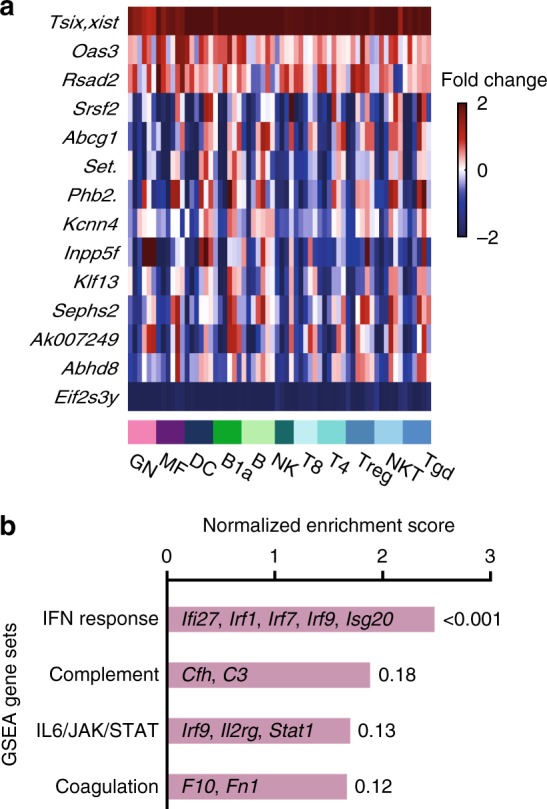
“Female-enriched pathways included the response to interferon, complement, IL-6/JAK/ STAT pathways and coagulation pathways (110).”
BackgroundInfluential
Metadata
- Authors
- Gal-Oz, S. T., Maier, B., Yoshida, H., Seddu, K., Elbaz, N., Czysz, C., Zuk, O., Stranger, B. E., Ner-Gaon, H., & Shay, T.
- Affiliations
- Ben-Gurion University of the Negev (IL)
- Icahn School of Medicine at Mount Sinai (US)
- Harvard University (US)
- University of Chicago (US)
- Hebrew University of Jerusalem (IL)
- Northwestern University (US)
- Corresponding author
- Shay, Tal
- ORCID
- Venue
- Nature Communications
- Published
- 2019-09-20
- Volume
- 10
- Issue
- 1
- Pages
- 4295-4295
- ISSN
- 2041-1723 (ISSN-L)
- PMC
- PMC6754408
- OpenAlex
- W2973429485
- Cited by
- 274
- References
- 77
- Citations by year
- 2026: 24 · 2025: 37 · 2024: 50 · 2023: 36 · 2022: 59 · 2021: 37 · 2020: 31
- FWCI
- 29.05
- Type
- journal article
- Language
- en
- Open access
- gold
- doi.org
- Licence
- cc-by
- creativecommons.org/licenses/by/4.0 (tdm)
- creativecommons.org/licenses/by/4.0 (vor)
- Locations
- Nature Communications (publishedVersion, cc-by)
- PubMed Central (publishedVersion, cc-by)
- PubMed (publishedVersion)
- RePEc: Research Papers in Economics (submittedVersion)
- DOAJ (DOAJ: Directory of Open Access Journals) (submittedVersion, cc-by-sa)
- DOAJ (DOAJ: Directory of Open Access Journals) (submittedVersion)
- Funders
- U.S. Department of Health & Human Services | NIH | National Institute of Allergy and Infectious Diseases (R24AI072073)
- Israel Science Foundation (1644/15, 500/15)
- Hi-Tech, Bio-Tech, Chemo-tech fellowship of Ben-Gurion University of the Negev
- Topics
- Health Sciences › Medicine › Public Health, Environmental and Occupational Health › Sex and Gender in Healthcare
- Life Sciences › Biochemistry, Genetics and Molecular Biology › Genetics › Genetic and Clinical Aspects of Sex Determination and Chromosomal Abnormalities
- Life Sciences › Immunology and Microbiology › Immunology › Immune Response and Inflammation
- Keywords
- sexual dimorphism, immune system, sex differences, macrophages, innate immunity, interferon stimulation, gene expression, chromatin accessibility, autoimmune disease, infection susceptibility, immune transcriptome
- MeSH terms
- Animals, Female, Gene Expression Regulation, Humans, Immune System, Immunity, Innate, Interferons, Macrophages, Male, Mice, Inbred C57BL, Monocytes, RNA, Sex Characteristics, Sex Factors, Computational Biology, Gene Expression Profiling, Genomics, Mice, Epigenomics, Transcriptome
About these checks
Registry, retraction, Cites and statistics results are computed, not judged, with one exception: a printed reference that no index lists is read once by a model before it counts as a citation error. Claims are extracted by a model and kept only when their quote appears verbatim in the text; each cited source is then checked, with a model’s help, for whether it says what the claim relies on. Those verdicts can be wrong — read the claim’s quote and the cited source before relying on one.
Statistics and arithmetic are recomputed, not judged.
Confidence bands are shown only for fields calibrated on our annotated test set. None is calibrated yet, so no band is shown.
What counts as a claim ›How we measure confidence ›How we check this ›
Are you an author, or do you see a problem with this page? Request a review
Data sources
Bibliographic data: Semantic Scholar, OpenAlex, Crossref.
Contains information from the Semantic Scholar Academic Graph Datasets, made available under the ODC Attribution License (ODC-BY 1.0).
Semantic Scholar’s data is described in: Kinney, R., et al. (2023). The Semantic Scholar Open Data Platform. arXiv:2301.10140.
