

Fungal dissemination is limited by liver macrophage filtration of the blood
Open accessThe DOI matches its Crossref record; 59 of the 59 references it cites were found in a registry or an index.
Abstract
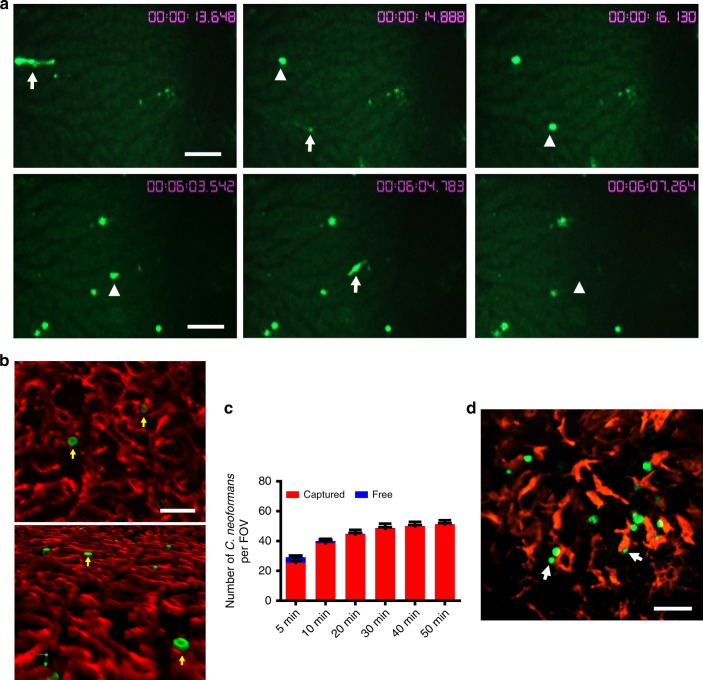
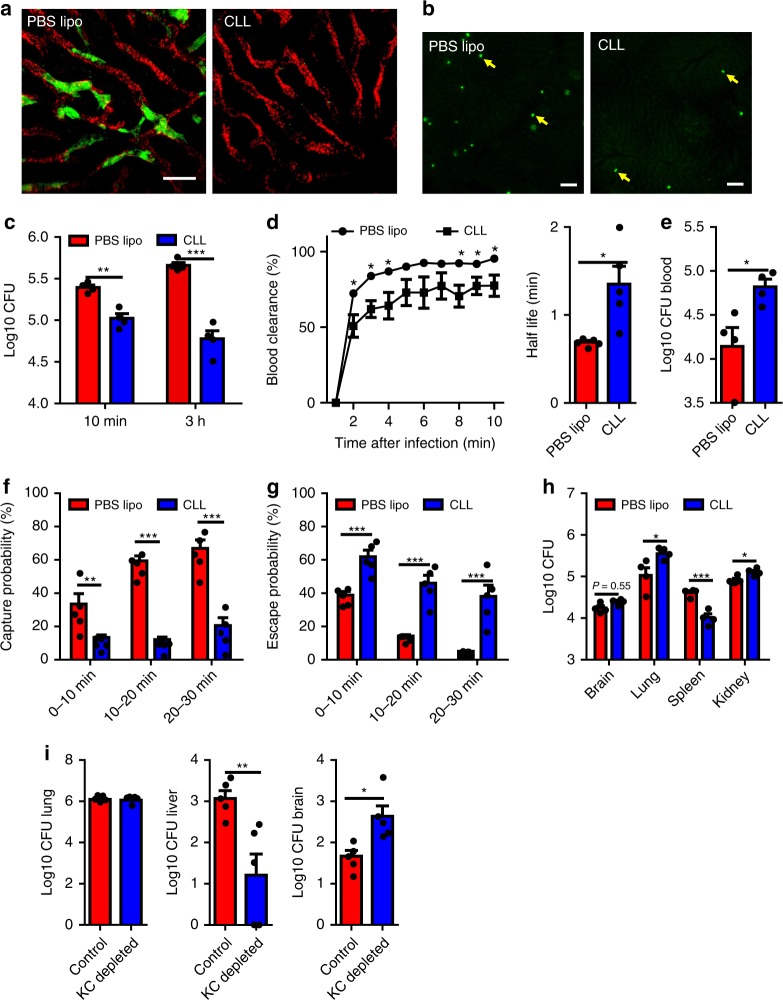
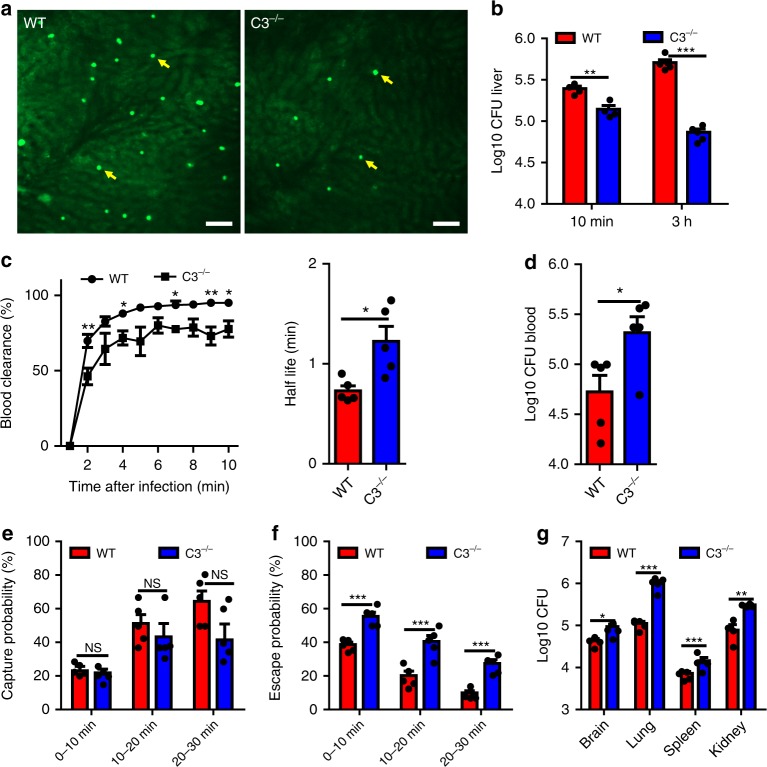
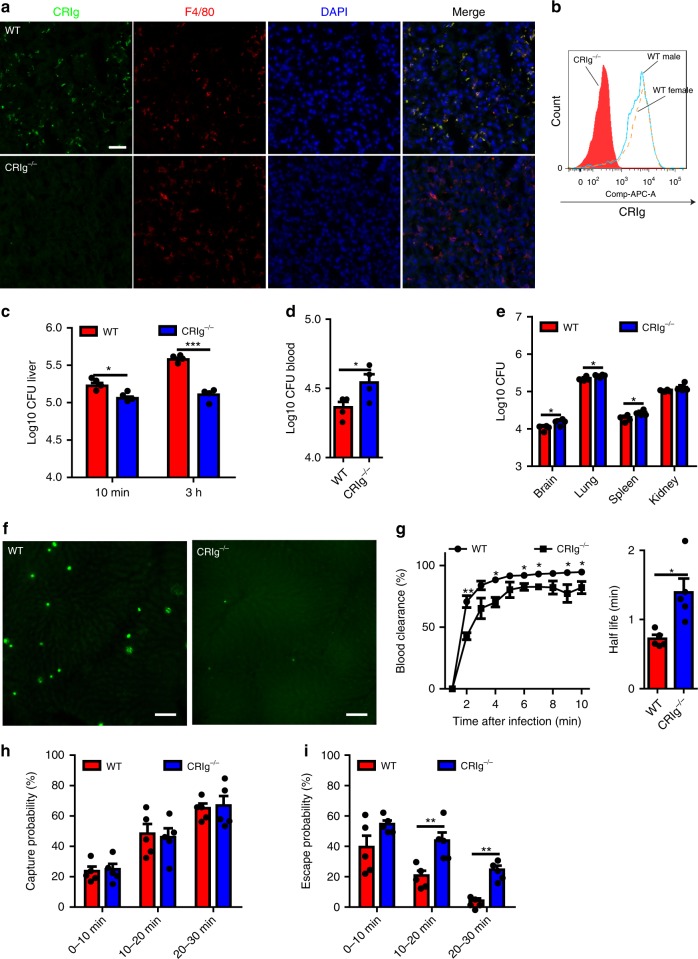
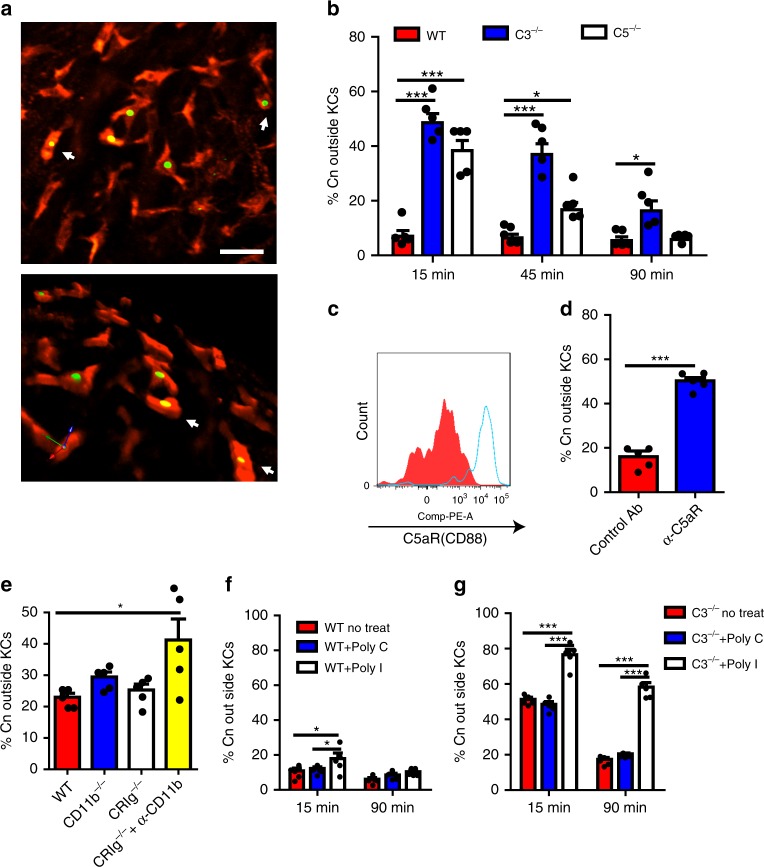
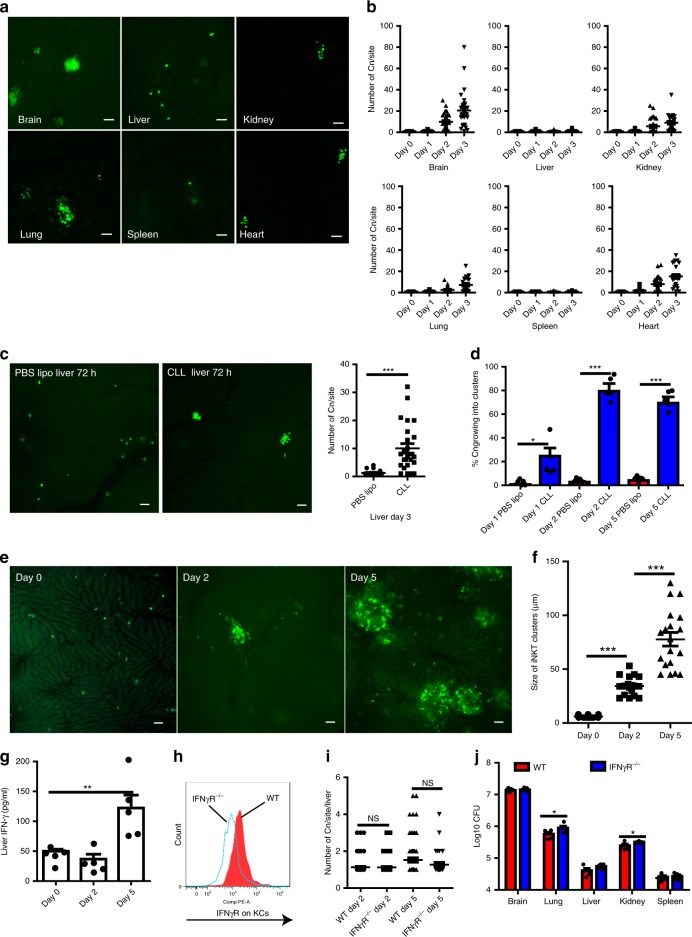
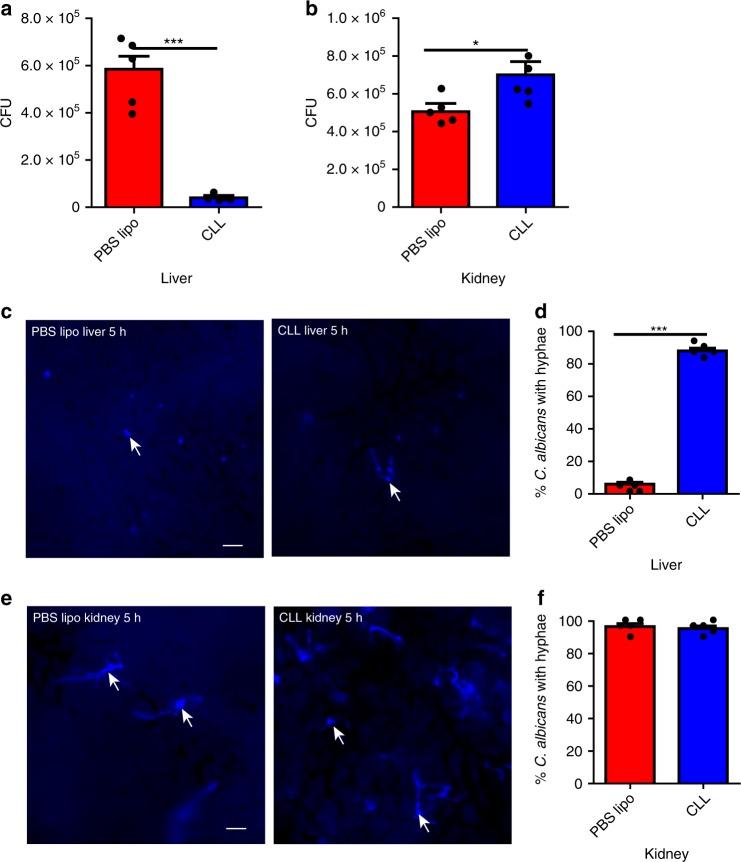
Fungal dissemination into the bloodstream is a critical step leading to invasive fungal infections. Here, using intravital imaging, we show that Kupffer cells (KCs) in the liver have a prominent function in the capture of circulating Cryptococcus neoformans and Candida albicans , thereby reducing fungal dissemination to target organs. Complement C3 but not C5, and complement receptor CRIg but not CR3, are involved in capture of C. neoformans . Internalization of C. neoformans by KCs is subsequently mediated by multiple receptors, including CR3, CRIg, and scavenger receptors, which work synergistically along with C5aR signaling. Following phagocytosis, the growth of C. neoformans is inhibited by KCs in an IFN-γ independent manner. Thus, the liver filters disseminating fungi from circulation via KCs, providing a mechanistic explanation for the enhanced risk of cryptococcosis among individuals with liver diseases, and suggesting a therapeutic strategy to prevent fungal dissemination through enhancing KC functions.
Overview
The claims and statistics of this paper haven’t been checked yet.
Free: it reads the open-access text and checks the first 5 claims that cite a source we can check. Create a free account to check every claim.
Integrity signals
Registry
Cites
Statistics
Figures
Verification
Claims the paper makes
The claims and statistics of this paper haven’t been checked yet.
Free: it reads the open-access text and checks the first 5 claims that cite a source we can check. Create a free account to check every claim.
Claims other papers make about this one
Each is checked against this paper’s own text: does it say what the citing paper says it does?
The cited source says what the claim attributes to it.
In the citing paper
“In this context, recent results revealed that the liver plays a prominent role in filtering disseminating C. neoformans and C. albicans out of circulation through KCs [115, 116].”
From Mechanisms of fungal dissemination (2021) · cites this paper as [116]
The cited source says what the claim attributes to it.
In the citing paper
“This capture is mediated by KCs through the recognition of complement C3 on fungal cells by complement receptor CRIg (complement receptor of the immunoglobulin superfamily).”
From Mechanisms of fungal dissemination (2021) · cites this paper as [116]
The cited source says what the claim attributes to it.
In the citing paper
“In this regard, intravital microscopy has been recently used to study fungal dissemination through the imaging of dynamic interactions between fungal cells and endothelial cells as well as phagocytes [17, 91–93, 116, 129, 229].”
From Mechanisms of fungal dissemination (2021) · cites this paper as [116]
In the citing paper
“This demonstrates an important role for KCs in reducing fungal dissemination to other organs by directly removing organisms from circulation [116], and likely explains the association between liver disease and increased susceptibility to fungal infections [112–114].”
From Mechanisms of fungal dissemination (2021) · cites this paper as [116]
In the citing paper
“Following capture, KCs phagocytose C. neoformans and can inhibit fungal growth in a manner independent of IFN-γR signaling [116].”
From Mechanisms of fungal dissemination (2021) · cites this paper as [116]
1 more claim about this paper
Create a free account to see every claim other papers make about this one.
Self-check
Percentages, sums and reported differences re-computed from the paper’s own numbers.
The self-check needs the paper’s full text.
Citations
Cites
Hidden Killers: Human Fungal Infections
Brown, G. D., Denning, D. W., Gow, N. A. R., Levitz, S. M., Netea, M. G., & White, T. C. (2012) · Science Translational Medicine · doi:10.1126/scitranslmed.3004404 · Cited by 4,284
Mechanisms of phagocytosis in macrophages
Aderem, A., & Underhill, D. M. (1999) · Annual Review of Immunology · doi:10.1146/annurev.immunol.17.1.593 · Cited by 2,854
Park, B. J., Wannemuehler, K. A., Marston, B. J., Govender, N., Pappas, P. G., & Chiller, T. M. (2009) · AIDS · doi:10.1097/qad.0b013e328322ffac · Cited by 2,014
Serbina, N. V., & Pamer, E. G. (2006) · Nature Immunology · doi:10.1038/ni1309 · Cited by 1,669
Immune surveillance by the liver
Jenne, C. N., & Kubes, P. (2013) · Nature Immunology · doi:10.1038/ni.2691 · Cited by 1,047
The Cell Biology of Phagocytosis
Flannagan, R. S., Jaumouillé, V., & Grinstein, S. (2012) · Annual Review of Pathology: Mechanisms of Disease · doi:10.1146/annurev-pathol-011811-132445 · Cited by 1,023
Role of Kupffer cells in host defense and liver disease
Bilzer, M., Roggel, F., & Gerbes, A. L. (2006) · Liver International · doi:10.1111/j.1478-3231.2006.01342.x · Cited by 856
Infections with Cryptococcus neoformans in the Acquired Immunodeficiency Syndrome
Chuck, S. L., & Sande, M. A. (1989) · New England Journal of Medicine · doi:10.1056/nejm198909213211205 · Cited by 797
Hanna, R. N., Carlin, L. M., Hubbeling, H. G., Nackiewicz, D., Green, A. M., Punt, J. A., Geissmann, F., & Hedrick, C. C. (2011) · Nature Immunology · doi:10.1038/ni.2063 · Cited by 639
CRIg: A Macrophage Complement Receptor Required for Phagocytosis of Circulating Pathogens
Helmy, K. Y., Katschke, K. J., Gorgani, N. N., Kljavin, N. M., Elliott, J. M., Diehl, L., Scales, S. J., Ghilardi, N., & van Lookeren Campagne, M. (2006) · Cell · doi:10.1016/j.cell.2005.12.039 · Cited by 628
Cited by
Huang, X., Li, X., An, H., Wang, J., Ding, M., Wang, L., Li, L., Ji, Q., Qu, F., Wang, H., et al. (2022) · PLOS Pathogens · doi:10.1371/journal.ppat.1010693 · Cited by 179
Mechanisms of fungal dissemination
Strickland, A. B., & Shi, M. (2021) · Cellular and Molecular Life Sciences · doi:10.1007/s00018-020-03736-z · Cited by 127
Self-citationMechanisms of Pathogenic Candida Species to Evade the Host Complement Attack
Singh, D. K., Tóth, R., & Gácser, A. (2020) · Frontiers in Cellular and Infection Microbiology · doi:10.3389/fcimb.2020.00094 · Cited by 135
“Macrophages in the kidney and liver are also involved in the clearance of pathogenic fungi (Lionakis et al., 2013; Coelho and Drummond, 2019; Sun et al., 2019).”
BackgroundA dissemination-prone morphotype enhances extrapulmonary organ entry by Cryptococcus neoformans
Denham, S. T., Brammer, B., Chung, K. Y., Wambaugh, M. A., Bednarek, J. M., Guo, L., Moreau, C. T., & Brown, J. C. S. (2022) · Cell Host & Microbe · doi:10.1016/j.chom.2022.08.017 · Cited by 80
Epigenetic Regulation of Kupffer Cell Function in Health and Disease
Bennett, H., Troutman, T. D., Sakai, M., & Glass, C. K. (2021) · Frontiers in Immunology · doi:10.3389/fimmu.2020.609618 · Cited by 66
Functional vulnerability of liver macrophages to capsules defines virulence of blood-borne bacteria
An, H., Qian, C., Huang, Y., Li, J., Tian, X., Feng, J., Hu, J., Fang, Y., Jiao, F., Zeng, Y., et al. (2022) · The Journal of Experimental Medicine · doi:10.1084/jem.20212032 · Cited by 69
Self-citationSmall, A., Harvey, S., Kaur, J., Putty, T., Quach, A., Munawara, U., Perveen, K., McPhee, A. J., Hii, C. S. T., & Ferrante, A. (2021) · Communications Biology · doi:10.1038/s42003-021-01943-3 · Cited by 62
Austermeier, S., Kasper, L., Westman, J., & Gresnigt, M. S. (2020) · Current Opinion in Microbiology · doi:10.1016/j.mib.2020.05.007 · Cited by 55
Liver macrophages: development, dynamics, and functions
Nusse, Y., & Kubes, P. (2025) · Cellular & Molecular Immunology · doi:10.1038/s41423-025-01298-3 · Cited by 50
König, A., Hube, B., & Kasper, L. (2020) · Toxins · doi:10.3390/toxins12080469 · Cited by 49
Mba, I. E., & Nweze, E. I. (2020) · World Journal of Microbiology and Biotechnology · doi:10.1007/s11274-020-02940-0 · Cited by 55
“5 million and affect over a billion people yearly (Sun et al. 2019).”
BackgroundZhou, X., Khan, S. H., Huang, D., & Li, L. (2022) · Frontiers in Immunology · doi:10.3389/fimmu.2022.938470 · Cited by 57
“By recognizing C3b- and iC3b-tagged pathogens, accumulating evidence suggests a critical role of VSIG4 in host defense against bloodstream infections by promoting Kupffer cells to take up complement-tagged bacteria, fungi, and viruses (37, 81, 82).”
BackgroundImmune–metabolic interactions in homeostasis and the progression to NASH
Hoogerland, J. A., Staels, B., & Dombrowicz, D. (2022) · Trends in Endocrinology and Metabolism · doi:10.1016/j.tem.2022.07.001 · Cited by 48
Cryptococcus escapes host immunity: What do we know?
Yang, C., Huang, Y., Zhou, Y., Zang, X., Deng, H., Liu, Y., Shen, D., & Xue, X. (2022) · Frontiers in Cellular and Infection Microbiology · doi:10.3389/fcimb.2022.1041036 · Cited by 45
“, through the direct recognition of fungal cell wall PAMPs by PRRs (Sun et al., 2019).”
BackgroundReuwsaat, J. C. V., Agustinho, D. P., Motta, H., Brown, H., Chang, A. L., Brent, M. R., Kmetzsch, L., & Doering, T. L. (2021) · mBio · doi:10.1128/mbio.03457-20 · Cited by 41
“The latter might occur because the cells do not reach the blood or because they are rapidly eliminated, consistent with previous observations (98).”
ResultcRGD enables rapid phagocytosis of liposomal vancomycin for intracellular bacterial clearance
Li, G., Wang, M., Ding, T., Wang, J., Chen, T., Shao, Q., Jiang, K., Wang, L., Yu, Y., Pan, F., et al. (2022) · Journal of Controlled Release · doi:10.1016/j.jconrel.2022.02.030 · Cited by 37
Yassin, M. T., Al-Otibi, F. O., Al-Askar, A. A., & Elmaghrabi, M. M. (2023) · Microorganisms · doi:10.3390/microorganisms11081957 · Cited by 40
“5 million individuals and affecting more than a billion people annually [1].”
BackgroundFrancis, V. I., Liddle, C., Camacho, E., Kulkarni, M., Santos, S. R. D., Harvey, J. A., Ballou, E. R., Thomson, D. D., Brown, G. D., Hardwick, J. M., et al. (2024) · mBio · doi:10.1128/mbio.03078-23 · Cited by 36
“Live fungi, but not killed fungi nor beads, traversed capillaries into the brain parenchyma 6 h after injection (7, 8, 61), indicating an active process of crossing by the pathogenic fungus.”
BackgroundWang, J., An, H., Ding, M., Liu, Y., Wang, S., Qian, J., Wu, Q., Dong, H., Guo, Q., Tian, X., et al. (2023) · Science Translational Medicine · doi:10.1126/scitranslmed.ade0054 · Cited by 30
“Previous studies have demonstrated that KCs are responsible for capturing blood-borne bacteria ( 18 – 25 ), fungi ( 26 ), and parasites ( 27 ).”
BackgroundThe role of SPI1/VSIG4/THBS1 on glioblastoma progression through modulation of the PI3K/AKT pathway
Shen, J. M., Zhou, L., Ye, K., Gong, J., Wu, F., Mo, K., Zhu, Y., Chen, C., & Zhan, R. (2024) · Journal of Advanced Research · doi:10.1016/j.jare.2024.06.023 · Cited by 28
“The interaction between VSIG4 and complement proteins facilitates the phagocytosis of macrophages by identifying and binding C3b-and iC3b-marked pathogens, including bacteria, fungi, and viruses [8–10].”
Chen, P., Wu, H., Zhao, Y., Zhong, L., Zhang, Y., Zhan, X., Xiao, A., Huang, Y., Zhang, H., & Guan, B. (2024) · Advanced Materials · doi:10.1002/adma.202312985 · Cited by 31
Riedelberger, M., Penninger, P., Tscherner, M., Hadriga, B., Brunnhofer, C., Jenull, S., Stoiber, A., Bourgeois, C., Petryshyn, A., Glaser, W., et al. (2020) · iScience · doi:10.1016/j.isci.2020.101121 · Cited by 23
Kupffer cells in liver homeostasis and disease: from immune sentinels to metabolic gatekeepers
David, B. A., Andreata, F., Blériot, C., Ginhoux, F., Kubes, P., & Iannacone, M. (2026) · Nature reviews. Immunology · doi:10.1038/s41577-026-01288-0 · Cited by 31
“CRIg also functions as a pattern recognition receptor that binds bacterial components directly under shear conditions and was also shown to be a receptor for lipoteichoic acid (LTA), a cell wall component of most Gram-positive bacteria 129 (Fig.”
InfluentialLive Imaging of Innate and Adaptive Immune Responses in the Liver
Li, L., & Zeng, Z. (2020) · Frontiers in Immunology · doi:10.3389/fimmu.2020.564768 · Cited by 28
“This expression profile correlates with the indispensable role of CRIg in KC-mediated immune clearance of various blood-borne microbial species, including parasites (27), fungi (28), and virus (29), all in a complement-dependent manner.”
BackgroundOntogeny, functions and reprogramming of Kupffer cells upon infectious disease
Musrati, M. A., BAETSELIER, P. D., Movahedi, K., & Ginderachter, J. A. V. (2023) · Frontiers in Immunology · doi:10.3389/fimmu.2023.1238452 · Cited by 25
“Noteworthy, VSIG4-complement interactions seem of crucial importance to universal KC defense responses, since KCs utilize a similar mechanism to contain fungal infections (74).”
BackgroundTargeting hepatic macrophages for non-alcoholic fatty liver disease therapy
Tian, Y., Ni, Y., Zhang, T., Cao, Y., Zhou, M., & Zhao, C. (2024) · Frontiers in Cell and Developmental Biology · doi:10.3389/fcell.2024.1444198 · Cited by 26
Clinical Predictors Impacting Cryptococcal Dissemination and Poor Outcome in Patients With Cirrhosis
Cheng, J.-H., Yip, C., Jiang, Y., Zhou, L., Que, C., Luo, Y., Wang, X., Zhao, H., & Zhu, L. (2021) · Open Forum Infectious Diseases · doi:10.1093/ofid/ofab296 · Cited by 21
“Recently, Sun et al highlighted the “filtration function” of Kupffer cells in the liver to reduce fungal dissemination to target organs, proposing complement C3 in the capture of circulating yeast cells through complement receptor of the immunoglobulin superfamily signaling [29].”
BackgroundAn, H., Zhao, Z., Li, K., Huang, X., Tian, X., Meng, J., Zhou, H., Wu, J., Qionghai, D., Zhang, J.-R., et al. (2025) · Science Advances · doi:10.1126/sciadv.adq6399 · Cited by 28
“The liver macrophages are also famous for its swift capture of circulating bacteria and other particles ( 14 , 25 , 63 – 65 , 69 – 73 ).”
Self-citationElements of dissemination in cryptococcosis
Bednarek, J. M., & Brown, J. C. S. (2024) · mBio · doi:10.1128/mbio.02155-23 · Cited by 22
“Recently, Sun et al. confirmed that this filtration extends to fungi like C. neoformans (148).”
Sources and prevention of graft infection during long‐term ex situ liver perfusion
Eshmuminov, D., Mueller, M., Brugger, S. D., Borrego, L. B., Becker, D., Hefti, M., Hagedorn, C., Duskabilova, M., Tibbitt, M. W., Dutkowski, P., et al. (2021) · Transplant Infectious Disease · doi:10.1111/tid.13623 · Cited by 21
Myeloid cells in chronic liver inflammation
Patseas, D., El-Masry, A., Liu, Z., Ramachandran, P., & Triantafyllou, E. (2025) · Cellular and Molecular Immunology · doi:10.1038/s41423-025-01324-4 · Cited by 22
“Numerous studies have demonstrated that KCs play a vital role in controlling and resolving infections caused by bacteria such as Staphylococcus aureus and Escherichia coli ( E. coli ) [28, 37 – 48].”
Clinical features and Outcomes of Cryptococcemia patients with and without HIV infection
Zhao, H., Zhou, M., Zheng, Q., Zhu, M., Yang, Z., Hu, C., & Xu, L. (2021) · Mycoses · doi:10.1111/myc.13261 · Cited by 18
Intravital imaging: dynamic insights into liver immunity in health and disease
Wang, Y., Heymann, F., & Peiseler, M. (2024) · Gut · doi:10.1136/gutjnl-2023-331739 · Cited by 19
“other pathogens, including parasites, 45 fungi 46 and viruses.”
BackgroundEpelbaum, O., de Moraes, A. G., Olson, J. C., & Lionakis, M. S. (2025) · Intensive Care Medicine · doi:10.1007/s00134-025-07797-1 · Cited by 19
“Using elegant murine experiments, it has been shown that KC depletion leads to reduced clearance and increased dissemination of Cryptococcus neoformans and Candida albicans , indicating that KCs are a protective mechanism against systemic fungal spread [35].”
Cryptococcal infection in haematologic malignancies and haematopoietic stem cell transplantation
Nematollahi, S., & Dioverti, M. V. (2020) · Mycoses · doi:10.1111/myc.13153 · Cited by 16
Pathogen and host genetics underpinning cryptococcal disease
Coelho, C., & Farrer, R. A. (2020) · Advances in genetics · doi:10.1016/bs.adgen.2020.02.001 · Cited by 16
Desamero, M. J. M., Chung, S.-H., & Kakuta, S. (2021) · International Journal of Molecular Sciences · doi:10.3390/ijms22094778 · Cited by 15
Cohen, A. L., Jeng, E. E., Voorhies, M., Symington, J., Ali, N., Rodriguez, R. A., Bassik, M. C., & Sil, A. (2022) · PLoS Pathogens · doi:10.1371/journal.ppat.1010237 · Cited by 15
“This is not surprising given that C5a and C5aR have been previously 472 implicated in innate immune recognition of fungi (42, 43, 84).”
BackgroundCXCR6+CD4+ T cells promote mortality during Trypanosoma brucei infection
Liu, G., Abas, O. M., Strickland, A. B., Chen, Y., & Shi, M. (2021) · PLoS Pathogens · doi:10.1371/journal.ppat.1009968 · Cited by 16
Self-citationKupffer Cells Mediate Systemic Antifungal Immunity
Coelho, C., & Drummond, R. A. (2019) · Trends in Immunology · doi:10.1016/j.it.2019.11.001 · Cited by 10
Verma, N., Singh, S., Roy, A., Valsan, A., Garg, P., Pradhan, P., Chakrabarti, A., & Singh, M. (2022) · Mycoses · doi:10.1111/myc.13482 · Cited by 10
“Verma, 201913 India, (2016– 2016) Longitudinal with nested case control, Retrospective 39, Proven (11), Probable (28); pulmonary (13), renal (7); SFP (6); combined renal and pulmonary (6), fungaemia (5); combined renal and oesophageal (2) 15 without BI CTP: 12 (8– 15), MELD: 30 (14– 40), CLIF- C OF 14 (8– 18), CLIF- C…”
InfluentialMarinelli, T. M., Anagnostou, N. A., Daniel, S., Wigg, A. J., & Teh, J. S. K. (2019) · Transplant Infectious Disease · doi:10.1111/tid.13227 · Cited by 10
Chen, Y., Li, C., Sun, D., Strickland, A. B., Liu, G., & Shi, M. (2021) · Cellular Microbiology · doi:10.1111/cmi.13330 · Cited by 12
“(Levitz, DiBenedetto, & Diamond, 1987; Sun et al., 2019) and then infected mice with the double-labelled yeast cells.”
BackgroundSelf-citationA historical perspective of Kupffer cells in the context of infection
Graham, C. T., Gordon, S., & Kubes, P. (2024) · Cell and Tissue Research · doi:10.1007/s00441-024-03924-4 · Cited by 12
“Using intravital microscopy, Sun et al. (2019) observed that KC-expressed CRIg bound C3-opsonized Cryptococcus neoformans in vivo, leading to phagocytosis and clearance of the fungal patho-gen.”
InfluentialInnate Pulmonary Phagocytes and Their Interactions with Pathogenic Cryptococcus Species
Conn, B. N., & Wozniak, K. L. (2023) · Journal of Fungi · doi:10.3390/jof9060617 · Cited by 9
“Phagocytosis by KC involves complement receptors CR3 and CRIg and scavenger receptors, and inhibition of Cryptococcus growth is dependent on IFN-γ but not on IFNγR signaling [143].”
BackgroundXie, Y., Wang, R., Wu, Z., Xie, C., Gong, S., Zhang, J., Yu, H. B., & Song, Z. (2025) · International Immunopharmacology · doi:10.1016/j.intimp.2025.114922 · Cited by 8
Macrophage pyroptosis induced by Candida albicans
Zhang, F.-Y., Lian, N., & Li, M. (2024) · Pathogens and Disease · doi:10.1093/femspd/ftae003 · Cited by 12
“…r ole in innate imm u-nity against C. albicans infection (Qian et al. 1994 , Lionakis et al. 2011 , Drummond et al. 2015 , Leonardi et al. 2018 , Sun et al. 2019 ), among whic h, macr opha ges can not onl y dir ectl y de vour, kill C. albicans who are in the tissues and blood stream, but also…”
BackgroundInbred Mouse Models in Cryptococcus neoformans Research
Ding, M., & Nielsen, K. (2024) · Journal of Fungi · doi:10.3390/jof10060426 · Cited by 7
Sensing and responding to host-derived stress signals: lessons from fungal meningitis pathogen
Jung, K., Lee, S., Lee, K.-T., & Bahn, Y. (2024) · Current Opinion in Microbiology · doi:10.1016/j.mib.2024.102514 · Cited by 9
Hain, S., & Drummond, R. A. (2021) · Elsevier eBooks · doi:10.1016/b978-0-12-818731-9.00102-6 · Cited by 8
Michiels, L., Shameem, M., Vanhoffelen, E., Reséndiz-Sharpe, A., Johnston, S. A., Bézière, N., & Velde, G. V. (2025) · npj Imaging · doi:10.1038/s44303-025-00105-y · Cited by 9
“IVMcanbedoneatendpoint by exposing the organ of interest in a terminally sedated animal 156 , but ideally, to obtain longitudinal data, the organ should be accessed non-invasively.”
Li, Y., Li, H., Sun, T., & Ding, C. (2021) · Frontiers in Cellular and Infection Microbiology · doi:10.3389/fcimb.2021.774340 · Cited by 6
“phagosomes and energy metabolism are regulated at the pathogen–host axis at proteome and PTM levels and may play important roles during antagonistic interactions (Pandey et al., 2017; Schmidt et al., 2018; Li H. L. et al., 2019; Rosa et al., 2019; Sim et al., 2019; Sun et al., 2019; Vaz et al., 2019; Li et al., 2020;…”
BackgroundSelf-citationCase Series of End-Stage Liver Disease Patients with Severe Coccidioidomycosis
Ho, D., Kelley, K. D., Dandekar, S., Cohen, S. H., & Thompson, G. R. (2023) · Journal of Fungi · doi:10.3390/jof9030305 · Cited by 7
“Similarly, Kupffer cells have been found to capture circulating Cryptococcus and Candida spp preventing dissemination to other organs [16].”
BackgroundAdvances in intravital imaging of liver immunity using optical microscopy and labeling methods
Yuan, X., Xiang, Y., Dai, B., & Zhang, Z. (2023) · iRadiology · doi:10.1002/ird3.7 · Cited by 7
Zhao, Y., Lyu, Y., Zhang, Y., Li, S., Zhang, Y., Liu, Y., Tang, C., Zhang, Z., Li, D., & Zhang, H. (2021) · Medical Mycology · doi:10.1093/mmy/myaa094 · Cited by 5
Huang, Y., Zhao, Z., Li, K., Huang, X., Tian, X., Meng, J., Zhou, H., Wu, J., Dai, Q., Zhang, J., et al. (2024) · bioRxiv (Cold Spring Harbor Laboratory) · doi:10.1101/2024.04.26.591417 · Cited by 4
Self-citationYou, Y., Feng, Z., Lu, J., Xu, J., You, K., Liu, F., Wu, T., Song, H., & Liu, Z. (2026) · RSC Medicinal Chemistry · doi:10.1039/d5md00897b · Cited by 4
Self-citationSun, D., Sun, P., He, S., & Shi, M. (2020) · Journal of Leukocyte Biology · doi:10.1002/jlb.4a1219-078r · Cited by 4
Self-citationSchimanski, J., Gresnigt, M. S., Brunner, E., Werz, O., Hube, B., & Garscha, U. (2024) · European Journal of Immunology · doi:10.1002/eji.202350743 · Cited by 4
“Previous studies have highlighted the relevance of TRM populations in various organs, such as the spleen and liver for C. albicans eradication as well as attenuation of fungal dissemination and filamentation [47, 48].”
BackgroundMurine Models of Cryptococcus Infection
Hansakon, A., & Angkasekwinai, P. (2024) · Current Protocols · doi:10.1002/cpz1.1001 · Cited by 4
“…to study cellular and molecular processes underlying the pathogenesis of cryptococcal meningitis and meningoencephalitis, and the data could reproduce the major features of human disseminated cryptococcal disease (Chretien et al., 2002; Lortholary et al., 1999; Neal et al., 2017; Sun et al., 2019).”
BackgroundWang, G., Feng, C., Ma, Z., Zhao, L., Yosri, M., Wang, Y., Gao, X., Zhu, W., Li, H., Song, H., et al. (2025) · Cell Reports · doi:10.1016/j.celrep.2025.116658 · Cited by 2
Self-citationFeng, C., Wang, G., Wang, Y., Gao, X., Xu, Z., Fang, L., Ma, Z., Zheng, S., Xie, Y., Chu, Y. P., et al. (2026) · PLoS Biology · doi:10.1371/journal.pbio.3003642 · Cited by 2
“Using intravital microscopy, we previously showed liver-resident macrophages capture circulating C. neoformans [27] and that fungal infection triggers monocyte recruitment to brain vasculature [28].”
Self-citationYoon, C. J., Je, G., & Kim, K. W. (2025) · Microscopy · doi:10.1093/jmicro/dfaf003 · Cited by 3
Amin, B. H., Elsilk, S. E., Nasr, S., Yosri, M., Yahya, G., & Mahmoud, Y. A. ‐. (2025) · International Immunopharmacology · doi:10.1016/j.intimp.2025.114163 · Cited by 2
Self-citationFu, M. S., George, L., Harris-Bosancic, D., Hussain, T., Clipston, E., Chan, P. L., Sheriff, L., Lecky, D. A. J., Kawakami, K., & Drummond, R. A. (2026) · Microbiology Spectrum · doi:10.1128/spectrum.02517-25 · Cited by 2
“Resident liver macro phages, called Kupffer cells, are important for controlling disseminated cryptococcal infections by capturing yeast in a C3-dependent manner (20).”
Perveen, K., Yang, G., Skurray, C. D., Ngo, A., Black, N., Putty, T., Patel, A., Small, A., Gulam, M. Y., Wechalekar, M. D., et al. (2026) · Journal of Biomedical Science · doi:10.1186/s12929-025-01212-z · Cited by 2
Guo, B., Wang, C., Chen, L., Chen, T., Jiang, X., Li, Z., Zi, C., Wang, Y., Tu, Y., & Wang, Z. (2026) · International Immunopharmacology · doi:10.1016/j.intimp.2026.116893 · Cited by 1
Fungal Infections in Disorders of Inborn Errors of Immunity
Dhaliwal, M., Thakur, V., Warris, A., Brown, G. D., Pilania, R. K., & Dambuza, I. M. (2026) · Clinical Reviews in Allergy & Immunology · doi:10.1007/s12016-026-09182-2 · Cited by 2
Ballou, E. R., & Drummond, R. A. (2022) · Cell Host & Microbe · doi:10.1016/j.chom.2022.09.008 · Cited by 1
Li, D., Wang, L., Zhao, Z., Bai, C., & Li, X. (2023) · Immunology Letters · doi:10.1016/j.imlet.2023.09.006 · Cited by 1
You, Y., Zhihao, F. E. N. G., Lu, J., Xu, J., Ke, Y. O. U., Fuyao, L. I. U., Wu, T., Hua, S. O. N. G., & Liu, Z. (2025) · Research Square · doi:10.21203/rs.3.rs-6300438/v1 · Cited by 1
Self-citationChronic invasive candidiasis in murine CARD9-deficiency
Landekic, M. (2021) · eScholarship@McGill (McGill) · doi:10.82308/17175 · Cited by 1
Orson Welles: La Promesa Incumplida
Leaming, B. (1986) · Dialnet (Universidad de la Rioja) · Cited by 1
Kaur, E., & Acharya, V. (2025) · Archives of Microbiology · doi:10.1007/s00203-025-04312-4
“Superoxide dismutase 1 (SOD1) is a key antioxidant enzyme in Candida albicans , playing a critical role in neutralizing reactive oxygen species (ROS) generated by the host immune system.”
InfluentialHepatic Nonparenchymal Cells and Liver-Associated Lymphoid Cells
Gardner, C. R., Laskin, J. D., & Laskin, D. L. (2025) · Elsevier eBooks · doi:10.1016/b978-0-323-95488-4.00250-3
Huang, X., Chen, H., Feng, J., Li, K., Hu, J., Liu, Y., An, H., Zhou, R., Yang, P.-J., Tan, H.-D., et al. (2025) · bioRxiv (Cold Spring Harbor Laboratory) · doi:10.64898/2025.12.22.696098
Ross, R. L., Arias-Parbul, K., Douglass, Z. M., Adams, K. L., & Santiago-Tirado, F. H. (2026) · mSphere · doi:10.1128/msphere.00838-25 · Cited by 1
“Furthermore, it has been shown that different tissue-resi dent macrophages, such as Kupffer cells and AMs, have differences in their phagocytic and killing activity of C. neoformans (81, 82).”
The Key Role of Complement Receptor CRIg in Kupffer Cell-Mediated Liver Disease Progression
Sun, X., & Liu, Y. (2026) · Viruses · doi:10.3390/v18040473 · Cited by 1
Chen, X., Liu, X., Liu, J., Huang, H., Zhang, W., Xie, X., & Cao, Y. (2026) · PLoS Pathogens · doi:10.1371/journal.ppat.1014232
“KCs have been widely documented to mediate the sequestration of a broad spectrum of circulating pathogens, including fungal pathogens such as Cryptococcus neoformans and Candida albicans [10,11].”
Yu, S.-R., Jang, Y.-B., Choi, J. T., & Bahn, Y. (2026) · Current Opinion in Microbiology · doi:10.1016/j.mib.2026.102802 · Cited by 1
Organ-specific phenotypes of Candida albicans: implications for immunity and pathogenesis
Morris, E., Sheriff, L., & Drummond, R. A. (2026) · Current Opinion in Microbiology · doi:10.1016/j.mib.2026.102817
Lai, F., Dong, X., Zhao, E., Zhou, Y., Zhao, Z., Liang, Y., Zhou, Y., Xiang, X., Xia, L., Wang, Q., et al. (2026) · Pathogens · doi:10.3390/pathogens15090902
“These findings indicate that disseminated cryptococcosis depends not only on fungal entry into the bloodstream but also on the efficiency of host circulatory filtration [12,22,53].”
InfluentialTissue-Resident Macrophages: Linking Physiology and Inflammation in Infection
Cardozo, M. E., Cirilo, T. M., Duval, I. D. B., de Oliveira, A. L. G., Magalhães, L. M. D., Bueno, L. L., Dumonteil, E., & Fujiwara, R. T. (2026) · Clinical Reviews in Allergy & Immunology · doi:10.1007/s12016-026-09195-x
Metadata
- Authors
- Sun, D., Sun, P., Li, H., Zhang, M., Liu, G., Strickland, A. B., Chen, Y., Fu, Y., Xu, J., Yosri, M., Nan, Y., Zhou, H., Zhang, X., & Shi, M.
- Affiliations
- Virginia–Maryland College of Veterinary Medicine (US)
- South China Agricultural University (CN)
- Al-Azhar University (EG)
- Northwest A&F University (CN)
- Nanjing Medical University (CN)
- Corresponding author
- Shi, Meiqing
- ORCID
- Venue
- Nature Communications
- Published
- 2019-10-08
- Volume
- 10
- Issue
- 1
- Pages
- 4566-4566
- ISSN
- 2041-1723 (ISSN-L)
- PMC
- PMC6783440
- OpenAlex
- W2979541043
- Cited by
- 83
- References
- 59
- Citations by year
- 2026: 13 · 2025: 14 · 2024: 13 · 2023: 7 · 2022: 10 · 2021: 13 · 2020: 10 · 2019: 2
- FWCI
- 6.66
- Type
- journal article
- Language
- en
- Open access
- gold
- doi.org
- Licence
- cc-by
- creativecommons.org/licenses/by/4.0 (tdm)
- creativecommons.org/licenses/by/4.0 (vor)
- Locations
- Nature Communications (publishedVersion, cc-by)
- Europe PMC (PubMed Central) (publishedVersion, cc-by)
- PubMed Central (publishedVersion, cc-by)
- PubMed (publishedVersion)
- RePEc: Research Papers in Economics (submittedVersion)
- DOAJ (DOAJ: Directory of Open Access Journals) (submittedVersion, cc-by-sa)
- DOAJ (DOAJ: Directory of Open Access Journals) (submittedVersion)
- University Libraries (University of Maryland) (submittedVersion)
- Digital Repository at the University of Maryland (University of Maryland College Park)
- Funders
- U.S. Department of Health & Human Services | NIH | National Institute of Allergy and Infectious Diseases (AI131219, AI131905)
- Topics
- Health Sciences › Medicine › Infectious Diseases › Fungal Infections and Studies
- Health Sciences › Medicine › Infectious Diseases › Antifungal resistance and susceptibility
- Life Sciences › Immunology and Microbiology › Immunology › Complement system in diseases
- Keywords
- fungal dispersal, Kupffer cells, hepatic macrophages, Cryptococcus neoformans, Candida albicans, invasive fungal infections, cryptococcosis, complement C3, scavenger receptors, phagocytosis, fungal clearance, liver disease
- MeSH terms
- Intravital Microscopy, Invasive Fungal Infections, Animals, Candida albicans, Complement C3, Cryptococcus neoformans, Disease Models, Animal, Female, Humans, Kupffer Cells, Liver, Male, Phagocytosis, Receptors, Complement, Mice, Knockout, Microscopy, Confocal, Mice
About these checks
Registry, retraction, Cites and statistics results are computed, not judged, with one exception: a printed reference that no index lists is read once by a model before it counts as a citation error. Claims are extracted by a model and kept only when their quote appears verbatim in the text; each cited source is then checked, with a model’s help, for whether it says what the claim relies on. Those verdicts can be wrong — read the claim’s quote and the cited source before relying on one.
Statistics and arithmetic are recomputed, not judged.
Confidence bands are shown only for fields calibrated on our annotated test set. None is calibrated yet, so no band is shown.
What counts as a claim ›How we measure confidence ›How we check this ›
Are you an author, or do you see a problem with this page? Request a review
Data sources
Bibliographic data: Semantic Scholar, OpenAlex, Crossref.
Contains information from the Semantic Scholar Academic Graph Datasets, made available under the ODC Attribution License (ODC-BY 1.0).
Semantic Scholar’s data is described in: Kinney, R., et al. (2023). The Semantic Scholar Open Data Platform. arXiv:2301.10140.
