

Fungal dissemination is limited by liver macrophage filtration of the blood
Open accessThe DOI matches its Crossref record; 59 of the 59 references it cites were found in a registry or an index.
Abstract
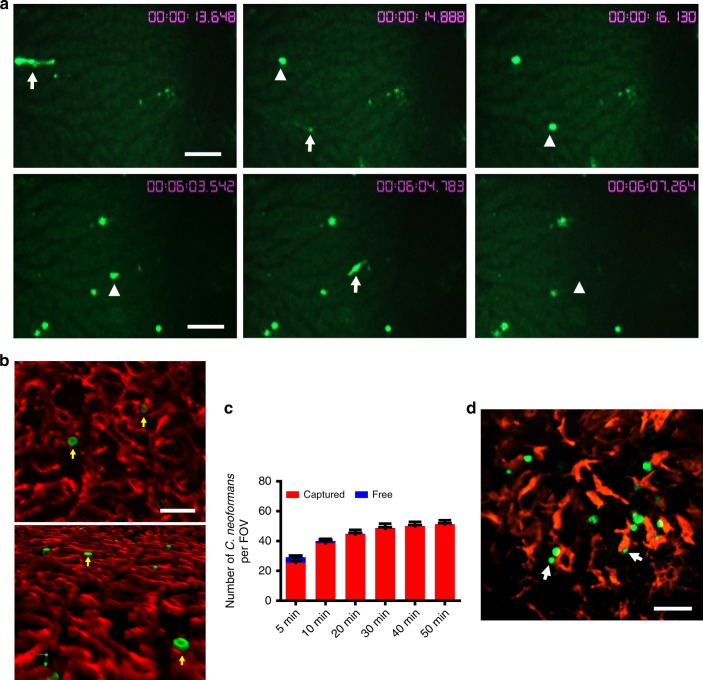
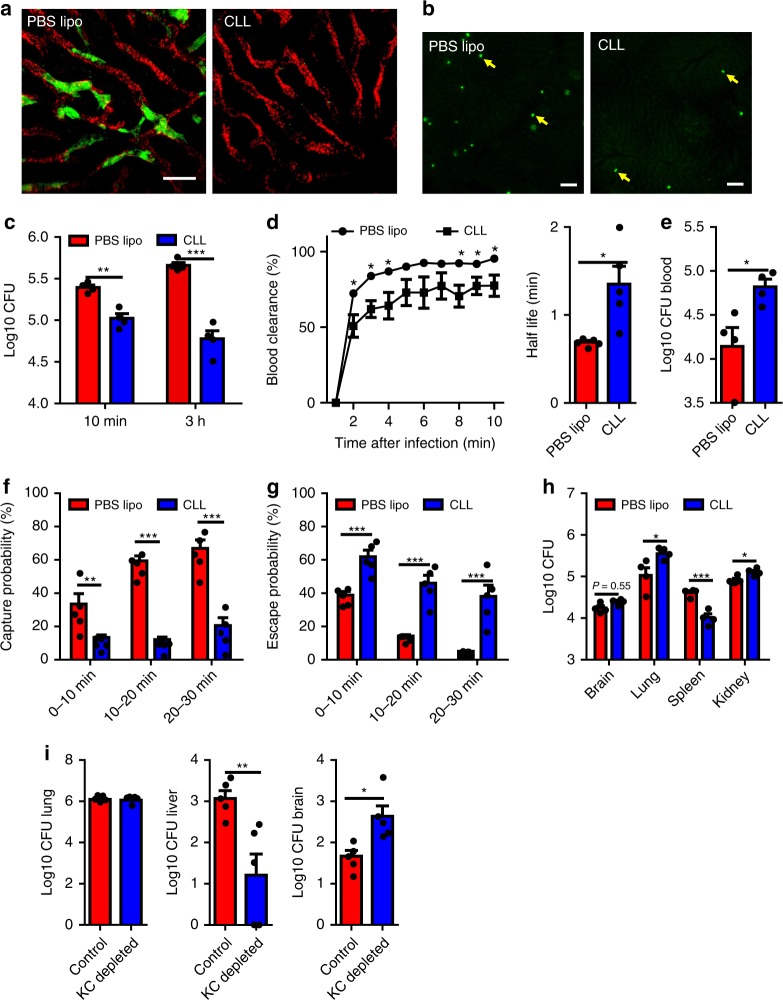
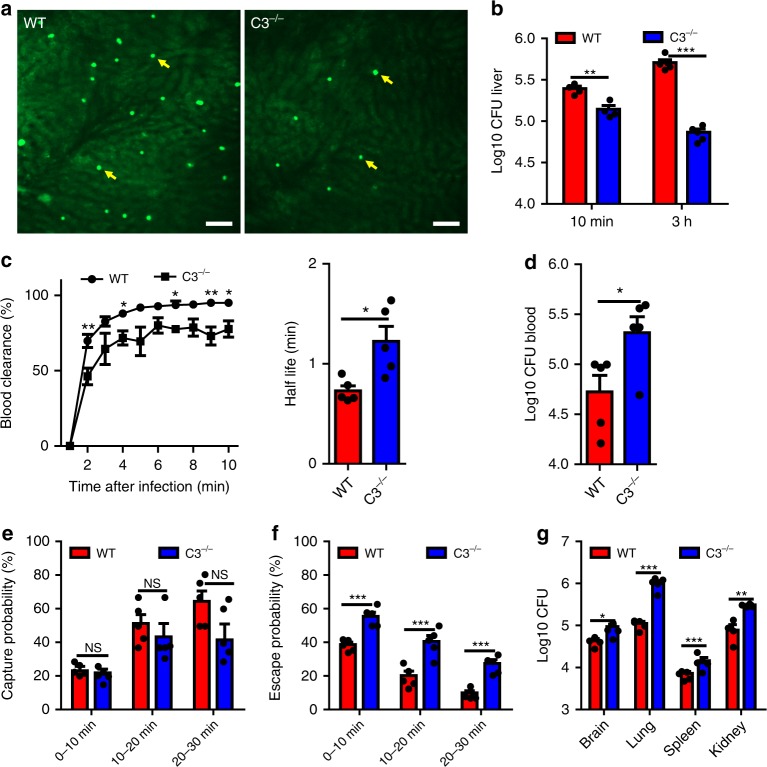
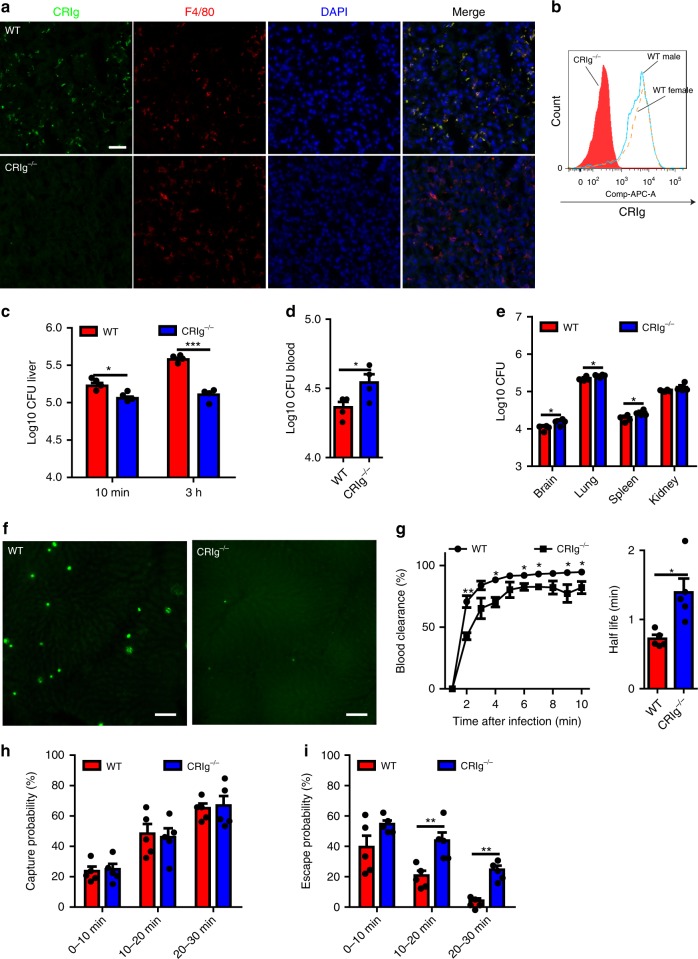
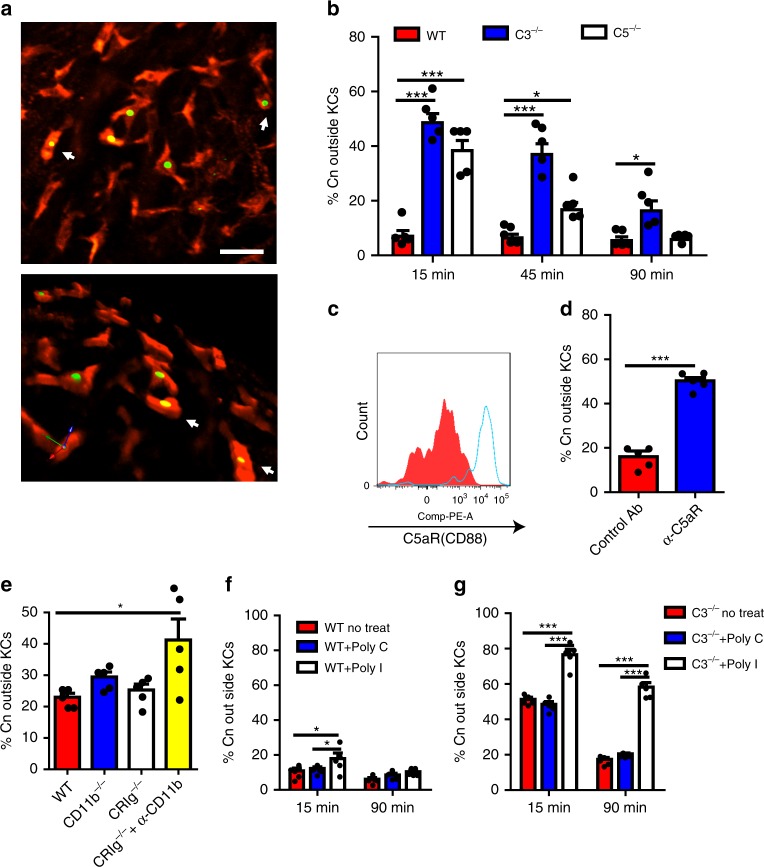
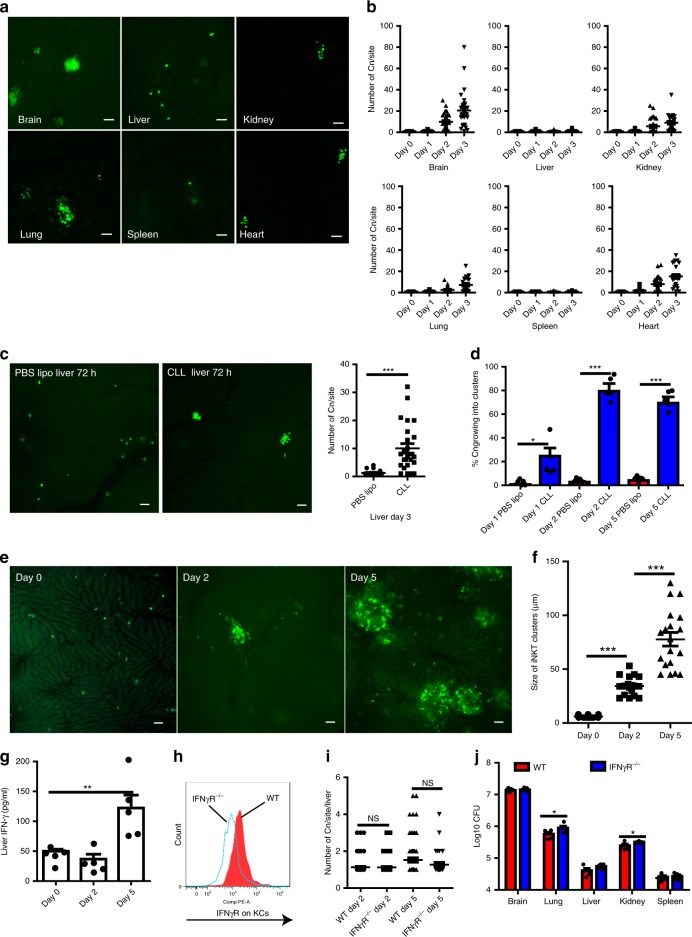
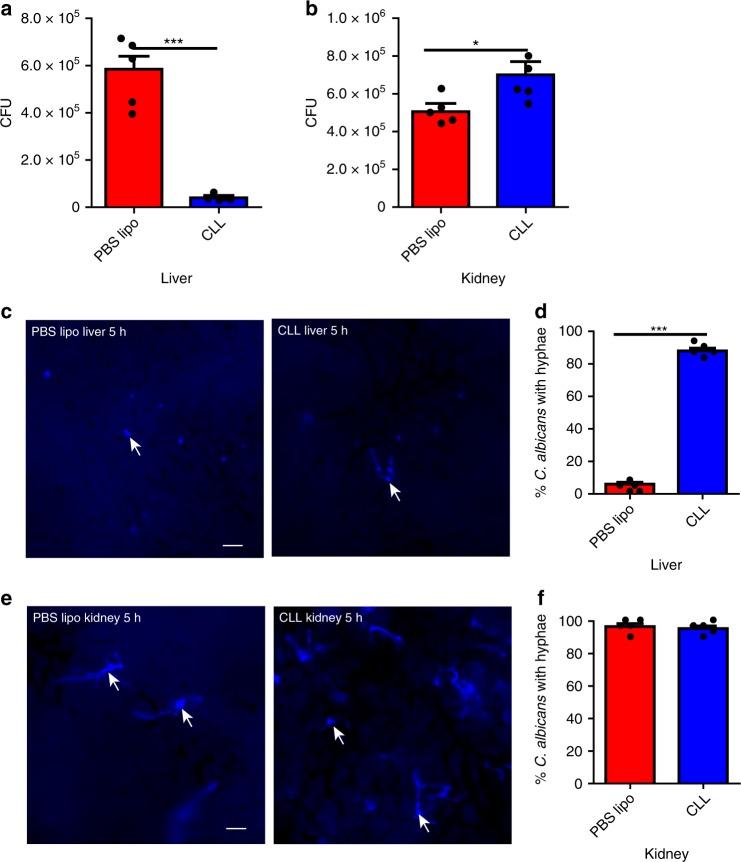
Fungal dissemination into the bloodstream is a critical step leading to invasive fungal infections. Here, using intravital imaging, we show that Kupffer cells (KCs) in the liver have a prominent function in the capture of circulating Cryptococcus neoformans and Candida albicans , thereby reducing fungal dissemination to target organs. Complement C3 but not C5, and complement receptor CRIg but not CR3, are involved in capture of C. neoformans . Internalization of C. neoformans by KCs is subsequently mediated by multiple receptors, including CR3, CRIg, and scavenger receptors, which work synergistically along with C5aR signaling. Following phagocytosis, the growth of C. neoformans is inhibited by KCs in an IFN-γ independent manner. Thus, the liver filters disseminating fungi from circulation via KCs, providing a mechanistic explanation for the enhanced risk of cryptococcosis among individuals with liver diseases, and suggesting a therapeutic strategy to prevent fungal dissemination through enhancing KC functions.
Overview
The claims and statistics of this paper haven’t been checked yet.
Free: it reads the open-access text and checks the first 5 claims that cite a source we can check. Create a free account to check every claim.
Integrity signals
Registry
Cites
Statistics
Figures
Verification
Claims the paper makes
The claims and statistics of this paper haven’t been checked yet.
Free: it reads the open-access text and checks the first 5 claims that cite a source we can check. Create a free account to check every claim.
Claims other papers make about this one
Each is checked against this paper’s own text: does it say what the citing paper says it does?
The cited source says what the claim attributes to it.
In the citing paper
“In this context, recent results revealed that the liver plays a prominent role in filtering disseminating C. neoformans and C. albicans out of circulation through KCs [115, 116].”
From Mechanisms of fungal dissemination (2021) · cites this paper as [116]
The cited source says what the claim attributes to it.
In the citing paper
“This capture is mediated by KCs through the recognition of complement C3 on fungal cells by complement receptor CRIg (complement receptor of the immunoglobulin superfamily).”
From Mechanisms of fungal dissemination (2021) · cites this paper as [116]
The cited source says what the claim attributes to it.
In the citing paper
“In this regard, intravital microscopy has been recently used to study fungal dissemination through the imaging of dynamic interactions between fungal cells and endothelial cells as well as phagocytes [17, 91–93, 116, 129, 229].”
From Mechanisms of fungal dissemination (2021) · cites this paper as [116]
In the citing paper
“This demonstrates an important role for KCs in reducing fungal dissemination to other organs by directly removing organisms from circulation [116], and likely explains the association between liver disease and increased susceptibility to fungal infections [112–114].”
From Mechanisms of fungal dissemination (2021) · cites this paper as [116]
In the citing paper
“Following capture, KCs phagocytose C. neoformans and can inhibit fungal growth in a manner independent of IFN-γR signaling [116].”
From Mechanisms of fungal dissemination (2021) · cites this paper as [116]
1 more claim about this paper
Create a free account to see every claim other papers make about this one.
Self-check
Percentages, sums and reported differences re-computed from the paper’s own numbers.
The self-check needs the paper’s full text.
Citations
Cites
Hidden Killers: Human Fungal Infections
Brown, G. D., Denning, D. W., Gow, N. A. R., Levitz, S. M., Netea, M. G., & White, T. C. (2012) · Science Translational Medicine · doi:10.1126/scitranslmed.3004404 · Cited by 4,284
Mechanisms of phagocytosis in macrophages
Aderem, A., & Underhill, D. M. (1999) · Annual Review of Immunology · doi:10.1146/annurev.immunol.17.1.593 · Cited by 2,854
Park, B. J., Wannemuehler, K. A., Marston, B. J., Govender, N., Pappas, P. G., & Chiller, T. M. (2009) · AIDS · doi:10.1097/qad.0b013e328322ffac · Cited by 2,014
Serbina, N. V., & Pamer, E. G. (2006) · Nature Immunology · doi:10.1038/ni1309 · Cited by 1,669
Immune surveillance by the liver
Jenne, C. N., & Kubes, P. (2013) · Nature Immunology · doi:10.1038/ni.2691 · Cited by 1,047
The Cell Biology of Phagocytosis
Flannagan, R. S., Jaumouillé, V., & Grinstein, S. (2012) · Annual Review of Pathology: Mechanisms of Disease · doi:10.1146/annurev-pathol-011811-132445 · Cited by 1,023
Role of Kupffer cells in host defense and liver disease
Bilzer, M., Roggel, F., & Gerbes, A. L. (2006) · Liver International · doi:10.1111/j.1478-3231.2006.01342.x · Cited by 856
Infections with Cryptococcus neoformans in the Acquired Immunodeficiency Syndrome
Chuck, S. L., & Sande, M. A. (1989) · New England Journal of Medicine · doi:10.1056/nejm198909213211205 · Cited by 797
Hanna, R. N., Carlin, L. M., Hubbeling, H. G., Nackiewicz, D., Green, A. M., Punt, J. A., Geissmann, F., & Hedrick, C. C. (2011) · Nature Immunology · doi:10.1038/ni.2063 · Cited by 639
CRIg: A Macrophage Complement Receptor Required for Phagocytosis of Circulating Pathogens
Helmy, K. Y., Katschke, K. J., Gorgani, N. N., Kljavin, N. M., Elliott, J. M., Diehl, L., Scales, S. J., Ghilardi, N., & van Lookeren Campagne, M. (2006) · Cell · doi:10.1016/j.cell.2005.12.039 · Cited by 628
Cryptococcal meningitis: epidemiology, immunology, diagnosis and therapy
Williamson, P. R., Jarvis, J. N., Panackal, A. A., Fisher, M. C., Molloy, S. F., Loyse, A., & Harrison, T. S. (2017) · Nature Reviews Neurology · doi:10.1038/nrneurol.2016.167 · Cited by 480
Balmer, M. L., Slack, E., de Gottardi, A., Lawson, M. A. E., Hapfelmeier, S., Miele, L., Grieco, A., Van Vlierberghe, H., Fahrner, R., Patuto, N., et al. (2014) · Science Translational Medicine · doi:10.1126/scitranslmed.3008618 · Cited by 470
Immune evasion by a staphylococcal complement inhibitor that acts on C3 convertases
Rooijakkers, S. H. M., Ruyken, M., Roos, A., Daha, M. R., Presanis, J. S., Sim, R. B., van Wamel, W. J. B., van Kessel, K. P. M., & van Strijp, J. A. G. (2005) · Nature Immunology · doi:10.1038/ni1235 · Cited by 453
Davis, M. J., Tsang, T. M., Qiu, Y., Dayrit, J. K., Freij, J. B., Huffnagle, G. B., & Olszewski, M. A. (2013) · mBio · doi:10.1128/mbio.00264-13 · Cited by 448
Husain, S., Wagener, M. M., & Singh, N. (2001) · Emerging Infectious Diseases · doi:10.3201/eid0703.010302 · Cited by 405
Cryptococcal Meningitis in Patients with AIDS
Dismukes, W. E. (1988) · Journal of Infectious Diseases · doi:10.1093/infdis/157.4.624 · Cited by 389
Wong, C. H. Y., Jenne, C. N., Petri, B., Chrobok, N. L., & Kubes, P. (2013) · Nature Immunology · doi:10.1038/ni.2631 · Cited by 386
Determinants of Disease Presentation and Outcome during Cryptococcosis: The CryptoA/D Study
Dromer, F., Mathoulin-Pélissier, S., Launay, O., Lortholary, O., & the French Cryptococcosis Study Group (2007) · PLoS Medicine · doi:10.1371/journal.pmed.0040021 · Cited by 374
An intravascular immune response to Borrelia burgdorferi involves Kupffer cells and iNKT cells
Lee, W.-Y., Moriarty, T. J., Wong, C. H. Y., Zhou, H., Strieter, R. M., van Rooijen, N., Chaconas, G., & Kubes, P. (2010) · Nature Immunology · doi:10.1038/ni.1855 · Cited by 355
Self-citationMichael, S. L., Pumford, N. R., Mayeux, P. R., Niesman, M. R., & Hinson, J. A. (1999) · Hepatology · doi:10.1002/hep.510300104 · Cited by 335
Nonclassical Ly6C− Monocytes Drive the Development of Inflammatory Arthritis in Mice
Misharin, A. V., Cuda, C. M., Saber, R., Turner, J. D., Gierut, A. K., Haines, G. K., Berdnikovs, S., Filer, A., Clark, A. R., Buckley, C. D., et al. (2014) · Cell Reports · doi:10.1016/j.celrep.2014.09.032 · Cited by 326
Immunity to a pulmonary Cryptococcus neoformans infection requires both CD4+ and CD8+ T cells.
Huffnagle, G. B., Yates, J. L., & Lipscomb, M. F. (1991) · The Journal of experimental medicine · doi:10.1084/jem.173.4.793 · Cited by 261
Staphylococcal complement evasion by various convertase-blocking molecules
Jongerius, I., Köhl, J., Pandey, M. K., Ruyken, M., van Kessel, K. P. M., van Strijp, J. A. G., & Rooijakkers, S. H. M. (2007) · The Journal of Experimental Medicine · doi:10.1084/jem.20070818 · Cited by 233
Cryptococcus neoformans Strains and Infection in Apparently Immunocompetent Patients, China
Chen, J., Varma, A., Diaz, M. R., Litvintseva, A. P., Wollenberg, K. K., & Kwon-Chung, K. J. (2008) · Emerging Infectious Diseases · doi:10.3201/eid1405.071312 · Cited by 231
Zeng, Z., Surewaard, B. G. J., Wong, C. H. Y., Geoghegan, J. A., Jenne, C. N., & Kubes, P. (2016) · Cell Host & Microbe · doi:10.1016/j.chom.2016.06.002 · Cited by 229
Shi, M., Li, S. S., Zheng, C., Jones, G. J., Kim, K. S., Zhou, H., Kubes, P., & Mody, C. H. (2010) · Journal of Clinical Investigation · doi:10.1172/jci41963 · Cited by 222
Self-citationBacteria in the bloodstream are trapped in the liver and killed by immigrating neutrophils
Gregory, S. H., Sagnimeni, A. J., & Wing, E. J. (1996) · The Journal of Immunology · doi:10.4049/jimmunol.157.6.2514 · Cited by 218
Bacterial Infection-Related Morbidity and Mortality in Cirrhosis
Christou, L., Pappas, G., & Falagas, M. E. (2007) · The American Journal of Gastroenterology · doi:10.1111/j.1572-0241.2007.01286.x · Cited by 215
Pathogenesis of Cerebral Cryptococcus neoformans Infection after Fungemia
Chrétien, F., Lortholary, O., Kansau, I., Neuville, S., Gray, F., & Dromer, F. (2002) · The Journal of Infectious Diseases · doi:10.1086/341564 · Cited by 201
Leopold Wager, C. M., & Wormley, F. L. (2014) · Mucosal Immunology · doi:10.1038/mi.2014.65 · Cited by 172
Zhang, Y., Wang, F., Tompkins, K. C., McNamara, A., Jain, A. V., Moore, B. B., Toews, G. B., Huffnagle, G. B., & Olszewski, M. A. (2009) · The American Journal of Pathology · doi:10.2353/ajpath.2009.090530 · Cited by 172
Broadley, S. P., Plaumann, A., Coletti, R., Lehmann, C., Wanisch, A., Seidlmeier, A., Esser, K., Luo, S., Rämer, P. C., Massberg, S., et al. (2016) · Cell Host & Microbe · doi:10.1016/j.chom.2016.05.023 · Cited by 156
Nicola, A. M., Robertson, E. J., Albuquerque, P., Derengowski, L. D. S., & Casadevall, A. (2011) · mBio · doi:10.1128/mbio.00167-11 · Cited by 135
Host Immunity to Cryptococcus Neoformans
Rohatgi, S., & Pirofski, L.-A. (2015) · Future Microbiology · doi:10.2217/fmb.14.132 · Cited by 132
Gottfredsson, M., & Perfect, J. R. (2000) · Seminars in Neurology · doi:10.1055/s-2000-9394 · Cited by 130
Risk Factors for Invasive Cryptococcus neoformans Diseases: A Case-Control Study
Lin, Y.-Y., Shiau, S., & Fang, C.-T. (2015) · PLOS ONE · doi:10.1371/journal.pone.0119090 · Cited by 128
Shao, X., Mednick, A., Alvarez, M., van Rooijen, N., Casadevall, A., & Goldman, D. L. (2005) · The Journal of Immunology · doi:10.4049/jimmunol.175.5.3244 · Cited by 124
Upadhya, R., Lam, W. C., Maybruck, B., Specht, C. A., Levitz, S. M., & Lodge, J. K. (2016) · mBio · doi:10.1128/mbio.00547-16 · Cited by 123
Gregory, S. H., Cousens, L. P., van Rooijen, N., Döpp, E. A., Carlos, T. M., & Wing, E. J. (2002) · The Journal of Immunology · doi:10.4049/jimmunol.168.1.308 · Cited by 114
Cryptococcus neoformans Infection in Patients With Cirrhosis, Including Liver Transplant Candidates
Singh, N., Husain, S., de Vera, M., Gayowski, T., & Cacciarelli, T. V. (2004) · Medicine · doi:10.1097/01.md.0000126760.45299.69 · Cited by 113
Ebe, Y., Hasegawa, G., Takatsuka, H., Umezu, H., Mitsuyama, M., Arakawa, M., Mukaida, N., & Naito, M. (1999) · Pathology International · doi:10.1046/j.1440-1827.1999.00910.x · Cited by 107
Human fungal pathogens: Why should we learn?
Kim, J.-Y. (2016) · Journal of Microbiology · doi:10.1007/s12275-016-0647-8 · Cited by 105
Activation of the complement system by Cryptococcus neoformans leads to binding of iC3b to the yeast
Kozel, T. R., & Pfrommer, G. S. (1986) · Infection and Immunity · doi:10.1128/iai.52.1.1-5.1986 · Cited by 102
Mechanisms of Cryptococcal Virulence and Persistence
Olszewski, M. A., Zhang, Y., & Huffnagle, G. B. (2010) · Future Microbiology · doi:10.2217/fmb.10.93 · Cited by 96
Cryptococcosis: clinical and biological aspects
Kwon-Chung, K. J., Sorrell, T. C., Dromer, F., Fung, E., & Levitz, S. M. (2000) · Medical Mycology · doi:10.1080/mmy.38.s1.205.213 · Cited by 94
Antibody-Based Immunotherapy To Treat and Prevent Infection with Hypervirulent Klebsiella pneumoniae
Diago-Navarro, E., Calatayud-Baselga, I., Sun, D., Khairallah, C., Mann, I., Ulacia-Hernando, A., Sheridan, B., Shi, M., & Fries, B. C. (2017) · Clinical and Vaccine Immunology · doi:10.1128/cvi.00456-16 · Cited by 90
Self-citationCryptococci at the brain gate: break and enter or use a Trojan horse?
Casadevall, A. (2010) · Journal of Clinical Investigation · doi:10.1172/jci42949 · Cited by 89
End-Stage Liver Disease Is a Strong Predictor of Early Mortality in Cryptococcosis
Spec, A., Raval, K., & Powderly, W. G. (2016) · Open Forum Infectious Diseases · doi:10.1093/ofid/ofv197 · Cited by 65
Murdock, B. J., Teitz-Tennenbaum, S., Chen, G.-H., Dils, A. J., Malachowski, A. N., Curtis, J. L., Olszewski, M. A., & Osterholzer, J. J. (2014) · The Journal of Immunology · doi:10.4049/jimmunol.1400650 · Cited by 57
Spec, A., Olsen, M. A., Raval, K., & Powderly, W. G. (2017) · Clinical Infectious Diseases · doi:10.1093/cid/ciw786 · Cited by 53
Chronic Liver Disease Impairs Bacterial Clearance in a Human Model of Induced Bacteremia
Ashare, A., Stanford, C., Hancock, P., Stark, D., Lilli, K., Birrer, E., Nymon, A., Doerschug, K. C., & Hunninghake, G. W. (2009) · Clinical and Translational Science · doi:10.1111/j.1752-8062.2009.00122.x · Cited by 52
Cryptococcosis in Patients With Cirrhosis of the Liver and Posttransplant Outcomes
Singh, N., Sifri, C. D., Silveira, F. P., Miller, R., Gregg, K. S., Huprikar, S., Lease, E. D., Zimmer, A., Dummer, J. S., Spak, C. W., et al. (2015) · Transplantation · doi:10.1097/tp.0000000000000690 · Cited by 52
Ono, K., Nishitani, C., Mitsuzawa, H., Shimizu, T., Sano, H. I., Suzuki, H., Kodama, T., Fujii, N., Fukase, K., Hirata, K., et al. (2006) · The Journal of Immunology · doi:10.4049/jimmunol.177.8.5517 · Cited by 50
A rapid fluorescent assay to distinguish attached from phagocytized yeast particles
Levitz, S. M., DiBenedetto, D. J., & Diamond, R. D. (1987) · Journal of Immunological Methods · doi:10.1016/0022-1759(87)90213-4 · Cited by 50
Rai, R. M., Zhang, J. X., Clemens, M. G., & Diehl, A. M. (1996) · Shock · doi:10.1097/00024382-199610000-00003 · Cited by 48
Sun, D., Zhang, M., Liu, G., Wu, H., Zhu, X., Zhou, H., & Shi, M. (2016) · Infection and Immunity · doi:10.1128/iai.01197-15 · Cited by 39
Self-citationFungemia during murine cryptococcosis sheds some light on pathophysiology
LORTHOLARY, O., IMPROVISI, L., NICOLAS, M., PROVOST, F., DUPONT, B., & DROMER, F. (1999) · Medical Mycology · doi:10.1080/j.1365-280x.1999.00215.x · Cited by 37
Fungal Infection in the Brain: What We Learned from Intravital Imaging
Shi, M., & Mody, C. H. (2016) · Frontiers in Immunology · doi:10.3389/fimmu.2016.00292 · Cited by 33
Self-citationCryptococcal meningitis associated with steroid therapy
Wilson, T., Fleming, W. A., Robinson, F. L. J., & Nicholl, B. (1970) · Journal of Clinical Pathology · doi:10.1136/jcp.23.8.657 · Cited by 24
Cited by
Huang, X., Li, X., An, H., Wang, J., Ding, M., Wang, L., Li, L., Ji, Q., Qu, F., Wang, H., et al. (2022) · PLOS Pathogens · doi:10.1371/journal.ppat.1010693 · Cited by 179
Mechanisms of fungal dissemination
Strickland, A. B., & Shi, M. (2021) · Cellular and Molecular Life Sciences · doi:10.1007/s00018-020-03736-z · Cited by 127
Self-citationMechanisms of Pathogenic Candida Species to Evade the Host Complement Attack
Singh, D. K., Tóth, R., & Gácser, A. (2020) · Frontiers in Cellular and Infection Microbiology · doi:10.3389/fcimb.2020.00094 · Cited by 135
“Macrophages in the kidney and liver are also involved in the clearance of pathogenic fungi (Lionakis et al., 2013; Coelho and Drummond, 2019; Sun et al., 2019).”
BackgroundA dissemination-prone morphotype enhances extrapulmonary organ entry by Cryptococcus neoformans
Denham, S. T., Brammer, B., Chung, K. Y., Wambaugh, M. A., Bednarek, J. M., Guo, L., Moreau, C. T., & Brown, J. C. S. (2022) · Cell Host & Microbe · doi:10.1016/j.chom.2022.08.017 · Cited by 80
Epigenetic Regulation of Kupffer Cell Function in Health and Disease
Bennett, H., Troutman, T. D., Sakai, M., & Glass, C. K. (2021) · Frontiers in Immunology · doi:10.3389/fimmu.2020.609618 · Cited by 66
Metadata
- Authors
- Sun, D., Sun, P., Li, H., Zhang, M., Liu, G., Strickland, A. B., Chen, Y., Fu, Y., Xu, J., Yosri, M., Nan, Y., Zhou, H., Zhang, X., & Shi, M.
- Affiliations
- Virginia–Maryland College of Veterinary Medicine (US)
- South China Agricultural University (CN)
- Al-Azhar University (EG)
- Northwest A&F University (CN)
- Nanjing Medical University (CN)
- Corresponding author
- Shi, Meiqing
- ORCID
- Venue
- Nature Communications
- Published
- 2019-10-08
- Volume
- 10
- Issue
- 1
- Pages
- 4566-4566
- ISSN
- 2041-1723 (ISSN-L)
- PMC
- PMC6783440
- OpenAlex
- W2979541043
- Cited by
- 83
- References
- 59
- Citations by year
- 2026: 13 · 2025: 14 · 2024: 13 · 2023: 7 · 2022: 10 · 2021: 13 · 2020: 10 · 2019: 2
- FWCI
- 6.66
- Type
- journal article
- Language
- en
- Open access
- gold
- doi.org
- Licence
- cc-by
- creativecommons.org/licenses/by/4.0 (tdm)
- creativecommons.org/licenses/by/4.0 (vor)
- Locations
- Nature Communications (publishedVersion, cc-by)
- Europe PMC (PubMed Central) (publishedVersion, cc-by)
- PubMed Central (publishedVersion, cc-by)
- PubMed (publishedVersion)
- RePEc: Research Papers in Economics (submittedVersion)
- DOAJ (DOAJ: Directory of Open Access Journals) (submittedVersion, cc-by-sa)
- DOAJ (DOAJ: Directory of Open Access Journals) (submittedVersion)
- University Libraries (University of Maryland) (submittedVersion)
- Digital Repository at the University of Maryland (University of Maryland College Park)
- Funders
- U.S. Department of Health & Human Services | NIH | National Institute of Allergy and Infectious Diseases (AI131219, AI131905)
- Topics
- Health Sciences › Medicine › Infectious Diseases › Fungal Infections and Studies
- Health Sciences › Medicine › Infectious Diseases › Antifungal resistance and susceptibility
- Life Sciences › Immunology and Microbiology › Immunology › Complement system in diseases
- Keywords
- fungal dispersal, Kupffer cells, hepatic macrophages, Cryptococcus neoformans, Candida albicans, invasive fungal infections, cryptococcosis, complement C3, scavenger receptors, phagocytosis, fungal clearance, liver disease
- MeSH terms
- Intravital Microscopy, Invasive Fungal Infections, Animals, Candida albicans, Complement C3, Cryptococcus neoformans, Disease Models, Animal, Female, Humans, Kupffer Cells, Liver, Male, Phagocytosis, Receptors, Complement, Mice, Knockout, Microscopy, Confocal, Mice
About these checks
Registry, retraction, Cites and statistics results are computed, not judged, with one exception: a printed reference that no index lists is read once by a model before it counts as a citation error. Claims are extracted by a model and kept only when their quote appears verbatim in the text; each cited source is then checked, with a model’s help, for whether it says what the claim relies on. Those verdicts can be wrong — read the claim’s quote and the cited source before relying on one.
Statistics and arithmetic are recomputed, not judged.
Confidence bands are shown only for fields calibrated on our annotated test set. None is calibrated yet, so no band is shown.
What counts as a claim ›How we measure confidence ›How we check this ›
Are you an author, or do you see a problem with this page? Request a review
Data sources
Bibliographic data: Semantic Scholar, OpenAlex, Crossref.
Contains information from the Semantic Scholar Academic Graph Datasets, made available under the ODC Attribution License (ODC-BY 1.0).
Semantic Scholar’s data is described in: Kinney, R., et al. (2023). The Semantic Scholar Open Data Platform. arXiv:2301.10140.
