

Injectable human recombinant collagen matrices limit adverse remodeling and improve cardiac function after myocardial infarction
Open accessThe DOI matches its Crossref record; 67 of the 70 references it cites were found in a registry or an index.
Abstract
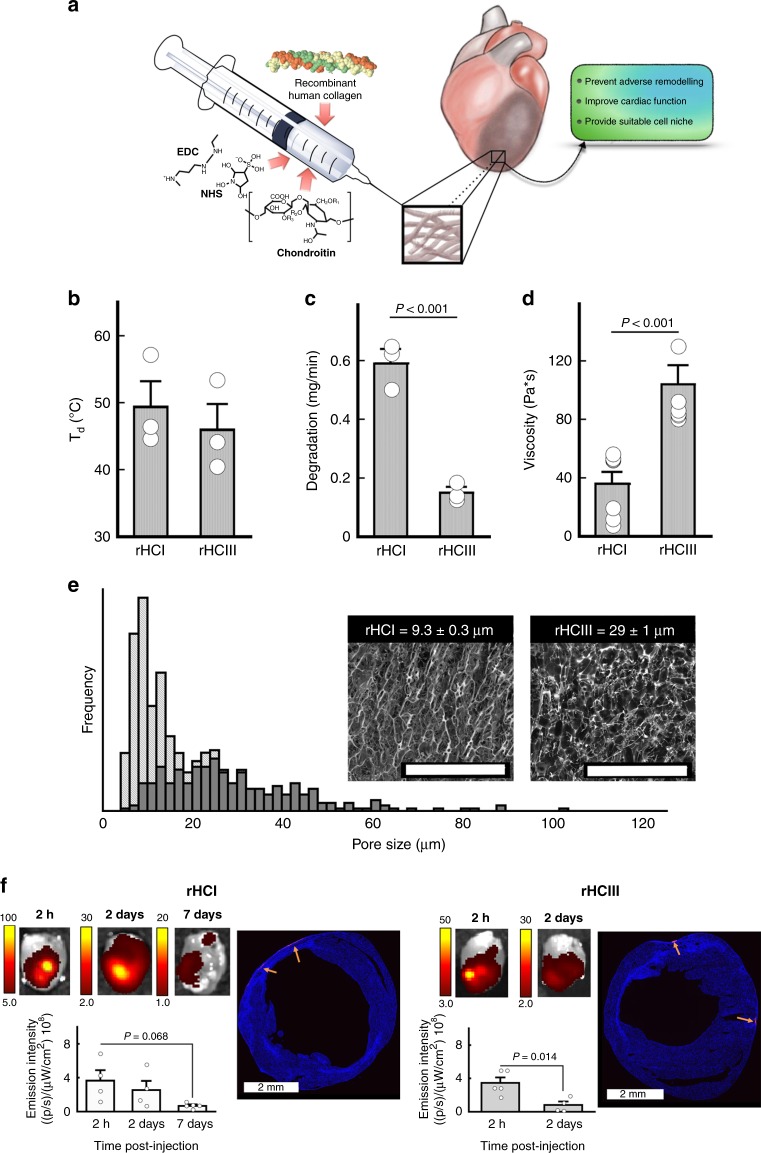
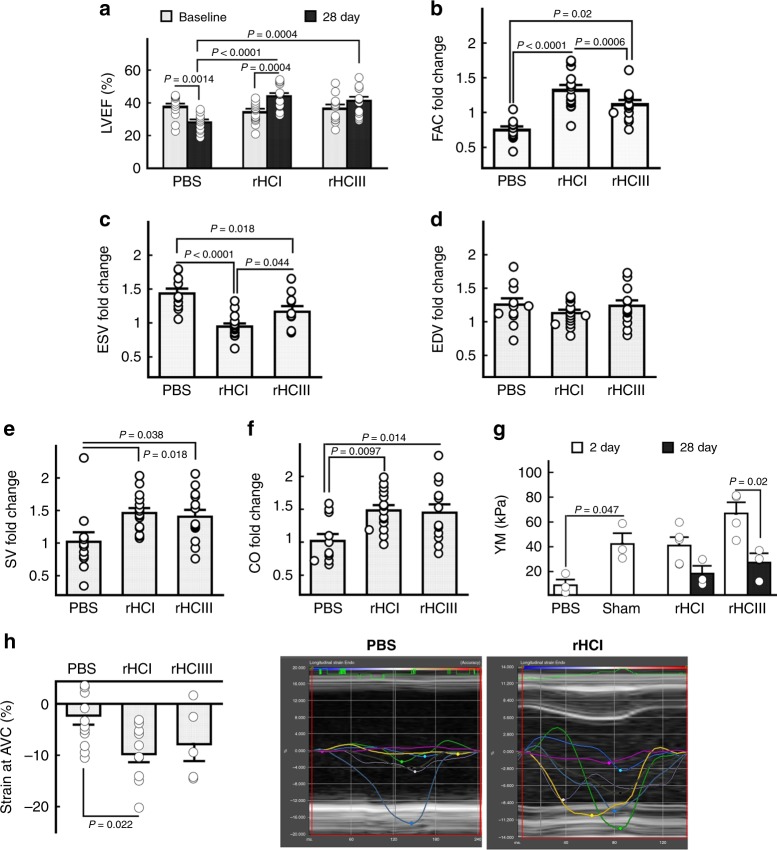
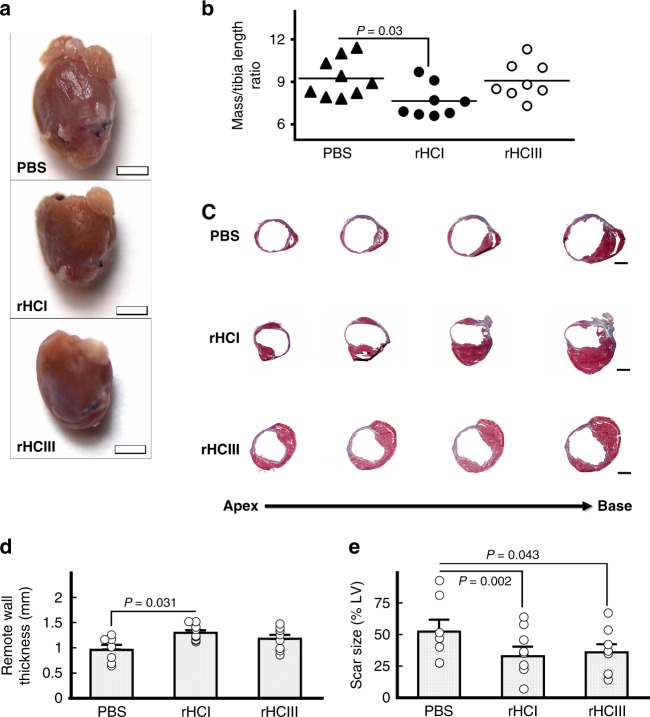
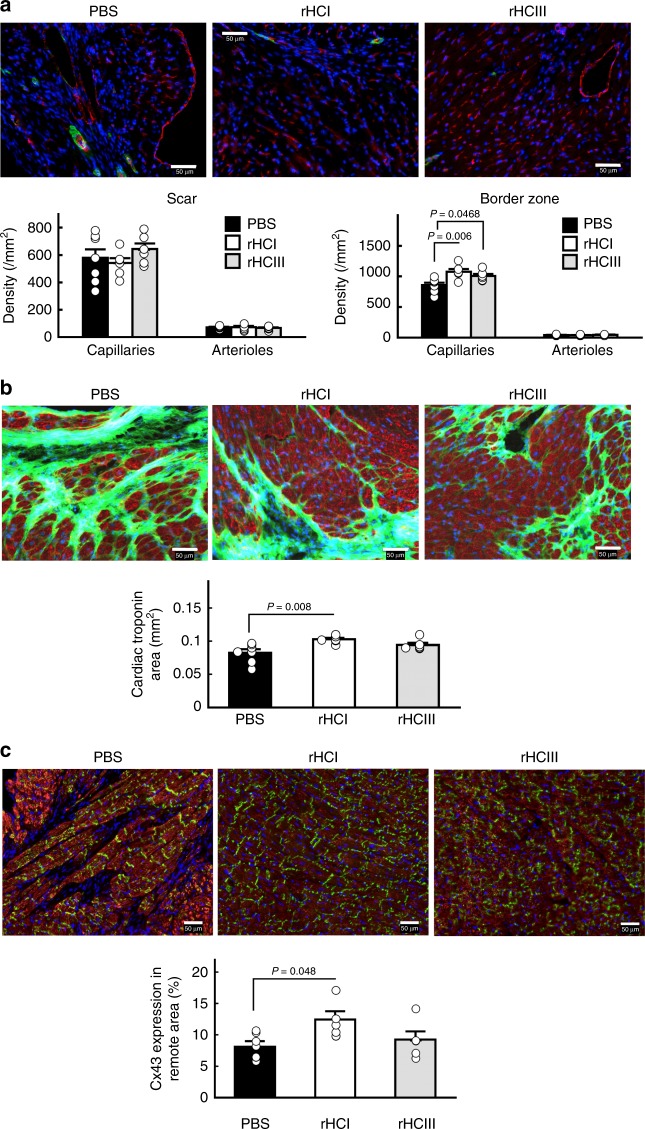
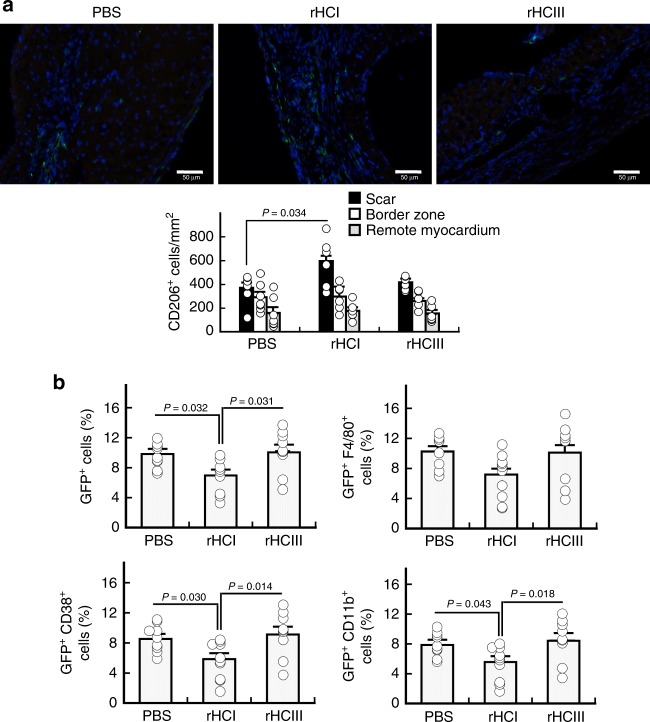
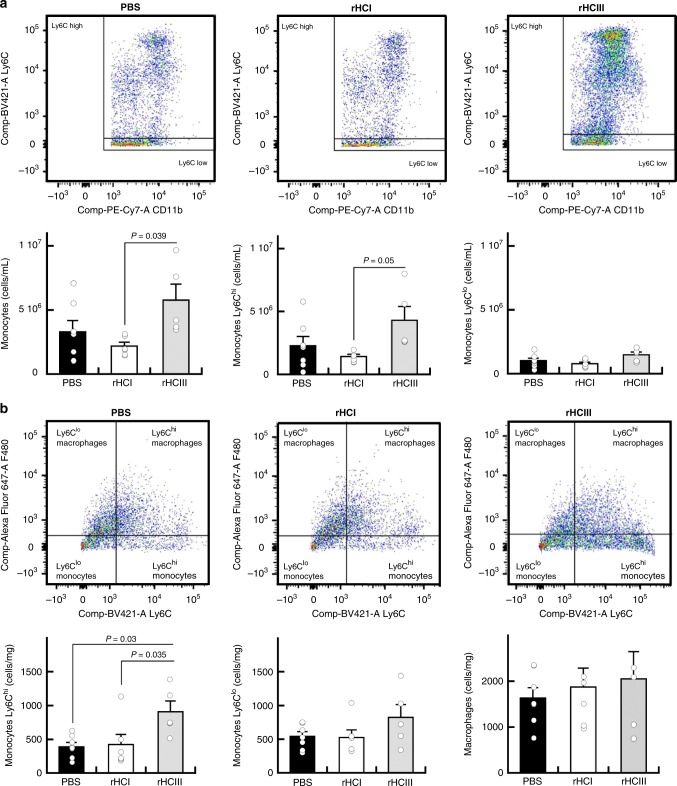
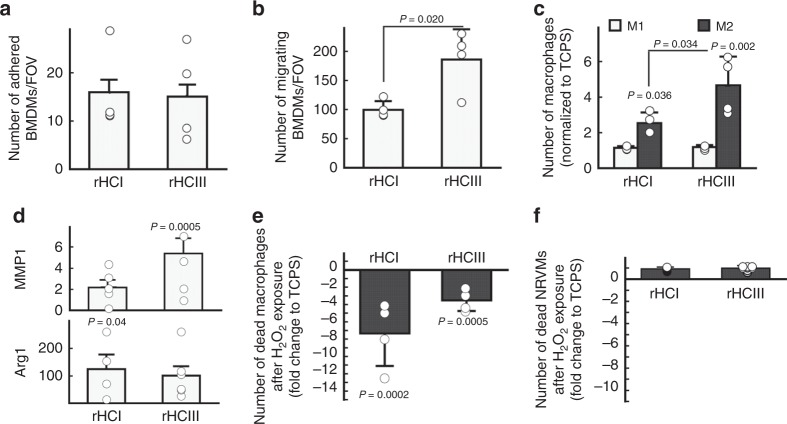
Despite the success of current therapies for acute myocardial infarction (MI), many patients still develop adverse cardiac remodeling and heart failure. With the growing prevalence of heart failure, a new therapy is needed that can prevent remodeling and support tissue repair. Herein, we report on injectable recombinant human collagen type I (rHCI) and type III (rHCIII) matrices for treating MI. Injecting rHCI or rHCIII matrices in mice during the late proliferative phase post-MI restores the myocardium’s mechanical properties and reduces scar size, but only the rHCI matrix maintains remote wall thickness and prevents heart enlargement. rHCI treatment increases cardiomyocyte and capillary numbers in the border zone and the presence of pro-wound healing macrophages in the ischemic area, while reducing the overall recruitment of bone marrow monocytes. Our findings show functional recovery post-MI using rHCI by promoting a healing environment, cardiomyocyte survival, and less pathological remodeling of the myocardium.
Overview
The claims and statistics of this paper haven’t been checked yet.
Free: it reads the open-access text and checks the first 5 claims that cite a source we can check. Create a free account to check every claim.
Integrity signals
Registry
Cites
Statistics
Figures
Verification
Claims the paper makes
The claims and statistics of this paper haven’t been checked yet.
Free: it reads the open-access text and checks the first 5 claims that cite a source we can check. Create a free account to check every claim.
Claims other papers make about this one
Each is checked against this paper’s own text: does it say what the citing paper says it does?
The source backs part of the claim, not all of it — or backs it for a different population, condition or comparison.
In the citing paper
“Previous works have demonstrated the benefits of mechanical support from biomaterial-based cardiac patches, which enable to reduce myocardium wall stress and subsequently limit adverse remodeling and improve cardiac function after myocardial infarction 60 .”
From Leaf-venation-directed cellular alignment for macroscale cardiac constructs with tissue-like functionalities (2023) · cites this paper as [60]
Experimental — accuracy not yet measured
Self-check
Percentages, sums and reported differences re-computed from the paper’s own numbers.
The self-check needs the paper’s full text.
Citations
Cites
Heart Disease and Stroke Statistics—2016 Update: A Report From the American Heart Association
Mozaffarian, D., Benjamin, E. J., Go, A. S., Arnett, D. K., Blaha, M. J., Cushman, M., Das, S. R., de Ferranti, S., Després, J.-P., Fullerton, H. J., et al. (2016) · Circulation · doi:10.1161/cir.0000000000000350 · Cited by 6,596
Heart Disease and Stroke Statistics—2015 Update: A Report From the American Heart Association
Mozaffarian, D., Benjamin, E. J., Go, A. S., Arnett, D. K., Blaha, M. J., Cushman, M., de Ferranti, S., Després, J.-P., Fullerton, H. J., Howard, V. J., et al. (2015) · Circulation · doi:10.1161/cir.0000000000000152 · Cited by 5,797
White, H. D., Norris, R. M., Brown, M. A., Brandt, P. W., Whitlock, R. M., & Wild, C. J. (1987) · Circulation · doi:10.1161/01.cir.76.1.44 · Cited by 2,363
The Biological Basis for Cardiac Repair After Myocardial Infarction: From Inflammation to Fibrosis
Prabhu, S. D., & Frangogiannis, N. G. (2016) · Circulation Research · doi:10.1161/circresaha.116.303577 · Cited by 2,224
Cohn, J. N., Ferrari, R., & Sharpe, N. (2000) · Journal of the American College of Cardiology · doi:10.1016/s0735-1097(99)00630-0 · Cited by 2,161
Extracellular matrix as a biological scaffold material: Structure and function
BADYLAK, S., FREYTES, D., & GILBERT, T. (2009) · Acta Biomaterialia · doi:10.1016/j.actbio.2008.09.013 · Cited by 1,671
De Luca, G., Suryapranata, H., Ottervanger, J. P., & Antman, E. M. (2004) · Circulation · doi:10.1161/01.cir.0000121424.76486.20 · Cited by 1,542
Stem Cell Therapies in Clinical Trials: Progress and Challenges
Trounson, A., & McDonald, C. (2015) · Cell Stem Cell · doi:10.1016/j.stem.2015.06.007 · Cited by 1,468
Reprint of: Extracellular matrix as a biological scaffold material: Structure and function
Badylak, S. F., Freytes, D. O., & Gilbert, T. W. (2015) · Acta Biomaterialia · doi:10.1016/j.actbio.2015.07.016 · Cited by 1,362
Collagen-based biomaterials for wound healing
Chattopadhyay, S., & Raines, R. T. (2014) · Biopolymers · doi:10.1002/bip.22486 · Cited by 1,041
Cited by
Immunomodulatory Biomaterials for Tissue Repair
Whitaker, R., Hernaez-Estrada, B., Hernandez, R. M., Santos-Vizcaino, E., & Spiller, K. L. (2021) · Chemical Reviews · doi:10.1021/acs.chemrev.0c00895 · Cited by 338
Collagen- and hyaluronic acid-based hydrogels and their biomedical applications
Xu, Q., Torres, J. E., Hakim, M., Babiak, P. M., Pal, P., Battistoni, C. M., Nguyen, M., Panitch, A., Solorio, L., & Liu, J. C. (2021) · Materials Science and Engineering: R: Reports · doi:10.1016/j.mser.2021.100641 · Cited by 318
Gao, Y., Peng, K., & Mitragotri, S. (2021) · Advanced Materials · doi:10.1002/adma.202006362 · Cited by 295
An Adhesive Hydrogel with “Load‐Sharing” Effect as Tissue Bandages for Drug and Cell Delivery
Chen, J., Wang, D., Wang, L., Liu, W., Chiu, A., Shariati, K., Liu, Q., Wang, X., Zhong, Z., Webb, J., et al. (2020) · Advanced Materials · doi:10.1002/adma.202001628 · Cited by 216
Macrophage Polarization in Cardiac Tissue Repair Following Myocardial Infarction
Kim, Y., Nurakhayev, S., Nurkesh, A., Zharkinbekov, Z., & Saparov, A. (2021) · International Journal of Molecular Sciences · doi:10.3390/ijms22052715 · Cited by 184
Development of Innovative Biomaterials and Devices for the Treatment of Cardiovascular Diseases
Wang, Y., Li, G., Yang, L., Luo, R., & Guo, G. (2022) · Advanced Materials · doi:10.1002/adma.202201971 · Cited by 175
Alginate Formulations: Current Developments in the Race for Hydrogel-Based Cardiac Regeneration
Cattelan, G., Guerrero Gerbolés, A., Foresti, R., Pramstaller, P. P., Rossini, A., Miragoli, M., & Caffarra Malvezzi, C. (2020) · Frontiers in Bioengineering and Biotechnology · doi:10.3389/fbioe.2020.00414 · Cited by 152
Hu, C., Liu, W., Long, L., Wang, Z., Zhang, W., He, S., Lu, L., Fan, H., Yang, L., & Wang, Y. (2022) · Biomaterials · doi:10.1016/j.biomaterials.2022.121849 · Cited by 145
Zhu, D., Hou, J., Qian, M., Jin, D., Tian, H., Pan, Y., Wang, H., Wu, S., Liu, S., Wang, F., et al. (2021) · Nature Communications · doi:10.1038/s41467-021-24804-3 · Cited by 146
Bioengineering artificial blood vessels from natural materials
Moore, M. J., Tan, R. P., Yang, N., Rnjak‐Kovacina, J., & Wise, S. G. (2021) · Trends in biotechnology · doi:10.1016/j.tibtech.2021.11.003 · Cited by 146
A Review of Recent Progress on Collagen‐Based Biomaterials
Zheng, M., Wang, X., Chen, Y., Yue, O., Bai, Z., Cui, B., Jiang, H., & Liu, X. (2022) · Advanced Healthcare Materials · doi:10.1002/adhm.202202042 · Cited by 170
Wang, Z., Yang, N., Hou, Y., Li, Y., Yin, C., Yang, E., Cao, H., Hu, G., Xue, J., Yang, J., et al. (2023) · Advanced Science · doi:10.1002/advs.202302123 · Cited by 141
Fertala, A. (2020) · Bioengineering · doi:10.3390/bioengineering7040155 · Cited by 109
Advances in biomedical applications of self-healing hydrogels
Rammal, H., GhavamiNejad, A., Erdem, A., Mbeleck, R., Nematollahi, M. R., Diltemiz, S. E., Alem, H., Darabi, M. A., Ertaş, Y. N., Caterson, E. J., et al. (2021) · Materials Chemistry Frontiers · doi:10.1039/d0qm01099e · Cited by 105
Is the Macrophage Phenotype Determinant for Fibrosis Development?
Lis-López, L., Bauset, C., Seco-Cervera, M., & Cosín‐Roger, J. (2021) · Biomedicines · doi:10.3390/biomedicines9121747 · Cited by 114
“However, other studies using neutralizing antibodies to IL-4 [83], or some components of the ECM previously mentioned, such as short oligosaccharides derived from hyaluronic acid [84] or recombinant type I and III collagen [85], observed an attenuation of cardiac fibrosis independently of TGF-β and an improvement in t…”
BackgroundAdvances in Injectable Hydrogel Strategies for Heart Failure Treatment
He, S., Zhang, Z., Luo, R., Jiang, Q., Li, Y., & Wang, Y. (2023) · Advanced Healthcare Materials · doi:10.1002/adhm.202300029 · Cited by 103
Long, L., Liu, W., Li, L., Hu, C., He, S., Lu, L., Wang, J., Yang, L., & Wang, Y. (2022) · Nanoscale · doi:10.1039/d1nr07708b · Cited by 91
Wang, X., Ronsin, O. J. J., Gravez, B., Farman, N., Baumberger, T., Jaisser, F., Coradin, T., & Hélary, C. (2021) · Advanced Science · doi:10.1002/advs.202004213 · Cited by 95
Shahriyari, H. A., Nikmanesh, Y., Jalali, S., Tahery, N., Fard, A. Z., Hatamzadeh, N., Zarea, K., Cheraghi, M., & Mohammadi, M. J. (2021) · Toxin Reviews · doi:10.1080/15569543.2021.1887261 · Cited by 108
“According to the reported World Health Organization (WHO), cardiovascular diseases (CVD) are the famous cause of death in worldwide (McLaughlin et al. 2019).”
BackgroundProtein-Based Hydrogels and Their Biomedical Applications
Lee, K. Z., Jeon, J., Jiang, B., Subramani, S. V., Li, J., & Zhang, F. (2023) · Molecules · doi:10.3390/molecules28134988 · Cited by 98
Extracellular Matrix in Ischemic Heart Disease, Part 4/4
Frangogiannis, N. G., & Kovacic, J. C. (2020) · Journal of the American College of Cardiology · doi:10.1016/j.jacc.2020.03.020 · Cited by 97
Yu, C., Yue, Z. D., Zhang, H., Shi, M., Yao, M., Yu, Q., Liu, M., Guo, B., Zhang, H., Tian, L., et al. (2023) · Advanced Functional Materials · doi:10.1002/adfm.202211023 · Cited by 74
Pharmacological Modulation of Cardiac Remodeling after Myocardial Infarction
Zhao, W., Zhao, J., & Rong, J. (2020) · Oxidative Medicine and Cellular Longevity · doi:10.1155/2020/8815349 · Cited by 90
“On the other hand, recombinant human collagen was also evaluated for the preparation of clinically relevant biomaterials to reduce pathological remodeling and ameliorate post-MI cardiac functions [82].”
BackgroundLi, P., Hu, J., Wang, J., Zhang, J., Wang, L., & Zhang, C. (2023) · Bioengineering · doi:10.3390/bioengineering10020165 · Cited by 85
“Injecting hydrogels into the superficial myocardium promotes neoangiogenesis and attenuates pathologic remodeling [102].”
Biomaterials Loaded with Growth Factors/Cytokines and Stem Cells for Cardiac Tissue Regeneration
Smagul, S., Kim, Y., Smagulova, A., Raziyeva, K., Nurkesh, A., & Saparov, A. (2020) · International Journal of Molecular Sciences · doi:10.3390/ijms21175952 · Cited by 64
“The treatment reduced inflammation, polarized macrophages towards M2 phenotype, increased capillary density at the border zone, and improved cardiac function [40].”
BackgroundCurrent Strategies for the Regeneration of Skeletal Muscle Tissue
Alarçın, E., Bal‐Öztürk, A., Avcı, H., Ghorbanpoor, H., Güzel, F. D., Akpek, A., YEŞİLTAŞ, G., Çanak-Ipek, T., & Avci‐Adali, M. (2021) · International Journal of Molecular Sciences · doi:10.3390/ijms22115929 · Cited by 69
Molecular co-assembled strategy tuning protein conformation for cartilage regeneration
Zhao, C., Li, X., Han, X., Li, Z., Bian, S., Zeng, W., Ding, M., Liang, J., Jiang, Q. Y., Zhou, Z., et al. (2024) · Nature Communications · doi:10.1038/s41467-024-45703-3 · Cited by 73
“Collagen derivatives with low immunogenicity (e.g., inactivated collagen, humanized recombinant collagen, and collagen mimetic peptides) have been extensively investigated to mimic the properties of collagen 4,37 – 39 .”
Cardiac tissue engineering for myocardial infarction treatment
Gil-Cabrerizo, P., Scacchetti, I., Garbayo, E., & Blanco‐Prieto, M. J. (2023) · European Journal of Pharmaceutical Sciences · doi:10.1016/j.ejps.2023.106439 · Cited by 67
Therapies to prevent post-infarction remodelling: From repair to regeneration
Contessotto, P., & Pandit, A. S. (2021) · Biomaterials · doi:10.1016/j.biomaterials.2021.120906 · Cited by 64
Hao, S., Sui, X., Wang, J., Zhang, J., Pei, Y., Guo, L., & Liang, Z. (2021) · Cell Death and Disease · doi:10.1038/s41419-021-04111-x · Cited by 57
“Statistically, adverse myocardial remodeling occurs after MI in 10% of patients, who then show pathological myocardial hypertrophy and fibrosis [39], as well as, increased AF susceptibility [40, 41].”
BackgroundMacrophage-based therapeutic approaches for cardiovascular diseases
Sansonetti, M., Soodi, B. A., Thum, T., & Jung, M. (2024) · Basic Research in Cardiology · doi:10.1007/s00395-023-01027-9 · Cited by 61
“In another study, injection of recombinant collagen type I and type III matrices increased M2 macrophages by 1.5-fold at 28 days post-MI, limiting adverse remodeling as well as promoting healing environment [132].”
BackgroundInfluentialMyocardial fibrosis from the perspective of the extracellular matrix: Mechanisms to clinical impact
Lunde, I. G., Rypdal, K. B., Linthout, S. V., Díez, J., & González, A. (2024) · Matrix Biology · doi:10.1016/j.matbio.2024.08.008 · Cited by 69
A regulatory perspective on recombinant collagen-based medical devices
Liu, W., Lin, H., Zhao, P., Xing, L., Li, J., Wang, Z., Ju, S., Shi, X., Liu, Y., Deng, G., et al. (2021) · Bioactive Materials · doi:10.1016/j.bioactmat.2021.10.031 · Cited by 56
“Currently, rCols have been investigated for clinical translations in many medical applications, including dermal filler [22], wound dressing [23], drug or cell carrier [24,25], bone void filler [26], and tissue engineering scaffolds [27,28].”
BackgroundYao, M., Lu, Y., Shi, L., Huang, Y., Zhang, Q., Tan, J., Hu, P., Zhang, J., Luo, G., & Zhang, N. (2021) · Bioactive Materials · doi:10.1016/j.bioactmat.2021.07.011 · Cited by 58
“Furthermore, a substantial number of post-MI patients (10%) developed adverse ventricular remodeling and advanced heart failure, which has a 5-year mortality of ~50% [3,9].”
BackgroundWang, J., Hu, H.-Q., Wang, J., Qiu, H., Gao, Y., Xu, Y., Liu, Z.-H., Tang, Y., Song, L., Ramshaw, J., et al. (2022) · Journal of Leather Science and Engineering · doi:10.1186/s42825-022-00103-5 · Cited by 47
Gradient Modulus Tissue Adhesive Composite for Dynamic Wound Closure
Li, Y., Li, G., Chen, Y., Zhao, X., Wang, Y., Liu, J., & Li, Z. (2022) · Advanced Functional Materials · doi:10.1002/adfm.202207306 · Cited by 48
Recombinant and genetic code expanded collagen-like protein as a tailorable biomaterial
Meganathan, I., Pachaiyappan, M., Aarthy, M., Radhakrishnan, J., Mukherjee, S., Shanmugam, G., You, J., & Ayyadurai, N. (2022) · Materials Horizons · doi:10.1039/d2mh00652a · Cited by 50
Inhibition of HIPK2 protects stress-induced pathological cardiac remodeling
Zhou, Q., Meng, D., Li, F., Zhang, X., Liu, L., Zhu, Y., Liu, S., Xu, M., Deng, J., Lei, Z., et al. (2022) · EBioMedicine · doi:10.1016/j.ebiom.2022.104274 · Cited by 45
Yu, C., Qiu, Y., Yao, F., Wang, C., & Li, J. (2024) · Advanced Materials · doi:10.1002/adma.202404264 · Cited by 52
Mao, M., Qu, X., Zhang, Y., Gu, B., Li, C., Liu, R., Li, X., Zhu, H., He, J., & Li, D. (2023) · Nature Communications · doi:10.1038/s41467-023-37716-1 · Cited by 42
“Previous works have demonstrated the bene fi ts of mechanicalsupport from biomaterial-based cardiac patches, which enable to reduce myocardium wall stress and subsequently limit adverse remodeling and improve cardiac function after myocardial infarction 60 .”
Lai, Q., Liu, F., Rao, W.-L., Yuan, G., Fan, Z., Zhang, L., Fu, F., Kou, J., Yu, B., & Li, F. (2021) · Acta Pharmacologica Sinica · doi:10.1038/s41401-021-00830-1 · Cited by 44
“Collagen III (12%) and collagen I (70%) are the major fibrillar components in the heart [50].”
BackgroundFlexible Microinterventional Sensors for Advanced Biosignal Monitoring
Liu, Y., Fan, P., Pan, Y., & Ping, J. F. (2025) · Chemical Reviews · doi:10.1021/acs.chemrev.5c00115 · Cited by 43
Inducing Endogenous Cardiac Regeneration: Can Biomaterials Connect the Dots?
Bar, A., & Cohen, S. (2020) · Frontiers in Bioengineering and Biotechnology · doi:10.3389/fbioe.2020.00126 · Cited by 44
MMP 9-instructed assembly of bFGF nanofibers in ischemic myocardium to promote heart repair
Wang, Y., Wang, D., Wu, C., Wang, B., He, S., Wang, H., Liang, G., & Zhang, Y. (2022) · Theranostics · doi:10.2139/ssrn.4154283 · Cited by 39
Xiong, L., Zhou, C., Tong, L., Han, X., Zou, Y., Dong, Z., Liang, J., Chen, Y., & Fan, Y. (2023) · Journal of Materials Chemistry B · doi:10.1039/d3tb00176h · Cited by 38
Wu, H., Zhang, R., Hu, B., He, Y., Zhang, Y., Cai, L., Wang, L., Wang, G., Hou, H., & Qiu, X. (2021) · Chinese Chemical Letters · doi:10.1016/j.cclet.2021.04.043 · Cited by 37
Wang, Y., Zheng, Y., Qi, B., Liu, Y., Cheng, X., Feng, J., Gao, W., & Li, T. (2023) · International Immunopharmacology · doi:10.1016/j.intimp.2023.110435 · Cited by 37
Li, H., You, S., Yang, X., Liu, S., & Hu, L. (2022) · Biomaterials Advances · doi:10.1016/j.msec.2022.112715 · Cited by 37
Hu, W., Yang, C., Guo, X., Wu, Y., Loh, X. J., Li, Z., Wu, Y., & Wu, C. (2022) · Gels · doi:10.3390/gels8070423 · Cited by 39
“For the other case, injection of synthetic recombinant human collagen type I (RHCI) matrix at the late proliferative stage after MI has successfully restored cardiac mechanical properties and reduced scar size [46], which maintained distal wall thickness and prevented heart enlargement.”
BackgroundChen, X., Zhu, L., Wang, X., & Xiao, J. (2022) · Molecular Pharmaceutics · doi:10.1021/acs.molpharmaceut.2c00650 · Cited by 38
Adipose-Derived Stromal/Stem Cells from Large Animal Models: from Basic to Applied Science
Wiśniewska, J., Szóstek-Mioduchowska, A. Z., Kopcewicz, M. M., Walendzik, K., Machcińska-Zielińska, S., & Gawrońska‐Kozak, B. (2020) · Stem Cell Reviews and Reports · doi:10.1007/s12015-020-10049-y · Cited by 39
Recent Advances on Collagen Biomaterial: From Extraction, Cross-Linking to Tissue Regeneration
Zhu, L. Q., Yu, Z.-L., Li, S., Xu, C.-Z., Hou, Y., Liao, L., Xu, Y., Zhang, J., Wei, B., Wen, W., et al. (2024) · Journal of macromolecular science. Part C, Reviews in macromolecular chemistry and physics/Journal of macromolecular science. Reviews in macromolecular chemistry and physics · doi:10.1080/15583724.2024.2382128 · Cited by 37
MicroRNA-21 Mediates a Positive Feedback on Angiotensin II-Induced Myofibroblast Transformation
Li, D., Mao, C., Zhou, E., You, J., Gao, E., Han, Z., Fan, Y., He, Q. W., & Wang, C. (2020) · Journal of Inflammation Research · doi:10.2147/jir.s285714 · Cited by 36
Factors Influencing Retention of Injected Biomaterials to Treat Myocardial Infarction
Schotman, M. J. G., & Dankers, P. Y. W. (2022) · Advanced Materials Interfaces · doi:10.1002/admi.202100942 · Cited by 33
Chen, J., Wang, B., Caserto, J. S., Shariati, K., Cao, P., Pan, Y., Xu, Q., & Ma, M. (2021) · Advanced Healthcare Materials · doi:10.1002/adhm.202101714 · Cited by 31
Xu, H., Zhao, Z., She, P., Ren, X., Li, A., Li, G., & Wang, Y. (2024) · Journal of Controlled Release · doi:10.1016/j.jconrel.2024.09.038 · Cited by 30
Nanoengineered Sprayable Therapy for Treating Myocardial Infarction
Muñoz, M. A., Çimenci, Ç. E., Goel, K., Comtois‐Bona, M., Hossain, M., McTiernan, C. D., Zúñiga-Bustos, M., Ross, A., Truong, B., Davis, D. R., et al. (2022) · ACS Nano · doi:10.1021/acsnano.1c08890 · Cited by 31
Self-citationFang, Z., Lu, C., Du, W., Wang, X., Yang, H., Shi, M., Liu, T., Xie, Y., Wang, S., Xu, X., et al. (2023) · International Journal of Biological Macromolecules · doi:10.1016/j.ijbiomac.2023.123943 · Cited by 32
Pournemati, B., Tabesh, H., Jenabi, A., Aghdam, R. M., Rezayan, A. H., Poorkhalil, A., Tafti, S. H. A., & Mottaghy, K. (2022) · European Polymer Journal · doi:10.1016/j.eurpolymj.2022.111336 · Cited by 29
Yu, J., Zhao, X., Yan, X., Li, W., Liu, Y., Wang, J., Wang, J., Yang, Y., Hao, Y., Liang, Z., et al. (2023) · Phytomedicine · doi:10.1016/j.phymed.2023.154793 · Cited by 28
Kong, W., Bao, Y., Li, W., Guan, D., Yin, Y., Xiao, Y., Zhu, S., Sun, Y. T., & Xia, Z. (2024) · Advanced Healthcare Materials · doi:10.1002/adhm.202401012 · Cited by 28
Engineering collagen-based biomaterials for cardiovascular medicine
Zuo, X., Xiao, Y., Yang, J., He, Y., He, Y., Liu, K., Chen, X., & Guo, J. (2024) · Collagen and Leather · doi:10.1186/s42825-024-00174-6 · Cited by 33
Zhang, Y., Gao, Y., Wang, J.-R., Gao, R., Su, Q., Ju, Z., Jiang, L., Zhang, C., Huang, P., Wang, W., et al. (2024) · Advanced Functional Materials · doi:10.1002/adfm.202312772 · Cited by 30
McLaughlin, S., Sedláková, V., Zhang, Q., McNeill, B., Smyth, D. R., Seymour, R. J., Davis, D. R., Ruel, M., Brand, M., Alarcon, E. I., et al. (2022) · Advanced Functional Materials · doi:10.1002/adfm.202204076 · Cited by 30
Self-citationLee, J., Sim, W., Park, H., Park, B., & Joung, Y. K. (2023) · Advanced Functional Materials · doi:10.1002/adfm.202210864 · Cited by 29
Malektaj, H., Nour, S., Imani, R., & Siadati, M. H. (2023) · International Journal of Pharmaceutics · doi:10.1016/j.ijpharm.2023.123233 · Cited by 23
Luo, X., Huo, Q., Liu, X., Zheng, C., & Liu, Y. (2021) · Journal of Leather Science and Engineering · doi:10.1186/s42825-021-00054-3 · Cited by 23
Clift, C. L., McLaughlin, S., Muñoz, M. A., Suuronen, E. J., Rotstein, B. H., Mehta, A. S., Drake, R. R., Alarcon, E. I., & Angel, P. M. (2021) · Journal of the American Society for Mass Spectrometry · doi:10.1021/jasms.1c00189 · Cited by 25
Self-citationZhao, B., Li, Y., Lang, X., Fang, S., Li, Z., Li, L., Xing, L., & Zhang, Y. (2023) · Clinica Chimica Acta · doi:10.1016/j.cca.2023.117354 · Cited by 22
Pournemati, B., Tabesh, H., Aghdam, R. M., Rezayan, A. H., Poorkhalil, A., Tafti, S. H. A., Heirani‐Tabasi, A., Eyni, H., Malekmohamadi, M., Boroumand, S., et al. (2024) · Macromolecular Bioscience · doi:10.1002/mabi.202400301 · Cited by 25
Çimenci, Ç. E., Blackburn, N. J. R., Sedláková, V., Pupkaitė, J., Muñoz, M. A., Rotstein, B. H., Spiegel, D. A., Alarcon, E. I., & Suuronen, E. J. (2021) · Advanced Functional Materials · doi:10.1002/adfm.202108630 · Cited by 24
Self-citationSuppression of SMOC2 alleviates myocardial fibrosis via the ILK/p38 pathway
Rui, H., Zhao, F., Yuhua, L., & Hong, J. (2023) · Frontiers in Cardiovascular Medicine · doi:10.3389/fcvm.2022.951704 · Cited by 20
“In addition to being associated with unfavorable outcomes, progressive cardiac fibrosis is one of the key hallmarks of heart failure (3, 29).”
BackgroundPupkaitė, J., Sedláková, V., Çimenci, Ç. E., Bak, M., McLaughlin, S., Ruel, M., Alarcon, E. I., & Suuronen, E. J. (2020) · ACS Biomaterials Science & Engineering · doi:10.1021/acsbiomaterials.0c00418 · Cited by 20
Self-citationProton Transport Across Collagen Fibrils and Scaffolds: The Role of Hydroxyproline
Orieshyna, A., Puetzer, J. L., & Amdursky, N. (2023) · Biomacromolecules · doi:10.1021/acs.biomac.3c00326 · Cited by 21
Promoting Cardiac Regeneration and Repair Using Acellular Biomaterials
Vasanthan, V., Hassanabad, A. F., Pattar, S. S., Niklewski, P., Wagner, K. T., & Fedak, P. W. M. (2020) · Frontiers in Bioengineering and Biotechnology · doi:10.3389/fbioe.2020.00291 · Cited by 22
“Hydrogels cannot be used for reconstruction in the same way as patch materials, but regeneration via intramyocardial injection is thought to occur through providing growth factors or replenishing damaged proteins (Hao et al., 2007; Jourdan-LeSaux et al., 2010; Maeda and Ruel, 2015; McLaughlin et al., 2019).”
BackgroundInfluentialJacques, E., Hosoyama, K., Biniam, B., Çimenci, Ç. E., Sedláková, V., Steeves, A. J., Variola, F., Davis, D. R., Stewart, D. J., Suuronen, E. J., et al. (2020) · ACS Biomaterials Science & Engineering · doi:10.1021/acsbiomaterials.0c00245 · Cited by 20
Self-citationYang, C. B., Zhu, C., Li, Y., Li, Z., Zhang, Z., Xu, J., Chen, M., Li, R., Liu, S., Wu, Y., et al. (2022) · Frontiers in Bioengineering and Biotechnology · doi:10.3389/fbioe.2022.912562 · Cited by 17
“Although the development of multiple natural hydrogels, including collagen and chitosan, has led to much progress in cardiac engineering (McLaughlin et al., 2019; Liu et al., 2020), natural hydrogels have many shortcomings such as variable results and immunogenic risks, resulting in their inapplicability in clinical p…”
BackgroundAhmad, S. S., Ahmad, K., Lim, J. H., Shaikh, S., Lee, E. J., & Choi, I. (2024) · International Journal of Biological Macromolecules · doi:10.1016/j.ijbiomac.2024.131411 · Cited by 20
Applications of recombinant type III collagen in tissue engineering
Shan, Y., Wang, T., & Lin, H. (2025) · BioMedical Engineering OnLine · doi:10.1186/s12938-025-01447-9 · Cited by 20
“As key ECM remodeling proteins, the balance between matrix metalloproteinase-2 (MMP-2) and TIMP-1 is regulated by rhCol III, dynamically controlling ECM synthesis and degradation to promote tissue repair [84, 85].”
Shi, T., Wang, P., Ren, Y., Zhang, W., Ma, J., Li, S., Tan, X., & Chi, B. (2023) · ACS Applied Materials & Interfaces · doi:10.1021/acsami.2c22673 · Cited by 26
The Potential of Collagen Treatment for Comorbid Diseases
Wang, H. (2023) · Polymers · doi:10.3390/polym15193999 · Cited by 16
“…collagen type I (rHCI) and type III (rHCIII) matrices were used to treat myocardial infarction in a mice study, restoring mechanical properties, reducing scar size, and preventing heart enlargement [38]. rHCI could promote healing, enhance cardiomyocyte survival, and reduce pathological remodeling.”
Liu, W., Hu, C., Long, L., He, S., Zhang, W., Wang, Z., Yang, L., & Wang, Y. (2023) · Journal of Controlled Release · doi:10.1016/j.jconrel.2023.10.056 · Cited by 17
Long non-coding RNA AK006774 inhibits cardiac ischemia-reperfusion injury via sponging miR-448
Nie, S., Cui, X., Guo, J., Ma, X., Zhi, H., Li, S., & Li, Y. (2021) · Bioengineered · doi:10.1080/21655979.2021.1954135 · Cited by 17
“Myocardial infarction (MI) is the leading cause of heart failure worldwide [1,2].”
BackgroundLu, Z., Chai, Q., Dai, W., Yu, B., Lv, Q., Qiu, F., Gao, J., Zhang, J., Shen, X., Chen, S., et al. (2025) · Journal of Nanobiotechnology · doi:10.1186/s12951-025-03578-6 · Cited by 19
“Myocardial infarction (MI) is one of leading causes of global mortality [7, 8].”
Qi, Z., Wu, D., Li, M., Yan, Z., Yang, X., Ji, N., Wang, Y., & Zhang, J. (2020) · Life Sciences · doi:10.1016/j.lfs.2020.117761 · Cited by 15
Yang, Y., Yang, H., & Yang, C. (2023) · Cellular Signalling · doi:10.1016/j.cellsig.2023.110853 · Cited by 15
The Current State of Extracellular Matrix Therapy for Ischemic Heart Disease
Hamsho, K., Broadwin, M., Stone, C. R., Sellke, F. W., & Abid, M. R. (2024) · Medical Sciences · doi:10.3390/medsci12010008 · Cited by 14
“In addition to this, however, several studies have attempted to employ collagen as a standalone treatment [28,29,43–45].”
BackgroundResultInfluentialPerveen, S., Rossin, D., Vitale, E., Rosso, R., Vanni, R., Cristallini, C., Rastaldo, R., & Giachino, C. (2021) · International Journal of Molecular Sciences · doi:10.3390/ijms222313054 · Cited by 13
Mikšiūnas, R., Aldonytė, R., Vailionytė, A., Jelinskas, T., Eimont, R., Stankevičienė, G., Cėpla, V., Valiokas, R., Ručinskas, K., Janušauskas, V., et al. (2021) · International Journal of Molecular Sciences · doi:10.3390/ijms222312702 · Cited by 13
“Injectable collagen hydrogels [68], as well as decellularized intact heart tissue ECM [69], have been used to stabilize ventricle, limit adverse remodeling, and improve cardiac functioning after myocardial infarction in animal modelling systems.”
BackgroundMa, X., Meng, Q., Gong, S., Shi, S., Liang, X., Lin, F., Gong, L., Liu, X., Li, Y., Li, M., et al. (2022) · Heliyon · doi:10.1016/j.heliyon.2023.e17099 · Cited by 15
“However, excessive and prolonged LV remodeling after MI leads to heart failure (HF), with a 5-year mortality of nearly 50% [5].”
BackgroundRecapitulating Cardiac Structure and Function In Vitro from Simple to Complex Engineering
Santos, A. C., Jang, Y., Son, I., Kim, J., & Park, Y. (2021) · Micromachines · doi:10.3390/mi12040386 · Cited by 16
“, injectable recombinant human collagen type I (rHCI) and type III (rHCIII) matrices for treating MI were developed [121].”
BackgroundMethodApplication of Pro-angiogenic Biomaterials in Myocardial Infarction
Liang, T., Liu, J., Liu, F., Su, X., Li, X., Zeng, J., Chen, F., Wen, H., Chen, Y., Tao, J., et al. (2024) · ACS Omega · doi:10.1021/acsomega.4c04682 · Cited by 13
Chen, M., Zhu, H., Zhu, Q., Wu, X., Zhou, Y., Gao, R., Shi, M., Zhang, T., Yin, T., Zhang, H., et al. (2022) · Clinical and Experimental Pharmacology and Physiology · doi:10.1111/1440-1681.13642 · Cited by 12
“Post-MI adverse cardiac remodelling, especially cardiac fibrosis, can develop into advanced heart failure.(3)”
BackgroundWu, Y., Hu, C., Li, Y., Wang, Y., Gong, H., Zheng, C., Kong, Q., Yang, L., & Wang, Y. (2024) · Biomacromolecules · doi:10.1021/acs.biomac.4c01155 · Cited by 12
Yao, B.-F., Luo, X., & Peng, J. (2023) · International Journal of Biological Macromolecules · doi:10.1016/j.ijbiomac.2023.127910 · Cited by 12
Thorn, S., Shuman, J. A., Stacy, M. R., Purcell, B. P., Doviak, H., Burdick, J. A., Spinale, F. G., & Sinusas, A. J. (2022) · Journal of Cardiovascular Translational Research · doi:10.1007/s12265-022-10280-7 · Cited by 12
Widely distributable and retainable in-situ gelling material for treating myocardial infarction
Le, H. T., Mahara, A., Fukazawa, K., Nagasaki, T., & Yamaoka, T. (2024) · Acta Biomaterialia · doi:10.1016/j.actbio.2024.01.013 · Cited by 10
Perez-Estenaga, I., Chevalier, M. T., Peña, E., Abizanda, G., Alsharabasy, A. M., Larequi, E., Cilla, M., Pérez, M. M., Gurtubay, J., Castro, M., et al. (2023) · ACS Applied Materials & Interfaces · doi:10.1021/acsami.3c04245 · Cited by 10
Fan, L., Shen, F., Wu, D., Ren, T., & Jiang, W. (2024) · International Journal of Biological Macromolecules · doi:10.1016/j.ijbiomac.2024.130781 · Cited by 9
Zhao, Z., Xu, H. H., Li, A., Pu, H., She, P., Li, G., & Wang, Y. (2024) · Composites Part B Engineering · doi:10.1016/j.compositesb.2024.111430 · Cited by 9
Metadata
- Authors
- McLaughlin, S., McNeill, B., Podrebarac, J., Hosoyama, K., Sedlakova, V., Cron, G., Smyth, D., Seymour, R., Goel, K., Liang, W., Rayner, K. J., Ruel, M., Suuronen, E. J., & Alarcon, E. I.
- Affiliations
- University of Ottawa (CA)
- Ottawa Heart Institute (CA)
- Corresponding author
- Suuronen, Erik J.
- Alarcon, Emilio I.
- ORCID
- Venue
- Nature Communications
- Published
- 2019-10-25
- Volume
- 10
- Issue
- 1
- Pages
- 4866-4866
- ISSN
- 2041-1723 (ISSN-L)
- PMC
- PMC6814728
- OpenAlex
- W2982246887
- Semantic Scholar
- 504754f8497036ed5669cbddcfbbd46b9132a938
- Cited by
- 153
- References
- 70
- Citations by year
- 2026: 11 · 2025: 23 · 2024: 21 · 2023: 23 · 2022: 29 · 2021: 29 · 2020: 17
- FWCI
- 13.56
- Type
- journal article
- Language
- en
- Open access
- gold
- doi.org
- Licence
- cc-by
- creativecommons.org/licenses/by/4.0 (tdm)
- creativecommons.org/licenses/by/4.0 (vor)
- Locations
- Nature Communications (publishedVersion, cc-by)
- PubMed Central (publishedVersion, cc-by)
- PubMed (publishedVersion)
- RePEc: Research Papers in Economics (submittedVersion)
- DOAJ (DOAJ: Directory of Open Access Journals) (submittedVersion)
- DOAJ (DOAJ: Directory of Open Access Journals) (submittedVersion, cc-by-sa)
- Funders
- University of Ottawa
- University of Ottawa Heart Institute Foundation
- Canadian Institutes of Health Research (CPG- 158280, MOP‐77536)
- Natural Sciences and Engineering Research Council of Canada (CPG-158280)
- Topics
- Health Sciences › Medicine › Cardiology and Cardiovascular Medicine › Cardiac Fibrosis and Remodeling
- Health Sciences › Medicine › Surgery › Tissue Engineering and Regenerative Medicine
- Life Sciences › Biochemistry, Genetics and Molecular Biology › Molecular Biology › Congenital heart defects research
- Keywords
- myocardial infarction, type I collagen, type III collagen, cardiac remodeling, heart failure, scar size, cardiomyocyte survival, bone marrow-derived monocytes, cardiac function recovery
- MeSH terms
- Animals, Capillaries, Carbodiimides, Cell Survival, Cicatrix, Coronary Vessels, Cross-Linking Reagents, Dimethylamines, Heart, Humans, Macrophages, Monocytes, Myocardial Infarction, Myocardium, Recombinant Proteins, Succinimides, Ventricular Function, Ventricular Remodeling, Collagen Type I, Collagen Type III, Myocytes, Cardiac, Cell Proliferation, Mice
About these checks
Registry, retraction, Cites and statistics results are computed, not judged, with one exception: a printed reference that no index lists is read once by a model before it counts as a citation error. Claims are extracted by a model and kept only when their quote appears verbatim in the text; each cited source is then checked, with a model’s help, for whether it says what the claim relies on. Those verdicts can be wrong — read the claim’s quote and the cited source before relying on one.
Statistics and arithmetic are recomputed, not judged.
Confidence bands are shown only for fields calibrated on our annotated test set. None is calibrated yet, so no band is shown.
What counts as a claim ›How we measure confidence ›How we check this ›
Are you an author, or do you see a problem with this page? Request a review
Data sources
Bibliographic data: Semantic Scholar, OpenAlex, Crossref.
Contains information from the Semantic Scholar Academic Graph Datasets, made available under the ODC Attribution License (ODC-BY 1.0).
Semantic Scholar’s data is described in: Kinney, R., et al. (2023). The Semantic Scholar Open Data Platform. arXiv:2301.10140.
