

Injectable human recombinant collagen matrices limit adverse remodeling and improve cardiac function after myocardial infarction
Open accessThe DOI matches its Crossref record; 67 of the 70 references it cites were found in a registry or an index.
Abstract
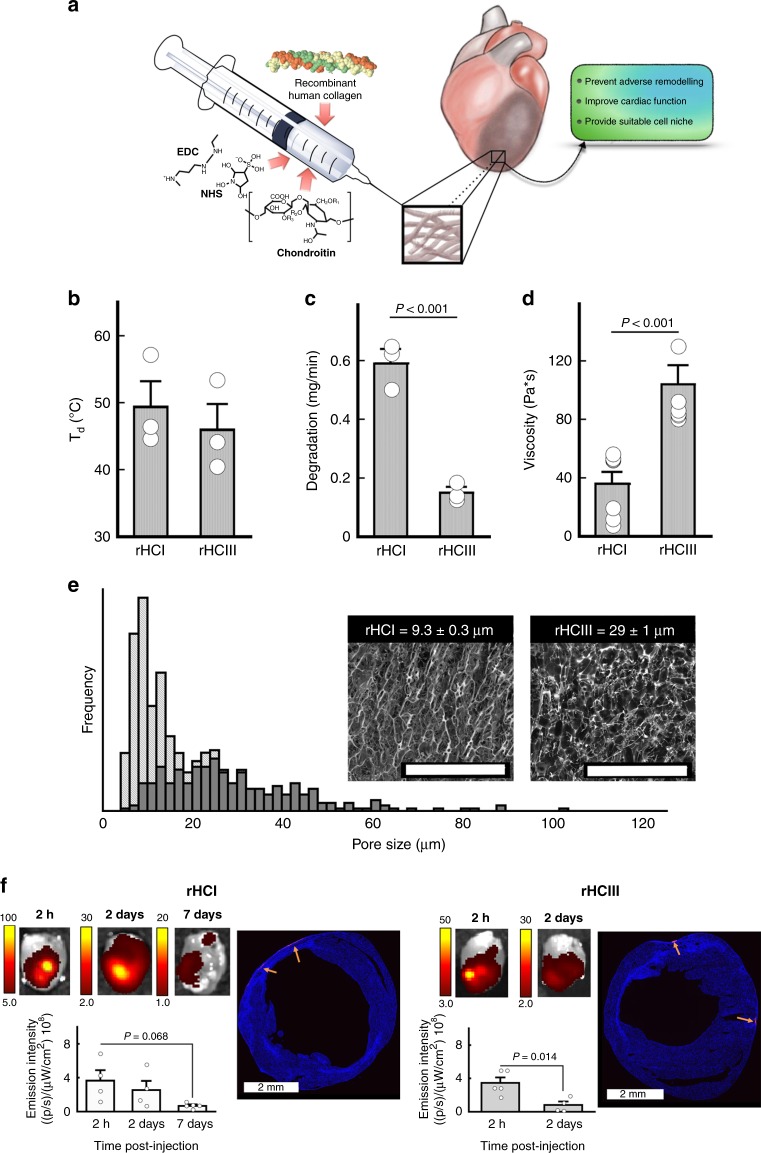
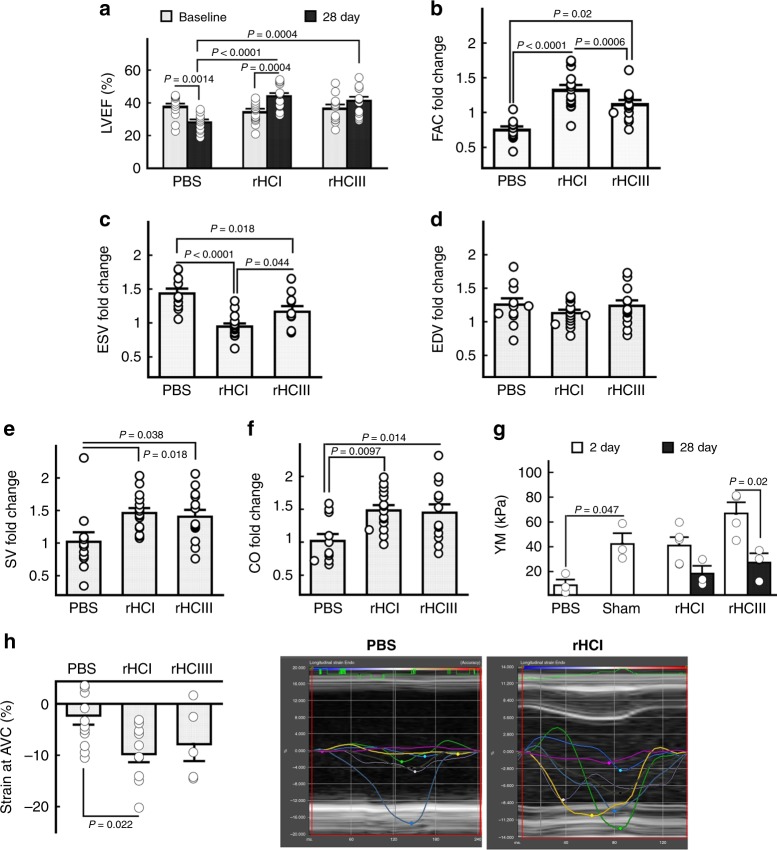
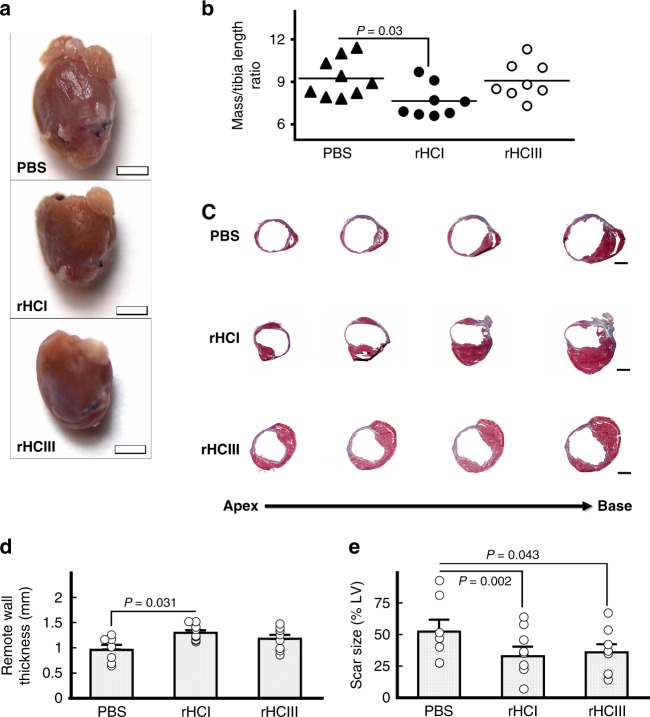
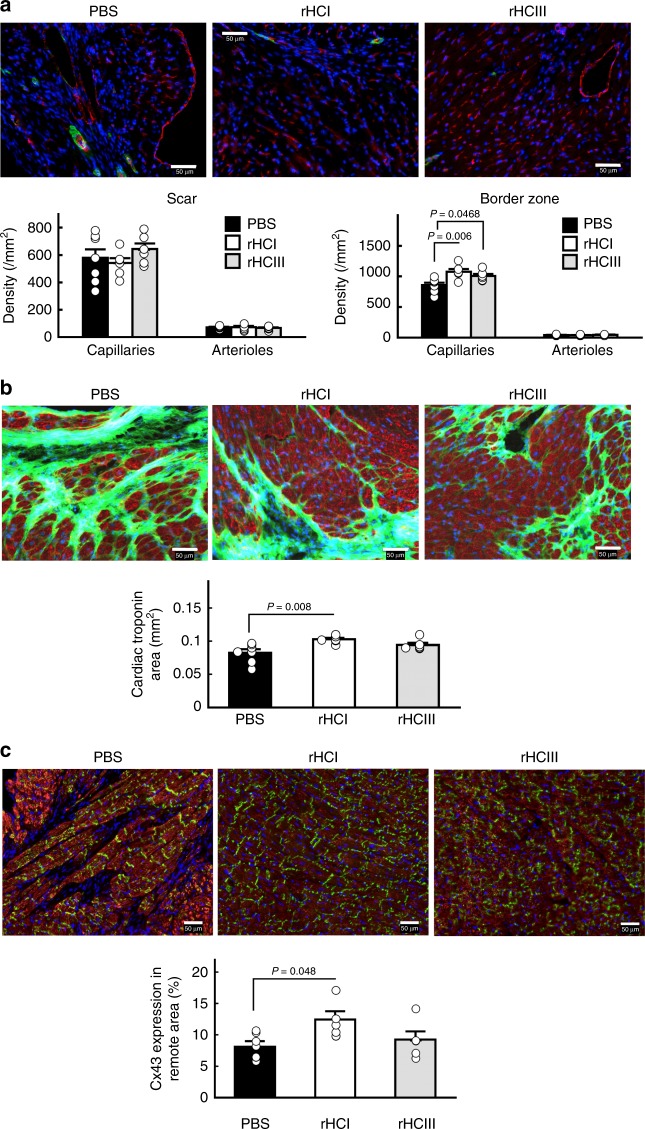
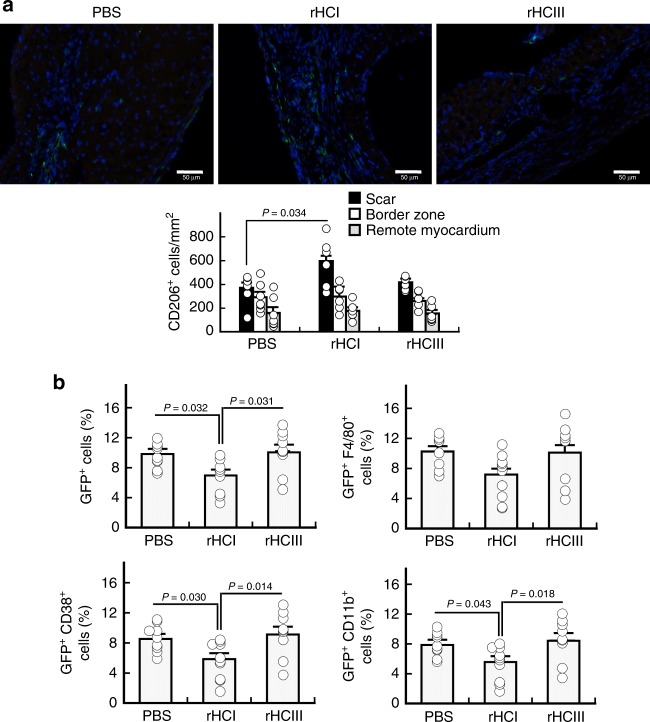
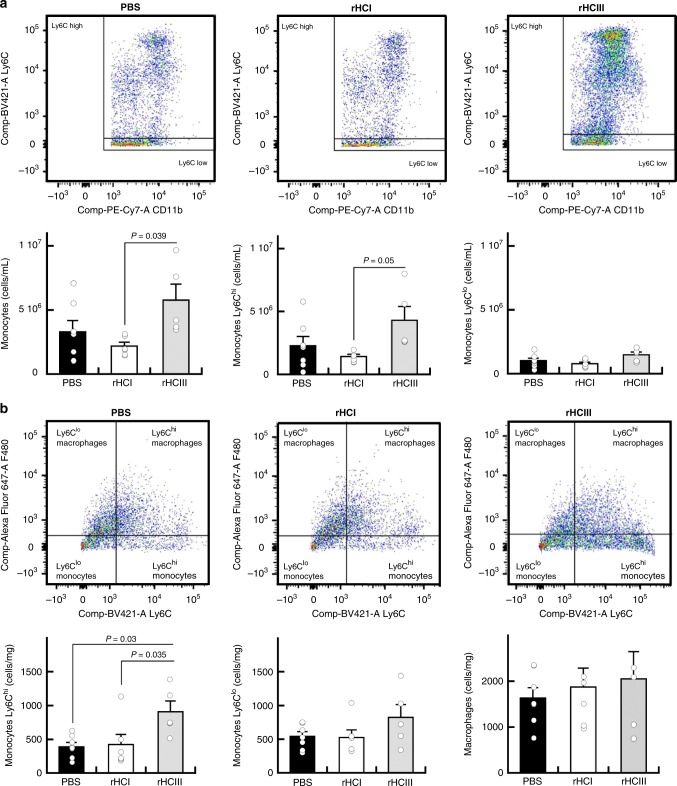
Despite the success of current therapies for acute myocardial infarction (MI), many patients still develop adverse cardiac remodeling and heart failure. With the growing prevalence of heart failure, a new therapy is needed that can prevent remodeling and support tissue repair. Herein, we report on injectable recombinant human collagen type I (rHCI) and type III (rHCIII) matrices for treating MI. Injecting rHCI or rHCIII matrices in mice during the late proliferative phase post-MI restores the myocardium’s mechanical properties and reduces scar size, but only the rHCI matrix maintains remote wall thickness and prevents heart enlargement. rHCI treatment increases cardiomyocyte and capillary numbers in the border zone and the presence of pro-wound healing macrophages in the ischemic area, while reducing the overall recruitment of bone marrow monocytes. Our findings show functional recovery post-MI using rHCI by promoting a healing environment, cardiomyocyte survival, and less pathological remodeling of the myocardium.
Overview
The claims and statistics of this paper haven’t been checked yet.
Free: it reads the open-access text and checks the first 5 claims that cite a source we can check. Create a free account to check every claim.
Integrity signals
Registry
Cites
Statistics
Figures
Verification
Claims the paper makes
The claims and statistics of this paper haven’t been checked yet.
Free: it reads the open-access text and checks the first 5 claims that cite a source we can check. Create a free account to check every claim.
Claims other papers make about this one
Each is checked against this paper’s own text: does it say what the citing paper says it does?
The source backs part of the claim, not all of it — or backs it for a different population, condition or comparison.
In the citing paper
“Previous works have demonstrated the benefits of mechanical support from biomaterial-based cardiac patches, which enable to reduce myocardium wall stress and subsequently limit adverse remodeling and improve cardiac function after myocardial infarction 60 .”
From Leaf-venation-directed cellular alignment for macroscale cardiac constructs with tissue-like functionalities (2023) · cites this paper as [60]
Experimental — accuracy not yet measured
Self-check
Percentages, sums and reported differences re-computed from the paper’s own numbers.
The self-check needs the paper’s full text.
Citations
Cites
Heart Disease and Stroke Statistics—2016 Update: A Report From the American Heart Association
Mozaffarian, D., Benjamin, E. J., Go, A. S., Arnett, D. K., Blaha, M. J., Cushman, M., Das, S. R., de Ferranti, S., Després, J.-P., Fullerton, H. J., et al. (2016) · Circulation · doi:10.1161/cir.0000000000000350 · Cited by 6,596
Heart Disease and Stroke Statistics—2015 Update: A Report From the American Heart Association
Mozaffarian, D., Benjamin, E. J., Go, A. S., Arnett, D. K., Blaha, M. J., Cushman, M., de Ferranti, S., Després, J.-P., Fullerton, H. J., Howard, V. J., et al. (2015) · Circulation · doi:10.1161/cir.0000000000000152 · Cited by 5,797
White, H. D., Norris, R. M., Brown, M. A., Brandt, P. W., Whitlock, R. M., & Wild, C. J. (1987) · Circulation · doi:10.1161/01.cir.76.1.44 · Cited by 2,363
The Biological Basis for Cardiac Repair After Myocardial Infarction: From Inflammation to Fibrosis
Prabhu, S. D., & Frangogiannis, N. G. (2016) · Circulation Research · doi:10.1161/circresaha.116.303577 · Cited by 2,224
Cohn, J. N., Ferrari, R., & Sharpe, N. (2000) · Journal of the American College of Cardiology · doi:10.1016/s0735-1097(99)00630-0 · Cited by 2,161
Extracellular matrix as a biological scaffold material: Structure and function
BADYLAK, S., FREYTES, D., & GILBERT, T. (2009) · Acta Biomaterialia · doi:10.1016/j.actbio.2008.09.013 · Cited by 1,671
De Luca, G., Suryapranata, H., Ottervanger, J. P., & Antman, E. M. (2004) · Circulation · doi:10.1161/01.cir.0000121424.76486.20 · Cited by 1,542
Stem Cell Therapies in Clinical Trials: Progress and Challenges
Trounson, A., & McDonald, C. (2015) · Cell Stem Cell · doi:10.1016/j.stem.2015.06.007 · Cited by 1,468
Reprint of: Extracellular matrix as a biological scaffold material: Structure and function
Badylak, S. F., Freytes, D. O., & Gilbert, T. W. (2015) · Acta Biomaterialia · doi:10.1016/j.actbio.2015.07.016 · Cited by 1,362
Collagen-based biomaterials for wound healing
Chattopadhyay, S., & Raines, R. T. (2014) · Biopolymers · doi:10.1002/bip.22486 · Cited by 1,041
Cited by
Items 101–152 of 152
Mass Spectrometry Imaging of Biomaterials
Kret, P., Bodzoń‐Kułakowska, A., Drabik, A., Ner‐Kluza, J., Suder, P., & Smoluch, M. T. (2023) · Materials · doi:10.3390/ma16186343 · Cited by 13
“Seven days after myocardial infarction, mice were treated with either a collagen type I (rhCI) or a collagen type III (rhCIII) hydrogel [75].”
BackgroundMethodMultipurpose On‐the‐Spot Peptide‐Based Hydrogels for Skin, Cornea, and Heart Repair
Ross, A., Guo, X., Salazar, G. A. M., Schejtman, S. D. G., Hage, J. E., Comtois‐Bona, M., MacAdam, A. J., Guzmán‐Soto, I., Takaya, H., Hu, K., et al. (2024) · Advanced Functional Materials · doi:10.1002/adfm.202402564 · Cited by 11
Self-citationModulation of Tissue Microenvironment Following Myocardial Infarction
Handley, E., & Callanan, A. (2022) · Advanced NanoBiomed Research · doi:10.1002/anbr.202200005 · Cited by 8
Heart Regeneration and Repair: Molecular Mechanism and Therapeutic Targets
Liu, M., Peng, T., Yu, R. E., Wang, K., Wang, D., Jia, X., Zhang, Y., Hu, J., Qi, B., & Li, Y. (2025) · MedComm · doi:10.1002/mco2.70407 · Cited by 11
“Research has demonstrated that the injection of hydrogels into the epicardial myocardium can enhance neovascularization and alleviate adverse pathological remodeling [329].”
Chen, P.-S., Feng, W.-H., Tsai, T., Hong, Y., Lee, A., Chang, K., Chung, H.-C., Liu, Y.-W., Hsieh, C., Fang, Y.-H., et al. (2022) · Scientific Reports · doi:10.1038/s41598-022-14567-2 · Cited by 7
Hemalatha, T., Aarthy, M., Pandurangan, S., Kamini, N. R., & Ayyadurai, N. (2021) · Heart Failure Reviews · doi:10.1007/s10741-021-10144-3 · Cited by 7
“[28] reported that the use of injectable recombinant collagen types in mice model of MI restored the mechanical properties of the myocardium, enhanced cardiomyocyte survival, and reduced the scar size.”
BackgroundHuang, D., Ma, Z., Wang, J., Li, Y., Zhang, Y., Lin, H., Zhu, X., Xiao, Y., & Zhang, X. (2025) · Biomaterials · doi:10.1016/j.biomaterials.2025.123162 · Cited by 7
A BACH1 inhibitor ameliorates myocardial infarction and limb ischemia in mice
Lin, J., Liu, X., Li, Q., Ge, F., Ma, J., Xianlong, N. G., Pan, Q., Wei, X., Jiang, Q., Jin, J., et al. (2025) · Molecular Therapy · doi:10.1016/j.ymthe.2025.07.008 · Cited by 6
Jebakumar, M., Pachaiyappan, M., Reeves, C. L., Fox, K. E., Gelmi, A. A., & Ayyadurai, N. (2025) · Journal of Materials Chemistry B · doi:10.1039/d5tb01716e · Cited by 6
Khatoon, Z., Guzmán‐Soto, I., McTiernan, C. D., Lazurko, C., Simpson, F. C., Zhang, L., Cortes, D., Mah, T., Griffith, M., & Alarcon, E. I. (2020) · RSC Advances · doi:10.1039/d0ra03659e · Cited by 6
Self-citationvan der Pol, A., Peters, M. M. C., Jorba, I., Smits, A. M., van der Kaaij, N. P., Goumans, M., Wever, K. E., & Bouten, C. V. C. (2025) · Communications Medicine · doi:10.1038/s43856-025-00812-y · Cited by 5
Tian, J., Yang, H., Chang, L., Zhang, X., Wang, W., & Li, R. (2025) · Frontiers in Cell and Developmental Biology · doi:10.3389/fcell.2025.1678848 · Cited by 6
Biomaterials for direct cardiac repair—A rapid scoping review 2012–2022
Sedláková, V., Mourcos, S., Pupkaitė, J., Lunn, Y., Visintini, S. M., Guzmán‐Soto, I., Ruel, M., Suuronen, E. J., & Alarcon, E. I. (2024) · Acta Biomaterialia · doi:10.1016/j.actbio.2024.04.008 · Cited by 6
Self-citationPierre, V., Wu, D. H., Liu, C., Ertugral, E. G., Kothapalli, C. R., & Senyo, S. E. (2025) · Frontiers in Bioengineering and Biotechnology · doi:10.3389/fbioe.2025.1579246 · Cited by 6
“DHM is comprised primarily of extracellular matrix proteins and provides insoluble building blocks such as collagen which suppress adverse tissue remodeling (McLaughlin et al., 2019; Baehr et al., 2020).”
Mechanically Stable and Tunable Photoactivated Peptide‐Based Hydrogels for Soft Tissue Adhesion
Ross, A., Nguyen, D., MacAdam, A. J., Salazar, G. A. M., Giannetti, M., İleri, R., Ruel, M., Suuronen, E. J., & Alarcon, E. I. (2025) · Advanced Functional Materials · doi:10.1002/adfm.202529084 · Cited by 5
Self-citationPopp, J. L., Patel, K., Cuomo, D., Lynch, R., Leung, S., Berridge, B. R., Rusyn, I., Chiu, W. A., & Threadgill, D. W. (2025) · BMC Cardiovascular Disorders · doi:10.1186/s12872-025-05156-y · Cited by 4
“For example, the C57BL/6 mouse is one of the most commonly used strains in experimental research [21], and has been used to model cardiovascular therapies for humans [22, 23].”
Building new cardiac vasculature and myocardium: where are we at?
Sedláková, V., Ahumada, M., Suuronen, E. J., & Alarcon, E. I. (2021) · Current Opinion in Cardiology · doi:10.1097/hco.0000000000000905 · Cited by 4
Self-citationAdvances in hydrogel drug delivery systems for myocardial infarction treatment
Yang, J. R., Zhou, Z., Xie, X., & Ye, M. (2025) · Journal of Zhejiang University (Medical Sciences) · doi:10.3724/zdxbyxb-2025-0087 · Cited by 5
Advances in injectable hydrogels for radiation-induced heart disease
Zhao, L., Wang, X., Wen, M., Pan, N.-N., Yin, X.-Q., An, M., Wang, L., Liu, Y., & Song, J. (2024) · Journal of Biomaterials Science Polymer Edition · doi:10.1080/09205063.2024.2314364 · Cited by 3
“In recent years, collagen hydrogels have been rapidly developed in the field of cardiac tissue engineering [89–93].”
BackgroundMethodScalable technologies in the manufacture and deployment of cell-free cardiac therapies
Lundy, D. J., Burnouf, T., Lai, J. J., Hill, J. H., & Hsieh, P. C. H. (2025) · Trends in biotechnology · doi:10.1016/j.tibtech.2025.05.016 · Cited by 4
Shamim, A., Siddiqui, H. H., Mahmood, T., Wani, T. A., Zargar, S., Siddiqui, M. H., Farooqui, A., Ahsan, F., Shariq, M., Parveen, S., et al. (2022) · Diabetology · doi:10.3390/diabetology3040043 · Cited by 3
“The cardio morphology was evaluated for inflammation, redness, capillary dilatation, development of lesions, color in all parts of the heart and grading [27].”
MethodHydrogels for Healing Radiation-Injured Tissues and Organs
Pawlowski, D., Słomska, K., Telszewski, J., Pilarski, M., Klimkowski, K., Witkowska, J., & Jankowska, E. (2026) · Gels · doi:10.3390/gels12050450 · Cited by 2
“Recombinant human collagen type I (rHCI) hydrogels have demonstrated strong immunomodulatory activity by increasing the abundance of pro-regenerative M2 macrophages within the ischemic region [178].”
Naturally Occurring and Nature-derived Polymers as Injectable Hydrogels
Draghi, L. (2021) · Royal Society of Chemistry eBooks · doi:10.1039/9781839163975-00077 · Cited by 2
Tong, M., Zhong, J., Lv, X., Shen, X., Fu, J., Wang, Y., Chen, W., Chen, C., Xie, Q., & Xiong, S. (2025) · International Journal of Biological Macromolecules · doi:10.1016/j.ijbiomac.2025.147324 · Cited by 3
Viral Transgene Expression in Rodent Hearts and the Assessment of Cardiac Arrhythmia Risk
Lu, A., Wang, J., Xia, Y., Gu, R., Kim, K.-H., Mulvihill, E. E., Davis, D. R., Beanlands, R. S., & Liang, W. (2022) · Journal of Visualized Experiments · doi:10.3791/64073 · Cited by 1
Self-citationKingma, J. G. (2020) · World Journal of Cardiovascular Diseases · doi:10.4236/wjcd.2020.104019 · Cited by 2
“McLaughlin and coworkers recently developed a recombinant human collagen matrix that prevents adverse cardiac remodelling but improves ventricular function even when applied during the late proliferative phase [124].”
BackgroundLe, H. T., Mahara, A., Nagasaki, T., & Yamaoka, T. (2025) · Journal of Controlled Release · doi:10.1016/j.jconrel.2025.114148 · Cited by 1
Guo, X., Ileri, R., Ruel, M., Alarcon, E. I., & Suuronen, E. J. (2025) · Gels · doi:10.3390/gels12010018 · Cited by 1
“Previous studies have demonstrated the ability of our collagen hydrogels to modulate the function of many cell types [15,20].”
InfluentialSelf-citationTaiwaikuli, D., Fu, H., Song, J., Zhang, L., Zhang, X., Chen, Y., Tuersongmaimaiti, N., Ding, H., Lu, Y.-R., Ye, M., et al. (2026) · ACS Applied Materials & Interfaces · doi:10.1021/acsami.6c02148 · Cited by 3
Prothymosin α Gene Transfer Modulates Myocardial Remodeling after Ischemia-Reperfusion Injury.
Shiau, A., Fang, S.-Y., Hsu, C.-H., Chiu, M.-H., Lam, C., Wu, C., & Roan, J. (2022) · PubMed Central · doi:10.6515/acs.202203_38(2).20211115a · Cited by 3
Protein hydrogels: structure, characteristics, and applications
Hromić‐Jahjefendić, A., Golzardi, M., & Uversky, V. N. (2024) · Elsevier eBooks · doi:10.1016/b978-0-443-21809-5.00002-8 · Cited by 2
Xiang, H., Sun, Y., Chen, Y., Wang, G., & Xie, H. (2025) · Dermatologic Surgery · doi:10.1097/dss.0000000000004553 · Cited by 1
Miniaturized Devices for On‐the‐Spot Generation of Small‐Diameter Vascular Grafts
Hernandez‐Sanchez, D., Comtois‐Bona, M., El‐Khoury, A., Schejtman, S. D. G., MacAdam, A. J., Figueroa‐Alegria, J., Calderon‐Torres, J. M., Guzmán‐Soto, I., Ruel, M., Suuronen, E. J., et al. (2025) · Advanced Materials Technologies · doi:10.1002/admt.202500077 · Cited by 1
Self-citationCharacterization of the Monocyte Response to Biomaterial Therapy for Cardiac Repair
McLaughlin, S., Smyth, D. R., Alarcon, E. I., & Suuronen, E. J. (2022) · Methods in molecular biology · doi:10.1007/978-1-0716-2261-2_19 · Cited by 1
Self-citationStem Cell Applications in Cardiac Tissue Regeneration
Sharma, V., Dash, S. K., Gupta, P. K., Zipporah, B. E., Haider, K. H., & Govarthanan, K. (2022) · Springer eBooks · doi:10.1007/978-981-19-2655-6_36 · Cited by 1
Popp, J. L., Patel, K., Cuomo, D., Lynch, R., Leung, S., Berridge, B. R., Rusyn, I., Chiu, W. A., & Threadgill, D. W. (2025) · bioRxiv (Cold Spring Harbor Laboratory) · doi:10.1101/2025.01.08.631983 · Cited by 1
Advances in tissue engineering of the cardiac muscle for myocardial regeneration
de Granada, E. D. L. F. D. M. U., & Ruiz-de-Almirón-de-Andrés, B. (2020) · ACTUALIDAD MEDICA · doi:10.15568/am.2020.809.re01 · Cited by 1
“After pre-clinical performance in a well-established mouse model of MI, their results highlight the potential for a biomaterial based on human recombinant collagen to be used as therapy for the improvement of cardiac function post-MI (33).”
BackgroundThe Role of non-coding RNA in Cardiac Repair and Regeneration after Myocardial Infarction
Li, Y. (2021) · Clinical Cardiology and Cardiovascular Interventions · doi:10.31579/2641-0419/136
“ISSN: 2641-0419 Page 2 of 13 and collagen deposition [8].”
BackgroundStem Cell Applications in Cardiac Tissue Regeneration
Sharma, V., Dash, S. K., Gupta, P. K., Zipporah, B. E., Haider, K. H., & Govarthanan, K. (2022) · Springer eBooks · doi:10.1007/978-981-16-6016-0_36-1
Wang, Z., Yang, N., Cao, H., Hou, Y., Fu, X., Hu, G., Zhu, P., Li, Y., Yin, C., Yang, E., et al. (2022) · Research Square · doi:10.21203/rs.3.rs-1889805/v1
Hydrogels for cardiac tissue regeneration
Beena, M., & Palaniappan, A. (2025) · Elsevier eBooks · doi:10.1016/b978-0-443-29260-6.00009-3 · Cited by 1
Zhang, T., Li, L., Wang, Z., Luo, R., Li, Y., Wang, Y., & Zhang, X. (2025) · International Journal of Biological Macromolecules · doi:10.1016/j.ijbiomac.2025.147744 · Cited by 1
Gu, L., Wang, J., Guo, R., Shi, Z., Xu, Z., Zhou, S., Zhao, J., Gu, L., Zhou, B., & Hua, H. (2025) · Dermatologic Therapy · doi:10.1155/dth/6736692
“In mice with myocardial infarction during the late proliferative phase, rhCol III signifcantly restores the mechanical properties of the myocardium and reduces scar size [15].”
Advancements and Prospects in Injectable Hydrogel for the Recovery of Heart Failures
Jasim, S. A., Pallathadka, H., Kanabar, B., Ramachandran, T., Asiri, M., Kedia, A., Singh, G., Mohammed, F., KADHIM, A. J., & Zwamel, A. H. (2026) · Polymers for Advanced Technologies · doi:10.1002/pat.70578
“Hydrogel made from a full-length amino acid sequence produced by a specific human collagen gene re-pairs infarcted myocardium [71, 72].”
Bioengineered hydrogel-based scaffold for muscle regeneration
Bobrova, M. M., Luss, A. L., Куликов, П. П., Fadeeva, I. A., Сенотов, А. С., Minaychev, V. V., Teterina, A. Y., Kobyakova, M. I., & Keskinov, A. A. (2026) · Extreme Medicine · doi:10.47183/mes.2026-441
Luo, L., Wang, Y., Wu, Y., Xie, Y., Liu, C., Zhang, C., Li, B., Zhou, J., Xu, X., & Yuan, Y. (2026) · Chemical Engineering Journal · doi:10.1016/j.cej.2026.177257
Animal-derived biomaterials for tissue engineering
Kaur, G., Sandhu, P. K., & Dhiman, B. (2026) · Elsevier eBooks · doi:10.1016/b978-0-443-34248-6.00011-0
Developing Peptide-Based Hydrogels for Soft Tissue Repair
Ross, A., Nguyen, D., Salazar, G. A. M., İleri, R., Guzmán‐Soto, I., Ruel, M., Suuronen, E. J., & Alarcon, E. I. (2026) · ACS Materials Letters · doi:10.1021/acsmaterialslett.6c00136
Self-citationDaza, R., Vázquez, M., Tabraue-Rubio, R., Colchero, L., Elices, M., Sanz-Ruiz, R., Guinea, G., Panetsos, F., Pérez-Rigueiro, J., & Fernández-Santos, M. (2026) · Biomimetics · doi:10.3390/biomimetics11080520
Decellularized cardiac ECM: A tissue-specific bioactive platform for drug release and cell delivery
Xu, J., Yang, Z., Wen, Y., Cheng, K., & Hong, Y. (2026) · Journal of Controlled Release · doi:10.1016/j.jconrel.2026.115203
Saravanan, S. K., Ramadoss, R., Velmurugan, P., Subramanyam, V., & Moovarkumudalvan, B. (2026) · Cardiovascular Engineering and Technology · doi:10.1007/s13239-026-00852-y
“PEG-based hydrogels have been constructed and used as patches in myocardial infarcted areas to promote tissue repair and regeneration [63].”
Yang, J., Chen, Z., Zhang, T., Hu, R., Wang, D., Chen, S., Zhang, L., Ge, Y., & Wu, Y. (2026) · Chemical Engineering Journal · doi:10.1016/j.cej.2026.180543
Metadata
- Authors
- McLaughlin, S., McNeill, B., Podrebarac, J., Hosoyama, K., Sedlakova, V., Cron, G., Smyth, D., Seymour, R., Goel, K., Liang, W., Rayner, K. J., Ruel, M., Suuronen, E. J., & Alarcon, E. I.
- Affiliations
- University of Ottawa (CA)
- Ottawa Heart Institute (CA)
- Corresponding author
- Suuronen, Erik J.
- Alarcon, Emilio I.
- ORCID
- Venue
- Nature Communications
- Published
- 2019-10-25
- Volume
- 10
- Issue
- 1
- Pages
- 4866-4866
- ISSN
- 2041-1723 (ISSN-L)
- PMC
- PMC6814728
- OpenAlex
- W2982246887
- Semantic Scholar
- 504754f8497036ed5669cbddcfbbd46b9132a938
- Cited by
- 153
- References
- 70
- Citations by year
- 2026: 11 · 2025: 23 · 2024: 21 · 2023: 23 · 2022: 29 · 2021: 29 · 2020: 17
- FWCI
- 13.56
- Type
- journal article
- Language
- en
- Open access
- gold
- doi.org
- Licence
- cc-by
- creativecommons.org/licenses/by/4.0 (tdm)
- creativecommons.org/licenses/by/4.0 (vor)
- Locations
- Nature Communications (publishedVersion, cc-by)
- PubMed Central (publishedVersion, cc-by)
- PubMed (publishedVersion)
- RePEc: Research Papers in Economics (submittedVersion)
- DOAJ (DOAJ: Directory of Open Access Journals) (submittedVersion)
- DOAJ (DOAJ: Directory of Open Access Journals) (submittedVersion, cc-by-sa)
- Funders
- University of Ottawa
- University of Ottawa Heart Institute Foundation
- Canadian Institutes of Health Research (CPG- 158280, MOP‐77536)
- Natural Sciences and Engineering Research Council of Canada (CPG-158280)
- Topics
- Health Sciences › Medicine › Cardiology and Cardiovascular Medicine › Cardiac Fibrosis and Remodeling
- Health Sciences › Medicine › Surgery › Tissue Engineering and Regenerative Medicine
- Life Sciences › Biochemistry, Genetics and Molecular Biology › Molecular Biology › Congenital heart defects research
- Keywords
- myocardial infarction, type I collagen, type III collagen, cardiac remodeling, heart failure, scar size, cardiomyocyte survival, bone marrow-derived monocytes, cardiac function recovery
- MeSH terms
- Animals, Capillaries, Carbodiimides, Cell Survival, Cicatrix, Coronary Vessels, Cross-Linking Reagents, Dimethylamines, Heart, Humans, Macrophages, Monocytes, Myocardial Infarction, Myocardium, Recombinant Proteins, Succinimides, Ventricular Function, Ventricular Remodeling, Collagen Type I, Collagen Type III, Myocytes, Cardiac, Cell Proliferation, Mice
About these checks
Registry, retraction, Cites and statistics results are computed, not judged, with one exception: a printed reference that no index lists is read once by a model before it counts as a citation error. Claims are extracted by a model and kept only when their quote appears verbatim in the text; each cited source is then checked, with a model’s help, for whether it says what the claim relies on. Those verdicts can be wrong — read the claim’s quote and the cited source before relying on one.
Statistics and arithmetic are recomputed, not judged.
Confidence bands are shown only for fields calibrated on our annotated test set. None is calibrated yet, so no band is shown.
What counts as a claim ›How we measure confidence ›How we check this ›
Are you an author, or do you see a problem with this page? Request a review
Data sources
Bibliographic data: Semantic Scholar, OpenAlex, Crossref.
Contains information from the Semantic Scholar Academic Graph Datasets, made available under the ODC Attribution License (ODC-BY 1.0).
Semantic Scholar’s data is described in: Kinney, R., et al. (2023). The Semantic Scholar Open Data Platform. arXiv:2301.10140.
