

Identification and characterization of Cardiac Glycosides as senolytic compounds
Open accessThe DOI matches its Crossref record; 59 of the 59 references it cites were found in a registry or an index; 8 of the 28 sources its claims cite were checked for support.
Abstract
Compounds with specific cytotoxic activity in senescent cells, or senolytics, support the causal involvement of senescence in aging and offer therapeutic interventions. Here we report the identification of Cardiac Glycosides (CGs) as a family of compounds with senolytic activity. CGs, by targeting the Na+/K+ATPase pump, cause a disbalanced electrochemical gradient within the cell causing depolarization and acidification. Senescent cells present a slightly depolarized plasma membrane and higher concentrations of H+, making them more susceptible to the action of CGs. These vulnerabilities can be exploited for therapeutic purposes as evidenced by the in vivo eradication of tumors xenografted in mice after treatment with the combination of a senogenic and a senolytic drug. The senolytic effect of CGs is also effective in the elimination of senescence-induced lung fibrosis. This experimental approach allows the identification of compounds with senolytic activity that could potentially be used to develop effective treatments against age-related diseases.
Overview
CoChat Summary
TL;DR
Cardiac glycosides (CGs), identified through high-throughput screens, selectively kill senescent cells by targeting the Na+/K+ATPase and exploiting senescent-cell depolarization and acidification. Digoxin combined with senescence-inducing chemotherapy reduced tumors in mice and alleviated senescence-induced lung fibrosis.
Key findings
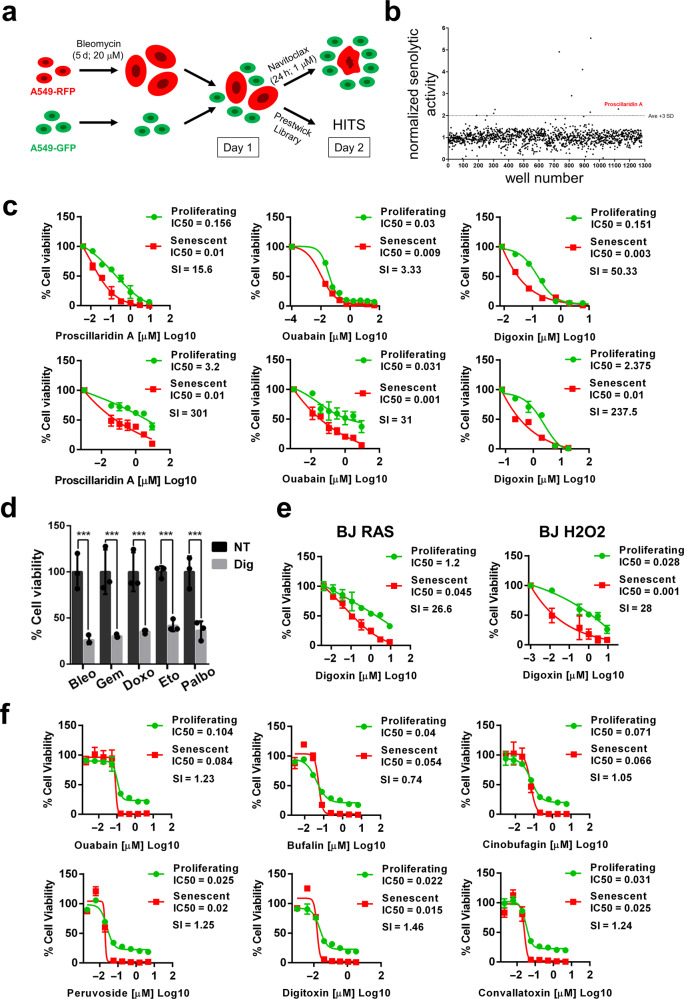
- Screening the 1,280-compound Prestwick library in mixed proliferating/senescent A549 cells yielded 9 hits, including Proscillaridin A; CGs showed nanomolar IC50 values and senolytic indexes from 3.33 (Ouabain in A549) to 301 (Proscillaridin in BJ fibroblasts).
- Independent screens of 480 GPNCL natural compounds and 502 SCREEN-WELL natural products in Palbociclib-induced SK-MEL-103 melanoma cells identified six positives, all CGs: Ouabain, Bufalin, Cinobufagin, Peruvocide, Digitoxin, and Convallatoxin; a 200-venom screen found senolytic activity only in toad-derived venoms.
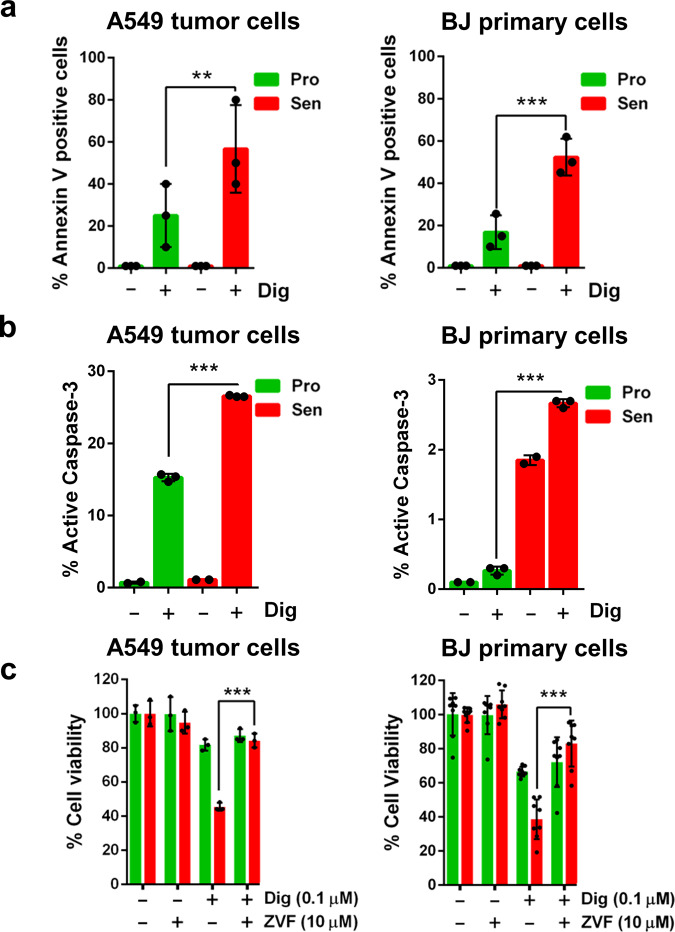
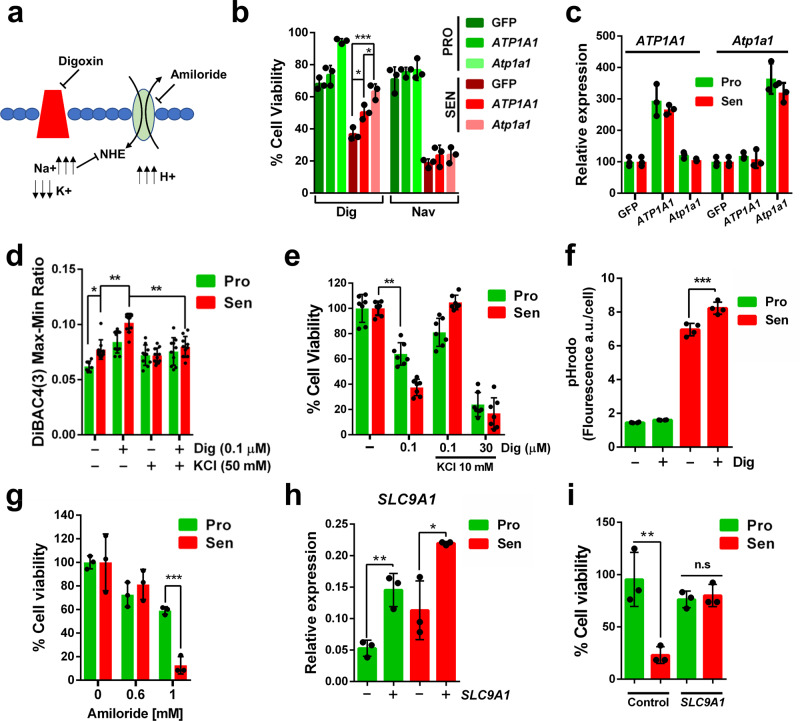
- CG senolysis occurred by apoptosis, with increased Annexin V and active Caspase-3 and protection by pan-caspase inhibitor Z-VAD-FMK; mechanism involved Na+/K+ATPase alpha-subunit inhibition, plasma-membrane depolarization, and intracellular H+ increase, with KCl rescue and NHE1/SLC9A1 overexpression protecting senescent cells.
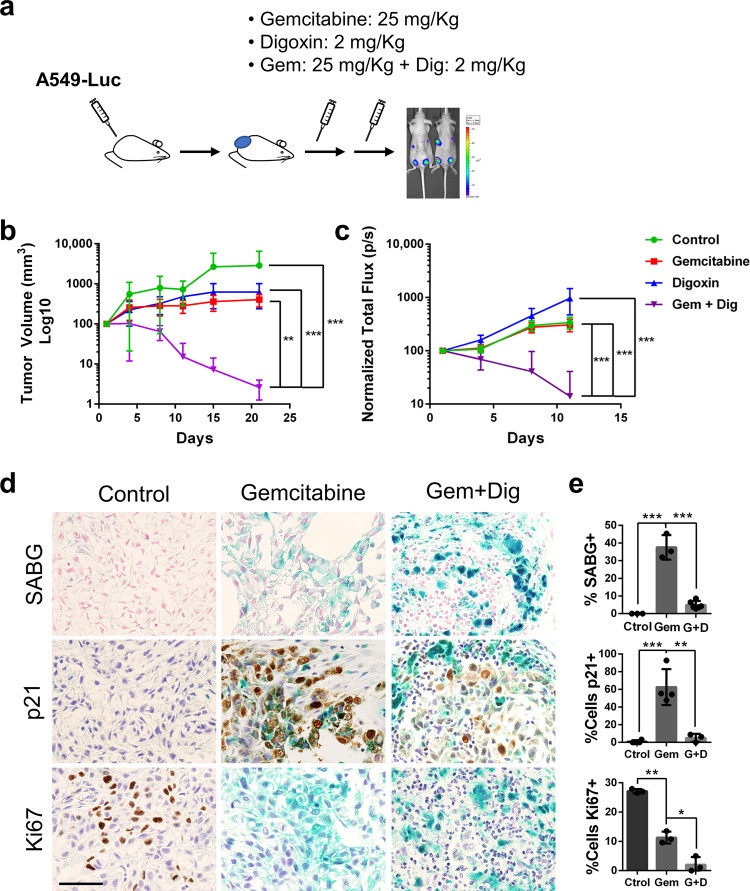
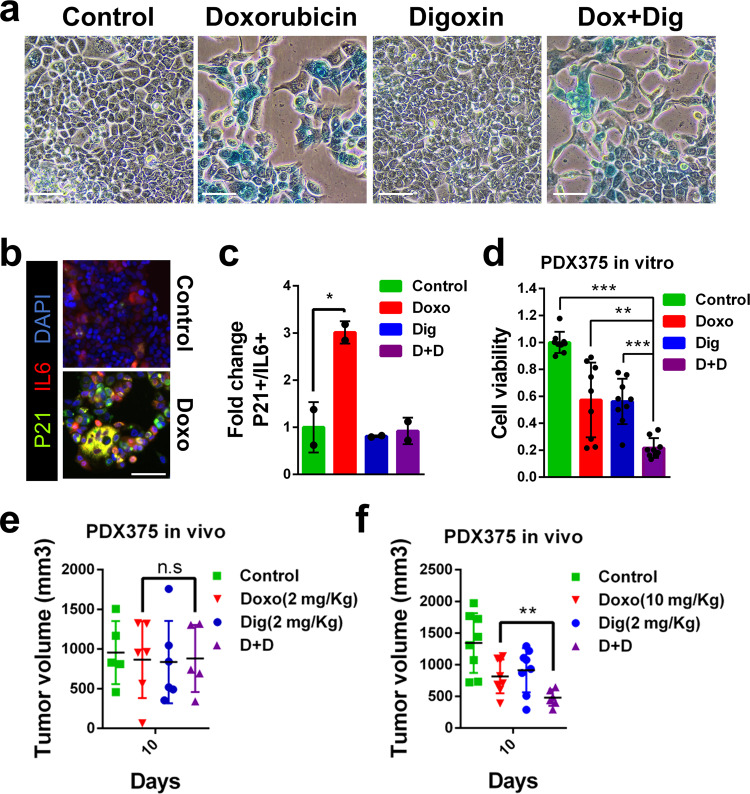
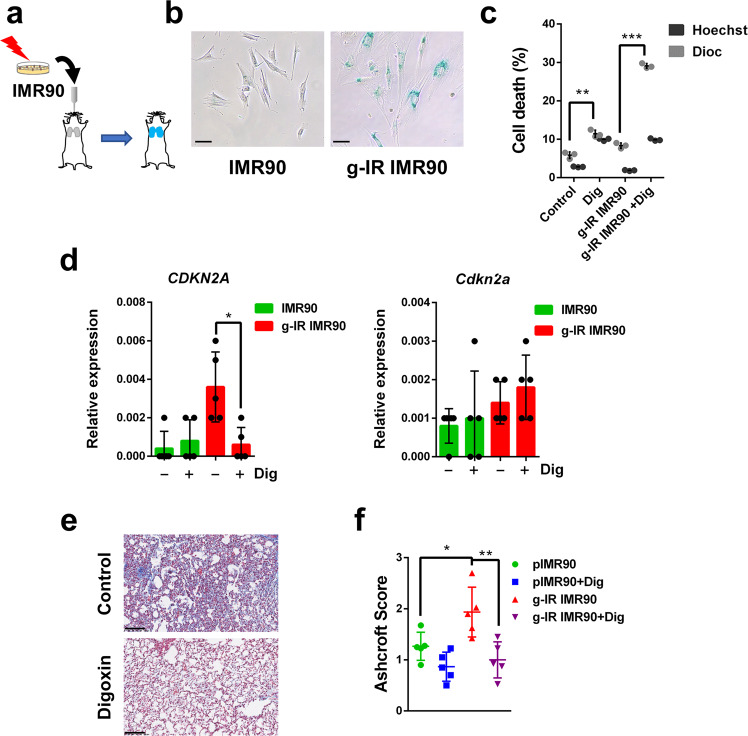
- In vivo, Gemcitabine (25 mg/kg) plus Digoxin (2 mg/kg) caused robust A549 xenograft regression, with most tumors disappearing after three weeks; in PDX375, Digoxin plus senescence-inducing Doxorubicin (10 mg/kg) significantly reduced tumor volume, while non-senescence-inducing Doxorubicin (2 mg/kg) did not. Digoxin also reduced CDKN2A expression and fibrosis in a lung model induced by senescent human IMR90 cells.
Methods
- Cell-based high-throughput screening: A549-GFP and A549-RFP cells mixed 1:3, senescence induced with Bleomycin (20 μM, 5 days), plated in 384-well plates, treated with libraries at 10 μM, and counted with Operetta; Navitoclax (1 μM) was positive control. A second screen used SK-MEL-103 cells induced with Palbociclib (5 μM, 7 days) against natural-product and venom libraries.
- In vivo models: subcutaneous A549-luc xenografts in immunodeficient nude mice treated with Gemcitabine, Digoxin, or both; PDX375 breast tumor xenografts treated with Doxorubicin and/or Digoxin; lung fibrosis induced by intratracheal instillation of proliferating or gamma-irradiated senescent IMR90 cells followed by Digoxin or vehicle.
- Main analyses: IC50 curves, flow cytometry for Annexin V and active Caspase-3, membrane potential and pH probes, Q-RT-PCR, senescence-associated β-galactosidase staining, immunohistochemistry for Ki67 and p21, Masson Trichrome and hydroxyproline for fibrosis, and two-tailed Student’s t-test or ANOVA with Tukey test.
Limitations
- The paper states that Digoxin has a narrow therapeutic window, and although senolytic doses fell within the therapeutic range for some cell types and senescence inducers, this may not hold for all cell types, requiring individual assessment.
- The paper states that the known insensitivity of rodents to CGs precluded the use of immunocompetent mouse models of cancer development.
- Evident from the text: in vivo experiments were not repeated like in vitro experiments, sample size was not pre-determined, and the mechanism is not fully resolved because ATP1A1 knockdown did not cause cell death and other Na+/K+ATPase alpha subunits may be involved.
Model-written summary. Check it against the paper before relying on it.
Integrity signals
Registry
Cites
Statistics
Figures
Verification
Claims the paper makes
6 Valid · 2 Not valid · 14 Not checked · 99 Own results and interpretations
The cited sources support only part of this claim — read each source’s verdict below.
In the paper
“Experimental evidence points to this accumulation of senescent cells with time as a cause of aging6,7.”
§ Identification and characterization of Cardiac Glycosides as senolytic compounds > Introduction
What the sources say
- Not checked yetcites [6] Yanai H Fraifeld VE The role of cellular senescence in aging through the prism of Koch-like criteria Ageing Res. Rev. 2018 41 18 33 29106993 source
- Partly supportedcites [7] López-Otín C Blasco MA Partridge L Serrano M Kroemer G The hallmarks of aging Cell 2013 153 1194 1217 23746838 PMC3836174 sourceExperimental — accuracy not yet measured
In the Cellular Senescence section our copy does link accumulated senescent cells to aging, but only in hedged terms: senescent cells that accumulate when turnover/replacement fails 'may aggravate the damage and contribute to aging', and the SASP 'may contribute to aging'. The same section explicitly frames the causal reading as an assumption ('it has been widely assumed that senescence contributes to aging... this view undervalues what conceivably is the primary purpose of senescence'), and the Overview states senescence is a beneficial compensatory response and that 'it is not possible to give a simple answer' to whether it qualifies as a hallmark, noting that both enhancing senescence pathways (Matheu et al.) and clearing senescent cells (Baker et al., 2011) extend healthspan. So the source supports senescent-cell accumulation as a contributing, context-dependent factor, but the citing sentence's flat assertion of it as 'a cause of aging' overstates the paper's position. (LLM, conf=0.75)
hedgedstates a cause- Asserted: passes — The authors put it forward as true.
- Checkable: passes — It can be checked against evidence.
- Load-bearing: passes — The paper’s conclusions depend on it.
- Based: passes — The paper gives a reason why it holds.
The cited sources support only part of this claim — read each source’s verdict below.
In the paper
“Apart from the characteristic growth arrest and the SASP, senescent cells induce resistance to cell death23,24.”
§ Identification and characterization of Cardiac Glycosides as senolytic compounds > Introduction
What the sources say
- Partly supportedcites [23] Childs BG Baker DJ Kirkland JL Campisi J van Deursen JM Senescence and apoptosis: dueling or complementary cell fates? EMBO Rep. 2014 15 1139 1153 25312810 PMC4253488 sourceExperimental — accuracy not yet measured
The Introduction reports that senescent cells can resist apoptosis and, under some conditions, survive stimuli that would otherwise cause it. But the claim broadens this to resistance to cell death generally: the paper also reports senescent cells undergoing necrosis instead of apoptosis and describes responses that depend on the stimulus. (LLM, conf=0.85)
- Partly supportedcites [24] Seluanov A Change of the death pathway in senescent human fibroblasts in response to DNA damage is caused by an inability to stabilize p53 Mol. Cell. Biol. 2001 21 1552 1564 11238892 PMC86701 sourceExperimental — accuracy not yet measured
The Discussion reports that senescent human fibroblasts resist p53-dependent apoptosis, but it also says they die by necrosis after DNA damage. This supports resistance to one death pathway, not resistance to cell death generally. (LLM, conf=0.88)
plainstates a cause- Asserted: passes — The authors put it forward as true.
- Checkable: passes — It can be checked against evidence.
- Load-bearing: passes — The paper’s conclusions depend on it.
- Based: passes — The paper gives a reason why it holds.
- Partly supported
Every source the paper cites for this claim was checked and supports it.
In the paper
“similar results have been obtained by another group performing independently cell-based screenings and using other unrelated chemical libraries”
§ Identification and characterization of Cardiac Glycosides as senolytic compounds > Discussion
What the sources say
- Supportedcites [50] Guerrero, A. et al. Cardiac glycosides are broad-spectrum senolytics. Nat. Metab. 10.1038/s42255-019-0122-z (2019). PMC6887543 31799499 source
Our copy of Guerrero et al. (2019) is exactly the work the citing sentence points to: the Results section 'A drug screen identifies ouabain as a broad-spectrum senolytic' states 'In an effort to identify compounds modulating senescence, we carried out unbiased drug screens', comparing viability of control versus senescent IMR90 ER:RAS (OIS) and etoposide-treated IMR90 (TIS) cells by screening the LOPAC 1,280 library of 1,280 pharmacologically active compounds, and identifying ouabain/cardiac glycosides (plus CGP-74514A) as senolytics (Results, p.1; Methods 'Drugs' and 'Determining senolytic activity'). The comparative framing — that these screens were done independently of, and yielded results similar to, the citing group's own work with different libraries — is the citing authors' relation between two studies, which our copy neither asserts nor contradicts; what it does support is that this group performed its own cell-based screens of a chemical library and uncovered senolytics. (LLM, conf=0.82)
plainstates an association- Asserted: passes — The authors put it forward as true.
- Checkable: passes — It can be checked against evidence.
- Load-bearing: unclear — It is unclear whether the paper’s conclusions depend on it.
- Based: passes — The paper gives a reason why it holds.
- Supported
Every source the paper cites for this claim was checked and supports it.
In the paper
“robust in vivo proof of the causative involvement of senescent cells in aging and in particular age-related diseases10,11.”
§ Identification and characterization of Cardiac Glycosides as senolytic compounds > Discussion
What the sources say
- Supportedcites [10] Baker DJ Naturally occurring p16Ink4a-positive cells shorten healthy lifespan Nature 2016 530 184 189 26840489 PMC4845101 source
Our copy reports exactly the in vivo causal experiment the claim attributes: INK-ATTAC-mediated clearance of p16Ink4a-positive cells in non-progeroid, wild-type-type mice raised median lifespan by 27% and 24% on two genetic backgrounds (Results, 'p16Ink4a-positive cells shorten lifespan and healthspan'), and the Abstract states clearance 'delayed tumorigenesis and attenuated age-related deterioration of several organs... including kidney, heart and fat'. The Discussion closes with the causal model: 'p16Ink4a-positive cells act to shorten healthy lifespan by promoting tumor progression and age-dependent changes that functionally impair certain tissues and organs', covering both aging and age-related disease. The paper does flag caveats (partial clearance, liver/colon refractory, vehicle-injection stress) and notes beneficial roles of acute senescence in wound repair, so 'robust' is the citing authors' gloss rather than the source's own wording, but the substance of the claim is stated. (LLM, conf=0.85)
- Supportedcites [11] Baker DJ Clearance of p16Ink4a-positive senescent cells delays ageing-associated disorders Nature 2011 479 232 236 22048312 PMC3468323 source
The Abstract of Baker et al. (2011) states directly that 'these data indicate that cellular senescence is causally implicated in generating age-related phenotypes and that removal of senescent cells can prevent or delay tissue dysfunction and extend healthspan', which is exactly the causative-involvement point the citing sentence attributes. The Discussion section reinforces that this is in vivo evidence: life-long and late-life clearance of p16Ink4a-expressing senescent cells via INK-ATTAC in live BubR1H/H mice 'selectively delayed age-related pathologies in tissues that accumulate these cells'. The Results sections supply the underlying in vivo data (delayed lordokyphosis/cataracts, preserved muscle and fat, attenuated progression of established disorders), so the paraphrase 'robust in vivo evidence supports the causative involvement of senescent cells in aging and age-related diseases' faithfully tracks the source's own conclusion, with the caveat that the source's in vivo demonstration is in the BubR1 progeroid background rather than chronologically aged wild-type mice. (LLM, conf=0.85)
boostedstates a cause- Asserted: passes — The authors put it forward as true.
- Checkable: passes — It can be checked against evidence.
- Load-bearing: passes — The paper’s conclusions depend on it.
- Based: passes — The paper gives a reason why it holds.
- Supported
A result the paper reports from its own data — it cites no other source for it, so there is none to check. The quote shows it is in the paper.
In the paper
“In both cases, Digoxin treatment led to the preferential killing of the senescent cells (Fig. 1e).”
§ Identification and characterization of Cardiac Glycosides as senolytic compounds > Results > High-throughput compound screening for senolytic activity
plainstates a cause- Asserted: passes — The authors put it forward as true.
- Checkable: passes — It can be checked against evidence.
- Load-bearing: passes — The paper’s conclusions depend on it.
- Based: passes — The paper gives a reason why it holds.
75 more claims
Create a free account to see all 121 claims and to verify the 20 references still open.
- Probably not a substantial claim. 22
- It may state two separate claims as one. 21
Claims other papers make about this one
Each is checked against this paper’s own text: does it say what the citing paper says it does?
The source backs part of the claim, not all of it — or backs it for a different population, condition or comparison.
In the citing paper
“Recently, the cardiac glycoside ouabain demonstrated senolytic activity, at least in part, through the induction of NOXA, a proapoptotic BCL-2 family protein203,204.”
From Cellular senescence in ageing: from mechanisms to therapeutic opportunities (2021) · cites this paper as [204]
Experimental — accuracy not yet measuredThe source backs part of the claim, not all of it — or backs it for a different population, condition or comparison.
In the citing paper
“Cardiac glycosides inhibit the plasma membrane Na + /K + -ATPase present in all cells causing a cationic imbalance and lowering the intracellular pH 200 .”
From Hallmarks of aging: An expanding universe (2023) · cites this paper as [200]
Experimental — accuracy not yet measuredThe source backs part of the claim, not all of it — or backs it for a different population, condition or comparison.
In the citing paper
“The drop in cell number compared to untreated controls is indicated by the nuclei count and reflects cell death13,15.”
From Discovery of senolytics using machine learning (2023) · cites this paper as [15]
Experimental — accuracy not yet measuredThe cited source says what the claim attributes to it.
In the citing paper
“Cardiac glycosides, including the widely prescribed digoxin, were able to selectively kill TIS cancer cells in culture and invivo 208,209 .”
From Senescence and cancer — role and therapeutic opportunities (2022) · cites this paper as [208]
The cited source says what the claim attributes to it.
In the citing paper
“The mechanism of senolysis by cardiac glycosides is likely connected to the vulnerability of senescent cells to low intracellular pH.”
From Hallmarks of aging: An expanding universe (2023) · cites this paper as [200]
5 more claims about this paper
Create a free account to see every claim other papers make about this one.
Self-check
Percentages, sums and reported differences re-computed from the paper’s own numbers.
Each contradiction between two passages listed here was confirmed by an independent check.
Rated minor: it would not touch a result — a value no result rests on, a p-value that stays on the same side of the significance level, or a conflict that is clerical, resolved elsewhere in the paper, or outside its own findings.
In the paper
§ Identification and characterization of Cardiac Glycosides as senolytic compounds > Results > The Na+/K+ATPase is the senolytic target of CGs
“Digoxin, by inhibiting this Na+/H+ Exchanger causes an imbalance in the cellular concentrations of sodium and potassium that results in the loss of membrane potential and acidification of the cell.”
§ Identification and characterization of Cardiac Glycosides as senolytic compounds > Results > The Na+/K+ATPase is the senolytic target of CGs
“The increased concentration of sodium as a result of the Na+/K+ATPase pump inhibition by CGs can result in the blockade of the Na+/Ca2+ Exchanger (Supplementary Fig. 3c) and the Na+/H+ Exchanger (Fig. 3a) due to the high intracellular concentration of Na+39,40.”
Citations
Cites
López-Otín, C., Blasco, M. A., Partridge, L., Serrano, M., & Kroemer, G. (2013) · Cell · doi:10.1016/j.cell.2013.05.039 · Cited by 14,982
Self-citationA biomarker that identifies senescent human cells in culture and in aging skin in vivo.
Dimri, G. P., Lee, X., Basile, G., Acosta, M., Scott, G., Roskelley, C., Medrano, E. E., Linskens, M., Rubelj, I., & Pereira-Smith, O. (1995) · Proceedings of the National Academy of Sciences · doi:10.1073/pnas.92.20.9363 · Cited by 7,477
Clearance of p16Ink4a-positive senescent cells delays ageing-associated disorders
Baker, D. J., Wijshake, T., Tchkonia, T., LeBrasseur, N. K., Childs, B. G., van de Sluis, B., Kirkland, J. L., & van Deursen, J. M. (2011) · Nature · doi:10.1038/nature10600 · Cited by 3,670
Naturally occurring p16Ink4a-positive cells shorten healthy lifespan
Baker, D. J., Childs, B. G., Durik, M., Wijers, M. E., Sieben, C. J., Zhong, J., A. Saltness, R., Jeganathan, K. B., Verzosa, G. C., Pezeshki, A., et al. (2016) · Nature · doi:10.1038/nature16932 · Cited by 2,876
Cellular senescence: from physiology to pathology
Muñoz-Espín, D., & Serrano, M. (2014) · Nature Reviews Molecular Cell Biology · doi:10.1038/nrm3823 · Cited by 2,818
Self-citationThe role of senescent cells in ageing
van Deursen, J. M. (2014) · Nature · doi:10.1038/nature13193 · Cited by 2,623
Hallmarks of Cellular Senescence
Hernandez-Segura, A., Nehme, J., & Demaria, M. (2018) · Trends in Cell Biology · doi:10.1016/j.tcb.2018.02.001 · Cited by 2,605
The Achilles' heel of senescent cells: from transcriptome to senolytic drugs
Zhu, Y., Tchkonia, T., Pirtskhalava, T., Gower, A. C., Ding, H., Giorgadze, N., Palmer, A. K., Ikeno, Y., Hubbard, G. B., Lenburg, M., et al. (2015) · Aging Cell · doi:10.1111/acel.12344 · Cited by 2,584
Senolytics improve physical function and increase lifespan in old age
Xu, M., Pirtskhalava, T., Farr, J. N., Weigand, B. M., Palmer, A. K., Weivoda, M. M., Inman, C. L., Ogrodnik, M. B., Hachfeld, C. M., Fraser, D. G., et al. (2018) · Nature Medicine · doi:10.1038/s41591-018-0092-9 · Cited by 2,287
An Essential Role for Senescent Cells in Optimal Wound Healing through Secretion of PDGF-AA
Demaria, M., Ohtani, N., Youssef, S. A., Rodier, F., Toussaint, W., Mitchell, J. R., Laberge, R.-M., Vijg, J., Van Steeg, H., Dollé, M. E. T., et al. (2014) · Developmental Cell · doi:10.1016/j.devcel.2014.11.012 · Cited by 2,045
Cited by
Items 101–200 of 391
The paradox of senescent-marker positive cancer cells: challenges and opportunities
O’Sullivan, E. A., Wallis, R., Mossa, F., & Bishop, C. L. (2024) · npj Aging · doi:10.1038/s41514-024-00168-y · Cited by 62
Transient metabolic improvement in obese mice treated with navitoclax or dasatinib/quercetin
Sierra-Ramirez, A., López-Aceituno, J. L., Costa-Machado, L. F., Plaza, A., Barradas, M., & Fernandez-Marcos, P. J. (2020) · Aging · doi:10.18632/aging.103607 · Cited by 47
Self-citationMbara, K. C., Devnarain, N., & Owira, P. M. O. (2022) · Pharmaceutical Medicine · doi:10.1007/s40290-022-00444-w · Cited by 47
Luo, J., Sun, T., Liu, Z., Liu, Y., Liu, J., Wang, S., Shi, X., & Zhou, H. (2025) · International Journal of Oral Science · doi:10.1038/s41368-025-00380-w · Cited by 72
Liu, Y., Lomeli, I., & Kron, S. J. (2024) · Cells · doi:10.3390/cells13151281 · Cited by 77
Pancreatic β-cell senescence in diabetes: mechanisms, markers and therapies
Cha, J., Aguayo‐Mazzucato, C., & Thompson, P. J. (2023) · Frontiers in Endocrinology · doi:10.3389/fendo.2023.1212716 · Cited by 55
Stoicescu, L., Crișan, D., Morgovan, C., Avram, L., & Ghibu, S. (2024) · International Journal of Molecular Sciences · doi:10.3390/ijms25020794 · Cited by 65
Keeping zombies alive: The ER-mitochondria Ca2+ transfer in cellular senescence
Ahumada-Castro, U., Puebla-Huerta, A., Cuevas-Espinoza, V., Lovy, A., & Cárdenas, C. (2021) · Biochimica et Biophysica Acta (BBA) - Molecular Cell Research · doi:10.1016/j.bbamcr.2021.119099 · Cited by 47
Thinking Differently about Cancer Treatment Regimens
Settleman, J., Neto, J. M. F., & Bernards, R. (2021) · Cancer Discovery · doi:10.1158/2159-8290.cd-20-1187 · Cited by 56
Local Elimination of Senescent Cells Promotes Bone Defect Repair during Aging
Xing, X., Huang, H., Gao, X., Yang, J., Tang, Q., Xu, X., Wu, Y., Li, M., Cheng, L., Tan, L., et al. (2022) · ACS Applied Materials & Interfaces · doi:10.1021/acsami.1c22138 · Cited by 51
Duro-Sánchez, S., Nadal-Serrano, M., Lalinde-Gutiérrez, M., Arenas, E. J., Bernadó Morales, C., Morancho, B., Escorihuela, M., Pérez-Ramos, S., Escrivá-de-Romaní, S., Gandullo-Sánchez, L., et al. (2022) · Cancer Research · doi:10.1158/0008-5472.can-22-0787 · Cited by 45
Self-citationQuercetin and dasatinib, two powerful senolytics in age-related cardiovascular disease
Nieto, M., Königsberg, M., & Silva‐Palacios, A. (2023) · Biogerontology · doi:10.1007/s10522-023-10068-5 · Cited by 53
Senescence: Pathogenic Driver in Chronic Obstructive Pulmonary Disease
Rivas, M., Gupta, G., Costanzo, L., Ahmed, H., Wyman, A. E., & Geraghty, P. M. (2022) · Medicina · doi:10.3390/medicina58060817 · Cited by 51
Deryabin, P. I., Shatrova, A. N., Marakhova, I. I., Nikolsky, N. N., & Borodkina, A. V. (2021) · Cellular and Molecular Life Sciences · doi:10.1007/s00018-021-03980-x · Cited by 46
Differences in the post-stroke innate immune response between young and old
Gallizioli, M., Arbaizar‐Rovirosa, M., Brea, D., & Planas, A. M. (2023) · Seminars in Immunopathology · doi:10.1007/s00281-023-00990-8 · Cited by 50
Cellular senescence in cancer: molecular mechanisms and therapeutic targets
Jin, P., Duan, X., Li, L., Zhou, P., Zou, C., & Xie, K. (2024) · MedComm · doi:10.1002/mco2.542 · Cited by 57
Vagapova, E. R., Lebedev, T. D., & Prassolov, V. (2021) · Scientific Reports · doi:10.1038/s41598-021-90701-w · Cited by 48
Activatable senoprobes and senolytics: Novel strategies to detect and target senescent cells
Morsli, S., Doherty, G. J., & Muñoz-Espín, D. (2022) · Mechanisms of Ageing and Development · doi:10.1016/j.mad.2021.111618 · Cited by 42
A guide to senolytic intervention in neurodegenerative disease
Lee, S., Wang, E. Y., Steinberg, A. B., Walton, C. C., Chinta, S. J., & Andersen, J. K. (2021) · Mechanisms of Ageing and Development · doi:10.1016/j.mad.2021.111585 · Cited by 39
Genome-Protecting Compounds as Potential Geroprotectors
Proshkina, E., Shaposhnikov, M. V., & Moskalev, A. (2020) · International Journal of Molecular Sciences · doi:10.3390/ijms21124484 · Cited by 45
Senescence of Tumor Cells in Anticancer Therapy—Beneficial and Detrimental Effects
Piskorz, W. M., & Cechowska‐Pasko, M. (2022) · International Journal of Molecular Sciences · doi:10.3390/ijms231911082 · Cited by 44
Treating age-related multimorbidity: the drug discovery challenge
Ermogenous, C., Green, C., Jackson, T., Ferguson, M. A. J., & Lord, J. M. (2020) · Drug Discovery Today · doi:10.1016/j.drudis.2020.06.016 · Cited by 39
Effects of senescence on the tumour microenvironment and response to therapy
Reynolds, L. E., Maallin, S., Haston, S., Martínez-Barberá, J. P., Hodivala‐Dilke, K., & Pedrosa, A. (2023) · FEBS Journal · doi:10.1111/febs.16984 · Cited by 45
Bhardwaj, S., Gautam, R. K., & Kushwaha, S. (2025) · Cytokine & Growth Factor Reviews · doi:10.1016/j.cytogfr.2025.08.003 · Cited by 55
Aging and atrial fibrillation: A vicious circle
Gao, P., Gao, X., Xie, B., Tse, G., & Liu, T. (2023) · International Journal of Cardiology · doi:10.1016/j.ijcard.2023.131445 · Cited by 45
Wang, J., Shao, F., Yu, Q., Ye, L., Wusiman, D., Wu, R., Tuo, Z., Wang, Z., Li, D., Cho, W. C. S., et al. (2025) · Research · doi:10.34133/research.0612 · Cited by 72
Howard, C. M., Estrada, M. D., Terrero, D., Tiwari, A. K., & Raman, D. (2020) · Cancers · doi:10.3390/cancers12082169 · Cited by 35
L’Hôte, V., Courbeyrette, R., Pinna, G., Cintrat, J., Le Pavec, G., Delaunay‐Moisan, A., Mann, C., & Thuret, J. (2021) · Aging Cell · doi:10.1111/acel.13447 · Cited by 37
Human senescent fibroblasts trigger progressive lung fibrosis in mice
Hernández‐González, F., Prats, N., Ramponi, V., Lopez-Dominguez, J. A., Meyer, K. R., Aguilera, M., Martín, M. I. M., Martínez, D., Agustí, A. G. N., Faner, R., et al. (2023) · Aging · doi:10.18632/aging.204825 · Cited by 45
Self-citationHong, X., Wang, L., Zhang, K., Liu, J., & Liu, J. (2022) · Cells · doi:10.3390/cells11050877 · Cited by 38
Past and Future Directions for Research on Cellular Senescence
Zhu, Y. Z., Anastasiadis, Z. P., Espíndola‐Netto, J. M., Evans, T. S., Tchkonia, T., & Kirkland, J. L. (2023) · Cold Spring Harbor Perspectives in Medicine · doi:10.1101/cshperspect.a041205 · Cited by 39
Sensational site: the sodium pump ouabain-binding site and its ligands
Blaustein, M. P., & Hamlyn, J. M. (2024) · American Journal of Physiology-Cell Physiology · doi:10.1152/ajpcell.00273.2023 · Cited by 40
Aryl hydrocarbon receptor: From pathogenesis to therapeutic targets in aging-related tissue fibrosis
Yang, C.-E., Wang, Y., Hua, M.-R., Miao, H., Zhao, Y., & Cao, G. (2022) · Ageing Research Reviews · doi:10.1016/j.arr.2022.101662 · Cited by 36
Targeting senescent cells to reshape the tumor microenvironment and improve anticancer efficacy
Jiang, B., Zhang, W., Zhang, X., & Sun, Y. (2024) · Seminars in Cancer Biology · doi:10.1016/j.semcancer.2024.05.002 · Cited by 39
Cyclophilin D plays a critical role in the survival of senescent cells
Protasoni, M., López-Polo, V., Attolini, C. S., Brandariz, J., Herranz, N., Mateo, J., Ruiz, S., Fernández-Capetillo, Ó., Kovatcheva, M., & Serrano, M. (2024) · The EMBO Journal · doi:10.1038/s44318-024-00259-2 · Cited by 40
Self-citationAging, senescence, and cutaneous wound healing—a complex relationship
O’Reilly, S., Markiewicz, E., & Idowu, O. C. (2024) · Frontiers in Immunology · doi:10.3389/fimmu.2024.1429716 · Cited by 48
Senescence in cancer: Advances in detection and treatment modalities
Billimoria, R., & Bhatt, P. (2023) · Biochemical Pharmacology · doi:10.1016/j.bcp.2023.115739 · Cited by 38
Wang, P., Konja, D., Singh, S., Zhang, B., & Wang, Y. (2024) · International Journal of Molecular Sciences · doi:10.3390/ijms25041978 · Cited by 42
Li, M., Nishimura, T., Takeuchi, Y., Hongu, T., Wang, Y., Shiokawa, D., Wang, K., Hirose, H., Sasahara, A., Yano, M., et al. (2023) · Journal of Clinical Investigation · doi:10.1172/jci166666 · Cited by 32
Potential Clinical Implications of Senotherapies for Cardiovascular Disease
Suda, M., Katsuumi, G., Tchkonia, T., Kirkland, J. L., & Minamino, T. (2023) · Circulation Journal · doi:10.1253/circj.cj-23-0657 · Cited by 39
Targeting senescent cells for the treatment of age-associated diseases
Suda, M., Tchkonia, T., Kirkland, J. L., & Minamino, T. (2024) · The Journal of Biochemistry · doi:10.1093/jb/mvae091 · Cited by 40
Regulation of cellular senescence by microRNAs
Ma, X., Zheng, Q., Zhao, G., Yuan, W., & Liu, W. (2020) · Mechanisms of Ageing and Development · doi:10.1016/j.mad.2020.111264 · Cited by 30
Phenotypic Screening in C. elegans as a Tool for the Discovery of New Geroprotective Drugs
Bulterijs, S., & Braeckman, B. P. (2020) · Pharmaceuticals · doi:10.3390/ph13080164 · Cited by 33
Cardiac Glycosides: From Natural Defense Molecules to Emerging Therapeutic Agents
Ponce, A., Flores-Maldonado, C., & Contreras, R. G. (2025) · Biomolecules · doi:10.3390/biom15060885 · Cited by 43
Roth‐Walter, F., Adcock, I. M., Benito‐Villalvilla, C., Bianchini, R., Bjermer, L. H., Caramori, G., Cari, L., Chung, K. F., Diamant, Z., Eguíluz‐Gracia, I., et al. (2023) · Allergy · doi:10.1111/all.15977 · Cited by 35
Duan, R., Jiang, L., Wang, T., Li, Z., Yu, X., Gao, Y., Jia, R., Fan, X., & Su, W. (2024) · Nature Communications · doi:10.1038/s41467-024-55164-3 · Cited by 39
Targeting DNA damage in ageing: towards supercharging DNA repair
Bujarrabal-Dueso, A., Garinis, G. A., Robbins, P. D., Vijg, J., & Schumacher, B. (2025) · Nature Reviews Drug Discovery · doi:10.1038/s41573-025-01212-6 · Cited by 38
The Quest to Define and Target Cellular Senescence in Cancer
Wang, B., & Demaria, M. (2021) · Cancer Research · doi:10.1158/0008-5472.can-21-2032 · Cited by 28
Nanoparticles-based anti-aging treatment of Alzheimer’s disease
Chu, J., Ji, W., Zhuang, J., Gong, B., Chen, X., Cheng, W., Liang, W., Li, G., Gao, J., & Yin, Y. (2022) · Drug Delivery · doi:10.1080/10717544.2022.2094501 · Cited by 31
Senolytics: charting a new course or enhancing existing anti-tumor therapies?
Czajkowski, K., Herbet, M., Murias, M., & Piątkowska‐Chmiel, I. (2024) · Cellular Oncology · doi:10.1007/s13402-024-01018-5 · Cited by 41
Qu, X., Zhou, X., Zhang, J., Huang, Y., Zhao, R., Li, N., Wang, J., Chen, L., Cui, W., & Luo, X. (2024) · Small · doi:10.1002/smll.202409936 · Cited by 38
The Interplay Between Autophagy and Senescence in Anthracycline Cardiotoxicity
Russo, M., Bono, E., & Ghigo, A. (2021) · Current Heart Failure Reports · doi:10.1007/s11897-021-00519-w · Cited by 28
Potassium ions promote hexokinase-II dependent glycolysis
Bischof, H., Burgstaller, S., Springer, A., Matt, L., Rauter, T., Bachkönig, O. A., Schmidt, T., Groschner, K., Schindl, R., Madl, T., et al. (2021) · iScience · doi:10.1016/j.isci.2021.102346 · Cited by 26
Revolutionizing Diabetic Foot Ulcer Care: The Senotherapeutic Approach
Zhang, G., Samarawickrama, P. N., Gui, L., Ma, Y., Cao, M., Zhu, H., Li, W., Yang, H., Li, K., Yang, Y., et al. (2024) · Aging and Disease · doi:10.14336/ad.2024.0065 · Cited by 32
Jian, X., Li, C., & Feng, X. (2023) · Critical Reviews in Biotechnology · doi:10.1080/07388551.2022.2105687 · Cited by 26
The dual role of cellular senescence in human tumor progression and therapy
Ma, L., Yu, J., Fu, Y., He, X., Ge, S., Jia, R., Zhuang, A., Yang, Z. H., & Fan, X. (2024) · MedComm · doi:10.1002/mco2.695 · Cited by 33
Senolytics: Targeting Senescent Cells for Age-Associated Diseases
Al‐Naggar, I. M., Kuchel, G. A., & Xu, M. (2020) · Current Molecular Biology Reports · doi:10.1007/s40610-020-00140-1 · Cited by 32
An Appraisal on the Value of Using Nutraceutical Based Senolytics and Senostatics in Aging
Kaur, A., Macip, S., & Stover, C. M. (2020) · Frontiers in Cell and Developmental Biology · doi:10.3389/fcell.2020.00218 · Cited by 26
Olona, A., Hateley, C., Guerrero, A., Ko, J., Johnson, M. R., Anand, P. K., Thomas, D., Gil, J., & Behmoaras, J. V. (2021) · British Journal of Pharmacology · doi:10.1111/bph.15423 · Cited by 24
Anti-senescence therapies: a new concept to address cardiovascular disease
Stojanović, S. D., Thum, T., & Bauersachs, J. K. (2025) · Cardiovascular Research · doi:10.1093/cvr/cvaf030 · Cited by 34
Senescence and Aging: Does It Impact Cancer Immunotherapies?
Maggiorani, D., & Beausejour, C. M. (2021) · Cells · doi:10.3390/cells10071568 · Cited by 25
From the divergence of senescent cell fates to mechanisms and selectivity of senolytic drugs
L’Hôte, V., Mann, C., & Thuret, J. (2022) · Open Biology · doi:10.1098/rsob.220171 · Cited by 31
Understanding and targeting senescence in kidney disease
Chanvillard, L., Mason, T., & Ferenbach, D. A. (2025) · Clinical Kidney Journal · doi:10.1093/ckj/sfaf190 · Cited by 34
The Dynamic Process and Its Dual Effects on Tumors of Therapy-Induced Senescence
Liao, C., Xiao, Y., & Liu, L. (2020) · Cancer Management and Research · doi:10.2147/cmar.s285083 · Cited by 26
A new clinical age of aging research
Zhang, Z., Yang, R., Zi, Z., & Liu, B. (2024) · Trends in Endocrinology and Metabolism · doi:10.1016/j.tem.2024.08.004 · Cited by 28
Senotherapies: A novel strategy for synergistic anti-tumor therapy
Qi, X., Li, J., & Cao, J. (2022) · Drug Discovery Today · doi:10.1016/j.drudis.2022.103365 · Cited by 26
New Horizons in cellular senescence for clinicians
Witham, M. D., Granic, A., Miwa, S., Passos, J. F., Richardson, G. D., & Sayer, A. A. (2023) · Age and Ageing · doi:10.1093/ageing/afad127 · Cited by 26
A Critical Appraisal of the Utility of Targeting Therapy-Induced Senescence for Cancer Treatment
Saleh, T., Greenberg, E. F., Faber, A. C., Harada, H., & Gewirtz, D. A. (2025) · Cancer Research · doi:10.1158/0008-5472.can-24-2219 · Cited by 32
Regulatory Mechanisms of Mitochondrial Function and Cardiac Aging
Lin, R., & Kerkelä, R. (2020) · International Journal of Molecular Sciences · doi:10.3390/ijms21041359 · Cited by 27
Donor and Recipient Age-Mismatches: The Potential of Transferring Senescence
Iske, J., Matsunaga, T., Zhou, H., & Tullius, S. G. (2021) · Frontiers in Immunology · doi:10.3389/fimmu.2021.671479 · Cited by 24
Senotherapeutics in Cancer and HIV
Sánchez-Díaz, L., Espinosa-Sánchez, A., Blanco, J. R., & Carnero, A. (2022) · Cells · doi:10.3390/cells11071222 · Cited by 29
Cardiac Glycosides as Senolytic Compounds
Martin, N., Soriani, O., & Bernard, D. (2020) · Trends in Molecular Medicine · doi:10.1016/j.molmed.2020.01.001 · Cited by 25
Mechanisms of cancer stem cell senescence: Current understanding and future perspectives
Zhang, D., Monteiro, M. J., Liu, J., & Gu, W. (2021) · Clinical and Experimental Pharmacology and Physiology · doi:10.1111/1440-1681.13528 · Cited by 27
Dhokia, V., Albati, A., Smith, H., Thomas, G., & Macip, S. (2024) · Biochemical Society Transactions · doi:10.1042/bst20231066 · Cited by 26
Cellular senescence and frailty: a comprehensive insight into the causal links
Marcozzi, S., Bigossi, G., Giuliani, M. E., Giacconi, R., Piacenza, F., Cardelli, M., Brunetti, D., Segala, A., Valerio, A., Nisoli, E., et al. (2023) · GeroScience · doi:10.1007/s11357-023-00960-w · Cited by 28
Gao, D., Kan, P., He, Y., Sun, S., Tang, L., & Yang, F. (2025) · Frontiers in Immunology · doi:10.3389/fimmu.2025.1656733 · Cited by 27
Lopina, O. D., Tverskoi, A. M., Климанова, Е. А., Sidorenko, S. V., & Orlov, S. N. (2020) · Frontiers in Physiology · doi:10.3389/fphys.2020.01060 · Cited by 23
Therapeutic strategies targeting cellular senescence for cancer and other diseases
Wang, X., Fukumoto, T., & Noma, K.-I. (2024) · The Journal of Biochemistry · doi:10.1093/jb/mvae015 · Cited by 29
Guo, G., Watterson, S., Zhang, S., Bjourson, A. J., McGilligan, V., Peace, A. J., & Singh, T. (2021) · Ageing Research Reviews · doi:10.1016/j.arr.2021.101363 · Cited by 25
Senescence and senolysis in cancer: The latest findings
Imawari, Y., & Nakanishi, M. (2024) · Cancer Science · doi:10.1111/cas.16184 · Cited by 26
Cellular Senescence in Cardiovascular Diseases: From Pathogenesis to Therapeutic Challenges
Li, D., Li, Y., Ding, H., Wang, Y., Xie, Y., & Zhang, X. (2023) · Journal of Cardiovascular Development and Disease · doi:10.3390/jcdd10100439 · Cited by 22
Ji, X., Dong, X., Li, J., Tai, G., Qiu, S., Wei, W., Silumbwe, C. W., Damdinjav, D., Otieno, J. N., Li, X., et al. (2025) · Phytotherapy Research · doi:10.1002/ptr.8507 · Cited by 26
Breaking Cancer’s Momentum: CDK4/6 Inhibitors and the Promise of Combination Therapy
Liu, Y., Park, S., & Li, Y. (2025) · Cancers · doi:10.3390/cancers17121941 · Cited by 21
Targeting vascular senescence in cardiovascular disease with aging
Hall, S. A., & Lesniewski, L. A. (2024) · The Journal of Cardiovascular Aging · doi:10.20517/jca.2023.45 · Cited by 32
New Trends in Aging Drug Discovery
Benhamú, B., Martín‐Fontecha, M., Vázquez‐Villa, H., López-Rodríguez, M. L., & Ortega‐Gutiérrez, S. (2022) · Biomedicines · doi:10.3390/biomedicines10082006 · Cited by 22
Tang, Q., Xing, X., Huang, H., Yang, J., Li, M., Xu, X., Gao, X., Cheng, L., Tian, W., & Liao, L. (2024) · GeroScience · doi:10.1007/s11357-024-01068-5 · Cited by 22
Huang, Z., Xu, P., Hess, D. C., & Zhang, Q. (2024) · Translational Neurodegeneration · doi:10.1186/s40035-024-00457-2 · Cited by 20
Repurposing digoxin for geroprotection in patients with frailty and multimorbidity
Lee, H., Wilson, D. V., Bunting, K. V., Kotecha, D., & Jackson, T. (2023) · Ageing Research Reviews · doi:10.1016/j.arr.2023.101860 · Cited by 20
Chen, X., Yuan, M., Zhong, T., Wang, M., Wu, F., Lu, J., Sun, D., Xiao, C., Sun, Y., Hu, Y., et al. (2024) · Cancer Letters · doi:10.1016/j.canlet.2024.216930 · Cited by 25
The ageing immune system as a potential target of senolytics
Du, P. Y., Gandhi, A., Bawa, M., & Gromala, J. (2023) · Oxford Open Immunology · doi:10.1093/oxfimm/iqad004 · Cited by 22
Senescent cells in the brain and where to find them
Rachmian, N., & Krizhanovsky, V. (2022) · FEBS Journal · doi:10.1111/febs.16649 · Cited by 20
Modulation of endothelial organelle size as an antithrombotic strategy
Ferraro, F., Patella, F., Costa, J. R., Ketteler, R., Kriston‐Vizi, J., & Cutler, D. F. (2020) · Journal of Thrombosis and Haemostasis · doi:10.1111/jth.15084 · Cited by 19
Modulation of endothelial organelle size as an antithrombotic strategy
(2020) · doi:10.1101/2020.05.16.099580 · Cited by 19
Tarallo, D., Martínez, J., Leyva, A., Mónaco, A., Perroni, C., Tassano, M. R., Gambini, J. P., Cappetta, M., Durán, R., Moreno, M., et al. (2024) · Scientific Reports · doi:10.1038/s41598-024-51427-7 · Cited by 23
MacDonald, J. A., Bradshaw, G. A., Jochems, F., Bernards, R., & Letai, A. G. (2025) · Cell Death and Differentiation · doi:10.1038/s41418-024-01431-1 · Cited by 28
Hernández‐González, F., Pietrocola, F., Cameli, P., Bargagli, E., Prieto‐González, S., Cruz, T., Mendoza, N., Rojas, M. M., Serrano, M., Agustí, A. G. N., et al. (2024) · International Journal of Molecular Sciences · doi:10.3390/ijms25147554 · Cited by 19
Self-citationFujii, T., Katoh, M., Ootsubo, M., Nguyen, O. T. T., Iguchi, M., Shimizu, T., Tabuchi, Y., Shimizu, Y., Takeshima, H., & 酒井, 秀. (2022) · Journal of Cellular Physiology · doi:10.1002/jcp.30762 · Cited by 23
Lipophilic Statins Eliminate Senescent Endothelial Cells by inducing Anoikis-Related Cell Death
Beláková, B., Wedige, N., Awad, E. M., Heß, S., Oszwald, A., Fellner, M., Khan, S. Y., Resch, U., Lipovac, M., Šmejkal, K., et al. (2023) · Cells · doi:10.3390/cells12242836 · Cited by 20
Banerjee, P., Gaddam, N., Pandita, T. K., & Chakraborty, S. (2023) · International Journal of Molecular Sciences · doi:10.3390/ijms24032877 · Cited by 21
Xu, W., Zhao, T., Chen, H., Huang, N., Gong, H., Zhang, J., Yu, Y., Li, T., Zhang, G., Gong, C., et al. (2022) · Biochemical Pharmacology · doi:10.1016/j.bcp.2022.115045 · Cited by 23
Metadata
- Authors
- Triana-Martínez, F., Picallos-Rabina, P., Da Silva-Álvarez, S., Pietrocola, F., Llanos, S., Rodilla, V., Soprano, E., Pedrosa, P., Ferreirós, A., Barradas, M., Hernández-González, F., Lalinde, M., Prats, N., Bernadó, C., González, P., Gómez, M., Ikonomopoulou, M. P., Fernández-Marcos, P. J., García-Caballero, T., del Pino, P., Arribas, J., Vidal, A., González-Barcia, M., Serrano, M., Loza, M. I., Domínguez, E., & Collado, M.
- Affiliations
- Universidade de Santiago de Compostela (ES)
- Instituto de Investigación Sanitaria de Santiago (ES)
- Institute for Research in Biomedicine (ES)
- Spanish National Cancer Research Centre (ES)
- Centro de Investigación Biomédica en Red de Cáncer (ES)
- Madrid Institute for Advanced Studies (ES)
- Institució Catalana de Recerca i Estudis Avançats (ES)
- Corresponding author
- Domínguez, Eduardo
- Collado, Manuel
- ORCID
- Venue
- Nature Communications
- Published
- 2019-10-21
- Volume
- 10
- Issue
- 1
- Pages
- 4731-4731
- ISSN
- 2041-1723 (ISSN-L)
- PMC
- PMC6803708
- OpenAlex
- W2981220896
- Semantic Scholar
- 67f29289f041d7d2b7d28dc31a6836bfd49c0c65
- Cited by
- 384
- References
- 59
- Citations by year
- 2026: 33 · 2025: 57 · 2024: 67 · 2023: 62 · 2022: 54 · 2021: 53 · 2020: 54 · 2019: 4
- FWCI
- 28.30
- Type
- journal article
- Language
- en
- Update notices
- correction (2020-09-16)
- Open access
- gold
- doi.org
- Licence
- cc-by
- creativecommons.org/licenses/by/4.0 (tdm)
- creativecommons.org/licenses/by/4.0 (vor)
- Locations
- Nature Communications (publishedVersion, cc-by)
- Europe PMC (PubMed Central) (publishedVersion, cc-by)
- PubMed Central (publishedVersion, cc-by)
- PubMed (publishedVersion)
- RePEc: Research Papers in Economics (submittedVersion)
- LA Referencia (Red Federada de Repositorios Institucionales de Publicaciones Científicas) (submittedVersion, cc-by-nc-sa)
- DOAJ (DOAJ: Directory of Open Access Journals) (submittedVersion, cc-by-sa)
- DOAJ (DOAJ: Directory of Open Access Journals) (submittedVersion)
- Hispana (submittedVersion, cc-by)
- RUNA. Repositorio Institucional del Sergas (Servicio Gallego de Salud (SERGAS)) (submittedVersion, cc-by)
- Funders
- Fundación Ramón Areces (CIVP18A3891)
- Ministerio de Ciencia, Innovación y Universidades (RTI2018-095818-B-100, RYC-2017, RTI2018)
- Consejo Nacional de Ciencia y Tecnología
- Ministerio de Ciencia e Innovación (RYC-2017-22335, RYC 2017)
- Xunta de Galicia
- European Regional Development Fund (RYC-2017-22335, SAF2013-48256-R, RTI2018, ERC-2014- AdG/669622)
- Agencia Estatal de Investigación
- Topics
- Life Sciences › Biochemistry, Genetics and Molecular Biology › Cell Biology › Telomeres, Telomerase, and Senescence
- Life Sciences › Biochemistry, Genetics and Molecular Biology › Aging › Genetics, Aging, and Longevity in Model Organisms
- Health Sciences › Medicine › Geriatrics and Gerontology › Sirtuins and Resveratrol in Medicine
- Keywords
- cardiac glycosides, senolytics, cellular senescence, Na+/K+-ATPase, membrane depolarization, intracellular acidification, senolytic therapy, age-related diseases, tumor xenografts
- MeSH terms
- A549 Cells, Animals, Antibiotics, Antineoplastic, Bleomycin, Breast Neoplasms, Cardiac Glycosides, Cell Membrane, Digoxin, Female, Fibroblasts, Humans, Hydrogen-Ion Concentration, Osteoarthritis, Ouabain, Proscillaridin, Pulmonary Fibrosis, Cellular Senescence, Apoptosis, Chondrocytes, Xenograft Model Antitumor Assays, Cell Line, Tumor, Mice
About these checks
Registry, retraction, Cites and statistics results are computed, not judged, with one exception: a printed reference that no index lists is read once by a model before it counts as a citation error. Claims are extracted by a model and kept only when their quote appears verbatim in the text; each cited source is then checked, with a model’s help, for whether it says what the claim relies on. Those verdicts can be wrong — read the claim’s quote and the cited source before relying on one.
The claim verdicts this report counts are experimental: their accuracy is not yet measured.
A language model drew the claims from the paper on 2026-10-05, under version 3 of the claim definition (model deepseek-v4.1-flash, prompt extract-v3).
A second model labelled each claim on 2026-10-05 (model jev-1.13-20260917, definition revision gold-guideline-v0.2).
Cited sources are checked with a language model’s help (qwen3.8-omni-flash and gpt-6-sol).
Statistics and arithmetic are recomputed, not judged.
Confidence bands are shown only for fields calibrated on our annotated test set. None is calibrated yet, so no band is shown.
What counts as a claim ›How we measure confidence ›How we check this ›
Are you an author, or do you see a problem with this page? Request a review
Data sources
Bibliographic data: Semantic Scholar, OpenAlex, Crossref.
Contains information from the Semantic Scholar Academic Graph Datasets, made available under the ODC Attribution License (ODC-BY 1.0).
Semantic Scholar’s data is described in: Kinney, R., et al. (2023). The Semantic Scholar Open Data Platform. arXiv:2301.10140.
