

eIF4A supports an oncogenic translation program in pancreatic ductal adenocarcinoma
Open accessThe DOI matches its Crossref record; 70 of the 70 references it cites were found in a registry or an index.
Abstract
Pancreatic ductal adenocarcinoma (PDA) is a lethal malignancy with limited treatment options. Although metabolic reprogramming is a hallmark of many cancers, including PDA, previous attempts to target metabolic changes therapeutically have been stymied by drug toxicity and tumour cell plasticity. Here, we show that PDA cells engage an eIF4F-dependent translation program that supports redox and central carbon metabolism. Inhibition of the eIF4F subunit, eIF4A, using the synthetic rocaglate CR-1-31-B (CR-31) reduced the viability of PDA organoids relative to their normal counterparts. In vivo, CR-31 suppresses tumour growth and extends survival of genetically-engineered murine models of PDA. Surprisingly, inhibition of eIF4A also induces glutamine reductive carboxylation. As a consequence, combined targeting of eIF4A and glutaminase activity more effectively inhibits PDA cell growth both in vitro and in vivo. Overall, our work demonstrates the importance of eIF4A in translational control of pancreatic tumour metabolism and as a therapeutic target against PDA.
Overview
The claims and statistics of this paper haven’t been checked yet.
Free: it reads the open-access text and checks the first 5 claims that cite a source we can check. Create a free account to check every claim.
Integrity signals
Registry
Cites
Statistics
Figures
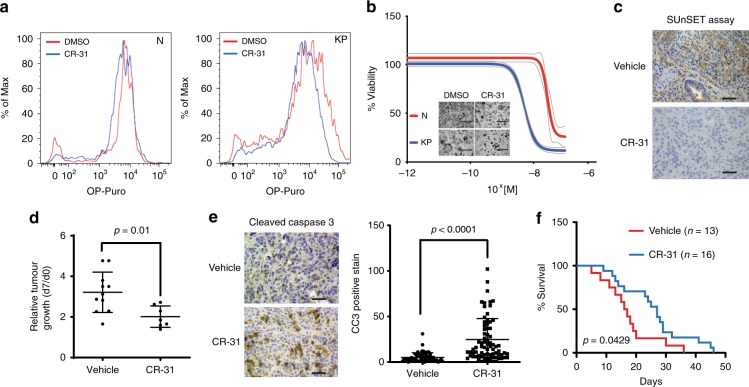
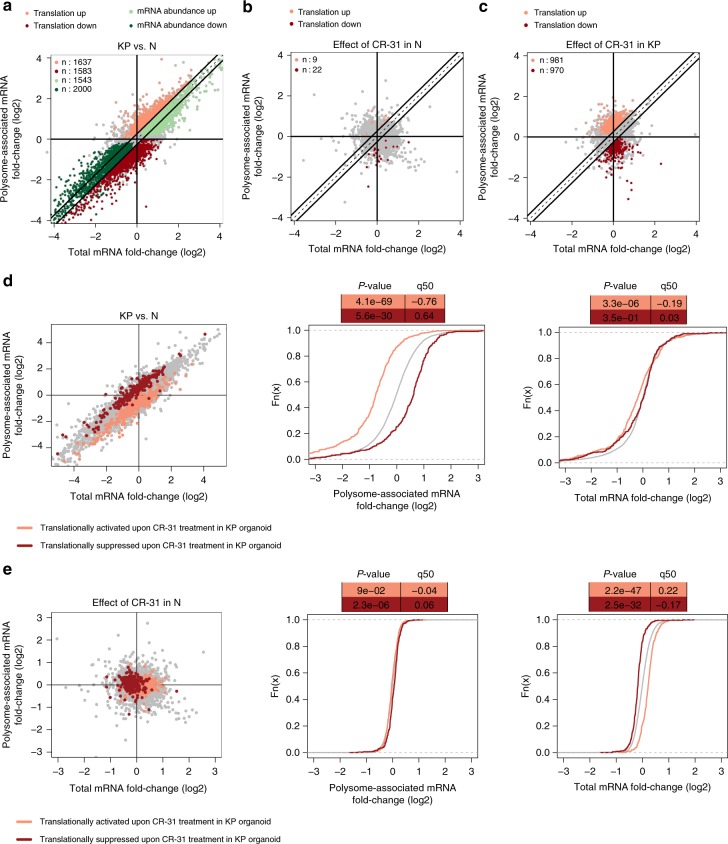
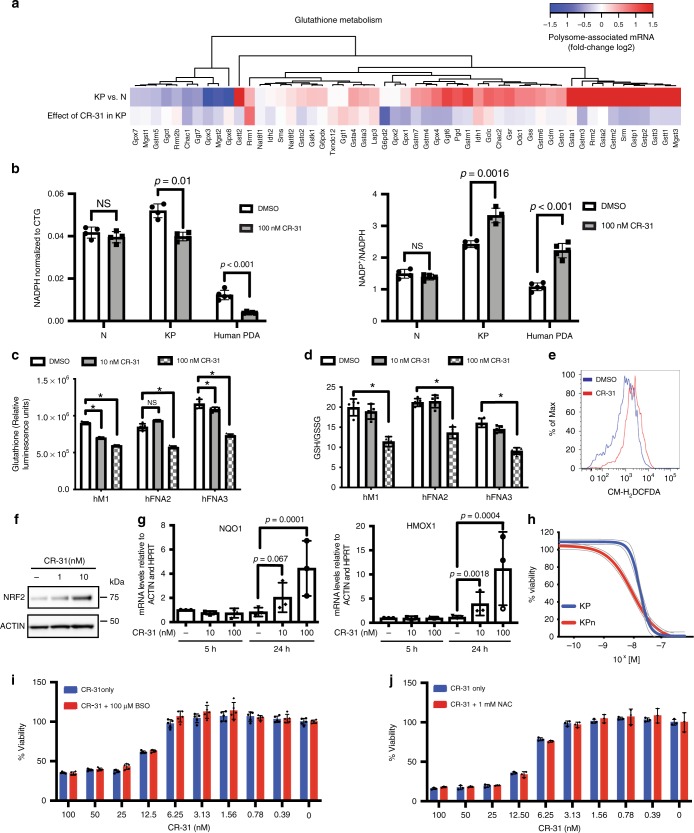
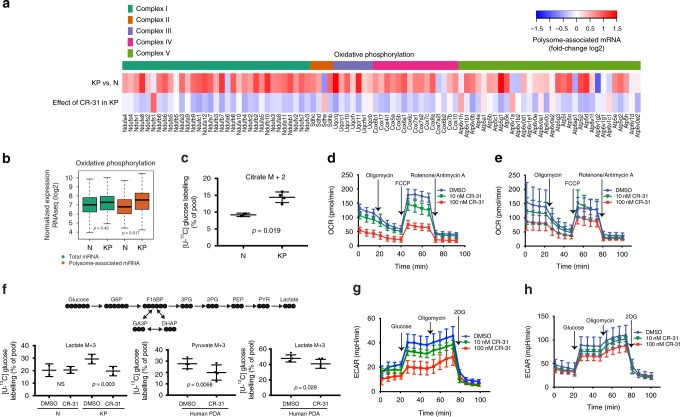
Verification
Claims the paper makes
The claims and statistics of this paper haven’t been checked yet.
Free: it reads the open-access text and checks the first 5 claims that cite a source we can check. Create a free account to check every claim.
Claims other papers make about this one
Each is checked against this paper’s own text: does it say what the citing paper says it does?
The source backs part of the claim, not all of it — or backs it for a different population, condition or comparison.
In the citing paper
“A synthetic eIF4A inhibitor, CR-1-31B, has shown potent activity against many cancer cell lines and promising efficacy in several mouse models (15, 17, 20, 21, 32, 33).”
From Targeting eIF4A-dependent translation in genetically complex sarcoma (2026) · cites this paper as [20]
Experimental — accuracy not yet measuredThe source backs part of the claim, not all of it — or backs it for a different population, condition or comparison.
In the citing paper
“eIF4A inhibitors, which target both isoforms, suppress translation of key oncogenes and have demonstrated antitumor activity in a variety of cancers (15, 17, 19–22).”
From Targeting eIF4A-dependent translation in genetically complex sarcoma (2026) · cites this paper as [20]
Experimental — accuracy not yet measuredThe cited source says what the claim attributes to it.
In the citing paper
“Our results build on studies in mouse models of other cancers, including lymphoma, leukemia, breast, prostate, and pancreatic cancer, supporting the tolerability and efficacy of eIF4A inhibitors (15, 17, 20, 21, 38).”
From Targeting eIF4A-dependent translation in genetically complex sarcoma (2026) · cites this paper as [20]
Self-check
Percentages, sums and reported differences re-computed from the paper’s own numbers.
The self-check needs the paper’s full text.
Citations
Cites
Siegel, R. L., Miller, K. D., & Jemal, A. (2017) · CA: A Cancer Journal for Clinicians · doi:10.3322/caac.21387 · Cited by 14,712
O'Leary, N. A., Wright, M. W., Brister, J. R., Ciufo, S., Haddad, D., McVeigh, R., Rajput, B., Robbertse, B., Smith-White, B., Ako-Adjei, D., et al. (2016) · Nucleic Acids Research · doi:10.1093/nar/gkv1189 · Cited by 6,357
Core Signaling Pathways in Human Pancreatic Cancers Revealed by Global Genomic Analyses
Jones, S., Zhang, X., Parsons, D. W., Lin, J. C.-H., Leary, R. J., Angenendt, P., Mankoo, P., Carter, H., Kamiyama, H., Jimeno, A., et al. (2008) · Science · doi:10.1126/science.1164368 · Cited by 3,969
Regulation of Translation Initiation in Eukaryotes: Mechanisms and Biological Targets
Sonenberg, N., & Hinnebusch, A. G. (2009) · Cell · doi:10.1016/j.cell.2009.01.042 · Cited by 3,304
Hingorani, S. R., Wang, L., Multani, A. S., Combs, C., Deramaudt, T. B., Hruban, R. H., Rustgi, A. K., Chang, S., & Tuveson, D. A. (2005) · Cancer Cell · doi:10.1016/j.ccr.2005.04.023 · Cited by 2,609
Organoid models of human and mouse ductal pancreatic cancer
Boj, S. F., Hwang, C.-I., Baker, L. A., Chio, I. I. C., Engle, D. D., Corbo, V., Jager, M., Ponz-Sarvise, M., Tiriac, H., Spector, M. S., et al. (2015) · Cell · doi:10.1016/j.cell.2014.12.021 · Cited by 2,150
Self-citationThe Nrf2 regulatory network provides an interface between redox and intermediary metabolism
Hayes, J. D., & Dinkova-Kostova, A. T. (2014) · Trends in Biochemical Sciences · doi:10.1016/j.tibs.2014.02.002 · Cited by 2,141
Oncogenic Kras maintains pancreatic tumors through regulation of anabolic glucose metabolism
Ying, H., Kimmelman, A. C., Lyssiotis, C. A., Hua, S., Chu, G. C., Fletcher-Sananikone, E., Locasale, J. W., Son, J., Zhang, H., Coloff, J. L., et al. (2012) · Cell · doi:10.1016/j.cell.2012.01.058 · Cited by 2,043
New approach for understanding genome variations in KEGG
Kanehisa, M., Sato, Y., Furumichi, M., Morishima, K., & Tanabe, M. (2019) · Nucleic Acids Research · doi:10.1093/nar/gky962 · Cited by 1,845
The Ras-ERK and PI3K-mTOR pathways: cross-talk and compensation
Mendoza, M. C., Er, E. E., & Blenis, J. (2011) · Trends in Biochemical Sciences · doi:10.1016/j.tibs.2011.03.006 · Cited by 1,817
Cited by
Alternative approaches to target Myc for cancer treatment
Wang, C., Zhang, J., Yin, J., Gan, Y., Xu, S., Gu, Y., & Huang, W. (2021) · Signal Transduction and Targeted Therapy · doi:10.1038/s41392-021-00500-y · Cited by 238
NRF2: KEAPing Tumors Protected
Pillai, R., Hayashi, M., Zavitsanou, A.-M., & Papagiannakopoulos, T. (2022) · Cancer Discovery · doi:10.1158/2159-8290.cd-21-0922 · Cited by 184
Protein synthesis control in cancer: selectivity and therapeutic targeting
Kovalski, J. R., Kuzuoğlu‐Öztürk, D., & Ruggero, D. (2022) · The EMBO Journal · doi:10.15252/embj.2021109823 · Cited by 133
Glutaminases regulate glutathione and oxidative stress in cancer
Matés, J. M., Campos-Sandoval, J. A., de los Santos-Jiménez, J., & Márquez, J. (2020) · Archives of Toxicology · doi:10.1007/s00204-020-02838-8 · Cited by 91
“Enzyme regulatory network includes proteins involved in GSH and NADPH synthesis in PDA cells (Chan et al. 2019).”
BackgroundDual targeting of DDX3 and eIF4A by the translation inhibitor rocaglamide A
Chen, M., Asanuma, M., Takahashi, M., Shichino, Y., Mito, M., Fujiwara, K., Saito, H., Floor, S. N., Ingolia, N. T., Sodeoka, M., et al. (2020) · Cell chemical biology · doi:10.1016/j.chembiol.2020.11.008 · Cited by 82
Repurposing anticancer drugs for the management of COVID-19
Bairi, K. E., Trapani, D., Petrillo, A., Page, C. L., Zbakh, H., Daniele, B., Belbaraka, R., Curigliano, G., & Afqir, S. (2020) · European Journal of Cancer · doi:10.1016/j.ejca.2020.09.014 · Cited by 83
Pillai, R., LeBoeuf, S. E., Hao, Y., New, C., Blum, J. L. E., Rashidfarrokhi, A., Huang, S. M., Bahamon, C., Wu, W., Karadal-Ferrena, B., et al. (2024) · Science Advances · doi:10.1126/sciadv.adm9859 · Cited by 84
Müller, C., Obermann, W., Schulte, F. W., Lange‐Grünweller, K., Oestereich, L., Elgner, F., Glitscher, M., Hildt, E., Singh, K., Wendel, H., et al. (2020) · Antiviral Research · doi:10.1016/j.antiviral.2020.104706 · Cited by 56
PPIA dictates NRF2 stability to promote lung cancer progression
Lü, W., Cui, J., Wang, W., Hu, Q., Xue, Y., Liu, X., Gong, T., Lu, Y., Ma, H., Yang, X., et al. (2024) · Nature Communications · doi:10.1038/s41467-024-48364-4 · Cited by 60
Translation initiation in cancer at a glance
Smith, R. C. L., Kanellos, G., Vlahov, N., Alexandrou, C., Willis, A. E., Knight, J. R. P., & Sansom, O. J. (2021) · Journal of Cell Science · doi:10.1242/jcs.248476 · Cited by 57
Zhao, Y., Wang, Y., Chen, W., Bai, S., Wang, P., Zheng, M., Yang, Y., Cheng, B., & Luan, Z. (2021) · Cancer Cell International · doi:10.1186/s12935-021-02390-0 · Cited by 48
Translational remodeling by RNA ‐binding proteins and noncoding RNAs
Ho, J. J. D., Man, J. H. S., Schatz, J. H., & Marsden, P. A. (2021) · Wiley Interdisciplinary Reviews - RNA · doi:10.1002/wrna.1647 · Cited by 48
The role of eIF4F-driven mRNA translation in regulating the tumour microenvironment
Bartish, M., Abraham, M. J., Gonçalves, C., Larsson, O. S., Rolny, C., & Rincon, S. V. D. (2023) · Nature reviews. Cancer · doi:10.1038/s41568-023-00567-5 · Cited by 42
Self-citationA super-enhancer-regulated RNA-binding protein cascade drives pancreatic cancer
Antal, C. E., Oh, T. G., Aigner, S., Luo, E., Yee, B. A., Campos, T., Tiriac, H., Rothamel, K. L., Zhang, C., Jiao, H., et al. (2023) · Nature Communications · doi:10.1038/s41467-023-40798-6 · Cited by 42
Targeting eIF4A-Dependent Translation of KRAS Signaling Molecules
Singh, K., Lin, J., Lecomte, N., Mohan, P., Gokce, A., Sanghvi, V. R., Jiang, M., Grbovic-Huezo, O., Burčul, A., Stark, S. G., et al. (2021) · Cancer Research · doi:10.1158/0008-5472.can-20-2929 · Cited by 39
“On the other hand, we happily agree that eIF4A inhibition has promising single-agent activity against PDAC in vitro and in vivo (31).”
BackgroundResultInfluentialNishida, Y., Zhao, R., Heese, L. E., Akiyama, H., Patel, S., Jaeger, A. M., Jacamo, R. O., Kojima, K., Ma, M. C. J., Ruvolo, V. R., et al. (2021) · Leukemia · doi:10.1038/s41375-021-01308-z · Cited by 38
Self-citationTaroncher‐Oldenburg, G., Müller, C., Obermann, W., Ziebuhr, J., Hartmann, R. K., & Grünweller, A. (2021) · Microorganisms · doi:10.3390/microorganisms9030540 · Cited by 42
Fooks, K., Galicia-Vázquez, G., Gife, V., Schcolnik‐Cabrera, A., Nouhi, Z., Poon, W. W. L., Luo, V. M., Rys, R. N., Aloyz, R. S., Orthwein, A., et al. (2022) · Journal of Experimental & Clinical Cancer Research · doi:10.1186/s13046-022-02542-8 · Cited by 37
Müller, C., Obermann, W., Karl, N., Wendel, H., Taroncher‐Oldenburg, G., Pleschka, S., Hartmann, R. K., Grünweller, A., & Ziebuhr, J. (2021) · Antiviral Research · doi:10.1016/j.antiviral.2021.105012 · Cited by 37
Greger, H. (2021) · Phytochemistry Reviews · doi:10.1007/s11101-021-09761-5 · Cited by 34
Action and function of helicases on RNA G-quadruplexes
Caterino, M., & Paeschke, K. (2021) · Methods · doi:10.1016/j.ymeth.2021.09.003 · Cited by 34
Architectural control of metabolic plasticity in epithelial cancer cells
Al‐Masri, M., Paliotti, K., Tran, R., Halaoui, R., Lelarge, V., Chatterjee, S. J., Wang, L., Moraes, C., & McCaffrey, L. M. (2021) · Communications Biology · doi:10.1038/s42003-021-01899-4 · Cited by 36
Zhao, N., Kabotyanski, E. B., Saltzman, A. B., Malovannaya, A., Yuan, X., Reineke, L. C., Lieu, N., Gao, Y., Pedroza, D. A., Calderon, S. J., et al. (2023) · Journal of Clinical Investigation · doi:10.1172/jci172503 · Cited by 30
“Several studies have reported a dependency on eIF4A in different cancers, suggesting the therapeutic potential of rocaglates (12, 13, Protein synthesis is frequently dysregulated in cancer and selective inhibition of mRNA translation represents an attractive cancer therapy.”
Aulas, A., Finetti, P., Lyons, S. M., Bertucci, F., Birnbaum, D., Acquaviva, C., & Mamessier, É. (2020) · Cancers · doi:10.3390/cancers12092470 · Cited by 33
Ho, J. J. D., Cunningham, T. A., Manara, P., Coughlin, C. A., Arumov, A., Roberts, E. R., Osteen, A., Kumar, P., Bilbao, D., Krieger, J. R., et al. (2021) · Cell Reports · doi:10.1016/j.celrep.2021.109806 · Cited by 30
NRF2 Activation Confers Resistance to eIF4A Inhibitors in Cancer Therapy
Sanghvi, V. R., Mohan, P., Singh, K., Cao, L., Berishaj, M., Wolfe, A. L., Schatz, J. H., Lailler, N., de Stanchina, E., Viale, A., et al. (2021) · Cancers · doi:10.3390/cancers13040639 · Cited by 27
“Polysome experiments suffer from variability and sometimes fail to identify significant changes in technical replicates [24].”
BackgroundWang, C., Leavenworth, J. D., Zhang, C., Liu, Z., Yuan, K. Y., Wang, Y., Zhang, G., Wang, S., Cui, X., Zhang, Y., et al. (2022) · Oncogene · doi:10.1038/s41388-022-02272-3 · Cited by 30
Taneera, J., Yaseen, D., Youssef, M., Khalique, A., Shehadat, O. A., Mohammed, A. K., Bustanji, Y. K., Madkour, M. I., & El‐Huneidi, W. (2025) · Molecular and Cellular Endocrinology · doi:10.1016/j.mce.2025.112472 · Cited by 30
Novel eIF4A1 inhibitors with anti‐tumor activity in lymphoma
Kayastha, F. B., Herrington, N. B., Kapadia, B. B., Roychowdhury, A., Nanaji, N. M., Kellogg, G. E., & Gartenhaus, R. B. (2022) · Molecular Medicine · doi:10.1186/s10020-022-00534-0 · Cited by 26
PPARγ-dependent remodeling of translational machinery in adipose progenitors is impaired in obesity
Siqueira, M. K. D., Li, G., Zhao, Y., Wang, S., Ahn, I. S., Tamboline, M., Hildreth, A. D., Larios, J., Schcolnik‐Cabrera, A., Nouhi, Z., et al. (2024) · Cell Reports · doi:10.1016/j.celrep.2024.114945 · Cited by 22
Guo, A., Zhang, J., Tian, Y., Peng, Y., Luo, P., Zhang, J., Liu, Z., Wu, W., Zhang, H., & Cheng, Q. (2022) · Frontiers in Immunology · doi:10.3389/fimmu.2022.907182 · Cited by 23
A parasitic fungus employs mutated eIF4A to survive on rocaglate-synthesizing Aglaia plants
Chen, M., Kumakura, N., Saito, H., Muller, R. Y., Nishimoto, M., Mito, M., Gan, P., Ingolia, N. T., Shirasu, K., Ito, T., et al. (2023) · eLife · doi:10.7554/elife.81302 · Cited by 20
Glorieux, C., Enriquez-Lara, C., & Calderón, P. B. (2024) · Biochemical Pharmacology · doi:10.1016/j.bcp.2024.116729 · Cited by 23
Update on Phytochemical and Biological Studies on Rocaglate Derivatives from Aglaia Species
Agarwal, G., Chang, L., Soejarto, D. D., & Kinghorn, A. D. (2021) · Planta Medica · doi:10.1055/a-1401-9562 · Cited by 21
Pharmacologic Inhibition of EIF4A Blocks NRF2 Synthesis to Prevent Osteosarcoma Metastasis
Lizardo, M. M., Hughes, C. S., Huang, Y. Z., Shyp, T., Delaidelli, A., Zhang, H., Shaool, S. S., Renner, A. F., Burwag, F., Sayles, L. C., et al. (2024) · Clinical Cancer Research · doi:10.1158/1078-0432.ccr-24-1317 · Cited by 20
Rationale for MYC imaging and targeting in pancreatic cancer
Schneider, G., Wirth, M., Keller, U. B., & Saur, D. (2021) · EJNMMI Research · doi:10.1186/s13550-021-00843-1 · Cited by 17
Translational alterations in pancreatic cancer: a central role for the integrated stress response
Shin, S., Solórzano, J., Liauzun, M., Pyronnet, S., Bousquet, C., & Martineau, Y. (2022) · NAR Cancer · doi:10.1093/narcan/zcac031 · Cited by 18
Eukaryotic Translation Initiation Factor 4AI: A Potential Novel Target in Neuroblastoma
Skofler, C., Kleinegger, F., Krassnig, S., Birkl-Toeglhofer, A. M., Singer, G., Till, H., Benesch, M., Cencic, R., Porco, J. A. J., Pelletier, J., et al. (2021) · Cells · doi:10.3390/cells10020301 · Cited by 18
Self-citationZhang, W., Gong, P., Tian, Q., Han, S., Wang, J., He, P., Guo, Y., Wang, G., Chen, Q., Huang, J., et al. (2022) · Journal of Oncology · doi:10.1155/2022/4396316 · Cited by 16
Cammas, A., Desprairies, A., Dassi, E., & Millevoi, S. (2024) · NAR Cancer · doi:10.1093/narcan/zcae025 · Cited by 14
Saito, H., Handa, Y., Chen, M., Schneider‐Poetsch, T., Shichino, Y., Takahashi, M., Romo, D., Yoshida, M., Fürstner, A., Ito, T., et al. (2024) · Nature Communications · doi:10.1038/s41467-024-51635-9 · Cited by 14
Neurofibromatosis: Molecular Pathogenesis and Natural Compounds as Potential Treatments
Amaravathi, A., Oblinger, J. L., Welling, D. B., Kinghorn, A. D., & Chang, L. (2021) · Frontiers in Oncology · doi:10.3389/fonc.2021.698192 · Cited by 15
Hung, Y., Ouyang, C., Ping, X., Qi, Y., Wang, Y.-C., Kung, H.-J., & Ann, D. K. (2023) · Journal of Biomedical Science · doi:10.1186/s12929-023-00924-4 · Cited by 13
eIF4F controls ERK MAPK signaling in melanomas with BRAF and NRAS mutations
Valčíková, B., Vadovičová, N., Smolkova, K., Zacpalova, M., Krejčí, P., Lee, S., Rauch, J., Kölch, W., von Kriegsheim, A., Dorotikova, A., et al. (2024) · Proceedings of the National Academy of Sciences · doi:10.1073/pnas.2321305121 · Cited by 15
Compounds for selective translational inhibition
Shichino, Y., & Iwasaki, S. (2022) · Current Opinion in Chemical Biology · doi:10.1016/j.cbpa.2022.102158 · Cited by 12
Praditya, D., Klöhn, M., Brüggemann, Y., Brown, L. E., Porco, J. A. J., Zhang, W., Kinast, V., Kirschning, A., Vondran, F. W. R., Tödt, D., et al. (2022) · Antiviral Research · doi:10.1016/j.antiviral.2022.105359 · Cited by 13
Self-citationQu, T. T., Cha, L., Liu, H., Tian, L., Hu, X., Zou, H., Feng, Y., Sun, C., Cao, J., Guo, W., et al. (2024) · The FASEB Journal · doi:10.1096/fj.202401151r · Cited by 12
Multifaceted control of mRNA translation machinery in cancer
Alboushi, L., Hackett, A. P., Naeli, P., Bakhti, M., & Jafarnejad, S. M. (2021) · Cellular Signalling · doi:10.1016/j.cellsig.2021.110037 · Cited by 13
eIF4A1 Is a Prognostic Marker and Actionable Target in Human Hepatocellular Carcinoma
Steinmann, S. M., Sánchez-Martín, A., Tanzer, E., Cigliano, A., Pes, G. M., Simile, M. M., Désaubry, L., Marín, J. J. G., Evert, M., & Calvisi, D. F. (2023) · International Journal of Molecular Sciences · doi:10.3390/ijms24032055 · Cited by 13
Anota2seq Analysis for Transcriptome-Wide Studies of mRNA Translation
Oertlin, C., Watt, K., Ristau, J., & Larsson, O. S. (2022) · Methods in molecular biology · doi:10.1007/978-1-0716-1920-9_15 · Cited by 12
Self-citationMetabolism and mRNA translation: a nexus of cancer plasticity
Tang, X., Li, K., Wang, Y., Rocchi, S., Shen, S., & Cerezo, M. (2024) · Trends in Cell Biology · doi:10.1016/j.tcb.2024.10.009 · Cited by 14
O’Rourke, R. L., & Garner, A. L. (2025) · ACS Pharmacology & Translational Science · doi:10.1021/acsptsci.4c00674 · Cited by 13
Schiffmann, S., Henke, M., Seifert, M., Ulshöfer, T., Roser, L. A., Magari, F., Wendel, H., Grünweller, A., & Parnham, M. J. (2023) · International Journal of Molecular Sciences · doi:10.3390/ijms24065872 · Cited by 10
The MYCN 5′ UTR as a therapeutic target in neuroblastoma
Volegova, M. P., Brown, L. E., Banerjee, U., Dries, R., Sharma, B., Kennedy, A. L., Porco, J. A. J., & George, R. E. (2024) · Cell Reports · doi:10.1016/j.celrep.2024.114134 · Cited by 11
Self-citationHigh expression of eIF4A2 is associated with a poor prognosis in esophageal squamous cell carcinoma
Lyu, S., Lu, J., Chen, W., Huang, W., Huang, H., Xi, S., & Yan, S. (2020) · Oncology Letters · doi:10.3892/ol.2020.12038 · Cited by 12
Blázquez‐Encinas, R., Alors‐Pérez, E., Moreno-Montilla, M. T., García‐Vioque, V., Sánchez‐Frías, M., Mafficini, A., Lopez-Canovas, J. L., Bousquet, C., Gahete, M. D., Lawlor, R. T., et al. (2024) · Cancer Gene Therapy · doi:10.1038/s41417-024-00814-3 · Cited by 9
Vaezi, M. A., Nekoufar, S., Robati, A. K., Salimi, V., & Tavakoli‐Yaraki, M. (2024) · Lipids in Health and Disease · doi:10.1186/s12944-024-02368-7 · Cited by 8
Chaudhary, S., Siddiqui, J. A., Pothuraju, R., & Bhatia, R. (2025) · Cancer Letters · doi:10.1016/j.canlet.2025.217484 · Cited by 10
High Paip1 Expression as a Potential Prognostic Marker in Hepatocellular Carcinoma
Kim, H., Jung, W., Kim, A., Kim, H., & Kim, B. (2020) · In Vivo · doi:10.21873/invivo.12065 · Cited by 8
Identification of Rocaglate Acyl Sulfamides as Selective Inhibitors of Glioblastoma Stem Cells
Wang, Z., Thakare, R., Chitale, S., Mishra, A. K., Goldstein, S. I., Fan, A. C., Li, R., Zhu, L. J., Brown, L. E., Cencic, R., et al. (2024) · ACS Central Science · doi:10.1021/acscentsci.4c01073 · Cited by 7
Self-citationLum, M. A., Jonas, K. A., Parmar, S., Black, A. R., O’Connor, C. M., Dobersch, S., Yamamoto, N., Robertson, T. M., Schutter, A., Giambi, M., et al. (2025) · Journal of Clinical Investigation · doi:10.1172/jci176093 · Cited by 10
Li, S., He, J., Kuang, H., Wang, X., Zhou, M., Li, D., Kang, B., He, H., He, L., Wei, L., et al. (2025) · Cell & Bioscience · doi:10.1186/s13578-025-01396-9 · Cited by 9
Essegian, D. J., Cunningham, T. A., Zerio, C. J., Chapman, E., Schatz, J. H., & Schürer, S. C. (2021) · ACS Omega · doi:10.1021/acsomega.1c02805 · Cited by 7
Navigating heme pathways: the breach of heme oxygenase and hemin in breast cancer
Consoli, V., Sorrenti, V., Gulisano, M., Spampinato, M., & Vanella, L. (2024) · Molecular and Cellular Biochemistry · doi:10.1007/s11010-024-05119-5 · Cited by 8
Enhancing KRAS G12D inhibitor sensitivity in pancreatic cancer through SHP2/PI3K pathway
Hao, M.-W., Zhang, T., Dong, D. F., Xin Min, Z. H. O. U., & Gao, H. (2025) · Medical Oncology · doi:10.1007/s12032-025-02683-8 · Cited by 7
Harnessing natural inhibitors of protein synthesis for cancer therapy: A comprehensive review
Liu, L., Li, Z., & Wu, W. (2024) · Pharmacological Research · doi:10.1016/j.phrs.2024.107449 · Cited by 8
Wu, K., Huang, Y., Wu, Y., Chang, C., Chang, Y.-Y., Chiang, H., Liu, L.-X., Tsai, Y., & Hung, J. (2022) · Biology · doi:10.3390/biology11070975 · Cited by 7
Sieber‐Frank, J., Stark, H., Kalteis, S., Prigge, E., Köhler, R. M., Andresen, C., Henkel, T. O., Casari, G., Schubert, T., Fischl, W., et al. (2021) · Cancer Medicine · doi:10.1002/cam4.4212 · Cited by 4
Translational control of leukemic metabolism and disease progression
Mercier, F., Gife, V., Aloyz, R. S., & Hulea, L. (2025) · Trends in Cell Biology · doi:10.1016/j.tcb.2025.04.006 · Cited by 6
Systematic analysis of proteome turnover in an organoid model of pancreatic cancer by dSILO
Ross, A. B., Gorhe, D., Kim, J. K., Hodapp, S. J., DeVine, L., Chan, K. M., Chio, I. I. C., Jovanović, M., & Pereira, M. A. (2024) · Cell Reports Methods · doi:10.1016/j.crmeth.2024.100760 · Cited by 6
Self-citationKnockdown of circSMAD2 inhibits the tumorigenesis of gallbladder cancer through binding with eIF4A3
Qin, Y., Zheng, Y., Huang, C., Li, Y., Gu, M., & Wu, Q. (2021) · BMC Cancer · doi:10.1186/s12885-021-08895-1 · Cited by 7
Wang, J.-E., Zhou, Y.-C., Wu, B.-H., Chen, X., Zhai, J., Tan, J., Huang, Z., & Chen, S.-B. (2023) · The Analyst · doi:10.1039/d2an01989b · Cited by 5
Mechanism underlying follicular hyperproliferation and oncogenesis in hidradenitis suppurativa
Jin, L., Kashyap, M. P., Chen, Y., Khan, J., Guo, Y., Chen, J. Q., Lee, M. B., Weng, Z., Oak, A. S. W., Patcha, P., et al. (2023) · iScience · doi:10.1016/j.isci.2023.106896 · Cited by 7
Combined HDAC and eIF4A inhibition: A novel epigenetic therapy for pancreatic ductal adenocarcinoma
Safari, M., Scotto, L., Basseville, A., Litman, T., Xue, H., Petrukhin, L., Zhou, P., Remotti, H. E., Ku, A. W., Morales, D. V., et al. (2025) · Drug Resistance Updates · doi:10.1016/j.drup.2025.101312 · Cited by 8
RETRACTED: The role of cell surface RNAs in hepatocellular carcinoma
He, J., Jiang, H., Wang, Y., Su, X., Zhang, H., & Zhang, D. (2025) · International Journal of Biological Macromolecules · doi:10.1016/j.ijbiomac.2025.147948 · Cited by 5
RetractedKamlar, M., Henriksson, E., Cı́sařová, I., Malo, M., & Sundén, H. (2021) · The Journal of Organic Chemistry · doi:10.1021/acs.joc.1c00445 · Cited by 3
Polypharmacology in Old Drug Rediscovery: Drug Repurposing
Wang, Z., & Yang, B. (2022) · Springer eBooks · doi:10.1007/978-3-031-04998-9_13 · Cited by 7
Bortoletto, A. S., Yang, Z., Cardenas, M. G., Wang, M.-T., McCormick, F. P., & Parchem, R. J. (2023) · Research Square · doi:10.21203/rs.3.rs-3064215/v1 · Cited by 3
Zhao, N., Kabotyanski, E. B., Saltzman, A. B., Malovannaya, A., Yuan, X., Reineke, L. C., Lieu, N., Gao, Y., Pedroza, D. A., Calderon, S. J., et al. (2023) · bioRxiv (Cold Spring Harbor Laboratory) · doi:10.1101/2023.09.28.559973 · Cited by 3
Targeting EIF4A1 is effective against human intrahepatic cholangiocarcinoma
Mi, W., Cigliano, A., Galleri, G., Gigante, I., Steinmann, S. M., Cibali, E., Serra, M., Pes, G. M., Schlösser, D., Pizzuto, E., et al. (2025) · JHEP Reports · doi:10.1016/j.jhepr.2025.101416 · Cited by 3
Lee, Y. S., Good, J., Awais, N., Eschle, B. K., Lineberry, M. S., Lin, J., Wunderlich, M., Thibodeau, J., Edwards, H. J., Teo, J. L., et al. (2026) · Blood Neoplasia · doi:10.1016/j.bneo.2026.100202 · Cited by 4
Zang, X., Lei, K., Wang, J., Gong, R., Gao, C., Jing, Z., Song, J., & Ren, H. (2024) · Chemical Engineering Journal · doi:10.1016/j.cej.2024.155071 · Cited by 2
Repurposing Drugs for Viruses and Cancer: A Novel Drug Repositioning Strategy for COVID-19
Wong, K. H., Lim, C.-M., Yip, A. J. W., Farouk, I. A., Zabidi, N. Z., Low, Z. Y., & Lal, S. K. (2023) · Springer eBooks · doi:10.1007/978-981-19-5399-6_18 · Cited by 3
Zhou, L., ZHANG, Q., TIAN, B., & Yang, F. J. (2024) · Biocell · doi:10.32604/biocell.2024.049878 · Cited by 3
eIF4A1 is essential for reprogramming the translational landscape of Wnt-driven colorectal cancersPreprint
Waldron, J. A., Kanellos, G., Smith, R. C. L., Knight, J. R. P., Munro, J., Alexandrou, C., Vlahov, N., Pardo, L., Moore, M. H., Gillen, S. L., et al. (2023) · bioRxiv (Cold Spring Harbor Laboratory) · doi:10.1101/2023.11.10.566546 · Cited by 2
Jin, L., Kashyap, M. P., Chen, Y., Guo, Y., Khan, J., Chen, J. Q., Lee, M. B., Weng, Z., Oak, A. S. W., Sinha, R., et al. (2021) · bioRxiv (Cold Spring Harbor Laboratory) · doi:10.1101/2021.10.14.464300 · Cited by 1
Smith, R. J., Diba, L. Z., Srinivasan, A., Zollo, R. A., Ossevoort, T., He, Q., Colligan, S. H., Dolan, M., Vedire, Y., Sultana, T., et al. (2022) · bioRxiv (Cold Spring Harbor Laboratory) · doi:10.1101/2022.09.16.508318 · Cited by 1
Targeting eIF4A-dependent translation in genetically complex sarcoma
Kim, Y.-M., Mohan, P., Sehrawat, U., Seffar, E., De Queiroz, R. M., Chadalavada, K., Persaud, N., Okada, T., Kulkarni, A., Lin, J., et al. (2026) · JCI Insight · doi:10.1172/jci.insight.192936
Investigation of the Biological Effect of eIF4A Reduction and Inhibition
Little, R. (2020) · Open Access Victoria University of Wellington | Te Herenga Waka (Figshare) · doi:10.26686/wgtn.17145923.v1 · Cited by 1
Fooks, K., Galicia-Vázquez, G., Schcolnik‐Cabrera, A., Gife, V., Nouhi, Z., Poon, W. W. L., Luo, V. M., Aloyz, R. S., Orthwein, A., Hulea, L., et al. (2022) · Research Square · doi:10.21203/rs.3.rs-1696855/v1
Data from Targeting eIF4A-Dependent Translation of KRAS Signaling Molecules
Singh, K., Lin, J., Lecomte, N., Mohan, P., Askan, G., Sanghvi, V. R., Jiang, M., Grbovic-Huezo, O., Burčul, A., Stark, S. G., et al. (2023) · doi:10.1158/0008-5472.c.6513651.v1
Structural and biochemical studies of virus : host interactions in HIV-1
Herrera, A. P. (2023) · MOspace Institutional Repository (University of Missouri) · doi:10.32469/10355/97067
Assessment of Rocaglates and Targeted Derivatives as Selective Inhibitors of Glioblastoma Stem CellsPreprint
Wang, Z., Thakare, R., Chitale, S., Mishra, A., Goldstein, S. I., Fan, A. C., Li, R., Zhu, L. J., Brown, L. E., Green, M. R., et al. (2023) · SSRN Electronic Journal · doi:10.2139/ssrn.4665170
Self-citationHung, Y., Ouyang, C., Ping, X., Qi, Y., Wang, Y.-C., Kung, H.-J., & Ann, D. K. (2023) · Figshare · doi:10.6084/m9.figshare.23084148
5’UTR translational inhibition of neuroblastoma dependency factors using the CR-1-31-B rocaglatePreprint
Nunes, C., Bekaert, S., Parsa, S., Nelen, I. H., Martens, F., de Stanchina, E., Sanders, E., Hilgert, E., T’Sas, S., Zhao, P., et al. (2024) · bioRxiv (Cold Spring Harbor Laboratory) · doi:10.1101/2024.08.29.610236
B2M regulates ELANE in pyroptosis to affect pancreatic cancer progression
xie, H., Hu, X., Cai, Y., Zhu, S., & Deng, Z. (2025) · Translational Oncology · doi:10.1016/j.tranon.2025.102613
Peptide antibody tools to dissect specific functions of eIF4A paralogs in cancer
Srivastava, S., Osikoya, A., Terrero, D., & Raman, D. (2025) · Discover Oncology · doi:10.1007/s12672-025-04155-x
Qin, Y., Zheng, Y., Huang, C., Li, Y., Gu, M., & Wu, Q. (2021) · Figshare · doi:10.6084/m9.figshare.16921499
Hung, Y., Ouyang, C., Ping, X., Qi, Y., Wang, Y.-C., Kung, H.-J., & Ann, D. K. (2023) · Figshare · doi:10.6084/m9.figshare.23084145
Fooks, K., Galicia-Vázquez, G., Gife, V., Schcolnik‐Cabrera, A., Nouhi, Z., Poon, W. W. L., Luo, V. M., Rys, R. N., Aloyz, R. S., Orthwein, A., et al. (2023) · Figshare · doi:10.6084/m9.figshare.22614635
Metadata
- Authors
- Chan, K., Robert, F., Oertlin, C., Kapeller-Libermann, D., Avizonis, D., Gutierrez, J., Handly-Santana, A., Doubrovin, M., Park, J., Schoepfer, C., Da Silva, B., Yao, M., Gorton, F., Shi, J., Thomas, C. J., Brown, L. E., Porco, J. A., Pollak, M., Larsson, O., Pelletier, J., & Chio, I. I. C.
- Affiliations
- Columbia University Irving Medical Center (US)
- McGill University (CA)
- Karolinska Institutet (SE)
- Cold Spring Harbor Laboratory (US)
- University of Pennsylvania (US)
- National Cancer Institute (US)
- Boston University (US)
- Corresponding author
- Larsson, Ola
- Pelletier, Jerry
- Chio, Iok In Christine
- ORCID
- Venue
- Nature Communications
- Published
- 2019-11-13
- Volume
- 10
- Issue
- 1
- Pages
- 5151-5151
- ISSN
- 2041-1723 (ISSN-L)
- PMC
- PMC6853918
- OpenAlex
- W2988312256
- Cited by
- 106
- References
- 70
- Citations by year
- 2026: 5 · 2025: 12 · 2024: 20 · 2023: 20 · 2022: 16 · 2021: 24 · 2020: 9
- FWCI
- 5.11
- Type
- journal article
- Language
- en
- Open access
- gold
- doi.org
- Licence
- cc-by
- creativecommons.org/licenses/by/4.0 (tdm)
- creativecommons.org/licenses/by/4.0 (vor)
- Locations
- Nature Communications (publishedVersion, cc-by)
- Europe PMC (PubMed Central) (publishedVersion, cc-by)
- PubMed Central (publishedVersion, cc-by)
- PubMed (publishedVersion)
- Cold Spring Harbor Laboratory Institutional Repository (Cold Spring Harbor Laboratory) (acceptedVersion)
- RePEc: Research Papers in Economics (submittedVersion)
- DOAJ (DOAJ: Directory of Open Access Journals) (submittedVersion, cc-by-sa)
- DOAJ (DOAJ: Directory of Open Access Journals) (submittedVersion)
- OpenBU (Boston University) (submittedVersion)
- Funders
- Pancreatic Cancer Action Network (PANCAN 18-35-CHIO)
- V Foundation for Cancer Research (VFND V2018-017)
- Topics
- Health Sciences › Medicine › Oncology › Pancreatic and Hepatic Oncology Research
- Life Sciences › Biochemistry, Genetics and Molecular Biology › Cancer Research › Cancer, Hypoxia, and Metabolism
- Life Sciences › Biochemistry, Genetics and Molecular Biology › Molecular Biology › PI3K/AKT/mTOR signaling in cancer
- Keywords
- eIF4A, pancreatic ductal adenocarcinoma, eIF4F, translational regulation, metabolic reprogramming, rocaglates, glutaminase, cancer metabolism, oncogenic translation, tumor organoids, anticancer drug targets
- MeSH terms
- Animals, Glutathione, Humans, Mice, Inbred C57BL, Oxidation-Reduction, Pancreatic Neoplasms, Protein Biosynthesis, Carcinoma, Pancreatic Ductal, Eukaryotic Initiation Factor-4A, Cell Line, Tumor, Molecular Targeted Therapy, Carcinogenesis
About these checks
Registry, retraction, Cites and statistics results are computed, not judged, with one exception: a printed reference that no index lists is read once by a model before it counts as a citation error. Claims are extracted by a model and kept only when their quote appears verbatim in the text; each cited source is then checked, with a model’s help, for whether it says what the claim relies on. Those verdicts can be wrong — read the claim’s quote and the cited source before relying on one.
Statistics and arithmetic are recomputed, not judged.
Confidence bands are shown only for fields calibrated on our annotated test set. None is calibrated yet, so no band is shown.
What counts as a claim ›How we measure confidence ›How we check this ›
Are you an author, or do you see a problem with this page? Request a review
Data sources
Bibliographic data: Semantic Scholar, OpenAlex, Crossref.
Contains information from the Semantic Scholar Academic Graph Datasets, made available under the ODC Attribution License (ODC-BY 1.0).
Semantic Scholar’s data is described in: Kinney, R., et al. (2023). The Semantic Scholar Open Data Platform. arXiv:2301.10140.
