

eIF4A supports an oncogenic translation program in pancreatic ductal adenocarcinoma
Open accessThe DOI matches its Crossref record; 70 of the 70 references it cites were found in a registry or an index.
Abstract
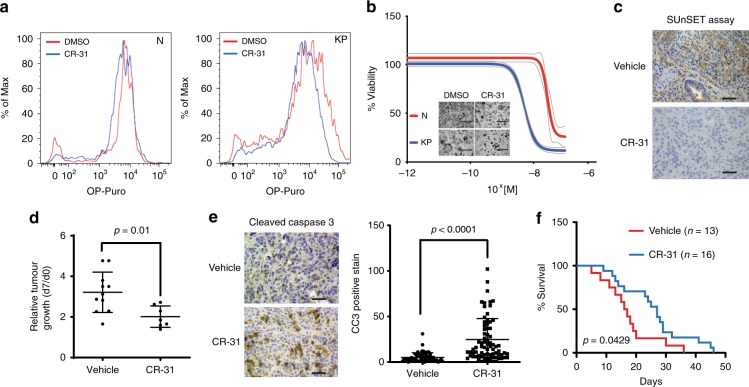
Pancreatic ductal adenocarcinoma (PDA) is a lethal malignancy with limited treatment options. Although metabolic reprogramming is a hallmark of many cancers, including PDA, previous attempts to target metabolic changes therapeutically have been stymied by drug toxicity and tumour cell plasticity. Here, we show that PDA cells engage an eIF4F-dependent translation program that supports redox and central carbon metabolism. Inhibition of the eIF4F subunit, eIF4A, using the synthetic rocaglate CR-1-31-B (CR-31) reduced the viability of PDA organoids relative to their normal counterparts. In vivo, CR-31 suppresses tumour growth and extends survival of genetically-engineered murine models of PDA. Surprisingly, inhibition of eIF4A also induces glutamine reductive carboxylation. As a consequence, combined targeting of eIF4A and glutaminase activity more effectively inhibits PDA cell growth both in vitro and in vivo. Overall, our work demonstrates the importance of eIF4A in translational control of pancreatic tumour metabolism and as a therapeutic target against PDA.
Overview
The claims and statistics of this paper haven’t been checked yet.
Free: it reads the open-access text and checks the first 5 claims that cite a source we can check. Create a free account to check every claim.
Integrity signals
Registry
Cites
Statistics
Figures
Verification
Claims the paper makes
The claims and statistics of this paper haven’t been checked yet.
Free: it reads the open-access text and checks the first 5 claims that cite a source we can check. Create a free account to check every claim.
Claims other papers make about this one
Each is checked against this paper’s own text: does it say what the citing paper says it does?
The source backs part of the claim, not all of it — or backs it for a different population, condition or comparison.
In the citing paper
“A synthetic eIF4A inhibitor, CR-1-31B, has shown potent activity against many cancer cell lines and promising efficacy in several mouse models (15, 17, 20, 21, 32, 33).”
From Targeting eIF4A-dependent translation in genetically complex sarcoma (2026) · cites this paper as [20]
Experimental — accuracy not yet measuredThe source backs part of the claim, not all of it — or backs it for a different population, condition or comparison.
In the citing paper
“eIF4A inhibitors, which target both isoforms, suppress translation of key oncogenes and have demonstrated antitumor activity in a variety of cancers (15, 17, 19–22).”
From Targeting eIF4A-dependent translation in genetically complex sarcoma (2026) · cites this paper as [20]
Experimental — accuracy not yet measuredThe cited source says what the claim attributes to it.
In the citing paper
“Our results build on studies in mouse models of other cancers, including lymphoma, leukemia, breast, prostate, and pancreatic cancer, supporting the tolerability and efficacy of eIF4A inhibitors (15, 17, 20, 21, 38).”
From Targeting eIF4A-dependent translation in genetically complex sarcoma (2026) · cites this paper as [20]
Self-check
Percentages, sums and reported differences re-computed from the paper’s own numbers.
The self-check needs the paper’s full text.
Citations
Cites
Siegel, R. L., Miller, K. D., & Jemal, A. (2017) · CA: A Cancer Journal for Clinicians · doi:10.3322/caac.21387 · Cited by 14,712
O'Leary, N. A., Wright, M. W., Brister, J. R., Ciufo, S., Haddad, D., McVeigh, R., Rajput, B., Robbertse, B., Smith-White, B., Ako-Adjei, D., et al. (2016) · Nucleic Acids Research · doi:10.1093/nar/gkv1189 · Cited by 6,357
Core Signaling Pathways in Human Pancreatic Cancers Revealed by Global Genomic Analyses
Jones, S., Zhang, X., Parsons, D. W., Lin, J. C.-H., Leary, R. J., Angenendt, P., Mankoo, P., Carter, H., Kamiyama, H., Jimeno, A., et al. (2008) · Science · doi:10.1126/science.1164368 · Cited by 3,969
Regulation of Translation Initiation in Eukaryotes: Mechanisms and Biological Targets
Sonenberg, N., & Hinnebusch, A. G. (2009) · Cell · doi:10.1016/j.cell.2009.01.042 · Cited by 3,304
Hingorani, S. R., Wang, L., Multani, A. S., Combs, C., Deramaudt, T. B., Hruban, R. H., Rustgi, A. K., Chang, S., & Tuveson, D. A. (2005) · Cancer Cell · doi:10.1016/j.ccr.2005.04.023 · Cited by 2,609
Organoid models of human and mouse ductal pancreatic cancer
Boj, S. F., Hwang, C.-I., Baker, L. A., Chio, I. I. C., Engle, D. D., Corbo, V., Jager, M., Ponz-Sarvise, M., Tiriac, H., Spector, M. S., et al. (2015) · Cell · doi:10.1016/j.cell.2014.12.021 · Cited by 2,150
Self-citationThe Nrf2 regulatory network provides an interface between redox and intermediary metabolism
Hayes, J. D., & Dinkova-Kostova, A. T. (2014) · Trends in Biochemical Sciences · doi:10.1016/j.tibs.2014.02.002 · Cited by 2,141
Oncogenic Kras maintains pancreatic tumors through regulation of anabolic glucose metabolism
Ying, H., Kimmelman, A. C., Lyssiotis, C. A., Hua, S., Chu, G. C., Fletcher-Sananikone, E., Locasale, J. W., Son, J., Zhang, H., Coloff, J. L., et al. (2012) · Cell · doi:10.1016/j.cell.2012.01.058 · Cited by 2,043
New approach for understanding genome variations in KEGG
Kanehisa, M., Sato, Y., Furumichi, M., Morishima, K., & Tanabe, M. (2019) · Nucleic Acids Research · doi:10.1093/nar/gky962 · Cited by 1,845
The Ras-ERK and PI3K-mTOR pathways: cross-talk and compensation
Mendoza, M. C., Er, E. E., & Blenis, J. (2011) · Trends in Biochemical Sciences · doi:10.1016/j.tibs.2011.03.006 · Cited by 1,817
A unifying model for mTORC1-mediated regulation of mRNA translation
Thoreen, C. C., Chantranupong, L., Keys, H. R., Wang, T., Gray, N. S., & Sabatini, D. M. (2012) · Nature · doi:10.1038/nature11083 · Cited by 1,477
Birsoy, K., Wang, T., Chen, W. W., Freinkman, E., Abu-Remaileh, M., & Sabatini, D. M. (2015) · Cell · doi:10.1016/j.cell.2015.07.016 · Cited by 1,388
GAGE: generally applicable gene set enrichment for pathway analysis
Luo, W., Friedman, M. S., Shedden, K., Hankenson, K. D., & Woolf, P. J. (2009) · BMC Bioinformatics · doi:10.1186/1471-2105-10-161 · Cited by 1,333
Reductive carboxylation supports growth in tumour cells with defective mitochondria
Mullen, A. R., Wheaton, W. W., Jin, E. S., Chen, P.-H., Sullivan, L. B., Cheng, T., Yang, Y., Linehan, W. M., Chandel, N. S., & DeBerardinis, R. J. (2012) · Nature · doi:10.1038/nature10642 · Cited by 1,328
The translational landscape of mTOR signalling steers cancer initiation and metastasis
Hsieh, A. C., Liu, Y., Edlind, M. P., Ingolia, N. T., Janes, M. R., Sher, A., Shi, E. Y., Stumpf, C. R., Christensen, C., Bonham, M. J., et al. (2012) · Nature · doi:10.1038/nature10912 · Cited by 1,313
Glutathione Homeostasis and Functions: Potential Targets for Medical Interventions
Lushchak, V. I. (2012) · Journal of Amino Acids · doi:10.1155/2012/736837 · Cited by 1,266
Oncogene ablation-resistant pancreatic cancer cells depend on mitochondrial function
Viale, A., Pettazzoni, P., Lyssiotis, C. A., Ying, H., Sánchez, N., Marchesini, M., Carugo, A., Green, T., Seth, S., Giuliani, V., et al. (2014) · Nature · doi:10.1038/nature13611 · Cited by 1,259
Supporting aspartate biosynthesis is an essential function of respiration in proliferating cells
Sullivan, L. B., Gui, D. Y., Hosios, A. M., Bush, L. N., Freinkman, E., & Vander Heiden, M. G. (2015) · Cell · doi:10.1016/j.cell.2015.07.017 · Cited by 1,173
The key role of anaplerosis and cataplerosis for citric acid cycle function
Owen, O. E., Kalhan, S. C., & Hanson, R. W. (2002) · Journal of Biological Chemistry · doi:10.1074/jbc.r200006200 · Cited by 1,172
Antitumor activity of the glutaminase inhibitor CB-839 in triple-negative breast cancer
Gross, M. I., Demo, S. D., Dennison, J. B., Chen, L., Chernov-Rogan, T., Goyal, B., Janes, J. R., Laidig, G. J., Lewis, E. R., Li, J., et al. (2014) · Molecular Cancer Therapeutics · doi:10.1158/1535-7163.mct-13-0870 · Cited by 1,068
AKT inhibition relieves feedback suppression of receptor tyrosine kinase expression and activity
Chandarlapaty, S., Sawai, A., Scaltriti, M., Rodrik-Outmezguine, V., Grbovic-Huezo, O., Serra, V., Majumder, P. K., Baselga, J., & Rosen, N. (2011) · Cancer Cell · doi:10.1016/j.ccr.2010.10.031 · Cited by 967
An inhibitor of oxidative phosphorylation exploits cancer vulnerability
Molina, J. R., Sun, Y., Protopopova, M., Gera, S., Bandi, M., Bristow, C., McAfoos, T., Morlacchi, P., Ackroyd, J., Agip, A.-N. A., et al. (2018) · Nature Medicine · doi:10.1038/s41591-018-0052-4 · Cited by 928
Translational control in cancer
Silvera, D., Formenti, S. C., & Schneider, R. J. (2010) · Nature Reviews Cancer · doi:10.1038/nrc2824 · Cited by 821
An Abundance of Ubiquitously Expressed Genes Revealed by Tissue Transcriptome Sequence Data
Ramsköld, D., Wang, E. T., Burge, C. B., & Sandberg, R. (2009) · PLoS Computational Biology · doi:10.1371/journal.pcbi.1000598 · Cited by 820
Oncogenic BRAF Regulates Oxidative Metabolism via PGC1α and MITF
Haq, R., Shoag, J., Andreu-Perez, P., Yokoyama, S., Edelman, H., Rowe, G. C., Frederick, D. T., Hurley, A. D., Nellore, A., Kung, A. L., et al. (2013) · Cancer Cell · doi:10.1016/j.ccr.2013.02.003 · Cited by 818
The Scanning Mechanism of Eukaryotic Translation Initiation
Hinnebusch, A. G. (2014) · Annual Review of Biochemistry · doi:10.1146/annurev-biochem-060713-035802 · Cited by 798
Discovery of cancer drug targets by CRISPR-Cas9 screening of protein domains
Shi, J., Wang, E., Milazzo, J. P., Wang, Z., Kinney, J. B., & Vakoc, C. R. (2015) · Nature Biotechnology · doi:10.1038/nbt.3235 · Cited by 761
Self-citationUnlimited in vitro expansion of adult bi-potent pancreas progenitors through the Lgr5/R-spondin axis
Huch, M., Bonfanti, P., Boj, S. F., Sato, T., Loomans, C. J. M., van de Wetering, M., Sojoodi, M., Li, V. S. W., Schuijers, J., Gracanin, A., et al. (2013) · The EMBO Journal · doi:10.1038/emboj.2013.204 · Cited by 711
AMPK-Dependent Degradation of TXNIP upon Energy Stress Leads to Enhanced Glucose Uptake via GLUT1
Wu, N., Zheng, B., Shaywitz, A., Dagon, Y., Tower, C., Bellinger, G., Shen, C.-H., Wen, J., Asara, J., McGraw, T. E., et al. (2013) · Molecular Cell · doi:10.1016/j.molcel.2013.01.035 · Cited by 665
RNA G-quadruplexes cause eIF4A-dependent oncogene translation in cancer
Wolfe, A. L., Singh, K., Zhong, Y., Drewe, P., Rajasekhar, V. K., Sanghvi, V. R., Mavrakis, K. J., Jiang, M., Roderick, J. E., Van der Meulen, J., et al. (2014) · Nature · doi:10.1038/nature13485 · Cited by 635
Self-citationOrlistat Is a Novel Inhibitor of Fatty Acid Synthase with Antitumor Activity
Kridel, S. J., Axelrod, F., Rozenkrantz, N., & Smith, J. W. (2004) · Cancer Research · doi:10.1158/0008-5472.can-03-3645 · Cited by 607
ASCT2/SLC1A5 controls glutamine uptake and tumour growth in triple-negative basal-like breast cancer
van Geldermalsen, M., Wang, Q., Nagarajah, R., Marshall, A. D., Thoeng, A., Gao, D., Ritchie, W., Feng, Y., Bailey, C. G., Deng, N., et al. (2016) · Oncogene · doi:10.1038/onc.2015.381 · Cited by 580
Metabolic Signatures Uncover Distinct Targets in Molecular Subsets of Diffuse Large B Cell Lymphoma
Caro, P., Kishan, A. U., Norberg, E., Stanley, I. A., Chapuy, B., Ficarro, S. B., Polak, K., Tondera, D., Gounarides, J., Yin, H., et al. (2012) · Cancer Cell · doi:10.1016/j.ccr.2012.08.014 · Cited by 528
The utilization of extracellular proteins as nutrients is suppressed by mTORC1
Palm, W., Park, Y., Wright, K., Pavlova, N. N., Tuveson, D. A., & Thompson, C. B. (2015) · Cell · doi:10.1016/j.cell.2015.06.017 · Cited by 457
Imaging protein synthesis in cells and tissues with an alkyne analog of puromycin
Liu, J., Xu, Y., Stoleru, D., & Salic, A. (2012) · Proceedings of the National Academy of Sciences · doi:10.1073/pnas.1111561108 · Cited by 447
Glucose transporters in cancer metabolism
Adekola, K., Rosen, S. T., & Shanmugam, M. (2012) · Current Opinion in Oncology · doi:10.1097/cco.0b013e328356da72 · Cited by 382
NRF2 Promotes Tumor Maintenance by Modulating mRNA Translation in Pancreatic Cancer
Chio, I. I. C., Jafarnejad, S. M., Ponz-Sarvise, M., Park, Y., Rivera, K., Palm, W., Wilson, J., Sangar, V., Hao, Y., Öhlund, D., et al. (2016) · Cell · doi:10.1016/j.cell.2016.06.056 · Cited by 378
Self-citationDifferential Requirements for eIF4E Dose in Normal Development and Cancer
Truitt, M. L., Conn, C. S., Shi, Z., Pang, X., Tokuyasu, T., Coady, A. M., Seo, Y., Barna, M., & Ruggero, D. (2015) · Cell · doi:10.1016/j.cell.2015.05.049 · Cited by 368
Targeting the eIF4F Translation Initiation Complex: A Critical Nexus for Cancer Development
Pelletier, J., Graff, J., Ruggero, D., & Sonenberg, N. (2015) · Cancer Research · doi:10.1158/0008-5472.can-14-2789 · Cited by 367
Self-citationKordes, S., Pollak, M. N., Zwinderman, A. H., Mathôt, R. A., Weterman, M. J., Beeker, A., Punt, C. J., Richel, D. J., & Wilmink, J. W. (2015) · The Lancet Oncology · doi:10.1016/s1470-2045(15)00027-3 · Cited by 361
Self-citationAvdulov, S., Li, S., Michalek, V., Burrichter, D., Peterson, M., Perlman, D. M., Manivel, J. C., Sonenberg, N., Yee, D., Bitterman, P. B., et al. (2004) · Cancer Cell · doi:10.1016/j.ccr.2004.05.024 · Cited by 340
Mutant Kras copy number defines metabolic reprogramming and therapeutic susceptibilities
Kerr, E. M., Gaude, E., Turrell, F. K., Frezza, C., & Martins, C. P. (2016) · Nature · doi:10.1038/nature16967 · Cited by 313
Rocaglates convert DEAD-box protein eIF4A into a sequence-selective translational repressor
Iwasaki, S., Floor, S. N., & Ingolia, N. T. (2016) · Nature · doi:10.1038/nature17978 · Cited by 313
Antitumor Activity and Mechanism of Action of the Cyclopenta[b]benzofuran, Silvestrol
Cencic, R., Carrier, M., Galicia-Vázquez, G., Bordeleau, M.-E., Sukarieh, R., Bourdeau, A., Brem, B., Teodoro, J. G., Greger, H., Tremblay, M. L., et al. (2009) · PLoS ONE · doi:10.1371/journal.pone.0005223 · Cited by 302
Self-citationTight Coordination of Protein Translation and HSF1 Activation Supports the Anabolic Malignant State
Santagata, S., Mendillo, M. L., Tang, Y.-C., Subramanian, A., Perley, C. C., Roche, S. P., Wong, B., Narayan, R., Kwon, H., Koeva, M., et al. (2013) · Science · doi:10.1126/science.1238303 · Cited by 285
Self-citationGodoy, A., Ulloa, V., Rodríguez, F., Reinicke, K., Yañez, A. J., García, M. D. L. A., Medina, R. A., Carrasco, M., Barberis, S., Castro, T., et al. (2006) · Journal of Cellular Physiology · doi:10.1002/jcp.20606 · Cited by 270
Measuring Protein Synthesis With SUnSET: A Valid Alternative to Traditional Techniques?
Goodman, C. A., & Hornberger, T. A. (2013) · Exercise and Sport Sciences Reviews · doi:10.1097/jes.0b013e3182798a95 · Cited by 233
Dykens, J. A., Jamieson, J., Marroquin, L., Nadanaciva, S., Billis, P. A., & Will, Y. (2008) · Toxicology and Applied Pharmacology · doi:10.1016/j.taap.2008.08.013 · Cited by 220
Distinct perturbation of the translatome by the antidiabetic drug metformin
Larsson, O., Morita, M., Topisirovic, I., Alain, T., Blouin, M.-J., Pollak, M., & Sonenberg, N. (2012) · Proceedings of the National Academy of Sciences · doi:10.1073/pnas.1201689109 · Cited by 205
Self-citationRubio, C. A., Weisburd, B., Holderfield, M., Arias, C., Fang, E., DeRisi, J. L., & Fanidi, A. (2014) · Genome Biology · doi:10.1186/s13059-014-0476-1 · Cited by 200
Shukla, K., Ferraris, D. V., Thomas, A. G., Stathis, M., Duvall, B., Delahanty, G., Alt, J., Rais, R., Rojas, C., Gao, P., et al. (2012) · Journal of Medicinal Chemistry · doi:10.1021/jm301191p · Cited by 199
The Akt of translational control
Ruggero, D., & Sonenberg, N. (2005) · Oncogene · doi:10.1038/sj.onc.1209098 · Cited by 196
Nanchen, A., Fuhrer, T., & Sauer, U. (2007) · Methods in Molecular Biology™ · doi:10.1007/978-1-59745-244-1_11 · Cited by 189
Larsson, O., Li, S., Issaenko, O. A., Avdulov, S., Peterson, M., Smith, K., Bitterman, P. B., & Polunovsky, V. A. (2007) · Cancer Research · doi:10.1158/0008-5472.can-07-0752 · Cited by 163
Self-citationGenetic alterations in pancreatic carcinoma.
Schneider, G., & Schmid, R. M. (2003) · Molecular Cancer · doi:10.1186/1476-4598-2-15 · Cited by 163
Metabolic Vulnerabilities in Endometrial Cancer
Byrne, F. L., Poon, I. K. H., Modesitt, S. C., Tomsig, J. L., Chow, J. D. Y., Healy, M. E., Baker, W. D. C., Atkins, K. A., Lancaster, J. M., Marchion, D. C., et al. (2014) · Cancer Research · doi:10.1158/0008-5472.can-14-0254 · Cited by 146
Evidence for a Functionally Relevant Rocaglamide Binding Site on the eIF4A–RNA Complex
Sadlish, H., Galicia-Vazquez, G., Paris, C. G., Aust, T., Bhullar, B., Chang, L., Helliwell, S. B., Hoepfner, D., Knapp, B., Riedl, R., et al. (2013) · ACS Chemical Biology · doi:10.1021/cb400158t · Cited by 127
Self-citationGenerally applicable transcriptome-wide analysis of translation using anota2seq
Oertlin, C., Lorent, J., Murie, C., Furic, L., Topisirovic, I., & Larsson, O. (2019) · Nucleic Acids Research · doi:10.1093/nar/gkz223 · Cited by 107
Self-citationAn Alternate Pathway of α-Ketoglutarate Catabolism in the Isolated, Perfused Rat Liver
D'Adamo, A. F., & Haft, D. E. (1965) · Journal of Biological Chemistry · doi:10.1016/s0021-9258(17)45218-5 · Cited by 106
Rodrigo, C. M., Cencic, R., Roche, S. P., Pelletier, J., & Porco, J. A. (2012) · Journal of Medicinal Chemistry · doi:10.1021/jm201263k · Cited by 99
Self-citationChu, J., Galicia-Vázquez, G., Cencic, R., Mills, J. R., Katigbak, A., Porco, J. A., & Pelletier, J. (2016) · Cell Reports · doi:10.1016/j.celrep.2016.05.005 · Cited by 95
Self-citationTargeting the eIF4A RNA helicase as an anti-neoplastic approach
Chu, J., & Pelletier, J. (2014) · Biochimica et Biophysica Acta (BBA) - Gene Regulatory Mechanisms · doi:10.1016/j.bbagrm.2014.09.006 · Cited by 91
Self-citationSeo, B. B., Matsuno‐Yagi, A., & Yagi, T. (1999) · Biochimica et Biophysica Acta (BBA) - Bioenergetics · doi:10.1016/s0005-2728(99)00051-1 · Cited by 66
Targeting Oxidative Phosphorylation: Why, When, and How
Pollak, M. (2013) · Cancer Cell · doi:10.1016/j.ccr.2013.02.015 · Cited by 61
Self-citationChambers, J. M., Lindqvist, L., Webb, A. I., Huang, D. C. S., Savage, G. P., & Rizzacasa, M. A. (2013) · Organic Letters · doi:10.1021/ol400401d · Cited by 58
Two distinct nodes of translational inhibition in the Integrated Stress Response
Ryoo, H. D., & Vasudevan, D. (2017) · BMB Reports · doi:10.5483/bmbrep.2017.50.11.157 · Cited by 55
Holleran, A. L., Briscoe, D. A., Fiskum, G., & Kelleher, J. K. (1995) · Molecular and Cellular Biochemistry · doi:10.1007/bf01076071 · Cited by 53
Waldron, J. A., Raza, F., & Quesne, J. P. C. L. (2018) · Nucleic Acids Research · doi:10.1093/nar/gky108 · Cited by 45
Knockout of glucose transporter GLUT6 has minimal effects on whole body metabolic physiology in mice
Byrne, F. L., Olzomer, E. M., Brink, R. A., & Hoehn, K. L. (2018) · American Journal of Physiology-Endocrinology and Metabolism · doi:10.1152/ajpendo.00082.2018 · Cited by 38
Metformin and Pancreatic Cancer: A Clue Requiring Investigation
Pollak, M. (2012) · Clinical Cancer Research · doi:10.1158/1078-0432.ccr-12-0694 · Cited by 32
Self-citation
Cited by
Alternative approaches to target Myc for cancer treatment
Wang, C., Zhang, J., Yin, J., Gan, Y., Xu, S., Gu, Y., & Huang, W. (2021) · Signal Transduction and Targeted Therapy · doi:10.1038/s41392-021-00500-y · Cited by 238
NRF2: KEAPing Tumors Protected
Pillai, R., Hayashi, M., Zavitsanou, A.-M., & Papagiannakopoulos, T. (2022) · Cancer Discovery · doi:10.1158/2159-8290.cd-21-0922 · Cited by 184
Protein synthesis control in cancer: selectivity and therapeutic targeting
Kovalski, J. R., Kuzuoğlu‐Öztürk, D., & Ruggero, D. (2022) · The EMBO Journal · doi:10.15252/embj.2021109823 · Cited by 133
Glutaminases regulate glutathione and oxidative stress in cancer
Matés, J. M., Campos-Sandoval, J. A., de los Santos-Jiménez, J., & Márquez, J. (2020) · Archives of Toxicology · doi:10.1007/s00204-020-02838-8 · Cited by 91
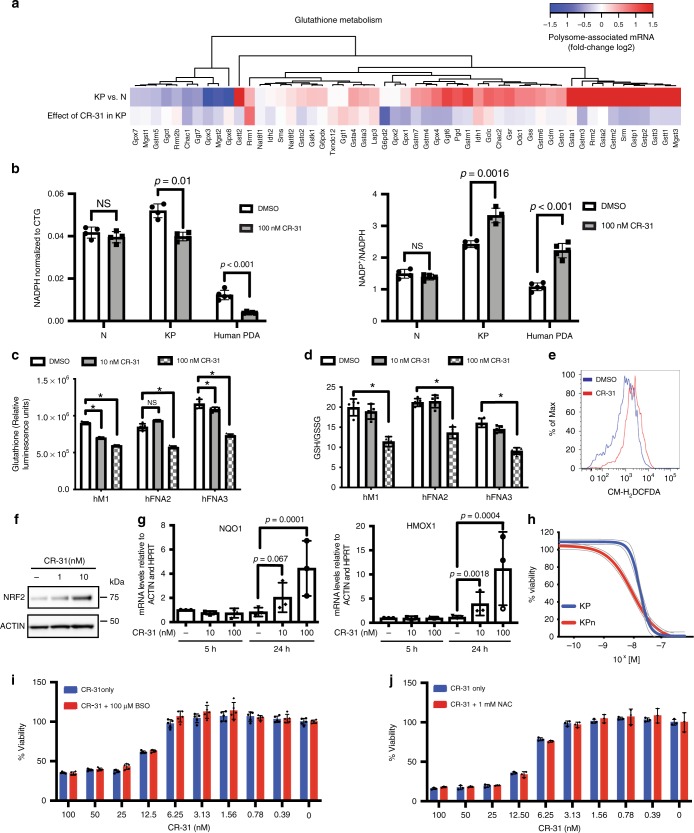
“Enzyme regulatory network includes proteins involved in GSH and NADPH synthesis in PDA cells (Chan et al. 2019).”
BackgroundDual targeting of DDX3 and eIF4A by the translation inhibitor rocaglamide A
Chen, M., Asanuma, M., Takahashi, M., Shichino, Y., Mito, M., Fujiwara, K., Saito, H., Floor, S. N., Ingolia, N. T., Sodeoka, M., et al. (2020) · Cell chemical biology · doi:10.1016/j.chembiol.2020.11.008 · Cited by 82
Metadata
- Authors
- Chan, K., Robert, F., Oertlin, C., Kapeller-Libermann, D., Avizonis, D., Gutierrez, J., Handly-Santana, A., Doubrovin, M., Park, J., Schoepfer, C., Da Silva, B., Yao, M., Gorton, F., Shi, J., Thomas, C. J., Brown, L. E., Porco, J. A., Pollak, M., Larsson, O., Pelletier, J., & Chio, I. I. C.
- Affiliations
- Columbia University Irving Medical Center (US)
- McGill University (CA)
- Karolinska Institutet (SE)
- Cold Spring Harbor Laboratory (US)
- University of Pennsylvania (US)
- National Cancer Institute (US)
- Boston University (US)
- Corresponding author
- Larsson, Ola
- Pelletier, Jerry
- Chio, Iok In Christine
- ORCID
- Venue
- Nature Communications
- Published
- 2019-11-13
- Volume
- 10
- Issue
- 1
- Pages
- 5151-5151
- ISSN
- 2041-1723 (ISSN-L)
- PMC
- PMC6853918
- OpenAlex
- W2988312256
- Cited by
- 106
- References
- 70
- Citations by year
- 2026: 5 · 2025: 12 · 2024: 20 · 2023: 20 · 2022: 16 · 2021: 24 · 2020: 9
- FWCI
- 5.11
- Type
- journal article
- Language
- en
- Open access
- gold
- doi.org
- Licence
- cc-by
- creativecommons.org/licenses/by/4.0 (tdm)
- creativecommons.org/licenses/by/4.0 (vor)
- Locations
- Nature Communications (publishedVersion, cc-by)
- Europe PMC (PubMed Central) (publishedVersion, cc-by)
- PubMed Central (publishedVersion, cc-by)
- PubMed (publishedVersion)
- Cold Spring Harbor Laboratory Institutional Repository (Cold Spring Harbor Laboratory) (acceptedVersion)
- RePEc: Research Papers in Economics (submittedVersion)
- DOAJ (DOAJ: Directory of Open Access Journals) (submittedVersion, cc-by-sa)
- DOAJ (DOAJ: Directory of Open Access Journals) (submittedVersion)
- OpenBU (Boston University) (submittedVersion)
- Funders
- Pancreatic Cancer Action Network (PANCAN 18-35-CHIO)
- V Foundation for Cancer Research (VFND V2018-017)
- Topics
- Health Sciences › Medicine › Oncology › Pancreatic and Hepatic Oncology Research
- Life Sciences › Biochemistry, Genetics and Molecular Biology › Cancer Research › Cancer, Hypoxia, and Metabolism
- Life Sciences › Biochemistry, Genetics and Molecular Biology › Molecular Biology › PI3K/AKT/mTOR signaling in cancer
- Keywords
- eIF4A, pancreatic ductal adenocarcinoma, eIF4F, translational regulation, metabolic reprogramming, rocaglates, glutaminase, cancer metabolism, oncogenic translation, tumor organoids, anticancer drug targets
- MeSH terms
- Animals, Glutathione, Humans, Mice, Inbred C57BL, Oxidation-Reduction, Pancreatic Neoplasms, Protein Biosynthesis, Carcinoma, Pancreatic Ductal, Eukaryotic Initiation Factor-4A, Cell Line, Tumor, Molecular Targeted Therapy, Carcinogenesis
About these checks
Registry, retraction, Cites and statistics results are computed, not judged, with one exception: a printed reference that no index lists is read once by a model before it counts as a citation error. Claims are extracted by a model and kept only when their quote appears verbatim in the text; each cited source is then checked, with a model’s help, for whether it says what the claim relies on. Those verdicts can be wrong — read the claim’s quote and the cited source before relying on one.
Statistics and arithmetic are recomputed, not judged.
Confidence bands are shown only for fields calibrated on our annotated test set. None is calibrated yet, so no band is shown.
What counts as a claim ›How we measure confidence ›How we check this ›
Are you an author, or do you see a problem with this page? Request a review
Data sources
Bibliographic data: Semantic Scholar, OpenAlex, Crossref.
Contains information from the Semantic Scholar Academic Graph Datasets, made available under the ODC Attribution License (ODC-BY 1.0).
Semantic Scholar’s data is described in: Kinney, R., et al. (2023). The Semantic Scholar Open Data Platform. arXiv:2301.10140.
